Archive for ‘Hunan Province’

26/08/2019

China’s water environment improving: report

BEIJING, Aug. 25 (Xinhua) — The water quality of China’s major rivers, lakes and coastal waters is improving, while in general, the water ecology is not optimistic, an official report showed.

The report was made by an inspection team tasked with examining the enforcement of the water pollution prevention and control law, under the Standing Committee of the National People’s Congress, China’s top legislature.

From April to June, the law enforcement inspection team was divided into four groups and went to eight provinces, including Sichuan, Jiangsu, Hunan, Hebei, Guangdong, Anhui, Yunnan and Guizhou, to carry out law enforcement inspections.

The inspection groups visited 31 cities and carried out on-site inspections of 201 organizations, villages and projects.

At the same time, 23 other provincial-level regions were entrusted to carry out similar investigations to achieve full coverage of law enforcement inspections.

According to the report, in 2018, 71 percent of the national surface water sections were of good quality and the water quality of major rivers, lakes and coastal waters was stable and good.

However, the report also points out that inadequate law implementation is still prominent, and the overall situation of China’s water environment is not optimistic.

Source: Xinhua

09/08/2019

One dead in construction site crane collapse in southwest China

  • Tower falls on car outside the Chengdu worksite, killing motorist
A motorist was killed when a construction crane collapsed in Chengdu on Wednesday. Photo: Weibo
Authorities in southwest China are investigating a crane collapse at a construction site that killed one person and injured another.
The crane collapsed in Chengdu, Sichuan province, at around 7pm on Wednesday, falling onto a car parked near the site and killing the driver, the city’s urban renewal authority said in an online statement. A pedestrian also suffered minor injuries, it said.
Police were investigating the cause of the incident.
A crane accident at a construction site in Southwest China killed one person and injured another on Wednesday. Photo: Weibo

Photos and footage posted online showed emergency workers and others trying to move the crane off of a white car.

Shanghai-based news outlet ThePaper.cn quoted a witness as saying that the crane fell through the construction site wall and a number of trees.

By 10pm, the car had been towed away and the road reopened for use, according to reports.

In January, four people were killed and one was injured when a crane collapsed in Changsha, Hunan province, state news agency Xinhua reported.

Source: SCMP

22/07/2019

Google software engineer Sun Ling shares her story of upward mobility, from rural China to New York City, and social media lights up

  • Sun Ling became a cyber star in China after she responded to an online question: how can you get an overseas education if you are dirt poor?
  • ‘I just put my story out there to show there is a possibility in your life even if you have a low starting point,’ the 29-year-old says
Sun Ling works as a contract software engineer at Google in New York. Photo: Sun Ling
To get where she is today, Sun Ling has beaten very long odds.
Born in a rural hamlet in central China’s Hunan province, Sun shot to Chinese social media stardom for her rags-to-relative-comfort career trajectory. Her story begins in a household of such modest means that her mother had to sell blood to make ends meet and a primary school education interrupted by the need for her hands in the family’s fields.
She has no fancy college degree, having gone to work on the assembly line at a Shenzhen factory directly from high school.
Yet today, the 29-year-old works as a contract software engineer at Google in New York, coding on workdays and playing frisbee on weekends, with an annual salary of about US$120,000.
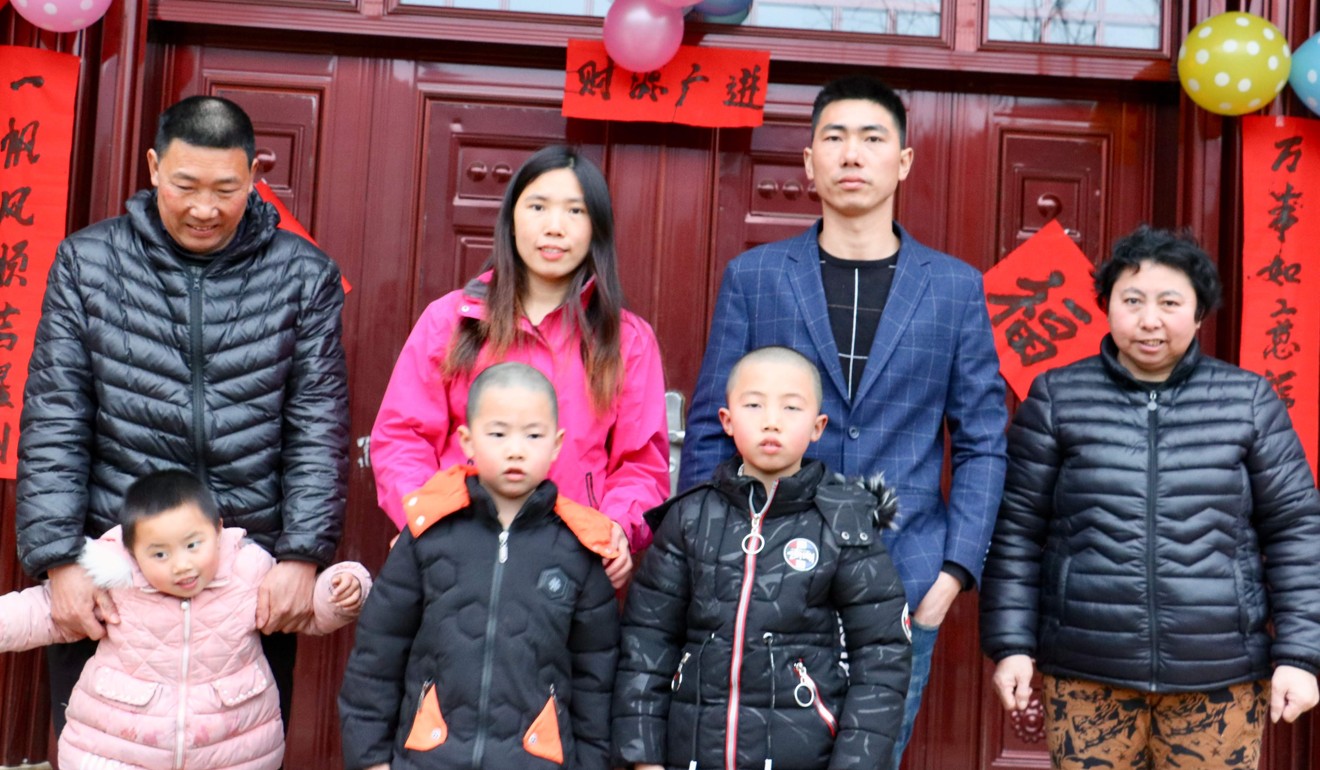
Sun Ling with her parents, brother, niece and nephews in China. Photo: Sun Ling

Sun’s journey from factory worker to high-paid software engineer has garnered Chinese social media headlines such as “the most inspiring story of all times”, and internet users have applauded her as a “positive energy girl”.

But others have not been as flattering, with some questioning the credibility of her story and saying what she has accomplished is almost too difficult to be true amid growing concern about the lack of opportunity and social mobility in China.

“I don’t consider myself a success and I have no intention to become a role model,” Sun told the South China Morning Post on Thursday. “I just put my story out there to show there is a possibility in your life even if you have a low starting point.”

A look inside Google’s new campus outside Silicon Valley
Her story became known in China after she posted an answer on Zhihu, the Chinese version of Quora, responding a question: how can you get an overseas education if you are dirt poor?

In the answer she posted earlier last month, Sun detailed her 10-year journey in making the seemingly impossible possible.

“It is not the orthodox way of studying overseas, just for your reference,” Sun wrote in the post, which has received nearly 35,000 likes on Zhihu. The answer was picked up by other social media; one of her most popular stories, which is circulating on WeChat, has been viewed more than 100,000 times.

Sun said her story was not a textbook “American dream” or “Chinese dream comes true” experience, but rather one driven by the simple motivation to forge a better life.

I just put my story out there to show there is a possibility in your life even if you have a low starting point Sun Ling
When Sun was born in 1990, her parents were farmers in a small village about a 2½-hour drive from Hunan province’s capital city, Changsha. Growing up in a place where a middle school education was considered good enough for a girl, Sun was forced to temporarily drop out of school when she was about 13 to ease the financial burden on her parents, who favoured her brother, the only son in the family.
“I begged and begged till my father allowed me to return to school,” she said. “But to be honest, my strong desire to stay at school at the moment was mainly because farming was too hard. The work got calluses on my hands.”
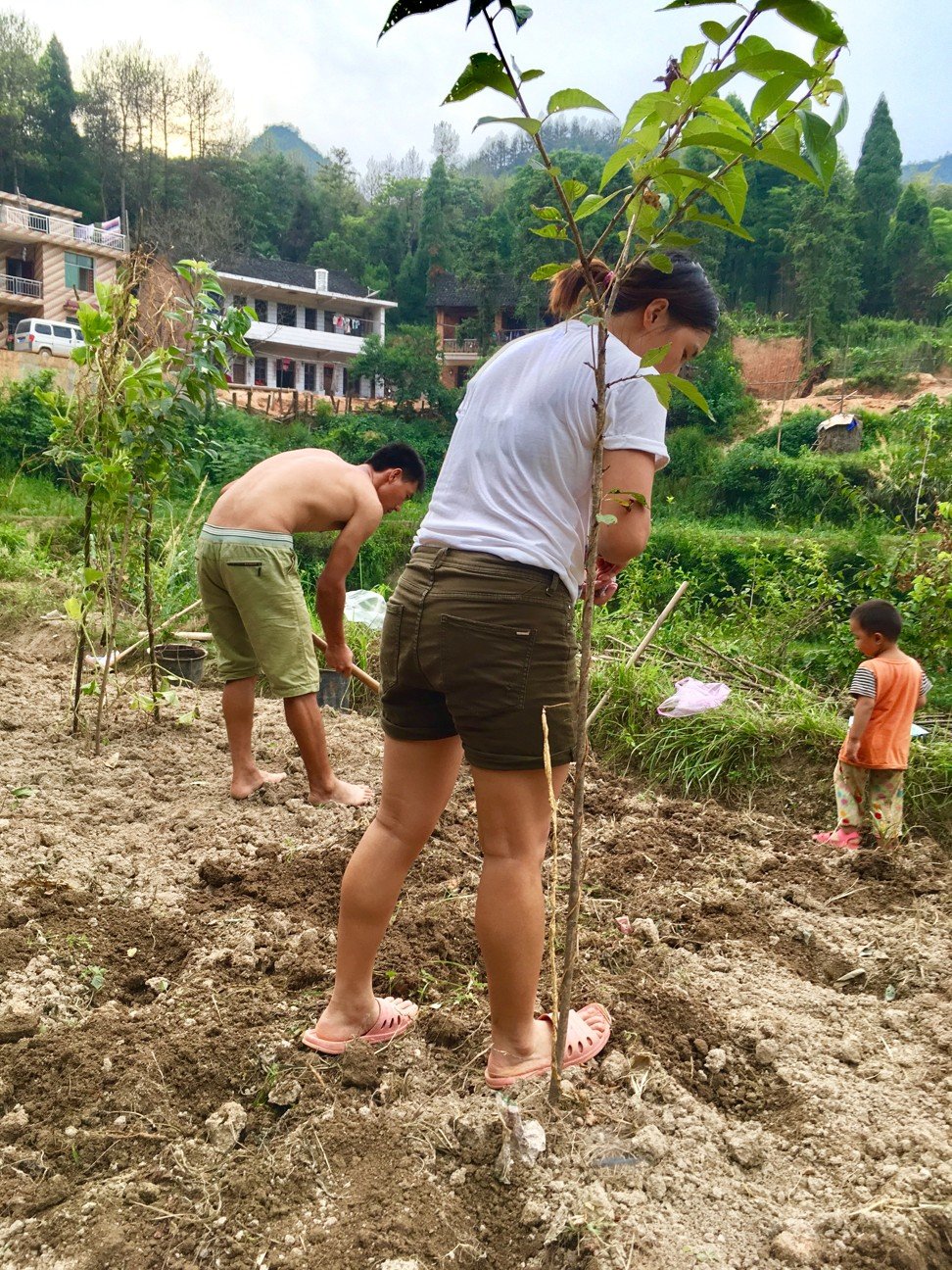
Sun in her home village in Hunan province in 2013. Photo: Sun Ling

Among her 11 village friends, she was the only one who completed high school. But the education she received at the rural school failed to get her into any college in China. So, like her peers in the village, she went to Shenzhen to become a factory worker.

But the routine of shifts spent examining the quality of batteries bored her. “I have no idea what kind of life I want to live, even today. But I am very certain about the life I don’t want to live,” Sun said.

She quit the factory job after eight months and enrolled in a computer training programme to learn what she regarded as the must-have skills to leave the blue-collar life behind.

That is the thing I like about America: they value what you are able to do more than where you come fromSun Ling

To have enough money to complete the training to become an entry-level software engineer, she worked three part-time jobs, including sending out fliers and waitressing at restaurants, and lived on three credit cards.
After more than a year of training and a debt of 10,000 yuan (US$1,450), in September 2011 she was hired as a software engineer by a Shenzhen company responsible for developing an online payroll system. With her own cubicle, a monthly salary of 4,000 yuan and weekends for herself, the job met all of Sun’s expectation as a “white-collar office lady”.
But the excitement of the new life didn’t last. She started to feel small in a big city where “everyone else is so excellent, with fancy degrees”.
To overcome her educational disadvantage, she signed up for an English training programme and a long-distance programme that allowed her to earn a degree from Shenzhen University. All of this took place while she maintained her software engineering job.
To practise her English, in 2014 she picked up ultimate frisbee, a game where in Shenzhen at the time, most of the players were expats. With a different circle of friends, most of whom had overseas experience, Sun started to dream of a life outside China’s borders.
Sun was born in a rural hamlet in central China’s Hunan province. Photo: Sun Ling

In early 2017, she discovered a master’s programme at Maharishi University of Management in Fairfield, Iowa, which features a controversial “consciousness-based education” system that includes the practice of meditation.

Sun applied and was accepted into the university’s computer science programme.

According to her, its design fit her well as it allowed students to have internships or jobs on a work-study visa after months of attending classes on campus. The rest of the programme could be completed remotely.

After nine months studying on campus and 60 job interviews, Sun received a job offer from EPAM Systems, a vendor for Google, late last year.

Google moving some hardware production out of China
Of her work as a contract software engineer at Google’s Manhattan headquarters, Sun said she was very “lucky” since many of her colleagues had a PhD or studied at top-tier American universities.
“But none of them treat me like I don’t deserve all of this,” she said. “That is the thing I like about America: they value what you are able to do more than where you come from.”
However, her story has not been without controversy in China’s cyber world.
Supporters have sent an increasing number of messages from various online channels, thanking her for an inspiring story and seeking her advice on life decisions. Sceptics claim she just got lucky, and some have accused her of being an advertising tool for Maharishi University of Management.
Chinese family paid US$1.2 million for Yale spot. Why weren’t they charged?
“At first, I got really angry,” Sun said. “I don’t think I deserve all the criticism for simply sharing my real life experience. But then I realised that not everyone has the same attitude in life.”
“I had no resources and I had very few options,” she said. “It is natural that people think it is difficult or even impossible to do. But for me it is actually not that difficult. Just keep learning and keep trying new things step by step, day by day.”
Her journey continues. Sun has been practising English and trying to fit better into her life in the US by doing short video interviews on the streets of New York streets. She has also taken courses about artificial intelligence online.
“My next goal is to become an in-house Google software engineer,” she said. “It won’t be easy. But your life begins at the end of your comfort zone.”
Source: SCMP
18/07/2019

China allocates disaster relief supplies to flood-hit Hunan

BEIJING, July 17 (Xinhua) — China’s disaster relief authorities have dispatched a second batch of supplies to areas hit by floods and rainstorms in central China’s Hunan Province.

A total of 8,000 folding beds, 8,000 sets of folding tables and chairs, and 5,000 quilts were allocated by the the Ministry of Emergency Management (MEM) and National Food and Strategic Reserves Administration, to support local government’s relief work, the MEM said Wednesday.

The Office of State Flood Control and Drought Relief Headquarters earlier launched an emergency response as Hunan Province has been suffering from severe rainstorms and floods.

The first batch of supplies included 1,000 tents, 10,000 quilts, 5,000 folding beds, as well as 6,000 sets of folding tables and chairs, according to the MEM.

Source: Xinhua

15/07/2019

China Focus: 17 dead or missing as rainstorms sweep central, east, south China

CHINA-GUANGXI-RONGAN-FLOODS-RECONSTRUCTION (CN)

Villagers clean a house damaged by floods at Jiangbei Village of Banlan Township, Rongan County, south China’s Guangxi Zhuang Autonomous Region,July 14, 2019. A series of reconstructing and rescuing works have been done since Rong’an was hit by heavy rains recently. (Xinhua/Huang Xiaobang)

BEIJING, July 14 (Xinhua) — At least 17 people were killed or missing and thousands evacuated as torrential downpours unleashed floods and toppled houses in central, eastern and southern China.

The National Meteorological Center on Sunday renewed a blue alert for rainstorms, predicting heavy rain in Zhejiang, Fujian, Jiangxi, Hunan, Guangdong, Yunnan, Sichuan provinces, as well as Guangxi Zhuang Autonomous Region and Tibet Autonomous Region.

Some of those regions will see up to 120 mm of torrential rainfall, it said.

China has a color-coded weather warning system, with red representing the most severe, followed by orange, yellow and blue.

As of 8 a.m. Sunday, at least 17 people died or were reported missing following rain-triggered floods in central Hunan Province, which also forced more than 470,000 people to be relocated and 179,000 were in urgent need of aid.

Four hydrometric stations along the Yangtze River in Xianning city, central Hubei Province, have reported the river water reaching or surpassing a level that can activate local anti-flood work.

In eastern Anhui Province, rain-triggered floods have affected more than 51,000 people and damaged over 2,700 hectares of crops.

The floods have forced the evacuation of 926 people, and caused a direct economic loss of more than 59.6 million yuan (8.66 million U.S. dollars) in the province.

As of Saturday noon, 330,000 people in 18 counties of Jiangxi Province have been affected by rainstorm-triggered floods, with over 10,500 residents relocated.

Poyang Lake, China’s largest freshwater lake in the lower reaches of the Yangtze, is swelling above the alarming level, according to the hydrographic department in Jiangxi.

The water level of the lake reached 20.08 meters as of 8 a.m. Saturday, 1.08 m above the warning level, as recorded by Xingzi Hydrometric Station on the lake.

In south China’s Guangxi Zhuang Autonomous Region, rainstorm has affected more than 360,000 people as of 5 p.m. Sunday, damaging over 35,000 hectares of crops, according to the region’s emergency management department.

The disastrous weather in Guangxi has prompted the region to activate a level-II emergency response and send special work teams and relief materials to the ravaged areas.

In some of the disaster-hit towns, flood water from subterranean rivers has inundated roads.

“After torrential downpours, waters on mountains and underground rivers converge into low-lying lands, which may lead to waterlogging. In affected villages, the water depth in some people’s houses can exceed two meters,” said Liao Bin, an official with Jiuwei Town, Hechi City.

Local authorities have dispatched boats and wooden rafts to transfer the stranded people, set up temporary relocation sites, and deliver living supplies to blocked villages.

Since June, the southwestern province of Guizhou has allocated a total of 16.5 million yuan for its hardest-hit 16 counties.

Source: Xinhua

08/07/2019

Ministry dispatches work teams to assist with local flood control

BEIJING, July 7 (Xinhua) — Four work teams have been dispatched to four provincial-level regions in southern China, including Jiangxi, Hunan, Guangxi and Guizhou, to assist with local flood control efforts, according to the Ministry of Water Resources Sunday.

The National Meteorological Center earlier issued a yellow alert for heavy rains in the country’s southern regions. Characterized by wide coverage and long duration, the rainstorm would hit the regions with precipitation up to 180 mm in some areas.

Water levels of major rivers in southern China would be above the warning line, according to the weather forecast.

The ministry stresses that local governments should take targeted measures to prevent mountain torrents, ensure dam safety during floods and strengthen patrols on the levee system.

The ministry also asks local water resources departments to pay close attention to the weather conditions and raining and flood situation, issue alerts timely and move the people out of the dangerous areas in time.

China has a four-tier color-coded weather warning system, with red representing the most severe, followed by orange, yellow and blue.

The China Meteorological Administration on Sunday also issued a grade-IV response for the upcoming rains. The grade-IV response, the lowest in China’s emergency response system, means a 24-hour alert, daily damage reports, and the allocation of money and relief materials within 48 hours.

Source: Xinhua

07/07/2019

Floods threaten middle and lower reaches of Yangtze River

WUHAN, July 6 (Xinhua) — The middle and lower reaches of the Yangtze River, China’s longest river, is likely to see flooding as a new round of sustained strong rainfall is forecast to lash the region from Sunday to next Wednesday, the Changjiang Water Resources Commission said Saturday.

Hydrometeorological forecasts show heavy rain with a precipitation ranging between 120 mm and 210 mm will hit the Yangtze’s middle and lower reaches in the following four days, causing the water levels of the mighty river’s many tributaries to reach alarming levels.

Some small and medium-sized rivers in Chongqing Municipality and the provinces of Hunan, Hubei, Jiangxi, Anhui, Jiangsu and Guizhou are also likely to see relatively serious flooding, according to the commission.

The commission activated an emergency response for flooding Saturday noon and advised local governments in affected areas to take precautions against possible disasters.

Source: Xinhua

06/07/2019

China Focus: Tea seedling donation seeds new prospect for poverty alleviation

BEIJING, July 6 (Xinhua) — Valuable tea plants are flourishing on around 67 hectares of tea farms in Qingchuan County of southwest China’s Sichuan Province, bringing new hope to impoverished locals.

“Tea plants are growing so well that I believe our lives will be better and better in the future,” said Jiao Yuan’en, a 66-year-old local villager, in the upbeat mood.

Jiao’s tea plants are grown from seedlings donated by tea farmers, thousands of miles away in Anji of eastern Zhejiang Province, as a gift to help alleviate poverty.

In April 2018, 20 tea farmers from Huangdu village of Anji, a well-known tea planting area, wrote a letter to Xi Jinping, general secretary of the Communist Party of China Central Committee, proposing to donate 15 million tea seedlings to poor areas.

Responding to their letter, Xi praised their move and called on Party members to share the Party’s burdens and encourage those who get rich first to help latecomers in the battle against poverty.

With Xi paying close attention to this project, the State Council Leading Group Office of Poverty Alleviation and Development chose 34 impoverished villages in provinces of Guizhou, Hunan and Sichuan to receive the seedlings.

By the end of March this year, a total of 16.65 million seedlings from Huangdu village were planted in around 358 hectares of land, involving 1,862 needy households, and more than 95 percent of the seedlings have survived.

In Guizhou, the donated tea seedlings helped inspire other locals to engage in tea planting, and in Hunan, tea farms were incorporated into local tourism.

The kind-hearted action from Anji farmers is expected to help 5,839 villagers improve their livelihood and lift them out of poverty when the tea plants are ripe for harvest in the spring of 2020.

China aims to lift all rural residents living below the current poverty line out of poverty by the year 2020.

Source: Xinhua

01/07/2019

First China-Africa Economic, Trade Expo closes in central China

CHANGSHA, June 30 (Xinhua) — The first China-Africa Economic and Trade Expo closed Saturday in Changsha, the capital city of central China’s Hunan Province.

A total of 84 deals worth 20.8 billion U.S. dollars were reached in trade, agriculture, tourism and other fields during the three-day event, which saw 14 activities, including the opening ceremony, seminars, conferences and forums, as well as an exhibition.

Experts, businessmen and officials from China and African countries discussed the new methods of the cooperation between the two sides during the event.

International organizations including the United Nations Industrial Development Organization, the World Food Programme and the World Trade Organization have sent representatives to the expo.

The expo, with an exhibition area of more than 40,000 square meters, attracted over 100,000 guests and traders, including those from 53 African countries, according to the organizing committee.

Source: Xinhua

28/06/2019

Xinhua Headlines: China-Africa trade expo to forge closer economic partnership

Xinhua Headlines: China-Africa trade expo to forge closer economic partnership

Justin Yifu Lin, former senior vice president and chief economist at the World Bank, delivers a speech at the China-Africa Economic and Trade Expo in Changsha, central China’s Hunan Province, June 27, 2019. (Xinhua/Xue Yuge)

by Xinhua writers Cao Kai, Chu Yi, Yang Jian and Zhang Yujie

CHANGSHA, June 27 (Xinhua) — The first China-Africa Economic and Trade Expo opened Thursday in Changsha, capital of central China’s Hunan Province, in a move to forge closer economic ties between the largest developing country and the largest developing continent.

The three-day event has attracted more than 10,000 guests and traders, including those from 53 African countries, according to the organizing committee.

Chinese President Xi Jinping has sent a congratulatory letter.

The expo, announced at the Beijing Summit of the Forum on China-Africa Cooperation (FOCAC) last September, was established to provide a platform for deepening economic and trade cooperation between the two sides, he stressed.

It is hoped that the two sides will strengthen coordination to better implement the eight major initiatives put forward at the Beijing summit of the FOCAC, actively explore new paths for cooperation, open up new points of growth for collaboration, and promote China-Africa economic and trade cooperation to a new level, Xi said.

“Industrial development and free trade amongst ourselves will foster faster growth for our mutual benefit,” said Ugandan President Yoweri Museveni at the opening ceremony. “This Forum should, among others, enable us to devise ways of turning these rays of hope into a reality.”

Hailing the long-term friendship with Africa, Chinese Vice Commerce Minister Qian Keming said at the expo that bilateral trade and economic cooperation should be practical and concrete to meet the development needs of African countries in areas such as infrastructure and talent cultivation.

China saw 3 percent year-on-year growth of foreign trade with African countries in the first five months this year, hitting 84.8 billion U.S. dollars. China’s direct investment to the continent has increased by 1.5 billion U.S. dollars in the past five months, up 20 percent year on year, according to Qian.

According to Assome Aminata Diatta, Senegal’s Minister of Trade and SMEs, China is an ideal partner for Africa to improve its capacity building when China is seeking higher-quality growth driven by innovation.

Bringing modern production lines to Africa, especially in the special economic zones, will likely provide tens of millions of jobs for Africa, accelerate its industrialization and improve the trade structure between China and Africa, Diatta said.

China has set a good example for other developing countries, especially those in Africa which, having a lot in common with China, may benefit from mutual complementarity in the area of development, said Justin Yifu Lin, former senior vice president and chief economist at the World Bank.

The experience, wisdom and programs that China will offer are very good reference for African countries that are now eager to work themselves out of poverty and pursue development, Lin said.

After the opening ceremony, 13 cooperation projects involving eight African countries were signed, worth a total of more than 2.5 billion U.S. dollars.

Conferences, seminars, forums and exhibitions focusing on agriculture, trade, investment and infrastructure construction will be held during the expo, with experts sharing views on closer bilateral exchanges.

The expo will feature exhibition areas covering more than 40,000 square meters, including national pavilions and display areas for enterprises that showcase the achievements and opportunities of China-Africa economic and trade cooperation.

TRADE AND INVESTMENT

With the theme “Win-Win Cooperation for Closer China-Africa Economic Partnership,” the expo, which will become a biennial event, will open a new chapter in the history of bilateral trade.

“Nigeria has a lot of non-oil products of high quality and we want China to buy more,” Uduak M. Etokowoh, an official with the Nigerian Export Promotion Council, told Xinhua.

Nigerian gemstones, Namibian oysters, Kenyan coffee and tea as well as South African wine are attracting many Chinese visitors at the expo.

“We used to export leather materials to Italy and Spain, who now have a wobbling economy,” said Nigerian businessman Mustapha Tijjani Garo. “We are now looking east for the market.”

China has been the largest trading partner of Africa for ten consecutive years. In 2018, trade volume between China and Africa amounted to 204.2 billion U.S. dollars, up 20 percent year on year.

China’s imports of non-resource products from Africa have increased significantly. In 2018, China’s imports from Africa went up 32 percent year on year, with the imports of agricultural products up 22 percent.

“Namibian oysters are selling well in Beijing, Shanghai and Guangzhou,” said Rinouzeu Katjingisiua. “We are hoping to find more partners here.”

For Chinese businessmen, with mounting pressure on labor-intensive industries as cost is surging and industrial upgrading is urgently needed, Africa is a great destination.

Wang Lianfang, owner of Qiqihar Quanlian Heavy Forging Company Ltd. based in northeast China’s Heilongjiang Province, set up an assembling plant in Senegal two years ago to find new markets amid slump domestic demand on agriculture machinery.

“Africa has strong demand,” said Wang, who is selling seeders, tractors and harvesters in the west African country.

“The output is expected to reach 2 billion yuan (291 million U.S. dollars) within 5 years,” said Wang, adding that the company has been working hard for survival in the past three years.

The transfer of labor-intensive industries from China can also give a strong push to Africa’s industrialization and modernization. It will expedite the economic take-off of Africa in the same way as how the industrial transfer had benefited China, Justin Yifu Lin said.

AGRICULTURE AND POVERTY REDUCTION

With abundant resources, a large population and a vast market, Africa is still the poorest continent and falls behind in the overall context of development and is battling poverty and hunger.

For 11 years, paddy land has been Hu Yuefang’s battlefield in Madagascar to fight against poverty.

“Madagascar can reach the self-sufficiency in rice as long as 15 percent of its rice planting area belongs to hybrid varieties,” Hu Yuefang said, adding that the average yield of hybrid rice produced by Chinese technologies in Africa is two to three times more than that of local ones.

Buried in the field all day, the 61-year-old agriculture expert from Yuan Longping High-tech Agriculture Co. Ltd. (LPHT) has been on the frontier of closer agriculture cooperation between the two sides.

He said though he could not come to the scene, he expected fruitful results from the inaugural expo to help tackle challenges and bring shared benefits to China and Africa.

China took deliberate steps using the agriculture sector to transform its economy by setting up favorable agricultural policies, the experience of which can be learned by us to accelerate our development, according to Ugandan Minister of Agriculture Vincent Bamulangaki Ssempijja at the expo.

“We strongly believe that by working together with our Chinese friends through joint venture businesses, investment arrangements and win-win cooperation, the majority of African countries can quickly eradicate poverty,” he said.

Hunger has long been bothering African countries. To help relieve the grain shortage, Chinese agricultural enterprises and experts, like Yuan, have been devoted to the continent for years, sharing China’s wisdom and experience.

“We put red flags on the map to show our steps in promoting hybrid rice in Africa in recent years, which have covered nearly 20 countries in southeastern, western and northern parts of the continent,” said Yao Zhenqiu, LPHT’s deputy general manager.

Guided by Yuan Longping, China’s “Father of Hybrid Rice,” the LPHT expert team has successfully cultivated five kinds of high-yielding hybrid rice seeds suitable for the local soil and climate.

So far, Chinese experts and technicians have carried out more than 300 small-scale projects in nine African countries, promoted 450 agricultural technologies, and trained nearly 30,000 local farmers and technicians, according to Ma Youxiang, an official with China’s Ministry of Agriculture and Rural Affairs, at the expo.

“We will continue to send high-level agricultural experts and vocational education teachers to African countries, to further expand training in Africa and help cultivate more talent in agriculture,” he said.

The World Food Programme (WFP), the food assistance branch of the United Nations, is also taking the expo as an opportunity to meet Chinese business society to tackle food problems in Africa.

WFP will work with China to help Africa achieve the goal of ‘Zero Hunger’, said Qu Sixi, WFP China Representative.

Source: Xinhua

Law of Unintended Consequences

continuously updated blog about China & India

ChiaHou's Book Reviews

continuously updated blog about China & India

What's wrong with the world; and its economy

continuously updated blog about China & India