Chindia Alert: You’ll be Living in their World Very Soon
aims to alert you to the threats and opportunities that China and India present. China and India require serious attention; case of ‘hidden dragon and crouching tiger’.
Without this attention, governments, businesses and, indeed, individuals may find themselves at a great disadvantage sooner rather than later.
The POSTs (front webpages) are mainly 'cuttings' from reliable sources, updated continuously.
The PAGEs (see Tabs, above) attempt to make the information more meaningful by putting some structure to the information we have researched and assembled since 2006.
American destroyer’s mission comes a week before Taiwanese president officially starts second term in office
Increased military activity in the region could have unintended consequences but unlikely to lead to direct conflict, observer says
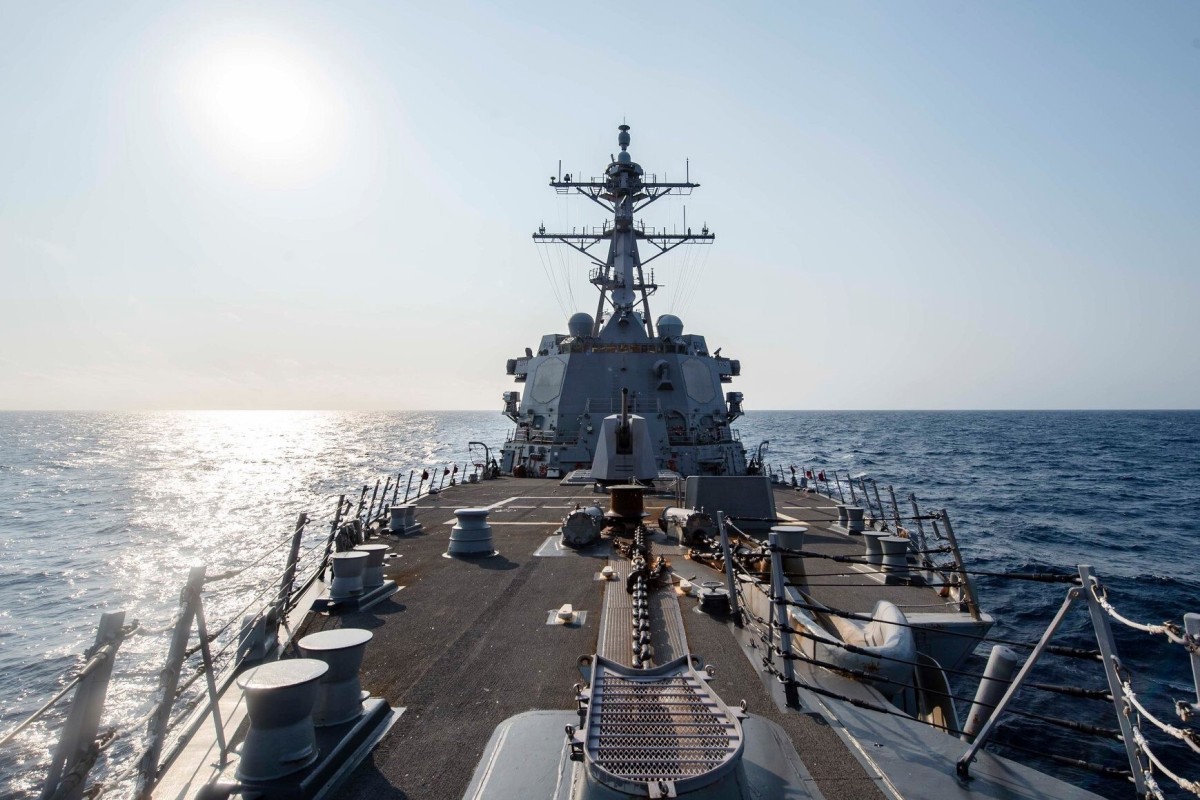
The guided-missile destroyer USS McCampbell made a transit through the Taiwan Strait on Thursday. Photo: US Navy
The United States sent a warship through the Taiwan Strait on Thursday as the Chinese military embarked on more than two months of live-fire naval drills off the mainland’s northern coast.
According to Taiwan’s defence ministry, the Arleigh Burke-class guided-missile destroyer transited the narrow body of water separating Taiwan from mainland China from north to south “in a routine mission”.
“It is continuing its southward voyage and the military is monitoring its movement through the intelligence it has gathered,” the ministry said.
In a statement on its Facebook page, the US Pacific Fleet said the McCampbell transited the Taiwan Strait as part of ongoing operations in the Indo-Pacific.
Analysts said the passage was a response to the People’s Liberation Army’s increasing military activity near Taiwan and in the wider region.
“This will become a new routine as a kind of US security commitment to maintain stability in the Indo-Pacific region,” said Soong Hseik-wen, professor of strategic studies and international relations at National Chung Cheng University in Taiwan.
Beijing urges France to cancel contract to sell arms to Taiwan
13 May 2020
The PLA has staged a series of war games, including fly-bys and warship transits through the strait, in recent months in response to what Beijing sees as growing pro-independence moves by the Tsai government and her party. China has also warned the US against supplying weapons to the island, which Beijing considers to be a wayward province that must return to the mainland fold, by force if necessary.
Mainland China has suspended official exchanges with Taiwan since Tsai was first elected president in 2016 and refused to accept the one-China policy, which Beijing says must be the foundation for any talks.
The PLA has embarked on 11 weeks of naval exercises off the coast of Tangshan in northern China, barring all other vessels from a 25km (15 mile) radius of the drill area, according to the China Maritime Safety Administration.
Taiwanese support closer ties with US over China, few identify as solely Chinese, Pew Research survey finds
13 May 2020
Both Beijing and Washington have ramped up military activities near Taiwan in recent months during the coronavirus pandemic, moves that some observers say run the risk of miscommunication.
Alexander Huang Chieh-cheng, professor of strategic studies and international relations at Tamkang University in Taipei, said no one could exclude the possibility of unintended incidents when both the US and the mainland were stepping up their presence in the region.
“Rational analysts would however argue that the two nuclear powers are not likely to engage in or escalate to direct military conflict,” he said.
Huang said he believed cross-strait relations would worsen during Tsai’s second term in office, which begins on May 20.
“The already damaged relationship between Taiwan and mainland China has worsened since the pandemic mainly due to travel bans and Taiwan’s increased international visibility,” he said.
On Tuesday, Japan’s Kyodo News reported that the PLA was planning a large-scale beach landing exercise near Hainan province in August, simulating a takeover of the Pratas Islands, which are controlled by Taiwan and also known as the Dongsha Islands.
In Taipei, Major General Lin Wen-huang said Taiwan was monitoring the PLA movements and “has contingency plans in place for the South China Sea to strengthen combat readiness and defence preparedness on both the Spratly and Pratas islands”.
Taiwan’s coastguard also announced on Wednesday that its Pratas Islands Garrison was scheduled to conduct an annual live-fire exercise in June to ensure the “effectiveness of various mortar and machine-gun positions”.
Taiwan shows off its military power after presidential election
Shanghai-based military commentator Ni Lexiong said that both the US Navy and PLA were increasing activities during the pandemic because neither side could afford to show weaknesses that the other might take advantage of.
The destroyer’s passage and the PLA’s drills were all part of such efforts, Li said.
But he agreed that both countries were unwilling, unable, and unlikely to have a real conflict.
“They are both bluffing. It’s a fake crisis,” he said. “A pandemic always ends or prevents a war if you look at history.
“I also don’t believe the PLA would want to take over the Dongsha or Taiping islands [in the South China Sea], because these islets alone are not worth a military campaign and all the consequences of that. The only target valuable enough for the PLA is Taiwan.”
Defence spending could show the effect of economic headwinds but is still expected to increase
PLA’s modernisation and strategic priorities demand spending is maintained even after GDP’s first contraction since records began, observers say
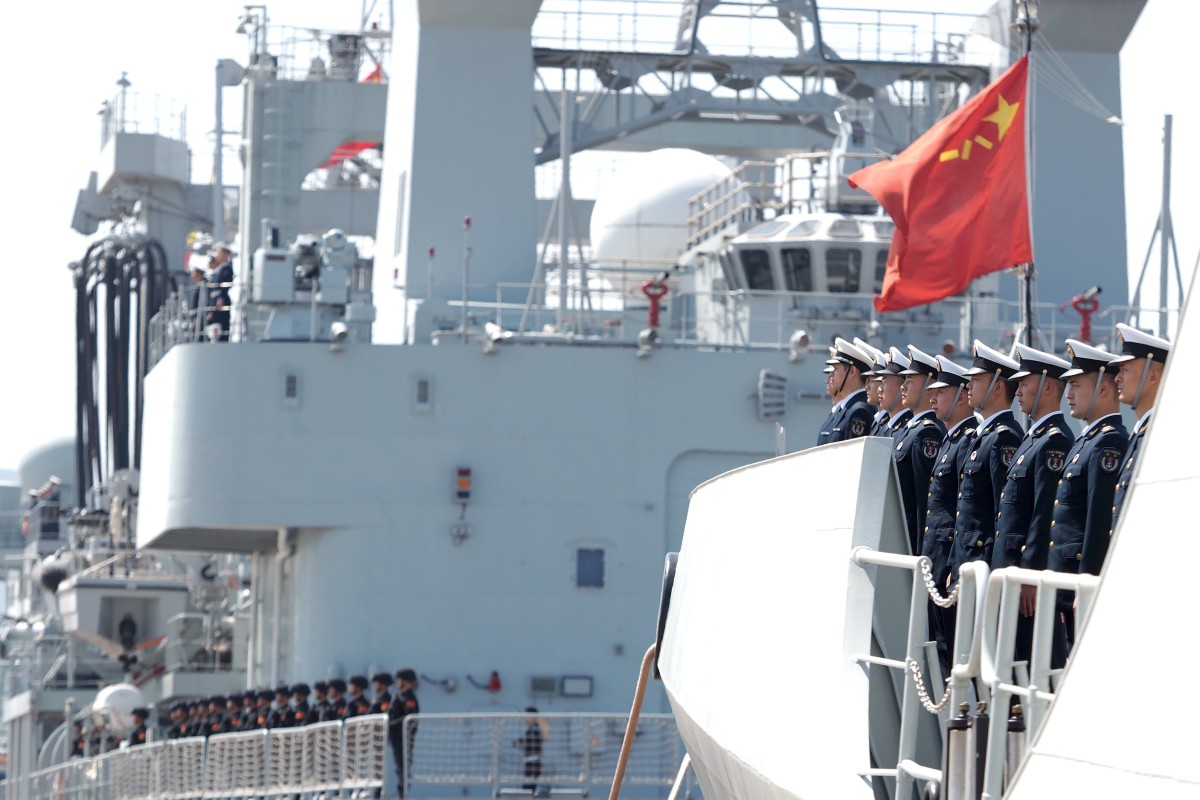
China has made modernising its military and expanding its weaponry a priority. Photo: Xinhua
China’s upcoming defence budget will be only slightly hit by the economic downturn that followed the coronavirus outbreak, and a modest increase is still expected as it continues to develop its military capability, analysts said.
The government’s military budget is expected to be revealed, as is the norm, at this year’s session of the National People’s Congress (NPC), China’s legislative body. Delayed by over two months because of the pandemic, it will finally be convened on May 22.
Last year the defence expenditure announced at the NPC session was
China has said its military expenditure has always been kept below 2 per cent of its GDP over the past 30 years, although its official figures have long been described by Western observers as opaque, with significant omissions of important items.
The South China Sea dispute explained
In a report earlier this week, the Stockholm International Peace Research Institute estimated that China’s actual military spending in 2019 was US$261 billion, the world’s second highest, after the United States’ US$732 billion.
John Lee, adjunct professor at the University of Sydney and senior fellow at the Hudson Institute in Washington, estimated that this year the Chinese defence budget would remain roughly the same or increase modestly, in line with growth levels of recent years.
“In the current environment, Beijing is keen to emphasise that China has recovered substantially from Covid-19 and that its power trajectory is unaffected by recent events,” Lee said. “At the same time, it would be aware of the anger towards the Communist Party for allowing the virus to become a pandemic.
“Regardless of what the reality might be, I would be surprised if there were a dramatic increase or a significant cut.”
First made-in-China aircraft carrier, the Shandong, enters service
China’s GDP suffered a 6.8 per cent decline in the first quarter, the first contraction since quarterly records began in 1992, after an extensive shutdown while it contained its coronavirus outbreak. However, the official increases in the military budget have since 2011 always exceeded overall GDP growth.
The Chinese government may focus more on job creation, social welfare and poverty alleviation, but not at the expense of military investment, according to Collin Koh, research fellow from the S Rajaratnam School of International Studies at Singapore’s Nanyang Technological University in Singapore.
“I tend to think it will be more or less the same,” Koh said. “To reduce [the budget] may send the wrong signal to would-be adversaries, both domestic and external: that Beijing has lost the will to keep up its military modernisation to assert core national interests.”
PLA flexes military muscle near Taiwan ‘in show of Covid-19 control’
15 Apr 2020
The People’s Liberation Army (PLA) began a massive – and costly – reform in 2015, with a personnel reshuffle, change in structure, upgraded equipment and enhanced training to better resemble battle scenarios. That was supposed to be complete this year.
Given the deteriorating relationship with the United States and rising tensions in the Taiwan Strait and South China Sea, the PLA faces challenges requiring a steady increase in investment, according to Hong Kong-based military commentator Song Zhongping.
Taiwan shows off its military power after presidential election
Macau-based military expert Antony Wong Dong predicted there would still be about 6-7 per cent growth in the budget “no matter what”.
“The PLA played an important role in the fight against the contagion, so a decrease in spending would not be accepted,” Wong said.
That role included the deployment of more than 4,000 military medics to help treat Covid-19 patients, and helping to transport medical supplies.
Wong said it would be a crucial year for the PLA in completing its preparation for potential military action against Taiwan, which would be so strategically important that “[President] Xi Jinping himself would never allow it to be affected by a shortage of funding”.
China’s military draws on 6G dream to modernise its fighting forces
18 Apr 2020
But a slight increase in budget would be sufficient to meet defence needs and maintain a deterrence against potential threats, including preventing self-ruled Taiwan taking the opportunity to declare independence, naval expert Li Jie said.
Beijing views Taiwan as a breakaway province to be reunified with the mainland, by force if necessary. Its relationship with Taipei has been strained, and dialogue halted, since Tsai Ing-wen, of the pro-independence Democratic Progressive Party, was elected the island’s president in 2016. Tsai was re-elected for a second term in January.
Li estimated that the budget would probably be kept at the same level or show a “slight” increase from last year.
“It would feed the ‘China threat’ theory and raise international concerns if the Chinese government expands military spending too much,” he said.





 CHINDIA ALERT: You'll be living in their world, very soon