Chindia Alert: You’ll be Living in their World Very Soon
aims to alert you to the threats and opportunities that China and India present. China and India require serious attention; case of ‘hidden dragon and crouching tiger’.
Without this attention, governments, businesses and, indeed, individuals may find themselves at a great disadvantage sooner rather than later.
The POSTs (front webpages) are mainly 'cuttings' from reliable sources, updated continuously.
The PAGEs (see Tabs, above) attempt to make the information more meaningful by putting some structure to the information we have researched and assembled since 2006.
SRINAGAR, India (Reuters) – Indian police have released a pigeon belonging to a Pakistani fisherman after a probe found that the bird, which had flown across the contentious border between the nuclear-armed nations, was not a spy, two officials said on Friday.
“The pigeon was set free yesterday (May 28) after nothing suspicious was found,” said Shailendra Mishra, a senior police official in Indian-administered Kashmir. It was unclear where the bird was released and whether it flew back to its owner.
The Pakistani owner of the pigeon had urged India to return his bird, which Indian villagers turned over to police after discovering it.
“It’s just an innocent bird,” Habibullah, the owner of the bird, who goes by just one name, told Reuters on Friday.
He rejected allegations that the numbers inscribed on a ring on the pigeon’s leg were codes meant for militant groups operating in the disputed region of Kashmir.
Habibullah, who lives in a village near the Kashmir border, one of the most militarised zones in the world, said the bird had participated in a pigeon racing contest and the digits on the bird’s leg were his mobile phone number.
The sport is especially popular in the border villages, said Yasir Khalid of the Shakar Garh Pigeon Club, adding such races are held in India too, and it is not unusual to lose a bird on either side. Owners identify their birds with stamps on the wings, paint and rings on the feet.
“We had to take the bird into our custody to probe if it was being using for spying,” a senior Indian border security officer said requesting anonymity, while explaining this was part of the drill given border sensitivities.
In 2016, a pigeon was taken into Indian custody after it was found with a note threatening Indian Prime Minister Narendra Modi.
Indian security forces have killed a prominent militant leader in disputed Kashmir, officials say.
Riyaz Naikoo had taken over command of the banned Hizbul Mujahideen group, succeeding Burhan Wani who was killed by security forces in 2016.
Wani’s death triggered massive protests in the region, which is claimed in its entirety by both India and Pakistan.
The region has seen an armed insurgency against Indian rule since 1989, which has flared following Wani’s killing.
Naikoo was shot dead in his home village of Beigh Pora in Pulwama district after militants killed eight security personnel in two separate attacks, part of a recent surge of violence in Indian-administered Kashmir.
Locals said the militant leader had been trapped in a joint siege laid by army, paramilitary and police forces. He had been on the run for eight years.
“At least 76 militants including Naikoo have been killed since January this year. But we also lost 20 soldiers including senior army and police officers,” a security official told BBC Urdu on condition of anonymity.
Under a new policy, militants who are killed are not identified and their bodies are not handed over to their families.
Officials had accused Riyaz Naikoo of plotting attacks against the security establishment in the valley.
Disputed Kashmir has been a flashpoint for more than 60 years, sparking two wars between India and Pakistan.
In August 2019, the Indian government stripped the region of its semi-autonomous status and split it into two federally-run territories.
Thousands of people were detained and the region remains under severe security restrictions.
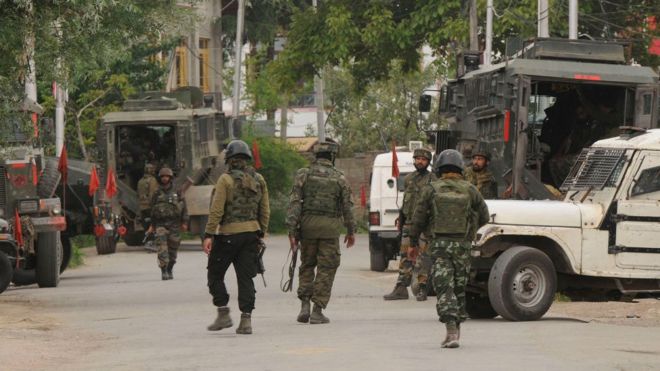
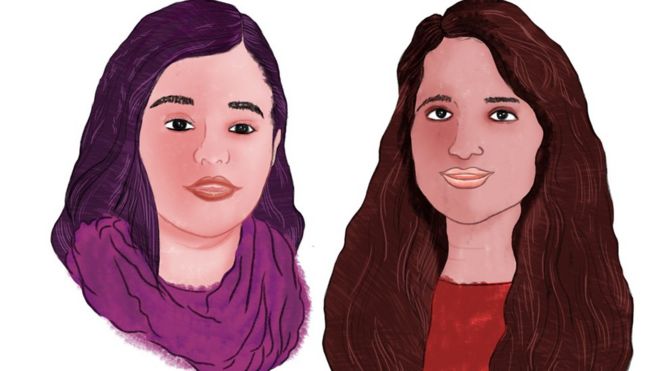
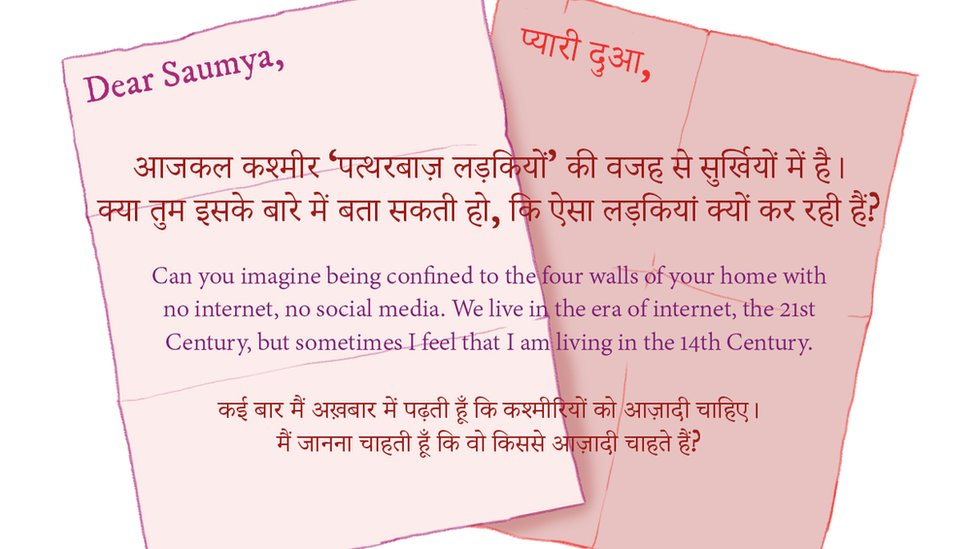
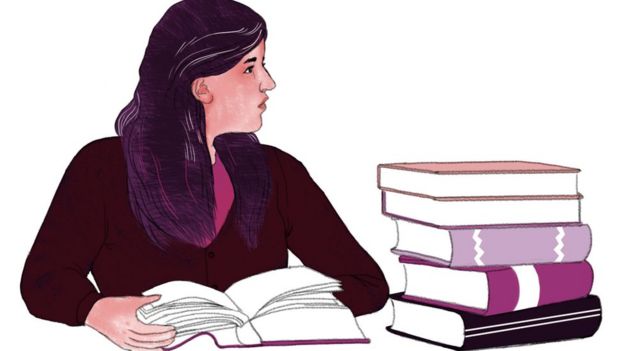
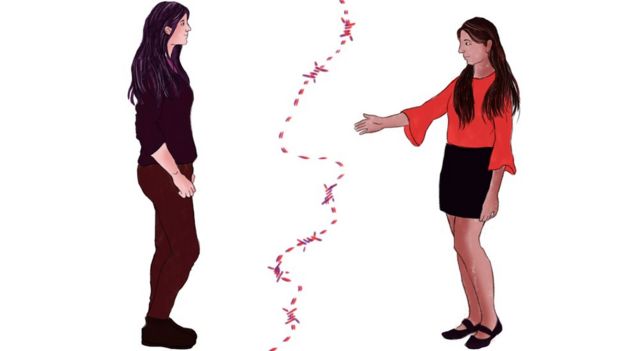
Duaa Bhat is a 17-year-old girl in Indian-administered Kashmir, one of the most heavily militarised zones in the world. Two years ago, she became pen pals with Saumya Sagarika, 18, from the country’s capital, Delhi, in a bid to understand the different worlds they were growing up in.
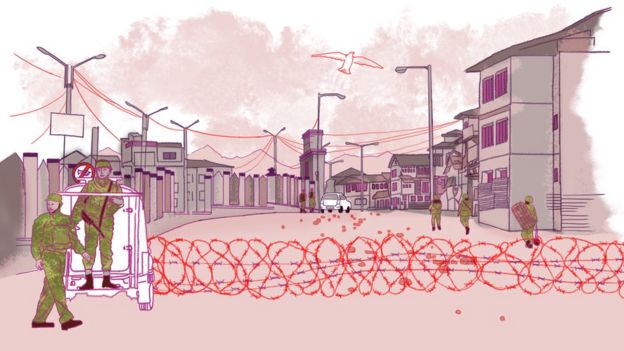
The army has been deployed in Kashmir, India’s only Muslim-majority region, since the rise of an armed rebellion in 1989. As Saumya discovered through her letters, Duaa’s studies were interrupted by strikes and school shutdowns. The problem was often compounded by the Indian government who would deliberately shut down or “snap” internet and social media.
Then, in August last year, the government removed Kashmir’s special status – which provided a degree of autonomy under article 370 of the country’s constitution – and imposed a communication clampdown. Schools were closed, thousands including politicians were placed under detention, and phone lines and internet were blocked.
Five months later, as the government began to ease communication restrictions, Saumya began writing to Duaa again. Here are edited excerpts from their letters.
A warm hello from Delhi. How are you? How is everyone in your family? We didn’t really continue our promise of staying “pen pals” after our last round of letters, but I am very happy to restart our conversation.
A lot must have changed in your life and the circumstances around you in the past two years too. I got to know that Section 370 was removed from Kashmir a few months back and for some time telecommunications were snapped there, and internet is probably still not working.
I am sure the situation must have changed. I hope everyone is safe there?
Dear Saumya
A chilling salaam from Kashmir.
Chilling because it is really, really cold here these days. I am good and, Allhamdullilah, everyone in my family is doing good. We didn’t continue being pen pals because the internet here is down most of the time and staying in touch with anyone outside the valley is a task in itself.
I was really happy to know that you’ve started college and your studies are going well. People like me have suffered the most in the past few months. We used to study ourselves with some help from the magic of the internet. Only the Almighty knows how we’ve completed our syllabus in time for exams.
People here are not happy with the removal of our special status. Personally, I feel depriving people of even talking to their near and dear ones is a violation of human rights.
Saumya, most people, including myself, do not understand the protests in the rest of the country. News channels here do not give us enough information to understand what the CAA (Citizenship Amendment Act) really is. Can you brief me about them?
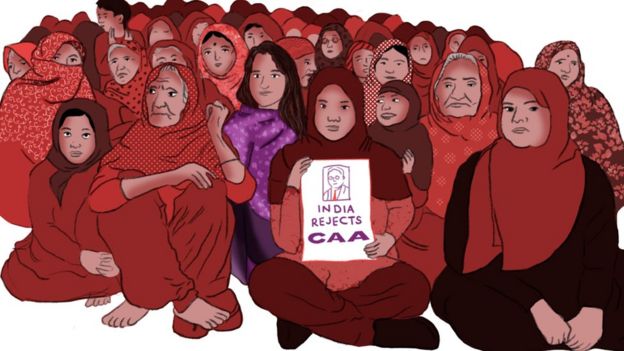
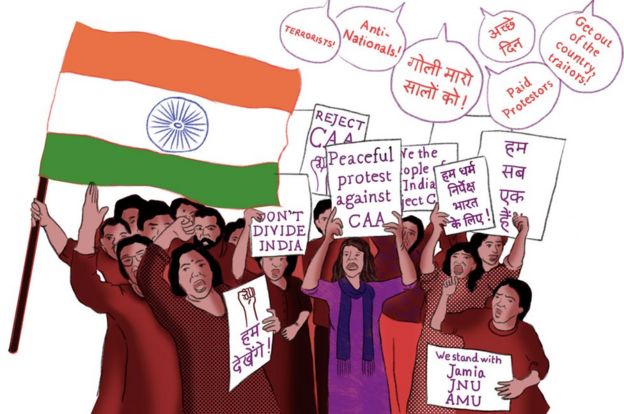
In December, India’s parliament passed the CAA, which offers amnesty to non-Muslim illegal immigrants from the three nearby Muslim-majority countries – Pakistan, Afghanistan and Bangladesh. It sparked massive protests as many considered it discriminatory against Muslims, something the government denies. Saumya, a Hindu, joined the hundreds of mostly Muslim women in a Delhi street protest against the new citizenship laws.
Dear Duaa
It is quite cold in Delhi too but the mood is really hot.
A few days back, I went to the protest at Delhi’s Shaheen Bagh. Women have been protesting against this act there for the past 26 days. These women are not university professors or activists but homemakers, women who remain in purdah, who have stepped out on to the streets to protest. They are fighting this battle so their children are able to lead their lives in peace.
After witnessing the enthusiasm among people at Shaheen Bagh, I’ll say people are prepared to fight this battle for our rights.
In your last letter, you wrote that you’d heard slogans like, “They wanted Kashmir to become like India but have made India into Kashmir”, were being chanted in Delhi. You are 100% right.
Since this protest movement started, all of Delhi is feeling like Kashmir. Like internet/phone shutdowns, section 144 (curfew) being imposed, stone-throwing and police lathi-charge (using long batons) during protests. So I can say that today I understand Kashmir and the situation facing people living there quite well.
Dear Saumya
From what you said about CAA, I feel we are going back in time instead of moving forward. I still can’t believe that even in the 21st Century some people discriminate against others on the basis of caste, religion and, in some parts of society, even gender.
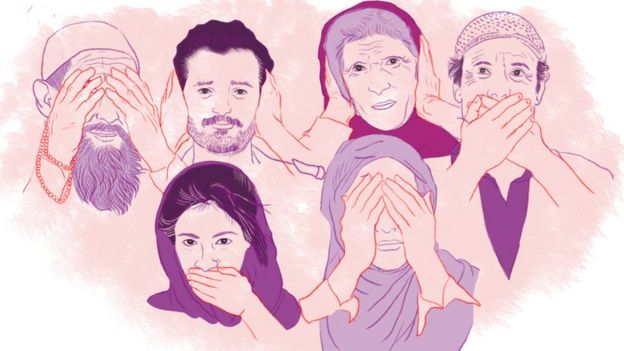
These protests are a proof that people still believe in taking a stand for each other and that humanity is still alive. Unlike other places in India, Kashmir has been really calm about this act. In our hearts we know this act is wrong but these days we Kashmiris couldn’t care less about what’s happening outside the valley. Our voices, our rights have been neglected in the past and are being neglected right now.
A couple of days ago, a Niti Aayog (a government think tank) member VK Saraswat defended the communication ban and he went as far as saying that Kashmiris do nothing but watch “dirty films” online. Even though he apologized later, these remarks cannot be just thrown out of our minds. Do people there really think that way about us? No one is talking about the problems we are facing right now due to the internet ban. Are we really invisible to the rest of the country?
Religious identities come up repeatedly in Saumya and Duaa’s letters. In 1989-90, at the start of the rebellion, hundreds of thousands of Hindus – referred to as Pandits – were terrorised into leaving by Muslim militants. It tore apart the centuries-old harmony that existed between the two communities.
I feel that people here consider Kashmir a precious property of the country and don’t give any importance to its people. Just last week, there was a discussion on the film Shikara on TV. The film is based on Kashmiri Pandits. There has been no discussion of their plight for the past 30 years here. And I don’t think that people will go to watch this film or talk about it even now.
Through our letters I have been able to understand a lot about Kashmir and Muslims, which is different from common perceptions. We have lots of family friends who are Muslim but are unable to discuss such issues with them openly, lest we offend them. This CAA issue motivated me to protest, even though I am a Hindu.
As I have understood Kashmir through your letters, it has removed my apprehensions and made me even more curious about Kashmir and Kashmiris. Earlier I was afraid because of the image created by society and the media. But after our conversations, I am excited to go to Kashmir to understand and experience it myself. Is the Kashmir valley open for people from outside now?
Dear Saumya
I am writing this letter not from Kashmir, but from one of the most holy cities of the world – Mecca, Saudi Arabia. It’s an amazing feeling to watch Muslims from all around the world come to pray here.
I feel glad that you know the truth about Kashmir. The valley is open for tourists now (officially) but for us Kashmiris it was and will always be open for the people outside.
You know there is a place in the Khanyar area of Kashmir, where worshipping places of different religions are located on one hill. At the bottom is a Gurdwara (Sikh temple), in the middle a shrine and at the top a temple. My mother’s maiden home was near that area and they had Pandits as neighbours. In my childhood, my mother used to tell me various stories about the brotherhood between different communities.
Kashmir is a really beautiful place to live and I pray to the Almighty in this holy city of Mecca to make Kashmir a peaceful place again and to restore the brotherhood that was lost. I’m closing this letter with the hope that my dua (wish) comes true and you will come to Kashmir to meet me.
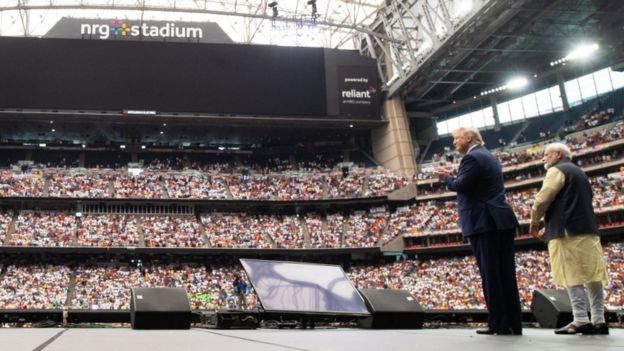
US President Donald Trump and Indian Prime Minister Narendra Modi exchanged warm words of friendship in Texas at a rare mass rally for a foreign leader.
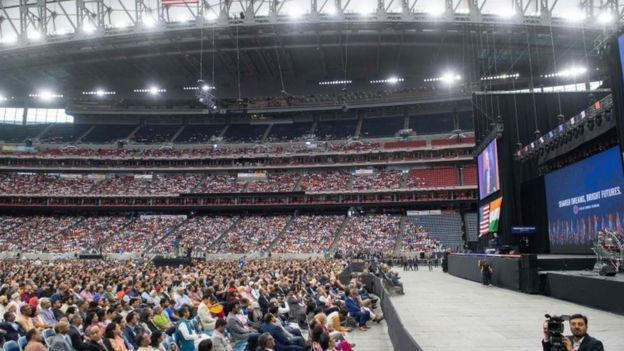
Around 50,000 people gathered for what Mr Trump called a “profoundly historic event” on Sunday in Houston.
The “Howdy, Modi!” event was billed as one of the largest ever receptions of a foreign leader in the US.
Mr Modi, however, may face a frostier reception at the UN General Assembly.
He is likely to face criticism over tensions in Indian-administered Kashmir, which he stripped of its special status last month, promising to restore the region to its “past glory”.
The region has been in lockdown for more than a month with thousands of activists, politicians and business leaders detained.
Trade talks and the UN General Assembly are on the Indian prime minister’s agenda during his week-long visit to the United States.
Pakistani Prime Minister Imran Khan, who has been the most vocal international leader to oppose India’s Kashmir move, is also in the US for the UN conference. Like Mr Modi, he will have a one-on-one meeting with Mr Trump on the sidelines of the summit.
A 90-minute show, featuring 400 performers, warmed up the crowd before Mr Modi and Mr Trump shared the stage.
“I’m so thrilled to be here in Texas with one of America’s greatest, most devoted and most loyal friends, Prime Minister Modi of India,” Mr Trump told the crowd.
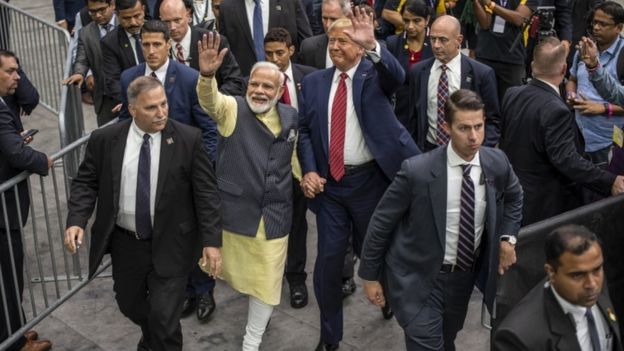
Image copyright GETTY IMAGESImage caption Narendra Modi and Donald Trump leave the stage holding hands at Houston’s NRG Stadium
In his speech, Mr Modi said India has a “true friend” in the White House, describing Mr Trump as “warm, friendly, accessible, energetic and full of wit”.
“From CEO to commander-in-chief, from boardrooms to the Oval Office, from studios to the global stage… he has left a lasting impact everywhere,” Mr Modi said.
Personal-touch diplomacy played to perfection
Brajesh Upadhyay, BBC News, Houston
This was exactly the kind of crowd size and energy President Trump loves at his rallies.
Only here the chants were for Indian Prime Minister Narendra Modi and Mr Trump was the superstar invited to the party. But the crowd did not disappoint him either and greeted him with chants of “USA!”, most heard at Trump rallies.
The personal-touch diplomacy with Mr Modi’s trademark bear hugs was played to perfection.
This rally has been called a win-win for both the leaders. For President Trump, it was a chance to court Indian-Americans for the 2020 presidential election race where Texas could emerge as a battleground state. For Mr Modi, a PR triumph and picture with the president of the United States may help him shrug off the criticism over his recent strong-arm policies at home.
Houston’s NRG Stadium, where the event was hosted, was the first stop for Mr Modi, whose Hindu nationalist Bharatiya Janata Party (BJP) won a landslide victory in this year’s Indian elections.
Greeted by a standing ovation, Mr Trump used his speech to heap praise on Mr Modi, who he said was doing a “truly exceptional job for India” and its people.
Mr Trump also paid tribute to the Indian-American community, telling them “we are truly proud to have you as Americans”.
The US has a population of about 4 million Indians who are seen as an increasingly important vote bank in the country.
Apart from Mr Trump, organisers also invited Democrats to the event – House Majority Leader Steny Hoyer was among those who spoke.
The 2010 US census shows that Texas is home to the fourth-largest Indian-American population in the country after California, New York and New Jersey.
Analysis of voting patterns shows the community tends overwhelmingly to support the Democrat party.
Image copyright GETTY IMAGESImage caption The event, dubbed “Howdy, Modi!”, was attended by an estimated 50,000 people
No stranger to nationalist rhetoric himself, Mr Trump compared security at the US-Mexico border to the tensions between India and Pakistan in the tinderbox Kashmir region.
“Both India and US also understand that to keep our communities safe, we must protect our borders,” Trump said.
Image copyright GETTY IMAGESImage caption Donald Trump described Narendra Modi as one of America’s most “loyal friends”
In India, the rally was closely watched, with most mainstream media outlets running live news updates of what was transpiring on stage.
The event had been making headlines for days before as well.
On Twitter, many people shared instant analysis and opinions of what was taking place on the stage with the sentiment being overwhelmingly positive. Many praised Mr Modi for what they saw as his statesmanship and diplomatic acumen with a lot of praise coming in for the US president as well.




 CHINDIA ALERT: You'll be living in their world, very soon