Chindia Alert: You’ll be Living in their World Very Soon
aims to alert you to the threats and opportunities that China and India present. China and India require serious attention; case of ‘hidden dragon and crouching tiger’.
Without this attention, governments, businesses and, indeed, individuals may find themselves at a great disadvantage sooner rather than later.
The POSTs (front webpages) are mainly 'cuttings' from reliable sources, updated continuously.
The PAGEs (see Tabs, above) attempt to make the information more meaningful by putting some structure to the information we have researched and assembled since 2006.
NEW DELHI (Reuters) – Indian and Pakistani troops in disputed Kashmir are engaged in their most frequent cross-border fighting of at least two years, official data shows, even as both nuclear-armed rivals battle surging coronavirus outbreaks.
Kashmir has long been a flashpoint between the neighbours but tension was renewed after New Delhi withdrew the autonomy of the Himalayan region last August and split it into federally-administered territories.
Both countries claim the region in full, but rule only parts, and often accuse each other of breaching a 2003 ceasefire pact by shelling and firing across the Line of Control (LoC), an informal border in Kashmir, and of killing dozens every year.
Indian Army data reviewed by Reuters shows 411 ceasefire violations by Pakistan’s military in March, the highest number in a single month since at least 2018. That compares with 267 violations in March last year recorded by the Indian Army.
“(The) Pakistan Army never initiates ceasefire violations along LoC, but it has always responded befittingly to Indian Army’s unprovoked firing,” said Major-General Babar Iftikhar, of the public relations wing of the Pakistan Army.
Iftikhar said Pakistan’s military had recorded 705 ceasefire violations by the Indian Army since the beginning of the year.
The Indian Army data showed 1,197 Pakistani violations during the same period.
Reuters is not in a position to independently verify the competing claims.
Four Indian army officials said the heightened border activity was a cover to help militants from Pakistan-backed groups infiltrate into Indian Kashmir, as some troops help to run health camps and hand out food in the battle on the virus.
“The increase in ceasefire violations is an indication that Pakistan is trying to push militants into the Kashmir valley,” said one of the officials, who all sought anonymity because they were not authorised to speak to media.
India has 5,734 infections, including 166 deaths, while Pakistan has reported 4,072 cases and 58 deaths, with the military of each helping its government’s efforts against the virus.
As summer approaches, infiltration into Kashmir typically picks up. An Indian security official said between 250 and 300 militants were estimated to be ready to cross over from Pakistan, citing intelligence reports.
“This is the time when our (border) fence is the weakest,” with damage caused by winter snows, said the official, who sought anonymity.
On Monday, the Indian Army said in a statement it killed five Pakistan-backed militants at the LoC during a firefight in heavy snow, with five of its special forces soldiers also killed.
Pakistan denies giving material support to militants in Kashmir but says it provides moral and diplomatic backing for the self-determination of Kashmiri people.
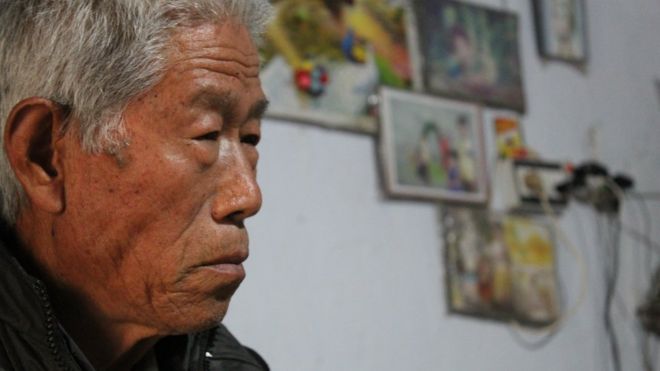
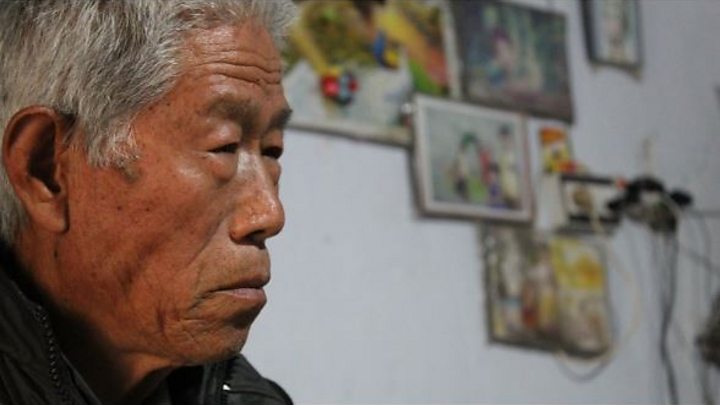
Image caption Wang Qi has been waiting for months to see his family in India
In 1963, a former Chinese army surveyor crossed into India and was captured weeks after a war between the two countries. Wang Qi was then left in a central Indian town for more than five decades before he was allowed to travel back home to China in 2017.
The BBC reported his story at the time and videos of the emotional family reunion in China were watched by millions.
But now, more than 30 months later, his story has taken an unexpected turn – Mr Wang is stuck in China and unable to return to India.
He has been waiting for more than four months for officials to renew his Indian visa so that he can travel back to India where his children and grandchildren live.
“Why are they doing this? I’ve been fighting for such a long time. How much longer can I fight?” Mr Wang told me over the phone from his home city of Xianyang.
The BBC has emailed the Indian embassy in Beijing and is yet to receive a response.
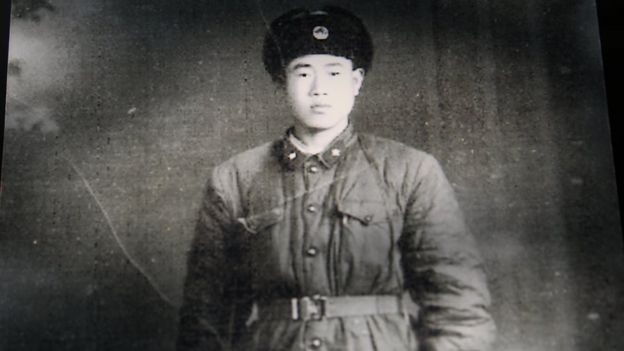
Born to a farmer family in Shaanxi with four brothers and two sisters, he studied surveying and joined China’s People’s Liberation Army in 1960.
Mr Wang says he was “tasked with building roads for the Chinese army” and was captured when he “strayed erroneously” into Indian territory in January 1963.
Image caption He joined China’s People’s Liberation Army in 1960
“I had gone out of my camp for a stroll but lost my way. I was tired and hungry. I saw a Red Cross vehicle and asked them to help me. They handed me over to the Indian army,” he said.
After he was captured, he spent the next seven years in multiple prisons before he was released by a court order in 1969.
Police took him to Tirodi, a far-flung village in the central state of Madhya Pradesh, where he ended up living for most of his life.
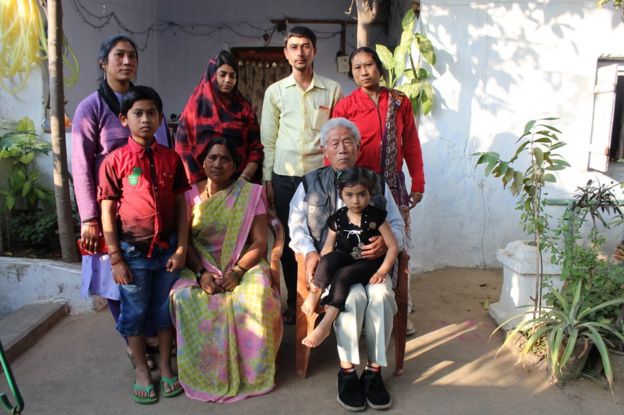
Instead he worked at a flour mill, eventually marrying a local woman and raising a family with her. Neighbours said they lived in “utter poverty”.
It was never clear whether Mr Wang was actually a prisoner of war. But he was denied official Indian documents or citizenship, and he was also denied permission to return to China. Officials told the BBC in 2017 that there were “deficiencies” and a “lack of interest” in the case over the years.
A Chinese passport holder, Mr Wang was reunited with his family in China in 2017. After the BBC reported his story, he received a one-year multiple entry Indian visa.
Media caption Wang Qi did not see his family in China for decades
He kept coming back to India to meet his wife, children and grandchildren who continued to live here.
When Mr Wang first arrived in China, he received a rapturous welcome. Crowds met him with banners reading, “Welcome home, soldier, it’s been a rough journey”.
But according to Mr Wang’s son, Vishnu, his father’s request to local officials to clear his salary for the period of his stay in India, remains unanswered.
Vishnu also adds that it’s unclear if his father still has any claim to ancestral property in China after being away for so many years.
“He was ecstatic to have met his family after decades. He didn’t want anything else.”
In 2017, Mr Wang rushed back to India to take care of his wife, who was hospitalised due to “liver complications”.
“Getting funds for the expensive treatment was very difficult. We tried everywhere, begged for money but didn’t receive any response,” Vishnu says.
She died within a fortnight.
Image caption Mr Wang married an Indian woman and raised a family with her
“My father’s visa was renewed in 2018. He applied again in April 2019 but he is still waiting,” Vishnu adds.
Xianyang and Beijing, where the Indian embassy is located, are more than 1,000 kilometres (621 miles) apart – and travelling between the two cities isn’t easy for Mr Wang, who is nearly 80 years old, Vishnu says.
“My father is fed up. He doesn’t understand why this is taking so long.”
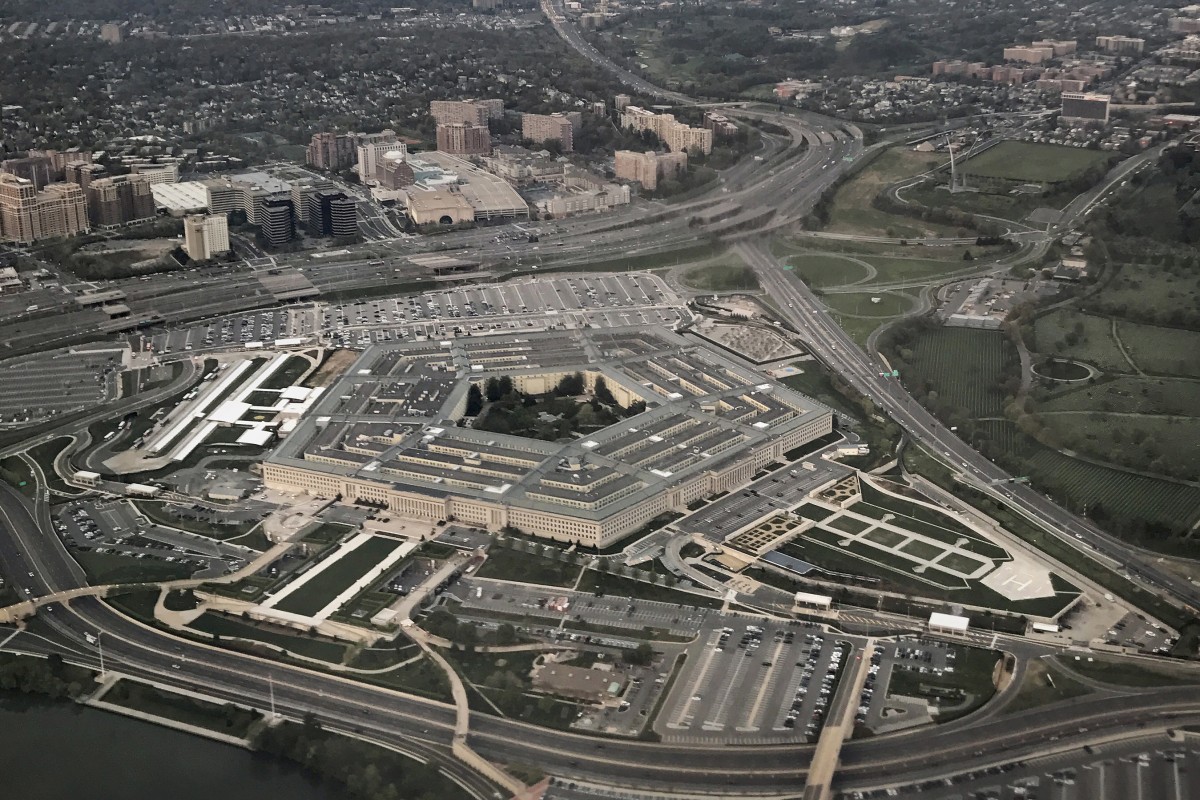
Some of those weeded out had been recruited under programme to use immigrants’ vital skills
New vetting process has delayed enlistments by years, turning more than 1,000 recruits into unlawful immigrants with expired credentials
The Pentagon needs recruits with foreign language skills. Photo: Washington Post
In the past month, the Pentagon booted two Chinese recruits from the enlistment process because of their dead grandfathers, who had lived very different lives.
One recruit’s grandfather, whom he never met, served in China’s Communist Party military. Another recruit was removed from the programme after drilling for three years because of the polar opposite – Zicheng Li’s grandfather fought against, and was tortured by, Communist Party agents, defence officials wrote.
Screening documents obtained by The Washington Post detailing reasons that these and other foreign recruits were removed from the military reveal a pattern of cancelled enlistments and failed screenings for rather innocuous fact-of-life events and, often, simply for existing as foreigners.
Immigrant enlistees have been cut loose for being the children of foreign parents or for having family ties to their native country’s government or military.
I’m shocked and numb. They use anything they can to kick us outZicheng Li, US Army recruit
In some cases, they have relatives who served in militaries closely allied with the United States. Those removals raise questions about the Pentagon’s screening process and why it has weeded out precisely the recruits defence officials said they needed.
The Pentagon programme they were recruited under embraced a simple idea: the military would enlist immigrants to make use of strategic language and medical abilities in short supply among US-born troops, designating the skills of immigrants a national security imperative.
The programme was even named in that fashion – Military Accessions Vital to the National Interest, or Mavni, which enlisted more than 10,400 foreign-born troops in the past decade, with the promise of fast-tracked naturalisation that would take weeks. Speakers of Mandarin, Russian, Arabic and other languages have been in demand by defence officials.
But then denials began to quicken since stricter screening was instituted in late 2016, a lawyer for immigrant recruits said, pointing to family ties as a common reason.
He’s an illegal Chinese immigrant – and a US soldier on Mexico border
Li, who arrived in Minnesota from China in 2012 to study aerospace engineering, said that his US Army enlistment processing had crawled since February 2016. In that time, he attended drills as a selected reservist and received his uniform and an ID card that grants him access to army installations.
Then this month, after three years of waiting, an enlistment denial justification letter arrived in his postbox, containing two sentences about family history.
Li told investigators that his since-deceased grandfather’s torture decades ago by Chinese Communists prompted worry of reprisals if the Chinese government learned of Li’s enlistment.
“You revealed that you fear for your family’s safety,” officials wrote in a letter, saying his suitability for enlistment was adverse, documents show.
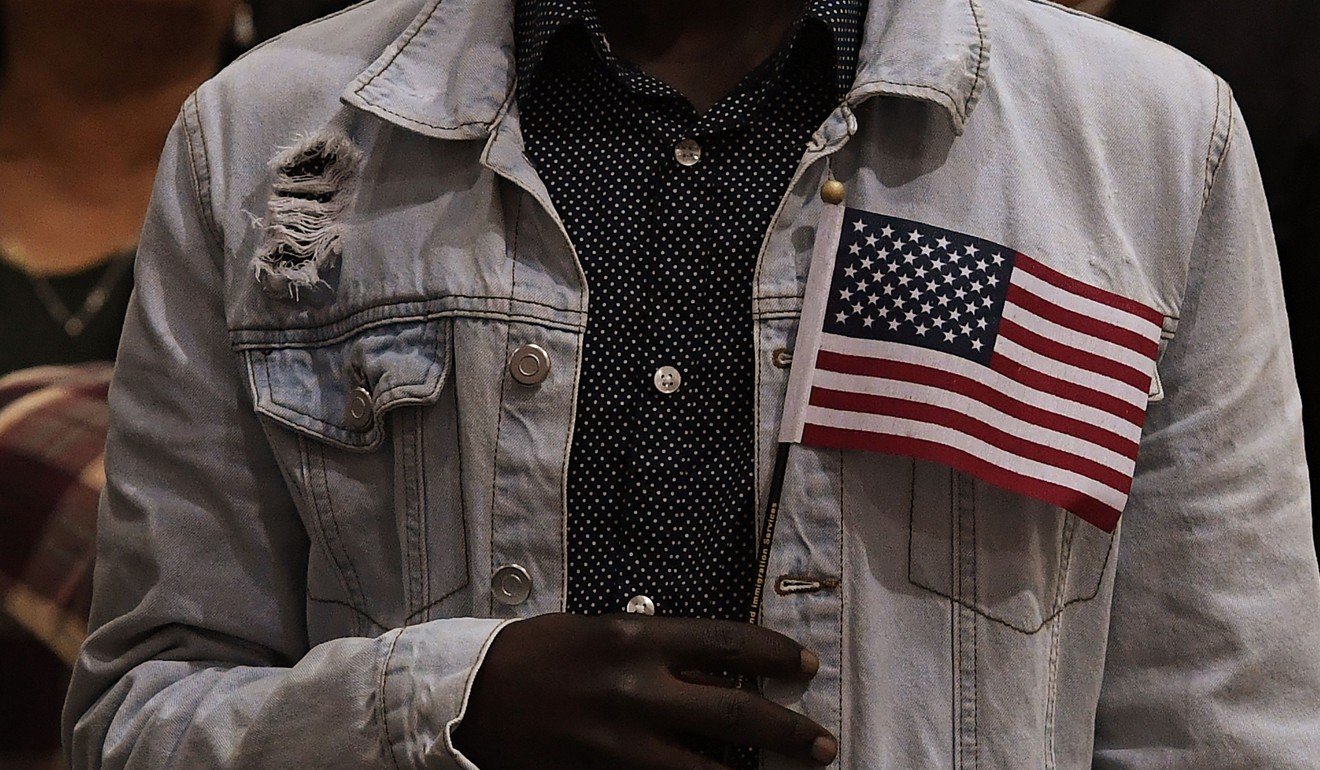
A new citizen pledging allegiance to the United States at a naturalisation ceremony in Los Angeles. Photo: AFP
“I’m shocked and numb,” Li said. “They use anything they can to kick us out.”
The new vetting process has delayed enlistments by years, and the wait has turned more than 1,000 recruits – who enlisted as legal immigrants with visas – into unlawful immigrants whose credentials expired as their screenings tumbled into bureaucratic limbo.
The Pentagon has acknowledged in court filings that none of the thousands of recruits who later naturalised from the programme have been charged with espionage-related crimes, though one Chinese recruit has been accused of failing to register as a foreign agent. The new vetting procedures did not play a role in his detection, court filings said.
It is unclear how many immigrant recruits have been turned away as recruits or discharged as soldiers in recent months. In a spate of lawsuits alleging misconduct and violation of equal protection laws, the Pentagon has reversed decisions and halted discharges.
Chinese women join US Army to obtain green cards
Defence officials have not offered public insight into how the vetting works or what kind of oversight exists. The results are typically explained in one or two sentences.
Another Chinese-born recruit, who declined to provide his name out of fear of reprisal to his family by the Chinese government, said he was denied enlistment last month because his father and grandfather served in the Communist military, though the report about his relatives’ positions was inaccurate, he said.
His grandfather died before the recruit was born.
“I don’t know what’s the harm for me to finish my contract and gain my citizenship,” he said.
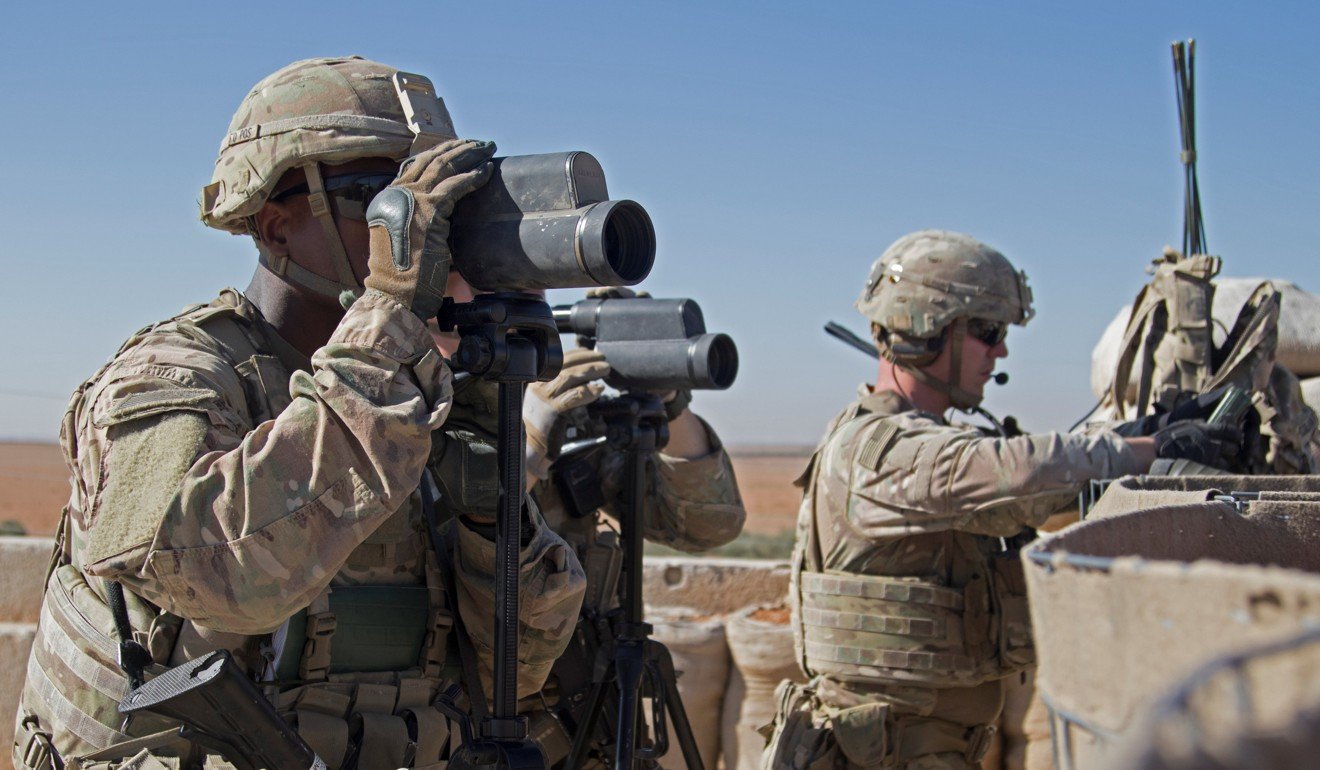
The US has recruited more than 10,000 foreign-born troops in the last decade. Photo: US Army via Reuters
Mavni screening can be “time-consuming due to our limited ability” to verify information from home countries, said Jessica Maxwell, a Pentagon spokeswoman. She declined to address questions about the process itself and whether screeners adjust expectations of foreign ties if they are screening foreign-born recruits.
She also declined to say how many Mavni recruits are still waiting for their screening to finish, citing litigation and privacy limitations.
Margaret Stock, an immigration lawyer who has represented Mavni recruits, including Li, said the Pentagon has scuttled millions of dollars and years of time to produce unclear reasons why it separates immigrants the Defence Department itself determined it needed.
“This is what they come up with? Your grandfather served in a foreign army before you were born?” Stock asked. “What is the threat to national security? They can’t articulate it here.”
New Pentagon chief’s mission: confront foreign threats, manage Trump
Other rejections point to speculative or seemingly benign information for immigrants living typical lives.
“You revealed that you maintain routine contact with your father and mother who are citizens of and reside in China,” said one document.
An Indian-born recruit was cut loose after an investigation determined that family members “work for or have worked for the Indian army”, according to one document, even thought India and the United States share a defence relationship.
Recruits from South Korea, a key US defence ally, have been penalised because their fathers are required by conscription to serve, Stock said.
Maxwell declined to say why a family member’s involvement in a friendly military would raise suspicions.
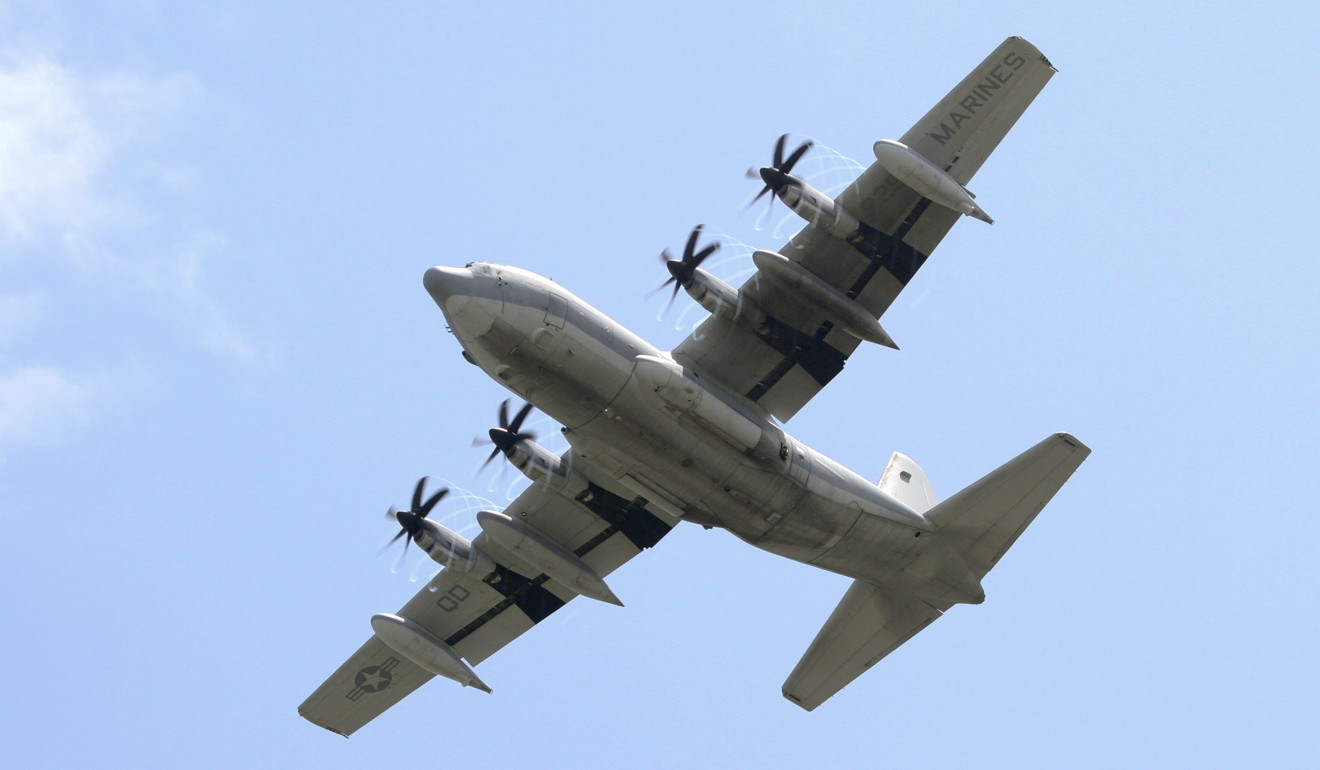
Zicheng Li is hoping to become a Hercules pilot. Photo: EPA
Another enlistee was rejected for “multiple wire transfers” through US banks, though the screening review did not describe the nature of the transfers or whether they were unlawful.
One recruit, a Chinese doctoral student, was turned away because a screener with no medical experience said that the recruit had Asperger syndrome – on the basis that the screener once observed a family member with autism, The Post previously reported.
Potential persecution of Li’s family could be aided by the US military itself. US Army recruiters inadvertently exposed the private information of hundreds of Chinese-born recruits, heightening the risk that Chinese government officials would target their families, a lawmaker said.
Pentagon poised to report on US military’s dependence on China
Those disclosures and enlistment delays have forced several recruits to apply for US asylum protection, including Li while he fights the army’s determination that he is unsuitable for service.
Li said he wants to bring his family to the United States. Until then, he has taken a rather American path: he helps design grain enclosures and spreaders for a farm equipment company in Minnesota, with an eye to eventually transitioning from the US Army to the Air Force.
Li said he hopes to become a pilot, perhaps for the C-130 Hercules transport aircraft.
Fighters can be flashy, he said. But the Hercules can get him more time in the cockpit on missions across the world.
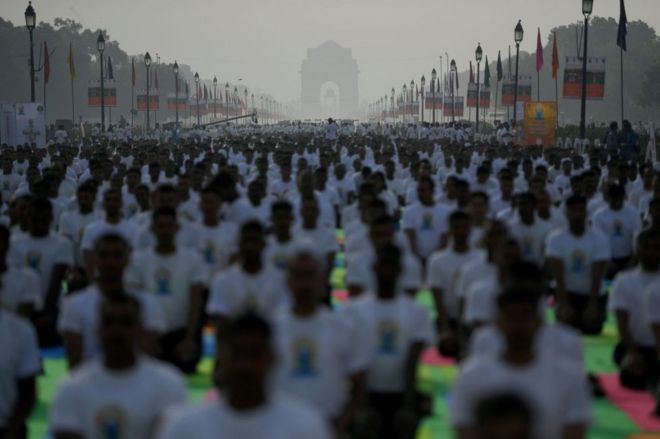
Indians across the country celebrated the fifth international yoga day on Friday.
Temperatures are soaring in many cities, including the capital Delhi, but that didn’t stop people from gathering outdoors and stretching and bending their way through at least an hour of yoga.
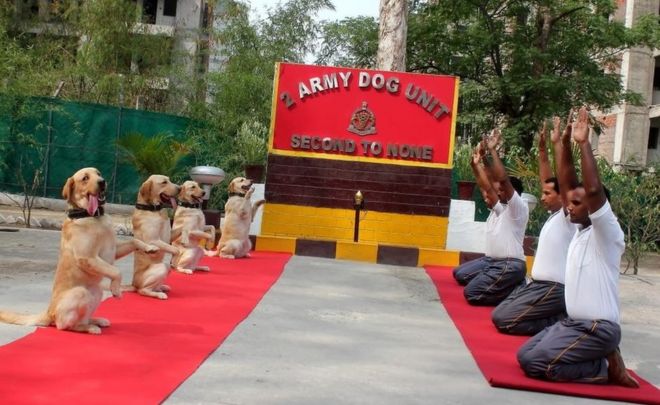
And everyone joined in – even the dog unit of the Indian army!
Image copyright @SPOKESPERSONMOD/TWITTER
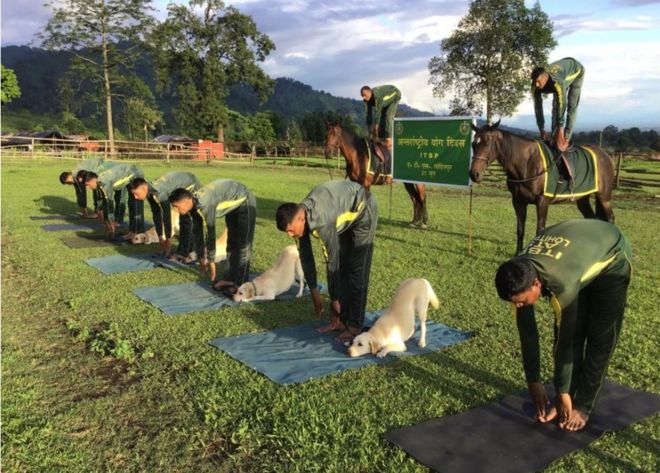
The Indo-Tibetan border police – and their dogs and horses – were not about to be outdone. They practised what they called yoga, doga and hoga.
And they were luckier than many of their counterparts – they got to practise their yoga in cooler climes, along India’s scenic Himalayan border.
Image copyrightI TBPOFFICIAL
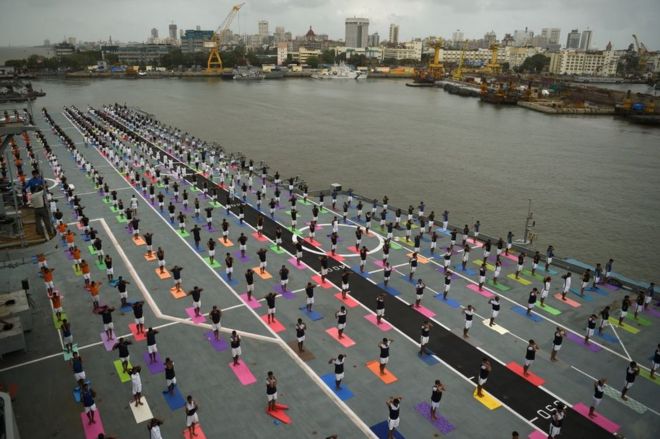
Among those who did yoga in more hostile climates were the armed forces on board the naval aircraft carrier INS Viraat which is docked off the coastline of sweltering Mumbai city.
Image copyright GETTY IMAGES
In Gujarat, the soldiers got a little more creative with their yoga.
NEW DELHI (Reuters) – Indian cricketers wore army camouflage-style caps in a match with Australia on Friday in solidarity with Indian paramilitary police killed in a militant attack by a Pakistan-based group and in an unusually strong display of patriotic fervour in sport.
The suicide bombing last month killed 40 in Indian-controlled Kashmir, a region also claimed by Pakistan. The attack prompted India to launch an air strike inside Pakistan, which responded with an aerial attack the next day.
The Board of Control for Cricket in India (BCCI) has in recent days tried unsuccessfully to isolate Pakistan in the cricketing world. The International Cricket Council rejected India’s calls to boycott games against Pakistan, whose prime minister is former cricketing hero Imran Khan.
But there are still calls within India for the national team to pull out of a World Cup match against Pakistan in June in England.
The idea to sport the olive-and-black caps bearing the BCCI’s logo came from former Indian cricket captain and current player Mahendra Singh Dhoni, one of the game’s biggest stars and an honorary lieutenant colonel with the Indian army.
“It’s a special cap,” Indian captain Virat Kohli said before the third in a five-match one-day series with Australia. “This is to pay respect to the martyrs … and their families.”
He said all the players would donate their fees from the match to a national defence fund to help out the families of defence personnel who die on duty. Kohli also urged all Indians to contribute to the fund.
The BCCI posted a clip on Twitter of commentators for the match also wearing the caps, signing off the tweet with “#JaiHind”, or “Hail India”.
The board has scrapped the opening ceremony for the Indian Premier League Twenty20 tournament, which begins on March 23, and will donate the money saved to the families of those who died in the bomb attack.
Cricket historian Boria Majumdar said he could not remember seeing any Indian cricket team in the past making such a gesture, which he called a “peaceful political stand”.
“(Indian cricket) teams have expressed solidarity in the past but not this kind of public display of that solidarity,” Majumdar told Reuters.
“Sport has always been meshed with politics and people have often used it to make very strong points. This is yet another one. This is a peaceful way of expressing solidarity in a manner which I don’t see problematic at all.”
But Pakistani lawyer Abdullah Nizamani said on Twitter the BCCI and international cricket board should keep “sports away from petty politics”. Some Pakistanis even asked on social media if Indian cricketers would turn up for the World Cup match with Pakistan in military fatigues.
Nuclear-armed neighbours India and Pakistan have fought two of their three wars since independence over Kashmir, which both sides claim in full but rule in part.
PM Modi and President Moon held constructive talks on enhancing bilateral cooperation in key areas including trade, investment, defence and security.
SNS Web | New Delhi | February 22, 2019 1:08 pm
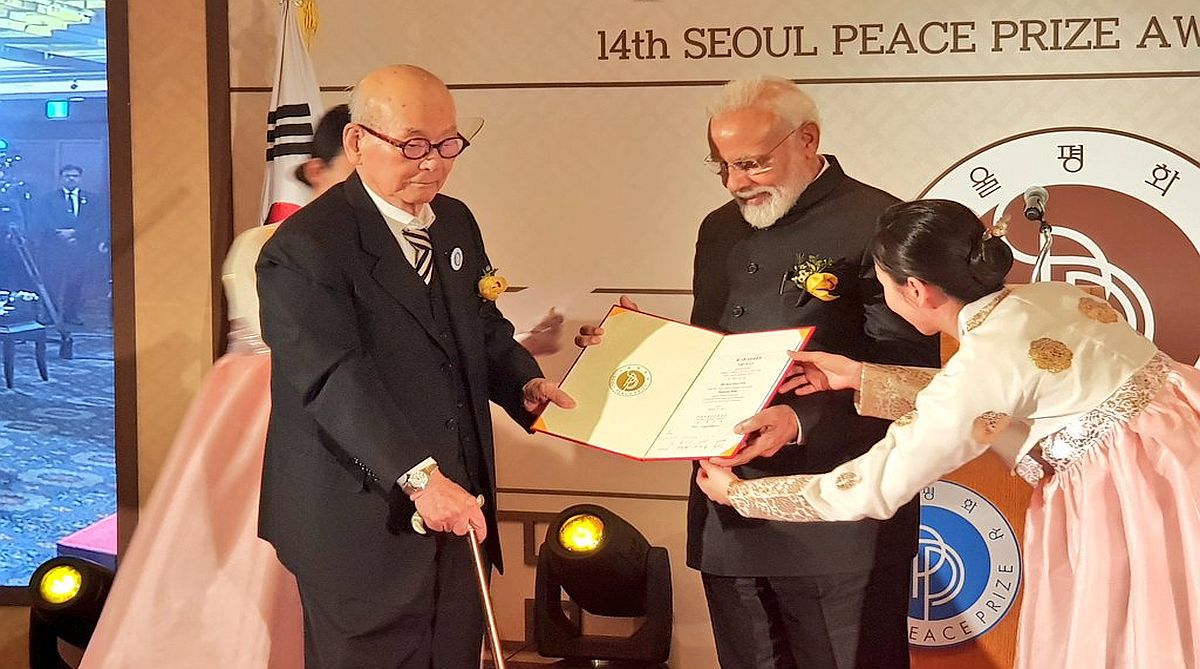
Prime Minister Narendra Modi conferred Seoul Peace Prize (Photo: @MEAIndia)
Prime Minister Narendra Modi was on Friday awarded the Seoul Peace Prize in recognition of his efforts aimed at raising global economic growth, accelerating the human development of the people of India and furthering the development of democracy through anti-corruption and social integration efforts.
Dedicating the award to the people of India, PM Modi said, “This award does not belong to me personally but to the people of India, the success India has achieved in the last 5 years, powered by the skill of 1.3 billion people”.
He further said he was honoured that the award was conferred on him in the year India celebrates the 150th birth anniversary of Mahatma Gandhi.
Talking at the 14th Seoul Peace Prize award ceremony, PM Modi said radicalisation and terrorism are the biggest threats to world peace and security in the present time.
He further called upon the need to join hands to completely eradicate terrorist networks. “Only by doing so, can we replace hate with harmony,” he said.
The Prime Minister also quoted a portion of the 1988 Olympics theme song, which goes as “Hand in hand, we stand, all across the land, we can make this world, a better place in which to live”.
PM Modi’s speech comes in the wake of the Pulwama terror attack that killed at least 44 CRPF personnel on February 14.
While choosing PM Modi, the award committee had recognised the Indian leader’s contributions to the growth of the Indian and global economies, crediting ‘Modinomics’ for reducing social and economic disparity between the rich and the poor.
The panel had also lauded Modi’s initiatives to make his government cleaner through anti-corruption measures and demonetisation. It also credited him for his contribution towards regional and global peace through a proactive foreign policy with countries around the world under the ‘Modi Doctrine’ and the ‘Act East Policy.’
Earlier in the day, PM Modi met South Korean President Moon Jae-in and expressed his gratitude to the President for his condolences on Pulwama attack and support against terror.
PM Modi and President Moon held constructive talks on enhancing bilateral cooperation in key areas including trade, investment, defence and security.
Addressing the media after the “productive talks” with President Moon, PM Modi said that South Korea is an important partner in India’s economic transformation.
He further said the defence sector was an important part of India’s growing partnership with South Korea. “An example of this is the induction of K-9 Vajra artillery gun in Indian Army,” the PM added.
Following the talks, India and South Korea signed seven agreements to enhance cooperation in key areas, including infrastructure development, media, start-ups and combating trans-border and international crime.
An important MoU was signed between the Korean National Police Agency and the Ministry of Home Affairs to enhance cooperation between the law enforcement agencies of the two countries and combat trans-border and international crimes.
Modi, who is on a two-day visit to South Korea to strengthen India’s strategic ties with the country, was accorded an official reception at the Blue House, the executive office and official residence of the South Korean President here. He also met First lady Kim Jung-sook.
PM Modi is visiting South Korea on the invitation of President Moon Jae-in. This is his second visit to the Republic of Korea since 2015 and a second summit meeting with President Moon Jae-in.
This is the worst terror attack on security personnel since the Uri incident in September 2016 which left 18 soldiers dead.
SNS Web | New Delhi | February 14, 2019 4:52 pm
At least 13 jawans were killed on the spot and others succumbed in the hospital.
At least 20 security force personnel were killed and over 45 seriously injured in suicide blast when an explosive-laden car rammed into a bus in which they were travelling near Letapora of Pulwama in South Kashmir.
According to news agency ANI, gunshots were heard from the area following the high-intensity blast.
CRPF DG RR Bhatnagar said the convoy carrying the soldiers was travelling from Jammu to Srinagar when the attack occurred. Terrorists continued to fire at the convoy even after the bus was completely charred. The convoy consisted of 70 vehicles carrying about 2500 soldiers. Two CRPF vehicles were damaged in the attack.
The attack has reportedly happened on a heavily guarded highway.
The attack is being taken seriously as the highway particularly in South Kashmir is properly sanitised before movement of convoys of security forces. The Road Opening Parties (ROPs) also conduct thorough checking of the road for possible IEDs.
The DGP of J-K Police, Dilbag Singh, confirmed that it was a suicide attack in which an explosive-laden car was rammed into the CRPF bus.
The bus was completely destroyed and mutilated bodies of the jawans lay scattered on the road that also bore blood stains.
At least 13 jawans were killed on the spot and others succumbed in the hospital.
The injured jawans have been rushed to the 92 Base hospital of the Military and CRPF hospital.
Pakistan backed Jaish-e-Mohammed has claimed responsibility for the Pulwama terror attack, in a text message to Kashmiri News Agency GNS.
A spokesman of JeM claimed that the attack was carried out by their activist Aadil Ahmad of Gundi Bagh in Pulwama.
Former chief minister Mehbooba Mufti condemned the gruesome attack.Former chief minister Omar Abdullah also condemned the attack and extended his condolences to the families of the bereaved.
He further said the Jaish has claimed the blast as a suicide (fidayeen) attack reminiscent of the dark days of militancy pre-2004-05.
Army and CRPF jawans have cordoned off the area and launched search operations in the nearby residential locality.
The convoy was held up in Jammu for the past six days due to the closure of the Jammu-Srinagar highway because of snow and landslides and proceeded to Srinagar this morning only after the highway was opened for one way traffic.
The National Investigation Agency (NIA) is likely to be assigned the investigation of the attack.
This is the worst terror attack on security personnel since the Uri incident in September 2016.
Eighteen soldiers were killed and several others injured when heavily-armed militants stormed a battalion headquarters of the Indian Army in North Kashmir’s Uri town.



 CHINDIA ALERT: You'll be living in their world, very soon