Chindia Alert: You’ll be Living in their World Very Soon
aims to alert you to the threats and opportunities that China and India present. China and India require serious attention; case of ‘hidden dragon and crouching tiger’.
Without this attention, governments, businesses and, indeed, individuals may find themselves at a great disadvantage sooner rather than later.
The POSTs (front webpages) are mainly 'cuttings' from reliable sources, updated continuously.
The PAGEs (see Tabs, above) attempt to make the information more meaningful by putting some structure to the information we have researched and assembled since 2006.
More than 15,000 workers infected as hospitals struggle with a lack of test kits and protective gear
Chronic shortages are forcing emergency teams to ration equipment and come up with their own makeshift solutions
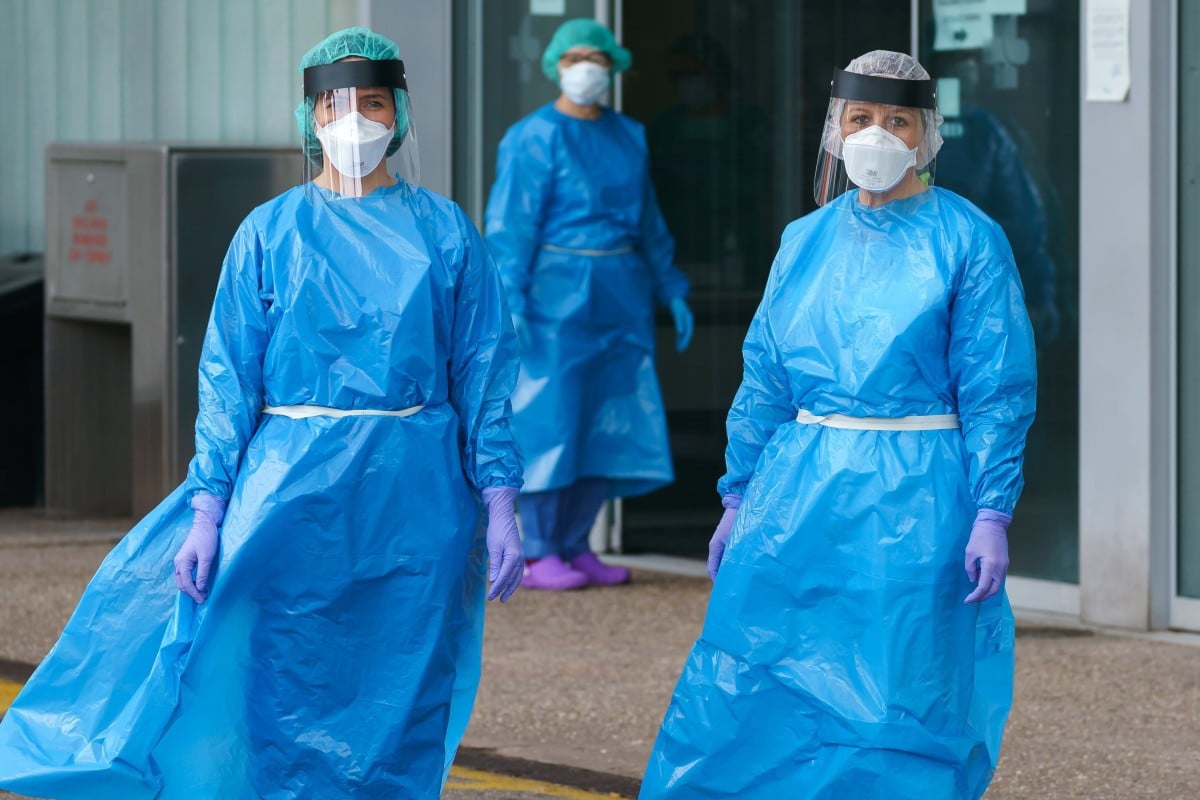
Health workers in protective gear outside an emergency entrance to a hospital in northern Spain. Photo: AFP
Overburdened hospitals and a shortage of protective measures and tests are taking a toll on Spanish medical professionals who are contracting Covid-19 – the illness caused by the new coronavirus – at an alarming rate.
To date, more than 15,000 health professionals in Spain – about 14 per cent of the national total – have been infected. In contrast, Italy reported that health workers accounted for about 10 per cent of its infections.
“I have tried to be careful, but when you work in a hospital, no one can guarantee that one of your colleagues doesn’t have the virus in the asymptomatic phase,” said ambulance crew member Xevi Mateu, who tested positive for the virus a week ago.
Mateu, who lives and works in Catalonia, said he thought he might have got infected during a meal break at the hospital or while on duty in the cramped space of an emergency vehicle.
Europe faces Easter indoors as Spain’s virus cases surge past 100,000
2 Apr 2020
Information on how to protect himself from the rampaging pandemic was conflicting, he said, and with no guarantee on future supplies he was forced to ration his use of protective equipment as soon as the demand for ambulance services began to exceed capacity.
Albert Gual, another emergency worker in Catalonia, said protocols had changed since he first started transferring Covid-19 patients to hospital, and he believes the shortage of protective equipment is to blame.
“At the beginning of the crisis, we threw away the glasses, the medical suit and the mask after one use. Now we are using one mask per day, until the stock runs out,” Gual said.
“Yesterday I talked to a colleague from the emergency service who told me they are overwhelmed – without material, without resources, without people. The medical suits are reused and sterilised until they have holes,” he said.
There have also been reports of doctors and nurses in Spain making their own protective clothing out of bin liners.
To ease the burden on Spain’s medical workforce, retirees have been asked to return to practice and newly licensed personnel have been recruited to make up the shortfall. One of the new recruits is Candela Lebrero, who completed her medical degree last year and is now a nurse at a hospital in Madrid.
The Spanish capital has seen the country’s largest number of infections – with more than 36,000 – and staff at the Madrid Principe de Asturias Hospital, where Lebrero works have been among those falling ill from the disease.
Reports of an overload of patients were very real, she said, with emergency rooms forced to send less serious cases to “medicalised hotels” and additional hospital wards switched to caring for Covid-19 patients.
As for rapid testing, it “hadn’t arrived yet” at Lebrero’s hospital, which was relying on PCR tests – the swab technique which identifies the presence of any genetic material belonging to the virus – as a diagnostic for both patients and health personnel who presented with symptoms, she said.
Similar problems have been reported across Spain and last week the health ministry’s coordinator for the emergency response, Fernando Simon, acknowledged the difficulties for health care workers to access protective equipment.
On March 25, Simon admitted the jump in infections among medical staff was due to “a market access problem” as supplies “are scarce and there is non availability” – a problem not limited to Spain.
“We are on the way to a solution,” he said. On Monday, Simon also tested positive for the disease.
While equipment shortages are a global problem, Spain was hit particularly hard after its two largest distributors of medical supplies – located in France and Germany – were ordered to stop selling by their governments in early March, fearful of depleted stocks in their own countries as the pandemic spread.
The decision, which was criticised for being contrary to the spirit of the European Union, forced the Spanish government to turn to other measures, including the purchase of €432 million (US$467 million) worth of supplies from China.
A freight corridor was also opened to speed deliveries, and Spanish manufacturers were put on a “war footing” to urgently switch to making medical supplies. The car industry is now turning out respirators and gels, while textile manufacturers have turned their hand to producing gowns and face masks.
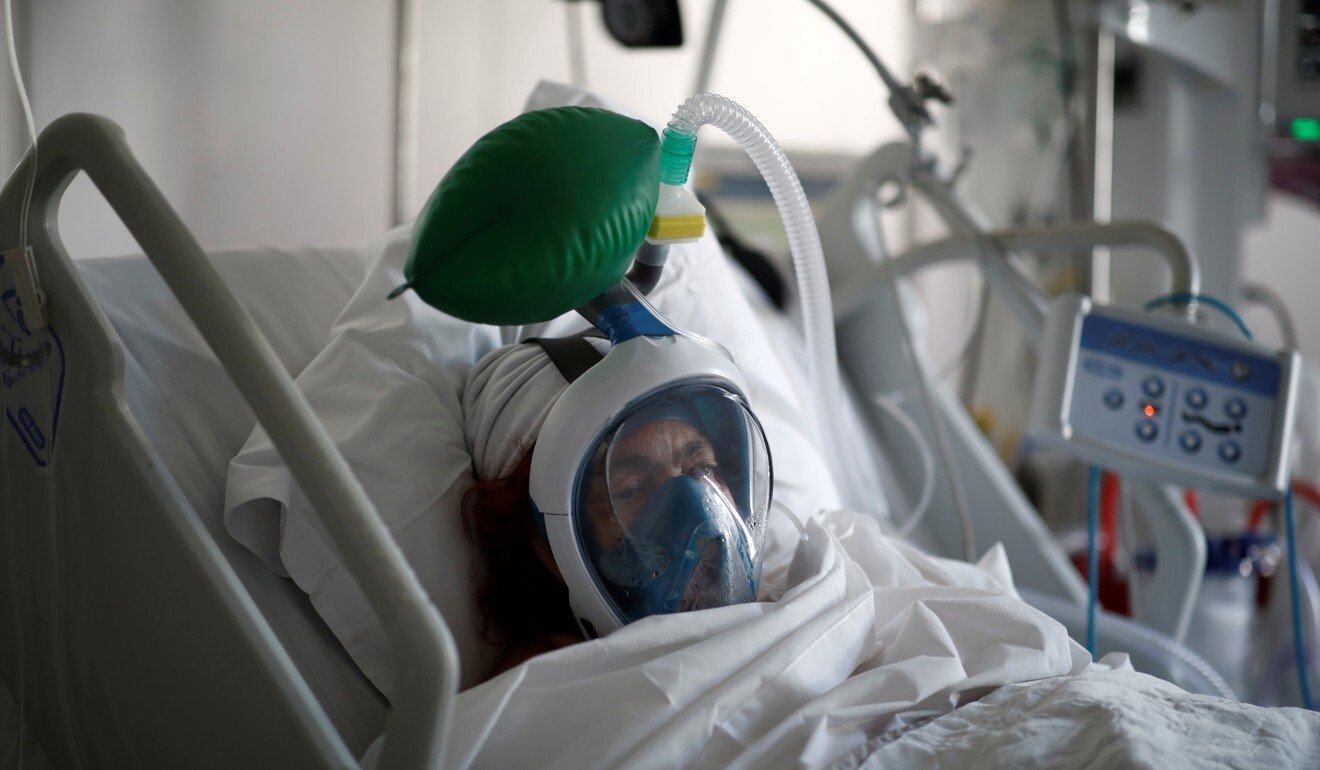
Sports equipment chain Decathlon has even adapted its snorkel goggles for medical use and donated its entire stock to Spanish hospitals.
A Covid-19 patient wears a full-face snorkelling mask which has been converted into a ventilator. Photo: Reuters
The scramble to address shortages in Spain’s overstretched health system has not been without problems. Last week, the government withdrew 58,000 Covid-19 rapid test kits
it bought from a Chinese company, after their accuracy rate was reported to be just 30 per cent.
China said the kits were not approved for sale and not included in supplies sent by Beijing to Spain.
It is not clear if the supplies from China have arrived, but on the ground medical personnel said they had not yet seen the equipment.
“It is assumed that the new ones have already arrived, but they have to pass the approval of the Carlos III Public Health Institute [a Spanish public health research institute], and their use is not yet widespread,” Laura Díez, press officer for the State Confederation of Medical Unions said.
“Their arrival will improve the situation since at least it would be known if someone in contact with the infected could transmit the disease, especially health personnel,” she said.
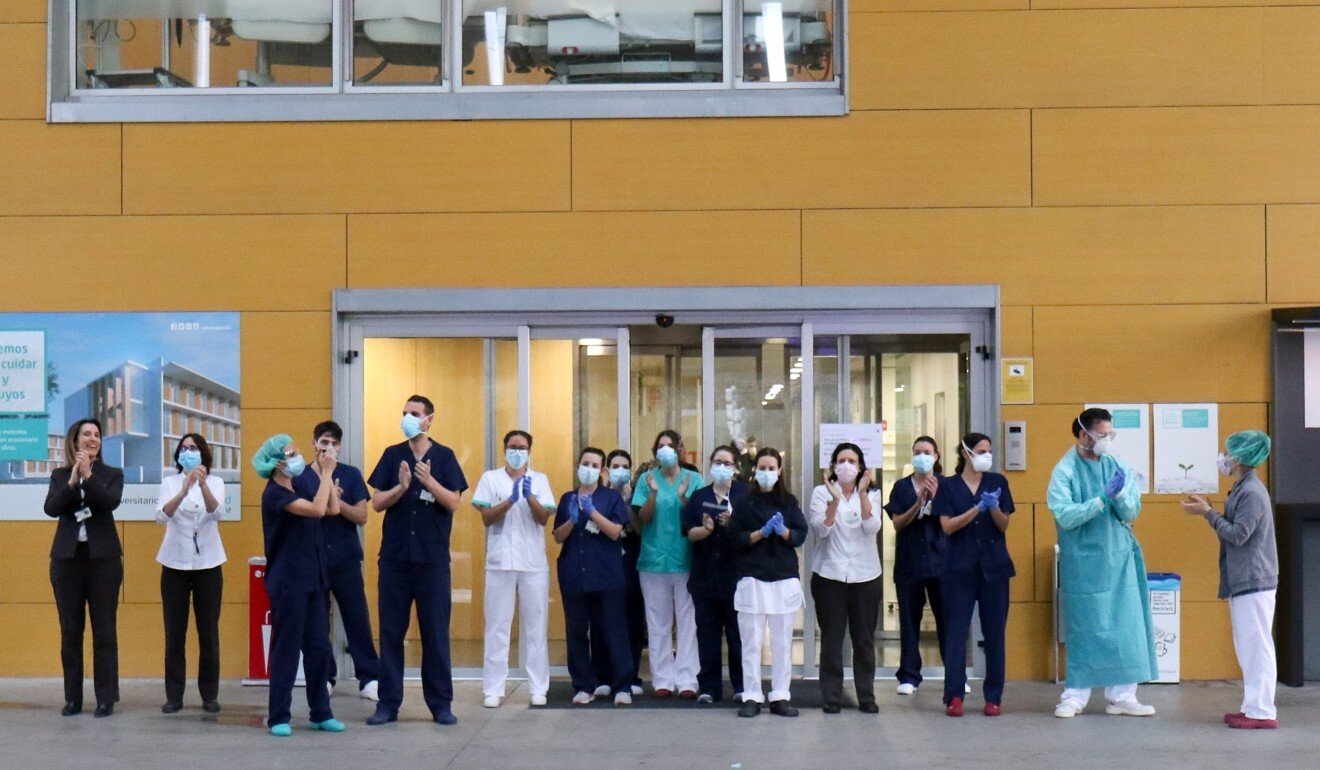
Medical staff in Spain acknowledge the daily applause from the public which has become a feature of the coronavirus pandemic. Photo: DPA
Several health organisations have appealed to the courts in their desperate bid to get hold of protective equipment. A Madrid court did accept the argument by an association of doctors that the authorities should be forced to provide adequate supplies to all health personnel.
But the Supreme Court refused to support the claim, saying it recognised the government was doing everything it could.
“We presented precautionary measures and they were dismissed, we have filed an appeal,” Díez said.
“At the moment we have no answer. Authorities said that planes with the material are arriving, but at the hospitals, they are not seen.”
Spain says Covid-19 can lead to closer ties with Chinese medical suppliers
29 Mar 2020
Meanwhile, the General Councils of Dentists, Nurses, Pharmacists, Doctors, and Veterinarians, which represent more than 700,000 health professionals in Spain, expressed its “absolute rejection” of new guidelines for medical workers set by the health ministry.
In a notice issued on Friday, the ministry said that health professionals that had not been tested for Covid-19 but who took time off should return to work seven days after the onset of symptoms as long as they did not have a fever or respiratory problems.
Once back at work, they should wear a surgical mask for 14 days from the onset of symptoms and avoid contact with other people.
The general councils said some of the guidelines represented “a serious risk” to the health of professionals and their patients.
Ambulance worker Mateu is currently in isolation at home as he recovers from the disease, but his thoughts are with his colleagues and their daily struggle. He said he thanked his supervisors and coordinators for working hard every day.
With so many of the staff themselves sick, there was a lot of stress on those who were still at work, he said.
“I have the feeling that the effort and management is not being done from the top down, but from the bottom up: from us who work directly with the patients, our supervisors and they are continuing the chain of gestures and efforts,” he said.
The coronavirus pandemic has completely changed patterns of consumer psychology across the world, experts say
Complexity of the crisis, the number of variables and its magnitude make a consumer recovery unprecedented and difficult to predict
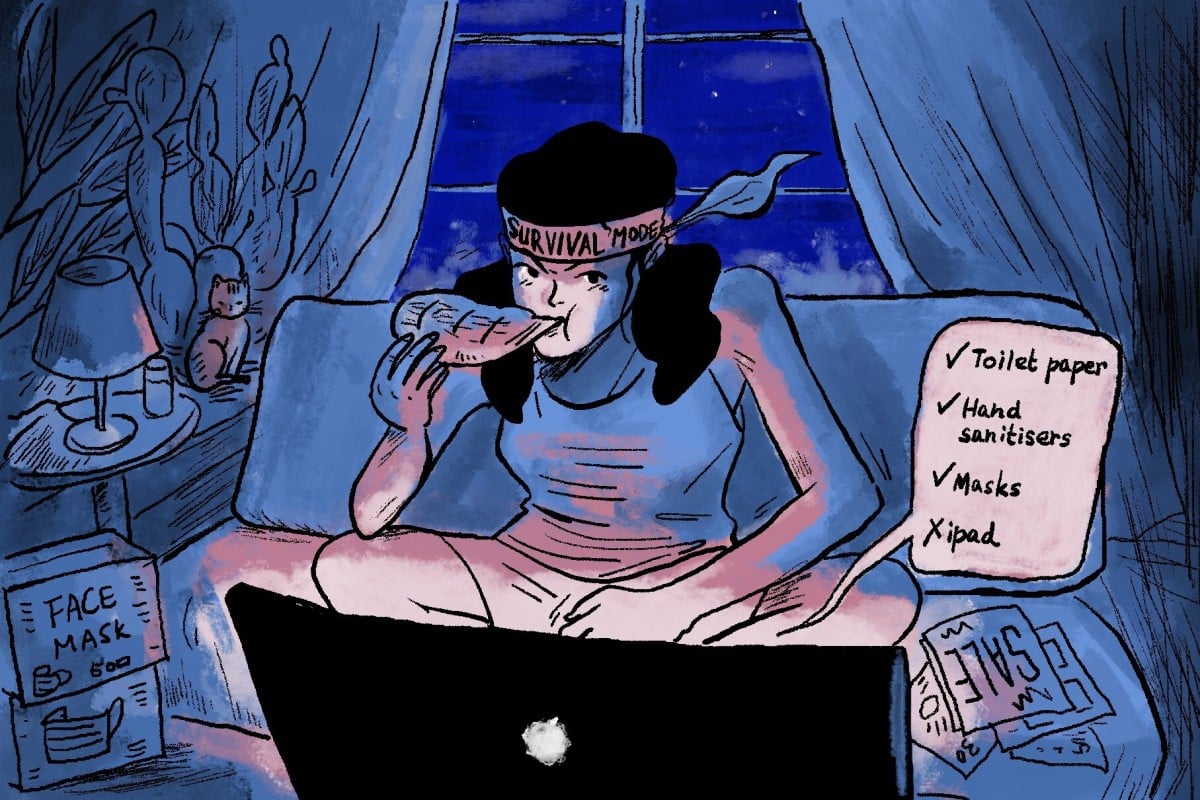
The coronavirus has caused panic buying around the world as consumers frantically stockpile of goods such as toilet paper, hand sanitisers and masks. Illustration: Brian Wang
Before the coronavirus crisis began rippling through the global economy, Susan Wang had big plans for 2020.
Not only was she going to buy a new Apple MacBook and iPad, plus a projector so she could host friends for movies at home, but she was set on making a career move.
“I was planning to change my job, but my headhunter told me that all recruitment has been postponed to the second quarter,” said the 27-year-old who works for a British company in Hong Kong.
“Our headquarters in London has a plan for redundancy, too. It is better to save some money in case I get laid off.”
As Covid-19 spreads across the world, sending stock markets reeling and prompting big companies to slash jobs, Wang has become increasingly frugal like scores of other consumers from China to the United States.
She has stopped eating at restaurants and now tries to keep her weekly food bill under HK$500 (US$64), whereas in the past she wouldn’t think twice about spending HK$100 per meal.
Amid mounting uncertainty, the coronavirus pandemic – which has claimed the lives of more than 41,000 people and infected at least 842,000 worldwide – is fundamentally changing consumer behaviour in Asia, Europe and North America.
Consumer experts said the 2009 global financial crisis, the Great Depression that started in 1929 and the September 11 terrorist attacks give some clues about how and when global consumption might recover. But the complexity of this crisis, the number of variables and its magnitude make this consumer recovery unprecedented and difficult to predict, they added.
Coronavirus: What impact will the economic fallout from the Covid-19 pandemic have on you?
“The coronavirus pandemic has completely changed patterns of consumer behaviour all over the world. People are afraid, and when people are afraid, they go into survival mode,” said Jesse Garcia, a Los Angeles-based consumer psychologist, who is also the CEO of market consulting firm My Marketing Auditors.
plummeted a record 44 per cent in February and those figures are only expected to get worse, with sales forecast to slump between 30 and 40 per cent in the first half of the year, according to the Hong Kong Retail Management Association.
In the US, retail sales dropped by 0.5 per cent in February, even before many states had issued stay-at-home orders to protect the world’s largest economy. The decline was the biggest fall since December 2018.
Experts say non-essential products and services are set to be worst affected by the coronavirus pandemic, while goods and services that can be consumed at home will see a spike in sales.
The coronavirus pandemic has completely changed patterns of consumer behaviour all over the world. People are afraid, and when people are afraid, they go into survival mode – Jesse Garcia
“Online consumer behaviour is frenetic,” said Ross Steinman, a professor of psychology at Widener University in the US state of Pennsylvania. “Consumers are refreshing and refreshing and refreshing websites to secure grocery delivery times, purchase paper towels from their usual big box retailer and scavenge for rice and canned soup from third party sellers on Amazon.
“A pronounced spike in coronavirus cases will only amplify the freneticism.”
So far, one of the biggest shortages for consumers is toilet paper. Television stations across the globe have beamed images of empty supermarket shelves and huge queues as people hoard toilet paper rolls, masks and hand sanitiser.
The frantic stockpiling can be explained by a psychological concept called informational conformity, said Vicki Yeung, associate professor at the Department of Applied Psychology at Lingnan University in Hong Kong.
A pronounced spike in coronavirus cases will only amplify the freneticism – Ross Steinman
“When people lack knowledge and are in an uncertain situation, they tend to follow the group’s behaviour and blindly conform, but once they obtain more information, and digest and process the situation, the panic gradually fades away,” she said.
“During this Covid-19 pandemic, people generally feel jittery and anxious because they feel their sense of control has disappeared.”
Unlike other recent global crises such as the September 11 attacks, the coronavirus is less a one-time sharp shock to the system and more of a rolling source of anxiety that could retreat and resurface repeatedly, consumer behaviour experts said.
This was the pattern with the Black Death plague that hit Europe in 1347 and returned episodically over many years, ultimately killing millions of people.
During this Covid-19 pandemic, people generally feel jittery and anxious because they feel their sense of control has disappeared – Vicki Yeung
“It may be we’ll have to shut down things again in October or August. And this could go on for years,” said Charley Ballard, an economist with Michigan State University in the US. “The more that happens, the more damage it does to buoyant consumer psychology.”
Furthermore, relative to the 2009 financial crisis and even the Great Depression, when much of the damage was concentrated at least initially in the financial sector, this crisis has seen virtually the entire economy grind to a halt all at the same time, devastating employment and consumption.
Last week, a record 3.3 million Americans applied for unemployment benefits within one week, as restaurants, hotels, barber shops, gyms and retail outlets shut down in a nationwide bid to stem the pandemic. The previous record of 695,000 was set in 1982.
On Tuesday, Goldman Sachs predicted the US jobless rate will hit 15 per cent in the second quarter of this year from the coronavirus economic freeze, and could rise further beyond that to near the historic peak of 24.9 per cent seen in 1933 during the Great Depression. Economists at the St. Louis district of the US Federal Reserve projected unemployment could cost as many as 47 million jobs in the US this year, sending the unemployment rate past 32 per cent before making a sharp recovery.
US now has world’s most coronavirus cases, surpassing China
China’s unemployment rate jumped to 6.2 per cent for January and February from 5.2 per cent in December and 5.3 per cent a year earlier. It was the highest level since records began in 2016, but did not include China’s estimated 291 million migrant workers.
Consumer spending accounts for more than 60 per cent of the Chinese economy and drives 70 per cent of the US economy. But with the pandemic causing many people to go into hibernation and likely to lead to cycles of job cuts, economists have predicted a consumer-led global recession by the second quarter of this year.
Just how long it will take for consumer behaviour to return to normal depends on each person’s psychological resilience, including how quickly they can adapt to change, how optimistic they are and whether they can adopt strategies to regain a sense of control, Yeung said.
Anirban Mukhopadhyay, chair professor of marketing at Hong Kong University of Science and Technology said as long as the coronavirus threat was still present, people would remain fearful to some extent. But he added that people were resilient.
Satellite images show world sites deserted amid coronavirus pandemic
“Human beings adapt to events and stimuli over time,” Mukhopadhyay said. “Research has shown that even people who win lotteries tend to return to their earlier levels of life satisfaction after some months, as do people who have to have amputations.
“So even if the source of the fear does not go away, we learn to live with it.”
Ballard, from Michigan State University, estimated it could take upwards of two years for American consumers to feel secure enough in their jobs and gain enough confidence to fully open their wallets. A longer and more episodic duration for the disease could push that higher, he added.
Further complicating the consumer picture, he said, is that many supply chains are at risk of breaking. And consumers will be wary of spending for a while in many traditional areas, including crowded sporting events and concerts, restaurants and flights.
A new phase of coronavirus blame game: what is the legacy of Covid-19 on global supply chains?
Some experts have even suggested that consumer behaviour may be permanently changed as a result of the pandemic.
“It seems very unlikely that people will get back to life as it was before, once the coronavirus is over,” said Andreas Kappes, a lecturer in psychology at City University of London.
“People’s behaviour is extremely orthodox, often referred to as the status quo bias and captured in expressions like ‘past behaviour best predicts future behaviour.’ Now, the crisis forces us to change our behaviour, radically, and we might discover that new way suits us better.”
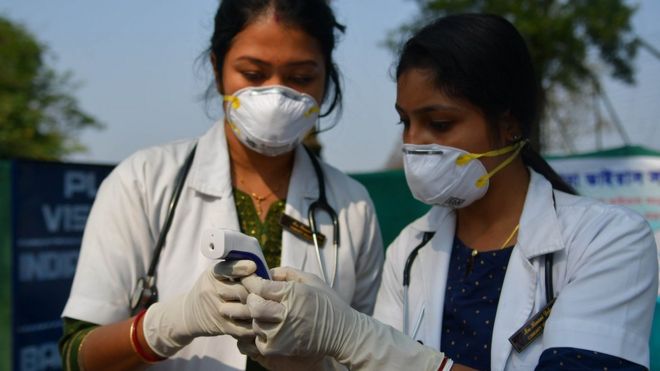
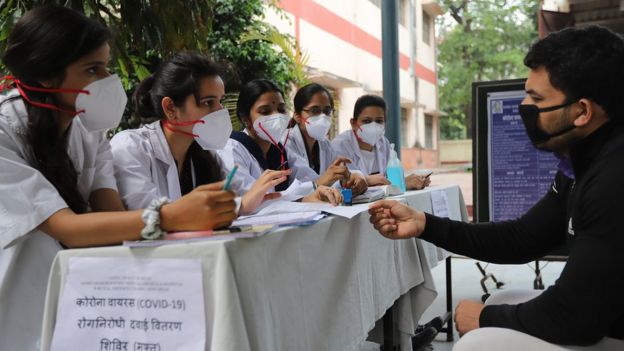
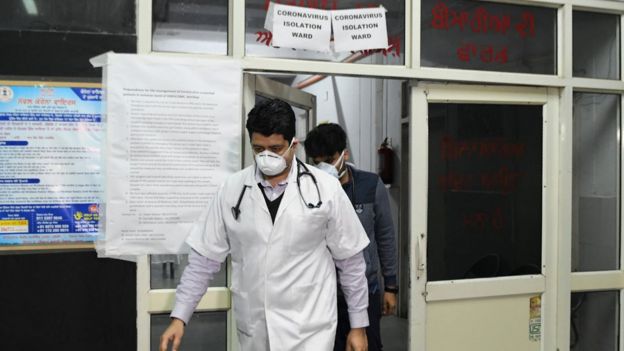
Image copyright MAJORITY WORLDImage caption Indian doctors have been working extra hours to halt the spread of the coronavirus
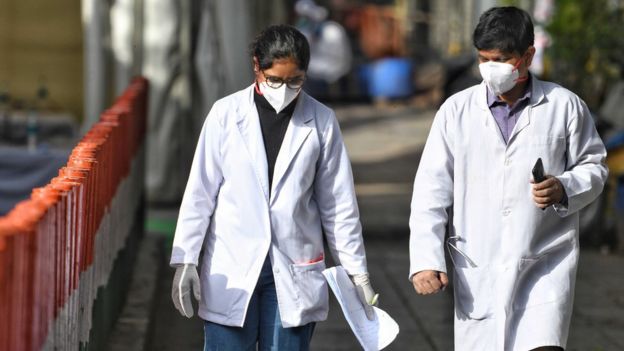
Several healthcare workers in India have been attacked as they battle to stop the spread of the coronavirus.
Reports say doctors have been spat at and chased away from homes, and that in one case patients directed abusive and vulgar language towards female nurses.
Some physicians and their families have also been ostracised by their neighbours because of their exposure to patients infected with Covid-19.
India has reported more than 2,300 cases and at least 50 people have died.
One video, which has gone viral, showed a mob throwing stones at two female doctors wearing personal protective equipment in the central city of Indore.
The doctors had gone to a densely-populated area to check on a woman suspected of having Covid-19 when they came under attack.
Despite being injured, one of the doctors seen in the video, Zakiya Sayed, said the incident “won’t deter me from doing my duty”.
“We were on our usual round to screen suspected cases,” she told the BBC. “We never thought that we would be attacked.”
“I had never seen scenes like that. It was frightening. We somehow fled from the mob. I am injured but not scared at all.”
Dr Sayed added: “We had no reason to suspect that people would be agitated against medical teams.”
“We are working to keep people safe. We had information about a person coming in contact with a Covid-19 patient. We were talking to the person when residents got agitated and attacked us.”
Image copyright HINDUSTAN TIMESImage caption Doctors have been abused and attacked in different parts of India
Seven people have been arrested in connection with the incident.
Dr Anand Rai, who is also a part of the Covid-19 taskforce in Indore, told the BBC: “Nothing can justify the attack against medical team. But it happened in a Muslim-dominated area where there is general distrust against the government.”
“So that anger spilled over and took the form of this attack. But whatever maybe the reason, nothing can justify violence, especially against doctors during a national health emergency,” he added.
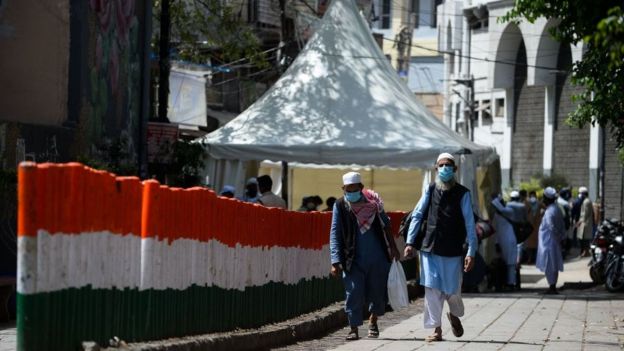
Thousands who attended the gathering in Delhi, organised by Islamic preaching group Tablighi Jamaat, have been put in quarantine, and authorities are still tracing others. It is believed that the infections were caused by preachers who attended the event from Indonesia.
At the Ghaziabad hospital, some of the quarantined attendees allegedly used abusive and vulgar language against members of staff.
Image copyright GETTY IMAGESImage caption Almost 400 cases of Covid-19 have been traced to a Tablighi Jamaat event in Delhi
“Some were walking naked in the hospital ward and harassing women doctors and nurses,” a doctor who works at the hospital told the BBC. “They kept asking for cigarettes and tobacco.”
A senior police officer in the city told the BBC that cases had been registered against some people after doctors filed a complaint.
“Registering cases was the last resort. Police are still trying to make them understand the severity of the situation,” he said.
Image copyright SOPA IMAGESImage caption Doctors and nurses have asked people to follow their advice and not panic
Similar incidents have been reported in neighbouring Delhi.
Some attendees of the Tablighi Jamaat event who are being held in a quarantine facility run by the railways are said to have spat at doctors and misbehaved.
Deepak Kumar, spokesman for Northern Railways, said the situation there was now under control.
“The attendees have been counselled and they are now co-operating with the staff,” he said.
Delhi’s state government has reportedly written to the police, requesting more security for medical staff.
Reports of attacks on doctors and nurses have also come from the southern city of Hyderabad and the western city of Surat.
A doctor who was treating coronavirus patients is Hyderabad’s Gandhi Hospital was attacked on Wednesday.
Police have promised the doctor that “strict action will be taken against the culprits”.
Image copyright NARINDER NANUImage caption Prime Minister Narendra Modi has said that doctors are “front-line soldiers”
But it is not just a work where medical workers are facing discrimination. It has followed them home.
One doctor, who did not wish to be identified, said she felt “extremely disheartened when I learnt that even my neighbours think that me and my family shouldn’t be allowed to live in the building”.
“We want our families to be safe. But we are being discriminated for doing our job.”
“A number of doctors have tested positive across India and that shows how tough our job is at the moment. And that is why we need everybody’s support to win this war against coronavirus.”
She added: “We are following all safety protocols. We are not meeting even our families and that is stressful.”
“But seeing this open discrimination just breaks my heart. But we will go on because there is really no other option.”
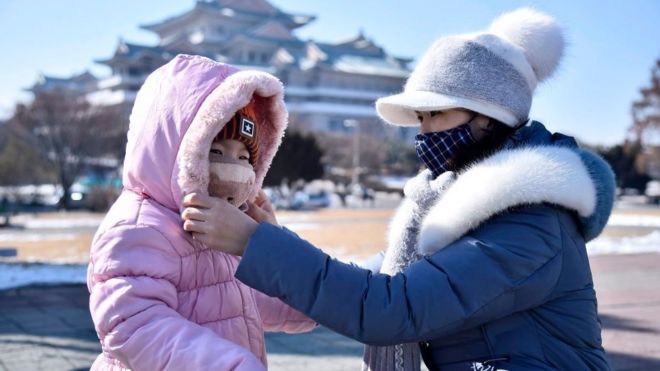
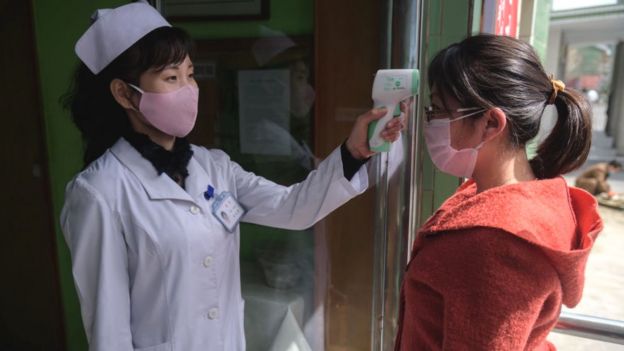
Image copyright GETTY IMAGESImage caption North Korea says not a single person has the virus
North Korea’s claim that “not a single person” in the country has been infected with the coronavirus is facing growing scepticism.
It has credited strict containment measures and the shutting down of its borders for this success.
But the top US military commander in South Korea has said this is “untrue”, calling it an “impossible claim”.
A North Korean expert told the BBC it was likely there were cases but unlikely a mass outbreak had happened.
There are currently more than one million coronavirus cases across the world and 53,069 deaths, according to a Johns Hopkins University tally.
Pak Myong-su, a director at North Korea’s Central Emergency Anti-epidemic headquarters, told news agency AFP on Friday: “Not one single person has been infected with the novel coronavirus in our country so far.”
“We have carried out pre-emptive and scientific measures such as inspections and quarantine for all personnel entering our country and thoroughly disinfecting all goods, as well as closing borders and blocking sea and air lanes.”
Could this be true?
US General Robert Abrams, head of the US military forces in South Korea, has said it is untrue that North Korea has no virus cases.
“I can tell you that is an impossible claim based on all of the intel that we have seen,” he said in a joint interview with news sites CNN and VOA.
However, he said he could not say exactly how many cases there were, not confirm where the information came from.
Oliver Hotham, managing editor of specialist news site NK News, agreed that North Korea has probably had cases.
“It’s very unlikely that it has seen no cases because it borders China and South Korea. [Especially with China], given the amount of cross border trade and the economic relationship I really don’t see how its possible they could have prevented it,” he said.
However, he adds that it is “unlikely” there is a full scale outbreak.
“They really did take precautions early. I think it’s possible they’ve prevented a full on outbreak.”
How has North Korea reacted to the crisis?
North Korea has indeed moved much more quickly against the virus than many other countries in the region.
In late January, it sealed off its borders and later quarantined hundreds of foreigners in the capital Pyongyang. During that time, the number of cases in China were growing exponentially.
An NK News report also suggests that up to 10,000 citizens had been placed under isolation in the country – around 500 still remain in quarantine.
Are those in North Korea even aware of the virus?
Most people in North Korea are “really aware” of what’s going on, says Mr Hotham.
“There’s been so much media coverage. Almost every day you have a whole page about the efforts the country is taking domestically and also the international situation,” he told the BBC.
Fyodor Tertitskiy, a senior researcher at Kookmin University, also adds the country is currently running an “ongoing propaganda campaign teaching people how to prevent the spread of the virus”.
The answer is, according to experts – better than you would think – depending on where in North Korea you are.
Mr Tertitsky says the North’s healthcare system is “much, much better than other countries with a similar GDP per capita”.
“What they did was to train a large number of doctors who, although less qualified and infinitely paid less than their colleagues in the West, can still provide basic healthcare to the population,” he told the BBC.
Mr Hotham agrees, but says that the number of doctors in North Korea enables the country to deal with basic illnesses, but perhaps not so much more serious illnesses which also need more healthcare equipment.
Sanctions have also restricted North Korea’s ability to obtain advanced medical equipment.
Mr Hotham adds that the care you receive largely depends on where you are. The capital, Pyongyang, for example, has various medical facilities, but those in rural areas might not be so lucky.
“Some provinces are desperately underfunded, where you’ll have hospitals with no running water or stable power.”
Image copyright GETTY IMAGESImage caption Some international experts say North Korea’s health system is appalling
Why might North Korea be trying to cover up cases?
For North Korea to admit they have cases now could be a sign of “defeat”.
“The state has put a lot of stock into its response and there has been so much propaganda about how well they’re doing,” said Mr Hotham.
“I think for them to admit now that there were cases is essentially to admit defeat. I think it would also cause panic and people would freak out. If you have large movements of people trying to get away, that could create instability and even more infections.”
Mr Tertitskiy also puts this down to North Korea trying to preserve its self-image.
“The country is very paranoid about giving away any information that may make it look bad. Their basic rule is to say nothing unless there is a good reason to do otherwise.”
Throughout the world, overworked health care professionals are being infected with Covid-19, yet the Lion City has kept numbers low
Preparation, planning, patient ratios and protective equipment have all played a part. Still, even the best gear cannot guard against discrimination
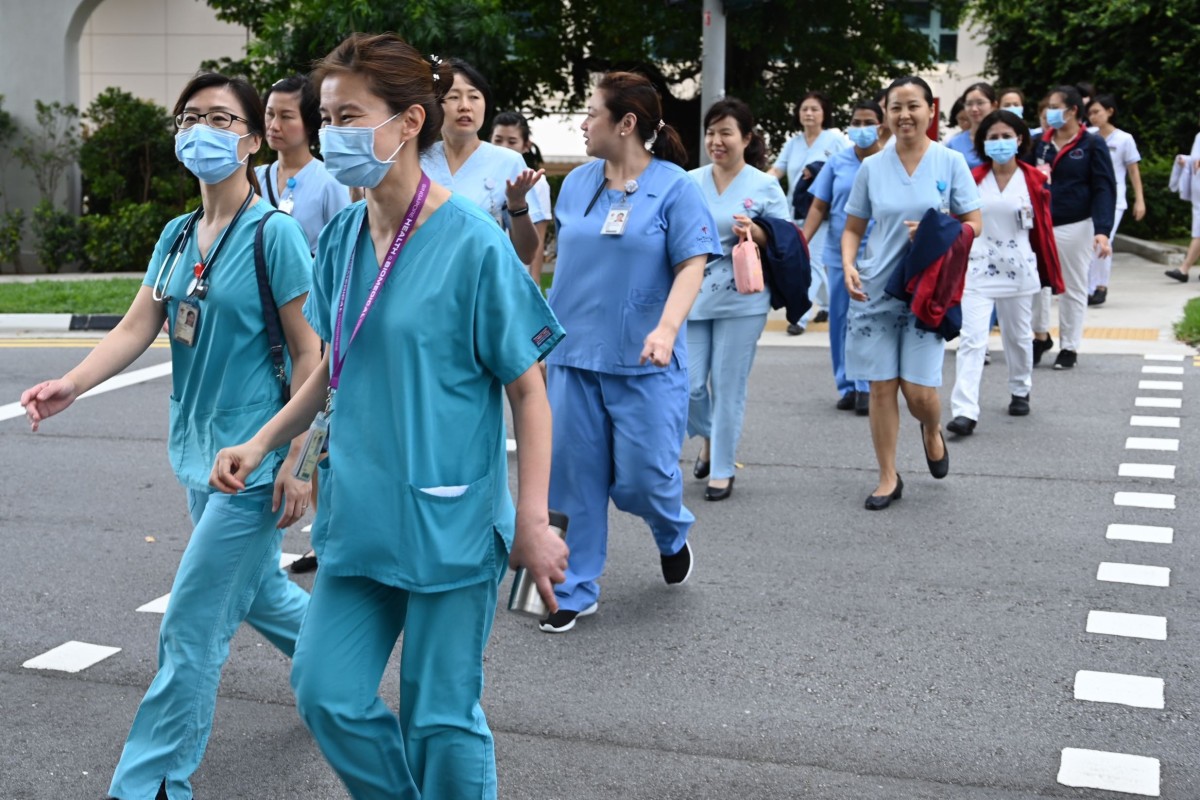
Medical staff walk to the National Centre for Infectious Diseases building at Tan Tock Seng Hospital in Singapore. Photo: AFP
Uncooperative patients, long hours and a lack of protective equipment are hampering health care workers across the world as they take the fight to the coronavirus, leading many to fall sick themselves.
In Malaysia, a pregnant woman who did not disclose that her father was infected tested positive after giving birth, leading to the shutdown of the entire hospital for cleaning. In the Philippines, nine doctors have died, two of whom had dealt with a patient who lied about her travel history.
In Spain, where more than 5,400 health care workers have been infected, accounting for about 14 per cent of the country’s patients, there are no longer enough workers to care for patients.
In Italy, which has more than 69,000 patients, the virus killed a doctor who had no choice but to work without gloves.
In the United States, which has surpassed China to become the world’s most infected nation with more than 83,000 people testing positive for Covid-19, hospitals are being overrun with patients.
Health care staff in the country say patients are packed into emergency wards and intensive care units (ICUs), further raising the risk of infections. They also report shortages of ventilators, face masks, gowns and shields.
The US Centres for Disease Control and Prevention on March 7 released interim guidelines saying health care workers exposed to the coronavirus could be asked to return to work as long as they wore face masks and were not showing symptoms, if their employers had no other manpower available.
Malaysian health workers at Kuala Lumpur International Airport. Photo: AFP
A REASON FOR OPTIMISM
However, amid all the gloom, Singapore’s experienceis being held up as a reason for optimism. The city state has reported more than 630 cases of infection, all of which are being treated in hospital, yet only a handful of its health care professionals have been infected. What’s more, even these cases, according to Vernon Lee, director of communicable diseases at the Ministry of Health, are thought to have been infected outside the health care setting.
Experts suggest this has been more than just luck, pointing to a case in which 41 health workers were exposed to the coronavirus in a Singapore hospital yet evaded infection.
The workers had all come within two metres of a middle-aged man with Covid-19 who was being intubated, a procedure which involves a tube being inserted into the patient’s trachea. The procedure is seen as being particularly hazardous for health workers as it is “aerosol generating” – patients are likely to cough.
The workers had not known at the time that the man had the virus and all were quarantined after he tested positive. However, on their release two weeks later, none of them had the virus.
Coronavirus: as Malaysia braces for third wave, doctors make their own face masks
27 Mar 2020
The case has come to widespread attention partly because the workers were wearing a mix of standard surgical masks and the N95 mask, which doctors see as the gold standard as it filters out 95 per cent of airborne particles.
The conclusion, published in The Annals of Internal Medicine this month, was this: “That none of the health care workers in this situation acquired infection suggests that surgical masks, hand hygiene, and other standard procedures protected them from being infected.”
Surgeon and writer Atul Gawande mentioned the case in an article for The New Yorker on how health care workers could continue seeing patients without becoming patients. He said there were things to learn from Asia and that some of the lessons came out of the “standard public health playbook”. In other words, there is much to be said for social distancing, basic hand hygiene and cleaning regimens.
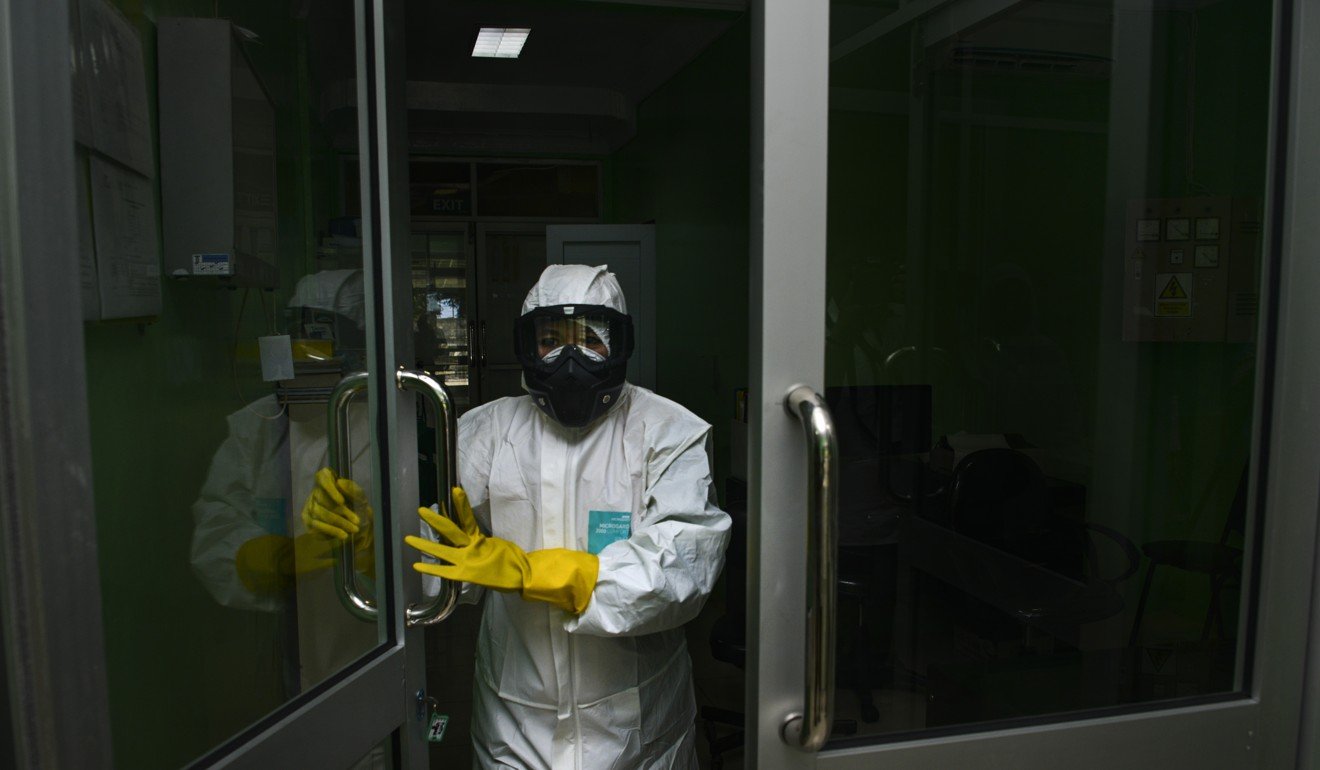
A health worker in protective gear walks into a quarantine room at a hospital in Banda Aceh, Indonesia. Photo: AFP
COMING TOGETHER
With critical supplies running short in many countries, experts say it is increasingly vital that countries share both knowledge and resources.
To this end, China has been donating personal protective equipment to places including the Philippines, Pakistan and Europe. China’s richest man Jack Ma is donating 1.8 million masks, 210,000 Covid-19 test kits and 36,000 pieces of protective clothing to 10 countries in Asia.
At the same time, doctors are encouraging the Western world to learn from Asia.
Infectious diseases expert Leong Hoe Nam said that being “bitten by Sars” (severe acute respiratory syndrome) in 2003 had prepared Asia for Covid-19, while Western countries were not similarly prepared and hence lacked sufficient protective equipment.
He pointed to how about 2,000 health care workers had fallen sick in China early in the outbreak because workers did not initially have protective gear. The trend reversed as equipment became available.
“Once the defences were up, there were very few health care workers who fell sick at work. Rather, they fell sick from contact with sick individuals outside the workplace,” he said.
Malaysia is a case in point. While it has reported 80 health care workers falling ill, most are thought to be community infections.
Coronavirus: Doctor explains the proper way to wash your hands and put on a face mask
In a webinar organised by Caixin Global on Thursday night, Peng Zhiyong, an intensive care specialist at Zhongnan Hospital of Wuhan University, shared how they managed a shortage of personal protective equipment early on in the outbreak by rationing workers to two sets of gear per shift.
Meanwhile, in the Philippines, doctors from Manila’s Chinese General Hospital held a video conference call with doctors in Zhejiang to learn from China’s experience of treating Covid-19 patients.
Crowdsourcing platforms have also been created to share advice. The Brigham and Women’s Hospital in Boston has released guidelines for treating critically ill patients and its website includes information from Chinese doctors.
Why Singapore’s coronavirus response worked – and what we can all learn
27 Mar 2020
The Jack Ma Foundation has also launched an online platform for doctors and nurses around the world to share knowledge on fighting the virus. “One world, one fight,” it said in a tweet.
Associate Professor Jeremy Lim from the global health programme at the Saw Swee Hock School of Public Health said it was crucial for countries to work together.
“Viruses don’t respect borders. Countries have to share information and help each other as we are only as strong as the weakest link. Any country can become a reservoir of disease and the world may then be forced to endure a ping-pong of outbreaks over and over again.”
And the advice of Lee, at Singapore’s Ministry of Health? “Practise good hygiene and wash hands regularly.”
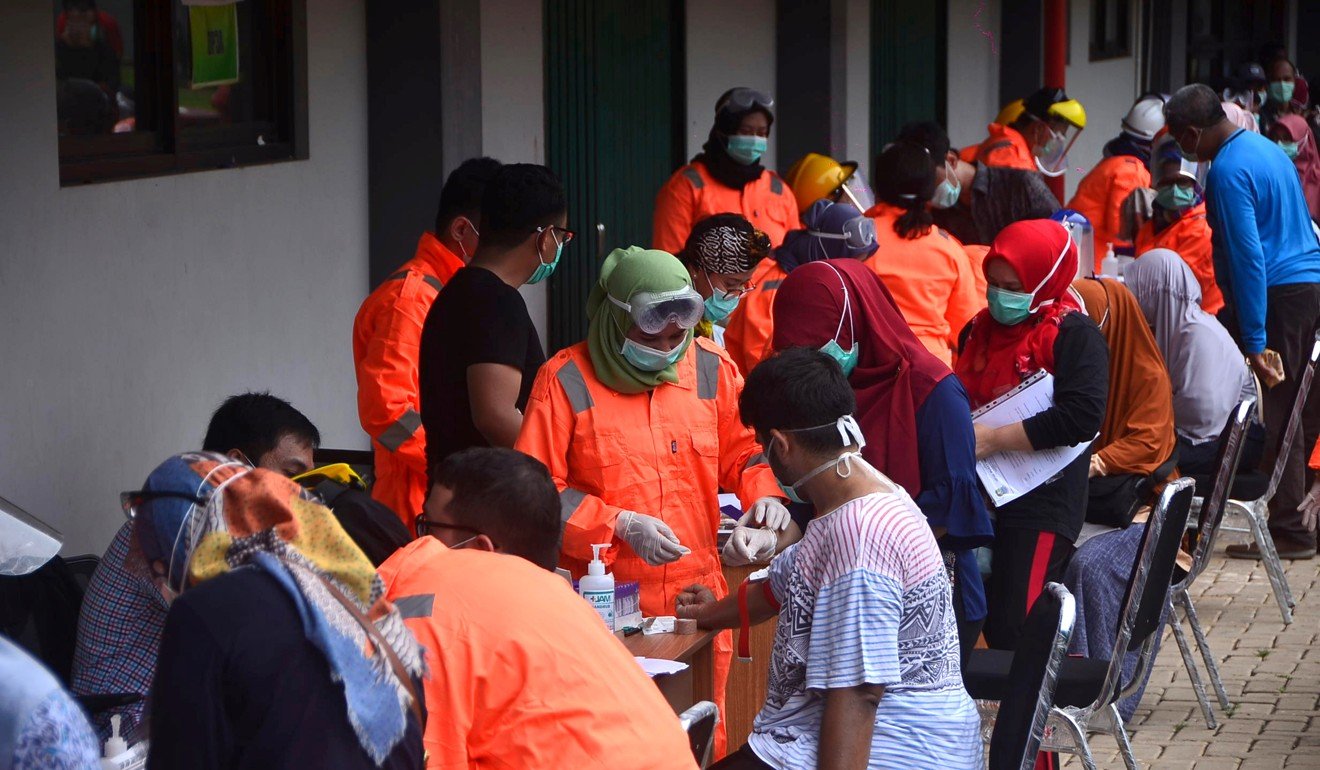
Indonesian medical staff administer mass testing for Covid-19 in Bekasi, West Java. Photo: AFP
SINGAPORE, A CASE STUDY
Amid this sharing of advice, it is often Singapore that is held up as an example to replicate. Despite the country grappling with a rising load of Covid-19 patients, most of whom have recently returned to the city state from abroad, its health care system has continued to run smoothly. Doctors say this is because it has been preparing for a pandemic ever since Sars caught it by surprise. During the Sars outbreak, health care workers accounted for 41 per cent of Singapore’s 238 infections.
Consequently its hospitals swung into contingency planning mode early on in the coronavirus outbreak, telling staff to defer leave and travel plans after its first cases emerged.
Meanwhile, its hospitals swiftly split their workforces into teams to ensure there were enough workers if the outbreak worsened, and to ensure workers got enough rest.
Singapore has 13,766 doctors, or 2.4 doctors for every 1,000 people. That compares to 2.59 in the US, 1.78 in China and 4.2 in Germany. Places like Myanmar and Thailand have fewer than one doctor for every 1,000 people.
Coronavirus: Covid-19 could live on in Indonesia long after world recovers
22 Mar 2020
“The objective is that you can run essential services with the greatest amount of security. Make sure functional units have redundancy built in, and are separate from each other. It depends on what you feel is sufficient to carry on services if one team is affected, factoring in rest periods and some system of rotation,” said Chia Shi-Lu, an orthopaedic surgeon.
The key is to ensure a good doctor-to-patient ratio and ensure there are enough specialists for the critical work, such as doctors and nurses who can provide intensive care, and know how to operate mechanical ventilators or machines to pump and oxygenate a patient’s blood outside the body.
At the emergency department where paediatrics emergency specialist Jade Kua treats Covid-19 cases in addition to regular emergencies, doctors are split into four teams of 21. Each team takes alternate 12-hour shifts and does not interact with other teams.
“We are in modular teams so the teams move together. So you and I would both do morning, off, night, off, morning off. Together. And then the other teams would do the same and we don’t intermingle,” said Kua.
US now has world’s most coronavirus cases, surpassing China
Chia, who works at the Singapore General Hospital, said doctors had been split up according to their functions.
“We try not to meet at all with the other teams as much as possible. We’ll just say hi from across the corridor. Meals are the same. All our cafeterias and everything have got social distancing spaced in already,” said Chia, who is also a member of parliament and chairs a shadow committee on health.
Chia said the health care system could also tap on doctors in the private sector.
Not every country has a plan like this. Last year’s Global Health Security Index by the Economist Intelligence Unit found that 70 per cent of 195 countries scored poorly when it came to having a national plan for dealing with epidemics or pandemics. Almost three in 10 had failed to identify which areas were insufficiently staffed. In India, with a population of 1.3 billion, only about 20,000 doctors are trained in key areas such as critical care, emergency medicine and pulmonology.
Singapore, Hong Kong, Taiwan: the real coronavirus world leaders
19 Mar 2020
In contrast, Singapore published its first Influenza Pandemic Preparedness and Response Plan in June 2005 and has since honed it to a tee. Hospitals regularly war-game scenarios such as pandemics or terrorist attacks and the simulations are sometimes observed by the Ministry of Health, which grades the performance and recommends areas for improvement.
The plan also covers the need to stockpile equipment to avoid the sort of shortages many countries are now facing, another lesson inspired by Sars when masks, gloves and gowns were in short supply.
In a pandemic preparation paper published in 2008, Singapore public health specialist Jeffery Cutter wrote that Singapore’s stockpile was sufficient to cover at least 5 to 6 months’ use by all front-line health care workers.
During the Covid-19 outbreak, it has also told citizens to not wear masks so it can conserve supply for medical staff.
Having enough protective gear has reassured Singapore’s health care workers such as Kua, a mother of six who blogged about her experience fighting Covid-19. Kua said: “I’m safe and my family is safe.”
India’s poor hit hard by 21-day nationwide lockdown amid the coronavirus pandemic
SOMETHING YOU CAN’T GUARD AGAINST
Despite the many positives to emerge from the Lion City, its health care workers are struggling with another problem: discrimination.
While in France, Italy and Britain, residents cheer health care workers from their windows, in Singapore health care workers are seen by some people as disease carriers.
“I try not to wear my uniform home because you never know what kind of incidents you may encounter,” said one Singapore nurse. “The public is scared and wearing our uniforms actually causes quite a bit of inconvenience. One of my staff tried to book a private-hire car to the hospital for an emergency and she was rejected by five drivers.”
There is a similar stigma in India, where the All India Institute of Medical Sciences has appealed to the government for help after health workers were forced out of their homes by panicked landlords and housing societies.
“Many doctors are stranded on the roads with all their luggage, nowhere to go, across the country,” the institute said in a letter.
Lim, from the Saw Swee Hock School of Public Health, said the worst human impulses and “every man for himself” attitudes could emerge in crises and “that is exactly why governments have to step in”.
Discrimination could affect both the performance and motivation of health care workers, Lim warned.
Meanwhile, when health care workers are infected, it creates a “triple whammy” threat.
“It means one fewer professional in an already-strained system, another patient to care for and, potentially, a team of colleagues who need to be quarantined,” said Lim.
“We must do everything possible to keep our health care workforce safe and free from Covid-19.” ■
SEOUL/TOKYO (Reuters) – With more employees working from home to help slow the spread of the coronavirus, demand is surging for laptops and network peripherals as well as components along the supply chain such as chips, as companies rush to build virtual offices.
Many firms have withdrawn earnings forecasts, anticipating a drop in consumer demand and economic slump, but performance at electronics retailers and chipmakers is hinting at benefits from the shift in work culture.
Over the past month, governments and companies globally have been advising people to stay safe indoors. Over roughly the same period, South Korea – home of the world’s biggest memory chip maker, Samsung Electronics Co Ltd – on Monday reported a 20% jump in semiconductor exports.
Pointing to further demand, nearly one in three Americans have been ordered to stay home, while Italy – where deaths have hit 5,476 – has banned internal travel. Worldwide, the flu-like virus has infected over 300,000 people and led to almost 15,000 deaths since China first reported the outbreak in December.
“With more people working and learning from home during the outbreak, there has been rising demand for internet services … meaning data centres need bigger pipes to carry the traffic,” said analyst Park Sung-soon at Cape Investment & Securities.
A South Korean trade ministry official told Reuters that cloud computing has boosted sales of server chips, “while an increase in telecommuting in the United States and China has also been a main driver of huge server demand.”
In Japan, laptop maker Dynabook reported brisk demand which it partly attributed to companies encouraging teleworking. Rival NEC Corp said it has responded to demand with telework-friendly features such as more powerful embedded speakers.
Australian electronics retailer JB Hifi Ltd also said it saw demand “acceleration” in recent weeks from both commercial and retail customers for “essential products they need to respond to and prepare” for the virus, such as devices that support remote working as well as home appliances.
CHINA LEAD
China is leading chip demand, analysts said, as cloud service providers such as Alibaba Group Holding Ltd, Tencent Holdings Ltd and Baidu Inc quickly responded to the government’s effort to contain the virus.
“Cloud companies opened their platforms, allowing new and existing customers to use more resources for free to help maintain operations,” said analyst Yih Khai Wong at Canalys.
“This set the precedent for technology companies around the world that offer cloud-based services in their response to helping organisations affected by coronavirus.”
China’s cloud infrastructure build-up has helped push up chip prices, with spot prices of DRAM chips rising more than 6% since Feb. 20, showed data from price tracker DRAMeXchange.
UBS last week forecast average contract prices of DRAM chips to rise as much as 10% in the second quarter from the first, led by a more than 20% jump in server chips.
It said it expects DRAM chips to be modestly under supplied until the third quarter of 2021, with demand from server customers rising 31% both in 2020 and 2021.
SUPPLY DISRUPTION
Concerns over supply disruption has also contributed to a price rise.
“You’ve got lots of OEMs and systems integrators in the global market who have intense demand for memory now,” said Andrew Perlmutter, chief strategy officer at ITRenew, a company that buys and reworks used data centre equipment for resale.
“Nobody is shutting down their factories – it is still production as normal – but people worry about memory supply in particular, so they want to get out ahead of production.”
About 69% of electronics manufacturers have flagged possible supplier delays averaging three weeks, showed a poll on March 13 by industry trade group IPC International.
Half of those polled expected business to normalise by July, and nearly three-quarters pointed to at least October.
Medical workers help the first batch of patients infected with the novel coronavirus move into their isolation wards at Huoshenshan (Fire God Mountain) Hospital in Wuhan, central China’s Hubei Province, Feb. 4, 2020. A newly-built hospital in Wuhan, the epicenter of the novel coronavirus outbreak in China, began accepting patients infected with the virus on Tuesday. The first batch of patients are being transferred to Huoshenshan (Fire God Mountain) Hospital, which was delivered on Sunday after a 10-day construction. (Xinhua/Xiao Yijiu)
WUHAN, Feb. 4 (Xinhua) — A newly-built hospital in Wuhan, the epicenter of the novel coronavirus outbreak in China, began accepting patients infected with the virus on Tuesday.
The first batch of patients are being transferred to Huoshenshan (Fire God Mountain) Hospital, which was delivered on Sunday after a 10-day construction.
The hospital is one of the two makeshift hospitals dedicated to treating patients infected with the virus.
“We made all-out efforts in preparing for patient treatment, medical materials and prevention measures,” said Zhang Sibing, head of the hospital, adding that the hospital has a set of strict procedures covering patient admission, diagnosis and treatment.
All the medics working at Huoshenshan Hospital have undergone training and qualification assessments.
In addition, the hospital has deployed more than 10 infectious disease, respiratory and intensive care experts to provide guidance on the handling of complex cases.
Wuhan also plans to convert three existing venues, including a gymnasium and an exhibition center, into temporary hospitals to receive patients infected with the virus, the headquarters for the epidemic control said late Monday.
The new coronavirus has been declared a global emergency by the World Health Organization, as the outbreak continues to spread outside China.
“The main reason for this declaration is not what is happening in China but what is happening in other countries,” said WHO chief Tedros Adhanom Ghebreyesus.
The concern is that it could spread to countries with weaker health systems.
Meanwhile, the US has told its citizens not to travel to China.
The state department issued a level four warning – having previously urged Americans to “reconsider” travel to China – and said any citizens in China “should consider departing using commercial means”.
China has said it will send charter plans to bring back Hubei province residents who are overseas “as soon as possible”.
A foreign ministry spokesman said this was because of the “practical difficulties” Chinese citizens have faced abroad. Hubei is where the virus emerged.
At least 213 people in the China have died from the virus, mostly in Hubei, with almost 10,000 cases nationally.
The WHO said there had been 98 cases in 18 other countries, but no deaths.
Most international cases are in people who had been to Wuhan in Hubei.
However in eight cases – in Germany, Japan, Vietnam and the United States – patients were infected by people who had travelled to China.
Getty Coronavirus outbreak outside China
18 The number of countries with cases
14 Cases in Thailand and Japan
13 Singapore
11 South Korea
8 Australia and Malaysia
5 France and USA
Source: WHO and local authorities
Speaking at a news conference in Geneva, Dr Tedros described the virus as an “unprecedented outbreak” that has been met with an “unprecedented response”.
He praised the “extraordinary measures” Chinese authorities had taken, and said there was no reason to limit trade or travel to China.
The US Commerce Secretary, Wilbur Ross, has said the outbreak could “accelerate the return of jobs to North America”.
Preparing other countries
What happens if this virus finds its way into a country that cannot cope?
Many low- and middle-income countries simply lack the tools to spot or contain it. The fear is it could spread uncontrollably and that it may go unnoticed for some time.
Remember this is a disease which emerged only last month – and yet there are already almost 10,000 confirmed cases in China.
The 2014 Ebola outbreak in West Africa – the largest in human history – showed how easily poorer countries can be overwhelmed by such outbreaks.
And if novel coronavirus gets a significant foothold in such places, then it would be incredibly difficult to contain.
We are not at that stage yet – 99% of cases are in China and the WHO is convinced the country can control the outbreak there.
But declaring a global emergency allows the WHO to support lower- and middle-income countries to strengthen their disease surveillance – and prepare them for cases.
How unusual is this declaration?
The WHO declares a Public Health Emergency of International Concern when there is “an extraordinary event which is determined… to constitute a public health risk to other states through the international spread of disease”.
It has previously declared five global public health emergencies:
Swine flu, 2009 – The H1N1 virus spread across the world in 2009, with death toll estimates ranging from 123,000 to 575,400
Polio, 2014 – Although closer than ever to eradication in 2012, polio numbers rose in 2013
Zika, 2016 – The WHO declared Zika a public health emergency in 2016 after the disease spread rapidly through the Americas
Ebola, 2014 and 2019 – The first emergency over the virus lasted from August 2014 to March 2016 as almost 30,000 people were infected and more than 11,000 died in West Africa. A second emergency was declared last year as an outbreak spread in DR Congo
Media caption Inside the US laboratory developing a coronavirus vaccine
How is China handling the outbreak?
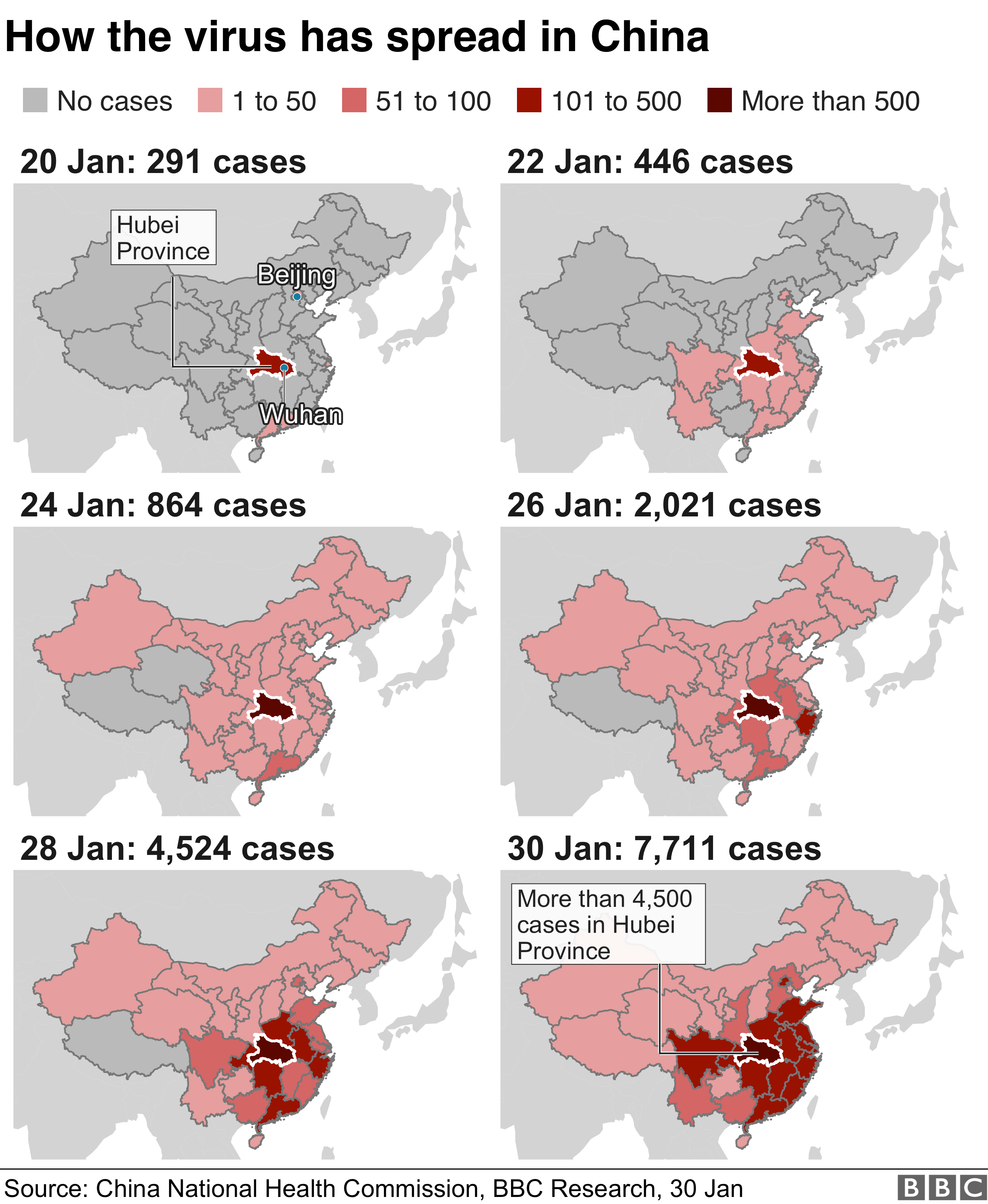
A confirmed case in Tibet means the virus has reached every region in mainland China. According to the country’s National Health Commission, 9,692 cases have tested positive.
The central province of Hubei, where nearly all deaths have occurred, is in a state of lockdown. The province of 60 million people is home to Wuhan, the heart of the outbreak.
The city has effectively been sealed off and China has put numerous transport restrictions in place to curb the spread of the virus.
People who have been in Hubei are also being told to work from home until it is considered safe for them to return.
The virus is affecting China’s economy, the world’s second-largest, with a growing number of countries advising their citizens to avoid all non-essential travel to the country.
How is the world responding?
Voluntary evacuations of hundreds of foreign nationals from Wuhan are under way.
The UK, Australia, South Korea, Singapore and New Zealand are expected to quarantine all evacuees for two weeks to monitor them for symptoms and avoid contagion.
Australia plans to quarantine its evacuees on Christmas Island, 2,000km (1,200 miles) from the mainland in a detention centre that has been used to house asylum seekers.
In other recent developments:
Italy suspended flights to China after two Chinese tourists in Rome were diagnosed with the virus; earlier 6,000 people on board a cruise ship were temporarily barred from disembarking
In the US, Chicago health officials have reported the first US case of human-to-human transmission. Around 200 US citizens have been flown out of Wuhan and are being isolated at a Californian military base for at least 72 hours
Russia has decided to close its 4,300km (2,670-mile) far-eastern border with China
Two flights to Japan have already landed in Tokyo. Japan has now raised its infectious disease advisory level for China
Some 250 French nationals have been evacuated from Wuhan
India has confirmed its first case of the virus – a student in the southern state of Kerala who was studying in Wuhan
Israel has barred all flight connections with China
Papua New Guinea has banned all visitors from “Asian ports”
Image copyright GETTY IMAGESImage caption There were six coronaviruses known to infect people before the latest discovery
The number of people already infected by the mystery virus emerging in China is far greater than official figures suggest, scientists have told the BBC.
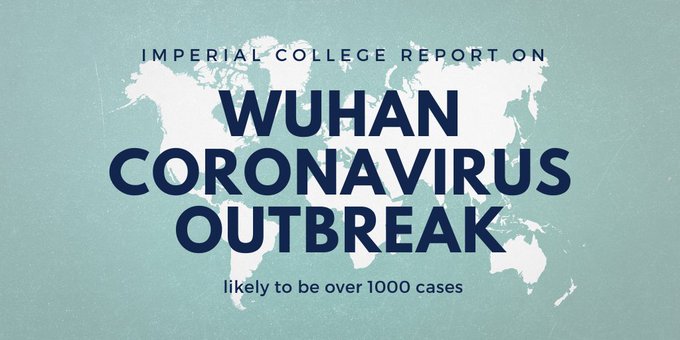
There have been more than 60 confirmed cases of the new coronavirus, but UK experts estimate a figure nearer 1,700.
Two people are known to have died from the respiratory illness, which appeared in Wuhan city in December.
“I am substantially more concerned than I was a week ago,” disease outbreak scientist Prof Neil Ferguson, said.
The work was conducted by the MRC Centre for Global Infectious Disease Analysis at Imperial College London, which advises bodies including the UK government and the World Health Organization (WHO).
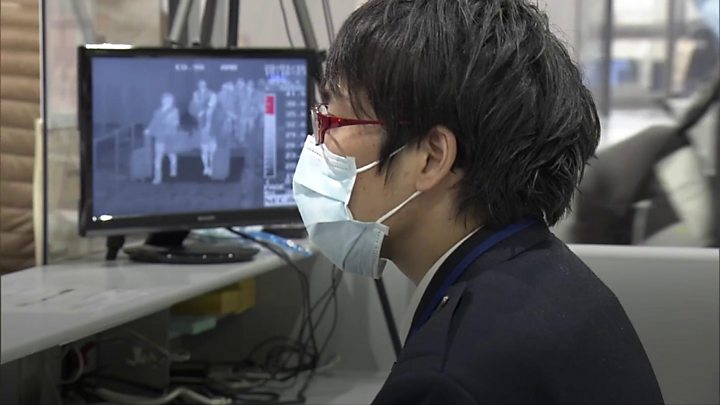
Singapore and Hong Kong have been screening air passengers from Wuhan, and US authorities announced similar measures starting on Friday at three major airports in San Francisco, Los Angeles and New York.
How were the numbers calculated?
The crucial clue to the scale of the problem lies in the cases being detected in other countries.
While the outbreak is centred on the central Chinese city of Wuhan, there have been two cases in Thailand and one in Japan.
“That caused me to worry,” said Prof Ferguson.
He added: “For Wuhan to have exported three cases to other countries would imply there would have to be many more cases than have been reported.”
It is impossible to get the precise number, but outbreak modelling, which is based on the virus, the local population and flight data, can give an idea.
Wuhan International Airport serves a population of 19 million people, but only 3,400 a day travel internationally.
The detailed calculations, which have been posted online ahead of publication in a scientific journal, came up with a figure of 1,700 cases.
MRC Centre for Global Infectious Disease Analysis@MRC_Outbreak
Size of Wuhan outbreak of a novel #coronavirus estimated from the three cases detected outside China: Likely to be over 1000 cases. @imperialcollege @mrc_outbreaks report released today
Prof Ferguson said it was “too early to be alarmist” but he was “substantially more concerned” than a week ago.
Chinese officials say there have been no cases of the virus spreading from one person to another.
Instead they say the virus has crossed the species barrier and come from infected animals at a seafood and wildlife market in Wuhan.
Prof Ferguson argues: “People should be considering the possibility of substantial human-to-human transmission more seriously than they have so far.
“It would be unlikely in my mind, given what we know about coronaviruses, to have animal exposure, be the principal cause of such a number of human infections.”
Understanding how a novel virus is spreading is a crucial part of assessing its threat.
The WHO’s China office said the analysis was helpful and would help officials plan the response to the outbreak.
“Much remains to be understood about the new coronavirus,” it said. “Not enough is known to draw definitive conclusions about how it is transmitted, the clinical features of the disease, the extent to which it has spread, or its source, which remains unknown.”
Image copyright GETTY IMAGESImage caption The outbreak occurred in the city of Wuhan, south of Beijing
What is this virus?
Viral samples have been taken from patients and analysed in the laboratory.
At the mild end they cause the common cold, but severe acute respiratory syndrome (Sars) is a coronavirus that killed 774 of the 8,098 people infected in an outbreak that started in China in 2002.
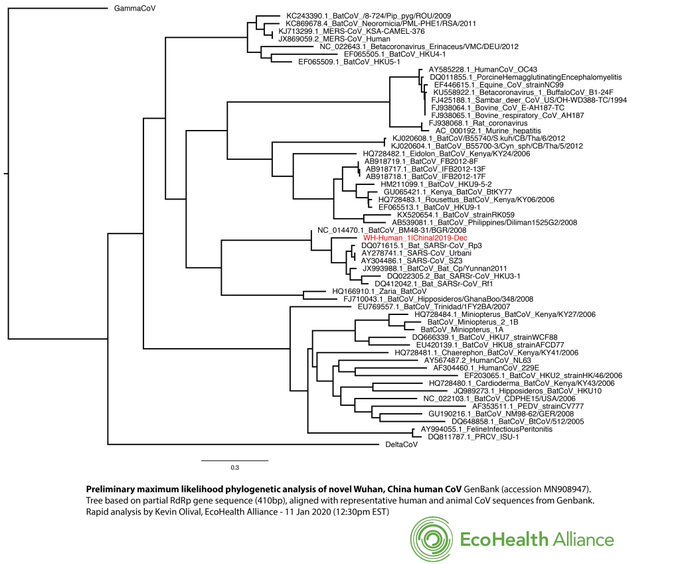
Analysis of the genetic code of the new virus shows it is more closely related to Sars than any other human coronavirus.
The virus has caused pneumonia in some patients and been fatal in two of them.
What do other experts say?
Dr Jeremy Farrar, director of the Wellcome medical research charity, said: “There is more to come from this epidemic.
“Uncertainty and gaps remain, but it’s clear that there is some level of person-to-person transmission.
Media caption Coronavirus feared to have infected more than initially thought, according to scientists
“We are starting to hear of more cases in China and other countries and it is likely, as this modelling shows, that there will be many more cases in a number of countries.”
Prof Jonathan Ball, from the University of Nottingham, said: “What’s really important is until there has been widespread laboratory testing it is very difficult to put a real number on the cases out there.
“But this is a figure we should take seriously until we know otherwise, 41 animal-to-human ‘spillovers’ is stretching it a bit and there probably is more underlying infection than has been detected so far.”

















 CHINDIA ALERT: You'll be living in their world, very soon