Chindia Alert: You’ll be Living in their World Very Soon
aims to alert you to the threats and opportunities that China and India present. China and India require serious attention; case of ‘hidden dragon and crouching tiger’.
Without this attention, governments, businesses and, indeed, individuals may find themselves at a great disadvantage sooner rather than later.
The POSTs (front webpages) are mainly 'cuttings' from reliable sources, updated continuously.
The PAGEs (see Tabs, above) attempt to make the information more meaningful by putting some structure to the information we have researched and assembled since 2006.
China will not set an economic growth goal for this year as it deals with the fallout from the coronavirus pandemic.
It is the first time Beijing has not had a gross domestic product (GDP) target since 1990 when records began.
The announcement was made by Premier Li Keqiang at the start of the country’s annual parliament meeting.
The world’s second largest economy shrank by 6.8% in the first quarter from a year ago as lockdowns paralysed businesses.
“This is because our country will face some factors that are difficult to predict in its development due to the great uncertainty regarding the Covid-19 pandemic and the world economic and trade environment,” Premier Li said.
The country’s leadership has promised to boost economic support measures amid growing concerns that rising unemployment could threaten social stability.
The move comes as tensions between Beijing and Washington are becoming increasingly strained over the coronavirus pandemic, trade and Hong Kong.
On Thursday, President Donald Trump stepped up his attacks on China, suggesting that the country’s leader, Xi Jinping, is behind a “disinformation and propaganda attack on the United States and Europe.”
It came as Mr Trump and other Republicans have escalated their criticism of Beijing’s handling of the early stages of the outbreak.
Also on Thursday, China announced plans to impose new national security legislation on Hong Kong after last year’s pro-democracy protests.
The announcement was met with a warning from Mr Trump that the US would react “very strongly” against any attempt to gain more control over the former British colony.
Separately, two US senators have proposed legislation to punish Chinese entities involved in enforcing the planned new laws and penalise banks that do business with them.
Earlier this week, the US Senate unanimously passed a proposal to delist Chinese companies from American stock exchanges if they fail to comply with US financial reporting standards.
US-listed Chinese companies have come under increasing scrutiny in recent weeks after Luckin Coffee revealed that an internal investigation found hundreds of millions of dollars of its sales last year were “fabricated”.
The team, accompanied by a member of Du’s family, was due to travel on Monday, and will handle arrangements for the remains, as well as conducting its own internal investigation, according to Israeli newspaper Haaretz.
Israel’s foreign ministry said its director general Yuval Rotem had spoken with deputy ambassador Dai Yuming to express his condolences. Local police are continuing to investigate at Du’s residence in a suburb of Herzliya, near Tel Aviv.
Details from the Chinese side have been scant. China’s foreign ministry provided a statement to AFP on Sunday which said the preliminary verdict was that Du, 57, had died unexpectedly for health reasons, and details awaited further confirmation. AFP also reported that Du’s wife and son were not with him in Tel Aviv.
“As far as I know, China’s ambassador to Israel Du Wei passed away in ambassador’s residence in Tel Aviv this morning for physical reasons. It happened abruptly,” said Hu Xijin, editor-in-chief of state media tabloid Global Times in a tweet late on Sunday night.
Du was last seen in public on Tuesday in a video conference with an official from Israel’s foreign affairs ministry, according to the embassy website.
James Dorsey, senior fellow at the S. Rajaratnam School of International Studies in Singapore, said Du’s untimely death should be seen as a personal, rather than a political, tragedy for the growing relationship between China and Israel, but he said it came at an important moment for the two countries because of rising US-China tensions.
Dorsey said Israel’s increasing hi-tech cooperation with China, as well as continuing US hostility to Iran – which has close ties with China – were potentially problematic for relations between the two countries.
“I’m not sure that the China-Israel relationship can be seen as independent of the Israel-US relationship. One could argue that the Chinese may be well advised to very quickly replace him soon,” Dorsey said. “Israel could find itself on the fault line of deepening US-China decoupling,” he added.
Israel’s ambassador to China in quarantine after ‘infected’ flight to Seoul
28 Feb 2020
Following a brief trip to Jerusalem on Wednesday – his first foreign visit since March – US Secretary of State Mike Pompeo renewed warnings about China-Israel ties in an interview with Israeli state-owned media outlet Kan News.
“We do not want the Chinese Communist Party to have access to Israeli infrastructure, Israeli communication systems, all of the things that put Israeli citizens at risk,” he said.
China’s embassy in Tel Aviv blasted Pompeo’s comments as “absurd” and “ill-intentioned”. However, the embassy statement was not written by Du, but by a spokesperson.
Du had only served in Israel since February. Just before his arrival, the Chinese embassy had to issue an apology after then-acting ambassador Dai denounced Israel’s tightened restrictions on Chinese visitors by comparing them to the Holocaust.
During his brief tenure, Du gave frequent interviews to local media, speaking mainly about China’s virus control measures, US-China tensions, and friendship between China and the Jewish people.
Du had worked as a career diplomat since entering China’s foreign service in 1989. Before his appointment in Tel Aviv, he served as China’s ambassador to Ukraine from 2016-2019.
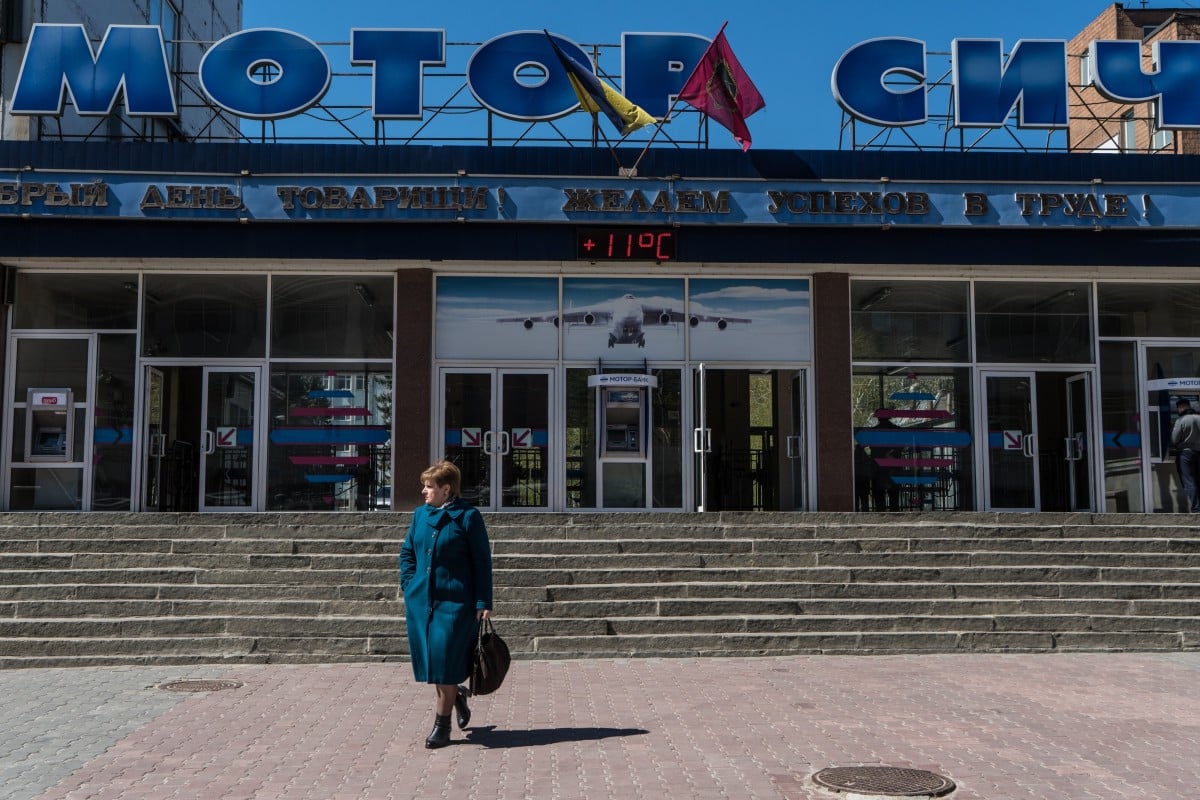
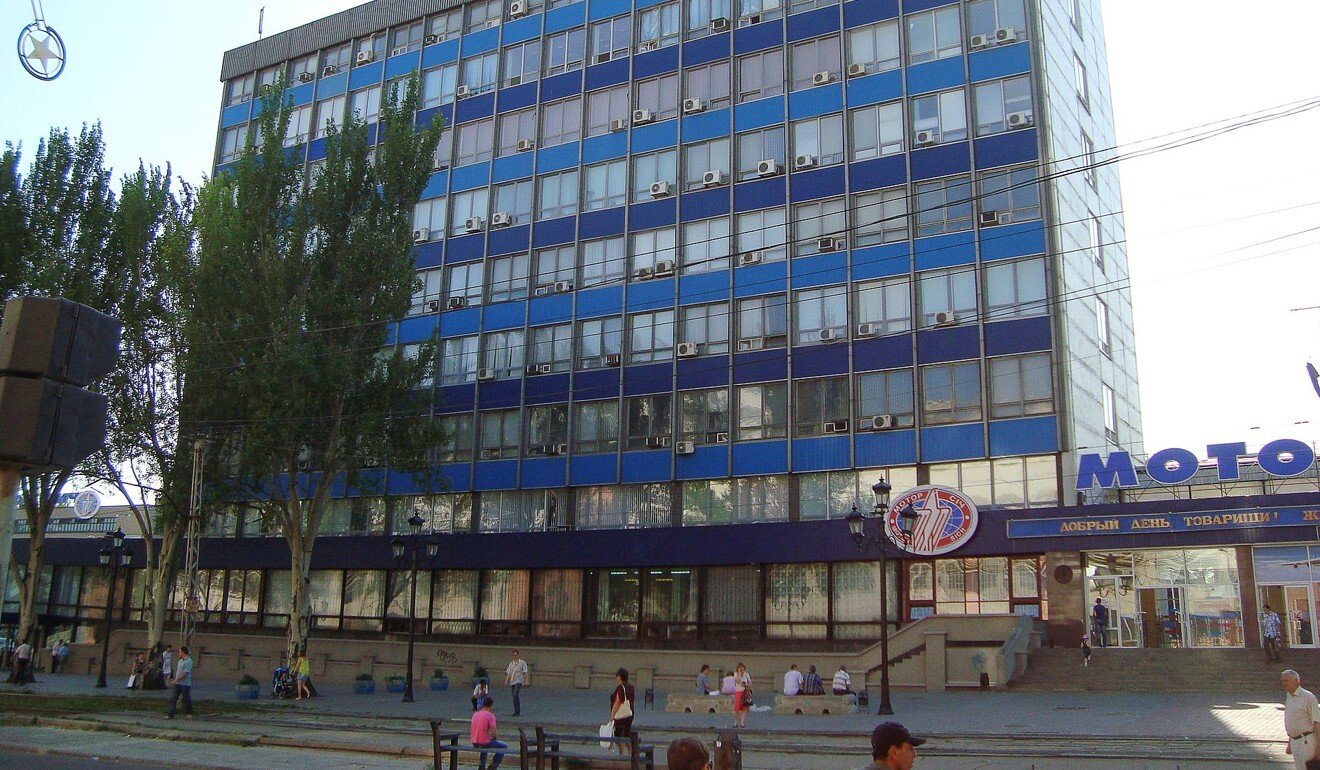
China’s Skyrizon Aircraft Holdings bought a majority stake in Motor Sich, but the shares were frozen in 2017 pending an investigation by Ukraine’s security service
Washington and Beijing have competed for influence in Ukraine since its relations with Moscow soured when Russia annexed the Crimea peninsula in 2014
Chnia’s Skyrizon says it will appeal a Kiev court’s decision to block its purchase of Ukrainian aircraft engine maker Motor Sich. Photo: Getty Images
A court in Kiev has rejected an appeal by Chinese investors to unfreeze the shares of a Ukrainian aircraft engine maker, a setback for the Chinese company that sought to buy the Ukrainian firm in a deal opposed by the United States.
China’s Skyrizon Aircraft Holdings bought a majority stake in Motor Sich, but the shares were frozen in 2017 pending an investigation by Ukraine’s security service (SBU). Washington wants the deal scrapped.
The US and China have competed for influence in Ukraine since its relations with Moscow soured when Russia annexed the Crimea peninsula in 2014.
In its ruling, the court kept the shares frozen, citing the SBU investigation into whether selling Motor Sich sabotages national security by allowing sensitive technology into foreign hands. The ruling was dated March 13, shared with the parties this week.
Skyrizon plans further appeals, said a lawyer involved in the case, speaking anonymously due to the political sensitivity of the case. Zelensky’s office, the US embassy and the Chinese embassy did not respond to requests for comment. Motor Sich and the SBU declined to comment.
Motor Sich severed ties with Russia after the annexation of Crimea. Photo: Wikipedia
Motor Sich severed ties with Russia, its biggest client, after the annexation of Crimea. The wrangle over its future has held up efforts to find new markets, and supporters of a quick resolution say it is now operating at less than half capacity.
“Motor Sich has become a hostage to the geopolitical situation,” former prime minister Anatoliy Kinakh, chairman of an industrial union which has called for the government to resolve the dispute quickly, said.
The state’s anti-monopoly committee has launched its own investigation and says it is waiting to receive more documents before deciding whether to sanction the sale.
President Volodymyr Zelensky’s administration has had to balance strengthening ties to Beijing with keeping the United States, its biggest military aid donor, onside. In recent weeks, Beijing and Washington have both offered aid to Ukraine to fight the coronavirus.
At the moment it is a very difficult task when we have the biggest powers in the world and their interests are in conflict in Ukraine,” Oleksandr Danylyuk, a former top security official under Zelensky, said.
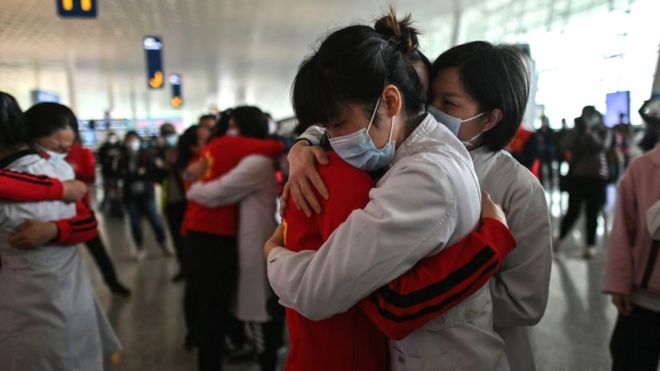
Image copyright GETTY IMAGESImage caption The Chinese city of Wuhan recently lifted its strict quarantine measures
The Chinese city of Wuhan, where the coronavirus originated last year, has raised its official Covid-19 death toll by 50%, adding 1,290 fatalities.
Wuhan officials attributed the new figure to updated reporting and deaths outside hospitals. China has insisted there was no cover-up.
It has been accused of downplaying the severity of its virus outbreak.
Wuhan’s 11 million residents spent months in strict lockdown conditions, which have only recently been eased.
The latest official figures bring the death toll in the city in China’s central Hubei province to 3,869, increasing the national total to more than 4,600.
China has confirmed nearly 84,000 coronavirus infections, the seventh-highest globally, according to Johns Hopkins University data.
What’s China’s explanation for the rise in deaths?
In a statement released on Friday, officials in Wuhan said the revised figures were the result of new data received from multiple sources, including records kept by funeral homes and prisons.
Deaths linked to the virus outside hospitals, such as people who died at home, had not previously been recorded.
Media caption Learn how Wuhan dealt with the lockdown
The “statistical verification” followed efforts by authorities to “ensure that information on the city’s Covid-19 epidemic is open, transparent and the data [is] accurate”, the statement said.
It added that health systems were initially overwhelmed and cases were “mistakenly reported” – in some instances counted more than once and in others missed entirely.
A shortage of testing capacity in the early stages meant that many infected patients were not accounted for, it said.
A spokesman for China’s National Health Commission, Mi Feng, said the new death count came from a “comprehensive review” of epidemic data.
In its daily news conference, the foreign ministry said accusations of a cover-up, which have been made most stridently on the world stage by US President Donald Trump, were unsubstantiated. “We’ll never allow any concealment,” a spokesman said.
Why are there concerns over China’s figures?
Friday’s revised figures come amid growing international concern that deaths in China have been under-reported. Questions have also been raised about Beijing’s handling of the epidemic, particularly in its early stages.
In December 2019, Chinese authorities launched an investigation into a mysterious viral pneumonia after cases began circulating in Wuhan.
China reported the cases to the World Health Organization (WHO), the UN’s global health agency, on 31 December.
But WHO experts were only allowed to visit China and investigate the outbreak on 10 February, by which time the country had more than 40,000 cases.
The mayor of Wuhan has previously admitted there was a lack of action between the start of January – when about 100 cases had been confirmed – and 23 January, when city-wide restrictions were enacted.
Around that time, a doctor who tried to warn his colleagues about an outbreak of a Sars-like virus was silenced by the authorities. Dr Li Wenliang later died from Covid-19.
Wuhan’s death toll increase of almost exactly 50% has left some analysts wondering if this is all a bit too neat.
For months questions have been asked about the veracity of China’s official coronavirus statistics.
The inference has been that some Chinese officials may have deliberately under-reported deaths and infections to give the impression that cities and towns were successfully managing the emergency.
If that was the case, Chinese officials were not to know just how bad this crisis would get in other countries, making its own figures now seem implausibly small.
The authorities in Wuhan, where the first cluster of this disease was reported, said there had been no deliberate misrepresentation of data, rather that a stabilisation in the emergency had allowed them time to revisit the reported cases and to add any previously missed.
That the new death toll was released at the same time as a press conference announcing a total collapse in China’s economic growth figures has led some to wonder whether this was a deliberate attempt to bury one or other of these stories.
Then again, it could also be a complete coincidence.
China has been pushing back against US suggestions that the coronavirus came from a laboratory studying infectious diseases in Wuhan, the BBC’s Barbara Plett Usher in Washington DC reports.
US President Donald Trump and some of his officials have been flirting with the outlier theory in the midst of a propaganda war with China over the origin and handling of the pandemic, our correspondent says.
Mr Trump this week halted funding for the World Health Organization (WHO), accusing it of making deadly mistakes and overly trusting China.
“Do you really believe those numbers in this vast country called China, and that they have a certain number of cases and a certain number of deaths; does anybody really believe that?” Mr Trump said at the White House on Wednesday.
On Thursday, UK Foreign Secretary Dominic Raab said: “We’ll have to ask the hard questions about how [coronavirus] came about and how it couldn’t have been stopped earlier.”
But China has also been praised for its handling of the crisis and the unprecedented restrictions that it instituted to slow the spread of the virus.
Image copyright GETTY IMAGESImage caption The Chinese city of Wuhan recently lifted its strict quarantine measures
The Chinese city of Wuhan, where the coronavirus originated last year, has raised its official Covid-19 death toll by 50%, adding 1,290 fatalities.
Wuhan officials attributed the new figure to updated reporting and deaths outside hospitals. China has insisted there was no cover-up.
It has been accused of downplaying the severity of its virus outbreak.
Wuhan’s 11 million residents spent months in strict lockdown conditions, which have only recently been eased.
The latest official figures bring the death toll in the city in China’s central Hubei province to 3,869, increasing the national total to more than 4,600.
China has confirmed nearly 84,000 coronavirus infections, the seventh-highest globally, according to Johns Hopkins University data.
What’s China’s explanation for the rise in deaths?
In a statement released on Friday, officials in Wuhan said the revised figures were the result of new data received from multiple sources, including records kept by funeral homes and prisons.
Deaths linked to the virus outside hospitals, such as people who died at home, had not previously been recorded.
Media caption Learn how Wuhan dealt with the lockdown
The “statistical verification” followed efforts by authorities to “ensure that information on the city’s Covid-19 epidemic is open, transparent and the data [is] accurate”, the statement said.
It added that health systems were initially overwhelmed and cases were “mistakenly reported” – in some instances counted more than once and in others missed entirely.
A shortage of testing capacity in the early stages meant that many infected patients were not accounted for, it said.
A spokesman for China’s National Health Commission, Mi Feng, said the new death count came from a “comprehensive review” of epidemic data.
In its daily news conference, the foreign ministry said accusations of a cover-up, which have been made most stridently on the world stage by US President Donald Trump, were unsubstantiated. “We’ll never allow any concealment,” a spokesman said.
Why are there concerns over China’s figures?
Friday’s revised figures come amid growing international concern that deaths in China have been under-reported. Questions have also been raised about Beijing’s handling of the epidemic, particularly in its early stages.
In December 2019, Chinese authorities launched an investigation into a mysterious viral pneumonia after cases began circulating in Wuhan.
China reported the cases to the World Health Organization (WHO), the UN’s global health agency, on 31 December.
But WHO experts were only allowed to visit China and investigate the outbreak on 10 February, by which time the country had more than 40,000 cases.
The mayor of Wuhan has previously admitted there was a lack of action between the start of January – when about 100 cases had been confirmed – and 23 January, when city-wide restrictions were enacted.
Around that time, a doctor who tried to warn his colleagues about an outbreak of a Sars-like virus was silenced by the authorities. Dr Li Wenliang later died from Covid-19.
Wuhan’s death toll increase of almost exactly 50% has left some analysts wondering if this is all a bit too neat.
For months questions have been asked about the veracity of China’s official coronavirus statistics.
The inference has been that some Chinese officials may have deliberately under-reported deaths and infections to give the impression that cities and towns were successfully managing the emergency.
If that was the case, Chinese officials were not to know just how bad this crisis would get in other countries, making its own figures now seem implausibly small.
The authorities in Wuhan, where the first cluster of this disease was reported, said there had been no deliberate misrepresentation of data, rather that a stabilisation in the emergency had allowed them time to revisit the reported cases and to add any previously missed.
That the new death toll was released at the same time as a press conference announcing a total collapse in China’s economic growth figures has led some to wonder whether this was a deliberate attempt to bury one or other of these stories.
Then again, it could also be a complete coincidence.
But China has also been praised for its handling of the crisis and the unprecedented restrictions that it instituted to slow the spread of the virus. WHO Director General Dr Tedros Adhanom Ghebreyesus has hailed China for the “speed with which [it] detected the outbreak” and its “commitment to transparency”.
US President Donald Trump this week halted funding for the WHO, accusing it of making deadly mistakes and overly trusting China.
“Do you really believe those numbers in this vast country called China, and that they have a certain number of cases and a certain number of deaths; does anybody really believe that?” Mr Trump said at the White House on Wednesday.
On Thursday, UK Foreign Secretary Dominic Raab said: “We’ll have to ask the hard questions about how [coronavirus] came about and how it couldn’t have been stopped earlier.”
Dutch inquiry follows recall of 600,000 face masks
Ambassador rejects concerns China has a political agenda alongside medical support
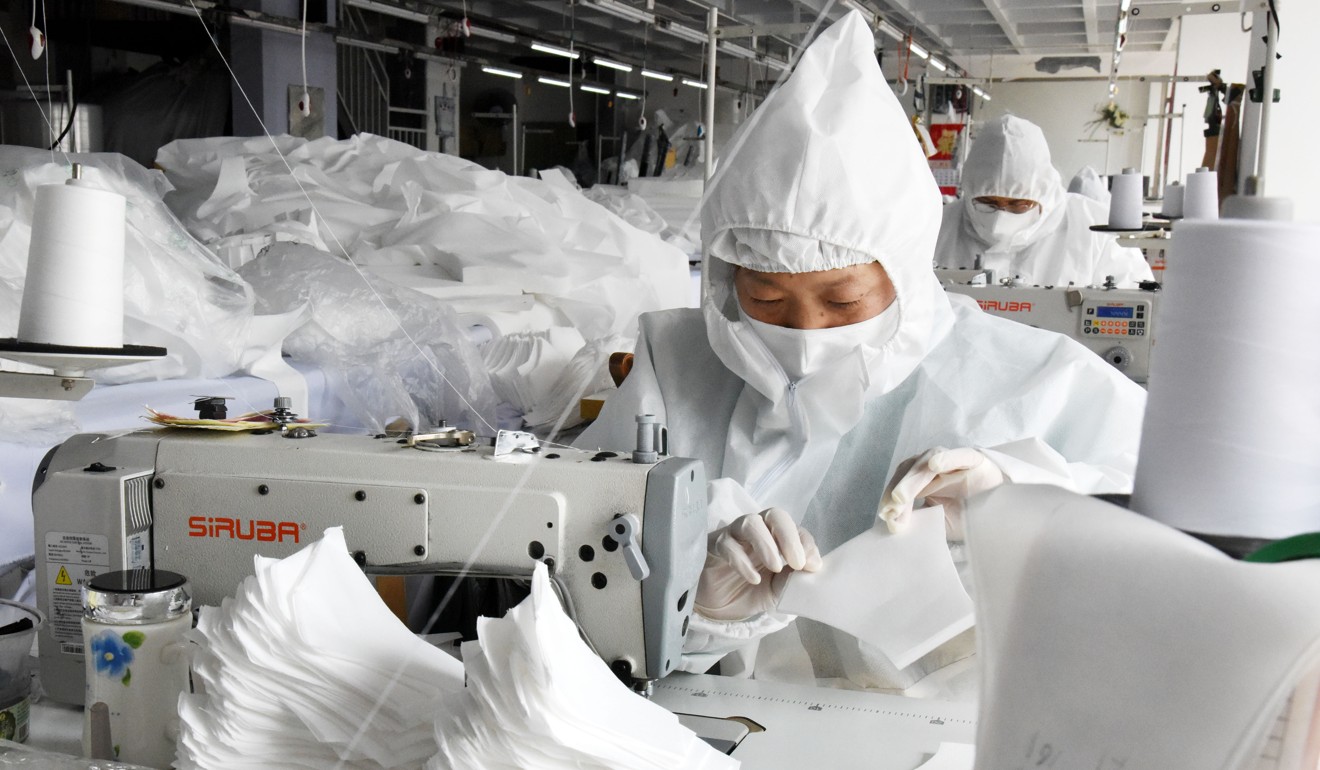
In early March, China’s daily output of face masks reached 116 million units. Photo: Xinhua
China’s embassy in the Netherlands said on Monday that it was closely following a Dutch investigation into reportedly defective masks imported from China and called for the issue not to be politicised.
Xu Hong, China’s ambassador to the Netherlands, made the comment after Dutch officials recalled more than 600,000 face masks which were found to be unsuitable for intensive care medical staff.
“The embassy paid high attention to the March 28 news about the ‘defective’ masks that Dutch government purchased from China, and contacted the Dutch Ministry of Foreign Affairs and the Ministry of Health in the first time to verify the information,” Xu said, according to a statement published on the embassy’s website.
Xu said he had spoken by telephone with the Dutch Minister for Medical Care and Sport Martin van Rijn, on Sunday about the issues and said “if necessary” China would help the Dutch investigation into the quality of the masks.
Netherlands recalls 600,000 face masks from China due to low quality
29 Mar 2020
According to the Dutch Ministry of Health, Welfare and Sport, the masks did not fit well and the filters did not function properly. It was not immediately clear whether the batch in question was given to the Netherlands as a donation or had arrived through a commercial transaction.
“The Netherlands is still looking into the situation, and if there is any further information, it will inform the Chinese side in the first time,” Xu said.
China has ramped up medical assistance abroad where the novel coronavirus pandemic has shown no signs of easing, but China’s efforts have run into rising concerns about the poor quality protective gear and test equipment it offered.
In early March, China’s daily output of face masks reached 116 million units. Picture: Xinhua
Xu also rejected concerns that China had a political agenda accompanying its medical support. He called for its assistance in not to be politicised.
“The reason why China supports the Netherlands and other countries to fight the pandemic is very simple: we are trying to save lives,” Xu said.
“There is no ‘geopolitical consideration’ as a few claimed. It is normal if some problems arise during the cooperation. These problems can be solved in an objective manner, but should not be politicised.”
It is not the first time European countries have had problems with coronavirus-related medical equipment manufactured in China.
Why China’s ‘mask diplomacy’ is raising concern in the West
The company said it would replace the test kits sent to Spain.
On Thursday, the Chinese embassy in Spain said on Twitter that the Bioeasy test kits had not been approved by China’s National Medical Products Administration and were not included in the medical supplies sent by the Chinese government to Spain.
Separately, the Philippines’ health department on Sunday apologised for comments it had made a day earlier that two batches of coronavirus test kits provided by China were substandard, and acknowledged that the quality of the test kits did meet global standards.
BEIJING, Feb. 22 (Xinhua) — Some members of the China-World Health Organization (WHO) joint expert team traveled to Wuhan Saturday to investigate the COVID-19 outbreak, the National Health Commission said.
The experts will have discussions with Wuhan’s health authorities and visit medical and health institutions, the commission said.
The joint expert team began its work in China on Feb. 16 and has finished investigation in Beijing, Guangdong Province and Sichuan Province.
Remains of two of river’s estimated 1,012 porpoises found in less than a week
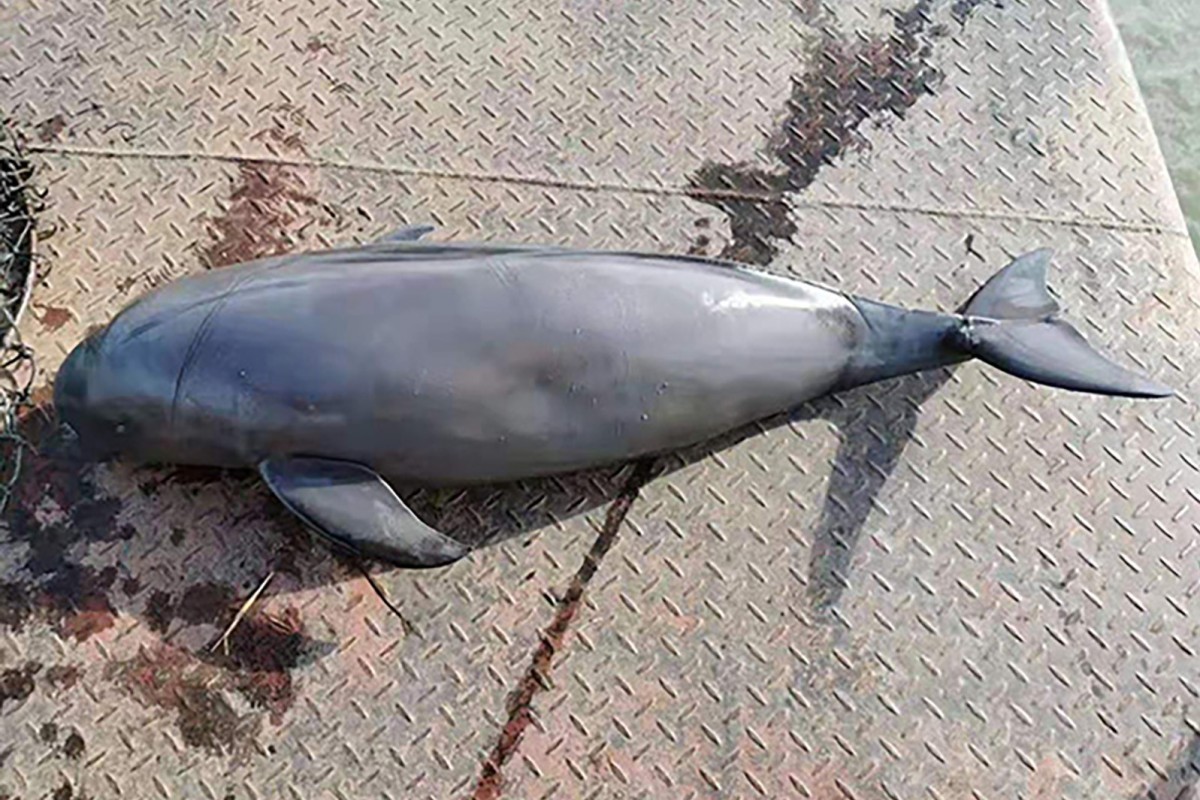
The finless porpoise found dead in the Yangtze River in Hubei on Monday was the second fatality in a week. Photo: 163.com
Two endangered finless porpoises have been found dead in the Yangtze River in the space of a week, according to mainland Chinese media reports.
One was found on Monday in Jiayu county, central Hubei province, four days after the remains of another were recovered from Dongting Lake, a tributary of the Yangtze in central Hunan province, news website Thepaper.cn reported.
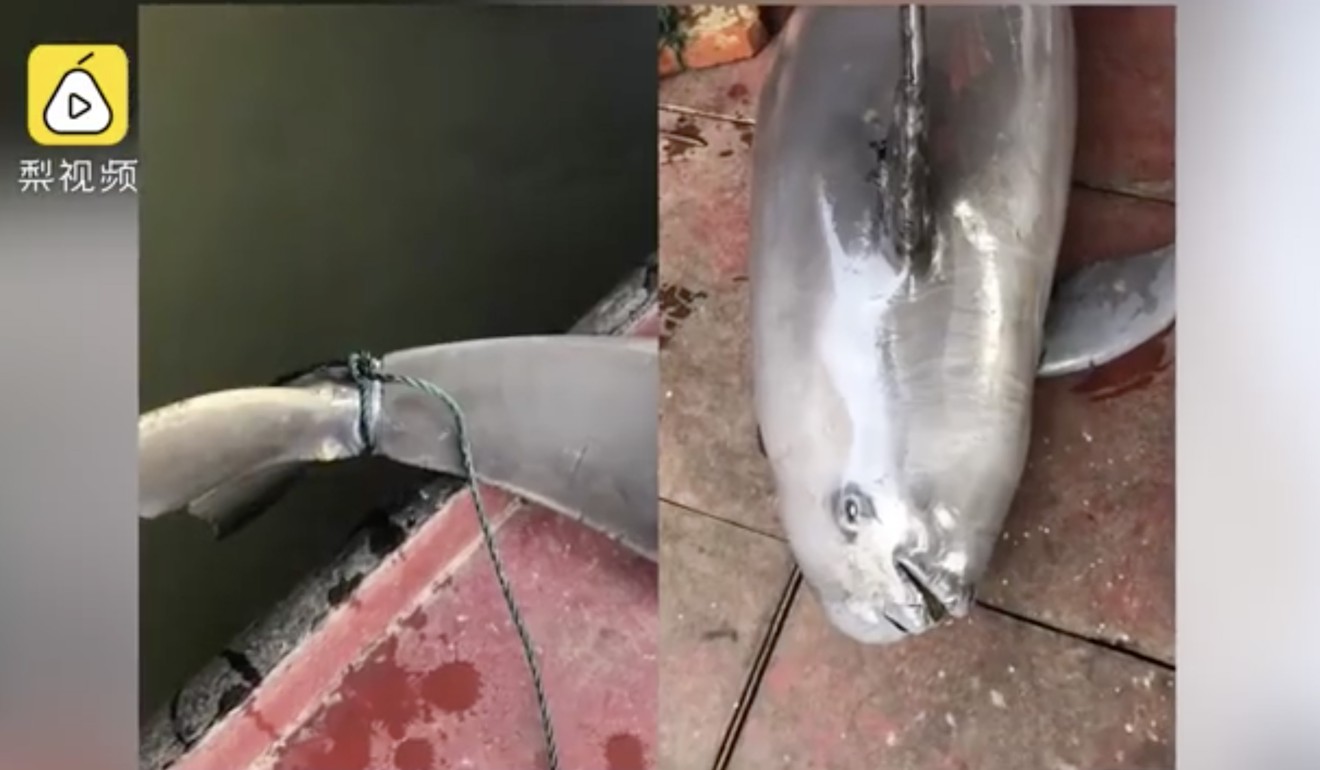
The Dongting Lake carcass was tied with a rope and weighted with bricks, and authorities in Hunan said the creature became tangled in a fishing net. The Hubei death is under investigation.
The Yangtze’s finless porpoises are “extremely endangered”, the Ministry of Agriculture and Rural Affairs said in a 2016 action plan to protect the species. Last year, vice-minister Yu Kangzhen said surveys showed there were about 1,012 of the animals in the river.
The tail of a dead finless porpoise pulled from Dongting Lake in Hunan appears to have been tied to weights. Photo: Pear Video
In 2017, China raised its protection for the mammals to its highest level because of the critical dangers they faced. Experts said that as the river’s “flagship” species, the porpoise was an indicator for the Yangtze’s ecology.
The porpoise discovered in Hubei was small and it had suffered superficial wounds, investigators were quoted as saying. They estimated that it was found soon after its death.
Xiaoxiang Morning Post quoted fisheries authorities in Yueyang, near Dongting Lake, as saying the porpoise in Hunan was found with weights around its tail.
Two porpoise carcasses found on separate Hong Kong shores
Officials said the fishermen who set the net feared they would be blamed for the creature’s death and tied bricks to its tail to sink it.
Other fishermen who witnessed the incident told the authority, leading to the discovery of the body, the report said. The investigation is ongoing and the suspects are still at large.
A fishing authority spokesman told the newspaper that the porpoise’s death showed the difficulty of balancing conservation with the livelihoods of fishermen.
“It’s difficult to figure out a good model to protect the porpoises without affecting fishermen’s business,” he said.
In mainland China, finless porpoises are referred to as “giant pandas in water” because of their endangered status. Their numbers fell from 2,700 in 1991 to 1,800 in 2006, and there were 1,045 finless porpoises in 2012, according to agriculture ministry data.
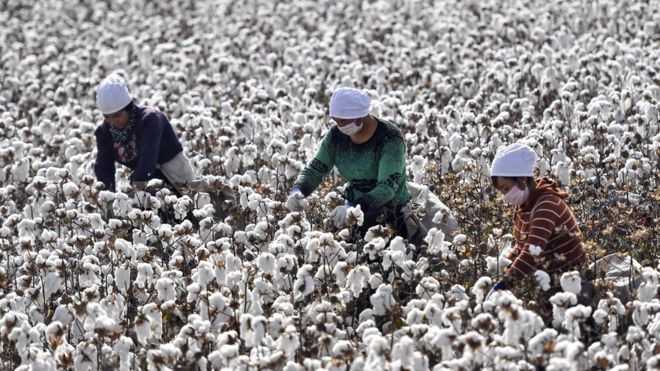
Global retailers are facing scrutiny over cotton supplies sourced from Xinjiang, a Chinese region plagued by allegations of human rights abuses.
China is one of the world’s top cotton producers and most of its crop is grown in Xinjiang.
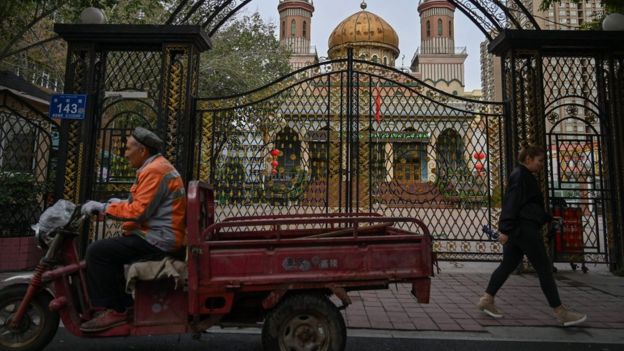
Rights groups say Xinjiang’s Uighur minority are being persecuted and recruited for forced labour.
Many brands are thought to indirectly source cotton products from the Xinjiang region in China’s far west.
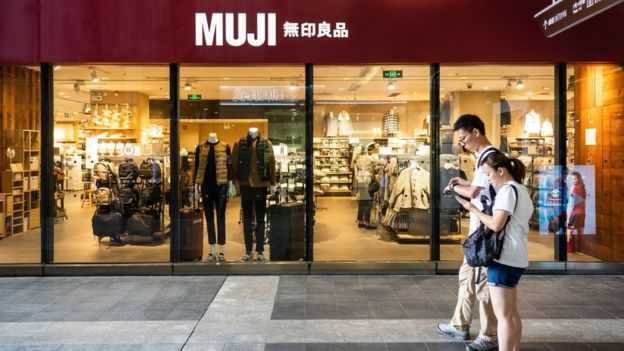
Japanese retailers Muji and Uniqlo attracted attention recently after a report highlighted the brands used the Xinjiang-origin of their cotton as a selling point in advertisements.
“You can’t be sure that you don’t have coerced labour in your supply chain if you do cotton business in China,” said Nathan Ruser, researcher at the Australian Strategic Policy Institute.
“Xinjiang labour and what is almost certainly coerced labour is very deeply entrenched into the supply chain that exists in Xinjiang.”
What is happening in Xinjiang?
UN experts and human rights groups say China is holding more than a million Uighurs and other ethnic minorities in vast detention camps.
Rights groups also say people in camps are made to learn Mandarin Chinese, swear loyalty to President Xi Jinping, and criticise or renounce their faith.
China says those people are attending “vocational training centres” which are giving them jobs and helping them integrate into Chinese society, in the name of preventing terrorism.
What is produced in Xinjiang?
The Xinjiang region is a key hub of Chinese cotton production.
Last year, 84% of Chinese cotton came from Xinjiang, the report said.
That has raised concerns over whether forced labour has been used in the production of cotton from the region.
Image copyright GETTY IMAGESImage caption The Uighurs are mostly Muslims, and number about 11 million in China’s Xinjiang region
Nury Turkel, chairman of the Uighur Human Rights Project in Washington, said the Uighurs were being “detained and tormented” and “swept into a vast system of forced labor” in Xinjiang.
In testimony to US congress, he said it was becoming “increasingly hard to ignore the fact” that the goods manufactured in the region have “a high likelihood” of being produced with forced labour.
Which brands use Xinjiang cotton?
Amy Lehr, director of CSIS Human Rights Initiative, said in many cases Western companies aren’t buying directly from factories in Xinjiang.
“Rather, the products may go through several stages of transformation after leaving Xinjiang before they are sent to large Western brands,” she said.
Some, like Muji, are very open about sourcing material from Xinjiang.
“Uniqlo does not have any production partners located in the Xinjiang region. Moreover, Uniqlo production partners must commit to our strict company code of conduct.
“To the best of our knowledge, this means our cotton comes only from ethical sources,” the spokesperson told the BBC.
Many of the companies looked into the allegations, including those without clear links to the Huafu mill.
In a statement to the BBC, Adidas said: “While we do not have a contractual relationship with Huafu Fashion Co., or any direct leverage with this business entity or its subsidiary, we are currently investigating these claims.”
“We advised our material suppliers to place no orders with Huafu until we have completed those investigations,” the Adidas spokesperson said.
Esprit, which also does not source cotton directly from Xinjiang, said it had made several inquiries earlier this year.
“We concluded that a very small amount of cotton from a Huafu factory in Xinjiang was used in a limited number of Esprit garments,” the firm said in a statement.
The company has instructed all suppliers to not source Huafu yarn from Aksu, the statement said.
H&M said it does not have “a direct or indirect business relationship” with any garment manufacturer in the Xinjiang region.
“We have an indirect business relationship with Huafu’s spinning unit in Shanyu, which is not located in the Xinjiang region, and according to our data, the vast majority of the yarn used for our garment manufacturing comes from this spinning unit,” a spokesperson for H&M said.
“Since we have an indirect business relationship with the yarn supplier Huafu, we also asked for access to their spinning facilities in Aksu. Our investigations showed no evidence of forced labor.”
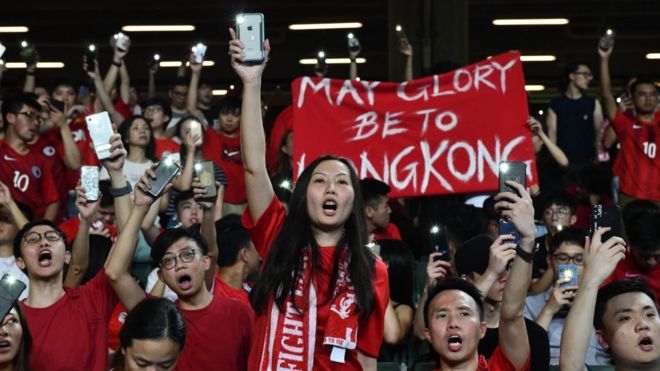
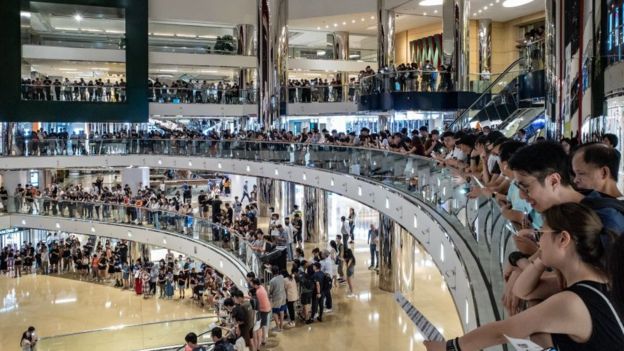
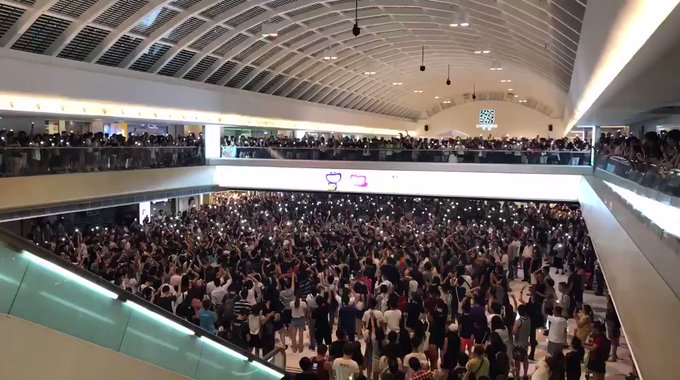
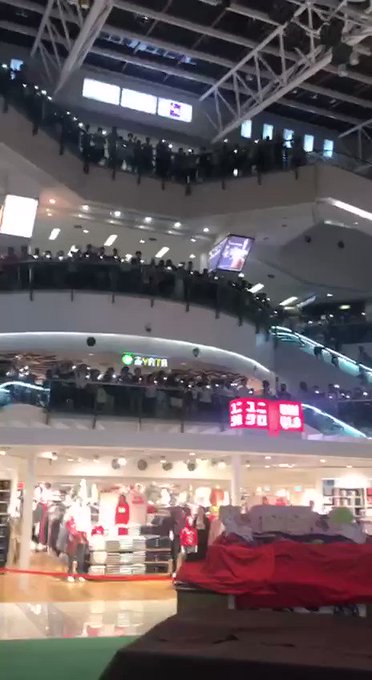
On Tuesday night, thousands of protesters gathered in shopping malls across Hong Kong chanting slogans and singing Glory to Hong Kong.
Image copyright GETTY IMAGESImage caption Many protesters flooded shopping malls
In the popular shopping district of Mongkok, a sea of protesters dressed in black were seen congregating across the different levels of one mall.
Jason Y. Ng
✔@jasonyng
Hundreds of shoppers spontaneously assembled at a mall atrium and broke into song. They sang “Glory to Hong Kong,” an ersatz national anthem (coz we aren’t a national and haven’t the right to an anthem). People ask what Communist China is most afraid of—the answer is right here.
Another video showed protesters chanting “Go Hong Kong” – a phrase that has been used frequently as a sign of encouragement.
Shopping malls have been the scene of clashes in recent weeks, with one incident in July seeing riot police fight battles with protesters inside a mall in the district of Sha Tin.
Without true democracy, HKer shall never surrender! This video shows citizens are gathered in a mall and cheering each other up after singing the song of #HKprotest “Glory to Hong Kong”.
The new rallying cry has joined other popular songs used by the protest movement, including Do You Hear the People Sing? from musical Les Miserables and the Christian hymn Sing Hallelujah to the Lord.
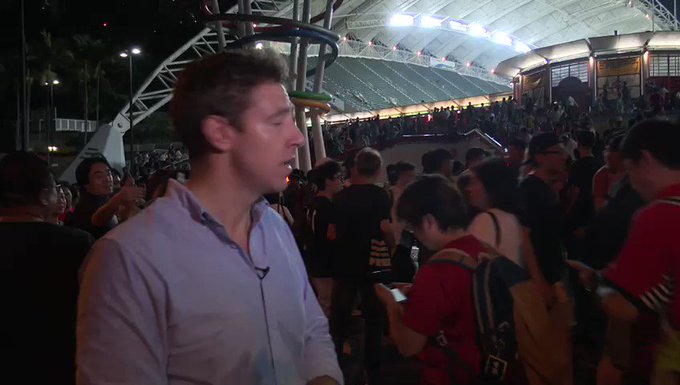
It was also heard at the Hong Kong v Iran football match on Tuesday at Hong Kong Stadium.
#Hongkong soccer fans booing the #Chinese national anthem tonight. Footy fans also have their backs to the field. Carrie Lam’s administration had been planning to introduce tough new penalties for booing the anthem but this can’t be easy to bring in in the city’s current climate. https://twitter.com/SCMPHongKong/status/1171411414801534977 …
The 2022 Fifa World Cup qualifier saw thousands of protesting booing when the Chinese national anthem played before the start of the game.
The jeering, which could be heard from outside the stadium, was intended as a clear “message” to Beijing that they do not want to be part of China in the future, says the BBC’s Nick Beake who was at the game.
Nick Beake
✔@Beaking_News
VIDEO: The moment #HongKong football fans began booing #China national anthem before the start of their @FIFAWorldCup qualifier against #Iran. #CarrieLam ‘s govt has delayed (another) controversial new law that could give 3 year prison term for disrespecting anthem. @BBCWorld
Hong Kong, formerly a British colony, returned to Chinese rule in 1997.
Under the “one country, two systems” rule, the city is granted a high level of autonomy, an independent judiciary and rights such as freedom of speech.
But those freedoms – the Basic Law – expire in 2047 and it is not clear what Hong Kong’s status will then be.
There has been growing anti-mainland sentiment in recent years, and anger at what many feel is increasing mainland interference in Hong Kong affairs.
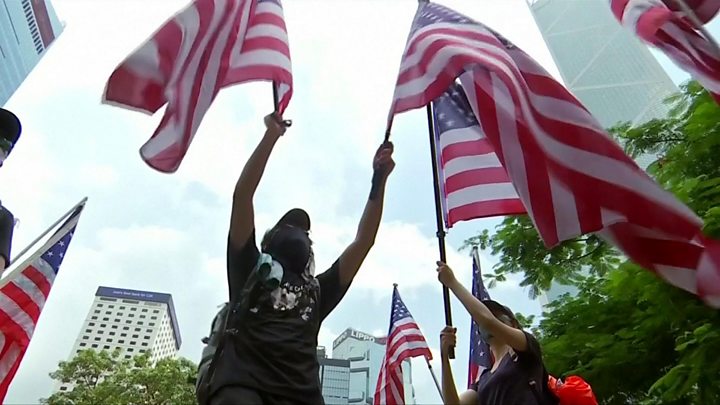
Media caption Protesters sang the US anthem outside the consulate
This reached a tipping point when the Hong Kong parliament proposed a new law that would have enabled suspects in Hong Kong to be extradited to China.
Hundreds of thousands of people marched on the streets in protest of the law, demanding that it be abandoned. The government initially suspended in June, and then finally dropped earlier this week – almost three months after protests first begun.
But protesters have said this is “too little, too late”, and their demands have evolved into calls for a much wider set of reforms, including a call for universal suffrage.


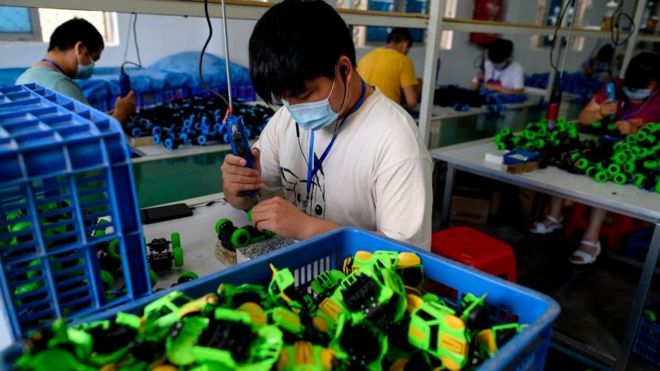 Image copyright GETTY IMAGES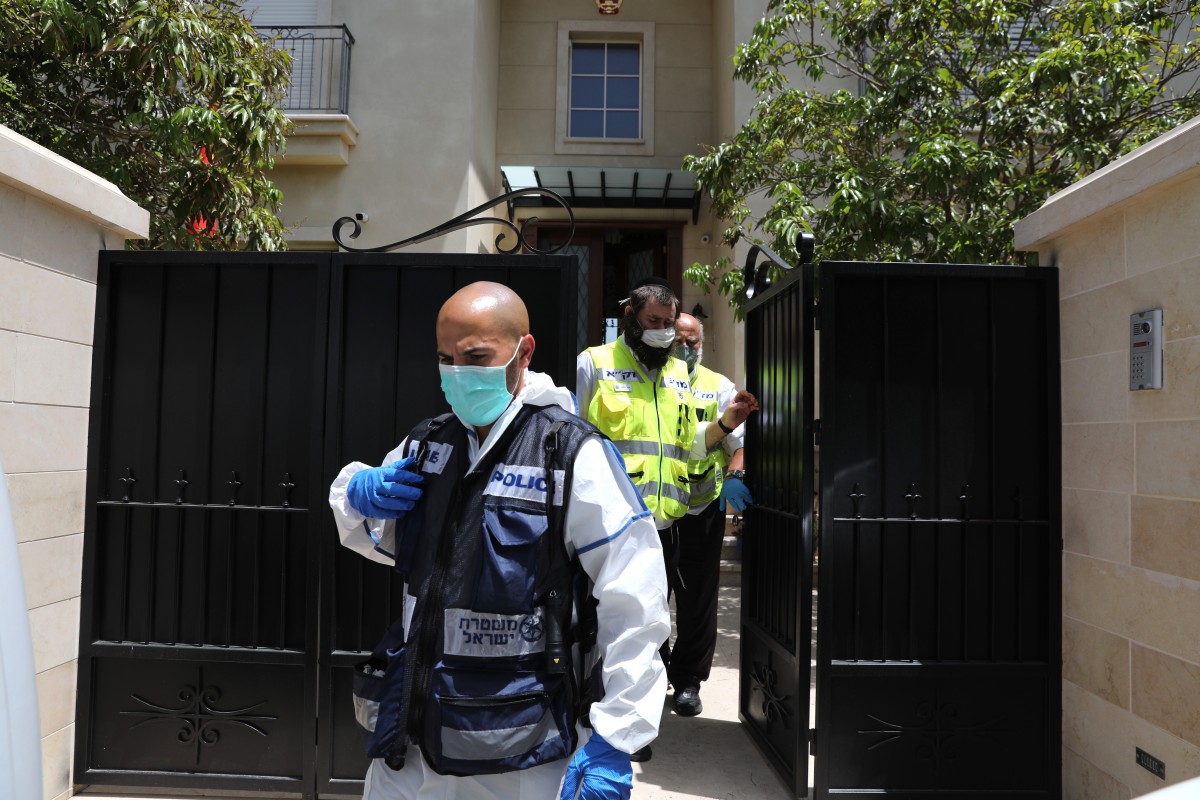










 CHINDIA ALERT: You'll be living in their world, very soon