Chindia Alert: You’ll be Living in their World Very Soon
aims to alert you to the threats and opportunities that China and India present. China and India require serious attention; case of ‘hidden dragon and crouching tiger’.
Without this attention, governments, businesses and, indeed, individuals may find themselves at a great disadvantage sooner rather than later.
The POSTs (front webpages) are mainly 'cuttings' from reliable sources, updated continuously.
The PAGEs (see Tabs, above) attempt to make the information more meaningful by putting some structure to the information we have researched and assembled since 2006.
Embassy in France removes ‘false image’ on Twitter in latest online controversy amid accusations of spreading disinformation
After months of aggressive anti-US posts by Chinese diplomats Beijing is cracking down on ‘smear campaigns’ at home
Beijing’s ‘Wolf Warrior’ diplomacy has coincided with a rise of nationalist content on Chinese social media. Photo: Reuters
Beijing is battling allegations that it is running a disinformation campaign on social media, as robust posts by its diplomats in Western countries promoting nationalist sentiment have escalated into a spat between China and other countries, especially the United States.
In the latest in a series of online controversies, the Chinese embassy in France claimed its official Twitter account had been hacked after it featured a cartoon depicting the US as Death, knocking on a door marked Hong Kong after leaving a trail of blood outside doors marked Iraq, Libya, Syria, Ukraine and Venezuela. The inclusion in the image of a Star of David on the scythe also prompted accusations of anti-Semitism.
Top China diplomats call for ‘Wolf Warrior’ army in foreign relations
25 May 2020
“Someone posted a false image on our official Twitter account by posting a cartoon entitled ‘Who is Next?’. The embassy would like to condemn it and always abides by the principles of truthfulness, objectivity and rationality of information,” it said on Monday.
The rise of China’s aggressive “Wolf Warrior” diplomacy has been regarded by analysts as primarily aimed at building support for the government at home but the latest incident is seen as an attempt by Beijing to take back control of the nationalist narrative it has unleashed.
Florian Schneider, director of the Leiden Asia Centre in the Netherlands, said the removal of the embassy’s tweet reflected a constant concern in Beijing about the range of people – including ordinary citizens – who were involved in spreading nationalistic material online.
“The state insists that its nationalism is ‘rational’, meaning it is meant to inspire domestic unity through patriotism but without impacting national interests or endangering social stability,” he said.
“This makes nationalism a mixed blessing for the authorities … if nationalist stories demonise the US or Japan or some other potential enemy, then any Chinese leader dealing diplomatically with those perceived enemies ends up looking weak.
“Trying to guide nationalist sentiment in ways that further the leadership’s interests is a difficult balancing act and I suspect this is partly the reason why the authorities are currently trying to clamp down on unauthorised, nationalist conspiracy theories.”
Too soon: Chinese advisers tell ‘Wolf Warrior’ diplomats to tone it down
The report came after months of social media posts – including by Chinese diplomats – defending China against accusations it had mishandled the coronavirus pandemic and attacking the US and other perceived enemies.
In March, Chinese foreign ministry spokesman Zhao Lijian promoted a conspiracy theory on Twitter suggesting the virus had originated in the US and was brought to China by the US Army. His comments were later downplayed, with China’s ambassador to the US Cui Tiankai saying questions about the origin of the virus should be answered by scientists.
Schneider said this showed that the state-backed nationalistic propaganda online was at risk of backfiring diplomatically.
“The authorities have to constantly worry that they might lose control of the nationalist narrative they unleashed, especially considering how many people produce content on the internet, how fast ideas spread, and how strongly commercial rationales drive misinformation online,” he said.
Last month, a series of widely shared social media articles about people in different countries “yearning to be part of China” resulted in a diplomatic backlash against Beijing. Kazakhstan’s foreign ministry summoned the Chinese ambassador in April to lodge a formal protest against the article.
Following the incident, the Cyberspace Administration of China, the country’s internet regulator which manages the “firewall” and censors material online, announced a two-month long “internet cleansing” to clear privately owned accounts which engage in “smear campaigns”.
The article had at least 100,000 readers, with 753 people donating money to support the account. According to Xigua Data, a firm that monitors traffic on Chinese social media, the account garnered more than 1.7 million page views for 17 articles in April.
According to a statement from WeChat, the account was closed for fabricating facts, stoking xenophobia and misleading the public.
A journalism professor at the University of Hong Kong said this case differed from the Chinese embassy’s tweet, despite both featuring anti-US sentiment.
Masato Kajimoto, who leads research on news literacy and the misinformation ecosystem, said the closure of the WeChat account seemed to be more about Chinese authorities feeling the need to regulate producers of media content whose motivations were often financial rather than political.
“I would think the government doesn’t like some random misinformation going wild and popular, which affects the overall storylines they would like to push, disseminate and control,” he said.
One way for China to respond to the situation was to fact-check social media and to position itself as a protector facts and defender of the integrity of public information, he said.
“In the age of social media, both fake news and fact-checking are being weaponised by people who try to influence or manipulate the narrative in one way or another,” Kajimoto said.
“Not only China but also many other authoritarian states in Asia are now fact-checking social media. Governments in Singapore, Thailand, Indonesia and other countries all do that.
“Such initiatives benefit them because they can decide what is true and what is not.”
SEOUL/BEIJING (Reuters) – South Korea aims to test more than 200,000 members of a church at the centre of a surge in coronavirus cases, as countries stepped up efforts to stop a pandemic of the c that emerged in China and is now spreading in Europe and the Middle East.
More than 80,000 people have been infected in China since the outbreak began, apparently in an illegal wildlife market in the central city of Wuhan late last year.
China’s death toll was 2,663 by the end of Monday, up 71 from the previous day. But the World Health Organization (WHO) has said the epidemic in China peaked between Jan. 23 and Feb. 2 and has been declining since.
RELATED COVERAGE
Britain advises travellers self isolate after north Italy trips
Italy reports coronavirus case in Sicily, first south of Rome
See more stories
However, fast-spreading outbreaks in Iran, Italy and South Korea, and first cases in several Middle East countries, have fed worries of a pandemic, or worldwide spread of the virus.
“We are close to a pandemic, but there is still hope the epidemics in Iran, Italy, South Korea, etc. can be controlled,” said Raina MacIntyre, head of the Biosecurity Programme at the Kirby Institute at the University of New South Wales.
South Korea has the most virus cases outside China and reported its tenth death and 144 new cases, for a total of 977. President Moon Jae-in said the situation was “very grave”.
In Europe, Italy has become a new front line, with 220 cases reported on Monday, up from just three on Friday. The death toll in Italy is seven.
Global stock markets stabilised on Tuesday after a wave of early selling petered out and Wall Street futures managed a solid bounce after a sharp selloff the previous day on fears about the spreading coronavirus.
“If travel restrictions and supply chain disruptions spread, the impact on global growth could be more widespread and longer lasting,” said Jonas Goltermann, senior economist at research consultancy Capital Economics in London.
PUBLIC ANXIETY
About 68% of South Korea’s cases are linked to the Shincheonji Church of Jesus, where the outbreak is believed to have begun with a 61-year-old woman. It is not known how she became infected.
The church said it would provide authorities the names of all its members in South Korea, estimated by media at about 215,000 people. The government would test them all as soon as possible, the prime minister’s office said.
“It is essential to test all of the church members,” it said in a statement. Authorities said they were testing up to 13,000 people a day.
The U.S. and South Korean militaries have said they may cut back joint training due to the virus, in one of the first concrete signs of its fallout on global U.S. military activities.
The disclosure came during a visit to the Pentagon on Monday by South Korean Defence Minister Jeong Kyeong-doo, who said 13 South Korean troops had the virus.
The U.S. military said a woman who tested positive for the virus had visited one of its bases in the hard-hit city of Daegu. It was the first infection connected to U.S. Forces Korea, which has about 28,500 American troops on the peninsula.
The U.S. military urged troops to “use extreme caution” off base, while the U.S. Centers for Disease Control and Prevention said Americans should avoid non-essential travel to South Korea.
IRAN ISOLATION
Outside mainland China, the outbreak has spread to about 29 countries and territories, with a death toll of about three dozen, according to a Reuters tally.
Afghanistan, Bahrain, Iraq, Kuwait and Oman reported their first new coronavirus cases, all in people who had been to Iran where the toll was 14 dead, media said, and 61 infected.
The outbreak threatens to isolate Iran further. The United Arab Emirates, which has 13 virus cases, suspended all flights with Iran for at least a week, state media said.
Iraq extended an entry ban on travellers from China and Iran to those from five other countries over virus fears, its health ministry said.
In Japan, which has reported four deaths and 850 cases mostly linked to a cruise ship, Health Minister Katsunobu Kato said it was too early to talk about cancelling the Tokyo Olympics due to start on July 24.
The United States pledged $2.5 billion to fight the disease, with more than $1 billion going toward developing a vaccine, with other funds earmarked for therapeutics and the stockpiling of personal protective equipment such as masks.
China reported a rise in new cases in Hubei province, the epicentre of the outbreak. But excluding those, China had just nine new infections on Monday, its fewest since Jan. 20.
With the pace of new infections slowing, Beijing said restrictions on travel and movement that have paralysed economic activity should begin to be lifted.
“Low-risk areas … are to restore order in production and life, cancel transport restrictions and help enterprises,” state planner official Ou Xiaoli told a briefing.
In the Chinese city of Wuhan, where the virus emerged, the authorities earlier announced that some non-residents would be allowed to leave if they showed no symptoms of the virus.
However, local officials now say that order was made without authorisation and has been revoked.
The city has been in lockdown since January 23, with authorities cutting off transport links in and out of the city.
More than 2,500 people have died from the virus in mainland China, with some 77,150 cases confirmed cases reported.
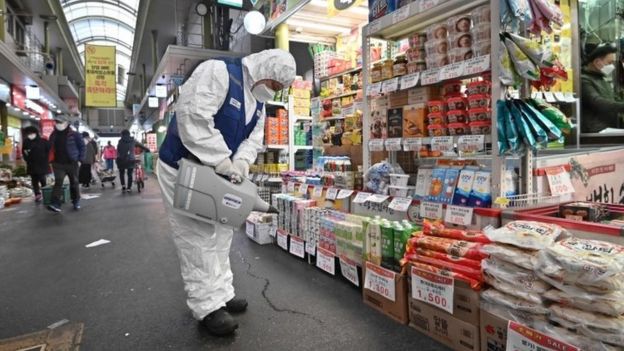
Image copyright AFPImage caption A worker sprays disinfectant to help prevent the spread of the novel coronavirus at a market in Seoul
What is the situation in North Korea?
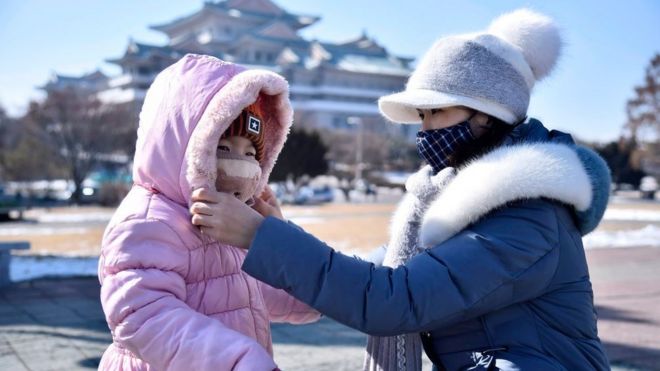
North Korea has not confirmed any cases but the country shares a long and often porous border with China. There are concerns that North Korea, which is subject to international sanctions, lacks the health infrastructure to test and treat those infected and that any outbreak could quickly spread unchecked.
At the moment, all foreigners coming into the country must be quarantined for 30 days.
There are relatively few foreigners in North Korea, and only around 200 Westerners, according to one expert.
North Korean authorities have also cancelled the annual Pyongyang marathon, which typically sees people from all over the world participating.
Around 3,000 people in North Pyongan province – a north-western region bordering China – are also now under monitoring for reportedly showing suspected symptoms, said state media.
What about South Korea?
Media caption People in Daegu have voiced concern over the spread of the virus
South Korea has the largest number of confirmed cases outside China, after a huge spike in the past week.
Before last Wednesday, the country had recorded just 31 cases. That number has now jumped to 763.
Eight new cases of the virus have been reported in the army, and one in the navy, air force and marine corps – bringing the number to 11.
But the biggest virus clusters have been linked to a hospital and a religious group near the south-eastern city of Daegu.
A handful of South Korea airlines, including Korean Air Lines – the country’s biggest airline – has suspended flights going to Daegu, which has a population of around 2.5m.
Korean Air says the suspension will last until March 27
What’s happening in Italy?
Italian officials have introduced sweeping measures to control what is now the worst outbreak of the coronavirus in Europe – at least three people have died and more than 150 cases confirmed.
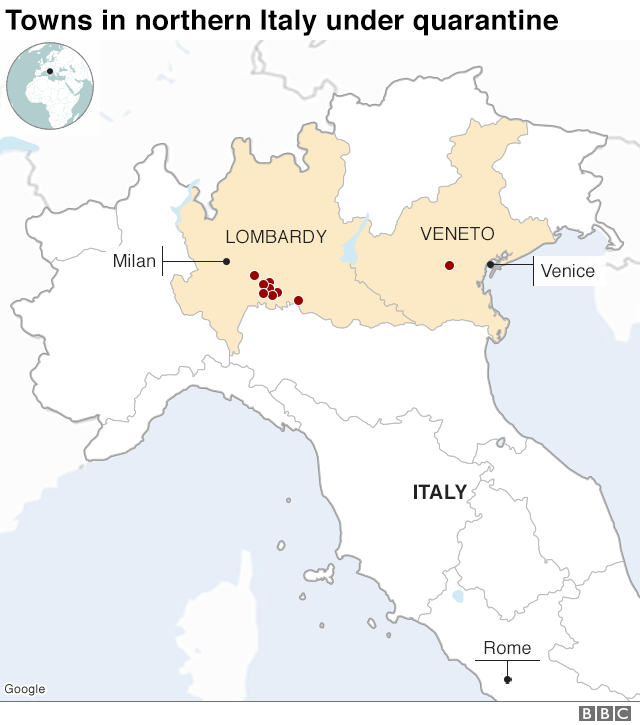
In the regions of Lombardy and Veneto, a lock-down is in place in several small towns. For the next two weeks, 50,000 residents will not be able to leave without special permission.
Even outside the zone, many businesses and schools have suspended activities, and sporting events have been cancelled – including several top-flight football matches.
Officials have yet to find the first carrier of the virus in the country.
World edges closer to coronavirus pandemic
Analysis by Fergus Walsh, medical correspondent
The combined situation in South Korea, Iran and Italy points to the early stages of pandemic. This means a global outbreak, with the coronavirus spreading in the community in multiple parts of the world.
In each of these countries we are seeing spread of the virus with no connection to China. The lockdown efforts in Italy mirror those that have happened in China.
The situation in Iran is especially worrying, because the health authorities have reportedly said the virus has spread to multiple cities, and it appears the first case in Lebanon is linked to a traveller from Iran.
If we have a pandemic, it will still be important to limit the speed of spread of the virus.
If countries could hold it somewhat at bay until the end of winter, there is a hope that warmer temperatures will reduce the time the virus can survive in the air, as we see with seasonal flu. But this may not be certain.
What’s the latest from Iran?
Iran said on Sunday it had 43 confirmed cases of the virus, most of them in the holy city of Qom. Eight of those infected have died, the highest number of deaths outside China.
Iraq, Pakistan, Armenia and Turkey have closed their borders with Iran, and Afghanistan has suspended air and road travel to and from Iran.
What about China, where the outbreak started?
China’s President Xi Jinping has described the outbreak as the “largest public health emergency” in the country’s recent history.
Speaking on Sunday, he acknowledged “shortcomings” in China’s response and said lessons must be learned.
China reported 409 new infections on Monday, the bulk of which were from Wuhan.
But outside China, cases with no clear link to that country or other confirmed cases continue to rise, prompting concern from the World Health Organization (WHO).
BEIJING/SEOUL (Reuters) – Italy, South Korea and Iran reported sharp rises in coronavirus infections on Monday, triggering concern from the World Health Organization (WHO), but China relaxed some curbs on movement, including in Beijing, as the rate of new infections there eased.
The virus has put Chinese cities into lockdown, disrupted air traffic to the workshop of the world and blocked global supply chains for everything from cars and car parts to smartphones.
The surge of cases outside mainland China triggered steep falls in global share markets and Wall Street stock futures as investors fled to safe havens. Gold soared to a seven-year high, oil tumbled nearly 4% and the Korean won KRW= fell to its lowest level since August.[MKTS/GLOB]
But U.S. Treasury Secretary Steven Mnuchin cautioned against jumping to conclusions about the impact on the global economy or supply chains, saying it was simply too soon to know.
RELATED COVERAGE
Ireland cautions against travel to coronavirus-hit areas of Italy
France blocks passengers on board bus from Italy after one falls ill
The World Health Organization (WHO) said it no longer had a process for declaring a pandemic, but that the coronavirus outbreak remained an international emergency.
“We are specially concerned about the rapid increase in cases in … Iran, Italy and the Republic of Korea,” WHO head Tedros Adhanom Ghebreyesus told a news conference in Sweden via video link from Geneva.
South Korea reported 231 new cases, taking its total to 833. Many are in its fourth-largest city, Daegu, which became more isolated with Asiana Airlines (020560.KS) and Korean Air (003490.KS) suspending flights there until next month.
Iran, which announced its first two cases last Wednesday, said it had confirmed 43 cases and eight deaths. Most of the infections were in the Shi’ite Muslim holy city of Qom.
Elsewhere in the Middle East, Bahrain and Iraq reported their first cases and Kuwait reported three cases involving people who had been in Iran.
Saudi Arabia, Kuwait, Iraq, Turkey, Pakistan and Afghanistan imposed restrictions on travel and immigration from Iran. Afghanistan also reported its first case, officials said.
The WHO has been saying for weeks that it dreads the disease reaching countries with weak health systems.
Europe’s biggest outbreak is in Italy, with some 150 infections – compared with just three before Friday – and a fifth death.
‘SEVERE AND COMPLEX’
Scientists around the world are scrambling to analyze the virus, but a vaccine is probably more than a year away.
“Worryingly, it seems that the virus can pass from person to person without symptoms, making it extremely difficult to track, regardless of what health authorities do,” said Simon Clarke, an expert in cellular microbiology at the University of Reading in Britain.
China postponed the annual meeting of its parliament in Beijing.
But there was a measure of relief for the world’s second-largest economy as more than 20 province-level jurisdictions, including Beijing and Shanghai, reported zero new infections, the best showing since the outbreak began.
President Xi Jinping urged businesses to get back to work, though he said the epidemic was still “severe and complex, and prevention and control work is in the most difficult and critical stage”.
Excluding the central Hubei province, center of the outbreak, mainland China reported 11 new cases, the lowest since the national health authority started publishing nationwide daily figures on Jan. 20.
The coronavirus has infected nearly 77,000 people and killed more than 2,500 in China, most in Hubei.
Overall, China reported 409 new cases on the mainland, down from 648 a day earlier, taking the total number of infections to 77,150 cases as of Feb. 23. The death toll rose by 150 to 2,592.
Outside mainland China, the outbreak has spread to about 29 countries and territories, with a death toll of about two dozen, according to a Reuters tally.
Xi said on Sunday the outbreak would have a relatively big, but short-term, impact on the economy and the government would step up policy adjustments to help cushion the blow.
Mnuchin, speaking to Reuters in the Saudi city of Riyadh, said he did not expect the coronavirus to have a material impact on the Phase 1 U.S.-China trade deal.
“Obviously that could change as the situation develops,” he added.
In northern Italy, authorities sealed off the worst-affected towns and banned public gatherings across a wide area, halting the carnival in Venice, where there were two cases.
Austria briefly suspended train services over the Alps from Italy after two travelers coming from Italy showed symptoms of fever.
Both tested negative for the new coronavirus but Austrian Interior Minister Karl Nehammer said a task force would meet on Monday to discuss whether to introduce border controls.
Japan had 773 cases as of late Sunday, mostly on a cruise ship quarantined near Tokyo. A third passenger, a Japanese man in his 80s, died on Sunday.
In South Korea, authorities reported a seventh death and dozens more cases on Monday. Of the new cases, 115 were linked to a church in the city of Daegu.
Drone footage showed what appeared to be hundreds of people queuing in a neat line outside a Daegu supermarket under the winter sunshine to buy face masks. ( tmsnrt.rs/37WP6lA )
SEOUL/SHANGHAI (Reuters) – South Korea raised its disease alert to the highest level on Sunday after a surge in coronavirus infections and two more deaths, while China state media warned the outbreak there had yet to reach a turning point despite some signs of easing.
South Korea’s president said he was putting the country on “red alert” due to the rapid rise in new cases, which are largely being traced back to church services. Health officials reported 169 new infections, bringing the total to 602, having doubled from Friday to Saturday.
The escalation in the alert level allows the government to send extra resources to Daegu city and Cheongdo county, which were designated “special care zones” on Friday.
South Korea’s Yonhap News Agency said it also enables the government to forcibly prevent public activities and order the temporary closure of schools, though the government gave no immediate details on what steps could be taken.
In China, the health commission confirmed 648 new infections – higher than a day earlier – but only 18 were outside of Hubei province, the lowest number outside of the epicenter since authorities started publishing data a month ago and locked down large parts of the country.
RELATED COVERAGE
Italy coronavirus cases rise to more than 100: regional chief
South Korea raises disease alert to highest level as virus cases soar
But the number of cases continued to climb elsewhere.
Japanese Prime Minister Shinzo Abe instructed government agencies on Sunday to urgently prepare medical provisions and draft a comprehensive plan to curb the spread of the virus, after it reported 27 more cases a day earlier.
The U.S. State Department raised its travel advisory level one notch for South Korea and Japan to Level 2 on a scale of 1 to 4.
Concern about the reach and rapid spread of coronavirus also grew in Europe and the Middle East.
Cases in Italy, Europe’s worst hit country, more than quadrupled to 79 on Saturday, with two deaths.
Iran reported a total of 43 infections, with eight deaths – all since Tuesday – forcing some of its neighbors to announce travel and immigration curbs.
The World Health Organization on Saturday stressed that the number of cases outside of China was still relatively few, but it was worried by the detection of infections without a clear link to China.
The disease has spread to some 26 countries and territories outside China, killing more than a dozen people, according to a Reuters tally. It has been fatal in 2% of reported cases, with the elderly and ill the most vulnerable, according to the WHO.
The potential economic impact of coronavirus was prominent at a meeting of G20 finance ministers in Riyadh, at which the International Monetary Fund chief said China’s 2020 growth would likely be lower at 5.6%, down 0.4 percentage points from its January outlook, with 0.1 percentage points shaved from global growth.
The last time South Korea raised the alert to the highest was 11 years ago during the Influenza A or H1N1 outbreak.
Many of South Korea’s new cases were linked to the Shincheonji Church of Jesus congregation in Daegu after a 61-year-old woman known as “Patient 31” tested positive for the virus last week. The woman had no recent record of overseas travel.
Catholic churches in Daegu and Gwangju have suspended mass and other gatherings, while churches elsewhere saw declines in attendance on Sunday, especially among the elderly.
“If the situation gets worse, I think we’ll need to take more measures. Currently, we’re limiting personal gatherings within the church except for Mass,” said Song Gi-young, 53, wearing a face mask at church.
Heo Young-moo, 88, expressed frustration.
“Devotees shouldn’t go to any risky places … Hasn’t it become so widespread because those people didn’t get checked?”,” he said.
Outside of the church was a sign that said: “All Shincheonji followers are strictly prohibited from entering”.
The foreign ministry said South Koreans aboard a plane to Israel had been denied entry there on Saturday due to concerns about the virus spread.
China said the number of new deaths on Saturday from COVID-19, as the disease caused by the virus is known, was 97, all but one of which were in Hubei.
Eighty-two of those were in the provincial capital Wuhan, where Xinhua news agency said nucleic tests were being carried out on the backlog of cases to try to contain the spread.
In total, China has reported 76,936 cases, and 2,442 deaths. The WHO says the virus is severe or critical in only a fifth of infected patients, and mild in the rest.
Graphic: Reuters graphics on the new coronavirus here
NOT OVER YET
Beijing, Zhejiang, Sichuan had no new infections on Feb. 22 for the first time since the outbreak was detected. There were signs of street life in Shanghai, with some cafes serving take-out food and families wearing masks walking their dogs.
State run television on Sunday urged people to avoid complacency, drawing attention to people gathering in public areas and tourist spots without wearing masks.
Analysts have been closely watching out for any signs of a secondary wave of infections as transport restrictions are eased and many migrant workers return to factories and offices. Business activity in the world’s second-biggest economy is only gradually returning to normal after widespread disruptions.
Japan’s health minister apologized on Saturday after a woman who was allowed to leave the coronavirus-struck Diamond Princess cruise ship tested positive despite having underwent quarantine.
At least 623 cases have been reported on the vessel, the biggest outbreak outside China, involving more than a dozen nationalities.
In Italy, schools and universities were closed and some soccer matches postponed in Lombardy and Veneto, the country’s industrial heartland.
Saudi Arabia, Kuwait, Iraq have travel and immigration curbs on Iran, while Oman on Sunday urged its citizens to steer clear of countries with high infection rates and said arrivals from those nations would be quarantined.
Image copyright GETTY IMAGESImage caption Cases of coronavirus have risen sharply in South Korea, where the outbreak is worsening
The head of the World Health Organization (WHO) has expressed concern at the number of coronavirus cases with no clear link to China or other confirmed cases.
Dr Tedros Adhanom Ghebreyesus said the window of opportunity to contain the virus was “narrowing”.
Chinese health authorities reported a decrease in deaths and new cases of the coronavirus on Saturday.
But cases are on the rise in South Korea, Italy, Iran and other countries.
Outside China, more than 1,200 cases of the virus have been confirmed in 26 countries and there have been eight deaths, the WHO says.
They include two deaths in South Korea, which has the biggest cluster of confirmed cases apart from China and a cruise ship quarantined in Japan.
On Saturday, South Korea reported 142 new confirmed cases of the coronavirus, bringing the national tally to 346.
On Friday, doctors in Italy said a 78-year-old man became the first person in the country to die from the new coronavirus, Ansa news agency reported.
Earlier Italy had announced 16 more cases and its health minister said schools and offices would be closed and sports events cancelled in the affected regions.
China has reported 76,288 cases including 2,345 deaths. The new virus, which originated last year in Hubei province in China, causes a respiratory disease called Covid-19.
What did the WHO chief say?
Dr Tedros said the number of coronavirus cases outside China was “relatively small” but the pattern of infection was worrying.
“We are concerned about the number of cases with no clear epidemiological link, such as travel history to or contact with a confirmed case,” he said.
The new deaths and infections in Iran were “very concerning”, he said.
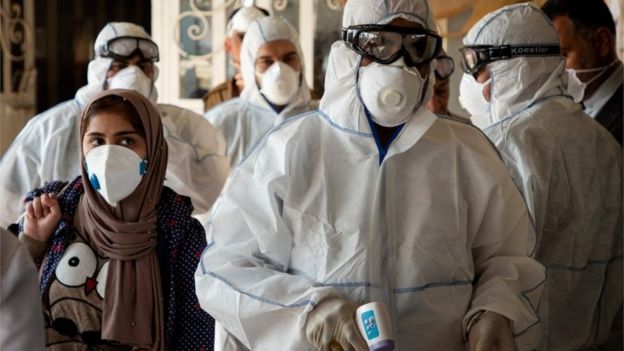
Image copyright AFPImage caption Iraq has been checking people at its border with Iran
But he insisted that the measures China and other countries had put in place meant there was still a “fighting chance” of stopping further spread and called on countries to put more resources into preparing for possible outbreaks.
What is the latest in South Korea?
Prime Minister Chung Sye-kyun declared a public health emergency as the total number of cases surpassed 300 on Saturday.
The southern cities of Daegu and Cheongdo have been declared “special care zones”. The streets of Daegu are now largely abandoned.
The nation’s capital, Seoul, banned demonstrations in central areas.
Two cases were also reported in Busan, South Korea’s second-largest city, and one on the Island of Jeju on Saturday – the first in both places.
Media caption People in Daegu have voiced concern over the spread of the virus
All military bases are in lockdown after three soldiers tested positive.
The authorities suspect the current outbreak in South Korea originated in Cheongdo, pointing out that a large number of sect followers attended the funeral of the founder’s brother from 31 January to 2 February.
The sect – known as Shincheonji – which has been accused of being a cult, said it had now shut down its Daegu branch and that services in other regions would be held online or individually at home.
As of Friday, more than 400 members of the church were showing symptoms of the disease, though tests were still ongoing, the city mayor said.
Can we answer your question on the coronavirus?
Here’s what others have been asking
Once you’ve had coronavirus, will you be immune?
Could the coronavirus become a pandemic?
Is the coronavirus worse than flu or Sars?
Hand sanitizers and warning signs
By Hyung Eun Kim, BBC Korean Service, Seoul
Many people in South Korea are wearing masks on a daily basis.
Hand sanitizers have been placed at public transport stops and building entrances.
Warning government signs are everywhere. They say: “Three ways to prevent further infection: wear a mask at all times; wash your hands properly with soap for more than 30 seconds; and cover yourself when coughing.”
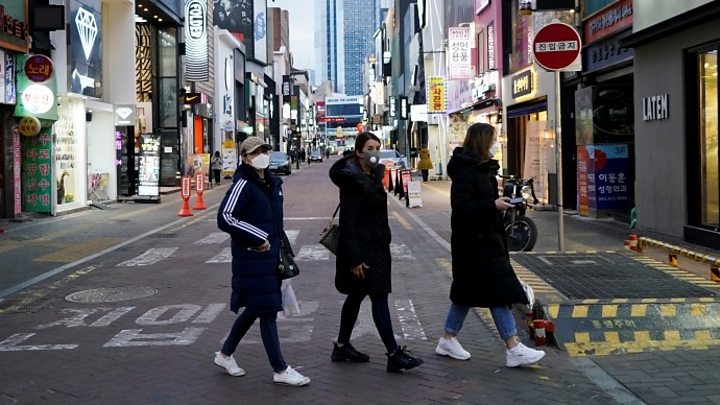
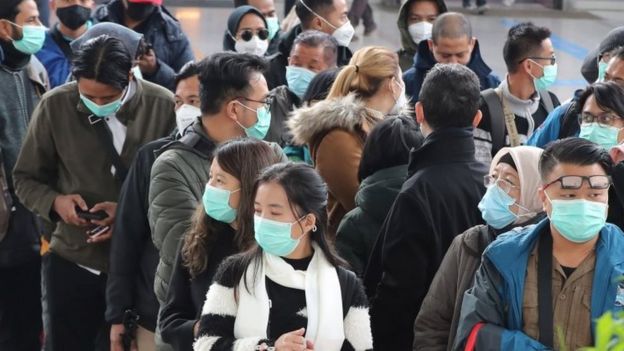
Image copyright EPAImage caption New norm: Mask-wearing crowd in Seoul
Koreans have also developed several apps and websites that tell you how much risk you face where you are. They show where the infected people are within a 10km radius.
“I can’t miss work, what I can do is minimise contact with others and stay at home during the weekend,” Seung-hye Lim, a Seoul resident, told the BBC.
“I do wonder if we reacted too laxly initially or if it really is because of the specific service practices of the Shincheonji sect.”
So-young Sung, a mother of two in Seoul, told the BBC: “It feels like my daily life is collapsing.”
She said she was struggling to find pharmacies that had masks.
She added that checking coronavirus-related alarms from her children’s schools and kindergartens was now a daily routine for her.
What about the Iran cases?
In Iran the outbreak is centred on the holy city of Qom, south of the capital Tehran, which is a popular destination for Shia Muslims in the region.
Iran reported two more deaths in Qom on Friday, adding to the two deaths it reported on Thursday. A total of 18 cases have been confirmed in the country.
Lebanon has reported its first confirmed case – a 45-year-old woman who was detected as she arrived in Beirut from Qom. The UAE, Israel and Egypt have also reported cases.
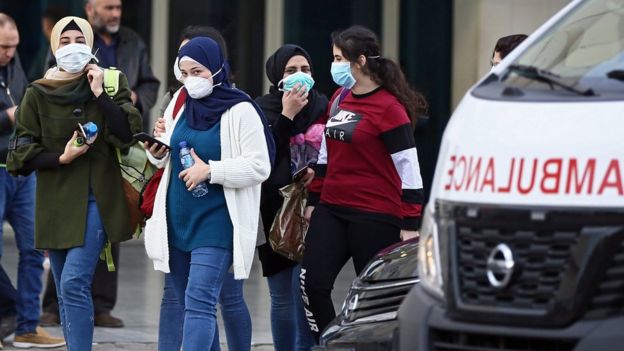
Image copyright EPAImage caption Lebanon has confirmed its first case – a woman returning from the Iranian city of Qom
Meanwhile Canadian officials said one of the nine cases there was a woman who had recently returned from Iran.
WHO officials said both Iran and Lebanon had the basic capacity to detect the virus and the WHO was contacting them to offer further assistance.
But Dr Tedros said the organisation was concerned about the virus’s possible spread in countries with weaker health systems.
What about China and elsewhere?
The virus has now hit the country’s prison system, with more than 500 inmates confirmed infected.
They include 230 patients in a women’s prison in Wuhan. More cases have been found in a prison in the eastern province of Shandong and the south-eastern province of Zhejiang.
Some 36 people at a hospital in Beijing have also tested positive.
Senior officials have been sacked for mishandling management of the outbreak.
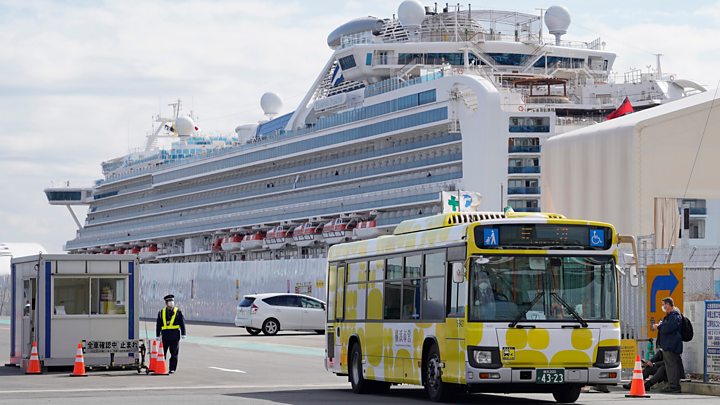
Passengers of the Diamond Princess cruise ship who have tested negative continue to disembark the ship in Yokohama after more than 14 days quarantined on board.
However, 18 American evacuees from the ship tested positive after arriving in the US, officials said. More than 300 other US nationals have arrived back in the US after disembarking.
Media caption Coronavirus: Quarantined passengers released from Japan ship
More than 150 Australian passengers have been evacuated from the ship and have already arrived in Darwin, where they will begin two more weeks of quarantine.
Australian officials said on Friday that six people had reported feeling unwell on arrival in Darwin and were immediately tested. Two of those people tested positive despite having received negative tests before leaving Japan.
The first batch of people from Hong Kong have also flown back to the city, where they will similarly be quarantined.
BAGHDAD, Aug. 5 (Xinhua) — China and Iraq vowed to enhance cooperation and develop bilateral relations in various fields, the Chinese embassy in Baghdad said in a statement on Monday.
The statement came after Iraqi President Barham Salih received on Sunday China’s Ambassador to Iraq Zhang Tao at the presidential palace, where the two sides exchanged views on bilateral relations.
During the meeting, Salih said that the two countries have a long history of friendship, and the bilateral ties have currently maintained a sound momentum of development with fruitful pragmatic cooperation in various fields, the statement said.
Salih added that “Iraq attaches great importance to developing relations with China.”
He said that “Iraq is willing to continuously strengthen exchanges at all levels, deepen the strategic integration of each other’s development strategies, enhance strategic cooperation under the framework of the Belt and Road Initiative and promote the new strategic partnership between Iraq and China,” according to the statement.
For his part, Zhang said that China is “willing to encourage more Chinese enterprises to participate in post-war reconstruction in Iraq, support Iraq’s economic and social development, and continuously enrich the content of China-Iraq strategic partnership,” the statement said.
He added that “the traditional friendship between China and Iraq is profound and long-lasting, and the establishment of diplomatic relations has contributed to developing bilateral ties in a healthy and stable manner.”
Zhang believes that “since the establishment of the strategic partnership in 2015, the development of China-Iraq relations entered the fast lane, as the political mutual trust between the two countries has been consolidated, pragmatic cooperation has been deepened, and cultural exchanges have continued to expand.”
On May 5, Zhang said in an interview with Iraqi state-run al-Sabah newspaper that the volume of the trade exchange between China and Iraq exceeded 30 billion U.S. dollars in 2018.
He asserted that “China is considered the biggest trading partner of Iraq, and Iraq is the second biggest oil supplier to China, and the fourth biggest trading partner of China in the Middle East.”
President Xi Jinping will meet Russian counterpart Vladimir Putin next month and address economic summit in St Petersburg
Diplomatic flurry will also include regional security forums in Kyrgyzstan and Tajikistan
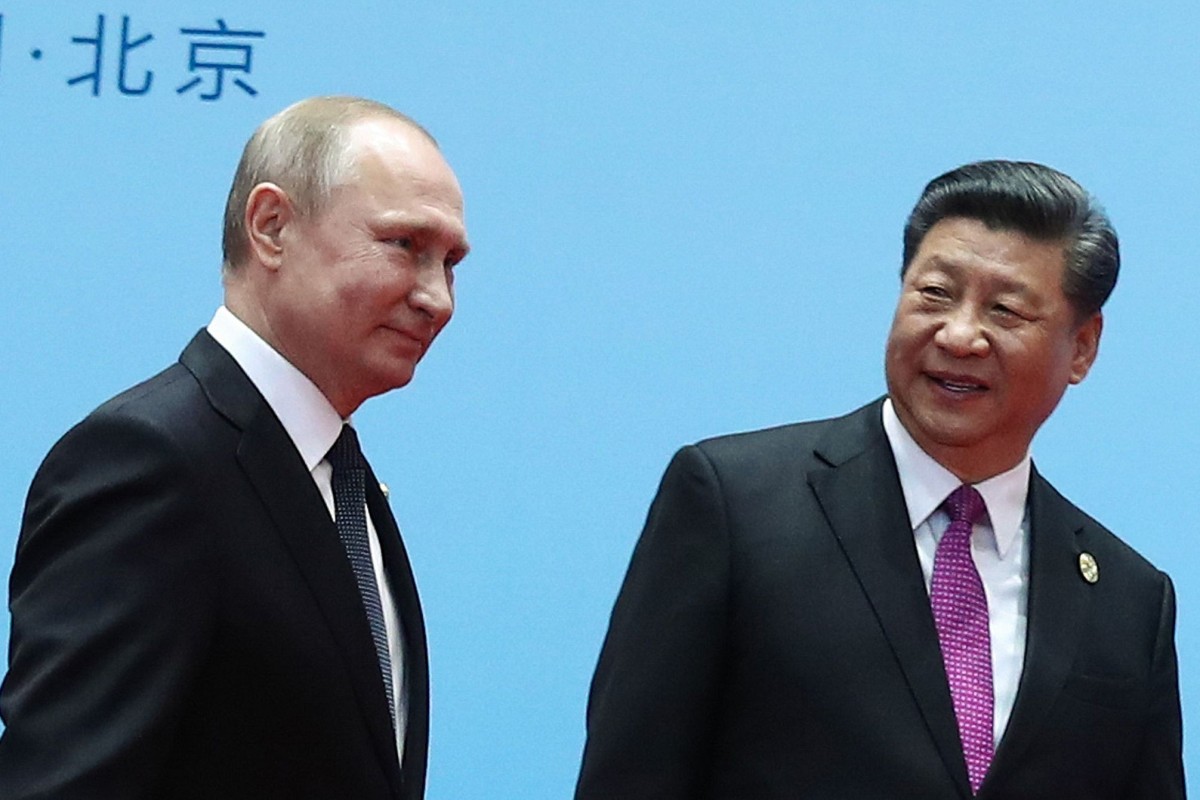
Xi Jinping has met Vladimir Putin more times than any other foreign leader since he took power in 2013. Photo: AFP
Beijing is stepping up efforts to seek support from regional and global players such as Russia and Central Asian nations as its geostrategic rivalry with Washington heats up.
President Xi Jinping is expected to meet his Russian counterpart Vladimir Putin next month, when he will also address the St Petersburg International Economic Summit,
The Chinese president will also visit the Kyrgyzstan capital Bishkek for the Shanghai Cooperation Organisation (SCO) summit in June, as well as another regional security forum in Dushanbe, Tajikistan.
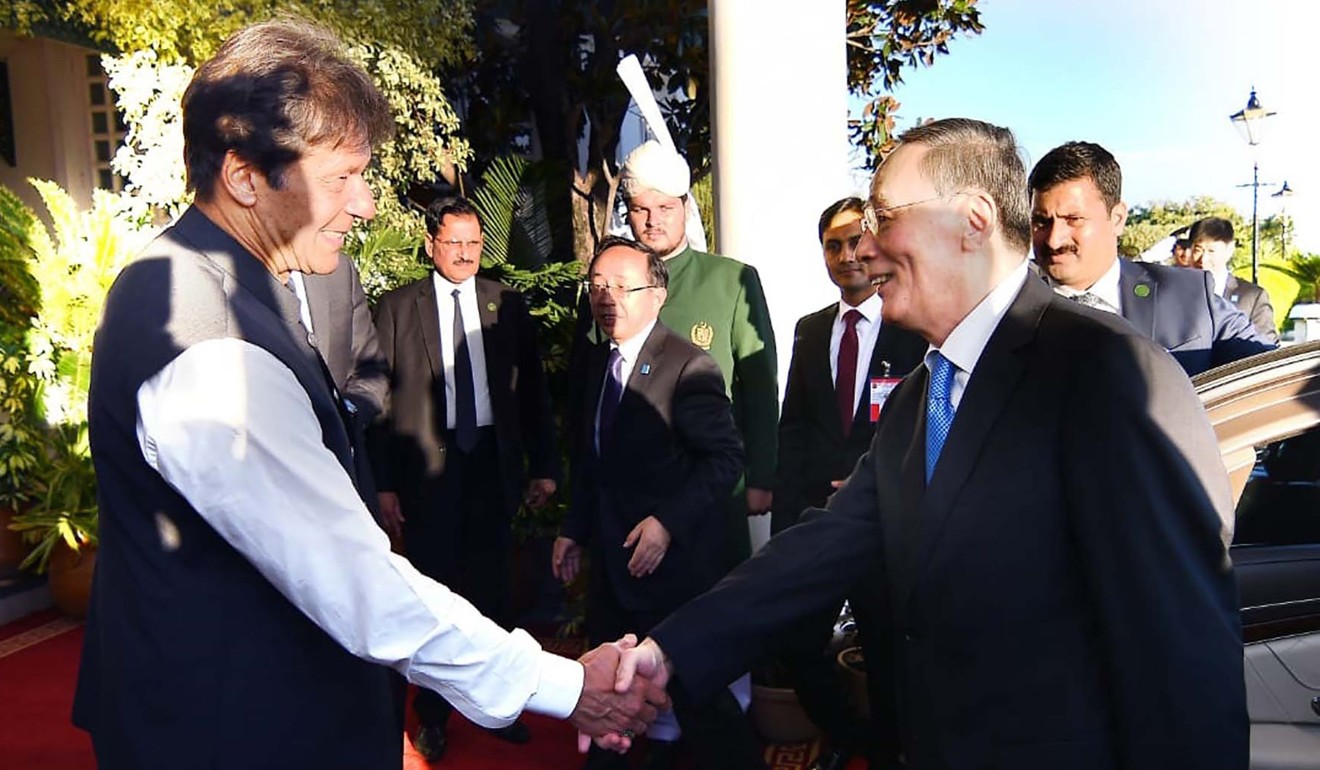
Meanwhile, Vice-PresidentWang Qishan is visiting Pakistan before he heads to the Netherlands and Germany, according to the Chinese foreign ministry.
Pakistani Prime Minister Imran Khan meets Chinese Vice-President Wang Qishan in Islamabad on Sunday. Photo: AFP
The latest flurry of diplomatic activity comes as competition between China and the US intensifies on several fronts including trade and technology, the South China Sea and the Arctic, where Beijing’s partnership with Moscow –
It will be Xi’s second time at the St Petersburg forum, and observers expect the Chinese leader will reaffirm Beijing’s commitment to multilateralism and promote the nation as a champion of openness and cooperation.
China-Russia ties unrivalled, Beijing warns before Pompeo meets Putin
It will also be his second meeting with Putin in two months, after talks on the sidelines of the Belt and Road Forum in Beijing in late April, when the Russian president
for the controversial China-led infrastructure and investment initiative.
With China and Russia edging closer, the latest meeting is likely to see efforts to coordinate their strategies on a range of issues – including Venezuela, North Korea, nuclear weapons and arms control, according to observers. Xi has met Putin more times than any other foreign leader since he took power in 2013.
“This time it is very likely that the latest anti-China moves by the US, such as new tariffs and the Huawei ban, will feature prominently in their conversations,” said Artyom Lukin, an associate professor at Far Eastern Federal University in Vladivostok.
Lukin said Russia’s stagnating economy and sanctions imposed by the West limited its role as a substitute for the foreign markets and technologies China could lose access to because of the US crusade. But he said Putin would “provide political and moral support to Xi”.
“That is also significant as Russia has been withstanding intense US-led sanctions pressure for more than five years already,” Lukin said, referring to sanctions imposed after Russia’s annexation of Crimea in 2014.
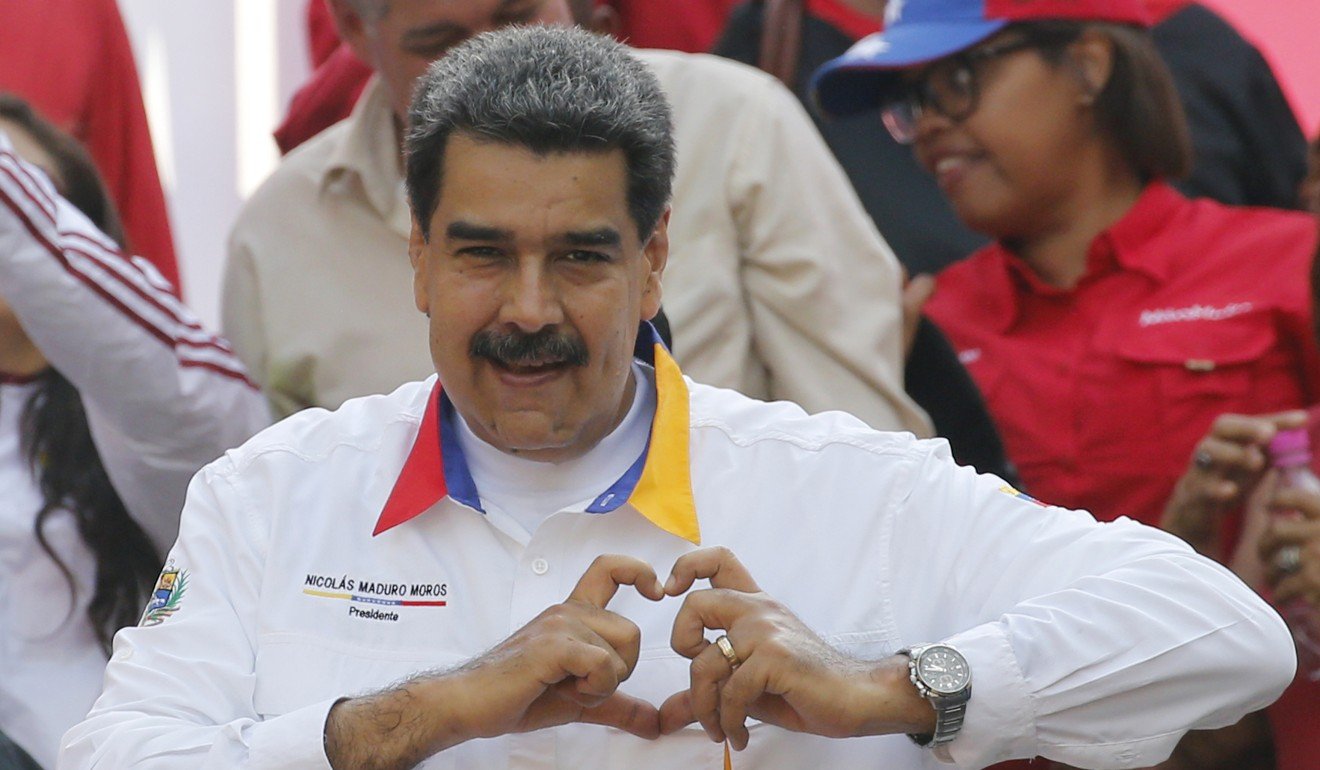
Xi and Putin are also expected to talk about Venezuela, where US-backed opposition leader Juan Guaido is attempting to oust socialist President Nicolas Maduro, who has the support of China and Russia.
Venezuelan President Nicolas Maduro has the backing of China and Russia. Photo: AP
“Moscow and Beijing are not able to seriously hurt Washington by raising tariffs or denying access to high technology. However, there are plenty of areas where coordinated Sino-Russian policies can damage US interests in the short term or in the long run,” Lukin said. “For example, Moscow and Beijing could intensify their joint support for the Venezuelan government of Nicolas Maduro, frustrating Washington’s efforts to dislodge him.”
China and Russia would also be seeking to boost economic ties. Bilateral trade, dominated by Chinese imports of gas and oil, reached US$108 billion last year – falling far short of the target set in 2011 by Xi’s predecessor, Hu Jintao, of US$200 billion by 2020.
China and Russia to forge stronger Eurasian economic ties
Li Lifan, an associate research professor at the Shanghai Academy of Social Sciences, said bilateral trade was a sticking point. “This is one of the potential hindrances in China-Russia relations and Beijing is hoping to [address this] … in the face of a possible global economic slowdown,” Li said.
Given the escalating trade war with Washington, he said China would seek to diversify its investments and markets to other parts of the world, particularly Russia and Europe.
“China will step up its investment cooperation with Europe and Russia and focus more on multilateral investment,” Li said.
But Beijing was not expected to do anything to worsen tensions with Washington.
“China is currently taking a very cautious approach towards the US, trying to avoid heating up the confrontation and further aggravation of the situation,” said Danil Bochkov, a contributing author with the Russian International Affairs Council. “For China it is important to demonstrate that it has a reliable friend – Russia – but that should not be done in an openly provocative manner.”
Stephen Blank, a senior fellow at the American Foreign Policy Council in Washington, said Beijing and Moscow would also seek to contain US influence “as far as possible” from Central Asia, where China has increased its engagement through infrastructure building under the “Belt and Road Initiative”.
Leaders from the region will gather in Bishkek next month for the SCO summit, a security bloc set up in 2001 that now comprises China, Russia, Kazakhstan, Kyrgyzstan, Tajikistan, Uzbekistan, India and Pakistan. Those members account for about 23 per cent of the world’s land mass, 45 per cent of its population, and 25 per cent of global GDP.
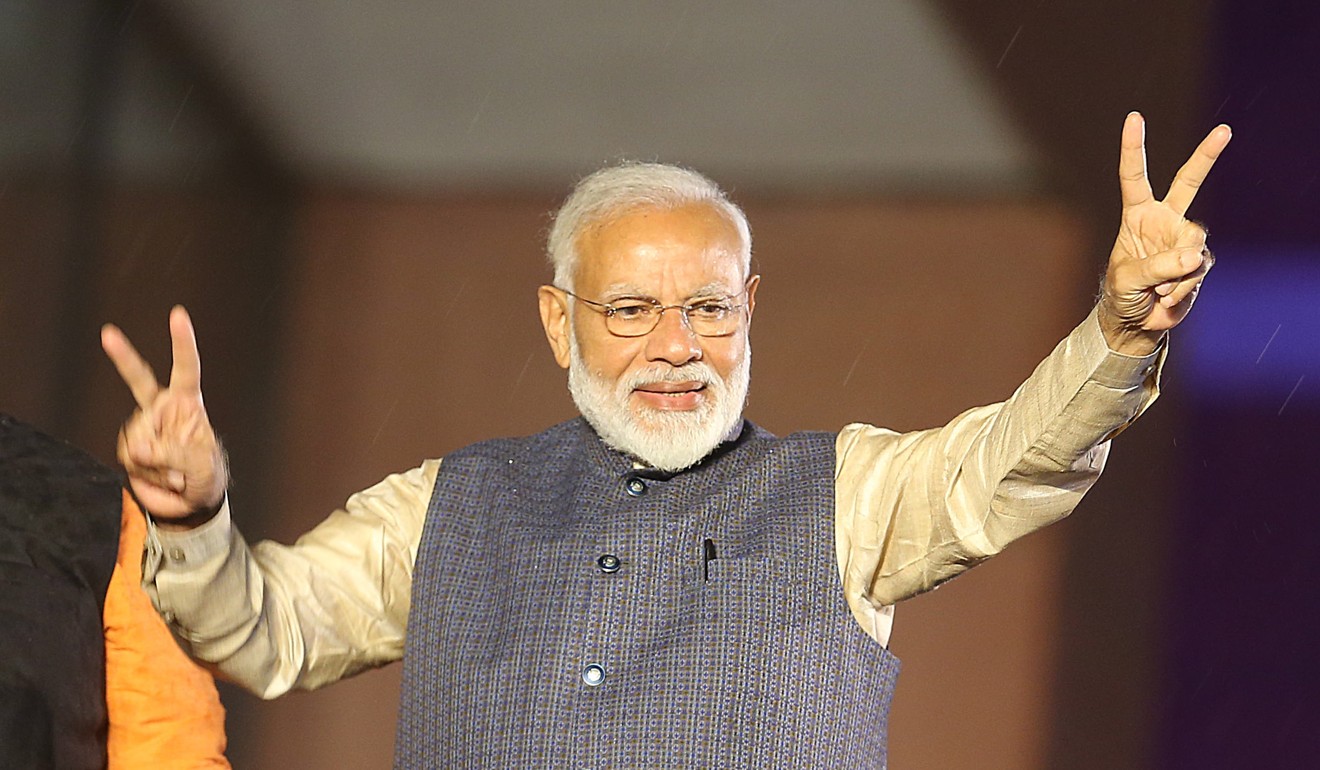
Newly re-elected Indian Prime Minister Narendra Modi could meet the Chinese president for talks in Bishkek next month. Photo: EPA-EFE
There is growing speculation that Xi will meet newly re-elected Indian Prime Minister Narendra Modi on the sidelines of that summit.
Independent analyst and author Namrata Goswami said India would be seeking a commitment to a WTO-led and rules-based multilateral trading system during the SCO talks.
“This is interesting and significant given the current US tendencies under President Donald Trump focused on ‘America first’ and the US-China trade war,” Goswami said.
Counterterrorism will again be a top priority at the SCO summit, amid concerns among member states about the rising number of Islamic State fighters returning from Syria and Iraq. Chinese scholars estimated last year that around 30,000 jihadists who had fought in Syria had gone back to their home countries, including China.
Alexander Bortnikov, chief of the main Russian intelligence agency FSB, said earlier that 5,000 fighters from a group affiliated with Isis had gathered in areas bordering former Soviet states in Central Asia, saying most of them had fought alongside Isis in Syria.
War-torn Afghanistan, which shares a border with four SCO member states – China, Pakistan, Tajikistan and Uzbekistan – is also likely to be high on the agenda at the Bishkek summit.
“With the Trump administration drafting plans to withdraw troops from Afghanistan, the SCO will assess the security situation there and decide whether to provide training for Afghan troops,” Li said.
Eva Seiwert, a doctoral candidate at the Free University of Berlin, expected the security bloc would also discuss Iran after the US withdrew from the 2015 nuclear deal and ordered new sanctions against the country.
Iran, which has observer status with the SCO, was blocked from becoming a full member in 2008 because it was subject to UN sanctions at the time. But its membership application could again be up for discussion.
Iran presses China and Russia to save nuclear deal
“The Trump administration’s unilateral withdrawal from the Iran nuclear deal in 2018 made it easy for China and Russia to present themselves as the proponents of peaceful settlement of conflicts,” Seiwert said. “Discussing the possibility of admitting Iran as a full member state would help the SCO members demonstrate their support of multilateral and peaceful cooperation.
“This would be a strong signal to the US and enhance the SCO’s standing in the international community,” she said.
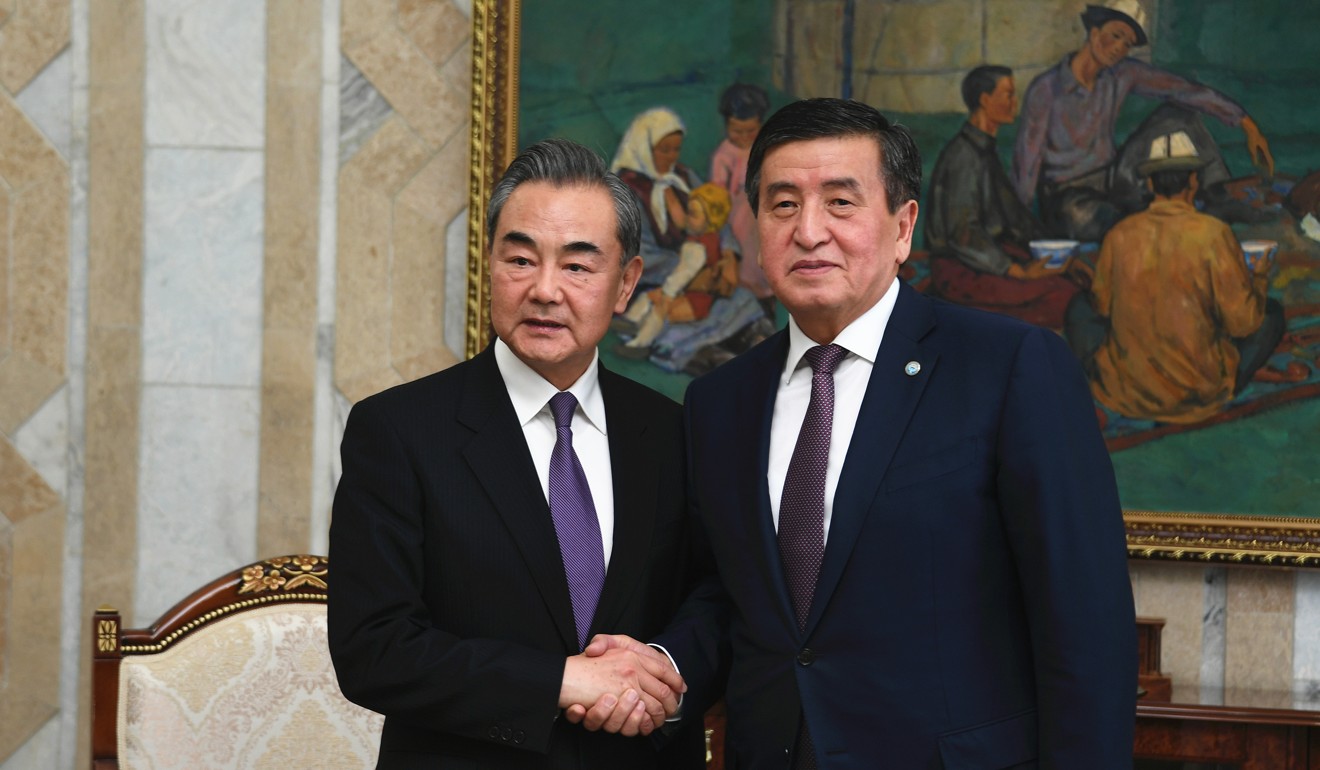
Kyrgyz President Sooronbay Jeenbekov (right) meets Chinese Foreign Minister Wang Yi in Bishkek on Tuesday last week. Photo: Xinhua
As well as security, Xi’s visit to Central Asia is also likely to focus on economic ties. Meeting Kyrgyz President Sooronbay Jeenbekov in Bishkek last week, Chinese Foreign Minister Wang Yi said Beijing would continue to “provide support and help national development and construction in Kyrgyzstan”.
Li said China may increase investment in the Central Asian region, especially in greenfield projects.
“China will continue to buy agriculture products from Central Asia, such as cherries from Uzbekistan, and build hydropower projects to meet local energy demand,” Li said. “Investment in solar and wind energy projects is also expected to increase too.”
UNITED NATIONS, Feb. 13 (Xinhua) — A Chinese envoy on Wednesday underscored the importance of political settlement to the Iraq issue while addressing a United Nations Security Council meeting on the situation in Iraq.
“We should continue to adhere to the general direction of political settlement to the Iraq issue,” Ma Zhaoxu, China’s permanent representative to the UN, said at the meeting.
“Achieving inclusive reconciliation and harmonious coexistence among the Iraqi parties is in line with the fundamental interests and the development needs of all Iraqi people,” Ma added.
Noting that Iraq is “at a critical stage” in promoting peace, stability and reconstruction, the Chinese envoy called on the international community to earnestly respect Iraqi sovereignty, independence, unity and territory Integrity, “support the good offices of the UN” and provide constructive assistance for an inclusive political settlement.
“We should continue to support Iraq in its fight against terrorism,” said Ma, noting that “the threats posed by terrorist remnants remain.”
“All parties concerned should strengthen counter-terrorism cooperation, unify standards, crack down on all terrorist organizations listed by the Security Council, consolidate the achievements of counter-terrorism efforts, and resolutely curb the return and spread of terrorist forces and terrorist activities,” Ma added.
“The international community should support Iraq in bringing terrorists to justice in accordance with relevant domestic laws,” the ambassador added.
Noting that the UN Assistance Mission for Iraq (UNAMI) “has played an important role” in supporting the Iraqi Government in promoting inclusive political dialogue, national reconciliation and national reconstruction, Ma said that China supports the efforts by UNAMI in its active work in accordance with its mandate.
“In recent years, the Chinese Government has provided Iraq with multiple batches of humanitarian supplies and economic assistance, some of which have been used in areas affected by terrorism,” said the ambassador.
In addition, the Chinese Red Cross also provided medical assistance to the Iraqi Red Crescent Society, which was used to alleviate the difficulties faced by the people of Iraq, he said.
Referring to the current political situation in the country, Ma said that China welcomes the progress in government formation in Iraq and commends the efforts by leaders of Iraq to resolve differences through consultations and dialogue, continuously promoting economic development, improving people’s living standards and accelerating the reconstruction process.
“China will, as always, support any efforts that help the political settlement process in Iraq and fight against terrorism, actively participate in the reconstruction of Iraq, of Iraqi economy, and will continue to provide assistance within our means,” the Chinese ambassador noted.
China’s Ambassador to Iraq Chen Weiqing gives visa to an applicant at the Chinese embassy in Baghdad, Iraq, Feb. 3, 2019. China’s Ambassador to Iraq Chen Weiqing welcomed on Sunday Iraqi visa applicants at the Chinese embassy in Baghdad, ahead of Chinese Spring Festival, saying that China is keen to strengthen ties with Iraq. (Xinhua/Khalil Dawood)
BAGHDAD, Feb. 3 (Xinhua) — China’s Ambassador to Iraq Chen Weiqing welcomed on Sunday Iraqi visa applicants at the Chinese embassy in Baghdad, ahead of Chinese Spring Festival, saying that China is keen to strengthen ties with Iraq.
“Iraq is at a transition point heading to the rebuilding stage. We are keen to strengthen ties between China and Iraq, and at the Chinese embassy, we will facilitate your visa process,” Chen said.
Annually, as the Chinese New Year approaches, embassies of China around the world hold cultural events and ceremonies, but because of the precarious security situation in Iraq, the ambassador had to make a short speech.
“This is the last workday for the embassy before the Spring Festival. Last year, we celebrated the 60th anniversary of the establishment of diplomatic relations with Iraq,” Chen told Xinhua.
“At present, relations between Iraq and China have developed very well, especially after China proposed the Belt and Road Initiative, in which Iraq was among the first Arab nations to join,” Chen added.
The Chinese embassy lies in Baghdad’s upscale neighborhood of al-Arasat, which is a relatively safe area. But like most foreign embassies in Iraq, high security measures are necessary.
Dozens of Iraqi visa applicants, if not hundreds at peak days, flock into the embassy every day, as China has become a favorable destination to many for business or study.
Inside the embassy, a small room was decorated with traditional Chinese red lanterns and paper cuttings, while Chinese landscapes and images of cultural life in China were hanged on the walls.
Two Chinese diplomats and two local employees handled the visa applications. Applicants described the procedures as smooth.
“This is going to be my first visit to China. I am going to study Chinese language at Shandong University, and then I aspire to be a pilot and work in China,” Zeyad Ismael, 23, told Xinhua as he waited in the queue.
“My expectations are high. I have looked for images of Shandong province on the internet and I like it. I expect good opportunities and a beautiful life,” Ismael added.
Last year, the Chinese embassy received close to 20,000 visa applications, most of which were for business reasons.
In recent years, China has become a source for many goods imported to Iraq such as smartphones, electronics and automobiles.
Iraqi English teacher, Muqdad Salih, 38, speaks fluent Chinese as he studied the language in China in 2007. Now, he is on the way to China to work as an English teacher in China’s Jiangxi province.
“Chinese New Year celebrations were beautiful and I was surprised by the atmosphere and friendliness of the Chinese people,” Salih said.








 CHINDIA ALERT: You'll be living in their world, very soon