22/05/2020
- The tech investment push is part of a fiscal package waiting to be signed off by the National People’s Congress, which convenes this week
- This initiative will reduce China’s dependence on foreign technology, echoing objectives set forth previously in the ‘Made in China 2025’ programme
A conductor rehearses the military band on the sidelines of the National People’s Congress in Beijing’s Great Hall of the People in March of last year. China’s legislature is expected to sign off on a massive tech-led stimulus plan. Photo: AP
Beijing is accelerating its bid for global leadership in key technologies, planning to pump more than a trillion dollars into the economy through the roll-out of everything from next-generation wireless networks to artificial intelligence (AI).
In the master plan backed by President Xi Jinping himself, China will invest an estimated 10 trillion yuan (US$1.4 trillion) over six years to 2025, calling on urban governments and private hi-tech giants like Huawei Technologies to help lay 5G wireless networks, install cameras and sensors, and develop AI software that will underpin
to automated factories and mass surveillance.
The new infrastructure initiative is expected to drive mainly local giants, from
and Huawei to SenseTime Group at the expense of US companies.
As tech nationalism mounts, the investment drive will reduce China’s dependence on foreign technology, echoing objectives set forth previously in the “Made in China 2025”
programme. Such initiatives have already drawn fierce criticism from the Trump administration, resulting in moves to block the rise of Chinese tech companies such as Huawei.
How will China’s annual legislative meetings affect the stock investor? Five key industries to watch
“Nothing like this has happened before, this is China’s gambit to win the global tech race,” said Digital China Holdings chief operating officer Maria Kwok, as she sat in a Hong Kong office surrounded by facial recognition cameras and sensors. “Starting this year, we are really beginning to see the money flow through.”
The tech investment push is part of a fiscal package waiting to be signed off by China’s legislature, the
National People’s Congress, which convenes this week. The government is expected to announce infrastructure funding of as much as US$563 billion this year, against the backdrop of the country’s worst economic performance since the Mao era.
The nation’s biggest purveyors of cloud computing and data analysis Alibaba, the parent company of the
South China Morning Post, and
Tencent Holding will be linchpins of the upcoming endeavour. China has already entrusted Huawei, the world’s largest telecommunications equipment supplier, to help galvanise 5G. Tech leaders including Pony Ma Huateng and
Jack Ma are espousing the programme.
Maria Kwok’s company is a government-backed information technology systems integration provider, among many that are jumping at the chance. In the southern city of Guangzhou, Digital China is bringing half a million units of project housing online, including a complex three quarters the size of Central Park in New York City. To find a home, a user just has to log on to an app, scan their face and verify their identity. Leases can be signed digitally via smartphone and the renting authority is automatically flagged if a tenant’s payment is late.
China is no stranger to far-reaching plans with massive price tags that appear to achieve little. There is no guarantee this programme will deliver the economic rejuvenation its proponents promise. Unlike previous efforts to resuscitate the economy with “dumb” bridges and highways, this newly laid digital infrastructure will help national champions develop cutting-edge technologies.
“China’s new stimulus plan will likely lead to a consolidation of
industrial internet
providers, and could lead to the emergence of some larger companies able to compete with global leaders, such as GE and Siemens,” said Nannan Kou, head of research at BloombergNEF, in a report. “One bet is on industrial
internet-of-things (IoT) platforms, as China aims to cultivate three world leading companies in this area by 2025.”
China is not alone in pumping money into the technology sector as a way to get out of the post-coronavirus economic slump. Earlier this month, South Korea said AI and wireless communications would be at the core of it its “New Deal” to create jobs and boost growth.
Nothing like this has happened before, this is China’s gambit to win the global tech raceMaria Kwok, COO at Digital China Holdings
The 10 trillion yuan that China is estimated to spend from now until 2025 encompasses areas typically considered leading edge, such as AI and IoT, as well as items such as ultra-high voltage lines and high-speed rail, according to the government-backed China Centre for Information Industry Development. More than 20 of mainland China’s 31 provinces and regions have announced projects totaling over 1 trillion yuan with active participation from private capital, a state-backed newspaper reported on Wednesday.
Separate estimates by Morgan Stanley put new infrastructure at around US$180 billion each year for the next 11 years – or US$1.98 trillion in total. Those calculations also include power and rail lines. That annual figure would be almost double the past three-year average, the investment bank said in a March report that listed key stock beneficiaries including companies such as China Tower Corp, Alibaba, GDS Holdings, Quanta Computer and Advantech Co.
Beijing’s half-formed vision is already stirring a plethora of stocks, a big reason why five of China’s 10 best-performing stocks this year are tech plays like networking gear maker Dawning Information Industry and Apple supplier GoerTek. The bare outlines of the master plan were enough to drive pundits toward everything from satellite operators to broadband providers.
China’s telecoms carriers push to complete ‘political task’ of 5G network roll-out amid coronavirus crisis
It is unlikely that US companies will benefit much from the tech-led stimulus and in some cases they stand to lose existing business. Earlier this year, when the country’s largest telecoms carrier China Mobile awarded contracts worth 37 billion yuan for 5G base stations, the lion’s share went to Huawei and other Chinese companies. Sweden’s Ericsson got only a little over 10 per cent of the business in the first four months. In one of its projects, Digital China will help the northeastern city of Changchun swap out American cloud computing staples IBM, Oracle and EMC with home-grown technology.
It is in data centres that a considerable chunk of the new infrastructure development will take place. Over 20 provinces have launched policies to support enterprises using cloud computing services, according to a March research note from UBS Group.
Tony Yu, chief executive of Chinese server maker H3C, said that his company was seeing a significant increase in demand for data centre services from some of the country’s top internet companies. “Rapid growth in up-and-coming sectors will bring a new force to China’s economy after the pandemic passes,” he told Bloomberg News.
From there, more investment should flow. Bain Capital-backed data centre operator ChinData Group estimated that for every one dollar spent on data centres another US$5 to US$10 in investment in related sectors would take place, including in networking, power grid and advanced equipment manufacturing. “A whole host of
supply chain companies will benefit,” the company said in a statement.
There is concern about whether this long-term strategy provides much in the way of stimulus now, and where the money will come from. “It’s impossible to prop up China’s economy with new infrastructure alone,” said Zhu Tian, professor of economics at China Europe International Business School in Shanghai. “If you are worried about the government’s added debt levels and their debt servicing abilities right now, of course you wouldn’t do it. But it’s a necessary thing to do at a time of crisis.”
Digital China is confident that follow-up projects from its housing initiative in Guangzhou could generate 30 million yuan in revenue for the company. It is also hoping to replicate those efforts with local governments in the northeastern province of Jilin, where it has 3.3 billion yuan worth of projects approved. These include building a so-called city brain that will for the first time connect databases including traffic, schools and civil matters such as marriage registry. “The concept of smart cities has been touted for years but now we are finally seeing the investment,” said Kwok.
Source: SCMP
Posted in 5G network roll-out, 5G wireless networks, accelerating, Advantech Co, Alibaba Group Holding, American cloud computing, Apple, artificial intelligence (AI), automated factories, autonomous driving, ‘political task’, Bain Capital, Beijing, BloombergNEF, broadband providers, cameras and sensors, Central Park, Changchun, China, China Centre for Information Industry Development, China Europe International Business School, China Mobile, China Tower Corp, civil matters, conductor, coronavirus crisis, cutting-edge technologies, data centres, Dawning Information Industry, dependence, Digital China, Digital China Holdings, digital infrastructure, economic rejuvenation, EMC, Ericsson, everything, facial recognition cameras and sensors, foreign, GDS Holdings, GE, global leadership, GoerTek, Great Hall of the People, Guangzhou, H3C, High-speed rail, Huawei, huawei technologies, IBM, industrial internet, Infrastructure, install, internet-of-things (IoT), Jack Ma, Jilin, key technologies, linchpins, local governments, Made in China 2025, marriage registry, mass surveillance, master plan, military band, national champions, National People’s Congress, networking gear maker, New York City, next-generation wireless networks, northeastern province, Oracle, plan, planning, Pony Ma Huateng, President Xi Jinping, private hi-tech giants, pundits, Quanta Computer, rehearses, roll out, satellite operators, schools, SenseTime Group, Shanghai, Siemens, south china morning post, South Korea, tech crown, Technology, telecommunications equipment supplier, telecoms carriers, Tencent Holding, to pump, to seize, traffic, trillion dollars, UBS Group, ultra-high voltage lines, Uncategorized, urban governments, wireless communications, world’s |
Leave a Comment »
28/03/2020
SHANGHAI (Reuters) – China’s authorities plan stronger steps to revive an economy hit by the spread of coronavirus, as the nation on Saturday reported no new locally transmitted infections for the previous day.
The ruling Communist Party’s Politburo said on Friday it would step up macroeconomic policy adjustments and pursue more proactive fiscal policy, state media reported. With the world’s second-biggest economy expected to shrink for the first time in four decades this quarter, China is set to unleash hundreds of billions of dollars in stimulus.
The Politburo called for expanding the budget deficit, issuing more local and national bonds, guiding interest rates lower, delaying loan repayments, reducing supply-chain bottlenecks and boosting consumption.
“We expect government ministries to roll out more tangible measures in the coming weeks as this Politburo meeting gave them no choice but to do more,” Goldman Sachs analysts said in a note.
The Politburo did not elaborate on plans for the central government to issue special treasury bonds, which would be the first such issuance since 2007.
Restrictions on foreigners entering the country went into effect on Saturday, as China reported no new locally transmitted infections and a small drop in so-called imported cases.
Airlines have been ordered to sharply cut international flights from Sunday.
Beijing has in recent days emphasised the risk posed by imported virus cases after widespread lockdowns within China helped to sharply reduce domestic transmissions. The Politburo said it would shift its focus to prevent more imported cases and a rebound in locally transmitted infections.
“We must be extremely vigilant and cautious, and we must prevent the post-epidemic relaxation from coming too soon, leading to the loss of all our achievements,” the Communist Party’s official People’s Daily newspaper said in a front-page editorial.
The authorities also reversed planned reopenings of movie theatres, the state-owned China Securities Journal reported, citing sources.
DEATH TOLL AT 3,295
China’s National Health Commission said on Saturday that 54 new coronavirus cases were reported on the mainland on Friday, all imported cases. There were 55 new cases a day earlier, one of which was transmitted locally.
The number of infections for mainland China stands at 81,394, with the death toll rising by three to 3,295, the commission said.
Hubei province reported no new cases, and three new deaths. The province of 60 million, where the virus was first detected, has recorded 67,801 coronavirus cases and 3,177 deaths.
Shanghai reported the highest number of new cases, with 17. An additional 11 cases were reported in Guangdong, six in Fujian, five in Tianjin, four in Zhejiang, three each in Beijing and Liaoning, two each in Inner Mongolia and Jilin, and one in Shandong.
Chinese President Xi Jinping told U.S. President Donald Trump on Friday that China would support U.S. efforts to fight the coronavirus.
The number of confirmed cases of coronavirus in the United States rose by at least 16,000 on Friday to nearly 102,000, the most of any country.
George Gao, the director-general of the Chinese Center for Disease Control and Prevention, urged people to wear masks to control the virus’s spread overseas.
Gao told the journal Science in an interview published late on Friday that the “big mistake in the United States and Europe has been the failure to wear masks, which “can prevent droplets that carry the virus from escaping and infecting others.”
Source: Reuters
Posted in Beijing, China, Chinese Center for Disease Control and Prevention, Chinese President Xi Jinping, coronavirus, dwindle, Europe, Fujian, Guangdong, hubei province, Jilin, Liaoning, local, National Health Commission, Politburo, readies, shandong province, Shanghai, stimulus measures, Tianjin, U.S. President Donald Trump, Uncategorized, United States, virus cases, zhejiang province |
Leave a Comment »
24/08/2019
Chinese Vice Premier Hu Chunhua (2nd R, front), also a member of the Political Bureau of the Communist Party of China Central Committee, inspects an exhibition area during the 12th China-Northeast Asia Expo held in Changchun, northeast China’s Jilin Province, Aug. 23, 2019. The 12th China-Northeast Asia Expo and the 10th High-level Forum on Northeast Asia Cooperation opened Friday in Changchun, capital city of northeast China’s Jilin Province. Hu attended the opening ceremony and read the congratulatory letter of Chinese President Xi Jinping. (Xinhua/Xu Chang)
CHANGCHUN, Aug. 23 (Xinhua) — The 12th China-Northeast Asia Expo and the 10th High-level Forum on Northeast Asia Cooperation opened Friday in Changchun, capital city of northeast China’s Jilin Province.
Vice Premier Hu Chunhua attended the opening ceremony and read the congratulatory letter of Chinese President Xi Jinping.
Hu, also a member of the Political Bureau of the Communist Party of China (CPC) Central Committee, said that the letter highly affirmed the development vitality of Northeast Asia, and pointed out major Belt and Road opportunities for expanding and deepening regional cooperation.
Northeast Asia is one of the most dynamic and potential regions in Asia and even in the world, which brings favorable conditions and rare opportunities for strengthening regional cooperation, Hu said.
China is ready to work with other Northeast Asian countries to further expand trade and investment, deepen industrial chain cooperation, and raise the level of infrastructural connectivity, he said.
“A more open and prosperous China will surely create more business opportunities for enterprises in northeast Asia and the world at large. We expect more cooperation to be achieved at the expo, which is a platform for in-depth communication and exchanges,” he said.
Source: Xinhua
Posted in 10th High-level Forum, 12th China-Northeast Asia Expo, Belt and Road opportunities, Changchun, Chinese President Xi Jinping, Chinese Vice Premier, Jilin, jilin province, member of the Political Bureau of the Communist Party of China (CPC) Central Committee, Northeast Asia, Northeast Asia Cooperation, Uncategorized, Vice Premier Hu Chunhua |
Leave a Comment »
18/08/2019
BEIJING, Aug. 17 (Xinhua) — The central government has offered financial support of 920 million yuan (about 131 million U.S. dollars) to local governments to help counter typhoon, flood control and drought relief.
An emergency relief fund of 600 million yuan has been offered to 11 provincial regions including Henan, Sichuan and Gansu to help them control flood and deal with drought, according to the Ministry of Finance and the Ministry of Emergency Management.
Another fund worth 320 million yuan was used to support Hebei, Liaoning, Jilin and Heilongjiang provinces in flood control and typhoon relief.
Typhoon Lekima landed in east China’s Zhejiang on Aug. 10, wreaking havoc as a super typhoon. About 13 provincial regions have been affected by the typhoon.
China announced the second-highest level in China’s four-level typhoon emergency response system to deal with Typhoon Lekima and minimize casualties and losses.
Source: Xinhua
Posted in Beijing, Central government, China alert, control flood, drought, emergency relief fund, financial support, flood, flood control, Gansu Province, Hebei province, Heilongjiang province, Henan province, Jilin, Liaoning province, local governments, Ministry of Emergency Management, Ministry of Emergency Management (MEM), Ministry of Finance, sichuan province, Typhoon, Typhoon Lekima, typhoon relief, Uncategorized, wreaking havoc, zhejiang province |
Leave a Comment »
01/07/2019
- Annual tests still an academic pressure cooker for students wanting to get into the nation’s top universities, despite efforts to change the system
- The gruelling exam is the sole criteria for admission to university in China
After months of study, China’s high school students are about to be put to the test in the annual “university entrance examinations which begin on Friday. Photo: EPA-EFE
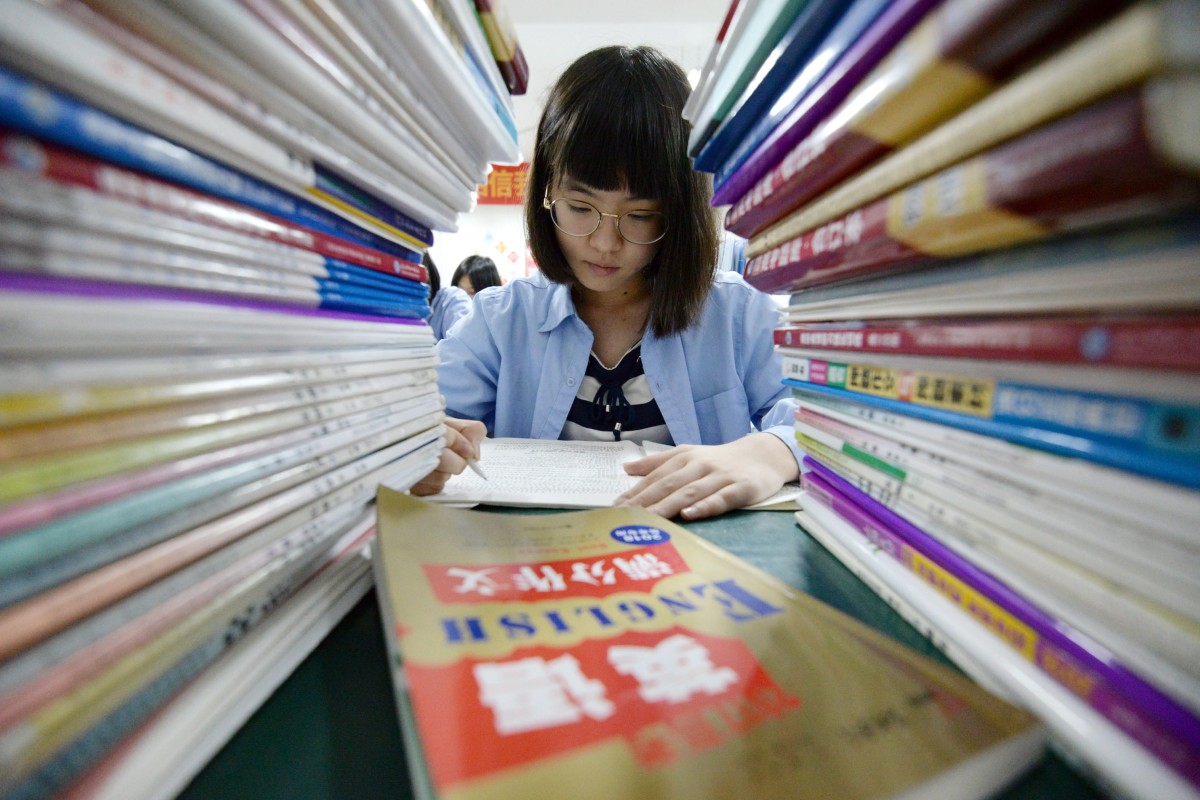
For the past six months, the life of 18-year-old Shanghai student Xiao Qing has revolved around preparation for one of China’s annual rites of passage.
Every day at school, from 7.20am to 5.30pm, the final-year secondary school student in Changning district has studied previous test papers for the gaokao, officially known as the National Higher Education Entrance Examination.
“Sometimes I feel my bottom hurts from sitting for so many hours,” she said. “We feel like we are test machines.”
Xiao Qing will put all of that preparation to the real test from Friday, when over two to three days she will be among more than 10 million people trying to qualify for one of the spots at a Chinese university.
Most students get just one shot at the gaokao, the sole criteria for admission to university in China. It’s a gruelling process that has been criticised over the years as too focused on rote learning, putting too much pressure on students and privileging applicants living near the best universities.
Education authorities have gone some way to try to address these problems. In 2014, the Ministry of Education started letting students choose half of their subjects to introduce some flexibility into the system.
Apart from the compulsory subjects of Chinese, mathematics and English, students are now supposed to be able to choose any three of six other subjects: physics, chemistry, biology, politics, history and geography.
Previously, secondary school students had been split strictly into liberal arts or science majors in a system that was introduced in 1952 and revived in 1977 after being suspended during the Cultural Revolution.
Last go at exam success for China’s ‘gaokao grandpa’
Wen Dongmao, a professor from Peking University’s Graduate School of Education, said the changes expanded the opportunity for students to follow their interests.
“The new gaokao gives students plenty of choices of subjects to learn and to be evaluated on. I think people should choose which subject to learn based on what they are interested in,” Wen said.
“Gaokao reform is designed according to some methods by overseas universities, like American and Hong Kong schools. Its direction is right, but there will be inevitable problems brought by it.”
One of the problems is the uneven implementation of the changes throughout the country, with just 14 of China’s 31 provinces, municipalities and autonomous regions having introduced them.
In the eastern province of Anhui, for example, the reforms were supposed to go in effect from September last year but were postponed without reason, news portal Caixin.com reported.
The report quoted a teacher from Hefei No 1 Middle School in the provincial capital as saying the school was not ready for the changes.
Is the university entrance exam in China the worst anywhere?
“Shanghai and Zhejiang are economically advanced and we are not at that level,” he was quoted as saying. “It’s a big challenge for us to manage so many students’ choices of gaokao subjects.”
In neighbouring Jiangxi province, a high school history teacher said many places opposed the reform mainly “because of the shortage of resources”.
“It’s hard to roll out gaokao reform because we don’t have enough teachers or classrooms to handle the students’ various choices of subjects. Students can choose three out of six courses and that means there are 20 potential combinations,” the teacher was quoted as saying.
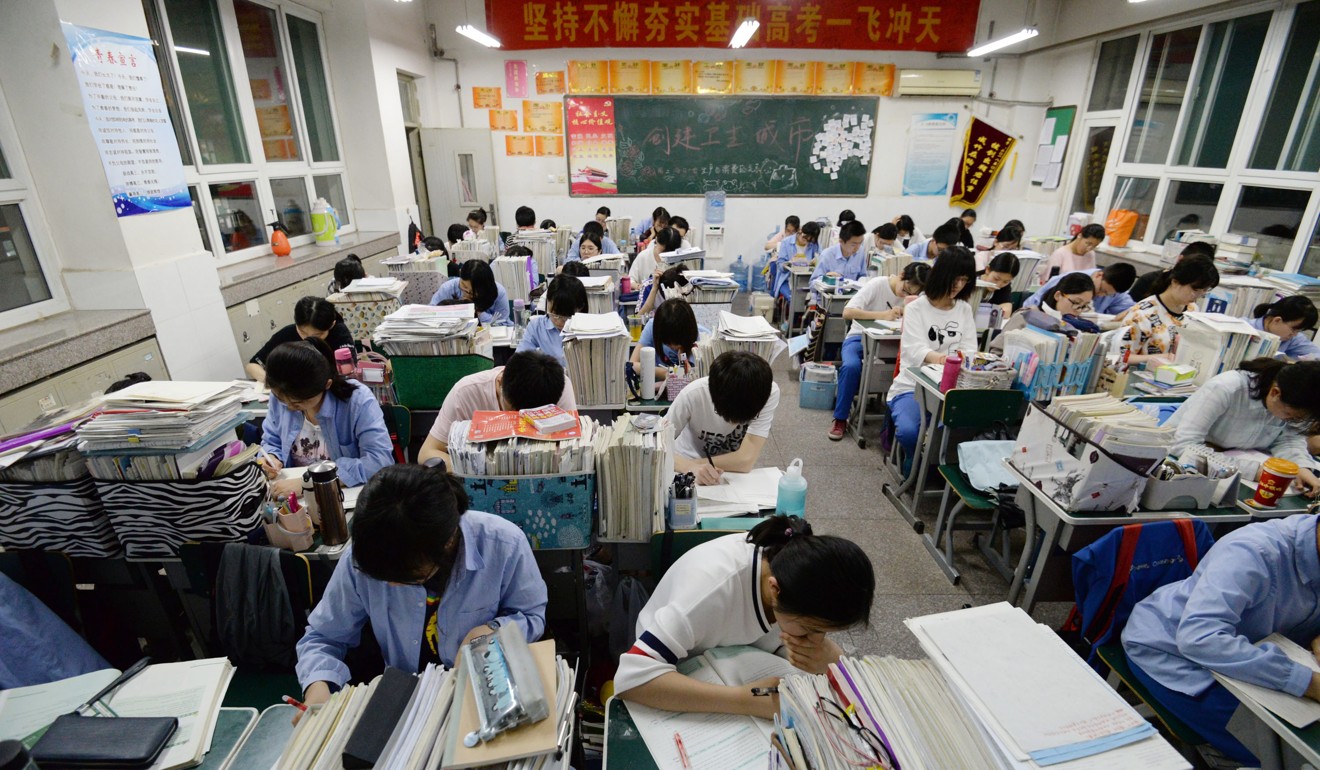
Chinese high school students study late into the night for the National Higher Education Entrance Examination. Photo: EPA-EFE
In addition, the system allows students to take the tests in more than one year and submit the highest scores when applying to universities.
“I heard from teachers in other provinces that students will take the tests of the selected subjects again and again for fear that other students will overtake them. That’s exhausting and will just put more burden on the students,” the Jiangxi teacher said.
He also said the gaokao process put extra pressure on teachers who feared the tests would push students to extremes. One of his students contemplated jumping from a bridge after she thought she had done poorly in the Chinese section of the exam.
“She called me, saying she felt it was the end of the world. I was shocked and hurried to the bridge,” he was quoted as saying. He spoke to her for more than an hour about before the girl came down, going on to get a decent score.
Critics also say the system is weighted in favour of students in bigger cities such as Beijing, Tianjin and Shanghai, home to the country’s top universities.
China private education industry is booming despite economic slowdown
Li Tao, an academic from the China Rural Development Institute at Northeast China Normal University in Changchun, Jilin province, said about 20-25 per cent of gaokao candidates from Beijing, Tianjin and Shanghai were admitted to China’s elite universities, compared with just 5 or 6 per cent in places like Sichuan, Henan and Guangdong.
Li said that was because the top universities were funded by local governments and gave preference to applicants from those areas.
“To make it fairer, the Ministry of Education has insisted over the years that elite universities cannot have more than 30 per cent of incoming students from the area in which it is located,” he said.
Despite these challenges, gaokao was still a “fair” way to get admitted to university in China, Li said.
“Gaokao is the fairest channel to screen applicants on such a large scale, to my knowledge,” he said. “It does not check your family background and every student does the same test paper [if they are from the same region]. Its score is the only factor in evaluating a university applicant.”
Fake nursing degree scandal prompts China-wide fraud check
In Shanghai, as the clock ticks closer to the gaokao test day, Xiao Qing said she was feeling the pressure.
She said she would keep up her test prep to ensure she got the score she needed to study art in Beijing.
“I am trying my utmost and don’t want to regret anything in the future,” she said.
At the same time, she is not pinning her entire life on it.
“Life is a long journey and it is not decided solely by gaokao,” she said.
“I don’t agree with my classmates that life will be easy after gaokao. I think we still need to study hard once we get to university.”
Source: SCMP
Posted in academic pressure cooker, Anhui province, Annual tests, Beijing, Biology, Caixin.com, Changchun, chemistry, China Rural Development Institute, China’s university hopefuls, Chinese, Crunch time, Cultural Revolution, English, gaokao, gaokao exam season, geography, Graduate School of Education, guangdong province, Hefei, Henan province, History, Jiangxi Province, Jilin, liberal arts, mathematics, Ministry of Education, National Higher Education Entrance Examination, nation’s top universities, Northeast China Normal University, Peking University, physics, Politics, Science, Shanghai, sichuan province, Tianjin, Uncategorized, zhejiang province |
Leave a Comment »
05/06/2019
- The virus that causes the African swine fever is now endemic in Tibet and Xinjiang, the United Nations’ Food & Agriculture Organisation said
- Diseases that are endemic, or generally present, are harder to stamp out
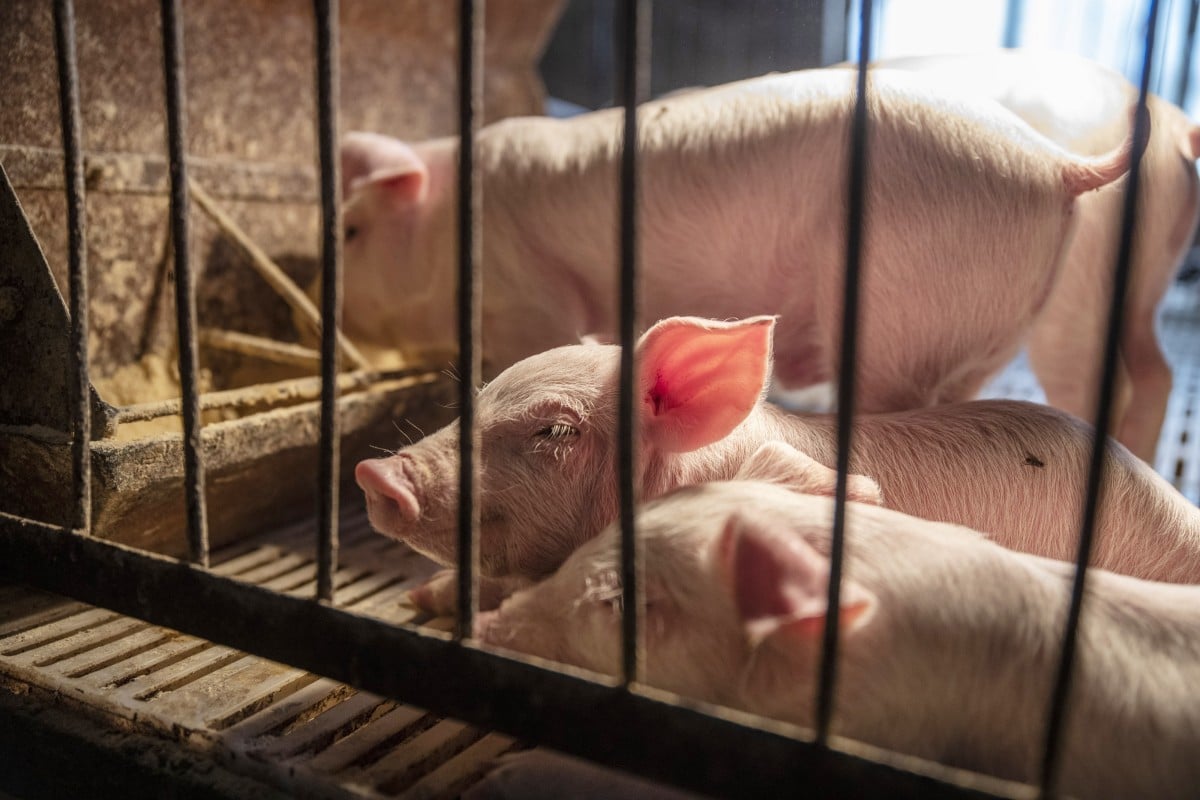
Piglets are kept in pens at a pig farm in Langfang in Hebei province on Monday, April 1, 2019. Photo: Bloomberg
China’s attempts to control African swine fever have been insufficient to stem further spread of the disease, with the deadly pig contagion now endemic in two regions, a United Nations group said.
The virus that causes the disease is entrenched among pig populations in the autonomous regions of Tibet and Xinjiang, the Food & Agriculture Organisation (FAO) in Rome said in a report Thursday.
Diseases that are endemic, or generally present, are more difficult to stamp out by quarantining and culling diseased and vulnerable livestock.
About 20 per cent of China’s pig inventories may have been culled in the first few months of 2019 amid fears of African swine fever spreading more rapidly, according to the FAO, which is monitoring the disease in cooperation with local authorities and China’s Ministry of Agriculture and Rural Affairs.
China’s pig production will drop by 134 million heads, or 20 per cent, in 2019, the US Department of Agriculture said last month.
“While official sources confirm a rapid spread of the disease, both the speed and severity of the spread could prove more pronounced than currently assumed,” the FAO said in its report. A government investigation in seven provinces found “irrational culling of sows on breeding farms in February, reducing the sector’s core production capacity.”
Thailand launches crackdown to keep out African swine fever
Since the first cases were reported last August, 130 outbreaks have been detected in 32 provinces, autonomous regions, municipalities and special administrative regions across the nation, which raises half the world’s pigs.
- In Jilin province, swine inventory fell 28 per cent from the previous year, with some reports pointing to a larger drop In Shandong province, sow numbers fell 41 per cent from July 2018 to February 2019
- In Guangdong province, hog inventories slumped 20 per cent from a year earlier and pig-feed sales fell 10 per cent to 50 per cent
- Production of fresh and frozen meat by meatpackers plunged 17 per cent in January and February, compared with the same months in 2018
- Source: SCMP
Posted in African swine fever virus, endemic, eradication, Food & Agriculture Organisation, guangdong province, Jilin, Ministry of Agriculture and Rural Affairs, Thailand, Tibet, UN, Uncategorized, US Department of Agriculture, Xinjiang |
Leave a Comment »
12/02/2019
- Trusted senior cadre tipped for leadership role in implementing Beijing’s ‘stabilising measures’ in the Uygur region
- His career so far has been a fast track of rotation and promotion
PUBLISHED : Tuesday, 12 February, 2019, 6:33pm
UPDATED : Tuesday, 12 February, 2019, 6:53pm
Beijing has sent a trusted senior cadre – with a track record of versatility and economic development – to join the highest decision-making body of China’s highly sensitive Xinjiang Uygur autonomous region.
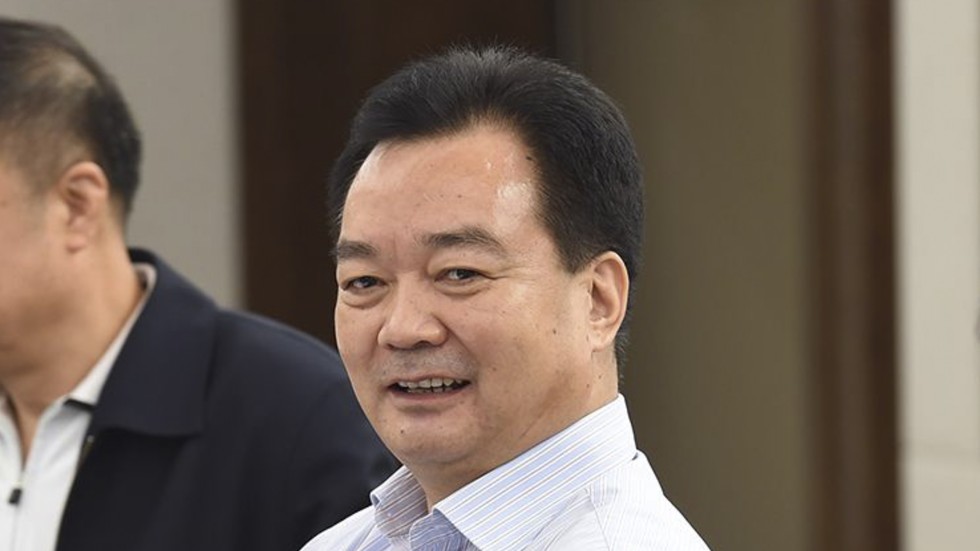
Wang Junzheng, 56, has been appointed to Xinjiang’s 14-member Communist Party standing committee, according to an official statement on Monday. His new role was not specified in the two-paragraph announcement.
Analysts said he was expected to assume a leadership role in the party’s regional political and legal affairs commission – a critical body in the implementation of China’s “stabilising measures” in Xinjiang, which include the controversial “re-education camps” where up to 1 million people from the Muslim ethnic minority group are reportedly being held.
In a move that may have paved the way for such a role for Wang, the incumbent head of Xinjiang’s political and legal affairs commission – Zhu Hailun, 61 – was elected deputy head of Xinjiang’s People’s Congress in January. It is standard practice in China for deputy provincial level cadres to step down and take up such positions on reaching 60.
Dr Alfred Wu, an associate professor at Singapore’s Lee Kuan Yew School of Public Policy, said that while there were other vacancies in both Xinjiang’s political and legal affairs commission and its united front work department, Wong’s legal experience made it likely he would take up the role vacated by Zhu.
A source familiar with Wang told the South China Morning Post he was among a group of cadres who had won the trust of President Xi Jinping.
Wang’s career has been on a fast track of rotation and promotion. He reached vice-provincial level when he was only 49 and, five years later, became an alternate member of the Central Committee – the party’s highest organ of power – at the 19th party congress in October 2017.
He moves to Xinjiang from the northeastern province of Jilin, where he was a member of the provincial party standing committee and party chief of Changchun, the provincial capital.
It was not all smooth sailing for Wang in Jilin, where his career was tainted by last year’s Changchun Changsheng vaccine scandal.
National outrage followed the revelation that one of China’s biggest vaccine makers, Changsheng Bio-tech, had systematically forged data in its production of rabies vaccines and had sold ineffective vaccines for diphtheria, whooping cough and tetanus that were given to hundreds of thousands of babies – some as young as three months old.
Heads rolled. Sackings included Jilin vice-governor Jin Yuhui, who had overseen food and drug regulation; Li Jinxiu, a former Jilin food and drug chief; Changchun mayor Liu Changlong; and Bi Jingquan, deputy director of the State Market Regulatory Administration in Beijing.
In a farewell speech published in People’s Daily on Monday, Wang apparently made a veiled reference to the scandal and admitted some shortcomings.
“Because of my constraints, I could have done better on some issues … and have failed to meet the expectations of the Party and people,” he said.
Alfred Wu said the Xinjiang posting showed Wang’s career had not been tainted by the Changchun vaccine scandal.
“Going to Xinjiang is both an opportunity and a challenge for Wang. If he can prove himself in stabilising Xinjiang, he will go further [in his career],” Wu said.
Xinjiang is Wang’s fourth provincial posting. He began his political career in Yunnan, southwestern China, where he spent nearly two decades working with many ethnic minority groups.
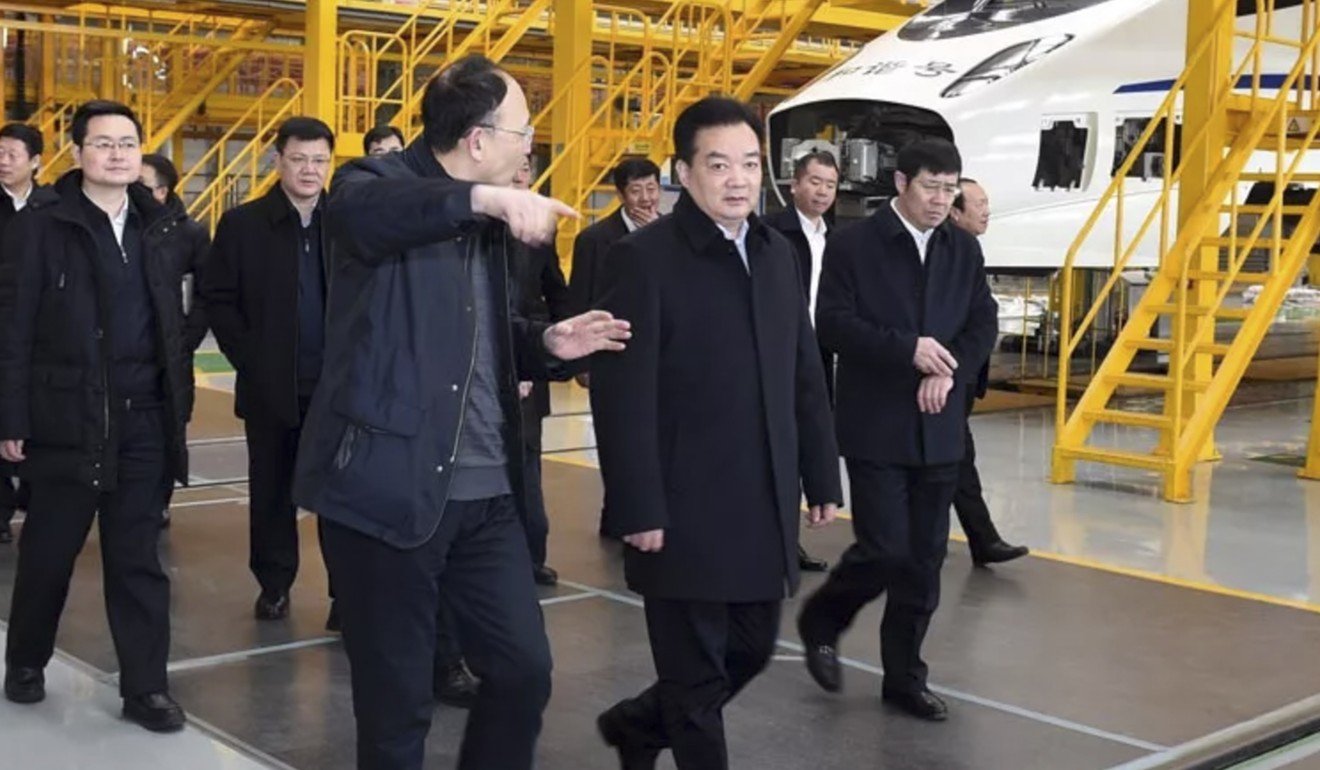
He was the legal chief of Kunming, the provincial capital of Yunnan, from 1988 to 2000 and also served as vice-president of the Yunnan Higher People’s Court from 2005 to 2007.
In 2009 Wang became party chief of Lijiang, a tourist city in Yunnan where the economy thrived under his watch.
“More importantly, he struck a balance between tourism development and environmental conservation and was noticed by the leadership,” a source said.
Wang left Yunnan in 2012 when he was promoted to provincial vice-governor of Hubei in central China. He later became party chief of the city of Xiangyang in Hubei province and was promoted to provincial party standing committee member in 2013.
After three years in Hubei, Wang headed north to Jilin, becoming Changchun party chief in January 2016.
Wang was born in the eastern province of Shandong. He graduated from Shandong University with a bachelor’s degree in socialism studies and a master’s in the same subject from Renmin University in Beijing in the 1980s. He attained his doctorate in management from Tsinghua University in 2006.
Source: SCMP
Posted in Beijing, Bi Jingquan, Changchun Changsheng, Changsheng Bio-tech, China alert, diphtheria, Dr Alfred Wu, Higher People's Court, Hubei, Jilin, Jin Yuhui, Kunming, Li Jinxiu, Lijiang, Liu Changlong, party chief, People's Daily, rabies vaccines, Renmin University, Shandong University, Singapore’s Lee Kuan Yew School of Public Policy, State Market Regulatory Administration, Tetanus, Tsinghua University, Uncategorized, vaccine scandal, Wang Junzheng, whooping cough, Xiangyang, Xinjiang, Yunnan |
Leave a Comment »







 CHINDIA ALERT: You'll be living in their world, very soon

COMMENTS: 1