28/04/2020
QINGDAO, April 27 (Xinhua) — New cargo train services have been launched between east China’s Shandong Province and countries of Shanghai Cooperation Organization (SCO).
A train carrying 45 containers departed Monday from the intermodal transportation center of the demonstration zone for China-SCO local economic and trade cooperation in the city of Qingdao, according to the demonstration zone.
The train, loaded with excavators and land levelers worth a total of 20 million yuan (2.8 million U.S. dollars), is expected to arrive at Almaty, Kazakhstan, in eight days.
With the intermodal transportation center in Qingdao as the cargo distribution center, the monthly train services will deliver cargo to more than 30 cities of SCO countries, including Tashkent, Minsk and Ulan Bator.
Source: Xinhua
Posted in 30, Almaty, between, cargo, cargo distribution center, cargo train service, center, China, China-SCO, cities, City, containers, countries, days, deliver, demonstration, departed, east China's, eight, excavators, expected, including, intermodal, Kazakhstan, land levelers, launched, loaded, local economic, million, Minsk, Monday, monthly, more than, new, Qingdao, SCO countries, shandong province, Shanghai Cooperation Organization (SCO), Tashkent, to arrive, trade cooperation, Train, Train services, transportation, U.S. dollars, Ulan Bator, Uncategorized, yuan, zone |
Leave a Comment »
11/03/2020
BANGKOK (Reuters) – Thailand will temporarily suspend issuing visas on arrival to visitors from 19 countries and territories, including China, to contain the spread of the coronavirus, its interior minister said on Wednesday.
The suspensions were the latest measures imposed in the tourism-reliant Southeast Asian country, which has reported 59 cases of the virus and one death so far. Globally, over 113,000 people have been infected in over 100 countries.
“People from any country who want to come will need to apply for a visa with our embassies,” Minister of Interior Anupong Paochinda told reporters.
“Thai embassies everywhere will ensure that no sick people will travel to Thailand.”
Visa on Arrival (VoA) will be suspended for nationals of all 19 countries and territories previously eligible, including Bulgaria, Bhutan, China, Cyprus, Ethiopia, Fiji, Georgia, India, Kazakhstan, Malta, Mexico, Nauru, Papua New Guinea, Romania, Russia, Saudi Arabia, Taiwan, Uzbekistan, and Vanuatu, according to a list provided to reporters by the Ministry of Foreign Affairs.
However, Russian passport holders will not be affected by the suspension of the visa on arrival from Russia, as they can still travel to Thailand and stay for 30 days under a visa waiver agreement, an official at the ministry told Reuters.
Visa exemptions will be cancelled for South Korea, Italy and Hong Kong, Anupong said.
“These measures will solve the problem of foreigners arriving from risky zones,” he said.
Anupong said he would start the process immediately but it was not immediately clear when they will be effective.
Chatree Atchananant, director-general of the foreign ministry’s Consular Affairs Department, said visa applicants will need to present medical certificates and insurance as part of the screening at Thai embassies.
Last week, Thailand designated South Korea, China, Macao, Hong Kong, Italy and Iran as “dangerous communicable disease areas.”
Thai authorities urged people arriving from the six places to self-quarantine for 14 days.
Source: Reuters
Posted in 14 days, Bangkok, Bhutan, Bulgaria, China, Consular Affairs Department, coronavirus, countries, Cyprus, embassies, Ethiopia, Fiji, Georgia, Hong Kong, India, iran, Italy, Kazakhstan, limit, Macao, Malta, Mexico, Minister of Interior, Ministry of Foreign Affairs, Nauru, Papua New Guinea, restricts, Romania, Russia, Saudi Arabia, self quarantine, South Korea, spread, Taiwan, territories, Thai, Thailand, Uncategorized, Uzbekistan, Vanuatu, Virus, Visa on Arrival (VoA), visitor visas |
Leave a Comment »
10/03/2020
BEIJING, March 9 (Xinhua) — China on Monday unveiled its contingency plan to monitor and control the spread of locusts from home and abroad, in a bid to secure grain production and ecological safety.
Regional governance and scientific prevention and control should be given priority, said the plan jointly issued by the Ministry of Agriculture and Rural Affairs, the General Administration of Customs and the National Forestry and Grassland Administration.
The plan clarified the goal of locust control, which is to ensure that desert locusts from abroad will not cause harm and domestic locust outbreaks will not turn into a plague, with no more than 5 percent of crops affected.
Local authorities are urged to prevent the invasion of desert locusts from abroad. The plan requires that monitoring stations be set up in Tibet, Yunnan and Xinjiang on the potential migration routes of the destructive pests.
To control locusts in domestic agricultural areas, chemical control methods will be adopted for areas with a high density of the pests, while medium- or low-density areas will use biological and ecological control methods, the plan noted.
The plan also requires an investigation into the hidden dangers of grasshoppers in major grasslands in Inner Mongolia, Xinjiang and Sichuan, and the strengthening of prevention and control at key points on the border between China and Kazakhstan, and that between China and Mongolia.
The rare desert locust outbreak in East Africa and Southwest Asia has posed a severe threat to local grain and agricultural production, which led to the desert locust plague warning issued by the Food and Agriculture Organization of the United Nations.
Although experts believe it is highly unlikely that desert locusts will invade China, it is still necessary to take precautions, said the plan.
Source: Xinhua
Posted in against, China, contingency plan, desert locust plague, destructive pests, Food and Agriculture Organization, grain and agricultural production, Inner Mongolia, issues, Kazakhstan, locust threat, Ministry of Agriculture and Rural Affairs, Mongolia, National Forestry and Grassland Administration, potential migration routes, sichuan province, Southwest Asia, the General Administration of Customs, Tibet, Uncategorized, United Nations, Xinjiang, Yunnan |
Leave a Comment »
04/11/2019
Chinese Vice Premier Han Zheng, also a member of the Standing Committee of the Political Bureau of the Communist Party of China Central Committee, meets with Kazakhstan’s First Deputy Prime Minister Alikhan Smailov, who also co-chaired the 9th meeting of the China-Kazakhstan Cooperation Committee, in Beijing, capital of China, Nov. 4, 2019. (Xinhua/Yan Yan)
BEIJING, Nov. 4 (Xinhua) — Chinese Vice Premier Han Zheng met with Kazakhstan’s First Deputy Prime Minister Alikhan Smailov Monday in Beijing, who also co-chaired the 9th meeting of the China-Kazakhstan Cooperation Committee.
Han, also a Standing Committee member of the Political Bureau of the Communist Party of China Central Committee, said the development of bilateral ties had been healthy and steady to become a model of relations between neighboring countries.
Earlier this year, China and Kazakhstan upgraded their relations to a permanent comprehensive strategic partnership, which Han said marked a new phase of bilateral relations.
The China-Kazakhstan Cooperation Committee, as an intergovernmental mechanism, makes overall planning for, coordinates and guides bilateral cooperation.
Han said since the last meeting of the committee, the two countries had deepened the synergy of their development strategies, accelerated trade, investment and industrial cooperation, strengthened financial cooperation, and continuously enhanced cooperation in security, environmental protection, energy, technology and mining.
Noting the solid foundation, huge potential and broad prospects of bilateral cooperation, Han said the two countries should promote cooperation in industrial capacity, transportation, agriculture and energy.
He called on the two sides to jointly implement the synergy between the Silk Road Economic Belt and Kazakhstan’s “Bright Road” new economic policy, strengthen innovation-driven cooperation and carry out digital industry, blockchain and biotechnology cooperation to create new growth points.
He said the two sides should carry out more facilitation measures to constantly optimize the business environment and guarantee the rights and interests of enterprises from both countries.
Smailov said Kazakhstan is ready to work with China to promote cooperation in trade, finance, energy, agriculture, transportation, logistics and infrastructure to benefit the two peoples.
Source: Xinhua
Posted in "Bright Road", agriculture, Alikhan Smailov, Beijing, biotechnology, blockchain, China-Kazakhstan Cooperation Committee, Chinese Vice Premier Han Zheng, digital industry, energy, Environmental protection, Finance, First Deputy Prime Minister, industrial capacity, Infrastructure, Kazakhstan, logistics, mining, security, Standing Committee member of the Political Bureau of the Communist Party of China Central Committee, Technology, Trade, transportation, Uncategorized |
Leave a Comment »
26/09/2019
Li Zhanshu, chairman of the Standing Committee of the National People’s Congress of China, meets with First President of Kazakhstan Nursultan Nazarbayev in Kazakhstan, Sept. 23, 2019. Li paid an official goodwill visit to Kazakhstan from Sept. 21 to 25 at the invitation of Dariga Nazarbayeva, speaker of the Kazakh Parliament’s Upper House, Nurlan Nigmatulin, speaker of the Kazakh Parliament’s Lower House. (Xinhua/Zhai Jianlan)
NUR-SULTAN, Sept. 25 (Xinhua) — Li Zhanshu, chairman of the Standing Committee of the National People’s Congress (NPC) of China, and Kazakh leaders have agreed here to boost mutually beneficial cooperation in various areas.
During an official goodwill visit from Saturday to Wednesday, Li met with First President of Kazakhstan Nursultan Nazarbayev and conveyed Chinese President Xi Jinping’s cordial greetings to him.
Li told Nazarbayev that China and Kazakhstan are good neighbors and the most reliable friends and partners.
Li said China and Kazakhstan have decided to develop a permanent comprehensive strategic partnership and build a community with a shared future, and their ties have become a model of interstate relations following 27 years of development since the establishment of their diplomatic relationship.
Both sides need to strengthen political mutual trust and mutually beneficial cooperation in various fields, Li said, adding that China has full confidence in the future of Kazakhstan and will continue to support the Central Asian country in pursuing its development path that suits its national conditions.
Nazarbayev told Li that China is a good friend of his country and China’s development is vital to Kazakhstan.
He said strengthening Kazakhstan-China cooperation is in line with the two countries’ interests, and Kazakhstan always prioritizes in its foreign policy cementing and developing ties with China.
At a meeting with Kazakh President Kassym-Jomart Tokayev, Li conveyed Xi’s good wishes to him.
Li said the construction of a Silk Road Economic Belt was first proposed in Kazakhstan, and both countries as permanent comprehensive strategic partners should respect, trust and support each other no matter how the global and regional situations develop.
China and Kazakhstan should improve the alignment of their development strategies and boost cooperation in production capacities, energy, agriculture, inter-connectivity, finance, cross-border e-commerce, high-technology, education, sports, culture and tourism, Li said.
Tokayev said that Kazakhstan, located in the center of the Eurasian continent, will always be a friendly neighbor of China. He praised China’s key role in maintaining global security and stability.
The Belt and Road Initiative is significant to Kazakhstan, which is ready to strengthen cooperation with China, implement bilateral agreements and achieve more outcomes.
At talks with Dariga Nazarbayeva, speaker of the Kazakh parliament’s upper house, and Nurlan Nigmatulin, speaker of the lower house, Li said the two legislatures should implement the important consensuses reached by the heads of state and facilitate bilateral cooperation with legislation and favorable policy.
Li said the two legislatures should push for the signing of an updated version of the China-Kazakhstan investment protection pact, streamline procedures for customs clearance and work permits, and create a sound investment environment.
Nazarbayeva said that strengthening Kazakhstan-China cooperation has particular significance as the world is fraught with risks and challenges, and that she expects better quality in such cooperation.
Nigmatulin said the Kazakh parliament is willing to compare notes on legislation and supervision with the NPC of China.
During his visit, Li and Kazakh Prime Minister Askar Mamin attended the opening ceremony of the China Construction Bank’s Astana office.
Li listened to a report about the Astana International Financial Center and encouraged financial institutions in the center to participate in the Belt and Road Initiative.
The Chinese top legislator also visited the site of the 2017 Astana Expo and the national museum.
Source: Xinhua
Posted in 2017 Astana Expo, agriculture, Askar Mamin, Astana International Financial Center, Astana office, Belt and Road Initiative, Belt and Road Initiative (BRI), Central Asian country, chairman of the Standing Committee of the National People's Congress (NPC), China Construction Bank, China-Kazakhstan investment protection pact, Chinese President Xi Jinping, Culture, Dariga Nazarbayeva, education, energy, Eurasian continent, Finance, financial institutions, First President of Kazakhstan, high technology, Kazakh leader, Kazakh Prime Minister, Kazakhstan, Kazakhstan-China cooperation, Li Zhanshu, national museum, NPC of China, Nurlan Nigmatulin, opening ceremony, speaker of the Kazakh parliament, speaker of the lower house, sports, Tourism, Uncategorized |
Leave a Comment »
21/09/2019
ALMATY/NUR-SULTAN (Reuters) – Police detained dozens in Kazakhstan’s two largest cities on Saturday as they took part in the latest protest against China’s influence in the Central Asian republic.
Neighbouring China is already one of Kazakhstan’s largest investors and trade partners and a plan to relocate a number of Chinese plants and factories to the former Soviet republic has faced public opposition.
The latest round of protests on Saturday was organised by supporters of Mukhtar Ablyazov, a fugitive banker living in France who has been the fiercest critic of Kazakhstan’s first president, Nursultan Nazarbayev.
Nazarbayev resigned last March after running the oil-rich nation for almost thirty years, but retains sweeping powers as the head of the security council and the ruling Nur Otan party.
Kazakh authorities consider Ablyazov’s political movement extremist and involvement in its activities a crime. Authorities have detained 57 people and may be charged, the interior ministry said.
“You know that as of today’s date at 2 p.m. the banned DCK in Kazakhsan was called upon to gather… we (the police) asked people to disperse, and those who didn’t, were taken to the district offices for questioning,” Bakytzhan Malybayev, first deputy chief of Nur-Sultan police, told reporters. “We will carry out questioning and then the people will be released.”
Reuters reporters witnessed several arrests in Nur-Sultan and Almaty. In Kazakhstan’s capital Nur-Sultan, police detained a man with a banner reading: “Let’s not give way to Chinese expansion” and “The old man is the enemy”, an anti-Nazarbayev slogan. Several people chanted:”Freedom to political prisoners”.
Some protesters tried to escape as police moved in and smashed the windows of a police bus.
In Almaty, protesters were quickly taken away to police buses as they began chanting slogans against Chinese expansion and “Old man, go away!”
China is a major investor in Kazakhstan’s energy sector and buys oil and gas from the mostly Muslim nation of 18 million, but critics accuse some Chinese companies – as well as Western ones – of hiring too few local staff and paying them less than foreign workers.
Source: Reuters
Posted in Almaty, anti-China, Central Asian republic, detained, Dozens, Kazakhstan, Mukhtar Ablyazov, Muslim nation, Nur-Sultan, Nursultan Nazarbayev, Old man, go away!, protests, Uncategorized |
Leave a Comment »
12/09/2019
Chinese Premier Li Keqiang meets with Kazakh President Kassym-Jomart Tokayev at the Diaoyutai State Guesthouse in Beijing, capital of China, Sept. 11, 2019. (Xinhua/Rao Aimin)
BEIJING, Sept. 11 (Xinhua) — Chinese Premier Li Keqiang met with Kazakh President Kassym-Jomart Tokayev here on Wednesday.
Calling Kazakhstan China’s friendly neighbor and comprehensive strategic partner, Li said the two countries enjoy solid political mutual trust, fruitful cooperation results and a long-standing friendship.
China stands ready to better synergize the Belt and Road Initiative with Kazakhstan’s development strategy, Li said.
The two countries should intensify all-round cooperation, and jointly safeguard peace and stability in the region, he said.
Cooperation between China and Kazakhstan is based on mutual trust, geographical proximity, huge potential and broad prospects, Li said, promising that China will facilitate cooperation with Kazakhstan in energy, production capacity, nuclear electricity, finance, and science and technology.
The Chinese premier also called for better use of cross-border e-commerce platforms and expansion of bilateral trade.
Tokayev congratulated the People’s Republic of China on its 70th anniversary.
China is viewed as an important strategic partner of Kazakhstan, said Tokayev, reiterating that his country is willing to be an active participant in the construction of the Belt and Road, boost bilateral cooperation in all areas, and expand exports to China.
He added that Chinese enterprises are welcome to invest in Kazakhstan, and voiced hope for more tourism cooperation and closer exchanges among young people.
Source: Xinhua
Posted in 70th anniversary, Beijing, Belt and Road Initiative, Belt and Road Initiative (BRI), Chinese premier Li Keqiang, Kassym-Jomart Tokayev, Kazakh President, Kazakhstan, The People's Republic of China, Uncategorized |
Leave a Comment »
25/08/2019
- A recent joint exercise in Tajikistan is the latest example of Beijing’s growing security and economic interests in the former Soviet republic
- Analysts say Moscow may not be happy about China’s growing reach in the lawless, mountainous area and will be keeping an eye on the situation
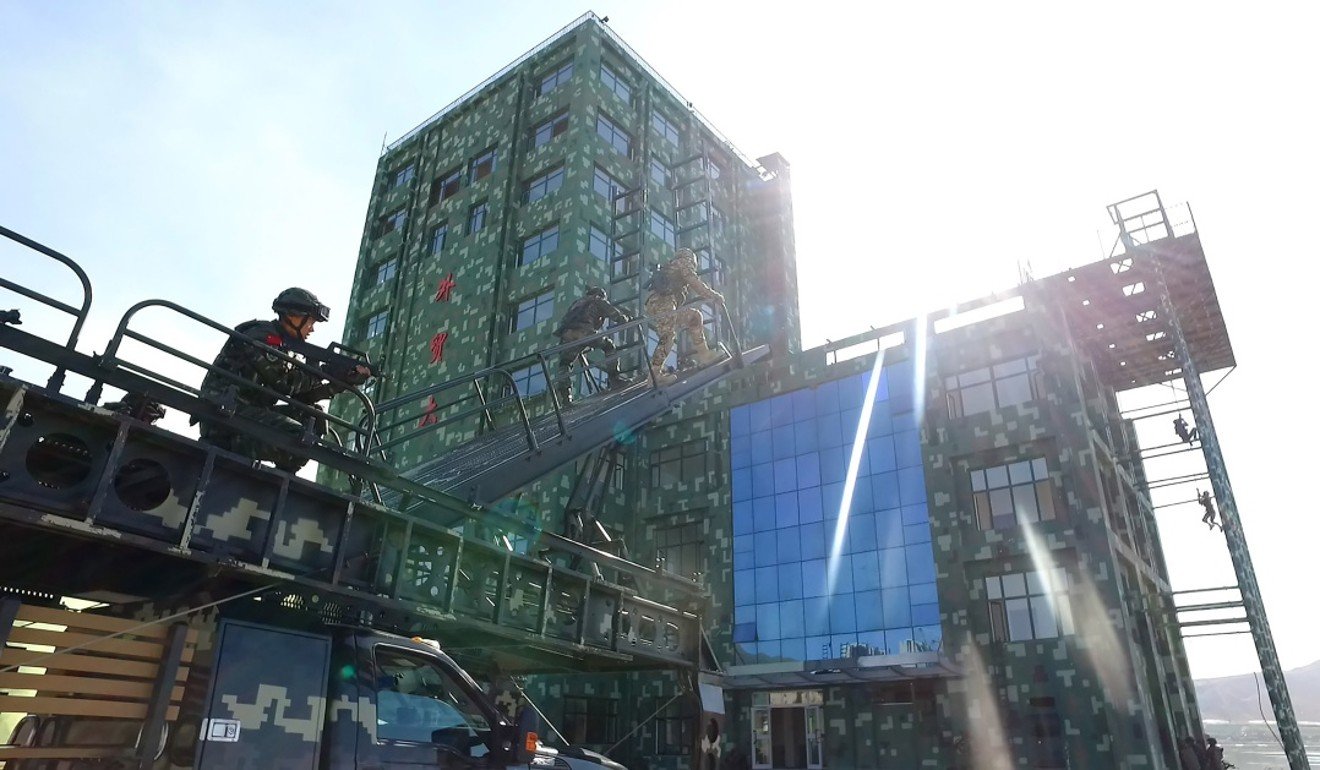
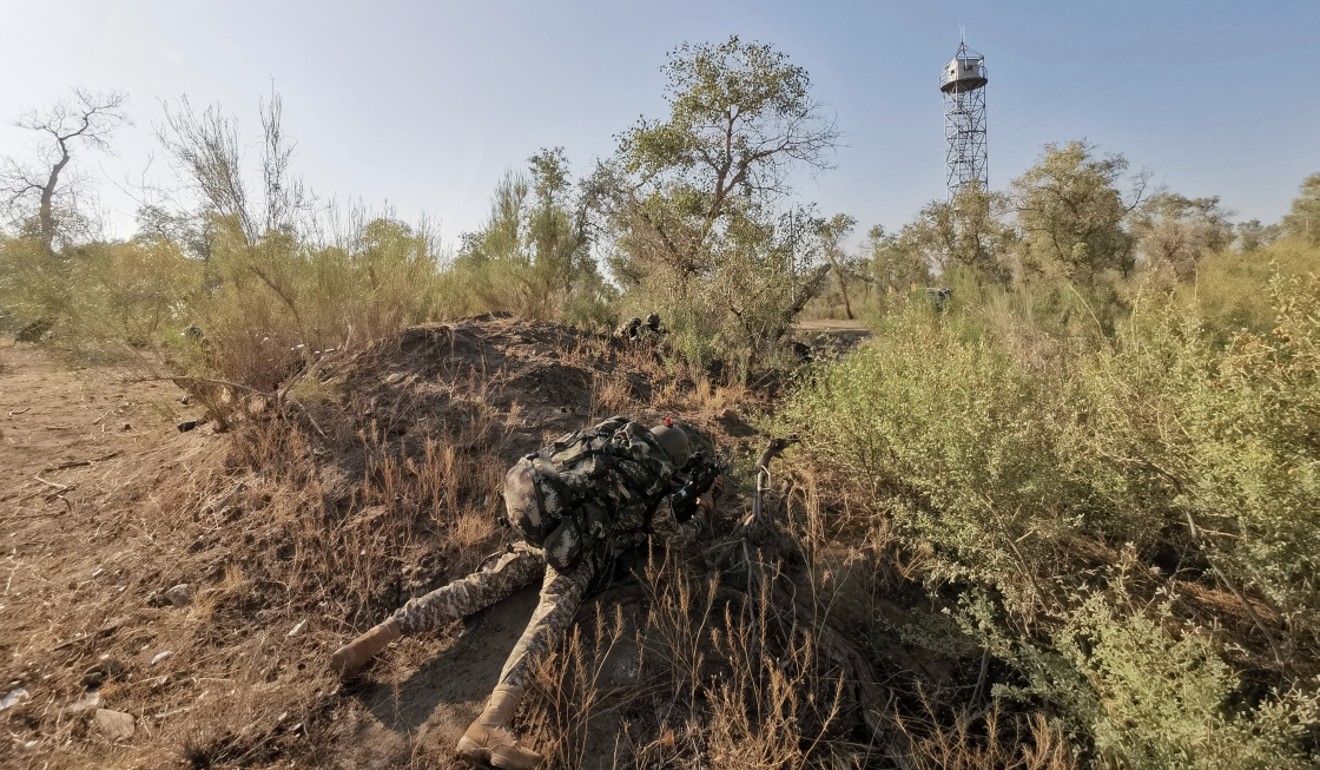
Chinese and Tajik troops completed a joint exercise earlier this month in the mountainous region of Gorno-Badakhshan. Photo: Xinhua
China is increasing its military and economic presence in parts of central Asia that Russia has traditionally considered its sphere of influence – a development some analysts believe could cause concern in Moscow.
While Russia’s influence remains strong in many former Soviet republics, China is steadily building up its military and economic influence in Tajikistan, particularly in the remote, mountainous areas on its western borders where central government authority is weak.
Chinese troops recently concluded a joint drill in eastern Tajikistan involving 1,200 troops from both countries.
The eight-day exercise that finished on August 13 was conducted in the autonomous Gorno-Badakhshan autonomous region, a sparsely populated territory in the high Pamir mountains, which borders China’s Xinjiang region and Afghanistan.
China has been increasing its security presence in the strategically sensitive region. Photo: Xinhua
Although this year’s exercise involved fewer troops than the 10,000 involved in a previous drill three years ago, it tested the use of advanced aerial vehicles and ground reconnaissance technology to monitor the area.
The landlocked country is strategically important for China, which is worried that the porous borders will serve as an entry point for drugs and Islamic militants into Xinjiang, where its deradicalisation strategy has led to the detention of a million Muslim minorities in reeducation camps.
It also sits along the trade routes China hopes to develop under the Belt and Road Initiative – Beijing’s flagship plan to expand its global influence through infrastructure, trade and investment – but the area has long been plagued by lawlessness and outbreaks of violence.
The recent exercise tested aerial surveillance techniques. Photo: Xinhua
Artyom Lukin, a professor of international politics at Far Eastern Federal University in Vladivostok, said Russia was not happy about the deployment of Chinese forces in Tajikistan.
“Russia has traditionally considered Central Asia, including Tajikistan, as its sphere of political-military influence,” he said.
Observers said other Central Asian republics – such as Kazakhstan, Uzbekistan and Kyrgyzstan – are likely to stay within Moscow’s orbit, but China is steadily building closer security ties with Tajikistan.
In February, China’s defence ministry denied that it was building a base and stationing troops in the country, but defended its closer military cooperation with Tajikistan.
The recent training exercise was conducted in an area Russia has long seen as part of its sphere of influence. Photo: Xinhua
China has long-standing security interests in the country and in 2016 it agreed to finance 11 border outposts and a training centre for guards along the Afghan border.
This was part of a deal Beijing made through the Quadrilateral Cooperation and Coordination Mechanism – which also involves Pakistan, Afghanistan and Tajikistan – to strengthen cooperation in combating terrorism and improving security.
China has also overtaken Russia economically, becoming the largest foreign investor in Tajikistan in 2016, accounting for 30 per cent of Tajikistan’s total direct accumulated investments, state news agency Xinhua reported.
Banned Muslim political party blamed for deadly attack on tourists in Tajikistan
China’s direct investment in Tajikistan was worth US$95 million in 2017, according to the latest available figures. China has also grown to become the country’s third largest trading partner with bilateral trade reaching around US$1.5 billion in 2018.
A recent opinion piece published by the Russian state-owned news agency Sputnik suggested China may be “getting carried away” by its investments in the region.
The article suggested that China’s growing presence in the country could lead to a “partial loss” of Tajikistan’s sovereignty and argued that Beijing may want to take control of the border with Afghanistan.
China also has economic interests to protect. Photo: Xinhua
But Lukin said even though this growing involvement may be an irritant for Russia, the strategic partnership between China and Russia will remain strong.
The two countries remain the key players in the Shanghai Cooperation Organisation, an economic and security alliance that includes the Central Asian republics and India and Pakistan.
The two are also keen to cooperate more closely due to their tense relationship with the United States. This year Russian and Chinese armed forces have stepped up their cooperation, and last week used a UN Security Council debate to criticise the US for pulling out of the Intermediate-Range Nuclear Forces Treaty. Washington defended the move as necessary response to Beijing and Moscow’s build up of arms.
Why Chinese investors are struggling to gain a foothold in Tajikistan
Lukin said: “Moscow no doubt understands that in terms of security, Tajikistan’s border, adjacent to China’s Xinjiang and Afghanistan, is truly a vital concern for Beijing.
“The presence of Chinese troops could actually benefit Russia, because it will be China bearing the costs of policing Tajikistan’s mountainous border areas.”
Stephen Blank, a former professor at the US Army War College and a specialist in Eurasian security, said that while Russia has mostly stayed silent about China’s presence in Tajikistan, it was closely watching the situation.
“What happens in the long run depends on how far China goes to extend its military presence in Central Asia. And if it keeps extending, it may well provoke some expression of concern in Russia beyond the silence that has hitherto been the case,” Blank said.
Chinese troops could play an increasing role in policing the area in future. Photo: Xinhua
“[The recent drills] look like conventional war-fighting exercises as much as anti-terrorist operations and suggest that China may have bigger contingencies than anti-terrorism in mind.”
Mathieu Duchatel, director of the Asia programme at the Institut Montaigne, a French think tank, said both Russia and China share similar concerns about terrorism and drug trafficking in Central Asia.
He said Russia had not objected to the security pact with Pakistan, Afghanistan and Tajikistan because there are more important strategic priorities in China-Russia relations.
“Overall, Russia’s acceptance of a security role for China in Central Asia shows how Russia realistically adjusts to the changing balance of power with China, and is able to avoid a zero-sum game on issues where parallel efforts by China and Russia can serve Russian security interests,” he said.
Source: SCMP
Posted in aerial surveillance techniques, aerial vehicles, Afghan border, Afghanistan, backyard, Beijing, Belt and Road Initiative, Belt and Road Initiative (BRI), Central Asia, Central Asian, Central Asian republics, China alert, China-Russia relations, Chinese armed forces, combating terrorism, drug trafficking, former, French think tank, Gorno-Badakhshan, ground reconnaissance technology, improving security, increases, India alert, Infrastructure, Institut Montaigne, Intermediate-Range Nuclear Forces Treaty, Investment, Islamic militants, Kazakhstan, Kyrgyzstan, lawlessness, Moscow, Muslim minorities, outbreaks of violence, Pakistan, Pamir Mountains, presence, Quadrilateral Cooperation and Coordination Mechanism, reeducation camps, Russia, Russian armed forces, security and economic interests, Shanghai Cooperation Organisation (SCO), Soviet republic, Tajikistan, terrorism, Trade, UN Security Council debate, Uncategorized, United States, US Army War College, Uzbekistan, Washington, Xinjiang, zero-sum game |
Leave a Comment »
29/05/2019
- President Xi Jinping will meet Russian counterpart Vladimir Putin next month and address economic summit in St Petersburg
- Diplomatic flurry will also include regional security forums in Kyrgyzstan and Tajikistan
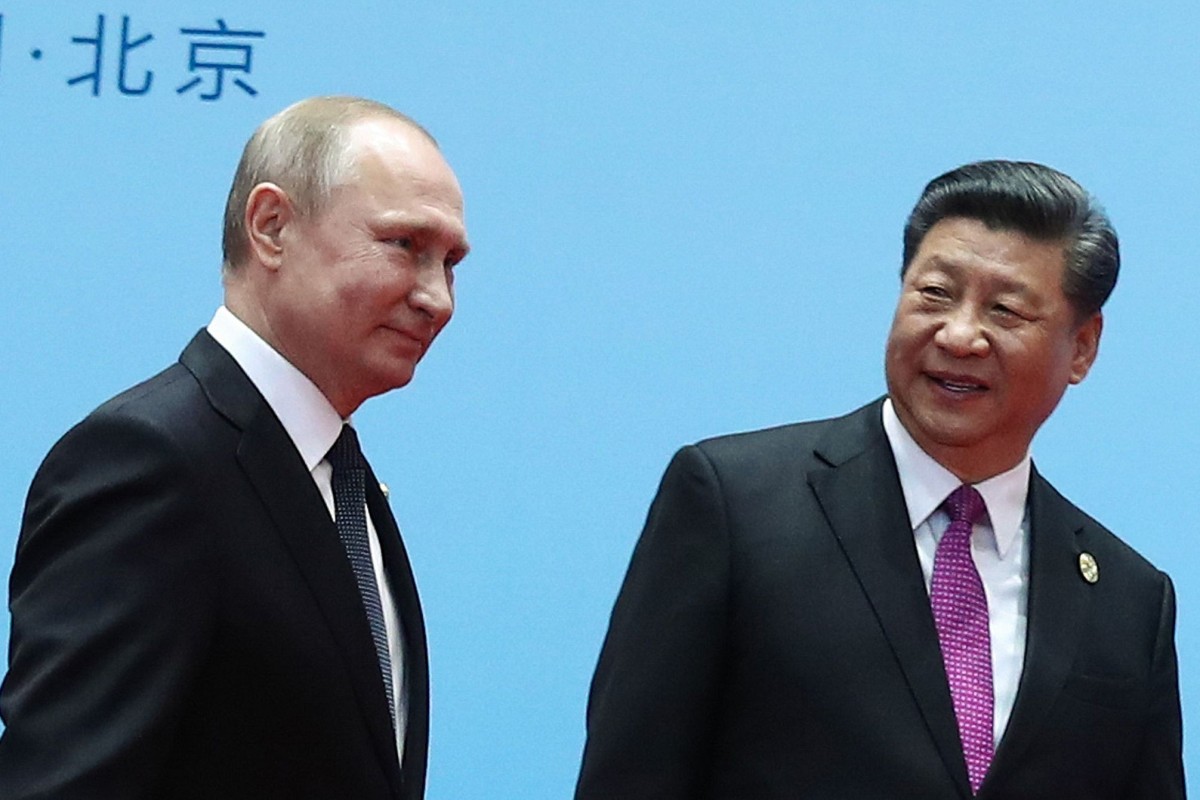
Xi Jinping has met Vladimir Putin more times than any other foreign leader since he took power in 2013. Photo: AFP
Beijing is stepping up efforts to seek support from regional and global players such as Russia and Central Asian nations as its geostrategic rivalry with Washington heats up.
President Xi Jinping is expected to meet his Russian counterpart Vladimir Putin next month, when he will also address the St Petersburg International Economic Summit,
Russian presidential aide Yuri Ushakov told state-run TASS news agency earlier.
The Chinese president will also visit the Kyrgyzstan capital Bishkek for the Shanghai Cooperation Organisation (SCO) summit in June, as well as another regional security forum in Dushanbe, Tajikistan.
Meanwhile, Vice-President Wang Qishan is visiting Pakistan before he heads to the Netherlands and Germany, according to the Chinese foreign ministry.
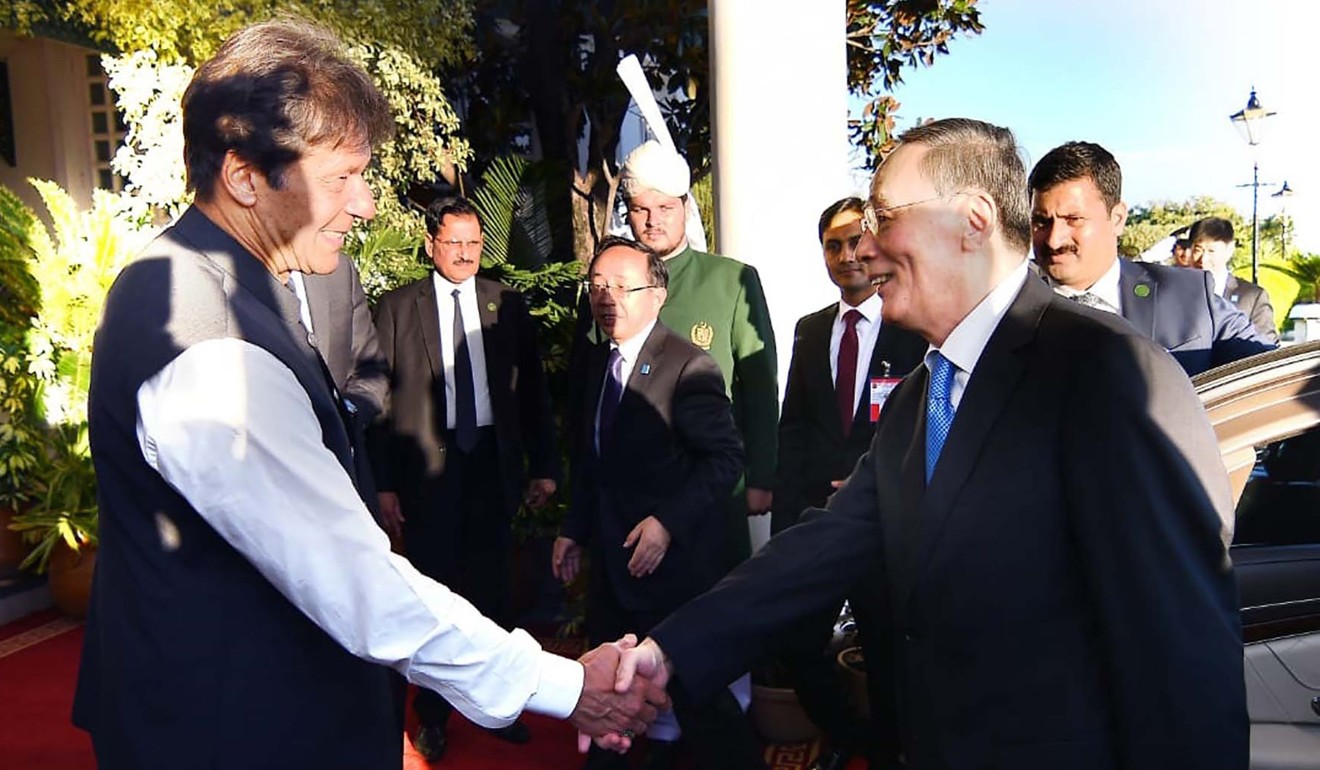
Pakistani Prime Minister Imran Khan meets Chinese Vice-President Wang Qishan in Islamabad on Sunday. Photo: AFP
The latest flurry of diplomatic activity comes as competition between China and the US intensifies on several fronts including trade and technology, the South China Sea and the Arctic, where Beijing’s partnership with Moscow –
– has drawn criticism from Washington.
It will be Xi’s second time at the St Petersburg forum, and observers expect the Chinese leader will reaffirm Beijing’s commitment to multilateralism and promote the nation as a champion of openness and cooperation.
China-Russia ties unrivalled, Beijing warns before Pompeo meets Putin
It will also be his second meeting with Putin in two months, after talks on the sidelines of the Belt and Road Forum in Beijing in late April, when the Russian president
for the controversial China-led infrastructure and investment initiative.
With China and Russia edging closer, the latest meeting is likely to see efforts to coordinate their strategies on a range of issues – including Venezuela, North Korea, nuclear weapons and arms control, according to observers. Xi has met Putin more times than any other foreign leader since he took power in 2013.
“This time it is very likely that the latest anti-China moves by the US, such as new tariffs and the Huawei ban, will feature prominently in their conversations,” said Artyom Lukin, an associate professor at Far Eastern Federal University in Vladivostok.
Lukin said Russia’s stagnating economy and sanctions imposed by the West limited its role as a substitute for the foreign markets and technologies China could lose access to because of the US crusade. But he said Putin would “provide political and moral support to Xi”.
“That is also significant as Russia has been withstanding intense US-led sanctions pressure for more than five years already,” Lukin said, referring to sanctions imposed after Russia’s annexation of Crimea in 2014.
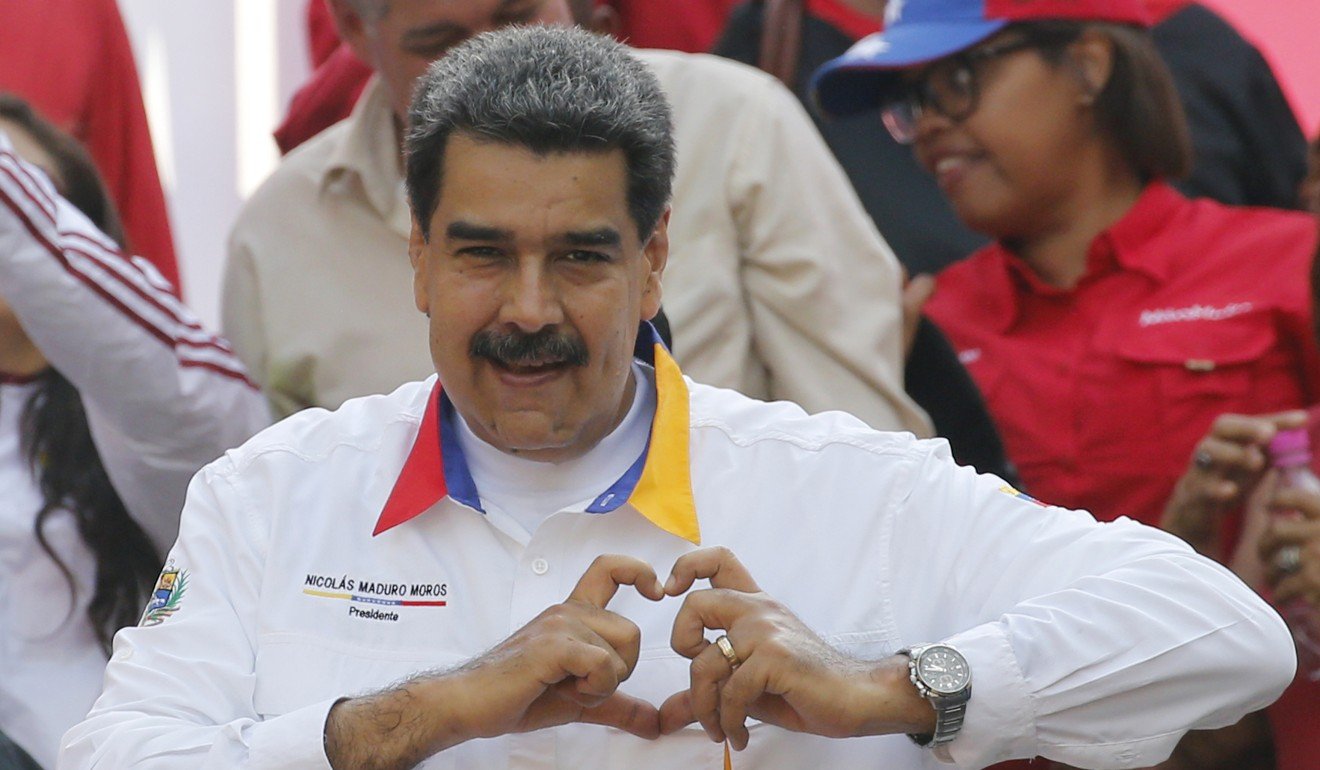
Xi and Putin are also expected to talk about Venezuela, where US-backed opposition leader Juan Guaido is attempting to oust socialist President Nicolas Maduro, who has the support of China and Russia.
Venezuelan President Nicolas Maduro has the backing of China and Russia. Photo: AP
“Moscow and Beijing are not able to seriously hurt Washington by raising tariffs or denying access to high technology. However, there are plenty of areas where coordinated Sino-Russian policies can damage US interests in the short term or in the long run,” Lukin said. “For example, Moscow and Beijing could intensify their joint support for the Venezuelan government of Nicolas Maduro, frustrating Washington’s efforts to dislodge him.”
China and Russia would also be seeking to boost economic ties. Bilateral trade, dominated by Chinese imports of gas and oil, reached US$108 billion last year – falling far short of the target set in 2011 by Xi’s predecessor, Hu Jintao, of US$200 billion by 2020.
China and Russia to forge stronger Eurasian economic ties
Li Lifan, an associate research professor at the Shanghai Academy of Social Sciences, said bilateral trade was a sticking point. “This is one of the potential hindrances in China-Russia relations and Beijing is hoping to [address this] … in the face of a possible global economic slowdown,” Li said.
Given the escalating trade war with Washington, he said China would seek to diversify its investments and markets to other parts of the world, particularly Russia and Europe.
“China will step up its investment cooperation with Europe and Russia and focus more on multilateral investment,” Li said.
But Beijing was not expected to do anything to worsen tensions with Washington.
“China is currently taking a very cautious approach towards the US, trying to avoid heating up the confrontation and further aggravation of the situation,” said Danil Bochkov, a contributing author with the Russian International Affairs Council. “For China it is important to demonstrate that it has a reliable friend – Russia – but that should not be done in an openly provocative manner.”
Stephen Blank, a senior fellow at the American Foreign Policy Council in Washington, said Beijing and Moscow would also seek to contain US influence “as far as possible” from Central Asia, where China has increased its engagement through infrastructure building under the “Belt and Road Initiative”.
Leaders from the region will gather in Bishkek next month for the SCO summit, a security bloc set up in 2001 that now comprises China, Russia, Kazakhstan, Kyrgyzstan, Tajikistan, Uzbekistan, India and Pakistan. Those members account for about 23 per cent of the world’s land mass, 45 per cent of its population, and 25 per cent of global GDP.
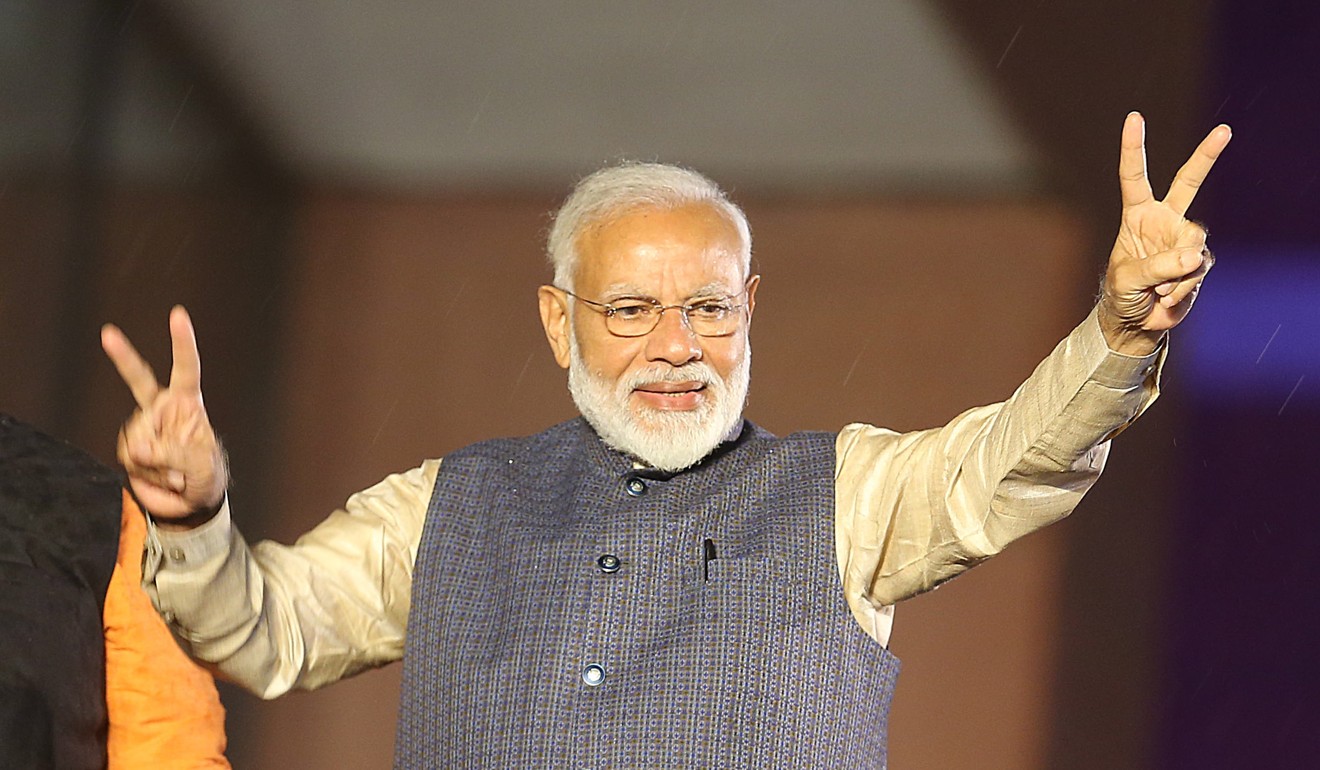
Newly re-elected Indian Prime Minister Narendra Modi could meet the Chinese president for talks in Bishkek next month. Photo: EPA-EFE
There is growing speculation that Xi will meet newly re-elected Indian Prime Minister Narendra Modi on the sidelines of that summit.
Independent analyst and author Namrata Goswami said India would be seeking a commitment to a WTO-led and rules-based multilateral trading system during the SCO talks.
“This is interesting and significant given the current US tendencies under President Donald Trump focused on ‘America first’ and the US-China trade war,” Goswami said.
Counterterrorism will again be a top priority at the SCO summit, amid concerns among member states about the rising number of Islamic State fighters returning from Syria and Iraq. Chinese scholars estimated last year that around 30,000 jihadists who had fought in Syria had gone back to their home countries, including China.
Alexander Bortnikov, chief of the main Russian intelligence agency FSB, said earlier that 5,000 fighters from a group affiliated with Isis had gathered in areas bordering former Soviet states in Central Asia, saying most of them had fought alongside Isis in Syria.
War-torn Afghanistan, which shares a border with four SCO member states – China, Pakistan, Tajikistan and Uzbekistan – is also likely to be high on the agenda at the Bishkek summit.
“With the Trump administration drafting plans to withdraw troops from Afghanistan, the SCO will assess the security situation there and decide whether to provide training for Afghan troops,” Li said.
Eva Seiwert, a doctoral candidate at the Free University of Berlin, expected the security bloc would also discuss Iran after the US withdrew from the 2015 nuclear deal and ordered new sanctions against the country.
Iran, which has observer status with the SCO, was blocked from becoming a full member in 2008 because it was subject to UN sanctions at the time. But its membership application could again be up for discussion.
Iran presses China and Russia to save nuclear deal
“The Trump administration’s unilateral withdrawal from the Iran nuclear deal in 2018 made it easy for China and Russia to present themselves as the proponents of peaceful settlement of conflicts,” Seiwert said. “Discussing the possibility of admitting Iran as a full member state would help the SCO members demonstrate their support of multilateral and peaceful cooperation.
“This would be a strong signal to the US and enhance the SCO’s standing in the international community,” she said.
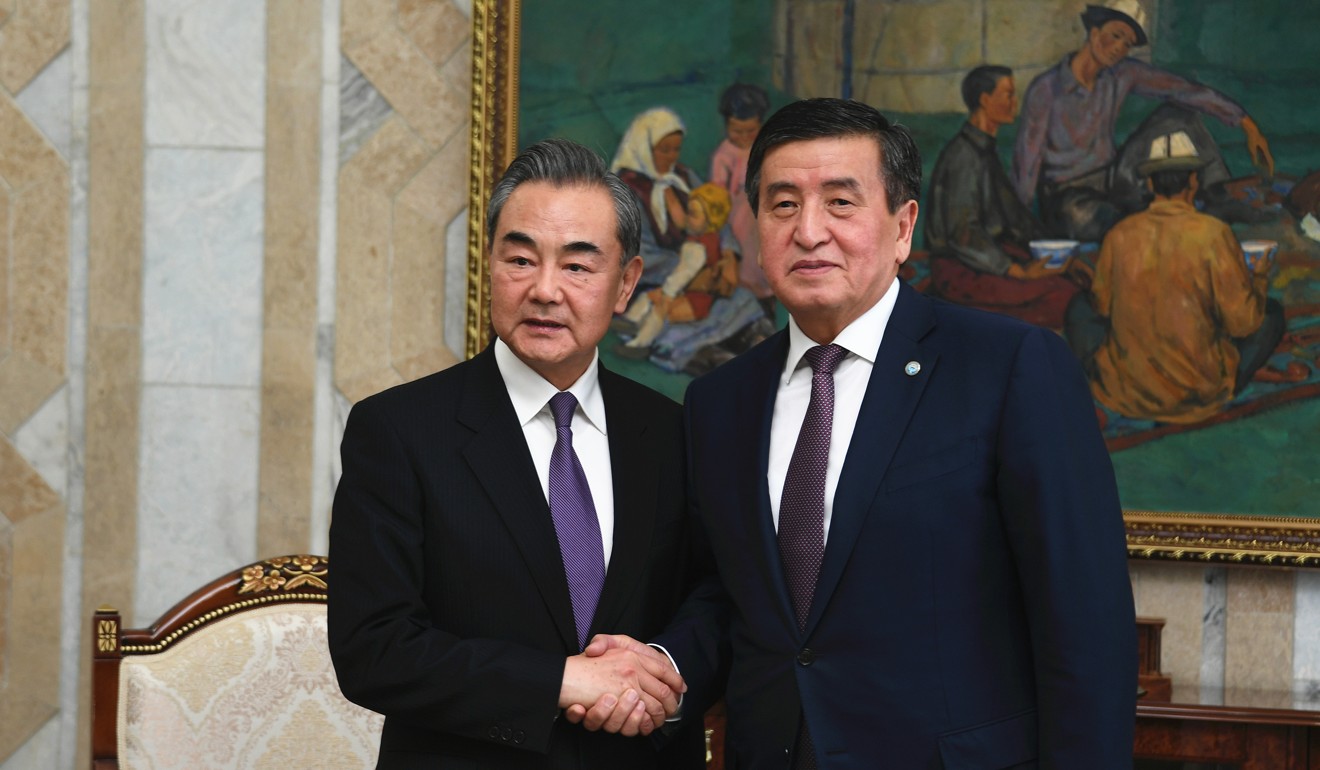
Kyrgyz President Sooronbay Jeenbekov (right) meets Chinese Foreign Minister Wang Yi in Bishkek on Tuesday last week. Photo: Xinhua
As well as security, Xi’s visit to Central Asia is also likely to focus on economic ties. Meeting Kyrgyz President Sooronbay Jeenbekov in Bishkek last week, Chinese Foreign Minister Wang Yi said Beijing would continue to “provide support and help national development and construction in Kyrgyzstan”.
Li said China may increase investment in the Central Asian region, especially in greenfield projects.
“China will continue to buy agriculture products from Central Asia, such as cherries from Uzbekistan, and build hydropower projects to meet local energy demand,” Li said. “Investment in solar and wind energy projects is also expected to increase too.”
Source: SCMP
Posted in American Foreign Policy Council, Arctic, arms control, belt and road forum, Bishkek, Central Asia, Central Asian region, China alert, Chinese foreign minister, Crimea, Eurasian, Europe, Far Eastern Federal University, Free University of Berlin, FSB, Germany, Huawei, Imran Khan, India alert, Iraq, Islamic State fighters, Juan Guaido, Kazakhstan, Kyrgyz President, Kyrgyzstan, Mike Pompeo, Namrata Goswami, Netherlands, North Korea, nuclear weapons, Pakistan, President Nicolas Maduro, President Xi Jinping, Prime Minister Narendra Modi, Russia, Russian intelligence agency, Shanghai Cooperation Organisation (SCO), Sooronbay Jeenbekov, South China Sea, St Petersburg, support, Syria, Tajikistan, tensions, UN sanctions, Uncategorized, US, Uzbekistan, Venezuela, Vice President, Vladimir Putin, Vladivostok, Wang Qishan, Wang Yi, Washington, WTO-led and rules-based multilateral trading system |
Leave a Comment »
20/04/2019
Chinese State Councilor and Foreign Minister Wang Yi (C) speaks during a press briefing for the second Belt and Road Forum for International Cooperation (BRF) in Beijing, capital of China, April 19, 2019. The second Belt and Road Forum for International Cooperation will be held from April 25 to 27 in Beijing, Wang Yi announced Friday. (Xinhua/Zhai Jianlan)
BEIJING, April 19 (Xinhua) — Chinese President Xi Jinping will deliver a keynote speech at the second Belt and Road Forum for International Cooperation (BRF) to be held from April 25 to 27 in Beijing, State Councilor and Foreign Minister Wang Yi announced Friday.
Leaders including heads of state and government from 37 countries will attend the forum’s roundtable summit, Wang told a press briefing.
Wang said 12 thematic forums and a CEO conference would be held on April 25, the opening ceremony and a high-level meeting on April 26, and the leaders’ roundtable on April 27.
Xi will attend the opening ceremony and deliver a keynote speech. He will also chair the leaders’ roundtable and brief media from home and abroad about the outcomes after the roundtable, Wang said, adding that Xi and his wife Peng Liyuan will also hold a welcoming banquet for the leaders and representatives.
According to Wang, the 37 countries are Austria, Azerbaijan, Belarus, Brunei, Cambodia, Chile, Cyprus, Czech Republic, Djibouti, Egypt, Ethiopia, Greece, Hungary, Indonesia, Italy, Kazakhstan, Kenya, Kyrgyzstan, Laos, Malaysia, Mongolia, Mozambique, Myanmar, Nepal, Pakistan, Papua New Guinea, the Philippines, Portugal, Russia, Serbia, Singapore, Switzerland, Tajikistan, Thailand, the United Arab Emirates, Uzbekistan and Vietnam.
The secretary-general of the United Nations and the managing director of the International Monetary Fund will attend the forum, Wang said, adding that senior representatives of France, Germany, Britain, Spain, Japan, the Republic of Korea and the European Union will also participate.
Noting that the BRF is the top-level platform for international cooperation under the framework of the Belt and Road Initiative, Wang said the conference next week would be of landmark significance.
The theme of the second BRF is “Belt and Road Cooperation, Shaping a Brighter Shared Future.” Wang said the main purpose is to promote the high-quality development of Belt and Road cooperation, which is the common aspiration of countries participating in the initiative.
Speaking highly of the fruitful results yielded since the initiative was launched in 2013, Wang said the second BRF was greatly welcomed worldwide with some 5,000 participants from more than 150 countries and 90 international organizations having confirmed their attendance, covering areas from five continents and different walks of life such as government, civil society, business and academia.
According to Wang, this year’s forum will have 12 thematic forums, twice of that during the first forum in 2017, and the CEO conference will be held for the first time. A joint communique will be released after the leaders’ roundtable and other consensus reached during the forum will be issued in a report.
The Belt and Road Initiative, proposed by Xi in 2013, aims at enhancing all-around connectivity through infrastructure construction, exploring new driving force for the world economic growth, and building a new platform for world economic cooperation, according to Wang.
Stressing that Xi and leaders from other countries blueprinted the initiative in 2017, Wang said the progress in the past two years shows that the initiative conforms to the trend of the times featuring peace, development, cooperation and win-win and accords with the common aspiration of openness and joint development of all countries.
“As the host country, we will maintain close communication and coordination with all parties to prepare for the forum with openness, inclusiveness and transparency, upholding the principle of consultation and cooperation for shared benefits,” Wang said.
He said the forum would voice the firm support for multilateralism and an open world economy, enrich the principles of cooperation of the Belt and Road Initiative, build a network of partnership, and establish more mechanisms for high-quality development.
Bilateral, trilateral and multilateral cooperation has been reinforcing each other under the initiative, laying a solid foundation for a closer and more wide-ranging partnership, he said.
Wang said China will showcase the outcomes and introduce the measures of its reform and opening-up to the world, adding that this will allow China to share the dividends of its economic growth, promote the Belt and Road Initiative, and bring more opportunities to the development of all countries as well as the building of the Belt and Road.
“I believe that the forum will inject stronger impetus into the world economy, open even broader horizon for the development of the countries, and contribute to the building of a community with a shared future for humanity, ” said Wang.
Source: Xinhua
Posted in Austria, Azerbaijan, Belarus, Belt and Road Cooperation, belt and road forum, Belt and Road Forum for International Cooperation (BRF), Belt and Road Initiative (BRI), Brunei, Cambodia, Chile, China alert, Chinese President Xi Jinping, Chinese State Councilor and Foreign Minister, Cyprus, Czech Republic, Djibouti, Egypt, Ethiopia, Greece, Hungary, Indonesia, International Monetary Fund, Italy, Kazakhstan, Kenya, Kyrgyzstan, Laos, Malaysia, managing director, Mongolia, Mozambique, Myanmar, Nepal, Pakistan, Papua New Guinea, Portugal, Russia, Secretary-General of the United Nations, Serbia, Singapore, Switzerland, Tajikistan, Thailand, the Philippines, Uncategorized, United Arab Emirates, Uzbekistan, Vietnam, Wang Yi |
Leave a Comment »




 CHINDIA ALERT: You'll be living in their world, very soon