Chindia Alert: You’ll be Living in their World Very Soon
aims to alert you to the threats and opportunities that China and India present. China and India require serious attention; case of ‘hidden dragon and crouching tiger’.
Without this attention, governments, businesses and, indeed, individuals may find themselves at a great disadvantage sooner rather than later.
The POSTs (front webpages) are mainly 'cuttings' from reliable sources, updated continuously.
The PAGEs (see Tabs, above) attempt to make the information more meaningful by putting some structure to the information we have researched and assembled since 2006.
The tech investment push is part of a fiscal package waiting to be signed off by the National People’s Congress, which convenes this week
This initiative will reduce China’s dependence on foreign technology, echoing objectives set forth previously in the ‘Made in China 2025’ programme
A conductor rehearses the military band on the sidelines of the National People’s Congress in Beijing’s Great Hall of the People in March of last year. China’s legislature is expected to sign off on a massive tech-led stimulus plan. Photo: AP
Beijing is accelerating its bid for global leadership in key technologies, planning to pump more than a trillion dollars into the economy through the roll-out of everything from next-generation wireless networks to artificial intelligence (AI).
In the master plan backed by President Xi Jinping himself, China will invest an estimated 10 trillion yuan (US$1.4 trillion) over six years to 2025, calling on urban governments and private hi-tech giants like Huawei Technologies to help lay 5G wireless networks, install cameras and sensors, and develop AI software that will underpin
and Huawei to SenseTime Group at the expense of US companies.
As tech nationalism mounts, the investment drive will reduce China’s dependence on foreign technology, echoing objectives set forth previously in the “Made in China 2025”
programme. Such initiatives have already drawn fierce criticism from the Trump administration, resulting in moves to block the rise of Chinese tech companies such as Huawei.
How will China’s annual legislative meetings affect the stock investor? Five key industries to watch
18 May 2020
“Nothing like this has happened before, this is China’s gambit to win the global tech race,” said Digital China Holdings chief operating officer Maria Kwok, as she sat in a Hong Kong office surrounded by facial recognition cameras and sensors. “Starting this year, we are really beginning to see the money flow through.”
The tech investment push is part of a fiscal package waiting to be signed off by China’s legislature, the National People’s Congress, which convenes this week. The government is expected to announce infrastructure funding of as much as US$563 billion this year, against the backdrop of the country’s worst economic performance since the Mao era.
The nation’s biggest purveyors of cloud computing and data analysis Alibaba, the parent company of the South China Morning Post, and Tencent Holding will be linchpins of the upcoming endeavour. China has already entrusted Huawei, the world’s largest telecommunications equipment supplier, to help galvanise 5G. Tech leaders including Pony Ma Huateng and Jack Ma are espousing the programme.
Maria Kwok’s company is a government-backed information technology systems integration provider, among many that are jumping at the chance. In the southern city of Guangzhou, Digital China is bringing half a million units of project housing online, including a complex three quarters the size of Central Park in New York City. To find a home, a user just has to log on to an app, scan their face and verify their identity. Leases can be signed digitally via smartphone and the renting authority is automatically flagged if a tenant’s payment is late.
China is no stranger to far-reaching plans with massive price tags that appear to achieve little. There is no guarantee this programme will deliver the economic rejuvenation its proponents promise. Unlike previous efforts to resuscitate the economy with “dumb” bridges and highways, this newly laid digital infrastructure will help national champions develop cutting-edge technologies.
“China’s new stimulus plan will likely lead to a consolidation of industrial internet
providers, and could lead to the emergence of some larger companies able to compete with global leaders, such as GE and Siemens,” said Nannan Kou, head of research at BloombergNEF, in a report. “One bet is on industrial internet-of-things (IoT) platforms, as China aims to cultivate three world leading companies in this area by 2025.”
China is not alone in pumping money into the technology sector as a way to get out of the post-coronavirus economic slump. Earlier this month, South Korea said AI and wireless communications would be at the core of it its “New Deal” to create jobs and boost growth.
Nothing like this has happened before, this is China’s gambit to win the global tech raceMaria Kwok, COO at Digital China Holdings
The 10 trillion yuan that China is estimated to spend from now until 2025 encompasses areas typically considered leading edge, such as AI and IoT, as well as items such as ultra-high voltage lines and high-speed rail, according to the government-backed China Centre for Information Industry Development. More than 20 of mainland China’s 31 provinces and regions have announced projects totaling over 1 trillion yuan with active participation from private capital, a state-backed newspaper reported on Wednesday.
Separate estimates by Morgan Stanley put new infrastructure at around US$180 billion each year for the next 11 years – or US$1.98 trillion in total. Those calculations also include power and rail lines. That annual figure would be almost double the past three-year average, the investment bank said in a March report that listed key stock beneficiaries including companies such as China Tower Corp, Alibaba, GDS Holdings, Quanta Computer and Advantech Co.
Beijing’s half-formed vision is already stirring a plethora of stocks, a big reason why five of China’s 10 best-performing stocks this year are tech plays like networking gear maker Dawning Information Industry and Apple supplier GoerTek. The bare outlines of the master plan were enough to drive pundits toward everything from satellite operators to broadband providers.
China’s telecoms carriers push to complete ‘political task’ of 5G network roll-out amid coronavirus crisis
6 Mar 2020
It is unlikely that US companies will benefit much from the tech-led stimulus and in some cases they stand to lose existing business. Earlier this year, when the country’s largest telecoms carrier China Mobile awarded contracts worth 37 billion yuan for 5G base stations, the lion’s share went to Huawei and other Chinese companies. Sweden’s Ericsson got only a little over 10 per cent of the business in the first four months. In one of its projects, Digital China will help the northeastern city of Changchun swap out American cloud computing staples IBM, Oracle and EMC with home-grown technology.
It is in data centres that a considerable chunk of the new infrastructure development will take place. Over 20 provinces have launched policies to support enterprises using cloud computing services, according to a March research note from UBS Group.
Tony Yu, chief executive of Chinese server maker H3C, said that his company was seeing a significant increase in demand for data centre services from some of the country’s top internet companies. “Rapid growth in up-and-coming sectors will bring a new force to China’s economy after the pandemic passes,” he told Bloomberg News.
From there, more investment should flow. Bain Capital-backed data centre operator ChinData Group estimated that for every one dollar spent on data centres another US$5 to US$10 in investment in related sectors would take place, including in networking, power grid and advanced equipment manufacturing. “A whole host of supply chain companies will benefit,” the company said in a statement.
There is concern about whether this long-term strategy provides much in the way of stimulus now, and where the money will come from. “It’s impossible to prop up China’s economy with new infrastructure alone,” said Zhu Tian, professor of economics at China Europe International Business School in Shanghai. “If you are worried about the government’s added debt levels and their debt servicing abilities right now, of course you wouldn’t do it. But it’s a necessary thing to do at a time of crisis.”
Digital China is confident that follow-up projects from its housing initiative in Guangzhou could generate 30 million yuan in revenue for the company. It is also hoping to replicate those efforts with local governments in the northeastern province of Jilin, where it has 3.3 billion yuan worth of projects approved. These include building a so-called city brain that will for the first time connect databases including traffic, schools and civil matters such as marriage registry. “The concept of smart cities has been touted for years but now we are finally seeing the investment,” said Kwok.
Concerns are rising that China is repeating its mistake of a decade ago by pursuing short-term debt-fuelled economic growth at the cost of long-term sustainability
Local governments are stepping up spending on infrastructure projects in a bid to offset the slowdown caused by the coronavirus outbreak and subsequent lockdowns
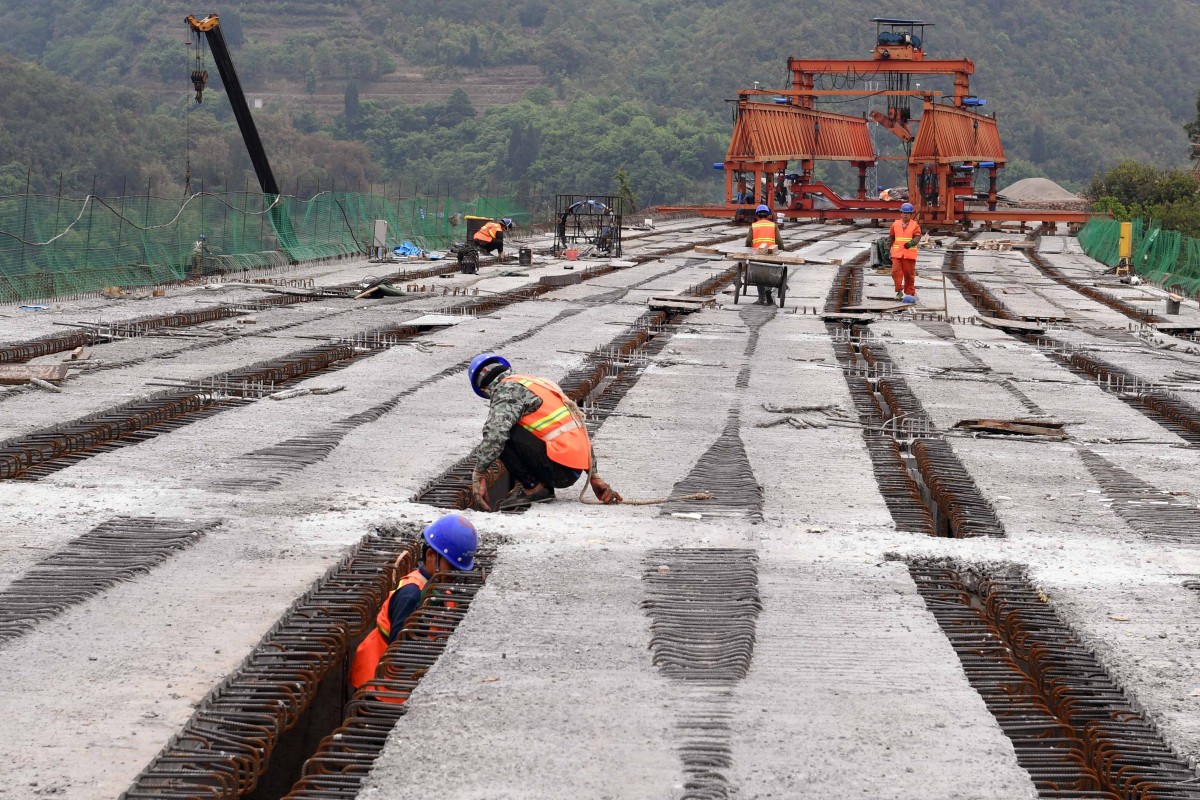
Construction of high-speed railways, motorways and airports is an old tactic that Beijing dusted off after the pandemic led to a 6.8 per cent economic contraction in the first quarter. Photo: Xinhua
China’s huge stockpile of local government debt, one of the biggest “grey rhino” risks threatening the Chinese economy’s future, is set to rise steeply as local authorities rush to increase capital spending to help offset the damage caused by the coronavirus outbreak.
As Beijing discusses increasing the central government budget deficit and monetary policy easing to spur economic growth, many local governments see the situation as a golden opportunity to realise their investment ambitions, fanning concerns that China is repeating its mistake of a decade ago by pursuing short-term debt-fuelled economic growth at the cost of long-term sustainability.
In one of the latest investment drives, the southeastern province of Fujian announced on Sunday that it had signed contracts for 391 new projects with a combined investment value of 783.6 billion yuan (US$110.6 billion). Projects undertaken by central government-owned companies, which received significant lending support in the first quarter, accounted for more than half of the promised investment in Fujian, some 92 projects worth 424.5 billion yuan.
The landlocked eastern province of Anhui is also planning 2,583 new projects this year at a cost of 450 billion yuan, a third of which have been created in the last two weeks.
Construction begins for major sea crossing to link Shenzhen and Zhongshan in Greater Bay Area
In addition to work on existing construction projects, costing around 850 billion yuan, the province has also prepared a list of 3,300 reserve projects with a total investment value of 5.4 trillion yuan (US$762 billion) which could theoretically be started at any point in the future, pending government approval and funding support.
“The most powerful and effective way to offset the economic slowdown is to increase the size of investments,” Wang Qikang, an official with the Anhui economic planning office said on Friday. “[We] must quicken the pace of construction, working day and night to win back the lost time [from the coronavirus lockdowns].”
Construction of high-speed railways, motorways and airports is an old tactic that Beijing dusted off after the pandemic led to a 6.8 per cent economic contraction in the first quarter.
Infrastructure construction has already been hit hard amid the lockdowns, plunging 19.7 per cent in the first three months of the year compared to a year earlier.
Many [local governments] are still striving to achieve a high growth rate without the guidance of a national [gross domestic product] target – Liu Xuezhi
“The investment stimulus mindset has hardly been eradicated at the local level,” said Liu Xuezhi, a senior researcher with the Bank of Communications in Shanghai. “In particular, many [local governments] are still striving to achieve a high growth rate without the guidance of a national [gross domestic product] target.”
Before the start of the coronavirus outbreak, Beijing was thought to be targeting a
of around 6 per cent this year after achieving 6.1 per cent in 2019, although many local governments appear to be setting their own annual targets still using the original expected goal as a guide.
However, that target was never made public because the meeting of the
scheduled for early March, where the growth target would normally have been released, was postponed due to the virus.
The government announced on Wednesday that the NPC will be held from May 22, when a new, likely lower, growth target could be announced.
China’s first-quarter GDP shrinks for the first time since 1976 as coronavirus cripples economy
International rating agency Moody’s warned that greater infrastructure spending would result in higher debt for regional and local governments, increasing their financial risks amid a sharp slowdown in tax revenues.
“Such investments are less likely to be a main support measure [chosen by Beijing] now given the government’s focus on avoiding a rapid increase in leverage and asset price inflation,” Moody’s analysts Michael Taylor and Lilian Li said on Tuesday.
At the end of March, local government debt stood at 22.8 trillion yuan (US$3.2 trillion), according to the Ministry of Finance. But implicit liabilities, which are hidden in local financing vehicles, state firms and public-private partnership projects, are believed to be much larger, with some estimates pointing towards an additional debt of over 30 trillion yuan.
Chinese central bank governor Yi Gang, along with other officials, have already warned against excessive economic stimulus, saying it would add risks to China’s financial system.
A key risk is that local governments are front-loading China’s long-term investment plan, especially in the railway sector, with more than 357 railway projects proposed by local governments.
Shandong province, for example, is preparing to build four new railway lines, including the Shandong portion of a second high-speed railway between Beijing to Shanghai.
“There is still a chance for infrastructure investment growth to hit 10 per cent if the government releases 2 trillion yuan (US$282 billion) in funding through local special purpose bonds and special treasury bonds,” said Haitong Securities’ chief economist Jiang Chao on Monday.
However, a local government debt monitoring report issued on Tuesday by the National Institution of Finance and Development warned that China’s local government fiscal situation is worsening rapidly as expenses surge and revenues drop.
“All levels of local governments in China will face huge debt repayment pressure in five years,” warned Yin Jianfeng, deputy director of the Beijing-based think-tank.
SEOUL/BEIJING (Reuters) – China has allowed 200 employees from South Korea’s Samsung Electronics Co Ltd (005930.KS) to enter the country to work on an expansion of the firm’s NAND memory chip factory, the company said on Wednesday.
The move came after China said on Tuesday that it was in talks with some countries to establish fast-track procedures to allow travel by business and technical personnel to ensure the smooth operation of global supply chains.
China said it has reached a consensus on such an arrangement with South Korea, without elaborating on the terms, including whether individuals entering China will be subject to quarantine.
China, where the virus first emerged late last year, blocked entry last month for nearly all foreigners in an effort to curb risks of coronavirus infections posed by travellers from overseas. After bringing the local spread under control with tough containment measures, it is trying to restart its economic engines after weeks of near paralysis.
A chartered China Air Ltd (601111.SS) plane flew in the Samsung Electronics employees on Wednesday, a company spokeswoman said.
Samsung said its employees will follow the local government’s policy upon arrival, without elaborating.
Shaanxi province, where Samsung’s NAND memory chip plant is located, requires people travelling from overseas to undergo a 14-day quarantine, according to South Korea’s foreign ministry.
“Samsung employees will not be exempted from the 14-day quarantine rule imposed by the Shaanxi province. They will get coronavirus tests at the airport upon arrival and will be transported to a local hotel designated by Chinese authorities,” an official at the Consulate General of South Korea in Xi’an told Reuters.
Samsung Electronics in December increased investment at its chip factory in China by $8 billion to boost production of NAND flash memory chips.
BEIJING, April 17 (Xinhua) — China supports the action plan issued by the Group of 20 (G20) to deal with the impact of COVID-19 and will contribute to the G20 efforts to fight the pandemic through its own policy actions, the Ministry of Finance (MOF) said Friday.
G20 finance ministers and central bank governors agreed Wednesday to suspend debt service payments for the world’s poorest countries from May 1 until the end of the year.
China will implement more proactive fiscal policies with higher quality and efficiency, appropriately increase the fiscal deficit ratio, issue special government bonds, increase the scale of special bonds for local governments, and further cut taxes and fees, the MOF said.
In the process, China will strengthen macroeconomic policy coordination with G20 members and jointly support the implementation of the G20 action plan, the MOF said.
China will carry out specific work through bilateral consultations at the request of relevant poor borrowers in accordance with the G20 consensus, the MOF said.
To achieve better results of the action plan, China calls on multilateral creditors and commercial creditors to take appropriate actions as soon as possible to jointly help the poorest countries tide over their difficulties, the MOF said.
China has been providing support to the international community through other bilateral and multilateral channels, including donating 20 million U.S. dollars to the World Health Organization and earmarking 10 million U.S. dollars in its Poverty Reduction and Regional Cooperation Fund under the Asian Development Bank to support outbreak control programs in the region.
Between January 20 and April 4, PM2.5 levels across the country fell by more than 18 per cent, according to the environment ministry
But observers say that as soon as the nation’s factories and roads get back to normal, so too will the air pollution levels
Blue skies were an unexpected upside of locking down cities and halting industrial production across China. Photo: AFP
China’s air quality has improved dramatically in recent weeks as a result of the widespread city lockdowns and strict travel restrictions introduced to contain the
. But experts say the blue skies could rapidly disappear as factories and roads reopen under a government stimulus plan to breathe new life into a stalled economy.
According to the Ministry of Ecology and Environment, between January 20 and April 4 the average concentration of PM2.5 – the tiny particles that pose the biggest risk to health – fell by 18.4 per cent from the same period of last year.
Meanwhile, the average number of days with good air quality – determined as when the air pollution index falls below 100 – rose by 7.5 per cent, it said.
Satellite images released by Nasa and the European Space Agency showed a dramatic drop in nitrogen dioxide emissions in major Chinese cities in the first two months of 2020, compared with a year earlier.
According to Nasa, the changes in Wuhan – the central China city at the epicentre of the initial coronavirus outbreak – were particularly striking, while nitrogen dioxide levels across the whole of eastern and central China were 10 to 30 per cent lower than normal.
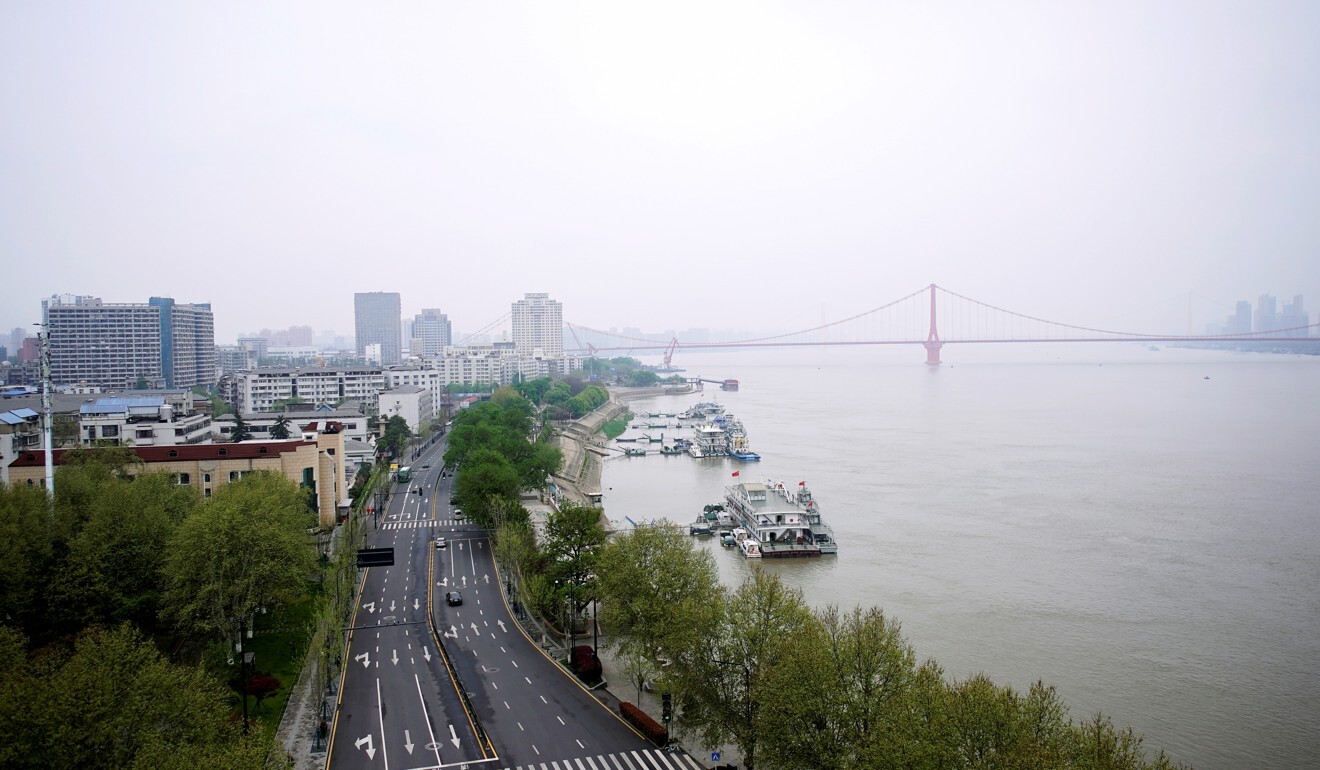
The region is home to hundreds of factories, supplying everything from steel and car parts to microchips. Wuhan, which has a population of 11 million, was placed under lockdown on January 23, but those restrictions were lifted on Wednesday
.
Air pollution is likely to return to China’s cities once the lockdowns are lifted. Photo: Reuters
Nitrogen dioxide is produced by cars, power plants and other industrial facilities and is thought to exacerbate respiratory illnesses such as asthma.
The space agency said the decline in air pollution levels coincided with the restrictions imposed on transport and business activities.
That was consistent with official data from China’s National Development and Reform Commission, which recorded a 25 per cent fall in road freight volume and a 14 per cent decline in the consumption of oil products between January and February.
Guangzhou cases prompt shutdown in ‘Little Africa’ trading hub
8 Apr 2020
Liu Qian, a senior climate campaigner for Greenpeace based in Beijing, said the restrictions on industry and travel were the primary reasons for the improvement in air quality.
According to official data, in February, the concentrations of PM2.5, nitrogen dioxide and sulphur dioxide – a toxic gas that comes mostly from industrial burning of coal and other fossil fuels – all fell, by 27 per cent, 28 per cent and 23 per cent, respectively.
“The causes of air pollution are complicated, but the suspension of industrial activity and a drop in public transport use will have helped to reduce levels,” Liu said.
As the epicentre of the Covid-19 pandemic has shifted to the United States and
, human and industrial activity in China is gradually picking back up, and so is air pollution.
Lauri Myllyvirta, lead analyst with the Centre for Research on Energy and Clean Air in Helsinki, said that levels of nitrogen dioxide pollution, measured both by Nasa satellites and official stations in China, started inching back up in the middle of March and had returned to normal levels by the end of the month.
That coincided with the centre’s findings – published on Carbon Brief, a British website on climate change – that coal consumption at power plants and oil refineries across China returned to their normal levels in the fourth week of March.
How the Wuhan experience could help coronavirus battle in US and Europe
10 Apr 2020
Ma Jun, director of the Institute of Public & Environmental Affairs, a Beijing-based charity, said a stimulus plan to kick-start the economy would have a significant impact on air pollution.
“Once industrial production is fully resumed, so are the emission levels,” he said. “Unless another outbreak happens and triggers another lockdown, which would be terrible, the improvement achieved under the pandemic is unstable and won’t last long.”
After the 2008 financial crisis, Beijing launched a 4 trillion yuan (US$567.6 billion) stimulus package that included massive infrastructure investment, but also did huge damage to the environment. In the years that followed, air pollution rose to record highs and sparked a public backlash.
Even before the Covid-19 outbreak, China’s economy was slowing – it grew by 6.1 per cent in 2019, its slowest for 29 years – and concerns are now growing that policymakers will go all out to revive it.
“Local governments have been under huge pressure since last year, and there are fears that environmental regulations will be sidelined [in the push to boost economic output],” Ma said.
But Beijing had the opportunity to get it right this time by investing more in green infrastructure projects rather than high-carbon projects, he said.
“A balance between economic development and environmental protection is key to achieving a green recovery, and that is what China needs.”
BEIJING, April 7 (Xinhua) — A Chinese Foreign Ministry spokesperson said Tuesday that China opposes all forms of discrimination and prejudice.
Spokesperson Zhao Lijian made the remarks in a press briefing when responding to media reports that since China tightened immigration control measures to contain imported cases of COVID-19, some foreigners have complained about discrimination and rising xenophobia in China.
“China always attaches great importance to the safety and health of foreign nationals in China and protects their legitimate rights and interests in accordance with the law,” Zhao stressed.
Since the COVID-19 outbreak, relevant departments and local governments in China have made every effort to meet the living, epidemic control and medical needs of the foreign citizens, Zhao said, adding that foreign nationals infected with COVID-19 in China are provided timely treatment.
“China opposes all forms of discrimination and prejudice,” Zhao noted, adding that in light of the development of the epidemic, China has promptly and dynamically adjusted the inspection, quarantine, prevention and control measures for foreign nationals entering into China.
“These are temporary measures that China has to take in response to the current situation by referring to the practices of many countries. China has to do so because we must be responsible for our own people and foreign citizens as well,” Zhao said.
“We always treat foreign nationals and Chinese citizens alike, implement measures without discrimination, give full consideration to the legitimate concerns of the persons concerned and respect their religions and customs. We do not increase or reduce certain regulations on someone just because they are foreign citizens,” Zhao said.
Zhao stressed that all foreigners in China should strictly abide by the Law of the People’s Republic of China on the Prevention and Treatment of Infectious Diseases, as well as other laws and local regulations on epidemic prevention and control.
“We hope foreign citizens in China will continue to fully understand and actively cooperate with China’s epidemic control measures to prevent risks and protect the health and safety of their own and others. That is the way to contribute to the final victory over the epidemic,” he added.
Buying and paying for meals and supplies online was already second nature for many Chinese before the Covid-19 lockdown
The supply and delivery networks that were already in place were able to work with the authorities in cities like Wuhan
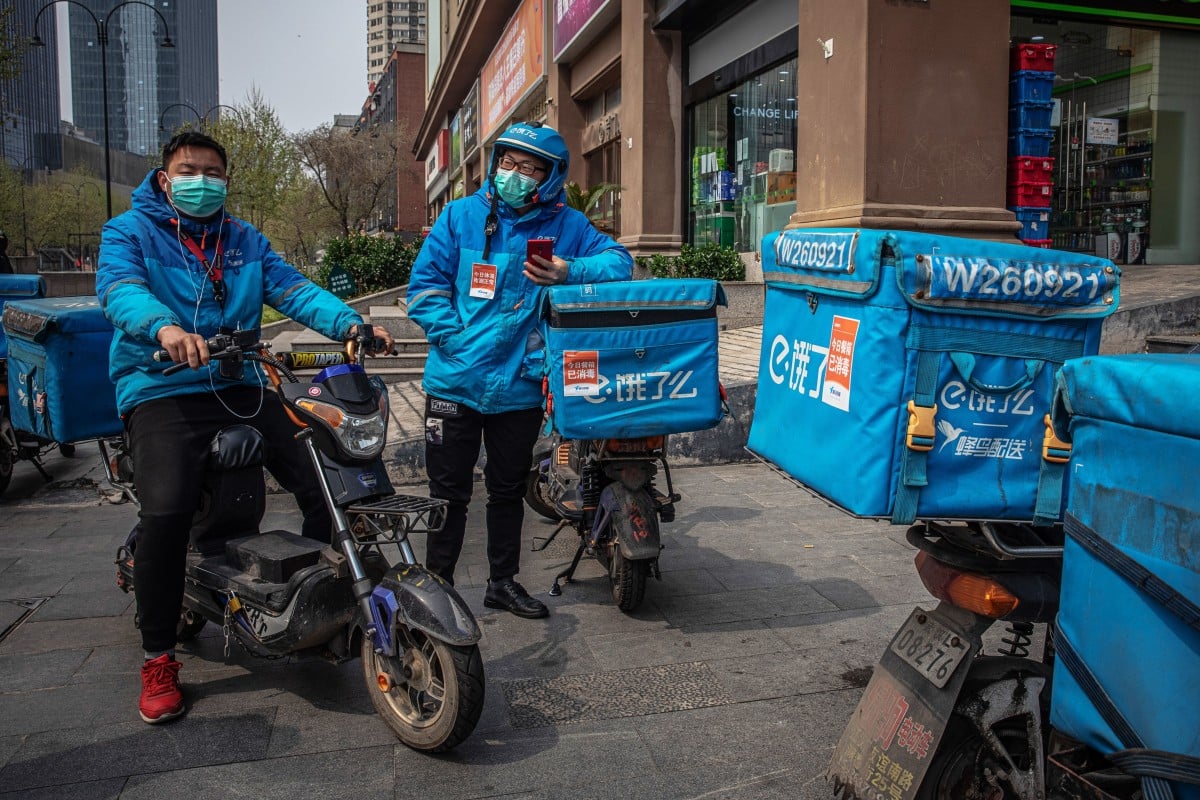
China’s established home delivery system played an important role in getting food and other necessities to residents during the Wuhan lockdown. Photo: EPA-EFE
When Liu Yilin, a retired middle schoolteacher in Wuhan, first heard rumours of a
and shoppers flooded to the markets and malls to snap up supplies.
But as time went on and with residents banned from leaving their homes, he became increasingly concerned about getting hold of fresh supplies of vegetables, fruit and meat until the nation’s vast network of delivery drivers came to the rescue.
“It was such a relief that several necessity purchasing groups organised by community workers and volunteers suddenly emerged on WeChat [a leading social media app] days after the lockdown,” Liu said. “China’s powerful home delivery service makes life much easier at a time of crisis.”
Hu Xingdou, a Beijing-based independent political economist said: “Home delivery played a very important role amid the coronavirus outbreak. To some extent, it prevented people from starving especially in cases when local governments took extreme measures to isolate people.”
According to Liu, people in Wuhan during the lockdown had to stay within their residential communities, with community workers guarding the exits.
Human contact was limited to the internet. Residents placed orders online with farmers, small merchants or supermarkets to buy daily necessities, and community workers helped distribute the goods from deliverymen.
Every morning, Liu passed a piece of paper with his name, phone number and order number to a community worker who would collect the items from a courier at the gate of the residential area.
Thanks to a high population density in urban areas, affluent labour force and people’s openness to digital life, China has built a well-developed home delivery network.
Extensive funding from technology companies has been invested in hardware infrastructure, software to improve logistics and big data and cloud computing to help predict consumers’ behaviour.
Mark Greeven, professor of innovation and strategy at IMD Business School in Lausanne, Switzerland, said: “Whether it is delivery of products, air parcels or fresh food or even medicine or materials for medical use, China has a very well developed system. Much better developed than I think almost any other places in the world.
“Well before the crisis, China had started to embrace digital technology in daily life whether it is in consumption, business, government and smart cities and use of third party payments. All of these things have been in place for a long time and the crisis tested its agility and capability to deal with peak demand.”
China’s e-commerce giants help revive sales of farm goods from Hubei
3 Apr 2020
According to e-commerce giant JD.com, demands for e-commerce and delivery services spiked during the outbreak of Covid-19, the illness caused by the new coronavirus.
It sold around 220 million items between January 20 and February 28, mainly grains and dairy products with the value of beef orders trebling and chicken deliveries quadrupling compared with a year ago.
Tang Yishen, head of JD Fresh, its fresh foods subsidiary, said: “The surge of online demand for fresh merchandise shows the pandemic helped e-commerce providers further penetrate into the life of customers. It also helped upstream farm producers to know and trust us.”
Meituan Dianping, a leading e-commerce platform, said its grocery retail service Meituan Instashopping reported a 400 per cent growth in sales from a year ago in February from local supermarkets.
The most popular items ordered between January 26 and February 8 were face masks, disinfectant, tangerines, packed fresh-cut fruits and potatoes.
The food delivery service Ele.me said that, between January 21 and February 8, deliveries of frozen food surged more than 600 per cent year on year, followed by a nearly 500 per cent growth in delivery of pet-care products. Fresh food deliveries rose by 181 per cent while drink and snack deliveries climbed by 101 per cent and 82 per cent, respectively. Ele.me is owned by Alibaba, the parent company of the South China Morning Post.
Chinese hotpot restaurant chain adapts as coronavirus fears push communal meals off the menu
E-commerce providers used the opportunity to show goodwill and improve their relationship with customers and partners, analysts say.
Sofya Bakhta, marketing strategy analyst at the Shanghai-based Daxue Consulting, said the food delivery sector had made significant headway in reducing physical contact during the outbreak.
Delivery staff left orders in front of buildings, in lifts or temporary shelters as instructed by the clients as most properties no longer allowed them inside.
Some companies also adopted more hi-tech strategies.
In Beijing, Meituan used self-driving vehicles to deliver meals to contactless pickup stations. It also offered cardboard boxes to be used as shields aimed at preventing the spread of droplets among its clients while they ate in their workplaces. In Shanghai, Ele.me employed delivery drones to serve people under quarantine in the most affected regions.
Some companies even “shared” employees to meet the growing labour demand in the food delivery industry that could not be satisfied with their ordinary workforce, Bakhta said.
More employees from restaurants, general retail and other service businesses were “loaned” to food delivery companies, which faced manpower shortages during the outbreak, according to Sandy Shen, senior research director at global consultancy Gartner.
“These arrangements not only ensured the continuity of the delivery service but also helped businesses to retain employees during the shutdown,” she said.
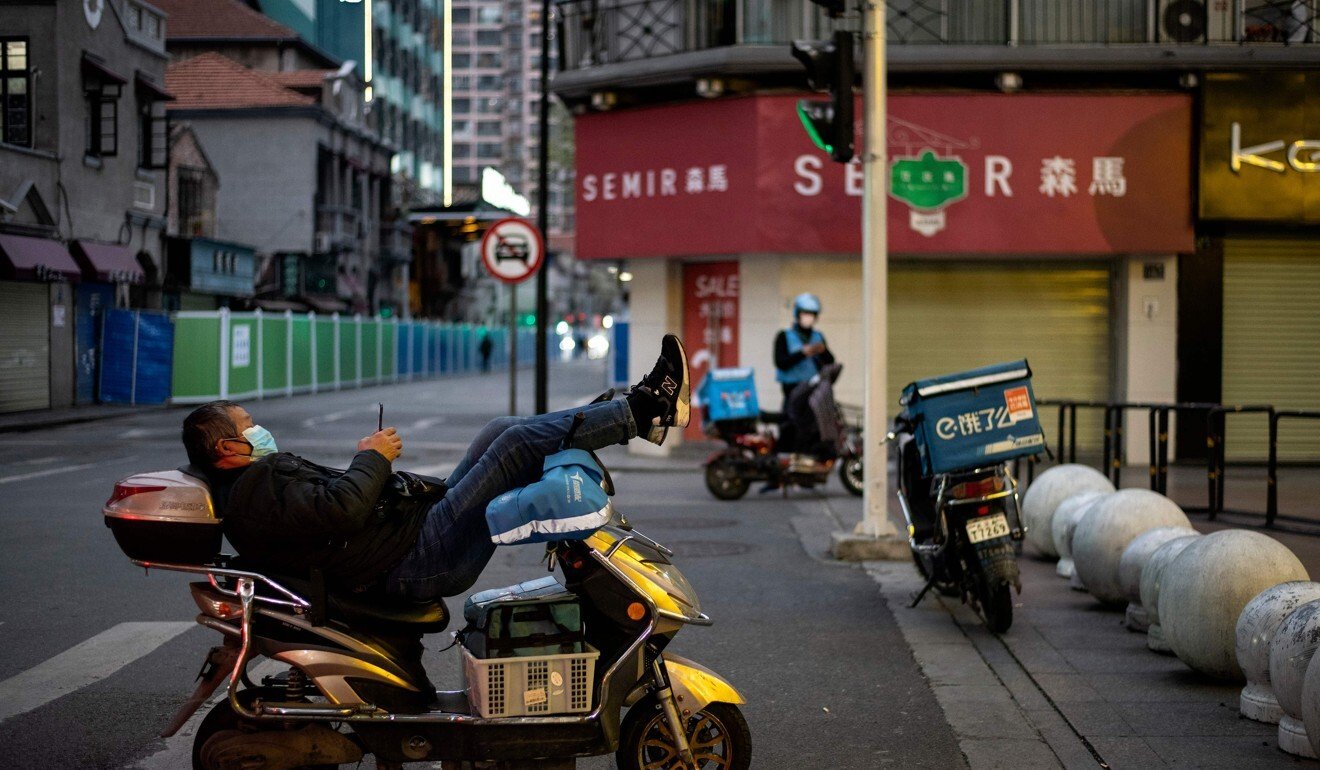
A delivery man takes a break between orders in Wuhan, central China, during the lockdown. Photo: AFP
Mo Xinsheng became one such “on-loan” worker after customers stopped coming to the Beijing restaurant where he worked as a kitchen assistant.
“I wanted to earn some money and meanwhile help people who are trapped at home,” said Mo, who was hired as a delivery man.
But before he could start work he had to go through lengthy health checks before he was allowed into residential compounds.
He also had to work long hours battling the wind and cold of a Beijing winter and carrying heavy loads.
“I work about 10 hours every day just to earn several thousand yuan [several hundred US dollars] a month,” he said.
“Sometimes I almost couldn’t breathe while my hands were fully loaded with packages of rice, oil and other things.
“But I know I’m doing an important job, especially at a time of crisis,” Mo said, “It was not until then that I realised people have become so reliant on the home delivery system.”
Woman uses remote control car to buy steamed buns amid coronavirus outbreak in China
The delivery system has been improved by an effective combination of private sector innovation and public sector coordination, said Li Chen, assistant professor at the Centre for China Studies at Chinese University of Hong Kong.
“[In China,] government units and the Communist Party grass roots organisations have maintained fairly strong mobilisation capabilities to cope with emergencies, which has worked well in the crisis,” he said.
However, Liu, the Wuhan resident, said prices had gone up and vegetables were three times more expensive than they had been over Lunar New Year in 2019.
“There were few varieties that we could choose from, apart from potatoes, cabbage and carrots,” he said.
“But I’m not complaining. It’s good we can still get fresh vegetables at a difficult time. Isn’t it? After all, we are just ordinary people,” he said.
SHENYANG, April 5 (Xinhua) — Huo Chunlei, who runs a hotpot restaurant in Shenyang, capital of northeast China’s Liaoning Province, said he did not lay off any of his staff, although the restaurant is having difficulties for reopening after two months of closure in China’s nationwide measures of coronavirus control.
A few weeks after Chinese provincial-regions with low risk of the novel coronavirus gradually resumed work and production, shops and eateries have reopened, and roads become bustling again, as hundreds of millions of people confined at home for weeks in compliance with epidemic prevention rules get back to a normal life.
Huo’s restaurant has been in operation for a week. Only half of the tables are filled at dinnertime. The revenue is barely enough to cover the expenses of the house rent and employee wages, he said.
However, he said his business is able to survive because of the government’s bailout policies. For example, the approval of deferred payment of social insurance premiums for his employees alone can save him 80,000 yuan (about 11,250 U.S. dollars) a month.
“The staff are willing to stay, as we are all confident in tiding over the difficulties together,” he said.
The local governments at all levels have rolled out a slew of measures to shore up the catering business, including cutting taxes, reducing house rent as well as water and electricity fees.
The governments in Liaoning, Shandong, Jiangsu and Zhejiang provinces have issued coupons with a value ranging from 10 million yuan to 100 million yuan to encourage people to spend on dining out.
Before the production resumption, there were some consumer councils’ surveys showing that consumers had suppressed consumption desire for dining out and shopping as well as going to movie theaters, gymnasiums and tourist spots after the epidemic crisis ends.
“The so-called retaliatory consumption has not yet appeared in the catering industry, as people are still wary about the infection risk, but there will be a gradual recovery growth,” said Chen Heng, executive director of Hainan Hotel and Catering Industry Association in the southernmost Chinese province of Hainan.
“Before reopening, we increased the distances between tables, but with reduced tables, there are still many empty tables at dinner time. My restaurant used to have all seats full and even queues,” said Huo.
Like Huo, Lin Lunheng, founder of the Fuzhou Super Dinner Co. Ltd. in southeast China’s Fujian Province, is also worried about business.
“Although the chain stores have reopened, revenues have decreased by 70 percent compared with that before the epidemic. This is a big blow to restaurants,” said Lin.
The Italian style chain restaurant has offered e-coupons to draw customers.
As the spring weather is getting more and more pleasant, consumers’ desire for dining out and travel is growing. According to a survey report jointly released by the China Travel Academy and Trip.com Group on March 19, Chinese are longing for tours across the country, with Yunnan, Hainan and Shanghai among the top destinations.
The philanthropic foundations of Jack Ma and Joe Tsai, two of China’s wealthiest technology entrepreneurs, have donated 23 million face masks, 2,000 ventilators and 170,000 pieces of protective gear to New York
The donation, the biggest by private citizens to the epicentre of the global coronavirus pandemic, was described by New York Governor Andrew Cuomo as ‘really good news’
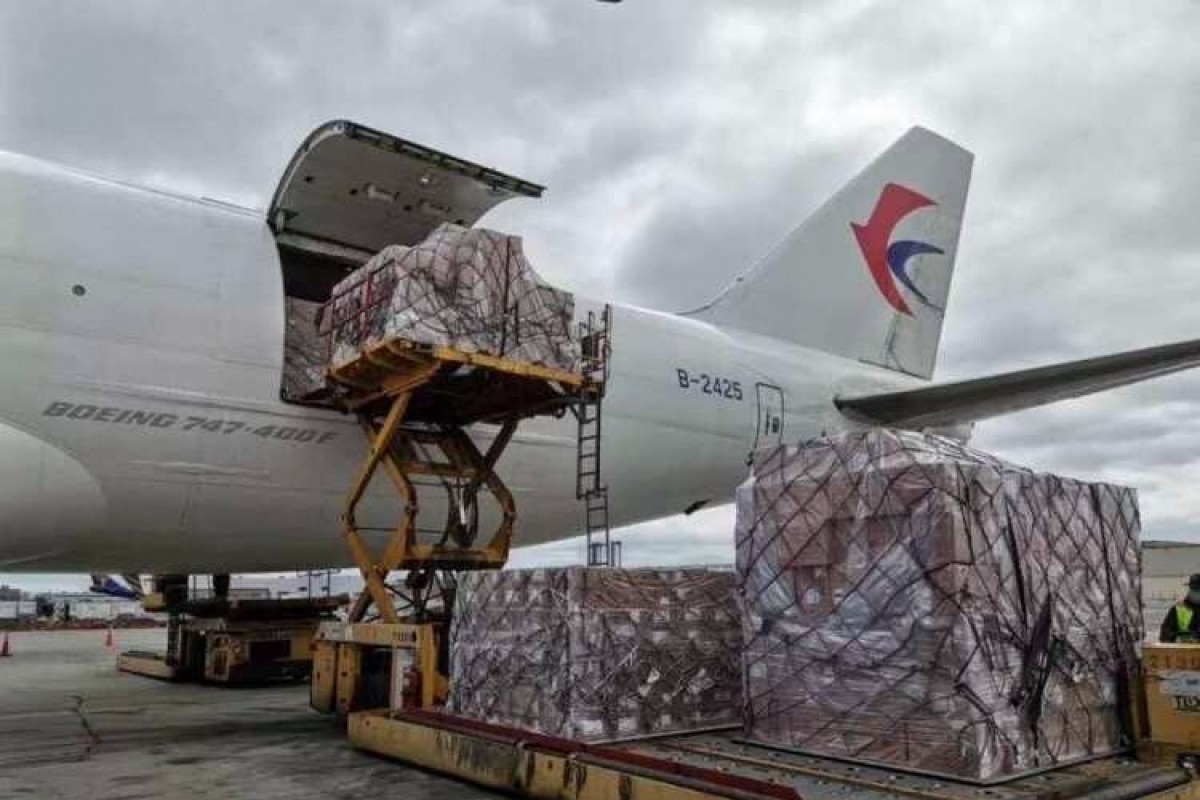
A shipment of 1,000 ventilators donated by Jack Ma Foundation and Joe Tsai Foundation, has arrived in New York. Photo: Handout
Chinese philanthropists are stepping up their donation of protective gear, essential medical and diagnostic kits to the United States, Europe and Asian countries, despite rising acrimony between diplomats and government officials looking to pin blame amid the world’s worst pandemic in decades.
The private foundations of Jack Ma and Joe Tsai, co-founders of this newspaper’s owner Alibaba Group Holding and two of China’s wealthiest technology entrepreneurs, have donated a combined 23 million face masks, 2,000 medical ventilators and 170,000 pieces of protective gear to New York city.
The first 1,000 medical ventilators arrived today, with another 1,000 on the way, for a total donation valued at US$50 million, according to a person familiar with the matter.
Delivery of the essential materials, made possible by behind-the-scene manoeuvres by the donors and officials from both the Chinese and US sides due to import and export regulatory hurdles, highlights the role of civil diplomacy in dealing with the global public health crisis.
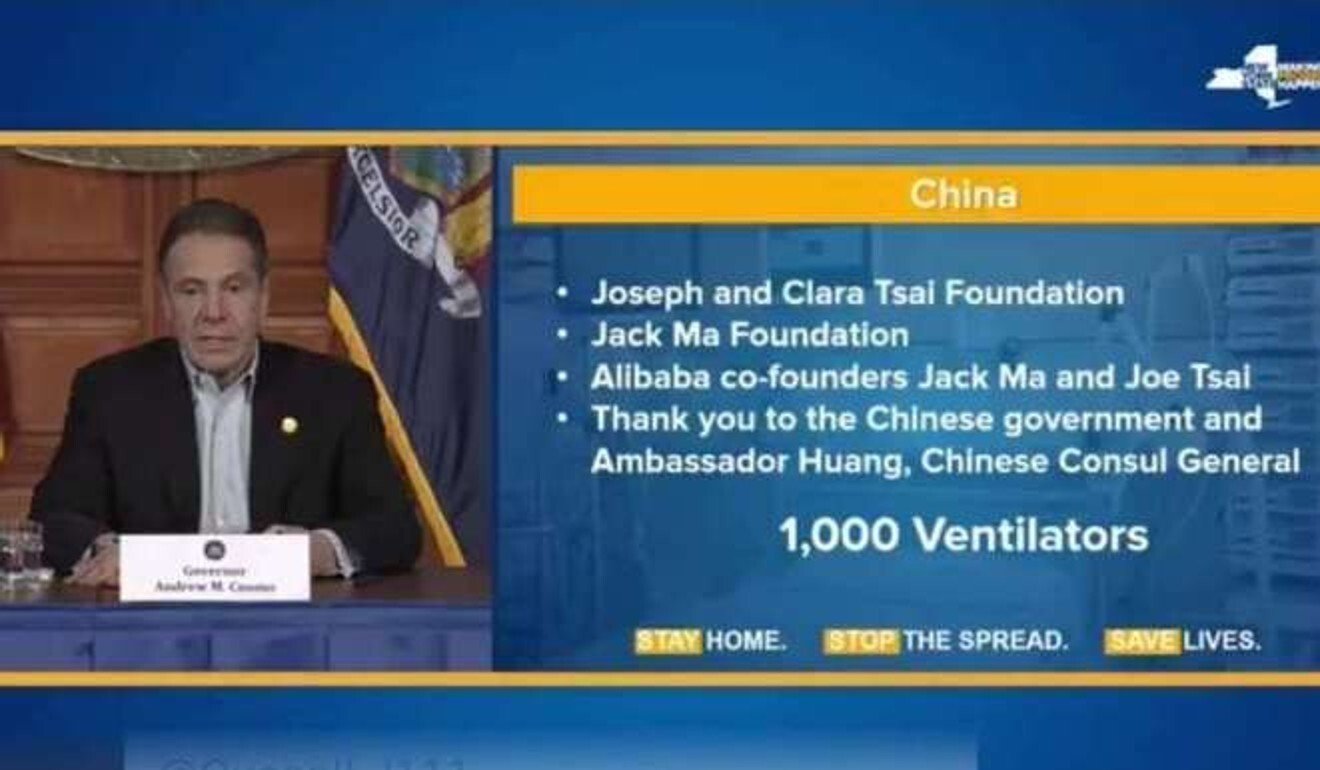
New York Governor Andrew Cuomo thanks the Chinese government for the 1,000 ventilators donated by Jack Ma Foundation and Joe Tsai Foundation, which arrived in New York on Saturday. Photo: Handout
The gesture comes as diplomats of both countries, and even government officials including the US president and his secretary of state, have engaged in a tit-for-tat war of words, as they attempt to pin the blame for the worlds worst pandemic in decades on each other.
Confirmed cases in the US have soared and surpassed China as the new global epicentre. In the US there are nearly 310,000 cases and nearly 8,500 people have died so far from the Covid-19 disease.
Jack Ma is a friend of mine and he’s made it very possible to get about 1,000 ventilators from China. But that was from him and my other friend [Tsai] that was really a gift – Andrew Cuomo, governor of New York
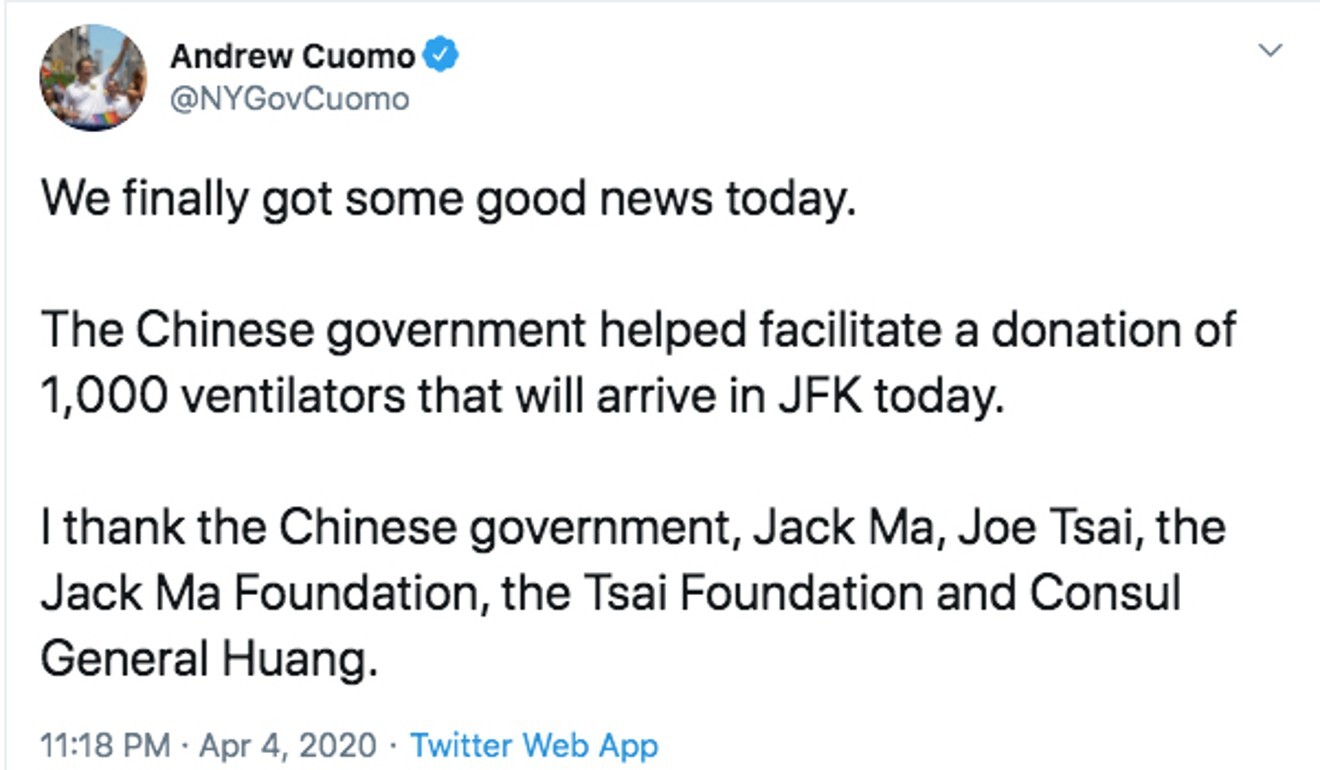
Andrew Cuomo, governor of New York, thanked the Chinese government for easing the transfer of the ventilators to the hard-hit state, the current epicentre of the coronavirus outbreak in the US.
He said the donations were “really good news”, as the state pushes up against the apex of the outbreak, which is likely to hit in about seven days.
“This is a big deal, and this is going to make a significant difference for us,” Governor Andrew Cuomo said on Saturday.
“Jack Ma is a friend of mine and he’s made it very possible to get about 1,000 ventilators from China. But that was from him and my other friend [Tsai] that was really a gift. And we appreciate it very much.”
One of the challenges in making the donation possible was the fact that the US had previously blocked China-made “KN95” standard masks, only allowing “3M N95” masks to be used. Although the two masks have different standards, they essentially have the same performance. On Friday, the US Food and Drugs Administration issued an emergency use authorisation for KN95 masks.
Alfred Wu, associate professor in Lee Kuan Yew School of Public Policy at National University of Singapore, said that what China is doing with its so-called masks diplomacy is very clear. “But given the emergency situation in New York, whatever channel – private or public sources – the equipment comes from, should not matter, especially those for medical workers,” he said.
Separately, the western state of Oregon has also said that it would send 140 ventilators to New York.
The state, like other areas of the US, is facing shortages of medical gear, including masks and ventilators.
“We are not yet at the apex. We are getting closer,” Cuomo said, adding that this was good as it gave the authorities more time to prepare.
A tweet from New York Governor Andrew Cuomo thanking the Chinese government for the 1,000 ventilators donated by Jack Ma Foundation and Joe Tsai Foundation. Photo: Twitter
Cuomo said 113,704 people in New York have tested positive for the coronavirus, with 15,000 having been hospitalised The state’s death toll saw a significant spike on Saturday to reach 3,565, up from 2,935 the previous day.
The White House has been criticised for not better coordinating the supply of medical goods to states, who are competing with each other on the open market.
NUS’ Wu said that tussle between the federal and state governments in the US on key decisions on acquiring medical supplies was not helping the fight against the pandemic. “Unlike in China, where the central government has the say over local governments, in the US, when it comes to public health provision, the power belongs to the state,” he said.
Meanwhile, Cuomo acknowledged that he asked the White House and others for help negotiating the ventilators.
Trump said he would like to hear a more resounding “thank you” from Cuomo for providing medical supplies and helping quickly to add hospital capacity.
Li Keqiang tells senior officials to step up efforts to channel water from Yangtze River to arid regions
Impact of pollution and rising population has prompted increased efforts to improve efficiency and supply
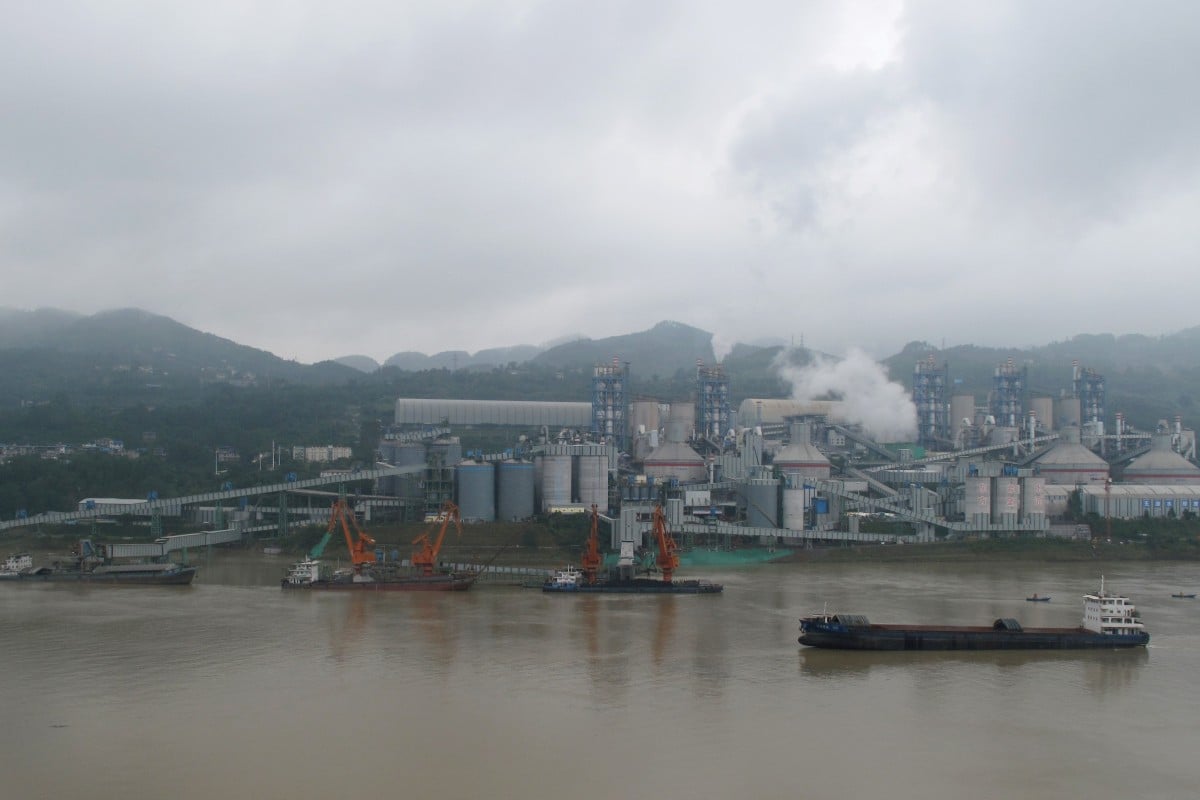
A cement plant on the banks of the Yangtze in Chongqing. The authorities are now trying to stop further development along the river. Photo: Reuters
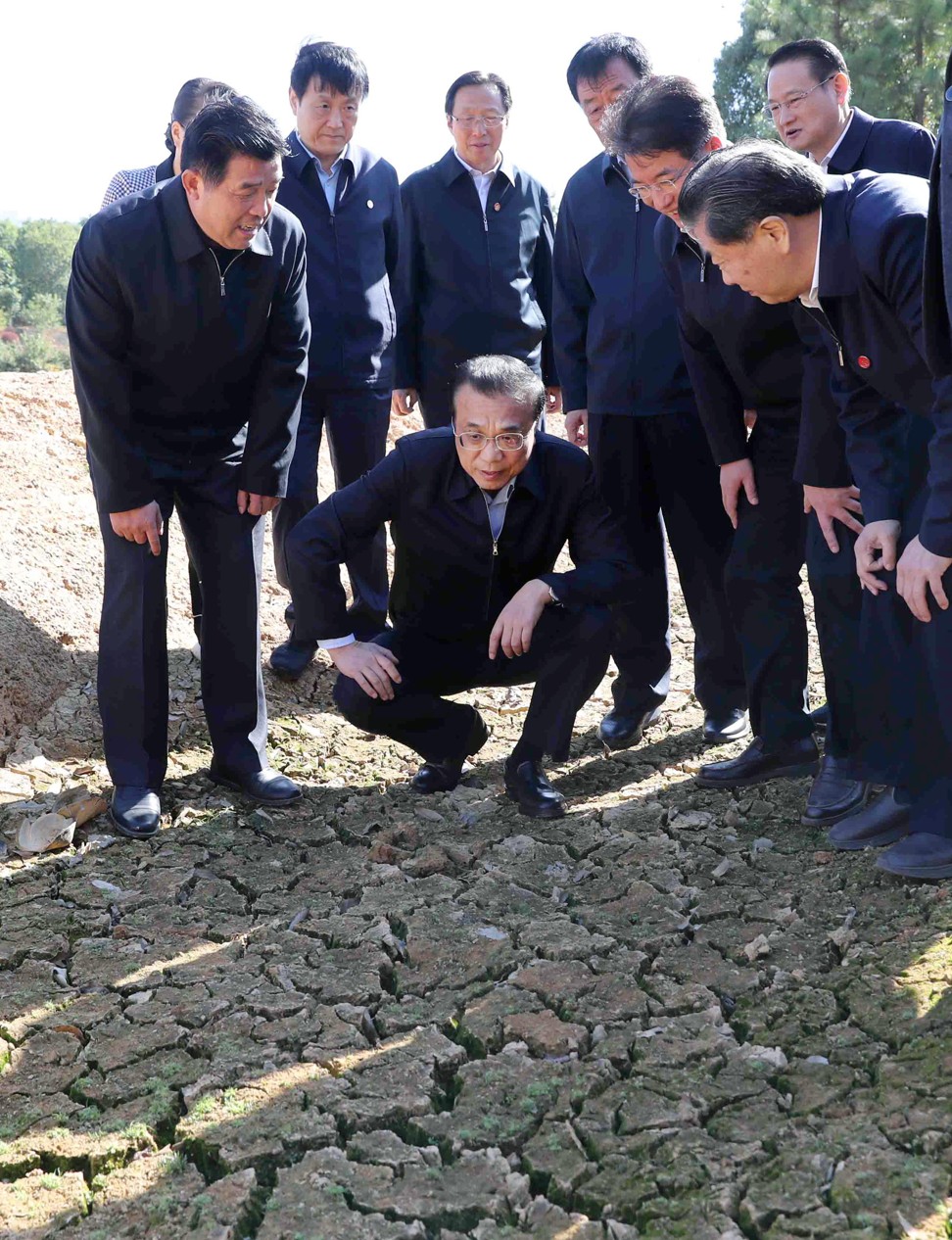
China needs to divert more water to its arid northern regions and invest more in water infrastructure as shortages get worse because of pollution, overexploitation and rising population levels, Premier Li Keqiang has said.
China’s per capita water supplies are around a quarter of the global average. With demand still rising, the government has sought to make more of scarce supplies by rehabilitating contaminated sources and improving efficiency.
Water remained one of China’s major growth bottlenecks, and persistent droughts this year underlined the need to build new infrastructure, Li told a meeting of senior Communist Party officials on Monday. An account of the meeting was published by China’s official government website.
Local government bonds should be “tilted” in the direction of water infrastructure, he said, and innovative financing tools were also needed.
He also called for research into new pricing policies to encourage conservation.
Li said China’s water supply problems had been improved considerably as a result of the South-North Water Diversion Project, a plan to divert billions of cubic metres of water to the north by building channels connecting the Yangtze and Yellow rivers.
World ‘woefully unprepared’ for climate change’s effects on drinking water supplies drawn from mountains
He said opening up more channels to deliver water to regions north of the Yangtze River Delta would support economic and social development and optimise China’s national development strategy, according to a summary of the meeting on the government website.
China is in the middle of a wide-reaching programme to clean up the Yangtze River, its biggest waterway, and put an end to major development along its banks.
Chinese Premier Li Keqiang inspects an empty reservoir during a visit to Jiangxi province last week. Photo: Xinhua
Local governments have been under pressure to dismantle dams, relocate factories and even ban fishing and farming in ecologically fragile regions.
But experts say the ongoing campaign to divert the course of the Yangtze to other regions is still causing long-term damage to the river’s environmental health.
Many cities that had polluted their own water sources had drawn replacement supplies from the Yangtze, exceeding the river’s environmental capacity, said Ma Jun, founder of the Institute of Public and Environmental Affairs, which monitors water pollution.
Beijing already relied on diversion channels from the Yangtze to supply 70 per cent of its water, but had done little to improve conservation or reduce per capita consumption, which was higher than many Western countries, he said.
“[Diversion] has caused so much suffering and needs so many dams to keep up supply, and that has impacted biodiversity,” he said.










 CHINDIA ALERT: You'll be living in their world, very soon