Archive for ‘lunar new year’

24/01/2020

China shuts part of Great Wall as virus toll hits 26

BEIJING, China (Reuters) – China ramped up measures to contain a virus that has killed 26 people and infected more than 800, suspending public transport in 10 cities, shutting temples over the Lunar New Year and even closing the Forbidden City and part of the Great Wall.

The week-long holiday to welcome the Year of the Rat began on Friday, raising fears the infection rate could accelerate as hundreds of millions of people travel to their homes and abroad in what is usually a festive time of year.

The World Health Organisation (WHO) has declared the new coronavirus an emergency for China but stopped short of declaring the epidemic of international concern.

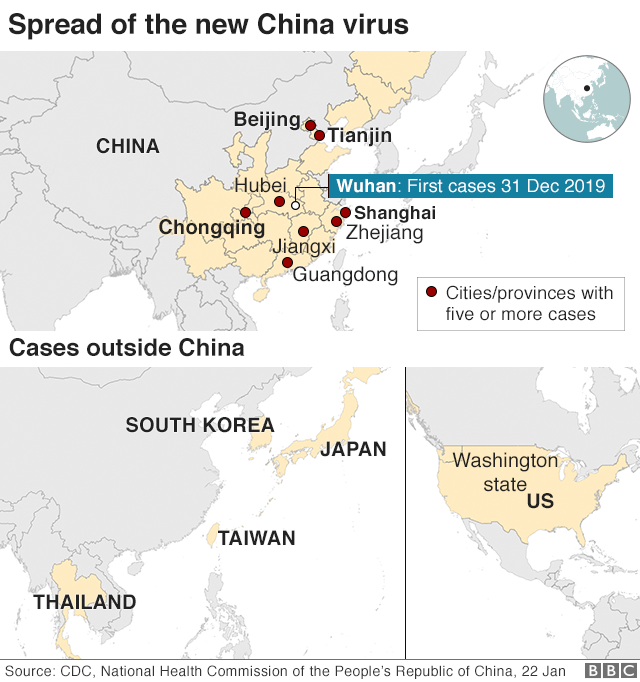
While most of the cases and all of the deaths have been in China, the virus has been detected in Thailand, Vietnam, Singapore, Japan, South Korea, Taiwan and the United States. It was likely Britain also had cases, a health official said.

The newly identified coronavirus has created alarm because it is too early to know just how dangerous it is and how easily it spreads between people.

Symptoms include fever, difficulty breathing and coughing.

Most of the fatalities have been elderly, many with pre-existing conditions, the WHO said.

Cases are likely to continue to rise in China but it is too soon to evaluate the severity of the virus, a WHO spokesman said on Friday.

As of Thursday, there were 830 confirmed cases and 26 people had died there, China’s National Health Commission said.

In Wuhan, where the outbreak began last month, pharmacies were running out of supplies and hospitals were flooded with nervous resident seeking medical checks.

“There’s so much news, so much data, every 10 minutes there’s an update, it’s frightening, especially for people like us in a severely hit area,” Lily Jin, 30, a resident of the city, told Reuters by phone.

GRAPHIC: The spread of a new coronavirus – here

Reuters Graphic

MORE RESTRICTIONS

While restrictions have already been put in place in cities across the country to curb the outbreak, China will take stricter and more targeted measures, state television reported citing a state council, or cabinet, meeting on Friday, but gave no further details.

“The spread of the virus has not been cut off … Local authorities should take more responsibility and have a stronger sense of urgency,” state broadcaster CCTV said.

Most cases have been in Wuhan, where the virus is believed to have originated in a market that traded illegally in wildlife. Preliminary research suggested it crossed to humans from snakes.

The city of 11 million people, and neighboring Huanggang, a city of about 7 million, were in virtual lockdown.

Nearly all flights at Wuhan’s airport had been canceled, and airports worldwide have stepped up the screening of passengers from China.

Checkpoints blocked the main roads leading out of town, and police checked incoming vehicles for wild animals.

Wuhan was rushing to build a 1,000-bed hospital for the infected by Monday, the official Changjiang Daily reported.

About 10 people got off a high-speed train that pulled into Wuhan on Friday afternoon but nobody got on before it resumed its journey. Although it stopped there, Wuhan had been removed from the train’s schedule.

“What choice do I have? It’s Chinese New Year. We have to see our family,” said a man getting off the train who gave his family name Hu.

CHINA EMERGENCY

The WHO said on Thursday it was a “bit too early” to designate the outbreak a public health emergency of international concern, which would require countries to step up their response.

Some experts believe the virus is not as dangerous as the one that caused the 2002-03 outbreak of Severe Acute Respiratory Syndrome, which also began in China and killed nearly 800 people, or the one that caused Middle East Respiratory Syndrome, which has killed more than 700 people since 2012.

There is no known vaccine or particular treatment.

“There is some work being done and there are some trials now for MERS (vaccines). And we may look at some point whether those treatments and vaccines would have some effect on this novel coronavirus,” WHO spokesman Tarik Jasarevic said on Friday.

Gilead Sciences Inc said it was assessing whether its experimental Ebola treatment could be used. Meanwhile, three research teams were starting work on vaccines, the Coalition for Epidemic Preparedness Innovations said.

In the meantime, Chinese authorities have imposed restrictions on movement and gatherings to try to stem the spread. It has advised people to avoid crowds and 10 cities in the central province of Hubei, where Wuhan is located, have suspended some transport, the Hubei Daily reported.

Some sections of the Great Wall near Beijing will be closed from Saturday, state media said.

Some temples have also closed, including Beijing’s Lama Temple where people make offerings for the new year, have also been closed as has the Forbidden City, the capital’s most famous tourist attraction.

Shanghai Disneyland will close from Saturday. The theme park has a 100,000 daily capacity and sold out during last year’s Lunar New Year holiday.

The virus is expected to dent China’s growth after months of economic worries over trade tensions with the United States, unnerving foreign companies doing business there.

Shares in luxury goods firms have suffered from the anticipated drop in demand from China, and on Friday French spirits group Remy Cointreau said it was “clearly concerned” about the potential impact.

Source: Reuters
23/01/2020

Coronavirus: Wuhan shuts public transport over outbreak

Wuhan, a Chinese city of eleven million people, has temporarily shut down its public transport as it tries to halt the outbreak of a new strain of virus.

Those living in the city have been advised not to leave, in a week when millions of Chinese are travelling for the upcoming Lunar New Year holiday.

The respiratory illness has spread to other parts of China, with some cases in other countries including the US.

There are more than 500 confirmed cases and 17 people have died.

Known for now as 2019-nCoV, the virus is understood to be a new strain of coronavirus not previously identified in humans. The Sars (severe acute respiratory syndrome) virus that killed nearly 800 people globally in the early 2000s was also a coronavirus, as is the common cold.

All the fatalities so far have been in Hubei, the province around Wuhan.

Meanwhile, after a day of discussions in Geneva, the World Health Organization’s (WHO) emergency committee has announced it will not yet declare a “global emergency” over the new virus.

Director general Dr Tedros Ghebreyesus said more information was needed about the spread of the infection. The committee of health experts will meet again on Thursday.

A global emergency is the highest level of alarm the WHO can sound and has previously been used in response to swine flu, Zika virus and Ebola.

What measures have been announced?

From Thursday, all flights and passenger train services out of Wuhan have been stopped.

Bus, subway and ferry services all shut down from 10:00 local time (02:00 GMT).

A special command centre in Wuhan set up to contain the virus said the move was meant to “resolutely contain the momentum of the epidemic spreading”.

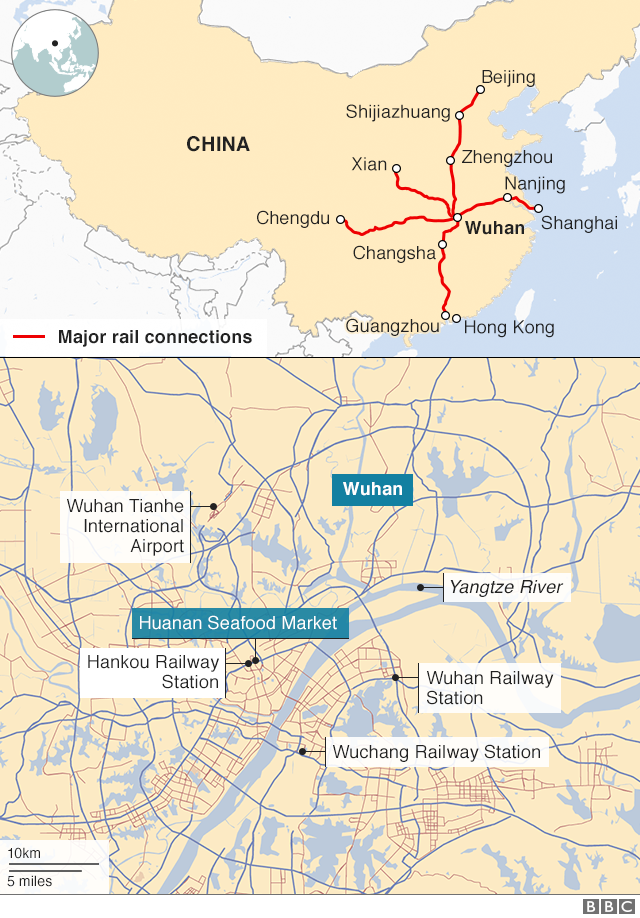
Map of Wuhan transportThose living in Wuhan had already been told to avoid crowds and minimise public gatherings.

State news agency Xinhua said tourist attractions and hotels in the city had been told to suspend large-scale activities while libraries, museums and theatres were cancelling exhibitions and performances.

A Lunar New Year prayer-giving ceremony at the city’s Guiyuan Temple, which attracted 700,000 people last year, has also been cancelled.

The hashtag “Wuhan is sealed off” was trending on Chinese social media website Weibo.

One user said worries about food and disinfectant made it feel like “the end of the world”, while another said they were on the “verge of tears” when Chinese officials announced the shut-down.

The WHO’s Dr Ghebreyesus described the latest measures as “very strong” and said they would “not only control the outbreak, they will minimise spread internationally”.

Chinese officials said the country was now at the “most critical stage” of prevention and control.

“Basically, do not go to Wuhan. And those in Wuhan please do not leave the city,” said National Health Commission vice-minister Li Bin in one of the first public briefings since the beginning of the outbreak.

line

Like shutting down London before Christmas

By James Gallagher, BBC health and science correspondent

Wuhan is starting to look like a city in quarantine.

Officials had already warned residents not to leave the city and visitors not to come.

Now the reported public transport ban – which includes flights – slams many of the routes in and out of the city shut.

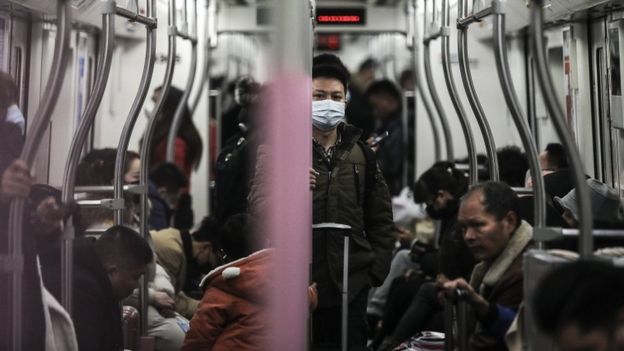
A man wears a mask on the subway on January 22, 2020 in Wuhan, Hubei province, ChinaImage copyright GETTY IMAGES
Image caption Subways in Wuhan will be temporarily shut

It is a significant attempt to stop the spread of this new virus, which we now know can spread from person to person.

Limiting transport will cut the chance of the virus reaching other cities in China and other countries around the world.

This all comes just as millions of people are travelling across China for the week-long holiday that is Lunar New Year.

If you’re struggling for context – imagine shutting down London in the week before Christmas.

The big question left is the roads – and whether any of Wuhan’s 11 million inhabitants will be able to simply drive away.

line

What’s the picture globally?

Officials in Hong Kong reported the territory’s first two cases on Wednesday and one case was reported in the nearby city of Macau.

The patient in Macau is said to be a businesswoman who arrived from Wuhan over the weekend.

The first US case was confirmed on Tuesday. President Donald Trump said the situation was “totally under control” and that he trusted the information being provided by Chinese authorities.

Map: Confirmed cases in China and around the world
There have been three cases in Thailand, one in Korea, one in Japan and one in Taiwan.

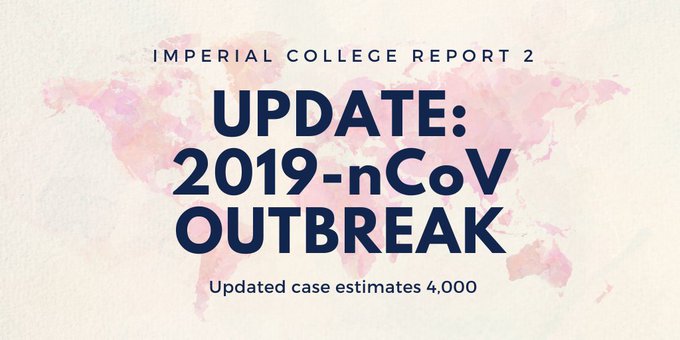
Although only about 500 cases have been confirmed, calculations by scientists at the MRC Centre for Global Infectious Disease Analysis at Imperial College London suggest there are 4,000 people sick with the virus in Wuhan.

What do we know about the virus?

The virus originated in a seafood market in Wuhan that “conducted illegal transactions of wild animals”, authorities said. The market has since been shut down.

There is also evidence of human to human transmission with the new virus spreading to family members and healthcare workers.

But understanding how easily and how often the virus spread between people is one of the major outstanding questions in this outbreak.

The virus infects the lungs and symptoms start with a fever and cough. It can progress to shortness of breath and breathing difficulties.

Source: The BBC

21/01/2020

China virus fears grow as human transmission and fourth death confirmed

BEIJING (Reuters) – With millions of Asians travelling on Tuesday for the Lunar New Year holiday, authorities in China confirmed that a new virus could be spread through human contact, reporting 15 medical staff had been infected and a fourth person had died.

The chilling update on the coronavirus outbreak that began in the central city of Wuhan sent shivers through financial markets, as the World Health Organisation called a meeting for Wednesday to consider declaring an international health emergency.

By the end of Monday the number of confirmed cases in China had climbed to 291, the National Health Commission said. Some 270 were in Hubei province. Wuhan, a city of 11 million people is the provincial capital.

The outbreak was also spreading to other cities, with 15 cases in southern province of Guangdong, five in the capital Beijing and two in Shanghai.

“Information about newly reported infections suggest there may now be sustained human to human transmission,” WHO Regional Director for the Western Pacific Takeshi Kasai said in an email statement.

The scare brought back bad memories of Severe Acute Respiratory Syndrome (SARS), another coronavirus that broke out in China in 2002/2003, resulting in the death of nearly 800 people in global pandemic.

Health authorities around the world have begun to step up screening of travellers arriving from China. Two cases have already been identified in Thailand, one in Japan and one in South Korea, while the Philippines reported on Tuesday its first suspected case.

Wuhan Municipal Health Commission confirmed a fourth fatality on Tuesday, disclosing that an 89-year-old man who had underlying health issues, including heart disease, died on Jan. 19.

Chinese authorities also confirmed for the first time that the virus could spread through human contact and said 15 medical staff had been infected.

The mounting anxiety was transmitted to regional markets. China’s onshore yuan CNY= fell 0.6%, its biggest daily drop since Aug. 26, 2019, while airline and travel stocks fell across the region.

European shares also slipped on mounting concerns about the impact of the outbreak, with luxury goods firms particularly hard-hit on worries about weaker demand from Chinese consumers.

The virus can cause pneumonia, with symptoms including fever and difficulty in breathing. As those symptoms are similar to many other respiratory diseases, extra screening is needed.

AIRPORT SCREENING

The origin of the virus has yet to be identified, but the primary source is most likely animal, according to WHO. Chinese officials have linked the outbreak to a seafood market in Wuhan.

“The outbreak of a SARS-like coronavirus in Wuhan is developing into a major potential economic risk to the Asia-Pacific region now that there is medical evidence of human-to-human transmission,” said Rajiv Biswas, Asia Pacific Chief Economist for IHS Markit, in an email statement.

So far, the WHO has not recommended trade or travel restrictions but such measures could be discussed at Wednesday’s emergency meeting.

China’s National Health Commission will also give an update on the outbreak at a press briefing at 10 a.m. (0200 GMT) on Wednesday.

Foreign ministry spokesman Geng Shuang said China will attend the WHO meeting and share relevant information.

“China is willing to deepen its global cooperation and work with the international community to work together to deal with the epidemic,” Geng told reporters at a regular daily briefing.

Airport authorities in the United States as well as most Asian nations also are screening passengers from Wuhan.

Australia on Tuesday said it would screen passengers on flights from Wuhan, while Singapore announced it would quarantine individuals with pneumonia and a history of travel to Wuhan within 14 days prior to the onset of symptoms.

QUEUES FOR MASKS

Wuhan officials have been using infrared thermometers to screen passengers at airports, railway stations and other passenger terminals since Jan. 14.

Zhong Nanshan, head of the National Health Commission’s team of experts investigating the outbreak, said in footage shown by state television on Monday there was no danger of a repeat of the SARS epidemic so long as precautions were taken.

Images of long lines of people queuing to buy face masks were circulating widely on Chinese social media, where the outbreak was one of the top trending topics.

Some online vendors were limiting sales of masks and hand sanitizers as demand surged.

And Shanghai’s market regulator warned on Tuesday that it will punish speculators who hoard masks and other products used for preventing diseases, according to the Shanghai Observer – a web publication backed by a Communist Party newspaper.

Trip.com, China’s top online travel booking platform, said it would refund customers who cancel bookings in Wuhan this month, or whose travel plans are disrupted by quarantines or other regulatory efforts to prevent the spread of the virus.

Source: Reuters

13/09/2019

Beijing campaign sends 650 boxes of Maxim’s mooncakes to Hong Kong police in show of support over protests

  • Top law enforcement body starts campaign to rally mainland support for officers amid anti-government protests
  • Maxim’s described as ‘company that loves the country and loves Hong Kong’ after condemnation of unrest by daughter of founder
Officer Lau (third from left) and police colleagues receive a delivery of mooncakes. Photo: Weibo
China’s top law enforcement agency has shown its support for Hong Kong’s embattled police by delivering 650 boxes of mooncakes to the force’s dormitories and stations ahead of Friday’s Mid-Autumn Festival.

The festive gifts were sent after an online campaign titled “I want to send hometown delicacies to Hong Kong Police”, launched last Friday by Chang An Jian, an official social media account of the Central Political and Legal Affairs Commission, Beijing’s top political body responsible for law and order.

The commission – a Communist Party organ, rather than a government body that police report to – said in a blog post that seven people had donated about 150,000 yuan (US$21,000) between them.

The campaign represents the latest display of mainland support for the force, with no end in sight to mass protests in Hong Kong triggered in June by opposition to an 

extradition bill

that would have allowed the transfer of criminal suspects to mainland China. Hong Kong police have faced numerous accusations of excessive use of force during the unrest.

But the mooncake delivery was complicated by customs regulations, with most major Chinese courier services unwilling to take deliveries containing processed meat and egg yolk across the border with Hong Kong.

“[We] were panicking because a lot of enthusiastic netizens had their salted duck and mooncake deliveries to Hong Kong rejected by couriers!” a Chang An Jian blog post said on Wednesday night.

In the end, 650 boxes of mooncakes that were bought from Hong Kong were sent to police dormitories and stations on Wednesday evening.

Mid-Autumn Festival is the second most important traditional Chinese holiday after Lunar New Year.

“[The mooncakes] were from Maxim’s, a company that loves the country and loves Hong Kong!” the blog post also said.

Annie Wu Suk-ching, whose father co-founded the Maxim’s chain, last week

spoke out against

the anti-government protests in Hong Kong.

She was lauded by Communist Party mouthpiece People’s Daily for “clearly adhering to the one country principle” – referring to “one country, two systems”, the principle under which Hong Kong was guaranteed a high degree of autonomy after it was handed over from British to Chinese rule in 1997.

One of Maxim’s biggest rival mooncake manufacturers in Hong Kong, Taipan Bread and Cake, had its products removed from shops across the Chinese mainland and from its biggest e-commerce sites, Tmall.com and JD.com, after the son of its founder was vilified by People’s Daily for a Facebook post that the newspaper said showed he backed the protests.
Recipients of the mooncakes included a police officer who in July was hailed as a hero by Chinese state media and nicknamed “bald sergeant Lau Sir” after pointing a shotgun at protesters who had besieged a police station. Lau has since been invited by Beijing to attend a grand celebration on October 1 for the 70th anniversary of the founding of the People’s Republic of China.
Mooncake importer says stock will be destroyed after mainland backlash
Beijing has focused attention on the violent elements of the Hong Kong protests in its social media posts and media coverage, while businesses have been carefully monitored and expected to toe Beijing’s line on condemning violence and supporting one country, two systems.
“Hong Kong Police have been having a very difficult time,” said one mainlander, surnamed Lu, in a video posted by Chang An Jian. “We want to cheer them up.”

Source: SCMP

13/03/2019

Smartphone shipments to China hit six-year low in February: market data

SHANGHAI (Reuters) – Smartphone shipments to China in February fell to their lowest in six years, market data indicated, as consumers continued to put off handset purchases amid a slowing economy.

Shipments to the world’s biggest smartphone market totaled 14.5 million units, down 19.9 percent from a year ago, according to data from the China Academy of Information and Communications Technology, a government-affiliated research institute.

That is the lowest since February 2013, when shipments to the China totaled 20.7 million.

Overall consumer purchases typically slow during February as the Chinese spend much of the month with family celebrating the Lunar New Year. But shipments this year fell more than usual as a slowing economy, exacerbated by a Sino-U.S. trade war, hurt demand for gadgets across the board.

Apple cited slowing iPhone sales in China when it took the rare step of cutting its sales forecast earlier this year. The firm then teamed up with China’s Ant Financial and local banks to offer interest-free iPhone financing in its first such move in the country as it looked to boost waning sales.

Several third-party retailers have also offered iPhones at discounted prices.

With smartphone sales expected to stay weak, companies like Chinese market leader Huawei Technologies have aimed to launch more expensive models to corner higher margins.

In 2018, Huawei’s market share of China’s $500-$800 device segment rose to 26.6 percent from 8.8 percent, according to Counterpoint Research. Apple’s share fell to 54.6 percent from 81.2 percent as it launched devices cracking the $1,000 price point, while others released competitive devices for less.

Source: Reuters

09/03/2019

China exports saw biggest fall in three years in February

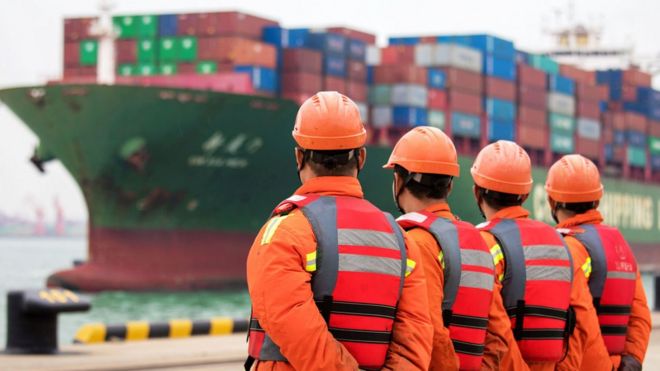
Men stand on a port in ChinaImage copyrightGETTY IMAGES

Chinese exports saw the steepest fall in three years in February, adding to worries about growth in the world’s second largest economy.

Official data show exports from China plunged 20.7% from a year earlier, as its trade war with the US took a toll.

Imports fell 5.2% and the figures sent Asia stock markets sharply lower.

Economists caution the data for the first two months of the year can be affected by the Lunar New Year holiday.

The fall in exports was far bigger than the 4.8% drop forecast in a Reuters poll of economists.

Imports also saw a sharper than expected fall of 5.2% year-on-year, the data showed.

Julian Evans-Pritchard, Senior China Economist at Capital Economics said even accounting for seasonal distortions, the figures were “downbeat”.

“Tariffs are weighing on shipments to the US,” he wrote in a research note.

The US and China have placed tariffs on billions of dollars worth of one another’s goods since July, casting a shadow over the global economy.

Even though officials have sounded more positive about negotiations with the US recently, failure to achieve a deal would see tariffs on $200bn (£152bn) of Chinese goods rise almost immediately and could see the US impose fresh tariffs.

Still, Mr Evans-Pritchard said “broader weakness in global demand means that, even if Trump and Xi finalise a trade deal soon, the outlook for exports remains gloomy.”

The data comes as Beijing this week unveiled $298bn worth of tax cuts to boost slowing growth.

Source: The BBC

25/02/2019

Railway trips hit record high in China Saturday

BEIJING, Feb. 24 (Xinhua) — Railway trips in China hit a record high as travelers returned to work after the Spring Festival break, data from the national railway operator showed.

On Saturday, some 13.17 million passenger trips were made by rail, a daily record for the travel rush, up 38.8 percent year on year, according to the China Railway Corporation (CRC).

On Sunday, 12.2 million railway trips are expected to be made as the travel rush continues, the CRC said.

Hundreds of millions of Chinese went back to their hometowns to celebrate the Chinese Lunar New Year with their families.

The annual travel rush around the festival (chunyun) often puts the transport system to the test.

As more trains have been put into operation, railway transport capacity improved by 5.3 percent this year during the travel rush, according to the CRC.

The Spring Festival travel rush started from Jan. 21 and will last till March 1, with railway trips expected to hit 413 million in total, up 8.3 percent.

Source: Xinhua

23/02/2019

China Airlines pilot punished after he’s filmed sleeping in cockpit

  • Middle-aged man seen taking a nap mid-flight said to be senior pilot with the Taiwanese carrier
  • His co-pilot who took the video has also been reprimanded

China Airlines pilot punished after he’s filmed sleeping in cockpit

23 Feb 2019

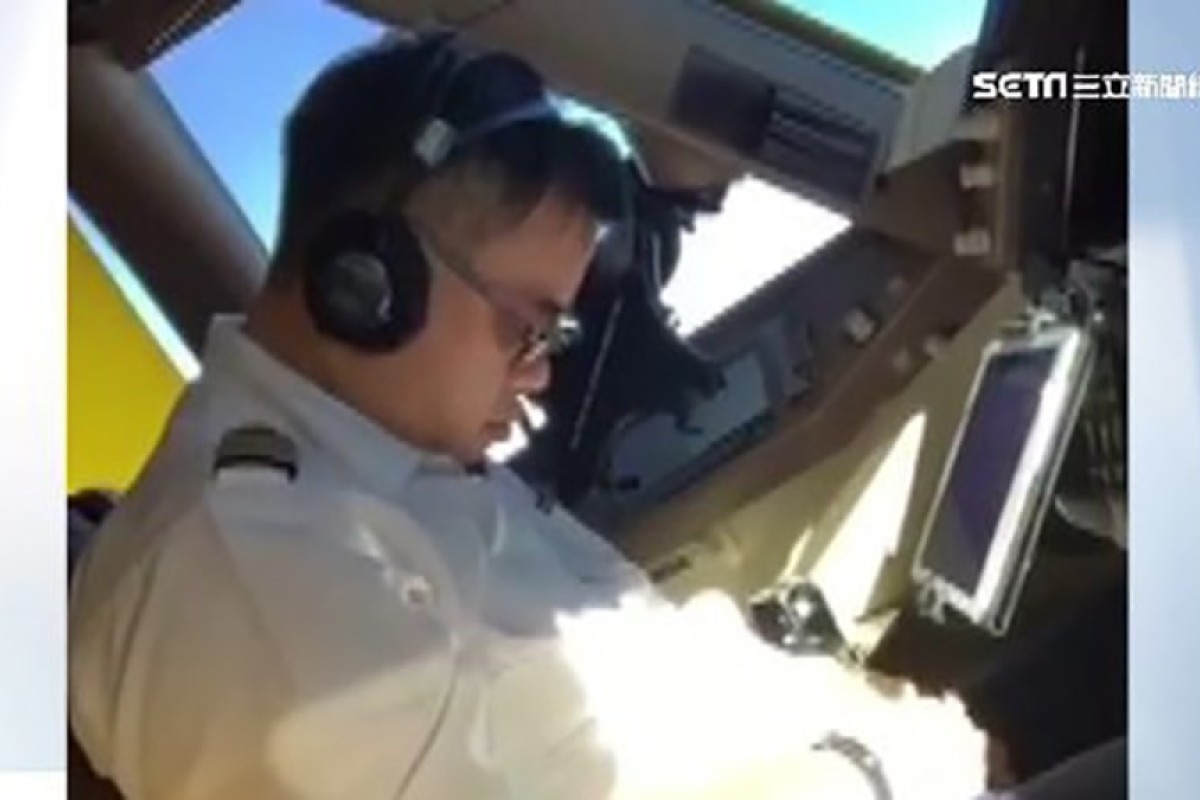
The video shows the pilot in the cockpit with his head down and eyes closed. Photo: setn.com

China Airlines, Taiwan’s biggest carrier, says it has punished a pilot after a video of him taking a nap in the cockpit mid-flight was posted online.

His co-pilot, who filmed the incident, has also been reprimanded, local television station SETN reported.

In the video, a middle-aged man in a pilot uniform and headphones appears to be asleep with his head down and eyes closed while in the cockpit of a Boeing 747.

The footage drew attention after it was shown in a report on Taiwanese TV network EBC on Wednesday. The man was identified as Weng Jiaqi, a senior pilot with almost 20 years of experience who was promoted to chief pilot last year.

Chinese airline Donghai suspends and fines pilot for allowing wife in cockpit

It was unclear when or on which flight the video was filmed, but the airline confirmed that Weng had reported his behaviour and been punished while his co-pilot had been reprimanded for “improper behaviour”, SETN reported.

Weng, who also supervises training, is a short-haul pilot to cities including Hong Kong, Shanghai, Beijing, Guangzhou, Tokyo, Okinawa and Seoul, according to the EBC report.

The China Airlines pilots went on strike on February 8, during the Lunar New Year holiday season. Photo: EPA-EFE
The incident comes after the airline last week reached a deal with the pilots’ union to

end a seven-day strike

over working conditions and benefits that forced the cancellation of more than 200 flights.

But China Airlines told EBC that the video was filmed before the pilots walked off the job.

The Taoyuan Union of Pilots began the industrial action on February 8, stranding close to 50,000 passengers and inflicting over NT$500 million (US$16.2 million) in losses on the carrier.

Under a deal signed on February 14, the union agreed not to strike again in the next 3½ years. In return, China Airlines agreed to the union’s main demand to increase the number of pilots on various flights to combat fatigue and improve safety.

Chinese pilots, cabin crew told no more smoking in cockpits on domestic flights

The carrier will roster three pilots on flights of more than eight hours – up from the present two – and will have four pilots on flights over 12 hours, up from three.

China Airlines president Hsieh Shih-chien said the staffing increases were expected to sharply add to the cost of the company’s operations, but the carrier agreed to the terms in the interest of safety.

Source: SCMP

13/02/2019

Variety of folk activities staged in China to mark lunar new year


#CHINA-FOLK DANCE-PERFORMANCE (CN)

Performers present folk dance at a temple fair in Luquan District of Shijiazhuang, north China’s Hebei Province, Feb. 11, 2019.

Source: Xinhua

10/02/2019

China border crossings up over Lunar New Year holiday – Xinhua

SHANGHAI (Reuters) – Border crossings into and out of China during the Lunar New Year holiday rose 11 percent to 12.53 million this year from the same 2018 period, the official Xinhua news agency reported on Sunday as the week-long holiday drew to a close.

More than 6.2 million arrivals were recorded, an increase of 9.5 percent, while there were over 6.3 million exits, up 12.5 percent, it said, citing data from the State Immigration Administration.

Chinese residents crossing the border for personal reasons made a combined 7.22 million entries and exits, an increase of nearly 16 percent over the previous year, Xinhua said.

The growth in border crossings during the country’s biggest holiday underscores the rise of Chinese tourism and comes in spite of a slowing economy.

Top overseas destinations for Chinese residents this Lunar New Year were Thailand, Japan, Vietnam, South Korea, Singapore, Malaysia, the United States, Hong Kong, Macau and Taiwan, Xinhua reported.

In 2017, Chinese people made 143 million international tourist trips and were the world’s biggest spenders on international tourism, the United Nations World Tourism Organization said.

The Lunar New Year holiday is one of China’s longest breaks and over 400 million people – more than a quarter of the population – had been expected to travel domestically for family reunions, according to Chinese travel agency Ctrip.

Source: Reuters

Law of Unintended Consequences

continuously updated blog about China & India

ChiaHou's Book Reviews

continuously updated blog about China & India

What's wrong with the world; and its economy

continuously updated blog about China & India