Chindia Alert: You’ll be Living in their World Very Soon
aims to alert you to the threats and opportunities that China and India present. China and India require serious attention; case of ‘hidden dragon and crouching tiger’.
Without this attention, governments, businesses and, indeed, individuals may find themselves at a great disadvantage sooner rather than later.
The POSTs (front webpages) are mainly 'cuttings' from reliable sources, updated continuously.
The PAGEs (see Tabs, above) attempt to make the information more meaningful by putting some structure to the information we have researched and assembled since 2006.
Excluded from the World Health Organisation on mainland China’s objections, Taipei said it dealt directly with organisation on outbreak
Beijing and the WHO say they ensured Taiwan was kept up to date with virus developments
Taiwan says it dealt directly with the WHO over the virus outbreak and did not need mainland China’s permission to do so. Photo: Getty Images
Taiwan’s presence at a World Health Organisation (WHO) meeting this week on the coronavirus outbreak that started in mainland China was the result of direct talks between the island and the body, and did not require Beijing’s permission, Taipei
said on Wednesday.
Its exclusion from WHO membership because of Chinese objections has been an increasingly sore point for Taiwan during the outbreak. It complained that it was unable to get timely information from the WHO and accused Beijing of passing incorrect information about Taiwan’s total virus case numbers, which stand at 18.
But in a small diplomatic breakthrough for the island – which mainland China regards as a wayward province – its health experts were this week allowed to attend an online technical meeting on the virus.
The Chinese foreign ministry said that was because Beijing gave approval for Taiwan’s participation. Taiwan foreign ministry spokeswoman Joanne Ou said China was trying to take credit for something it did not deserve.
Coronavirus: Taiwan restricts travellers from Hong Kong and Macau amid outbreak crisis
“The participation of our experts at this WHO forum was an arrangement made by our government and the WHO directly. It did not need China’s approval,” Ou said.
Taiwan’s experts took part in a personal capacity to avoid political disputes, and did not give their nationality when joining the online forum, she said.
Coronavirus: Everything you need to know in a visual explainer
Taiwan’s WHO exclusion became another point of contention between China and the United States last week, after the US ambassador to the UN in Geneva told the WHO’s executive board that the agency should deal directly with Taipei.
Mainland China, which said Beijing adequately represents Taiwan at the WHO, accused the US of a political “hype-up” about the issue.
Beijing and the WHO said they had ensured Taiwan was kept up to date with virus developments and that communication with the island was smooth.
Beijing insists that Taiwan cannot be part of the World Health Organisation as the island is part of “one China”. Photo: AFP
Taipei said that it alone had the right to represent the island’s 23 million people, that it has never been a part of the People’s Republic of China, and that it has no need to be represented by it.
BEIJING/SINGAPORE (Reuters) – China reported on Wednesday its smallest number of coronavirus cases since January, lending weight to a prediction by its top medical adviser for the outbreak to end by April, but a global infectious diseases expert warned of the spread elsewhere.
Financial markets took heart from the outlook of the Chinese official, epidemiologist Zhong Nanshan, who said on Tuesday the number of new cases was falling in some provinces, and forecast the epidemic would peak this month, even as the death toll in China rose to more than 1,100 people.
World stocks, which had seen rounds of sell-offs over the virus, surged to record highs on hopes of a peak in cases. The Dow industrials, S&P 500 and Nasdaq all hit new highs, and Asian shares nudged higher on Wednesday.
But the World Health Organization (WHO) has warned that the epidemic poses a global threat akin to terrorism and one expert coordinating its response said while the outbreak may be peaking at its epicentre in China, it was likely to spread elsewhere in the world, where it had just begun.
RELATED COVERAGE
Chess, squabbles aboard cruise ship cast away by coronavirus fears
Singapore’s DBS evacuates 300 staff after employee contracts coronavirus
See more stories
“It has spread to other places where it’s the beginning of the outbreak,” the official, Dale Fisher, head of the Global Outbreak Alert and Response Network coordinated by the WHO, said in an interview in Singapore.
“In Singapore, we are at the beginning of the outbreak.”
Singapore has reported 47 cases and worry about the spread is growing. Its biggest bank, DBS (DBSM.SI), evacuated 300 staff from its head office on Wednesday after a confirmed coronavirus case in the building.
Hundreds of cases have been reported in dozens of other countries and territories around the world, but only two people have died outside mainland China – one in Hong Kong and another in the Philippines.
WHO chief Tedros Adhanom Ghebreyesus said on Tuesday the world had to “wake up and consider this enemy virus as public enemy number one” and the first vaccine was 18 months away.
In China, total infections have hit 44,653, health officials said, including 2,015 new confirmed cases on Tuesday. That was the lowest daily rise in new cases since Jan. 30.
The number of deaths on the mainland rose by 97 to 1,113 by the end of Tuesday.
But doubts have been aired on social media about how reliable the figures are, after the government last week amended guidelines on the classification of cases.
‘STAY HOPEFUL’
The biggest cluster of cases outside China is aboard the Diamond Princess cruise ship quarantined off Japan’s port of Yokohama, with about 3,700 people on board. Japanese officials on Wednesday said 39 more people had tested positive for the virus, taking the total to 175.
One of the new cases was a quarantine officer.
Thailand said it was barring passengers from another cruise ship, MS Westerdam, from disembarking, the latest country to turn it away amid fears of the coronavirus, despite no confirmed infections on board.
“We try to stay hopeful,” American passenger Angela Jones told Reuters in a video recording. “But each day, that becomes a little bit more difficult, when country after country rejects us.”
Echoing the comparison with the fight against terrorism, China’s state news agency Xinhua said late on Tuesday the epidemic was a “battle that has no gunpowder smoke but must be won”.
The epidemic was a big test of China’s governance and capabilities and some officials were still “dropping the ball” in places where it was most severe, it said, adding: “This is a wake-up call.”
The government of Hubei, the central province at the outbreak’s epicentre, dismissed the provincial health commission’s Communist Party boss, state media said on Tuesday, amid mounting public anger over the crisis.
China’s censors had allowed criticism of local officials but have begun cracking down on reporting of the outbreak, issuing reprimands to tech firms that gave free rein to online speech, Chinese journalists said.
The pathogen has been named COVID-19 – CO for corona, VI for virus, D for disease and 19 for the year it emerged. It is suspected to have come from a market that illegally traded wildlife in Hubei’s capital of Wuhan in December.
The city of 11 million people remains under virtual lockdown as part of China’s unprecedented measures to seal infected regions and limit transmission routes.
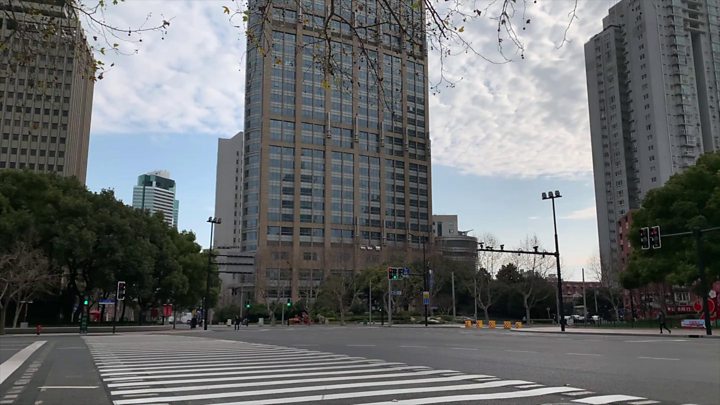
Travel restrictions that have paralysed the world’s second-biggest economy have left Wuhan and other Chinese cities resembling ghost towns.
Even if the epidemic ends soon, it has taken a toll of China’s economy, with companies laying off workers and needing loans running into billions of dollars to stay afloat. Supply chains for makers of items from cars to smartphones have broken down.
ANZ Bank said China’s first-quarter growth would probably slow to 3.2% to 4.0%, down from a projection of 5.0%.
The likely slowdown in China could shave 0.1 to 0.2 percentage points off both euro zone and British growth this year, credit rating agency S&P Global estimated.
Cathay Pacific is latest to wield axe, while Taiwan’s new restrictions on visitors from Hong Kong is another blow
More cancellations expected in the coming days as spread of deadly virus continues
The air industry in Hong Kong and beyond has been thrown into disarray by the coronavirus outbreak. Photo: Reuters
Hundreds more Hong Kong flights are set to be dropped as the floodgates open on airlines cancelling services during the city’s fight against the coronavirus.
Carriers based in Asia, Australia, South Africa and Middle East revealed on Friday morning and the previous night they would cut all or some of their flights to the city.
Cathay Pacific is the latest to wield the axe, announcing on Friday afternoon new suspensions of major Hong Kong routes to London, New York and across mainland China because of the virus.
Flights running on the busy route between Hong Kong and Taiwan’s capital Taipei are subject to major cuts. Photo: Shutterstock
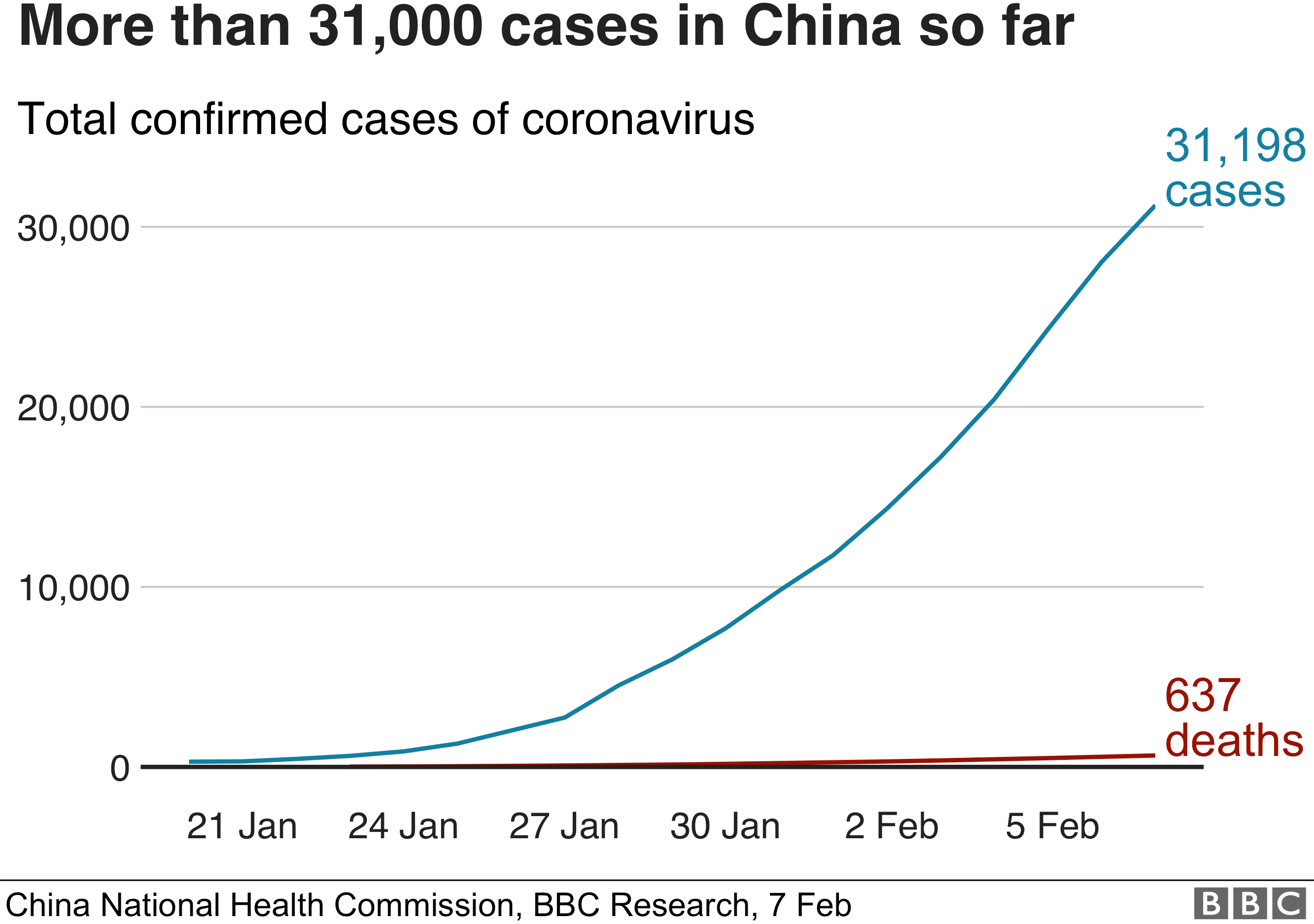
The contagion, which started in the central Chinese city of Wuhan, has infected more than 31,400 people, mostly in mainland China, killing more than 635. In Hong Kong, 24 people have been infected, one of those fatally, as of Friday afternoon.
Passengers abandoning travel plans en masse have been compounded by the introduction of entry restrictions across the world against recent visitors to mainland China, some targeting those who had been to Hong Kong.
Destinations suspended by Cathay Pacific until March 28 include London Gatwick, Rome, Washington DC, Newark, Male, Davao, Clark, Jeju and Taichung.
All mainland cities with the exception of Beijing, Shanghai, Chengdu and Xiamen would also be dropped over that period. The company said the decision was made “in view of the novel coronavirus outbreak and the subsequent drop in market demand”.
Hong Kong airport to segregate all flights to and from mainland China
7 Feb 2020
It followed Cathay Pacific Group revealing earlier this week there would be a 30 per cent reduction of flights across its worldwide schedule, as well as a 90% cut of mainland flights.
Budget carrier HK Express, controlled by Cathay, said on Thursday it would scrap 82 flights between February 12 and March 26, mostly to destinations such as Seoul and Osaka.
Hong Kong Airlines (HKA) at the same time revealed it would gradually impose even deeper cuts to flights it operated in mainland China and the rest of Asia until March 28.
The ailing carrier will suspend 10 routes and reduce flights on a further 15, amounting to an estimated 128 flights a week being axed. HKA has already cut 214 mainland Chinese flights between January 30 until February 11.
As Taiwan’s new restrictions took effect on Friday – ordering the home or hotel quarantine of anyone entering the self-ruled island who had visited Hong Kong or Macau within the previous 14 days – carriers based there slashed their schedules.
China Airlines would go from running 18 daily Hong Kong flights to just two from next week until March 28, according to Airline Route data published on Thursday.
Eva Air would switch from more than 11 daily flights to fewer than four a day for the rest of the month.
As health professionals treat coronavirus patients, global search for cures and vaccines accelerates
Eighty flights operate between Hong Kong and Taipei every week, a journey that regularly tops tables ranking the world’s busiest. But under the cuts to come more than half have already been scrapped.
Outside Asia, two airlines on Thursday cut ties with Hong Kong. The struggling Virgin Australia blamed the coronavirus and the anti-government protests that have gripped Hong Kong since June.
It concluded that “current circumstances demonstrate that Hong Kong is no longer a commercially viable route”.
The near-bankrupt South African Airways (SAA) has cancelled its route from Johannesburg amid a wholesale restructuring of the state-owned business. SAA had suspended flying to Hong Kong after November 21 last year amid the city’s civil unrest.
Hong Kong Airlines to axe 400 jobs as coronavirus adds to carrier’s cash woes
7 Feb 2020
Meanwhile, American Airlines said on Thursday it would restart flights between Dallas Fort Worth and Hong Kong on February 21, while Hong Kong’s Airport Authority extended the cancellation of its Los Angeles flight to the city until March 27.
The US carrier warned its schedules were subject to an ongoing “review”. Currently there is no US carrier flying to Hong Kong International Airport after United Airlines also withdrew all services until February 20.
Among the Middle East carriers, Emirates was halving its four daily Airbus A380 flights to Hong Kong from next week until March 28. Etihad is also making minor adjustments, Airline Route data showed on Thursday.
News of his death was met with an intense outpouring of grief on Chinese social media site Weibo – but this quickly turned into anger.
There had already been accusations against the government of downplaying the severity of the virus – and initially trying to keep it secret.
Dr Li’s death has fuelled this further and triggered a conversation about the lack of freedom of speech in China.
The country’s anti-corruption body has now said it will open an investigation into “issues involving Dr Li”.
The Chinese government has previously admitted “shortcomings and deficiencies” in its response to the virus, which has now killed 636 people and infected 31,161 in mainland China.
According to Chinese site Pear Video, Dr Li’s wife is due to give birth in June.
What has the public reaction been?
Chinese social media has been flooded with anger – it is hard to recall an event in recent years that has triggered as much grief, rage and mistrust against the government.
The top two trending hashtags on the website were “Wuhan government owes Dr Li Wenliang an apology” and “We want freedom of speech”.
Both hashtags were quickly censored. When the BBC searched Weibo on Friday, hundreds of thousands of comments had been wiped. Only a handful remain.
“This is not the death of a whistleblower. This is the death of a hero,” said one comment on Weibo.
A photo circulating on Twitter reportedly sourced from messaging platform WeChat also shows a message in Chinese saying “Farewell Li Wenliang” written in the snow on a riverbank.
Many have now taken to posting under the hashtag “Can you manage, do you understand?” – a reference to the letter Dr Li was told to sign when he was accused of disturbing “social order”.
These comments do not directly name him – but are telling of the mounting anger and distrust towards the government.
Media caption Coronavirus: Shanghai’s deserted streets and metro
“Do not forget how you feel now. Do not forget this anger. We must not let this happen again,” said one comment on Weibo.
“The truth will always be treated as a rumour. How long are you going to lie? What else do you have to hide?” another said.
“If you are angry with what you see, stand up,” one said. “To the young people of this generation, the power of change is with you.”
An epic political disaster
The death of Dr Li Wenliang has been a heart-breaking moment for this country. For the Chinese leadership it is an epic political disaster.
It lays bare the worst aspects of China’s command and control system of governance under Xi Jinping – and the Communist Party would have to be blind not to see it.
If your response to a dangerous health emergency is for the police to harass a doctor trying to blow the whistle, then your structure is obviously broken.
The city’s mayor – reaching for excuses – said he needed clearance to release critical information which all Chinese people were entitled to receive.
Now the spin doctors and censors will try to find a way to convince 1.4 billion people that Dr Li’s death is not a clear example of the limits to the party’s ability to manage an emergency – when openness can save lives, and restricting it can kill.
He was initially declared dead at 21:30 on Thursday (13:30GMT) by state media outlets the Global Times, People’s Daily and others.
Hours later the Global Times contradicted this report – saying he had been given a treatment known as ECMO, which keeps a person’s heart pumping.
Journalists and doctors at the scene said government officials had intervened – and official media outlets had been told to change their reports to say the doctor was still being treated.
But early on Friday, reports said doctors could not save Dr Li and his time of death was 02:58 on Friday.
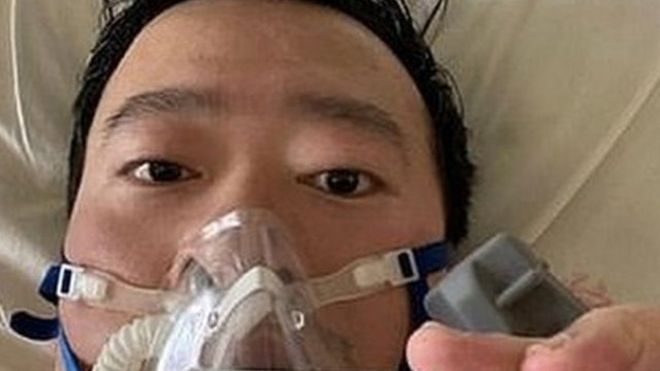
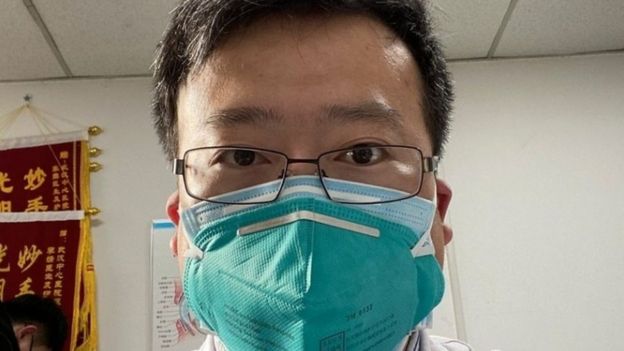
Image copyright LI WENLIANGImage caption Li Wenliang contracted the virus while working at Wuhan Central Hospital
What did Li Wenliang do?
Dr Li, an ophthalmologist, posted his story on Weibo from a hospital bed a month after sending out his initial warning.
He had noticed seven cases of a virus that he thought looked like Sars – the virus that led to a global epidemic in 2003.
On 30 December he sent a message to fellow doctors in a chat group warning them to wear protective clothing to avoid infection.
Four days later he was summoned to the Public Security Bureau where he was told to sign a letter.
In the letter he was accused of “making false comments” that had “severely disturbed the social order”. Local authorities later apologised to Dr Li.
In his Weibo post he describes how on 10 January he started coughing, the next day he had a fever and two days later he was in hospital. He was diagnosed with the coronavirus on 30 January.
Media caption The BBC’s online health editor on what we know about the virus
Singapore has raised its Disease Outbreak Response System Condition (Dorscon) level from yellow to orange. This means that the disease is deemed severe and spreads easily from person to person but has not spread widely and is being contained
Chinese President Xi Jinping has told his US counterpart Donald Trump that China is “fully confident and capable of defeating the epidemic”. The country has introduced more restrictive measures to try to control the outbreak:
The capital Beijing has banned group dining for events such as birthdays. Cities including Hangzhou and Nanchang are limiting how many family members can leave home each day
Hubei province has switched off lifts in high-rise buildings to discourage residents from going outside.
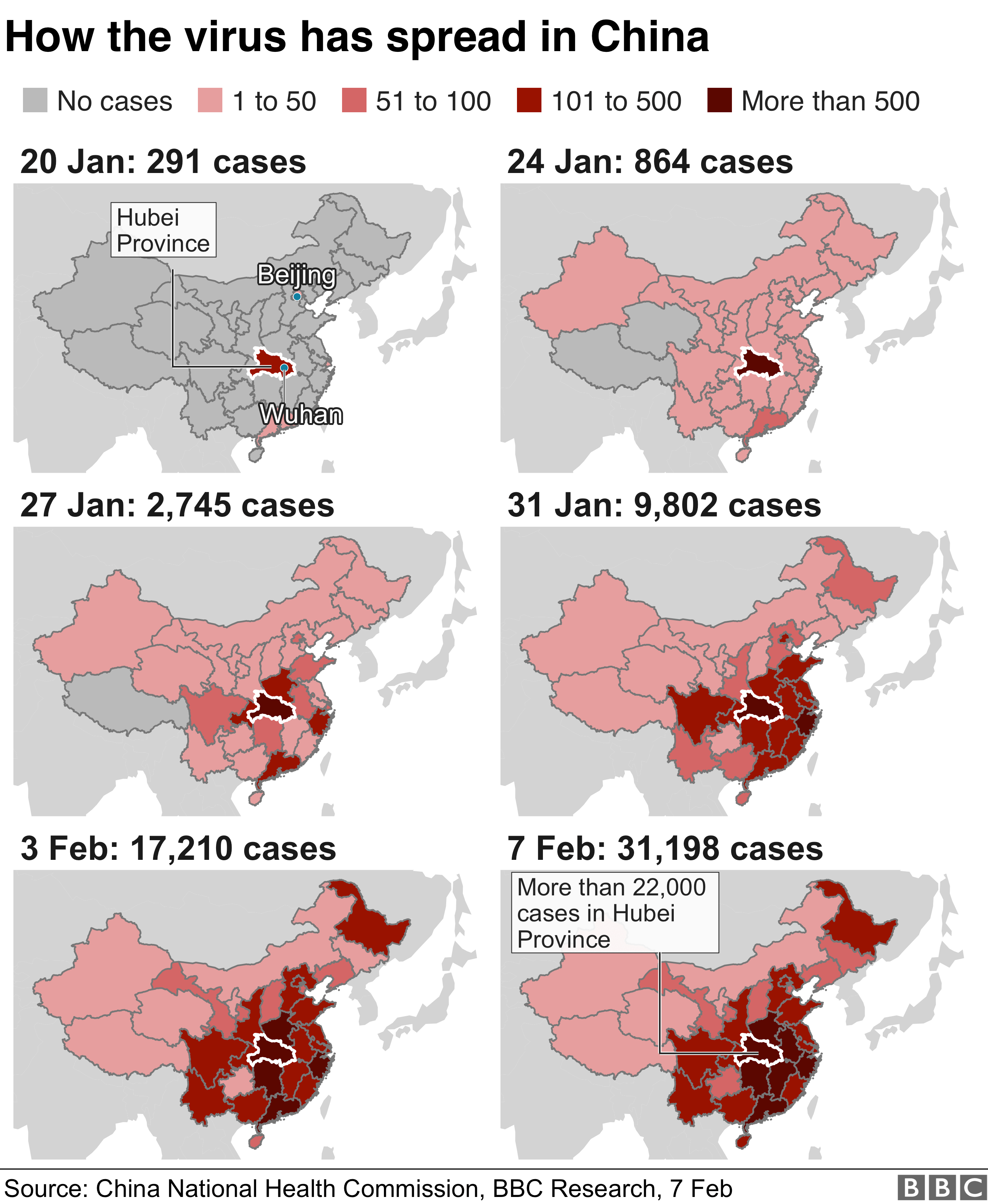
The virus has now spread to more than 25 countries. There have been more than 28,000 cases worldwide but only two of the deaths have been outside mainland China.
BEIJING (Reuters) – The death toll from China’s coronavirus outbreak jumped on Saturday to 41 as the Lunar New Year got off to a gloomy start, with Hong Kong declaring a virus emergency, scrapping celebrations, and restricting links to mainland China.
Australia on Saturday confirmed its first four cases, Malaysia confirmed three and France reported Europe’s first cases on Friday, as health authorities around the world scrambled to prevent a pandemic.
Hong Kong leader Carrie Lam on Saturday declared a virus emergency in the Asian financial hub, with five confirmed cases, immediately halting official visits to mainland China and scrapping official Lunar New Year celebrations.
Inbound and outbound flights and high speed rail trips between Hong Kong and Wuhan, the epicentre of the outbreak, would be halted, and schools, now on Lunar New Year holidays, would remain shut until Feb. 17. The territory was also treating 122 people suspected of having the disease.
RELATED COVERAGE
U.S. to evacuate its citizens from Wuhan, China – WSJ
China’s President Xi holds politburo meeting on curbing virus outbreak – state TV
The death toll in China rose to 41 on Saturday from 26 a day earlier and more than 1,300 people have been infected globally with a virus traced to a seafood market in the central city of Wuhan that was illegally selling wildlife.
Hu Yinghai, deputy director-general of the Civil Affairs Department in Hubei province, where Wuhan is located, made an appeal on Saturday for masks and protective suits. Hospitals in the city have made similar pleas.
“We are steadily pushing forward the disease control and prevention … But right now we are facing an extremely severe public health crisis,” he told a news briefing.
Vehicles carrying emergency supplies and medical staff for Wuhan would be exempted from tolls and given traffic priority, China’s transportation ministry said on Saturday.
Wuhan said it would ban non-essential vehicles from its downtown starting Sunday to control the spread of the virus, further paralysing a city of 11 million that has been on virtual lockdown since Thursday, with nearly all flights cancelled and checkpoints blocking the main roads leading out of town.
Authorities have since imposed transport restrictions on nearly all of Hubei province, which has a population of 59 million.
In Australia, three men, aged 53, 43 and 35 in New South Wales were in stable condition after they were confirmed to have the virus after returning from Wuhan earlier this month.
A Chinese national in his 50s, who had been in Wuhan, was also in stable condition in a Melbourne hospital after arriving from China on Jan. 19, Victoria Health officials said.
State-run China Global Television Network reported in a tweet on Saturday that a doctor who had been treating patients in Wuhan, 62-year-old Liang Wudong, had died from the virus.
Police officers stand guard in front of the closed gate of Lama Temple where a notice saying that the temple is closed for the safety concern following the outbreak of a new coronavirus is seen, in Beijing, China January 25, 2020. REUTERS/Carlos Garcia Rawlins
It was not immediately clear if his death was already counted in the official toll of 41, of which 39 were in the central province of Hubei, where Wuhan is located.
U.S. coffee chain Starbucks said on Saturday that it was closing all its outlets in Hubei province for the week-long Lunar New Year holiday, following a similar move by McDonald’s in five Hubei cities.
PROTECTIVE SUITS
In Beijing on Saturday, workers in white protective suits checked temperatures of passengers entering the subway at the central railway station, while some train services in eastern China’s Yangtze River Delta region were suspended, the local railway operator said.
The number of confirmed cases in China stands at 1,287. The virus has also been detected in Thailand, Vietnam, Singapore, Japan, South Korea, Taiwan, Nepal, and the United States.
The U.S. Centers for Disease Control and Prevention said on Friday it had 63 patients under investigation, with two confirmed cases. While China has called for transparency in managing the crisis, after cover-up of the 2002/2003 Severe Acute Respiratory Syndrome spread, officials in Wuhan have come in for criticism over their handling of the current outbreak.
In rare public dissent, a senior journalist at a Hubei provincial newspaper run by the ruling Communist Party on Friday called for a “immediate” change of leadership in Wuhan on the Twitter-like Weibo. The post was later removed.
REINFORCEMENTS TO WUHAN
The World Health Organization (WHO) declared the new coronavirus an “emergency in China” this week but stopped short of declaring it of international concern.
Human-to-human transmission has been observed in the virus.
China’s National Health Commission said it had formed six medical teams totalling 1,230 medical staff to help Wuhan.
Hubei province, where authorities are rushing to build a 1,000 bed hospital in six days to treat patients, announced on Saturday that there were 658 patients affected by the virus in treatment, 57 of whom were critically ill.
The newly-identified coronavirus has created alarm because there are still many unknowns surrounding it, such as how dangerous it is and how easily it spreads between people. It can cause pneumonia, which has been deadly in some cases.
Symptoms include fever, difficulty breathing and coughing. Most of the fatalities have been in elderly patients, many with pre-existing conditions, the WHO said.
NEW YEAR DISRUPTIONS
Airports around the world have stepped up screening of passengers from China, though some health officials and experts have questioned the effectiveness of such screenings.
There are fears the transmission could accelerate as hundreds of millions of Chinese travel during the week-long Lunar New Year holiday, which began on Saturday, although many have cancelled their plans, with airlines and railways in China providing free refunds.
The virus outbreak and efforts to contain it have put a dampener on what is ordinarily a festive time of year.
Sanya, a popular resort destination on the southern Chinese island of Hainan, announced that it was shutting all tourist sites, while the island’s capital city, Haikou, said visitors from Wuhan would be placed under 14-day quarantine in a hotel.
Shanghai Disneyland was closed from Saturday. The theme park has a 100,000 daily capacity and sold out during last year’s Lunar New Year holiday.
Beijing’s Lama Temple, where people traditionally make offerings for the new year, has also closed, as have some other temples.
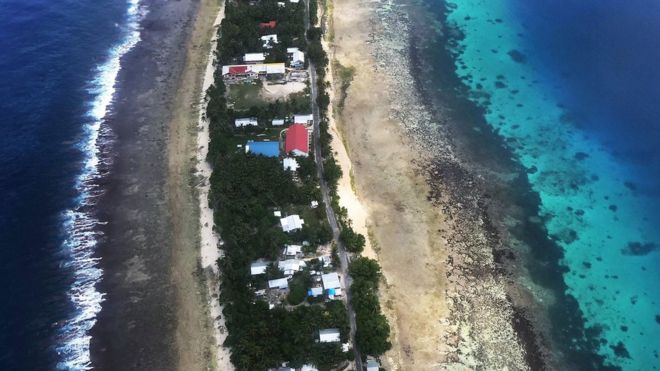
Image copyrightGETTY IMAGESImage captionTuvalu is battling rising sea levels
The tiny South Pacific nation of Tuvalu has rejected offers from Chinese firms to build artificial islands that would help it deal with rising sea levels, its foreign minister says.
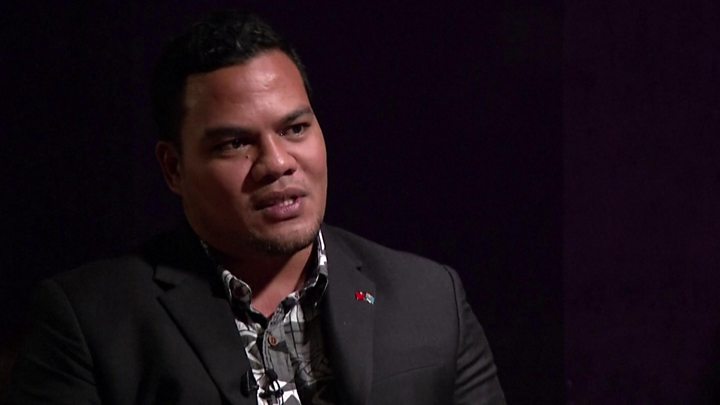
Simon Kofe told Reuters he saw the offers as an attempt to reduce Taiwan’s influence in the region.
But he instead reaffirmed his country’s support for Taiwan.
China has increased efforts to expand its influence in the Pacific, alarming the United States and its allies.
Only 15 countries recognise Taiwan as a sovereign nation and have full diplomatic relations. A number of countries have switched their allegiance from Taiwan to China in recent years.
China refuses to have diplomatic relations with any country that recognises Taiwan.
In recent months Taiwan lost two allies in the region, when Kiribati and the Solomon Islands switched diplomatic recognition to China. Beijing has been accused of luring them in with the promise of financial aid and airplanes.
Media caption Tuvalu’s foreign minister discusses increasing pressure from China
Mr Kofe expressed his backing for Taiwan and said his nation was setting up a group to unite Taiwan’s four remaining Pacific allies – the Marshall Islands, Palau, Nauru and Tuvalu.
“We believe in the power of grouping together and collaborating,” he told Reuters news agency.
“Together with our partners, we will be able to counter the influence from mainland China.”
Mr Kofe said Chinese companies had approached local communities offering to help with a $400m (£310m) government plan to build artificial islands. He believes the companies were backed by the Chinese government.
“We are hearing a lot of information about debt,” he said. “China buying our islands and looking at setting up military bases in our part of the world. Those are things that are concerning to us.”
Beijing has proposed Taiwan operate under a “one country, two systems” structure, similar to Hong Kong.
Since Taiwan President Tsai Ing-wen took office in 2016, seven countries have dropped Taiwan as a diplomatic ally. The support from Tuvalu could help her as she seeks re-election in January.
Remains of two of river’s estimated 1,012 porpoises found in less than a week
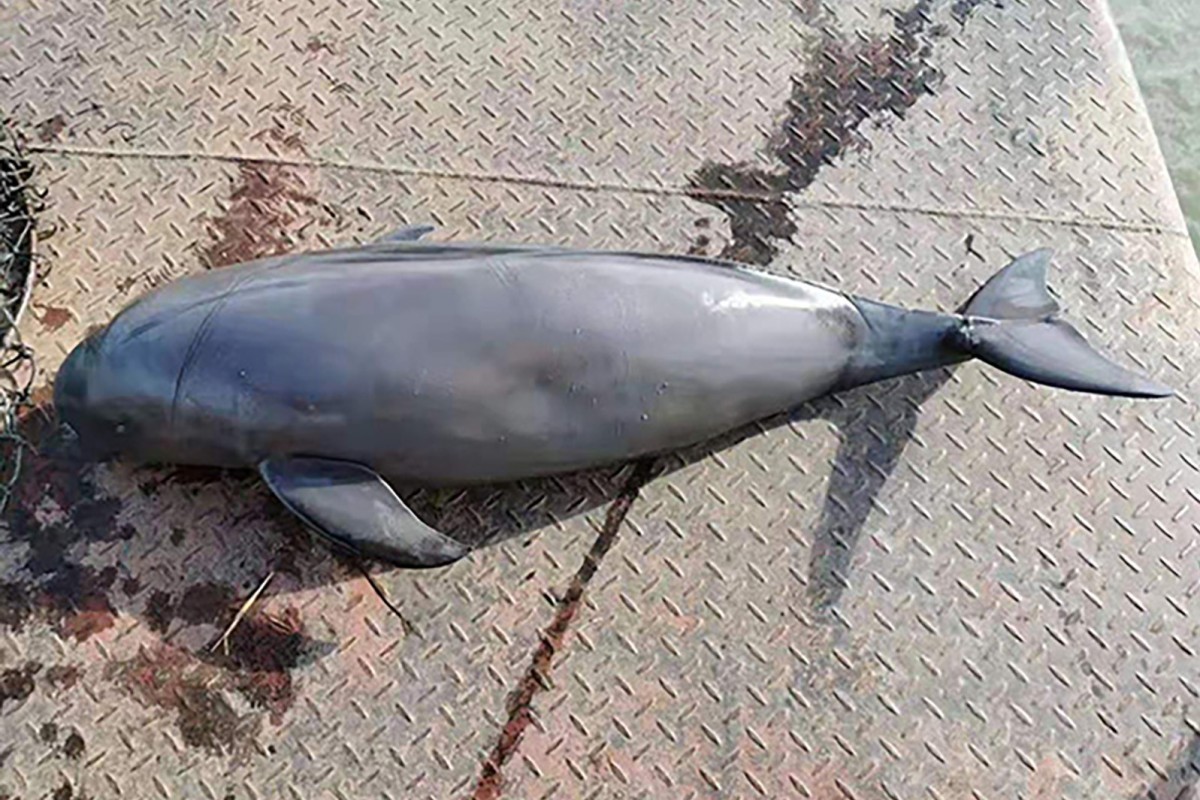
The finless porpoise found dead in the Yangtze River in Hubei on Monday was the second fatality in a week. Photo: 163.com
Two endangered finless porpoises have been found dead in the Yangtze River in the space of a week, according to mainland Chinese media reports.
One was found on Monday in Jiayu county, central Hubei province, four days after the remains of another were recovered from Dongting Lake, a tributary of the Yangtze in central Hunan province, news website Thepaper.cn reported.
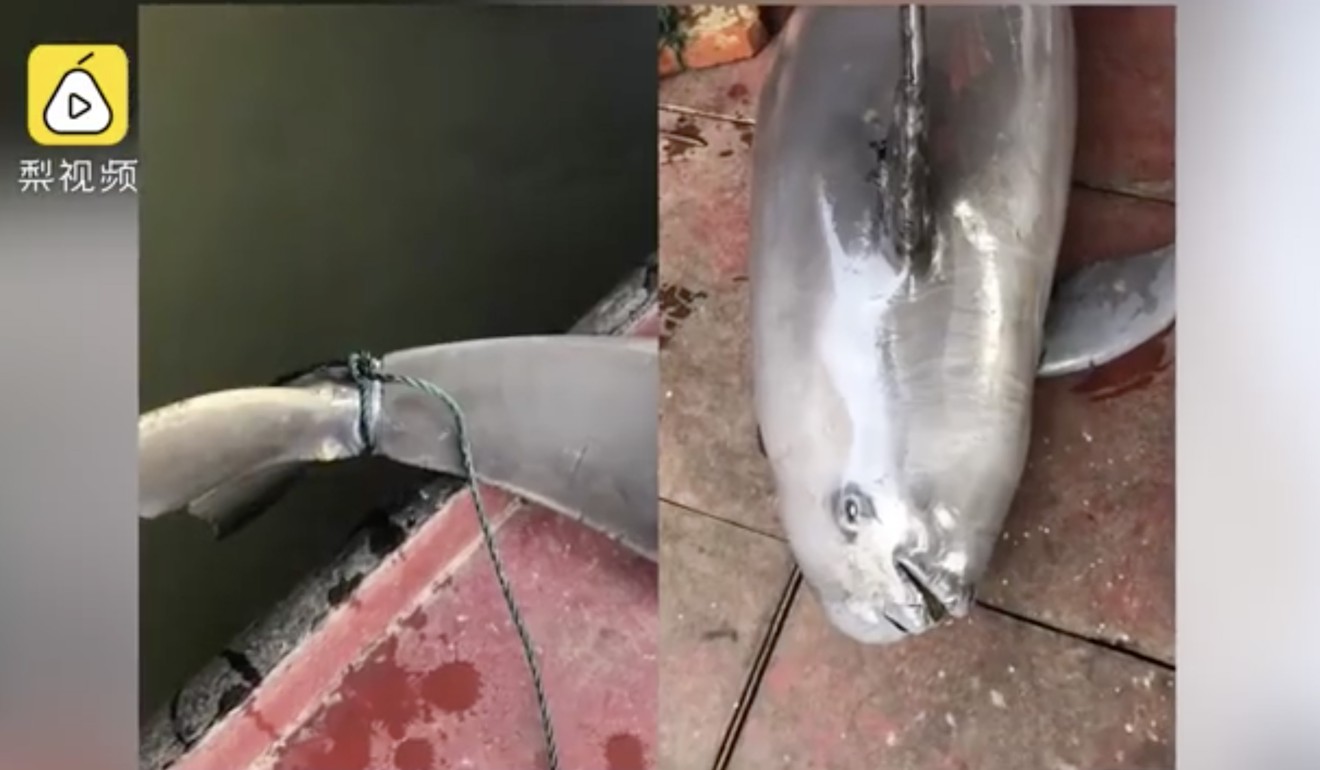
The Dongting Lake carcass was tied with a rope and weighted with bricks, and authorities in Hunan said the creature became tangled in a fishing net. The Hubei death is under investigation.
The Yangtze’s finless porpoises are “extremely endangered”, the Ministry of Agriculture and Rural Affairs said in a 2016 action plan to protect the species. Last year, vice-minister Yu Kangzhen said surveys showed there were about 1,012 of the animals in the river.
The tail of a dead finless porpoise pulled from Dongting Lake in Hunan appears to have been tied to weights. Photo: Pear Video
In 2017, China raised its protection for the mammals to its highest level because of the critical dangers they faced. Experts said that as the river’s “flagship” species, the porpoise was an indicator for the Yangtze’s ecology.
The porpoise discovered in Hubei was small and it had suffered superficial wounds, investigators were quoted as saying. They estimated that it was found soon after its death.
Xiaoxiang Morning Post quoted fisheries authorities in Yueyang, near Dongting Lake, as saying the porpoise in Hunan was found with weights around its tail.
Two porpoise carcasses found on separate Hong Kong shores
Officials said the fishermen who set the net feared they would be blamed for the creature’s death and tied bricks to its tail to sink it.
Other fishermen who witnessed the incident told the authority, leading to the discovery of the body, the report said. The investigation is ongoing and the suspects are still at large.
A fishing authority spokesman told the newspaper that the porpoise’s death showed the difficulty of balancing conservation with the livelihoods of fishermen.
“It’s difficult to figure out a good model to protect the porpoises without affecting fishermen’s business,” he said.
In mainland China, finless porpoises are referred to as “giant pandas in water” because of their endangered status. Their numbers fell from 2,700 in 1991 to 1,800 in 2006, and there were 1,045 finless porpoises in 2012, according to agriculture ministry data.
Mainland social media users come out in strong support for the officer, compounding extensive coverage of vandalism of businesses with ties across the border
Hong Kong’s police force has gained support from online commenters on the mainland. Photo: Nora Tam
As Monday morning’s police shooting of a protester triggered a wave of shock and outrage in Hong Kong, across the border in mainland China, the response online was just as swift – but in support of the force.
“Support Hong Kong police opening fire! Clean up Hong Kong’s cockroaches!” one popular financial blogger on Weibo, China’s Twitter-like platform, said as he shared footage of the incident.
In the video, an officer grapples with a protester and points his gun towards another approaching protester. The second protester reaches out towards the gun, the officer dodges, steps back and shoots him in the torso.
“It feels great [to watch]! Kill them all, these trash and tumours of society,” a Weibo user replied to the video, with a thumbs-up emoji.
“Hongkong’s loser youth, [police] should totally open fire!! It would be best to shoot them in the head,” another post read.
These comments, and many others like them flooding social media in mainland China, highlight the deep divisions in views on each side of the border as Hong Kong’s political crisis drags into its sixth month.
Despite some initial sympathy, mainland public sentiment towards Hong Kong has hardened since July, amid state propaganda painting the protesters as a separatist movement plotted by “Western black hands”.
In recent weeks, the rancour from the mainland has only appeared to deepen, with photos and videos of protesters vandalising businesses with ties to the mainland spreading online.
Last month, a mainland Chinese banker was assaulted in a confrontation with protesters during his lunch break in Central, drawing the wrath of many mainlanders and renewed online calls for military intervention.
Extensive media coverage of the vandalism and attack, as well as a series of inflammatory commentaries, have further fanned the anger.
On Monday, the social media account of state-run Beijing Daily ran the story of the shooting under the headline: “This morning, a gunshot in Hong Kong, to the applause of citizens!”
“At such a critical moment, the police officer acted so bravely and restrained,” the report said.
“After the police fired the shot and subdued the rioters, some citizens at the scene directly applauded the police. The reaction of the public directly shows that the officer fired not only in a legal and reasonable way, but also in line with the will of the people.”
In the video, a man in a dark blue jumper claps his hands at a nearby traffic light, as police officers pin the protesters to the ground.
The Beijing Daily report did not refer to angry bystanders condemning the officers as “murderers”.
Hong Kong police officer who shot protester receives death threats against children after personal details released online, force says
Hu Xijin, editor-in-chief of nationalist tabloid Global Times, and a regular – and hugely popular – commentator on Hong Kong’s unrest, also weighed in.
“As a media worker, I resolutely support this Hong Kong police officer gunning down the attacking rioters,” he wrote to his 2 million fans on Weibo in a post that included video of the shooting.
Hu accused Hong Kong and Western media of “focusing their coverage on the police shooting and diluting the illegal, criminal and evil deeds of the rioters”.
“Such guiding of public opinion is disgusting,” he wrote.
Hu ended his post with a message to Hong Kong police: “Don’t you be afraid of anything, resolutely defend Hong Kong’s law and order, be strong and be tough. You’re not alone on the front lines. Behind you there are not only the [patriotic] Hong Kong public and the nation, but also the country’s paramilitary police and the People’s Liberation Army Hong Kong garrison, who can enter Hong Kong and offer support in accordance with the Basic Law when needed.”
The post was liked more than 26,000 times in six hours.
Scores of Chinese students flee Hong Kong over fears they will be attacked as anti-mainland sentiment sweeps through protesters in city
Meanwhile, Taiwanese President Tsai Ing-wen called on the Hong Kong government to give a detailed response to the Hong Kong people’s calls for democracy and freedom, which she described as “the only path to return to stability and order”.
“Governments should not fire upon unarmed people, this will only exacerbate the problem,” she wrote on her official Facebook account. “Beijing and the Hong Kong government should respond to the Hong Kong people, not with bullets but with the promise of democracy and freedom.”
Taipei’s Mainland Affairs Council, which oversees the island’s policies on Beijing, called on all sides to give up their arms and aggressive actions to make way for peaceful conversation.
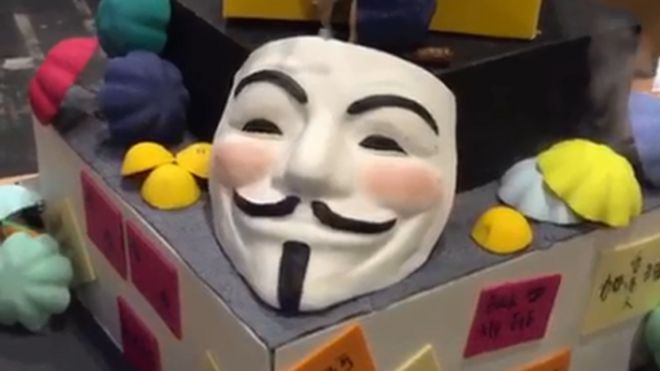
Image copyright 3RD SPACEImage caption The Guy Fawkes mask has been worn by many protesters during anti government rallies
A Hong Kong protest-themed cake has been disqualified from a cake decorating competition in the UK, in a move that has been referred to as “political censorship”.
It featured protest symbols including umbrellas and a Guy Fawkes mask.
The company behind the cake told the BBC it believed it was pulled after complaints from Chinese competitors.
But the Birmingham competition organisers said it was because one element of the cake was oversized.
Anti-government protests have been taking place in Hong Kong for five months.
They first erupted in June, triggered by a controversial bill that would have allowed extradition to mainland China.
The bill has been withdrawn but the protests have continued, having evolved into a broader revolt against the way Hong Kong is administered by Beijing.
‘Obvious it was an excuse’
The cake was one of many displayed this year at the Cake International competition, held in the city of Birmingham from 1- 3 November.
It draws competitors from all over the world.
The entry by a baker from the 3rd Space cafe in Hong Kong included fake tear gas and a figure made to look like a typical protester clad in black and wearing a hard hat.
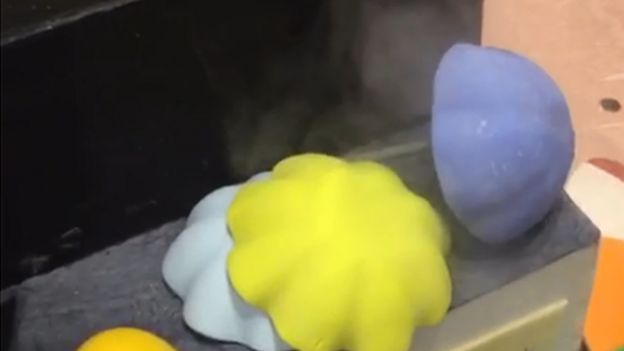
Image copyright 3RD SPACEImage caption A man in a yellow hard hat, carrying an umbrella, was one element of the cakeImage copyright 3RD SPACEImage caption The cake also had umbrellas which had fake “tear gas” coming out of them
It was inspired by the “streets [of] Hong Kong”, the spokesperson for the cafe told the BBC.
“The design was simply an expression of what is happening at the moment in Hong Kong,” the spokesperson added.
A music box placed inside the cake also played “Glory to Hong Kong”- a tune which has been adopted as the unofficial anthem of the protests – on loop.
But according to 3rd Space, Cake International decided to take action after it received numerous “complaints from Chinese candidates”, who said the cake featured “offensive content… promoting [the] independence of Hong Kong”.
Cake International first decided to turn the music off, before later sending the baker an email telling them that the cake would be “removed”, said 3rd space.
Dozens of people later took to Cake International’s social media platforms complaining, accusing the organisers of pandering to “censorship”.
The protests have presented a serious challenge to China’s leaders, who have painted the demonstrators as dangerous separatists and accused foreign powers of backing them.
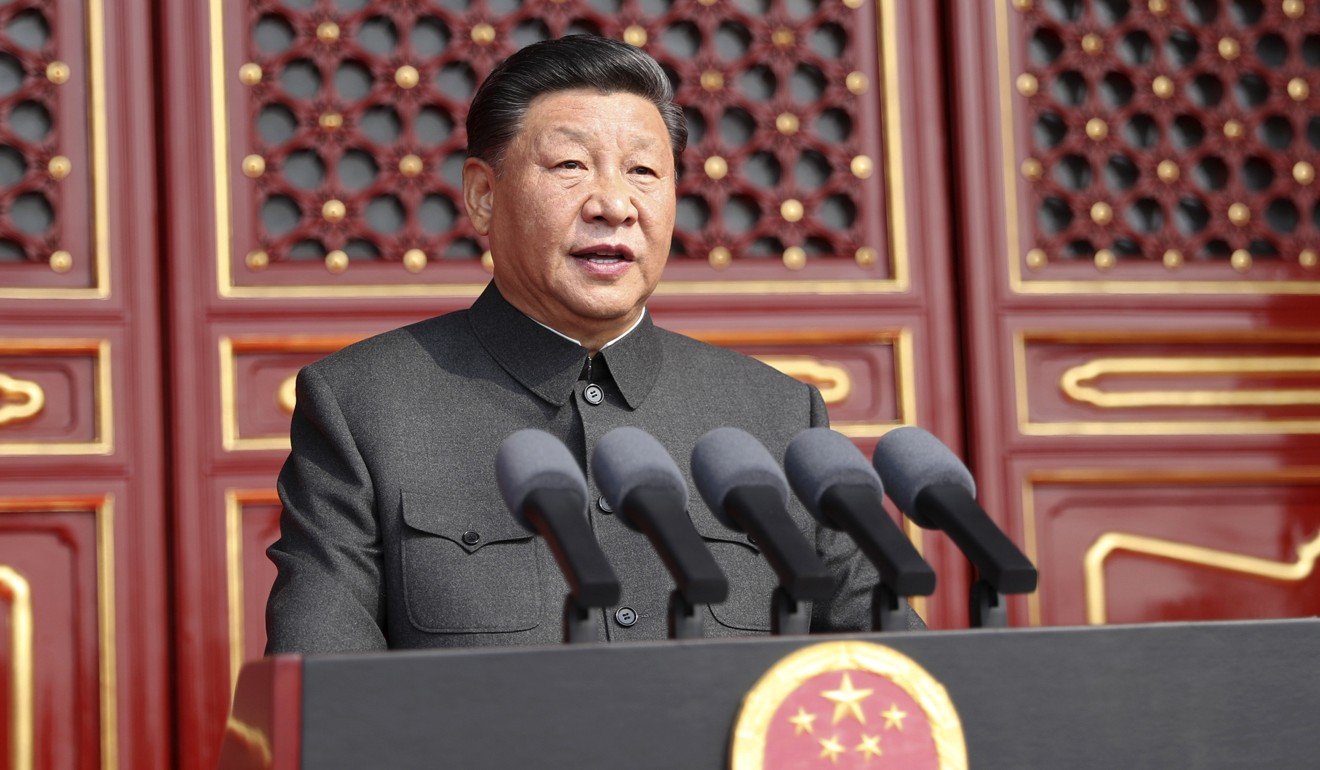
on Saturday reiterated his promise to keep opening up the nation’s markets to companies and investors from around the world.
“The door of China’s opening up will only open wider and wider, the business environment will only get better and better, and the opportunities for global multinational companies will only be more and more,” he said in a congratulatory letter read out by Vice-Premier Han Zheng at the inaugural Qingdao Multinationals Summit in the east China city.
The two-day event, which ends on Sunday, was organised by China’s commerce ministry and the provincial government of Shandong with the aim, according to its website, of giving multinational companies “the opportunity to articulate their business values and vision” and “promote cooperation with host countries”.
In his letter, Xi praised multinational companies for the role they had played in China’s opening up and reform over the past four decades, describing them as “important participants, witnesses and beneficiaries”.
China was willing to continue opening up to benefit not only itself but the world as a whole, he said.
“Only when the world is good, China is good. Only when China is good, can the world get better.”
Despite its upbeat tone, Xi’s message comes as Beijing is facing intense scrutiny from the international business community over its state-led economic model – one of the main bones of contention in its trade war with the US – and its attempts to prevent foreign firms from speaking out on issues it deems too sensitive, from Hong Kong to human rights.
Foreign firms have also long complained about the barriers they face when trying to access China’s markets and the privileged treatment it gives to state-owned enterprises. Even though Beijing has promised to reform its state sector, foreign businesses have complained of slow progress, and just last month the European Union Chamber of Commerce urged the EU to take more defensive measures against China’s “resurgent” state economy.
Xi promised “more and more” opportunities for global firms. Photo: AP
Sheman Lee, executive director of Forbes Global Media Holding and CEO of Forbes China, said at the Qingdao summit that foreign firms were facing a difficult trading environment in the world’s second-largest economy.
“Multinationals have seen their growth in China slow in recent years because of the growing challenge from local firms, a gradually saturating market and rising operation costs,” he said.
Craig Allen, president of the US-China Business Council, said that many multinational companies were reluctant to release their best products in China out of fear of losing their intellectual property.
China still not doing enough to woo foreign investment
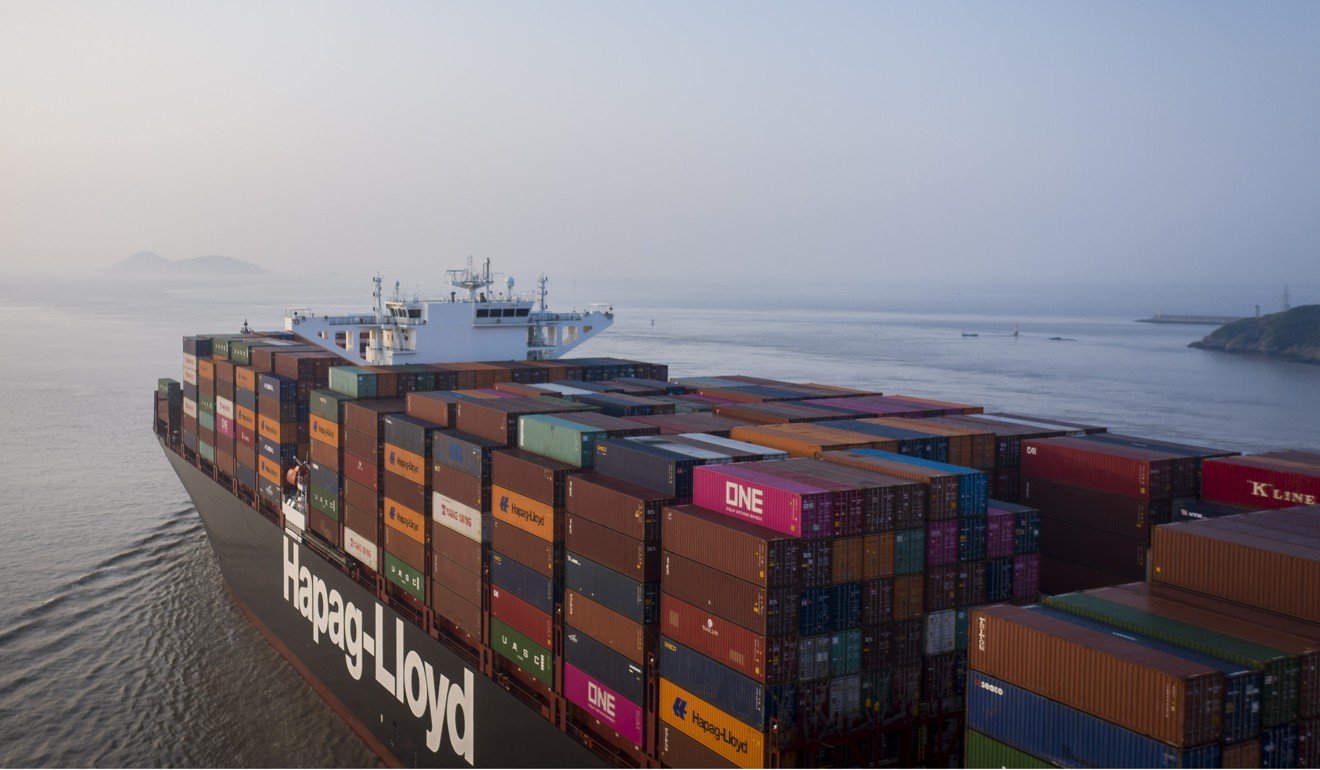
In his letter, Xi said that over the next 15 years, the value of China’s annual imports of goods would rise beyond US$30 trillion, while the value of imported services would surpass US$10 trillion a year, creating major opportunities for multinational companies.
China would also reduce tariffs, remove non-tariff barriers and speed up procedures for customs clearance, he said.
Commerce Minister Zhong Shan said at the opening ceremony that China would also continue to improve market access and intellectual property protection.
The country supported economic globalisation and would safeguard the multilateral trade system, he said, adding that it was willing to work with the governments of other countries and multinational corporations to promote economic globalisation.
Xi Jinping says the value of China’s annual goods imports will rise beyond US$30 trillion over the next 15 years. Photo: Bloomberg
The promise to continue to open up China’s markets came after the State Council
– the nation’s cabinet – made exactly the same pledge at its weekly meeting on Wednesday.
After the latest round of trade war negotiations in Washington, Beijing said it had achieved “substantive progress” on intellectual property protection, trade cooperation and technology transfers, all of which have been major bones of contention for the United States.
Despite its pledge to welcome multinational companies into its market, China is in the process of creating a list of “unreliable foreign entities” it considers damaging to the interests of Chinese companies. The roster, which is expected to include FedEx, is seen as a response to a similar list produced earlier by the United States.
Xi’s gesture would also appear to have come too late for South Korean multinational
, which announced on October 4 it had ended the production of smartphones at its factory in Huizhou, Guangdong province – its last in China – with the loss of thousands of jobs.














 CHINDIA ALERT: You'll be living in their world, very soon