Chindia Alert: You’ll be Living in their World Very Soon
aims to alert you to the threats and opportunities that China and India present. China and India require serious attention; case of ‘hidden dragon and crouching tiger’.
Without this attention, governments, businesses and, indeed, individuals may find themselves at a great disadvantage sooner rather than later.
The POSTs (front webpages) are mainly 'cuttings' from reliable sources, updated continuously.
The PAGEs (see Tabs, above) attempt to make the information more meaningful by putting some structure to the information we have researched and assembled since 2006.
Image copyright AFPImage caption Embankments have been washed away in Bangladesh
Millions of people across Bangladesh and eastern India are taking stock of the devastation left by Cyclone Amphan.
A massive clean-up operation has begun after the storm left 84 dead and flattened homes, uprooted trees and left cities without power.
India’s Prime Minister Narendra Modi has arrived in West Bengal state to conduct an aerial survey.
Authorities in both countries had evacuated millions of people before the storm struck.
Covid-19 and social-distancing measures made mass evacuations more difficult, with shelters unable to be used to full capacity.
Officials also said people were afraid and reluctant to move to shelters for fear of contracting the virus.
The cyclone arrived with winds gusting up to 185km/h (115mph) and waves as high as 15ft.
Image copyright REUTERSImage caption Roads have been blocked by falling trees in BangladeshImage copyright AFPImage caption Many people have been injured in wall collapses in Bengal
It is the first super cyclone to form in the Bay of Bengal since 1999. Though its winds had weakened by the time it struck, it was still classified as a very severe cyclone.
Three districts in India’s West Bengal – South and North 24 Parganas and East Midnapore – were very badly hit.
In Bangladesh, there are reports of tens of thousands of homes damaged or destroyed and many villages submerged by storm surges in low-lying coastal areas like Khulna and Satkhira.
The affected areas include the Sunderbans, mangroves spread over an area of more than 10,000 square kilometres that spans both India and Bangladesh – the swampy islands are home to more than four million of the world’s poorest people.
Image copyright MUKTIImage caption Many homes, built of brick and mud, have been washed away
Those in the Sunderbans say it is too early to estimate casualties in the area, which is now cut-off from the mainland by the storm.
“There are houses which have collapsed and people could be trapped in them but we don’t know yet,” Debabrat Halder, who runs an NGO in one of the villages, told the BBC.
He recalls cyclone Bulbul in November 2019, which was followed by a huge incidence of fever, diarrhoea and flu, and is afraid that that the same may happen again.
And worse, he adds, is that the flooding from contaminated sea water, has likely destroyed the soil.
“Nothing will grow in this soil,” he says, adding that it will likely take years to convert it into fertile land again.
Image copyright MUKTIImage caption The Sunderbans delta is frequently hit by severe stormsImage copyright MUKTIImage caption Crops have all been destroyed by the flooding
Kolkata, the capital of West Bengal, and one of India’s biggest cities has been devastated. Its roads are flooded and the city was without power for more than 14 hours.
The state’s chief minister, Mamata Banerjee, said the devastation in Kolkata was “a bigger disaster than Covid-19”.
But assessment of the damage is being hampered by blocked roads and flooding in all these areas.
WASHINGTON, Aug. 8 (Xinhua) — Chinese scientists discovered the oldest fossil forest in Asia, lending more clues to how those ancient plants evolved to become coal finally.
The study published on Thursday in the journal Current Biology reported the largest example of a patch of forest that grew in the Devonian period, which was 419 million to 359 million years ago.
It was made up of 250,000 square meters of fossilized lycopsid trees near Xinhang Town in east China’s Anhui Province.
The lycopsids in the fossilized forest resembled palm trees, and grew in a coastal environment prone to flooding. They were normally less than 3.2 meters tall, but the tallest one was estimated at 7.7 meters, according to the study.
Giant lycopsids would later thrive in a period that followed the Devonian, and became much of the coal that is mined today. The Xinhang forest in Anhui showed the early root systems, which made their height possible in the Carboniferous period (359 million to 299 million years ago), according to the study.
The forest also contributes to our understanding of atmospheric carbon dioxide decline and coastal consolidation at that time.
“The large density as well as the small size of the trees could make Xinhang forest very similar to a sugarcane field, although the plants in Xinhang forest are distributed in patches,” said the paper’s lead author Wang Deming, a professor in the School of Earth and Space Sciences at Peking University.
“It might also be that the Xinhang lycopsid forest was much like the mangroves along the coast, since they occur in a similar environment and play comparable ecologic roles,” said Wang.


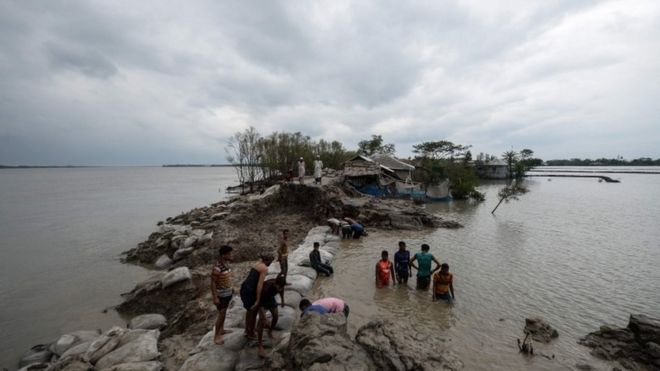 Image copyright AFP
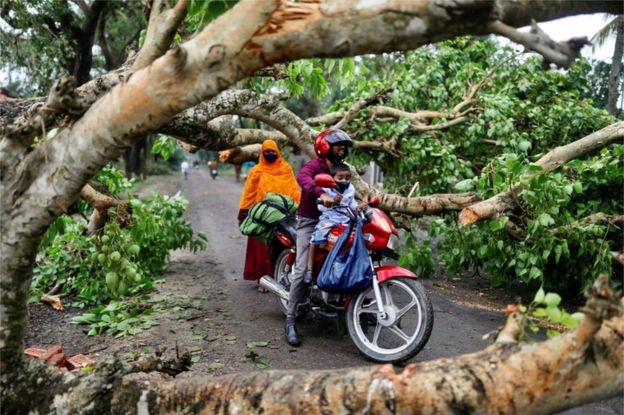 Image copyright REUTERS
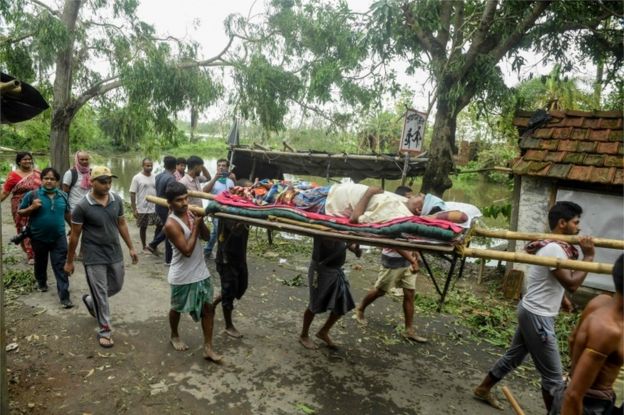 Image copyright AFP
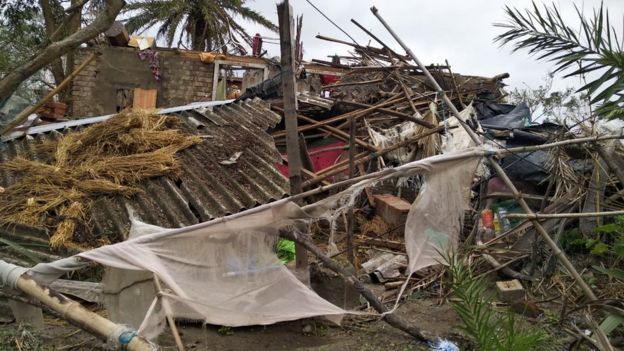 Image copyright MUKTI
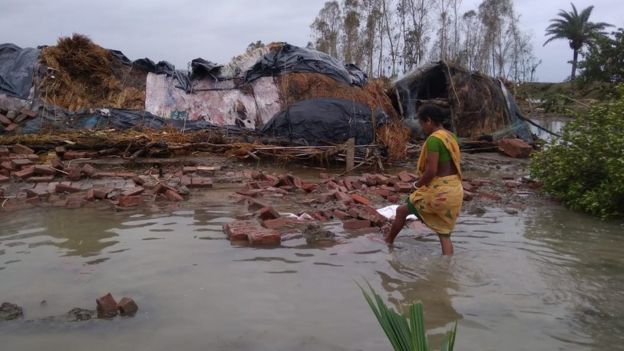 Image copyright MUKTI
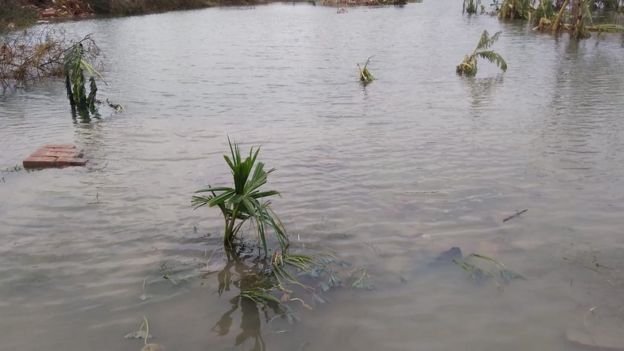 Image copyright MUKTI
 CHINDIA ALERT: You'll be living in their world, very soon