Chindia Alert: You’ll be Living in their World Very Soon
aims to alert you to the threats and opportunities that China and India present. China and India require serious attention; case of ‘hidden dragon and crouching tiger’.
Without this attention, governments, businesses and, indeed, individuals may find themselves at a great disadvantage sooner rather than later.
The POSTs (front webpages) are mainly 'cuttings' from reliable sources, updated continuously.
The PAGEs (see Tabs, above) attempt to make the information more meaningful by putting some structure to the information we have researched and assembled since 2006.
Image copyright PRESS INFORMATION BUREAUImage caption The area has become a hotspot in part because of a road India has built
The armies of the world’s two most populous nations are locked in a tense face-off high in the Himalayas, which has the potential to escalate as they seek to further their strategic goals.
Officials quoted by the Indian media say thousands of Chinese troops have forced their way into the Galwan valley in Ladakh, in the disputed Kashmir region.
Indian leaders and military strategists have clearly been left stunned.
The reports say that in early May, Chinese forces put up tents, dug trenches and moved heavy equipment several kilometres inside what had been regarded by India as its territory. The move came after India built a road several hundred kilometres long connecting to a high-altitude forward air base which it reactivated in 2008.
The message from China appears clear to observers in Delhi – this is not a routine incursion.
“The situation is serious. The Chinese have come into territory which they themselves accepted as part of India. It has completely changed the status quo,” says Ajai Shukla, an Indian military expert who served as a colonel in the army.
China takes a different view, saying it’s India which has changed facts on the ground.
Reports in the Indian media said soldiers from the two sides clashed on at least two occasions in Ladakh. Stand-offs are reported in at least three locations: the Galwan valley; Hot Springs; and Pangong lake to the south.
India and China share a border more than 3,440km (2,100 miles) long and have overlapping territorial claims. Their border patrols often bump into each other, resulting in occasional scuffles but both sides insist no bullet has been fired in four decades.
Their armies – two of the world’s largest – come face to face at many points. The poorly demarcated Line of Actual Control (LAC) separates the two sides. Rivers, lakes and snowcaps mean the line separating soldiers can shift and they often come close to confrontation.
The current military tension is not limited to Ladakh. Soldiers from the two sides are also eyeball-to-eyeball in Naku La, on the border between China and the north-eastern Indian state of Sikkim. Earlier this month they reportedly came to blows.
And there’s a row over a new map put out by Nepal, too, which accuses India of encroaching on its territory by building a road connecting with China.
Why are tensions rising now?
There are several reasons – but competing strategic goals lie at the root, and both sides blame each other.
“The traditionally peaceful Galwan River has now become a hotspot because it is where the LAC is closest to the new road India has built along the Shyok River to Daulet Beg Oldi (DBO) – the most remote and vulnerable area along the LAC in Ladakh,” Mr Shukla says.
India’s decision to ramp up infrastructure seems to have infuriated Beijing.
Image copyright AFPImage caption There have been protests in Nepal against Indi’s new road link
“According to the Chinese military, India is the one which has forced its way into the Galwan valley. So, India is changing the status quo along the LAC – that has angered the Chinese,” says Dr Long Xingchun, president of the Chengdu Institute of World Affairs (CIWA), a think tank.
Michael Kugelman, deputy director of the Asia programme at the Wilson Center, another think tank, says this face-off is not routine. He adds China’s “massive deployment of soldiers is a show of strength”.
The road could boost Delhi’s capability to move men and material rapidly in case of a conflict.
Differences have been growing in the past year over other areas of policy too.
The new federally-administered Ladakh included Aksai Chin, an area India claims but China controls.
Senior leaders of India’s Hindu-nationalist BJP government have also been talking about recapturing Pakistan-administered Kashmir. A strategic road, the Karakoram highway, passes through this area that connects China with its long-term ally Pakistan. Beijing has invested about $60bn (£48bn) in Pakistan’s infrastructure – the so-called China Pakistan Economic corridor (CPEC) – as part of its Belt and Road Initiative and the highway is key to transporting goods to and from the southern Pakistani port of Gwadar. The port gives China a foothold in the Arabian Sea.
In addition, China was unhappy when India initially banned all exports of medical and protective equipment to shore up its stocks soon after the coronavirus pandemic started earlier this year.
How dangerous could this get?
“We routinely see both armies crossing the LAC – it’s fairly common and such incidents are resolved at the local military level. But this time, the build-up is the largest we have ever seen,” says former Indian diplomat P Stobdan, an expert in Ladakh and India-China affairs.
“The stand-off is happening at some strategic areas that are important for India. If Pangong lake is taken, Ladakh can’t be defended. If the Chinese military is allowed to settle in the strategic valley of Shyok, then the Nubra valley and even Siachen can be reached.”
In what seems to be an intelligence failure, India seems to have been caught off guard again. According to Indian media accounts, the country’s soldiers were outnumbered and surrounded when China swiftly diverted men and machines from a military exercise to the border region.
This triggered alarm in Delhi – and India has limited room for manoeuvre. It can either seek to persuade Beijing to withdraw its troops through dialogue or try to remove them by force. Neither is an easy option.
“China is the world’s second-largest military power. Technologically it’s superior to India. Infrastructure on the other side is very advanced. Financially, China can divert its resources to achieve its military goals, whereas the Indian economy has been struggling in recent years, and the coronavirus crisis has worsened the situation,” says Ajai Shukla.
What next?
History holds difficult lessons for India. It suffered a humiliating defeat during the 1962 border conflict with China. India says China occupies 38,000km of its territory. Several rounds of talks in the last three decades have failed to resolve the boundary issues.
China already controls the Aksai Chin area further east of Ladakh and this region, claimed by India, is strategically important for Beijing as it connect its Xinjiang province with western Tibet.
Image copyright GETTY IMAGESImage caption India and China have a long history of border disputes
In 2017 India and China were engaged in a similar stand-off lasting more than two months in Doklam plateau, a tri-junction between India, China and Bhutan.
This time, too, talks are seen as the only way forward – both countries have so much to lose in a military conflict.
“China has no intention to escalate tensions and I think India also doesn’t want a conflict. But the situation depends on both sides. The Indian government should not be guided by the nationalistic media comments,” says Dr Long Xingchun of the CIWA in Chengdu. “Both countries have the ability to solve the dispute through high-level talks.”
Chinese media have given hardly any coverage to the border issue, which is being interpreted as a possible signal that a route to talks will be sought.
Pratyush Rao, associate director for South Asia at Control Risks consultancy, says both sides have “a clear interest in prioritising their economic recovery” and avoiding military escalation.
“It is important to recognise that both sides have a creditable record of maintaining relative peace and stability along their disputed border.”
Priority carriages on underground trains have not solved the problem of sexual harassment for female passengers
A woman is surrounded by men in a priority carriage on the Shenzhen metro. Photo: Sam Tsang
The first time Wanda was groped by a man on a Beijing bus she was a college student, travelling to school in her gym uniform on a summer’s day. Ten years – and numerous examples of sexual harassment on public transport – later, she is still haunted by the memory.
Now 31, Wanda – who asked to be identified only by her first name – remembers every detail of the incident. The bus was not crowded but the man, who appeared to be in his 40s, went straight over to stand uncomfortably close to her.
Then he pressed himself tightly against her and began making a thrusting motion with his lower body. Wanda said she froze, terrified by the encounter and unsure how to act. Just then, the bus took a sharp turn, the man was thrown aside and she quickly moved away.
“Afterwards, for a period, I looked at every adult man I saw as if he was aggressive,” she said.
Since then, Wanda said she had been flashed at in public and just last year was forced to block a man with her purse when he tried to touch her leg on a train.
118 Chinese men detained for groping women on subway trains
Wanda’s experience is not unusual but attempts to address the problem of sexual harassment on public transport in China have met with mixed results, as well as claims by feminists that they are restrictive to women.
Two major cities in southern China, for example, introduced priority carriages for women on their underground trains in 2017.
and Guangzhou, both in Guangdong province, established two designated carriages – one at each end of the train – during peak times.
The carriages are decorated with pink stickers which say, in Chinese and English, “priority carriages for women” and while men are not barred from using them
they are encouraged to leave them to women passengers.
While the authorities did not specifically say they were intended to prevent sexual harassment – saying only that the scheme was meant to “give more care and respect to women” – the carriages followed a precedent set by Japan and Europe for that reason.
Shenzhen is currently considering an update to its priority carriages with an amended law designating them for people with disabilities and minors, as well as women, and only during rush hour. Other passengers who do not meet these criteria can be asked to leave by rail staff.
A priority carriage for women on the Shenzhen underground system. Photo: Phoebe Zhang
But in reality the restrictions on the priority carriages are seldom enforced and they have been used by men since their launch. Furthermore, feminists say the scheme is a form of segregation, rather than an attempt to solve the cause of the issue.
One reason the priority carriages have failed in their purpose could be the size of the crowds using public transport each day. According to government data, there are roughly 5 million passenger trips on the Shenzhen underground every day and 8 million in Guangzhou.
It is also hard for staff to enforce the regulation.
“When it first came out, subway staff vehemently advocated for women to use it, so many people did,” said Zhang Ying, a piano teacher in Guangzhou. Staff would hold loud speakers and gesture for women to get on the priority carriages. But now, everybody just treats it like an ordinary carriage, she said.
Zhang said she rarely uses the priority carriages because of the inconvenience of having to walk all the way to the end of the train.
Women call for convenience in all areas, but [the government] only wants to draw you a little corner to play in.Xiao Meili, Guangzhou-based feminist
Feminists have opposed the scheme from the start.
“The logic behind the scheme is wrong to begin with,” said Xiao Meili, a Guangzhou-based feminist. “When noticing the dangers women face in public spaces, women call for convenience in all areas, but [the government] only wants to draw you a little corner to play in, signalling they still will neglect you in most places.”
Although it may appear well-intentioned, Xiao said the scheme was restricting women’s space.
“Most of the sexual harassers and rapists are men, so wouldn’t it be more effective to put these offenders in a limited space?” she asked.
In a survey of 443 people conducted by a group of feminists in Shenzhen in 2017, 42 per cent of women said they had been harassed on public transport, compared with just 6 per cent of men.
Most of the interviewees said they were dissatisfied with the police response and 65 per cent said they thought police should be most responsible for handling sexual harassment in public.
Six ways Japanese women can deter gropers on trains
Xiao and others have repeatedly written to government representatives about sexual harassment on public transport. In 2016, Xiao’s feminist group received 40,000 yuan (US$5,650) in public donations – just enough to buy an advertisement slot.
For two years, the group tried to put up anti-harassment billboards in the Guangzhou and Shenzhen underground systems, but they were repeatedly blocked by the authorities who said the advertisements would cause panic.
But in 2018 Xiao’s group spotted advertisements in the subways in Beijing, Shanghai and Chengdu, some placed by news organisations and others by local governments. One advertisement in Chengdu, put up by rail officials, said: “There’s no groping hand here.”
Another, in Beijing, said: “Prevent sexual harassment, be vocal.”
Xiao said she was happy to see the changes, but described the current policy of updating the carriages in Shenzhen as an example of “lazy politics”.
There needed to be more than a pink bumper sticker on carriage windows, she said.
Instead, policymakers needed to think about the actual mechanisms of stopping harassment and how to handle culprits once they were caught.
“Women do not demand special care as if they are a soft and weak group,” Xiao said.
“They demand the safety they deserve and the right to travel conveniently.”
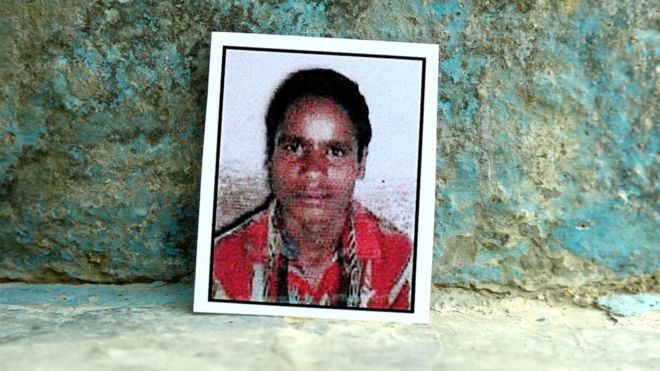
Image caption Jitendra was a carpenter and the only breadwinner in his family
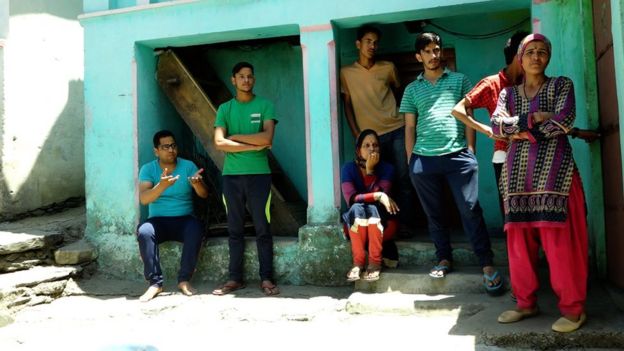
A helpless anger pervades the Dalit community in the remote Indian village of Kot.
Last month, a group of upper-caste men allegedly beat up a 21-year-old Dalit resident, named Jitendra, so badly that he died nine days later.
His alleged crime: he sat on a chair and ate in their presence at a wedding.
Not even one of the hundreds of guests who attended the wedding celebration – also of a young Dalit man – will go on record to describe what happened to Jitendra on 26 April.
Afraid of a backlash, they will only admit to being at a large ground where the wedding feast was being held.
Only the police have publicly said what happened.
The wedding food had been cooked by upper-caste residents because many people in remote regions don’t touch any food prepared by Dalits, who are the bottom of the rigid Hindu caste hierarchy.
“The scuffle happened when food was being served. The controversy erupted over who was sitting on the chair,” police officer Ashok Kumar said.
The incident has been registered under the Scheduled Castes and Scheduled Tribes (Prevention of Atrocities Act) – a law meant to protect historically oppressed communities.
It is still common to see reports of Dalits being threatened, beaten and killed for seemingly mundane reasons.
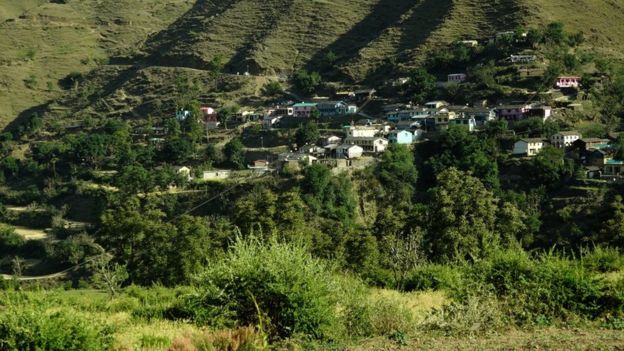
The culture that pervades their community is visible everywhere – including in Kot, which is in the hilly northern state of Uttarakhand.
Local residents from the Dalit community allege that Jitendra was beaten and humiliated at the wedding.
They say he left the event in tears, but was ambushed again a short distance away and attacked again – this time more brutally.
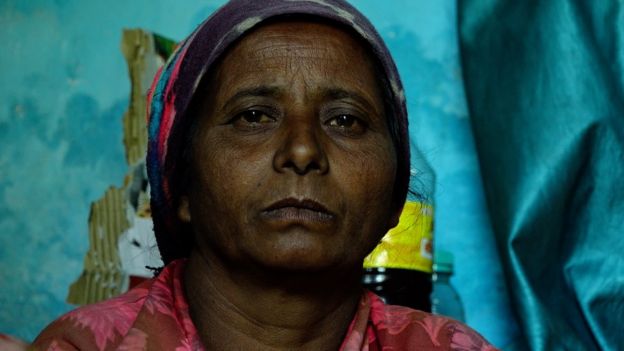
Jitendra’s mother, Geeta Devi, found him injured outside their dilapidated house early the next morning.
“He had been perhaps lying there the entire night,” she said, pointing to where she found him. “He had bruises and injury marks all over his body. He tried to speak but couldn’t.”
Image caption Dalits are outnumbered by upper-caste families in the village
She does not know who left her son outside their home. He died nine days later in hospital.
Jitendra’s death is a double tragedy for his mother – nearly five years ago her husband also died.
This meant that Jitendra, who was a carpenter, became the family’s only breadwinner and had to drop out of school to start working.
Family and friends describe him as a private man who spoke very little.
Loved ones have been demanding justice for his death, but have found little support among the community.
“There is fear. The family lives in a remote area. They have no land and are financially fragile,” Dalit activist Jabar Singh Verma said. “In surrounding villages too, the Dalits are outnumbered by families from higher castes.”
Of the 50 families in Jitendra’s village, only some 12 or 13 are Dalits.
Dalits comprise almost 19% of Uttarakhand’s population and the state has a history of atrocities committed against them.
Police have arrested seven men in connection with Jitendra’s death, but all of them deny any involvement.
Image caption Upper-caste villagers deny discriminating against the Dalit community
“It’s a conspiracy against our family,” said a woman whose father, uncles and brothers are among the accused. “Why would my father use caste slurs at a Dalit’s marriage?”
“He must have been embarrassed that he got beaten and popped dozens of pills that led to his death,” another local upper-caste person said.
But the Dalits in the village, who are livid over Jitendra’s death, hotly deny these claims.
They say Jitendra suffered from epilepsy, but insist there is no chance that he overdosed on his medication.
Apart from these expressions of anger, local Dalit families have largely remained silent.
“It is because they are economically dependent on families from the higher castes,” activist Daulat Kunwar said.
“Most Dalits are landless. They work the fields of their wealthy upper caste neighbours. They know the consequences of speaking out loud.”
Jitendra’s family has already experienced some of these consequences – Geeta Devi says they are under pressure to stop pushing for the truth.
“Some men came over to our house and tried to scare us,” she said. “There is no one to support us but I will never give up our quest for justice.”


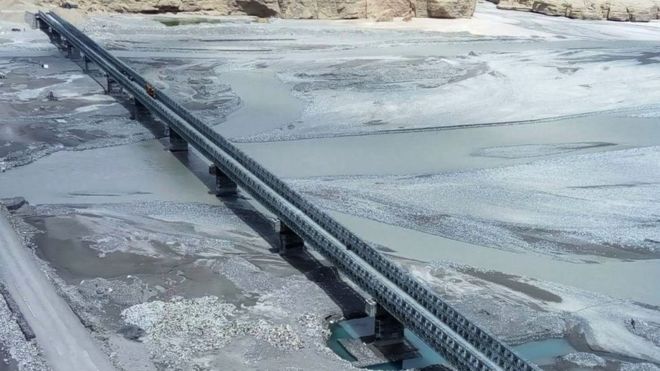 Image copyright PRESS INFORMATION BUREAU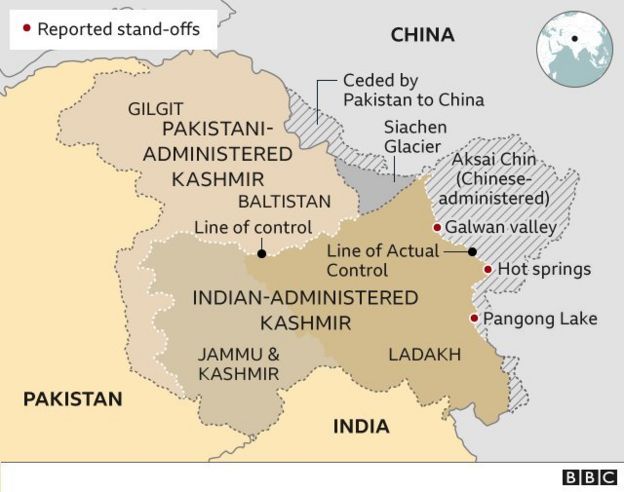
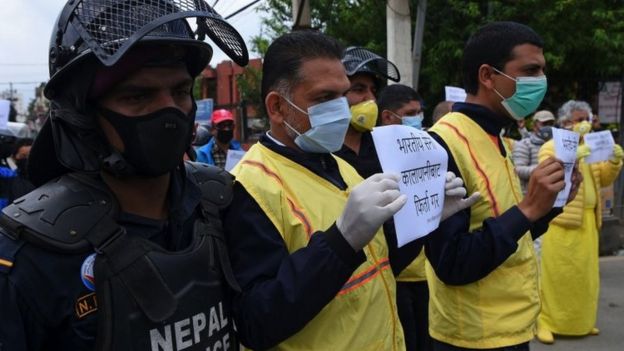 Image copyright AFP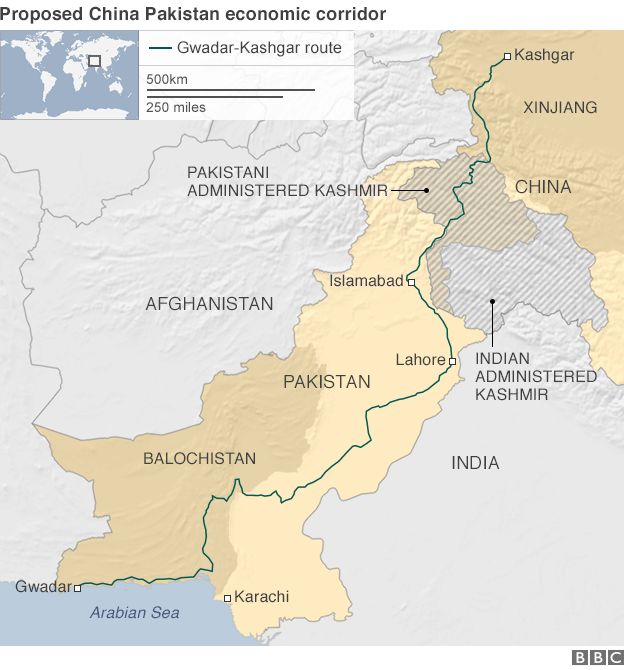
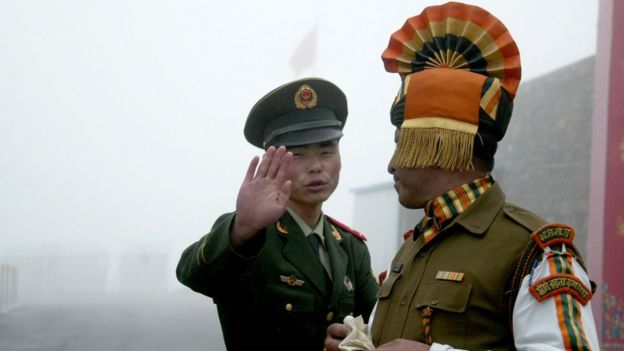 Image copyright GETTY IMAGES


 CHINDIA ALERT: You'll be living in their world, very soon