Archive for ‘Ministry of Agriculture and Rural Affairs’

04/04/2020

China able to ensure food security despite coronavirus impact

CHINA-BEIJING-COVID-19-FOOD SECURITY-PRESS CONFERENCE (CN)

Photo taken on April 4, 2020 shows a press conference of the joint prevention and control mechanism of the State Council in Beijing, capital of China. Chinese officials said Saturday that the country can hold firm its “rice bowl” despite the novel coronavirus impact, with ample grain reserves and measures to boost production. (Xinhua/Pan Xu)

BEIJING, April 4 (Xinhua) — Chinese officials said Saturday that the country can hold firm its “rice bowl” despite the novel coronavirus impact, with ample grain reserves and measures to boost production.

The country has recorded a long streak of bumper years, with grain output reaching a record of 663.85 million tonnes last year. With measures to boost grain production “we have the confidence and determination to hold firm our ‘rice bowl,'” Pan Wenbo, an official at the Ministry of Agriculture and Rural Affairs, told a press conference.

The bumper harvests supported the country’s efforts to boost social and economic development as well as fight the novel coronavirus outbreak, Pan said in response to questions that whether some countries’ grain export ban would strain China’s grain supply.

Pan said China has unveiled a series of “unconventional measures” to stabilize grain production, including setting region-specific grain plantation targets, offering subsidies for farmers and raising minimum prices for state procurement of rice, which secured a good start this year and would ensure stable grain production for the whole year.

The country’s grain reserves have run at a high level, with those of rice and wheat being sufficient to meet the country’s consumer market demand for one year, said Qin Yuyun, an official with the National Food and Strategic Reserves Administration.

Qin said the administration will continue efforts to ensure abundant supply and stable prices.

Source: Xinhua

02/04/2020

China’s race to produce ‘super pigs’ destined to fail amid haphazard biosecurity, experts say

  • China’s pig herd has begun to build again after African swine fever devastated hog populations across the country 18 months ago
  • Scientists are racing to create disease-resistant pigs, but analysts say that will be undermined by basic hygiene problems in China’s pork industry
China’s pork industry has been severely dented by African swine fever disease in the past 18 months. Photo: Bloomberg

China should focus less on developing disease-resistant “super pigs” to protect its hog herd from infection and do more to improve basic biosecurity, analysts say, as several companies claim to be close to a breakthrough treatment for African swine fever.

China’s hog herd has begun to steadily rebuild after swine fever spread across the country a year and a half ago, killing or forcing the culling of 60 per cent of the pig population, according to authorities.

But poor biosecurity – including the transport of pigs in filthy trucks and a lack of disinfection at farms – still threaten the industry, observers said.

There is no commercially available vaccine for the disease – which is not harmful to humans – but a number of researchers claim they are close.

Swine fever could kill 25% of the world’s pigs, scientists say
China’s Harbin Veterinary Research Institute, the country’s top research body on animal diseases, said last month it had developed a vaccine for African swine fever (ASF) that laboratory testing showed was safe and effective. However, it did not give a timetable on when it would be available for commercial use.

Meanwhile,Shandong Landsee Genetics, a company in China’s eastern Shandong province, was reported this week to have successfully bred ASF-resistant pigs. The pigs, called Lansibai-2, are from the large white breed, one of the most common raised in China.

When approached for comment, a spokeswoman for the company said the research was confidential and she was not authorised to speak to media.

Despite the apparent progress, analysts are generally sceptical that a silver bullet to prevent the disease will be developed on a large scale any time soon.

“Because this disease has been found in many countries, I don’t think there has been major progress [when it comes to eliminating the disease],” said Chenjun Pan, senior analyst for animal protein at Rabobank. “There have been some vaccines, but the effectiveness of the vaccines is not that satisfactory. So far there haven’t been any solutions from a medical perspective.”

There have been some vaccines, but the effectiveness of the vaccines is not that satisfactory – Chenjun Pan

China’s swine fever problem was complicated by an unwillingness from local governments to diagnose and report ASF cases, said E.W. Johnson, of Enable AgTech Consulting in Beijing. It was also complicated by basic hygiene problems, he added.

“Pigs with ASF are sold to slaughter every day, and dirty trucks are going everywhere, spreading the disease as much as they did when the ASF outbreak began,” Johnson said.

“There is no doubt that people are very excited and extremely zealous about these super-pigs. [But] China seems intent on living with ASF rather than getting rid of it.”

“The most important problem now is how to control the ASF epidemic, and this is not the way to do it,” said Feng Yonghui, chief analyst at pork industry website Soozhu.com. “The whole global industry recognises that the greatest preventive measure is improving biosecurity.”

he whole global industry recognises that the greatest preventive measure is improving biosecurity – E.W. Johnson

Improved hygiene can lower the risk of disease in production, said Feng, including sickness caused by bacteria and viruses, like transmissible gastroenteritis, a coronavirus found in pigs.
“It’s a system – you can’t just do one step in the process,” he said. “The whole industry has to study it, and we still need time to improve.”
Basic controls – like keeping pig transport trucks clean, or disinfecting protective equipment used by workers on pig farms – is simple but comes at a price, and some smaller pig farms are struggling to keep up.
China’s outbreak of African swine fever pushes pork off the Lunar New Year menu
“What we’re worried about are the people on the lower rungs of the ladder who aren’t able to keep up with better practises,” Feng said. “If we are to get pig stocks back up to where they were before the outbreak within three years, this is the key issue that stands in the way.”
China’s pork industry is at a turning point in production unlike at any other time in history, he said.
“In the past, when it came to upgrading production, or when the industry went into loss, all producers big and small began again at the same starting line,” he said. “That’s because there was no threat of disease. Now, those with money get to run first.”
Pork prices in China, the world’s top consumer and producer of pork, have surged since AFS began cutting back supply, driving margins up for both domestic and imported pork.
The world’s biggest pork processor, Hong Kong-listed WH Group, reported a 32 per cent jump in profits last year as record high pork prices in China boosted the value of the company’s exports from the United States and lifted margins on its China sales.
China’s deadly African swine fever epidemic is spreading across Asia
China’s total pork production in 2019 was 42.55 million tons, a decrease of 21.3 per cent from 2018, data from the National Bureau of Statistics showed. In 2018, the total pork output was 54.037 million tons, down 0.9 per cent from 2017.
While researchers race to find a cure for swine fever, new cases keep cropping up across the country. On Wednesday, the Ministry of Agriculture and Rural Affairs said local authorities in Sichuan had detected infections in piglets transported from outside the province.
Another outbreak was recorded in Inner Mongolia, where local authorities detected the disease in a herd of 200 piglets on a farm in Ordos city, which killed 92 of the animals, according to the agriculture industry.
Authorities are also monitoring cases of ASF in piglets smuggled into the country and would launch a 60-day investigation into illegal transport of hogs this month.
Source: SCMP
10/03/2020

China issues contingency plan against locust threat

BEIJING, March 9 (Xinhua) — China on Monday unveiled its contingency plan to monitor and control the spread of locusts from home and abroad, in a bid to secure grain production and ecological safety.

Regional governance and scientific prevention and control should be given priority, said the plan jointly issued by the Ministry of Agriculture and Rural Affairs, the General Administration of Customs and the National Forestry and Grassland Administration.

The plan clarified the goal of locust control, which is to ensure that desert locusts from abroad will not cause harm and domestic locust outbreaks will not turn into a plague, with no more than 5 percent of crops affected.

Local authorities are urged to prevent the invasion of desert locusts from abroad. The plan requires that monitoring stations be set up in Tibet, Yunnan and Xinjiang on the potential migration routes of the destructive pests.

To control locusts in domestic agricultural areas, chemical control methods will be adopted for areas with a high density of the pests, while medium- or low-density areas will use biological and ecological control methods, the plan noted.

The plan also requires an investigation into the hidden dangers of grasshoppers in major grasslands in Inner Mongolia, Xinjiang and Sichuan, and the strengthening of prevention and control at key points on the border between China and Kazakhstan, and that between China and Mongolia.

The rare desert locust outbreak in East Africa and Southwest Asia has posed a severe threat to local grain and agricultural production, which led to the desert locust plague warning issued by the Food and Agriculture Organization of the United Nations.

Although experts believe it is highly unlikely that desert locusts will invade China, it is still necessary to take precautions, said the plan.

Source: Xinhua

13/11/2019

Two endangered Chinese finless porpoises found dead in Yangtze River as species struggles for survival

  • Remains of two of river’s estimated 1,012 porpoises found in less than a week
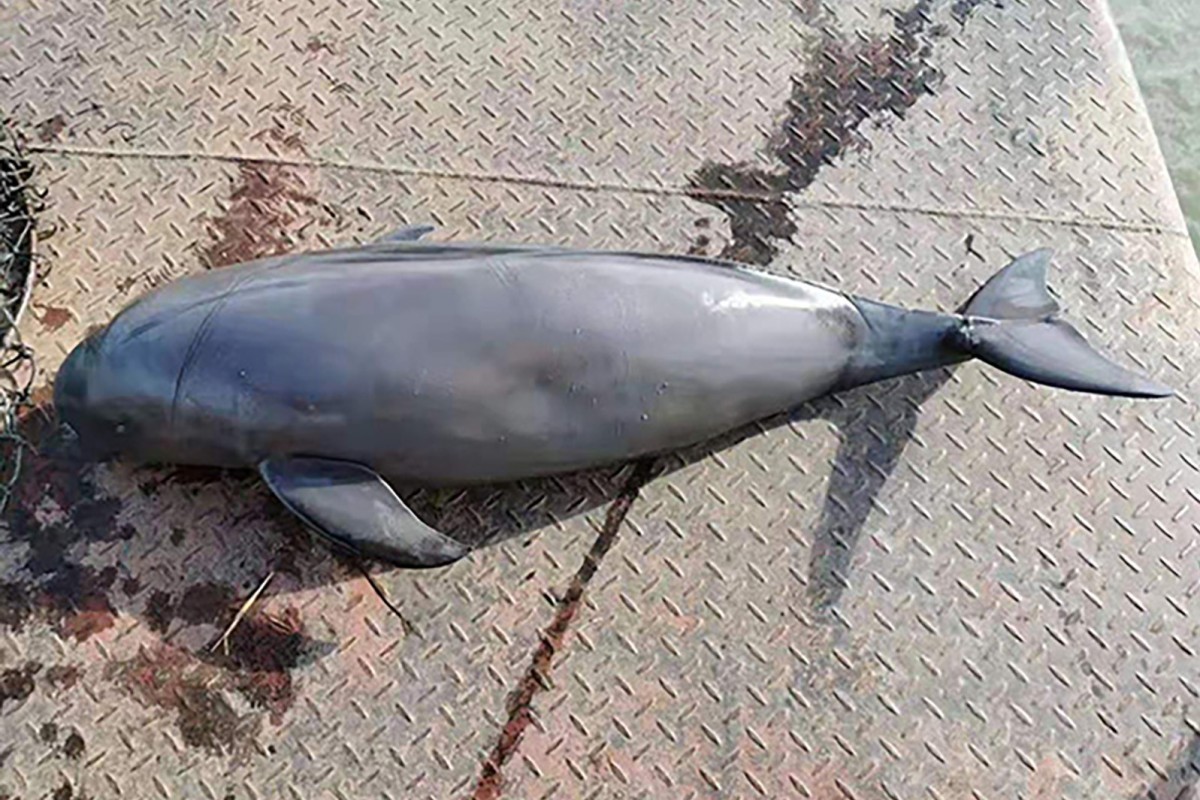
The finless porpoise found dead in the Yangtze River in Hubei on Monday was the second fatality in a week. Photo: 163.com

Two endangered finless porpoises have been found dead in the Yangtze River in the space of a week, according to mainland Chinese media reports.

One was found on Monday in Jiayu county, central Hubei province, four days after the remains of another were recovered from Dongting Lake, a tributary of the Yangtze in central Hunan province, news website Thepaper.cn reported.

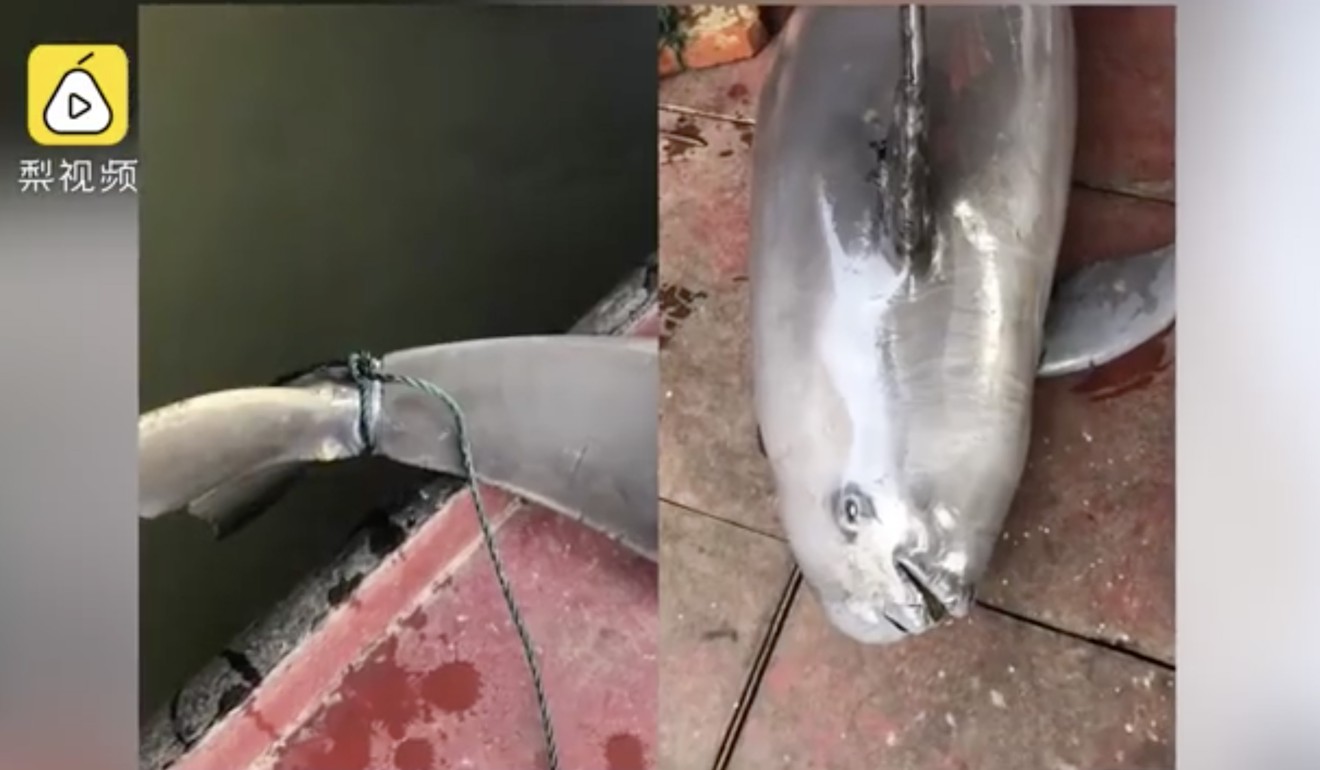
The Dongting Lake carcass was tied with a rope and weighted with bricks, and authorities in Hunan said the creature became tangled in a fishing net. The Hubei death is under investigation.

The Yangtze’s finless porpoises are “extremely endangered”, the Ministry of Agriculture and Rural Affairs said in a 2016 action plan to protect the species. Last year, vice-minister Yu Kangzhen said surveys showed there were about 1,012 of the animals in the river.

The tail of a dead finless porpoise pulled from Dongting Lake in Hunan appears to have been tied to weights. Photo: Pear Video

In 2017, China raised its protection for the mammals to its highest level because of the critical dangers they faced. Experts said that as the river’s “flagship” species, the porpoise was an indicator for the Yangtze’s ecology.

The porpoise discovered in Hubei was small and it had suffered superficial wounds, investigators were quoted as saying. They estimated that it was found soon after its death.

Xiaoxiang Morning Post quoted fisheries authorities in Yueyang, near Dongting Lake, as saying the porpoise in Hunan was found with weights around its tail.

Two porpoise carcasses found on separate Hong Kong shores
Officials said the fishermen who set the net feared they would be blamed for the creature’s death and tied bricks to its tail to sink it.

Other fishermen who witnessed the incident told the authority, leading to the discovery of the body, the report said. The investigation is ongoing and the suspects are still at large.

A fishing authority spokesman told the newspaper that the porpoise’s death showed the difficulty of balancing conservation with the livelihoods of fishermen.

“It’s difficult to figure out a good model to protect the porpoises without affecting fishermen’s business,” he said.

In mainland China, finless porpoises are referred to as “giant pandas in water” because of their endangered status. Their numbers fell from 2,700 in 1991 to 1,800 in 2006, and there were 1,045 finless porpoises in 2012, according to agriculture ministry data.

Source: SCMP

09/06/2019

China Focus: Marine ranching restores ecology on desertified seabeds

SHIJIAZHUANG, June 9 (Xinhua) — A decade after the launch of a pilot project to restore ecology in overexploited offshore seawaters, some local fish species which had disappeared, returned to the coastal area of Tangshan, a major industrial city in north China’s Hebei Province.

Algae, shellfish and other fish grow abundantly and form the marine biologic chain in the 4,000-mu (266 hectares) seawater area, run by Tangshan Marine Ranching Co., Ltd.

In collaboration with leading domestic ocean research institutes, the private company has succeeded in transforming the desertified seabeds into an “undersea forest” and rebuilding the marine ecosystem, through dropping artificial reefs into the sea, artificial breeding and releasing of fish since 2009.

“The biomass in the area with artificial reefs underneath is 30 times that of the neighboring seawaters without reefs,” said Zhang Zhenhai, chairman of the company.

“The ecological environment is in good shape in the piloted area,” he said. This condition is in sharp contrast to what Zhang saw in the early 2000s when he planned to develop marine tourism but realized that the worsening offshore environment would only lead tourism to a dead end. Then he decided to restore the environment for sustainable development.

China’s marine ranching must put ecological restoration and construction in the first place because the offshore areas in many regions have suffered severe damage due to excessive fishing and pollution, Zhang said.

At an accumulative investment of 150 million yuan (21.7 million U.S. dollars), the marine ranch at Xiangyun Bay in Tangshan is one of the first group of state-level demonstration marine ranching zones. The ranch’s investment comes from government subsidy, bank loans and the company’s own fund.

Nearly 200 local villagers have stopped traditional fishing methods due to decreasing fishery resources. They work for Zhang’s marine ranch to offer tourists an ocean fishing experience, part of the company’s recreational fishery program.

After making a living by fishing for 26 years, Yang Xingwu bought a leisure boat in 2011 and joined the fleet of 19 boats to showcase fishing for tourists at the Tangshan marine ranch developed by Zhang’s company.

“We earned 40,000 to 50,000 yuan a year in the past from fishing, which was a tiring job and sometimes dangerous due to strong winds on the sea,” said Yang, 52, from a village along the coast of the Bohai Sea.

Now, Yang invites tourists to his boat to experience the life of a fisherman. “It is much safer and stable. My annual income has doubled.”

Zhang Hongrong, 86, from a fishing village in Laoting County in Tangshan, said until the 1970s, the Bohai Sea still abounded in fish, yet in recent years, some fish became almost extinct due to overfishing and pollution.

“It is really a blessing in my lifetime to see some fish species reappear in the sea,” the old fisherman said.

Based on the restoration experiment, Tangshan Marine Ranching plans to plant eelgrass on a preliminary seawater area of around 6.5 hectares and extend the restoration project to 1,300 hectares of seawater area.

“The rehabilitation of marine ecology needs a big environment,” said Zhang, chairman of the company. “After two or three years, the restoration project will show its ecological and economic benefits.”

By the end of 2018, China had completed the construction of 233 marine ranches, which include 86 state-level demonstration marine ranching zones, producing considerable output in both economic and ecological terms, data with the Ministry of Agriculture and Rural Affairs show.

This year, the country aims to build more than ten national demonstration marine ranches, according to the ministry.

Source: Xinhua

05/06/2019

African swine fever virus is now ‘endemic’ in China’s Tibet and Xinjiang regions, making its eradication harder, UN says

  • The virus that causes the African swine fever is now endemic in Tibet and Xinjiang, the United Nations’ Food & Agriculture Organisation said
  • Diseases that are endemic, or generally present, are harder to stamp out
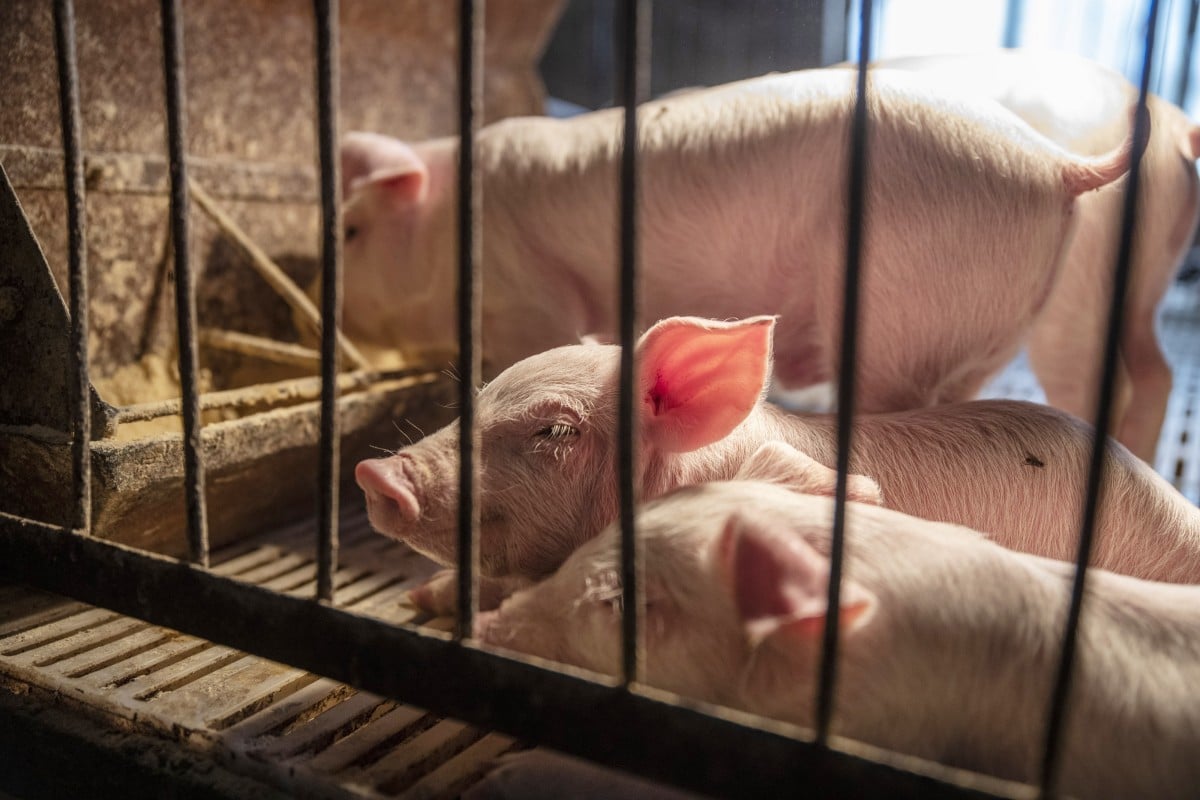
Piglets are kept in pens at a pig farm in Langfang in Hebei province on Monday, April 1, 2019. Photo: Bloomberg
China’s attempts to control African swine fever have been insufficient to stem further spread of the disease, with the deadly pig contagion now endemic in two regions, a United Nations group said.
The virus that causes the disease is entrenched among pig populations in the autonomous regions of Tibet and Xinjiang, the Food & Agriculture Organisation (FAO) in Rome said in a report Thursday.
Diseases that are endemic, or generally present, are more difficult to stamp out by quarantining and culling diseased and vulnerable livestock.

About 20 per cent of China’s pig inventories may have been culled in the first few months of 2019 amid fears of African swine fever spreading more rapidly, according to the FAO, which is monitoring the disease in cooperation with local authorities and China’s Ministry of Agriculture and Rural Affairs.

China’s pig production will drop by 134 million heads, or 20 per cent, in 2019, the US Department of Agriculture said last month.

“While official sources confirm a rapid spread of the disease, both the speed and severity of the spread could prove more pronounced than currently assumed,” the FAO said in its report. A government investigation in seven provinces found “irrational culling of sows on breeding farms in February, reducing the sector’s core production capacity.”

Thailand launches crackdown to keep out African swine fever

Since the first cases were reported last August, 130 outbreaks have been detected in 32 provinces, autonomous regions, municipalities and special administrative regions across the nation, which raises half the world’s pigs.

SCMP Graphics
SCMP Graphics

The FAO report found:

  • In Jilin province, swine inventory fell 28 per cent from the previous year, with some reports pointing to a larger drop In Shandong province, sow numbers fell 41 per cent from July 2018 to February 2019
  • In Guangdong province, hog inventories slumped 20 per cent from a year earlier and pig-feed sales fell 10 per cent to 50 per cent
  • Production of fresh and frozen meat by meatpackers plunged 17 per cent in January and February, compared with the same months in 2018
  • Source: SCMP
15/04/2019

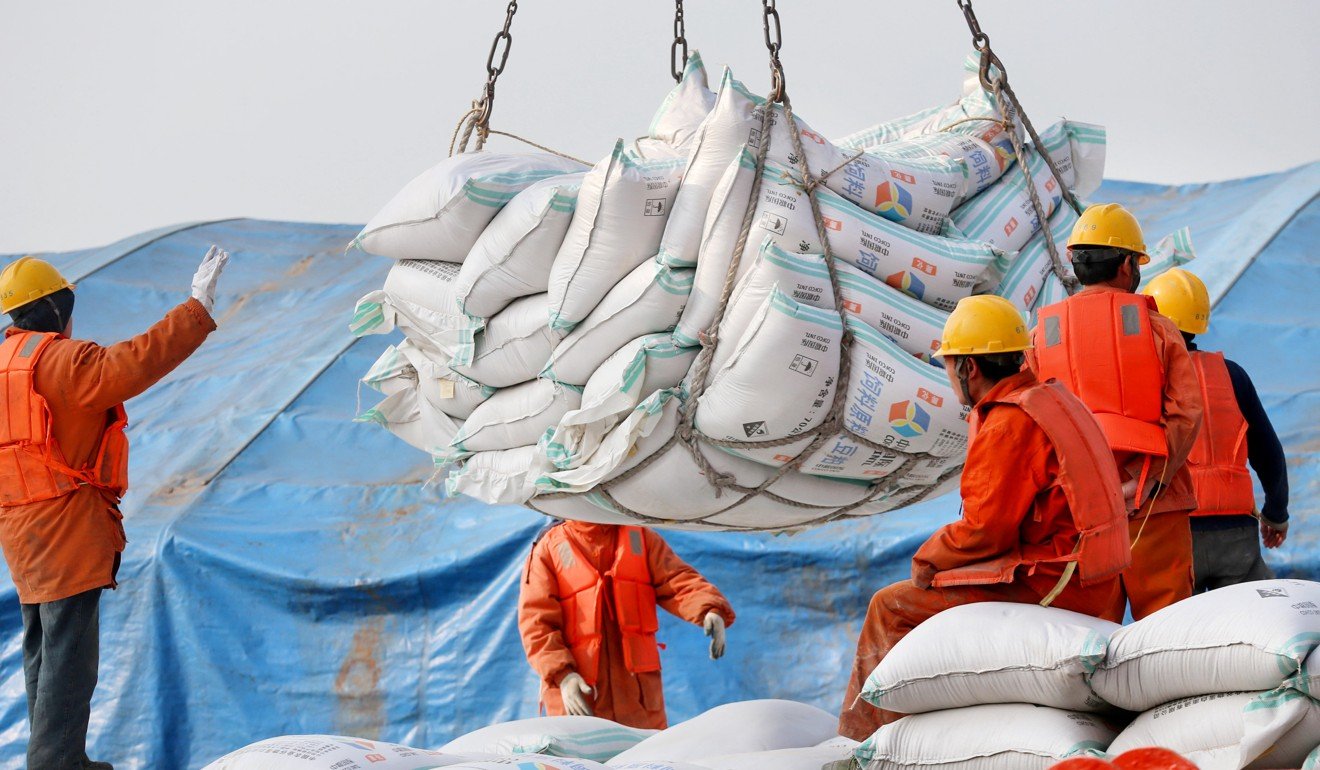
How China’s swine fever outbreak is upending global soybean market

  • Getting rid of the disease in a nation that consumes half the world’s pork could take three to five years
  • Demand for soybeans used in feed is expected to be curbed
A decline or slower growth in Chinese soy imports has been forecast for the next couple of years. Photo: Reuters
Forget Donald Trump’s trade war. It’s a deadly pig disease spreading through China that will really reshape the global soybean market for years to come.
Getting rid of the disease and rebuilding the herd in a nation that consumes half the world’s pork will take three to five years, curbing demand for soybeans used in feed, according to analysts.
Given China is the largest soybean importer and most of its shipments usually come from the US, the oilseed has been the poster-child for the tit-for-tat tariff spat. While trade tensions have prompted China’s feed makers to curb the oilseed’s usage, it is the pig virus that will upend the market.

The US Department of Agriculture and Intl FCStone are already forecasting a decline or slower growth in Chinese soy imports for the next couple of years.

“Today, African swine fever is the bigger story as it relates to demand,” said Corey Jorgenson, president of the grain unit of US crop handler The Andersons, which buys and sells corn, wheat and soybeans from American farmers. “It will impact us for a crop year or more. This is not a 2019 event.”

African swine fever, first spotted in Africa in the 1900s, kills most infected pigs within 10 days, although it isn’t known to harm humans. China has already culled more than a million pigs after 122 outbreaks in 30 provinces. The disease shows no signs of abating.

Cargill, one of the top agriculture commodity traders, said quarterly earnings from animal nutrition and Chinese oilseed crushing were hit by the virus. Andersons also has soybean demand destruction built into its projections.

Pork production in China probably will decline about 30 per cent this year, a drop roughly the size of Europe’s entire annual supply, according to Rabobank, a top lender to the agriculture industry.

Pork production in China is expected to drop about 30 per cent this year, according to Rabobank, a top lender to the agriculture industry. Photo: Bloomberg

The number of breeding sows in China already slumped 21 per cent in March from a year earlier, according to a report by the Ministry of Agriculture and Rural Affairs published on Friday.

The bank says it will take at least three years to rebuild the herd. Informa’s Agribusiness Intelligence is betting on three years, while brokerage FCStone expects at least five years.

China inflation soars on African swine fever epidemic
The structure of China’s pork industry makes it “nearly impossible” to stop the spread of African swine fever, said Arlan Suderman, chief commodities economist for FCStone.

That is because a large part of the production and slaughter is in small family-owned operations. Many farmers who had the disease and tried to repopulate their herds ended up getting it again, according to Informa.

“We are seeing that the Chinese hog producer today is not repopulating those facilities because either they are afraid they are going to get African swine fever from a neighbour or it is still in the building and they cannot get it cleaned,” said David Williams, director of global proteins at Informa.

Chinese soy imports dropped 14 per cent in the first quarter, partly as the trade war pushed feed makers to switch to alternatives.

Why are the little piggies no longer going to market in China’s Shandong?

While some fear that could be a permanent change, Jim Sutter, the chief executive of the US Soybean Export Council, says feed makers would return to using whatever is more economical when the trade war ends, and that includes soy.

Soybean imports by China are forecast to decline for the first time in 15 years to 88 million tonnes this season and FCStone says purchases could drop again to 71 million tonnes in 2019-20 due to the impact of African swine fever – the firm’s forecast also assumes the continuation of the tariff dispute.

Soybean imports by China are forecast to decline for the first time in 15 years to 88 million tonnes this season. Photo: Reuters

The USDA’s Foreign Agriculture Service still expects imports to grow next season, albeit at a slower pace. They would remain below levels reached in 2017-18.

China is buying enough soybeans “that they don’t need to try to influence the trade talks”, said Suderman. “That is masking the drop in consumption right now, but that means they will have more soybeans in storage that they can use down the road as well, so eventually we will see that full drop in demand.”

Pork group scraps big trade event over African swine fever fears

It’s not all bad news for the soybean market. In the medium term, China will need to import more pork and other meats. As a result, American pork exports will probably jump 20 per cent this year, while European Union shipments could climb 10 to 15 per cent, Informa estimates.

All of that will require expansion of herds, boosting demand for soy meal and increasing crush margins for the likes of Archer-Daniels-Midland and Bunge.

Soybean-based feed for pigs was already becoming pricier before the swine virus outbreak, because of the trade war. Photo: AFP

China’s appetite for pork is already starting to pick up. The nation bought a record 77,700 tonnes of US supply in the week ended April 4, even as 25 per cent tariffs on American product remained in place, according to USDA data. The purchase sent Chicago futures up by the daily maximum allowed by the exchange.

The spread of the virus combined with China’s voracious appetite for pork means June hog futures are already up 21 per cent this year, the best performing agricultural benchmark in the Bloomberg Commodity Index.

China to expand soybean crop, subsidies to cut reliance on US imports

Pork prices are expected to rise by more than 20 per cent in the US this year and 15 per cent in western Europe, according to Informa forecasts.

“People are continuing to want to eat pork,” USSEC’s Sutter said in an interview after returning from a trip to China.

“They might in the short run be eating other meats because the price of pork has gone up. But people did not think when we asked them the question that there would be a long-term loss in demand for pork in China. People did not think that was the case.”

Source: SCMP

19/02/2019

China warns pork food firms over African swine fever risks

BEIJING, Feb. 18 (Xinhua) — China has urged pork food firms to enhance their management of pork to guard against African swine fever after media reports of suspected contaminated dumplings.

Samples from three batches of pork-filled dumplings from Sanquan Foods tested positive for the nucleic acid associated with African swine fever, according to media reports.

The State Administration for Market Regulation and the Ministry of Agriculture and Rural Affairs urged the company to trace the source of the pork and dispose of related products.

The two ministries required local governments to beef up risk control measures, regulate information disclosure and crack down upon unscrupulous firms.

The African pig plague is a highly contagious viral disease that is believed to only infect pigs. No humans or other species have thus far been infected.

Source: Xinhua

Law of Unintended Consequences

continuously updated blog about China & India

ChiaHou's Book Reviews

continuously updated blog about China & India

What's wrong with the world; and its economy

continuously updated blog about China & India