Chindia Alert: You’ll be Living in their World Very Soon
aims to alert you to the threats and opportunities that China and India present. China and India require serious attention; case of ‘hidden dragon and crouching tiger’.
Without this attention, governments, businesses and, indeed, individuals may find themselves at a great disadvantage sooner rather than later.
The POSTs (front webpages) are mainly 'cuttings' from reliable sources, updated continuously.
The PAGEs (see Tabs, above) attempt to make the information more meaningful by putting some structure to the information we have researched and assembled since 2006.
Students attend a class at a primary school in Dahua Yao Autonomous County, south China’s Guangxi Zhuang Autonomous Region, May 29, 2020. Guangxi, one of the major battlefields in China’s poverty alleviation campaign, has been making painstaking efforts to improve education for poverty-stricken children, as schooling is believed to be the best way to empower the youngsters to lift their families out of poverty. The region has taken various measures in this regard, including granting students stipends, improving school facilities and nutritional conditions of rural students, and helping more students from rural and impoverished areas have access to higher education. As many households from inhospitable areas have moved into relocation sites built for poverty alleviation in the county seats, relocated children can study in schools in and near resettlements, instead of trekking hours back and forth in mountains for schooling. The faculty is a key to education. The regional government has called in capable teachers to help schools in rural areas, and has been committed to guaranteeing payment to teachers and filling vacancies of teachers in rural areas through special programs. Reducing poverty must begin with reducing ignorance. Therefore, giving rural children a good education is an important task in poverty relief, and also a crucial means to stop poverty being passed on through generations.
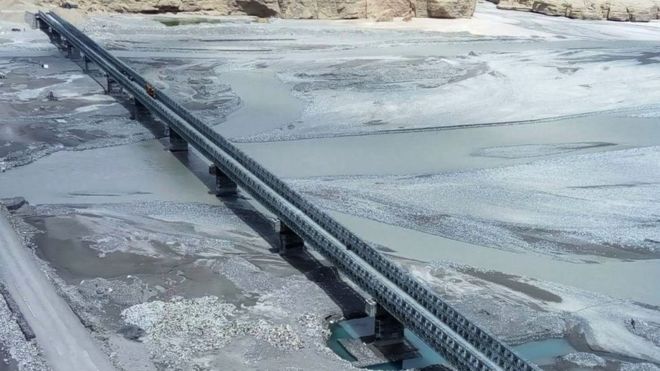
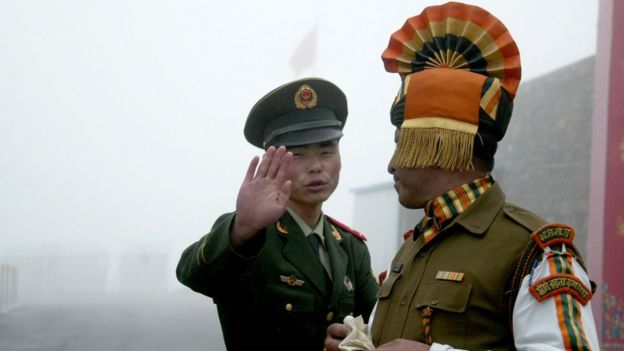
Image copyright PRESS INFORMATION BUREAUImage caption The area has become a hotspot in part because of a road India has built
The armies of the world’s two most populous nations are locked in a tense face-off high in the Himalayas, which has the potential to escalate as they seek to further their strategic goals.
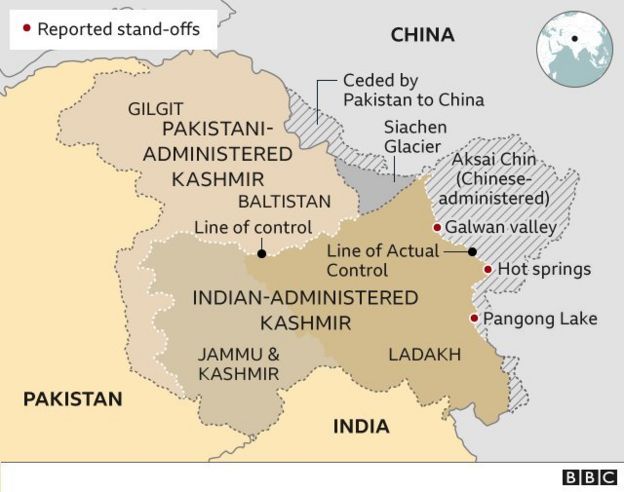
Officials quoted by the Indian media say thousands of Chinese troops have forced their way into the Galwan valley in Ladakh, in the disputed Kashmir region.
Indian leaders and military strategists have clearly been left stunned.
The reports say that in early May, Chinese forces put up tents, dug trenches and moved heavy equipment several kilometres inside what had been regarded by India as its territory. The move came after India built a road several hundred kilometres long connecting to a high-altitude forward air base which it reactivated in 2008.
The message from China appears clear to observers in Delhi – this is not a routine incursion.
“The situation is serious. The Chinese have come into territory which they themselves accepted as part of India. It has completely changed the status quo,” says Ajai Shukla, an Indian military expert who served as a colonel in the army.
China takes a different view, saying it’s India which has changed facts on the ground.
Reports in the Indian media said soldiers from the two sides clashed on at least two occasions in Ladakh. Stand-offs are reported in at least three locations: the Galwan valley; Hot Springs; and Pangong lake to the south.
India and China share a border more than 3,440km (2,100 miles) long and have overlapping territorial claims. Their border patrols often bump into each other, resulting in occasional scuffles but both sides insist no bullet has been fired in four decades.
Their armies – two of the world’s largest – come face to face at many points. The poorly demarcated Line of Actual Control (LAC) separates the two sides. Rivers, lakes and snowcaps mean the line separating soldiers can shift and they often come close to confrontation.
The current military tension is not limited to Ladakh. Soldiers from the two sides are also eyeball-to-eyeball in Naku La, on the border between China and the north-eastern Indian state of Sikkim. Earlier this month they reportedly came to blows.
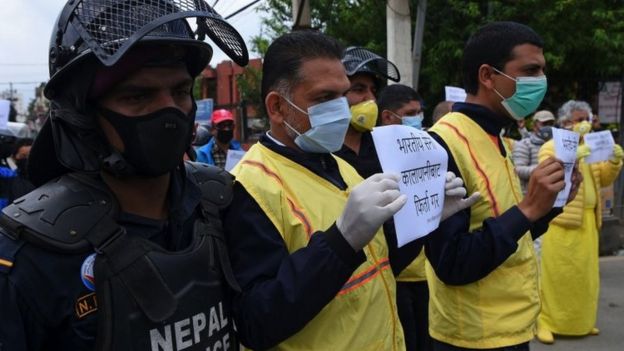
And there’s a row over a new map put out by Nepal, too, which accuses India of encroaching on its territory by building a road connecting with China.
Why are tensions rising now?
There are several reasons – but competing strategic goals lie at the root, and both sides blame each other.
“The traditionally peaceful Galwan River has now become a hotspot because it is where the LAC is closest to the new road India has built along the Shyok River to Daulet Beg Oldi (DBO) – the most remote and vulnerable area along the LAC in Ladakh,” Mr Shukla says.
India’s decision to ramp up infrastructure seems to have infuriated Beijing.
Image copyright AFPImage caption There have been protests in Nepal against Indi’s new road link
“According to the Chinese military, India is the one which has forced its way into the Galwan valley. So, India is changing the status quo along the LAC – that has angered the Chinese,” says Dr Long Xingchun, president of the Chengdu Institute of World Affairs (CIWA), a think tank.
Michael Kugelman, deputy director of the Asia programme at the Wilson Center, another think tank, says this face-off is not routine. He adds China’s “massive deployment of soldiers is a show of strength”.
The road could boost Delhi’s capability to move men and material rapidly in case of a conflict.
Differences have been growing in the past year over other areas of policy too.
The new federally-administered Ladakh included Aksai Chin, an area India claims but China controls.
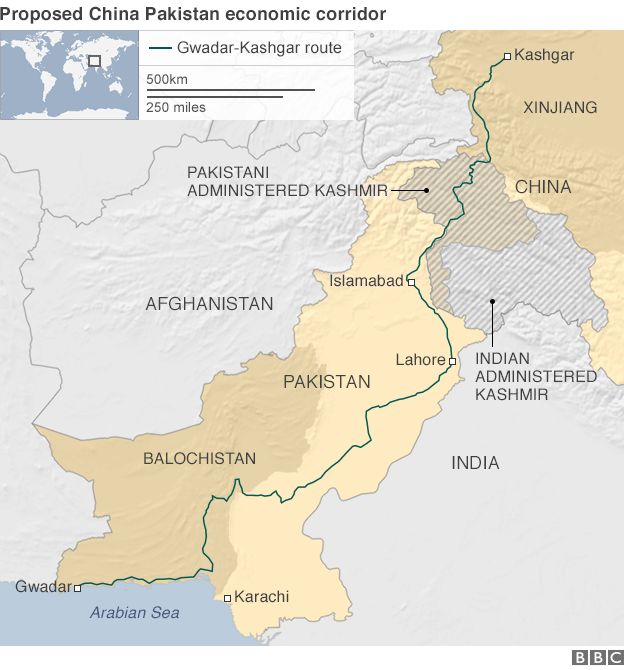
Senior leaders of India’s Hindu-nationalist BJP government have also been talking about recapturing Pakistan-administered Kashmir. A strategic road, the Karakoram highway, passes through this area that connects China with its long-term ally Pakistan. Beijing has invested about $60bn (£48bn) in Pakistan’s infrastructure – the so-called China Pakistan Economic corridor (CPEC) – as part of its Belt and Road Initiative and the highway is key to transporting goods to and from the southern Pakistani port of Gwadar. The port gives China a foothold in the Arabian Sea.
In addition, China was unhappy when India initially banned all exports of medical and protective equipment to shore up its stocks soon after the coronavirus pandemic started earlier this year.
How dangerous could this get?
“We routinely see both armies crossing the LAC – it’s fairly common and such incidents are resolved at the local military level. But this time, the build-up is the largest we have ever seen,” says former Indian diplomat P Stobdan, an expert in Ladakh and India-China affairs.
“The stand-off is happening at some strategic areas that are important for India. If Pangong lake is taken, Ladakh can’t be defended. If the Chinese military is allowed to settle in the strategic valley of Shyok, then the Nubra valley and even Siachen can be reached.”
In what seems to be an intelligence failure, India seems to have been caught off guard again. According to Indian media accounts, the country’s soldiers were outnumbered and surrounded when China swiftly diverted men and machines from a military exercise to the border region.
This triggered alarm in Delhi – and India has limited room for manoeuvre. It can either seek to persuade Beijing to withdraw its troops through dialogue or try to remove them by force. Neither is an easy option.
“China is the world’s second-largest military power. Technologically it’s superior to India. Infrastructure on the other side is very advanced. Financially, China can divert its resources to achieve its military goals, whereas the Indian economy has been struggling in recent years, and the coronavirus crisis has worsened the situation,” says Ajai Shukla.
What next?
History holds difficult lessons for India. It suffered a humiliating defeat during the 1962 border conflict with China. India says China occupies 38,000km of its territory. Several rounds of talks in the last three decades have failed to resolve the boundary issues.
China already controls the Aksai Chin area further east of Ladakh and this region, claimed by India, is strategically important for Beijing as it connect its Xinjiang province with western Tibet.
Image copyright GETTY IMAGESImage caption India and China have a long history of border disputes
In 2017 India and China were engaged in a similar stand-off lasting more than two months in Doklam plateau, a tri-junction between India, China and Bhutan.
This time, too, talks are seen as the only way forward – both countries have so much to lose in a military conflict.
“China has no intention to escalate tensions and I think India also doesn’t want a conflict. But the situation depends on both sides. The Indian government should not be guided by the nationalistic media comments,” says Dr Long Xingchun of the CIWA in Chengdu. “Both countries have the ability to solve the dispute through high-level talks.”
Chinese media have given hardly any coverage to the border issue, which is being interpreted as a possible signal that a route to talks will be sought.
Pratyush Rao, associate director for South Asia at Control Risks consultancy, says both sides have “a clear interest in prioritising their economic recovery” and avoiding military escalation.
“It is important to recognise that both sides have a creditable record of maintaining relative peace and stability along their disputed border.”
Faced with a backlash from the West over its handling of the early stages of the pandemic, Beijing has been quietly gaining ground in Asia
Teams of experts and donations of medical supplies have been largely welcomed by China’s neighbours
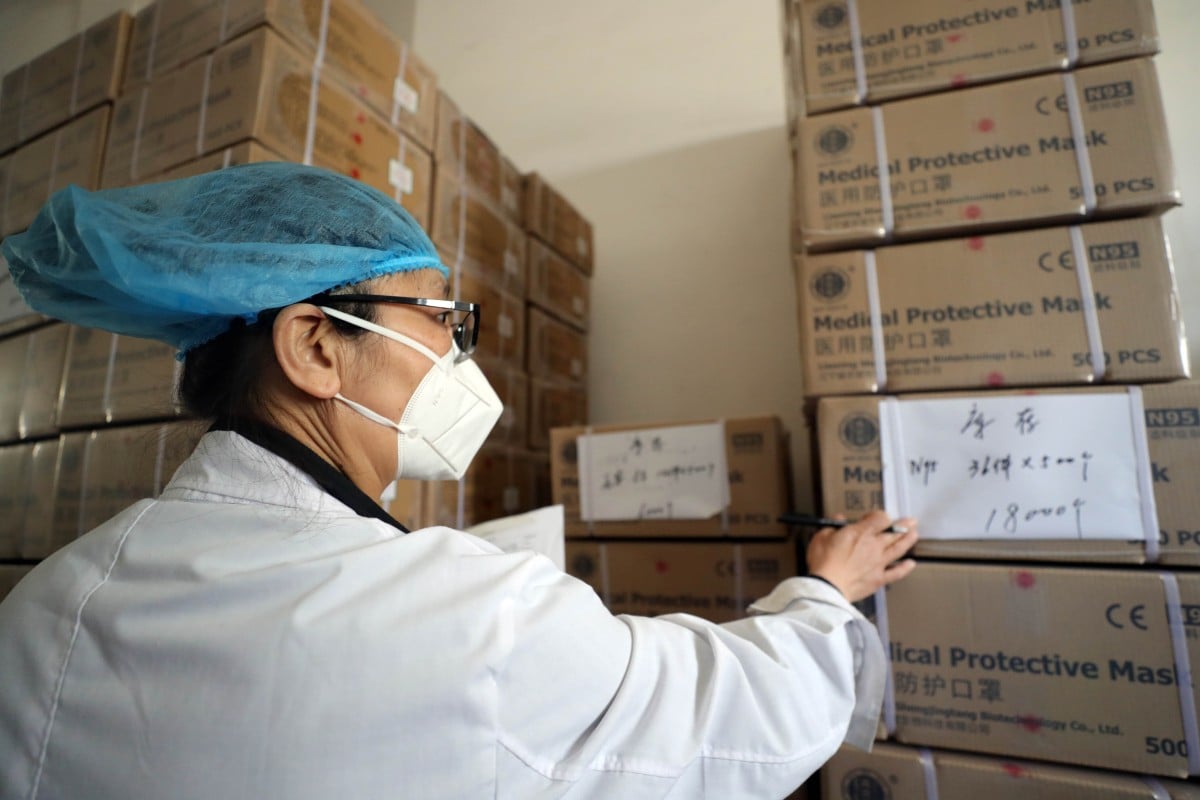
Despite facing some criticism from the West, China’s Asian neighbours have welcomed its medical expertise and vital supplies. Photo: Xinhua
While China’s campaign to mend its international image in the wake of its handling of the coronavirus health crisis has been met with scepticism and even a backlash from the US and its Western allies, Beijing has been quietly gaining ground in Asia.
Teams of experts have been sent to Cambodia, the Philippines, Myanmar, Pakistan and soon to Malaysia, to share their knowledge from the pandemic’s ground zero in central China.
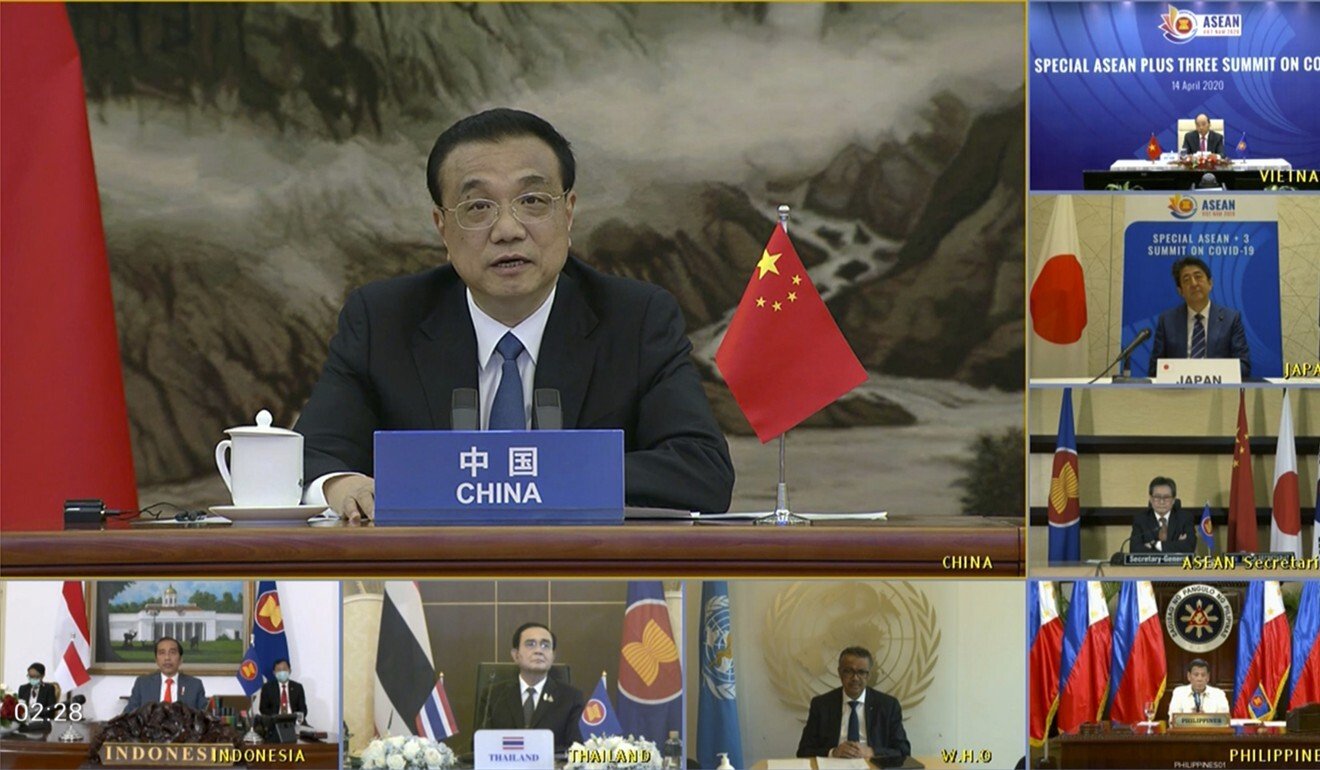
China has also held a series of online “special meetings” with its Asian neighbours, most recently on Tuesday when Premier Li Keqiang discussed his country’s experiences in combating the disease and rebooting a stalled economy with the leaders of the Association of Southeast Asian Nations (Asean), Japan and South Korea.
Chinese Prime Minister Li Keqiang speaks to Asean Plus Three leaders during a virtual summit on Tuesday. Photo: AP
Many Western politicians have publicly questioned Beijing’s role and its subsequent handling of the crisis but Asian leaders – including Philippine President Rodrigo Duterte and Japanese Prime Minister Shinzo Abe – have been reluctant to blame the Chinese government, while also facing criticism at home for not closing their borders with China soon enough to prevent the spread of the virus.
An official from one Asian country said attention had shifted from the early stages of the outbreak – when disgruntled voices among the public were at their loudest – as people watched the virus continue its deadly spread through their homes and across the world.
“Now everybody just wants to get past the quarantine,” he said. “China has been very helpful to us. It’s also closer to us so it’s easier to get shipments from them. The [medical] supplies keep coming, which is what we need right now.”
The official said also that while the teams of experts sent by Beijing were mainly there to observe and offer advice, the gesture was still appreciated.
Another Asian official said the tardy response by Western governments in handling the outbreak had given China an advantage, despite its initial lack of transparency over the outbreak.
“The West is not doing a better job on this,” he said, adding that his government had taken cues from Beijing on the use of propaganda in shaping public opinion and boosting patriotic sentiment in a time of crisis.
“Because it happened in China first, it has given us time to observe what works in China and adopt [these measures] for our country,” the official said.
Experts in the region said that Beijing’s intensifying campaign of “mask diplomacy” to reverse the damage to its reputation had met with less resistance in Asia.
Why China’s ‘mask diplomacy’ is raising concern in the West
29 Mar 2020
“Over the past two months or so, China, after getting the Covid-19 outbreak under control, has been using a very concerted effort to reshape the narrative, to pre-empt the narrative that China is liable for this global pandemic, that China has to compensate other countries,” said Richard Heydarian, a Manila-based academic and former policy adviser to the Philippine government.
“It doesn’t help that the US is in lockdown with its domestic crisis and that we have someone like President Trump who is more interested in playing the blame game rather than acting like a global leader,” he said.
Shahriman Lockman, a senior analyst with the foreign policy and security studies programme at Malaysia’s Institute of Strategic and International Studies, said that as the US had withdrawn into its own affairs as it struggled to contain the pandemic, China had found Southeast Asia a fertile ground for cultivating an image of itself as a provider.
China’s first-quarter GDP shrinks for the first time since 1976 as coronavirus cripples economy
Beijing’s highly publicised delegations tasking medical equipment and supplies had burnished that reputation, he said, adding that the Chinese government had also “quite successfully shaped general Southeast Asian perceptions of its handling of the pandemic, despite growing evidence that it could have acted more swiftly at the early stages of the outbreak in Wuhan”.
“Its capacity and will to build hospitals from scratch and put hundreds of millions of people on lockdown are being compared to the more indecisive and chaotic responses seen in the West, especially in Britain and the United States,” he said.
Coronavirus droplets may travel further than personal distancing guidelines
16 Apr 2020
Lockman said Southeast Asian countries had also been careful to avoid getting caught in the middle of the deteriorating relationship between Beijing and Washington as the two powers pointed fingers at each other over the origins of the new coronavirus.
“The squabble between China and the United States about the pandemic is precisely what Asean governments would go to great lengths to avoid because it is seen as an expression of Sino-US rivalry,” he said.
“Furthermore, the immense Chinese market is seen as providing an irreplaceable route towards Southeast Asia’s post-pandemic economic recovery.”
Aaron Connelly, a research fellow in Southeast Asian political change and foreign policy with the International Institute for Strategic Studies in Singapore, said Asian countries’ dependence on China had made them slow to blame China for the pandemic.
“Anecdotally, it seems to me that most Southeast Asian political and business elites have given Beijing a pass on the initial cover-up of Covid-19, and high marks for the domestic lockdown that followed,” he said.
“This may be motivated reasoning, because these elites are so dependent on Chinese trade and investment, and see little benefit in criticising China.”
China and Vietnam ‘likely to clash again’ as they build maritime militias
12 Apr 2020
The cooperation with its neighbours as they grapple with the coronavirus had not slowed China’s military and research activities in the disputed areas of the South China Sea – a point of contention that would continue to cloud relations in the region, experts said.
Earlier this month an encounter in the South China Sea with a Chinese coastguard vessel led to the sinking of a fishing boat from Vietnam, which this year assumed chairmanship of Asean.
And in a move that could spark fresh regional concerns, shipping data on Thursday showed a controversial Chinese government survey ship, the Haiyang Dizhi 8, had moved closer to Malaysia’s exclusive economic zone.
The survey ship was embroiled in a months-long stand-off last year with Vietnamese vessels within Hanoi’s exclusive economic zone and was spotted again on Tuesday 158km (98 miles) off the Vietnamese coast.
Image copyright HAMPSTEAD THEATREImage caption “Speaking out cost me my job, my marriage and my happiness at the time,” Dr Wang said
A whistleblower who exposed HIV and hepatitis epidemics in central China in the 1990s, potentially saving tens of thousands of lives, has died aged 59.
Dr Shuping Wang lost her job, was attacked, and had her clinic vandalised after she spoke out.
She died in Utah in the US, where she moved after the scandal.
A play inspired by her life is currently running in London, with the playwright calling her a “public health hero”.
Dr Wang never returned to China after leaving, saying it did not feel safe.
Why did Dr Wang speak out?
In 1991 in the Chinese province of Henan, Dr Wang was assigned to work at a plasma collection station. At the time, many locals sold their blood to local government-run blood banks.
It wasn’t long before she realised the station posed a huge public health risk.
Poor collection practices, including cross-contamination in blood-drawing, meant many donors were being infected with hepatitis C from other donors.
Undeterred, she reported the issue to the Ministry of Health. As a result, the ministry later announced that all donors would need to undergo hepatitis C screening – reducing the risk of the disease being spread.
But because of her whistleblowing, Dr Wang said, she was forced out of a job.
Her seniors said her actions had “impeded the business”. She was transferred, and assigned to work in a health bureau. But in 1995, she uncovered another scandal.
Image copyright HAMPSTEAD THEATRE
Dr Wang discovered a donor who had tested HIV positive – but had still sold blood in four different areas.
She immediately alerted her seniors to test for HIV in all the blood stations in Henan province. Again, she was told this would be too costly.
She decided to take things into her own hands, buying test kits and randomly collecting over 400 samples from donors.
She found the HIV positive rate to be 13%.
She took her results to officials in the capital, Beijing. But back home, she was targeted. A man she described as a “retired leader of the health bureau” came to her testing centre and smashed her equipment.
When she tried to block him, he hit her with his baton.
‘I’m not a man. I’m a woman’
In 1996, all the blood and plasma collection sites across the country were shut down for “rectification”. When they re-opened, HIV testing was added.
“I felt very gratified, because my work helped to protect the poor,” she said. But others were not happy.
At a health conference later that year, a high-ranking official complained about that “man in a district clinical testing centre [who] dared to report the HIV epidemic directly to the central government”.
“I stood up and said I’m not a man. I’m a woman and I reported this.”
Later that year, she was told by health officials that she ought to stop work. “I lost my job, they asked me to stay home and work for my husband,” Dr Wang said.
Her husband, who worked at the Ministry of Health, was ostracised by his colleagues. Their marriage eventually broke down.
Image copyright HAMPSTEAD THEATREImage caption A scene from The King of Hell’s Palace
In 2001, Dr Wang moved to the US for work, where she took the English name “Sunshine”.
Henan, the province that Dr Wang had worked in, was one of the worst hit.
The government later announced that a special clinic had been set up to care for those suffering from Aids-related illnesses.
Several years later, Dr Wang re-married and moved with her husband Gary Christensen to Salt Lake City, where she began working at the University of Utah as a medical researcher.
But her past followed her. In 2019, she said, Chinese state security officers made threatening visits to relatives and former colleagues in Henan, in an attempt to cancel the production of a play inspired by her life.
She refused, and the play titled “The King of Hell’s Palace” premiered at London’s Hampstead Theatre in September.
Dr Wang died on 21 September while hiking in Salt Lake City with friends and her husband. It’s thought she may have had a heart attack.
Image caption Dr Wang with playwright Frances Ya-Chu
“Speaking out cost me my job, my marriage and my happiness at the time, but it also helped save the lives of thousands and thousands of people,” she had told the Hampstead Theatre website in an interview just one month before her death.
“She was a most determined, relentless optimistic and most loving woman,” wrote her friend David Cowhig after news of her death.
“She chose the English name Sunshine for a reason. Perhaps her exuberance and love for the outrageous – made possible [the] perseverance she had.”








 CHINDIA ALERT: You'll be living in their world, very soon