Chindia Alert: You’ll be Living in their World Very Soon
aims to alert you to the threats and opportunities that China and India present. China and India require serious attention; case of ‘hidden dragon and crouching tiger’.
Without this attention, governments, businesses and, indeed, individuals may find themselves at a great disadvantage sooner rather than later.
The POSTs (front webpages) are mainly 'cuttings' from reliable sources, updated continuously.
The PAGEs (see Tabs, above) attempt to make the information more meaningful by putting some structure to the information we have researched and assembled since 2006.
BEIJING (Reuters) – China’s factory gate prices fell the most in five months in March, with deflation deepening and set to worsen in coming months as the economic damage wrought by the coronavirus outbreak at home and worldwide shuts down many countries.
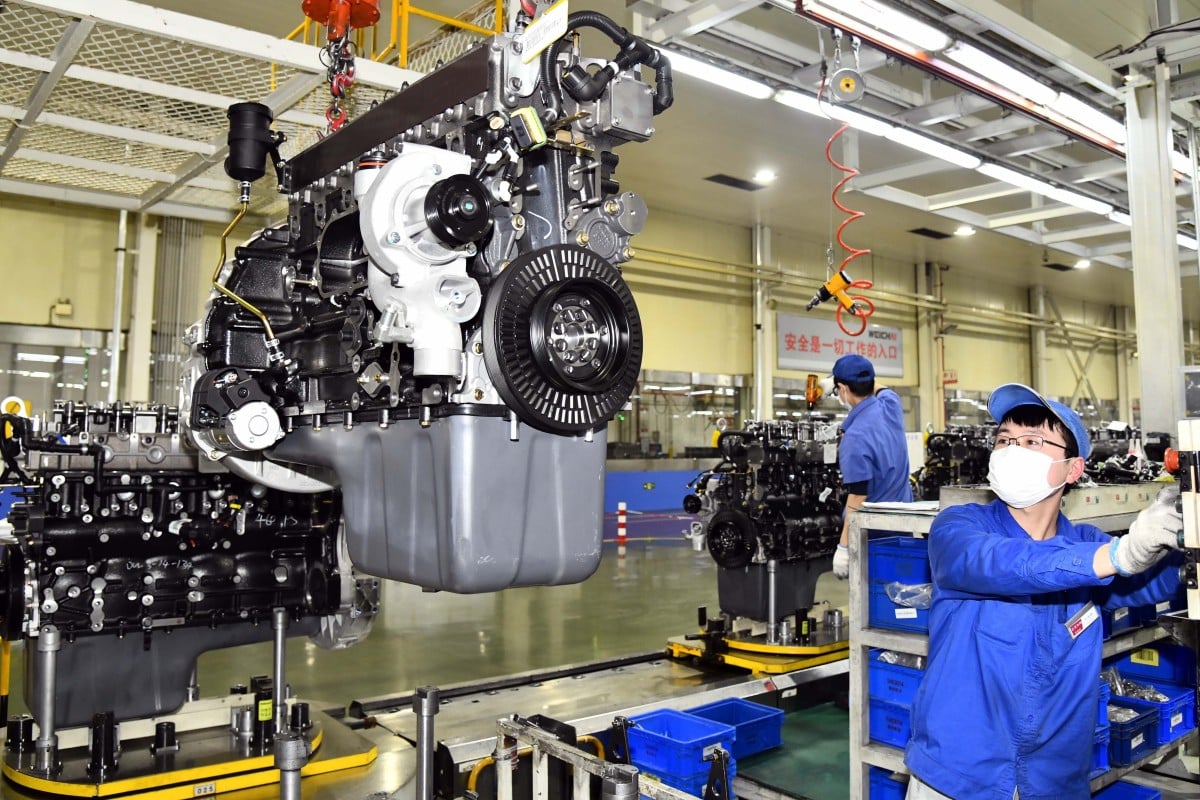
The world’s second-largest economy is trying to restart its engines after weeks of near paralysis to contain the pandemic that had severely restricted business activity, flow of goods and the daily life of people.
Friday’s data from the National Bureau of Statistics suggested a durable recovery was some way off, with China’s producer price index (PPI) falling 1.5% from a year earlier, the biggest decline since October last year. It compared with a median forecast of a 1.1% fall tipped by a Reuters poll of analysts and a 0.4% drop in February.
Headline consumer inflation also eased somewhat last month, partly led by government control measures, while core prices remained benign, leaving more room for monetary easing, some analysts said.
RELATED COVERAGE
China’s auto sales fall at a slower rate in March; industry expects second-half pick-up
China March new loans surge to $405 billion as coronavirus stimulus kicks in
The overall decline in the factory gate gauge was exacerbated by a slump in global oil and commodities prices, which filtered through to crude oil, steel and non-ferrous metal industries, the statistics bureau said in a statement accompanying the data.
“The issue of having more supply than demand, and persistently low oil prices, will intensify deflationary pressures,” said Yang Yewei, a Beijing-based analyst with Southwest Securities.
“Work resumptions on the production side are faster than the repair in demand. Downstream demand is recovering slowly and still remains weak,” he said.
The oil and gas extraction sector had the biggest year-on-year price fall of 21.7%, among the 40 major industrial sectors surveyed, deteriorating sharply from a 0.4% drop in the previous month.
The stringent travel and transport curbs have now been lifted across much of the country including Wuhan, the epicentre of the outbreak where the virus first emerged in late 2019. So far the virus has killed more than 3,300 and infected over 81,000 people in the country.
Analysts expect a deep first-quarter economic contraction in China and have grown increasingly pessimistic about the country’s prospects for 2020 due to the pandemic’s sweeping global impact.
Many economists and policymakers are forecasting a steep global recession this year as numerous countries are forced into lockdowns to contain the spread of the coronavirus, severely curtailing business activity in a major blow to jobs and incomes.
Worldwide, the virus has killed around 95,000 people and infected more than 1.5 million. Policymakers globally have responded to the crisis by launching an unprecedented package of stimulus measures, injecting trillions of dollars to backstop their economies that have been brought to a virtual standstill.
Beijing has also rolled out a series of fiscal and monetary support steps, and sources have told Reuters that policymakers are readying more stimulus in the coming months to stabilise growth and prevent mass unemployment.
China’s consumer prices rose 4.3% from a year earlier in March, compared with a 4.8% gain tipped by a Reuters poll and a 5.2% increase in February, as logistics and transport conditions improved and government price control measures kicked in.
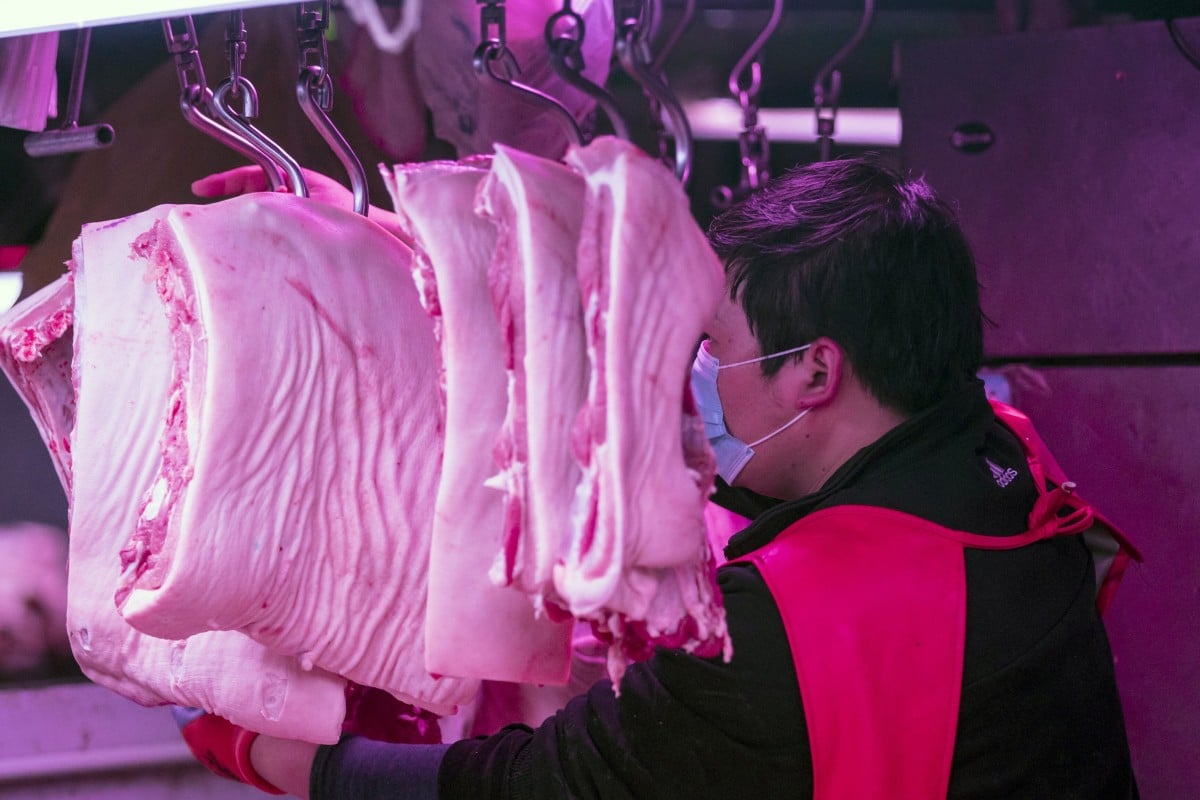
But food prices still rose over 18% from a year earlier, led by a 116.4% jump in pork prices, the data showed. The virus outbreak has pushed up prices of some food items, such as pork and vegetables.
Core inflation – which excludes food and energy prices – remained benign last month at 1.2%,but it still edged up from 1% in February.
China’s pig herd has begun to build again after African swine fever devastated hog populations across the country 18 months ago
Scientists are racing to create disease-resistant pigs, but analysts say that will be undermined by basic hygiene problems in China’s pork industry
China’s pork industry has been severely dented by African swine fever disease in the past 18 months. Photo: Bloomberg
China should focus less on developing disease-resistant “super pigs” to protect its hog herd from infection and do more to improve basic biosecurity, analysts say, as several companies claim to be close to a breakthrough treatment for African swine fever.
China’s hog herd has begun to steadily rebuild after swine fever spread across the country a year and a half ago, killing or forcing the culling of 60 per cent of the pig population, according to authorities.
But poor biosecurity – including the transport of pigs in filthy trucks and a lack of disinfection at farms – still threaten the industry, observers said.
There is no commercially available vaccine for the disease – which is not harmful to humans – but a number of researchers claim they are close.
Swine fever could kill 25% of the world’s pigs, scientists say
China’s Harbin Veterinary Research Institute, the country’s top research body on animal diseases, said last month it had developed a vaccine for African swine fever (ASF) that laboratory testing showed was safe and effective. However, it did not give a timetable on when it would be available for commercial use.
Meanwhile,Shandong Landsee Genetics, a company in China’s eastern Shandong province, was reported this week to have successfully bred ASF-resistant pigs. The pigs, called Lansibai-2, are from the large white breed, one of the most common raised in China.
When approached for comment, a spokeswoman for the company said the research was confidential and she was not authorised to speak to media.
Despite the apparent progress, analysts are generally sceptical that a silver bullet to prevent the disease will be developed on a large scale any time soon.
“Because this disease has been found in many countries, I don’t think there has been major progress [when it comes to eliminating the disease],” said Chenjun Pan, senior analyst for animal protein at Rabobank. “There have been some vaccines, but the effectiveness of the vaccines is not that satisfactory. So far there haven’t been any solutions from a medical perspective.”
There have been some vaccines, but the effectiveness of the vaccines is not that satisfactory – Chenjun Pan
China’s swine fever problem was complicated by an unwillingness from local governments to diagnose and report ASF cases, said E.W. Johnson, of Enable AgTech Consulting in Beijing. It was also complicated by basic hygiene problems, he added.
“Pigs with ASF are sold to slaughter every day, and dirty trucks are going everywhere, spreading the disease as much as they did when the ASF outbreak began,” Johnson said.
“There is no doubt that people are very excited and extremely zealous about these super-pigs. [But] China seems intent on living with ASF rather than getting rid of it.”
“The most important problem now is how to control the ASF epidemic, and this is not the way to do it,” said Feng Yonghui, chief analyst at pork industry website Soozhu.com. “The whole global industry recognises that the greatest preventive measure is improving biosecurity.”
he whole global industry recognises that the greatest preventive measure is improving biosecurity – E.W. Johnson
Improved hygiene can lower the risk of disease in production, said Feng, including sickness caused by bacteria and viruses, like transmissible gastroenteritis, a coronavirus found in pigs.
“It’s a system – you can’t just do one step in the process,” he said. “The whole industry has to study it, and we still need time to improve.”
Basic controls – like keeping pig transport trucks clean, or disinfecting protective equipment used by workers on pig farms – is simple but comes at a price, and some smaller pig farms are struggling to keep up.
China’s outbreak of African swine fever pushes pork off the Lunar New Year menu
“What we’re worried about are the people on the lower rungs of the ladder who aren’t able to keep up with better practises,” Feng said. “If we are to get pig stocks back up to where they were before the outbreak within three years, this is the key issue that stands in the way.”
China’s pork industry is at a turning point in production unlike at any other time in history, he said.
“In the past, when it came to upgrading production, or when the industry went into loss, all producers big and small began again at the same starting line,” he said. “That’s because there was no threat of disease. Now, those with money get to run first.”
Pork prices in China, the world’s top consumer and producer of pork, have surged since AFS began cutting back supply, driving margins up for both domestic and imported pork.
The world’s biggest pork processor, Hong Kong-listed WH Group, reported a 32 per cent jump in profits last year as record high pork prices in China boosted the value of the company’s exports from the United States and lifted margins on its China sales.
China’s deadly African swine fever epidemic is spreading across Asia
China’s total pork production in 2019 was 42.55 million tons, a decrease of 21.3 per cent from 2018, data from the National Bureau of Statistics showed. In 2018, the total pork output was 54.037 million tons, down 0.9 per cent from 2017.
While researchers race to find a cure for swine fever, new cases keep cropping up across the country. On Wednesday, the Ministry of Agriculture and Rural Affairs said local authorities in Sichuan had detected infections in piglets transported from outside the province.
Another outbreak was recorded in Inner Mongolia, where local authorities detected the disease in a herd of 200 piglets on a farm in Ordos city, which killed 92 of the animals, according to the agriculture industry.
Authorities are also monitoring cases of ASF in piglets smuggled into the country and would launch a 60-day investigation into illegal transport of hogs this month.
Despite PMI data showing a return to growth in both the manufacturing and non-manufacturing sectors, China’s economic activity is still far from normal
Headwinds include the threat of global recession, a second wave of coronavirus infections and a property slump, analysts warn
China’s economy has shown signs of recovery after a dismal start to the year. Photo: Xinhua
China’s economy showed signs of a recovery in March after a nationwide lockdown paralysed business in February, but analysts warned that it is not yet out of the woods.
Despite stronger-than-expected government data released on Tuesday, a series of threats lying ahead could derail China’s fragile recovery, including a second wave of infections, a global recession, worsening deflation due to plunging oil prices and a potentially sharp fall in the property market.
“While the lowest point is behind us, it’s not the time to celebrate,” said Larry Hu, chief China economist at Macquarie Bank.
For now, March’s figures suggest that business conditions are improving considerably, as more people are able to return to work and coronavirus cases continue to fall.
While the lowest point is behind us, it’s not the time to celebrateLarry Hu
The official purchasing managers’ index (PMIs) surveys showed that both the manufacturing and services sectors returned to growth in March, with many factories and retailers reopening as mainland authorities got the pandemic under control.
It will be welcome news for Beijing after a series of economic data plunged to all-time lows in January and February – including February’s PMIs, which are viewed as leading indicators of the state of the economy for the month ahead.
The manufacturing PMI, a survey of sentiment among factory owners, bounced back to 52.0 in March from 35.7 in February, which was an all-time low by some distance.
China’s non-manufacturing PMI – including both the services and construction sectors – was even weaker in February at 29.6, but its recovery to 52.3 was more marked.
Coronavirus: What impact will the economic fallout from the Covid-19 pandemic have on you?
A number above 50 signifies growth in sector activity, while a number below indicates contraction.
Both indices were significantly higher than expected and produced the V-shaped recovery in sentiment that policymakers had been so desperately pursuing.
But analysts warned that this may be short-lived as virus containment measures are set to sap demand across the globe, hitting China’s exports hard.
This was perhaps reflected in the fact that while many key components of the PMIs returned to growth in March, new export orders remained negative at 46.4.
Coronavirus: Chinese companies cut salaries and staff in industries hit hardest by Covid-19
“We would like to emphasise that the 52 reading [for manufacturing PMI] actually means a weak business resumption,” said Lu Ting, chief China economist at Nomura.
“We view the jump in both the manufacturing and non-manufacturing PMIs in March as one-off gains from the very low comparison bases in February.”
The dramatic collapse of the economy in the second month of the year meant March’s economic data was always likely to show a positive spike, with PMIs highly sensitive to short-term fluctuations in business conditions due to the way they are collated. Researchers simply ask respondents if things are better or worse than they were the previous month.
“This does not mean output is now back to its pre-virus trend,” said Julian Evans-Pritchard, senior China economist at Capital Economics, in a note. “Instead, it simply suggests that economic activity improved modestly relative to February’s dismal showing, but remains well below pre-virus levels. This is consistent with what the daily activity indicators show.”
It simply suggests that economic activity improved modestly relative to February’s dismal showing, but remains well below pre-virus levelsJulian Evans-Pritchard
Even the Chinese government urged caution against reading too much into the figures.
“We cannot say China’s economy has fully returned to normal levels based on a single month. We need to continue observing changes in the following months,” said a National Bureau of Statistics spokesman, adding that 96.6 per cent of large and medium-sized businesses were back to work as of March 25.
The official PMI survey, which is produced by the National Bureau of Statistics, is weighted more towards larger companies, including state-owned firms that have been the focus of government efforts to review production.
The Caixin-Markit manufacturing PMI data set to be published on Wednesday is weighted more towards smaller, private-sector firms and could show a less buoyant result given their struggles to resume operations.
A new phase of coronavirus blame game: what is the legacy of Covid-19 on global supply chains?
Officials in Beijing have been vocal in recent days about their concerns of a possible
. At a press conference in the capital on Monday, vice-minister of industry and information technology Xin Guobin said that small businesses and exporters might “struggle to survive” in the months ahead, due to global economic turbulence.
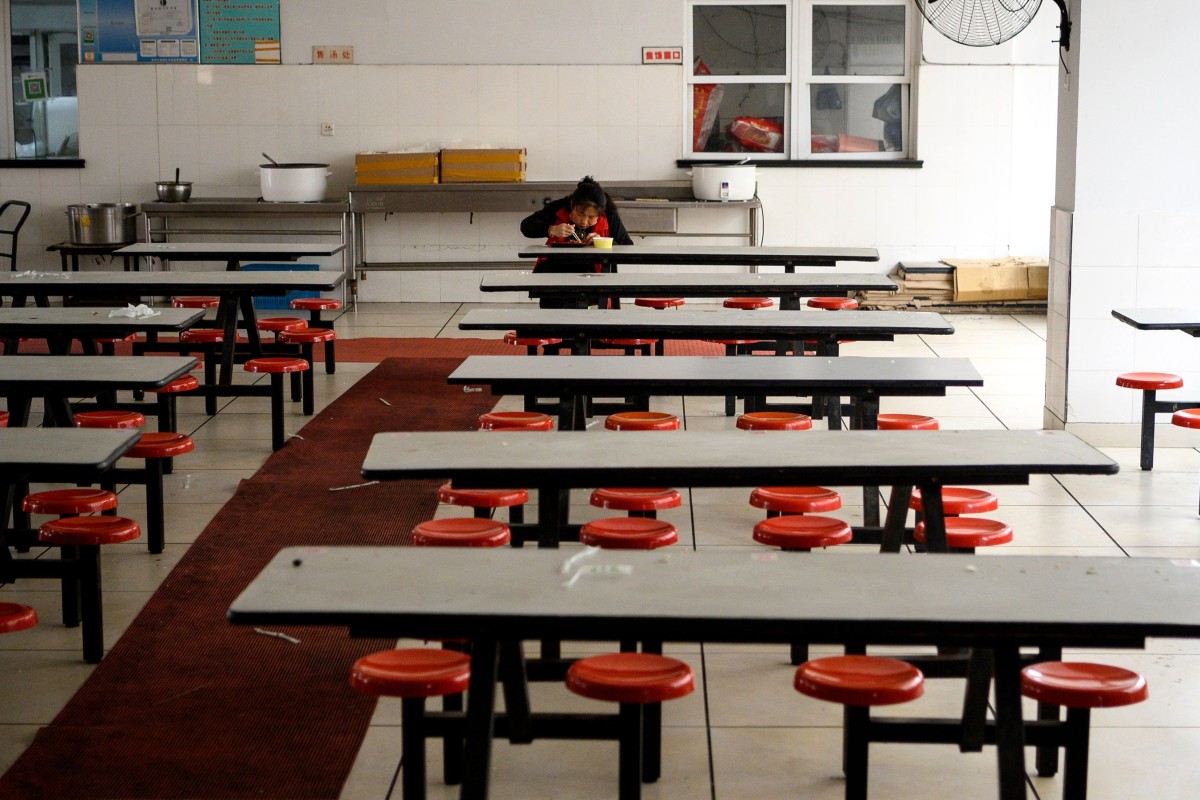
That was reflected in a new study by investment firm Fidelity International that showed while more than half of restaurants in China have reopened, daily turnover was 40 to 50 per cent below levels seen before the outbreak. Hotel occupancy figures, meanwhile, remain in single digits.
“Expect further slack in quarters three and four, which means the authorities will have to postpone their target to double gross domestic product growth levels to the first half of 2021,” said Carlos Casanova, Asia-Pacific economist at insurer Coface.
NANJING, March 19 (Xinhua) — Chinese cities are encouraging residents to dine out and shop with measures such as handing out e-vouchers to boost consumption sectors hit hard by the novel coronavirus outbreak.
Like many living in the eastern city of Nanjing, Wang Linlin was waked up by her alarm clock at midnight and with a few clicks on her cellphone, she was ready to meet her luck of the draw: getting a meal voucher worth 100 yuan (about 14.2 U.S. dollars).
“I’ve always been thinking about hanging out and having hotpot with my friends after the epidemic, so getting a voucher would be great,” Wang said.
Nanjing has been giving out vouchers worth 318 million yuan to its residents since Sunday. People are invited to participate in lotteries for e-vouchers which can be used in restaurants, gymnasiums, bookshops as well as tourist spots, helping the service sector bounce back.
The voucher bonus has been well received as more than 1.6 million local citizens have registered for the lotteries as of Monday, according to the Nanjing Big Data Administration Bureau.
Besides Nanjing, many other regions have also been taking similar actions.
Macao gives out vouchers totaling 2.2 billion patacas (about 275 million U.S. dollars) to its residents. The city of Ningbo in east China’s Zhejiang Province is issuing consumption vouchers worth 100 million yuan while the city of Jinan, east China’s Shandong Province, is handing out vouchers worth 20 million yuan to stimulate spending on tourism and culture.
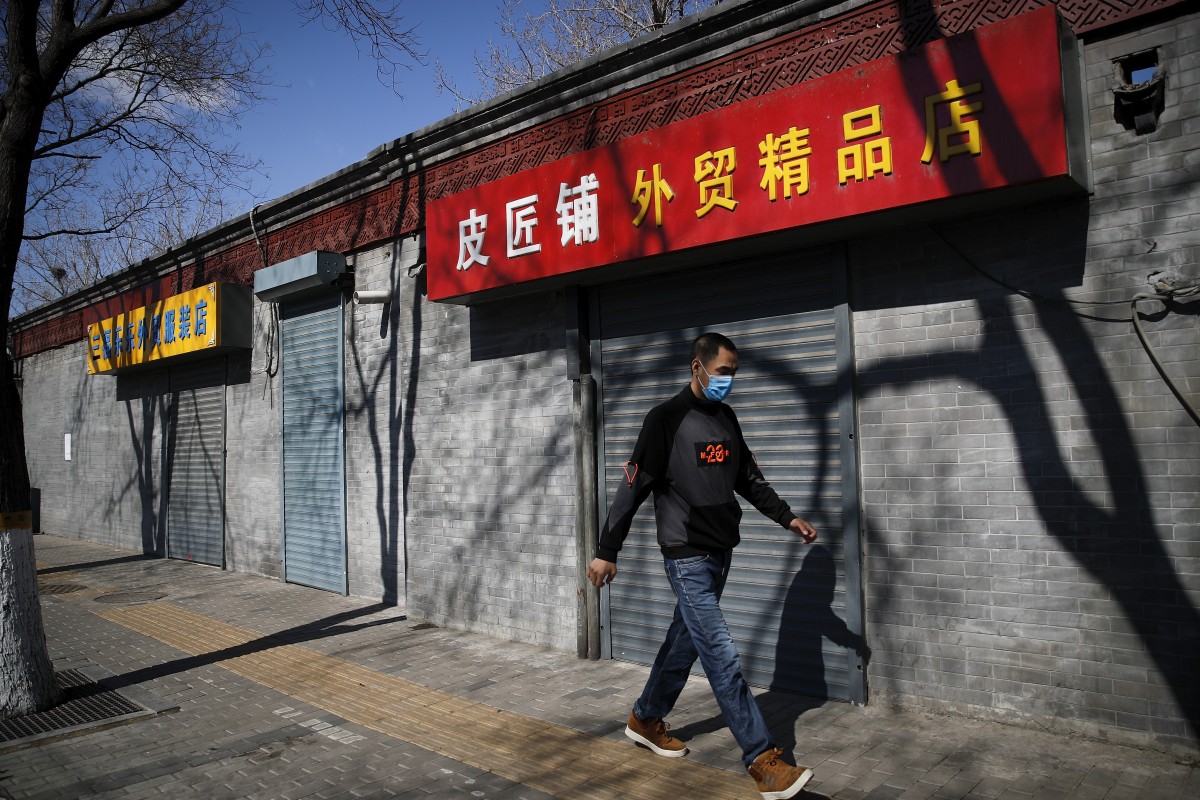
Due to the coronavirus outbreak, Chinese customers have shied away from restaurants and shopping malls. China’s retail sales of consumer goods, a major indicator of consumption growth, declined 20.5 percent year on year in the first two months of this year, according to the National Bureau of Statistics.
“People are more willing to dine out with the vouchers, which can boost confidence in the catering sector and finally get the economy back on track,” said Shen Jiahua, chairman of a chain restaurant company in Nanjing.
After the coronavirus outbreak ends, people are eager to spend generously. According to a survey conducted by the Jiangsu consumers council, nearly 90 percent of the respondents expressed suppressed consumption desire.
Restaurants, shopping malls, movie theaters, gymnasiums and tourist spots are the top five destinations for consumers to unleash their spending spree after normal life resumes, the survey showed.
Local officials across China have been taking the lead in recent days in patronizing restaurants and shopping malls, hoping to use their appearances in public to persuade more residents to go outside.
In provinces such as Jiangsu, Anhui, and Jiangxi, government notices have urged officials to dine out and go shopping to help related businesses through the epidemic period.
“Government officials are using their actions to convey confidence and support work resumption and consumer spending,” commented a Chinese netizen.
Plunges in official and private sector purchasing managers’ indices amid the coronavirus outbreak prompted sharp revisions of economic forecasts
Analysts expect China to enact additional fiscal and monetary stimulus but stop short of massive support enacted after the global financial crisis in 2008
Due to the outbreak of the coronavirus, the once unthinkable scenario in which China’s economy posts a zero growth rate or even an absolute contraction compared to the previous quarter is now seen as a real possibility. Photo: AP
The odds are rising that China will report a sharp deceleration in growth – or even a contraction in the first quarter as a result of the impact of the coronavirus epidemic.
The outbreak has paralysed the country’s manufacturing and service sectors, putting Beijing in the difficult position of either forgoing its economic growth goal for 2020 or returning to its old playbook of massive debt-fuelled economic stimulus to support growth.
The larger-than-expected deterioration in the official and private sector purchasing managers’ indices for both the manufacturing and services sectors to all-time lows in February – the first available economic indicators showing the extent of the economic damage done by the epidemic – has prompted economists to slash their Chinese growth forecasts.
Several are even expecting the once unthinkable scenario in which China’s economy posts a zero growth rate or even an absolute contraction compared to the previous quarter, even though the weakness is likely to be only short-lived.
A contraction in first quarter growth would be the first since the end of the Cultural Revolution in 1976.
A report published by the East Asian Institute at the National University Singapore noted that China could report a contraction of 6.3 per cent in the first quarter from the first quarter of 2019, while the growth rate for 2020 is set to fall well short of the 5.6 per cent needed by Beijing to meet its economic goal.
If China still wants to achieve an average 5.6 per cent growth for 2020, it would have to engineer a growth rate of as high as 12.7 per cent in the second half of the year, according to the report by Bert Hofman, Sarah Tong and Li Yao.
“The question is whether this is feasible and whether the consequences in terms of increased debt and potentially less productive investment are worth the price,” according to the report.
What is gross domestic product (GDP)?
China’s headline year-over-year gross domestic product (GDP) growth rate has hovering in a narrow range between 6 per cent and 7 per cent for 18 consecutive quarters until the end of 2019, but a sharp dip in the otherwise steady growth trajectory in the world’s second largest economy would send fresh warning signs about the risks of relying excessively on China as a production base and consumption market, particularly for large multinationals from Hyundai to Apple.
An official recognition of an economic contraction, even a brief one, would break a long tradition of China reporting consistent growth to prove the Communist Party’s ability to manage the economy and to rally the whole country to achieve one historical milestone after another.
insisted last week that China would realise the vision of building up a “comprehensively well-off” society by 2020, an inheritance from China’s former paramount leader Deng Xiaoping and a major gauge of progress to realise Xi’s grand “Chinese dream” by the middle of the century.
One key but loosely defined parameter for achieving a “comprehensively well-off” society is that the size of the economy at the end of this year will be double that of 2010.
To achieve that, economists calculate that China must achieve a 5.6 per cent growth this year, although Beijing has been vague about the specific target, although this now seems out of reach barring massive stimulus or a redefinition of the goal.
Louis Kuijs, head of Asia economics at Oxford Economics, said his group has cut its forecast for the year-on-year growth rate to 2.3 per cent for the first quarter and 4.8 per cent for 2020 overall, adding that it would be next to impossible for China to make up the lost ground during the reminder of the year given the impact of the coronavirus
on the rest of the world, particularly South Korea, Japan and Italy, who are all major trading partners.
It will be extremely difficult, to say the least, to meet the annual growth targets for 2020 set previously. It would require massive, unreasonable amounts of stimulus, if it is at all possible, given the headwinds Louis Kuijs
“It will be extremely difficult, to say the least, to meet the annual growth targets for 2020 set previously. It would require massive, unreasonable amounts of stimulus, if it is at all possible, given the headwinds,” Kuijs said.
Instead, it would “make much more sense” for the Chinese leadership to play down the need to literally meet the previously set economic target,” he added.
Beijing’s social and economic development targets for this year have not yet been made public, even though Xi has pledged that the government would still achieve them despite the challenge posed by the virus outbreak.
The full-year targets covering growth, employment and inflation are usually released at the National People’s Congress, the ceremonial gathering of China’s legislature in early March, but this key annual event has been postponed due to the threat of the coronavirus, which has infected over 80,000 people and killed more than 2,900 in the country as of Tuesday.
China’s National Bureau of Statistics is due to publish first quarter GDP growth data in mid-April, with combined industrial production, retail sales and fixed-asset investment data for January and February due next week.
They will offer a clearer picture of how much the coronavirus epidemic has damaged China’s growth in the first two months of this quarter, although the damage it has caused in China and the rest of the world is hard to measure because the epidemic is still evolving.
Production among manufacturing companies across China, except in the virus epicentre of Wuhan, Hubei province, have been gradually returned to normal, with firms that have close ties to local governments and access to financial resources resuming production faster than the much larger number of small businesses.
Chinese diaspora fights coronavirus discrimination in the US
The latest data from China’s industry ministry showed that only 32.8 per cent of
had restarted production as of the middle of last week, an increase of just 3.2 percentage points from three days earlier. But even among the larger enterprises the government is trying to help, many are not running at full capacity due to disrupted logistics that have impeded the delivery of raw materials to factories and finished products to customers.
A shortage of workers due to travel barriers erected to stem the spread of the virus, or local regulations that prevent factories from resuming full operations until they have implemented sufficient health safeguards, are also hampering efforts.
Foxconn, which assembles most of Apple’s iPhones in China, said normal production is not expected to resume until the end of March.
China, though, has limited its economic aide policies to “targeted” fiscal and monetary moves, avoiding the massive stimulus it undertook in 2008 in response to the global financial crisis that led to the negative side-effects of high debt and unproductive investments.
[China] will be cautious about the scale of any intervention. The size of the stimulus will likely depend on how quickly economic activity recovers on its own Andy Rothman
Andy Rothman, a San Francisco-based strategist for investment fund Matthews Asia and a long-time watcher of the Chinese economy, said China will report a sharp fall in economic activity in the first quarter and that it “is prepared to implement a stimulus”.
“But [China] will be cautious about the scale of any intervention. The size of the stimulus
will likely depend on how quickly economic activity recovers on its own,” Rothman said.
China’s ruling Communist Party has never reported a contraction in economic growth since the country started the reform and opening up movement in 1978.
Even in 1990, when China was hit by Western sanctions following the crackdown on the 1989 pro-democracy movement, the country still reported an annual growth of 3.8 per cent.
The larger-than-expected fiscal and monetary policy stimulus will help make meeting the targets for 2020 less challengingLiu Li-Gang
In the history of quarterly GDP growth rates – China started to report such data in 1994 going back to 1992 – the lowest growth rate on record of 6.0 per cent was in the third and fourth quarters of 2019.
The most recent year that China admitted to an economic contraction was 1976, the final year of the Culture Revolution and the year when chairman Mao Zedong died.
Liu Li-Gang, the chief China economist for Citigroup Global Markets Asia in Hong Kong, said Beijing has the policy reserves to keep economic growth on track, including increasing the fiscal deficit and loosening monetary policy.
“The lower GDP growth [in the first quarter] means that larger fiscal and monetary policy easing will be needed,” Liu said. “The larger-than-expected fiscal and monetary policy stimulus will help make meeting the targets for 2020 less challenging.”
Purchasing managers’ indexes for both manufacturing and service sectors drop to all-time lows
Steep falls raise questions over extent of damage epidemic has caused to China’s economy and how long it will take the country to recover
Many Chinese factories have faced a labour shortage as migrants have been unable to return to work because of the coronavirus outbreak. Photo: AFP
The damage caused by the coronavirus outbreak to China’s US$14 trillion economy could be much worse than Beijing hoped, as official measures for the country’s factory and service activity indicated on Saturday, threatening President Xi Jinping’s vision for 2020 and underscoring his urgent appeal to get production back to normal.
Monthly economic indicators for February sank to all-time lows as the coronavirus halted China’s manufacturing machine and froze activity in the service sector – from retailing to recycling – painting a bleak picture of the world’s second-biggest economy and challenging Beijing’s repeated assurance that the impact would be manageable and short-lived.
Covid-19, the disease caused by the coronavirus – was first reported in Wuhan in December. Since then it has spread to more than 50 countries and more than 85,000 people have been infected. The outbreak has disrupted travel and cargo shipments, and caused stock markets to slump.
China’s official February purchasing managers’ indexes (PMI) for both manufacturing and services, released by the National Bureau of Statistics on Saturday, confirmed fears that China’s economy was in bad shape and fanned speculation that it may even contract in the first quarter.
Larry Hu, chief China economist at Macquarie Capital in Hong Kong, said in a note that Beijing might report negative growth for “the first time since the Cultural Revolution”.
The manufacturing PMI, which measures factory activity, dropped to 35.7 in February – below the previous all-time low of 38.8 set in November 2008 during the global financial crisis – from 50 in January when the impact of the epidemic was not apparent.
A reading below 50 indicates a contraction in activity.
The February PMI figures confirmed fears that China’s economy was in bad shape. Photo: AFP
All of the sub-indexes of the PMI pointed to the difficult situation facing Chinese factories. Output plummeted, new orders vanished, exports and imports stopped, and logistics were badly disrupted. Input prices, which reflects the costs factories must pay, was the only sub-index that remained above 50.
The non-manufacturing PMI – a gauge of sentiment in the services and construction sectors – also dropped, to 29.6 from 54.1 in January. This was also the lowest on record, beating the previous low of 49.7 in November 2011, according to the China Federation of Logistics and Purchasing, which produces the index with the National Bureau of Statistics.
The declines in the February reflect the difficulties businesses are having in bringing production back online due to shortages of labour as well as difficulties receiving supplies or shipping goods to market because of transport restrictions enacted to contain the spread of the virus.
An extended slump would put upwards pressure on unemployment, especially among small, private sector service firms. Beijing, which worries that rising joblessness could cause social unrest, has called on local governments to remove unnecessary restrictions to get businesses back to work.
The employment sub-index in the manufacturing PMI fell to 31.8 in February.
“It is not because factories have stopped hiring migrant workers, it is because the flow of migrant workers to factories has been blocked,” said Hua Changchun, an analyst at brokerage Guotai Junan Securities. “There’s no point talking about resuming production if workers can’t return to their jobs.”
Zhang Qiqun, a researcher with the Development Research Centre of State Council, said in a statement that the major economic indicators for this quarter would see “obvious drops” and China must “be prepared”.
The employment sub-index in the manufacturing PMI fell to 31.8 in February. Photo: AFP
How quickly China can dig itself out of the coronavirus hole is a matter of debate.
According to the PMI survey, about 90 per cent of medium and large-sized manufacturers are expected to resume production in March, meaning about 10 per cent will still be closed four weeks from now.
As for small firms, the industry ministry said this week that two-thirds would still be closed at the end of February.
China’s production difficulties have resulted in economic problems for nations around the world that rely on supply chains that begin or pass through the country. The global spread of the coronavirus will only exacerbate the problem.
Barclays and Nomura forecast China’s first-quarter growth at 2 per cent, while Capital Economics said it would contract in year-on-year terms.
“The sharp drop in China’s manufacturing PMI in February reinforces our view that the normalisation in economic activity will be delayed,” said Xing Zhaopeng, an economist at Australia & New Zealand Banking Group.
“There’s scant chance for a V-shaped rebound – the authorities are using targeted aids more than stimulus to stabilise the economy and that will lead to a gradual bounce.”
The National Bureau of Statistics tried to put a brave face on the data, saying there would be a substantial improvement in March.
“The resumption of work is ramping up and market confidence is steadily recovering,” said Zhao Qinghe, a senior statistician at the NBS.
“Although the novel coronavirus pneumonia epidemic has caused a larger impact on production and operations of Chinese enterprises … currently the epidemic has come under initial containment, and the negative impact on production is gradually weakening.”
Image copyright FENG VIDEOImage caption Wu Huayan ate only rice and chillies in order to save money to help her ill brother
Well-wishers have donated almost a million yuan to a Chinese student who was hospitalised after living on 2 yuan ($0.30, £0.20) a day for five years.
The case of Wu Huayan shocked Chinese people after it hit the headlines earlier this week.
The 24-year old woman became seriously malnourished while struggling to study and support her sick brother.
Ms Wu’s story also sparked anger at authorities for failing to recognise her plight and help her much earlier.
After the story was reported, donations began pouring in for the college student in the city of Guiyang – reportedly totalling some 800,000 yuan ($114,000, £88,000).
What is Wu Huayan’s story?
Earlier, this month, the young woman went into hospital after having difficulty breathing, according to Chinese media.
She was only 135cm (4ft 5ins) tall, weighing barely more than 20kg (43 pounds; three stones).
The doctors found she was suffering from heart and kidney problems due to five years spent eating minimal amounts of food. She said she needed to save money to support her sick brother.
Wu Huayan lost her mother when she was four and her father died when she was in school.
She and her brother were then supported by their grandmother, and later by an uncle and aunt who could only support them with 300 yuan ($42, £32) each month.
Most of that money went on the medical bills of her younger brother, who had mental health problems.
This meant Ms Wu spent only 2 yuan a day on herself, surviving largely off chillies and rice.
The siblings are from Guizhou, one of the poorest provinces in China.
Media caption China’s uphill struggle fighting extreme poverty
What has the reaction been?
The case sparked an outpouring of concern – and anger at authorities.
Many people on social media said they wanted to help with donations, and many voiced concern about her college not helping her.
One user called her situation “worse than that of refugees in Afghanistan”, while another pointed to the extravagant cost of China’s 70th anniversary celebrations, saying the money could have been better spent.
Others expressed their admiration at her efforts to help her brother, while also persevering with her studies in college.
Aside from the donations on crowd funding platforms, her teachers and classmates donated 40,000 yuan ($5,700; £4,400), while local villagers collected 30,000 yuan to help her.
Officials released a statement saying Ms Wu had been receiving the minimum government subsidy – thought to be between 300 and 700 yuan a month – and was now getting an emergency relief fund of 20,000 yuan.
“We will keep following the case of this strong-minded and kind girl,” the Tongren City Civil Affairs Bureau said.
“We will actively co-operate with other relevant departments to solve the problem according to the minimum living standard and temporary assistance responsibility that the civil affairs department bears.”
Dubbed “Little Wang”, his story also went viral, leading to international donations from people impressed by his resilience, and shocked at his poverty.
Image copyright PEOPLE’S DAILY
While China’s economy has skyrocketed over the past decades, poverty has not disappeared, and inequality has grown.
One major reason cited is the huge divide between rural and urban areas.
As a point of comparison, in rural region of Guizhou where Ms Wu lives, that figure is around 16,703 yuan.
China has moved from being “moderately unequal in 1990 to being one of the world’s most unequal countries,” according to a 2018 report by the International Monetary Fund.
According to the National Bureau of Statistics in 2017, 30.46 million rural people were still living below the national poverty line of $1.90 a day.
China has previously pledged to “eliminate” poverty by 2020.
An increasing proportion of young people no longer willing to wait tables in China as restaurant owners look to new technology for answers
Catering robots developed by Pudu Tech, the three-year-old Shenzhen start-up, have been adopted by thousands of restaurants in China, as well as some foreign countries including Singapore, Korea, and Germany. Photo: Handout
Two years ago, Bao Xiangyi quit school and worked as a waiter in a restaurant for half a year to support himself, and the 19 year-old remembers the time vividly.
“It was crazy working in some Chinese restaurants. My WeChat steps number sometimes hit 20,000 in a day [just by delivering meals in the restaurant],” said Bao.
The WeChat steps fitness tracking function gauges how many steps you literally take and 20,000 steps per day can be compared with a whole day of outdoor activity, ranking you very high in a typical friends circle.
Bao, now a university student in Hangzhou, Zhejiang province, quit the waiter job and went back to school.
“I couldn’t accept that for 365 days a year every day would be the same,” said Bao.
“Those days were filled with complete darkness and I felt like my whole life would be spent as an inferior and insignificant waiter.”
Olivia Niu, a 23-year-old Hong Kong resident, quit her waiter job on the first day. “It was too busy during peak meal times. I was so hungry myself but I needed to pack meals for customers,” said Niu.
Being a waiter has never been a top career choice but it remains a big source of employment in China. Yang Chunyan, a waitress at the Lanlifang Hotel in Wenzhou in southeastern China, has two children and says she chose the job because she needs to make a living.
Catering robots developed by Pudu Tech, the three-year-old Shenzhen start-up. Photo: Handout
Today’s young generation have their sights on other areas though. Of those born after 2000, 24.5 per cent want careers related to literature and art. This is followed by education and the IT industry in second and third place, according to a recent report by Tencent QQ and China Youth Daily.
Help may now be at hand though for restaurants struggling to find qualified table staff who are able to withstand the daily stress of juggling hundreds of orders of food. The answer comes in the form of robots.
Japan’s industrial robots industry becomes latest victim of the trade war
Shenzhen Pudu Technology, a three-year-old Shenzhen start-up, is among the tech companies offering catering robots to thousands of restaurant owners who are scrambling to try to plug a labour shortfall with new tech such as machines, artificial intelligence and online ordering systems. It has deployed robots in China, Singapore, Korea and Germany.
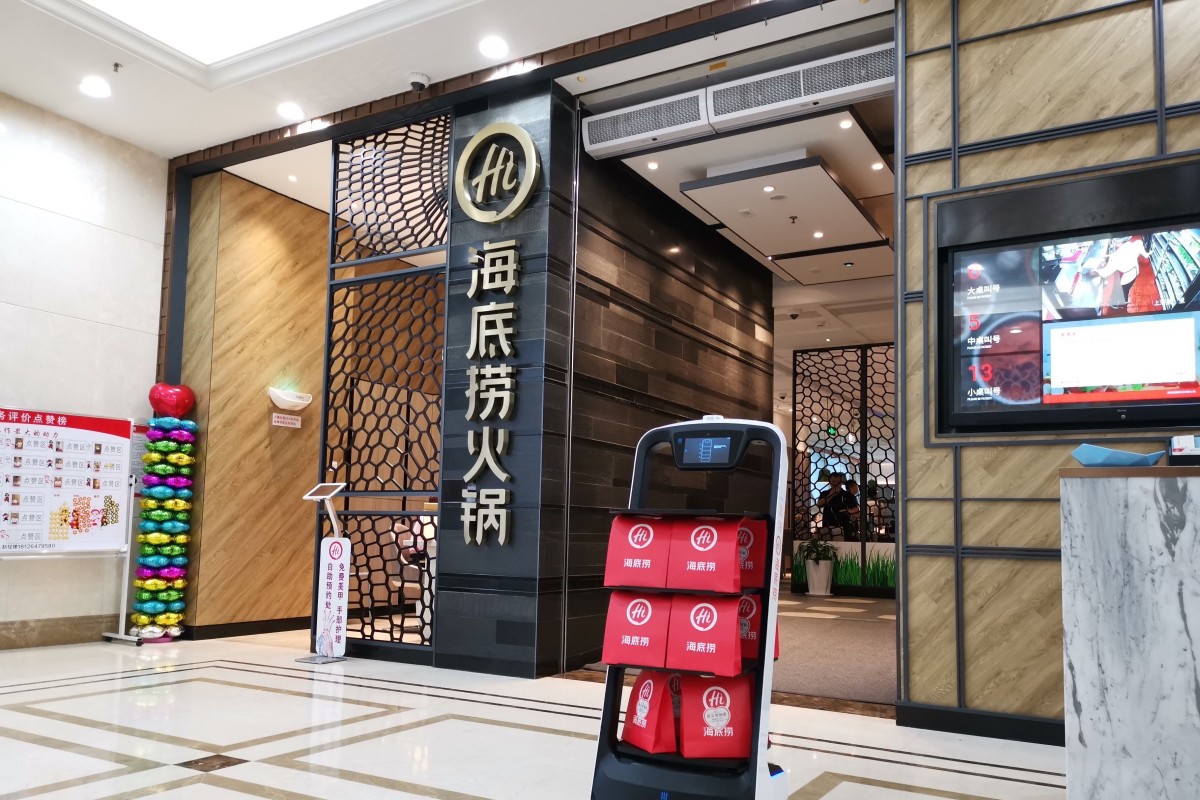
With Pudu’s robot, kitchen staff can put meals on the robot, enter the table number, and the robot will deliver it to the consumer. While an average human waiter can deliver 200 meals per day – the robots can manage 300 to 400 orders.
“Nearly every restaurant owner [in China] says it’s hard to recruit people to [work as a waiter],” Zhang Tao, the founder and CEO of Pudu tech said in an interview this week. “China’s food market is huge and delivering meals is a process with high demand and frequency.”
Pudu’s robots can be used for ten years and cost between 40,000 yuan (US$5,650) and 50,000 yuan. That’s less than the average yearly salary of restaurant and hotel workers in China’s southern Guangdong province, which is roughly 60,000 yuan, according to a report co-authored by the South China Market of Human Resources and other organisations.
As such, it is no surprise that more restaurants want to use catering robots.
According to research firm Verified Market Research, the global robotics services market was valued at US$11.62 billion in 2018 and is projected to reach US$35.67 billion by 2026.
Can robots and virtual fruit help the elderly get well in China?
China’s labour force advantage has also shrank in recent years. The working-age population, people between 16 and 59 years’ old, has reduced by 40 million since 2012 to 897 million, accounting for 64 per cent of China’s roughly 1.4 billion people in 2018, according to the national bureau of statistics.
By comparison, those of working age accounted for 69 per cent of the total population in 2012.
Other Chinese robotic companies are also entering the market. SIASUN Robot & Automation Co, a hi-tech listed enterprise belonging to the Chinese Academy of Sciences, introduced their catering robots to China’s restaurants in 2017. Delivery robots developed by Shanghai-based Keenon Robotics Co., founded in 2010, are serving people in China and overseas markets such as the US, Italy and Spain.
Pudu projects it will turn a profit this year and it is in talks with venture capital firms to raise a new round of funding, which will be announced as early as October, according to Zhang. Last year it raised 50 million yuan in a round led by Shenzhen-based QC capital.
To be sure, the service industry is still the biggest employer in China, with 359 million workers and accounting for 46.3 per cent of a working population of 776 million people in 2018, according to the national bureau of statistics.
And new technology sometimes offers up new problems – in this case, service with a smile.
“When we go out for dinner, what we want is service. It is not as simple as just delivering meals,” said Wong Kam-Fai, a professor in engineering at the Chinese University of Hong Kong and a national expert appointed by the Chinese Association for Artificial Intelligence. “If they [robot makers] can add an emotional side in future, it might work better.”
Technology companies also face some practical issues like unusual restaurant layouts.
“Having a [catering robot] traffic jam on the way to the kitchen is normal. Some passageways are very narrow with many zigzags,” Zhang said. “But this can be improved in future with more standardised layouts.”
Multi-floor restaurants can also be a problem.
Dai Qi, a sales manager at the Lanlifang Hotel, said it is impossible for her restaurant to adopt the robot. “Our kitchen is on the third floor, and we have boxes on the second, third, and fourth floor. So the robots can’t work [to deliver meals tdownstairs/upstairs],” Dai said.
But Bao says he has no plans to return to being a waiter, so the robots may have the edge.
“Why are human beings doing something robots can do? Let’s do something they [robots] can’t,” Bao said.
The manufacturing purchasing managers’ index, released by the National Bureau of Statistics on Saturday, was 49.5 in August
Figure adds to a month of woe for policymakers in Beijing, even ahead of planned US tariff increases on September 1, October 1, and December 15
China’s manufacturing purchasing managers’ index fell by 0.2 points in August as the trade war continued to bite. Photo: Xinhua
As the trade war with the United States continues to gather pace, manufacturers in China remain gloomy about their prospects, with the sector activity contracting for the fourth successive month in August.
The manufacturing purchasing managers’ index (PMI), released by the National Bureau of Statistics (NBS) on Saturday, stood at 49.5 in August, down from a reading of
, and below analysts’ expectations. The median result of a survey of analysts by Bloomberg expected a reading of 49.6.
The PMI is a gauge of sentiment among factory operators, with 50 being the demarcation line between expansion and contraction in sector activity. In the survey, manufacturers are asked to give a view on business issues such as export orders, purchasing, production and logistics.
That the index has remained in contractionary territory for six of eight months this year shows that the effects of US tariffs are resonating through the Chinese economy. The manufacturing PMI only showed expansion in March and April of this year.
New and higher US tariffs scheduled to enter force on September 1, October 1 and December 15 could provide some very temporary boost to Chinese exports and therefore manufacturers, should they inspire American buyers to make early purchases to pay lower tariff rates. However the long term trajectory is negative, with many manufacturers scoping out or already relocating to production sites outside the world’s second largest economy.
Also released on Saturday was the official non-manufacturing PMI, a survey of the construction and services sectors. This stood at 53.8, up from 53.7 in July, showing that these sectors have remained more robust in the face of a general slowdown in China’s economy. The Bloomberg survey of analysts had expected non-manufacturing PMI in August to remain unchanged.
Composite PMI, a combined reading of both manufacturing and non-manufacturing, was 53, down from 53.1 in July.
The August PMI decline “indicates downward pressure on the economy,” said Zhang Liqun, an analyst with the China Federation of Logistics and Purchasing, which produces the index with the NBS.
“Corporations’ forecasts of the market outlook were quite poor while being cautious on their production operations,” Zhang said. The PMI indicated a drop in new orders, which also reflected a lack of domestic demand. Given that the US is escalating tensions with China, downward pressure on external demand is also apparent, Zhang said.
August was a month to forget for policymakers in Beijing, with a series of negative data highlighting the serious economic challenges facing the nation. With the trade war threatening to tip the global economy into a recession, China remains heavily exposed.
The trade war is having a significant impact on Chinese manufacturing. Photo: Xinhua
While exports grew by 3.3 per cent in July, a sign of front-loading, imports fell by 5.6 per cent, emphasising the issues with consumption in China. This problem was also clear in retail sales figure, which came in at a disappointing 7.6 per cent for July, down from 9.8 per cent growth in June.
The mainland government will also seek to create a level playing field for businesses, most of which are privately-owned, in terms of market entry and regulation
Small and medium-sized firms are vulnerable to trade disputes and an economic slowdown even though they contribute the majority of growth and employment
China plans to make it easier and cheaper for businesses to access credit through subsidies and certain bank loans, according to a comprehensive policy guidelines jointly released by the Central Committee and the State Council on Sunday. Photo: Alamy
China will “remove all sorts of unreasonable barriers and restrictions” to help small and medium-sized enterprises which are seen as vital to help employment and economic growth amid the trade war with the United States.
Beijing plans to make it easier and cheaper for businesses to access credit through subsidies and certain bank loans, according to a comprehensive policy guidelines jointly released by the Central Committee of the Communist Party of China and the State Council on Sunday.
The mainland government will also seek to create a level playing field for businesses, most of which are privately-owned, in terms of market entry and regulation.
“Small and medium-sized enterprises is an dynamic power for national economic and social important and is critical for expanding employment, improving people’s livelihood, and to foster innovation,” the guidelines said. “For now, they are facing problems of rising production costs, difficulty in obtaining credit and insufficient capabilities to innovate – these issues demand high attention.”
China will “remove all sorts of unreasonable barriers and restrictions, trying to ensure fair competition and provide sufficient market in terms of market entry, licensing, bidding and the military-civil infusion,” it added.
While most of the policies are not completely new, the move to pull them together into a larger policy document, which will serve as a guideline for local authorities, shows China’s intention to stabilise the domestic economic situation as its trade disputes with the US continues.
Beijing has also designed a variety of financial policy tools, including targeted required reserve ratio cuts and the use of small and medium-sized enterprise loans as collateral for medium-term lending facilities granted by the central bank, meaning banks will have more incentives to offer financing.
To further boost lending, it will also offer some exemptions for interest received from value added tax, while also providing tax breaks for small firms and start-ups, a lower social security contribution ratio and an increase in government procurement, according to the guidelines.
Small and medium-sized enterprises is an dynamic power for national economic and social important and is critical for expanding employment, improving people’s livelihood, and to foster innovation.New guidelines
The need for the Chinese government to support small businesses became even more obvious last summer when it began its trade was with the US. Small private businesses are more vulnerable to trade disputes and an economic slowdown than state-owned enterprises, which are often bigger and enjoy favourable treatments from the government and banks, even though they contribute the majority of growth and employment.
Employment is the top priority on the agenda of Premier Li Keqiang this year, as shown in his government work report revealed last month. China has vowed to create 11 million new urban jobs this year and cap the surveyed urban unemployment rate at 5.5 per cent.
Morgan Stanley economists noted that China’s real gross domestic product growth may slow to 6.2 per cent in the first quarter.
“The main drag is slower investment growth, led by property construction and manufacturing [capital expenditure] amid still-subdued export and business sentiment,” Morgan Stanley economists Robin Xing, Jenny Zheng and Zhipeng Cai said.
The National Bureau of Statistics is due to release the first quarter economic data on April 17.







 CHINDIA ALERT: You'll be living in their world, very soon