Archive for ‘New York’

06/05/2019

Ex-CIA agent Jerry Chun Shing Lee admits spying for China

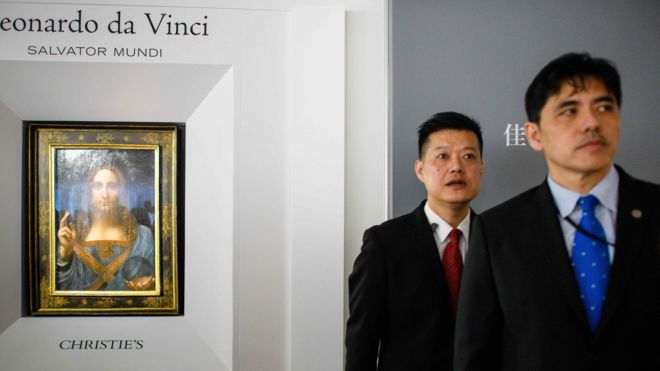
A man (R, wearing blue tie) identified by local Hong Kong media as former CIA agent Jerry Chun Shing LeeImage copyrightAFP
Image caption A man (R in blue tie) identified as Jerry Chun Shing Lee by Hong Kong media

An ex-CIA agent has pleaded guilty to spying for China, the US justice department says, in a case believed to be linked to the dismantling of a US espionage network.

Jerry Chun Shing Lee, 54, left the CIA in 2007 to live in Hong Kong, where he was recruited by Chinese agents.

Prosecutors say the naturalised US citizen was then paid to divulge information on US covert assets.

This led China to bring down a network of informants between 2010 and 2012.

About 20 informants were killed or jailed during that period – one of the most disastrous failures of US intelligence in recent years.

The US Assistant Attorney General for National Security, John Demers, said Lee’s case was the third involving US agents and China in less than a year.

“Every one of these cases is a tragic betrayal of country and colleagues,” he said.

What did Lee do?

Lee, who worked for the CIA between 1994 and 2007, pleaded guilty to conspiracy to deliver national defence information to aid a foreign government in a court in Virginia on Wednesday, the justice department said in a statement.

It said Lee was contacted by the Chinese intelligence agents in 2010. They offered him money, promising to take care of him “for life” in exchange for the required secret information. Hundreds of thousands of dollars were deposited in his Hong Kong bank account between May 2010 and December 2013.

Mr Lee created a document containing information about CIA activities, including locations to which US agents would be assigned.

In 2012, FBI agents searched a hotel room in Hawaii registered in Mr Lee’s name and found a USB drive. Investigators found the document on unallocated space in the drive, suggesting it had been deleted.

The search also revealed Lee to have a day planner and address book containing notes of intelligence provided by CIA agents, their true identities, operational meeting locations and phone numbers, and information about covert facilities.

Lee was interviewed by CIA officers in 2012 during which he said he had met Chinese intelligence officers but concealed the fact that they had set him tasks, the justice department said. In 2013 he first denied knowing about the document on his USB drive and then admitted he had created it but said he had never handed it on to Chinese agents.

Mr Lee was arrested at New York’s JFK airport in January 2018. He will be sentenced in August.


Spy v Spy

By Tara McKelvey, BBC News, Washington DC

The Lee case shows that the battle between Chinese and US spies has intensified over the past year, turning into a new “Cold War”, as Michael Collins, the deputy assistant director of the CIA’s East Asia mission center, called it.

The Chinese are investing more resources into their efforts to ferret out information about the US government, while the US government has become more aggressive in its pursuit of US citizens who have helped Chinese agents.

And when the guilty party is a former CIA officer, one of their own, the men and women who work in the field of US intelligence are ready to “bring the hammer down”, one senior intelligence official said.


CIA spy operation in China: Key dates
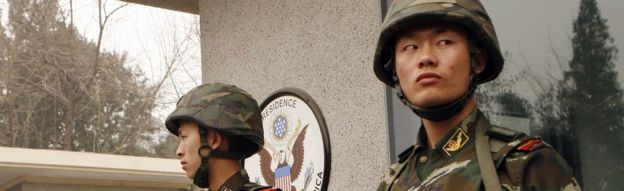
Three armed Chinese policemen guarding the US embassy in BeijingImage copyright AFP
Image caption Chinese police guard the US embassy in the capital, Beijing
  • 2010: Information gathered by the US from sources deep inside the Chinese government bureaucracy start to dry up
  • 2011: Informants begin to disappear. It is not clear whether the CIA has been hacked or whether a mole has helped the Chinese to identify agents
  • 2012: FBI begins investigation
  • May 2014: Five Chinese army officers are charged with stealing trade secrets and internal documents from US companies. Later that same month, China says it has been a main target for US spies
  • 2015: CIA withdraws staff from the US embassy in Beijing, fearing data stolen from government computers could expose its agents
  • April 2017: Beijing offers hefty cash rewards for information on foreign spies
  • May 2017: Four former CIA officials tell the New York Times that up to 20 CIA informants were killed or imprisoned by the Chinese between 2010 and 2012
  • June 2017: Former US diplomatic officer Kevin Mallory is arrested and charged with giving top-secret documents to a Chinese agent
  • January 2018: Former CIA officer Jerry Chun Shing Lee is arrested

Source: The BBC
08/03/2019

Not girls, queens or goddesses: calls in China for a return to the real meaning of women’s day

  • March 8 has devolved into a prime time for online sales campaigns and advertising rather than a moment to celebrate the achievements of women, critics say

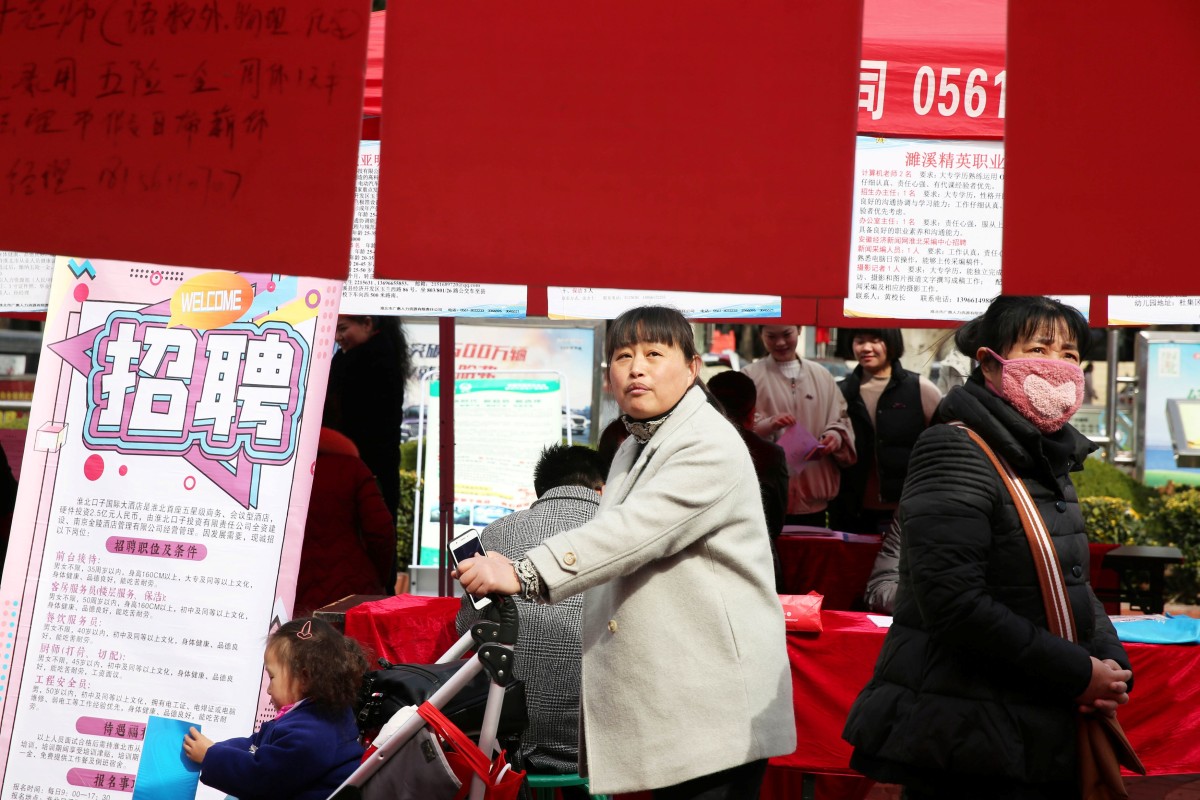
Job seekers look at the job advertisements at a job fair for women on the International Women's Day in Huaibei, Anhui province, on Friday. Photo: Reuters
Job seekers look at the job advertisements at a job fair for women on the International Women’s Day in Huaibei, Anhui province, on Friday. Photo: Reuters
Every year around March 8, the internet in China is plastered with references to International Women’s Day.
Online commerce sites promote discounts on items from jewellery to massage machines to electronics; groups and individuals post “supportive” comments for the women in their lives; and retailers roll out advertising campaigns with “feminist” messages.
But critics say the true meaning of the day is being lost and the annual commemoration has become less of a chance to celebrate women’s achievements and more of an excuse to push spending.
It has also spawned a phenomenon called “Girls’ Day”, that reinforces the social preference for youth and beauty, they say.
International Women’s Day was first organised by the former Socialist Party of America in New York in 1909 and later became a fixture on calendars among socialists and in communist countries before being adopted by the United Nations in 1975 .
When marrying young is the norm, courageous Chinese women take back control by asking parents to “Meet me halfway”
In China, it has been celebrated since 1924, with women using the day to highlight the need for their rights.

“Women’s day was meant to celebrate the spirit of women fighting for their rights, encouraging women’s independence and empowerment, that they can have all sorts of lives and not be a part attached to men,” Guo said.

“[The campaigns] give the impression that girls are innocent, without social experience, and ‘women’ are older, less attractive.”

Women need opportunities at work, at home and in public life, a rights advocate says. Photo: EPA

Even international firms have come under fire for linking their products with Girls’ Day. On Thursday, in an advertisements for the film Captain Marvel, Marvel Studios’ China team wrote on Weibo, “Happy Girls’ Day! Captain Marvel Brie Larson sends her wishes to all girls in China.”

Commenters said the first Marvel movie to showcase a woman superhero was undermining its message by highlighting a day with a mixed meaning.

“The film basically sells feminism, yet you are talking about Girls’ Day?” one comment said.

China gender and sexuality centre shuts down as censorship chill spreads

Other firms, such as sportswear company Nike, won a round of applause for breaking stereotypes with Dream Crazier video. The video centred on breakthroughs from female athletes around the globe, complete with Nike’s slogan, “Just do it”.

Feng Yuan, the co-founder of Beijing-based group Equality, which is dedicated to women’s rights and gender equality, said many shop owners or platforms wanted to turn any special day into a shopping bonanza, but they only appeared to be trying to please women.

“We should be alerted that the names of ‘Girls’ Day’ or ‘Goddess’s Day’ indicate that many regard women only as consumers, caretakers or an ‘empty vases’,” Feng said.

The focus on women’s appearance was driven home on Thursday night in a fumbled attempt by a university in the country’s north to mark the day. In a Weibo post, Shandong University claimed it was the founder of Girls’ Day on March 7, and the original meaning was “three plus seven equals 10. You score 10 out of 10 points for sweetness.” It claimed the day was for university students to care for women and for female students to showcase their attractiveness.

The post quickly met with criticism. The Intellectuals, an online media outlet, said “the day recognises women’s achievements, regardless of their nationality, ethnicity, language, culture, economic and political standing. It originated from North America and Europe’s workers’ movements in the early 20th century.

“Whether you call it Girls’ Day or Queens’ Day, it’s an insult to the true spirit of the day.”

On campuses throughout the country, it has become a tradition for banners with supportive messages to be put up on buildings and message boards. But rather than celebrating women, many of the banners sexualise them in what critics say amounts to a form of sexual harassment.

“I’ve met scores of women in the spring, but I’d rather be sleeping with you,” one banner read.

The sexualisation of the event is compounded by jokes online that play on the Chinese word for “day” and “sex” to suggest that the real meaning of the day is to “welcome girls into womanhood”.

Women’s rights advocates say the public needs to sever the sexual and commercial ties to the day and focus on the many areas in which women’s rights need to be improved.

How a Chinese #MeToo musical whipped up a storm before the censors stepped in

That includes the lifting of a ban on the official Weibo account of Feminist Voices, which before it was shut down without explanation on women’s day last year, had some 180,000 followers and published articles on sexual harassment, women’s rights or workplace equality.

More broadly, in 2018, women still on average made less than 80 per cent of the average salary for men, according to a report by Chinese recruitment platform Zhipin.com. The report said women tended to hit a glass ceiling for promotion and pay due to the demands of marriage and child rearing.

Women’s rights have gained some attention this week as national lawmakers and advisers have met in Beijing for their annual gatherings. Huang Xihua, a National People’s Congress delegate from Huizhou in Guangdong province, ignited debate at the congress with a called for the two-child policy to be scrapped and for unmarried women to be granted equal rights to have children.

Feng, from Equality, was clear about what still needed to be done.

“For women’s day, we don’t need flowery words of praise, but more women-friendly and gender-equal policies, giving women an equal position and opportunity in family, career and public lives,” she said.

Source: SCMP

23/02/2019

Trump says he’s inclined to extend China trade deadline and meet Xi soon

WASHINGTON (Reuters) – President Donald Trump said on Friday there was “a very good chance” the United States would strike a deal with China to end their trade war and that he was inclined to extend his March 1 tariff deadline and meet soon with Chinese President Xi Jinping.

“I think that we both feel there’s a very good chance a deal will happen,” Trump said.

Liu agreed there had been “great progress”.

“From China, we believe that (it) is very likely that it will happen and we hope that ultimately we’ll have a deal. And the Chinese side is ready to make our utmost effort,” he said at the White House.

The Republican president said he probably would meet with Xi in March in Florida to decide on the most important terms of a trade deal.


Optimism that the two sides will find a way to end the trade war lifted stocks, especially technology shares. The S&P 500 stock index reached its highest closing level since Nov. 8. Oil prices rose to their highest since mid-November, with Brent crude reaching a high of $67.73 a barrel. [.N] [O/R]

CURRENCY AGREEMENT

Trump and Treasury Secretary Steven Mnuchin said the two sides had reached an agreement on currency. Trump declined to provide details, but U.S. officials long have expressed concerns that China’s yuan is undervalued, giving China a trade advantage and partly offsetting U.S. tariffs.

Announcement of a pact aimed at limiting yuan depreciation was putting “the currency cart before the trade horse,” but would likely be positive for Asian emerging market currencies, said Alan Ruskin, global head of currency strategy at Deutsche Bank in New York.

“How can you agree to avoid excessive Chinese yuan depreciation or volatility if you have not made an agreement on trade that could have huge FX implications?” Ruskin asked in a note to clients.

In a letter to Trump read aloud by an aide to Liu at the White House, Xi called on negotiators to work hard to strike a deal that benefits both country.

Trump said a deal with China may extend beyond trade to encompass Chinese telecommunications companies Huawei Technologies and ZTE Corp.

The Justice Department has accused Huawei of conspiring to violate U.S. sanctions on Iran and of stealing robotic technology from T-Mobile US Inc.

Chinese peer ZTE was last year prevented from buying essential components from U.S. firms after pleading guilty to similar charges, crippling its operations.

MEMORANDUMS NO MORE

Trump appeared at odds with his top negotiator, U.S. Trade Representative Robert Lighthizer, on the preliminary terms that his team is outlining in memorandums of understanding for a deal with China. Trump said he did not like MOUs because they are short term, and he wanted a long-term deal.

“I don’t like MOUs because they don’t mean anything,” Trump said. “Either you are going to make a deal or you’re not.”

Lighthizer responded testily that MOUs were binding, but that he would never use the term again.

Reuters reported exclusively on Wednesday that the two sides were drafting the language for six MOUs covering the most difficult issues in the trade talks that would require structural economic change in China.

Negotiators have struggled this week to agree on specific language within those memorandums to address tough U.S. demands, according to sources familiar with the talks. The six memorandums include cyber theft, intellectual property rights, services, agriculture and non-tariff barriers to trade, including subsidies.

An industry source briefed on the talks said both sides have narrowed differences on intellectual property rights, market access and narrowing a nearly $400 billion U.S. trade deficit with China. But bigger differences remain on changes to China’s treatment of state-owned enterprises, subsidies, forced technology transfers and cyber theft of U.S. trade secrets.

Lighthizer pushed back when questioned on forced technology transfers, saying the two sides made “a lot of progress” on the issue, but did not elaborate.

The United States has said foreign firms in China are often coerced to transfer their technology to Chinese firms if they want to operate there. China denies this.

The U.S. Chamber of Commerce on Friday urged the U.S. government to ensure the deal was comprehensive and addressed core issues, rather than one based on more Chinese short-term purchases of goods.

China has pledged to increase purchases of agricultural produce, energy, semiconductors and industrial goods to reduce its trade surplus with the United States.

China committed to buying an additional 10 million tonnes of U.S. soybeans on Friday, U.S. Agriculture Secretary Sonny Perdue said on Twitter. China bought about 32 million tonnes of U.S. soybeans in 2017. The commitments are a “show of good faith by the Chinese” and “indications of more good news to come,” Perdue wrote.

China was the top buyer of U.S. soybeans before the trade war, but Beijing’s retaliatory tariffs on U.S. soybeans slashed business that had been worth $12 billion annually.

Source: Reuters

Law of Unintended Consequences

continuously updated blog about China & India

ChiaHou's Book Reviews

continuously updated blog about China & India

What's wrong with the world; and its economy

continuously updated blog about China & India