Chindia Alert: You’ll be Living in their World Very Soon
aims to alert you to the threats and opportunities that China and India present. China and India require serious attention; case of ‘hidden dragon and crouching tiger’.
Without this attention, governments, businesses and, indeed, individuals may find themselves at a great disadvantage sooner rather than later.
The POSTs (front webpages) are mainly 'cuttings' from reliable sources, updated continuously.
The PAGEs (see Tabs, above) attempt to make the information more meaningful by putting some structure to the information we have researched and assembled since 2006.
AUCKLAND, Sept. 22 (Xinhua) — Chinese communities’ representatives from the south and north islands of New Zealand gathered together to celebrate the 70th anniversary of the founding of the People’s Republic of China on Sunday in New Zealand’s biggest city Auckland.
The event started with the China national flag-raising ceremony. Then the organizer released elegant white doves to delivery the best wishes to the motherland.
Steven Wong, the president of the Chinese Association of New Zealand, who initiated and organized the event, welcomed the leaders of Chinese communities across New Zealand in his opening speech.
“This year is the 70th anniversary of China. Please allow me to say happy birthday to our motherland. Best wishes for the prosperity of our homeland, for China and New Zealand friendship and the peace of the world,” he said.
Zhou Wei, vice Chinese consul-general in Auckland, said “on behalf of the Chinese Consulate General in Auckland, I would like to thank all friends here and all over New Zealand for your great support and valuable contribution to the development of China-New Zealand relations.”
“The seventy years after the founding of a new China has ushered in the best development in China’s history. China has developed from a poor and lagged-behind country to the world’s second-largest economy, the largest industrial producer, the largest goods trader, the largest foreign exchange reserve country and the largest trading partner and export market of nearly 130 countries and regions including New Zealand,” Zhou highlighted.
Phil Goff, Auckland mayor, said in Chinese, “Happy National Day! Congratulation to the people, and the government of the People’s Republic of China, for the great achievements over the past 70 years.”
In 2008, then New Zealand Trade Minister Phil Goff signed the historic Free Trade Agreement between New Zealand and China in Beijing, making New Zealand the first developed country to negotiate an FTA with China. It is New Zealand’s largest trade deal since the 1983 Closer Economic Relations Trade Agreement with Australia.
Goff recalled the history and stressed the hard work and strong values of New Zealand Chinese. “Thank you for being the bridge to build a strong relationship between New Zealand and the People’s Republic of China. Our two-way trade with China now tops 28 billion New Zealand dollars in 2018. For many years in a row, China has been New Zealand’s largest trading partner, largest source of international students and second largest source of overseas tourists,” he said.
Peter Goodfellow, the president of the New Zealand National Party, the biggest party in New Zealand Parliament, acknowledged the greatness of having Chinese and Chinese communities in New Zealand.
“It is great that we all acknowledged how far China has come in the past 70 years, what a great story it is.”
Then over 700 people from the main cities including Auckland, Wellington and Christchurch enjoyed a celebration gala.
LANZHOU, Sept. 18 (Xinhua) — A total of 26 participants from 21 countries including Brazil, New Zealand and the United States attended the closing ceremony of the Gansu International Fellowship Program held Tuesday in the capital city of Lanzhou, northwest China’s Gansu Province.
Held by the provincial government, the 30-day program, starting from Aug. 20, focused on China’s overall development in areas such as the economy, society and culture, as well as its anti-poverty campaign.
Economic experts, scientists and sociologists from local universities and research institutes as well as government departments were invited to share their experience and give lectures.
During the program, all participants visited the Mogao Grottoes, a UNESCO World Heritage site. Based on the culture courses, they exchanged ideas with local officials and experts.
“I was very impressed with the comprehensive structure planning being undertaken to turn Lanzhou and Gansu as a whole into a major hub of China,” said Robert Love, a strategy and policy planner with Selwyn District Council, New Zealand, after his visit to the Lanzhou Urban Planning Exhibition Hall.
Philippe Dall’Agnol, a state attorney from Brazil, told Xinhua that China’s poverty alleviation efforts and means of increasing production were particularly worth studying, adding that when he returns to Brazil, he will continue to be a messenger of peace and a bridge of friendship, to actively promote exchanges and cooperation between the two countries.
Since it was initiated in 2006, a total of 309 participants from 62 countries have graduated from the program, making it an important platform for international exchanges and cooperation.
BEIJING, Sept. 11 (Xinhua) — Premier Li Keqiang on Wednesday expressed his expectation for the Japanese economic community to seize the opportunities of China’s opening up, increase investment in China and expand bilateral cooperation areas to promote more achievements in trade and the economy.
Li made the remarks in a meeting with a delegation from Japan’s business community, led by president of the Japan-China Association on Economy and Trade Shoji Muneoka, chair of the Japan Chamber of Commerce and Industry Akio Mimura, and Nobuyuki Koga, chairman of the Board of Councilors of the Japan Business Federation.
China-Japan relations have returned to the right track since last year thanks to the joint efforts of the two sides, and the trade and economic cooperation between the two countries has been steadily advanced and the prospects for bilateral cooperation are broad, said Li.
When China-Japan relations encountered difficulties, the Japanese economic community made important efforts and contributions to maintain their healthy and steady development as well as accelerate pragmatic cooperation between the two countries, the Chinese premier said.
According to Li, China and Japan are two of the world’s major economies, and should give full play to their complementary advantages and work together to deepen cooperation, which will not only benefit the two countries, but also conducive to regional and global economy, as well as the prosperity and stability of the world.
Noting that economic globalization is irreversible, and economic and trade exchanges should not be blocked by national borders, Li pointed out that promoting the healthy development of globalization is the way of progress.
“China has always firmly upheld the multilateral trading system with the World Trade Organization at its core and promotes the liberalization and facilitation of trade and investment,” Li said, stressing China will unswervingly promote all-round opening up, and strive to optimize the business environment.
China welcomes the Japanese economic community to seize the opportunity brought forth by China’s opening up and increase investments in China, expand cooperation areas, and promote more cooperation achievements in trade and economic areas between the two countries, he said.
While expressing congratulations on the 70th anniversary of the founding of the People’s Republic of China, the Japanese economic delegation said that Japan and China have witnessed progress in bilateral ties since last year, and close high-level exchanges have facilitated the two countries’ economic and trade cooperation.
The Japanese economic community firmly supports free trade and hopes China and the United States will resolutely resolve their trade disputes through negotiation, they said.
Speaking highly of China’s efforts in promoting trade and investment liberalization, expanding market access and improving the business environment, they said that the Japanese economic community is willing to boost cooperation with the Chinese side in science and technology innovation, climate change, health care and third-party markets.
They also expressed their expectation of concluding the negotiations for the Regional Comprehensive Economic Partnership (RCEP), a proposed free trade agreement between the 10 ASEAN (the Association of Southeast Asian Nations) members and Australia, China, India, Japan, South Korea and New Zealand, by the end of the year.
China suggests good progress made in Regional Comprehensive Economic Partnership talks after marathon 10-day negotiations in Zhengzhou
Indian Commerce Minister Piyush Goyal has opted to skip the upcoming high-level meetings, adding fuel to rumours that the country could be removed
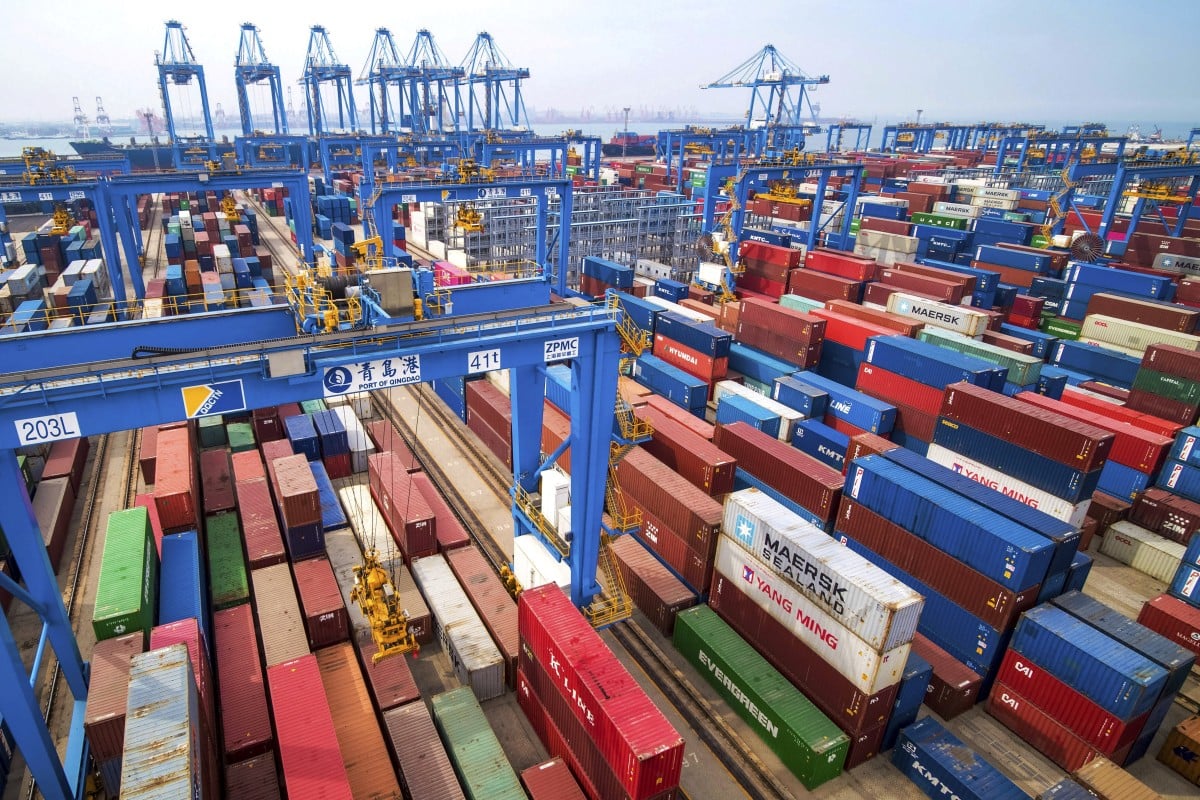
The Association of Southeast Asian Nations (Asean) has overtaken the US to become China’s second-largest trading partner in the first half of 2019. Photo: AP
China has claimed “positive progress” towards finalising the world’s largest free-trade agreement by the end of 2019 after hosting 10 days of talks, but insiders have suggested there was “never a chance” of concluding the deal in Zhengzhou.
The 27th round of the Regional Comprehensive Economic Partnership (RCEP) negotiations closed on Wednesday in the central Chinese city.
working level conference brought over 700 negotiators from all 16 member countries to Henan province, with China keen to push through a deal which has proven extremely difficult to close.
If finalised, the agreement, which involves the 10 Asean nations, as well as China, Japan, South Korea, Australia, New Zealand, and India, would cover around one-third of the global gross domestic product, about 40 per cent of world trade and almost half the world’s population.
“This round of talks has made positive progress in various fields,” said assistant minister of commerce Li Chenggang, adding that all parties had reaffirmed the goal of concluding the deal this year. “China will work together with the RCEP countries to proactively push forward the negotiation, strive to resolve the remaining issues as soon as possible, and to end the negotiations as soon as possible.”
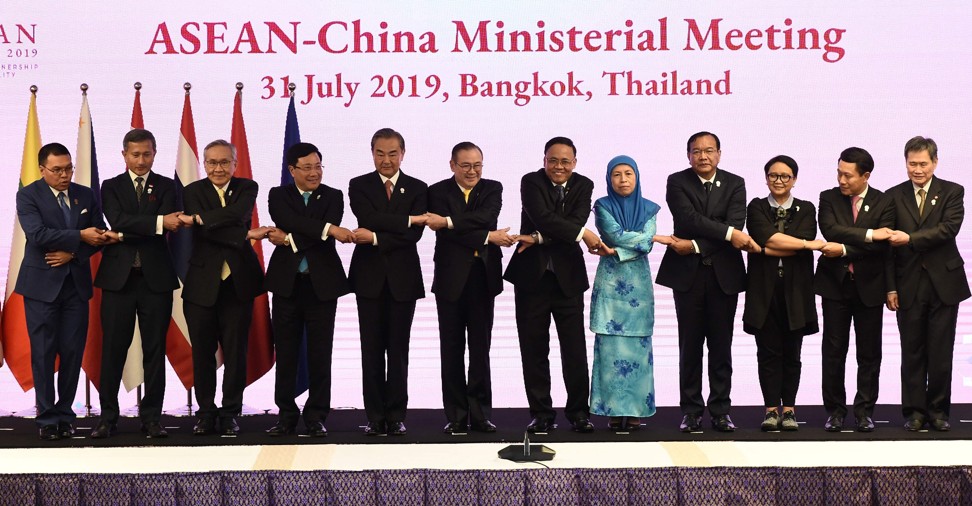
China’s Foreign Minister Wang Yi (fifth left) poses with foreign ministers from the Association of Southeast Asian Nations (Asean) countries during the ASEAN-China Ministerial Meeting in Bangkok. Photo: AFP
China is keen to complete a deal which would offer it a buffer against the United States in Asia, and which would allow it to champion its free trade position, while the US pursues protectionist trade policy.
The RCEP talks took place as Chinese and American trade negotiators resumed face-to-face discussions in Shanghai, which also ended on Wednesday, although there was little sign of similar progress.
As the rivalry between Beijing and Washington has intensified and bilateral trade waned, the Association of Southeast Asian Nations (Asean) overtook the US to become China’s second-largest trading partner in the first half of 2019. From January to June, the trade volume between China and the 10-member bloc reached US$291.85 billion, up by 4.2 per cent from a year ago, according to government data.
The Asean bloc is made up of Indonesia, Thailand, Malaysia, Singapore, Philippines, Vietnam, Myanmar, Cambodia, Brunei and Laos.
China will work together with the RCEP countries to proactively push forward the negotiation, strive to resolve the remaining issues as soon as possible, and to end the negotiations as soon as possible. Li Chenggang
RCEP talks will now move to a higher level ministerial meeting in Beijing on Friday and Saturday, but trade experts have warned that if material progress is not made, it is likely that the RCEP talks will continue into 2020, prolonging a saga which has already dragged on longer than many expected. It is the first time China has hosted the ministerial level talks.
But complicating matters is the fact that India’s Commerce Minister, Piyush Goyal, will not attend the ministerial level talks, with an Indian government official saying that he has to participate in an extended parliamentary session.
India is widely viewed as the biggest roadblock to concluding RCEP, the first negotiations for which were held in May 2013 in Brunei. Delhi has allegedly opposed opening its domestic markets to tariff-free goods and services, particularly from China, and has also had issues with the rules of origin chapter of RCEP.
China is understood to be “egging on” other members to move forward without India, but this could be politically explosive, particularly for smaller Asean nations, a source familiar with talks said.
Deborah Elms, executive director of the Asian Trade Centre, a Singapore-based lobby group, said that after the last round of negotiations in Melbourne between June 22 to July 3 – which she attended – there was “frustration” at India’s reluctance to move forward.
She suggested that in India’s absence, ministers in China could decide to move forward through a “pathfinder” agreement, which would remove India, but also potentially Australia and New Zealand.
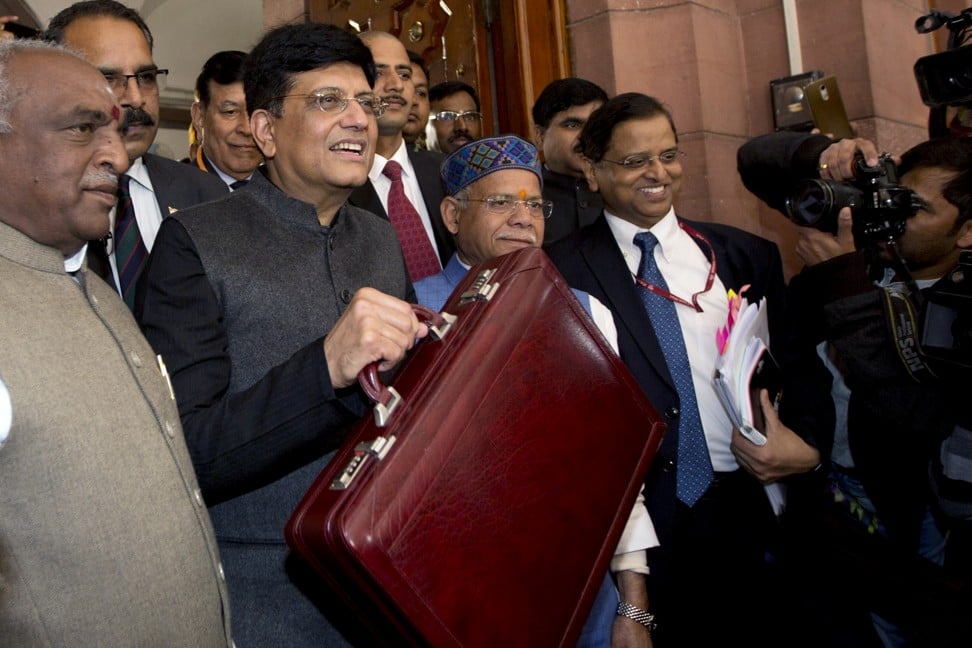
India’s Commerce Minister, Piyush Goyal, will not attend the ministerial level talks this week in Beijing. Photo: Bloomberg
This “Asean-plus three” deal would be designed to encourage India to come on board, Elms said, but would surely not go down well in Australia and New Zealand, which have been two of the agreement’s biggest supporters.
New Zealand has had objections to the investor protections sections of RCEP, and both countries have historically been pushing for a more comprehensive deal than many members are comfortable with, since both already have free trade agreements with many of the other member nations.
However, their exclusion would be due to “an unfortunate geographical problem, which is if you’re going to kick out India, there has always been an Asean-plus three concept to start with”. Therefore it is easier to exclude Australia and New Zealand, rather than India alone, which would politically difficult.
A source close to the negotiating teams described the prospect of being cut out of the deal at this late stage as a “frustrating rumour”, adding that “as far as I know [it] has no real basis other than a scare tactic against India”.
There was “never a chance of concluding [the deal during] this round, but good progress is being made is what I understand. The key issues remain India and China”, said the source, who wished to remain anonymous.
Replacing bilateral cooperation with regional collaborations is a means of resolving the disputesTong Jiadong
However, Tong Jiadong, a professor of international trade at the Nankai University of Tianjin, said Washington’s refusal to recognise India as a developing country at the World Trade Organisation could nudge the world’s second most populous nation closer to signing RCEP.
“That might push India to the RCEP, accelerating the pace of RCEP,” Tong said, adding that ongoing trade tensions between Japan and South Korea could also be soothed by RCEP’s passage.
“Replacing bilateral cooperation with regional collaborations is a means of resolving the disputes between the two countries,” Tong said.
Although the plan was first proposed by the Southeast Asian countries, China has been playing an increasingly active role, first as a response to the now defunct US-backed Trans-Pacific Partnership (TPP), and more recently as a means of containing the impact of the trade war.
China’s vice-commerce Minister, Wang Shouwen, told delegates last week that RCEP was “the most important free trade deal in East Asia”. He called on all participants to “take full advantage of the good momentum and accelerating progress at the moment” to conclude a deal by the end of the year.
Chinese President Xi Jinping (R) meets with New Zealand Prime Minister Jacinda Ardern at the Great Hall of the People in Beijing, capital of China, April 1, 2019. (Xinhua/Rao Aimin)
BEIJING, April 1 (Xinhua) — Chinese President Xi Jinping met with New Zealand Prime Minister Jacinda Ardern in Beijing Monday. They agreed to continuously enrich the China-New Zealand comprehensive strategic partnership based on the principles of mutual trust and mutual benefit.
During their meeting at the Great Hall of the People, Xi first expressed sincere condolences to New Zealand for the deadly shootings in Christchurch two weeks ago, saying that Ardern’s visit to China at a moment that her country was facing a special important agenda showed the great importance she and the New Zealand government attached to bilateral ties.
China has always viewed New Zealand as a sincere friend and partner, Xi said, adding that China-New Zealand ties, established 47 years ago, had always been at the forefront among relationships between China and Western countries.
He called on both countries to continue to deepen the bilateral comprehensive strategic partnership based on the principles of mutual trust and mutual benefit.
China stands ready to work with New Zealand to maintain the bilateral ties as a “front-runner” in relations between China and Western countries, Xi said.
Under the new circumstances, the two countries need to further deepen mutual understanding and trust and respect each other’s core interests and major concerns in the spirit of openness, inclusiveness and seeking common grounds while reserving differences, he said.
Xi called on both sides to expand substantial cooperation.
China will support capable enterprises to invest in New Zealand, while New Zealand needs to provide a fair, just and unbiased business environment for Chinese enterprises, he said.
He also called for the speeding up of negotiations on the upgrade of the bilateral free trade agreement.
China welcomes New Zealand to participate in the Belt and Road construction, Xi said, encouraging both countries to enhance cooperation in international affairs, jointly strive for an open world economy and uphold multilateralism and multilateral trading.
China attaches importance to climate change and is willing to work with New Zealand to promote the sustainable development of Pacific island countries, the president said.
He also encouraged both countries to enhance exchanges in areas including education, culture, youth and science and technology, and to host a successful China-New Zealand Year of Tourism in 2019.
Ardern thanked Xi for extending condolences over the deadly shooting incident, and expressed condolences for the loss of life in a chemical plant blast in Jiangsu Province in late March.
Noting the long history of friendship between New Zealand and China, Ardern said her country attached great importance to ties with China and was proud that the country led in many areas in developing ties with China.
Ardern said she agreed with Xi’s comments on the relations between the two countries, and looked forward to strengthening the New Zealand-China comprehensive strategic partnership and deepening bilateral economic and trade cooperation and people-to-people exchanges after this visit.
She reiterated New Zealand’s adherence to the one-China policy.
New Zealand pursues an independent foreign policy and firmly supports multilateralism and free trade, Ardern said, adding that the country had long supported the Belt and Road Initiative and participated in the Asian Infrastructure Investment Bank.
She said New Zealand would send a high-level delegation to the second Belt and Road Forum for International Cooperation to be held later this month in Beijing.
New Zealand is ready to enhance cooperation and coordination with China on major international issues including climate change, the prime minister said.
Ardern arrived in Beijing on Sunday for a two-day visit to China. This is her first official visit to China since becoming New Zealand’s prime minister in October 2017.
China’s Minister of Culture and Tourism Luo Shugang addresses the opening ceremony of the 2019 China-New Zealand Year of Tourism in Wellington, New Zealand, on March 30, 2019. The 2019 China-New Zealand Year of Tourism was launched here Saturday with an aim to strengthen economic and cultural ties between the two countries. (Xinhua/Guo Lei)
WELLINGTON, March 30 (Xinhua) — The 2019 China-New Zealand Year of Tourism was launched here Saturday with an aim to strengthen economic and cultural ties between the two countries.
An official ceremony was held at Wellington’s Te Papa Tongawera, Museum of New Zealand, and attended by high-level officials and hundreds of representatives from the tourism industry in both countries.
China’s Minister of Culture and Tourism Luo Shugang read the welcoming message by Chinese Premier Li Keqiang for the opening ceremony.
“Tourism is an important area of our cooperation and a driving force for our peoples’ mutual understanding and friendly ties. Chinese tourists are attracted by scenic beauty and cultural diversity of New Zealand, and visitors from New Zealand marvel at China’s natural wonders and rich heritage as an ancient civilization,” Li said in the message.
“Last year, around 600,000 visits were exchanged between the two countries. China remains the second largest overseas tourist market of New Zealand,” Li said.
“The China-New Zealand Year of Tourism presents an opportunity for our two countries to enhance tourism cooperation through people-to-people contact. More people-to-people contact between China and New Zealand will increase our mutual knowledge and awareness, which are central to more popular support for our bilateral relations and cooperation,” the Chinese premier said.
New Zealand Tourism Minister Kelvin Davis read the welcoming message by New Zealand Prime Minister Jacinda Ardern for the opening ceremony.
Ardern said “Tourism is a crucial strand in our bilateral relationship, and is a particularly important driver of economic growth. There was an 8.8 percent increase in Chinese holidaymakers to New Zealand from 2017 to 2018, and China is New Zealand’s second-largest tourism market. The number of New Zealanders visiting China has also reached a new high.”
“The recent Christchurch terrorist attacks brought into sharp relief the importance of building interactions and understanding across peoples, cultures and borders. Initiatives during the Year of Tourism reflect China and New Zealand’s shared commitment to doing just that,” Ardern said.
Chinese Ambassador to New Zealand Wu Xi said “New Zealand is a natural extension of the 21st Century Maritime Silk Road. During Chinese Premier Li Keqiang’s visit to New Zealand in 2017, the two sides signed Belt and Road cooperation documents. The connection between facilities and people’s hearts is an important part of the Belt and Road Initiative.”
Wu said “Sino-New Zealand’s Belt and Road cooperation will not only help to enhance New Zealand’s tourism infrastructure, but also further strengthen New Zealand’s advantage as an ideal tourist destination for Chinese tourists and attract more Chinese tourists.”
Richard Davies, manager of tourism policy at the Ministry of Business, Innovation and Employment, said the Year of Tourism gives New Zealand an opportunity to showcase the things that makes it a world class destination.
Tourism New Zealand General Manager — New Zealand & Government Relations, Rebecca Ingram said “Tourism New Zealand’s focus is on ensuring New Zealand remains a desirable destination and top of mind as an option for Chinese travelers.”
“China is New Zealand’s most valuable visitor market. With the highest daily spend of all our visitors and a highly seasonal profile, our Chinese visitors help to spread the benefits of tourism throughout the year.”
During the 2019 China-New Zealand Year of Tourism, New Zealand’s tourism sector and beyond is encouraged to think about what they can do to get their China business ready.
BEIJING, March 15 (Xinhua) — Chinese President Xi Jinping sent a message of condolence to New Zealand Governor-General Patsy Reddy on Friday over the deadly shooting incidents earlier Friday in New Zealand’s Christchurch City.
In his message, Xi said he was shocked to learn about the serious shooting incidents which have caused heavy casualties.
On behalf of the Chinese government, the Chinese people and in his own name, Xi expressed deep sympathy with and sincere condolences to the New Zealand government and the New Zealand people, while expressing grief for the victims and wishing the injured an early recovery.
Also on Friday, Chinese Premier Li Keqiang sent a message of condolence to New Zealand Prime Minister Jacinda Ardern, expressing grief for the victims while extending sincere sympathies to the injured and the bereaved families.
The “ChinaSat 6C” satellite is launched by a Long March-3B carrier rocket from the Xichang Satellite Launch Center in southwest China’s Sichuan Province, March 10, 2019. It will provide high-quality radio and TV transmission services. (Xinhua/Guo Wenbin)
XICHANG, March 10 (Xinhua) — China Sunday sent a new communication satellite into orbit from the Xichang Satellite Launch Center in southwest China’s Sichuan Province.
The “ChinaSat 6C” satellite was launched at 0:28 a.m. Beijing Time by a Long March-3B carrier rocket. It will provide high-quality radio and TV transmission services.
The satellite has been sent to the geostationary orbit, and can cover China, Australia, New Zealand and the South Pacific island countries.
The satellite was developed by the China Academy of Space Technology, and will be operated by the China Satellite Communications Co., Ltd.
The launch marks the 300th mission of the Long March carrier rocket series developed by the China Aerospace Science and Technology Corporation.
Foreign lifestyle experiences are becoming more popular as citizens seek to escape pollution, food and medicine safety worries and authoritarian government controls
Citizens encountering more barriers to their dreams of travelling abroad, with severe limits on moving money overseas and restrictions on visiting foreign countries
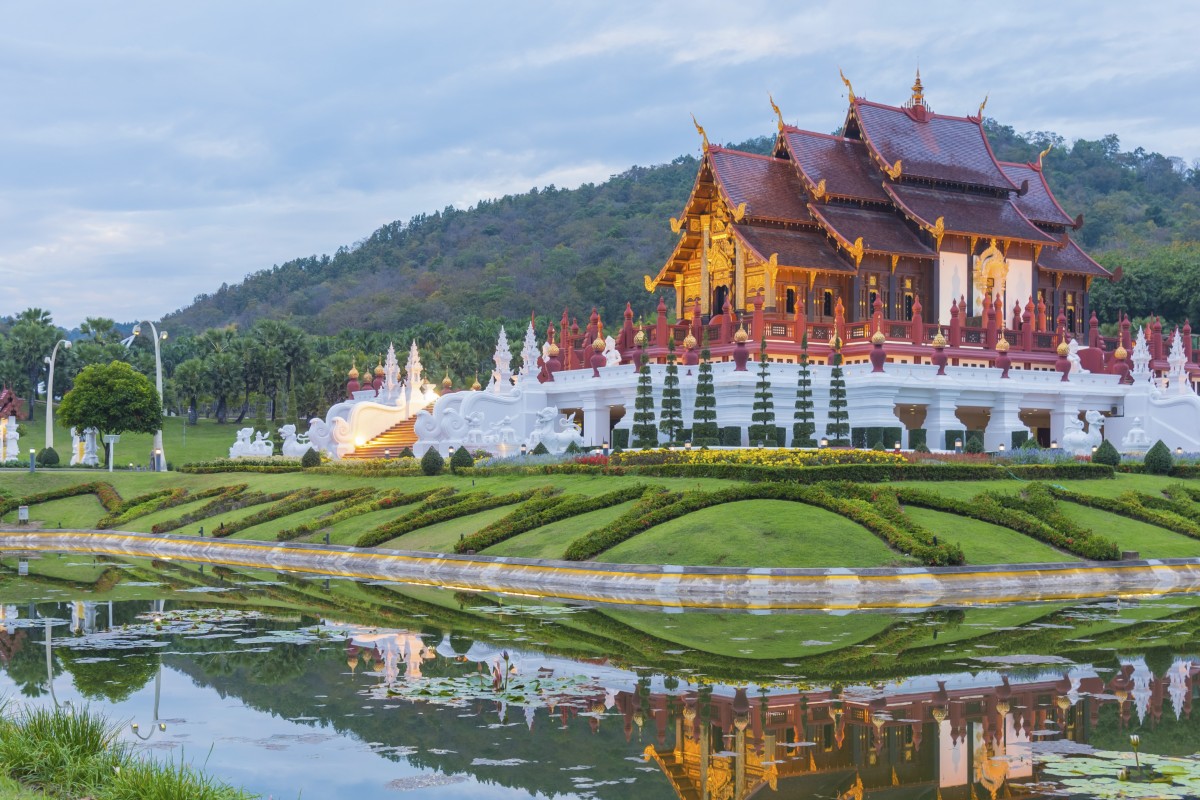
Thailand, including the likes of Chiang Mai, the United States, Australia, Canada, New Zealand are popular destinations for Chinese families. Photo: Shutteratock
Xu Zhangle and her husband and their two children are a typical middle-class couple from Shenzhen, and along with 60 other Chinese families, they are going on an extended holiday to Thailand in July, where they hope to enjoy an immigrant-like life experience.
The family have paid a travel agent around 50,000 yuan (US$7,473) for the stay in Chiang Mai in the mountainous north of the country, including transport, a three-week summer camp for their daughters at a local international school, rent for a serviced apartment and daily expenses.
Zhangle loves Chiang Mai’s relaxed lifestyle and easy atmosphere and wants to live as a local for a month or even longer, instead of having to rush through a short-term holiday.
“It would not be just [tourist] travelling but rather a life away from the mainland.” she said.
Recently, upper middle-class citizens have increased their efforts to safeguard their wealth and achieve more freedom by spending more time abroad.
They have invested considerable amounts of money in overseas properties and applied for long-stay visas, although many of their attempts have ended in failure.
Chinese citizens are encountering more barriers to their dreams of travelling abroad, with severe limits on moving money overseas and restrictions on visiting foreign countries.
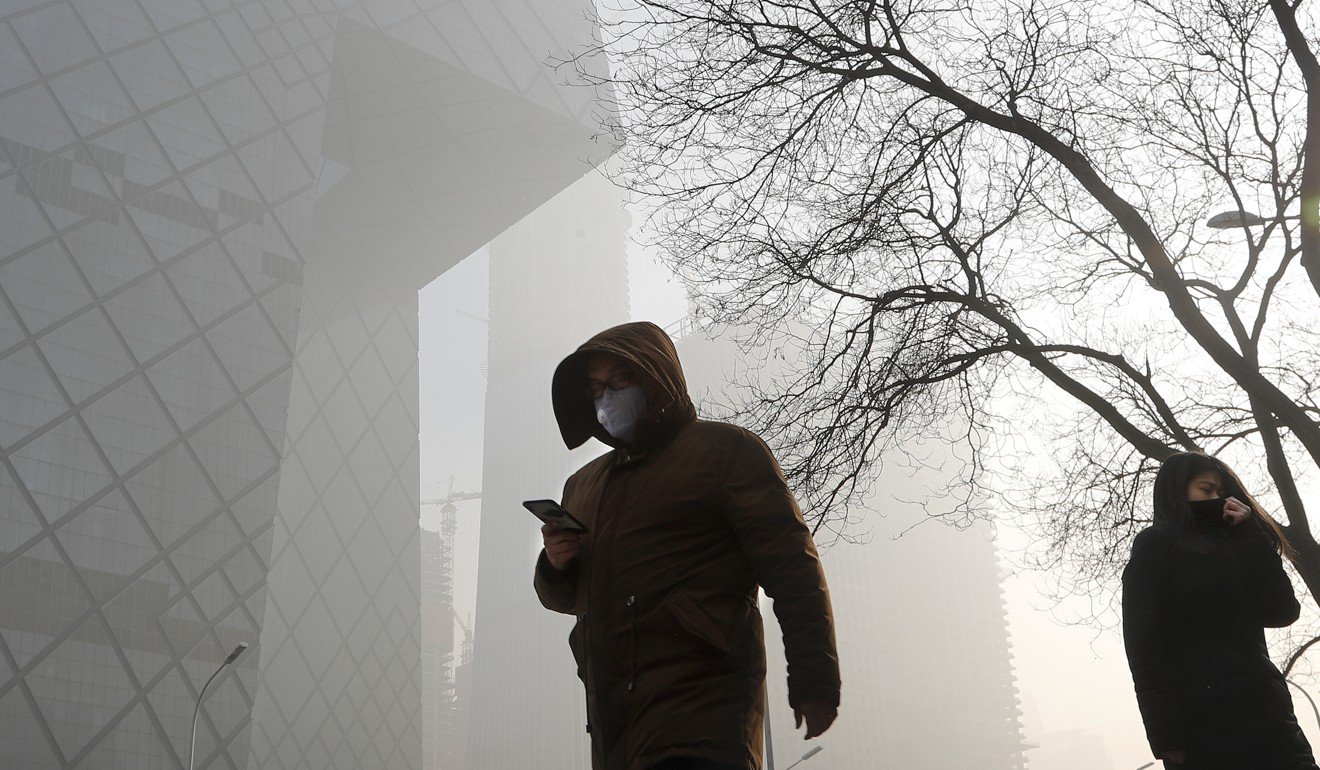
Still, growing anxieties about air pollution, food and medicine safety and an increasingly authoritarian political climate are pushing middle class families to look for new ways to circumvent the obstacles so they can live outside China.
Among the options, there is growing demand for sojourns abroad of a month or more, to enjoy a foreign lifestyle for a brief period to make up for the fact that their emigration dreams may have stalled.
“I think this is becoming a trend. Chinese middle-class families are facing increasing difficulties to emigrate and own homes overseas. On the other hand, they still yearn for more freedom, for a better quality of life than what is found in first-tier cities in China.
They are eager to seek alternatives to give themselves and their children a global lifestyle,” said Cai Mingdong, founder of Zhejiang Newway, an online tour and education operator in Ningbo, south of Shanghai.
“First, the availability of multiple-entry tourist visas and the sharp drop in air ticket prices have made it convenient and practical to stay abroad for from a few weeks to up to three months each year.”
Blacklist labels millions of Chinese citizens and businesses untrustworthy
Now, many well-to-do Chinese middle class families can get a tourist visa for five or even 10 years that allows them to stay in a number of countries — including the United States, Australia, Canada, New Zealand and other Asian countries — for up to six months at a time.
“In 2011, a round-trip air ticket from Shanghai to New Zealand cost 14,000 yuan (US$2,000), but now is about 4,000 (US$598),” added Cai.
This opens up the possibility for many middle-class families who are not eligible to emigrate, to live abroad for short periods of time.
Many wealthy Chinese middle class families can get a tourist visa for five or even 10 years that allows them to stay in several countries including the United States, Australia, Canada, New Zealand and other Asian countries, for up to six months at a time. Photo: AP
Chinese tourists made more than 140 million trips outside the country in 2018, a 13.5 per cent increase from the previous year, spending an estimated US$120 billion, according to the China Tourism Academy, an official research institute under the Ministry of Culture and Tourism.
“In [the Thai cities of] Bangkok and Chiang Mai, there are more and more Chinese who stay there to experience the local lifestyle, which is different from theirs in China. The life there is very different from that in China,” said Owen Zhu, who now lives in the Bangkok condo he bought last year.
“The freedom, culture and community are diversified. The quality of air, food and services are much higher than in first-tier cities in China, but the prices are more affordable.
“In Bangkok, in many international apartment complexes where foreigners live, the monthly rent for a one-bedroom [apartment] is about 2,000 (US$298) to 3,000 yuan.”
China’s richest regions are also home to the most blacklisted firms
A one-bedroom apartment in Shenzhen in southern China is twice as expensive, with rents continuing to rise rapidly.
There are global goods, and it is easy to socialise with different people from around the world,” Zhu added
“Many Chinese people around me, really, come to Thailand to live for a while and go back to China, but then come back again after a few months.”
Both Cai and Zhu said they discovered the new phenomenon among China’s middle class and decided it was a business opportunity.
Growing anxieties about air pollution, food and medicine safety and an increasingly authoritarian political climate are pushing middle class families to look for new ways to circumvent the obstacles so they can live outside China. Photo: AP
Zhu is in the process of registering a company in Bangkok and plans to build an online platform to service the needs of Chinese citizens living abroad who do not own property or have immigration status, especially members of the LGBT community.
Cai said dozens of Chinese families in the Yangtze River Delta had paid him to send their children to schools in New Zealand or Europe for around three or four weeks in the middle of the school year, while the parents rent villas in the area, with New Zealand and Toronto in Canada among the most popular destinations.
Last year, Zheng Feng, a single mother and freelance writer from Beijing, rented a small villa in Australia for a month for them, a friend and their children to escape Beijing’s pollution and experience life overseas.
“To be honest, I don’t have enough money to invest in a property or a green card in Australia. But it’s very affordable for me and my son to pay about 30,000 yuan (US$4,484) to live abroad for one or two months.” Zheng said.
China says 2018 growth was worth more than Australia’s whole GDP
Zheng will join the Xu family in Chiang Mai later this year and she is also planning a similar trip to England next year.
Zheng’s friend, Alice Yu, invested in an American EB-5 investor visa a few years ago, and plans to make one or two month-long trips abroad each year until her family is finally able to move to the United States.
Demand for the EB-5 investor visa in China seems to be waning given heightened uncertainty about the future of the programme and US immigration law in general under US President Donald Trump.
Approval for the visa can now take up to 10 years, resulting in a huge backlog that has further dampened interest and led to a significant dip in investment inflows into the US from foreign individuals.
A one-bedroom apartment in Bangkok can cost around bout 2,000 (US$298) to 3,000 yuan a month. Photo: AFP
“Maybe it will soon become standard for a real Chinese middle-class family to have the time and money to enjoy a long stay at a countryside villa overseas,” said Yu.
“Regardless of whether we can get a long-term visa for the United States, I want my children grow up in a global lifestyle and with more freedom than just growing up on the mainland. So do all wealthy and middle class Chinese families, I think.”
Karen Gao’s son started studying at an international school in Chiang Mai in June, at the cost of about 70,000 yuan (US$10,462) a year, after she quit her job as a public relations manager in Shenzhen and moved to Thailand on a tourist visa.
For better or worse? China’s complicated employment explained
“A few months each year for good air, good food and no censorship and internet control, but cheaper living costs compared to Beijing, it sounds like a really good deal to go,” said Gao, who has now been offered a guardian visa to accompany her son, who has already been given a student visa.
“In Shenzhen, I wasn’t able to get him into school because I had no [local] residence permit.
“It would be the best choice for us because we feel so uncertain and worried about investing and living in the mainland.”
Last year, Gao, like thousands of other private investors mostly middle class people living in first-tier cities, suffered significant losses when their investments in hotels and inns in Dali, Yunnan province, were demolished amid the local government’s campaign to curb pollution and improve the environment around Lake Erhai.
“We were robbed by the officials without proper compensation,” Gao said.
The founder of Huawei has said there is “no way the US can crush” the company, in an exclusive interview with the BBC.
Ren Zhengfei described the arrest of his daughter Meng Wanzhou, the company’s chief financial officer, as politically motivated.
The US is pursuing criminal charges against Huawei and Ms Meng, including money laundering, bank fraud and stealing trade secrets.
Huawei denies any wrongdoing.
Mr Ren spoke to the BBC’s Karishma Vaswani in his first international broadcast interview since Ms Meng was arrested – and dismissed the pressure from the US.
“There’s no way the US can crush us,” he said. “The world cannot leave us because we are more advanced. Even if they persuade more countries not to use us temporarily, we can always scale things down a bit.”
However, he acknowledged that the potential loss of custom could have a significant impact.
Last week, US Secretary of State Mike Pompeo warned the country’s allies against using Huawei technology, saying it would make it more difficult for Washington to “partner alongside them”.
Australia, New Zealand, and the US have already banned or blocked Huawei from supplying equipment for their future 5G mobile broadband networks, while Canada is reviewing whether the company’s products present a serious security threat.
Mr Ren warned that “the world cannot leave us because we are more advanced”.
“If the lights go out in the West, the East will still shine. And if the North goes dark, there is still the South. America doesn’t represent the world. America only represents a portion of the world.”
Many of the UK’s mobile companies, including Vodafone, EE and Three, are working with Huawei to develop their 5G networks.
They are awaiting a government review, due in March or April, that will decide whether they can use Huawei technology.
Commenting on the possibility of a UK ban, Mr Ren said Huawei “won’t withdraw our investment because of this. We will continue to invest in the UK.
“We still trust in the UK, and we hope that the UK will trust us even more.
“We will invest even more in the UK. Because if the US doesn’t trust us, then we will shift our investment from the US to the UK on an even bigger scale.”
Image copyrightGETTY IMAGESImage captionHuawei has denied that it poses any risk to the UK or any other country
What does Mr Ren think about his daughter’s arrest?
Mr Ren’s daughter Meng Wanzhou, Huawei’s chief financial officer, was arrested on 1 December in Vancouver at the request of the US, and is expected to be the subject of a formal extradition request.
The first covers claims Huawei hid business links to Iran – which is subject to US trade sanctions. The second includes the charge of attempted theft of trade secrets.
Mr Ren was clear in his opposition to the US accusations.
“Firstly, I object to what the US has done. This kind of politically motivated act is not acceptable.
“The US likes to sanction others, whenever there’s an issue, they’ll use such combative methods.
“We object to this. But now that we’ve gone down this path, we’ll let the courts settle it.”
Image copyrightREUTERSImage captionMeng Wanzhou was arrested in Vancouver last December
What did Mr Ren say about Chinese government spying?
Huawei, which is China’s largest private company, has been under scrutiny for its links to the Chinese government – with the US and others expressing concern its technology could be used by China’s security services to spy.
Under Chinese law, firms are compelled to “support, co-operate with and collaborate in national intelligence work”.
But Mr Ren said that allowing spying was a risk he wouldn’t take.
“The Chinese government has already clearly said that it won’t install any backdoors. And we won’t install backdoors either.
“We’re not going to risk the disgust of our country and of our customers all over the world, because of something like this.
“Our company will never undertake any spying activities. If we have any such actions, then I’ll shut the company down.”
Is Huawei part of the Chinese state?
Analysis – Karishma Vaswani, BBC Asia business correspondent – Shenzhen
For a man known as reclusive and secretive, Ren Zhengfei seemed confident in the conviction that the business he’s built for the last 30 years can withstand the scrutiny from Western governments.
Mr Ren is right: the US makes up only a fraction of his overall business.
But where I saw his mood change was when I asked him about his links to the Chinese military and the government.
He refused to be drawn into a conversation, saying only that these were not facts, simply allegations.
Still, some signs of close links between Mr Ren and the government were revealed during the course of our interview.
He also confirmed that there is a Communist Party committee in Huawei, but he said this is what all companies – foreign or domestic – operating in China must have in order to abide by the law.









 CHINDIA ALERT: You'll be living in their world, very soon