30/03/2020
WUHAN, China (Reuters) – China reported a drop in new coronavirus infections for a fourth day as drastic curbs on international travellers reined in the number of imported cases, while policymakers turned their efforts to healing the world’s second-largest economy.
The city of Wuhan, at the centre of the outbreak, reported no new cases for a sixth day, as businesses reopened and residents set about reclaiming a more normal life after a lockdown for almost two months.
Smartly turned out staff waited in masks and gloves to greet customers at entrances to the newly-reopened Wuhan International Plaza, home to boutiques of luxury brands such as Cartier and Louis Vuitton.
“The Wuhan International Plaza is very representative (of the city),” said Zhang Yu, 29. “So its reopening really makes me feel this city is coming back to life.”
Sunday’s figure of 31 new cases, including one locally transmitted infection, was down from 45 the previous day, the National Health Commission said.
As infections fall, policymakers are scrambling to revitalise an economy nearly paralysed by months-long curbs to control the spread of the flu-like disease.
On Monday, the central bank unexpectedly cut the interest rate on reverse repurchase agreements by 20 basis points, the largest in nearly five years.
The government is pushing businesses and factories to reopen, as it rolls out fiscal and monetary stimulus to spur recovery from what is feared to be an outright economic contraction in the quarter to March.
China’s exports and imports could worsen as the pandemic spreads, depressing demand both at home and abroad, Xin Guobin, the vice minister of industry and information technology, said on Monday.
The country has extended loans of 200 billion yuan (22.75 billion pounds) to 5,000 businesses, from 300 billion allocated to help companies as they resume work, Xin said.
Authorities in Ningbo said they would encourage national banks to offer preferential credit of up to 100 billion yuan to the eastern port city’s larger export firms. The city government will subsidize such loans, it said in a notice.
VIRUS CONCERNS
While new infections have fallen sharply from February’s peak, authorities worry about a second wave triggered by returning Chinese, many of them students.
China cut international flights massively from Sunday for an indefinite period, after it began denying entry to almost all foreigners a day earlier.
Average daily arrivals at airports this week are expected to be about 4,000, down from 25,000 last week, an official of the Civil Aviation Administration of China told a news conference in Beijing on Monday.
The return to work has also prompted concern about potential domestic infections, especially over carriers who exhibit no, or very mild, symptoms of the highly contagious virus.
Northwestern Gansu province reported a new case of a traveller from the central province of Hubei, who drove back with a virus-free health code, national health authorities said.
Hubei authorities say 4.6 million people in the province returned to work by Saturday, with 2.8 million of them heading for other parts of China.
Most of the departing migrant workers went to the southern provinces of Guangdong and Fujian, the eastern provinces of Zhejiang and Jiangsu, and northeast China.
In Hubei’s capital of Wuhan, more retail complexes and shopping streets reopened.
Electric carmaker Tesla Inc has also reopened a showroom in Wuhan, a company executive said on Weibo.
Shoppers queued 1-1/2 metres (5 ft) apart for temperature checks at Wuhan International Plaza, while flashing “green” mobile telephone codes attesting to a clean bill of health.
To be cleared to resume work, Wuhan residents have been asked to take nucleic acid tests twice.
“Being able to be healthy and leave the house, and meet other colleagues who are also healthy is a very happy thing,” said Wang Xueman, a cosmetics sales representative.
Source: Reuters
Posted in airports, authorities, boutiques, businesses, Cartier, China's, Civil Aviation Administration of China, companies, company executive, concerns, contagious virus, control, coronavirus cases, Country, curbs, cut, daily arrivals, demand, denying entry, depressing, drop, economic contraction, economy, Electric carmaker, export firms, factories, fiscal and monetary stimulus, flu-like disease, Foreigners, Fujian, Gansu Province, gloves, Guangdong, healing, home and abroad, hubei province, indefinite period, infections, Interest rate, international flights, Jiangsu, lockdown, luxury brands, masks, national banks, National Health Commission, new, Ningbo, none, normal life, outbreak, outright, pandemic, paralysed, policymakers, preferential credit, reclaiming, reopen, reopened, residents, resume work, returning Chinese, revitalise, scrambling, second wave, second-largest economy, Showroom, spread, spreads, spur recovery, students, subsidize, Tesla Inc, the central bank, Uncategorized, unexpectedly, vice minister of industry and information technology, Virus, Weibo, world’s, worsen, Wuhan, Wuhan International Plaza, Zhejiang |
Leave a Comment »
29/03/2020
- Chinese president is fighting ‘two tough battles’ to reboot industry and defeat Covid-19, Xinhua says
- Choice of industrial powerhouse for official visit shows the importance Xi gives to reviving the economy, observers say
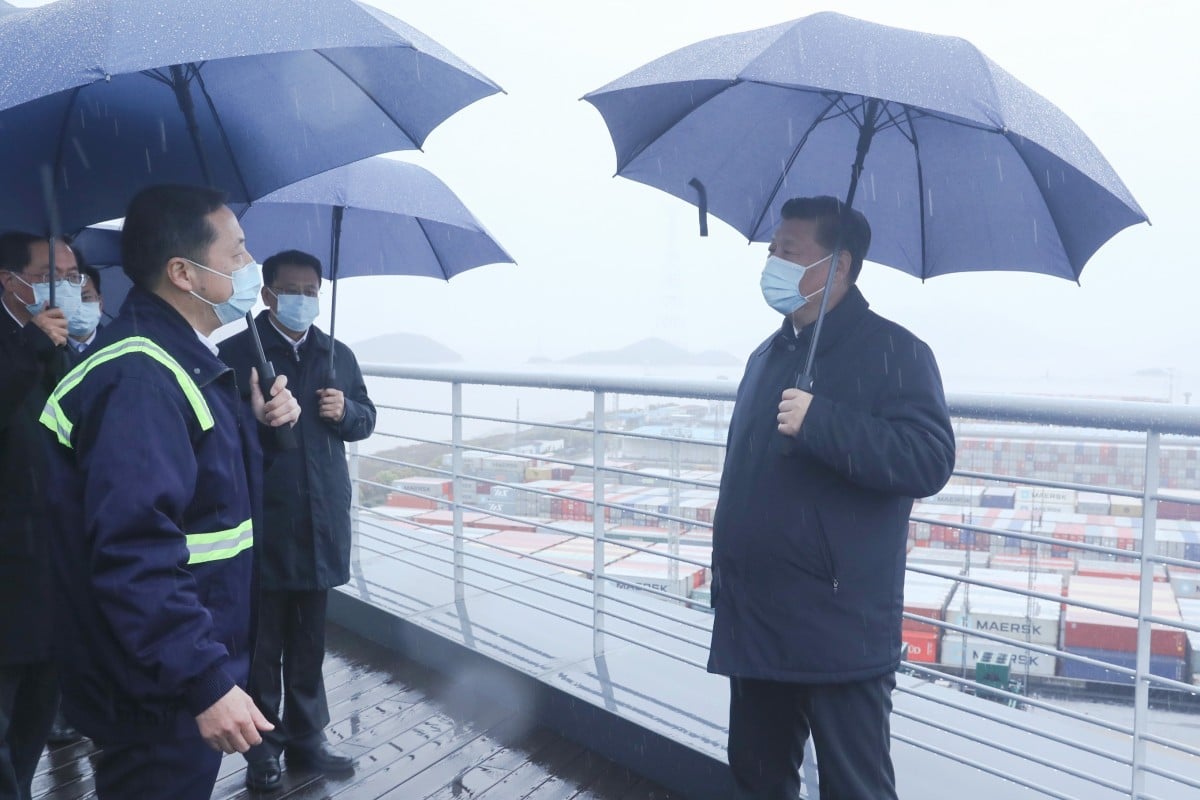
Chinese President Xi Jinping chats to workers and officials at Ningbo port in east China on Sunday. Photo: Xinhua
visited the industrial powerhouse of Zhejiang province on Sunday in a move state media described as a clear message the country was ready to get the economy back on track amid the “new normal” of dealing with the coronavirus.
The trip, to Ningbo – one of the world’s busiest ports and a trade hub for eastern China – was Xi’s first outside Beijing since he visited Wuhan, the initial epicentre of the Covid-19 outbreak, earlier in the month.
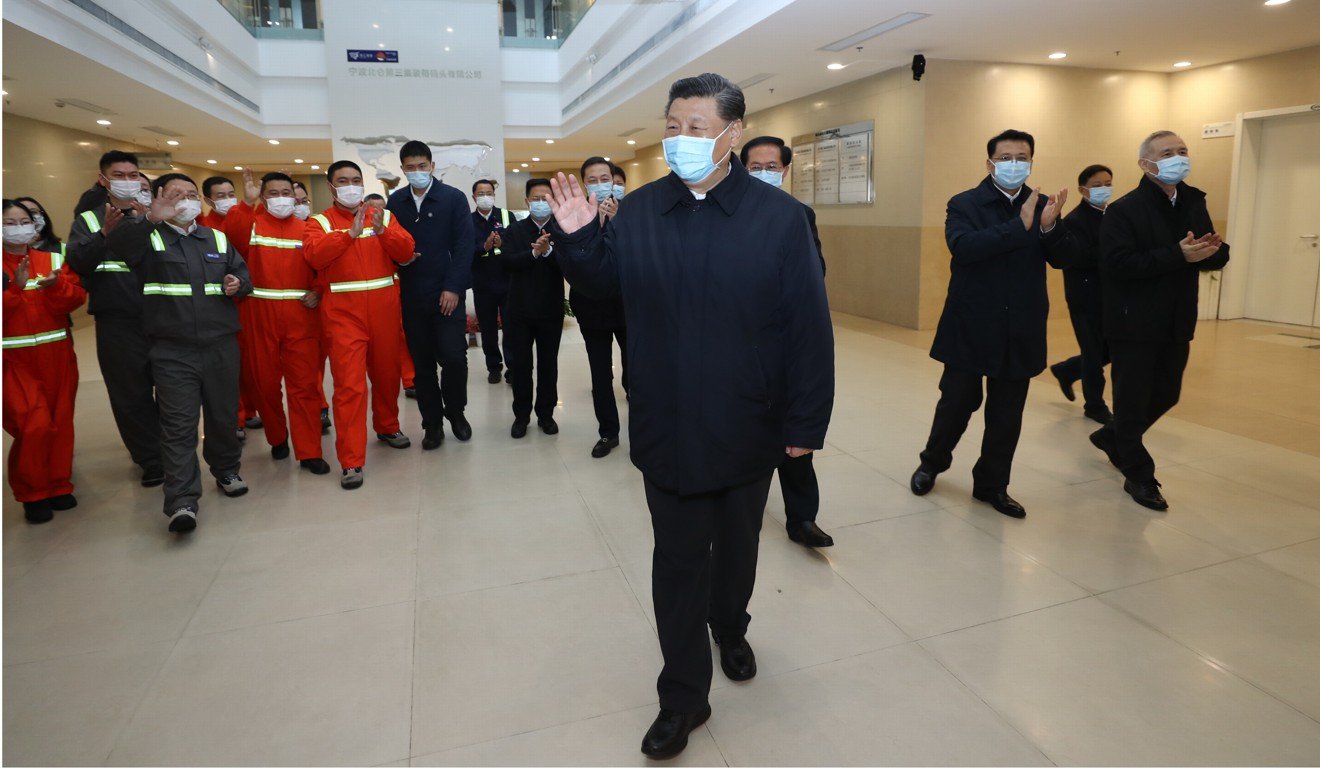
As well as a visiting the port, he spoke to workers at an industrial zone for car part manufacturers, where he learned about the latest efforts to restart production, Xinhua said in a brief report.
The visit came after two months of almost total lockdown in many parts of the country that disrupted businesses, transport and people’s daily lives, and ground the economy to a near standstill.
While local transmissions of the coronavirus in China appear to be under control, Beijing has implemented strict measures to prevent imported cases, including slashing international flights and banning most foreigners from entering the country.
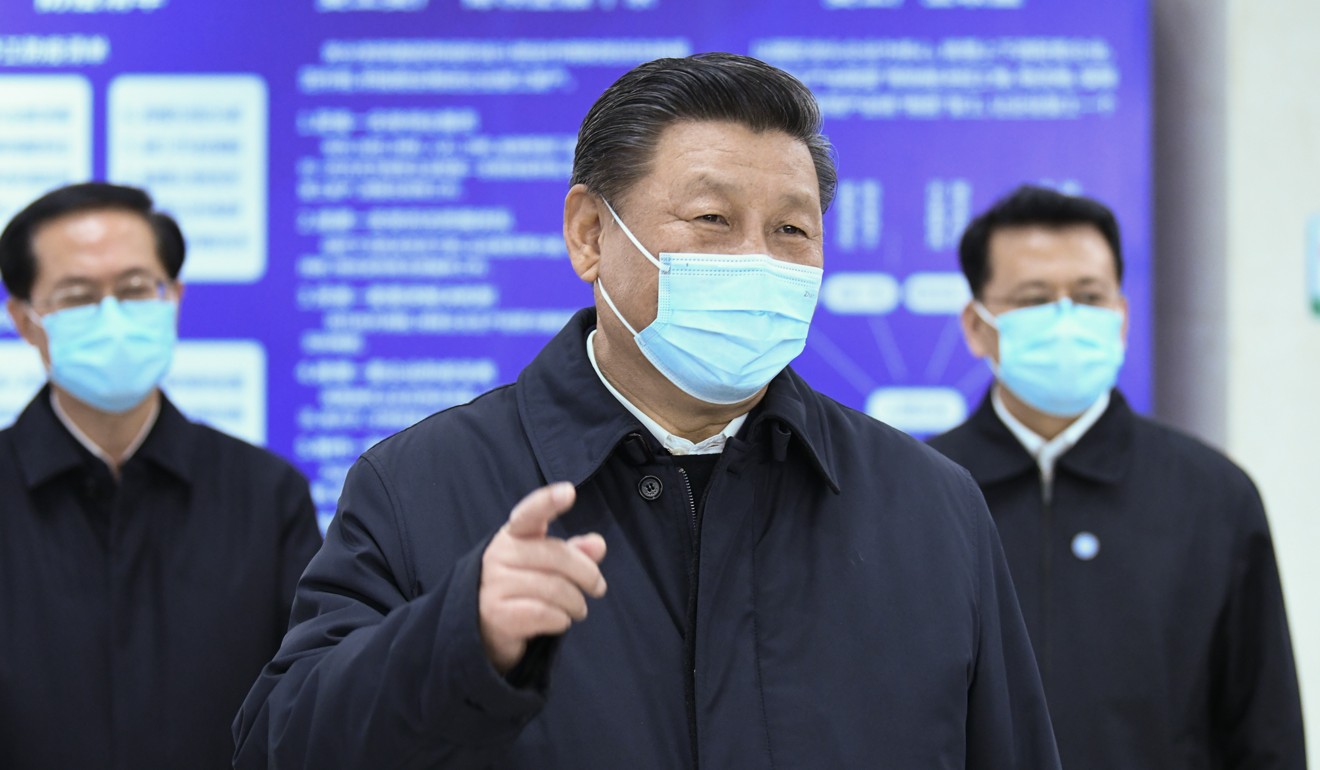
In a separate report, Xinhua said Xi’s visit sent “a clear message” that China was resuming its industrial production and social activities, and described the fight against the coronavirus as the “new normal”.
Reviving the economy and battling a deadly disease were Xi’s “two tough battles”, it said.
Xi’s choice of destination was a clear message that restarting the economy is a top priority. Photo: Xinhua
Zhejiang is something of a power base for Xi, who spent nearly five years there during his climb through the ranks of the Communist Party.
One of the country’s biggest trading hubs, the province generated 3 trillion yuan (US$423.2 billion) in foreign trade last year, or more than 13 per cent of the national total, according to official figures.
“It’s a highly export-oriented economy … which has made it crucial not only to China’s development plan but also to safeguarding the stability of the global supply chain,” Xinhua said.
Observers said Xi’s visit was evidence of Beijing’s determination to get the economy back up and running as soon as possible.
Zhao Xijun, an economics professor at Renmin University, said Ningbo was a key part of the export economy and a base for many local and foreign entrepreneurs.
“It is a clear signal that China, after getting domestic infections under control, is now prioritising economic growth,” he said.
“It also shows the country will keep developing its economy and opening up its markets.”
But hopes of a quick recovery for the Chinese economy have been dashed by the spread of the coronavirus across Europe and the United States, causing a sharp decline in demand for Chinese goods.
Xi spent five years in Zhejiang while climbing the ranks of the Communist Party. Photo: Xinhua
In a meeting on Friday, the Communist Party’s Politburo said it would step up macroeconomic policy adjustments and pursue a more proactive fiscal policy while optimising measures to control the coronavirus to speed up the restoration of production, doing whatever it could to “minimise the losses caused by the epidemic”.
“China has successfully reopened much of its economy from the extremes of the coronavirus lockdown, but now faces a new problem: an impending collapse in demand for its exports as its customers go into lockdowns of their own,” Gavekal Dragnomics said in a research report.
“That shock to industry and manufacturing employment means that China will not enjoy the hoped-for V-shaped recovery in growth.”
Source: SCMP
Posted in 'total lockdown', ‘clear message’, ‘two tough battles’, back on its feet, banning, Beijing, Beijing’s, busiest ports, businesses, car part manufacturers, Chinese economy, Chinese goods, Communist Party, Communist Party’s Politburo, coronavirus, Country, COVID-19 outbreak, dashed, decline, defeat Covid-19, demand, determination, disrupted, economics professor, economy, employment, entering, epicentre, Europe, export-oriented, Foreigners, Gavekal Dragnomics, global, global supply chain, growth, industrial powerhouse, industrial zone, industry, international flights, it’s time, local transmissions, macroeconomic policy, Manufacturing, Ningbo, observers, optimising measures, people’s daily lives, power base, proactive fiscal policy, production, reboot industry, Renmin University, restart, Safeguarding, sends, stability, standstill, trade hub, Transport, Uncategorized, United States, V-shaped recovery, visit, workers, Wuhan, Xi, Xi Jinping’s, Xinhua, zhejiang province |
Leave a Comment »
19/03/2020
NANJING, March 19 (Xinhua) — Chinese cities are encouraging residents to dine out and shop with measures such as handing out e-vouchers to boost consumption sectors hit hard by the novel coronavirus outbreak.
Like many living in the eastern city of Nanjing, Wang Linlin was waked up by her alarm clock at midnight and with a few clicks on her cellphone, she was ready to meet her luck of the draw: getting a meal voucher worth 100 yuan (about 14.2 U.S. dollars).
“I’ve always been thinking about hanging out and having hotpot with my friends after the epidemic, so getting a voucher would be great,” Wang said.
Nanjing has been giving out vouchers worth 318 million yuan to its residents since Sunday. People are invited to participate in lotteries for e-vouchers which can be used in restaurants, gymnasiums, bookshops as well as tourist spots, helping the service sector bounce back.
The voucher bonus has been well received as more than 1.6 million local citizens have registered for the lotteries as of Monday, according to the Nanjing Big Data Administration Bureau.
Besides Nanjing, many other regions have also been taking similar actions.
Macao gives out vouchers totaling 2.2 billion patacas (about 275 million U.S. dollars) to its residents. The city of Ningbo in east China’s Zhejiang Province is issuing consumption vouchers worth 100 million yuan while the city of Jinan, east China’s Shandong Province, is handing out vouchers worth 20 million yuan to stimulate spending on tourism and culture.
Due to the coronavirus outbreak, Chinese customers have shied away from restaurants and shopping malls. China’s retail sales of consumer goods, a major indicator of consumption growth, declined 20.5 percent year on year in the first two months of this year, according to the National Bureau of Statistics.
“People are more willing to dine out with the vouchers, which can boost confidence in the catering sector and finally get the economy back on track,” said Shen Jiahua, chairman of a chain restaurant company in Nanjing.
After the coronavirus outbreak ends, people are eager to spend generously. According to a survey conducted by the Jiangsu consumers council, nearly 90 percent of the respondents expressed suppressed consumption desire.
Restaurants, shopping malls, movie theaters, gymnasiums and tourist spots are the top five destinations for consumers to unleash their spending spree after normal life resumes, the survey showed.
Local officials across China have been taking the lead in recent days in patronizing restaurants and shopping malls, hoping to use their appearances in public to persuade more residents to go outside.
In provinces such as Jiangsu, Anhui, and Jiangxi, government notices have urged officials to dine out and go shopping to help related businesses through the epidemic period.
“Government officials are using their actions to convey confidence and support work resumption and consumer spending,” commented a Chinese netizen.
Source: Xinhua
Posted in Anhui province, bookshops, cellphone, China, consumers council, consumption, coronavirus outbreak, e-vouchers, gymnasiums, hands out, Jiangsu, jiangsu province, Jiangxi Province, Jinan, Macao, Nanjing, Nanjing Big Data Administration Bureau, national bureau of statistics, Ningbo, novel coronavirus outbreak, restaurants, shandong province, spur, tourist spots, Uncategorized, virus-hit, vouchers, zhejiang province |
Leave a Comment »
06/02/2020
- Some residents of the coastal Chinese province are being locked inside their homes while others must present a ‘passport’ to go out every two days for supplies
- Weddings and funerals discouraged as ‘unessential’ venues are also shut down
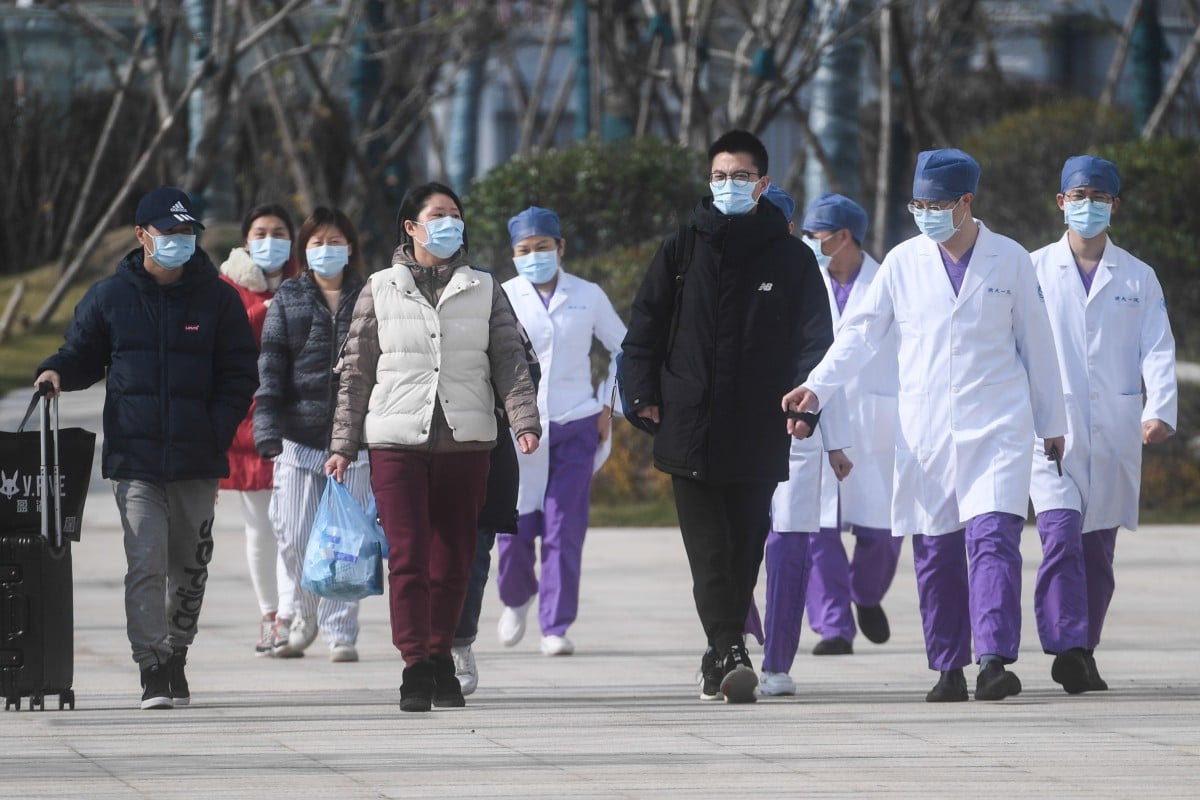
Cured coronavirus patients leave hospital in Hangzhou, one of four cities in the eastern Chinese province of Zhejiang which has adopted draconian quarantine measures for its residents. Photo: Xinhua
In the Chinese coastal province of Zhejiang, some 560km (350 miles) east of where the new
coronavirus originated, at least four cities have introduced measures that mirror the draconian rules established by Hubei province – epicentre of the outbreak – to keep the virus from spreading.
Authorities in Zhejiang, which neighbours the port city of Shanghai, have closed “unessential” public venues, banned funerals and weddings, limited the number of times people can go out and quarantined families at home, sometimes by locking them in.
In the Zhejiang cities of Wenzhou, Hangzhou, Ningbo and Taizhou – which have a combined population of more than 30 million – each household is being issued a “passport”, usually a piece of paper that carries one’s name, home address and an official stamp. Only one person per household is permitted to leave their home every two days.
The rules were announced on state media and the governments’ social media accounts, and families have already received their “passports”.
Some people have been locked inside their homes, including Allen Li and his family in Hangzhou. Photo: Handout
To enforce the new travel rules, community officers have been stationed at the entrance of some residential compounds. Every time a resident leaves their compound, an officer at the entrance marks the time and date on the “passport”. People from the same household are then barred from going out again for the next two days.
With 954 coronavirus patients, the province of Zhejiang is the hardest hit region outside Hubei, which has about 19,665 of the more than 28,000 total cases.
Hangzhou, the provincial capital and home to some of China’s biggest tech companies, has reported 151 confirmed cases. The port city of Wenzhou has reported 396 cases.
Yao Gaoyuan, mayor of Wenzhou, said in an interview with CCTV on February 2 that the city had decided to impose the restrictions to contain the spread the coronavirus. “This could reduce the transmission to the greatest extent possible,” he said.
One neighbourhood in Wenzhou introduced a mobile technology system to enforce the stay-at-home rules, according to the state-run Wenzhou Daily, with residents using their phones to scan a QR code at the checkpoints every time they leave the compound. Only those who have not been out for two days will be allowed through.
In Hangzhou, the government on Tuesday banned all weddings and demanded that funerals, which traditionally involve family gatherings and banquets, be held frugally.
All public venues deemed “unessential” were ordered to close. Underground train services are running at 30-minute intervals. Factories need special permission to resume work during the extended Lunar New Year holiday.
Some families have also been confined to their homes because they have travelled to places with large numbers of confirmed cases.
No, the coronavirus can’t be kept away by saltwater gargling or cow dung
Allen Li, 26, who is now living with his parents in Hangzhou, said the family had been told to stay home for 14 days after they returned from Wenzhou.
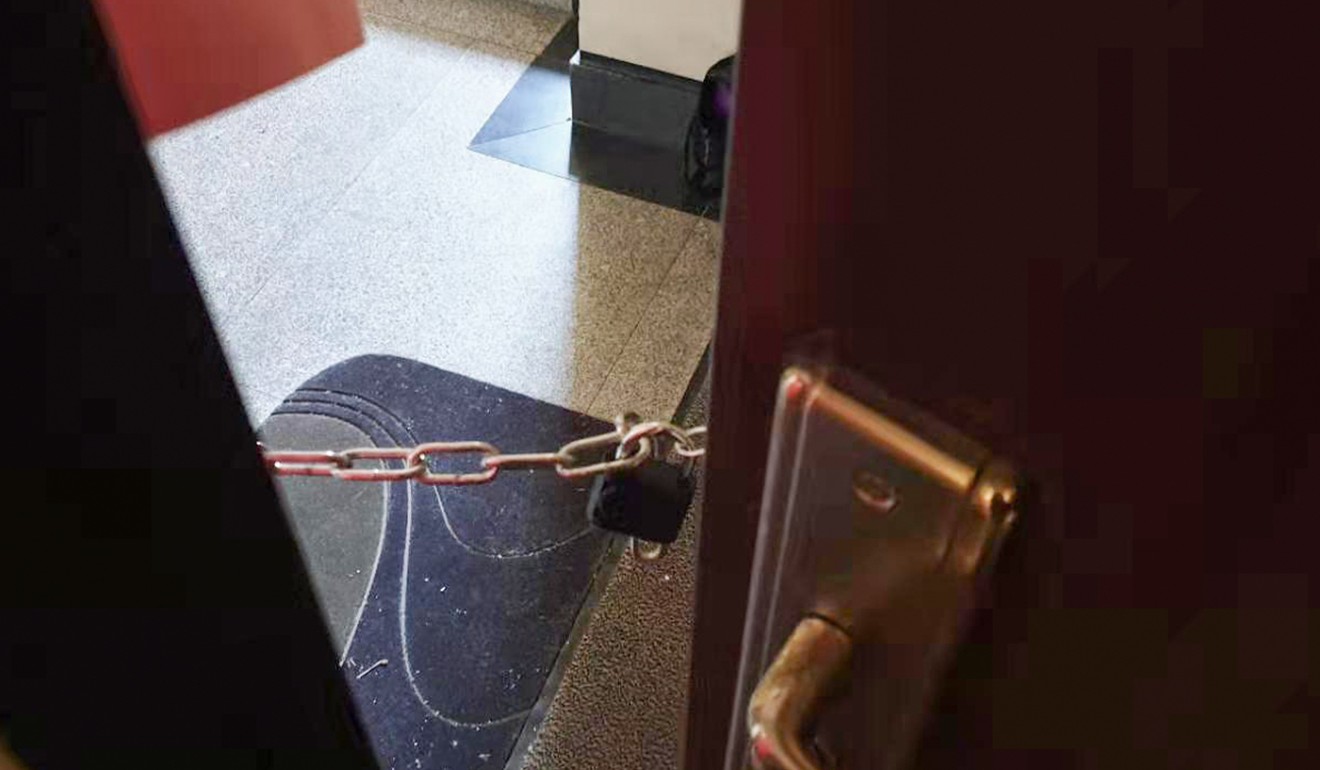
Community workers put up a sign saying “quarantined at home, no visitors allowed” on their door. On Wednesday, they locked the flat with a metal chain from the outside despite the family’s protest.
“We argued with them, but they said it’s a decision from above,” Li said. “We understand we should not go out. But this is not humane. What if there’s a fire at our home at midnight, and we can’t get anyone to unlock it?”
China scrambles to deliver food to coronavirus epicentre Wuhan amid lockdown
Some social media users have applauded such measures as ways to contain the virus, but others have criticised the quarantine as essentially “house arrest”.
Wuhan party official apologises for failures in coronavirus outbreak
Some Hangzhou residents have complained online that they were barred from entering their rented homes after having spent the Lunar New Year holiday elsewhere.
The coronavirus was first reported in December in Wuhan, the provincial capital of Hubei that has been sealed off since January 23.
In a sign of the rising fear of contagion, regional authorities across China have imposed travel restrictions on residents that mirror the draconian measures in Hubei province.
But officials said about 5 million people had already travelled out of the city during the Lunar New Year travel season, contributing to the spread of the virus to other Chinese provinces and at least 24 countries.
Source: SCMP
Posted in adopts, “passport”, coronavirus, discouraged, Disease, draconian, epicentre, fight, funerals, Hangzhou, house arrest, hubei province, Lunar New Year holiday, measures, Ningbo, quarantine, Shanghai, Taizhou, Uncategorized, unessential, Weddings, Wenzhou, Wenzhou Daily, zhejiang province |
Leave a Comment »
11/06/2019
NINGBO, June 10 (Xinhua) — The China-Central and Eastern European Countries (CEEC) Expo has become an arena where businessmen from CEE countries can show the competitiveness of their products in the Chinese market.
The expo, which opened in the eastern city of Ningbo on June 8, has attracted more than 700 government officials and businessmen from the CEE countries, as well as over 6,700 buyers from more than 40 Fortune 500 firms and other leading international enterprises in 22 countries and regions.
Businessmen from 17 CEE countries have been promoting dairy products, wine, logistics and other products and services at the expo, which is scheduled to close on June 12.
Jan Chaloupka, head of the export business development of Rajo, is confident about the competitiveness of his products in the Chinese market.
“We export more than 57,000 tonnes of our products every year to over 70 countries around the world,” he said. “All of our products are healthy and of high quality, which are based on the advanced technologies and knowledge that Rajo owns to meet the needs of customers.”
“I believe that our products can be one of the best in the Chinese market,” he added.
“The Chinese market is the most important one for companies in Greece,” said Nikoletta Kaperoni, managing director of Athens-based Kaperoni Business Financial Group (BFG).
“I am sure that Chinese customers will like our products such as olive oil because they are all made from natural raw material without any additives,” she added.
Klemen Boncina, deputy director of Posta Slovenije, a logistics provider from Slovenia, believes his company is a bridge between China and Europe.
“Our company has a wide-spread network of logistics in Slovenia and even in Europe, which I believe can deliver products from China over the last mile to the customers,” he said.
Under the theme of deepening opening-up and cooperation for mutual benefit, the expo includes more than over 20 events such as the European commodity exhibition.
According to China’s Ministry of Commerce, the total trade volume between China and Central and Eastern European countries reached 28.55 billion U.S. dollars in the first four months this year, up 7.9 percent year on year.
Source: Xinhua
Posted in Athens, businessmen, CEE countries, Central European, China-Central and Eastern European Countries (CEEC) Expo, Chinese expo, Chinese market, Eastern European, Greece, Kaperoni Business Financial Group (BFG), Ministry of Commerce (MOC)., Ningbo, opportunities, pursuing, Slovenia, Uncategorized |
Leave a Comment »
07/04/2019
HANGZHOU, April 6 (Xinhua) — The city of Ningbo in east China’s Zhejiang Province will launch direct flights to Tokyo and Seoul this year, the city’s Lishe International Airport said.
Sources with the airport said it would also increase flights to domestic cities like Beijing and Qingdao in 2019.
Ningbo has one of the busiest ports in the world.
The airport is expanding its terminal facilities amid a surging passenger volume. The airport handled 11.7 million passengers in 2018, a yearly increase of 24.8 percent.
Source: Xinhua
Posted in Beijing, direct flights, East China city, Ningbo, Qingdao, Seoul, Tokyo, Uncategorized, zhejiang province |
Leave a Comment »
10/03/2019
- Foreign lifestyle experiences are becoming more popular as citizens seek to escape pollution, food and medicine safety worries and authoritarian government controls
- Citizens encountering more barriers to their dreams of travelling abroad, with severe limits on moving money overseas and restrictions on visiting foreign countries
Thailand, including the likes of Chiang Mai, the United States, Australia, Canada, New Zealand are popular destinations for Chinese families. Photo: Shutteratock
Xu Zhangle and her husband and their two children are a typical middle-class couple from Shenzhen, and along with 60 other Chinese families, they are going on an extended holiday to Thailand in July, where they hope to enjoy an immigrant-like life experience.
The family have paid a travel agent around 50,000 yuan (US$7,473) for the stay in Chiang Mai in the mountainous north of the country, including transport, a three-week summer camp for their daughters at a local international school, rent for a serviced apartment and daily expenses.
Zhangle loves Chiang Mai’s relaxed lifestyle and easy atmosphere and wants to live as a local for a month or even longer, instead of having to rush through a short-term holiday.
“It would not be just [tourist] travelling but rather a life away from the mainland.” she said.
Recently, upper middle-class citizens have increased their efforts to safeguard their wealth and achieve more freedom by spending more time abroad.
They have invested considerable amounts of money in overseas properties and applied for long-stay visas, although many of their attempts have ended in failure.
Chinese citizens are encountering more barriers to their dreams of travelling abroad, with severe limits on moving money overseas and restrictions on visiting foreign countries.
Still, growing anxieties about air pollution, food and medicine safety and an increasingly authoritarian political climate are pushing middle class families to look for new ways to circumvent the obstacles so they can live outside China.
Among the options, there is growing demand for sojourns abroad of a month or more, to enjoy a foreign lifestyle for a brief period to make up for the fact that their emigration dreams may have stalled.
“I think this is becoming a trend. Chinese middle-class families are facing increasing difficulties to emigrate and own homes overseas. On the other hand, they still yearn for more freedom, for a better quality of life than what is found in first-tier cities in China.
They are eager to seek alternatives to give themselves and their children a global lifestyle,” said Cai Mingdong, founder of Zhejiang Newway, an online tour and education operator in Ningbo, south of Shanghai.
“First, the availability of multiple-entry tourist visas and the sharp drop in air ticket prices have made it convenient and practical to stay abroad for from a few weeks to up to three months each year.”
Blacklist labels millions of Chinese citizens and businesses untrustworthy
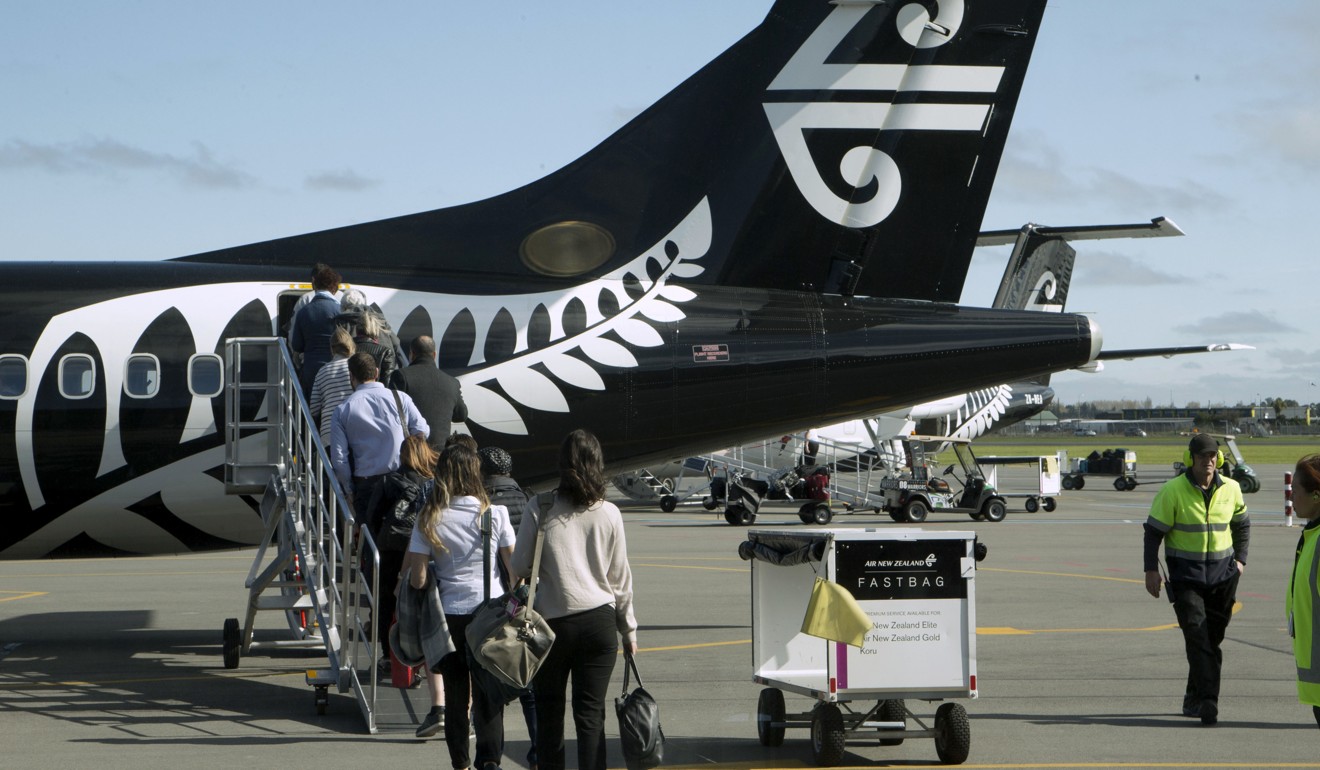
Now, many well-to-do Chinese middle class families can get a tourist visa for five or even 10 years that allows them to stay in a number of countries — including the United States, Australia, Canada, New Zealand and other Asian countries — for up to six months at a time.
“In 2011, a round-trip air ticket from Shanghai to New Zealand cost 14,000 yuan (US$2,000), but now is about 4,000 (US$598),” added Cai.
This opens up the possibility for many middle-class families who are not eligible to emigrate, to live abroad for short periods of time.
Many wealthy Chinese middle class families can get a tourist visa for five or even 10 years that allows them to stay in several countries including the United States, Australia, Canada, New Zealand and other Asian countries, for up to six months at a time. Photo: AP
Chinese tourists made more than 140 million trips outside the country in 2018, a 13.5 per cent increase from the previous year, spending an estimated US$120 billion, according to the China Tourism Academy, an official research institute under the Ministry of Culture and Tourism.
“In [the Thai cities of] Bangkok and Chiang Mai, there are more and more Chinese who stay there to experience the local lifestyle, which is different from theirs in China. The life there is very different from that in China,” said Owen Zhu, who now lives in the Bangkok condo he bought last year.
“The freedom, culture and community are diversified. The quality of air, food and services are much higher than in first-tier cities in China, but the prices are more affordable.
“In Bangkok, in many international apartment complexes where foreigners live, the monthly rent for a one-bedroom [apartment] is about 2,000 (US$298) to 3,000 yuan.”
China’s richest regions are also home to the most blacklisted firms
A one-bedroom apartment in Shenzhen in southern China is twice as expensive, with rents continuing to rise rapidly.
There are global goods, and it is easy to socialise with different people from around the world,” Zhu added
“Many Chinese people around me, really, come to Thailand to live for a while and go back to China, but then come back again after a few months.”
Both Cai and Zhu said they discovered the new phenomenon among China’s middle class and decided it was a business opportunity.
Growing anxieties about air pollution, food and medicine safety and an increasingly authoritarian political climate are pushing middle class families to look for new ways to circumvent the obstacles so they can live outside China. Photo: AP
Zhu is in the process of registering a company in Bangkok and plans to build an online platform to service the needs of Chinese citizens living abroad who do not own property or have immigration status, especially members of the LGBT community.
Cai said dozens of Chinese families in the Yangtze River Delta had paid him to send their children to schools in New Zealand or Europe for around three or four weeks in the middle of the school year, while the parents rent villas in the area, with New Zealand and Toronto in Canada among the most popular destinations.
Last year, Zheng Feng, a single mother and freelance writer from Beijing, rented a small villa in Australia for a month for them, a friend and their children to escape Beijing’s pollution and experience life overseas.
“To be honest, I don’t have enough money to invest in a property or a green card in Australia. But it’s very affordable for me and my son to pay about 30,000 yuan (US$4,484) to live abroad for one or two months.” Zheng said.
China says 2018 growth was worth more than Australia’s whole GDP
Zheng will join the Xu family in Chiang Mai later this year and she is also planning a similar trip to England next year.
Zheng’s friend, Alice Yu, invested in an American EB-5 investor visa a few years ago, and plans to make one or two month-long trips abroad each year until her family is finally able to move to the United States.
Demand for the EB-5 investor visa in China seems to be waning given heightened uncertainty about the future of the programme and US immigration law in general under US President Donald Trump.
Approval for the visa can now take up to 10 years, resulting in a huge backlog that has further dampened interest and led to a significant dip in investment inflows into the US from foreign individuals.
A one-bedroom apartment in Bangkok can cost around bout 2,000 (US$298) to 3,000 yuan a month. Photo: AFP
“Maybe it will soon become standard for a real Chinese middle-class family to have the time and money to enjoy a long stay at a countryside villa overseas,” said Yu.
“Regardless of whether we can get a long-term visa for the United States, I want my children grow up in a global lifestyle and with more freedom than just growing up on the mainland. So do all wealthy and middle class Chinese families, I think.”
Karen Gao’s son started studying at an international school in Chiang Mai in June, at the cost of about 70,000 yuan (US$10,462) a year, after she quit her job as a public relations manager in Shenzhen and moved to Thailand on a tourist visa.
For better or worse? China’s complicated employment explained
“A few months each year for good air, good food and no censorship and internet control, but cheaper living costs compared to Beijing, it sounds like a really good deal to go,” said Gao, who has now been offered a guardian visa to accompany her son, who has already been given a student visa.
“In Shenzhen, I wasn’t able to get him into school because I had no [local] residence permit.
“It would be the best choice for us because we feel so uncertain and worried about investing and living in the mainland.”
Last year, Gao, like thousands of other private investors mostly middle class people living in first-tier cities, suffered significant losses when their investments in hotels and inns in Dali, Yunnan province, were demolished amid the local government’s campaign to curb pollution and improve the environment around Lake Erhai.
“We were robbed by the officials without proper compensation,” Gao said.
Source: SCMP
Posted in air pollution, air ticket prices, Alice Yu, Asian countries, Australia, authoritarian government, authoritarian political climate, Bangkok, barriers, Beijing, Blacklist labels, Cai Mingdong, canada, cheaper living costs, Chiang Mai, China alert, China Tourism Academy, chinese families, circumvent the obstacles, Citizens, compensation, condo, countryside villa overseas, daily expenses, Dali, daughters, destinations, easy atmosphere, emigrate overseas, experience life overseas, food and medicine safety, Foreign lifestyle experiences, founder, GDP, good air, good food, hotels and inns, husbands, immigrant-like life experience., international school, Karen Gao, LGBT community, local international school, long holidays abroad, long-stay visas, mainland, middle class familie, middle-class couple, Ministry of Culture and Tourism, mountainous north, moving money overseas, multiple-entry tourist visas, New Zealand, Ningbo, no censorship and internet control, official research institute, online tour and education operator, overseas properties, Owen Zhu, Pollution, relaxed lifestyle, residence permit, restrictions, serviced apartment, Shanghai, Shenzhen, short-term holiday, single mother and freelance writer, student visa, Thailand, Transport, travelling abroad, Uncategorized, United States, US immigration law, US President Donald Trump, wealthy families, Xu family, Xu Zhangle, yuan, Yunnan Province, Zhejiang Newway, Zheng Feng |
Leave a Comment »




 CHINDIA ALERT: You'll be living in their world, very soon