20/04/2020
BRUSSELS (Reuters) – The euro zone’s trade surplus with the rest of the world grew in February, with a decline in imports from China as well as sharply lower energy needs because of mild winter weather.
The unadjusted goods trade surplus grew to 23.0 billion euros ($25.1 billion) in February, compared with 18.5 billion euros a year earlier. Exports rose by 1.6%, while imports fell by 1.0%.
For China, which already had widespread coronavirus restrictions in place in February, exports from the European Union as a whole were slightly lower than in February 2019. However, imports were down by 8.1%, according to data on Eurostat’s website.
Energy imports as a whole also declined by 9.6% in February, when comparing Jan-Feb data issued on Monday and January data from a month ago. That translated into 10.1% lower imports from Russia and 5.9% less from Norway.
The trade surplus with the United States, by contrast, grew by 21% in the month as exports increased and imports declined. The persistent surplus in goods has been a source of transatlantic tension.
On a seasonally adjusted basis the euro zone trade surplus also rose to 25.8 billion euros in February from 18.2 billion euros in January. Exports were 1.8% higher month-on-month and imports 2.3% lower.
Source: Reuters
Posted in 2019, according, adjusted, already, basis, because, billion, Brussels, by contrast, China, compared, comparing, Data, decline, declined, earlier, energy, Euro Zone, European Union, euros, Eurostat’s, exports, February, Fell, from, goods, grew, grows, has been, higher, However, imports, in place, increased, January, lower, mild, Monday, month, month-on-month, needs, Norway, persistent, rest of the world, restrictions, Russia, seasonally, sharply, slightly, source, surplus, tension, trade surplus, transatlantic, translated, unadjusted, Uncategorized, United States, weather, website, while, whole, widespread, winter, year |
Leave a Comment »
04/04/2020
- Researchers from Imperial College in London looked at how 11 countries had responded to the crisis and estimated how many lives had been saved by intervention
- Some of the worst affected countries such as Italy and Spain would have seen tens of thousands more deaths, according to the model
Empty streets outside the Colosseum in Rome. Photo: AFP
Mass lockdowns and widespread social distancing may have prevented 59,000 Covid-19 deaths, according to a new model from Imperial College in London.
A team of researchers – including Neil Ferguson, whose projections helped inform the British government’s response to the outbreak and Samir Bhatt – estimated that tens of thousands of lives had been saved in 11 countries as a result of measures such as case isolation, school closures, bans on mass gatherings as well as local and national lockdowns.
The measures had a “substantial impact in reducing transmission” for countries with more advanced epidemics, with an estimated 38,000 deaths averted in Italy and 16,000 in Spain, but it is “too early to be sure” about similar reductions for countries in the earlier stages of the outbreak, researchers said.
Most countries in the model – Austria, Belgium, Denmark, France, Germany, Norway, Sweden, Switzerland and the United Kingdom – began their interventions between March 12 and 14.
“While we cannot determine which set of interventions have been most successful, taken together, we can already see changes in the trends of new deaths,” the researchers said.
“We note that substantial innovation is taking place, and new, more effective interventions or refinements of current interventions, alongside behavioural changes will further contribute to reductions in infections.”
The report, published on Monday, also estimated that between 7 and 43 million people had been infected in the 11 countries by late March – somewhere between 1.88 per cent and 11.43 per cent of the population – and said a large number of cases had probably gone unreported.
On average, the proportion of the population infected in the assessed countries was 4.9 per cent, with the highest estimates in Spain and Italy, and the lowest in Germany and Norway.
The coronavirus that causes Covid-19 first began to spread late last year in central China, but has since become a devastating global pandemic, with the most confirmed cases in the United States, Italy, Spain, Germany, France and mainland China.
Life under Italy’s lockdown: the hard lessons other countries must learn
A separate study by Ferguson and other researchers, including Imperial College epidemiologist Azra Ghani, published on Monday in The Lancet found that the overall case fatality ratio for Covid-19 was lower than estimates for the severe acute respiratory syndrome (Sars) and Middle East respiratory syndrome (Mers) coronaviruses, but “substantially higher” than those of recent influenza pandemics such as the H1N1 influenza in 2009.
“With the rapid geographical spread observed to date, Covid-19 therefore represents a major global health threat in the coming weeks and months,” the researchers said.
“Our estimate of the proportion of infected individuals requiring hospitalisation, when combined with likely infection attack rates (around 50–80 per cent), show that even the most advanced health care systems are likely to be overwhelmed.
“These estimates are therefore crucial to enable countries around the world to best prepare as the global pandemic continues to unfold.”
Italy ‘still proud to be part of EU’ amid stronger ties with China and coronavirus pandemic
The study also found that the risk of death increased significantly for individuals in older age groups, although they noted early results indicate children are not at a lower risk of infection compared with adults.
Using data from China, researchers estimated the overall case fatality ratio to be at 1.38 per cent, with a lower ratio of 0.32 per cent for under-60s, compared with 6.4 per cent for over-60s and rising to 13.4 per cent for people who were over 80.
“It is clear from the data that has emerged from China that case fatality ratio increases substantially with age,” they said.
The age gradient was also observed in cases outside China, where the fatality ratio was estimated at 1.4 per cent for people under the age of 60, compared with 4.5 per cent for those 60 and over.
Source: SCMP
Posted in 11 countries, 2009, Austria, Belgium, Colosseum, COVID-19, Denmark, Europe, France, geographical spread, Germany, H1N1 influenza, helped save, Imperial College London, influenza pandemics, innovation, interventions, Italy, Mainland China, major global health threat, Mass lockdowns, Middle East Respiratory Syndrome (Mers), Norway, researchers, Rome, severe acute respiratory syndrome (Sars) epidemic, Spain, Sweden, Switzerland, The Lancet, Uncategorized, United Kingdom, United States |
Leave a Comment »
28/03/2020
- Mainland China’s coronavirus outbreak exposed a huge digital divide, with some students from poorer regions lacking resources for online learning
- Access to the internet is not considered a daily necessity at China’s policy level, unlike in European countries such as Norway and Iceland
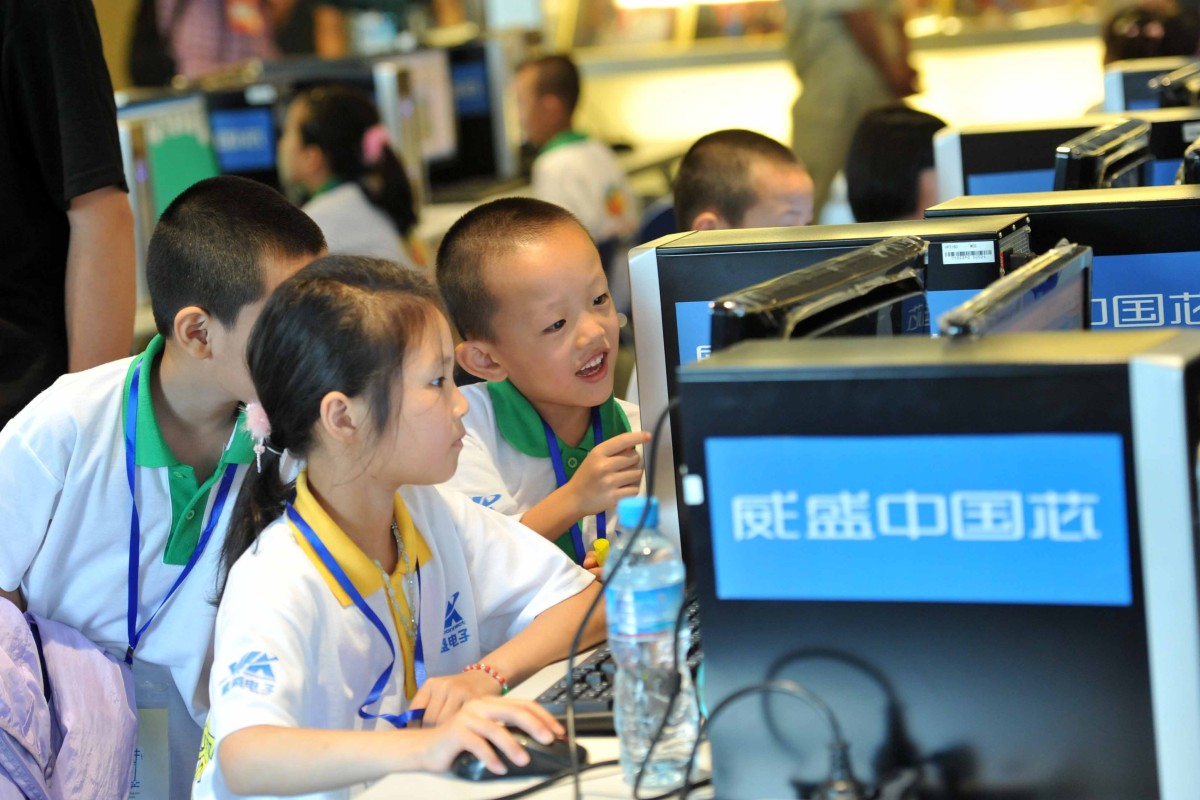
Chinese children attend a computer class in Beijing to learn how to properly use the internet. Those in poorer parts of the country lack sufficient access to the internet, as the switch to online teaching during the coronavirus outbreak in China showed. Photo: AFP
The coronavirus outbreak in mainland China highlighted the huge digital divide that exists between richer and poorer regions.
When schools shut and online learning was made compulsory, many students living in remote areas found they didn’t have sufficient internet access.
There were 1.6 billion mobile phone subscribers in China in 2019, with many people having more than one subscription, and optical fibre and 4G covered 98 per cent of the population, according to official data.
These figures fail to show the large regional disparity between the country’s rich and poor provinces, says Jack Chan Wing-kit, associate professor of the school of government at Sun Yat-sen University in Guangzhou province.
“In poor areas, a family [often] has to share one mobile phone among all members,” says Chan, who has done extensive research on China’s social problems.
It is easier for service providers to offer blanket coverage in densely populated cities where most people live in high-rise buildings, Chan explains.
“In rural areas, people live in bungalows that are widely spread out. It is not economically efficient for phone service providers like China Mobile to install transmission stations there, which explain their spotty coverage,” he says.
While the universal social security net in China covers people including the old and disabled, access to the internet is not considered a daily necessity at the policy level. That’s unlike European countries such as Norway and Iceland, who see the internet as a basic human right and ensure their entire populations have proper access to it.
Though some wealthier coastal cities within the Pearl River Delta recently conducted local surveys to identify less-well-off households and handed out tablet computers, inland provinces in central and western China cannot afford these measures, Chan says.
The Chinese government does not encourage [the setting up of] charities – Erwin Huang, founder of WebOrganic and EdFuture
Philanthropic efforts could help address this problem, as shown by Hong Kong’s experience in tackling the digital divide.
About 900,000 kindergarten, primary and secondary students in the city have been affected by school suspensions that are likely to last until at least April 20.
While families of disadvantaged students have received support from the government through Comprehensive Social Security Assistance and other welfare schemes, many children still lack digital resources as their parents don’t see it as a priority, says Erwin Huang, founder of both WebOrganic, a charity promoting computer access to such youngsters, and education alliance EdFuture.
That has left it up to charities to make sure all students have enough resources at home for online learning, Huang says. For instance, this month EdFuture worked with local mobile service provider SmarTone to give out free phone data SIM cards lasting two months to 10,000 students.
“It’s for those who live in subdivided flats and those who have to go to McDonald’s for Wi-fi access,” says Huang, who is also associate professor of engineering at the Hong Kong University of Science and Technology.
Many students in China’s poorer regions have been left at a disadvantage by the shift to online learning. Photo: Getty Images
The Hong Kong Jockey Club also recently launched a HK$42 million (US$5.4 million) scheme to provide free mobile internet data to 100,000 underprivileged primary- and secondary-school students to help with online learning while schools are closed.
Huang says while such charities help fill gaps in the provision of digital resources in Hong Kong, a similar philanthropic culture is lacking in China.
“The Chinese government does not encourage [the setting up of] charities,” he says.
Huang initiated several digital resources projects in China after the Sichuan earthquake in 2008, but says frequent media reports of scandals involving charities such as China’s Red Cross have made it harder for NGOs to operate in the country, with the government preferring to provide social services through its own departments.
Source: SCMP
Posted in Access to the internet, any time soon, Beijing, China’s, Comprehensive Social Security Assistance, computer class, coronavirus crisis, coronavirus outbreak, departments, Digital divide, earthquake, EdFuture, European countries, exposed, going away, Guangzhou province, Hong Kong University of Science and Technology, Iceland, Internet, lacking resources, Mainland China’s, NGOs, Norway, online learning, poorer regions, professor of engineering, Red Cross, Sichuan, social services, students, Sun Yat-Sen University, The Hong Kong Jockey Club, Uncategorized, WebOrganic, Wi-fi access |
Leave a Comment »
18/09/2019
TOKYO (Reuters) – China, Japan and South Korea have set ambitious targets to put millions of hydrogen-powered vehicles on their roads by the end of the next decade at a cost of billions of dollars.
But to date, hydrogen fuel cell vehicles (FCVs) have been upstaged by electric vehicles, which are increasingly becoming a mainstream option due to the success of Tesla Inc’s (TSLA.O) luxury cars as well as sales and production quotas set by China.
Critics argue FCVs may never amount to more than a niche technology. But proponents counter hydrogen is the cleanest energy source for autos available and that with time and more refueling infrastructure, it will gain acceptance.
AMBITIOUS TARGETS
China, far and away the world’s biggest auto market with some 28 million vehicles sold annually, is aiming for more than 1 million FCVs in service by 2030. That compares with just 1,500 or so now, most of which are buses.
Japan, a market of more than 5 million vehicles annually, wants to have 800,000 FCVs sold by that time from around 3,400 currently.
South Korea, which has a car market just one third the size of Japan, has set a target of 850,000 vehicles on the road by 2030. But as of end-2018, fewer than 900 have been sold.
WHY HYDROGEN?
Hydrogen’s proponents point to how clean it is as an energy source as water and heat are the only byproducts and how it can be made from a number of sources, including methane, coal, water, even garbage. Resource-poor Japan sees hydrogen as a way to greater energy security.
They also argue that driving ranges and refueling times for FCVs are comparable to gasoline cars, whereas EVs require hours to recharge and provide only a few hundred kilometers of range.
Many backers in China and Japan see FCVs as complementing EVs rather than replacing them. In general, hydrogen is seen as the more efficient choice for heavier vehicles that drive longer distances, hence the current emphasis on city buses.
THE MAIN PLAYERS
Only a handful of automakers have made fuel cell passenger cars commercially available.
Toyota Motor Corp (7203.T) launched the Mirai sedan at the end of 2014, but has sold fewer than 10,000 globally. Hyundai Motor Co (005380.KS) has offered the Nexo crossover since March last year and has sold just under 2,900 worldwide. It had sales of around 900 for its previous FCV model, the Tucson.
Honda Motor Co Ltd’s (7267.T) Clarity Fuel Cell is available for lease, while Daimler AG’s GLC F-CELL has been delivered to a handful of corporate and public sector clients.
Buses are seeing more demand. Both Toyota and Hyundai have offerings and have begun selling fuel cell components to bus makers, particularly in China.
Several Chinese manufacturers have developed their own buses, notably state-owned SAIC Motor (600104.SS), the nation’s biggest automaker, and Geely Auto Group, which also owns the Volvo Cars and Lotus brands.
WHY HAVEN’T FUEL CELL CARS CAUGHT ON YET?
A lack of refueling stations, which are costly to build, is usually cited as the biggest obstacle to widespread adoption of FCVs. At the same time, the main reason cited for the lack of refueling infrastructure is that there are not enough FCVs to make them profitable.
Consumer worries about the risk of explosions are also a big hurdle and residents in Japan and South Korea have protested against the construction of hydrogen stations. This year, a hydrogen tank explosion in South Korea killed two people, which was followed by a blast at a Norway hydrogen station.
Then there’s the cost. Heavy subsidies are needed to bring prices down to levels of gasoline-powered cars. Toyota’s Mirai costs consumers just over 5 million yen ($46,200) after subsidies of 2.25 million yen. That’s still about 50% more than a Camry.
Automakers contend that once sales volumes increase, economies of scale will make subsidies unnecessary.
(GRAPHIC: How fuel cell vehicles work: here)
Source: Reuters
Posted in Asia, automakers, backing, biggest economies, buses, cars, China alert, Clarity Fuel Cell, Daimler AG, electric vehicles, electric vehicles (EV), Fuel cell, Geely Auto Group, GLC F-CELL, Honda Motor Co Ltd, hydrogen, hydrogen fuel cell vehicles (FCVs), hydrogen station, hydrogen tank explosion, hydrogen-powered vehicles, hyundai motor co, Japan, Korea, Lotus, luxury cars, Mirai, Mirai sedan, Nexo, Norway, SAIC Motor, South Korea, Tesla, Toyota, Toyota Motor Corp, Tucson, Uncategorized, Volvo Cars |
Leave a Comment »
01/09/2019
- US president likely had Beijing ‘on his mind’ when he made his audacious offer, diplomat says
- Proposal ‘could be interpreted as a very clear signal’ to China and Denmark that the US sees Greenland as part of an exclusive strategic zone, academic says
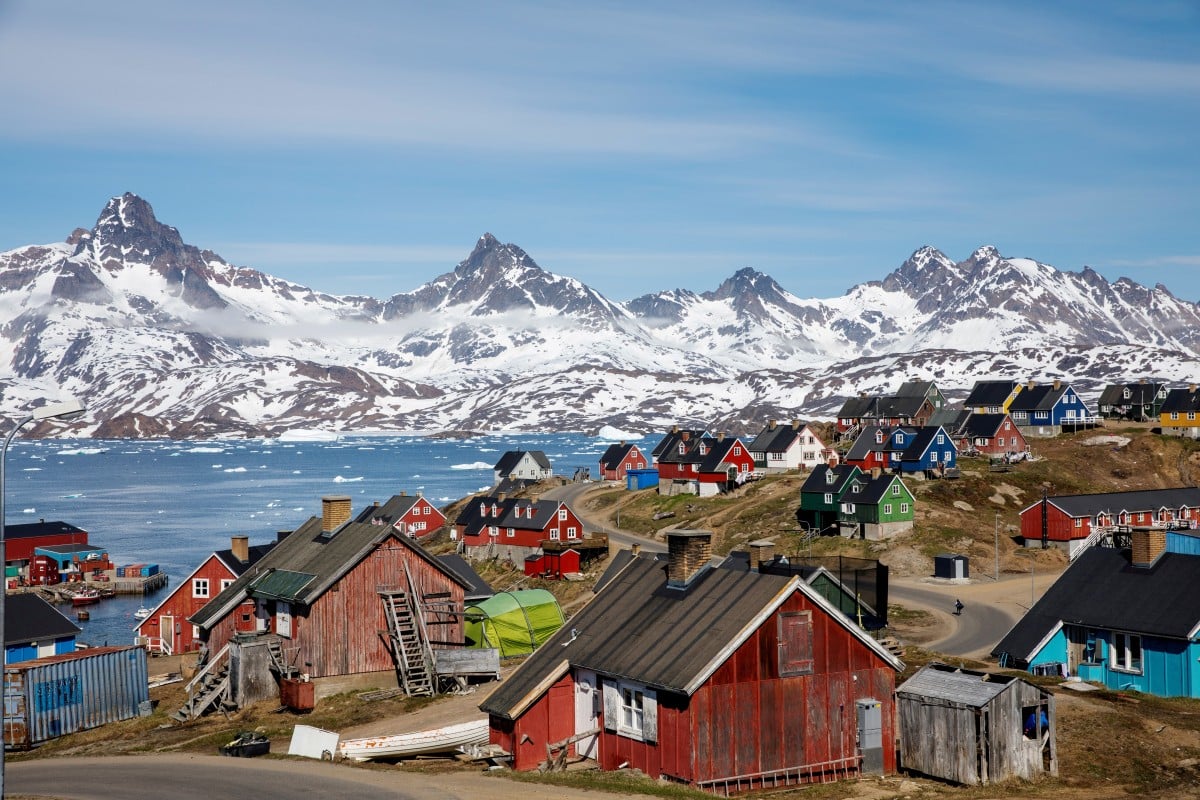
China has been building closer ties with Greenland in recent years. Photo: Reuters
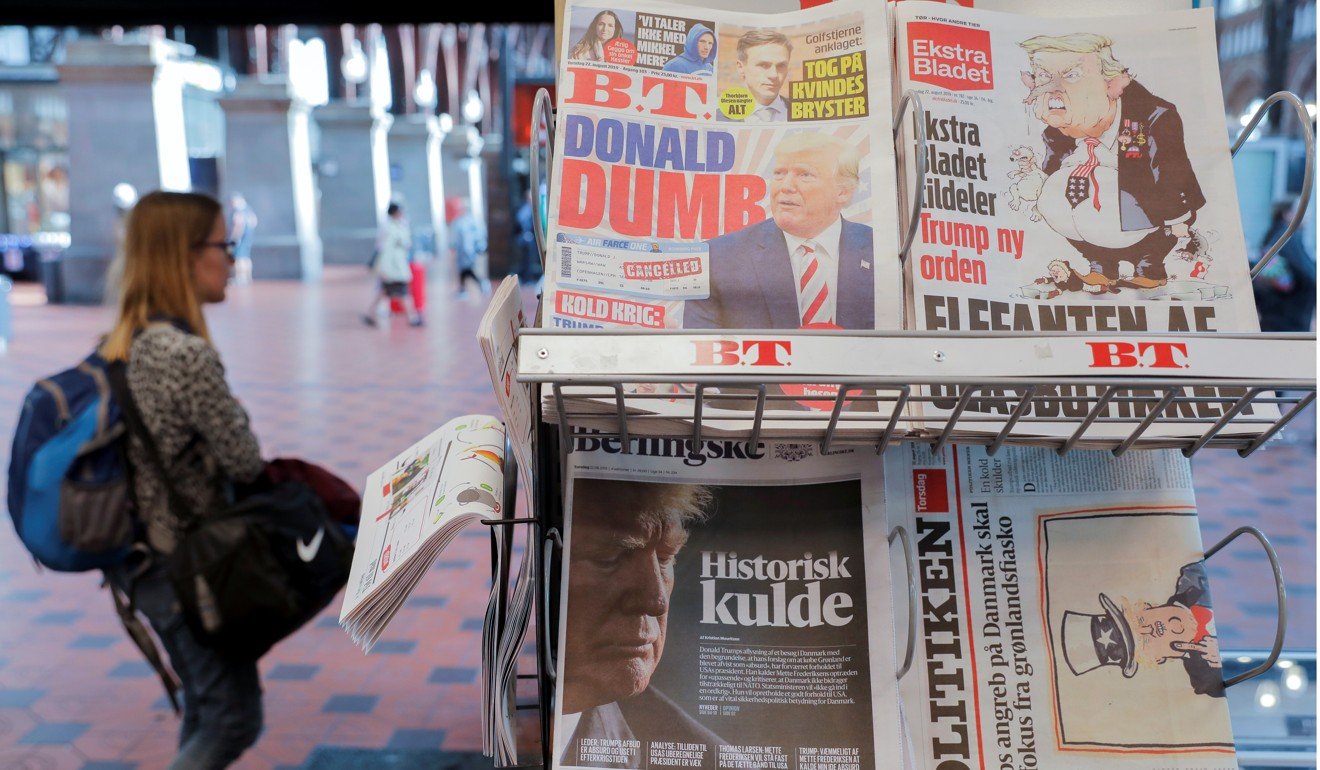
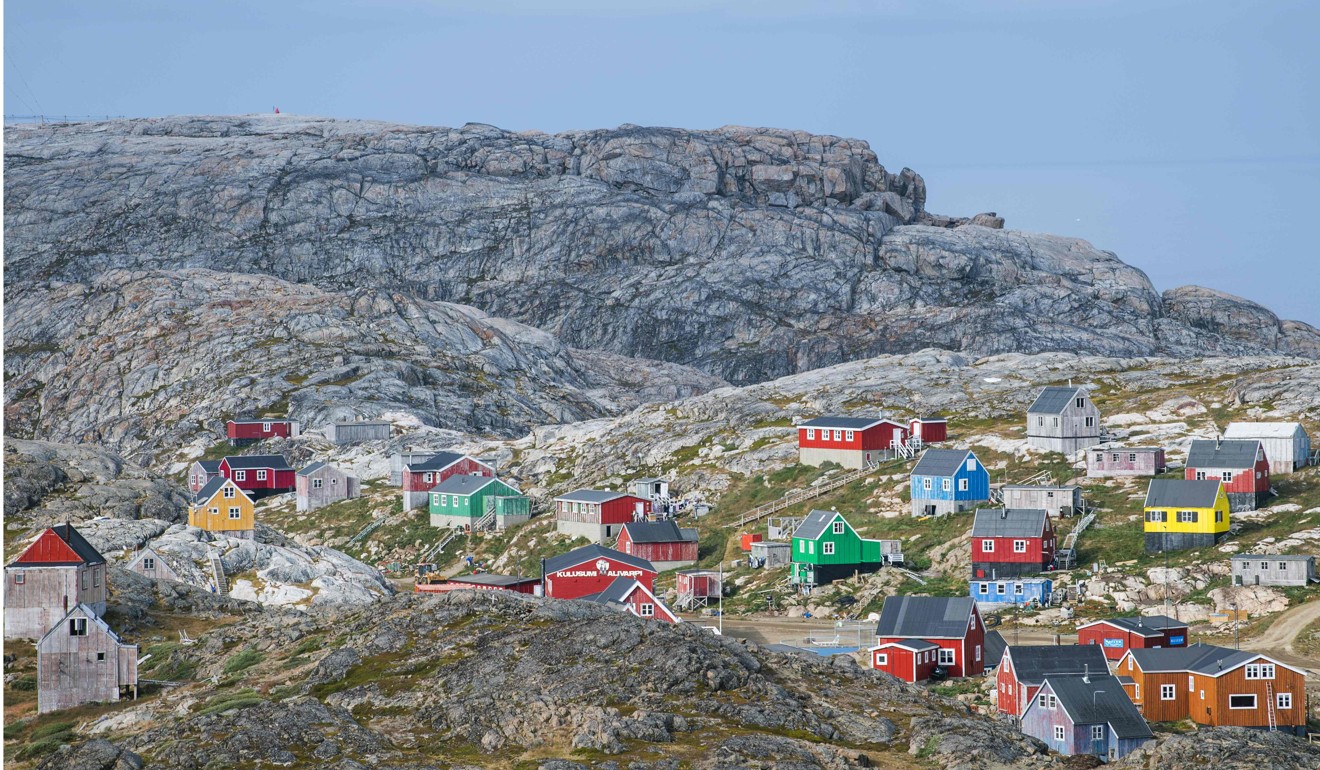
US President Donald Trump’s eyebrow-raising idea to buy Greenland from Denmark last month epitomised what analysts say is Washington’s fear of the growing interplay of Chinese money, Russian aggression and Arctic political division.
Of all the countries involved in the region, Denmark is feeling the most heat, and not just because Trump recently cancelled a trip and called its Prime Minister Mette Frederikse “nasty” for describing his plan to buy the world’s largest island “absurd”.
Over the past few years, both of Denmark’s self-ruled governments – Greenland and the Faroe Islands – have increasingly turned to China for commercial deals, adding weight to Beijing’s growing strategic influence in the vast area that forms the common backyard of Europe, North America and Russia.
Russia seeks Chinese support in developing Arctic shipping routes
Greenland is of particular concern to the White House and the Pentagon as it is home to the US Thule Air Force Base, located far above the polar circle and which served as the first line of defence during the cold war.
Nowadays, the island is also strategically important for the US ballistic missile early warning system, as the shortest route from Europe to North America goes via the ice-cloaked, resource-rich territory.
“Though it’s difficult to tell the motivations of President Trump, he likely had China on his mind with his Greenland offer,” said a Beijing-based diplomat, who asked not to be named.
The US was likely to step up its presence in Greenland in the future, the person said.
In May, US Secretary of State Mike Pompeo accused China and Russia of introducing a strategic power struggle into the Arctic region and described Beijing’s behaviour there as aggressive.
When Greenland signalled an interest in engaging a Chinese state-owned company to build two airports in 2017 – the island’s prime minister flew to Beijing to appeal for financial backing – Copenhagen stepped in amid US pressure, reluctantly agreeing to finance the projects from the public coffers.
Denmark’s reluctance stems from a long-standing mistrust between Copenhagen and Greenland, as the island’s quest for economic development is viewed by the Danes as an attempt to shore up capital to push for a future independence movement.
“There is no doubt that the US foreign and security policy community is becoming far more interested in Greenland as a strategic asset,” said Andreas Bøje Forsby, a researcher at the University of Copenhagen’s Nordic Institute of Asian Studies.
“Proposing to buy Greenland could be interpreted as a very clear signal to both China and Denmark that Greenland is part of an exclusive American strategic zone,” he said.
Danish Prime Minister Mette Frederikse described Donald Trump’s plan to buy Greenland as “absurd”. Photo: Reuters
The government of the Faroe Islands – an archipelago located between Scotland, Norway and Iceland – has a similar readiness to engage with China but for a different purpose.
Unlike Greenland, there are no immediate political movements calling for independence from Denmark, making its overall relationship with Copenhagen more amiable.
This month, the Faroese government will open a liaison office in Beijing, located within the Danish embassy.
“Our top priority is to have a free-trade agreement with China,” Sigmundur Isfeld, the first head of the Faroe Islands’ representation to Beijing, said.
US defence report flags China’s expanding military reach in the Arctic
With Norway – a key competitor of the Faroes in the fishing and export industries – eyeing a similar arrangement with China, the time was ripe to clinch a deal, he said.
“It is a challenge for us … we need to get in the game.”
Although part of Denmark, the Faroe Islands are not part of the European Union and therefore have to form separate trade agreements with other countries.
“For example, there is an EU-Japan economic partnership agreement. It covers all EU nations, but it does not cover the Faroe Islands,” Isfeld said.
Trade between Greenland and China totalled US$126 million in 2108. Photo: AFP
China, for its part, has sought to exert its economic and cultural influence on the Faroes, which has a population of about 52,000 people.
, the embattled Chinese telecoms giant, has been working with the islands’ main telecoms provider for four years and is said to be finalising a plan for 5G upgrades across the archipelago.
Beijing also helped fund a project for a Chinese-Faroese dictionary.
With a population of about 56,000 people, Greenland is one of China’s smallest trading partners. In the first seven months of 2019, trade between the two was US$126 million, with Chinese imports of fish accounting for the bulk of the total.
The Greenland government’s annual political and economic report for 2019 said that strong demand for metals from China had contributed to mineral and mining projects in the country, though China’s transition to a less mineral-intensive economy could spell trouble for the future of the sector.
The island’s gross domestic product is expected to grow by 3 per cent this year, according to the report, with seafood – principally cod, halibut and prawns – set to continue to be its chief export.
The end of the Arctic as we know it
China’s attempts in recent years to expand its involvement in Greenland have run into roadblocks.
In 2016, a Chinese mining company expressed interest in taking over an abandoned marine station in Grønnedal, an offer that the Danish government turned down the following year. A Chinese state-owned construction company had also offered to build airports in Greenland, but withdrew its offer this year.
Also this year, China expanded its involvement in exporting from Kvanefjeld, one of the world’s largest deposits of rare earths and uranium, by creating a joint venture to process and export the resources.
Beijing has made clear its strategic ambitions in the region. Early last year, it unveiled its Polar Silk Road strategy, plotting the course for its future development goals in the region – including scientific, commercial, environmental preservation and resource extraction efforts.
It also aligned its Arctic interests with its Belt and Road Initiative. Chinese companies are encouraged to invest in building infrastructure along the routes and conduct commercial trial voyages to gauge feasibility.
Putin boasts of nuclear icebreaker fleet as he outlines Arctic expansion plans
Anders Rasmussen, a former Danish prime minister and erstwhile Nato secretary general, said in an article published in Atlantic magazine last month that with melting ice caps opening the Arctic Sea to shipping, Arctic sea lanes “will likely become another flashpoint of renewed competition among the great powers as climate change alters our world”.
It was a situation he said he found “regrettable, but inevitable”.
“Both China and Russia are interested in getting a foothold in Greenland, to expand their influence in the Arctic region,” Rasmussen said. “Instead of being a source of contention,
Greenland should serve to highlight how many interests the United States and Denmark have in common.”
Source: SCMP
Posted in 5G upgrades, airports, Anders Rasmussen, archipelago, Arctic, Arctic expansion plans, Arctic political division, Arctic Sea, Arctic sea lanes, Arctic shipping routes, Atlantic magazine, Beijing, Belt and Road Initiative, Belt and Road Initiative (BRI), China alert, China’s growing presence, Chinese mining company, Chinese money, Chinese support, Chinese-Faroese dictionary, climate change, Cold War, commercial, Copenhagen, Danish embassy, Danish government, Danish prime minister, Denmark, early warning system, environmental preservation, EU nations, EU-Japan economic partnership agreement, Europe, European Union, Faroe Islands, Faroese government, first line of defence, Grønnedal, Greenland, Huawei, Iceland, imports of fish, Kvanefjeld, liaison office, melting ice caps, Mette Frederikse, Mike Pompeo, Nato secretary general, Nordic Institute of Asian Studies, North America, Norway, nuclear icebreaker fleet, offer, Pentagon, polar circle, Polar Silk Road strategy, President Donald Trump, Prime minister, prompt, Putin, rare earths, resource extraction, Russia, Russian aggression, scientific, Scotland, shipping, telecoms giant, to buy, Uncategorized, United States, University of Copenhagen, Uranium, US ballistic missile, US Secretary of State, US Thule Air Force Base, Washington, White House |
Leave a Comment »
05/07/2019
BEIJING, July 4 (Xinhua) — Chinese President Xi Jinping has appointed six new ambassadors in accordance with a decision by the Standing Committee of the National People’s Congress, according to a statement from the national legislature Thursday.
Chen Hai was appointed ambassador to Myanmar, replacing Hong Liang.
Chang Hua was appointed ambassador to Iran, replacing Pang Sen.
Liao Liqiang was appointed ambassador to Egypt, replacing Song Aiguo.
Xu Erwen was appointed ambassador to Croatia, replacing Hu Zhaoming.
Yi Xianliang was appointed ambassador to Norway, replacing Wang Min.
Chen Xu was appointed China’s permanent representative and ambassador to the United Nations Office at Geneva and other international organizations in Switzerland, replacing Yu Jianhua.
Source: Xinhua
Posted in appoints, Chinese President Xi Jinping, Croatia, Egypt, iran, Myanmar, new ambassadors, Norway, permanent representative and ambassador to the United Nations Office at Geneva, Standing Committee of the National People's Congress, Switzerland, Uncategorized |
Leave a Comment »
17/06/2019
- China has become the first nation to fully own and operate a floating launch platform for its space missions
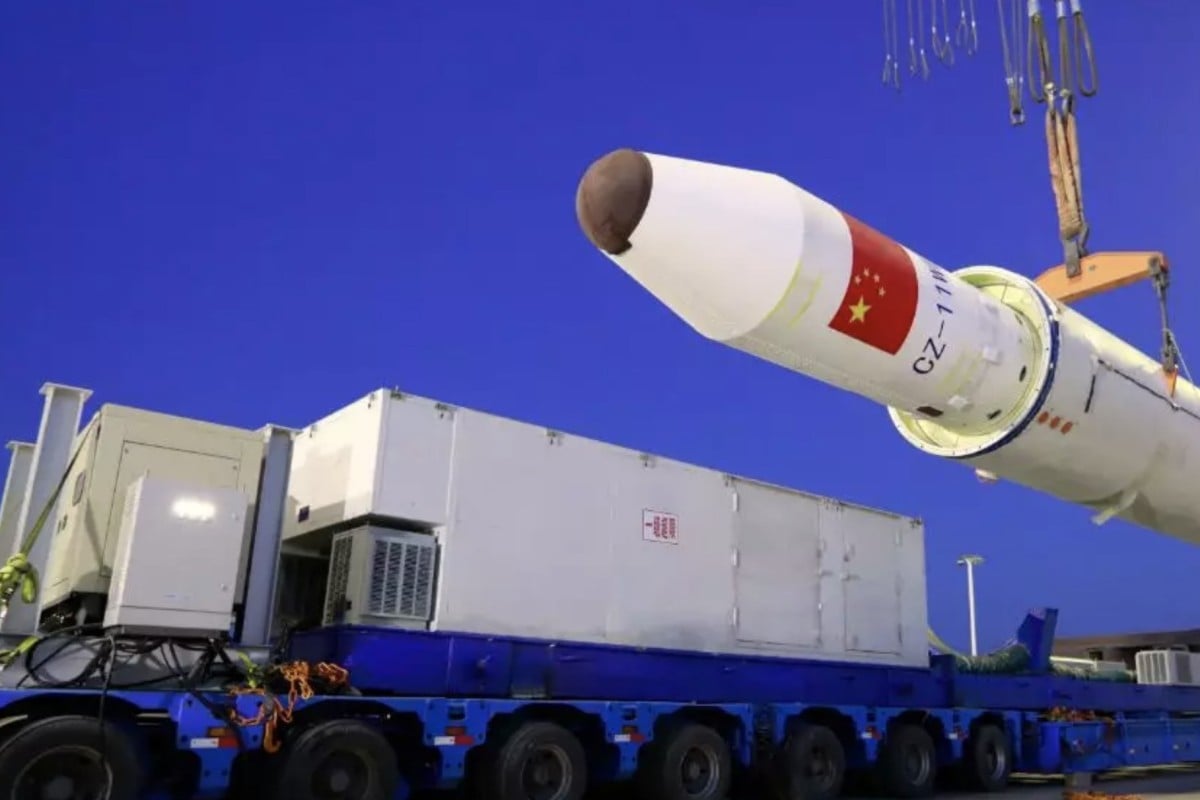
China has successfully launched a rocket into space from the Yellow Sea, making it the first nation to fully own and operate a floating sea launch platform. Photo: China National Space Administration
China successfully launched a rocket into space from a civilian cargo ship at sea on Wednesday, becoming the first nation to fully own and operate a floating sea launch platform, a technology expected to significantly reduce the cost and risk of space missions.
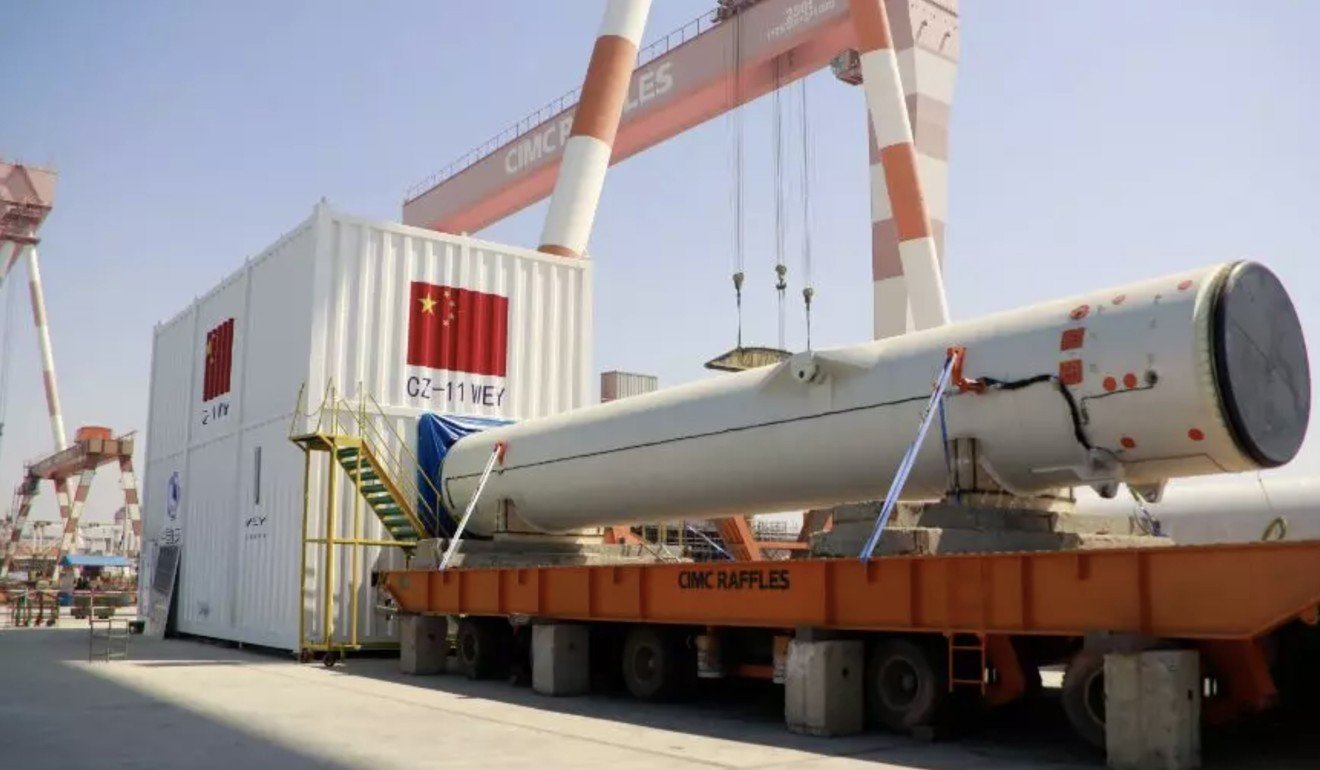
A Long March 11WEY rocket blasted off from the ship in the Yellow Sea at noon Beijing time, according to the China National Space Administration.
About six minutes later, five commercial satellites and a pair of “technical experiment” probes – called Bufeng, or Wind Catchers – reached their designated orbits.
The Wind Catchers will work together to detect winds on the surface of the world’s oceans. They will boost China’s ability to monitor and forecast typhoons and other extreme weather events, according to the administration.
“Launching a rocket from the sea has the advantages of high flexibility, good adaptability for specific tasks, and excellent launch economy,” said a statement on the administration’s website.
“It can flexibly select the launch point and touchdown area to meet the needs of various payloads for different orbits, and provide better aerospace commercial launch services for countries along the belt and road,” it added, referring to the Belt and Road Initiative, China’s plan to grow global trade.
The Long March 11 is a four-stage, solid fuel rocket with a design similar to a ballistic missile. It can carry a payload of about 700kg to the Earth’s lower orbit.
The first two stages of the rocket dropped in open waters in the northern Pacific Ocean, according to the administration. The rocket was equipped with a flight suspension system in case of any abnormal situation, but none occurred.
“The rocket debris will not cause damage to surrounding waters,” the administration said.
The world’s first ocean rocket launch platform, the Sea Launch, was jointly built by companies from Russia, the United States, Norway and Ukraine in the late 1990s. Its operation was halted in 2014 after military conflicts broke out between Russia and Ukraine.
Li Hong, president of the China Academy of Launch Vehicle Technology, told state media in March that the Chinese rocket and launch platform were designed and owned entirely by China, so it would not have similar problems caused by international disputes as the Sea Launch.
The launch was expected to encounter many technical and engineering challenges, including simplified procedures for pre-launch testing, the rocking motion of the ship and heat dissipation in a confined space.
But Chinese space authorities have argued the inconvenience would be offset by numerous advantages. For instance, the technology would allow China to move its launch site to as far away as Hawaii for quicker, cheaper satellite insertion to certain orbits, according to Xinhua.
Preparations get under way for Wednesday’s successful Chinese space launch from the northern Pacific ocean. Photo: China National Space Administration
A maritime launch is also expected to reduce the risk of rocket debris falling into densely populated areas.
Chinese space launch sites are typically located inland for defence purposes.
China has built its sea launch capability mainly to bolster the commercial space sector, according to Chinese space authorities.
In this mission, the rocket was sponsored and named after WEY, a young luxury car brand by Chinese sports utility vehicle manufacturer Great Wall Motor.
Chang’e 4 landing marks start of new China-US space race
Some cutting-edge car technology, such as new paint materials, will go into space for testing in the most extreme environments, according to state media reports.
The payloads include the Jilin 03A, the latest addition to a high-definition Earth observation satellite network, according to Changguang Satellite Technology Corporation, the satellite’s owner.
The company said the constellation, which will eventually comprise more than 20 satellites, would achieve global coverage for commercial applications.
One of the satellites launched on Wednesday belongs to Shanghai-based LinkSure Network, which has ambitious plans to provide free Wi-fi to everyone on the planet. The company has said it plans to eventually launch more than 200 satellites as part of the project.
Source: SCMP
Posted in Bufeng, Changguang Satellite Technology Corporation, China Academy of Launch Vehicle Technology, China alert, China National Space Administration, civilian cargo ship, floating launch platform, free Wi-fi, global space race, Great Wall Moto, Great Wall Motor, Hawaii, Jilin 03A, Long March 11WEY rocket, monitor and forecast typhoons, Norway, Pacific Ocean, Planet, rockets to forefront, Russia, sea launch, Shanghai-based LinkSure Network, success, Ukraine, Uncategorized, United States, Wind Catchers, Yellow Sea |
Leave a Comment »
15/06/2019
- In the last half of the 20th century US worries about a rising Japan led to tariffs and technology mistrust
- Differences in the Chinese experience may predict a different outcome
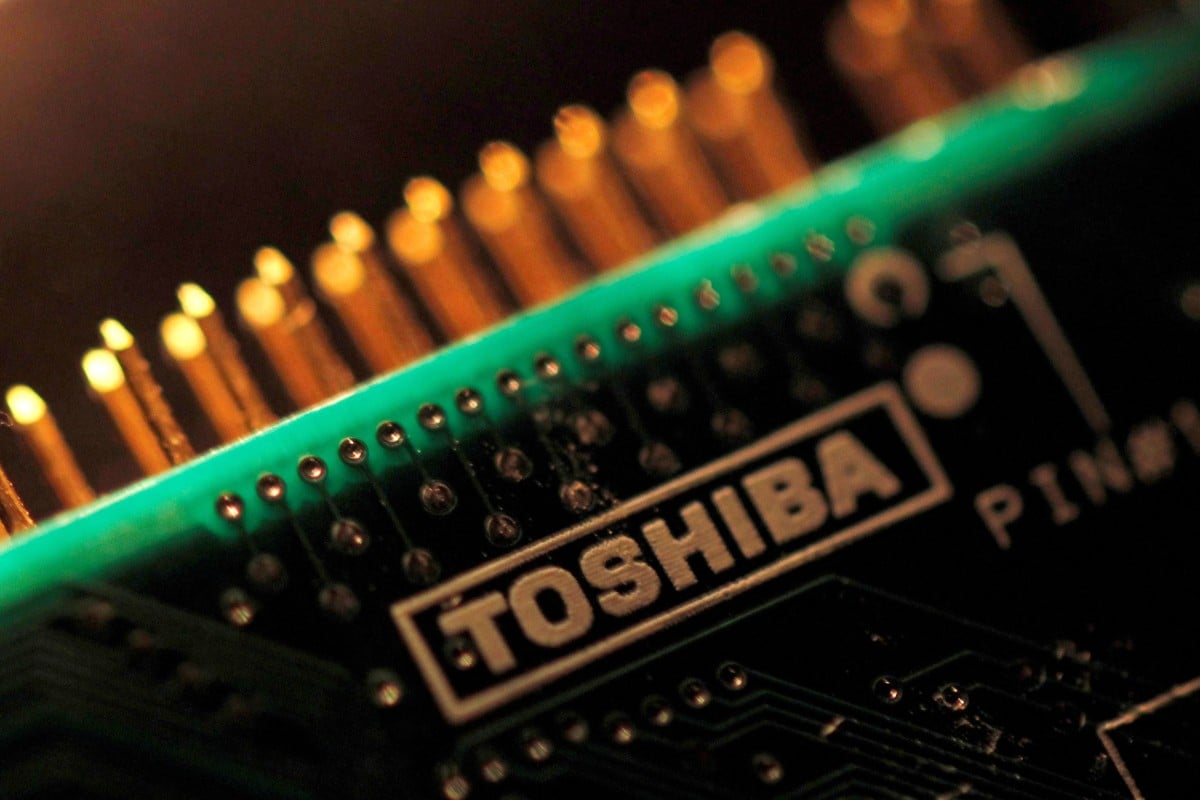
Toshiba was one of the companies affected by US actions to prevent the rise of Japan in a trade war that echoes in today’s tensions between the US and China. Photo: Reuters
If history is a mirror to the future, the similarities between the spiralling technology stand-off between China and the US and the economic wars waged by the US with Japan – which peaked in the 1980s and 1990s – may be instructive. But there are differences between the two which may predict a different outcome.
The US-Japan economic tensions started in the 1950s over textiles, extended to synthetic fibres and steel in the 1960s, and escalated – from the 1970s to 1990s – to colour televisions, cars and semiconductors, as Japan’s adjusted industrial policy and technology development moved it up the industrial chain.
Boosted by government support, Japan’s semiconductor industry surpassed the US as the world’s largest chip supplier in the early 1980s, causing wariness and discontent in the US over national security risks and its loss of competitiveness in core technologies.
The Reagan administration regarded Japan as the biggest economic threat to the US. Washington accused Tokyo of state-sponsored industrial policies, intellectual property theft from US companies, and of dumping products on the American market.
The US punished Japanese companies for allegedly stealing US technology and illegally selling military sensitive products to the Soviet Union. It also forced Japan to sign deals to share its semiconductor technologies and increase its purchases of US semiconductor products.
“The Trump administration is using similar tactics against China that were used against Japan in the 1980s and 1990s,” said an adviser to the Chinese government, on condition of anonymity, adding that the US was continuing its hegemony to curtail China’s tech development and was trying to mobilise its allies to follow suit.
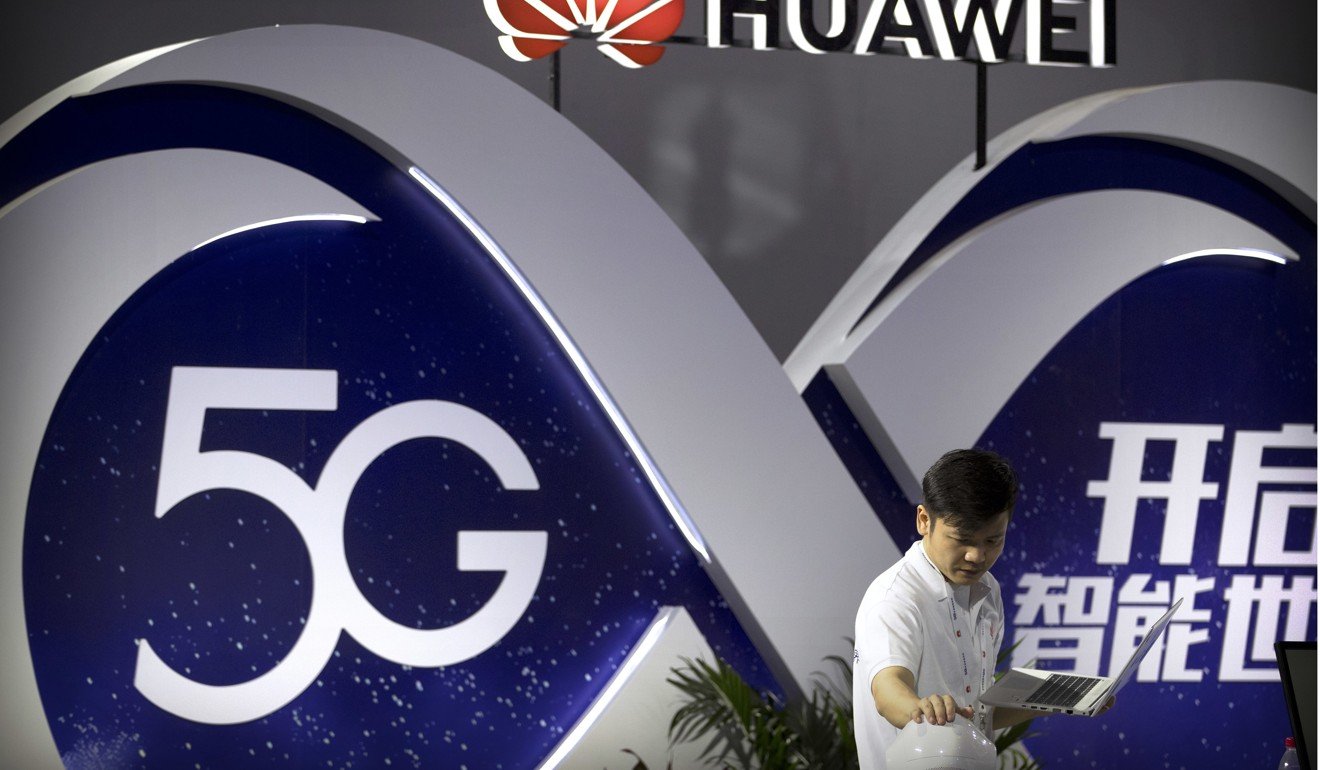
After talks to end the US-China trade faltered last month, Huawei – a global leader in the 5G market – is now standing at centre stage of a protracted technology stand-off between Beijing and Washington, which has grown increasingly wary of the rising competitiveness of Chinese tech companies.
Zhang Monan, a researcher with the Beijing-based China Centre for International Economic Exchanges, does not foresee an easing of the rivalry between the US and China.
“The current US-China conflicts are more complicated than those between the US and Japan,” she said.
“The US will only get more intense in its containment of China and the tech rivalry won’t ease, even if China and the US could reach a deal to de-escalate the trade tensions.”
Huawei is at the centre of a technology stand-off between Beijing and Washington. Photo: AP
Back in 1982, the US justice department charged senior officials at Hitachi with conspiracy to steal confidential computer information from IBM and take it back to Japan. IBM also sued Hitachi. The two companies settled the case out of court and Hitachi paid 10 billion yen (US$92.3 million) to IBM in royalties in 1983, while accepting IBM inspections of its new software products for the next five years.
Toshiba, a major electronics producer in Japan, and Norway’s Kongsberg Vaapenfabrikk secretly sold sophisticated milling machines to the Soviet Union from 1982 to 1984, helping to make its submarines quieter and harder to detect. This transfer of sensitive military technology in the middle of an arms race between the US and the Soviet Union was not revealed until 1986.
The US issued a three-year ban on Toshiba products in 1987 and the company ran full-page advertisements in more than 90 American newspapers apologising for its actions.
In 1985, the US imposed 100 per cent tariffs on Japanese semiconductors. A year later, in its five-year semiconductor deal with the US, Japan agreed to monitor its export prices, increase imports from the US, and submit to inspections by the Office of the United States Trade Representative.
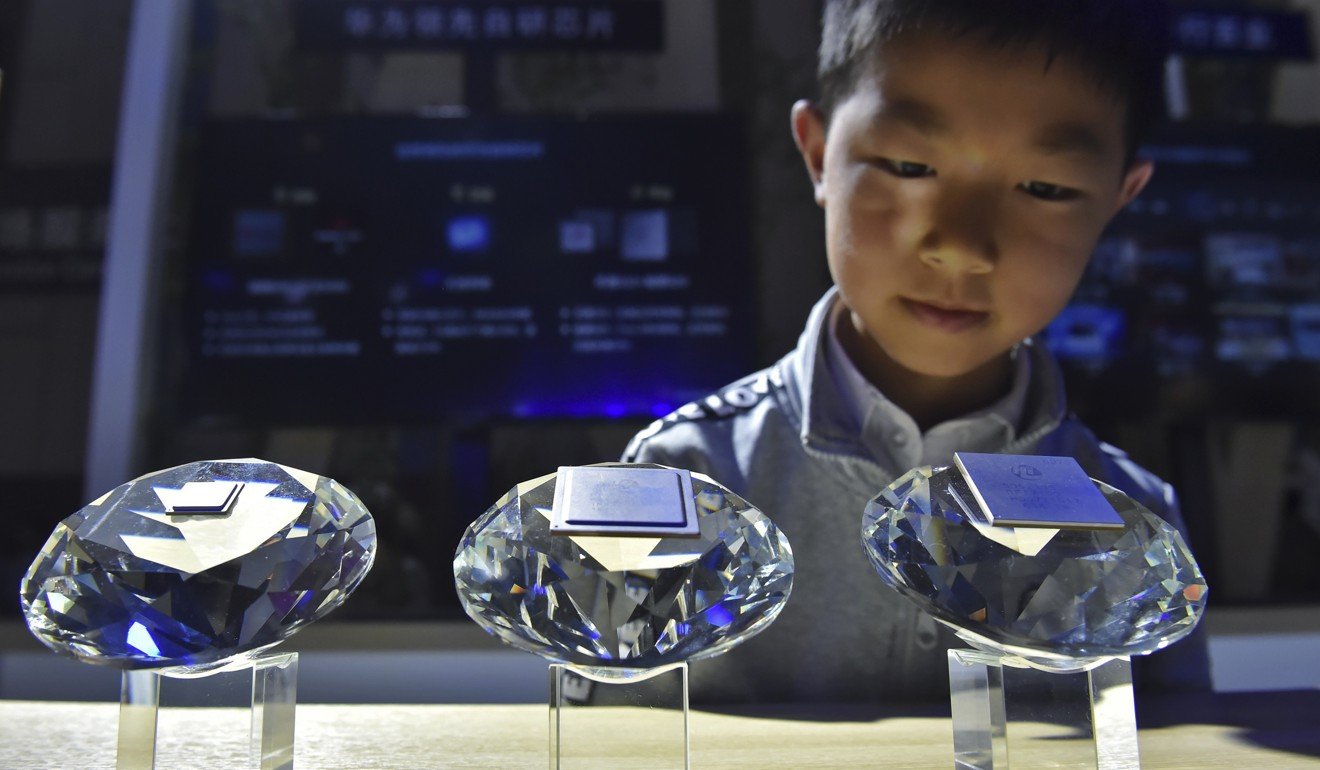
A display of chips designed by Huawei for 5G base stations on show at the China International Big Data Industry Expo. Photo: AP
This was followed by a second five-year semiconductor deal in 1991, in which Japan agreed to double the US market share in Japan to 20 per cent. In yet another bilateral semiconductor deal in 1989 Japan was required to open its semiconductor patents to the US.
Meanwhile, the US government boosted its efforts to help American businesses cement their industrial leverage in the chip sector and unveiled rules to protect its domestic chip industry.
The two countries were irreconcilable in 1996 on how to measure their respective market share. Overall market circumstances had also changed by then, with the US becoming competitive in microprocessing, and South Korea and Taiwan emerging as strong rivals to Japan.
Its dominance in semiconductors lost, Japan reached out to Europe for a range of cooperative technology deals.
Cooperate, don’t confront: academic advises Beijing on trade war tactics
“History can tell that high technology matters greatly to national security strategies. It is not a process of mere market competition. It follows the law of the jungle,” Zhang said.
The US has intensified its investment scrutiny by rolling out the Foreign Investment Risk Review Modernisation Act last year, which extends the regulation to key industrial technology sectors.
Zhang predicted the US would continue to contain China’s technological development in key sectors such as AI, aerospace, robots and nanotechnology – all of which are of great importance to Beijing.
The US has said Chinese tech giants Huawei and ZTE present a national security risk. Last April it cut US supplies to ZTE, citing violations of sanctions against Iran and North Korea. The ban was removed three months later after ZTE paid US$1.4 billion in fines.
It was a wake-up call for China to develop its own core technologies. The subsequent US ban on Huawei added to the urgency to do so, observers said.
Wang Yiwei, a professor in international relations with Renmin University, said China had to develop its own hi-tech know-how while continuing the opening up process.
“China has paid a price to learn whose globalisation it is,” he said.
“We may see some extent of disengagement with the US in technology and dual-use sectors, but China can speed up cooperation with European countries, and other countries such as Israel, to offset the risks from the US.”
In December, the US filed criminal charges against Huawei and its chief financial officer Sabrina Meng Wanzhou, alleging bank fraud, obstruction of justice and technology theft.
The squeeze continued last month with the US blacklisting Huawei, restricting its access to American hi-tech supplies and putting pressure on its allies to freeze the company out of the 5G market. So far, those allies, including Germany and Japan, have remained hesitant about meeting the US request and refrained from siding with either country.
Chinese foreign ministry spokesman Geng Shuang said on Monday that Huawei had obtained 46 commercial contracts in 30 countries as of June 6, “including some US allies and some European countries that the US has been working hard to persuade out of the contracts”.
For Zhang, the differences between Japan’s experience of US concerns of technological advancement and China’s may offer some hope for Chinese ambitions.
“Dependent on US for security protection, Japan was limited in [its ability to] push back and was already a developed country,” she said.
“But China has huge domestic market potential to address the imbalance [between] economic and technology development. This remains a big attraction to multinational companies, which would enable China to integrate into global innovation and technology cooperation, but China has to figure out how to dispel the doubts on its growth model.”
Source: SCMP
Posted in Beijing, China alert, China Centre for International Economic Exchanges, China International Big Data Industry Expo, Foreign Investment Risk Review Modernisation Act, Hitach, Huawei, IB, IBM, iran, Israel, Japan, Japan experience, Kongsberg Vaapenfabrikk, learn, Lessons, North Korea, Norway, Office of the United States Trade Representative, Reagan administration, Renmin University, Toshiba, trade war, Trump administration, Uncategorized, Washington, ZTE |
Leave a Comment »
22/05/2019
Li Zhanshu (L), chairman of the Standing Committee of the National People’s Congress (NPC), meets with Austrian President Alexander Van der Bellen in Vienna, Austria, on May 20, 2019. China’s top legislator Li Zhanshu paid an official friendly visit from May 18 to 21 to Austria, where he met with Austrian leaders on promoting bilateral ties and expressed China’s stance on upholding multilateralism and free trade. (Xinhua/Shen Hong)
VIENNA, May 21 (Xinhua) — China’s top legislator Li Zhanshu paid an official friendly visit from May 18 to 21 to Austria, where he met with Austrian leaders on promoting bilateral ties and expressed China’s stance on upholding multilateralism and free trade.
EXCHANGING VIEWS ON TIES AND GLOBAL ISSUES
In meeting with Austrian President Alexander Van der Bellen, Li, chairman of the Standing Committee of the National People’s Congress (NPC), conveyed Chinese President Xi Jinping’s greetings.
He said during the Austrian president’s state visit to China in April last year, the two countries’ heads of state jointly established a new orientation for bilateral ties, which pushed forward the ties to usher in a new stage.
“China is willing to work together with the Austrian side to implement the important consensus of the two heads of state and promote the in-depth development of cooperation in various fields,” said Li.
During the meeting, Li and Van der Bellen also exchanged in-depth views on issues of common concerns, including free trade, climate change, and the Iranian nuclear issue.
Li said China always adheres to the principle of mutual respect, equal treatment, mutual benefit and common development in dealing with the relationship between countries.
“Maintaining multilateralism and free trade is the common responsibility of the international community. Unilateralism and trade protectionism are not in line with the world trend,” said Li, adding that unilateral withdrawal and unilateral sanctions will not only harm other countries but also harm the interests of the countries which take the moves.
Li said China advocates that economic and trade differences should be resolved through negotiation and consultation. In the meantime, people who conduct negotiations must follow a bottom line and some principles, conform to international trade rules, adhere to equality, mutual benefit, and non-discrimination, and resolutely oppose “long-arm jurisdiction”.
China is willing to work with countries including Austria to uphold multilateralism and free trade, work together to address global challenges, and promote the building of a community of shared future for the mankind, said Li.
For his part, Van der Bellen spoke highly of the development of bilateral ties, and highly appreciated China’s positive role in global affairs. He said that the Austrian side shares the same or similar position with China on many issues.
The two sides should strengthen communication and coordination in international and regional affairs, support liberalization and facilitation in trade and investment, jointly address climate change, and promote friendly cooperation to yield more results, the president said.
TO FURTHER TAP COOPERATION POTENTIALS
When meeting with Austrian Chancellor Sebastian Kurz, Li said jointly building the “Belt and Road” has become a new growth point for bilateral cooperation. The two sides should adhere to the principle of extensive consultation, joint contribution and shared benefits, and continuously explore and tap the potential of cooperation.
Li called on the two countries to deepen cooperation in fields like high-end manufacturing, energy conservation, environmental protection, ecological agriculture, tourism, and finance. And the two sides are expected to actively explore innovative cooperation in such area as the Internet, big data, artificial intelligence and 5G technology.
Noting China is preparing for the 2022 Beijing Winter Olympic Games, Li said China will learn from Austria’s experience, and carry out cooperation in athlete training, winter sports education and research, and winter sports equipment.
“China always regards Europe as a comprehensive strategic partner and an important global power which is indispensable,” said Li, adding that China is happy to see Europe maintain unity, stability, openness and prosperity, and supports the integration process in Europe.
Kurz said that the Belt and Road Initiative has set up a new platform for equal cooperation among the countries in the world. China is Austria’s largest trading partner in Asia, and the two countries have strong economic complementarities.
Noting the two sides share strong aspiration of deepening cooperation, Kurz said the cooperation potential is huge, and more investment from Chinese companies as well as more Chinese tourists are welcome to Austria.
TO ENHANCE EXCHANGES BETWEEN LEGISLATIVE BODIES
In his respective talks with Austrian National Council President Wolfgang Sobotka and Federal Council President Ingo Appe, Li said the cooperation between the two countries’ legislative bodies should “closely follow the pace of development of state-to-state relations,” through cementing mutual understanding and exchanging experience on such areas as legislative supervision in regular visits, so as to create a good law environment for pragmatic cooperation.
Noting that people-to-people and cultural exchanges have always been the most active part of China-Austria relations, Li called on the legislative bodies to “respond to the voices of the people” by promoting cooperation in art, music, sports, and local areas, and advancing exchanges among young people.
The two leaders of the Austrian parliament expressed the willingness to strengthen exchanges and cooperation with the National People’s Congress of China, saying the Austrian side highly values the development of ties between the two countries. They will promote the implementation of the bilateral cooperation agreement, and forge ahead personnel and culture exchanges between the two countries.
During his stay in Austria, Li also met with regional officials from Salzburg to discuss cooperation between local areas of the two countries. Li and Van der Bellen also attended a ceremony in which a giant panda from China was officially handed over to the Austrian side.
After wrapping up his tour in Norway on May 18, Li’s stay in Austria marked the second lag of his 10-day tour in Europe, which will also take him to Hungary.
Source: Xinhua
Posted in 2022 Beijing Winter Olympic Games, Alexander Van der Bellen, Austria, Austrian Chancellor, Austrian National Council President, Austrian parliament, Austrian President, Belt and Road Initiative (BRI), chairman of the Standing Committee of the National People's Congress (NPC), China's top legislator, cooperation, Federal Council President, greetings, Ingo Appe, Li Zhanshu, National People's Congress of China, Norway, President Xi Jinping, Salzburg, Sebastian Kurz, Uncategorized, Wolfgang Sobotka |
Leave a Comment »
19/05/2019
Li Zhanshu, chairman of the Standing Committee of the National People’s Congress (NPC), meets with Norwegian King Harald V in Oslo, Norway, May 16, 2019. China’s top legislator Li Zhanshu paid an official friendly visit to Norway from May 15 to 18, expecting to promote the development of Sino-Norwegian ties to score more progress. (Xinhua/Huang Jingwen)
OSLO, May 18 (Xinhua) — China’s top legislator Li Zhanshu paid an official friendly visit to Norway from May 15 to 18, expecting to promote the development of Sino-Norwegian ties to score more progress.
During the stay in Norway, Li, chairman of the Standing Committee of the National People’s Congress (NPC), met with Norwegian King Harald V, Norwegian Prime Minister Erna Solberg and President of the Norwegian parliament Storting Tone Wilhelmsen Troen.
When meeting with Norwegian King Harald V, Li conveyed the greetings of Chinese President Xi Jinping to the King, and expressed congratulations on the Norwegian National Day, which falls on May 17.
Li said during the King’s successful visit to China last year, the two heads of state made strategic plans for the development of bilateral relations in the new era. As this year marks the 65th anniversary of the establishment of diplomatic relations between China and Norway, the two sides are expected to seize the opportunity to cement friendship and expand cooperation on the basis of mutual respect and treating each other equally, so as to realize better development of bilateral relations.
Harald V expressed gratitude to China’s friendliness to the Norwegian side, saying Norway admires China’s tremendous development achievements. He said Norway is ready to strengthen cooperation with China in such fields as winter sports, and will make efforts to help China successfully host the 2022 Beijing Winter Olympics.
When meeting with Solberg, Li said although Sino-Norwegian relations have experienced ups and downs, friendship and cooperation has always been the main theme of the ties. As both countries share common interests on safeguarding current global mechanism, building an open world economy, the two sides should jointly support multilateralism and free trade. Moreover, the two countries have similar development concepts and share strong economic complementarities, so the outlook of bilateral cooperation is very broad.
Norway is welcome to actively participate in the construction of the Belt and Road Initiative. And bilateral cooperation on economy, trade, environmental protection, science and technology, people-to-people exchanges and tourism is expected to be forged ahead, said China’s top legislator.
“China hopes the Norwegian side provides a fair, just and non-discriminatory business environment for Chinese enterprises’ investment and operation in Norway,” said Li.
Solberg said bilateral cooperation has maintained sound momentum since the normalization of bilateral ties, expecting the two sides to push forward talks on inking a free trade deal and deepen cooperation in such areas as maritime affairs, shipping, fishery and environmental protection. She also voiced the will to advance communication and collaboration with China on issues concerning the United Nations, coping with the climate change and Arctic affairs.
When respectively meeting with Troen and members of the parliament’s standing committee on foreign affairs and defense, Li introduced China’s development path and political system.
“The reasons why China continues to make new development achievements are that we have embarked on a development path that suits our national conditions. This is the path of socialism with Chinese characteristics,” said Li, stressing that the Chinese people will unswervingly follow this path.
He said that the NPC of China is willing to work with the Norwegian parliament to implement the important consensus reached by the leaders of the two countries, strengthen friendly exchanges at all levels, enhance understanding and trust through frank dialogues, and create a favorable environment for pragmatic cooperation.
Troen said that this visit is of great significance as Li’s tour marks the first visit of a Chinese leader since the normalization of bilateral relations in 2016. The Norwegian parliament is willing to carry out all-round exchanges and cooperation with the NPC of China, and make positive contributions to the development of state-to-state ties.
The two legislators also exchanged views on jointly safeguarding multilateral trade system, sustainable development and other issues of common concerns.
On May 16, Li attended the economic and trade conference in commemoration of the 65th anniversary of Norway-China diplomatic relations. He said in a speech that President Xi’s proposal of the high-quality development of jointly building the Belt and Road and the policy of China’s further expansion of opening up have provided new opportunities for the common development of all countries. The two countries’ enterprises are expected to seize the opportunity, tap cooperation potentials, so as to translate the desire for strong cooperation into more practical results.
During the tour, Li visited the Chinese skiers who were training in Norway and encouraged them to train hard and carry out bilateral friendship.
He also visited a local ecological agriculture project, an oil gas processing plant, and met with local officials in Norway’s southwestern county of Rogaland and its southern city of Stavanger.
Norway is the first lag of Li’s ten-day tour in Europe, which will also take him to Austria and Hungary.
Source: Xinhua
Posted in Arctic affairs, Austria, bilateral ties, chairman of the Standing Committee of the National People's Congress (NPC), China's top legislator, Chinese President Xi Jinping, climate change, Environmental protection, Erna Solberg, fishery, Harald V, Hungary, Li Zhanshu, maritime affairs, Norway, Norway-China diplomatic relations, Norwegian King, Norwegian National Day, Norwegian Prime Minister, President of the Norwegian parliament, promote, Rogaland, shipping, Sino-Norwegian ties, Storting Tone Wilhelmsen Troen, Uncategorized, United Nations, visits |
Leave a Comment »







 CHINDIA ALERT: You'll be living in their world, very soon