Archive for ‘Pacific Ocean’

05/05/2020

China launches manned spacecraft prototype with new Long March 5B rocket

  • Modified version of country’s most powerful rocket carries next-generation capsule designed to take astronauts to its planned space station
  • It will be able to launch and land with three crew members and up to 500kg of cargo, according to state media
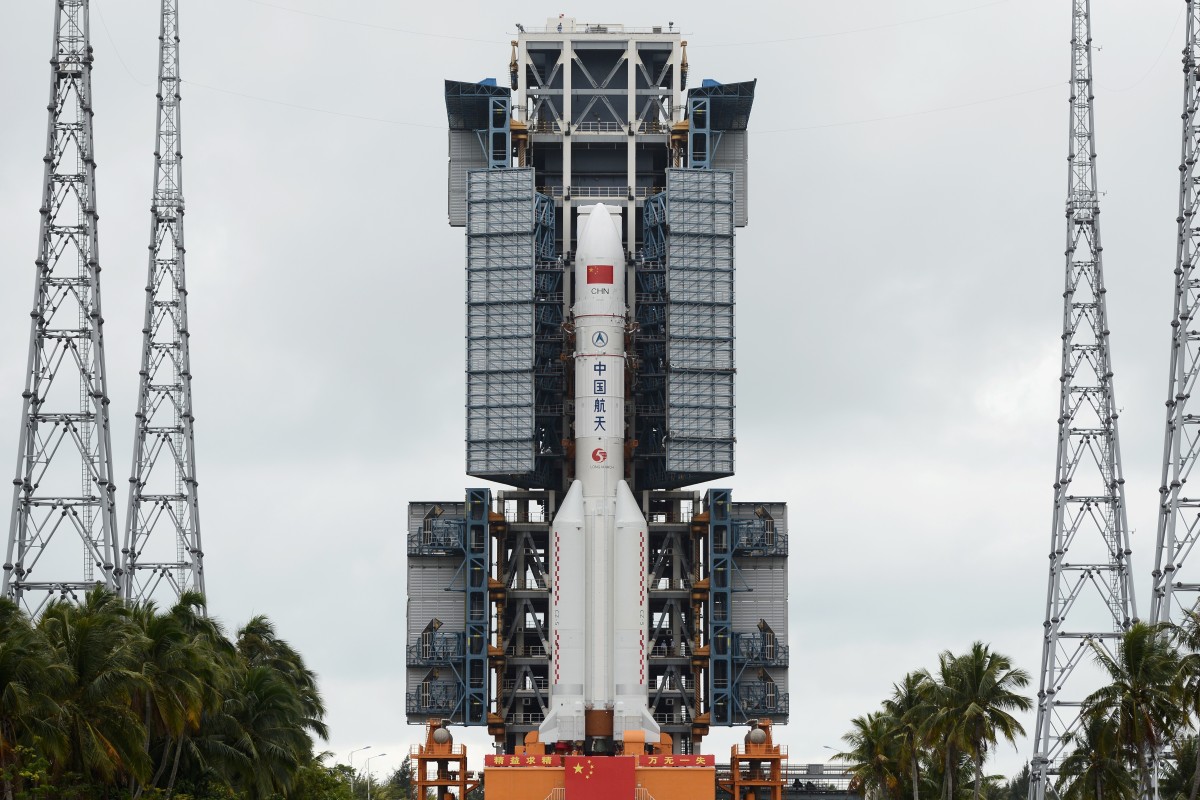
China launched a new version of its heavy-lift Long March 5 rocket on Tuesday. Photo: Reuters

China successfully launched a prototype of its next-generation manned spacecraft – without astronauts – along with a new version of its heavy-lift Long March 5 rocket on Tuesday, its space agency said.

The Long March 5B rocket was launched into low-Earth orbit from the Wenchang Satellite Launch Centre on Hainan Island in the country’s south.

The launch marks a significant step forward for China’s two big space exploration ambitions – building a space station and a mission to Mars.

A modified version of China’s most powerful rocket, the Long March 5B is 53.7 metres (176 feet) tall. It will carry the next-generation crew capsule prototype designed to replace the Shenzhou spacecraft, to transport astronauts to its planned space station in low-Earth orbit.

China aims to launch the core module of that space station designed for three crew members, the Tianhe, in 2021. Beijing has been planning to build its own space station for decades as an alternative to the International Space Station, from which China has been excluded by the United States over security concerns.
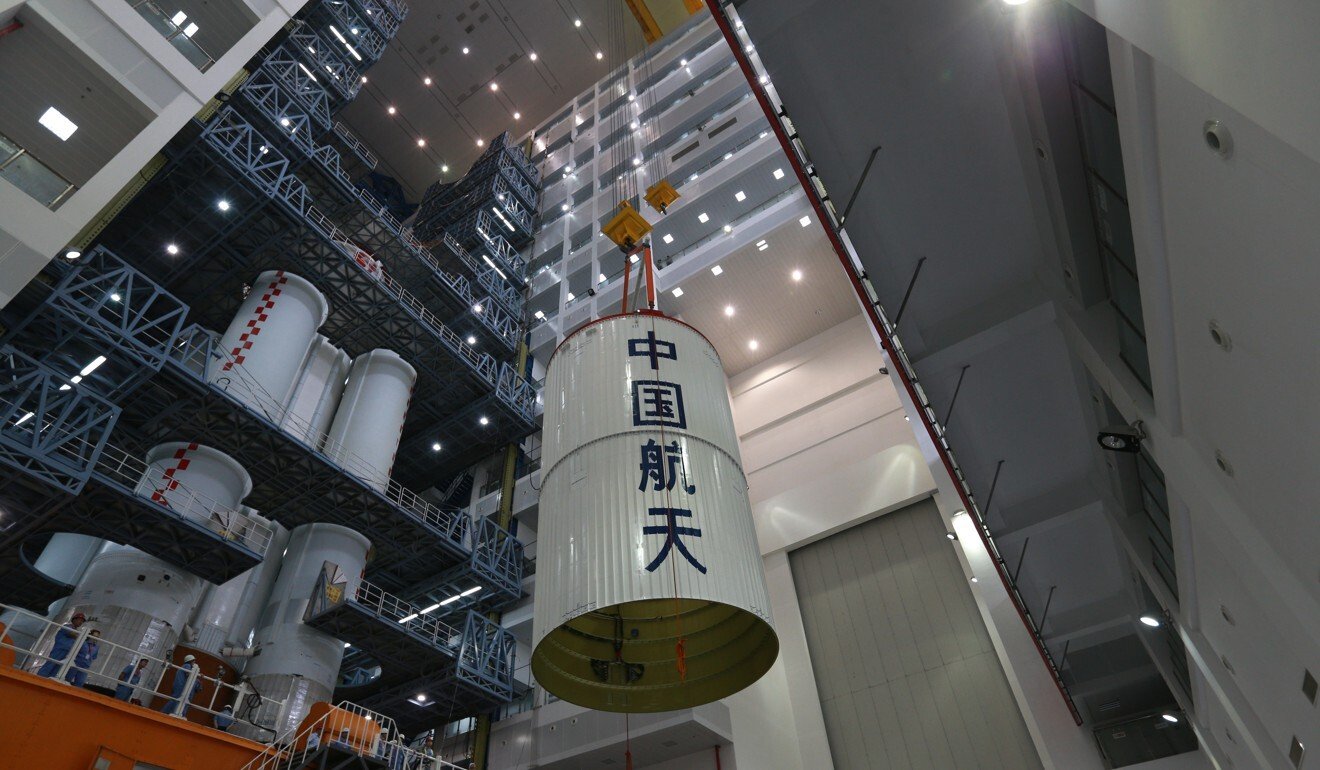
China’s space station project has been delayed by problems with its heavy-lift rockets. Photo: Xinhua
The prototype capsule has a different configuration to Shenzhou’s and it will be able to launch and land with three astronauts on board as well as up to 500kg of cargo, according to state news agency Xinhua. That will mean it can be used to transport research specimens and hardware from the space station back to Earth.

While the Shenzhou can ferry three astronauts, the new capsule design will be able to accommodate up to six crew members and, unlike the Shenzhou, it will be capable of carrying them to the moon, according to Chinese media reports.

Its systems, performance in orbit and parachute deployment are among the areas that will be put to the test during the launch.

Why China’s next Long March 5 rocket mission will be about restoring national pride

14 Dec 2019

The long-anticipated space station project has been delayed by problems in the development of heavy-lift rockets to carry the modules. In 2017, an oxygen supply problem caused the failure of the second Long March 5 launch, and it plunged into the Pacific Ocean shortly after take-off. But in December it successfully carried a Shijian-20 satellite into orbit, while the liquid oxygen-liquid hydrogen engines used in both the Long March 5 and 5B rockets passed testing in January.

China’s other space ambitions include a Mars probe, and landing astronauts on the moon within the next decade. For the Mars mission, the unmanned orbiter and rover Tianwen-1 will be launched by the Long March 5 and it is expected to take up to seven months for the probe to reach the red planet. China would be the third country to do so – after the United States and the Soviet Union.

Zhang Kejian, head of the China National Space Administration, said China was on track to launch the mission this year, with July the likely launch date.

Source: SCMP

12/11/2019

Feature: Xi spearheads closer China-LatAm cooperation for common prosperity

MEXICO CITY, Nov. 12 (Xinhua) — China and Latin America sit on the opposite sides of the globe, but the formidably vast Pacific Ocean that separates them did not stop them from sharing a long history of exchanges.

Today, the major developing country in the East is forging an increasingly close partnership with the dynamic region in the Western Hemisphere, especially since Chinese President Xi Jinping took office in 2013, and set into motion what is now known as Xiplomacy.

In the past six years, Xi has visited 11 Latin American and the Caribbean (LAC) countries. On Tuesday, he is setting foot on the region for the fifth time as president, as he arrives in Brazil for the upcoming 11th BRICS summit.

Thanks in no small part to Xi’s push, the time-honored, distance-defying China-Latin America relationship is flourishing with new vitality. China has become the second largest trading partner of Latin America, while the latter is one of the fastest growing sources of exports to China. Two-way trade rose 18.9 percent year on year to 307.4 billion U.S. dollars in 2018.

GRAND VISION

Every time Xi visited Latin America, he reaffirmed China’s commitment to cementing bilateral friendship and expanding win-win cooperation.

His first trip to the region as head of state, in 2013, took him to Trinidad and Tobago, Costa Rica and Mexico. The following year saw him travel to Brazil, Argentina, Venezuela and Cuba.

It was in Brazil that Xi met with leaders from 11 LAC countries, and for the first time laid out his grand vision for building a China-Latin American community with a shared future.

“Let us seize the opportunities presented to us and work together to blaze new trails in building a community of shared destiny for common progress and usher in a bright future for the relations between China and Latin America and the Caribbean,” Xi said in a keynote speech at the first ever China-Latin American and Carribean Countries Leaders’ Meeting in 2014.

He then proposed a “1+3+6” cooperation framework to “promote faster, broader and deeper cooperation between the two sides for real results.”

The “1” refers to “one plan,” the Chinese-Latin American and Caribbean Cooperation Plan (2015-2019), formulated to promote inclusive growth and sustainable development.

The “3” alludes to “three engines” for driving practical cooperation for comprehensive development, namely trade, investment and financial cooperation.

The “6” means the six priority cooperation fields of energy and resources, infrastructure building, agriculture, manufacturing, scientific and technological innovation, and information technologies.

In 2016, Xi visited Ecuador, Peru and Chile. Two years later, he traveled to Argentina for the Group of 20 summit as well as Panama, a Central American country which established diplomatic ties with China in June 2017.

In a landmark speech at the Peruvian Congress in Lima in 2016, Xi expounded the significance of strengthening China-Latin America cooperation.

“With one fifth of the world’s total area and nearly one third of the world’s population, China and Latin America and the Caribbean are crucial forces for world peace and stability,” he said.

China, he added, “will increase sharing of governance experience and improve planning and coordination of macro policies with Latin American and Caribbean states to better synergize our development plans and strategies.”

Besides top-level engagement, Xi also reaches out to local people from all walks of life, in order to keep cementing the China-Latin America friendship and the public support for bilateral cooperation.

While in Costa Rica, Xi visited a family-run coffee plantation and tried some local brew. “I think some more coffee can well be exported to China,” Xi told his hosts with a smile.

Today, Costa Rica exports coffee to the Asian market, along with pork, dairy, pineapples and other high-quality agricultural goods, especially after the inauguration of the China International Import Expo in 2018.

NEW OPPORTUNITIES

With international cooperation within the framework of the Belt and Road Initiative (BRI) gaining steam worldwide, the Xi-proposed vision is creating new opportunities for China-Latin America cooperation.

The BRI, designed to promote common development along and beyond the ancient Silk Road trade routes, comprises the Silk Road Economic Belt and the 21st Century Maritime Silk Road, and the latter is closely connected to Latin America.

For two and a half centuries, from the mid-1500s to the early 1800s, galleons laden with Chinese silk, spices, porcelain and other goods sailed across the ocean to today’s port city of Acapulco on the Mexican Pacific coast.

Latin America is the natural extension of the 21st Century Maritime Silk Road, Xi said in a meeting with visiting Argentine President Mauricio Macri in May 2017.

In a congratulatory message to the second Ministerial Meeting of the China-Community of Latin American and Caribbean States (CELAC) Forum held in Chile on Jan. 22, 2018, Xi stressed that China and LAC countries “need to draw a new blueprint for our joint effort under the Belt and Road Initiative and open a path of cooperation across the Pacific Ocean that will better connect the richly endowed lands of China and Latin America and usher in a new era of China-LAC relations.”

During Xi’s visits, the Chinese president is always dedicated to better aligning the BRI — an open platform for cooperation — with the development plans of LAC countries.

In his meeting with Macri, Xi called for dovetailing the BRI with Argentina’s development strategy, expanding cooperation in such sectors as infrastructure, energy, agriculture, mining and manufacturing, and implementing existing major cooperation projects in hydro-power, railway and other fields.

Similarly, during the state visit to Panama in December 2018, Xi said the National Logistics Strategy of Panama 2030 and the BRI are highly compatible, calling on the two sides to synergize their respective development strategies, boost cooperation and promote connectivity.

So far, 19 LAC countries have signed BRI cooperation agreements with China. China-Latin America cooperation in various areas has effectively promoted local economic and social development, bringing visible and tangible benefits to the Latin American people.

Just as Xi said in his speech at the Peruvian Congress in 2016, “China will share its development experience and opportunities with the rest of the world and welcome other countries to board the express train of its development, so that we can all develop together.”

SOurce: Xinhua

30/09/2019

China’s Yuanwang-3 sailing to Pacific Ocean for satellite monitoring missions

NANJING, Sept. 30 (Xinhua) — China’s spacecraft tracking ship Yuanwang-3 is sailing to the Pacific Ocean to carry out maritime monitoring missions for the BeiDou-3 and other satellites.

The ship departed Sunday from a port in east China’s Jiangsu Province. It is the third voyage of the ship this year.

Before the voyage, crew members completed preparation of supplies, carried out examinations and tests of the facilities and received tailored training to ensure the success of the missions.

This year, the ship has spent 83 days at sea and completed three missions, including maritime monitoring of a relay satellite Tianlian II and a BeiDou-3 satellite.

Yuanwang-3, China’s second-generation space tracking ship, mainly undertakes maritime tracking and monitoring tasks of high-, medium-, low-orbit satellites, spacecraft and space station.

Since it was launched more than 20 years ago, the ship has made 52 voyages and completed 83 missions on the sea, including maritime tracking of the Shenzhou spacecraft, the Chang’e lunar probe and BeiDou satellites, maintaining a 100 percent success rate.

Source: Xinhua

04/09/2019

China scientists warn of global cooling trick up nature’s sleeve

  • Research sheds light on 500-year Chinese weather cycle and suggests a cool change could be on the way
  • Findings leave no room for complacency or inaction
A team of Chinese researchers says a period of global cooling could be on the way, but the consequences will be serious. Photo: Xinhua

A new study has found winters in northern China have been warming since 4,000BC – regardless of human activity – but the mainland scientists behind the research warn there is no room for complacency or inaction on climate change, with the prospect of a sudden global cooling also posing a danger.

The study found that winds from Arctic Siberia have been growing weaker, the conifer tree line has been retreating north, and there has been a steady rise in biodiversity in a general warming trend that continues today. It appears to have little to do with the increase in greenhouse gases which began with the industrial revolution, according to the researchers.

Lead scientist Dr Wu Jing, from the Key Laboratory of Cenozoic Geology and Environment at the Institute of Geology and Geophysics, part of the Chinese Academy of Sciences, said the study had found no evidence of human influence on northern China’s warming winters.

“Driving forces include the sun, the atmosphere, and its interaction with the ocean,” Wu said. “We have detected no evidence of human influence. But that doesn’t mean we can just relax and do nothing.”

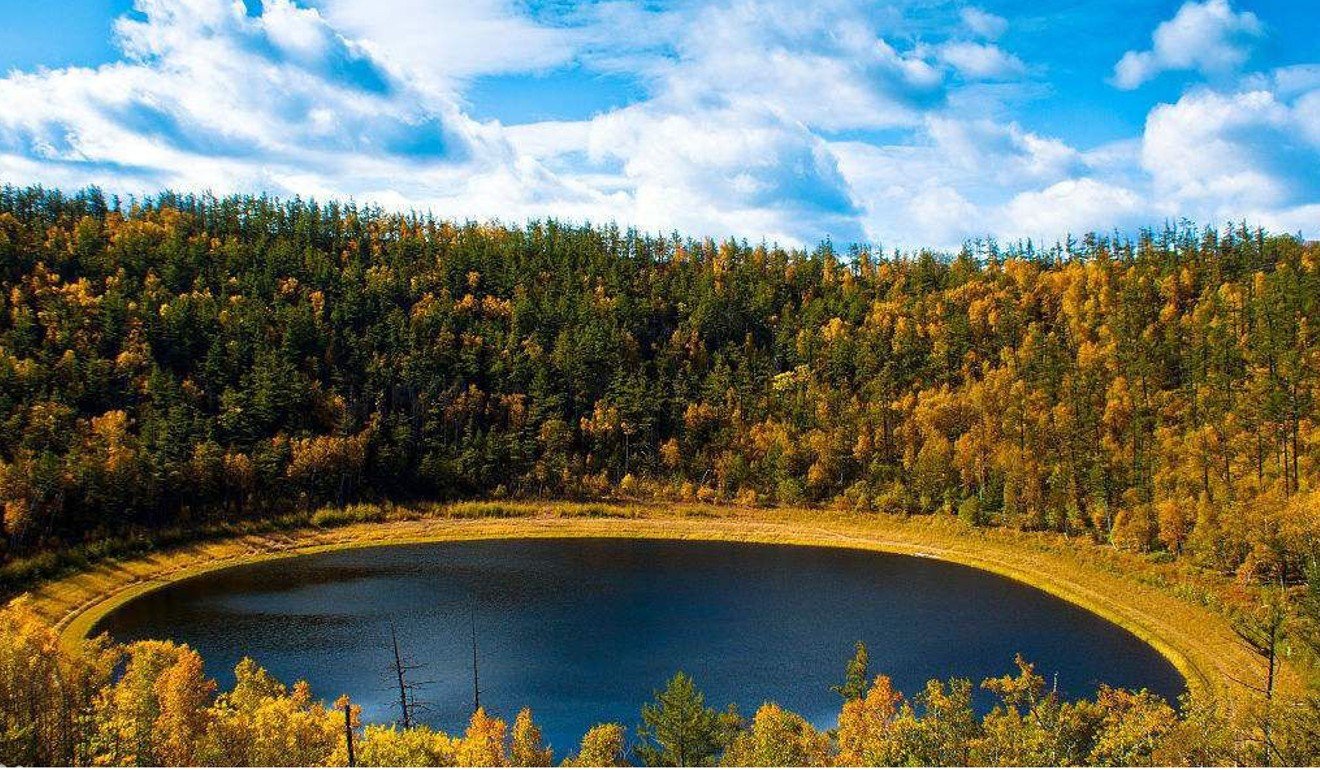
Moon Lake, a small volcanic lake hidden in the deep forest of China’s Greater Khingan Mountain Range, where a team of scientists spent more than a decade studying the secrets hidden in its sediments. Photo: Baidu

Wu and her colleagues are concerned that, as societies grow more used to the concept of global warming, people will develop a misplaced confidence in our ability to control climate change. Nature, they warned, may trick us and might catch us totally unprepared – causing chaos, panic, famine and even wars as the global climate system is disrupted.

There are already alarming signs, according to their paper, which has been accepted for publication by the online Journal of Geophysical Research: Atmospheres.

Wu and her colleagues spent more than a dozen years studying sediments under Moon Lake, a small volcanic lake hidden in the deep forests of the Greater Khingan Mountain Range in China’s Inner Mongolia autonomous region. They found that winter warming over the past 6,000 years had not been a smooth ride, with ups and downs occurring about every 500 years.

Their findings confirmed an earlier study by a separate team of Chinese scientists, published by online journal Scientific Reports in 2014, which first detected the 500-year cyclical pattern of China’s summer monsoons and linked it to solar activity.

The 2014 research, which drew on 5,000 years’ worth of data, suggested the current warm phase of the cycle could terminate over the next several decades, ushering in a 250-year cool phase, potentially leading to a partial slowdown in man-made global warming.

Wu said the latest study, with 10,000 years’ worth of new data, not only helped to draw a more complete picture of the 500-year cycle, but also revealed a previously unknown mechanism behind the phenomenon, which suggested the impact of the sun on the Earth’s climate may be greater than previously thought.

According to Wu, the variation in solar activity alone was usually not strong enough to induce the rapid changes in vegetation the research team recorded in the sediment cores of Moon Lake. Instead, the scientists found the warming impact was amplified by a massive, random interaction between surface seawater and the atmosphere in the Pacific Ocean known as the El Nino-Southern Oscillation.

As a result of the research findings, Wu said she was now more worried about cooling than warming.

“A sharp drop of temperature will benefit nobody. The biggest problem is, we know it will come, but we don’t know exactly when.”

Source: SCMP

14/08/2019

China scientists warn of global cooling trick up nature’s sleeve

  • Research sheds light on 500-year Chinese weather cycle and suggests a cool change could be on the way
  • Findings leave no room for complacency or inaction
A team of Chinese researchers says a period of global cooling could be on the way, but the consequences will be serious. Photo: Xinhua
A new study has found winters in northern China have been warming since 4,000BC – regardless of human activity – but the mainland scientists behind the research warn there is no room for complacency or inaction on climate change, with the prospect of a sudden global cooling also posing a danger.
The study found that winds from Arctic Siberia have been growing weaker, the conifer tree line has been retreating north, and there has been a steady rise in biodiversity in a general warming trend that continues today. It appears to have little to do with the increase in greenhouse gases which began with the industrial revolution, according to the researchers.
Lead scientist Dr Wu Jing, from the Key Laboratory of Cenozoic Geology and Environment at the Institute of Geology and Geophysics, part of the Chinese Academy of Sciences, said the study had found no evidence of human influence on northern China’s warming winters.
“Driving forces include the sun, the atmosphere, and its interaction with the ocean,” Wu said. “We have detected no evidence of human influence. But that doesn’t mean we can just relax and do nothing.”
Moon Lake, a small volcanic lake hidden in the deep forest of China’s Greater Khingan Mountain Range, where a team of scientists spent more than a decade studying the secrets hidden in its sediments. Photo: Baidu

Wu and her colleagues are concerned that, as societies grow more used to the concept of global warming, people will develop a misplaced confidence in our ability to control climate change. Nature, they warned, may trick us and might catch us totally unprepared – causing chaos, panic, famine and even wars as the global climate system is disrupted.

There are already alarming signs, according to their paper, which has been accepted for publication by the online Journal of Geophysical Research: Atmospheres.

Wu and her colleagues spent more than a dozen years studying sediments under Moon Lake, a small volcanic lake hidden in the deep forests of the Greater Khingan Mountain Range in China’s Inner Mongolia autonomous region. They found that winter warming over the past 6,000 years had not been a smooth ride, with ups and downs occurring about every 500 years.

Their findings confirmed an earlier study by a separate team of Chinese scientists, published by online journal Scientific Reports in 2014, which first detected the 500-year cyclical pattern of China’s summer monsoons and linked it to solar activity.

The 2014 research, which drew on 5,000 years’ worth of data, suggested the current warm phase of the cycle could terminate over the next several decades, ushering in a 250-year cool phase, potentially leading to a partial slowdown in man-made global warming.

Wu said the latest study, with 10,000 years’ worth of new data, not only helped to draw a more complete picture of the 500-year cycle, but also revealed a previously unknown mechanism behind the phenomenon, which suggested the impact of the sun on the Earth’s climate may be greater than previously thought.
According to Wu, the variation in solar activity alone was usually not strong enough to induce the rapid changes in vegetation the research team recorded in the sediment cores of Moon Lake. Instead, the scientists found the warming impact was amplified by a massive, random interaction between surface seawater and the atmosphere in the Pacific Ocean known as the El Nino-Southern Oscillation.
As a result of the research findings, Wu said she was now more worried about cooling than warming.
“A sharp drop of temperature will benefit nobody. The biggest problem is, we know it will come, but we don’t know exactly when.”
Source: SCMP
30/07/2019

Taiwan responds to Beijing’s military exercises with drill of its own

  • Armed F-16 fighter jets simulate attack followed by medium and long-range missile launches into eastern waters
  • People’s Liberation Army launched two large-scale drills close to Taiwan Strait on Sunday
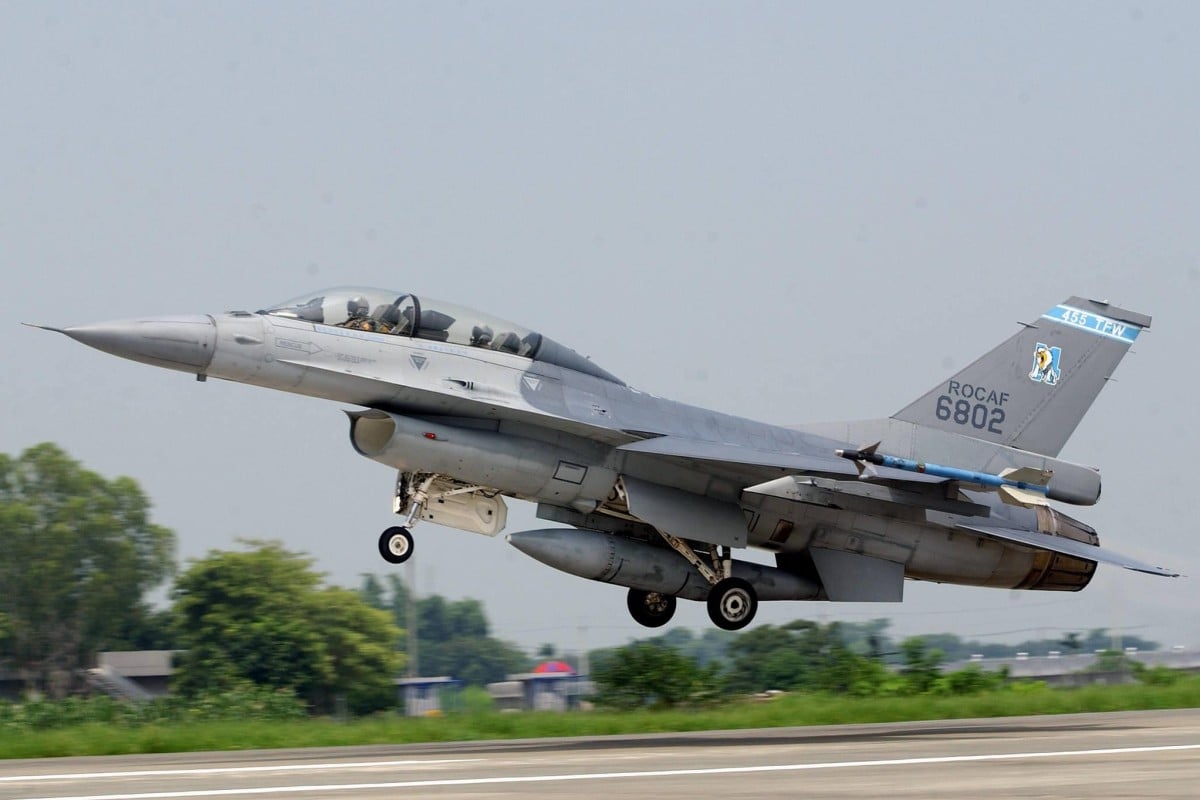
9Taiwan has launched a military exercise including F-16 fighter jets in response to Beijing’s war games, which began on Sunday. Photo: AFP
Taiwan has launched a military exercise including F-16 fighter jets in response to Beijing’s war games, which began on Sunday. Photo: AFP
Taiwan responded to Beijing’s military drill targeting the self-ruled island by deploying its most advanced fighter jets and firing 117 medium and long-range missiles on Monday and Tuesday.
Defence ministry spokesman Lee Chao-ming said the missiles were fired from the Jiupeng military base to waters off eastern Taiwan, with a range of 250km (155 miles), in an exercise covering five types of training for the island’s forces.
On Monday, Taiwan’s air force also dispatched two F-16 fighter jets armed with AGM-84 Harpoon missiles in a simulation of an attack off the island’s southeast coast.

Song Zhongping, a military commentator based in Hong Kong, said the Taiwan drill was aimed at the mainland Chinese exercise which began on Sunday. The location of the Taiwan drill meant its missiles’ electronic data could avoid detection by the People’s Liberation Army’s radar, he said.

Chinese military starts Taiwan Strait drills amid rising tension

“Taiwan is focusing on boosting self-defence, and building up a comprehensive air and sea defence network to counter military threats from the mainland,” Song said.

“The test firing of missiles is to boost the island’s self-defence capability. The military drill of the PLA has triggered a lot of concerns in Taiwan, and Taiwan is responding to it also through a strong military means.”

The PLA launched two large-scale military drills close to the Taiwan Strait on Sunday, after a notice issued by the Zhejiang Maritime Safety Administration prohibited ships from entering the waters off the coast of the eastern province between 6pm on Saturday and 6pm on Thursday.

The Guangdong Maritime Safety Administration said another set of military exercises would be held in the waters off Fujian province between Monday morning and Friday evening.

Observers said they expected PLA forces from the Southern and Eastern commands – whose area of responsibility includes Zhejiang and Fujian, which lie across the strait from Taiwan – to take part in the exercises.

Japan’s Ministry of Defence said on Monday that six Chinese warships had passed through the Miyako Strait – a waterway lying between Okinawa Island and Miyako Island – presumably in preparation for the drills.

Japanese military vessels said a Chinese class-three missile destroyer – a type 054A missile frigate – was sailing 240km north of Miyako Island on Saturday.

On Thursday, Japanese ships reported China’s type 052D destroyer Xining, type 054A missile frigate Daging, the guided missile frigate Rizhao, and the ocean comprehensive supply ship Hulun Lake, all entered the Pacific Ocean through the Miyako Strait.

This is China’s first war game to involve simultaneous exercises at two locations in waters near Taiwan since the 1995–96 Taiwan Strait Crisis, during which the PLA conducted a series of large-scale live-fire exercises in response to then-Taiwanese leader Lee Teng-hui’s visit to the United States, and ahead of the Taiwanese presidential election.

Source: SCMP

17/06/2019

China rockets to forefront of global space race with sea launch success

  • China has become the first nation to fully own and operate a floating launch platform for its space missions
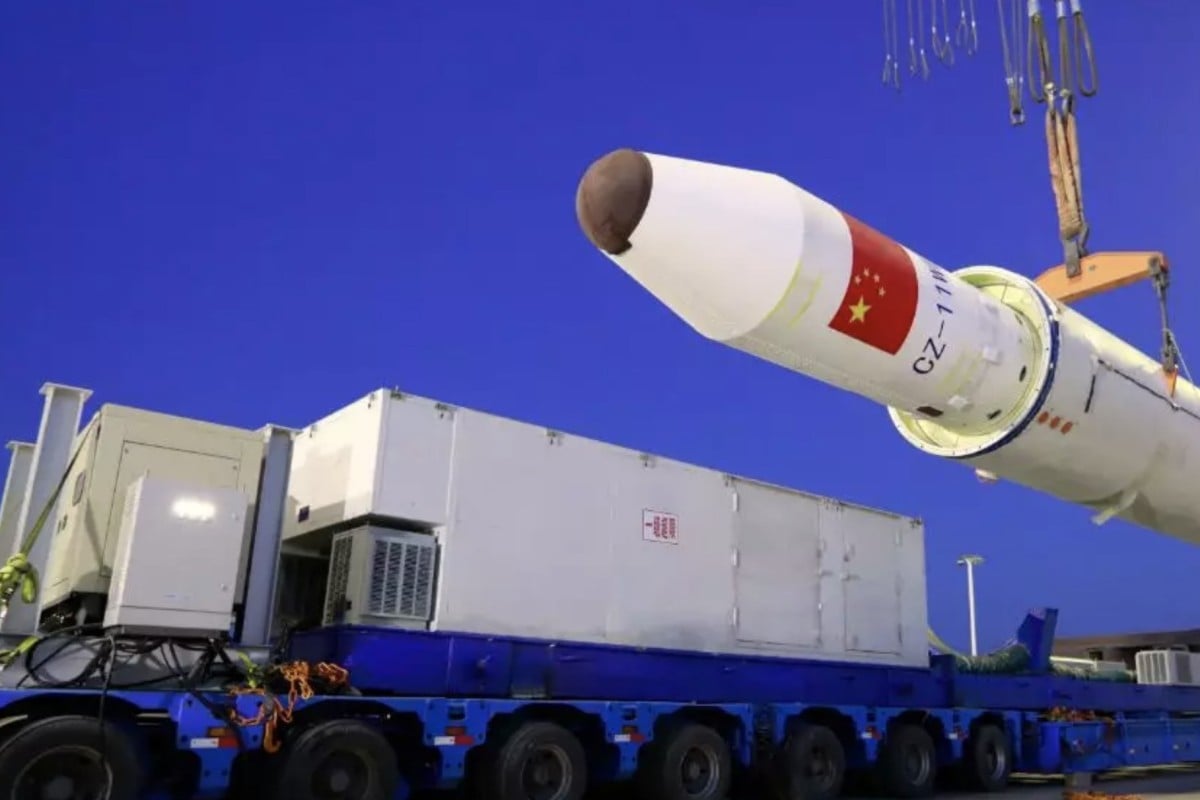
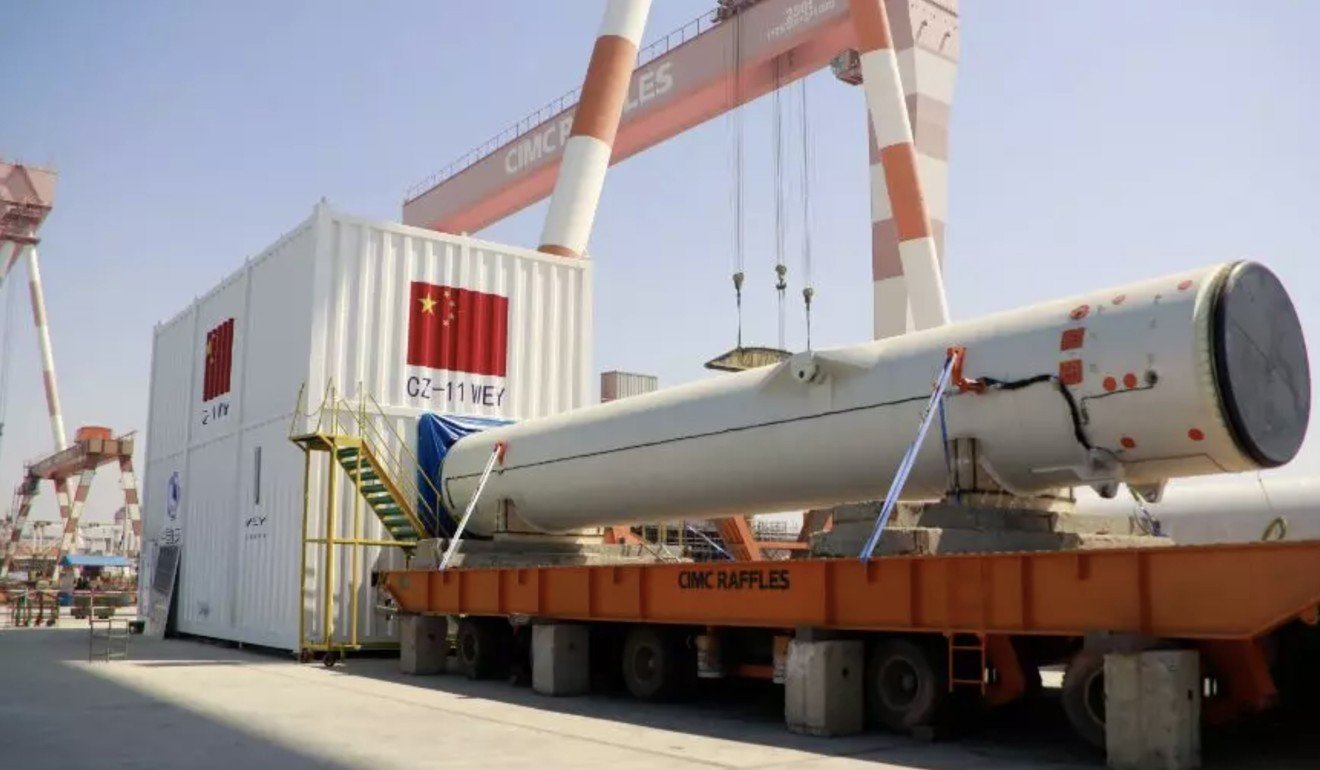
China has successfully launched a rocket into space from the Yellow Sea, making it the first nation to fully own and operate a floating sea launch platform. Photo: China National Space Administration
China successfully launched a rocket into space from a civilian cargo ship at sea on Wednesday, becoming the first nation to fully own and operate a floating sea launch platform, a technology expected to significantly reduce the cost and risk of space missions.
A Long March 11WEY rocket blasted off from the ship in the Yellow Sea at noon Beijing time, according to the China National Space Administration.
About six minutes later, five commercial satellites and a pair of “technical experiment” probes – called Bufeng, or Wind Catchers – reached their designated orbits.

The Wind Catchers will work together to detect winds on the surface of the world’s oceans. They will boost China’s ability to monitor and forecast typhoons and other extreme weather events, according to the administration.

“Launching a rocket from the sea has the advantages of high flexibility, good adaptability for specific tasks, and excellent launch economy,” said a statement on the administration’s website.

“It can flexibly select the launch point and touchdown area to meet the needs of various payloads for different orbits, and provide better aerospace commercial launch services for countries along the belt and road,” it added, referring to the Belt and Road Initiative, China’s plan to grow global trade.

The Long March 11 is a four-stage, solid fuel rocket with a design similar to a ballistic missile. It can carry a payload of about 700kg to the Earth’s lower orbit.

The first two stages of the rocket dropped in open waters in the northern Pacific Ocean, according to the administration. The rocket was equipped with a flight suspension system in case of any abnormal situation, but none occurred.

“The rocket debris will not cause damage to surrounding waters,” the administration said.

The world’s first ocean rocket launch platform, the Sea Launch, was jointly built by companies from Russia, the United States, Norway and Ukraine in the late 1990s. Its operation was halted in 2014 after military conflicts broke out between Russia and Ukraine.

Li Hong, president of the China Academy of Launch Vehicle Technology, told state media in March that the Chinese rocket and launch platform were designed and owned entirely by China, so it would not have similar problems caused by international disputes as the Sea Launch.

The launch was expected to encounter many technical and engineering challenges, including simplified procedures for pre-launch testing, the rocking motion of the ship and heat dissipation in a confined space.

But Chinese space authorities have argued the inconvenience would be offset by numerous advantages. For instance, the technology would allow China to move its launch site to as far away as Hawaii for quicker, cheaper satellite insertion to certain orbits, according to Xinhua.

Preparations get under way for Wednesday’s successful Chinese space launch from the northern Pacific ocean. Photo: China National Space Administration

A maritime launch is also expected to reduce the risk of rocket debris falling into densely populated areas.

Chinese space launch sites are typically located inland for defence purposes.

China has built its sea launch capability mainly to bolster the commercial space sector, according to Chinese space authorities.

In this mission, the rocket was sponsored and named after WEY, a young luxury car brand by Chinese sports utility vehicle manufacturer Great Wall Motor.

Chang’e 4 landing marks start of new China-US space race
Some cutting-edge car technology, such as new paint materials, will go into space for testing in the most extreme environments, according to state media reports.
The payloads include the Jilin 03A, the latest addition to a high-definition Earth observation satellite network, according to Changguang Satellite Technology Corporation, the satellite’s owner.
The company said the constellation, which will eventually comprise more than 20 satellites, would achieve global coverage for commercial applications.
One of the satellites launched on Wednesday belongs to Shanghai-based LinkSure Network, which has ambitious plans to provide free Wi-fi to everyone on the planet. The company has said it plans to eventually launch more than 200 satellites as part of the project.
Source: SCMP
25/04/2019

Magnitude 6.1 earthquake hits eastern Taiwan

  • Quake hits area around Hualien at 1.01pm, followed by aftershocks
  • Tremors send residents fleeing and rattle buildings more than 100km away in Taipei
A magnitude 6.1 earthquake hit the area around Hualien in Taiwan on Thursday. Photo: CNA
A magnitude 6.1 earthquake rocked eastern Taiwan at 1.01pm on Thursday, sending panicked residents rushing onto the streets and shaking buildings 115km (71 miles) away in the island’s capital, Taipei.
The quake’s epicentre was just over 10km northwest of the city of Hualien, at a depth of 18.8km, the island’s Central Weather Bureau said, adding that a 4.1 quake was reported 17 minutes later.
At least 17 people were injured, and a 12-storey building in Taipei was left leaning to one side, but there were no reports of major property damage.

Two Malaysian tourists – a man and a woman – were injured by falling rocks at Taroko National Park in Hualien county, with both being airlifted to a hospital in the city. Ten people in Taipei and five in New Taipei City also suffered injuries.

Train services on Taipei’s subway were suspended as were the airport subway to Taoyuan International Airport and most other metro and train systems in various parts of Taiwan, especially those around eastern and northern Taiwan, for safety inspections, the island’s cabinet said.

Taiwan Power Company said operations were normal at the island’s first and second nuclear power plants in northern Taiwan and asked the public to stay calm.

Debris outside the Legislative Yuan, in Taipei, after a magnitude 6.1 earthquake hit the area around Hualien. Photo: CNA

The strong quake sent high-rise buildings swaying in Taipei, with a number of households and offices reporting fallen objects.

“I was so panic and tried to find some place for shelter after the quake rocked for a moment. It seemed like the building was going to collapse. All the books were shaken off the shelves and glasses shattered all over the floor,” a resident of Taipei’s bustling Ximending district said.

The Daan District Office in Taipei reported that a ceiling had fallen into the middle of its office, but nobody was injured.

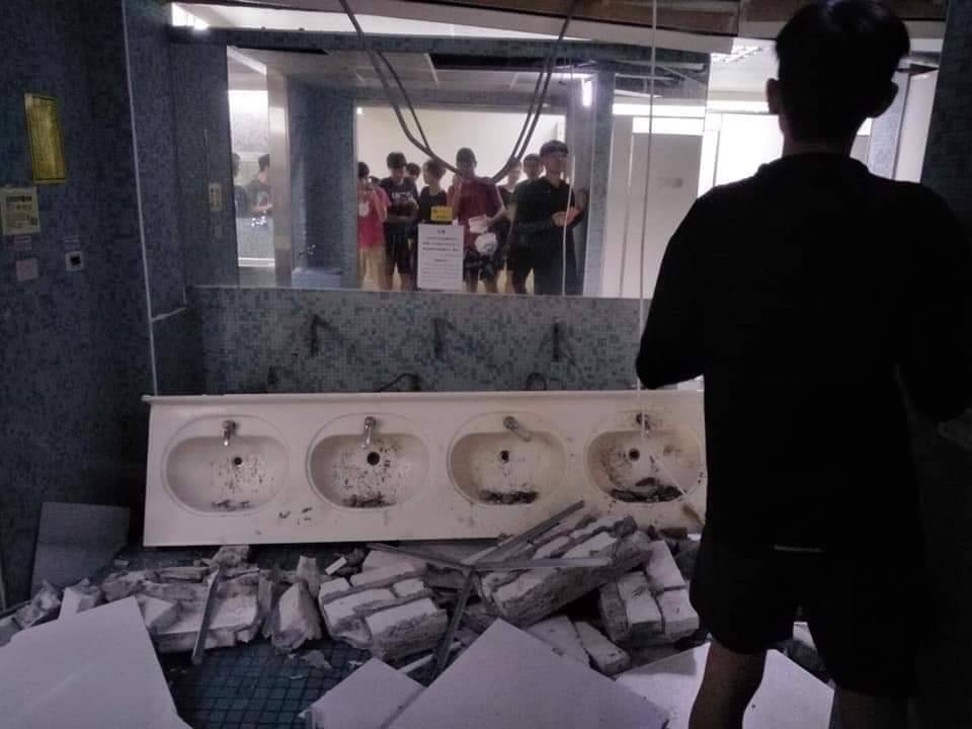
The quake damaged a bathroom in a men’s dormitory at Taiwan Normal University. Photo: Handout

A building on Changan East Road in Taipei was reported to have tilted to one side, prompting residents to flee into the street.

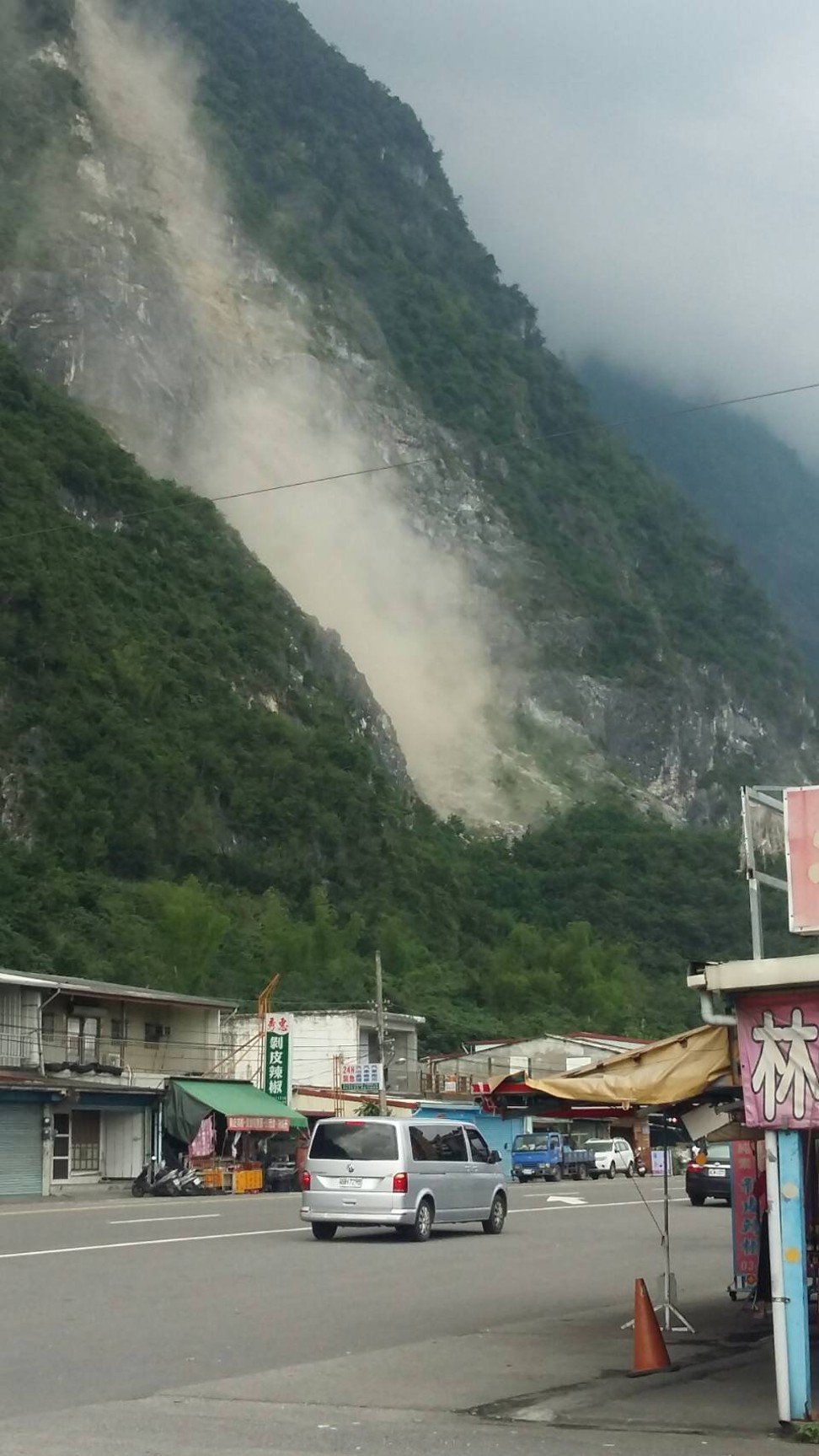
Taiwanese television stations ran footage showing overturned furniture in homes and offices and at least one landslide along the mountainous and lightly populated east coast.

A bathroom at a Taiwan Normal University dormitory in Taipei was damaged in Thursday’s quake. Photo: Handout

Elsewhere in Taiwan, part of the Suao-Hualien Highway collapsed but there were no injuries, the National Fire Agency said.

Near the epicentre in Hualien, more cases of damage were reported, including several supermarkets where items were shaken off shelves.

A resident said he was taking an afternoon nap when the earthquake shook.

“I felt as if my heart was spilling out of my mouth and was so panicked that I could hardly move, but I managed to rush to the street,” he said, adding that aftershocks were rocking the area.

Workers at Hualien’s main railway station were struggling to clear a flooded lobby after several water pipes burst in the quake, county authorities said.

Operations remain unaffected at Taiwan’s hi-tech industrial estates, including Hsinchu Science Park.

A landslide near Hualien. Photo: Handout

Taiwan is on the string of seismic faults around the Pacific Ocean known as the “Rim of Fire” and is frequently rocked by tremors, including a 1999 quake that killed more than 2,300 people.

An earthquake in Hualien in February last year killed 17 people when four buildings partially collapsed. That quake hit two years to the day after a residential building in the southwestern city of Tainan collapsed in an earthquake, killing 115 people.

Source: SCMP
13/03/2019

China’s Yuanwang-3 departs for monitoring missions

NANJING, March 13 (Xinhua) — The space-tracking ship Yuanwang-3 is sailing to the Pacific Ocean from a port in east China’s Jiangsu Province Wednesday for upcoming monitoring missions.

This year, the ship will carry out two maritime space monitoring missions, which will last about two months.

The mission members have conducted a series of training programs and tests before the voyage, to increase emergency response.

Yuanwang-3, which entered service in the mid-1990s, is China’s second-generation space tracking ship. Sailing more than 650,000 nautical miles, it has completed 80 missions, including maritime tracking of the Shenzhou spacecraft, Chang’e lunar probe and BeiDou satellites.

Source: Xinhua

Law of Unintended Consequences

continuously updated blog about China & India

ChiaHou's Book Reviews

continuously updated blog about China & India

What's wrong with the world; and its economy

continuously updated blog about China & India