Chindia Alert: You’ll be Living in their World Very Soon
aims to alert you to the threats and opportunities that China and India present. China and India require serious attention; case of ‘hidden dragon and crouching tiger’.
Without this attention, governments, businesses and, indeed, individuals may find themselves at a great disadvantage sooner rather than later.
The POSTs (front webpages) are mainly 'cuttings' from reliable sources, updated continuously.
The PAGEs (see Tabs, above) attempt to make the information more meaningful by putting some structure to the information we have researched and assembled since 2006.
China will not set an economic growth goal for this year as it deals with the fallout from the coronavirus pandemic.
It is the first time Beijing has not had a gross domestic product (GDP) target since 1990 when records began.
The announcement was made by Premier Li Keqiang at the start of the country’s annual parliament meeting.
The world’s second largest economy shrank by 6.8% in the first quarter from a year ago as lockdowns paralysed businesses.
“This is because our country will face some factors that are difficult to predict in its development due to the great uncertainty regarding the Covid-19 pandemic and the world economic and trade environment,” Premier Li said.
The country’s leadership has promised to boost economic support measures amid growing concerns that rising unemployment could threaten social stability.
The move comes as tensions between Beijing and Washington are becoming increasingly strained over the coronavirus pandemic, trade and Hong Kong.
On Thursday, President Donald Trump stepped up his attacks on China, suggesting that the country’s leader, Xi Jinping, is behind a “disinformation and propaganda attack on the United States and Europe.”
It came as Mr Trump and other Republicans have escalated their criticism of Beijing’s handling of the early stages of the outbreak.
Also on Thursday, China announced plans to impose new national security legislation on Hong Kong after last year’s pro-democracy protests.
The announcement was met with a warning from Mr Trump that the US would react “very strongly” against any attempt to gain more control over the former British colony.
Separately, two US senators have proposed legislation to punish Chinese entities involved in enforcing the planned new laws and penalise banks that do business with them.
Earlier this week, the US Senate unanimously passed a proposal to delist Chinese companies from American stock exchanges if they fail to comply with US financial reporting standards.
US-listed Chinese companies have come under increasing scrutiny in recent weeks after Luckin Coffee revealed that an internal investigation found hundreds of millions of dollars of its sales last year were “fabricated”.
BEIJING (Reuters) – China announced on Wednesday that its parliament will open a key annual session on May 22, signalling that Beijing sees the country returning to normal after being reduced to a near-standstill for months by the COVID-19 epidemic.
During the gathering of the National People’s Congress in the capital, delegates will ratify major legislation, and the government will unveil economic targets, set defence spending projections and make personnel changes. The ruling Communist Party also typically announces signature policy initiatives.
The session was initially scheduled to start on March 5 but was postponed due to COVID-19, which has infected nearly 83,000 people and killed more than 4,600 on the mainland after emerging late last year in the central city of Wuhan.
As the epidemic has subsided, economic and social life gradually returned to normal, making it possible for the congress to convene, the official Xinhua news agency quoted the standing committee of the NPC, the legislature’s top decision-making body, as saying.
The committee also appointed Huang Runqiu as the new minister for ecology and environment, a post vacated when predecessor Li Ganjie became deputy Communist Party chief for Shandong province earlier this month, Xinhua reported.
Tang Yijun was also named as the new justice minister to replace Fu Zhenghua, who has reached the retirement age of 65 for ministers.
The Chinese People’s Political Consultative Conference (CPPCC), an advisory body to parliament, has proposed starting its annual session a day before the parliamentary session opens.
Analysts expect China to roll out additional fiscal stimulus in order to cushion the blow from COVID-19, which has developed in to a worldwide pandemic that some fear will trigger a severe global recession.
China’s economy contracted for the first time on record during the January-March period, when the government imposed severe travel and transport restriction to curb the spread of the epidemic.
Parliament is also expected to discuss the anti-government protests in Hong Kong, amid growing speculation that Beijing take steps to strengthen its grip on the city.
It is unclear how long parliament and its advisory body will meet for this time, and people familiar with the matter have told Reuters that this year’s annual sessions could be the shortest in decades due to COVID-19 concerns. Usually more than 5,000 delegates descend on Beijing from all over China for at least 10 days.
Beijing city plans to ease quarantine rules as early as Thursday, two sources familiar with the situation told Reuters, ahead of the key political meetings.
People arriving in the capital from other parts of China will no long have to be quarantined for two weeks unless they come from high-risk areas such as Heilongjiang in the north and some parts of Guangdong in the southeast, the sources said.
TAIPEI (Reuters) – Anger at being confused with China amid the coronavirus outbreak and Beijing’s stepped-up efforts to assert sovereignty is stirring heated debate in Taiwan about how to further distance itself from its giant and often threatening neighbour
At its core is a debate about whether to drop “China” from the island’s official name, the Republic of China.
During the virus crisis, the World Health Organization (WHO), which considers the island part of China, has listed Taiwan’s far lower case number under China’s, and China has repeatedly insisted only it has the right to speak for Taiwan on the global stage, including about health issues.
Taipei says this has confused countries and led them to impose the same restrictions on Taiwanese travellers as on Chinese, and has minimised Taiwan’s own successful efforts to control the virus.
Taiwan has been debating for years who it is and what exactly its relationship should be with China – including the island’s name. But the pandemic has shot the issue back into the spotlight.
Lin I-chin, a legislator for the ruling Democratic Progressive Party (DPP), said in parliament last month that Taiwan should change its English name to “Republic of Chunghwa”, an English rendering of the word Taiwan uses for China in its name.
“Taiwan has been brought to grief by China,” she said.
On Sunday, the New Power Party, one of Taiwan’s smaller opposition groups, released the results of a survey in which almost three-quarters of respondents said Taiwan passports should only have the word “Taiwan” on them, removing any reference to China.
“During this epidemic period, our people have been misunderstood by other countries, highlighting the urgency of changing the English name,” it said in a statement.
Taiwan’s Foreign Ministry has given a cautious response to the passport idea, noting that according to the constitution, the official name is Republic of China and that the word Taiwan was already added to passport covers in 2003.
“In the future, if there is consensus between the ruling and opposition parties on this new name, the Foreign Ministry shall cooperate in handling it,” spokeswoman Joanne Ou said.
But the government is wary of a name change for Taiwan, saying there is no consensus for such a radical move.
Although the DPP supports the island’s independence – theoretically meaning the official formation of a Republic of Taiwan – President Tsai Ing-wen says there is no need to do so, as the island is already an independent country called the Republic of China. She often refers to the island as the Republic of China, Taiwan.
‘REPUBLIC OF TAIWAN’
Premier Su Tseng-chang has said changing the island’s name isn’t the most urgent issue facing Taiwan.
“If we want to change then it might as well be to ‘Republic of Taiwan’. Taiwan is more well known,” Su said in parliament. “But if there’s no national consensus, a name change isn’t the most important thing for now.”
Taiwan’s official name is a throwback to when the Kuomintang party fled to the island after losing the Chinese civil war to the Communists in 1949, and continued to claim to be China’s legitimate government.
“The Republic of China is a country, Taiwan is not,” Chen Yu-jen, a Kuomintang legislator from the island of Kinmen, which sits just offshore from the Chinese city of Xiamen, told parliament on Monday.
The statement drew a sharp rebuke from Su, who told reporters it meant Chen had no right to be a member of the legislature. Chen said she was simply stating the facts, and that Taiwan is a geographic name, not a national name.
China’s pressure on Taiwan diplomatically and militarily during the virus crisis has also reduced Beijing’s already low standing in the eyes of many Taiwanese.
A March poll commissioned by Taiwan’s China-policy making Mainland Affairs Council and carried out by Taipei’s National Chengchi University showed more than three-quarters of respondents believed China’s government was unfriendly to Taiwan’s, the highest level in a decade.
Any name change would infuriate China, which has a law mandating the use of force to stop Taiwan independence.
BEIJING (Reuters) – China tentatively plans to hold its delayed annual gathering of parliament in late April or early May, two people involved in preparations told Reuters, as new coronavirus cases in the country drop sharply even as they surge elsewhere.
The annual meetings of the National People’s Congress (NPC) and the Chinese People’s Political Consultative Conference (CPPCC), known as the “two sessions”, were scheduled for early March but were delayed due to the virus outbreak, with no new date announced.
Holding the events, which typically draw a combined 5,000 delegates to Beijing’s Great Hall of the People, would be a major indication that the Chinese leadership sees things as returning to normal.
The State Council Information Office and the media department of the Standing Committee of the NPC did not immediately respond to faxed requests for comment on Monday.
The outbreak that originated in the central city of Wuhan has infected more than 80,000 people in the country, killed 3,200 and wreaked economic havoc, causing factory output to plunge at the sharpest pace in three decades.
The NPC’s timing is not finalised, and one of the people said the number of attendees may be reduced, with those visiting from outside Beijing needing to undergo quarantine.
People now arriving in the capital from elsewhere in China must spend two weeks in quarantine.
“We still have to play it by ear, as the coronavirus rapidly spreads across the world,” said the person, declining to be identified given the sensitivity of the matter.
The NPC, China’s parliament, usually sits for at least 10 days. The CPPCC, a largely ceremonial advisory body, runs in parallel.
During parliament, legislators pass laws and unveil economic targets, defence spending projections and other important policy decisions. It is also an occasion for China’s ruling Communist Party to announce major policy and personnel changes.
This year, the NPC is expected to discuss the recent months of anti-government protests in Hong Kong, with China’s economy also expected to be a key item on the agenda.
Image copyright GETTY IMAGESImage caption Mr Trump is making his first official visit to India
US President Donald Trump is expecting a raucous welcome on his first official state visit to India on Monday and Tuesday.
He follows a long line of leaders who have made the journey. Some of his predecessors were greeted enthusiastically; others stumbled through diplomatic gaffes; one even had a village named after him.
Can history be a guide to how this diplomatic tryst might go? Here’s a brief look at past visits, ranked in order of how they went.
The good: President Eisenhower
Let’s begin at the beginning.
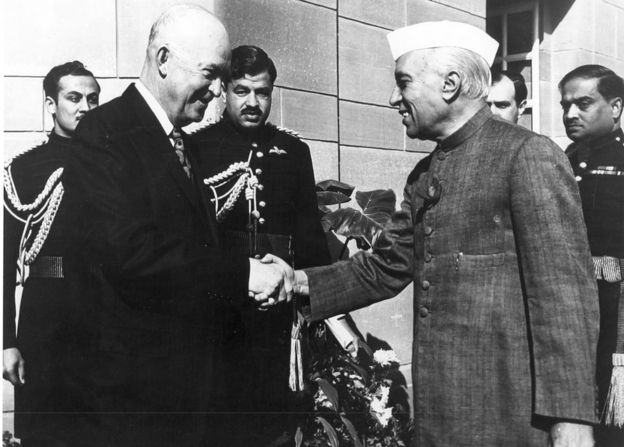
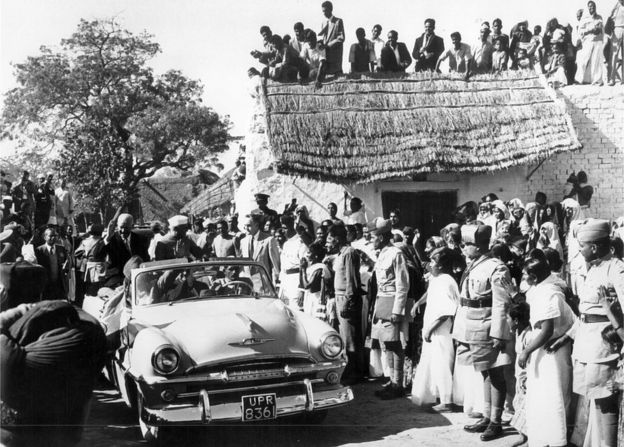
Dwight D Eisenhower, the first US president to visit India, was greeted with a 21-gun salute when he landed in the national capital, Delhi, in December 1959. Huge crowds lined the streets to catch a glimpse of the World War Two hero in his open-top car – Mr Trump is expecting a similar reception in Ahmedabad city, where he will be doing a road show.
Image copyright US EMBASSY ARCHIVESImage caption Dwight D Eisenhower, pictured with Prime Minister Jawaharlal Nehru, was the first US president to make the trip
The warmth between President Eisenhower and Indian Prime Minister Jawaharlal Nehru helped during what was a rocky phase in US-India ties. This was early in the Cold war, when the US and Pakistan had become become close allies, and India insisted on staying neutral or “non-aligned”. Like today, relations with China were at the core of the India-US equation, with Washington pressuring Delhi to take an aggressive stance with Beijing on the issue of Tibet.
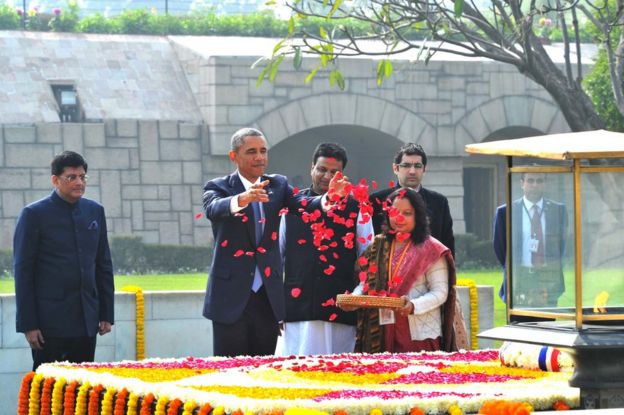
But, on the whole, Eisenhower’s four-day trip was billed a success. And nearly every US president on a state visit to India has emulated his itinerary: he laid flowers at Mahatma Gandhi’s memorial, took in the splendour of the Taj Mahal, addressed parliament and spoke at Delhi’s iconic Ramlila grounds, which, according to one news report, attracted one million people.
When he left, Nehru said he had taken with him “a piece of our heart”.
Image copyright US EMBASSY ARCHIVESImage caption President Eisenhower was greeted by large crowdsThe game-changer: Bill Clinton
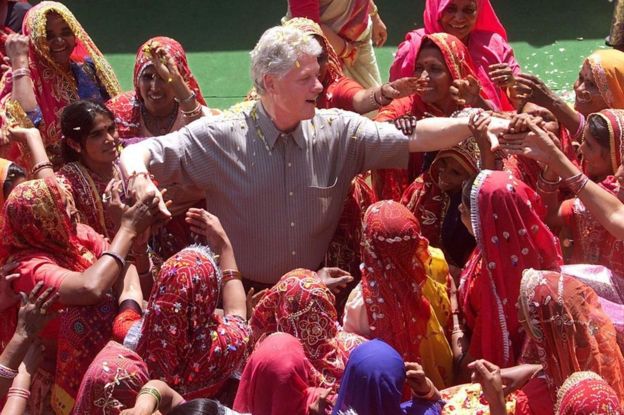
If there was a game-changing visit, it would be Bill Clinton’s in March 2000 with Prime Minister Atal Bihari Vajpayee. Mr Clinton’s arrival came after a two-decade lull – neither Ronald Reagan nor George Bush Snr made the journey East. It came at a tricky time as Washington had imposed sanctions on Delhi following its 1999 test of a nuclear bomb.
But, according to Navtej Sarna, a former Indian Ambassador to the US, the five-day trip was “a joyous visit”. It included stops in Hyderabad, a southern city that was emerging as a tech hub, and Mumbai, India’s financial capital. “He came and saw the economic and cyber potential of India, and democracy in action,” says Mr Sarna.
Image copyright GETTY IMAGESImage caption Bill Clinton’s visit was described as “joyous”Mr Clinton also danced with villagers, took a tiger safari and sampled Delhi’s famously creamy black dal (lentils) at a luxury hotel that has since been associated with the president.
The country’s reaction is perhaps best expressed in this New York Times headline: “Clinton fever – a delighted India has all the symptoms.”
The nuclear deal: George W Bush
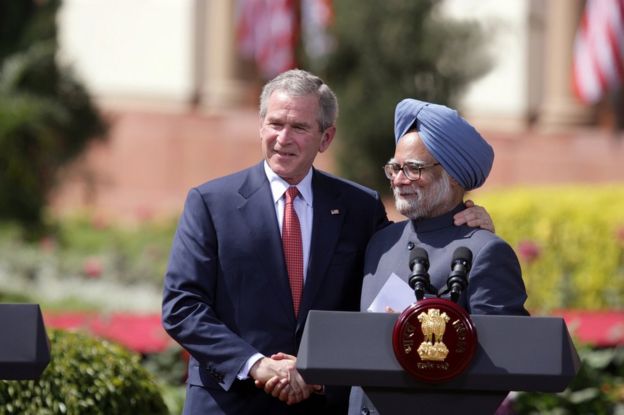
George W Bush, as Forbes magazine once put it, was the “best US president India’s ever had”. His three-day visit in March 2006 was a highlight in the two countries’ strategic relationship – especially in matters of trade and nuclear technology, subjects they have long wrangled over. His strong personal dynamic with Prime Minister Manmohan Singh was hard to miss – after he left office, Mr Bush, a keen artist, even painted a portrait of Mr Singh.
The two leaders are credited for a historic but controversial nuclear deal, which was signed during Mr Bush’s visit. It brought India, which had for decades refused to sign the Nuclear Non-Proliferation Treaty (NPT), out of isolation. Energy-hungry India got access to US civil nuclear technology in exchange for opening its nuclear facilities to inspection.
Image copyright US EMBASSY ARCHIVESImage caption George W Bush and Manmohan Singh had a very good relationshipHowever, while the visit was substantive, it was not as spectacular as others – there was no trip to the Taj, nor an address to parliament. But the timing was important. Anti-US sentiment over the invasion of Iraq was running high – left-wing MPs had staged a protest against Mr Bush’s visit, and there were demonstrations in other parts of India.
Double visit: Barack Obama
Barack Obama was the only president to make two official visits. First, in 2010 with Prime Minister Manmohan Singh, and then in 2015 with Prime Minister Narendra Modi.
On his first visit – in a break from the past – he landed in Mumbai, instead of Delhi, with a large trade delegation. This was not just about economic ties but a show of solidarity following the Mumbai terror attacks of 2008, which killed 166 people. Mr and Mrs Obama even stayed at the Taj Mahal hotel, one of the main targets.
It was significant that the US president declared support for India to join a reformed and expanded UN Security Council, says Alyssa Ayres, a former US deputy assistant secretary of state for South Asia. “That all these years later nothing has changed in the UN system is another matter, but that was a major policy shift for the United States.”
Image copyright US EMBASSY ARCHIVESImage caption Barack Obama visited India twiceMr Obama returned in 2015 as chief guest at India’s Republic Day celebrations, at PM Modi’s invitation. Trade, defence and climate change were at the heart of the talks. The trip also emphasised an Indo-Pacific strategy, where both leaders expressed unease over Beijing’s provocations in the South China Sea.
The not-so-good: Jimmy Carter
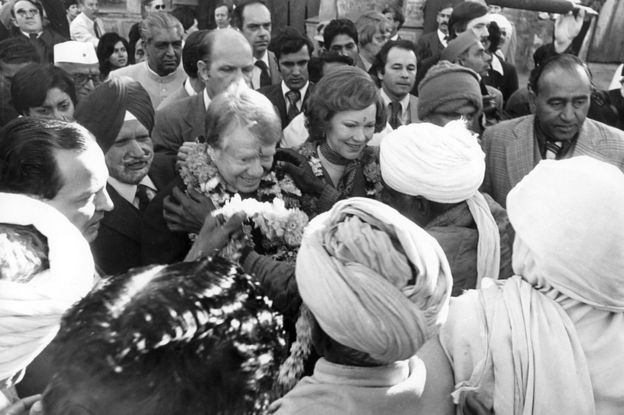
Although Jimmy Carter’s two-day visit in 1978 was a thaw in India-US relations, it was not free of hiccups.
With some 500 reporters in tow, Carter followed a packed itinerary: he met Prime Minister Morarji Desai, addressed a joint session of parliament, went to the Taj Mahal, and dropped by a village just outside Delhi.
The village, Chuma Kheragaon, had a personal connection: Carter’s mother, Lillian, had visited here when she was in India as a member of the Peace Corps in the late 1960s. So when Carter and his wife, Rosalynn, made the trip, they gave the village money and its first television set. It was even renamed “Carterpuri”, a moniker it still holds.
Image copyright US EMBASSY ARCHIVESImage caption Jimmy Carter being greeted by villagers of ‘Carterpuri’But beyond the photo-ops, India and the US were sparring. India was building its nuclear programme, and had conducted its first test in 1974. The US wanted India to sign the NPF, which sought to stop the spread of nuclear weapons. But India refused, saying the agreement discriminated against developing countries.
In a leaked conversation that made headlines and threatened to derail the visit, Mr Carter promised his Secretary of State, Cyrus Vance, a “very cold and very blunt” letter to Desai. The two leaders signed a declaration, promising greater global co-operation, but Carter left India without the assurances he had hoped for.
The ugly: Richard Nixon
Richard Nixon was no stranger to India when he arrived in August 1969 for a day-long state visit. He had been here as vice-president in 1953, and before that on personal trips. But, by all accounts, he wasn’t a fan.
“Nixon disliked Indians in general and despised [Prime Minister] Indira Gandhi,” according to Gary Bass, author of Blood Telegram: Nixon, Kissinger and a Forgotten Genocide. And, he adds, the feeling was said to be mutual.
This was also at the height of the Cold War, and India’s non-alignment policy “appalled” American presidents. Mr Bass says that under Gandhi, India’s neutrality had turned into a “noticeably pro-Soviet foreign policy”.
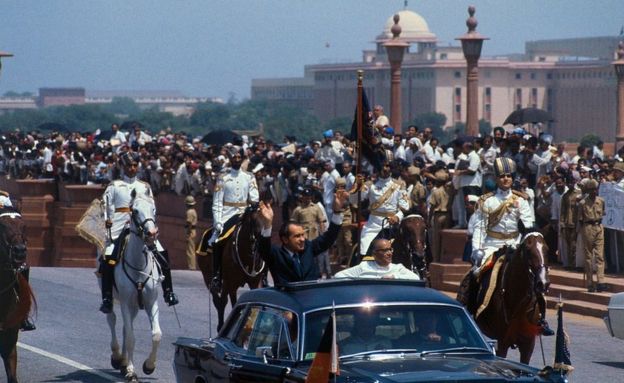
Image copyright GETTY IMAGESImage caption Richard Nixon waves to the crowds alongside Mohammad Hidyatullah, India’s acting presidentThe relationship only turned frostier after the trip as India backed Bangladesh (then East Pakistan) in its fight for independence from Pakistan, a close American ally. The differences were laid bare when Gandhi visited the White House in 1971. Declassified state department cables later revealed that Nixon referred to her as an “old witch”.
And the future: Donald Trump
The US and India have certainly had their ups and downs, but during the last official visit in 2015, Mr Obama and Mr Modi signed a declaration of friendship: “Chalein saath saath (Let’s move forward together)…” it began.
President Trump’s visit will take the relationship forward, but it’s unclear how.
Image copyright AFP
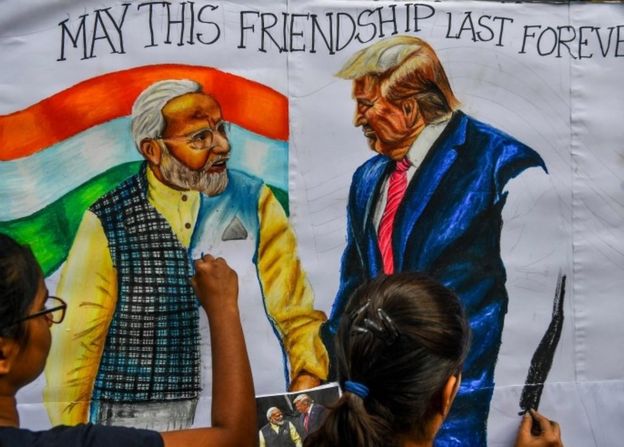
His arrival in Ahmedabad, the main city in PM Modi’s home state of Gujarat, followed by a big arena event, is expected to draw a massive crowd. It will echo President Eisenhower’s rally in Delhi years ago, perhaps cementing the personal ties between the two leaders.
But while Mr Trump’s trip will be packed with pageantry, it could be light on policy. Unlike other presidential visits, this one is not expected to yield concrete agreements, with the trade deal Mr Trump so badly wants looking unlikely.
BEIJING (Reuters) – China’s parliament and its top political consultative body are both considering delaying annual meetings set for March, state media said on Monday, as the country battles a coronavirus outbreak that has killed more than 1,700 people.
The meetings of the parliament, or National People’s Congress (NPC), and the Chinese People’s Political Consultative Conference (CPPCC) were both due to begin early next month.
The gatherings see more than 5,000 delegates descend on Beijing, the capital, from all over China, for at least 10 days, to pass legislation and unveil the year’s key economic targets.
A postponement would be the first since China adopted the current March schedule in 1995 for the meeting of parliament.
The standing committee of the NPC will meet on Feb. 24 in Beijing, the official Xinhua news agency said.
“The upcoming session is … expected to deliberate a draft decision on postponing the third annual session of the 13th NPC,” it said. The session was due to have begun on March 5.
The proposal was made in the belief it was important to focus on reining in the epidemic, Xinhua said. China has imposed transport curbs to halt the spread of the virus, which has killed 1,770 and infected nearly 71,000 in mainland China.
The CPPCC is also studying whether to postpone its annual meeting, state-run CCTV said, due to have begun two days earlier, on March 3.
Five people familiar with the matter told Reuters this month that China was considering delaying the meetings as Beijing grapples with the epidemic.
The parliamentary committee will also consider a proposed law banning wildlife trade and discuss government changes, Xinhua said, without elaborating.
“The central government and I are totally committed to constitutionally safeguard the political, linguistic, cultural and land rights of the Assamese people,” he tweeted.
However, with internet and mobile services shut down, it is unlikely residents would have been able to read the message.
The chief minister of Assam was stranded at the airport for several hours on Wednesday because roads were blocked by protests.
What do protesters want?
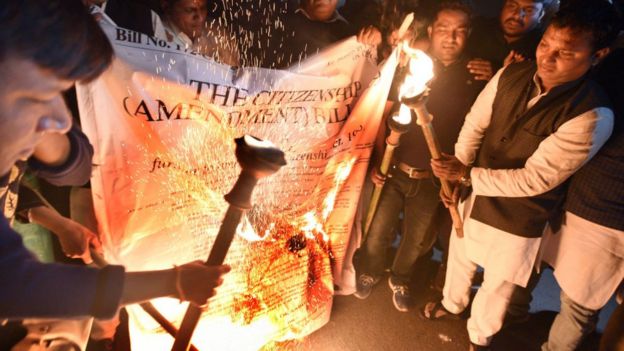
They want the bill to be repealed, as they say their ethnic and cultural identity is under threat from illegal migration.
Essentially, they do not want any migrants – regardless of religion – to be allowed into the state.
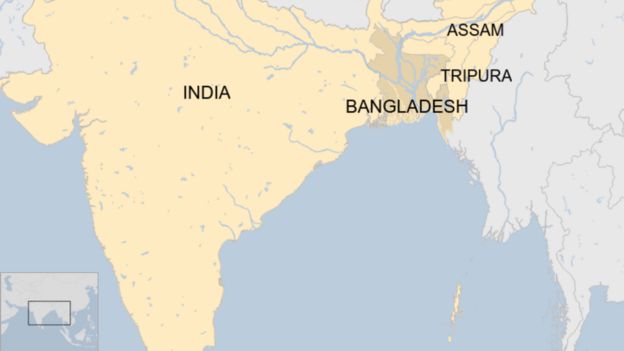
The National Register of Citizens (NRC) is a list of people who can prove they came to the state by 24 March 1971, a day before neighbouring Bangladesh became an independent country.
In the run-up to its publication, the BJP had supported the NRC, but changed tack days before the final list was published, saying it was error-ridden.
The reason for that was a lot of Bengali Hindus – a strong voter base for the BJP – were left off the list, and would possibly become illegal immigrants.
The CAB is seen as being linked to the register, although it is not the same thing.
It will help protect non-Muslims who are excluded from the register and face the threat of deportation or internment.
Has the bill been challenged?
The Indian Union Muslim League, a political party, has petitioned the country’s top court to declare the bill illegal.
In their petition to the Supreme Court, the Indian Union Muslim League argued that the bill violated articles of equality, fundamental rights and the right to life.
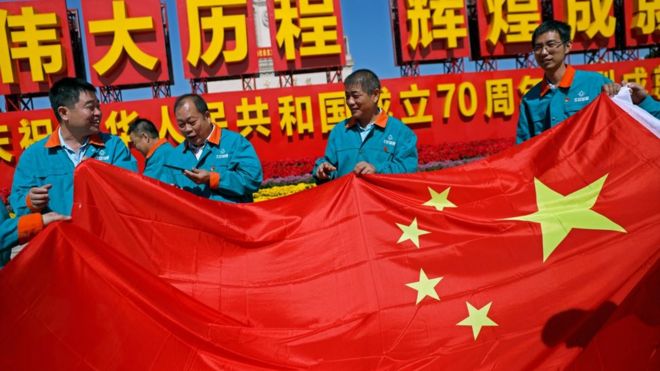
Image copyright EPAImage caption China is getting dressed up for its big birthday party
One week from now, the People’s Republic of China will mark its 70th anniversary with celebrations on a scale not seen in China in decades.
Beijing is pulling out all stops and 1 October will be flush with fireworks, fanfare and a huge military parade.
To ensure it goes smoothly, authorities have been ramping up security in the capital – and online – for weeks.
But with yet more protests expected in Hong Kong, the territory might just rain on China’s parade.
What is it all about?
The birth of modern China was declared on 1 October 1949, after the communists under Mao Zedong won the civil war that followed World War Two.
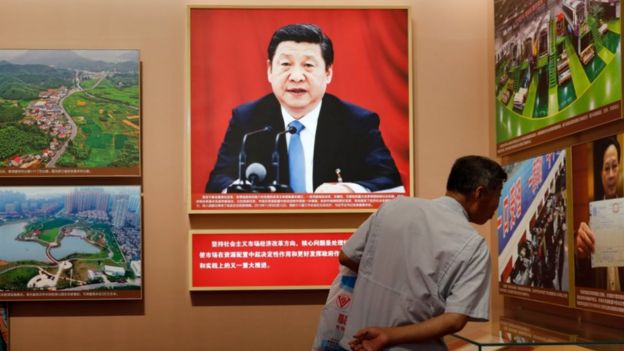
Image copyright EPAImage caption Exhibitions are highlighting the achievements of the Communist Party
The date is marked every year, but celebrations for this 70th anniversary are expected to eclipse previous events.
It’s the first big anniversary since China has emerged as a global power. While 10 years ago China was a superpower in the making, it is now the world’s second largest economy, almost eye-to-eye with the United States.
What to expect?
The main celebrations will take place in the capital, Beijing, where there will be a grand military parade with “advanced weapons” on display, followed by a “mass pageant”.
President Xi Jinping – considered the most powerful Chinese leader since Mao – will address the Chinese people. His speech is expected to celebrate China’s rapid growth and which will be closely watched for any indication of the country’s direction in the coming years.
The president will also hand out honours for contributions to the country and in the evening there will be a grand gala and fireworks show.
All official Chinese celebrations are carefully choreographed and the success of this one is particularly important to the government.
The Dos and Don’ts
The parade – open to invited guests only – will take place around Tiananmen Square in central Beijing. The surrounding area will be practically under lockdown, and in fact has been so several times already.
During rehearsals leading up to the big day, hotels near Tiananmen Square told guests that for several hours each day, no-one would be able to leave the hotel or return to it should they be out, leading to much travel chaos and rebookings.
Many shops and restaurants in the centre are also closed or have shortened hours and some subway stations are temporarily shut.
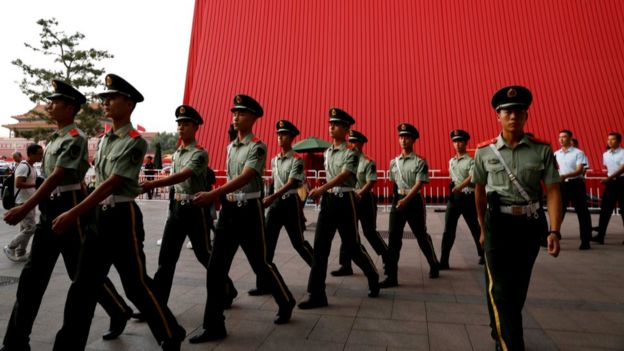
Image copyright EPAImage caption Security is tight ensure the party goes to plan
Trains to Beijing are running numerous safety checks on their passengers and vehicles going into the city are also being tightly watched.
On the big day itself, areas around Tiananmen Square will be blocked and guarded. Local residents will need to identify themselves if they want to pass.
To ensure the sun will shine brightly on the celebration in notoriously polluted Beijing, several coal plants and construction sites in and around the city have been ordered to stop work for the duration.
There’s also a ban on any low-flying aerial vehicles in place. That means anything from light aircraft to drones, balloons and even racing pigeons.
Censorship galore
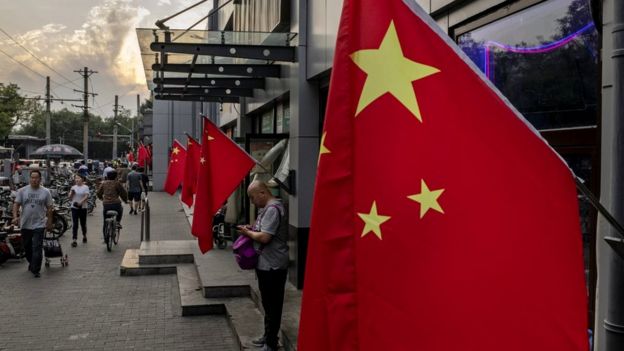
Across much of the city centre, there are national flags set up at every door. Voluntary inspectors are monitoring the streets and locals have told the BBC they’re being questioned after having even brief conversations with foreigners
One person said she was asked by an inspector: “Who were those foreigners? Why were they here?”
The tight control naturally extends online as well. Popular social media platform Weibo said it was deleting content that “distorts” or “insults” the country’s history ahead of the anniversary.
Image copyright GETTY IMAGESImage caption Every house and every shop is sporting a national flag
Chinese journalists are always expected to toe the party line anyway, but starting in October they will have to pass an extra test to prove they are versed particularly in Xi Jinping’s teachings, officially called Xi Jinping Thought on Socialism with Chinese Characteristics, which has been written into the constitution.
Whether or not they pass the exam will then determine whether they’ll be accredited as journalists.
“The fundamental point with this ‘training’ and indoctrination process isn’t so much about the content,” David Bandurski of China Media Watch told the BBC.
“It is about reinforcing the message and understanding among journalists that they work, first and foremost, for the Chinese Communist Party, and serve its agenda.”
So not only will the events be choreographed – the domestic coverage of them will also be tightly guarded.
What about Hong Kong?
Despite Beijing’s determination to let its achievements shine on 1 October, there’s a good chance Hong Kong will pull focus.
Anti-Beijing protests always take place in Hong Kong on China’s National Day, but this time, the activists know that the world is watching.
Anti-government protests have rocked the city for months and the situation shows no sign of dying down.
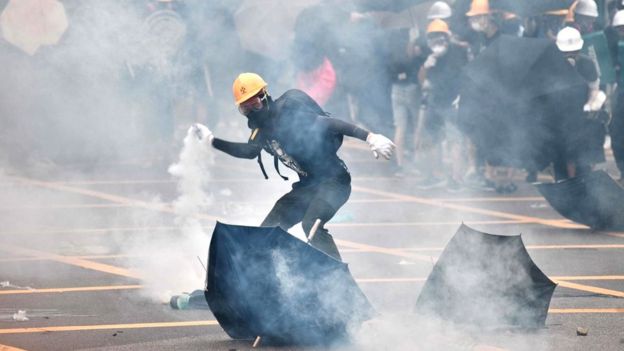
Clashes between police and activists have been becoming increasingly violent, with police using tear gas and activists storming parliament.
Image copyright AFPImage caption The protests have often escalated into violent clashes
That means two things for 1 October: official celebrations in the territory are being toned down to avoid clashes – the annual fireworks display has been cancelled – while at the same time, activists are planning to step up their protests.
On Sunday 29 September, a “Global Anti Totalitarianism March” is scheduled to take place at various locations around the world in support of Hong Kong.
On 1 October itself, a march in central Hong Kong is planned with everyone asked to wear black.
If the past weeks’ demonstrations are anything to go by, the smiles and celebrations in Beijing will be competing for media space with pictures of tear gas and angry young protesters in Hong Kong.
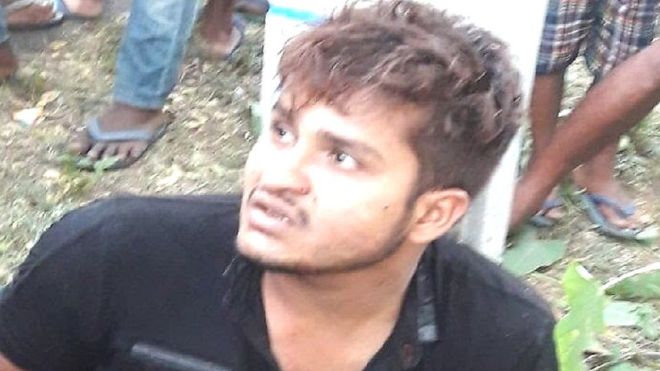
Image copyright BBC HINDIImage caption A video showing Tabrez Ansari pleading for his life was widely circulated on social media
In many parts of India, Hindus often invoke the popular god Ram’s name as a greeting. But in recent years, Hindu lynch mobs have turned Ram’s name into a murder cry, writes the BBC’s Geeta Pandey in Delhi.
Last month, a video that went viral on social media showed a terrified Muslim man tied to a pole being assaulted by a lynch mob made up of Hindu men in the eastern state of Jharkhand.
In the video, 24-year old Tabrez Ansari is seen pleading for his life, blood and tears streaming down his face.
His attackers force him to repeatedly chant “Jai Shri Ram”, which translates from Hindi to “hail Lord Ram” or “victory to Lord Ram”.
Mr Ansari does as told, and when the mob is finished with him, he is handed over to the police.
The police lock him up and his family is not allowed to see him. He dies four days later from injuries sustained during the attack.
Mr Ansari is not the only one to have been singled out in this manner. June was a particularly bloody month for Indian Muslims, who were targeted in several such attacks.
In Barpeta district in the north-eastern state of Assam, a group of young Muslim men were assaulted and then made to chant slogans like “Jai Shri Ram”, “Bharat Mata ki Jai” (long live Mother India) and “Pakistan murdabad” (death to Pakistan).
In the commercial capital Mumbai, a 25-year-old Muslim taxi driver was abused, beaten up and told to chant “Jai Shri Ram” by a group of men. Faizal Usman Khan said he was attacked when his taxi broke down and he was trying to fix it. His attackers fled after a passenger called the police.
And in the eastern city of Kolkata, Hafeez Mohd Sahrukh Haldar, a 26-year-old Muslim teacher at a madrassa (religious seminary), was heckled while travelling on a train by a group of men chanting “Jai Shri Ram”.
He told reporters that they made fun of his clothes and beard, and then insisted that he also chant the slogans. When he refused, they pushed him out of the moving train. Mr Haldar was injured, but lived to tell the tale.
The slogan-shouting and heckling is no longer restricted to the mob and the streets. Worryingly, it has also entered parliament.
When the newly-elected lower house convened for the first time on 17 June, Muslim and opposition MPs were heckled by members of Prime Minister Narendra Modi’s Bharatiya Janata Party (BJP) when they stood up to take the oath.
The attacks on the minorities have been condemned by opposition politicians. Rahul Gandhi, before he resigned as leader of the main opposition Congress party, described the mob lynching of Tabrez Ansari as a “blot on humanity”.
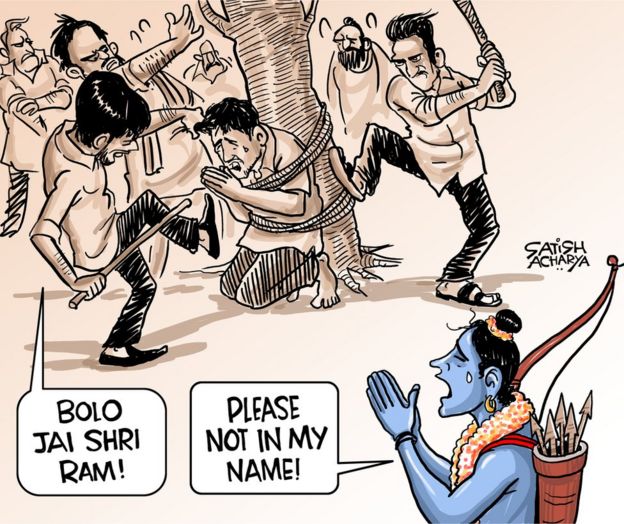
Many critics, including cartoonist Satish Acharya, have also expressed alarm over the rising number of such incidents.
Image copyright COURTESY: SATISH ACHARYAImage caption Cartoonist Satish Acharya says using Ram’s name to unleash violence risks widening India’s religious divide
In villages across north India, devout Hindus have traditionally used “Ram Ram”, “Jai Siya Ram” (goddess Siya or Sita is Ram’s consort) or “Jai Ram Ji Ki” as a greeting.
And many feel a sense of unease that these attacks and killings are being carried out in the name of a god revered by millions for his sense of justice and benevolence.
But “Jai Shri Ram” has now been turned into a cry of attack, meant to intimidate and threaten those who worship differently.
The party’s then president LK Advani launched a march supporting the construction of the temple and in December 1992 mobs chanting “Jai Shri Ram” marched upon the northern town and tore down the 16th Century Babri mosque.
The BJP believes the mosque was built after the destruction of a temple to Ram that once stood there.
The campaign galvanised Hindu voters in favour of the BJP and helped turn Ram from personal to political. Since then, the party has consistently invoked the deity during elections and the 2019 polls were no exception.
Critics say those who heckle minorities, inside parliament and outside it, see the BJP’s sweeping victory in the April/May elections as sanctioning their behaviour. The party won more than 300 seats in the 543-member lower house, propelling Mr Modi to a second term.
Mr Modi’s first term in power was marked by violence against minorities. There were numerous incidents of Muslims being attacked by so-called “cow vigilantes” over rumours that they had eaten beef, or that they were trying to smuggle cows – an animal many Hindus consider holy – for slaughter.
The prime minister did not condone such attacks, but was criticised for not condemning them either.
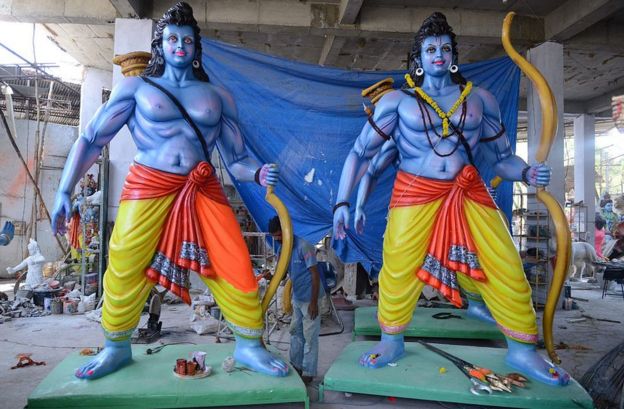
Image copyright GETTY IMAGESImage caption Millions of Hindus revere the god Ram for his sense of justice and benevolence
But right after the BJP’s stunning victory in May, Mr Modi expanded his earlier slogan of “sabka saath, sabka vikas” (development for all) to include “sabka vishwas” (to win the trust of everyone), giving rise to hopes that this term would be different.
A few days after Tabrez Ansari’s death, he told parliament that he was “pained” by the incident and that “the guilty must be severely punished”.
But many Indians doubt that any serious action will be taken against those who carry out such attacks.
Several dozen people have been killed and hundreds injured since 2014 in mob attacks, but there have been convictions in only a handful of cases.
In others, the accused remain free, often due to a lack of evidence, and some have been seen being feted by Mr Modi’s party’s colleagues.
BJP leaders often downplay such incidents, calling them “minor” and accusing the press of “maligning the image of the government”.
One BJP MP recently told a news website that the popularity of the slogan “Jai Shri Ram” was a sort of protest by Hindus “against a certain bias and tilt of the polity towards minorities”.
“They are also asserting that we are Hindus and we count as Hindus,” he said.
But critics say that there are other – better – ways of doing that.
HONG KONG (Reuters) – Thousands of people marched on Hong Kong’s parliament on Sunday to demand the scrapping of proposed extradition rules that would allow people to be sent to mainland China for trial – a move which some fear puts the city’s core freedoms at risk.
Opponents of the proposal fear further erosion of rights and legal protections in the free-wheeling financial hub – freedoms which were guaranteed under the city’s handover from British colonial rule to Chinese sovereignty in 1997.
Early estimates suggested several thousand people had joined the march along Hong Kong Island from Causeway Bay to the council in the Admiralty business district.
Veteran Hong Kong activist and former legislator Leung Kwok-hung said the government’s move risked removing Hong Kongers’ “freedom from fear”.
“Hong Kong people and visitors passing by Hong Kong will lose their right not to be extradited into mainland China,” he said. “They would need to face an unjust legal system on the mainland.”
Some younger marchers said they were worried about travelling to China after the move, which comes just as the government encourages young people to deepen ties with the mainland and promotes Hong Kong’s links with southern China.
The peaceful marchers chanted demands for Hong Kong’s Executive Carrie Lam to step down, saying she had “betrayed” Hong Kong. Some sported yellow umbrellas – the symbol of the Occupy civil disobedience movement that paralysed parts of Hong Kong for 11 weeks in 2014.
The proposed changes have sparked an unusually broad chorus of concern from international business elites to lawyers and rights’ groups and even some pro-establishment figures.
Chris Patten, the last British governor of Hong Kong who handed the city back to Chinese rule in 1997, on Saturday described the move “as an assault on Hong Kong’s values, stability and security”, government-funded broadcaster RTHK reported.
Chief Executive Lam and other government officials are standing fast by their proposals, saying they are vital to plug long-standing loopholes.
Under the changes, the Hong Kong leader would have the right to order the extradition of wanted offenders to China, Macau and Taiwan as well as other countries not covered by Hong Kong’s existing extradition treaties.
As a safeguard such orders, to be issued case-by-case, could be challenged and appealed through the city’s vaunted legal system.
Government officials have said no-one at risk of the death penalty or torture or facing a political charge could be sent from Hong Kong. Under pressure from local business groups, they earlier exempted nine commercial crimes from the new provisions.
The proposals could be passed into law later in the year, with the city’s pro-democratic camp no longer holding enough seats to block the move.
The government has justified the swift introduction of the changes by saying they are needed so a young Hong Kong man suspected of murdering his girlfriend in Taiwan can be extradited to face charges there.
The government’s assurances are not enough for Lam Wing-kee, a former Hong Kong political bookseller who said in 2016 he was abducted by mainland agents in the city.
Lam left Hong Kong for Taiwan last week, saying he feared being sent back to the mainland under the new laws and his experienced showed he could have no trust in China’s legal system.
A group of 33 followers of Falun Gong, a religious sect banned in China, flew from Taiwan to Hong Kong on Saturday to join the march but were refused entry to Hong Kong, RTHK reported.
Sunday’s march comes amid renewed calls for deeper electoral reforms stalled five years ago after Occupy protests.
Four leaders of the movement were last week sentenced to jail terms ranging from eight to 16 months, part of a group of nine activists found guilty after a near month-long trial.


 Image copyright GETTY IMAGES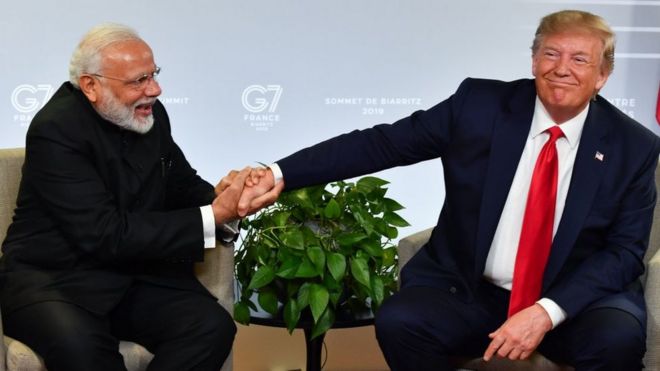


 CHINDIA ALERT: You'll be living in their world, very soon