Archive for ‘Pearvideo.com’

25/04/2019

Chinese media call for crackdown on motorists using mobile phones after latest fatal crash

  • Stiff penalties like those given to drink-drivers needed to make people wake up to the risks, newspaper says
  • Commentary comes after woman who died in high-speed crash is found to have used her phone 34 times in 30 minutes
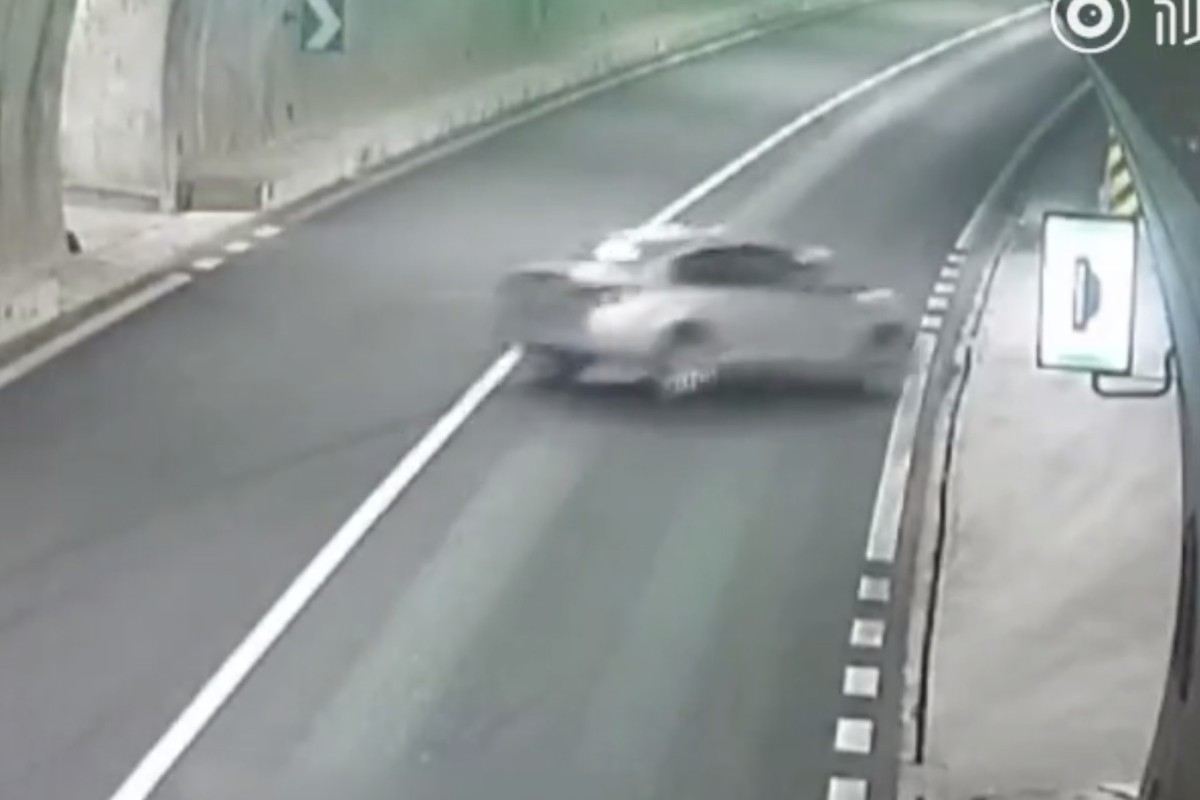
The fatal crash in Fujian province was caught on surveillance camera and the footage was shown by Pearvideo.com. Photo: Weibo
The death of a woman in a high-speed car accident who is believed to have been sending messages on her phone at the time of the crash has sparked calls in the Chinese media for harsher punishments for reckless driving.
“Death or causing death as the result of driving when using a phone is a very serious consequence of people becoming slaves to mobile phones,” Beijing Youth Daily said in a commentary on Thursday.
“To reverse the harm caused by this behaviour, they must be punished in line with the punishments for drink-driving.”
The article came after Pearvideo.com on Sunday published footage from a surveillance camera of the fatal accident in southeast China’s Fujian province. The film shows the woman’s car speeding through a tunnel before veering on to the wrong side of the road and crashing into a wall. It then flips over and bursts into flames.
The victim is believed to have been using her phone at the time of the crash. Photo: Weibo

A police officer interviewed in the video said the driver, who was not identified, had not been wearing a seat belt at the time of the accident and had been observed speeding, cutting in and out of lanes and using her phone 34 times in just 30 minutes.

“I think all four factors contributed to her accident,” he said. “But the fundamental ones were speeding and using a mobile phone when driving.”

Five children killed as driver crashes into group crossing road

The video report said the woman sent a total of 16 text and voice messages from behind the wheel, one of which said that she was driving at 120km/h (75mph).

While drink-driving is a criminal offence in China – with a maximum penalty of six months’ detention, loss of licence and a five-year ban – the top punishment for using a phone while behind the wheel is a 200 yuan (US$30) fine and the loss of two licence points. Drivers start with 12 points and can be suspended from driving if they lose them all.
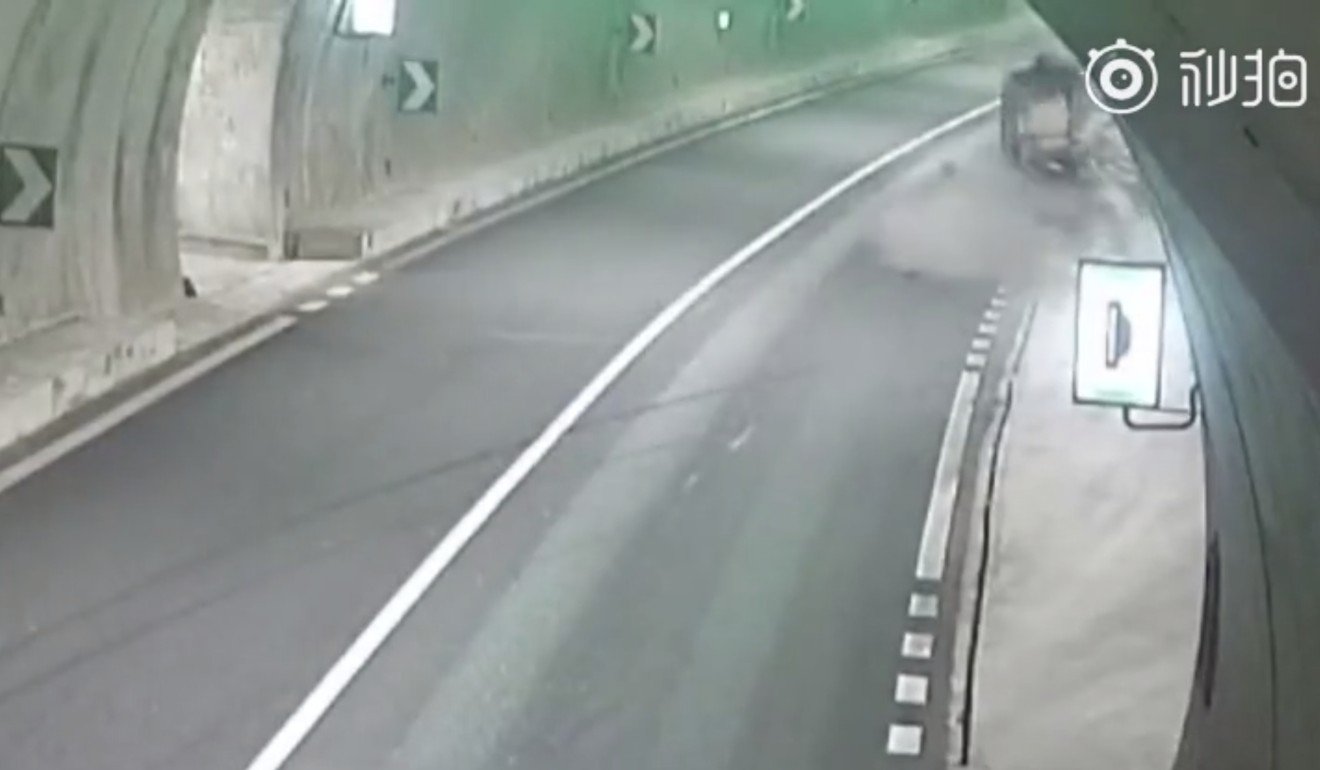
The film shows the car crashing into a wall before flipping over and bursting into flames. Photo: Weibo

According to a Ministry of Transport survey cited by Beijing Youth Daily, people are 2.8 times more likely to have an accident if they make a phone call while driving and 23 times more likely if they look at their handset.

While the strict enforcement of drink-driving laws has helped to change motorists’ behaviour, using a phone behind the wheel is still widely regarded as acceptable behaviour, the commentary said.

“I don’t know how many disasters like the woman in Sanming [a city in Fujian] are needed to alert people,” it said.

“[But] amending the road traffic safety law to make [the offence of] driving while using a mobile phone equivalent to that of drink-driving and implementing corresponding penalties can … help to reduce the devastating consequences.”

A commentary on Gmw.com, the website of the official Guangming Daily newspaper, also called for the offence to be criminalised.

People know the risks but disregard them because the legal consequences are very small, it said.

Source: SCMP
13/03/2019

Chinese woman pays $44,710 back to crowdfunders who helped her father and ‘gives 300 people a warm hug’

  • When truck driver dad needed money to compensate pedestrian after accident, Hai Lin raised it online in one night and she paid it back two years before her deadline
In 2015, Hai Lin posted an appeal for 300 donations of 1,000 yuan on WeChat with a promise to pay lenders back within five years. Photo: Xinhua
A woman from southeastern China has returned 300,000 yuan (US$44,710) to 300 people – many of them strangers – who donated money to a crowdfunding appeal she started four years ago.
In 2015, Hai Lin posted an appeal for 300 donations of 1,000 yuan on WeChat, with a promise to pay lenders back within five years. She kept her promise – and paid back all her loans two years early.
The internet was abuzz with the story of Hai’s crowdfunder, which was reported by Pearvideo.com on Tuesday. Many people said it warmed their hearts and restored their confidence in society.

Shortly before that, Hai’s mother was admitted to hospital with bleeding on the brain.

“The man [hit by her father] was in critical condition,” Hai, then 27 and from Hangzhou, Zhejiang province, was quoted in the Pearvideo.com as saying. “We had to hide the accident from my mother so that her rehabilitation won’t be affected.”

‘Social media queen’ closes WeChat account after fake story outrage

Hai said the accident was a big blow and, for the first time in her life, she felt frightened.

“My father told me that if we couldn’t afford the compensation, he would run away to escape the debt,” said Hai. “I said I would try my best to keep that from happening.”

In her post on WeChat, she wrote that she was looking for 300 people to lend her 1,000 yuan each. She planned to pay back those debts in five years by returning money to five lenders each month.

“It’s because I couldn’t find someone who could lend me 300,000 yuan at a one time,” said Hai. “Some friends said they could have loaned me 100,000 yuan, but I refused their kindness because that was too big an amount.”

Resourceful Hai Lin asked 300 people online for 1,000 yuan each to help her father out and was true to her word in repaying the money. Photo: Weibo

To her surprise, 300 WeChat contacts, many of whom were not acquaintances, came up with the funds in one night.

In July 2015, Hai began to pay back the money she had borrowed. By July of last year, two years ahead of schedule and thanks to pay rises and year-end bonuses, the debt was cleared.

Some creditors had deleted Hai’s WeChat details, so she had to track them down.

“Girl, thank you for restoring trust which I thought I’d lost and for warm feelings that will stay with me,” one of her creditors wrote on WeChat.

Another said that when he received Hai’s money transfer he thought someone was joking. After recalling Hai’s appeal, he said he was touched by her gesture.

“You gave us 300 people a warm hug,” he said on WeChat.

Travel nightmares and how strangers crowdfund for injured tourists

The report on pearvideo.com has scored more than 40,000 “likes” on Sina Weibo, China’s

Twitter-like, while users added 10,000 combined reposts and comments.

“In her [Hai’s] mind there was a debt while other people would treat it as donation,” an internet user wrote. “I think many people wouldn’t expect her to return the money.”

“It shows this woman is a nice person in her everyday life and deserves credits. I would lend money to people like her,” another wrote.

One cautious Weibo user said: “I’ve never loaned money to people whom I never met face-to-face and only chatted with online.”

“Is it a big thing that you borrow money and pay it back?” asked another user. “You borrow 1,000 yuan from a person and return it years later. Is it something to feel proud of?”

Source: SCMP

Law of Unintended Consequences

continuously updated blog about China & India

ChiaHou's Book Reviews

continuously updated blog about China & India

What's wrong with the world; and its economy

continuously updated blog about China & India