
Military medical staff sitting in large transport plane of the air force of the People’s Liberation Army (PLA) are on their way to Wuhan, central China’s Hubei Province, Feb. 2, 2020. (Photo by Yuan Zhilong/Xinhua)
Source: Xinhua
continuously updated blog about China & India

You will be living in their world, very soon

Beware the Waking Dragon
Military medical staff sitting in large transport plane of the air force of the People’s Liberation Army (PLA) are on their way to Wuhan, central China’s Hubei Province, Feb. 2, 2020. (Photo by Yuan Zhilong/Xinhua)
Source: Xinhua

on Thursday, just a week after President Tsai Ing-wen angered Beijing by saying the island was an independent country.
“There is no holiday for national security,” it said.
The PLA exercise came just a week after Tsai said on January 15 that Beijing needed to face the reality of Taiwan’s independence.
“We don’t have a need to declare ourselves an independent state,” she said in an interview with the BBC. “We are an independent country already and we call ourselves the Republic of China, Taiwan.”
Tsai urges mainland China to review strained ties
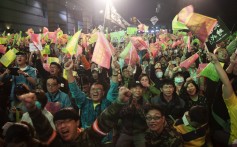
Tsai’s comments came just days after she secured a second term as president with a record 8.2 million votes.
In her victory speech, she promised to continue to stand up to Beijing’s intimidation, while also strengthening Taiwan’s defences, partly by developing more home-grown military equipment, including submarines.
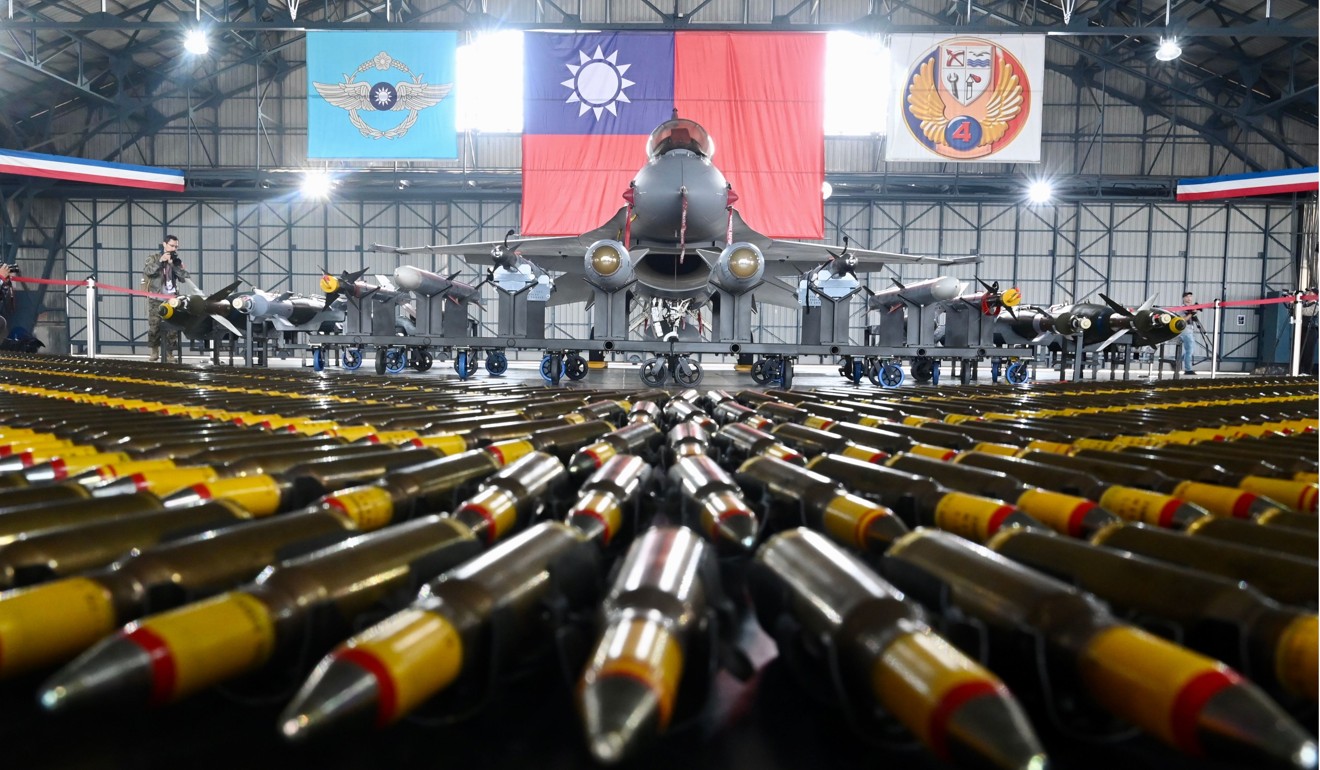
Over the past four years Beijing has ramped up the pressure on the island, by poaching its diplomatic allies and staging military drills.
Taiwanese Minister of National Defence Yen Te-fa said earlier that the mainland staged about 2,000 bomber patrols a year near the Taiwan Strait.
For their part, Taiwan’s army and air force last week gave two demonstrations of their readiness to defend the island against attack.

Chinese President Xi Jinping, also general secretary of the Communist Party of China (CPC) Central Committee and chairman of the Central Military Commission, meets with delegates to the first Party congress of the People’s Liberation Army (PLA) Joint Logistic Support Force in Wuhan, capital of central China’s Hubei Province, Oct. 18, 2019. (Xinhua/Li Gang)
WUHAN, Oct. 19 (Xinhua) — Chinese President Xi Jinping on Friday met with delegates to the first Party congress of the People’s Liberation Army (PLA) Joint Logistic Support Force and senior officers stationed in central China’s Hubei Province, respectively.
Xi, also general secretary of the Communist Party of China (CPC) Central Committee and chairman of the Central Military Commission, extended congratulations on the convening of the congress and sincere greetings to all the delegates and service personnel in the joint logistic support force.
The congress opened Wednesday in Wuhan, during which the delegates discussed the development of the joint logistic support force since its establishment and the plan for the next five years.
When meeting with senior officers stationed in Hubei, Xi extended sincere greetings to all officers and soldiers of the armed forces stationed in the province.
Xi encouraged them to faithfully perform their duties, forge ahead with determination, push for new progress in all work, and contribute to the realization of the Chinese dream of national rejuvenation and the dream of a strong military.
Source: Xinhua
Here are some of the key takeaways from a day of celebration in Beijing:
A show of unity
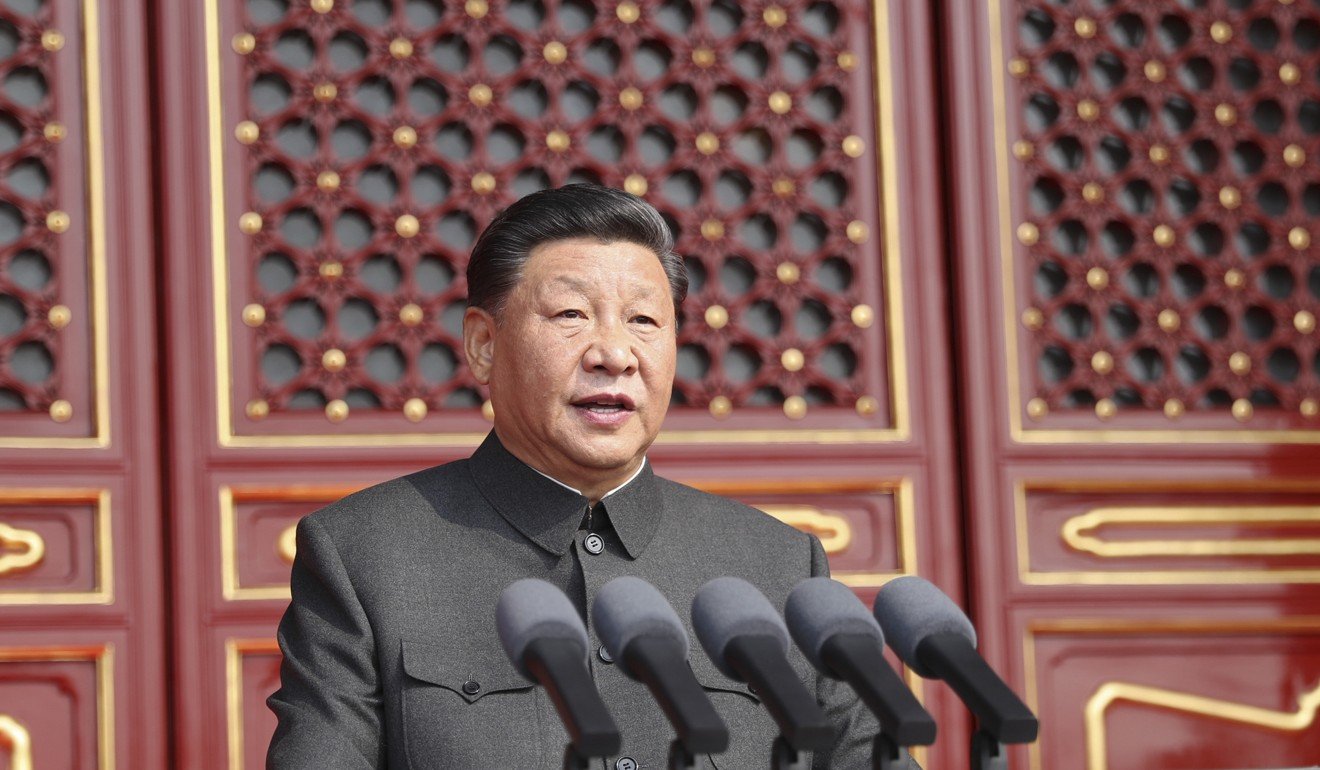
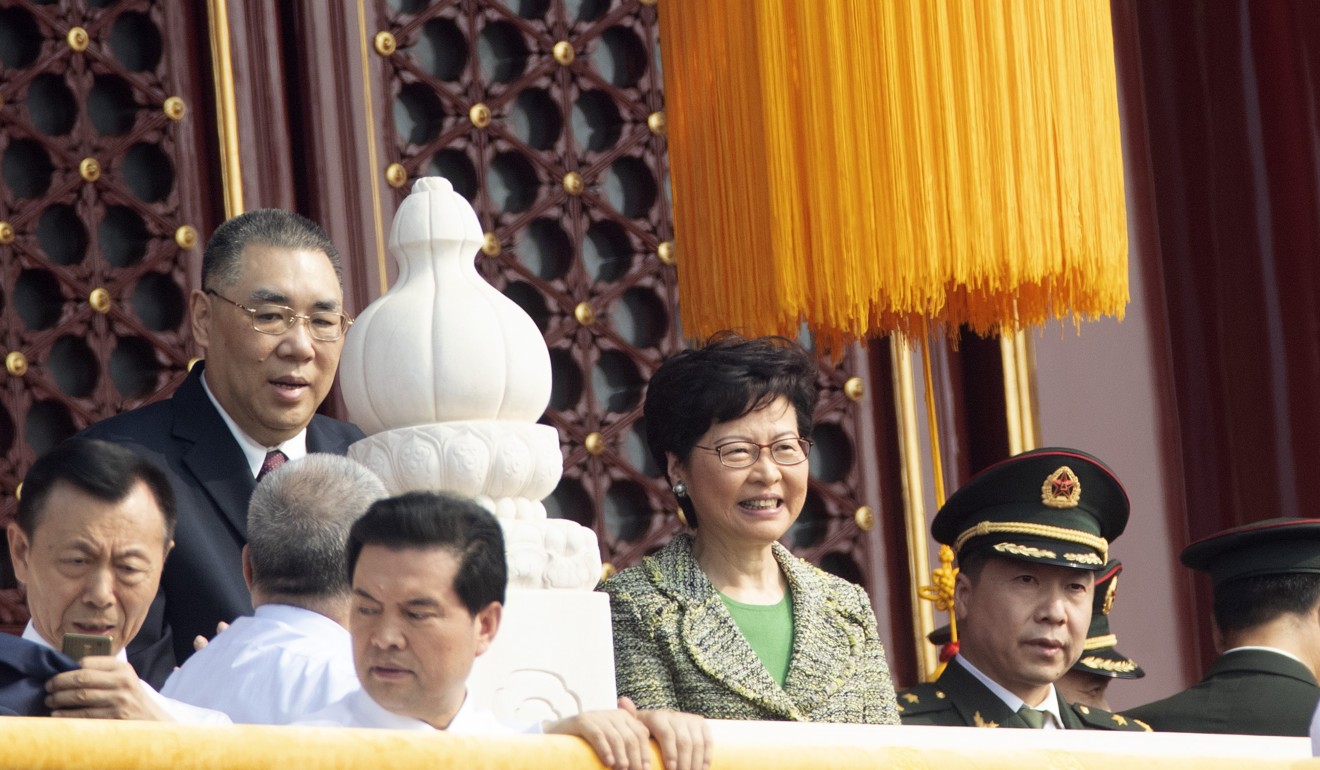
Xi presided over the ceremony in Tiananmen Square flanked by his predecessors Jiang Zemin and Hu Jintao, along with other retired and present party elders.
The rare appearance of Jiang and Hu – on the rostrum of the Gate of Heavenly Peace, where the country’s founding father Mao Zedong declared Communist rule on October 1, 1949 – was clearly aimed at projecting unity and solidarity in the face of daunting domestic and international challenges.
Former vice-president Zeng Qinghong and Song Ping, the oldest party elder in attendance, also appeared on the rostrum.
But notably, while former premier Wen Jiabao was present, his predecessor Zhu Rongji was not.
‘No force can shake China’
Dressed in a Mao suit, Xi’s nationally televised speech invoked China’s “century of humiliation” and praised the achievements of its people, saying there was no force that could stop it forging ahead.
“No force can shake the status of our great motherland, and no force can stop the Chinese people and the Chinese nation from marching forward,” he said.
The theme of one country, two systems later appeared in a National Day parade for the first time, with placards forming the words: “Hong Kong’s tomorrow will be better.”
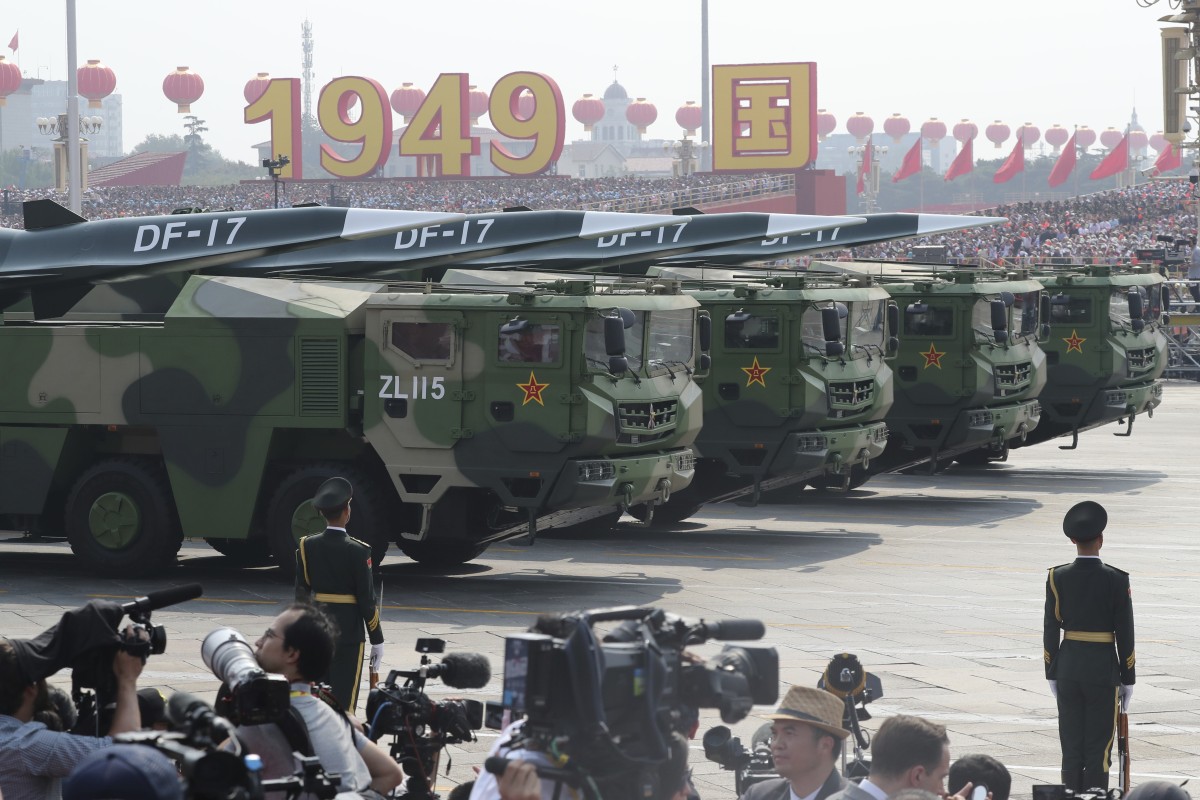
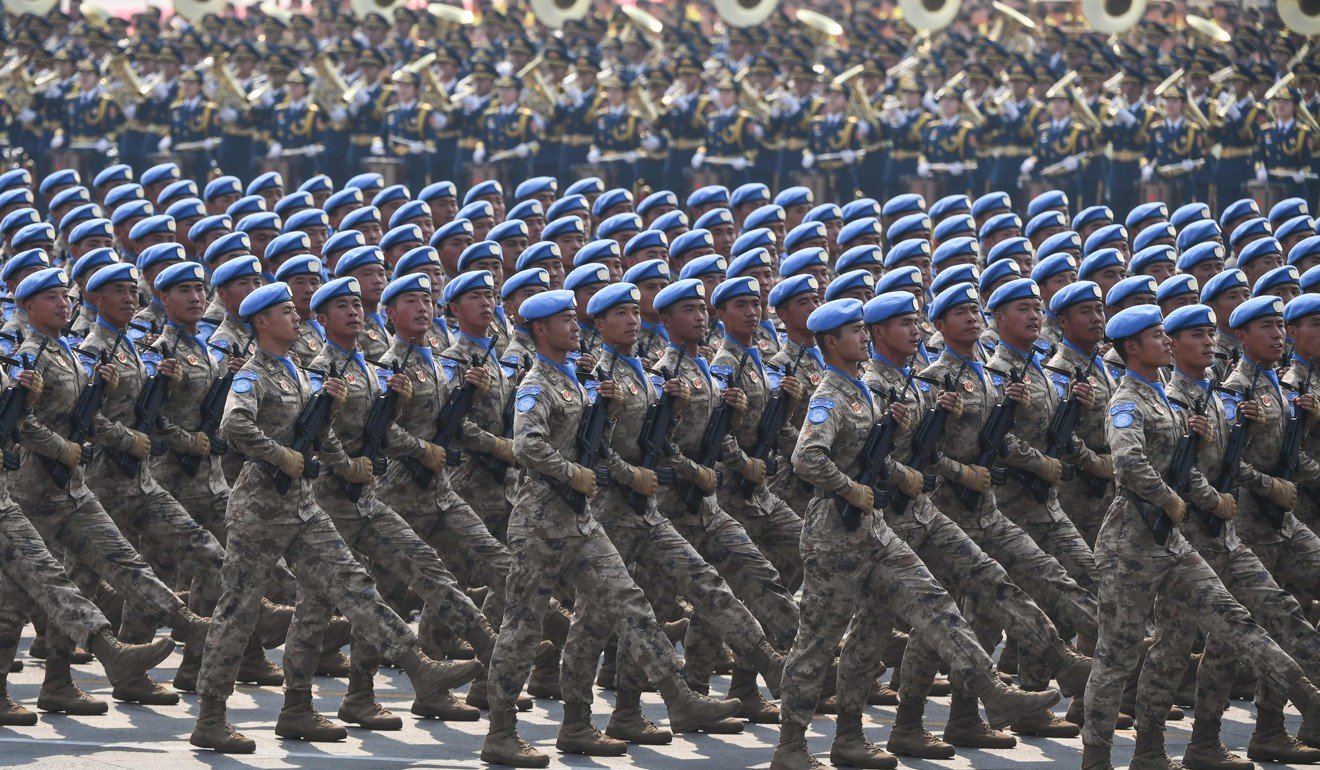
The morning’s celebrations included an 80-minute military parade – the biggest since the founding of the People’s Republic – in an apparent effort to showcase the prowess of the PLA, the world’s biggest military with 2 million personnel.
Among the weapons shown were DF series missiles, including the DF-17, a nuclear-capable glider that has the capacity to strike the US mainland, and the DF-41, which has a range of up to 15,000km, making it the world’s longest-range military missile.
Signalling Xi’s status
A 100,000-strong civilian parade featuring huge portraits of Xi and predecessors including Mao, Deng, Jiang and Hu wrapped up the morning celebration.
The procession was divided into three parts, representing three eras of the People’s Republic: the Mao era, Deng’s reform and opening up, and Xi’s era, which seeks global prominence on a par with that of the United States.
Xi appeared keen to project his supreme status in the party, reinforced since he abolished the constitutional term limit a year ago, allowing him potentially to remain leader for life.
He waved at his own portrait, unveiled alongside a sign reading “Carry out Xi Jinping Thought on Socialism with Chinese Characteristics for a New Era”.
Source: SCMP
MANILA, July 29 (Xinhua) — The military-to-military relationship between China and the Philippines has become an important part of the bilateral relations, Chinese Ambassador to the Philippines Zhao Jianhua said on Monday.
“China-Philippines relations have achieved positive turnaround, consolidation and elevation over the past three years, and have entered a new stage of development,” Zhao said in a speech at a reception marking the 92nd anniversary of the founding of the People’s Liberation Army (PLA) of China.
“We have increased contacts and exchanges,” he said, referring to the series of recent military exchanges made by both countries.
In January 2019, the Chinese naval escort fleet, composed of three vessels, paid a five-day friendly visit to the Philippines, he said.
In April 2019, the Philippine Navy sent its amphibious warfare ship BRP Tarlac to participate in the international fleet review during the 70th anniversary celebration of PLA Navy in Qingdao, China, he added.
He further said that members of the Command and General Staff College students of the Armed Forces of the Philippines (AFP) just concluded their educational and cultural tour in China recently.
“PLA stands ready to deepen the mutual understanding, mutual trust and mutual confidence with our Filipino counterparts, and to jointly safeguard regional peace and stability,” Zhao said.
As a result of the concerted efforts of China, the Philippines and other countries in the region, the situation in the South China Sea “has been stabilized in general, with growing momentum for cooperation and increasing positive factors,” Zhao said, adding that China stays committed to peace and stability in the South China Sea.
“China respects and upholds the freedom of navigation and overflight enjoyed by all states under international law in the South China Sea, and stays ready to work with other coastal states and the international community to ensure the safety of and the unimpeded access to the international shipping lanes in the South China Sea,” Zhao said.
For his part, Philippine Defense Secretary Delfin Lorenzana said at the reception that the Philippines is also “committed to the resolution of disputes through peaceful means.”
Lorenzana added that he is looking forward to “more shared endeavors, mutually productive and beneficial cooperation and partnership agreements” with China “to create understanding and friendship between our two nations.”
Source: Xinhua
GUIYANG, July 14 (Xinhua) — A completion ceremony for a new “Red Army Bridge” was hosted this week amid a cheerful tutti of gongs and drums in a small village in Liping County of southwest China’s Guizhou Province.
Shangshaozhai Village, with hundreds of years of history, was once separated from the outside world by a raging river. The only way leading outward was by boat.
Everything changed however in December 1934, when the passing-by Red Army built a wooden bridge together with local villagers.
From October 1934 to October 1936, the Red Army, the forerunner of the People’s Liberation Army (PLA), carried out a daring military maneuver that laid the foundation for the eventual victory of the Communist Party of China.
The Red Army marched through raging rivers, snowy mountains and arid grasslands to break the Kuomintang regime’s grip on the country and to continue their fight against Japanese invaders. Some of them marched as far as 12,500 km, enduring hunger, thirst and cold.
Wu Xiyan, 68, said his uncle was among the villagers who cooperated with the Red Army in building the bridge.
“They brought out all the available timber at home, and many of the villagers even volunteered to provide their bed and door boards,” said Wu. “The village truly needed a bridge.”
The bridge deck, one meter wide, is comprised of over 90 pieces of wooden boards. To commemorate the close relations between the Red Army and the local people, it was named “Red Army Bridge.”
Over 80 years on, the bridge remained the solitary channel for more than 600 villagers to exit and enter the village. Despite careful maintenance, it struggled to deal with the strain of local traffic.
Having learned the stories behind the bridge, in September 2017, Sinopec, a major Chinese state-owned enterprise, donated 1.8 million yuan (261,400 U.S. dollars) to build a new bridge for the village.
The new bridge, 4.5 meters wide, enables cars to drive across, with a weight capacity up to 20 tons.
Also named “Red Army Bridge,” the new bridge echoes its predecessor at a distance of 85 years and 50 meters.
The Red Army spirit is a treasure that the village has valued over all these years, said Wu, adding the village has done its best to preserve the old bridge over the years.
In 2012, a former Red Army member, over 90 years old, came to visit the bridge from eastern Zhejiang Province, Wu recalled.
He said the bridge looked exactly the same as what he saw in 1935, according to Wu.
“My uncle once told me the Red Army, passing by Shangshaozhai, promised that a better village would be built for us in the future,” Wu said.
“Over the course of my lifetime, I have been a constant witness to the fulfillment of this serious promise,” Wu said.
Source: Xinhua
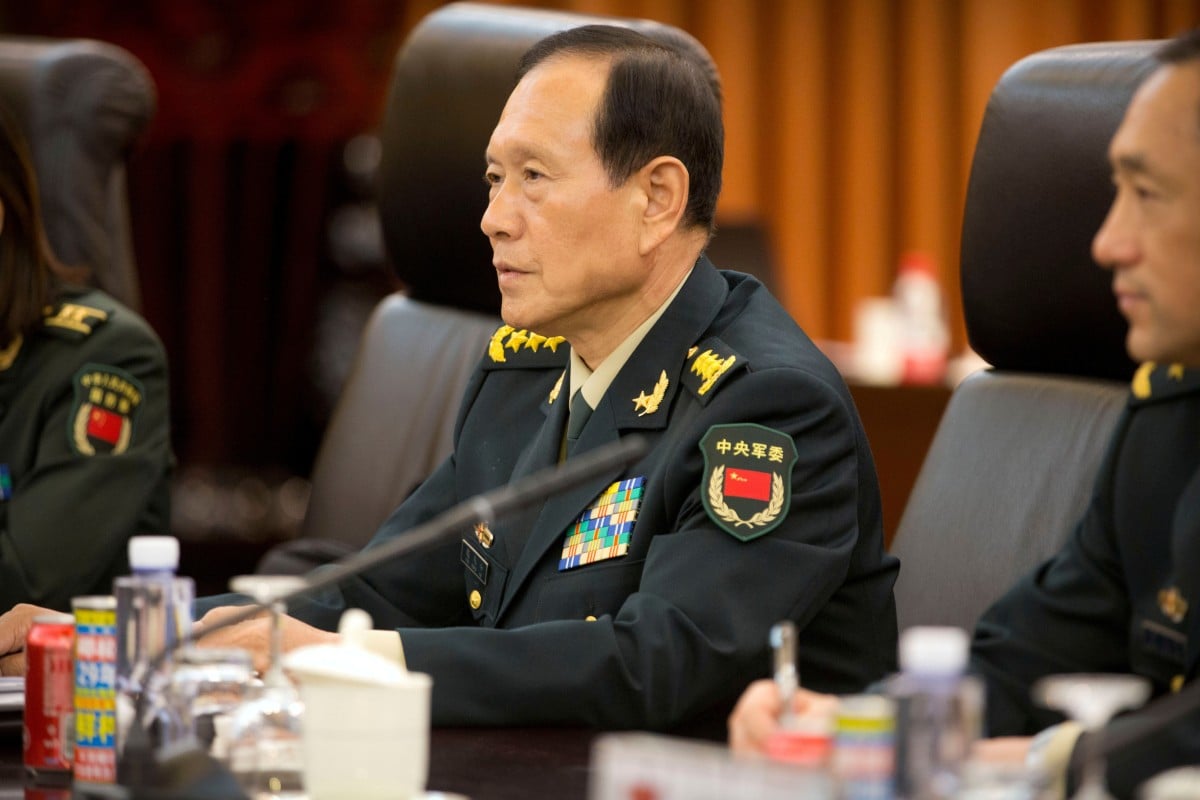
Chinese military sources said that Wei would lead a “relatively big” delegation to the gathering, which starts on May 31 and is co-organised by the Singaporean government.
Beijing-based military specialist Zhou Chenming said observers would be watching to see whether the two senior defence officials held talks.
“The whole world will keep a close eye on any possible encounters between the Chinese and the Americans … At least now China has shown its sincerity in sending Wei to attend the conference, who is of equal standing as Shanahan, if the latter is willing to hold talks with him in good faith,” Zhou said.
But he said a meeting between Wei and Shanahan would be difficult because of the current distance between Beijing and Washington on major issues.
How Trump’s tweets bested China in the trade war publicity battle
“It’s not realistic to expect they will make a breakthrough because both sides will just sound their own bugles. The … mistrust between China and the US is actually growing every day,” Zhou said.
Just on Sunday, the USS Preble, an Arleigh Burke-class guided missile destroyer, sailed within 12 nautical miles of the Scarborough Shoal, an area in the South China Sea claimed by both China and the Philippines.
The
by strongly urging “the US to stop such provocative actions” and saying it would “take all necessary measures” to protect its “national sovereignty”.
Singaporean Prime Minister Lee Hsien Loong will deliver a keynote speech on the opening day of the annual dialogue.
Japan and South Korea are also sending their defence ministers, according to a report by The Korean Times on Tuesday. The report also said South Korean Defence Minister Jeong Kyeong-doo was keen to hold one-on-one meetings with his Chinese and Japanese counterparts on the sidelines of the conference.
Source: SCMP
BEIJING, May 22 (Xinhua) — Du Fuguo, a soldier who lost his eyes and arms in an explosion during a mine clearance operation, was honored by the Publicity Department of the Communist Party of China Central Committee on Wednesday.
Du, who was a demining soldier of the People’s Liberation Army (PLA), was awarded the title “role model of our times” at a ceremony in Beijing.
Du’s family members and fellow soldiers, as well as representatives from all walks of life, attended the award ceremony.
The 28-year-old soldier was seriously injured in the landmine explosion trying to protect his fellow soldier during the operation in southwest China’s Yunnan Province in October last year.
Du would have finished his military service in December 2018, just two months after the explosion.
In 2015, Du and over 400 fellow soldiers started clearing mines in the border area in Yunnan, where over 100 minefields were located.
“I couldn’t stay calm after getting to know the villagers living in the area suffered three explosions within 10 years,” said Du, who volunteered to participate in the demining operations in 2015.
Du’s father wished to become a solider at an early age, which was not fulfilled, while Du Fuguo joined the PLA in 2010.
“I am reflecting what kind of life is truly meaningful and valuable, and the only standard is what has been done for the country and for the people,” Du wrote in his application submitted for mine clearance operations.
“When the people are in need and the country is calling upon us, there is not even half a step that I can retreat,” he responded when being told mine clearance was dangerous.
A minefield Du worked has deterred local people from growing crops and picking tea. They beat gongs and sounded drums to welcome the arrival of the mine clearance group.
Over the past three years, Du has entered minefields over 1,000 times, defusing more than 2,400 mines and bombs.
“I feel like it is my destiny to carry out this mission and there was a voice calling me to clear the mines,” he wrote in his application.
While various equipment has been developed for mine clearance, it is believed that manual demining remains the most efficient method, albeit the most dangerous.
The explosion happened in an afternoon when Du and a fellow soldier tried to defuse a bomb, but it suddenly exploded and Du quickly protected his colleague who was left with only bruises.
“Step back and I’ll do the job,” Du said before he started the defusing work in which he lost his forearms and eyes.
One month later, in November last year, Du’s team members confirmed that the minefield where the explosion took place was safe to be used as farmland, meaning that the three-year demining operation had finished.
In the area where Du was injured, people have named tea picked this year as “Fuguo.” They are hoping that Du could come back to have a taste of his eponymous tea.
“Despite my lost hands, I have legs to continue chasing after dreams; despite my lost sight, as long as the sun can rise in my heart, my world remains blazing with color,” Du said.
Source: Xinhua

Chinese President Xi Jinping, also general secretary of the Communist Party of China (CPC) Central Committee and chairman of the Central Military Commission, meets with deputies from the People’s Liberation Army (PLA) and armed police before attending a plenary meeting of the delegation of the PLA and armed police at the second session of the 13th National People’s Congress (NPC) in Beijing, capital of China, March 12, 2019. Xi delivered an important speech at the meeting on Tuesday. (Xinhua/Li Gang)
BEIJING, March 12 (Xinhua) — President Xi Jinping on Tuesday stressed fulfilling the set targets and tasks of national defense and military development as scheduled.
Xi, also general secretary of the Communist Party of China Central Committee and chairman of the Central Military Commission, made the remarks when attending a plenary meeting of the delegation of the People’s Liberation Army (PLA) and armed police force at the second session of the 13th National People’s Congress, China’s national legislature.
This year is the key year for completing the building of a moderately prosperous society in all respects.
The entire armed forces must clearly understand the importance and urgency of implementing the 13th Five-Year Plan for military development, firm up their resolve, intensify the sense of mission, forge ahead with a pioneering spirit, and go all out to carry out the plan so as to ensure that the set targets and tasks are fulfilled as scheduled, he said.
Xi called on the whole army to adhere to the guidance of the thought on socialism with Chinese characteristics for a new era, fully implement the Party’s thinking on strengthening the military for the new era and the military strategy for new conditions, concentrate on war preparedness, and intensify reform and innovation.
On implementation of the plan, Xi stressed that it is imperative to strengthen overall planning and coordination, as well as make breakthroughs in key areas.
Xi pointed out that it is necessary to take into consideration the overall situation and coordinate the task plans, resources, and management procedures to ensure orderly advancement of various projects.
Focusing on the overall layout of the plan, the military should give prominence to key projects including urgent necessities for military preparedness, crucial support for combat systems, and coordinated projects for the reform of national defense and armed forces, he noted.
Xi stressed the formulation of the 14th Five-Year Plan for military development should serve the demands of the national development, security and military strategies, and should take into account both the actual condition and long-term development needs.
Source: Xinhua

continuously updated blog about China & India
continuously updated blog about China & India
continuously updated blog about China & India
 CHINDIA ALERT: You'll be living in their world, very soon