13/09/2019
SYDNEY (Reuters) – A Solomon Islands task force recommended to the government on Friday that the South Pacific archipelago sever its long-standing ties with Taiwan and normalise diplomatic relations with Beijing.
The recommendation is likely to help Beijing peel away another ally from self-ruled Taiwan, which Beijing considers a wayward province with no right to state-to-state ties.
The parliamentary task force advised the government to switch ties to China and invite it to establish a diplomatic mission in the capital, Honiara, on the island of Guadalcanal, according to a copy of its report obtained by Reuters.
“The findings reveal that Solomon Islands stands to benefit a lot if it switches and normalizes diplomatic relations with PRC,” the task force said, referring to China by its official name of the People’s Republic of China.
The recommendation was discussed at a cabinet meeting on Friday, two sources with direct knowledge of the issue said. It has not been presented to parliament.
Prime Minister Manasseh Sogavare has repeatedly said the government would not make a formal decision until reviewing the findings of the task force, which has toured the Pacific studying Chinese aid and bilateral financing.
Taiwan’s representative office in the Solomon Islands called the report a “fallacy” in a Facebook post and said the task force members did not conduct proper fact-finding.
The government of the Solomon Islands did not respond to questions.
China’s foreign ministry did not immediately comment.
A diplomatic switch by the Solomons would reduce the number of countries that recognise Taiwan to 16, after El Salvador in Central America, Burkina Faso in West Africa and the Dominican Republic in the Caribbean, all switched to Beijing last year.
The South Pacific has been a diplomatic stronghold for Taiwan, where formal ties with six island nations make up more than a third of its total alliances, though China has in recent years been expanding its influence in the region.
Solomon Island lawmakers who support maintaining ties with Taiwan will want the report to be made public, and to get feedback before any decision is made, according to one of the sources.
Taiwan’s supporters, who include many university students, would like the decision delayed until Sogavare travels to the U.N. General Assembly meeting in New York later this month, in the hope talks he has there might save the Taiwan alliance.
The issue has divided loyalties in the former British protectorate, an archipelago of just over 600,000 people.
The United States has criticised China for pushing poor countries into debt, mainly through lending for large-scale infrastructure projects, and accused China of using “predatory economics” to destabilise the Indo-Pacific region.
China denies that.
One Solomon Islands province has said it would not be responsible for repaying any debts incurred by the government, according to media reports.
Source: Reuters
Posted in Beijing, British protectorate, Burkina Faso, cabinet meeting, Caribbean, Central America, China alert, Chinese aid, Chinese foreign ministry, diplomatic stronghold, diplomatic switch, Dominican Republic, El Salvador, Guadalcanal, Honiara, Indo-Pacific region, island, Manasseh Sogavare, Pacific, People’s Republic of China, Prime minister, recommends, Sogavare, Solomon Islands, South Pacific, South Pacific archipelago, switch, Taiwan, task force, U.N. General Assembly, Uncategorized, United States, West Africa |
Leave a Comment »
28/08/2019
- It follows Beijing’s decision earlier this month to turn down an application for two US Navy ships to visit Hong Kong
- The countries have traded barbs about the handling of anti-government protests in the city
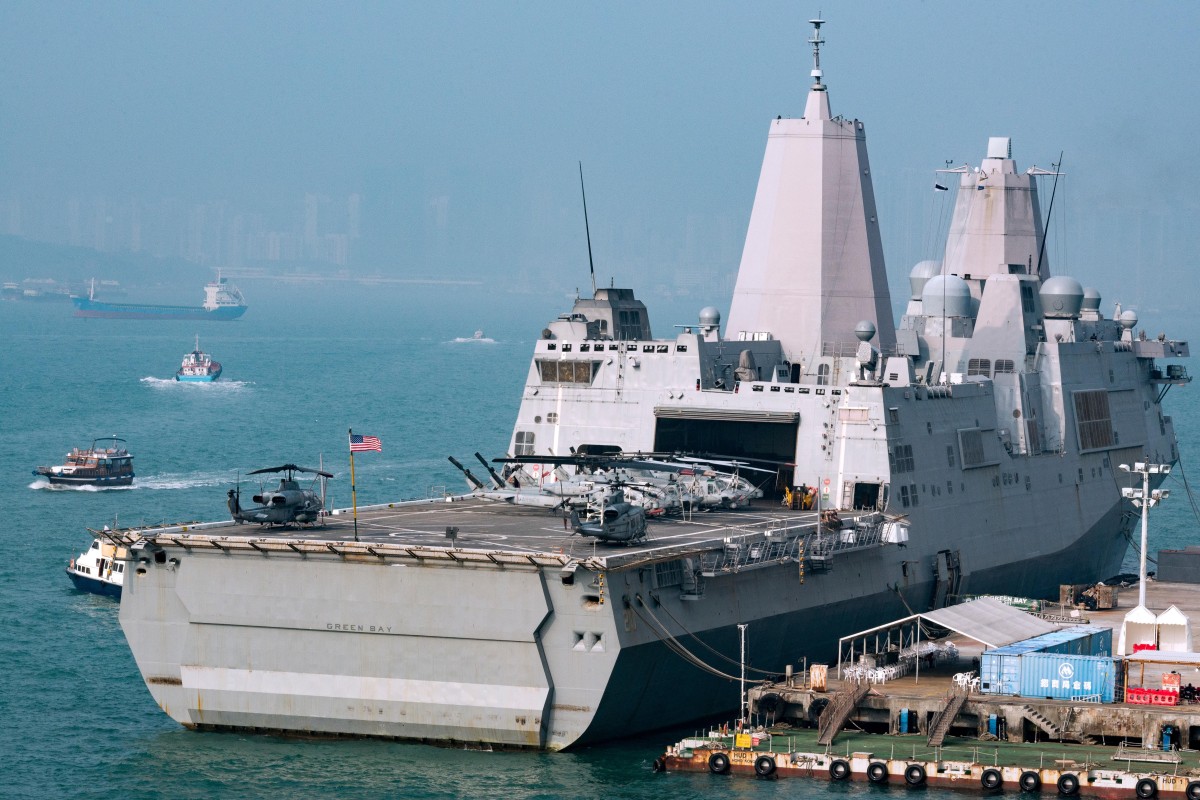
The US has had port visits denied by Chinese authorities twice this month. Photo: Alamy
A US Navy warship was denied a port visit to the eastern Chinese city of Qingdao on Sunday, the US Indo-Pacific Command said on Wednesday.
The request denial comes at a time of heightened tensions between China and the United States, with the countries engaged in a prolonged trade dispute and a war of words over anti-government protests in Hong Kong.
“The PRC [People’s Republic of China] denied the US Navy’s request to visit the Qingdao Port,” Commander Reann Mommsen, public affairs officer for the US Seventh Fleet, said in a statement on Wednesday.
Mommsen declined to name the warship denied entry or when the request was refused, referring questions about the reasons to Beijing.
The blocked visit was first reported by Reuters, which cited an anonymous US defence official as saying that China had denied the request for the destroyer before the intended visit on Sunday.
It is the second time in a month that China has prevented US Navy vessels making a port call.
On August 13, the United States Pacific Fleet said China had denied requests for two US Navy ships to
visit Hong Kong.
The USS Green Bay, an amphibious dock landing ship, had been due to make a port call in Hong Kong on August 17, and the guided missile cruiser USS Lake Erie was scheduled to visit next month, according to Nate Christensen, deputy spokesman for the Pacific Fleet.
A source close to the Chinese navy confirmed the Qingdao rejection, saying it was “normal practice” based on the current China-US relationship.
“Hasn’t the [US’] application to visit Hong Kong just been rejected?” the source asked.
Hong Kong has seen 12 weeks of anti-government protests, triggered by a now-shelved
that would have allowed criminal suspects to be transferred to mainland China.
Zhou Chenming, a Beijing-based military expert, said the refusal was a natural result of the worsening bilateral ties between China and the US.
“Many bilateral exchanges are bound to deteriorate when countries’ ties worsen, such as during the China-US trade war. And now coupled with the Hong Kong unrest, many exchanges [between China and the US] have been downgraded,” Zhou said.
Liu Weidong, from the Chinese Academy of Social Sciences, echoed Zhou’s view and said a visit from the US warship would be meaningless at present.
“Now the US is very provocative … so China doesn’t want to welcome its warship,” Liu said.
Doubt has been cast on whether trade talks between the two countries are set to resume, with Beijing’s foreign ministry contradicting US President Donald Trump’s claim that China had sought a return to the negotiating table.
The countries had been due to speak on Tuesday, according to a previous statement from China’s Ministry of Commerce after their last telephone call on August 13. But there has been no announcement so far from either side on whether such a conversation took place.
Last week, China said it would levy retaliatory tariffs of 5 to 10 per cent on US$75 billion worth of US goods. The Trump administration responded by announcing a tariff increase from 25 to 30 per cent on US$250 billion of Chinese goods, and from 10 to 15 per cent on US$300 billion worth of Chinese products.
The US also designated Beijing as a currency manipulator, raising fears of an economic cold war between the two countries.
Posted in amphibious dock landing ship, Beijing, blocks, China alert, China-US trade war, China’s Foreign Ministry, China’s Ministry of Commerce, Chinese Academy of Social Sciences, Chinese Academy of Social Sciences (CASS), claim, contradicting, currency manipulator, decision, denied, destroyer, guided missile cruiser, heightened tensions, Hong Kong, levy, People’s Republic of China, port visit, Qingdao, Qingdao Port, request, retaliatory tariffs, Reuters, Uncategorized, United States, United States Pacific Fleet, US Indo-Pacific Command, US Navy, US President Donald Trump, US Seventh Fleet, USS Green Bay, USS Lake Erie |
Leave a Comment »
06/08/2019
- Security forces shown tackling ‘demonstrators’ wearing black shirts
- ‘Anti-mob’ tactics prepare forces for the 70th anniversary of the People’s Republic
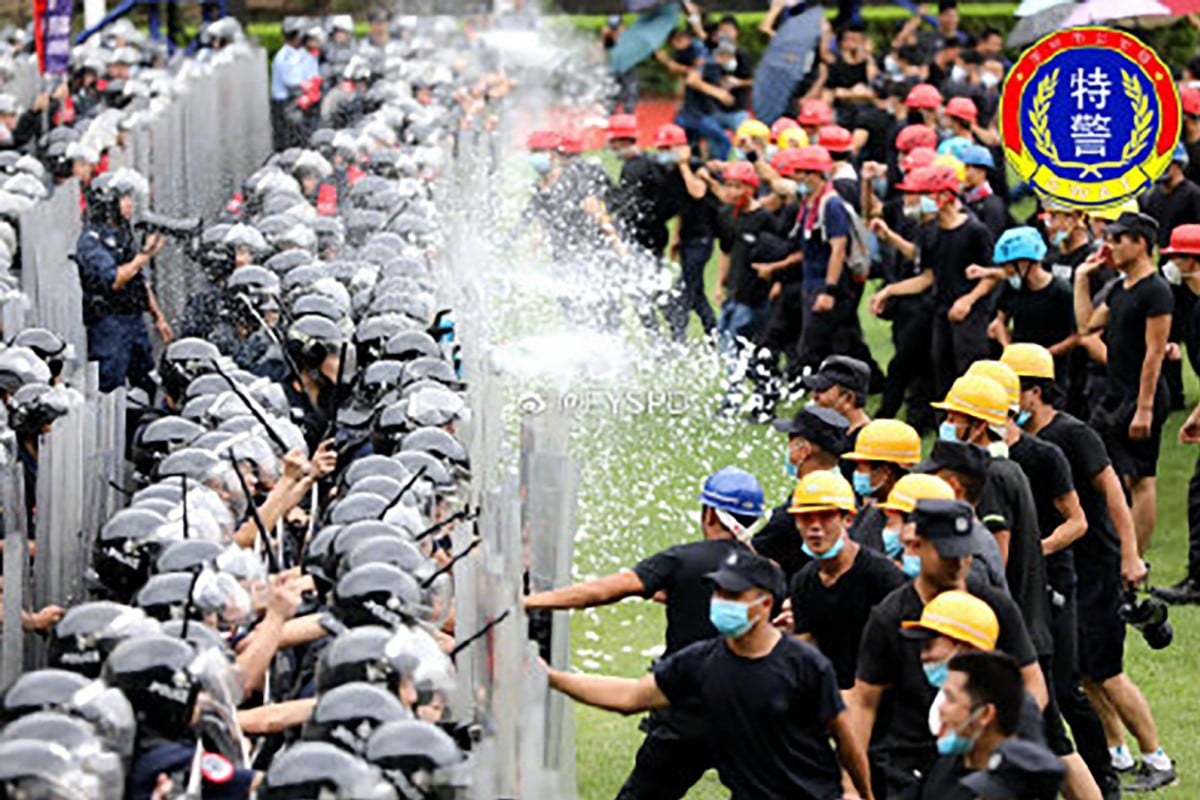
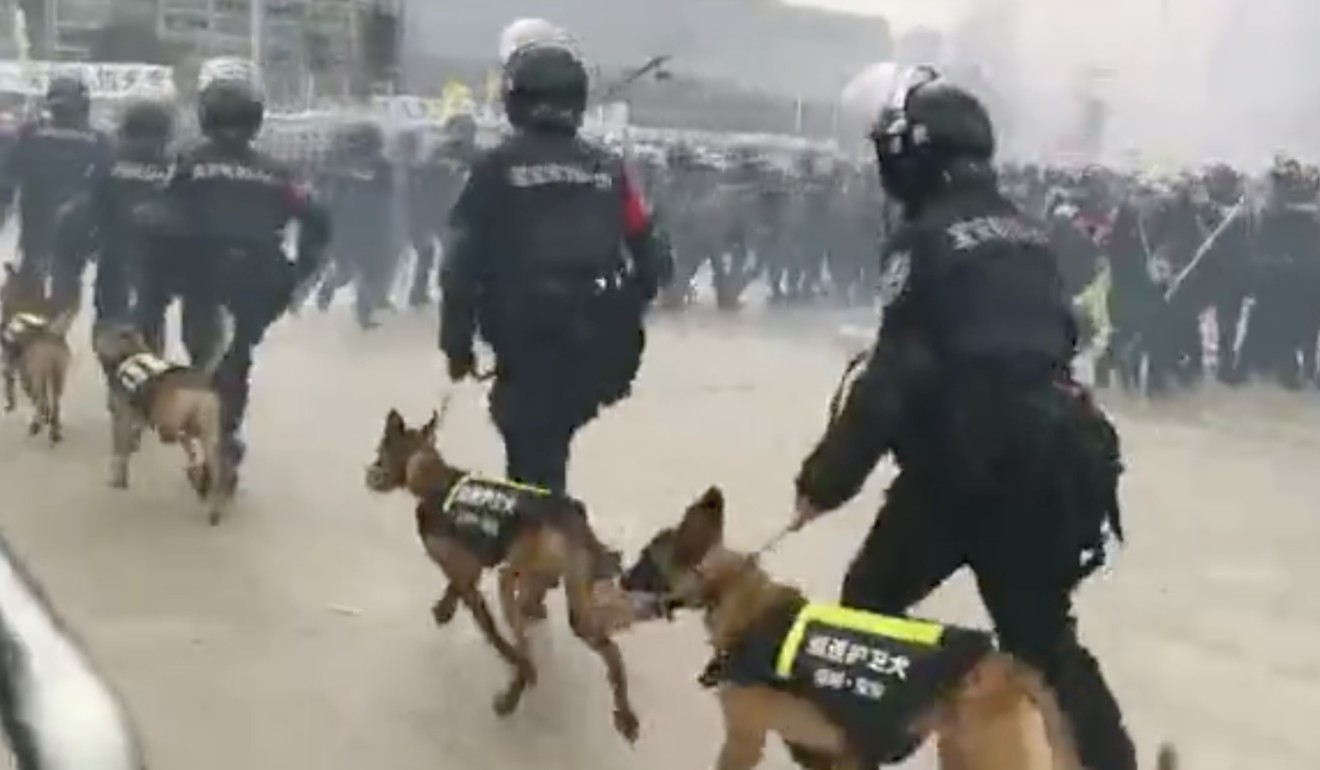
Shenzhen police broadcast live footage of a security exercise involving 12,000 officers rehearsing anti-riot drills. Photo: Weibo
More than 12,000 police officers assembled in Shenzhen in the southern Chinese province of Guangdong on Tuesday for a drill that included anti-riot measures similar to those seen on the streets of Hong Kong.
The drill was part of security preparations for the 70th anniversary of the People’s Republic of China on October 1, Shenzhen police said on the force’s Weibo newsfeed.
“A drill will be held to increase troop morale, practise and prepare for the security of celebrations, [and] maintain national political security and social stability,” police said.
China mobilises 190,000 police officers to prepare for 70th anniversary celebrations
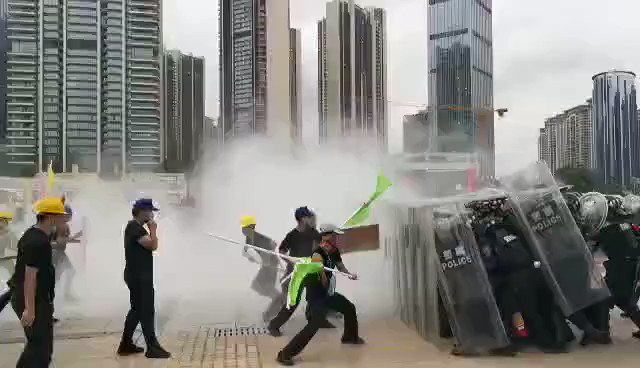
In live videos of the police drills shown on the Yizhibo network, officers in body armour, helmets and shields confronted groups of people in black shirts and red or yellow construction safety helmets – similar to those worn by Hong Kong protesters – who were holding flags, banners, batons and wooden boards.
“The practice is complete with mature anti-mob tactics. The police forces can present an anti-mob formation, which is flexible, suitable for different situations, with accurate aim and effective control,” a narrator said during the live broadcast.
As the drill escalated and more “rioters” were deployed, police fired tear gas and smoke covered the training ground.
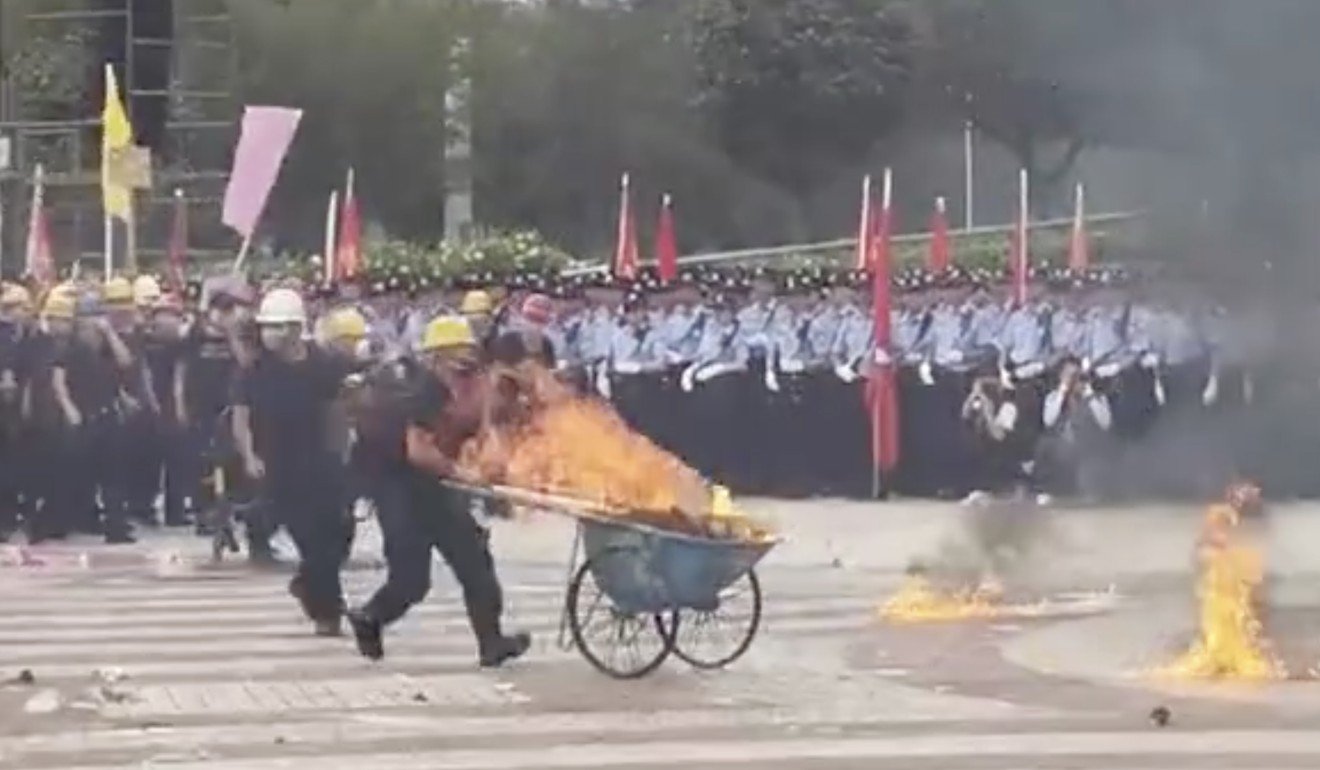
A few minutes later, the rioters fired home-made gas bombs then set bogies alight and drove them at the police lines. The officers changed formations and pressed the rioters, making arrests. Police handlers and their dogs were also on the scene.
A blazing bogie is driven towards police lines during Shenzhen police’s anti-riot exercise. Photo: Weibo
Other drills included anti-smuggling and search-and-rescue exercises involving personnel from the People’s Liberation Army.
The drill was presented as preparation for the 70th anniversary celebrations but it came amid continued violence in the streets of Hong Kong and two incidents of the Chinese national flag being thrown into Victoria Harbour.
Hong Kong has been engulfed in two months of turmoil stemming from opposition to the now-suspended extradition bill.
Police handlers and their dogs were deployed against people dressed like Hong Kong demonstrators. Photo: Weibo
“Is this hinting at Hong Kong?” a commenter on the Shenzhen police Weibo thread asked.
“We are doing drills today, and they can enter into real practice in Hong Kong in the future. We can send thousands of anti-mob squads over and strike hard at the radical traitors, those Hong Kong independence supporters,” another user said.
Since protests escalated in Hong Kong, Beijing has reiterated its “unflagging support” for embattled Hong Kong Chief Executive Carrie Lam Cheng Yuet-ngor and her administration to take lawful action to restore order, and warned that the city was entering “a most dangerous phase” with violence on the streets.
Source: SCMP
Posted in 70th anniversary, anti-riot officers, banners, batons, Beijing, black shirts, body armour, Carrie Lam Cheng Yuet-ngor, chinese police, confronted, construction safety helmet, dogs, drill, flags, gas bombs, Guangdong, guangdong province, helmets, Hong Kong, Hong Kong Chief Executive, Mass, migrant workers, national flag, People’s Liberation Army, People’s Liberation Army (PLA), People’s Republic of China, search-and-rescue exercises, Shenzhen, Shenzhen News Radio, shields, smoke, tear gas, Uncategorized, unpaid salaries, Victoria Harbour, Weibo, wooden boards, Yizhibo network |
Leave a Comment »
05/06/2019
- The ‘success’ of China’s undemocratic model hides the continued exploitation of the poor, the destruction of faith communities and other victims who can’t speak out
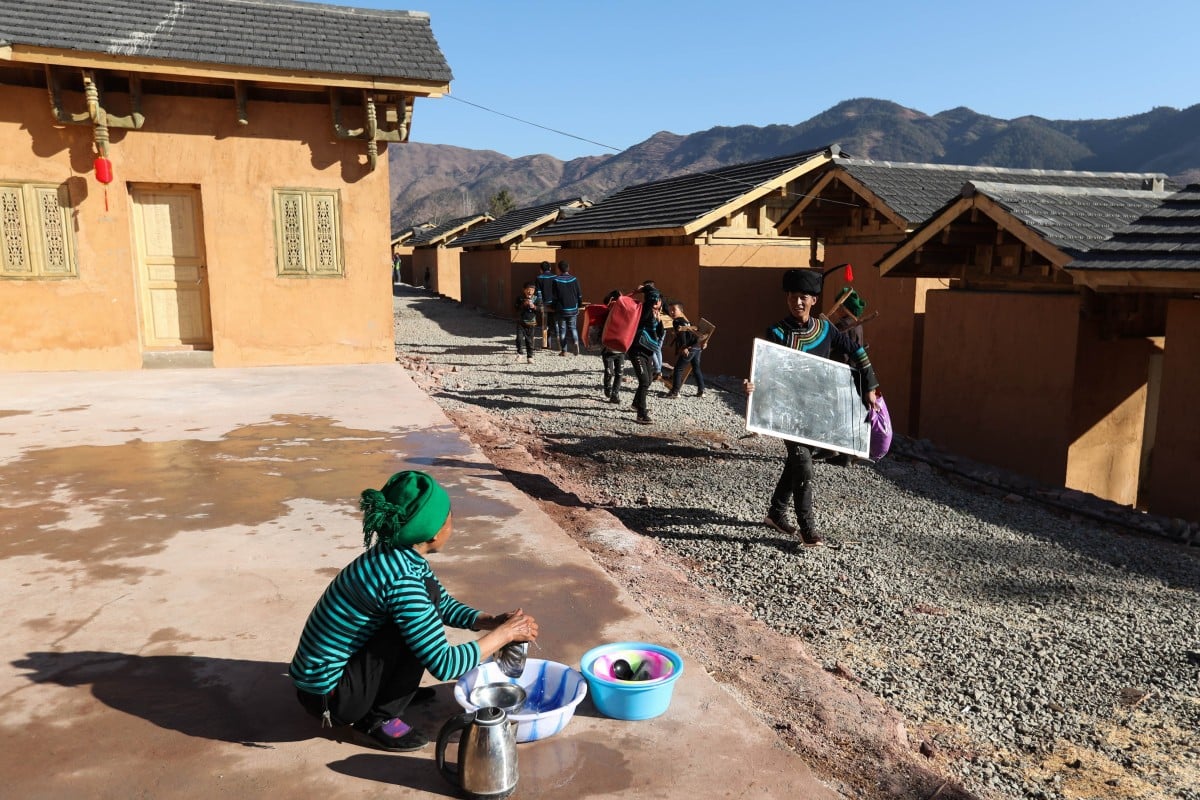
Villagers of the Yi ethnic group move into new houses for relocated residents from poor areas, in Zhaojue county in southwest China’s Sichuan province. Under President Xi Jinping, China has set the goal of eliminating poverty by 2020, but the state of the rural poor in remote counties may make the task difficult. Photo: Xinhua
I write to respond to Randy Lee’s letter, dated May 6, on the dilemma of democracy and prosperity in mainland China and Taiwan (“
”). Linear thinking of this kind has misled a lot of people on the issue.
Mr Lee compared the economies of China and Taiwan, saying the island’s economy is in a downturn and attributed this to its democratic governance. However, every nation faces regular ups and downs in its economy and there is no reason to place the blame on the so-called chaos of democracy.
The strong economy of China at present comes at a price, and the price is most likely paid by the individual citizens deprived of freedom of speech, businesses cultivating a “copying” culture to make a profit, as well as the
Xinjiang Uygurs: the human cost of China’s belt and road plan
Mr Lee acknowledges the widening
in the People’s Republic of China, so let’s not forget whole impoverished counties in the mainland. It is reported that the richest 100 individuals in China have more wealth than the poorest two-fifths of the country’s population combined. What does that mean? That such an economy and authoritarian government do not guarantee a more equally prosperous nation, but keep widening the gap between the poor and the rich, and even exploiting the poorest parts of the country. The image of a prosperous nation, as described by Mr Lee, is only an illusion – hiding its failure in protecting the poor from being exploited and ignored.
Source: SCMP
Posted in China’s rise, Chinese, Glowing tributes, ignore, no money or rights, People’s Republic of China, President Xi Jinping, sichuan province, Taiwan, Uncategorized, Xinjiang Uygurs, Yi ethnic group, Zhaojue county |
Leave a Comment »
30/05/2019
- Cadres in Hebei village ordered to undergo self-criticism after photo of statue lying face down in the shrubbery was widely circulated online
- Reinforced plastic structure had been leaning against the wall awaiting repair when it was blown into the bushes
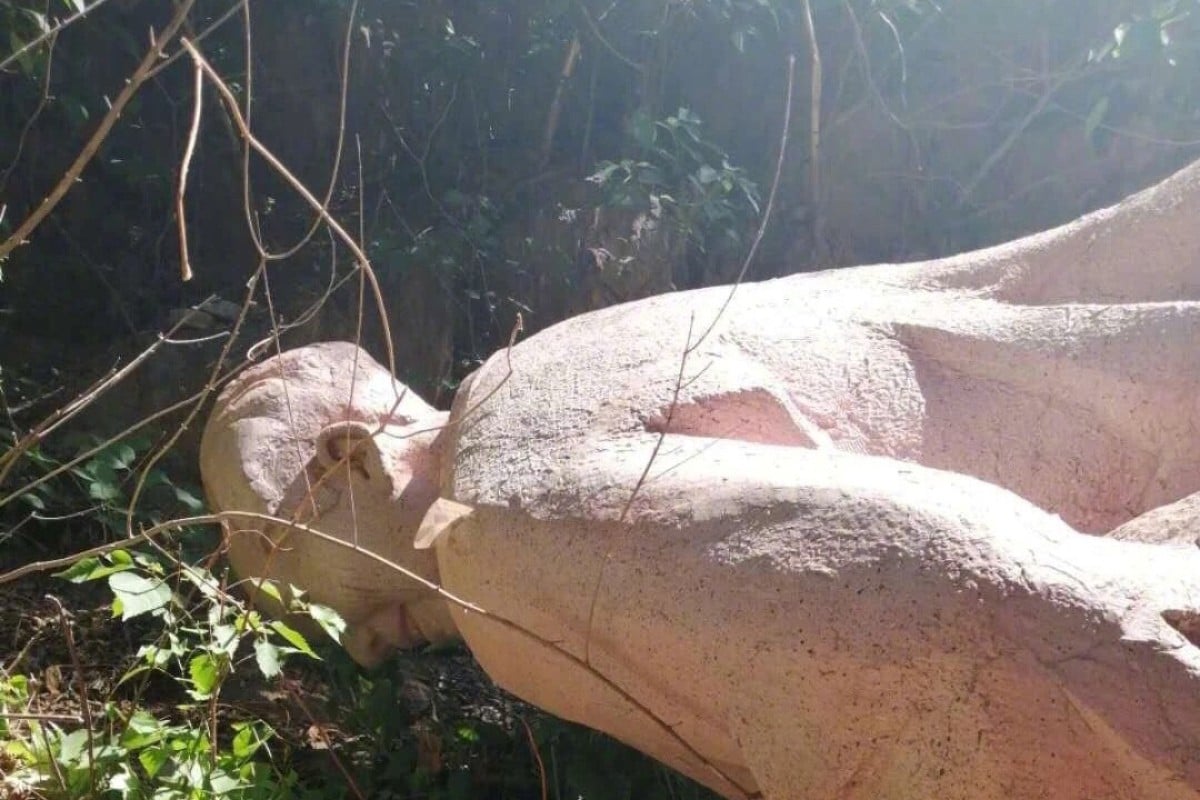
The photograph was widely circulated online, prompting a response from the local authorities. Photo: Weibo
A couple of grass-roots Communist Party members from northern China have been disciplined after a statue of Mao Zedong was photographed lying face down surrounded by overgrown bushes.
The government of Fuping county in Hebei province issued a statement late on Tuesday that the party chief of Huashan village, where the statue used to stand, had been given a “serious warning” for failing to protect the statue.
His immediate superior, the party head of Chengnanzhuang township, also received a warning.
The disciplinary action came after a picture of the statue lying amid the shrubbery was widely circulated online, triggering an angry response from Mao’s admirers.
The village has become a revolutionary tourist destination because the founding father of the People’s Republic spent some time there in 1948.
100 years on from China’s May Fourth Movement, its message is being co-opted by the Communist Party
The local government said on Sunday that the statue, showing Chairman Mao with a clenched right fist, had been erected in 2017.
It was removed from its plinth earlier this month after cracks appeared in the reinforced plastic model and its colour started to fade.
The government said it had been leaning against a wall after its removal on May 3, but was blown over by strong gusts of wind several days later.
It has now been sent to the manufacturer for repair.
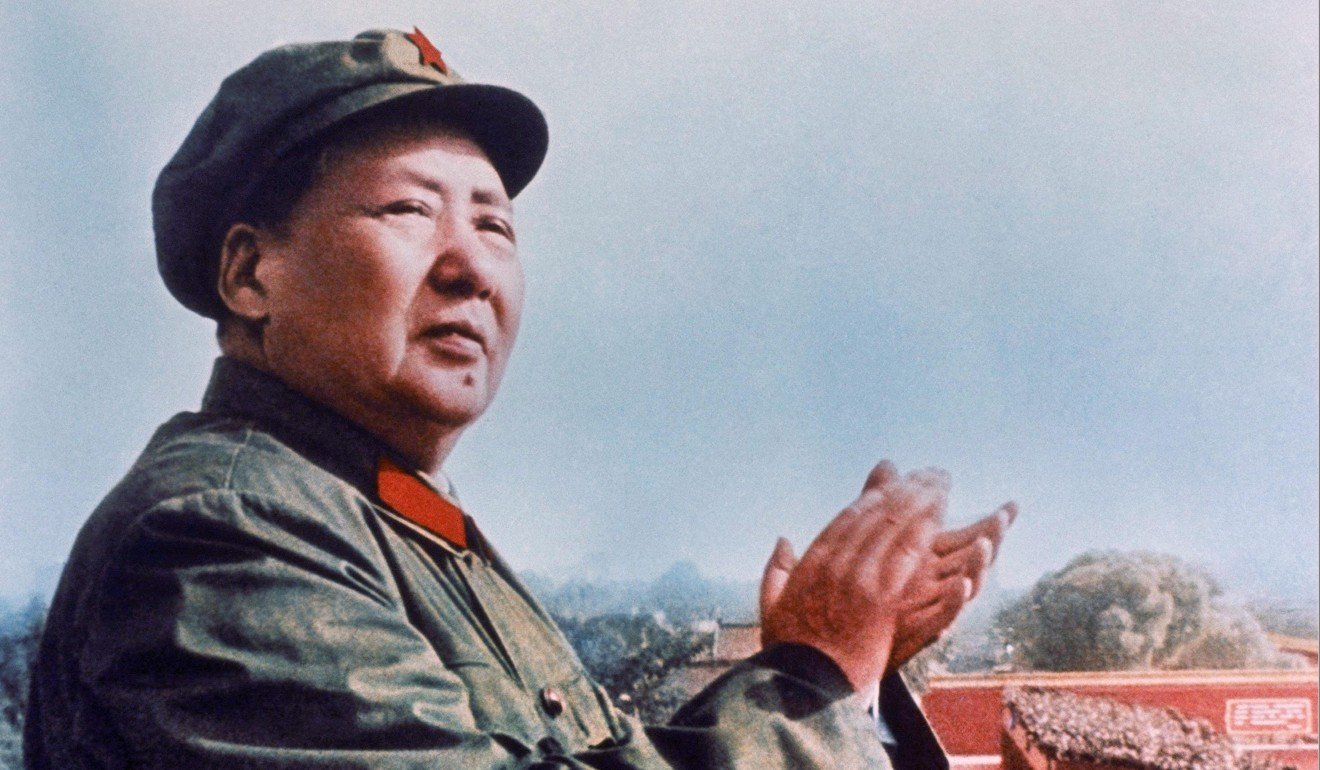
Mao’s image still adorns the banknotes and many public spaces in China. Photo: Alamy
The local officials were punished for “lacking ideological understanding” of the removal, failing to give enough protection to the statue and being careless in their daily work, the local government said.
Besides penalties for the individuals, the township party committee was also ordered to undertake self-criticism – a practice that began under Mao.
Statues of Chairman Mao used to be a common scene all across China, many of them built in the late 1960s at the height of the Cultural Revolution.
Shenzhen official kicked out of Chinese Communist Party for ‘trading power for personal gain and sex’.
Although many of them were removed after his death when the government began the process of reform and opening up, they can still be seen in spaces such as town squares and university campuses. Mao’s face also remains on the country’s banknotes and a large portrait of him hangs in Beijing overlooking Tiananmen Square.
Source: SCMP
Posted in Beijing, cadres, chairman mao, Chengnanzhuang, Chinese communists, disciplined, founding father, Hebei, Huashan, May Fourth Movement, People’s Republic of China, statue, strong winds, Tiananmen Square, topple over, Uncategorized |
Leave a Comment »
15/04/2019
Chinese State Councilor and Foreign Minister Wang Yi co-chairs the fifth high-level economic dialogue between China and Japan with visiting Japanese Foreign Minister Taro Kono in Beijing, capital of China, April 14, 2019. (Xinhua/Li Tao)
BEIJING, April 14 (Xinhua) — Chinese State Councilor and Foreign Minister Wang Yi on Sunday co-chaired the fifth high-level economic dialogue between China and Japan with visiting Japanese Foreign Minister Taro Kono in Beijing.
Hailing that China-Japan relations has returned to the right track and yielded new achievements by the joint efforts of the two countries’ leaders and people of all social circles, Wang said the fourth high-level economic dialogue, which was restarted after an eight-year hiatus last April, facilitated policy communication and pragmatic cooperation effectively.
This year marks the 70th anniversary of the founding of the People’s Republic of China, while Japan will enter the new era “Reiwa”, Wang said, adding that the two countries should uphold the major consensus reached by the two countries’ leaders and jointly construct bilateral economic relations to meet the needs of the new era.
The two sides should make steady headway in promoting bilateral investments and trade cooperation, jointly build the Belt and Road, and actively explore third party market cooperation as well as local cooperation, Wang said.
He also called for consolidating the cooperation results in such areas as energy conservation and environment protection, science and technology innovation, high-end manufacturing, finance, sharing economy, medical care and elderly care industries.
Wang said that China and Japan should make joint efforts to promote trade and investment liberalization and facilitation, uphold a business environment of fairness, justice and non-discrimination, speed up negotiations on the Regional Comprehensive Economic Partnership and China-Japan-ROK free trade agreement, and safeguard multilateralism and free trade regime.
Kono said that economic cooperation has been an important foundation and driving force for Japan-China relations.
Facing a global situation of intense uncertainty, the two sides should jointly safeguard the multilateral trade mechanism based on rules, he said.
During the dialogue, senior foreign affairs and economic officials of both countries exchanged views and achieved a series of consensus on macroeconomic policies, bilateral economic cooperation and exchanges, regional economic integration, and global economic governance.
Before the dialogue, Wang and Kono jointly attended the opening ceremony of the “China-Japan Youth Exchange Promotion Year.”
Source: Xinhua
Posted in Beijing, Belt and Road Initiative (BRI), China alert, China-Japan Youth Exchange Promotion Year, China-Japan-ROK free trade agreement, Chinese State Councilor and Foreign Minister, economic dialogue, elderly care industries, Energy conservation, environment protection, Finance, high-end manufacturing, Japan, Japanese Foreign Minister, medical care, People’s Republic of China, Regional Comprehensive Economic Partnership, Reiwa, science and technology innovation, sharing economy, Taro Kono, Uncategorized, Wang Yi |
Leave a Comment »
26/02/2019
- Liaoning has just undergone a nine-month revamp
- Flight system of new warship the Type 001A expected to be put to test
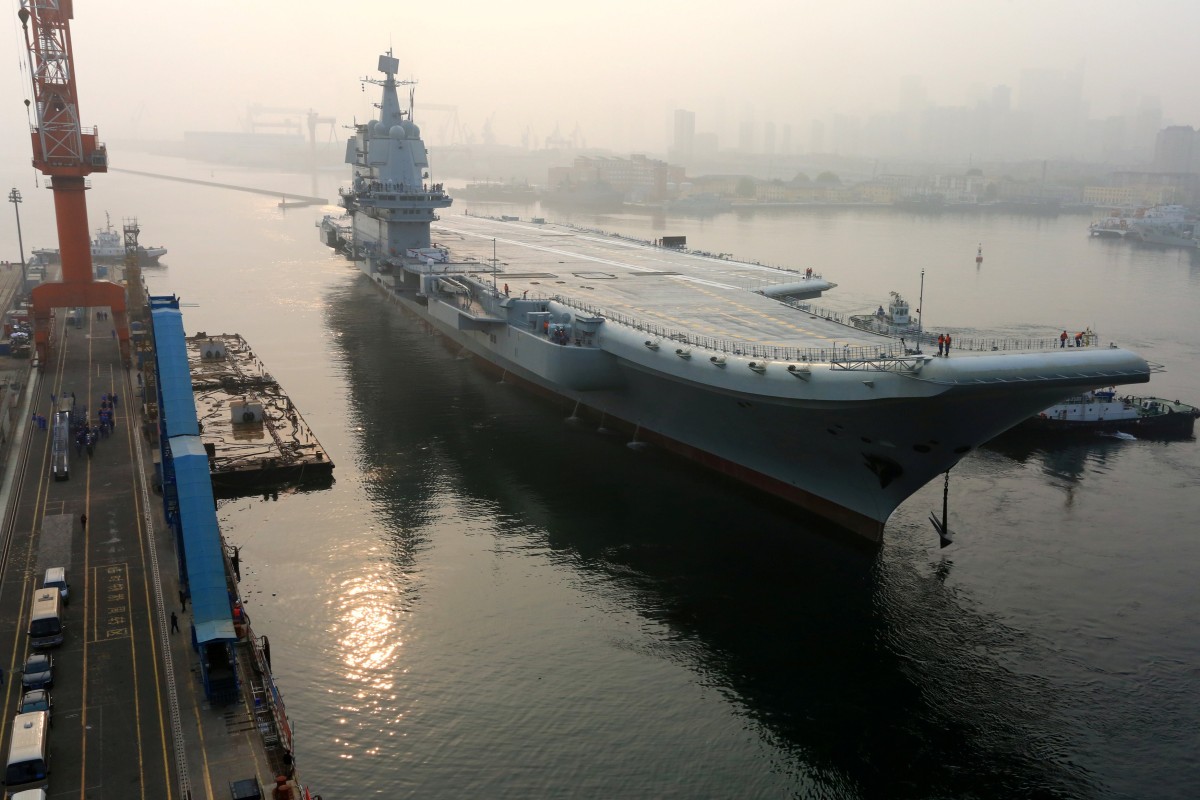
China’s first domestically built aircraft carrier, the Type 001A, will undergo major tests as it enters the final phase of preparations before it is commissioned. Photo: Reuters
China has announced a “no-go zone” in the Yellow Sea while sea trials are carried out for two of its aircraft carriers – the Liaoning, which has just been upgraded, and its first domestically built carrier.
The Liaoning Maritime Administration said there would be no entry to the area off China’s northeast coast from Sunday to March 6, and it would be used for “military purposes”.
State media reported that the Liaoning, which was commissioned in 2012, left the Dalian shipyard on Sunday after nine months of maintenance and modifications. Photos showed a banner where the warship was docked reading “Congratulations to the Liaoning on its new mission”.
China’s first aircraft carrier may become test bed for top flight electromagnetic warplane launcher.
Meanwhile, the Type 001A aircraft carrier, which was built at the same shipyard, is expected to undergo major tests at sea as it enters the final phase of preparations before it is commissioned.
Naval expert Li Jie said the Liaoning would probably also undergo testing, but he expected the no-go zone would mainly be for the Type 001A, especially to put its flight system to the test.
“This vessel will soon enter service and in preparation for that it has to go through a number of manoeuvres, take-offs and landings with the ship-based aircraft,” Li said.
China will build 4 nuclear aircraft carriers in drive to catch US Navy, experts say
The warship appears to be ready for operations involving those aircraft, according to a report on news website Guancha.cn. Photos showed three blast deflectors – which protect the deck and crew from jet engines – on the Type 001A flight deck, along with trucks to tow planes and fire engines, the report said.
The vessel has undergone four sea trials since it was launched in April 2017.
China’s first and only active aircraft carrier, the Liaoning, was likely to carry out exercises involving J-15 fighter jets to get it combat-ready after its revamp, according to Li.
He expected both aircraft carriers to take part in the PLA Navy’s fleet review to be held off Qingdao, in Shandong province, on April 23 to mark the anniversary of the navy – part of a series of activities to commemorate the 70th year since the founding of the People’s Republic of China.
“They will both be at the event if the tests of the Type 001A go well. If not, the Liaoning will be there at least,” Li said.
After a fourth sea trial, China’s Type 001A aircraft carrier may go into service within month.
The Liaoning went back to the Dalian shipyard in May and has had its bridge and air traffic control centre rebuilt and radar system upgraded. The flight deck was also modified.
China bought the vessel from Ukraine in 1998 as an unfinished Soviet Kuznetsov-class carrier, the Varyag. It was retrofitted between 2006 and 2011. China’s first domestically built aircraft carrier, the Type 001A, was based on the 50,000-tonne vessel.
Source: SCMP
Posted in air traffic control centre, Aircraft carrier, Dalian, electromagnetic warplane launcher, Guancha.cn, jet engines, Li Jie, Liaoning, Naval expert, No-go zone, nuclear aircraft carriers, People’s Republic of China, pla navy, sea trials, Soviet Kuznetsov-class carrier, three blast deflectors, Ukraine, Uncategorized, Varyag, warship, Yellow Sea |
Leave a Comment »





 CHINDIA ALERT: You'll be living in their world, very soon