Chindia Alert: You’ll be Living in their World Very Soon
aims to alert you to the threats and opportunities that China and India present. China and India require serious attention; case of ‘hidden dragon and crouching tiger’.
Without this attention, governments, businesses and, indeed, individuals may find themselves at a great disadvantage sooner rather than later.
The POSTs (front webpages) are mainly 'cuttings' from reliable sources, updated continuously.
The PAGEs (see Tabs, above) attempt to make the information more meaningful by putting some structure to the information we have researched and assembled since 2006.
Image copyright AFPImage caption Beijing’s proposed security law has sparked protests in Hong Kong
Seven former UK foreign secretaries have urged Boris Johnson to form a global alliance to coordinate the response to the China-Hong Kong crisis.
China is facing mounting criticism over a planned security law for Hong Kong which would make it a crime to undermine Beijing’s authority.
Foreign Secretary Dominic Raab said the UK would not turn a blind eye.
Hong Kong was handed back to China from British control in 1997 but under a unique agreement.
The former British colony enjoys some freedoms not seen in mainland China – and these are set out in a mini-constitution called the Basic Law.
But there are fears the proposed law, which has sparked a mass of anti-mainland protests in Hong Kong, could compromise some of the freedoms guaranteed by the Basic Law.
In their letter to the prime minister, the cross-party group of former cabinet ministers says the UK government must be seen to lead the international response, as many countries take their cue from Britain over its former colony.
Jeremy Hunt, David Miliband, Jack Straw, William Hague, Malcolm Rifkind, David Owen and Margaret Beckett all expressed their concern at what they call China’s “flagrant breach” of Sino-British agreements by imposing tough national security laws on Hong Kong.
They urged Mr Johnson to set up an “international contact group” of allies to coordinate any joint action, similar to that set up in 1994 to try to end the conflict in the former Yugoslavia.
A Downing Street spokesman insisted the government was already playing a leading role with international partners in urging China to think again.
Mr Raab said the new security legislation “very clearly violates” the autonomy that is guaranteed under Chinese law as well as that in the 1997 agreement.
He confirmed the UK will allow those who hold British National (Overseas) passports to come to the UK and apply to study and work for an extendable 12-month period.
This will in turn “provide a path to citizenship”, he told the BBC’s Andrew Marr Show on Sunday.
Mr Raab said up to three million people registered as a British national (overseas) in Hong Kong could be eligible for UK citizenship if China presses ahead with the law.
Meanwhile, the chairman of Commons foreign affairs committee, Tom Tugendhat, said the government must realise that China has a “very, very authoritarian system of government” and should rethink the partnership between the two.
BEIJING (Reuters) – China announced on Wednesday that its parliament will open a key annual session on May 22, signalling that Beijing sees the country returning to normal after being reduced to a near-standstill for months by the COVID-19 epidemic.
During the gathering of the National People’s Congress in the capital, delegates will ratify major legislation, and the government will unveil economic targets, set defence spending projections and make personnel changes. The ruling Communist Party also typically announces signature policy initiatives.
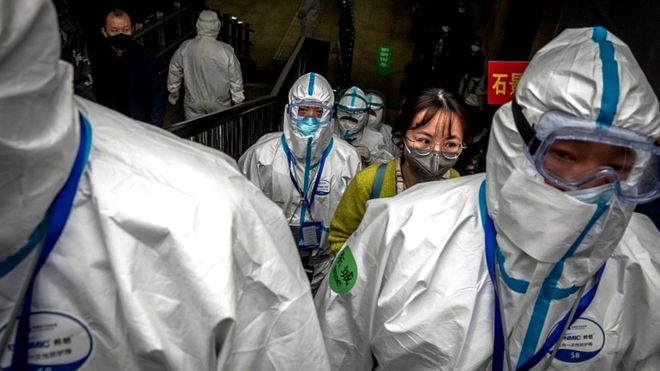
The session was initially scheduled to start on March 5 but was postponed due to COVID-19, which has infected nearly 83,000 people and killed more than 4,600 on the mainland after emerging late last year in the central city of Wuhan.
As the epidemic has subsided, economic and social life gradually returned to normal, making it possible for the congress to convene, the official Xinhua news agency quoted the standing committee of the NPC, the legislature’s top decision-making body, as saying.
The committee also appointed Huang Runqiu as the new minister for ecology and environment, a post vacated when predecessor Li Ganjie became deputy Communist Party chief for Shandong province earlier this month, Xinhua reported.
Tang Yijun was also named as the new justice minister to replace Fu Zhenghua, who has reached the retirement age of 65 for ministers.
The Chinese People’s Political Consultative Conference (CPPCC), an advisory body to parliament, has proposed starting its annual session a day before the parliamentary session opens.
Analysts expect China to roll out additional fiscal stimulus in order to cushion the blow from COVID-19, which has developed in to a worldwide pandemic that some fear will trigger a severe global recession.
China’s economy contracted for the first time on record during the January-March period, when the government imposed severe travel and transport restriction to curb the spread of the epidemic.
Parliament is also expected to discuss the anti-government protests in Hong Kong, amid growing speculation that Beijing take steps to strengthen its grip on the city.
It is unclear how long parliament and its advisory body will meet for this time, and people familiar with the matter have told Reuters that this year’s annual sessions could be the shortest in decades due to COVID-19 concerns. Usually more than 5,000 delegates descend on Beijing from all over China for at least 10 days.
Beijing city plans to ease quarantine rules as early as Thursday, two sources familiar with the situation told Reuters, ahead of the key political meetings.
People arriving in the capital from other parts of China will no long have to be quarantined for two weeks unless they come from high-risk areas such as Heilongjiang in the north and some parts of Guangdong in the southeast, the sources said.
SHANGHAI (Reuters) – China’s smog-prone northern province of Hebei met its air quality targets by a big margin over the winter after concerted efforts to tackle emissions, a local official said on Sunday, without mentioning coronavirus-related factory shutdowns.
Average PM2.5 concentrations over the October-March period dropped 15% from a year earlier to 61 micrograms per cubic metre, while sulphur dioxide also fell by a third, said He Litao, vice-head of the provincial environmental bureau.
Most experts have attributed the significant decline in air pollution throughout China in the first quarter to the coronavirus outbreak and tough containment measures, which saw cities and entire provinces locked down and sharply reduced traffic and industrial activity throughout the country.
With millions staying at home, concentrations of lung-damaging PM2.5 particles fell by nearly 15% in more than 300 Chinese cities in the first three months of 2020.
Shanghai saw emissions fall by nearly 20% in the first quarter, while in Wuhan, where the pandemic originated, monthly averages dropped more than a third compared to last year.
However, He of the Hebei environmental bureau attributed the local decline in pollution to the “conscientious implementation” of government decisions even in the face of unfavourable weather conditions.
According to a winter action plan published last year, 10 cities in Hebei were expected to cut lung-damaging small particles known as PM2.5 by 1%-6% compared to the previous year.
Despite the decline, average PM2.5 was still much higher than China’s official standard of 35 micrograms, and the recommended World Health Organization level of 10 micrograms.
But trade with partner countries might not be as badly affected as with countries elsewhere in the world, observers say
China’s trade with belt and road countries rose by 3.2 per cent in the January-March period, but second-quarter results will depend on how well they manage to contain the pathogen, academic says
China’s investment in foreign infrastructure as part of its Belt and Road Initiative has been curtailed because of the coronavirus pandemic. Photo: Xinhua
The coronavirus pandemic is set to cause a slump in Chinese investment in its signature
and a dip in trade with partner countries that could take a year to overcome, analysts say.
But the impact of the health crisis on China’s economic relations with nations involved in the ambitious infrastructure development programme might not be as great as on those that are not.
China’s total foreign trade in the first quarter of 2020 fell by 6.4 per cent year on year, according to official figures from Beijing.
Trade with the United States, Europe and Japan all dropped in the period, by 18.3, 10.4 and 8.1 per cent, respectively, the commerce ministry said.
By comparison, China’s trade with belt and road countries increased by 3.2 per cent in the first quarter, although the growth figure was lower than the 10.8 per cent reported for the whole of 2019.
China’s trade with 56 belt and road countries – located across Africa, Asia, Europe and South America – accounts for about 30 per cent of its total annual volume, according to the commerce ministry.
Despite the first-quarter growth, Tong Jiadong, a professor of international trade at Nankai University in Tianjin, said he expected China’s trade with belt and road countries to fall by between 2 and 5 per cent this year.
His predictions are less gloomy than the 13 to 32 per cent contraction in global trade forecast for this year by the World Trade Organisation.
“A drop in [China’s total] first-quarter trade was inevitable but it slowly started to recover as it resumed production, especially with Southeast Asian, Eastern European and Arab countries,” Tong said.
“The second quarter will really depend on how the epidemic is contained in belt and road countries.”
Nick Marro, Hong Kong-based head of global trade at the Economist Intelligence Unit, said he expected China’s total overseas direct investment to fall by about 30 per cent this year, which would be bad news for the belt and road plan.
“This will derive from a combination of growing domestic stress in China, enhanced regulatory scrutiny over Chinese investment in major international markets, and weakened global economic prospects that will naturally depress investment demand,” he said.
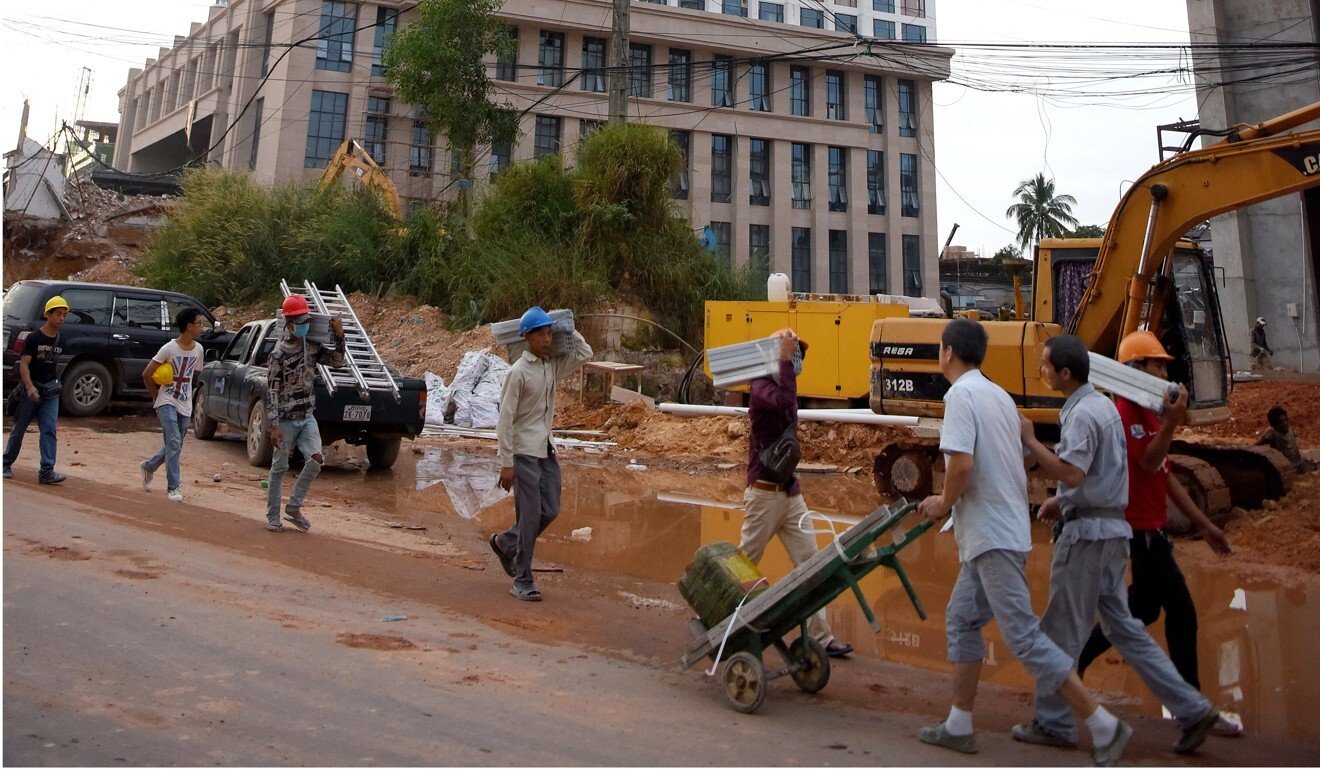
The development of the Chinese built and operated special economic zone in the Cambodian town of Sihanoukville is reported to have slowed, while infrastructure projects in Bangladesh, including the Payra coal-fired power plant, have been put on hold.
The development of the Chinese built and operated special economic zone in the Cambodian town of Sihanoukville is reported to have slowed. Photo: AFP
Marro said the reduction of capital and labour from China might complicate other projects for key belt and road partner, like Pakistan, which is home to infrastructure projects worth tens of billions of US dollars, and funded and built in large part by China.
“Pakistan looks concerning, particularly in terms of how we’ve assessed its sovereign and currency risk,” Marro said.
“Public debt is high compared to other emerging markets, while the coronavirus will push the budget deficit to expand to 10 per cent of GDP [gross domestic product] this year.”
Last week, Pakistan asked China for a 10-year extension to the repayment period on US$30 billion worth of loans used to fund the development of infrastructure projects, according to a report by local newspaper Dawn.
China’s overseas investment has been falling steadily from its peak in 2016, mostly as a result of Beijing’s curbs on capital outflows.
Last year, the direct investment by Chinese companies and organisations other than banks in belt and road countries fell 3.8 per cent from 2018 to US$15 billion, with most of the money going to South and Southeast Asian countries, including Singapore, Vietnam, Indonesia and Pakistan.
Tong said the pandemic had made Chinese investors nervous about putting their money in countries where disease control measures were becoming increasingly stringent, but added that the pause in activity would give all parties time to regroup.
“Investment in the second quarter will decline and allow time for the questions to be answered,” he said.
“Past experience along the belt and road has taught many lessons to both China and its partners, and forced them to think calmly about their own interests. The epidemic provides both parties with a good time for this.”
Dr Frans-Paul van der Putten, a senior research fellow at Clingendael Institute in the Netherlands, said China’s post-pandemic strategy for the belt and road in Europe
might include a shift away from investing in high-profile infrastructure projects like ports and airports.
Investors might instead cooperate with transport and logistics providers rather than invest directly, he said.
“Even though in the coming years the amount of money China loans and invests abroad may be lower than in the peak years around 2015-16, I expect it to maintain the belt and road plan as its overall strategic framework for its foreign economic relations,” he said.
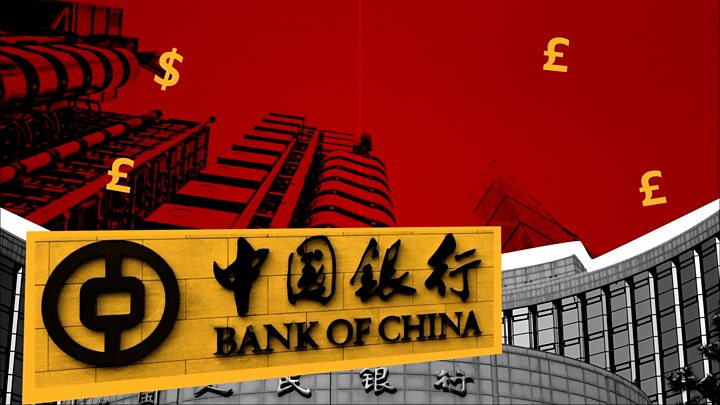
China’s economy shrank for the first time in decades in the first quarter of the year, as the virus forced factories and businesses to close.
The world’s second biggest economy contracted 6.8% according to official data released on Friday.
The financial toll the coronavirus is having on the Chinese economy will be a huge concern to other countries.
China is an economic powerhouse as a major consumer and producer of goods and services.
This is the first time China has seen its economy shrink in the first three months of the year since it started recording quarterly figures in 1992.
“The GDP contraction in January-March will translate into permanent income losses, reflected in bankruptcies across small companies and job losses,” said Yue Su at the Economist Intelligence Unit.
Last year, China saw healthy economic growth of 6.4% in the first quarter, a period when it was locked in a trade war with the US.
In the last two decades, China has seen average economic growth of around 9% a year, although experts have regularly questioned the accuracy of its economic data.
Its economy had ground to a halt during the first three months of the year as it introduced large-scale shutdowns and quarantines to prevent the virus spread in late January.
As a result, economists had expected bleak figures, but the official data comes in slightly worse than expected.
Among other key figures released in Friday’s report:
Factory output was down 1.1% for March as China slowly starts manufacturing again.
Retail sales plummeted 15.8% last month as many of shoppers stayed at home.
Unemployment hit 5.9% in March, slightly better than February’s all-time high of 6.2%.
Analysis: A 6% expansion wiped out
Robin Brant, BBC News, Shanghai
The huge decline shows the profound impact that the virus outbreak, and the government’s draconian reaction to it, had on the world’s second largest economy. It wipes out the 6% expansion in China’s economy recorded in the last set of figures at the end of last year.
Beijing has signalled a significant economic stimulus is on the way as it tries to stabilise its economy and recover. Earlier this week the official mouthpiece of the ruling Communist Party, the People’s Daily, reported it would “expand domestic demand”.
But the slowdown in the rest of the global economy presents a significant problem as exports still play a major role in China’s economy. If it comes this will not be a quick recovery.
On Thursday the International Monetary Fund forecast China’s economy would avoid a recession but grow by just 1.2% this year. Job figures released recently showed the official government unemployment figure had risen sharply, with the number working in companies linked to export trade falling the most.
China has unveiled a range of financial support measures to cushion the impact of the slowdown, but not on the same scale as other major economies.
“We don’t expect large stimulus, given that that remains unpopular in Beijing. Instead, we think policymakers will accept low growth this year, given the prospects for a better 2021,” said Louis Kuijs, an analyst with Oxford Economics.
Since March, China has slowly started letting factories resume production and letting businesses reopen, but this is a gradual process to return to pre-lockdown levels.
Media caption Why does China’s economy matter to you?
China relies heavily on its factories and manufacturing plants for economic growth, and has been dubbed “the world’s factory”.
Stock markets in the region showed mixed reaction to the Chinese economic data, with China’s benchmark Shanghai Composite index up 0.9%.
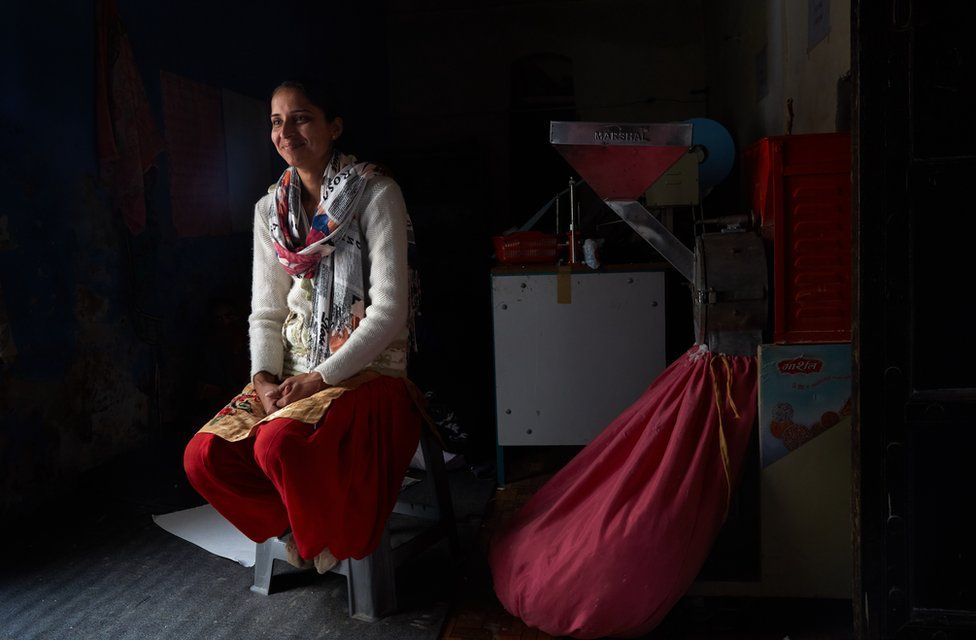
Image captionSneh, 22, attended the awards ceremony where the film won an Oscar
A film based on young women in an Indian village who make sanitary pads has won an Oscar for best documentary short. The BBC’s Geeta Pandey met with the women in their village before the ceremony.
Sneh was 15 when she started menstruating. The first time she bled, she had no idea what was happening to her.
“I was very scared. I thought I was sick with something very serious and began crying,” she told me when I visited her home in Kathikhera village not far from Delhi earlier this week.
“I didn’t have the courage to tell my mother so I confided in my aunt. She said: ‘You’re a grown woman now, don’t cry, it’s normal.’ It was her who told my mother.”
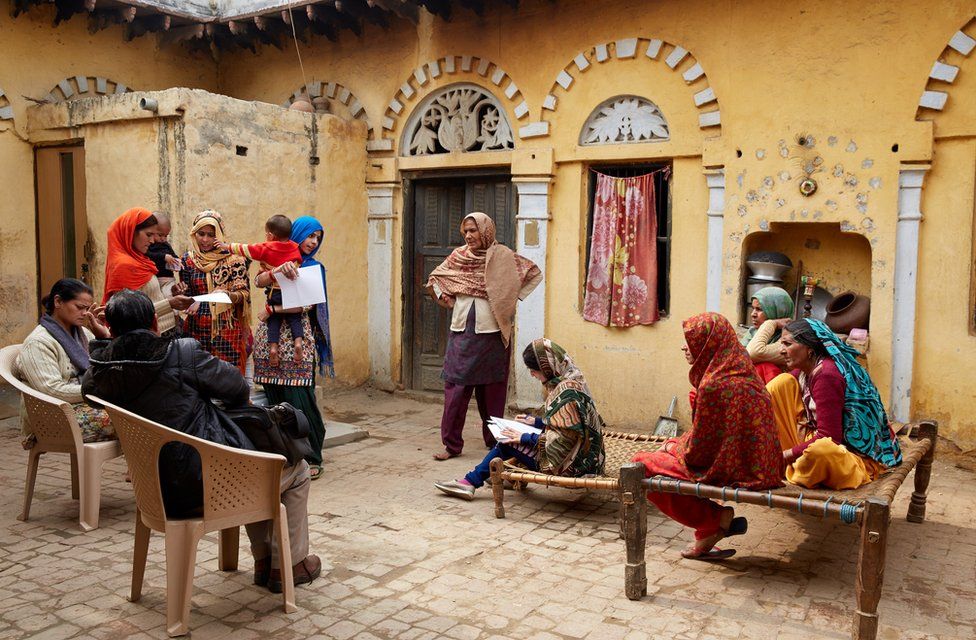
Sneh, now 22, has travelled a long way from that point. She works in a small factory in her village that makes sanitary pads and is the protagonist of Period. End of Sentence., a documentary that has been nominated for an Oscar. She will be attending Sunday’s ceremony in Los Angeles.
The film came about after a student group in North Hollywood used crowdfunding to send a pad-making machine – and Iranian-American filmmaker Rayka Zehtabchi – to Sneh’s village.
Just 115km (71 miles) from Delhi, Kathikhera village in Hapur district is a world far removed from the glitzy malls and high-rises of the Indian capital. Normally, it’s a two-and-a-half-hour drive from Delhi, but construction work on the highway slows it down to four hours for us. And the final 7.5km drive to the village from Hapur town is a crawl, on narrow winding roads lined with open drains on both sides.
The documentary is filmed in the farms and fields – and classrooms – of Kathikhera. Like in the rest of India, periods are a taboo topic; menstruating women are considered impure and barred from entering religious places and often excluded from social events too.
Image captionSneh says that previously, menstruation was not discussed – even among girls
With so much stigma surrounding the issue, it’s no surprise that Sneh had never heard of periods before she started getting them herself.
“It was not a topic that was discussed – even among girls,” she says.
But things began to change when Action India, a charity that works on reproductive health issues, set up a sanitary napkin manufacturing unit in Kathikhera.
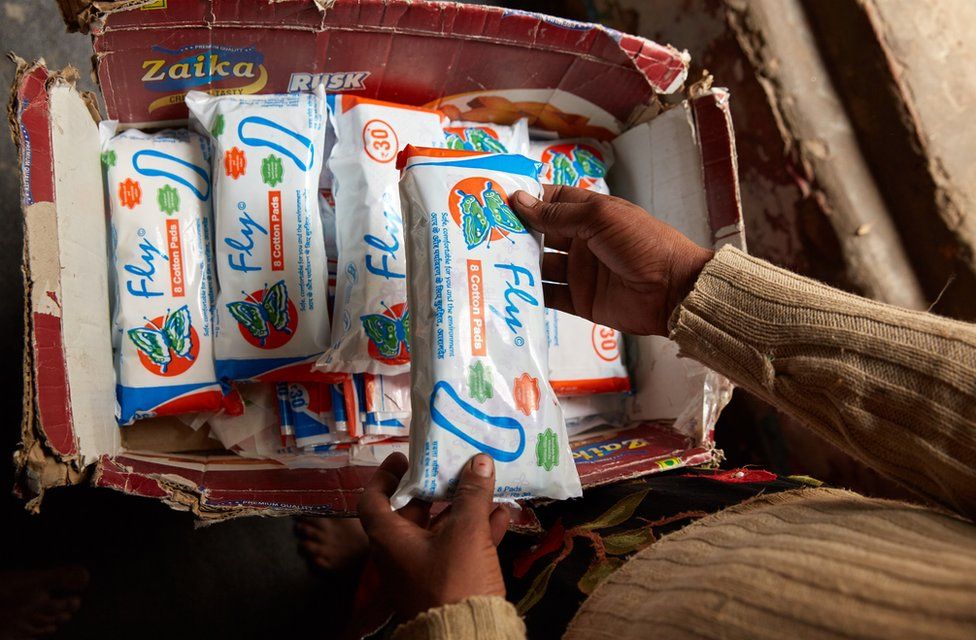
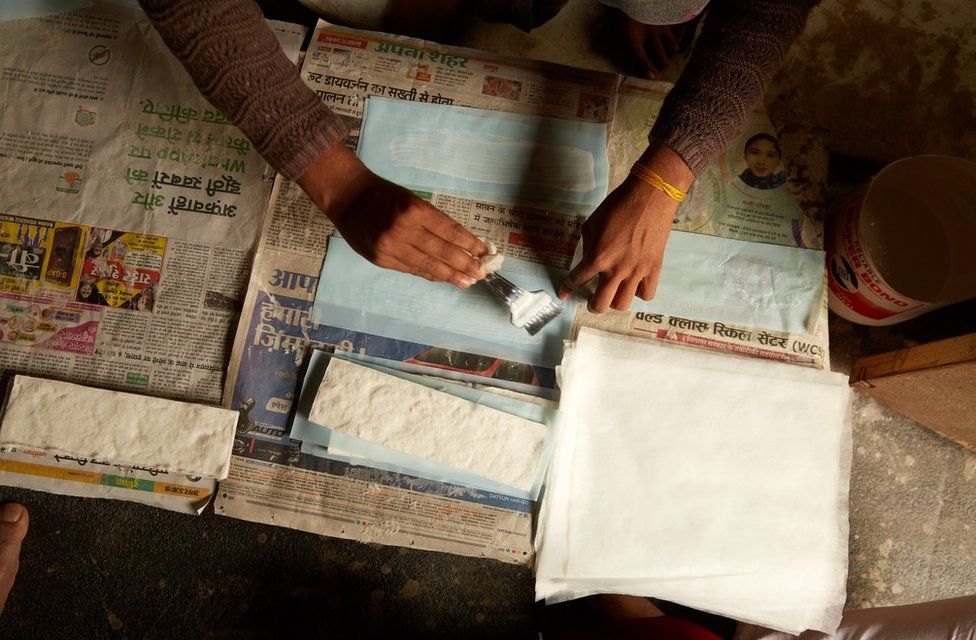
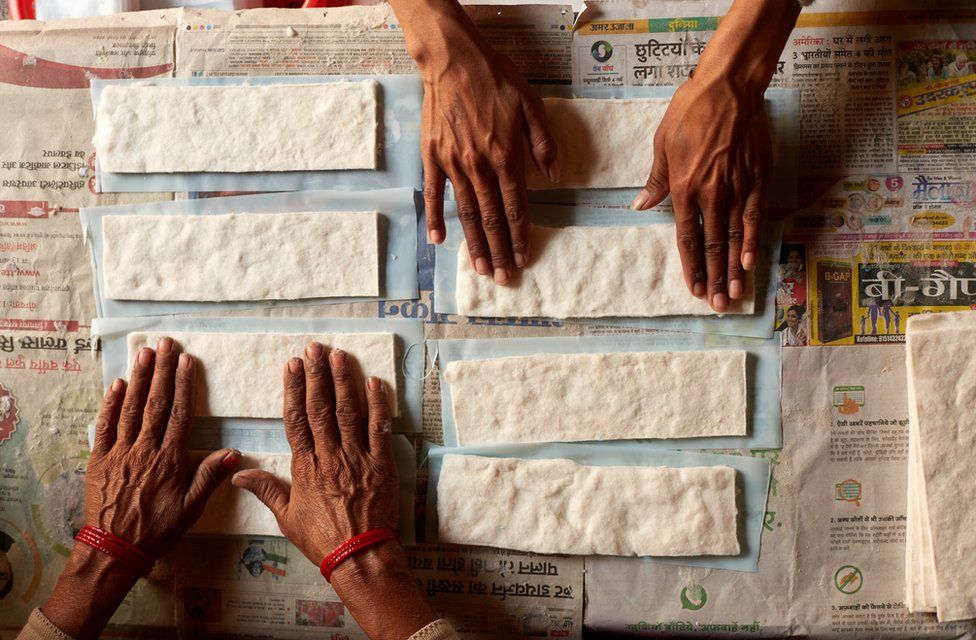
Image captionThe women employees work from 9-5 six days a weekImage captionA pack is priced at 30 rupees ($0.40; £0.30)
In January 2017, Sneh was asked by Suman, a neighbour who works with Action India, if she wanted to work in the factory.
A college graduate who dreams of working for the Delhi police one day, Sneh says she was excited. After all, there were “no other job opportunities” in the village.
“When I sought my mum’s permission, she said, ‘ask your father’. In our families, all important decisions are taken by men.”
She was too embarrassed to tell her father that she was going to be making pads so she told him that she would be making children’s diapers.
“It was two months into the job that mum told him that I was making pads,” she laughs. Much to her relief, he said, “That’s alright, work is work.”
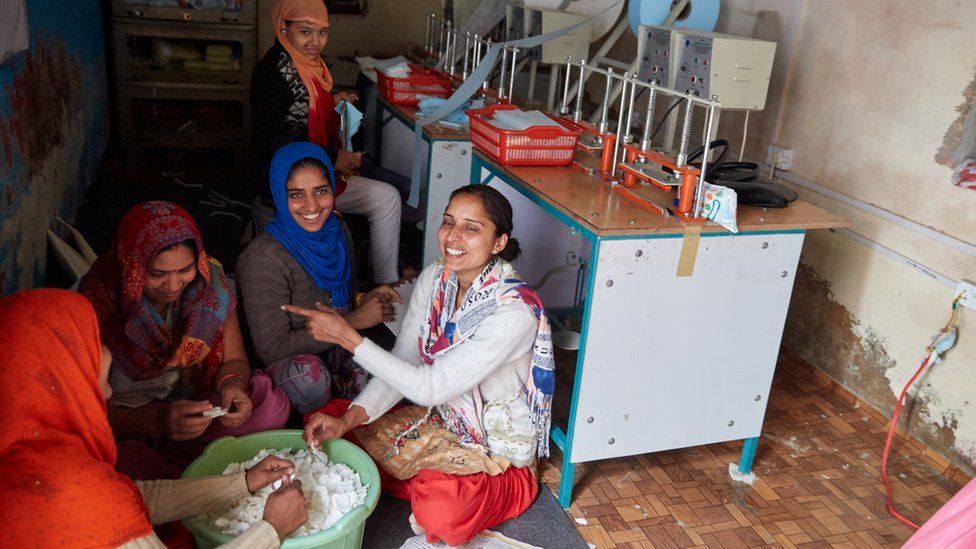
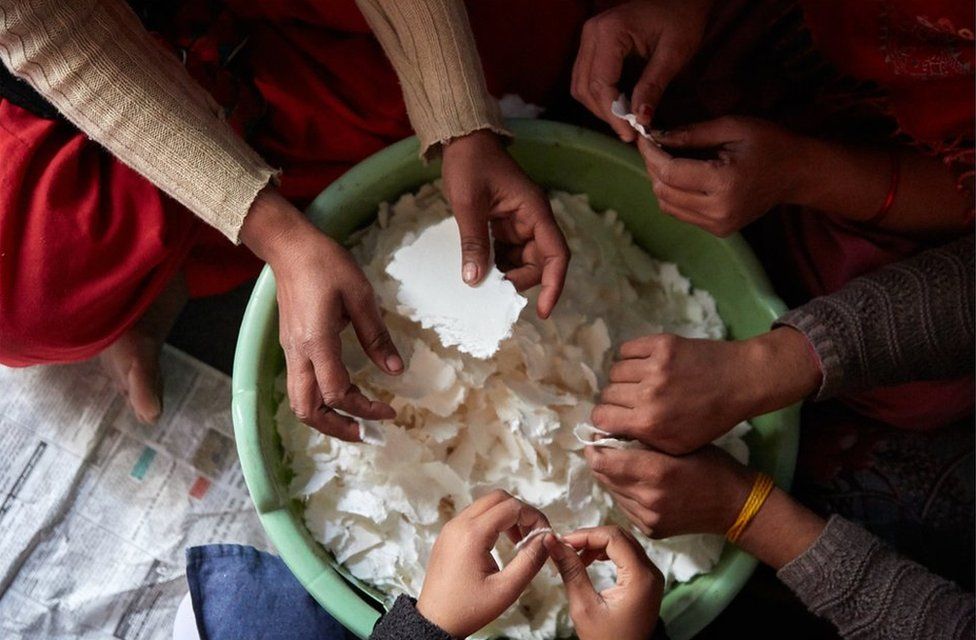
Today, the unit employs seven women, between 18 and 31 years of age. They work from 9-5, six days a week and are paid a monthly salary of 2,500 rupees ($35; £27). The centre produces 600 pads a day and they are sold under the brand name Fly.
Image captionThe centre produces 600 pads a dayImage captionMost women in the village used to use old clothes when they got their periods, now 70% use pads“The biggest problem we face is power cuts. Sometimes we have to come back at night to work when the power is back to meet the targets,” Sneh says.
This little business, run from two rooms in a village home, has helped improve feminine hygiene. Until it was set up most women in the village were using pieces of cloth cut out from old saris or bedsheets when they had their period, now 70% use pads.
It’s also de-stigmatised menstruation and changed attitudes in a conservative society in ways that were unimaginable just a couple of years ago.
Sneh says menstruation is now discussed openly among women. But, she says, it’s not been an easy ride.
“It was difficult at the start. I had to help my mother with housework, I had to study and do this job. Sometimes during my exams, when the pressure became too much, my mother went to work instead of me,” she says.
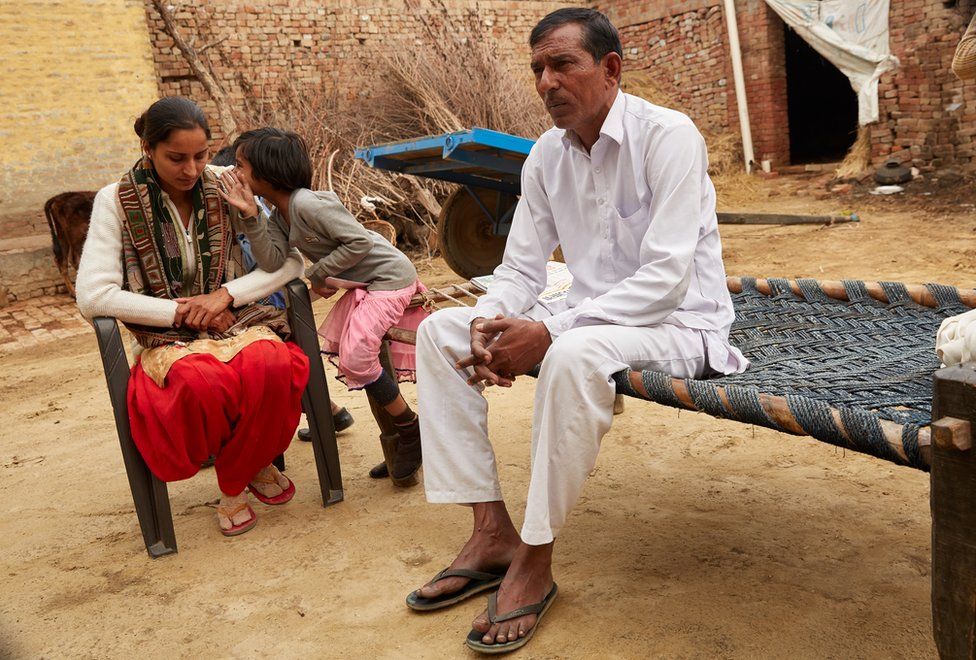
Her father, Rajendra Singh Tanwar, says he is “very proud” of his daughter. “If her work benefits the society, especially women, then I feel happy about it.”
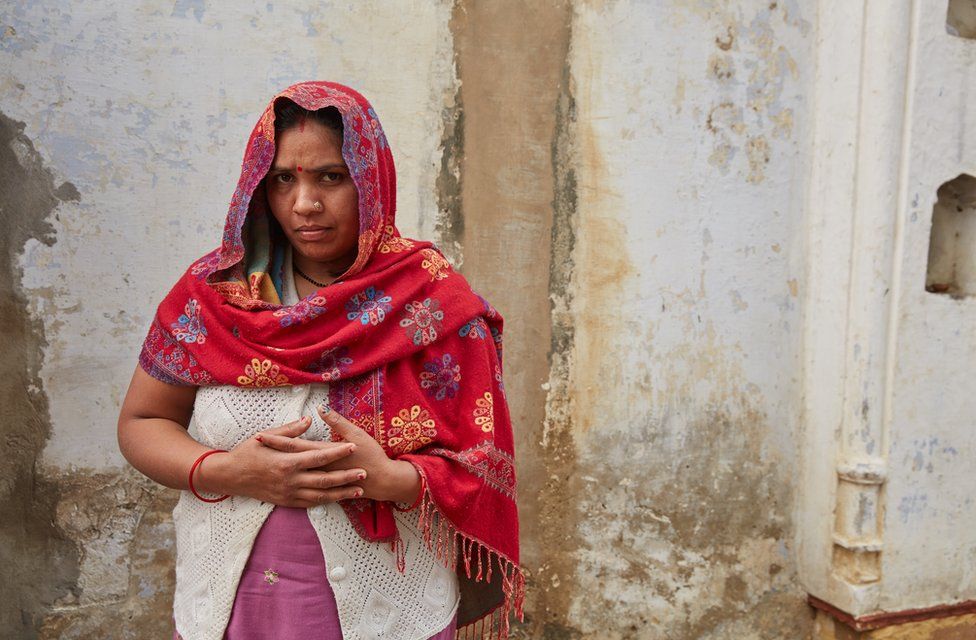
Image captionRajendra Singh Tanwar says he’s proud of what Sneh (left) has doneImage captionSushma Devi’s husband does not want her to work there – but she won’t give it up
Initially, the women faced objections from some villagers who were suspicious about what was happening at the factory. And once the film crew arrived, there were questions about what they were doing.
And some, like 31-year-old Sushma Devi, still have to fight daily battles at home.
The mother-of-two says her husband agreed to let her work only after Sneh’s mother spoke to him. He also insisted that she finish all the housework before going to the factory.
“So I wake up at 05:00, clean the house, do the laundry, feed the buffaloes, make dung cakes which we use as cooking fuel, bathe, and make breakfast and lunch before I step out. In the evening, I cook dinner once I get back.”
But her husband is still unhappy with the arrangement. “He often gets angry with me. He says there’s enough work at home, why do you have to go out to work? My neighbours too say it’s not a good job, they also say the salary is low.”
Two of Sushma’s neighbours had worked at the factory too, but left after a few months. Sushma has no intention of doing the same: “Even if my husband beats me up, I will not give up my job. I enjoy working here.”
Image captionAction India, a charity that works on reproductive health issues, set up the manufacturing unit two years ago
In the documentary, Sushma is heard saying she’d spent some of her earnings to buy clothes for her younger brother. “If I’d known this was going to go to Oscars, I would have said something more intelligent,” she says, laughing.
For Sushma, Sneh and their fellow workers, the Oscar nomination has come as a big boost. The film, which is available on Netflix, is nominated in the Best Short Documentary category.
As Sneh prepares to leave for Los Angeles, her neighbours are appreciative of the “prestige and fame” she has brought the village.
“No-one from Kathikhera has ever travelled abroad so I’ll be the first one to do so,” she says. “I’m now recognised and respected in the village, people say they are proud of me.”
Sneh says she had heard of Oscars and knew they were the biggest cinema awards in the world. But she had never watched a ceremony, and certainly didn’t think that one day she would be on the red carpet.
“I never thought I would go to America. Even now I can’t fully process what’s happening. For me, the nomination itself is an award. It’s a dream that I’m dreaming with my eyes open.”


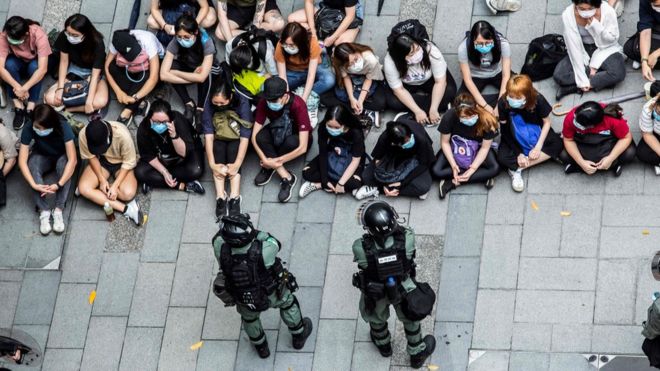 Image copyright AFP



 CHINDIA ALERT: You'll be living in their world, very soon