Archive for ‘Philippine’

19/04/2020

Asian countries more receptive to China’s coronavirus ‘face mask diplomacy’

  • Faced with a backlash from the West over its handling of the early stages of the pandemic, Beijing has been quietly gaining ground in Asia
  • Teams of experts and donations of medical supplies have been largely welcomed by China’s neighbours
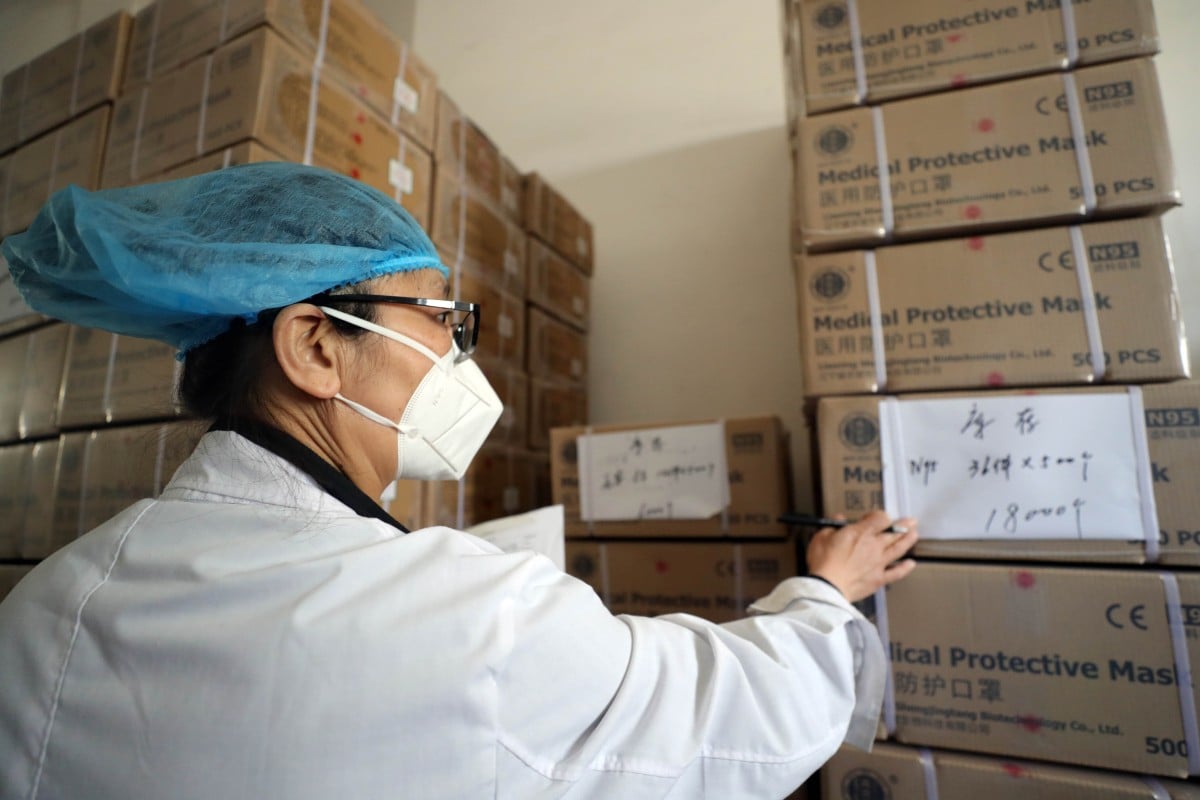
Despite facing some criticism from the West, China’s Asian neighbours have welcomed its medical expertise and vital supplies. Photo: Xinhua
While China’s campaign to mend its international image in the wake of its handling of the coronavirus health crisis has been met with scepticism and even a backlash from the US and its Western allies, Beijing has been quietly gaining ground in Asia.
Teams of experts have been sent to Cambodia, the Philippines, Myanmar, Pakistan and soon to Malaysia, to share their knowledge from the pandemic’s ground zero in central China.
Beijing has also donated or facilitated shipments of medical masks and ventilators to countries in need. And despite some of the equipment failing to meet Western quality standards, or being downright defective, the supplies have been largely welcomed in Asian countries.
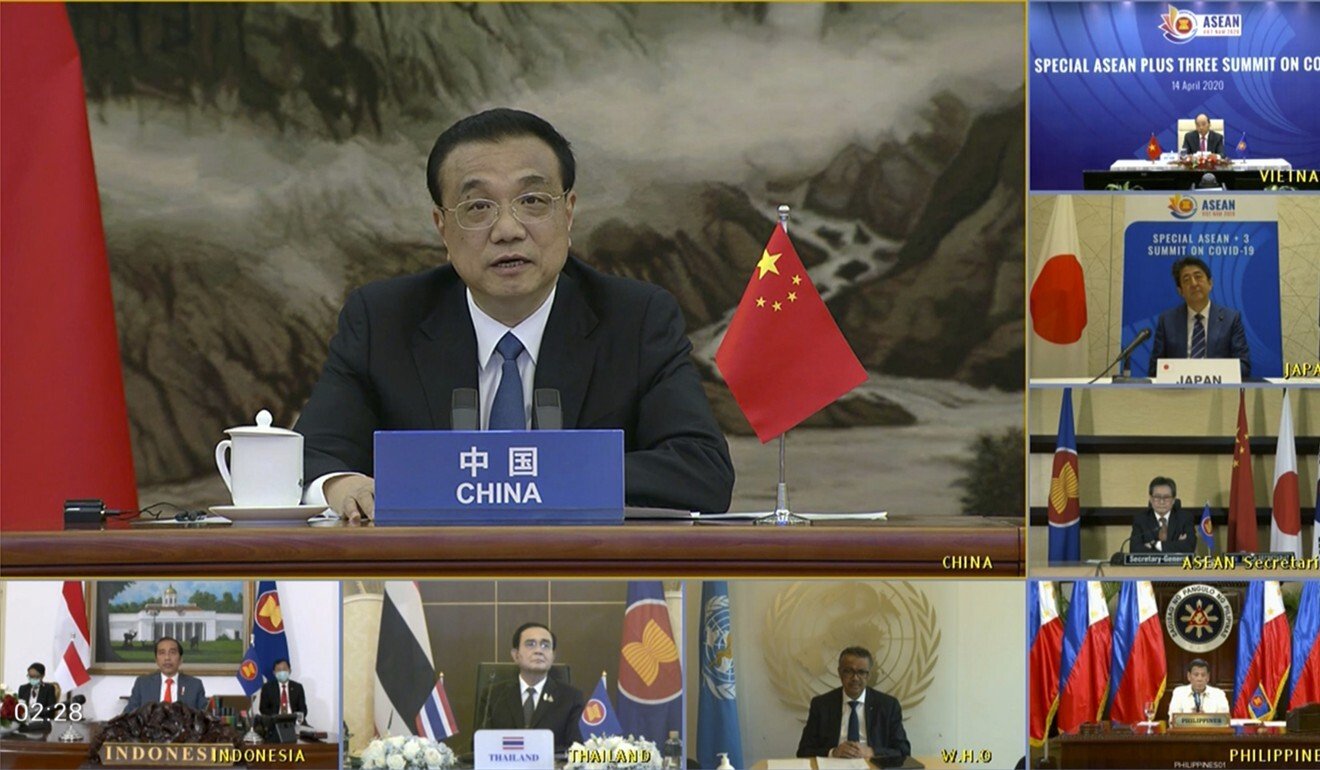
China has also held a series of online “special meetings” with its Asian neighbours, most recently on Tuesday when Premier Li Keqiang discussed his country’s experiences in combating the disease and rebooting a stalled economy with the leaders of the Association of Southeast Asian Nations (Asean), Japan and South Korea.
Chinese Prime Minister Li Keqiang speaks to Asean Plus Three leaders during a virtual summit on Tuesday. Photo: AP
Many Western politicians have publicly questioned Beijing’s role and its subsequent handling of the crisis but Asian leaders – including Philippine President Rodrigo Duterte and Japanese Prime Minister Shinzo Abe – have been reluctant to blame the Chinese government, while also facing criticism at home for not closing their borders with China soon enough to prevent the spread of the virus.

An official from one Asian country said attention had shifted from the early stages of the outbreak – when disgruntled voices among the public were at their loudest – as people watched the virus continue its deadly spread through their homes and across the world.

“Now everybody just wants to get past the quarantine,” he said. “China has been very helpful to us. It’s also closer to us so it’s easier to get shipments from them. The [medical] supplies keep coming, which is what we need right now.”

The official said also that while the teams of experts sent by Beijing were mainly there to observe and offer advice, the gesture was still appreciated.

Another Asian official said the tardy response by Western governments in handling the outbreak had given China an advantage, despite its initial lack of transparency over the outbreak.

“The West is not doing a better job on this,” he said, adding that his government had taken cues from Beijing on the use of propaganda in shaping public opinion and boosting patriotic sentiment in a time of crisis.

“Because it happened in China first, it has given us time to observe what works in China and adopt [these measures] for our country,” the official said.

Experts in the region said that Beijing’s intensifying campaign of “mask diplomacy” to reverse the damage to its reputation had met with less resistance in Asia.

Why China’s ‘mask diplomacy’ is raising concern in the West

29 Mar 2020

“Over the past two months or so, China, after getting the Covid-19 outbreak under control, has been using a very concerted effort to reshape the narrative, to pre-empt the narrative that China is liable for this global pandemic, that China has to compensate other countries,” said Richard Heydarian, a Manila-based academic and former policy adviser to the Philippine government.

“It doesn’t help that the US is in lockdown with its domestic crisis and that we have someone like President Trump who is more interested in playing the blame game rather than acting like a global leader,” he said.

Shahriman Lockman, a senior analyst with the foreign policy and security studies programme at Malaysia’s Institute of Strategic and International Studies, said that as the US had withdrawn into its own affairs as it struggled to contain the pandemic, China had found Southeast Asia a fertile ground for cultivating an image of itself as a provider.

China’s first-quarter GDP shrinks for the first time since 1976 as coronavirus cripples economy
Beijing’s highly publicised delegations tasking medical equipment and supplies had burnished that reputation, he said, adding that the Chinese government had also “quite successfully shaped general Southeast Asian perceptions of its handling of the pandemic, despite growing evidence that it could have acted more swiftly at the early stages of the outbreak in Wuhan”.
“Its capacity and will to build hospitals from scratch and put hundreds of millions of people on lockdown are being compared to the more indecisive and chaotic responses seen in the West, especially in Britain and the United States,” he said.
Coronavirus droplets may travel further than personal distancing guidelines
16 Apr 2020

Lockman said Southeast Asian countries had also been careful to avoid getting caught in the middle of the deteriorating relationship between Beijing and Washington as the two powers pointed fingers at each other over the origins of the new coronavirus.

“The squabble between China and the United States about the pandemic is precisely what Asean governments would go to great lengths to avoid because it is seen as an expression of Sino-US rivalry,” he said.

“Furthermore, the immense Chinese market is seen as providing an irreplaceable route towards Southeast Asia’s post-pandemic economic recovery.”

Aaron Connelly, a research fellow in Southeast Asian political change and foreign policy with the International Institute for Strategic Studies in Singapore, said Asian countries’ dependence on China had made them slow to blame China for the pandemic.

“Anecdotally, it seems to me that most Southeast Asian political and business elites have given Beijing a pass on the initial cover-up of Covid-19, and high marks for the domestic lockdown that followed,” he said.

“This may be motivated reasoning, because these elites are so dependent on Chinese trade and investment, and see little benefit in criticising China.”

China and Vietnam ‘likely to clash again’ as they build maritime militias

12 Apr 2020
The cooperation with its neighbours as they grapple with the coronavirus had not slowed China’s military and research activities in the disputed areas of the South China Sea – a point of contention that would continue to cloud relations in the region, experts said.
Earlier this month an encounter in the South China Sea with a Chinese coastguard vessel led to the sinking of a fishing boat from Vietnam, which this year assumed chairmanship of Asean.
And in a move that could spark fresh regional concerns, shipping data on Thursday showed a controversial Chinese government survey ship, the Haiyang Dizhi 8, had moved closer to Malaysia’s exclusive economic zone.
The survey ship was embroiled in a months-long stand-off last year with Vietnamese vessels within Hanoi’s exclusive economic zone and was spotted again on Tuesday 158km (98 miles) off the Vietnamese coast.
Source: SCMP
18/02/2020

Philippine workers allowed to travel to Hong Kong, Macau amid virus fear

MANILA (Reuters) – The Philippines on Tuesday allowed Filipino workers to travel to Hong Kong and Macau, relaxing the travel ban it imposed on China and its special administrative regions to control the spread of the coronavirus.

The Philippines announced its decision before Hong Kong reported that a Filipina domestic helper became its 61st case of coronavirus in the country.

There are more than 180,000 Filipinos in Hong Kong, many working as helpers, according to the Philippines Labour Ministry.

The Philippines had imposed a travel ban on China and its special administrative regions Hong Kong and Macau. It later included Taiwan in the ban, but lifted it a few days after.

There was no immediate comment from Philippine officials on how the latest development in Hong Kong will affect its decision to relax its travel restriction.

The Philippines also said it would allow foreign spouses or children of Filipinos and holders of diplomatic visas travelling from China, Macau and Hong Kong to enter the country but they will be subjected to a 14-day quarantine.

Initially, only Filipinos and holders of permanent resident visas travelling from these areas were allowed entry.

Recruiters have appealed to the government to exempt Filipino workers from the travel ban because many of them are breadwinners. They could also lose their visas if they failed to report for work on time, the Society of Hong Kong Accredited Recruiters of the Philippines has said.

In 2019, Filipino workers in Hong Kong sent home $801 million in foreign exchange remittances, central bank data showed.

Filipinos leaving for Hong Kong and Macau for study and employment will be required to sign a declaration that they know the risks of going there, health officials said.

The Philippine government also said it will repatriate Filipino crew and passengers from the quarantined cruise ship Diamond Princess who wish to come home.

The cruise ship, owned by Carnival Corp and carrying some 3,700 passengers and crew, has been quarantined in Yokohama since Feb. 3, after a man who disembarked in Hong Kong before it travelled to Japan was diagnosed with the virus.

The Philippine Foreign Ministry said 35 of the 538 Filipinos onboard had tested positive for the coronavirus, including the eight new cases, who are all crew members.

In the Philippines, there have been three confirmed cases of coronavirus, including one death.

Source: Reuters

31/07/2019

China and US court Asean members to strengthen Indo-Pacific ties as trade war enters second year

  • China’s Wang Yi and US’ Mike Pompeo at summit in Thailand to sell their visions of future for Southeast Asia
  • Analysts expect pragmatism from Asean as world’s two biggest economic powers play diplomatic game
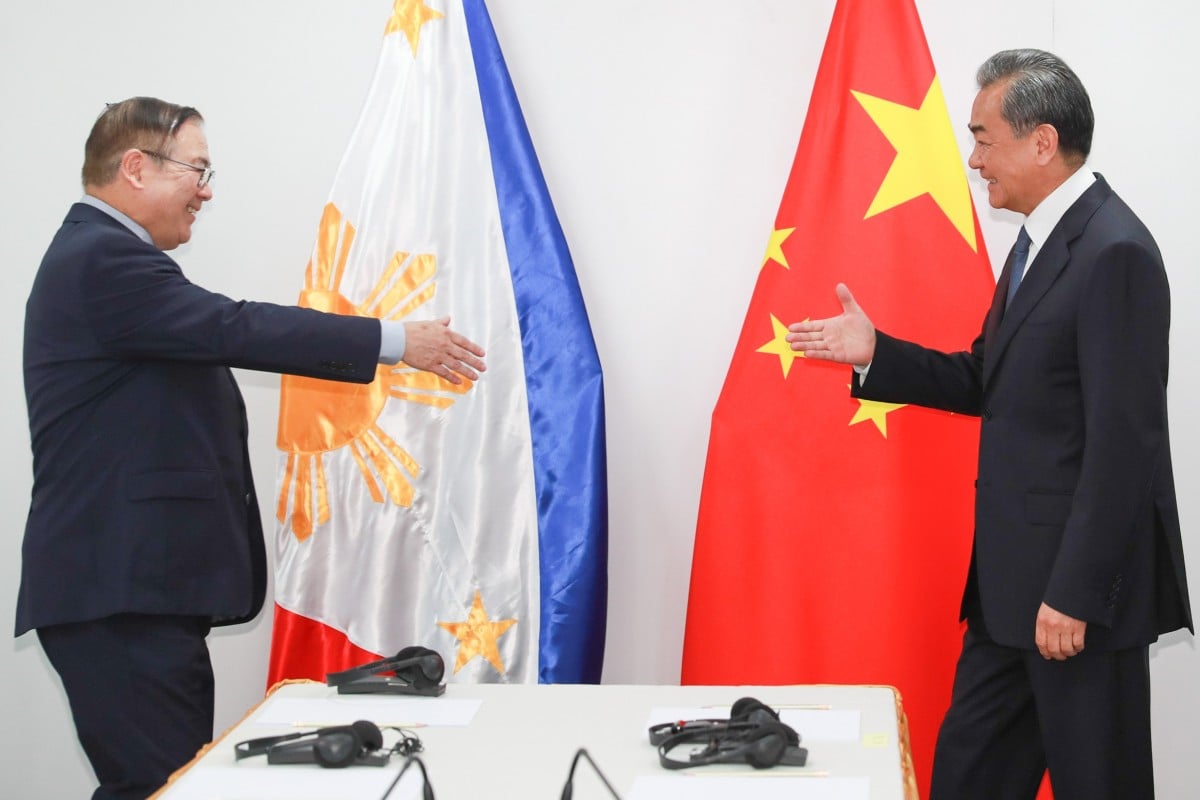
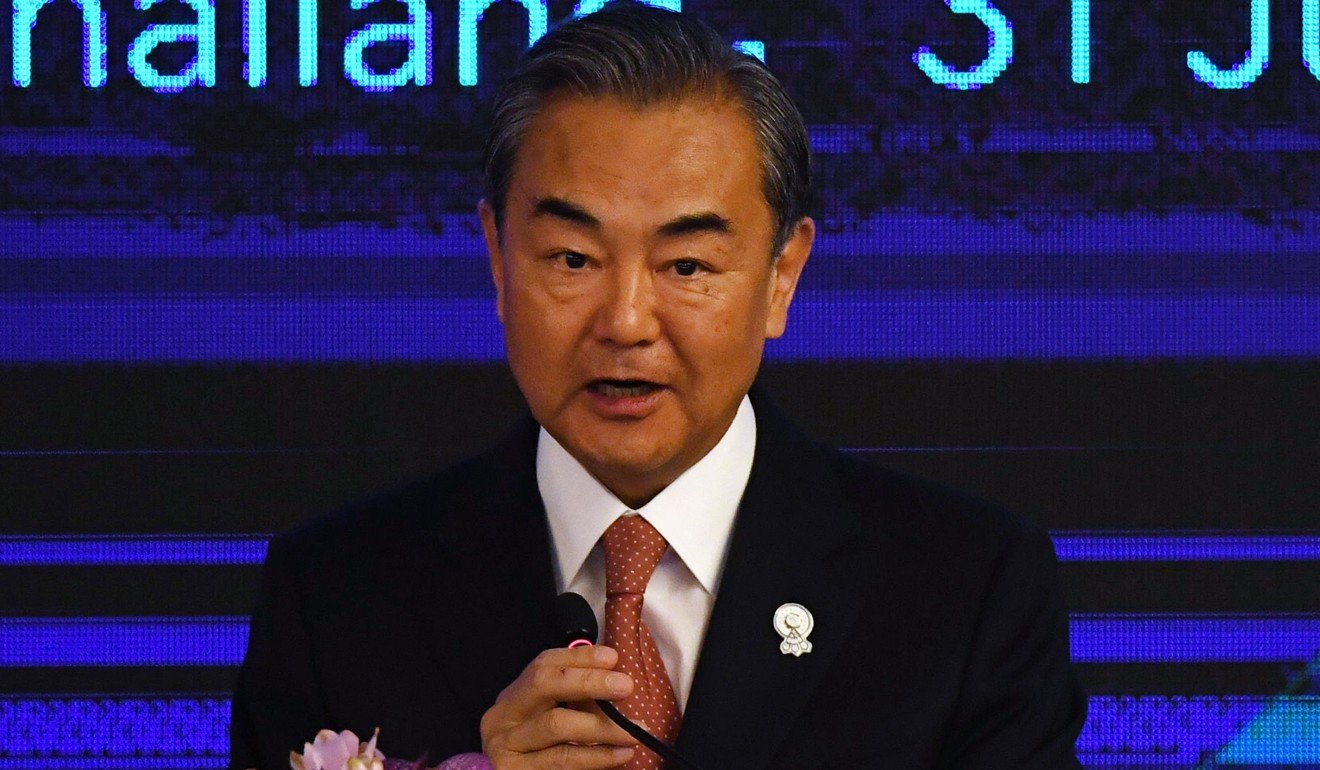
Chinese Foreign Minister Wang Yi (right) greets his Philippine counterpart Teodoro Locsin at the Asean meeting in Bangkok, Thailand. Photo: Xinhua
China and the United States are on a mission to strengthen ties with allies and expand their influence in Southeast Asia this week as their trade war enters a second year.
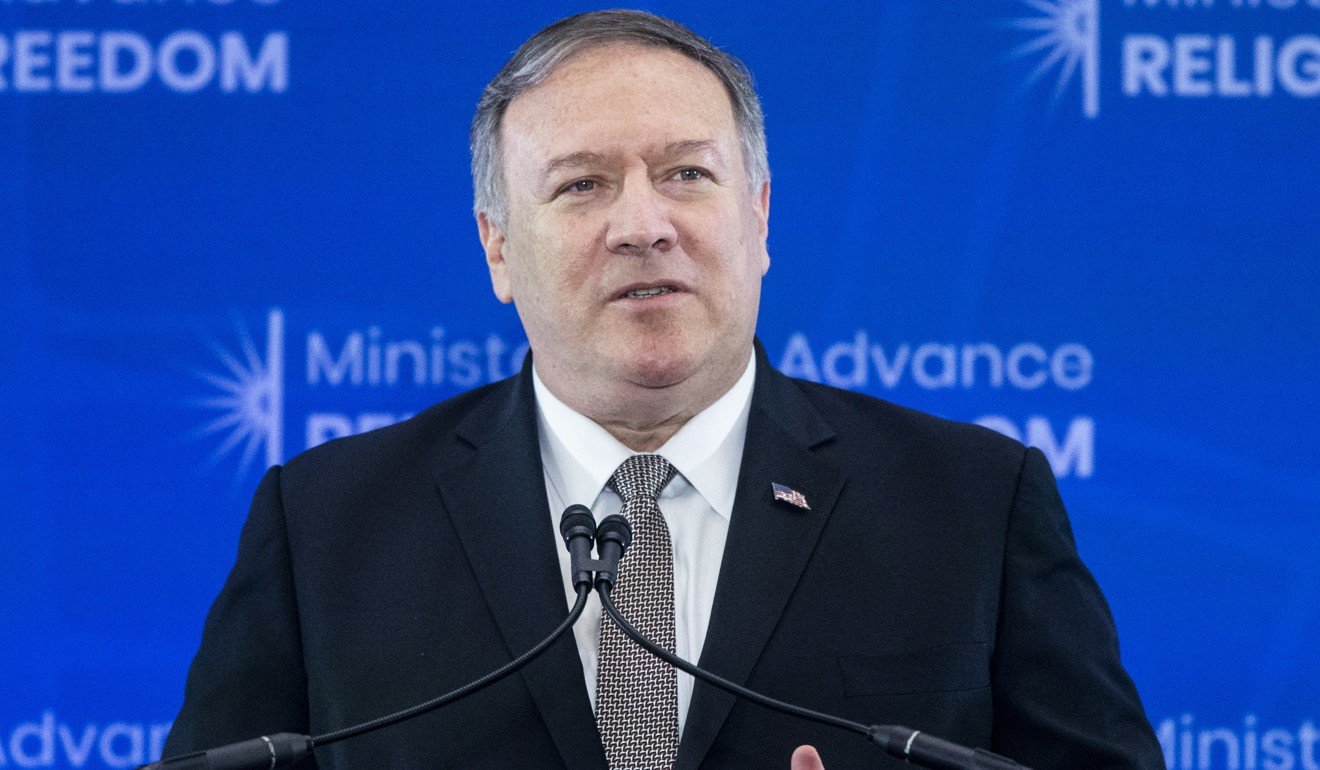
US Secretary of State Mike Pompeo arrived for a meeting of the Association of Southeast Asian Nations (Asean) in Bangkok on Wednesday to promote the US-led Indo-Pacific strategy, while Chinese Foreign Minister Wang Yi touched down a day earlier to advance Beijing’s Belt and Road Initiative.
The US Department of State said Pompeo’s trip was aimed at deepening Washington’s “long-standing alliances and vibrant bilateral relations with these countries, and [to] reaffirm our commitment to Asean, which is central to our vision for the Indo-Pacific region”.
In Beijing on Wednesday, Chinese foreign ministry spokeswoman Hua Chunying said that while their meeting was yet to be set, Wang and Pompeo were expected to meet and talk “frankly” about bilateral relations.
“I think that it is indeed necessary for China and the United States to maintain communication, as the two countries face many situations,” Hua said. “The issues would be communicated frankly”.

The Indo-Pacific strategy is a military and economic framework to contain China’s expansion into the Pacific and Indian oceans, and give an alternative to Beijing’s flagship belt and road development programme.

En route to Thailand, Pompeo said that after a stalled start to US Indo-Pacific policy during the Barack Obama administration, Washington’s strategy was well on its way to bearing fruit for the US and its allies.

South China Sea tensions, US-China trade war loom over Asean summit

“We have watched these coalitions build out,” he said.

Pompeo dismissed claims that China’s sphere of influence among Asean members was growing, saying such speculation was “not factually accurate”.

“[Asean countries] are looking for partners that are going to help them build out their economies and to take good care of their people,” he said, pledging greater engagement from President Donald Trump’s administration.

Pompeo was expected to sit down on Friday with his South Korean and Japanese counterparts to consolidate their trilateral alliance in the region.

He was also expected to hold talks with Thai Foreign Minister Don Pramudwinai that day.

US Secretary of State Mike Pompeo is expected to meet Chinese Foreign Minister Wang Yi at Asean in Thailand. Photo: EPA-EFE

Meanwhile, Wang launched his belt and road pitch to his Cambodian, Philippine and Indonesian counterparts after he arrived in Thailand for the gathering, which ends on Saturday.

The belt and road projects are largely commercial and aimed at strengthening land and sea infrastructure linking Asia, Europe and Africa. But they raised suspicion in the West that they are aimed at eroding the US-led world order.

During his meeting with Philippine Foreign Affairs Secretary Teodoro Locsin, Wang said: “China is willing to have high-level exchanges with the Philippines, to deepen the mutual trust, and promote the Belt and Road Initiative [in the Philippines] … to accelerate the development of regional infrastructure.”

Can China’s trade boost with Asean help get the Regional Comprehensive Economic Partnership over the line?

This year’s Asean forum was taking place as countries were more receptive to Chinese initiatives, in part due to the unpredictability of the US administration, according to Rajeev Ranjan Charturvedy, a visiting fellow at the S. Rajaratnam School of International Studies at Nanyang Technological University in Singapore.

“Policy uncertainties under the Trump administration have already pushed some Asean countries towards China in ways that would have seemed unlikely a few years ago,” Charturvedy said.

Analysts said Trump’s “America first” approach shaped his Asean policy. The president had vowed to apply “punishments” to countries – including Asean member states – for contributing to the US trade deficit.

Chinese Foreign Minister Wang Yi is talking to Asean counterparts at a time when they are receptive to China’s proposals, an analyst says. Photo: AFP

Trump was absent at the Asean summit in Singapore last year, leading to concerns that Washington’s commitment to Asia was declining.

Charturvedy said the Asean forum’s focus was about building constructive regionalism, but China’s attitudes to security could pose a challenge.

“[However] Asean countries clearly hope not to be forced to choose between the US and Chinese offers. Rather, they would like more freedom of choice while accommodating for a larger role for China in the region,” he said.

Clarita Carlos, a professor of political science at the University of the Philippines, suggested that Asean members would be pragmatic during the forum.

Robert Lighthizer warns Vietnam over trade deficit with US

They would try to find their own balance between the two major powers – as countries rather than a bloc – to try to maximise each state’s interests and advantages, Carlos said.

“Vietnam has a love-hate relationship with China, especially as a winner in the ongoing US-China trade war,” she said. “Singapore has close relations with China. There are also ups and downs in the relationship with China for Brunei, Malaysia and Indonesia.”

Source: SCMP

28/04/2019

Private hospital in China closed down after dozens of patients given fake HPV vaccinesec6876

  • Police investigation finds nearly 40 people received the shots since January last year – before the drug was approved by the Chinese regulator
  • Hainan hospital had rented out its medical cosmetics department to a beauty parlour, which authorities suspect administered the vaccinations
The Gardasil HPV vaccine has been in short supply in China since it was approved by the regulator last year. Photo: Shutterstock
A private hospital on Hainan Island has been closed down after it gave fake HPV vaccines to dozens of patients, including at least one who was pregnant, the local health authority said.
Police found 38 people had been given the fake shots at Boao Yinfeng Healthcare International Hospital, in the city of Boao, since January last year, the Health Commission of Hainan said in a statement on Sunday.
Some of the vaccines were found to have been smuggled in from overseas before the drug was approved in China, while others were illegally made in Jilin province.
The case is the latest in a series of scandals in recent years – including drug makers 
forging production data

and people including children being given fake, faulty or expired vaccines – that have rocked public confidence in the industry.

The hospital began administering the fake HPV shots three months before Merck’s Gardasil vaccine against human papillomavirus, which causes cervical cancer, was approved by the Chinese regulator in April last year. There has been a constant shortage of the vaccine since it was approved and a ballot system is used at some hospitals due to the huge demand and limited supply.
All of the Boao patients given fake shots had paid 9,000 yuan (US$1,300) to be immunised except for a hospital employee, who was vaccinated for free, the statement said.

The health commission said the hospital did not have approval to administer HPV vaccines and some of the shots were given before it officially opened in March last year.

Are Philippine children’s deaths linked to dengue vaccine?
It was also in breach of the hospital management regulation because it had rented out its medical cosmetics department to a beauty parlour from Qingdao, which authorities suspect administered the fake vaccinations.

Its medical institution business licence was revoked and the hospital was fined 8,000 yuan, while authorities have confiscated the illegal proceeds of the fake vaccinations. It was not known whether any arrests had been made in the case, and the investigation was continuing.

The scandal came to light in March when a man posted on the People’s Daily website his complaint to the health authority about his pregnant wife being told by police she was given a fake HPV shot.

Another patient, who identified herself as Wang Xi, wrote on microblog site Weibo last week that she was told the hospital could receive the vaccine before it was officially approved because it was located in a medical tourism pilot zone, giving it preferential access to treatments.

“As a victim, I’m constantly worried – what have they injected into my body?” Wang wrote.

Source: SCMP

09/12/2018

China, Duterte and the Philippine dam set to become a reality, despite four decades of protest

  • Dumagats fear US$232 million project will displace them from lands they have called home for generations
  • Project aims to augment water security for fast-growing metropolitan Manila
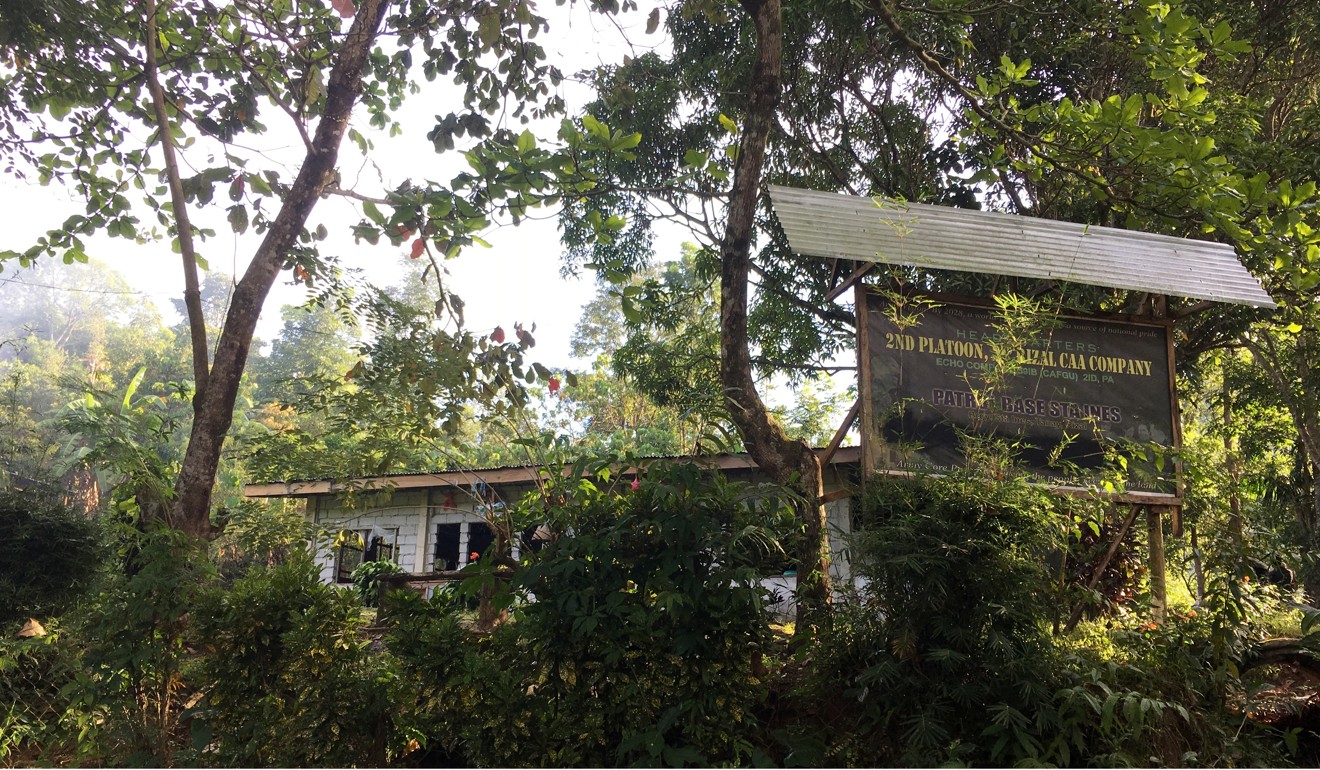
  • Deep inside the Sierra Madre mountain range about 60km (37 miles) east of the Philippine capital of Manila, distance is measured in river crossings.

    Deep inside the Sierra Madre mountain range about 60km (37 miles) east of the Philippine capital of Manila, distance is measured in river crossings.

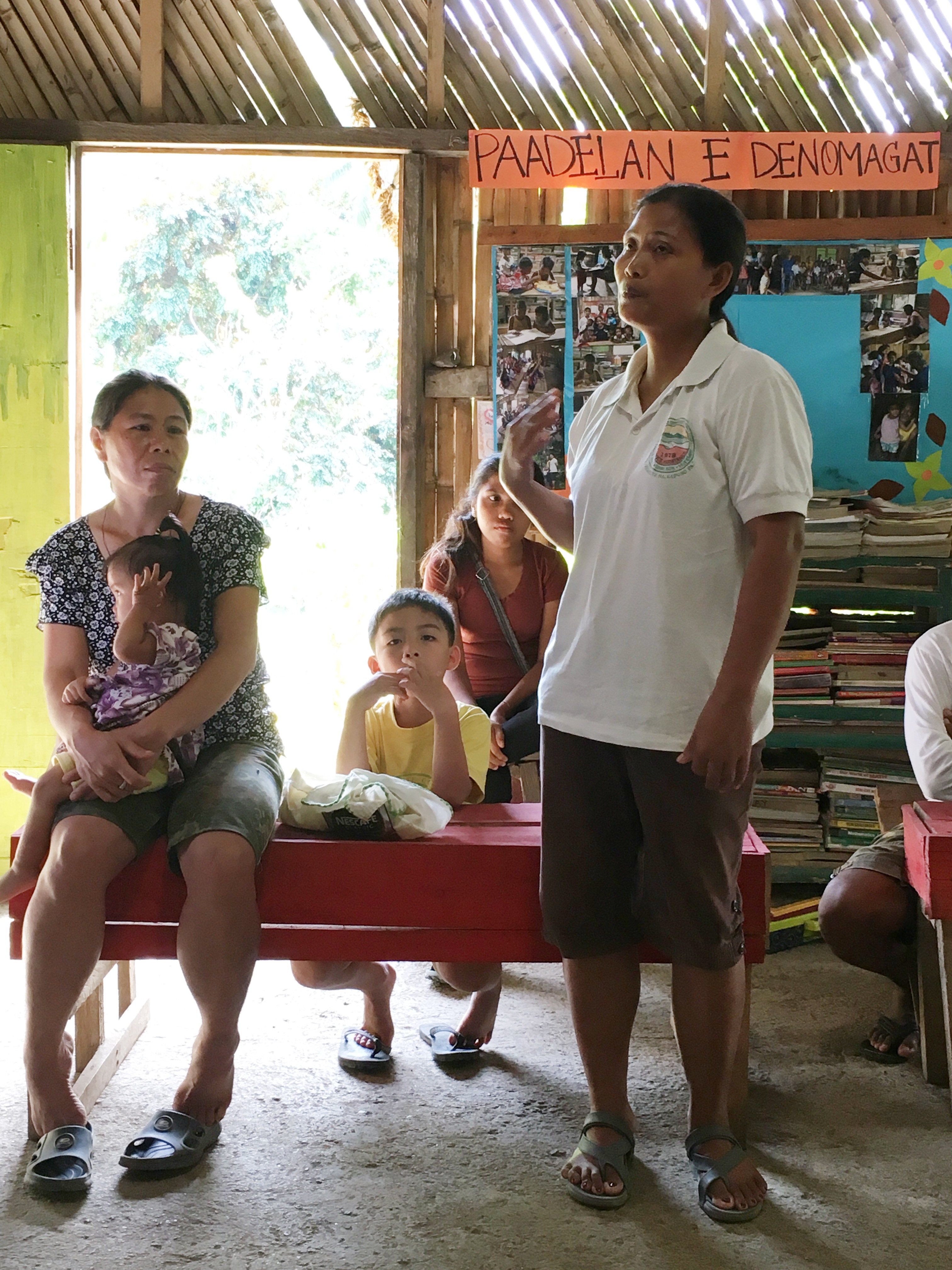
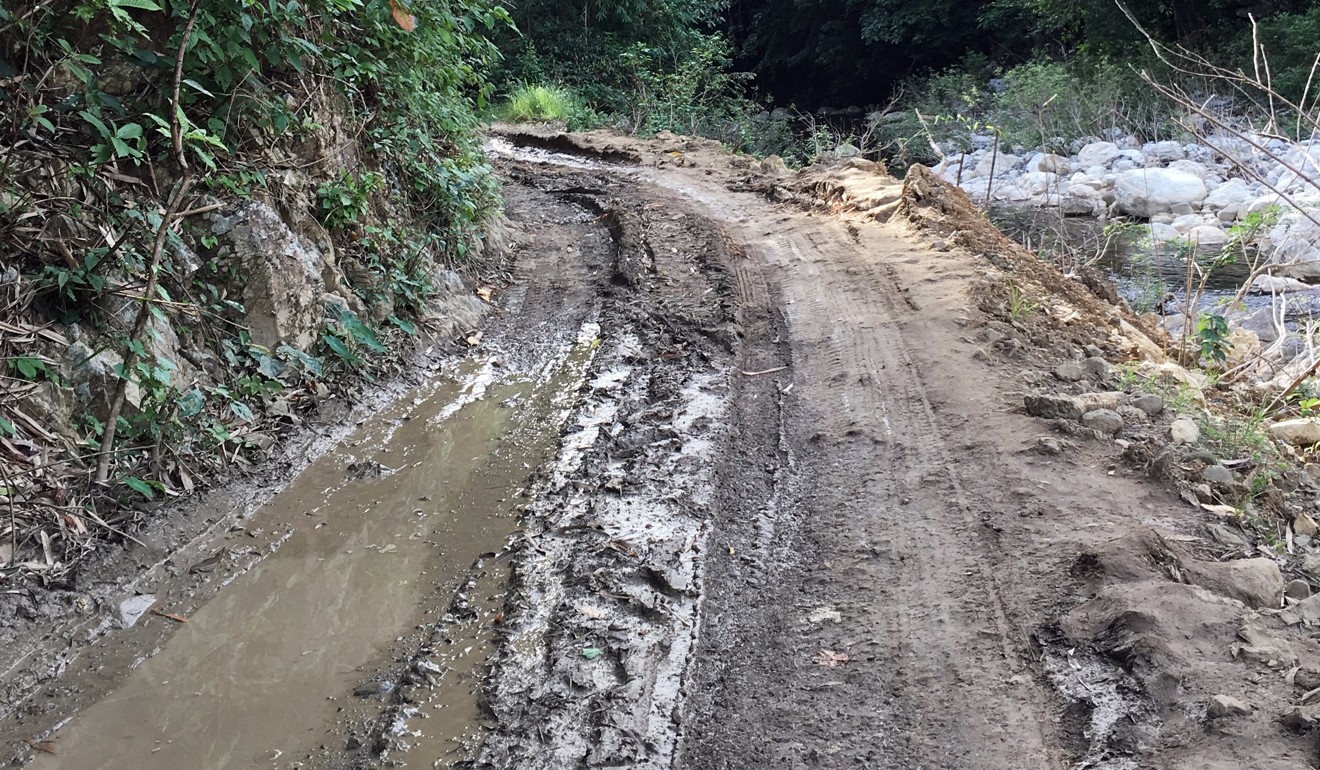
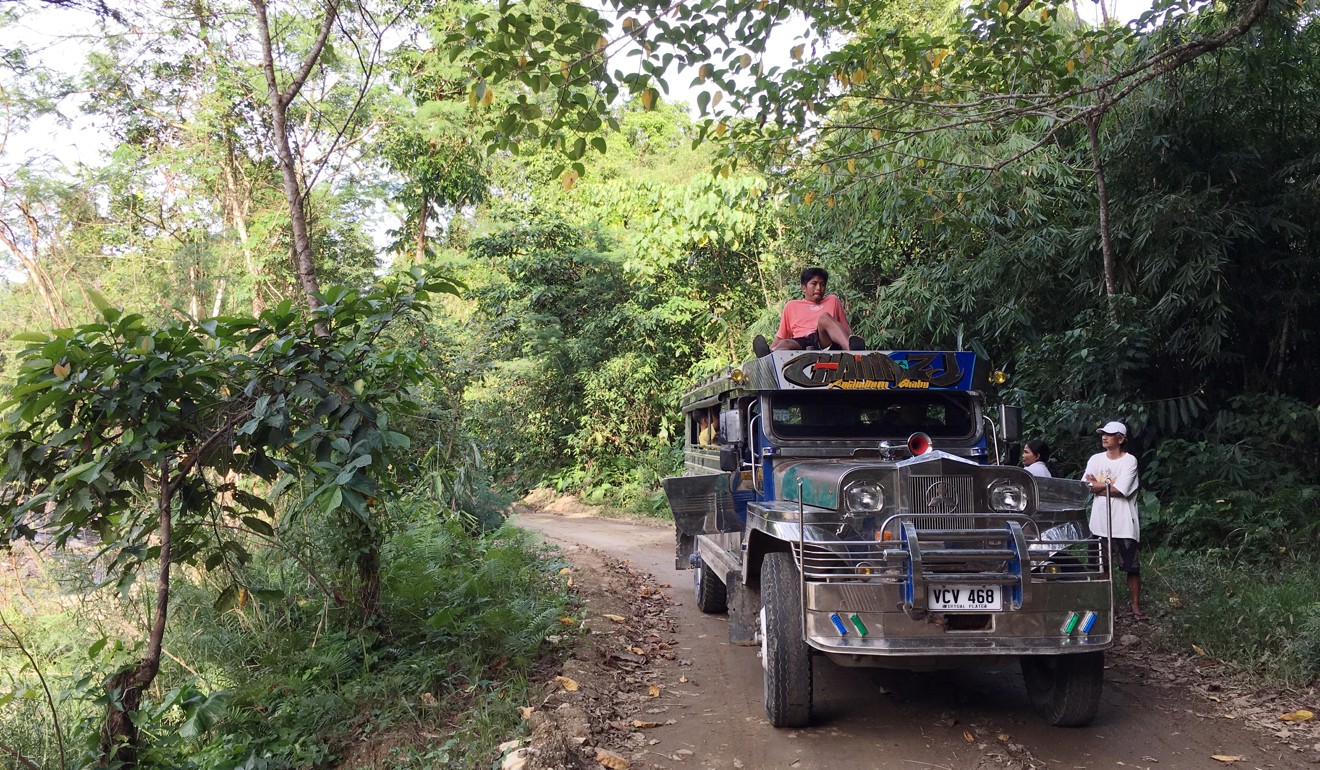
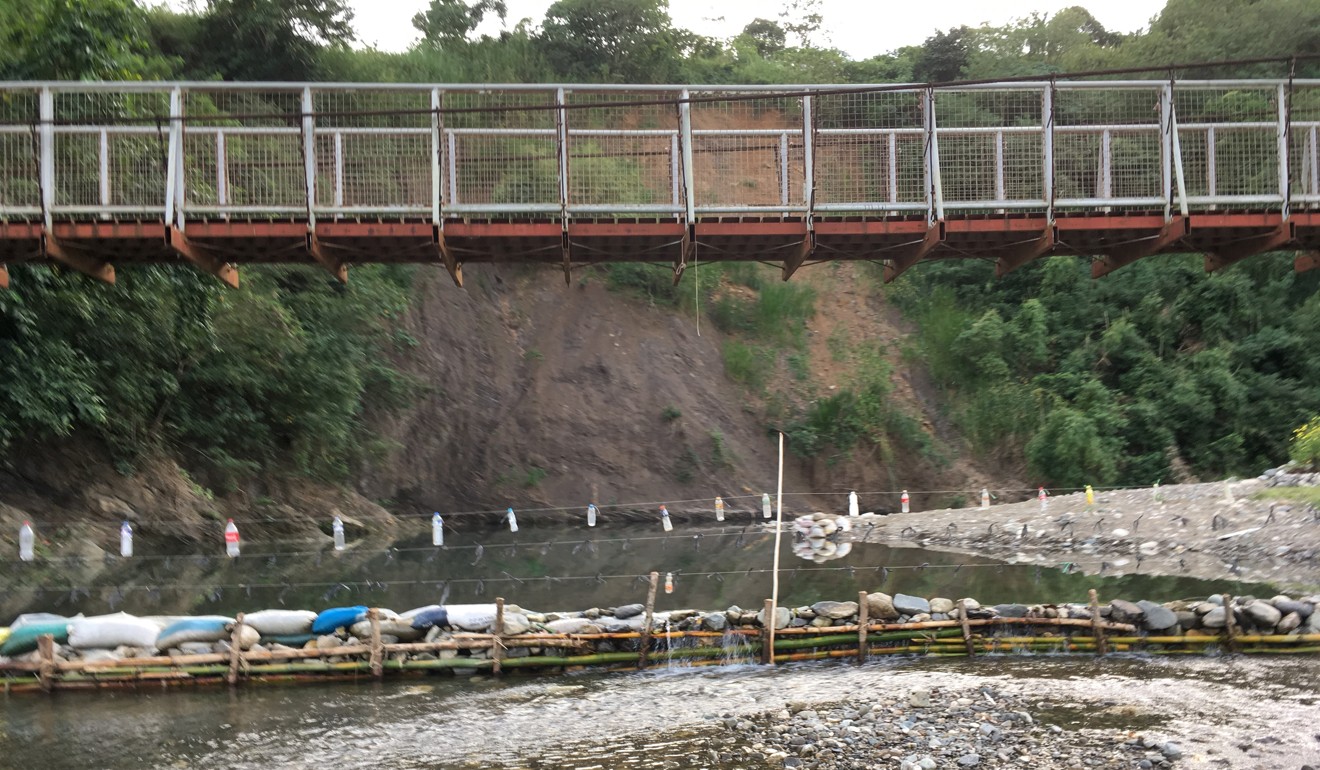
    It takes 13 crossings – a rocky journey by motorcycle, jeep or boat – from the administrative centre of the Santa Ines district to reach the remote area known as Sitio Nayon, the ancestral lands of the historically nomadic Dumagat tribe.

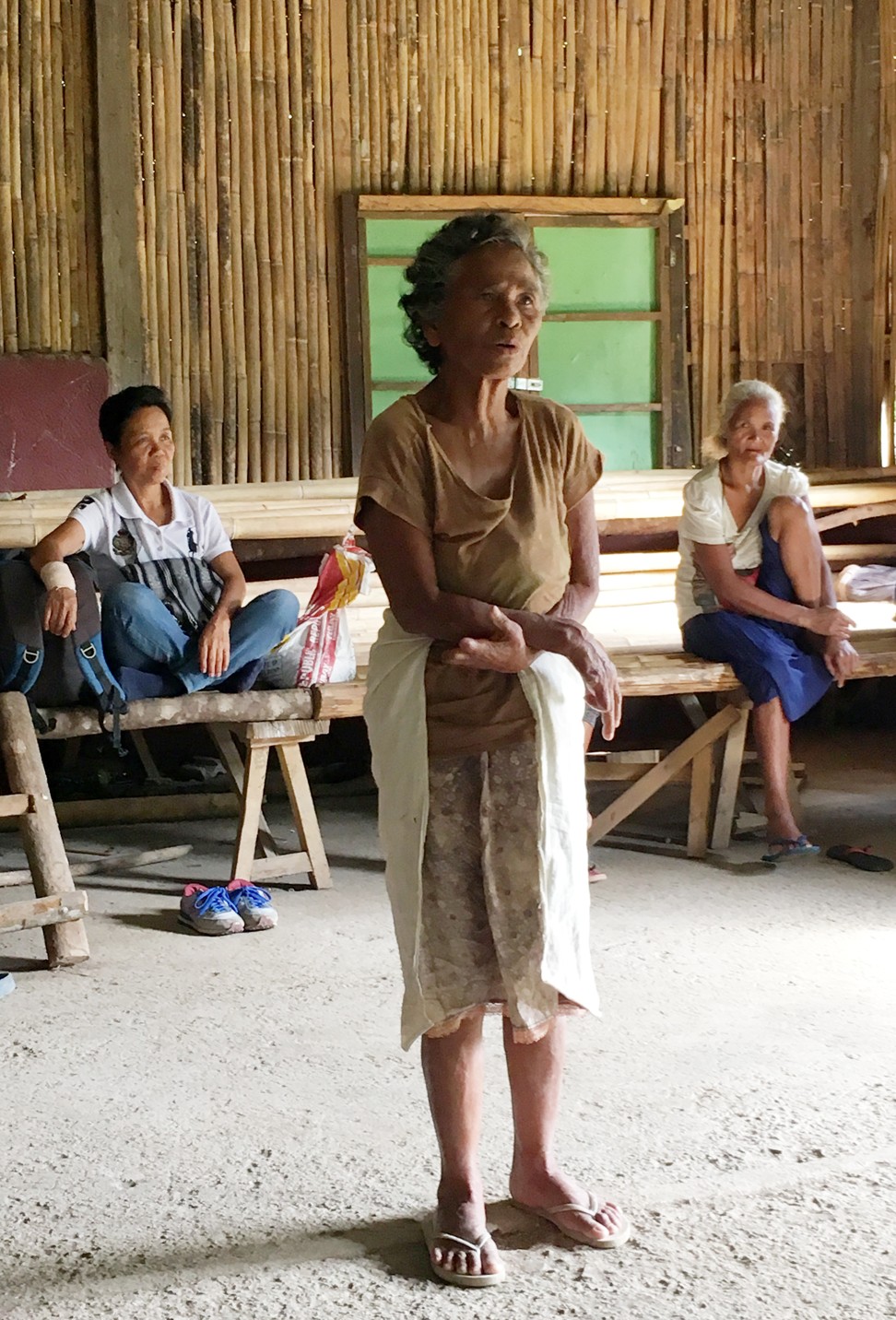
    Even by jeepney, the ubiquitous open-backed passenger truck, the journey takes an hour. Despite the distance, dozens of anxious villagers came together at the local community hall one afternoon to speak out against what they see as a looming threat to their way of life: the China-funded Kaliwa dam.

    “What will happen if we are forced to go elsewhere? We don’t know where to go,” Dante Alcien, from a nearby district in Lumutan, Quezon province, said to the villagers. “The Chinese government is committing a grave sin by building this dam. They are invading our territory.”

    The Dumagats fear that the 12.2 billion peso (US$231 million) mega dam, being built to augment water security for rapidly urbanising Metro Manila will displace them from the lands they have called home for generations.

    While the government projected that only 56 families would be directly displaced by the dam, villagers are concerned about the unknowns: a lack of information from the government, the potential environmental and flooding impact, and the prospect of approval for bigger dams in their river basin.

    Across the affected areas of Quezon and Rizal provinces, indigenous peoples have geared up for a long fight. It is a battle that has been raging for nearly four decades – starting in the late 1970s, when the project was first conceived during then strongman Ferdinand Marcos’ dictatorship.
    In late November, the dam officially got the go-ahead to proceed when a loan agreement and commercial contract were signed during Chinese President Xi Jinping’s high-profile visit to Manila. Twenty-nine deals were signed during his trip, marking the rapprochement between the two countries under the administration of Philippine President Rodrigo Duterte.

    The Kaliwa dam has been both a priority for China in the Philippines and a flagship water project for Duterte’s “Build, Build, Build” programme. Officials aimed to break ground quickly to allay concerns about the security of Manila’s water supply and the length of time it is taking the promised Chinese funds to come through.

    “It doesn’t look good that after waiting for 38 years, your president … cannot even inaugurate it, and this is just a small project in relation to the others,” said Reynaldo Velasco, administrator of the Metropolitan Waterworks and Sewerage System, the government agency that heads the project. “This is how we do things in the Philippines; only in the Philippines.”
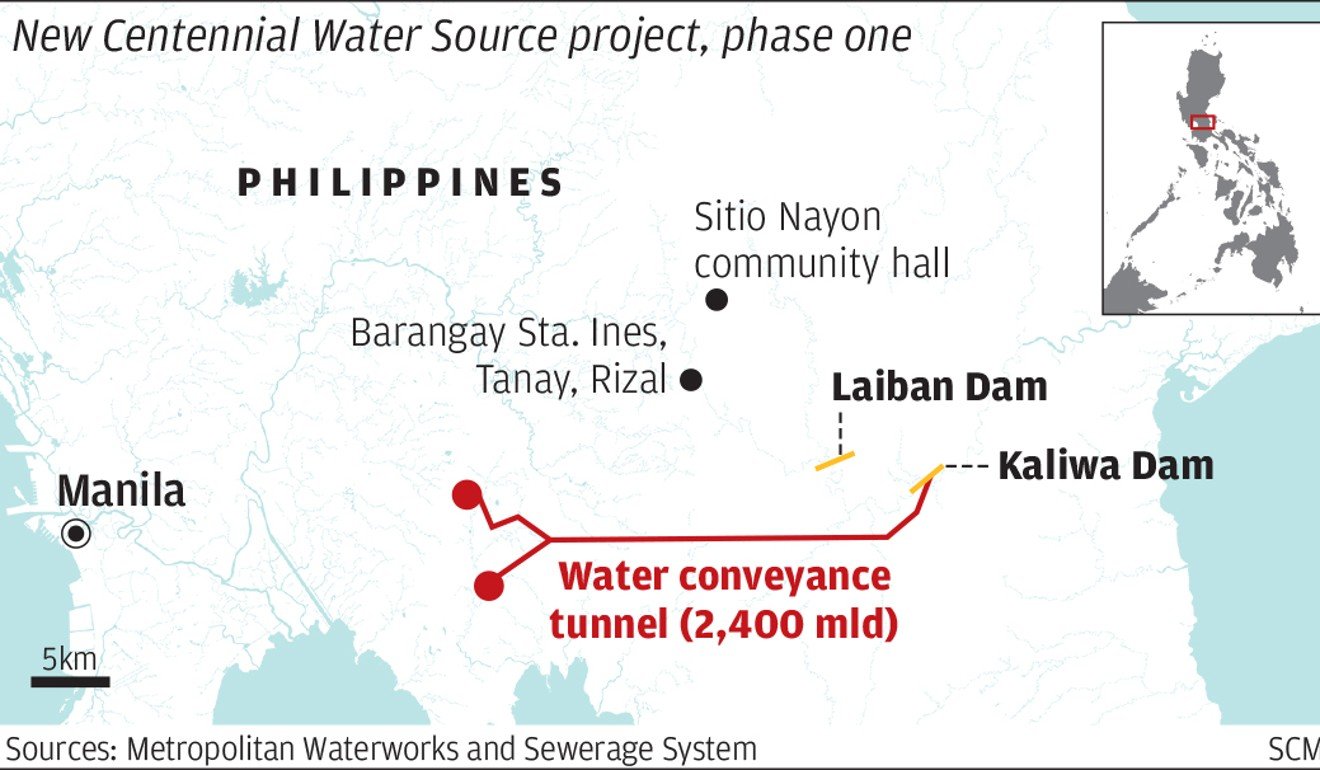
    The dam will supply an extra 600 million litres (158.5 million gallons) of water per day to Metro Manila – the seat of government and one of the three defined metropolitan areas of the Philippines. It was approved for construction in May 2014 by the National Economic and Development Authority and is the first phase of the broader New Centennial Water Source project, likely to be followed by the larger Kanan and Laiban dams.

    All three projects will stem from the Kaliwa-Kanan-Agos River Basin, with the Kaliwa dam set to be built in eastern Quezon province and connected to Metro Manila through neighbouring Rizal province by a 27.7km water supply tunnel, capable of conveying 2.4 billion litres per day.
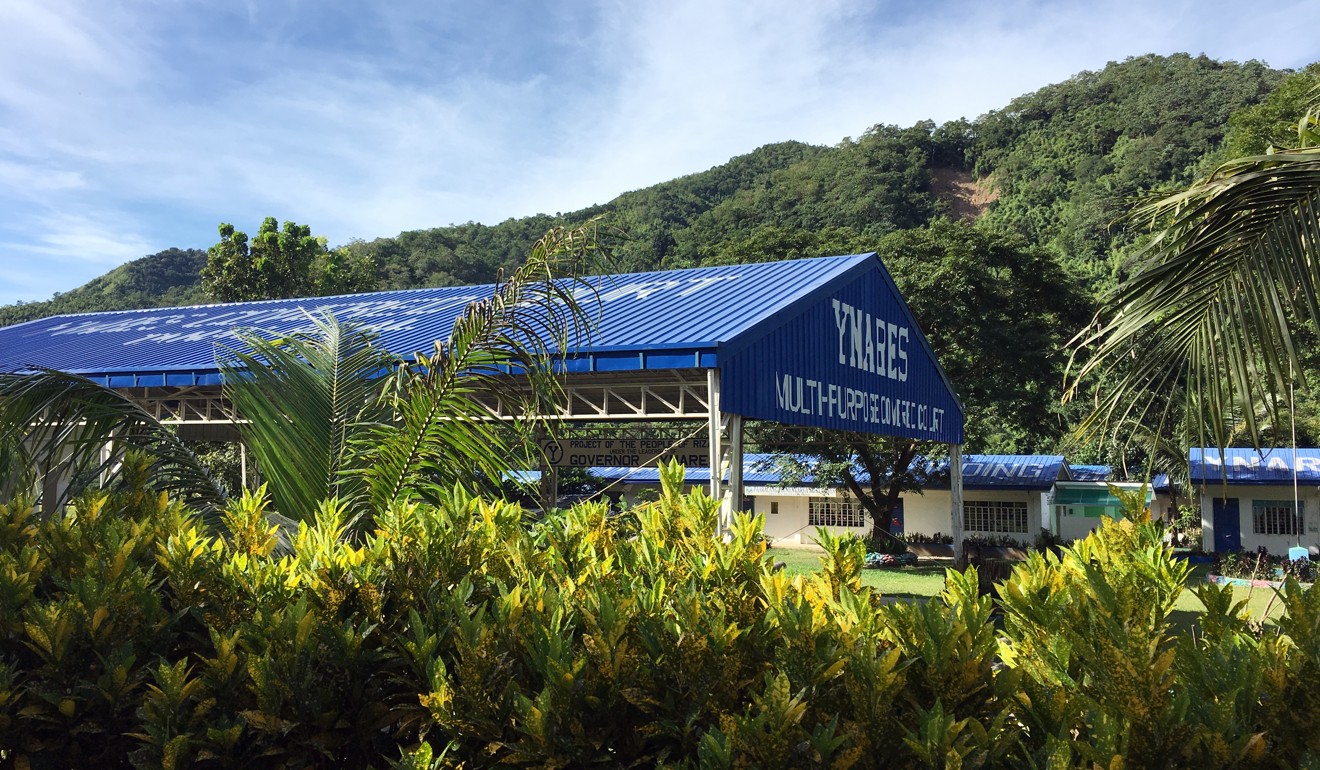
    Chinese funding was earmarked for the Kaliwa dam as part of the US$9 billion in pledges that Duterte secured from Beijing in 2016.

    The Chinese government has poured funding into megaprojects around the world, in what observers see as a concerted effort to expand the country’s global presence and influence.

    Projects funded by Beijing have drawn criticism for laxer lending standards, and raised questions about transparency and the involvement of state-owned contractors. But Duterte, known for his anti-Western rhetoric, welcomes Chinese trade and aid, including Beijing’s support for his bloody war on drugs.
    For the Kaliwa dam, the financing model is official development assistance from China, switched over in June 2017 from a public-private partnership. The Export-Import Bank of China, the state-owned provider of export financing, will fund 85 per cent of the project, with the Metropolitan Waterworks and Sewerage System footing the rest of the bill.

    Under the official development help model, the Chinese embassy in the Philippines recommended three Chinese companies for the dam. State-owned China Energy was formally awarded the contract in August.
    Construction is expected to begin next year and finish by 2023, but Velasco has asked the Chinese contractor to finish the dam before Duterte’s term ends in 2022, joking that he would hang the company’s country manager from a large tree if it was not finished in time.

    “I already put out the rope for him – I’m just kidding,” he said in his office. “I’m asking them, because it is a big giant company in China, to do it earlier, before my president steps down … It’s possible. They have the technology. We have vetted their capabilities, and we agreed that they should work 24 hours [a day].

    “Of course, we cannot push them too hard, [potentially] sacrificing the quality of the work.”

    Globally, concern has been growing about the potential “debt trap” lurking in Chinese development projects. In the Philippines, worries are compounded by a 2007 government kickbacks scandal with a Chinese telecoms company, and by historic tensions from overlapping claims in the energy-rich South China Sea, waters that Manila refers to as the West Philippine Sea.

    “The Chinese are already claiming our territory in the West Philippine Sea, and now they want to gain more by entering into a contract for this dam,” Alcien, the Dumagat villager from Quezon, said. “Are they content yet from how much they have got? It feels like the Chinese are being greedy.”
    So far, foreign direct investment from China accounts for only about 3 per cent of the Philippines’ total, lagging far behind countries such as Japan, the United States and Indonesia. But Chinese capital has been flowing into the country rapidly, nearly doubling in the first three months of this year. In 2017, Chinese investment in the Philippines surged 67 per cent from a year earlier to US$53.8 million.

    Chinese foreign ministry spokesman Geng Shuang said in late November that it was impossible for the Philippines to fall into a “debt trap” from accepting China’s loans, since those borrowings made up only a small amount of the country’s total foreign debt.

    “China funds projects in the Philippines based on their needs,” Geng said. “We believe that the relevant projects will continue to improve people’s livelihoods and spur economic development, giving new impetus for their growth.”
    One much-touted Chinese investment is the US$62 million Chico River Pump irrigation project. Led by the Philippines’ National Irrigation Administration, the system will provide “a stable supply of water” to around 8,700 hectares (25,000 acres) of agricultural land, benefit 4,350 farmers and their families and serve 21 districts in the northern Luzon provinces of Cagayan and Kalinga, according to a government report.

    Although originally envisioned as a dam, it was eventually scaled down to a river pump amid decades of local resistance.

    “It’s only our current president who likes China. Before, it’s always the US [with whom the Philippines had close ties], right?” said Ricardo Visaya, administrator for the National Irrigation Administration, which also provided technical consultation for the Kaliwa dam.

    “But really, you can see the result of the cooperation that we established with China … and compared to other countries, it’s cheaper. So there are some [criticisms]. That is normal. There will always be negative reactions as well as positive reactions.”

    Velasco, from the Metropolitan Waterworks and Sewerage System, said debt would not be an issue for Kaliwa. The Chinese contractor, following Velasco’s instructions, would also hire Filipinos for non-technical jobs to spur local development, he said.

    “We don’t want people from outside to bully us,” Velasco said. “They are all employees, we are the employer … They have no other choice, or I will send them back home and I will ask their government to change them.”

    China Energy did not respond to multiple requests for comment. The Chinese consulate in the Philippines declined to make ambassador Zhao Jianhua available for an interview, and did not respond to specific questions about the Kaliwa dam.
    The dam is intended as a medium-term solution to Metro Manila’s water security, supplementing the Angat Dam, which provides most of the city’s water. According to the waterworks and sewerage system, water supply levels for the city are 7 to 10 per cent above demand, and planning ahead will avoid the need to substantially raise consumers’ water tariffs.

    International entities such as the World Bank and the Manila-based Asian Development Bank (ADB) are also working with Metro Manila on its water security programme, with ADB financing the Angat water transmission project and providing consultation for the Kaliwa dam.

    “We are helping them [on Kaliwa]. That project was there, even before, but we will be continuing our assistance on the strategy – technical assistance,” Ramesh Subramaniam, director general of Southeast Asia for the ADB, said.

    But Philippine environmental and rights groups have disputed the need for the Kaliwa dam, pointing to alternatives such as greater adoption of green water catchment – the collection of rainwater – as well as improving water efficiency in existing pipelines and using smaller-scale water sourcing projects.

    They argue the dams of the New Centennial Water Source project could increase the risks of flooding and damage to 28,000 hectares of forest, while displacing at least 30,000 mostly indigenous people.
    “We’re questioning the logic of a water project that will contribute to the degradation to the forests of the watershed,” said Leon Dulce, national coordinator for the environmental advocacy group Kalikasan. Alternatives existed that “do not require this scale of risk”, he said.

    Dulce and others warned that fierce opposition and action from local governments and communities in Quezon and Rizal could stall the project. That action could include petitioning the Philippines Supreme Court to grant a Writ of Nature against the dam to protect a constitutionally guaranteed right to a healthy environment.

    Though government officials such as Velasco call the dam a “done deal”, indigenous communities on the ground are not likely to budge because the stakes are so high.

    “The Dumagat and Remontados [tribes] have a symbiotic relationship with nature, living in their ancestral domain for centuries,” said Pete Montallana, chair of the Save Sierra Madre Network Alliance, and coordinator of the Indigenous Peoples Apostolate of the Prelature of Infanta. “Their culture is attached to that. To uproot them is literally to kill them as a people.”
    Ramcy Astoveza, a Dumagat member of the National Commission on Indigenous People, said the law ensured indigenous communities in the Philippines to the right to free, prior, and informed consent, or the power to approve or disapprove any project in their ancestral domain, including the Kaliwa dam. The commission would facilitate the process for the government to obtain consent of the Dumagat-Remontado in Tanay and General Nakar, Quezon, he said.

    Also in Santa Ines, more than 100 villagers gathered on a Saturday morning for mass at the local Catholic Church, where leaders introduced a resolution to oppose the dam and assert the people’s rights to their ancestral lands.

    After a detailed explanation of the implications of the project from Jennifer Haygood, senior researcher from the Ibon Foundation, an independent think tank, the priest asked people to stand if they opposed the dam. Everyone, young and old, rose in the narrow wooden pews.

    “At the end of the day, we just have to fortify our local community’s defences,” Dulce said.

    “They are the first and last line of defence against these projects. They have been able to successfully barricade against the dam for 40 years, and together with the indigenous people, we are ready to barricade against the dam for 40 more years, if it has to come to that point.”

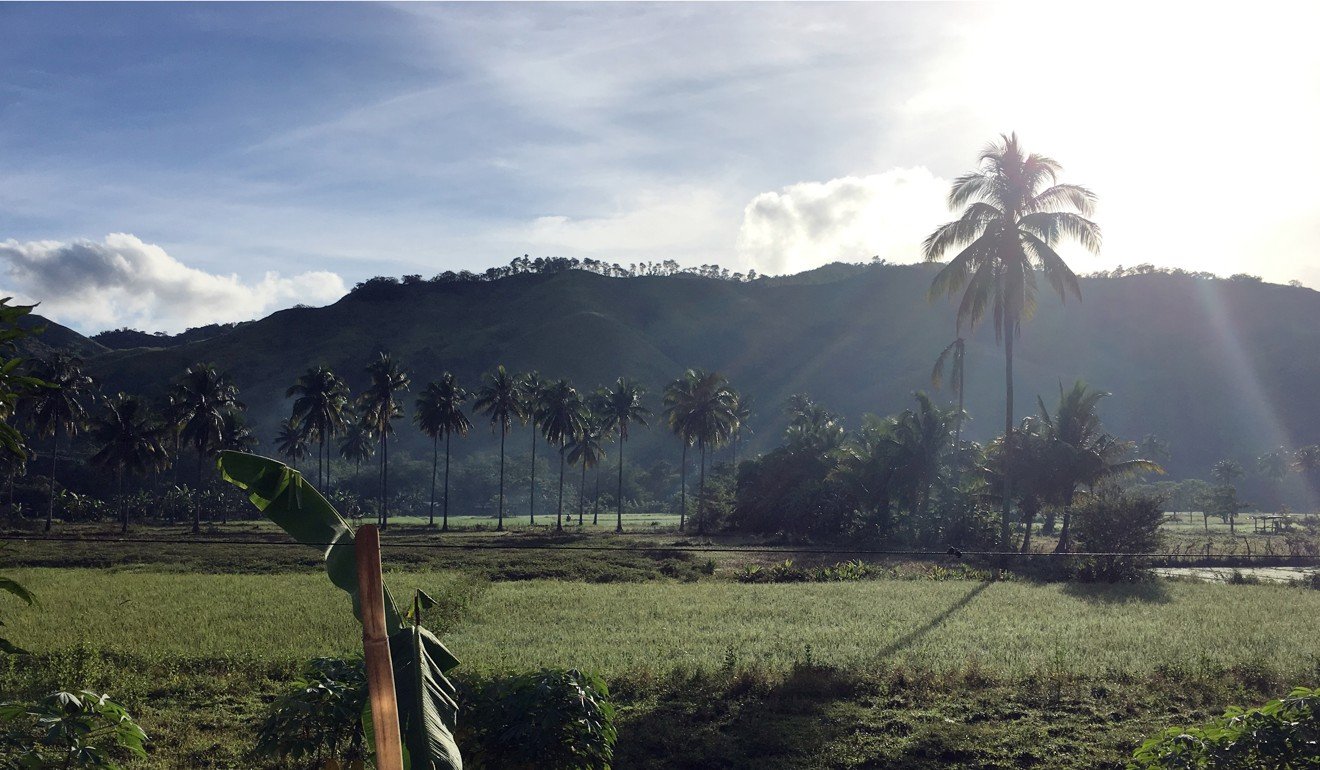
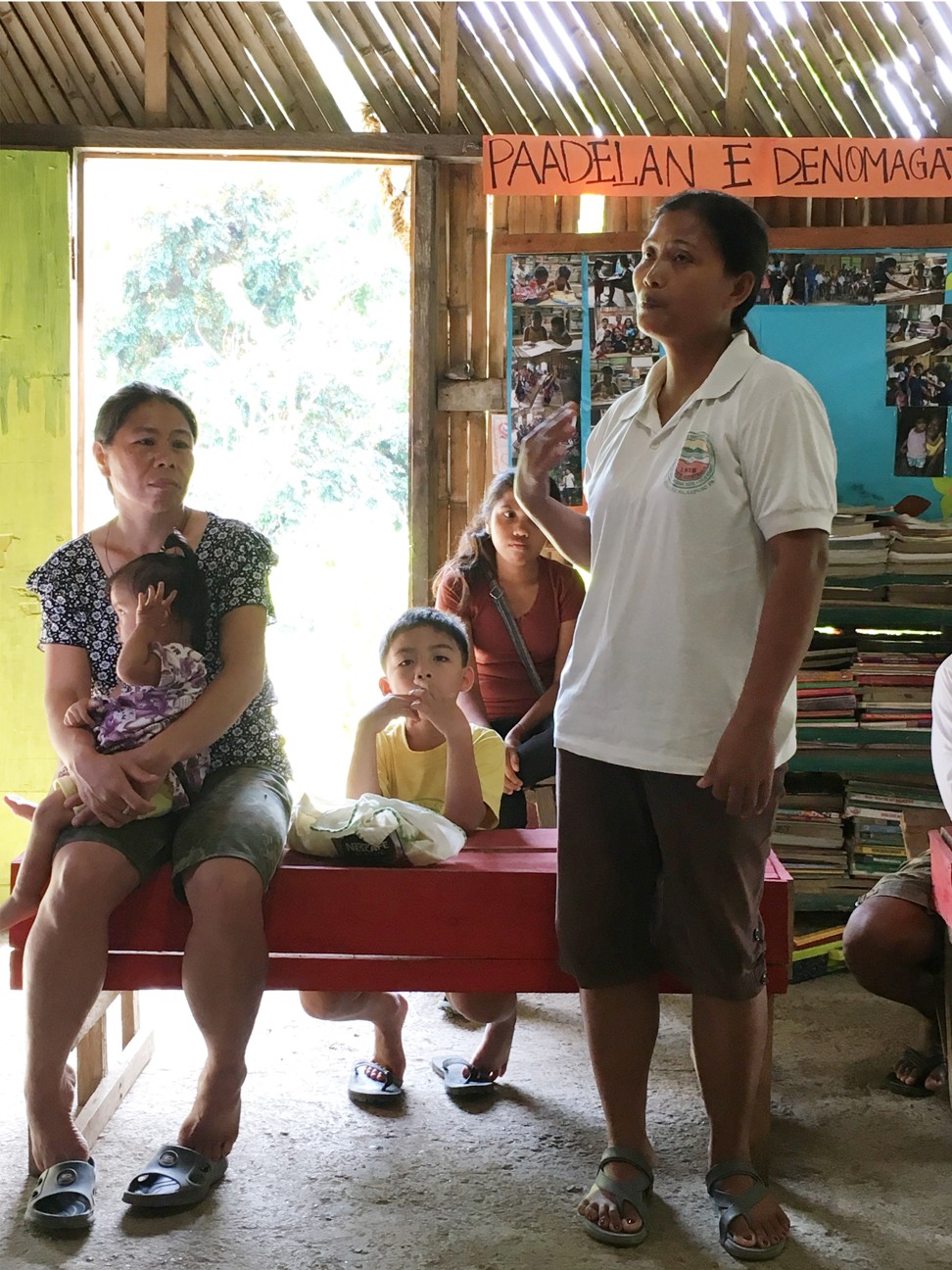
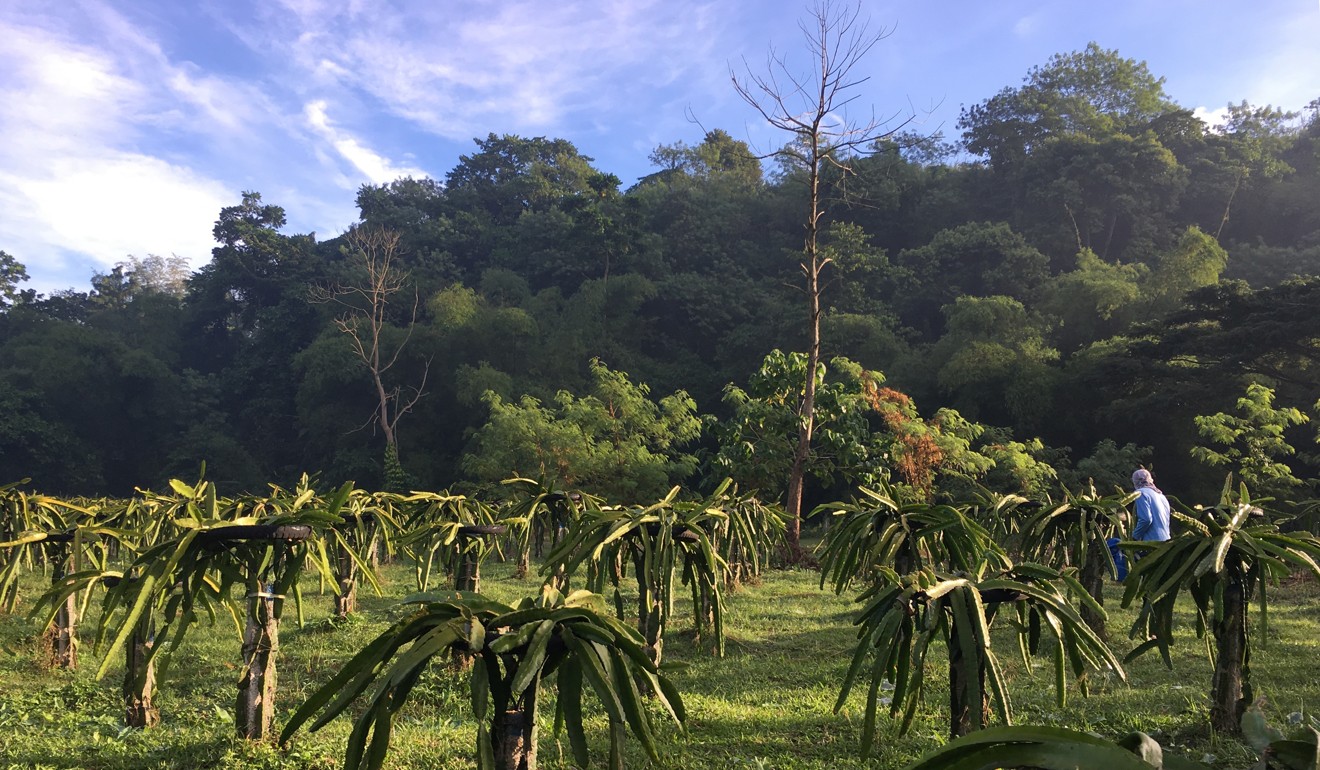
    Several river crossings away, at the Sitio Nayon community hall, dozens sat among shelves of donated books to air their grievances and fears. Just outside was their coveted river, and around the bend unpaved paths littered with slabs of rock. All around were long stretches of greenery that bled into the rugged outline of the Sierra Madre: balete fig trees, heartleaf plants, coconut trees and dragonfruit plantations.

    “I have been part of the resistance since I was young,” said a semi-nomadic villager named Miling, 66. “Because for us, this land is our life.”

    Another elder, a septuagenarian known as Loida, recalled travelling into the city to protest when she was younger. But she has since passed the baton to her grandchildren. As she spoke, she turned to her fellow villagers, her voice steady but her tone urgent.

    “I have not spoken to President Duterte personally, but he promised he would support us indigenous people,” she said. “But what is he doing now? He wants us to drown.

Law of Unintended Consequences

continuously updated blog about China & India

ChiaHou's Book Reviews

continuously updated blog about China & India

What's wrong with the world; and its economy

continuously updated blog about China & India