Chindia Alert: You’ll be Living in their World Very Soon
aims to alert you to the threats and opportunities that China and India present. China and India require serious attention; case of ‘hidden dragon and crouching tiger’.
Without this attention, governments, businesses and, indeed, individuals may find themselves at a great disadvantage sooner rather than later.
The POSTs (front webpages) are mainly 'cuttings' from reliable sources, updated continuously.
The PAGEs (see Tabs, above) attempt to make the information more meaningful by putting some structure to the information we have researched and assembled since 2006.
Move will help air force with patrols and combat-readiness near Taiwan and in the East and South China seas, according to observers
Markings including national flag and service insignia will also be standardised under new guidelines
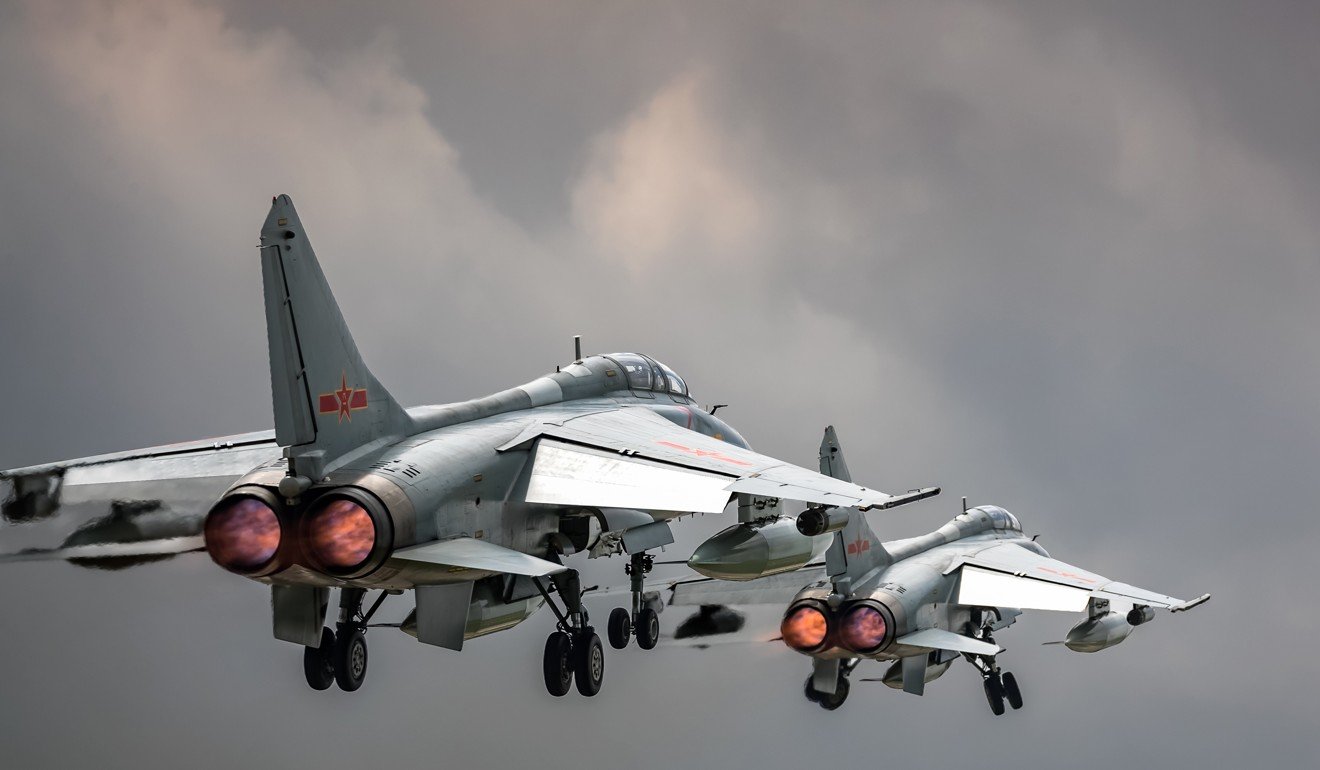
Chinese military aircraft will get “low observable” coatings and standardised markings. Photo: Xinhua
Chinese military aircraft are to be painted with “low observable” coatings and standardised markings under new guidelines, a move observers say will assist with operations near Taiwan and in the East and South China seas.
The guidelines require markings including the national flag and service insignia to be gradually standardised on both active and future warplanes, the official PLA Daily newspaper said earlier this month.
The move comes two years after the Chinese navy started experimenting with its J-16 strike fighter, using a dark grey low-visibility coating instead of blue-grey, and replacing its service insignia with a new design, according to military magazine Ordnance Industry Science Technology.
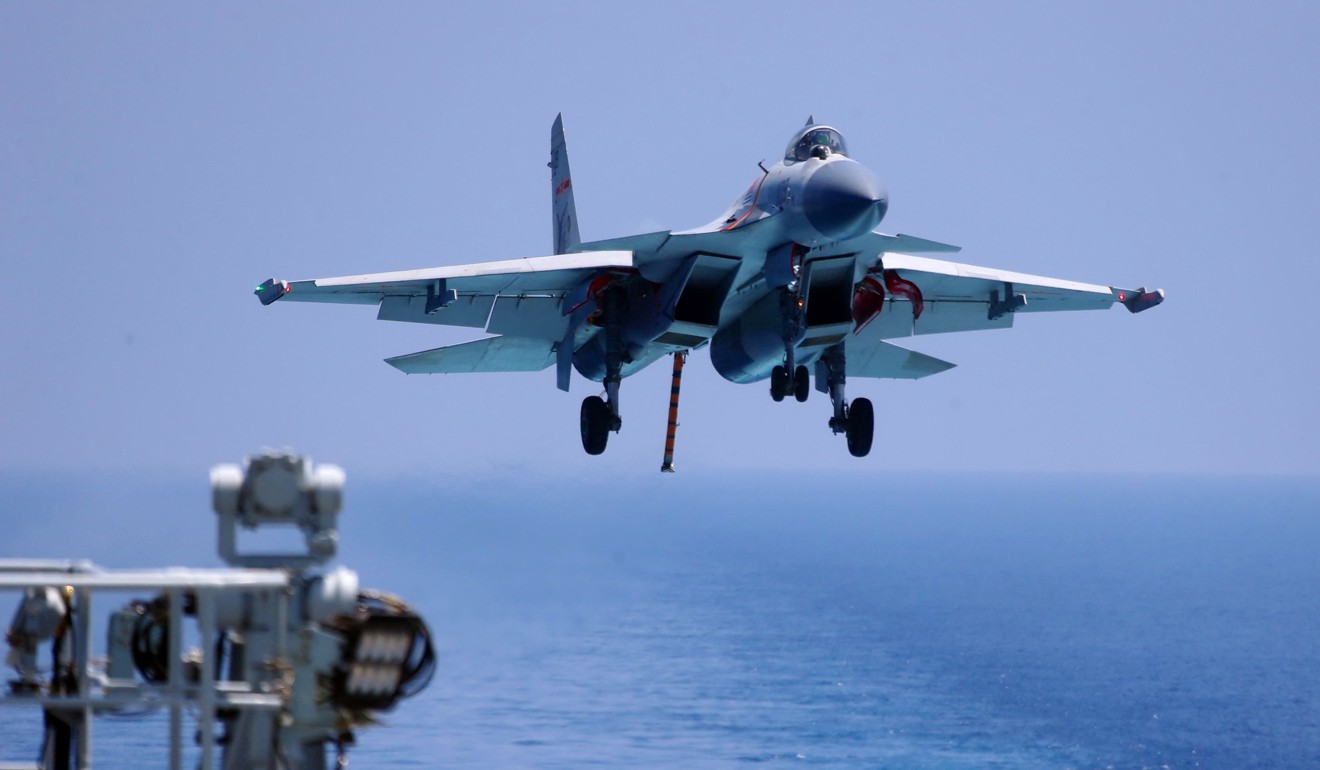
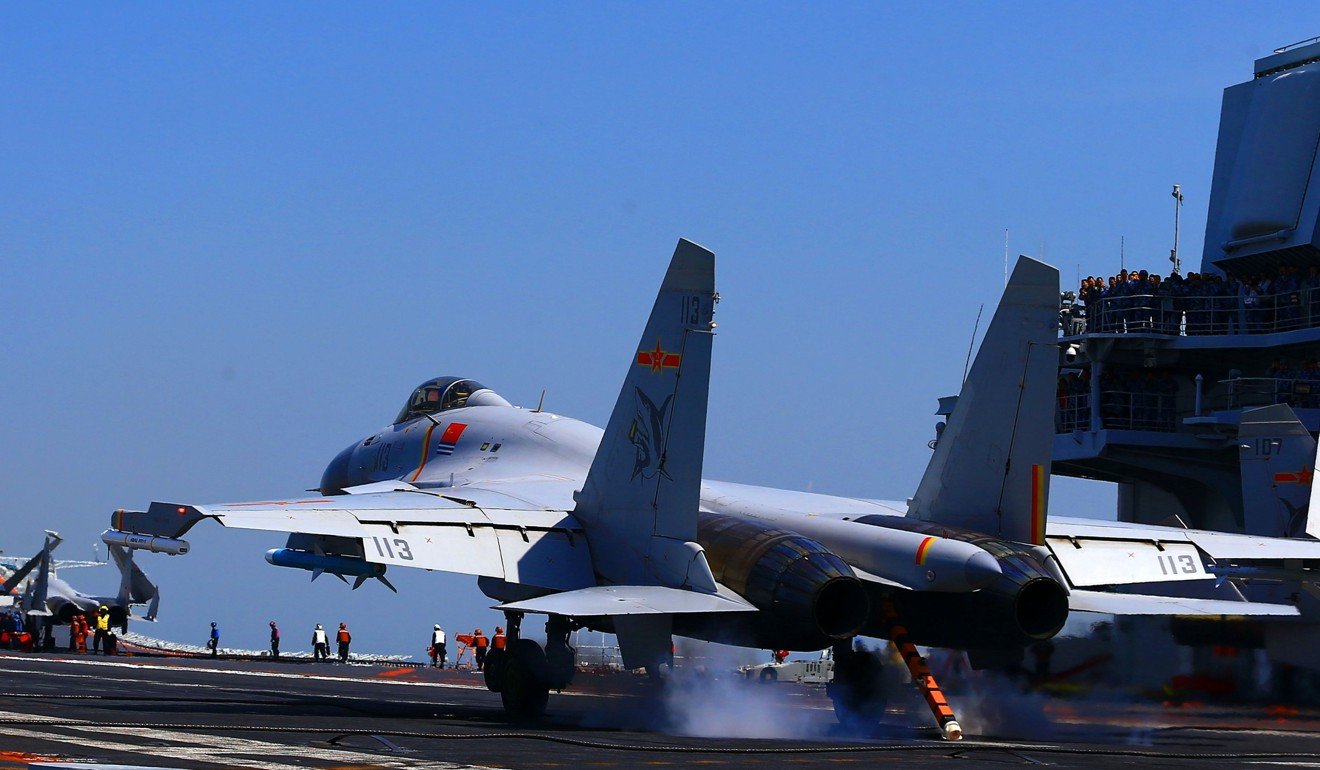
Some of the navy’s only active aircraft carrier-based fighter jets, the J-15s, have also been given new coatings and markings, according to the People’s Liberation Army’s official website.
PLA Daily said the move aimed to give Chinese warplanes a combat advantage as they “will be less likely to be detected by both the naked eye and military radar”. It said the new guidelines would be gradually implemented this year.
Some of the aircraft carrier-based J-15 fighter jets already have the new coatings. Photo: AFP
Macau-based military observer Antony Wong Dong said the move would help the air force improve patrols and combat-readiness as it carried out more drills near the Taiwan Strait and in the East and South China seas.
China’s air force and navy have sent warplanes including Su-35 fighter jets, H-6K strategic bombers and advanced KJ-2000 airborne early warning aircraft to conduct “encirclement” drills around Taiwan since 2018, as Beijing applies pressure on the self-ruled island that it sees as part of its territory. But none of the aircraft seen in photographs of the exercises had low-visibility coatings or standardised markings, as used on the navy’s J-16s and J-15s.
US spy plane pilots use China’s satellite navigation system as backup
9 Mar 2020
“Aircraft used by the PLA Air Force have different coatings and markings because they are still in a transitional period,” Wong said. “Its counterparts like Taiwan have learned from Western countries like the United States to standardise coatings and markings and designs [since the 1990s].”
Beijing insists that Taiwan, which split from the mainland in 1949, remains part of China and they will eventually be reunited – by force if necessary.
The PLA also regularly sends aircraft to monitor freedom of navigation operations by the US Navy in the South China Sea. Beijing has territorial disputes in the resource-rich waterway with countries including Vietnam, the Philippines, Malaysia and Brunei.
A military insider in Beijing said the US move to send hundreds of its new-generation F-35 stealth fighter jets to South Korea and Japan had also pushed the PLA to upgrade the coatings on its aircraft.
“These coatings are a highly technical area, and China puts a tremendous amount of resources into research on this every year,” said the insider, who requested anonymity due to the sensitivity of the issue. “The coating that’s used on China’s first stealth fighter jet, the J-20, is more advanced than they used on the Lockheed Martin F-22s, but it’s not yet at the level of the F-35s.”
Hong Kong-based military expert Song Zhongping said military aircraft used to have a bright red national flag and service insignia that made them more detectable on radar systems, or even with the naked eye.
“The red they used is striking, but it’s not in line with the ‘low observable’ requirement for all fighter jets,” said Song, who is a military commentator for Phoenix Television.
“All fighter jets must have stealth and low-visibility capabilities, and the coatings and markings on them are part of how they can do this and meet requirements for combat.”
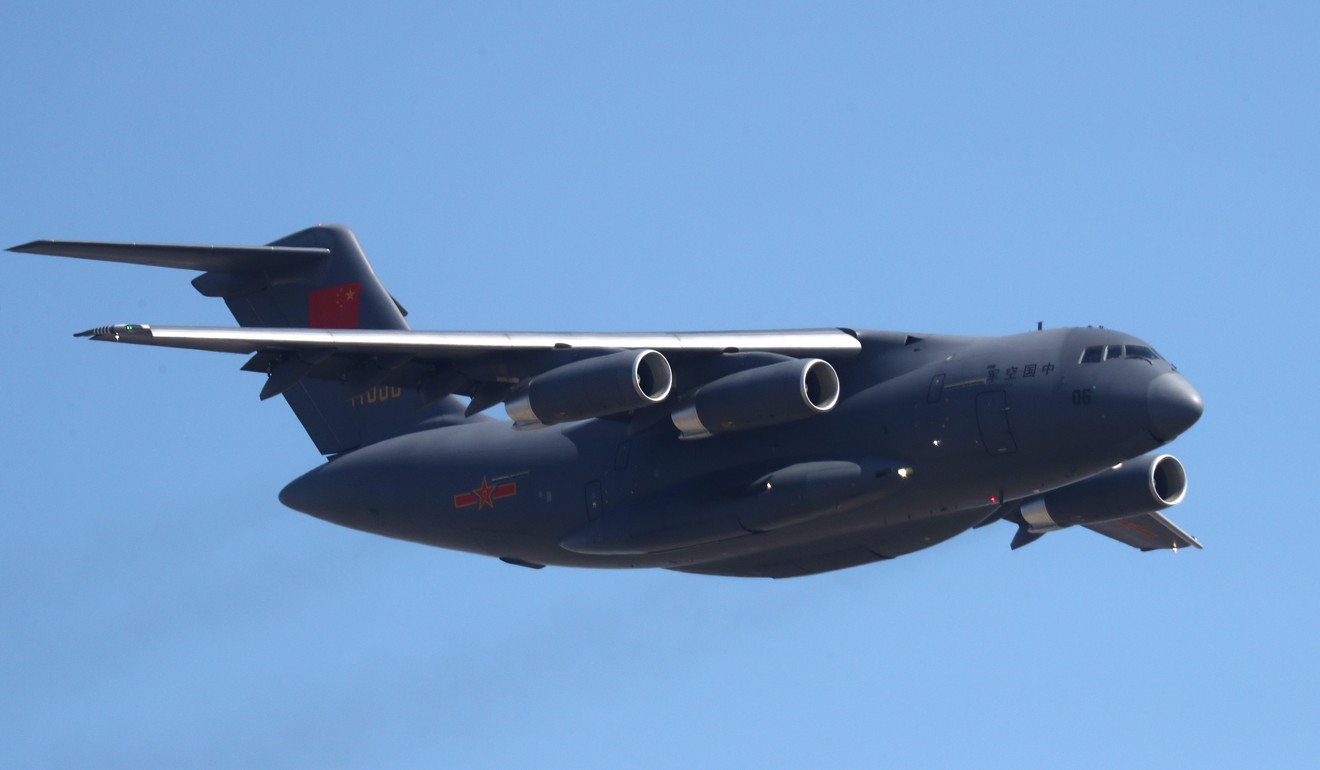
Military medics arrive at Tianhe International Airport in Wuhan, central China’s Hubei Province, Feb. 13, 2020. Ordered by the Central Military Commission, 11 transport aircraft of the People’s Liberation Army Air Force Thursday sent medics and supplies provided by the armed forces to virus-hit Wuhan, capital of Hubei Province. This was the first time for China’s domestically developed large transport aircraft Y-20 to take part in non-military action. It was also the first time for the Air Force to send large and medium transport aircraft on active service to carry out urgent air transport tasks on a large scale. (Xinhua/Li Yun)
WUHAN, Feb. 13 (Xinhua) — Ordered by the Central Military Commission, 11 transport aircraft of the People’s Liberation Army Air Force Thursday sent medics and supplies provided by the armed forces to virus-hit Wuhan, capital of Hubei Province.
This was the first time for China’s domestically developed large transport aircraft Y-20 to take part in non-military action. It was also the first time for the Air Force to send large and medium transport aircraft on active service to carry out urgent air transport tasks on a large scale.
The participation of the Y-20 in this task is an actual test to the strategic delivery capabilities of the Air Force, said Du Baolin, commander of a division in the Air Force that was equipped with the Y-20.
The Y-20 can carry out long-distance air transport tasks under complex meteorological conditions.
Since the outbreak of the COVID-19, the Air Force has sent several batches of medics and supplies to virus-hit areas. Its troops stationed in Hubei, the epicenter of the outbreak, have also taken part in transporting medical equipment and daily necessities.
Fly-past will begin with helicopters and feature the country’s new generation warplanes
A People’s Liberation Army Air Force officer will lead the squadron in a KJ-2000 and become the first serving commander to fly in a National Day parade
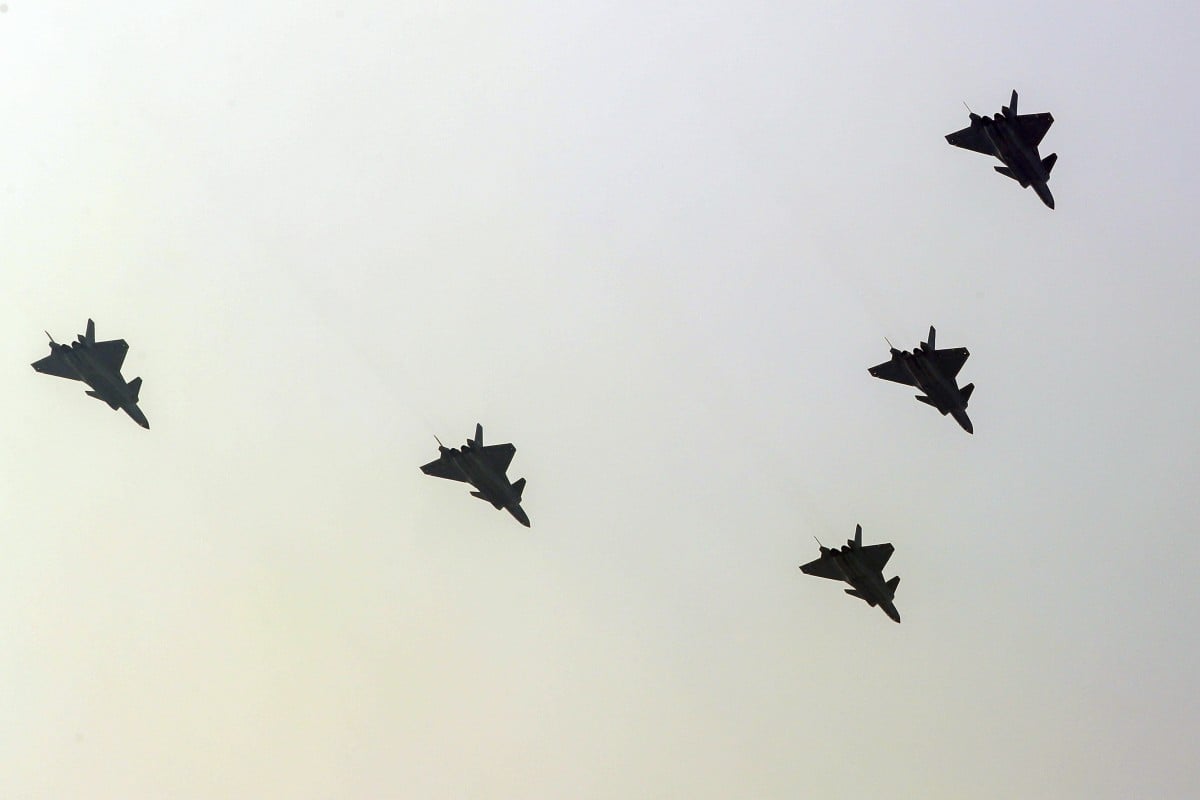
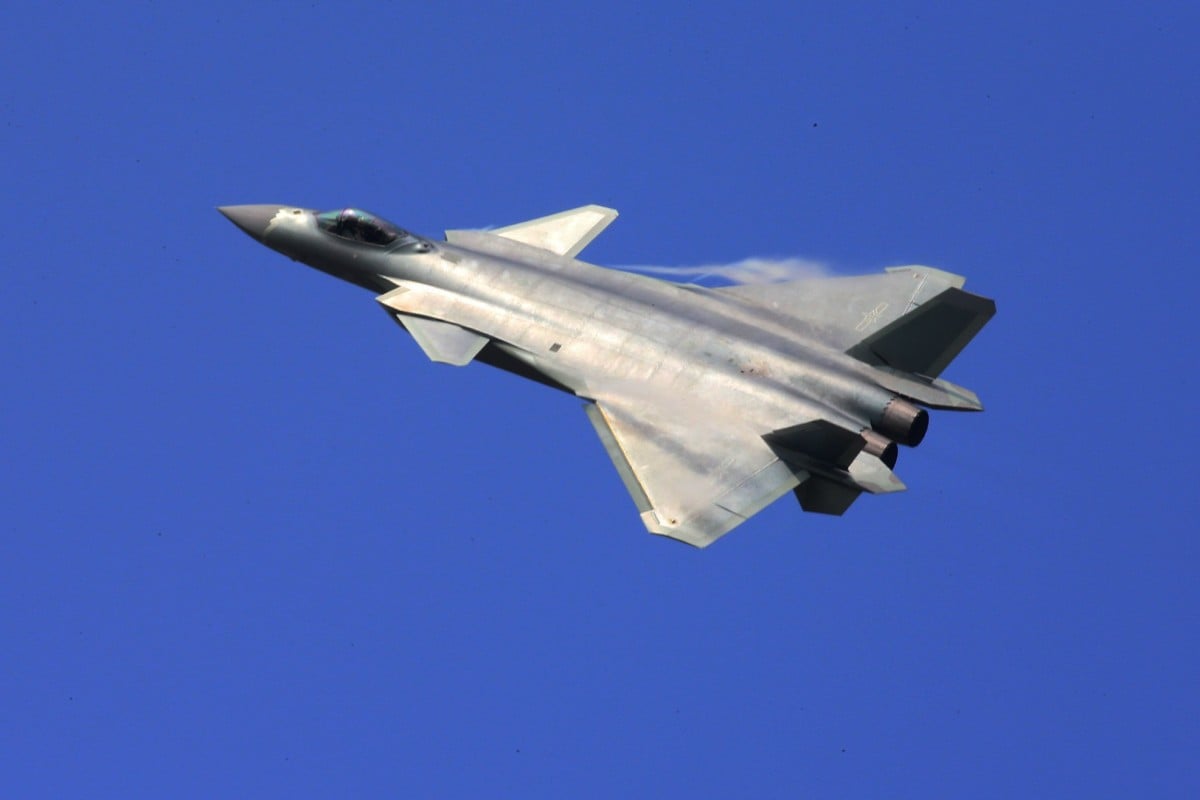
J-20 stealth fighter jets will be featured in Tuesday’s National Day parade in Beijing. Photo: AP
China will assemble the biggest squadron of its most advanced military aircraft for the National Day parade in the capital next week.
Three types of the new generation “20” series warplanes – five J-20 stealth fighter jets, three Y-20 transport planes and six Z-20 helicopters – will join airborne squadrons in the parade, according to a fly-past schedule obtained by the South China Morning Post.
“This year will be the biggest parade to have so many ‘20’ series advanced aircraft flying together,” a military insider said, referring to aircraft developed since 2000.
The J-20 is the country’s first stealth fighter; the Y-20 is China’s first heavy airlifter; and the Z-20 is a medium-lift utility helicopter comparable to the American Black Hawk.
The appearance of all three types of warplanes indicates that each one has entered production.
The H-20 subsonic stealth bomber, China’s answer to the US Air Force’s B-21 Raider, is also part of the “20” series will not make an appearance because it might need at least five more years of development.
The military insider involved in preparations for the parade, said People’s Liberation Army Air Force Commander Ding Laihang would lead the squadron in a KJ-2000 early warning aircraft.
Chinese fighter jets seen in skies over Beijing as preparations for National Day parade step up
“Ding will fly the KJ-2000 over Tiananmen Square for inspection by President Xi Jinping,” the source said, adding that Ding would be the first serving commander to fly in a National Day parade.
“The arrangement is similar to 2015 when [then] Russian Air Force commander Viktor Bondarev flew a Tu-160 strategic bomber over Moscow’s Red Square to mark the 70th anniversary of the end of the second world war.”
The KJ-2000 is the most advanced active early warning aircraft in the PLA Air Force, but it is based on the Russian Ilyushin aircraft.
The Y-20 transport aircraft will be among the new generation of planes taking part in the parade. Photo: Dickson Lee
According to the schedule, 167 aircraft will take part in the fly-past, starting with a helicopter carrying a national flag.
Eight Z-10 attack and 12 Z-19 reconnaissance helicopters will follow in formation, creating the number 70 in the sky to mark the 70th anniversary of the founding of the People’s Republic.
A source close to the navy said Z-8 multi-role and Z-19 reconnaissance helicopters be among the aircraft deployed to the Type 075 amphibious helicopter dock launched on Wednesday.
China says National Day military parade ‘won’t disappoint’ in scale or advanced weapons
A total of 44 fighter jets representing five key battle warplanes – the J-20, the J-16 fighter-bomber, the J-15 carrier-based fighter jet, the J-11 and the J-10 – will participate in the event.
But the J-8 fighter jet was not on the schedule, confirming that the first interceptor built in China has been formally retired.
Various H-6 series bombers will also make an appearance, including the H-6K and H-6N strategic bombers, as well as HU-6 refuelling plane based on the H-6 platform.
H-6K long-range bombers have been sent to the Taiwan Strait as part of “encirclement” patrols close to the self-ruled island in recent years.
Meanwhile the modified H-6N strategic bomber is designed to be armed with the Changjian-10 land-attack subsonic cruise missile, which has an operational range of more than 1,500km (932 miles).
Macau-based military observer Antony Wong Dong said that by adding more functions, the H-6 series of bombers was showing the world China had modified its combat capacity.
Wong also said the appearance of three types of training planes – the JL-8, JL-9 and JL-10 – was notable.
“It indicates that the Chinese air force had build up a systematic and comprehensive training system to train more pilots,” he said.
Military stresses combat readiness and war mentality in production released just weeks before 70th anniversary of the People’s Republic
China’s air force shows a more assertive side in a new propaganda video. Photo: Handout
The Chinese air force has ramped up its combat rhetoric in its latest propaganda video, with pilots warning enemies in English and top brass stressing the need for crisis mode.
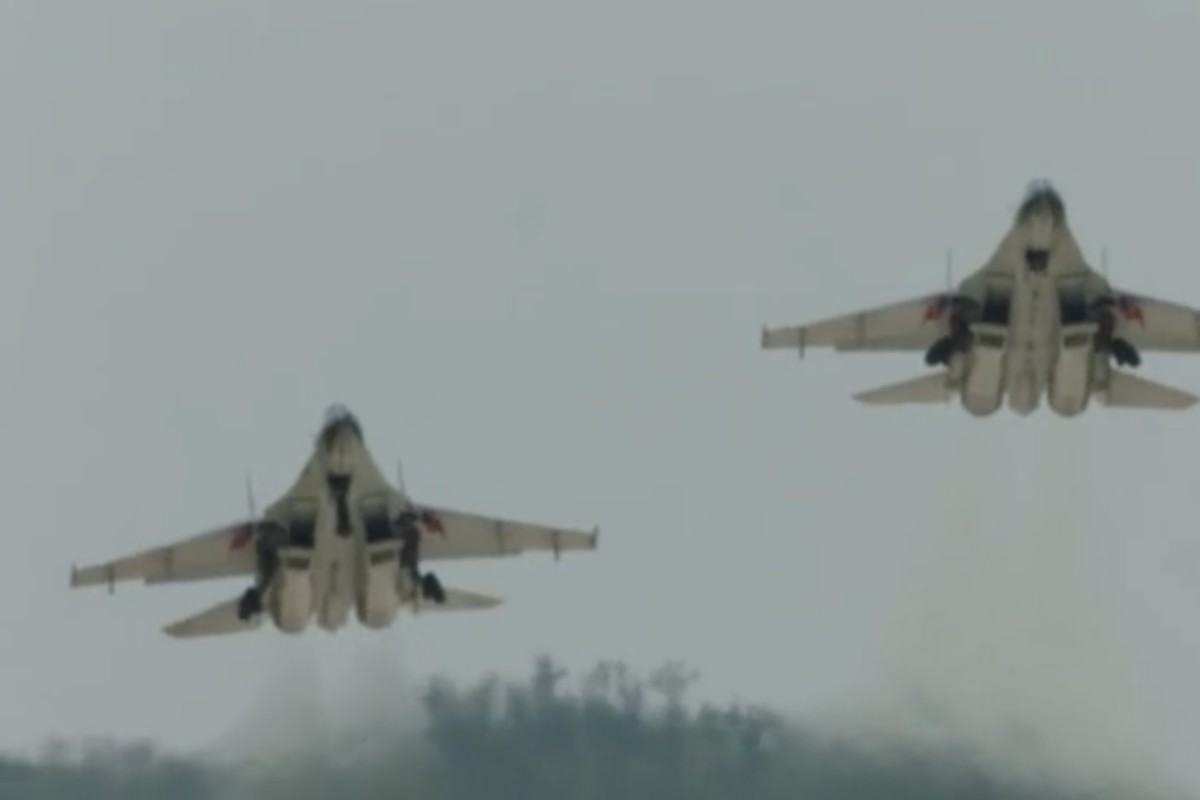
The four-minute video was posted on the Ministry of National Defence’s website on Wednesday and begins with two J-20 stealth fighters taking off from an unidentified airbase.
At least three missile-carrying J-11 jets are then shown make low passes and various aerobatics at sea.
After that, a pilot shouts in English: “This is the PLA Air Force speaking. You are about to enter Chinese airspace. Leave immediately. Leave immediately.”
The video also features members of an elite brigade called the “Eagles of Liaoning province”, a frequent winner of PLA Air Force competitions.
PLA Air Force formation ‘a sign of stealth fighter mass production’ in China
Brigade member Bai Long, a J-20 fighter pilot, says the team have a higher calling.
“Winning over enemies is more important than winning competitions,” Bai says.
Also featured is Wang Hai, a 93-year-old combat veteran from the Korean war, who encourages air force personnel to fear nothing during combat.
“You cannot do anything if you are not brave enough. You can’t be a pilot if you fear death,” Wang says.
Wang Yongtong, a brigade commander, is also quoted as saying that the Chinese air force is using war games to strengthen its combat readiness.
“We will meticulously prepare for war and improve our combat capacity to resolutely safeguard national sovereignty, security and interests,” he says.
The video’s release comes just a few weeks before China marks the 70th anniversary of the founding of the People’s Republic with a massive military parade showcasing its military weapons.
It also underlines China’s increasingly assertive efforts to defend its interests.
On Wednesday, China hit out at Canada for sending a warship to traverse the Taiwan Strait.
And in late July, South Korea claimed that two Chinese warplanes entered South Korea’s air defence identification zone, a claimed denied by the Chinese foreign ministry.
And in late January, a Chinese surveillance plane crossed the Sea of Japan and the East China Sea via the Tsushima Strait, prompting the Japanese air self-defense force to scramble fighter jets.
Military insiders say the aircraft appears to have beaten the FC-31 in the race to become the PLA Navy’s fighter of the future
A military source close said it would be almost impossible to develop both aircraft over the next few years given the risk of an economic downturn
The J-20 stealth fighter is likely to be modified to serve on China’s next generation aircraft carriers. Photo: Xinhua
China’s military is likely to pick the country’s first active stealth fighter, the J-20, for its next generation aircraft carriers, according to military sources and a recent report on state media.
A military insider told the South China Morning Post that the Central Military Commission, the People’s Liberation Army’s top decision-making body, now favoured adapting the J-20 for its new carriers.
“The Chengdu Aerospace Corporation will announce some new products, which will include a new version of their J-20. You can guess what type it will be,” the military insider, who requested anonymity because of the sensitivity of the subject, said.
The FC-31 was independently developed by CAC’s sister company Shenyang Aircraft Corporation (SAC), which also produced the J-15 – the jets currently in use on the country’s only active aircraft carrier, the Liaoning.
Both aerospace firms are subsidiaries of the state-owned giant Aviation Industry Corporation of China, which specialises in designing and developing military aircraft, and were set up to ensure benign competition between manufacturers.
However, the SAC has faced criticism from some military leaders and experts for being too conservative and failing to innovate because of its bureaucratic structure.
A recent programme aired by the state broadcaster China Central Television also suggests the J-20 will be chosen.
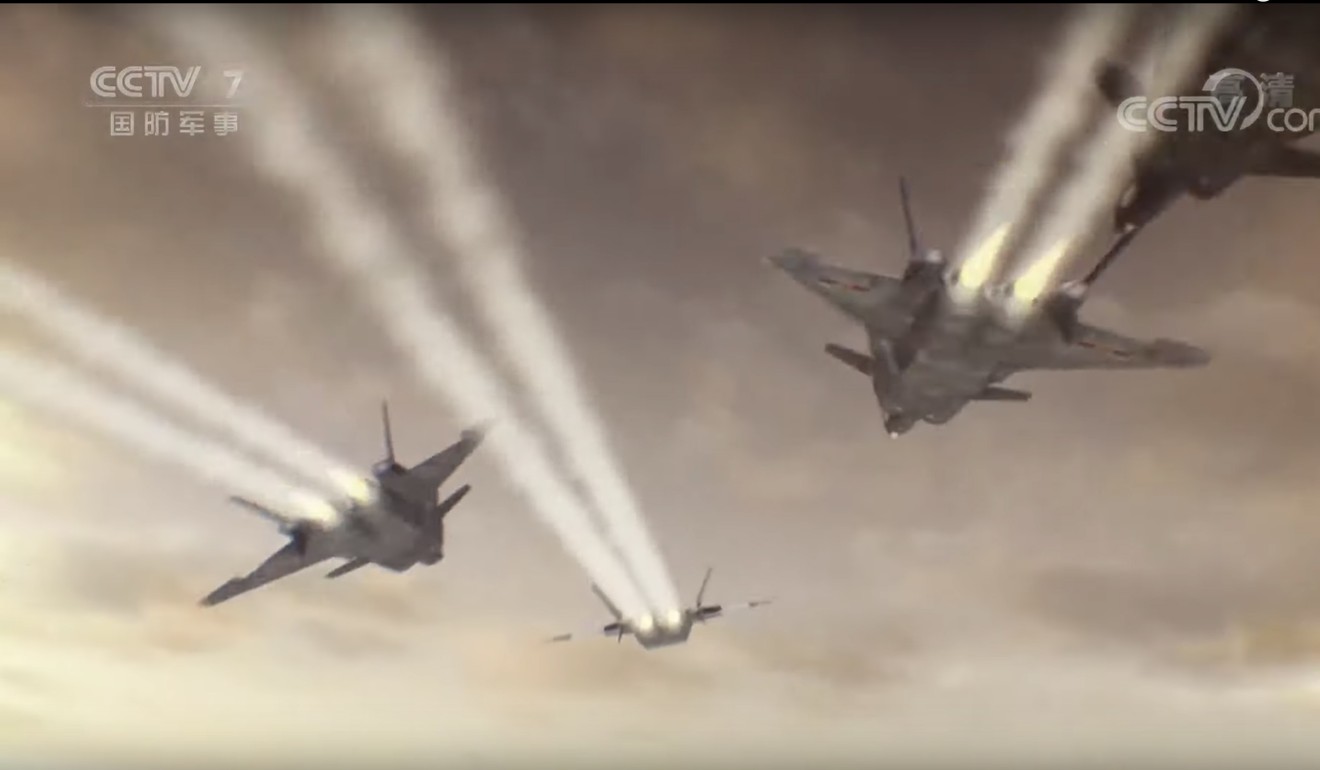
An episode of Military Documentary shown on August 16 reported how the PLA Navy was selecting candidates for pilot training and illustrated the feature with a mock-up of jets that looked like J-20s taking off from a carrier.
Ground-based J-20s – also known as Powerful Dragons – entered service with the PLA Air Force in 2017.
as China stepped up its efforts to counter the deployment of American F-22s and F-35s in the Asia-Pacific region.
A J-15 fighter lands on the Liaoning. Photo: AFP
If the selection of the J-20 is confirmed it will mark the end of a lengthy debate between its supporters and advocates of the FC-31 as to which would make a better carrier-based fighter.
Those who favoured the J-20 said it was more advanced and reliable than the FC-31, but its supporters said it was more light and nimble.
“Both the J-20 and FC-31 have their advantages. The size of the J-20 is similar to the J-15 since both are powerful heavy fighters,” Song Zhongping, a military commentator for Hong Kong-based Phoenix Television, said.
Song said the lighter FC-31 could be developed into a medium-sized carrier fighter that would complement the J-20 in future.
But another military source close to the PLA Navy said it would be almost impossible to develop both aircraft over the next few years given the risk of an economic downturn as the trade war with the US continues to escalate.
A video simulation broadcast on state television earlier this month showed fighters that resembled the J-20 taking off from a carrier. Photo: CCTV
The source said China’s next generation aircraft carriers would be with equipped electromagnetic catapults similar to those used on the US Navy’s Ford-class supercarriers.
These enable the use of heavier fighters because they are more powerful than the older diesel systems used on older carriers.
“The key problem of the J-20 is not weight, but length. If it wants to be a carrier-based fighter jet, it needs to be made shorter.”
Military insiders have previously said that CAC engineers are working to produce a shorter version of the J-20 that will work with the new launch system.
At present both the J-20 and F-31 still rely on Russian engines. The WS-15 engine that has been purpose built for the J-20 has undergone hundreds of hours of testing but has yet to meet reliability targets while the F-31 prototype does not have a purpose-built engine.
China’s navy plans to build at least four carrier battle groups by 2030, three of which will be active at any given time.
Military analysts say China will need at least a decade to develop its new generation carrier-based fighters, so the J-15 will remain in service for at least a decade, if not two.
The J-15 made its maiden flight in 2009 and has been in service since 2012. They are the only fighters based on the Liaoning and will be used by its sister ship the Type 001A when it enters service, probably later this year.
Aircraft could also be used to counterbalance Japanese and US military activities in the region, analysts say
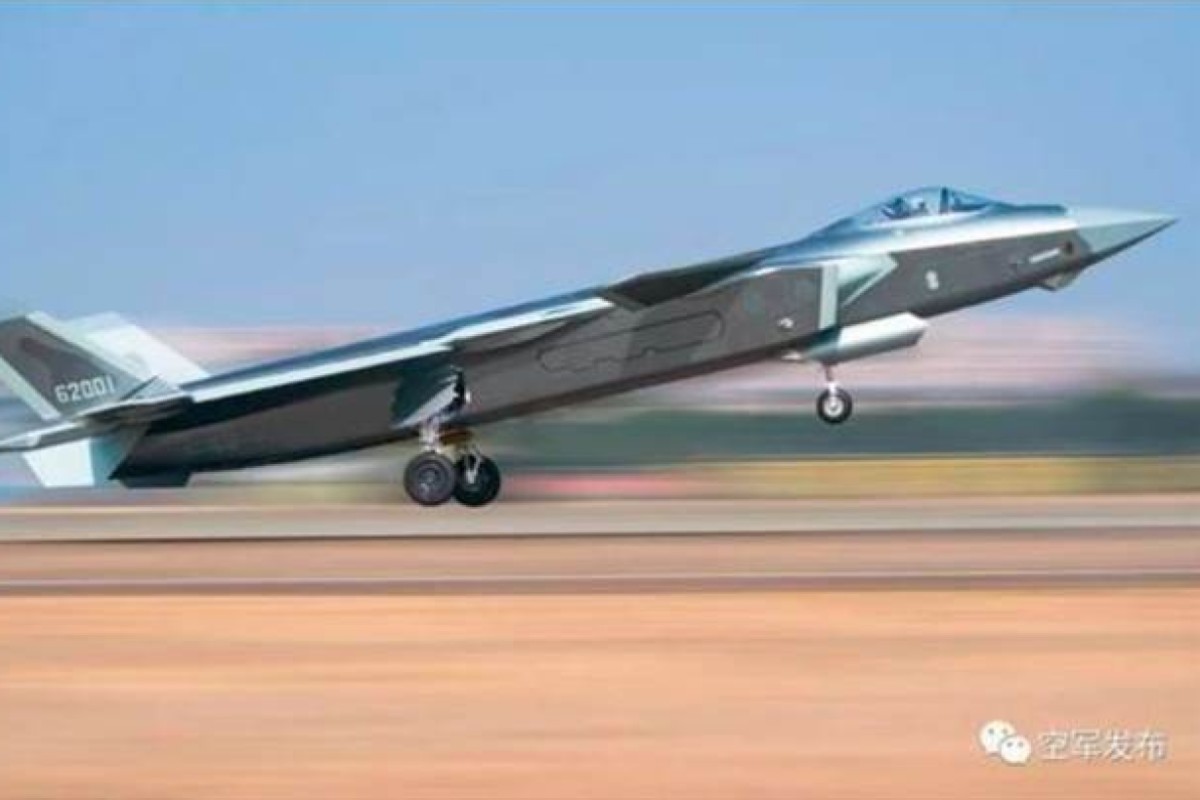
China’s J-20 stealth fighter has gone into service in the Eastern Theatre Command. Photo: PLA Air Force
China’s J-20 stealth fighter has been officially deployed to the country’s Eastern Theatre Command, suggesting it will be focused on the Taiwan Strait and military activities between Japan and the United States, observers said.
The People’s Liberation Army Air Force posted a photo on its social media account this week showing the fifth-generation fighter tagged with the number 62001, designating the aircraft as part of a frontline unit.
Chinese media reported that the stealth fighter had entered the Eastern Theatre Command, which encompasses Taiwan.
Collin Koh, a research fellow at the S Rajaratnam School of International Studies at Nanyang Technological University in Singapore, said the aircraft appeared to have two missions.
“The unit turning operational in Eastern Theatre Command is precisely aimed at Taiwan,” Koh said.
“And to challenge US military activities in Taiwan Strait, besides posing a threat to the median line that Taiwan’s air force patrols along.”
US Air Force gears up for aggressor drills to simulate combat with China’s J-20 fifth-generation fighters
The photo’s release came as China issued a defence white paper, highlighting the risks from “separatist forces”.
In the document, the military said it faced challenges from pro-independence forces in Taiwan but would always defeat those fighting for the island’s independence. It also said there were risks from separatists in the autonomous regions of Tibet and Xinjiang.
A day after the paper was released, an American warship sailed through the Taiwan Strait.
The J-20 is expected to enter mass production this year. If the aircraft was declared ready to go into active operations, it would signal China was a “greater threat” and had “greater capability” in the Pacific, General Charles Brown, the US Air Force’s Pacific commander, said in May.
Brown said US efforts to counter those developments included increasing deployments of next-generation F-35 jets and continuing overflights of strategic areas such as the South China Sea.
China’s J-20 stealth jet may be ready this year, US commander says
According to the US Defence Intelligence Agency, fielding the J-20 would add to what was already the region’s biggest air force and world’s third-largest.
China had more than 2,500 aircraft, including 1,700 combat fighters, strategic bombers, tactical bombers and multi-mission tactical and attack aircraft, in service, the agency said in a report earlier this year.
China’s J-20 fighter was part of a modernisation effort that had been “closing the gap with Western air forces across a broad spectrum of capabilities, such as aircraft performance, command and control and electronic warfare”, the report said.
Macau-based military expert Antony Wong Dong said that in addition to Taiwan, the J-20 fighter could also be used to counterbalance military activities by the United States and Japan.
But Wong added that the Chinese military was still exploring how best the fighter could be used.
“It will take a few years for the aircraft to be fully deployed and to mature. Right now, it’s still in the exploration stage,” he said.
No other injuries reported following accident on southern island of Hainan
Military is currently intensifying training for pilots as it looks to strengthen capabilities
Mobile phone footage believed to be taken from the crash site. Photo: Handout
A Chinese navy plane crashed in Hainan province on Tuesday killing two crew members, the military said.
A short statement said the crash happened during a training exercise over rural Ledong county in the southern island province.
No one else was reported to have been injured after the plane hit the ground and the cause of the incident is being investigated.
Footage that purported to be taken from the crash site started circulating on social media after the accident.
The mobile phone footage, which news portal 163.com said was taken in Hainan, showed smoke rising from piles of wreckage next to a damaged water tower as bystanders gathered at the site.
Footage apparently taken at the crash site. Photo: Handout
The person who uploaded the footage said the plane had hit the water tower before crashing into the ground.
The PLA’s official statement did not specify the type plane that crashed, although unverified witness account online said it was a twin-seat Xian JH-7 “Flying Leopard”.
The JH-7, which entered service with the navy and air force in the 1990s, has been involved in a number of fatal accidents over the years.
The country’s worst military air accident in recent years happened in January 2018. At least 12 crew members died when a PLA Air Force plane, believed to be an electronic reconnaissance aircraft, crashed in Guizhou in the southwest of the country.
Between 2016 and 2017, there were at least four accidents involving the navy’s J-15 “Flying Sharks”, one of them resulting in the death of the pilot.
Military commentators have previously said that China’s drive to improve its combat readiness, which includes the building of new aircraft carriers and warplanes, has resulted in a serious shortage of qualified pilots.
To fill the vacancies the Chinese military has started a major recruitment drive and intensive training programme for pilot pilots.
One unverified report said the plane that crashed was a JH-7 “Flying Leopard”. Photo. Xinhua
Currently China has one aircraft carrier, the Liaoning, in service, which can carry a maximum of 24 J-15s as well as other aircraft.
Meanwhile, the new home-grown carrier Type 001A will soon be commissioned, which is designed to accommodate to carry eight more fighters.
In addition, construction is believed to have started on another carrier that will be able to carry heavier and more advanced warplanes.
According to figures from the end of 2016, there were only 25 pilots qualified to fly the J-15 while 12 others were in training.
Most of the Chinese navy’s pilots have been redeployed from the air force, which is itself in need of more trained pilots.
This year the navy for the first time began a nation-wide programme to scout out potential pilots.
Speaking on the sidelines of the ongoing legislative meeting in Beijing Feng Wei, a PLA pilot from the Western Theatre, said the military was currently intensifying its pilots’ training as increasing amounts of new equipment entered service.
“Personnel quality is the key to everything,” he added.







 CHINDIA ALERT: You'll be living in their world, very soon