Archive for ‘Politics’

07/02/2020

Coronavirus outbreak likely to hit Hong Kong, Thailand economies the hardest in Asia

  • Hong Kong and Thailand are likely to suffer most from the novel coronavirus outbreak because of close their economic ties with China
  • A drop in Chinese tourist arrivals and imports, as well as supply chain disruptions are likely to weigh on regional economy
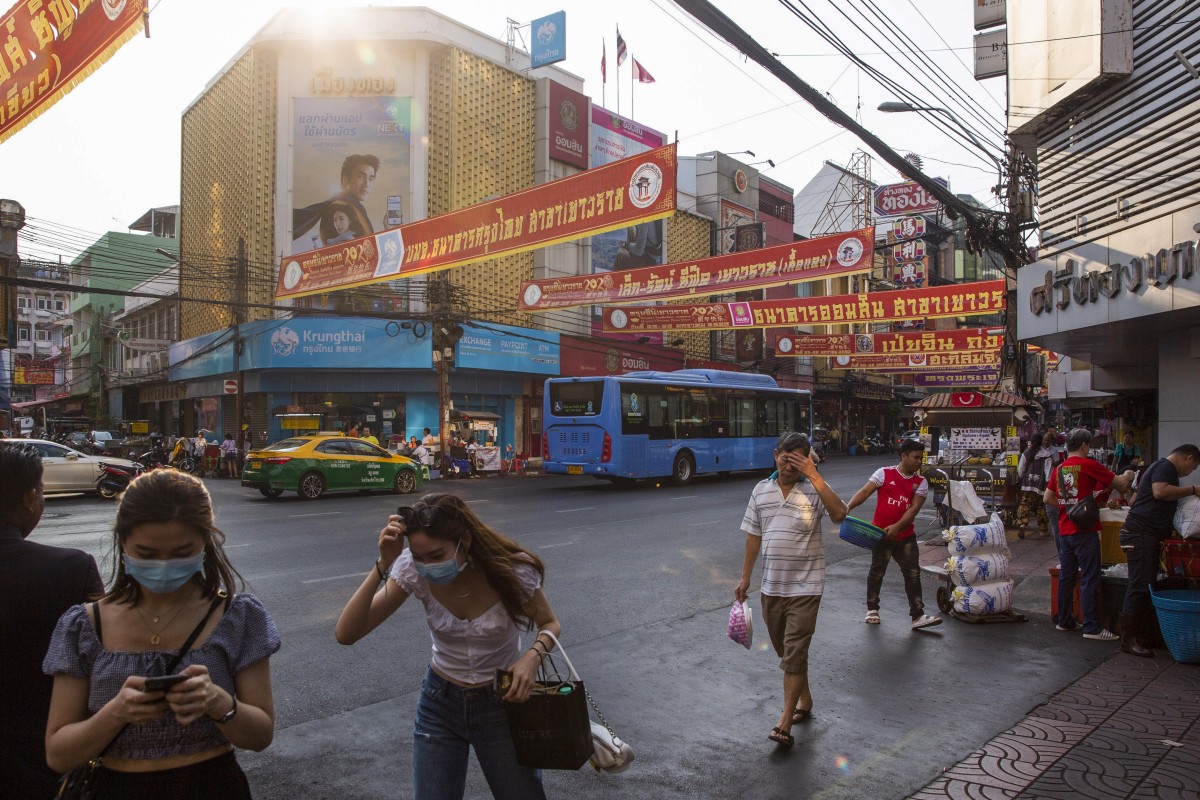
Thailand’s economy could be one of the most affected by the coronavirus outbreak due to its close ties with China, especially in the tourism sector. Photo: Bloomberg

Hong Kong and Thailand are likely to be the hardest hit Asian economies outside mainland China from the deadly coronavirus outbreak, according to analysts.

The 2019-nCoV, which had claimed the lives of nearly 640 people and infected more than 31,000 in mainland China by Friday, is viewed as even more damaging than the severe acute respiratory syndrome (Sars) epidemic in 2002-2003 because of prolonged factory closures and transport restrictions that have locked down many Chinese cities.

China has become more closely integrated with the rest of Asia since the Sars outbreak, meaning the disruptions to China’s industrial and export sectors, combined with a sharp drop in economic activity in the first quarter, will have significant repercussions across the region, particularly through tourism and trade, analysts said.

“A collapse in tourism arrivals from China will be the first shock wave for the rest of the region,” said Gareth Leather, senior Asia economist at Capital Economics. “Factory closures in China will affect the rest of the region by disrupting regional supply chains.”

A collapse in tourism arrivals from China will be the first shock wave for the rest of the region. Factory closures in China will affect the rest of the region by disrupting regional supply chainsGareth Leather

Hong Kong would likely be the most affected because of its status as a trade hub, its tight linkages to the Chinese economy and the sharp decline in tourism expenditure that is expected, UBS economist William Deng noted.

“Due to the risk of infection, domestic households significantly reduced such activities as dining out, shopping and entertainment,” Deng wrote in a recent note. He cut Hong Kong’s gross domestic product (GDP) growth forecast to minus 1.8 per cent for 2020, against his previous projection of a 0.5 per cent drop.

A community outbreak spread by human-to-human transmission has started in the city, said Professor Yuen Kwok-yung, a top microbiologist at the University of Hong Kong on Wednesday.

Thailand could be the next most affected due to its dependence on Chinese tourism. Outside Hong Kong and Macau, the country has the highest exposure to China as a share of GDP in the region.

China locks down Hangzhou, mega-city far from epicentre of coronavirus outbreak

ANZ Bank’s head of Asia research Khoon Goh said that the novel coronavirus could knock US$760 million from Thailand’s economy in the first quarter. Hong Kong could could see losses of US$1.4 billion. Travel services as a share of GDP were 11.2 per cent in Thailand and 9.4 per cent in Hong Kong.

“The Thai economy would expand at a slower rate in 2020 than previously forecast and much further below its potential due to the outbreak of coronavirus,” Bank of Thailand said in a statement after it slashed interest rates to a record low on Wednesday.

South Korean and Taiwanese businesses will also have negative spillover effects from the coronavirus outbreak because of supply chain disruptions and weaker consumer sentiment inside and outside China, analysts said.

South Korean car and tech companies that rely on parts from Chinese suppliers are exposed to potential production disruptions stemming from factory closures and the evacuation of Korean workers from China-based production lines, said Sean Hwang, corporate finance group analyst at Moody’s Investors Group.
Coronavirus: here are the places and airlines restricting travel to China
For instance, Hyundai Motor Company closed some if its South Korea-based plants on February 4 because of a shortage of wiring harnesses.
Korean customers are also limiting their trips to bricks-and-mortar retail stores such as E Mart and Lotte Shopping to avoid crowds amid the outbreak, potentially leading to a significant decline in revenue and earnings, Hwang said.
Although Singapore is not as closely tied to China as Hong Kong, the city state could still see a knock-on effect from China’s expected near-term downturn, as its economy has become much more integrated with the world’s second largest economy since the Sars outbreak.
The number of Chinese tourists rose six times from 568,000 in 2003 to 3.4 million in 2018, said Irvin Seah, senior economist at DBS Bank.
Coronavirus outbreak: global businesses shut down operations in China
“We expect a decline of about 1 million tourists or about SGD1 billion (US$722 million) of lost tourism receipts for every three months of travel ban,” Seah said. “We have lowered our full-year GDP growth forecast to 0.9 per cent, down from 1.4 per cent previously.”
Taiwan has banned Chinese visitors as well as foreigners who have visited Hong Kong and Macau from entering the island due the coronavirus. International cruise ships are also unable to dock on the island, which will lead to at least 112 liner visits cancelled by the end of March, affecting around 144,000 passengers, said the Taiwan International Ports Corporation.
Capital Economics’ Leather said the economic impact on Taiwan from 2019-nCoV could stand out from the rest of Asia, as it had the most exposure in value-added, intermediate exports to China – 18 per cent of GDP.
20 coronavirus infections confirmed on cruise ship in Japan, as thousands remain under quarantine
Elsewhere, Malaysia’s commodity driven trade growth this year has been threatened by the almost 20 per cent fall in crude oil prices, a decline triggered by fears that the coronavirus outbreak would dampen China’s imports. Malaysia’s purchasing managers’ index, a survey of manufacturers, dropped to 48.8 in January from 50.0 the prior month prior, data released this week showed. The drop was blamed on slowing output, with new orders dropping the most since September amid a decline in exports.
“The Bank Negara Malaysia’s surprising policy rate cut at the last meeting on 22 January, just around the time the coronavirus started to dominate headlines, tells us that the central bank is ahead of the curve in recognising the risk,” said Prakash Sakpal, Asia economist at ING Bank said.
India and Indonesia will be the least affected given the small contribution the tourism sector makes to their economies, and the low share of visitors from China, ANZ’s Goh said.
Source: SCMP
07/02/2020

Most US firms in China expect coronavirus outbreak to hit revenue, survey finds

  • Some companies polled by Shanghai’s American Chamber of Commerce said they were speeding up plans to move operations out of mainland
  • Transport bans and strict public health measures have disrupted economic activity
China’s economic growth may drop to 5 per cent or lower because of the outbreak, according to a government economist. Photo: Bloomberg
The majority of US firms with operations in China expect a virus outbreak
to cut revenue this year, and some are accelerating plans to shift their supply chains out of the country, according to a poll by Shanghai’s American Chamber of Commerce.
Nearly a quarter of the firms forecast revenue would fall by at least 16 per cent this year due to the outbreak, while over a fifth said it would decline by 11-15 per cent. Only 13 per cent of respondents said revenue would see very little or no impact from the virus.

The survey covered 127 companies, including 20 with China-sourced revenues of over US$500 million and 27 with China revenues of US$100 million to US$500 million.

Sixteen per cent of respondents expected China’s gross domestic product to fall by more than 2 per cent due to the outbreak.

China tries to get back to work amid coronavirus outbreak
The death toll from the virus in China has topped 600, with more than 31,000 people infected. Widespread transport bans and strict public health measures have disrupted economic activity in much of the country, and factory closures are starting to ripple through global supply chains.
China faces dilemma as it tries to get back to work amid coronavirus outbreak fears
7 Feb 2020

A government economist said last week that China’s economic growth may drop to 5 per cent or even lower due to the outbreak, possibly pushing policymakers into introducing more stimulus measures.

Sources said Chinese policymakers were preparing measures, including more fiscal spending and interest rate cuts, amid expectations the outbreak would have a devastating impact on first-quarter growth.

In response to the virus, some survey respondents said they were shifting operations out of China and moving more production to other areas, including India.

“Not innovative, but our suppliers are moving operations to Taiwan. This has been considered before, options and planning were being made, but they are pulling the trigger now,” according to one respondent in the survey.

“Our company will directly source from Taiwan and eliminate the mainland China supply chain for more and more products.”

Source: SCMP

06/02/2020

China lodges solemn representations to U.S. on Taiwan official visit: FM

BEIJING, Feb. 6 (Xinhua) — China has lodged solemn representations to the United States regarding the recent officials exchanges between the United States and Taiwan, a foreign ministry spokesperson said Thursday.

Spokesperson Hua Chunying made the remarks at an online news briefing when answering a question about Lai Ching-te’s visit to the United States.

China firmly opposes any form of official exchanges between the United States and Taiwan, Hua said, stressing that China’s position is consistent and clear.

China has lodged solemn representations to the U.S. side for allowing Lai’s visit, urging the U.S. side to abide by the one-China principle and the three China-U.S. joint communiques, stop official exchanges with Taiwan, and cut off all forms of contact between Lai and U.S. leaders, government officials and Congress members, said Hua.

She said the United States should handle Taiwan issues prudently and properly and stop sending wrong signals to the “Taiwan independence” forces to avoid serious damage to China-U.S. relations.

Source:Xinhua

06/02/2020

Coronavirus: Does China have enough face masks to meet its needs?

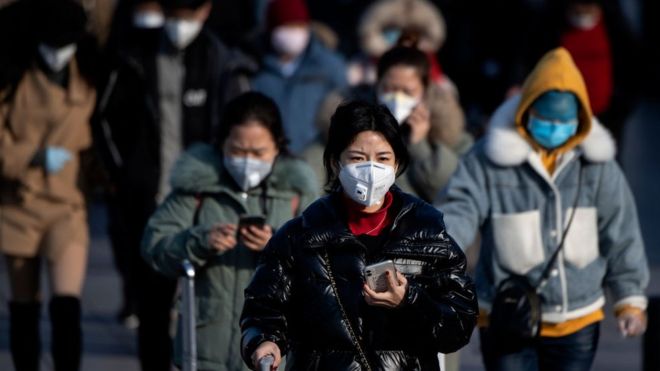
Travellers in Beijing all wearing facemasksImage copyright GETTY IMAGES

As the coronavirus spreads across China, the authorities there have appealed to other countries to help with supplies of protective face masks.

So how many masks does China need, and where are they produced?

Getty
What China urgently needs at present are medical masks, protective suits and safety goggles.
Hua Chunying
Foreign Ministry spokesperson

How many masks does China need?

Although experts are sceptical about their effectiveness, face masks are in widespread use both among the general population and medical staff.

We can’t know a definitive overall number as the virus spreads across China, but to give an idea of the scale of the demand, let’s start by looking at the situation in Hubei province, the epicentre of the outbreak.

Just dealing with medical staff alone, there are an estimated 500,000 across the province.

Medical advice in China is to change face masks regularly, as often as four times a day for medical teams, which would require two million masks each day.

This is the procedure being followed in one of the main hospitals in Wuhan, the largest city in Hubei province.

We don’t have a breakdown for the numbers of medical staff in other significantly affected provinces, but it would be reasonable to assume a similar pattern of usage, as coronavirus infections spread.

Then there’s the widespread use of face masks among the ordinary population, whether or not they’ve been instructed to do so by the authorities.

  • More than half a million staff working on public transport in China have been told to use masks
  • There are reports that some shops, businesses and other public premises have told people to use masks if they want to enter

It’s also important to say that culturally, it’s quite common for people in China to wear face masks, both as general protection and if they feel they are getting ill.

So, although we can’t know overall numbers of masks needed, it’s clear there’s already a huge demand which is only going to increase across China, particularly as people head back to work in mid-February after the New Year holiday.

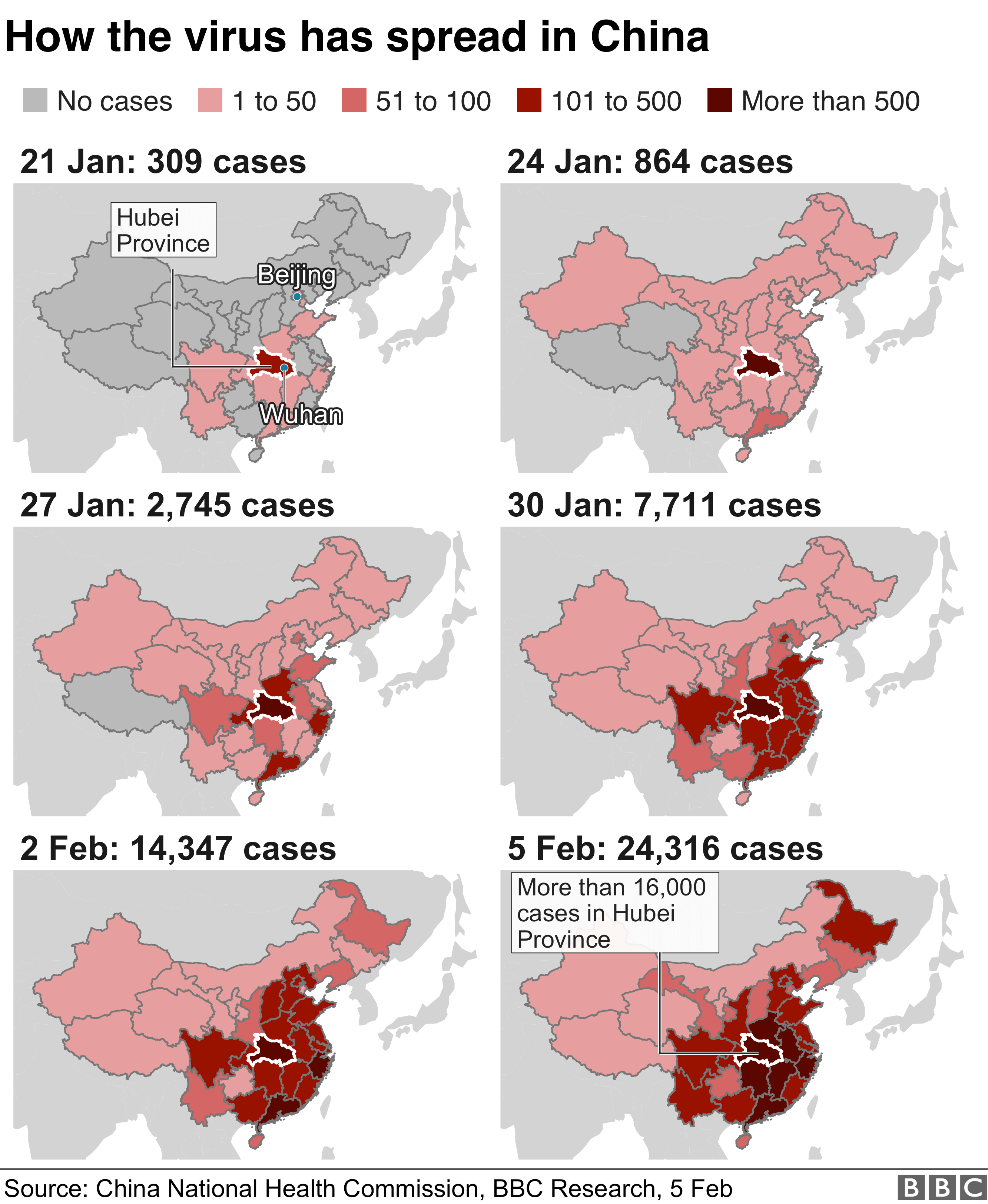
Map of China showing numbers of virus cases by date

How many is China producing?

Under normal circumstances, China produces around twenty millions masks each day. That’s estimated to be around half of all masks made globally.

However, Chinese production has currently been cut to around 10 million, both because of the New Year holiday as well as the impact of the virus itself.

That’s clearly not sufficient to meet even the current demand in China.

In addition, it’s the higher-quality masks which are most effective, and most needed.

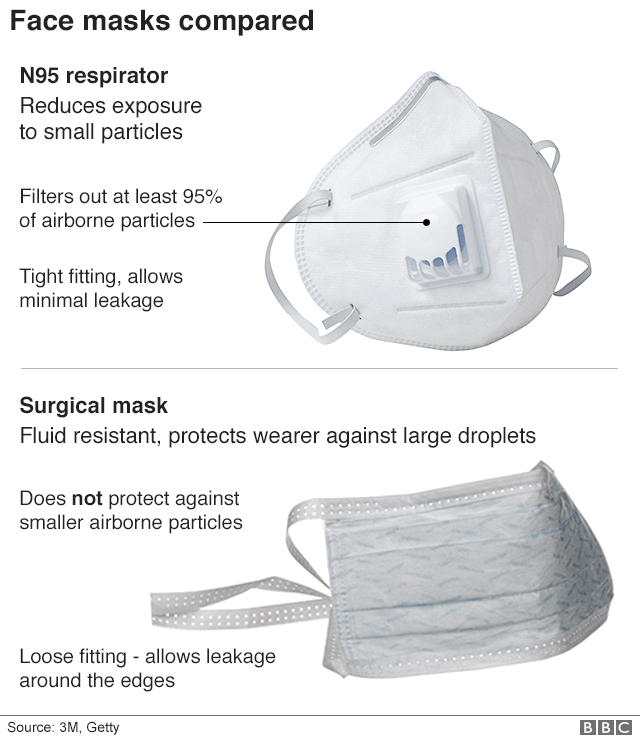
One type, known as the N95 respirator, is designed to filter at least 95% of airborne particles, and is more effective than an ordinary surgical or medical mask, which also needs to be changed more frequently.

Graphic showing different types of face mask

China currently produces each day around 600,000 of these high-quality masks, according to figures from the Ministry of Industry.

One province, Zhejiang, reported on 27 January that they needed a million of these masks each day, and other provinces have said they are only just able to meet demand for these high-quality masks.

In addition, hospitals don’t have large stockpiles of these masks – in most cases, only enough to last two weeks.

Across China, there have been reports of shortages and soaring prices, as people have rushed to buy masks.

To give an idea of this demand, the Chinese online shopping site Taobao says than in just two days in January, they sold more than 80 million masks.

Can China get masks from abroad?

China bought 220 million face masks between 24 January and 2 February, with South Korea one of the countries supplying them.

Since the beginning of February, the authorities have also removed tariffs and duties on imported medical supplies.

The US firm, 3M, which is a major producer of high-quality face masks, says the company is increasing production to meet global demand.

The UK-based Cambridge Mask Company, which makes high-quality respirator masks, says it has faced unprecedented demand, and has completely sold out.

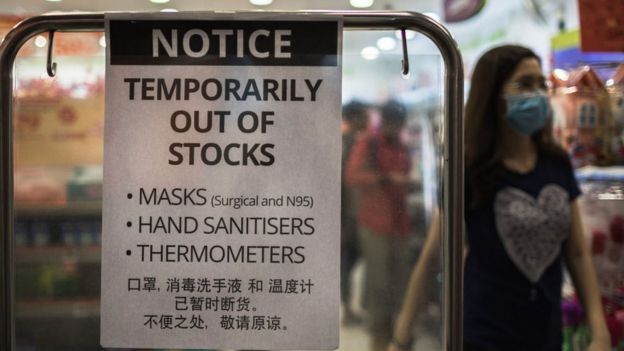
Pharmacy sign in Singapore saying masks out of stockImage copyright GETTY IMAGES
Image caption A pharmacy in Singapore: Supplies have been bought up in countries outside China

Some countries, such as Taiwan and India, have banned the export of protective clothing such as face masks.

Taiwan says it wants to prioritise the protection of its own citizens, and has announced a rationing system for buying face masks.

There have also been reports of shortages in countries outside China because of panic buying, as fears grow about the global spread of the coronavirus.

Source: The BBC

06/02/2020

China drafts banks, brokerages and funds into war on virus

SHANGHAI/HONG KONG (Reuters) – China’s President Xi Jinping is enlisting the state-dominated financial sector in a war against a virus outbreak that has killed more than 500, mobilising lenders, brokerages and fund managers to pump resources into stricken parts of the economy.

Answering Beijing’s call, banks are rushing to offer virus-fighting loans at ultra-low rates, investment banks are helping companies issue anti-virus bonds faster, and managers of mutual funds are refraining from selling stocks, to damp market panic.

Concerted efforts to rein in the virus that emerged late last year in the central city of Wuhan highlight the centralized power the ruling Communist Party wields in a sector dominated by state-owned companies.

But the campaign, which has stirred memories of government rescue efforts during a market crash in 2015, deepens concern over corporate governance in China and risks sowing seeds of future trouble.

Wuhan DDMC Culture & Sports Co (600136.SS), a leisure company in the city, won Shanghai Stock Exchange approval to issue bonds of up to 600 million yuan (66.32 million pounds) via a “green channel” created for virus-hit companies, it said on Thursday.

“It’s like receiving charcoal on a snowy day,” the company, whose operations were wrecked by the epidemic, said on its website.

Three other companies – Zhuhai Huafa Group, Sichuan Kelun Pharmaceutical and China Nanshan Development Group – have raised a combined 2.1 billion yuan ($301 million) this week by issuing bonds via the interbank market, to fund virus-battling efforts.

Proceeds from the debt issuance, which won quicker-than-usual approval from regulators, will fund drug discovery programmes and hospital construction, the companies said.

Regulators have also asked banks to inject cheap funds into virus-stricken areas, and not to withdraw loans from companies suffering the impact. Sectors such as tourism, transport and leisure are the worst-hit.

Bank of Suzhou, in the eastern province of Jiangsu, vowed to cut financing costs for hundreds of small corporate clients and bolster lending.

For companies such as food producers, logistics firms and makers of anti-virus drugs, it will cut the rate on loans by 10 basis points below the lending benchmark, to stand as low as 3.98%.

A loan officer at Bank of China promised special treatment for those defaulting because of virus fallout, saying the central bank would cap interest on loans to firms with operations critical to beating the virus, such as makers of masks and drugs.

He added, “Such companies will enjoy the lowest possible rates.”

But the orchestrated support also triggered concerns of moral hazard among some.

“I’m afraid many companies about to go bankrupt will come and say their businesses are affected by the virus outbreak,” said a bond fund manager, who declined to be named.

A flurry of government support has helped stabilise stocks in China’s equity market after a plunge on Monday.

Regulators have told major mutual fund companies and insurers not to cut net equity positions this week, and urged brokerages to limit short-selling activities by clients, said sources who sought anonymity.

Fund managers were also nudged to do their bit. China’s fund association, which is supervised by the securities regulator, said employees at 26 mutual fund houses had put their own money – or more than 2 billion yuan ($287 million) – into fund products since Monday.

Source: Reuters

02/02/2020

Coronavirus: hundreds more Europeans flee China virus as second evacuation plane lands in France

  • An Airbus A380 landed at the military base of Istres in the southern French region of Bouches-du-Rhone on Sunday
  • Of the 180 French people who were flown back from Wuhan on Friday, one showed symptoms of being infected with the virus
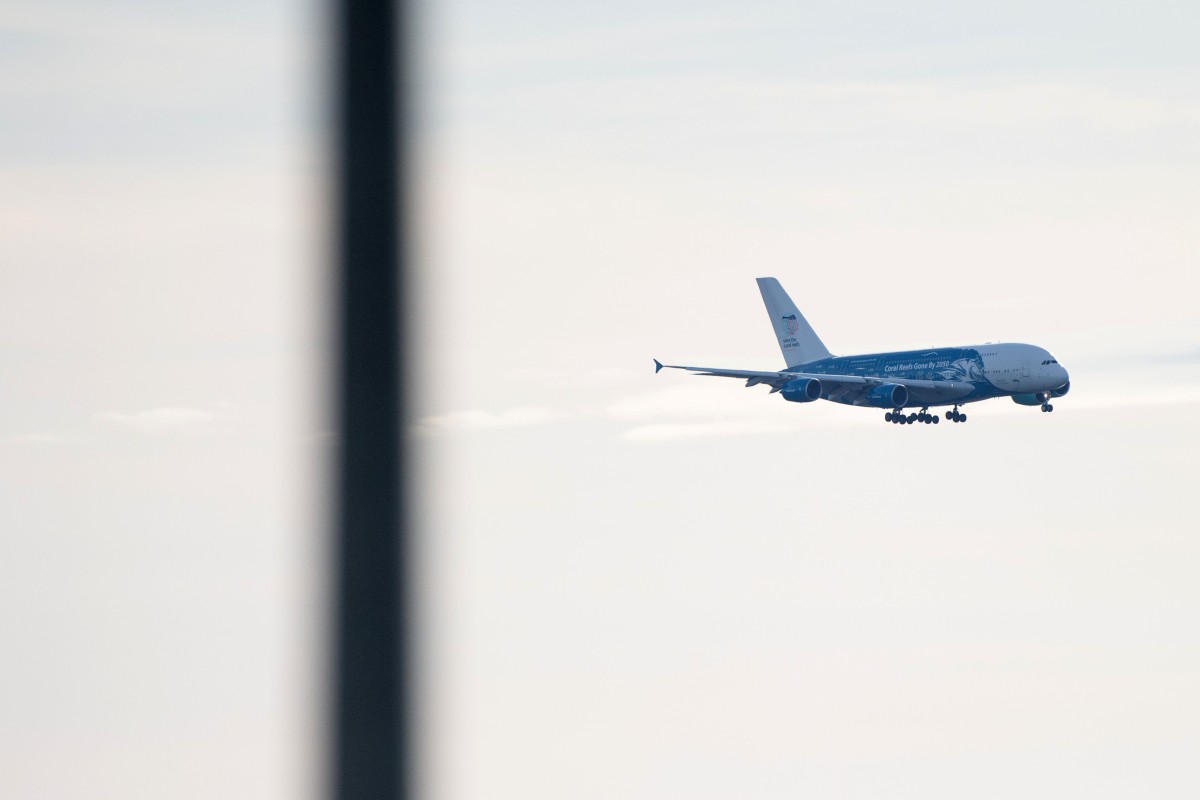
An Airbus A380-84, believed to be carrying European citizens flown out from the coronavirus zone in Wuhan, approaches the Istres-Le Tube Air Base near Istres. Photo: AFP

A second French-chartered plane carrying 300 evacuees from China flew to France on Sunday as more foreigners fled China’s rapidly developing virus.

The Airbus A380 landed at the military base of Istres in the southern French region of Bouches-du-Rhone. A first French plane landed Friday.

Officials said that when this latest flight left the central Chinese city of Wuhan, none of the passengers had symptoms of coronavirus. They include French, Belgians, Dutch, Danes, Czechs, Slovaks and some citizens of African countries.

Authorities said the plane would drop off most of its passengers at Istres before leaving for Belgium with several dozen people from northern Europe. Authorities haven’t said if the travellers arriving at Istres will be put into quarantine.

Of the 180 French people who were flown back from Wuhan on Friday, one showed symptoms of being infected with the virus and was sent to a Marseille hospital for testing, French Health Minister Agnes Buzyn said.

The other passengers were being quarantined for 14 days at a large, isolated Mediterranean resort not far from Marseille near Carry-le-Rouet.

German Health Minister Jens Spahn said that two people who were flown back to Germany on Saturday were found to be infected with the virus. That brought the total of cases in Germany to 10. Spahn said the two had been symptom-free when they left Wuhan and when they arrived in Frankfurt, and that they were “doing well at the moment” in quarantine at a Frankfurt hospital.

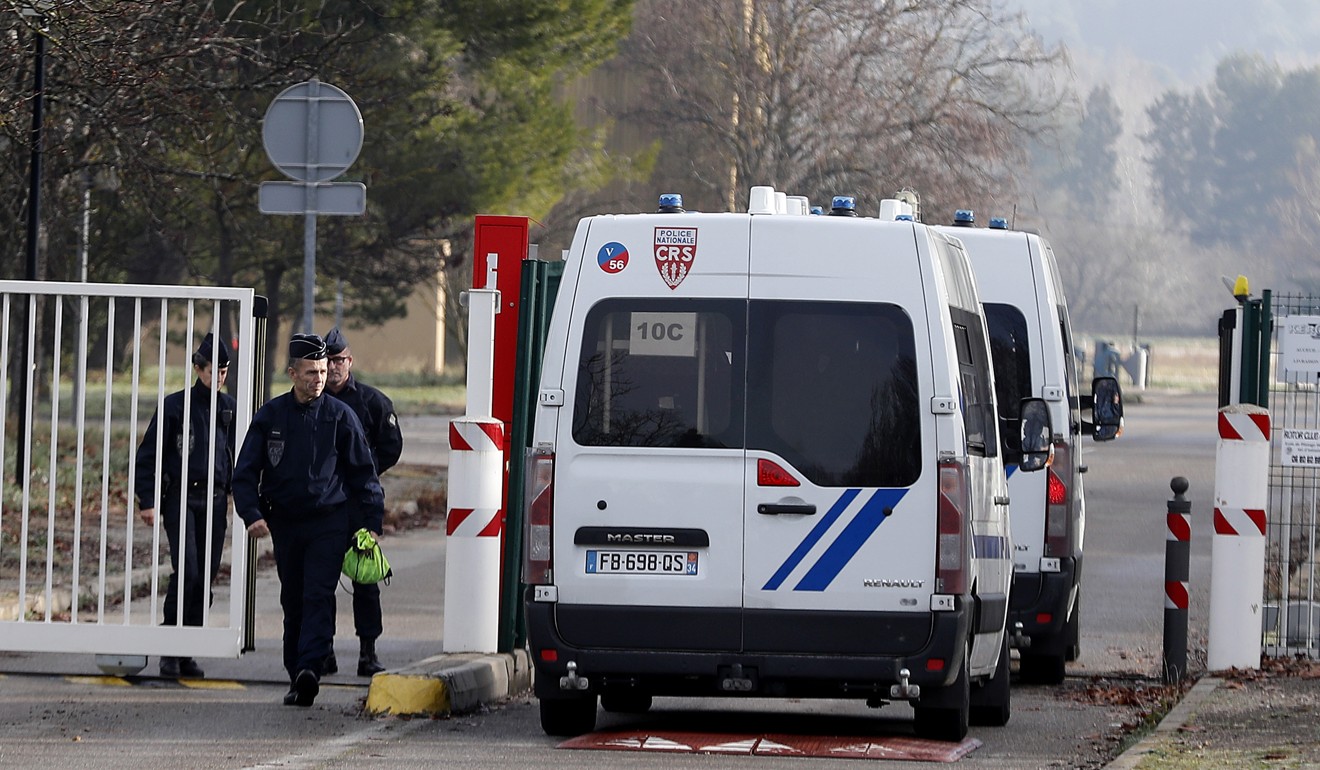
French police officers gather at the entrance gate of the ENSOSP (French National Fire Officers Academy) where French citizens will be quarantined after their repatriation from Wuhan. Photo: EPA-EFE
Europe has 25 reported cases of people who have been infected with the virus that emerged from Wuhan: Germany has 10; France has six; Russia, Italy and the U.K have two each and Finland, Sweden and Spain each have one.

The Italian foreign ministry said permission had been given for cargo flights to fly between Italy and China.

Separately, the special commissioner in charge of coordinating Italy’s efforts during the viral outbreak said consideration was being given to letting a handful of Chinese commercial airliners fly to Italy to pick up Chinese tourists and other Chinese citizens stranded in Italy by the suspension of commercial flights.

The commissioner, Angelo Borrelli, was quoted by Italian media as saying that Italy would like those flights, if approved, not to fly to Italy empty, but instead to bring back Italians from China. There are an estimated 500 other Italians in China who have apparently expressed an interest in returning home during the outbreak, but nothing firm had been decided on those flight possibilities.

Meanwhile, an estimated 3,000 tourists and others from China are stranded in Italy and want to return to home, according to Italian media.

Coronavirus:  Indonesia evacuates citizens, stops flights from China

2 Feb 2020

The death toll in China climbed Sunday to 304 and the number of infections rose to 14,380. In addition, the Philippines on Sunday reported the first death from the virus outside China.

On Saturday night, a Turkish military transport plane carrying 42 people arrived in Ankara from Wutan. The 32 Turkish, six Azerbaijani, three Georgian and one Albanian nationals will remain under observation in a hospital for 14 days, Health Minister Fahrettin Koca said.

Twenty Turkish personnel who took part in the evacuation will also be kept in quarantine.

The Egyptian government said 306 of its nationals would return home from Wuhan on a chartered plane later Sunday and will be subject to a 14-day quarantine. The online news outlet Masrawy reported that authorities prepared a hotel in the northwestern city of Marsa Matruh where the returnees would be quarantined.

Source: SCMP

01/02/2020

Coronavirus declared global health emergency by WHO

The new coronavirus has been declared a global emergency by the World Health Organization, as the outbreak continues to spread outside China.

“The main reason for this declaration is not what is happening in China but what is happening in other countries,” said WHO chief Tedros Adhanom Ghebreyesus.

The concern is that it could spread to countries with weaker health systems.

Meanwhile, the US has told its citizens not to travel to China.

The state department issued a level four warning – having previously urged Americans to “reconsider” travel to China – and said any citizens in China “should consider departing using commercial means”.

China has said it will send charter plans to bring back Hubei province residents who are overseas “as soon as possible”.

A foreign ministry spokesman said this was because of the “practical difficulties” Chinese citizens have faced abroad. Hubei is where the virus emerged.

At least 213 people in the China have died from the virus, mostly in Hubei, with almost 10,000 cases nationally.

The WHO said there had been 98 cases in 18 other countries, but no deaths.

Most international cases are in people who had been to Wuhan in Hubei.

However in eight cases – in Germany, Japan, Vietnam and the United States – patients were infected by people who had travelled to China.

People wearing masks

Getty Coronavirus outbreak outside China
  • 18 The number of countries with cases
  • 14 Cases in Thailand and Japan
  • 13 Singapore
  • 11 South Korea
  • 8 Australia and Malaysia
  • 5 France and USA

Source: WHO and local authorities

Speaking at a news conference in Geneva, Dr Tedros described the virus as an “unprecedented outbreak” that has been met with an “unprecedented response”.

He praised the “extraordinary measures” Chinese authorities had taken, and said there was no reason to limit trade or travel to China.

“Let me be clear, this declaration is not a vote of no confidence in China,” he said.

But various countries have taken steps to close borders or cancel flights, and companies like Google, Ikea, Starbucks and Tesla have closed their shops or stopped operations.

The US Commerce Secretary, Wilbur Ross, has said the outbreak could “accelerate the return of jobs to North America”.

Presentational grey line

Preparing other countries

Analysis box by James Gallagher, health and science correspondent

What happens if this virus finds its way into a country that cannot cope?

Many low- and middle-income countries simply lack the tools to spot or contain it. The fear is it could spread uncontrollably and that it may go unnoticed for some time.

Remember this is a disease which emerged only last month – and yet there are already almost 10,000 confirmed cases in China.

The 2014 Ebola outbreak in West Africa – the largest in human history – showed how easily poorer countries can be overwhelmed by such outbreaks.

And if novel coronavirus gets a significant foothold in such places, then it would be incredibly difficult to contain.

We are not at that stage yet – 99% of cases are in China and the WHO is convinced the country can control the outbreak there.

But declaring a global emergency allows the WHO to support lower- and middle-income countries to strengthen their disease surveillance – and prepare them for cases.

Presentational grey line

How unusual is this declaration?

The WHO declares a Public Health Emergency of International Concern when there is “an extraordinary event which is determined… to constitute a public health risk to other states through the international spread of disease”.

It has previously declared five global public health emergencies:

  • Swine flu, 2009 – The H1N1 virus spread across the world in 2009, with death toll estimates ranging from 123,000 to 575,400
  • Polio, 2014 – Although closer than ever to eradication in 2012, polio numbers rose in 2013
  • Zika, 2016 – The WHO declared Zika a public health emergency in 2016 after the disease spread rapidly through the Americas
  • Ebola, 2014 and 2019 – The first emergency over the virus lasted from August 2014 to March 2016 as almost 30,000 people were infected and more than 11,000 died in West Africa. A second emergency was declared last year as an outbreak spread in DR Congo

Media caption Inside the US laboratory developing a coronavirus vaccine

How is China handling the outbreak?

A confirmed case in Tibet means the virus has reached every region in mainland China. According to the country’s National Health Commission, 9,692 cases have tested positive.

The central province of Hubei, where nearly all deaths have occurred, is in a state of lockdown. The province of 60 million people is home to Wuhan, the heart of the outbreak.

The city has effectively been sealed off and China has put numerous transport restrictions in place to curb the spread of the virus.

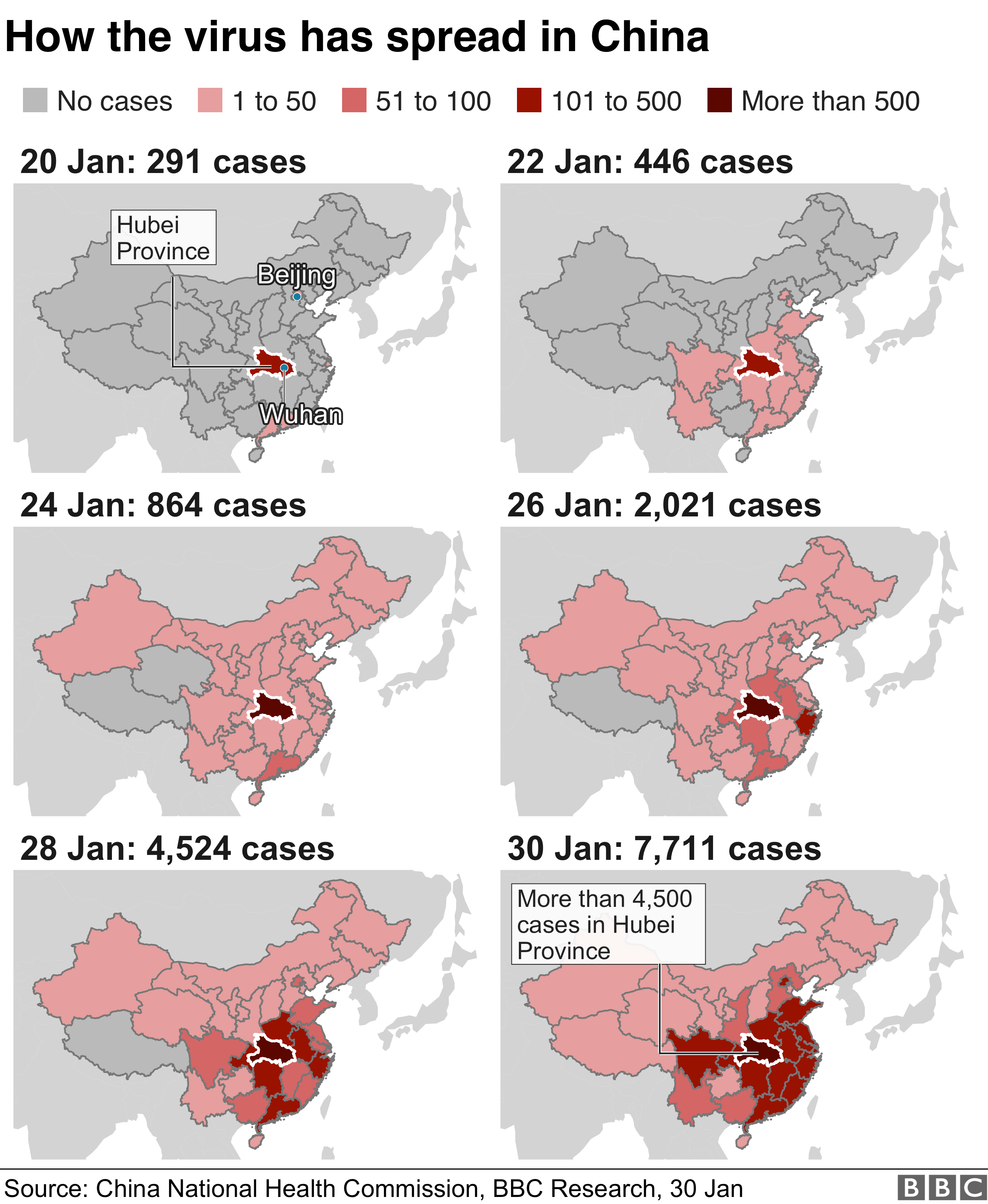
Coronavirus cases have spread to every province in China. There are now 7711 cases compared to 291 on 20 Jan. Hubei province has more than 4500 cases.
People who have been in Hubei are also being told to work from home until it is considered safe for them to return.

The virus is affecting China’s economy, the world’s second-largest, with a growing number of countries advising their citizens to avoid all non-essential travel to the country.

How is the world responding?

Voluntary evacuations of hundreds of foreign nationals from Wuhan are under way.

The UK, Australia, South Korea, Singapore and New Zealand are expected to quarantine all evacuees for two weeks to monitor them for symptoms and avoid contagion.

Australia plans to quarantine its evacuees on Christmas Island, 2,000km (1,200 miles) from the mainland in a detention centre that has been used to house asylum seekers.

In other recent developments:

  • Italy suspended flights to China after two Chinese tourists in Rome were diagnosed with the virus; earlier 6,000 people on board a cruise ship were temporarily barred from disembarking
  • In the US, Chicago health officials have reported the first US case of human-to-human transmission. Around 200 US citizens have been flown out of Wuhan and are being isolated at a Californian military base for at least 72 hours
  • Russia has decided to close its 4,300km (2,670-mile) far-eastern border with China
  • Two flights to Japan have already landed in Tokyo. Japan has now raised its infectious disease advisory level for China
  • Some 250 French nationals have been evacuated from Wuhan
  • India has confirmed its first case of the virus – a student in the southern state of Kerala who was studying in Wuhan
  • Israel has barred all flight connections with China
  • Papua New Guinea has banned all visitors from “Asian ports”
  • North Korea will suspend all flights and trains to and from China, said the British ambassador to North Korea

Source: The BBC

28/01/2020

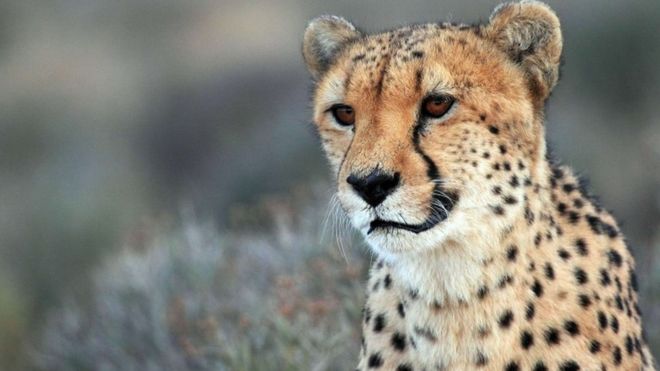
Endangered cheetahs can return to Indian forests – court

CheetahImage copyright AFP
Image caption The majority of the 7,100 cheetahs left in the world are in Africa

India’s top court has said cheetahs can be reintroduced in the country, 70 years after they were wiped out.

Responding to a plea by the government, the Supreme Court said African cheetahs could be introduced to the wild in a “carefully chosen location”.

Cheetahs are an endangered species, according to the Convention on International Trade in Endangered Species (Cites).

Only 7,100 cheetahs are left in the wild, almost all of them in Africa.

The Asiatic cheetah, which once roamed parts of India, is now only found in Iran, where there are thought to be about 50 left.

India’s Supreme Court said the animal would have to be introduced on an experimental basis to find out if it could adapt to Indian conditions.

Studies show that at least 200 cheetahs were killed in India, largely by sheep and goat herders, during the colonial period. It is the only large mammal to become extinct after the country gained independence in 1947.

India’s former environment minister Jairam Ramesh welcomed the decision to reintroduce the animal.

For more than a decade, wildlife officials, cheetah experts and conservationists from all over the world have discussed the reintroduction of the spotted big cat to India and have agreed that there is a strong case for it.

But leading conservationists have harboured doubts about the plan. They fear that in its haste to bring back the cheetah, India will end up housing the animals in semi-captive conditions in huge, secured open air zoos rather than allowing them to live free.

They add that without restoring habitat and prey base, and given the high chances of a man-animal conflict, viable cheetah populations cannot be established.

They have also pointed to India’s chequered record of reintroducing animals to the wild.

Lions were reintroduced in the Chandraprabha sanctuary in northern Uttar Pradesh state in the 1950s, but were then poached out of existence.

Presentational grey line

You may also be interested in…

Media caption Curious cheetah joins safari group in Tanzania
Presentational grey line

However, conservationists who have led the initiative insist that these fears are unfounded. They say a decision will only be taken after shortlisted sites are fully examined for habitat, prey and potential for man-animal conflict.

The first cheetah in the world to be bred in captivity was in India during the rule of Mughal emperor Jahangir. His father, Akbar, recorded that there were 10,000 cheetahs during his time.

Much later, research showed that were at least 230 cheetahs in India between 1799 and 1968 – and the cat was reportedly sighted for the last time in the country in 1967-68.

Source: The BBC

26/01/2020

Xinhua Headlines: Quiet and busy — Lunar New Year’s Eve in Wuhan, center of coronavirus fight

The Lunar New Year’s Eve in Wuhan, ground zero of the novel coronavirus outbreak in central China, is nothing but special. Behind the seemingly quiet streets, people in all walks of life are racing against time to fight against the invisible enemy.

WUHAN, Jan. 25 (Xinhua) — There were far fewer cars on the streets and bustling crowds were not seen in the shopping malls in the central Chinese city of Wuhan on Jan. 24 — the Eve of the Chinese Lunar New Year.

The scene was quite different from the occasion in the previous years because of the novel coronavirus that has claimed over 40 lives and infected over a thousand nationwide. With a population of over 10 million, Wuhan, the capital city of Hubei Province, is the center of the epidemic.

Photo taken on Jan. 24, 2020 shows a medical aid team of Army Medical University leaving for Wuhan in southwest China’s Chongqing. On the Chinese Lunar New Year’s Eve, a group of 150 medical workers from the Army Medical University left for Wuhan, the center of the novel coronavirus (2019-nCoV) outbreak, to provide medical aid. (Xinhua)

Yang Yingchen, a volunteer of the Red Cross Society of China’s Wuhan branch, had a busy day answering calls.

“People from across the nation called to check on accounts and addresses to make donations,” said Yang. “Many would say ‘Come on, Wuhan’ to us, which makes me feel especially warm and deeply moved.”

Chen Li, a doctor in a Wuhan hospital, spent the Chinese Lunar New Year’s Eve at home to quarantine herself. She is a little bit worried about having had contact with infected patients, but luckily she has no signs of symptoms for the time being.

“Before joining the fight against the epidemic, I had sent my four-year-old son to my parents. I has disinfected all the articles in my house,” she said.

Chen’s husband is at the forefront of the fight against the epidemic. “We haven’t seen each other for over a week,” said Chen. On Saturday morning, she put on protective clothing again and returned to work.

“Actually, I can’t be isolated for too long. There’s still a lot of work to be done,” she said. “I just don’t know when I can see my boy again.”

Aerial photo taken on Jan. 24, 2020 shows mechanical equipment working at the construction site of a special hospital in the Caidian District of western suburb of Wuhan, central China’s Hubei Province. The central China metropolitan of Wuhan will follow Beijing’s SARS treatment model to build a special hospital for admitting patients infected in the outbreak of pneumonia caused by the novel coronavirus. (Xinhua/Xiao Yijiu)

The virus had resulted in 41 deaths in China by the end of Friday, mostly in Wuhan, according to the National Health Commission. Nationwide, a total of 1,287 cases were confirmed, including 237 in critical condition.

Confirmed cases were also reported in China’s Hong Kong, Macao and Taiwan, as well as Thailand, Japan, the Republic of Korea, the United States, Vietnam, Singapore, Nepal and France.

Wuhan is following Beijing’s SARS treatment model in 2003 to build a makeshift hospital with a capability of 1,000 beds for admitting infected patients. Construction on the facility began Thursday night. It will be completed and put into use prior to Feb. 3, less than 10 days away.

“It’s going to be another all-nighter. We need to speed up work and complete the hospital as soon as possible,” said Lyu Jun, a young truck driver at the construction site. This is his first Spring Festival away from home.

For ordinary people, this year’s Lunar New Year’s Eve lacks some gatherings but is still a time to extend greetings and wishes.

Yin Yeqiong, from Hunan Province, refunded her tickets back home after much debate. “I had it in my mind to still go home, but finally decided to stay in Wuhan,” she said. “Our stay will help reduce panic in other places.”

Liu Jie, a dough sculptor, put on a New Year costume and watched the Spring Festival Gala with his family. “We’re now at a critical period, so I texted New Year wishes to friends and relatives this year. I believe this is the best way,” he said.

Liu Jiapeng, a children’s book editor, stayed in Wuhan during the Spring Festival for the past four decades. “I always stayed with my family, and we would have every meal together,” said Liu. “But this year, I haven’t had one meal with them.”

On the day of the Lunar New Year’s Eve, he and his wife bought some goods for their parents, brought them to their house and briefly chatted. As they were waiting for the elevator, Liu looked back and saw his father standing at the windowsill, watching them leave.

Medical workers of Army Medical University assemble before leaving for Wuhan in southwest China’s Chongqing, Jan. 24, 2020. On the Chinese Lunar New Year’s Eve, a group of 150 medical workers from the Army Medical University left for Wuhan, the center of the novel coronavirus (2019-nCoV) outbreak, to provide medical aid. (Xinhua)

China is mobilizing medical resources nationwide to aid Wuhan and control the epidemic. Doctors, nurses and experts from across the nation have been selected to join the battle, and manufacturers have restarted their plants to produce medical consumables that have been running short in many places.

A national research team of 14 experts, headed by renowned respiratory scientist Zhong Nanshan, has been set up to help prevent and control the outbreak on Friday.

“This is going to be an unforgettable Spring Festival,” said Chen Ying, a writer. “Because I feel that at this moment, there are so many families that I do not know, in every corner of this city, praying for our home.”

“My New Year wish is simple,” said Liu Jie. “I hope the virus will soon be conquered and everyone in Wuhan and the whole nation would be safe and healthy.”

Source: Xinhua

26/01/2020

India, Brazil sign 15 accords to deepen ties across range of sectors

(Reuters) – India and Brazil have signed 15 accords aimed at forging closer ties between the two emerging market giants across a range of sectors, especially defence, both countries’ leaders tweeted on Saturday.

Indian Prime Minister Narendra Modi and Brazilian President Jair Bolsonaro took to social media to hail the closer cooperation and agreements struck during Bolsonaro’s official visit to India.

“Several agreements signed in ​​infrastructure, justice, science and technology, agriculture, oil exploration, mining, health, culture and tourism,” Bolsonaro tweeted, adding: “The world’s confidence in Brazil is back!”

For his part, Modi tweeted: “India and Brazil are focussing on expanding cooperation in the defence sector,” adding that the two countries share “immense synergies” on several key issues such as the environment and fighting terrorism.

Separately, Brazil’s foreign minister Ernesto Araujo tweeted that the 15 accords signed by the two countries represent a move “against the structures of globalist thought”.

“Brazil is rising to be a great among the greats,” he tweeted.

Source: Reuters

Law of Unintended Consequences

continuously updated blog about China & India

ChiaHou's Book Reviews

continuously updated blog about China & India

What's wrong with the world; and its economy

continuously updated blog about China & India