Chindia Alert: You’ll be Living in their World Very Soon
aims to alert you to the threats and opportunities that China and India present. China and India require serious attention; case of ‘hidden dragon and crouching tiger’.
Without this attention, governments, businesses and, indeed, individuals may find themselves at a great disadvantage sooner rather than later.
The POSTs (front webpages) are mainly 'cuttings' from reliable sources, updated continuously.
The PAGEs (see Tabs, above) attempt to make the information more meaningful by putting some structure to the information we have researched and assembled since 2006.
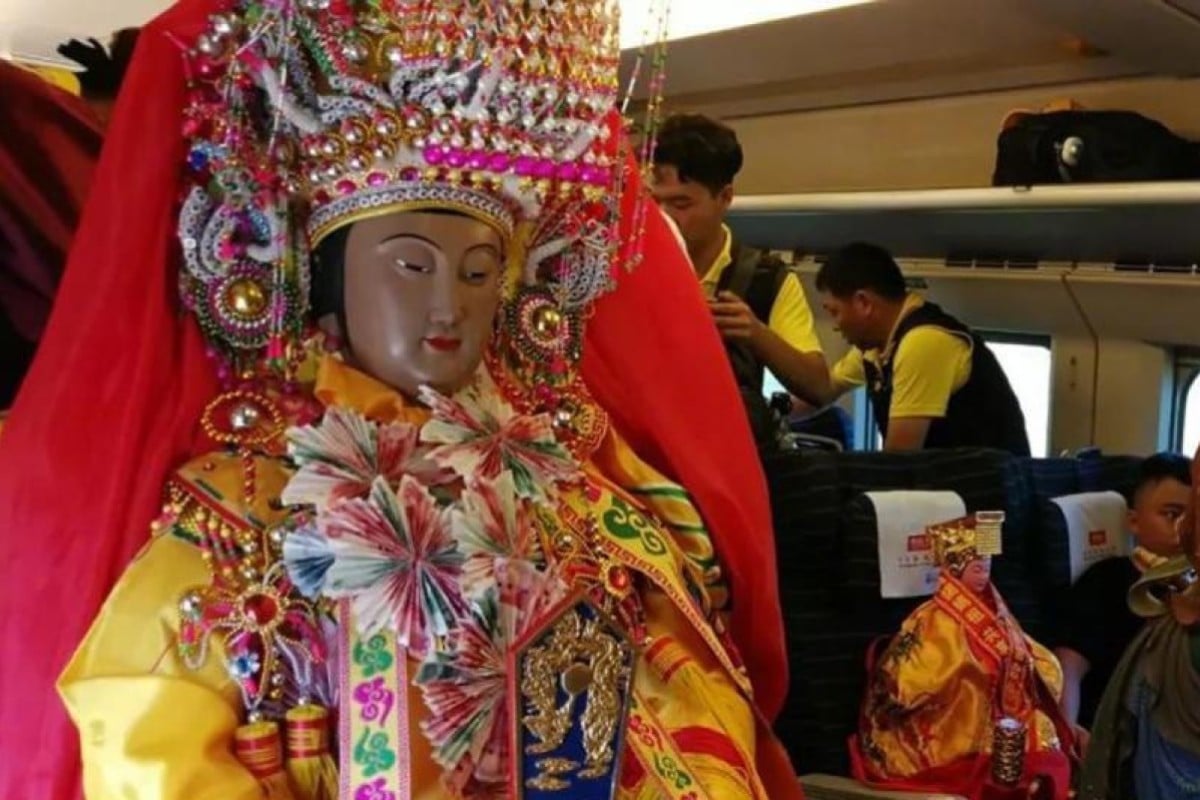
Deity has all the necessary travel documents for seven-day journey bringing blessings to coastal communities
The statue of Chinese sea goddess Mazu on board the train for her seven-day tour of eastern China. Photo: Weibo
High-speed rail travellers in eastern China may find themselves in exalted company this week as one of China’s most beloved deities is on a seven-day tour.
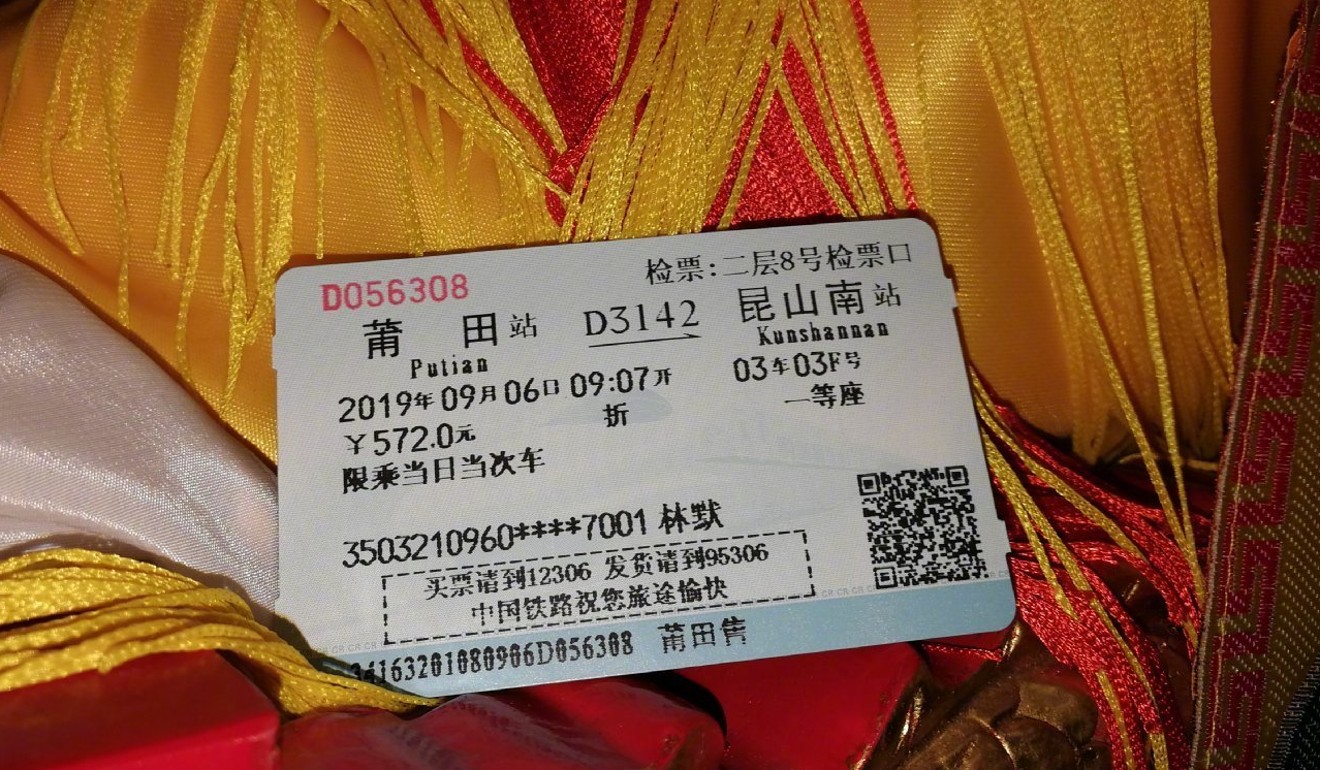
Mazu, protector of seafarers, boarded the train at Putian in Fujian province on Friday with an entourage of 230 worshippers for one of her regular “inspection tours”. And, like any modern traveller, the sea goddess had the necessary identity card and ticket for the journey.
Mazu, known as Tin Hau in Hong Kong, began life more than 1,000 years ago as a mortal named Lin Mo, according to Chinese folk belief. As a girl she is said to have saved some of her family members when they were caught in a typhoon while out fishing. In another version of the myth, Lin Mo died while trying to rescue shipwreck victims.
She fell out of favour in mainland China during the Cultural Revolution, when her ancestral temple on Meizhou Island in the southeastern province of Fujian was destroyed to make way for a People’s Liberation Army garrison. In the late 1970s the temple was rebuilt and in 2009 the beliefs and customs surrounding Mazu were recognised as an Intangible Cultural Heritage of Humanity by Unesco.
Inspectors on China’s high speed rail will find everything in order if they ask to see the goddess Mazu’s ticket during her seven-day tour. Photo: Weibo
Staff at the Meizhou Mazu Temple applied for an ID card for the goddess, in her earthly name of Lin Mo. Tickets were also organised for two other fairy figures who traditionally protect her, according to Chinese folklore.
“Not only Mazu but Thousand-Mile Eye and Wind-Accompanying Ear were all bought tickets,” a temple representative told the Southern Metropolis News.
This is not the first time the trio have been bought travel tickets. Two years ago their airfares were paid for when they visited Malaysia and Singapore and, a year later, they took a cruise ship to the Philippines.
This year’s tour includes a visit to Kunshan in Jiangsu and Shanghai, before Mazu returns to her home temple on the island of Meizhou. At each stop, devotees believe Mazu blesses the location with her presence and protects its residents from harm.
Taiwanese tycoon Gou thanks sea goddess for presidential inspiration
The tour has been organised jointly by the Meizhou Temple as well as the Huiju Mazu Temple in Kunshan and the Lugang Mazu Temple in Taiwan.
News of the celestial train journey quickly went viral on Chinese social media, with posts on Mazu receiving 460 million views on Weibo, the Twitter-like microblogging platform, since Monday. “First, respect. Second, she takes up a seat so it’s not crazy to buy her a ticket,” one comment read.
Serbian President Aleksandar Vucic(4th R) meets with Zhang Youxia(3rd L), a member of the Political Bureau of the Communist Party of China (CPC) Central Committee and vice chairman of the Central Military Commission in Belgrade, Serbia on Sept. 6, 2019. (Photo by Li Xiaowei/Xinhua)
BELGRADE, Sept. 7 (Xinhua) — Serbia hopes to enhance mutually beneficial cooperation with China in various fields, including military, to advance bilateral relations to new levels, Serbian President Aleksandar Vucic has said.
Vucic made the remarks on Friday when meeting with visiting vice chairman of China’s Central Military Commission, Zhang Youxia.
Vucic said that history has proved that China is Serbia’s most reliable friend. The Serbian government, people and military support the “one-China” policy as well as China’s stance and proposition in many other issues concerning China’s core interests.
Vucic added that the Belt and Road Initiative has brought many opportunities to the development of Serbia. He said he hopes that the two sides will continue to deepen mutually beneficial cooperation in various fields, including military, to advance bilateral relations to new levels.
Zhang, who is also a member of the Political Bureau of the Communist Party of China Central Committee, said that the traditional friendship between China and Serbia is profound.
He said that China is ready to work with Serbia to consolidate the all-weather friendship between the two countries, promote the quality of their bilateral relations and accelerate the growth of their ties.
Zhang also called for the militaries of the two countries to implement consensus reached between the heads of state of China and Serbia, deepen strategic mutual trust and enhance exchanges and cooperation in bids to promote their links to new height.
During his visit, Zhang also met with Serbian Defense Minister Aleksandar Vulin, and witnessed the signing of a memorandum of understanding on the establishment of a Chinese medicine center in the Serbian Military Medical Academy.
He is expected to join a trilateral dialogue with his counterparts from Pakistan and Afghanistan, and observers say he may try to mediate in Kashmir dispute
Trip also includes a stop in Nepal that could pave way for a visit by Xi Jinping
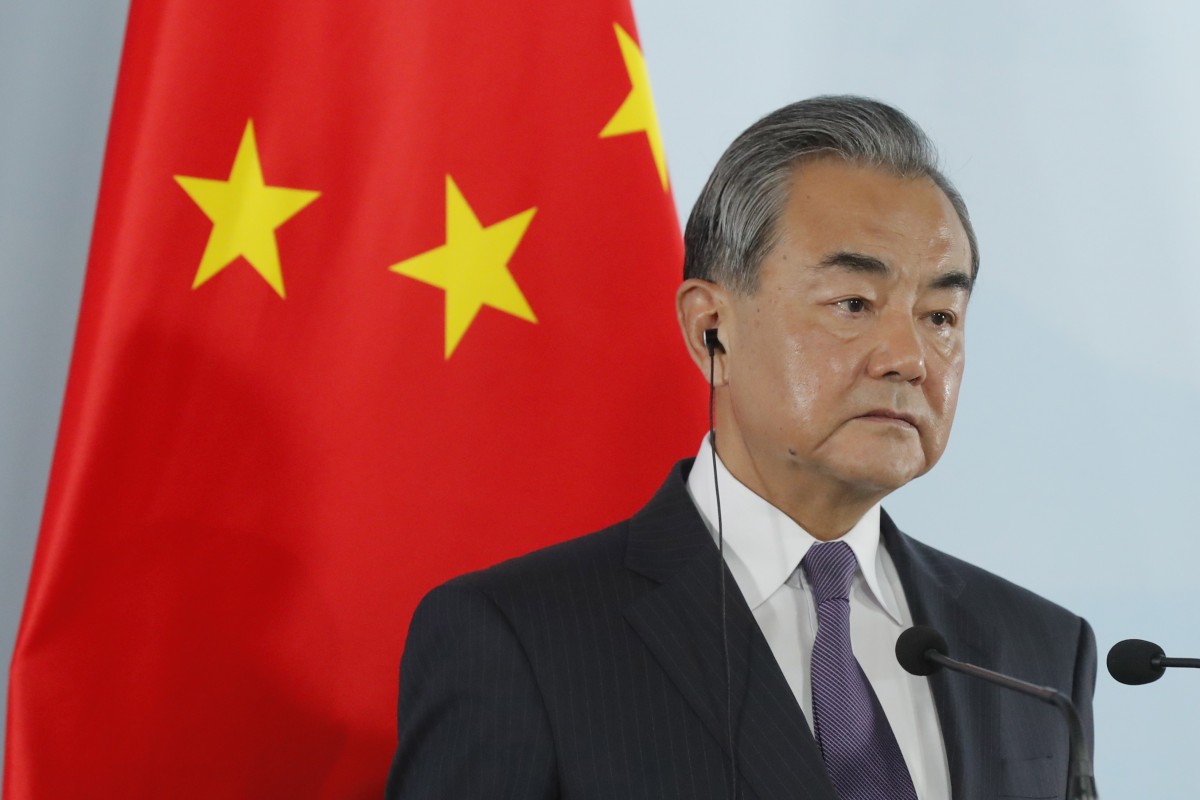
Chinese Foreign Minister Wang Yi may try to act as a negotiator in the Kashmir dispute. Photo: EPA-EFE
Chinese Foreign Minister Wang Yi began a four-day trip to Pakistan and Nepal on Saturday, amid escalating tensions between Islamabad and New Delhi over
Wang was expected to join a trilateral dialogue with the foreign ministers of Pakistan and Afghanistan in Islamabad, foreign ministry spokesman Geng Shuang said on Friday. He will also travel to Nepal.
Beijing has criticised India’s decision last month to strip the Jammu and Kashmir autonomous state of its special status and break it into two federally controlled territories, calling it “unacceptable”.
China also formally backed Pakistan’s request for the United Nations Security Council to hold “closed consultations” on the revocation of the state’s autonomy.
Meanwhile, observers say the Chinese foreign minister could attempt to act as a negotiator in the complex border dispute.
“Wang might try to play a role to mediate between the two sides to resolve the crisis,” said Wang Dehua, head of the Institute for South and Central Asia Studies at the Shanghai Municipal Centre for International Studies. “This has been China’s long-held position on the issue.”
Pang Zhongying, an international relations researcher at Ocean University of China in Qingdao, agreed.
“[Indian Prime Minister] Narendra Modi has visited China a couple of times and it is likely [Chinese President] Xi Jinping will visit India soon,” he said. “If Xi is to visit India later this year, China may try to contain its differing views with India on Kashmir.”
Modi has proposed an informal summit with Xi later this year that may be held in the religious hub of Varanasi, Modi’s parliamentary constituency. New Delhi said in May that Indian officials were working with the Chinese side to finalise the details, but Beijing has yet to confirm Xi’s visit.
India dismisses Beijing’s concerns over Kashmir because ‘it won’t have any impact on China’
Wang Yi was also due to visit India later this month for border talks, but the trip had to be postponed at the request of New Delhi because of scheduling problems, Hindustan Times reported, citing China’s foreign ministry.
The row over Kashmir has escalated in the past month. Pakistani Prime Minister Imran Khan said on Friday that Islamabad would make the fullest possible response to New Delhi’s actions in disputed Kashmir and that the global community would be responsible for any “catastrophic” aftermath.
Since Modi withdrew special rights for Indian-administered Kashmir on August 5, India has flooded the Kashmir valley with troops, restricted the movements of residents and cut off communication.
Both India and Pakistan claim the whole of Kashmir, which was partitioned between the two following the end of British rule in 1948, and they have subsequently fought wars over the territory.
China has its own territorial dispute with India over the part of Kashmir it controls. In early August, Chinese foreign ministry spokeswoman Hua Chunying
and said it was not binding. Beijing later appeared to soften its rhetoric, with Hua calling for a solution through dialogue and negotiation, without criticising either side.
The Chinese foreign minister will also visit Nepal, where he is expected to meet his counterpart, the president and prime minister. The trip could pave the way for an expected visit by Xi to Nepal.
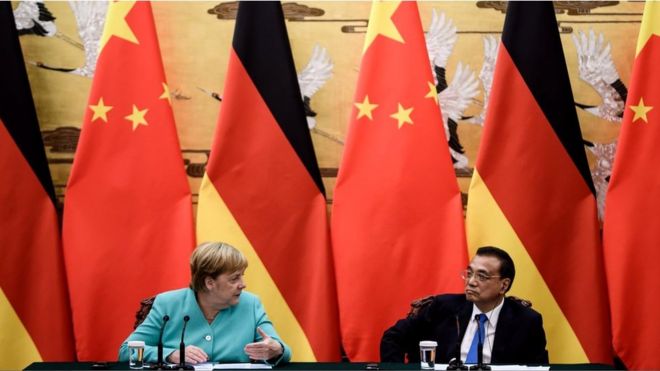
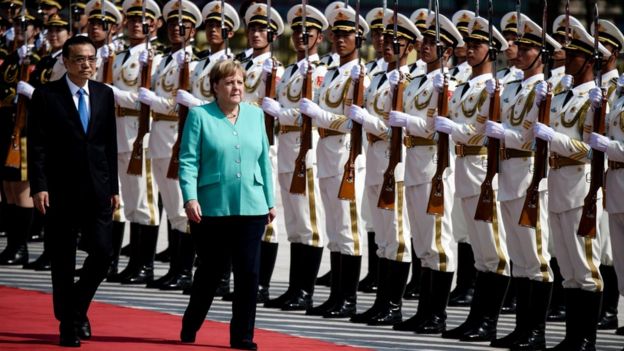
Image copyright EPAImage caption Ms Merkel calls for dialogue while Mr Li says China can handle its own matters
China’s Premier Li Keqiang has said Beijing supports the Hong Kong government “to end the violence and chaos”.
He is the most senior Chinese official to comment on the unrest which has rocked Hong Kong for months.
His comments came during a joint press conference with German Chancellor Angela Merkel in Beijing.
Hong Kong has seen months of often-violent protests calling for democracy and less influence from China.
The protests were sparked by changes to a law that would allow extradition to mainland China, but have since widened to include calls for an independent inquiry into police brutality and demands for greater democracy.
Image copyright EPAImage caption Hong Kong activists hope for Western support
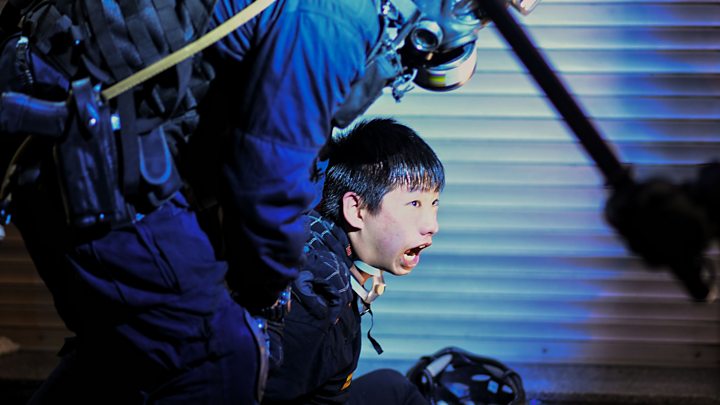
Instead, protests continued on Friday evening, when clashes erupted between police and the demonstrators outside a subway station on the Kowloon peninsula.
Riot police fired both tear gas and rubber bullets at protesters before clearing the nearby streets as the crowd of protesters was forced to retreat.
What did the Chinese premier say?
In August, China had likened to protests to terrorism, warning activists not to “underestimate the firm resolve” of the Beijing government.
Li Keqiang, China’s second highest-ranking leader, told reporters on Friday: “The Chinese government unswervingly safeguards ‘one country, two systems’ and ‘Hong Kong people govern Hong Kong people’.”
He said China backed Hong Kong “to end the violence and chaos in accordance with the law, to return to order, which is to safeguard Hong Kong’s long-term prosperity and stability”.
WUHAN, China (Reuters) – German Chancellor Angela Merkelrenewed calls for a peaceful solution to unrest in Hong Kong on Saturday during her trip to China.
The Hong Kong protests have overshadowed a three-day visit Merkel had planned to use to press for greater access to Chinese markets for German businesses suffering a slowdown at home.
“I have advocated that conflicts be resolved without violence and that anything else would be a catastrophe from my point of view,” Merkel said.
After talks with President Xi Jinping and Premier Li Keqiang, Merkel said Beijing had listened to her views.
“This is important,” she added.
Hong Kong leader Carrie Lam announced concessions this week to try to end the protests, including formally scrapping a hugely unpopular extradition bill, but many said these were too little, too late.
Joshua Wong, a leader of pro-democracy protests in 2014 that were the precursor to the current unrest, thanked Merkel for addressing the topic with Beijing but said her comments fell short.
“Germany’s business interest should not override the universal values in which we believe,” Wong said in an interview with Germany’s mass-circulation Bild am Sonntag newspaper.
“If the Chancellor wants to do something, she must help to urge President Xi to respond to the demand for free elections.”
Material that generates heat from sunlight could provide self-maintaining water supply on remote islands
An international research team used solar power to generate a supply of drinking water. Photo: Chinese Academy of Sciences
A Chinese-led international research team has created a “tree” that can generate clean drinking water.
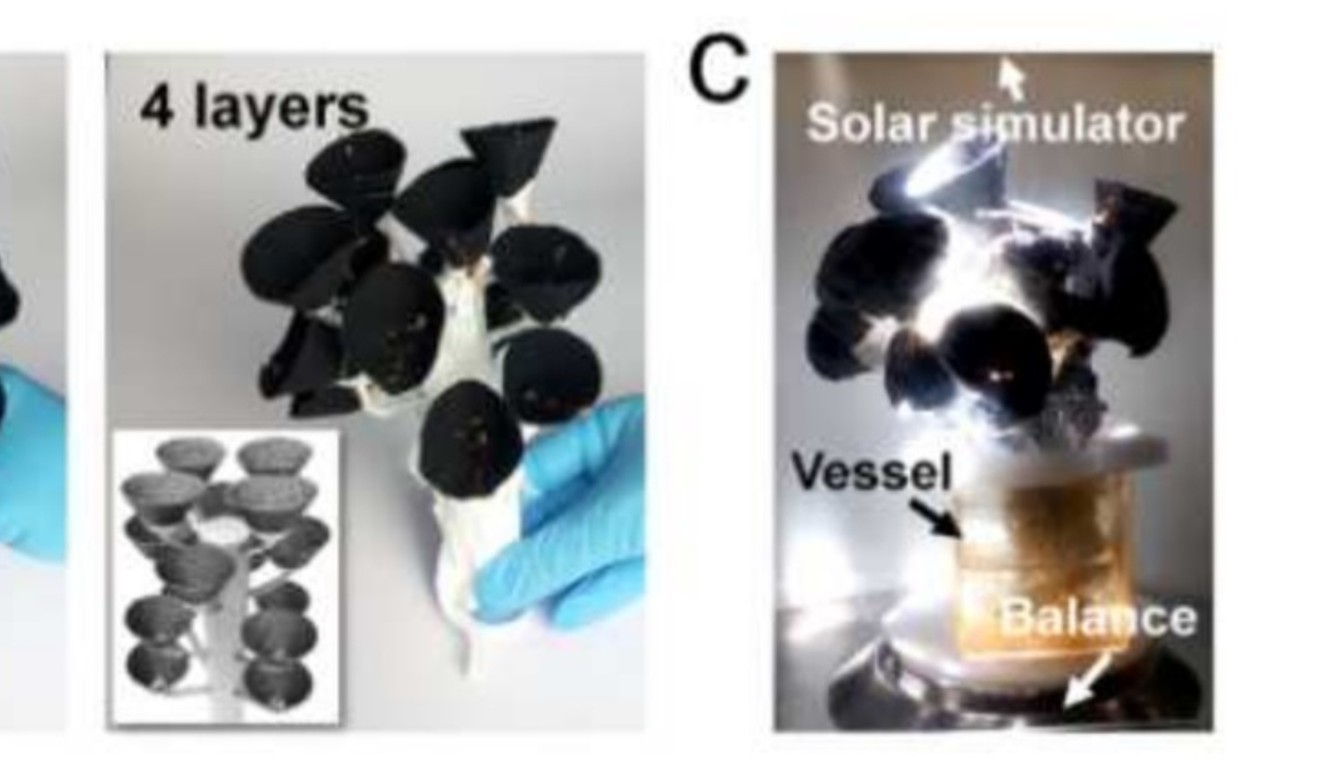
Drawing its energy entirely from the sun just like a real tree, the “water tree” has a root made of cotton fabric that can absorb water from its surroundings, such as from sand on a beach.
After water moves up the stem, it is vaporised by “leaves” made of black-carbon paper cones that convert light energy to heat, reaching nearly 50 degrees Celsius (122 Fahrenheit). The tree sits in a glass chamber with a relatively cool surface that collects the vapour.
Using standard cotton fabric and a new nanomaterial that can be cheaply mass-produced from charcoal, a paper cone with a surface area as large as 1 square metre would cost only US$2, according to the researchers.
The cones, which function like leaves, could be mass-produced cheaply, researchers say. Photo: Chinese Academy of Sciences
A cone that size can generate up to 3.4kg (7.5lbs) of condensed water per hour, faster than any other solar-powered desalination methods previously reported.
Even on a cloudy day, the total output in seven hours of sunlight can reach 5.4kg, or three times the amount the typical adult needs to stay hydrated.
One tree can have multiple layers of branches, each with several cones to increase the vapour-producing surface area.
The study, published this month in the journal Nano Energy, was led by Professor Chen Tao at the Chinese Academy of Sciences’ Ningbo Institute of Material Technology and Engineering in Zhejiang province, and also involved researchers from Singapore and Taiwan.
World’s thirst for fresh water is causing a big toxic problem
One of the paper’s co-authors, Dr Ouyang Jianyong, associate professor at the National University of Singapore’s department of materials science and engineering, told the South China Morning Post that the technology could be applied in remote places such as on islands in the South China Sea.
“It is particularly useful for isles far away without a stable drinking water supply,” Ouyang said. “These ‘trees’ may not be able to quench the thirst of a large city, but they can meet the critical demand of a small community, especially in emergencies.
“We are already in contact with some companies [to commercialise the technology],” he added.
The material used to make the cone has several advantages, according to Ouyang. The cones can absorb a wide spectrum of sunlight, maximising the amount of energy they can collect, and their porous structure allows them to release vapour quickly.
Lawmakers endorse plan for HK$7.7 billion desalination plant
When used to desalinate a supply of seawater, the trees would be self-cleaning at night, by water washing away salt residue without being vaporised as it would during sunlight hours.
The vapour-producing fabric is as thin and lightweight as a few sheets of paper. It can be folded and sewn into almost any shape, or cleaned in a washing machine, and can operate effectively for several years in a harsh environment, the researchers say.
The condensed water meets stringent safety standards for direct drinking set by the World Health Organisation, according to the researchers.
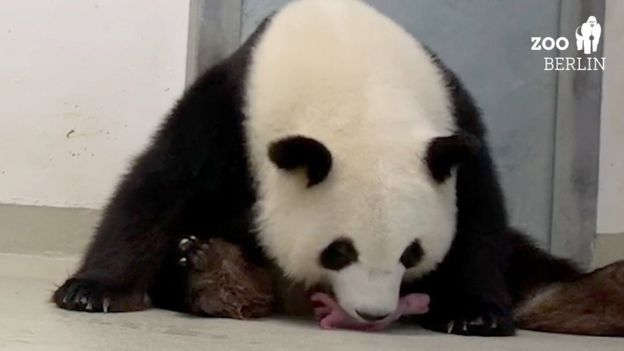
Image copyright AFPImage caption Meet Hong and Kong?
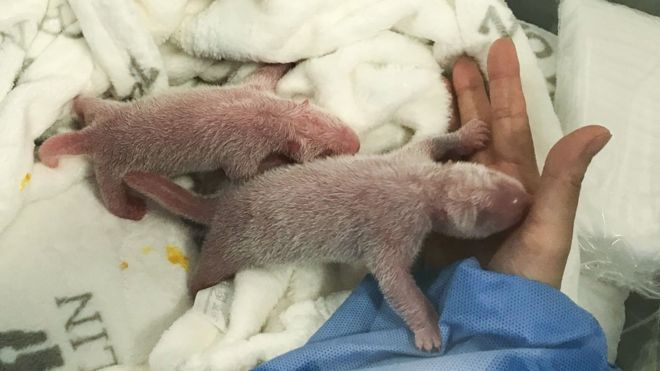
Two newborn panda cubs at Berlin Zoo have been unexpectedly caught up in Hong Kong’s political unrest, after German newspapers started a campaign to name them “Hong” and “Kong”.
One of Berlin’s leading papers, Der Tagesspiegel, asked its readers to come up with name suggestions.
Top of the poll: “Hong” and “Kong”.
One reader wrote in to say they should be named “in solidarity with a city fighting for survival”.
Other suggested names included “Joshua Wong Chi-fung” and “Agnes Chow Ting” – after two prominent Hong Kong democracy activists.
Loaning pandas to zoos around the world is part of China’s soft diplomacy, aimed at winning hearts and minds abroad.
As the cubs will have to be returned to China in two to four years, the paper suggested that naming them after the activists might even be a sneaky way of keeping them in Germany.
The poll is in no way binding or even related to the zoo – but it was soon picked up by Germany’s leading tabloid, Bild, which issued a passionate call “to politicise” the naming of the little pandas.
“Bild is choosing to call the panda cubs Hong and Kong because it’s China’s brutal politics that lies behind these panda babies,” the paper wrote on Thursday.
“Bild is demanding of the German government that it reacts in a political way to the birth of these small bears.”
As German Chancellor Angela Merkel is currently on a visit to China, Bild said she could even relay the news to President Xi Jinping in person.
Image copyright EPAImage caption Mother panda Meng Meng has been on loan to Germany since 2017
Hong Kong activists had already called on Ms Merkel to raise their cause during her talks in Beijing.
In an earlier interview with Bild, activist Joshua Wong had suggested the zoo should name the animals “Freedom” and “Democracy”.
The German media’s foray into panda PR came as Hong Kong’s government launched a series of full-page adverts in international newspapers, designed to reassure investors that the city is still open for business.
The ads, which will run in leading papers around the world, say the government is determined to achieve a “peaceful, rational and reasonable resolution” to present political tensions.
When Kazakh actress Reyizha Alimjan arrived in Shanghai last month wearing jeans and a camisole it reignited a long-running debate over who gets a say on how Chinese women should dress
Fashion choices that would be regarded as unremarkable in Europe or North America are often seen as outrageous in the world’s most populous nation
Kazakh actress Reyizha Alimjan’s fashion choices sparked a social media storm in China last month. Photo: Weibo
When Li Xiang broke up with her boyfriend over a selfie she posted on social media, it was not just about a woman letting a man know he wasn’t entitled to tell her how to dress in public, but a matter of personal freedom, social norms and cultural tradition.
A few weeks ago, the 24-year-old media worker from Shanghai shared a photo on WeChat that showed her posing at her bedroom door in a camisole and mini shorts. Her boyfriend said it made him very “uncomfortable”, and they quarrelled.
“‘Look how scantily clad you are, and [if] that is not enough, you shared it online,’ he said,” Li recalled.
“I got mad when he said, ‘You should go and ask other men if they’d like their girlfriends to dress like that’, as if he should decide what I wear – as if I were his appendage,” she said, referring to the archaic notion that a woman is secondary to a man in their relationship.
What clothes Chinese women should or should not wear has been the subject of intense online debate in recent weeks. Photo: EPA
Their argument was not unusual in China, especially over the past month when the online world became embroiled in a war of words about women’s freedom to dress as they please.
The controversy erupted when an article defending Reyizha Alimjan – the Kazakh actress criticised for showing too much flesh when she arrived at an airport in Shanghai in late July wearing jeans and a camisole – appeared on a WeChat movie review account called Staff of the 3rd Hall on August 12.
Reyizha Alimjan was criticised for her outfit on Chinese social media. Photo: Weibo
While that perspective was supported by many women online, others disagreed and said that society was open and tolerant but that people had the right to disagree.
By coincidence, a poll about women wearing camisoles in public was launched on August 10 by a WeChat account called Cicada Creativity. About 70 per cent of the nearly 14,000 respondents said they did not dare to do so.
More than 40 per cent avoided doing so for reasons such as thinking they were “not thin enough”, but a quarter said they said no because either their boyfriends disapproved or would not allow it, or they feared they would be harassed.
Chinese women spurn Victoria’s Secret for home-grown lingerie brands
Joy Lin, a feminist from Shanghai, said the debate was so fierce because it was not just about dress.
“It’s more about people’s judgment about one’s character and morals behind what she wears,” Lin said. “If you wear revealing clothes, they would say you are asking for harassment. If you show a little skin, you are frigid. And if you are casual, they call you ‘dama’ [Chinese slang, often derogatory, for middle-aged and elderly women].”
Some women say they are often judged by the clothes they wear. Photo: AP
In her experience, Lin said that if she appeared on the streets of Shanghai – the most cosmopolitan city in China – without a bra, there would be judgmental looks from passers-by before she had walked 10 metres (33 feet).
In contrast, she did just that in Paris in July, and, “no one stared at me or came near me at all”.
“Usually, when it comes to comments about what we wear, they’re not about whether the dress matches the hairstyle or things like that, but about our bodies, whether we’re slim or not and stuff like that,” she said. “Some [comments] can be very malicious and insulting.”
#MeToo rally accuses Hong Kong police of sexual violence against protesters
While shaming women for their clothing choices has been an issue for many years, it reached peak public awareness in China after the #MeToo movement took off in the US.
The social media campaign went viral in 2017 when dozens of women accused American film producer Harvey Weinstein of sexual assaults over a period of nearly 30 years.
The #MeToo movement took off in the US in 2017 after dozens of women accused film producer Harvey Weinstein of sexual assault. Photo: Shutterstock
Lu Peng, a researcher from the Shanghai Academy of Social Sciences, said the online debate helped encapsulate conflicts between a growing desire for freedom, gender norms and generations of tradition.
“There will hardly be a consensus on such a question about whether women have the freedom to dress,” he said. “But if this discussion can make people realise that men, not just women, also face restrictions in dressing, then it’s bringing progress.”
The simplest example was to dress for the occasion, which applies to both sexes.
“We have never been free in dressing. We’re only free within a certain extent … About what to wear in public, I don’t think we should emphasise freedom only and ignore the local culture and society,” Lu said.
Keeping a low profile has long been part of the Chinese philosophy. Photo: Xinhua
In China, there is no law banning states of dress or undress in public, nor do the Han people, who make up most of the population, have religious beliefs that restrict their mode of dress. But keeping a low profile and avoiding unwanted attention has long been part of the Chinese philosophy.
“My father will also ask me not to be ‘overexposed’, because he believes it’s increasing the risk of being harassed,” Li, the Shanghai media worker, said.
“They think they mean well, but I just want to be myself. I’m not breaking any law. I want to make my own contribution in changing this culture,” she said.
ISLAMABAD (Reuters) – Pakistan would not use nuclear weapons first, Prime Minister Imran Khan said on Monday, amid tensions with arch-rival India after New Delhi revoked the special status of its part of the disputed Kashmir region.
“We both are nuclear-armed countries. If these tensions increase, the world could be in danger,” Khan said, addressing members of the Sikh religious community in the eastern city of Lahore. “There will be no first from our side ever,” he said.
The foreign ministry’s spokesman subsequently said on Twitter that the comments were being taken out of context and did not represent a change in Pakistan’s nuclear policy.
“PM was simply reiterating Pakistan’s commitment to peace and the need for both nuclear states to demonstrate responsible behaviour,” spokesman Mohammad Faisal said on his official Twitter account.
Tension remains high in Kashmir, where security forces have used tear gas against stone-throwing protesters and the valley remains under lockdown after Indian Prime Minister Narendra Modi’s decision to withdraw special rights for the Muslim-majority state on Aug. 5.
By stripping Indian-controlled Kashmir of its special status, New Delhi blocked the region’s right to frame its own laws and allowed non-residents to buy property there. Delhi said the change would help Kashmir’s development, to the benefit of all, but its move angered many residents of the region and was strongly condemned by Pakistan.
Khan has so far focused on a global diplomatic campaign condemning India’s actions, accusing Modi of committing human rights violations and atrocities in the valley.
He has also said frequently that any misadventure between two nuclear-armed nations could endanger the world.
Muslim-majority Kashmir has long been a flashpoint between India and Pakistan. Both countries rule parts of Kashmir while claiming it in full. Two of the three wars they have fought have been over it.
Also on Monday, Islamabad gave a consular access to an Indian who was given a death sentence for spying by a Pakistani military court, which the International Court of Justice asked Pakistan to review in mid-July.
“Pursuant to the decision of the International Court of Justice, Pakistan provided consular access on 02 September, 2019 to India for Commander Kulbhushan Jadhav, Indian spy, serving Indian Naval officer,” a Pakistani foreign office statement said.
The statement said that at India’s request, there was no restriction on the language of communication and the access was recorded, which continued for two hours.
An Indian external affairs ministry statement said “Jadhav appeared to be under extreme pressure to parrot a false narrative to bolster Pakistan’s untenable claims.” It said Delhi would wait for a detailed report to determine the extent of conformity to the ICJ directives.
BEIJING, Sept. 1 (Xinhua) — As the autumn semester started Sunday, Chinese education departments, schools and military authorities have geared up for military training programs for students.
The Ministry of Education and three departments of the Central Military Commission jointly issued a directive earlier this week underlining adequate preparation of trainers, careful design of training programs and proper security management.
Freshman college students across the country and entrants to middle schools in many places are required to attend a short military training program mostly on campus but sometimes at training camps.
The military should select competent servicemen to be trainers and provide them with adequate training on teaching policies and skills, according to the directive.
Civilian and military authorities were also asked to introduce more interactive and creative training models and design courses that suit students’ physical and psychological conditions.








 CHINDIA ALERT: You'll be living in their world, very soon