Archive for ‘Politics’

26/06/2019

China, Uganda lift ties to comprehensive cooperative partnership

BEIJING, June 25 (Xinhua) — Chinese President Xi Jinping and visiting Ugandan President Yoweri Museveni agreed to lift their countries’ relationship to a comprehensive cooperative partnership on Tuesday.

At present, China-Uganda ties are at their best in history, as the political mutual trust has been continuously enhanced, pragmatic cooperation has yielded fruitful results, and the two sides maintain close collaboration in international and regional affairs, Xi said.

He said China was willing to work with Uganda to promote the ties in the process of the joint building of the Belt and Road and the implementation of the outcomes of the Forum on China-Africa Cooperation (FOCAC) Beijing Summit.

Xi said China and Uganda should continue to understand and support each other on issues related to each other’s core interests and major concerns.

He said China is willing to strengthen exchanges with Uganda on the experience of governance, and deepen cooperation in areas such as infrastructure construction, trade, energy, agriculture, epidemic prevention and control, human resources, industrial parks and tourism.

“Chinese enterprises are encouraged to invest in Uganda in accordance with market-oriented principles,” Xi said.

The Chinese side appreciates the positive role played by Uganda in maintaining regional peace and stability and supports Uganda’s efforts to safeguard its own security, he said.

The Chinese president called on the two sides to jointly and clearly oppose protectionism and unilateralism, safeguard the international system and international order with the United Nations as the core, and commit themselves to building a new type of international relations and fostering a community with a shared future for mankind.

Uganda will take the establishment of the comprehensive cooperative partnership as an opportunity to deepen cooperation with China, Museveni said, expressing the willingness to learn from the Communist Party of China’s experience in state governance.

Museveni added that unilateralism was very dangerous, and that Uganda and China should strengthen communication and coordination in multilateral affairs such as those within the framework of the United Nations.

Source: Xinhua

16/06/2019

Commissioner’s office of China’s foreign ministry in HK voices support for HK’s decision to suspend fugitive law amendments

HONG KONG, June 15 (Xinhua) — An official in charge of the Office of the Commissioner of the Chinese Foreign Ministry in Hong Kong Special Administrative Region (HKSAR) on Saturday expressed understanding, respect and support for the decision by the HKSAR chief executive to suspend the exercise to amend the HKSAR’s Fugitive Offenders Ordinance and the Mutual Legal Assistance in Criminal Matters Ordinance.

The official also voiced continuous staunch support for HKSAR Chief Executive Carrie Lam and the SAR government in governing Hong Kong in accordance with law, safeguarding the country’s sovereignty, security and development interests, and upholding Hong Kong’s enduring prosperity and stability.

“We firmly support the SAR government’s efforts to amend the ordinances,” he said, adding that the amendments to the two ordinances aim to plug a legal loophole in the existing legal framework, demonstrate social justice and improve Hong kong’s rule of law, which is necessary, legitimate and reasonable.

The contents of the amendments conform to the international law and the common practices of the international community, and help fight crimes, he said.

The official strongly condemned the violent acts by some people, and voiced firm support for the Hong Kong police force to mete out punishment in accordance with law, uphold Hong Kong’s rule of law and protect Hong Kong’s social stability.

Since Hong Kong’s return to the motherland, Hong Kong people have been enjoying unprecedented and extensive rights and freedoms, including the freedoms of speech and assembly, he said.

However, freedom is by no means without boundaries, and rights must be exercised within the framework of the rule of law. Any civilized society ruled by law will not tolerate unlawful acts which impact peace and security, he said.

He stressed that Hong Kong is China’s Hong Kong and its affairs are purely China’s internal affairs. “We resolutely oppose any external forces interfering in its affairs with any excuse or in any form. Any attempts to create chaos in Hong Kong and jeopardize its prosperity and stability are doomed to fail,” he said.

“Again, we urge relevant countries to comply with the international law and the basic norms governing international relations, fully respect China’s sovereignty and the SAR government in exercising governance in accordance with law and immediately stop the wrong words and deeds that undermine Hong Kong’s prosperity and stability,” the official said.

Source: Xinhua

14/06/2019

China, Kyrgyzstan agree to enhance ties to new heights

KYRGYZSTAN-BISHKEK-CHINA-PRESIDENTS-TALKS

Chinese President Xi Jinping and his Kyrgyz counterpart Sooronbay Jeenbekov hold talks in Bishkek, Kyrgyzstan, June 13, 2019. Xi and Jeenbekov held talks here Thursday, agreeing to take their countries’ comprehensive strategic partnership to new heights. (Xinhua/Li Xueren)

BISHKEK, June 13 (Xinhua) — Chinese President Xi Jinping and his Kyrgyz counterpart, Sooronbay Jeenbekov, held talks here Thursday, agreeing to take their countries’ comprehensive strategic partnership to new heights.

Xi arrived in the Central Asian country Wednesday for a state visit and the Shanghai Cooperation Organization (SCO) summit.

China-Kyrgyzstan relations have withstood the test of international vicissitudes and achieved leapfrog development over the past 27 years since the establishment of the diplomatic relationship. The two countries have set a fine example of a new type of state-to-state relations featuring mutual respect, equality and win-win cooperation, Xi said.

China will continue to support Kyrgyzstan’s own choice of development path and all policy measures taken by the Kyrgyz government to safeguard national independence, sovereignty and security, Xi said.

Xi also said China is ready to join hands with Kyrgyzstan to deepen their traditional friendship and mutually beneficial cooperation, so as to better benefit the two peoples.

The Chinese president stressed that jointly building the Belt and Road has become the focus of China-Kyrgyzstan cooperation, calling on the two countries to deepen the alignment of their development strategies, tap new potential of partnerships and explore new space of cooperation.

Cooperation in trade and investment should be expanded and major programs must be well implemented, Xi said, adding that China is willing to import more green and quality agro-products from Kyrgyzstan.

China will continue to support Kyrgyzstan’s economic and social development, including jointly building drinking water facilities, roads, hospitals and other projects to improve people’s livelihood.

Xi also called for closer people-to-people and sub-national exchanges.

Amid efforts to enhance security cooperation, the two countries should step up fight against the “three forces” of terrorism, separatism and extremism, transnational organized crime and drug trafficking, Xi said.

On the SCO, Xi said China applauds Kyrgyzstan’s efforts to promote cooperation in various fields since taking over the rotating presidency of the SCO.

China supports Kyrgyzstan in hosting the Bishkek summit, which will be held on Friday, and encourages the SCO member states to gather more consensus, tap potential of cooperation and build a community with a shared future that benefits all sides, Xi said.

For his part, Jeenbekov said he has met with the Chinese president for three times in more than a year, fully demonstrating the high level of the bilateral relations and the willingness of both sides to strengthen cooperation.

Kyrgyzstan will always be “a good neighbor, good friend and good partner” of China, he said.

Jeenbekov conveyed congratulations on the 70th anniversary of the founding of the People’s Republic of China and on the remarkable achievements made by the Chinese people under the leadership of Xi and the Communist Party of China.

Xi’s vision and experience on state governance are of great significance to Kyrgyzstan, Jeenbekov said.

The president thanked China for its long-term and huge assistance and support to Kyrgyzstan in its national development and the improvement of the people’s livelihood.

Kyrgyzstan firmly adheres to the one-China policy, Jeenbekov said, adding that the affairs of ethnic minorities in China are its internal affairs and that his country supports policies and measures taken by the Chinese government in this regard.

Kyrgyzstan stays committed to the fight against the “three forces,” he said.

Noting that Kyrgyzstan’s national development strategy corresponds to the Belt and Road Initiative (BRI), Jeenbekov said his country is ready to set up institutionalized arrangements to promote their alignment, deepen cooperation with China in areas such as trade, investment, energy, agriculture, transport and on local levels, as well as increase cultural and people-to-people exchanges.

Kyrgyzstan and China hold similar stances on international and regional issues, laying a sound foundation for the two countries to strengthen multilateral coordination, he said.

The Kyrgyz side appreciates China’s valuable support to Kyrgyzstan during its SCO presidency and in hosting the Bishkek summit, he said.

After the talks, the two presidents signed a joint statement on further deepening the comprehensive strategic partnership between the two countries, and witnessed the exchanges of bilateral cooperation documents.

The two sides will continue the visits and meetings between leaders of the two countries to regularly exchange views on bilateral relations and international and regional issues of common concern, according to the joint statement.

Both sides will continue to support each other on issues related to their core interests, such as national sovereignty, security and territorial integrity, said the statement.

Noting that there is great potential for cooperation to synergize the BRI with Kyrgyzstan’s national development strategy 2018-2040, the statement said the two sides will look for more common grounds of interests and realize common development based on the principle of win-win cooperation.

The two sides also pledged to support the central role of the United Nations in international affairs and the building of an open world economy, voicing resolute opposition to unilateralism and protectionism.

Source: Xinhua

11/06/2019

China sees over 6 mln entries, exits during Dragon Boat Festival holiday

BEIJING, June 10 (Xinhua) — China’s border check agencies saw about 6.13 million inbound and outbound trips made during the three-day Dragon Boat Festival holiday, up 6.3 percent year on year, the National Immigration Administration (NIA) said Monday.

During the holiday that ended Sunday, Chinese mainland residents made more than 3.2 million entries and exits, up 11.3 percent from the previous year, NIA data showed. Entries and exits made by residents from Hong Kong, Macao and Taiwan stood on a par with the same period last year at about 2.1 million.

Entries and exits made by foreign citizens increased by 5.3 percent to 812,000, according to the NIA.

Compared with major airports in places such as Beijing, Shanghai and Guangzhou, some small and medium-sized airports reported an obvious rise in their trans-border passenger volumes during the holiday this year, said the NIA, citing that of an airport in the port city of Tianjin surging 28.6 percent.

Source: Xinhua

09/06/2019

India’s Modi calls for global conference on terrorism

MALE, Maldives (Reuters) – Indian Prime Minister Narendra Modi has called for a global conference to tackle the threat of terrorism in the region and around the world.

During a speech on his first foreign visit since winning re-election, he told the Maldivian parliament in Male that “terrorism is not just a threat for a country, but to the entire civilisation”.

“The international community has actively arranged for global convention and many conferences on the threat of climate change. Why not on the issue of terrorism?” Modi said.

He called for a global conference “so that there can be meaningful and result-oriented discussions for plugging the loopholes that terrorists and their supporters exploit”.

India is pursuing what it calls a “neighbourhood first” foreign policy centred on its allies in South Asia, although there is little sign of a warming in relations with arch rival Pakistan.

His trip to the Maldives is being viewed as a statement of intent to counter the rise of China, which has been making strategic inroads in the Indian Ocean in recent years and seeking closer military ties, to the alarm of New Delhi.

“In the neighbourhood, Maldives is priority,” Modi said in his speech.

During the visit, Modi has signed a slew of agreements with the island nation encompassing ferry services, port terminals and a new national cricket stadium.

His next stop is Sri Lanka’s capital, Colombo, where security is likely to be high on the agenda.

A wave of bombings on Easter Sunday killed more than 250 people across Sri Lanka despite repeated warnings from Indian intelligence services about a militant plot.

Source: Reuters

05/06/2019

African swine fever virus is now ‘endemic’ in China’s Tibet and Xinjiang regions, making its eradication harder, UN says

  • The virus that causes the African swine fever is now endemic in Tibet and Xinjiang, the United Nations’ Food & Agriculture Organisation said
  • Diseases that are endemic, or generally present, are harder to stamp out
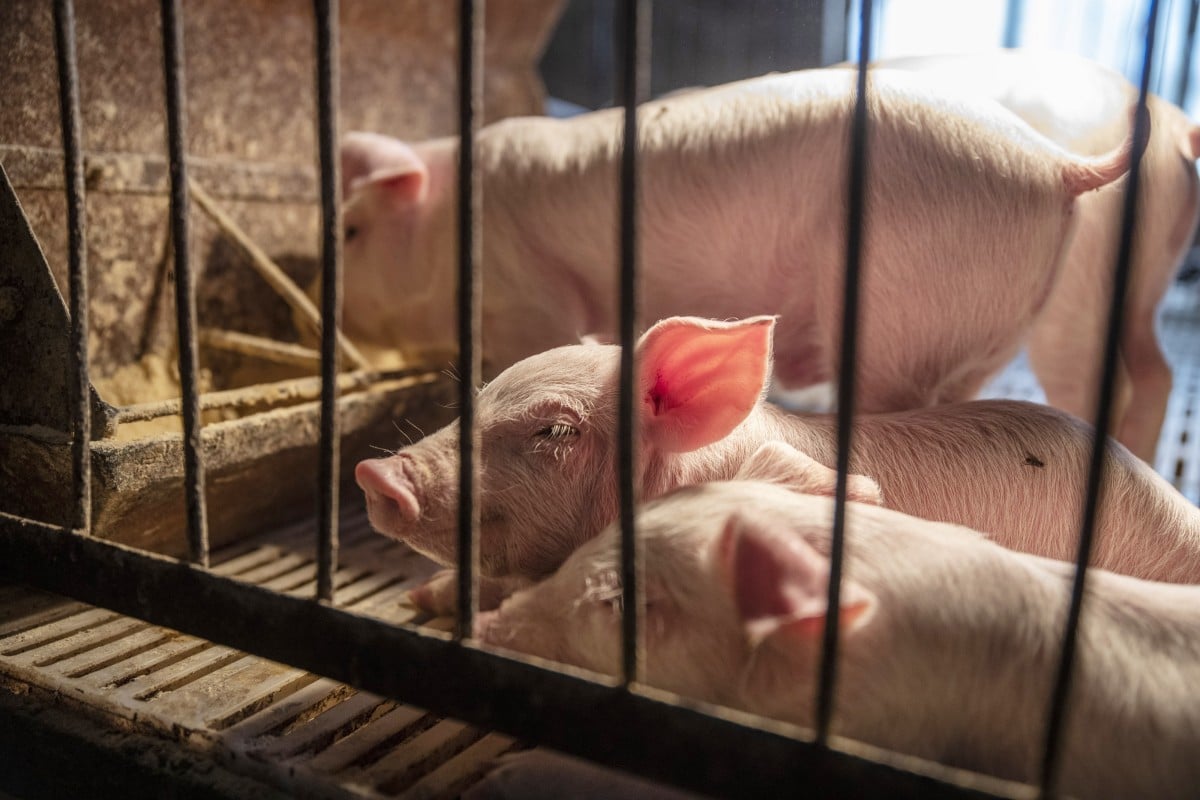
Piglets are kept in pens at a pig farm in Langfang in Hebei province on Monday, April 1, 2019. Photo: Bloomberg
China’s attempts to control African swine fever have been insufficient to stem further spread of the disease, with the deadly pig contagion now endemic in two regions, a United Nations group said.
The virus that causes the disease is entrenched among pig populations in the autonomous regions of Tibet and Xinjiang, the Food & Agriculture Organisation (FAO) in Rome said in a report Thursday.
Diseases that are endemic, or generally present, are more difficult to stamp out by quarantining and culling diseased and vulnerable livestock.

About 20 per cent of China’s pig inventories may have been culled in the first few months of 2019 amid fears of African swine fever spreading more rapidly, according to the FAO, which is monitoring the disease in cooperation with local authorities and China’s Ministry of Agriculture and Rural Affairs.

China’s pig production will drop by 134 million heads, or 20 per cent, in 2019, the US Department of Agriculture said last month.

“While official sources confirm a rapid spread of the disease, both the speed and severity of the spread could prove more pronounced than currently assumed,” the FAO said in its report. A government investigation in seven provinces found “irrational culling of sows on breeding farms in February, reducing the sector’s core production capacity.”

Thailand launches crackdown to keep out African swine fever

Since the first cases were reported last August, 130 outbreaks have been detected in 32 provinces, autonomous regions, municipalities and special administrative regions across the nation, which raises half the world’s pigs.

SCMP Graphics
SCMP Graphics

The FAO report found:

  • In Jilin province, swine inventory fell 28 per cent from the previous year, with some reports pointing to a larger drop In Shandong province, sow numbers fell 41 per cent from July 2018 to February 2019
  • In Guangdong province, hog inventories slumped 20 per cent from a year earlier and pig-feed sales fell 10 per cent to 50 per cent
  • Production of fresh and frozen meat by meatpackers plunged 17 per cent in January and February, compared with the same months in 2018
  • Source: SCMP
05/06/2019

Glowing tributes to China’s rise ignore Chinese with no money or rights

  • The ‘success’ of China’s undemocratic model hides the continued exploitation of the poor, the destruction of faith communities and other victims who can’t speak out
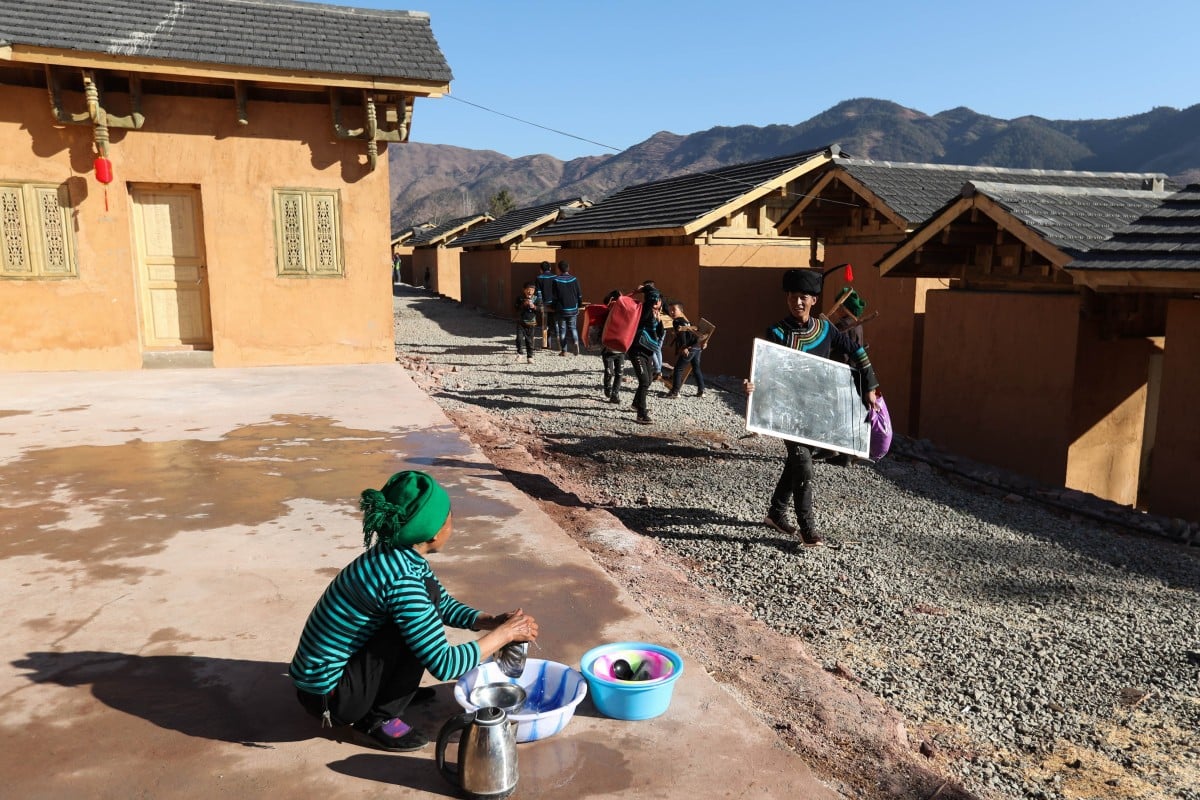
Villagers of the Yi ethnic group move into new houses for relocated residents from poor areas, in Zhaojue county in southwest China’s Sichuan province. Under President Xi Jinping, China has set the goal of eliminating poverty by 2020, but the state of the rural poor in remote counties may make the task difficult. Photo: Xinhua
I write to respond to Randy Lee’s letter, dated May 6, on the dilemma of democracy and prosperity in mainland China and Taiwan (“
What Taiwan’s economy tells us about the pitfalls of democracy

”). Linear thinking of this kind has misled a lot of people on the issue.

Mr Lee compared the economies of China and Taiwan, saying the island’s economy is in a downturn and attributed this to its democratic governance. However, every nation faces regular ups and downs in its economy and there is no reason to place the blame on the so-called chaos of democracy.
The strong economy of China at present comes at a price, and the price is most likely paid by the individual citizens deprived of freedom of speech, businesses cultivating a “copying” culture to make a profit, as well as the 
destruction of faith

  and humanity.

Xinjiang Uygurs: the human cost of China’s belt and road plan
Mr Lee acknowledges the widening 
wealth gap

in the People’s Republic of China, so let’s not forget whole impoverished counties in the mainland. It is reported that the richest 100 individuals in China have more wealth than the poorest two-fifths of the country’s population combined. What does that mean? That such an economy and authoritarian government do not guarantee a more equally prosperous nation, but keep widening the gap between the poor and the rich, and even exploiting the poorest parts of the country. The image of a prosperous nation, as described by Mr Lee, is only an illusion – hiding its failure in protecting the poor from being exploited and ignored.

Source: SCMP
30/05/2019

China’s top political advisor meets Taiwan delegation

CHINA-BEIJING-WANG YANG-YOK MU-MING-MEETING (CN)

Wang Yang, a member of the Standing Committee of the Political Bureau of the Communist Party of China (CPC) Central Committee and chairman of the Chinese People’s Political Consultative Conference (CPPCC) National Committee, meets with a delegation from Taiwan led by New Party Chairman Yok Mu-ming in Beijing, capital of China, May 29, 2019. (Xinhua/Yao Dawei)

BEIJING, May 29 (Xinhua) — China’s top political advisor Wang Yang on Wednesday met with a delegation from Taiwan led by New Party Chairman Yok Mu-ming.

Wang, a member of the Standing Committee of the Political Bureau of the Communist Party of China Central Committee and chairman of the Chinese People’s Political Consultative Conference National Committee, stressed the greater national interests of pursuing reunification, which he said is an undeniable duty for every Chinese on both sides of the Taiwan Strait.

Wang expressed the mainland’s willingness to engage in talks and consultation with political parties, organizations and individuals from Taiwan on the basis of upholding the 1992 Consensus and opposing “Taiwan independence.”

He also pledged efforts to implement the consensus reached during consultations, deepen cross-Strait exchanges and integrated development, promote more favorable policies benefiting Taiwan, and encourage young people from Taiwan to study, work and start businesses on the mainland.

Noting that both sides of the Taiwan Strait belong to one China, Yok expressed hope for the two sides to cooperate more, and better understand each other, forging a strong common identity and the sense of mission to pursue peaceful reunification, so as to realize the rejuvenation of the Chinese nation at an early date.

Source: Xinhua

29/05/2019

China looks to Russia, Central Asia for support amid tensions with US

  • President Xi Jinping will meet Russian counterpart Vladimir Putin next month and address economic summit in St Petersburg
  • Diplomatic flurry will also include regional security forums in Kyrgyzstan and Tajikistan
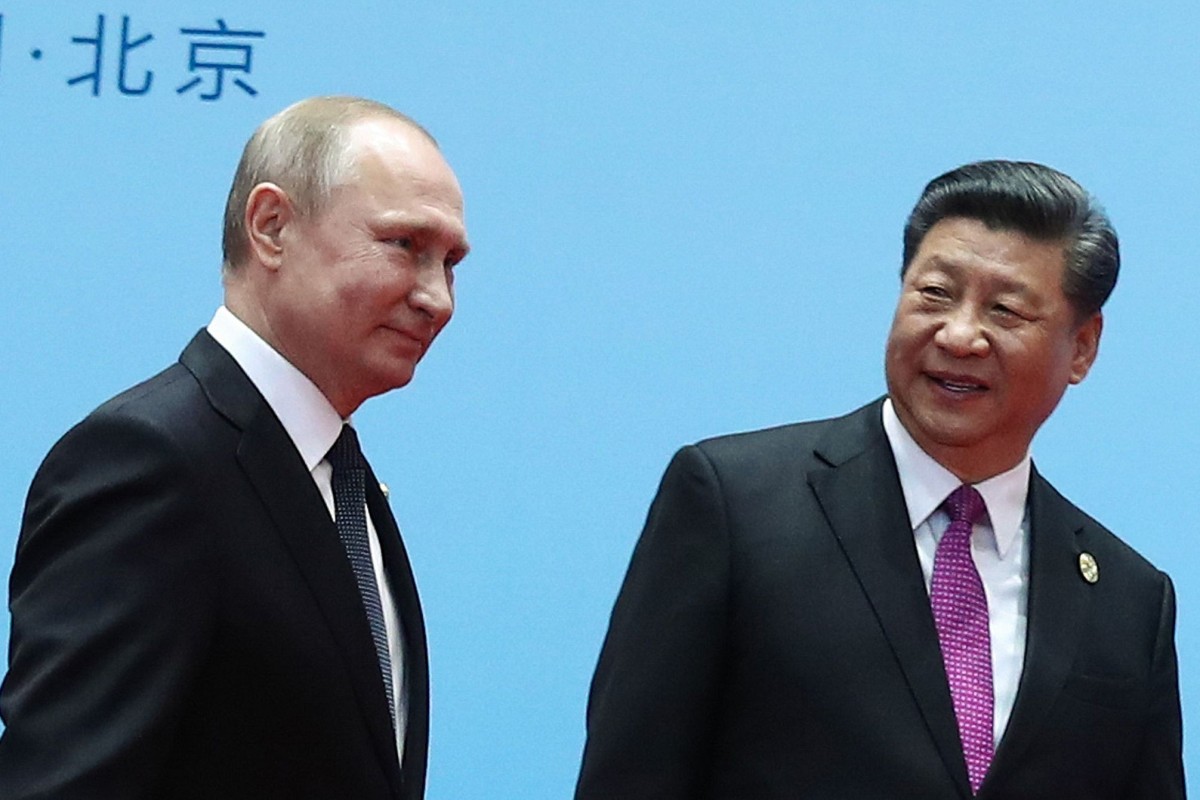
Xi Jinping has met Vladimir Putin more times than any other foreign leader since he took power in 2013. Photo: AFP
Beijing is stepping up efforts to seek support from regional and global players such as Russia and Central Asian nations as its geostrategic rivalry with Washington heats up.

President Xi Jinping is expected to meet his Russian counterpart Vladimir Putin next month, when he will also address the St Petersburg International Economic Summit,

Russian presidential aide Yuri Ushakov told state-run TASS news agency earlier.

The Chinese president will also visit the Kyrgyzstan capital Bishkek for the Shanghai Cooperation Organisation (SCO) summit in June, as well as another regional security forum in Dushanbe, Tajikistan.

Meanwhile, Vice-President Wang Qishan is visiting Pakistan before he heads to the Netherlands and Germany, according to the Chinese foreign ministry.
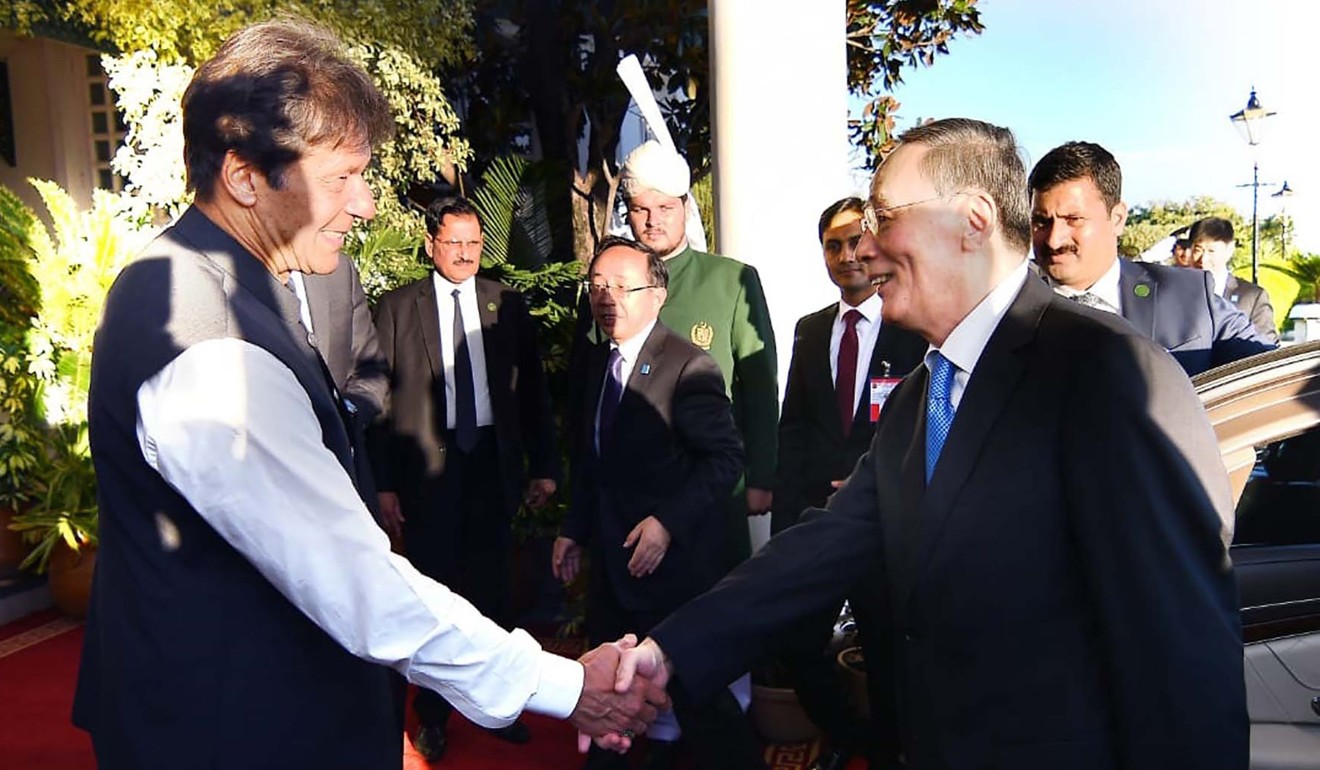
Pakistani Prime Minister Imran Khan meets Chinese Vice-President Wang Qishan in Islamabad on Sunday. Photo: AFP
The latest flurry of diplomatic activity comes as competition between China and the US intensifies on several fronts including trade and technology, the South China Sea and the Arctic, where Beijing’s partnership with Moscow –

funding and building ports, berths and icebreakers off Russia’s shores

– has drawn criticism from Washington.

It will be Xi’s second time at the St Petersburg forum, and observers expect the Chinese leader will reaffirm Beijing’s commitment to multilateralism and promote the nation as a champion of openness and cooperation.
China-Russia ties unrivalled, Beijing warns before Pompeo meets Putin
It will also be his second meeting with Putin in two months, after talks on the sidelines of the Belt and Road Forum in Beijing in late April, when the Russian president

offered his support

for the controversial China-led infrastructure and investment initiative.

With China and Russia edging closer, the latest meeting is likely to see efforts to coordinate their strategies on a range of issues – including Venezuela, North Korea, nuclear weapons and arms control, according to observers. Xi has met Putin more times than any other foreign leader since he took power in 2013.

“This time it is very likely that the latest anti-China moves by the US, such as new tariffs and the Huawei ban, will feature prominently in their conversations,” said Artyom Lukin, an associate professor at Far Eastern Federal University in Vladivostok.

Lukin said Russia’s stagnating economy and sanctions imposed by the West limited its role as a substitute for the foreign markets and technologies China could lose access to because of the US crusade. But he said Putin would “provide political and moral support to Xi”.

“That is also significant as Russia has been withstanding intense US-led sanctions pressure for more than five years already,” Lukin said, referring to sanctions imposed after Russia’s annexation of Crimea in 2014.

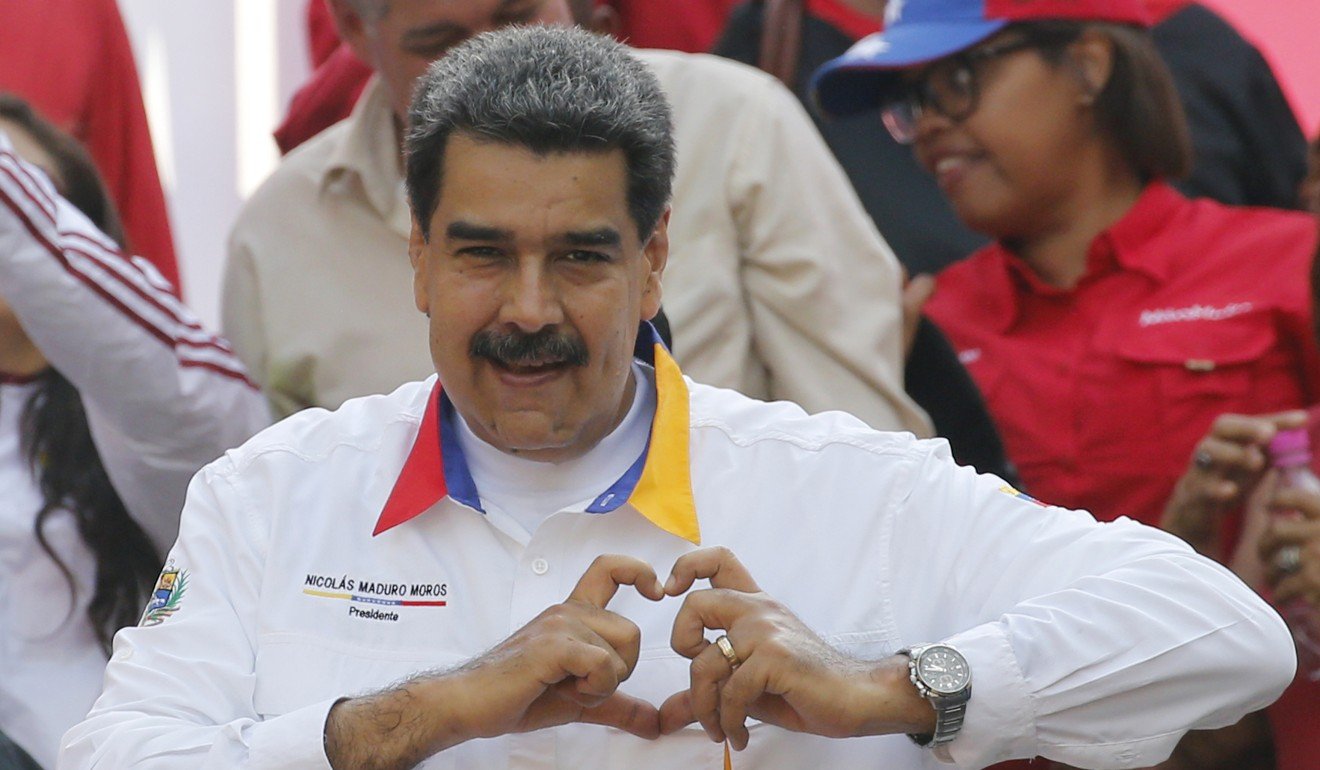
Xi and Putin are also expected to talk about Venezuela, where US-backed opposition leader Juan Guaido is attempting to oust socialist President Nicolas Maduro, who has the support of China and Russia.

Venezuelan President Nicolas Maduro has the backing of China and Russia. Photo: AP

“Moscow and Beijing are not able to seriously hurt Washington by raising tariffs or denying access to high technology. However, there are plenty of areas where coordinated Sino-Russian policies can damage US interests in the short term or in the long run,” Lukin said. “For example, Moscow and Beijing could intensify their joint support for the Venezuelan government of Nicolas Maduro, frustrating Washington’s efforts to dislodge him.”

China and Russia would also be seeking to boost economic ties. Bilateral trade, dominated by Chinese imports of gas and oil, reached US$108 billion last year – falling far short of the target set in 2011 by Xi’s predecessor, Hu Jintao, of US$200 billion by 2020.

China and Russia to forge stronger Eurasian economic ties

Li Lifan, an associate research professor at the Shanghai Academy of Social Sciences, said bilateral trade was a sticking point. “This is one of the potential hindrances in China-Russia relations and Beijing is hoping to [address this] … in the face of a possible global economic slowdown,” Li said.

Given the escalating trade war with Washington, he said China would seek to diversify its investments and markets to other parts of the world, particularly Russia and Europe.

“China will step up its investment cooperation with Europe and Russia and focus more on multilateral investment,” Li said.

But Beijing was not expected to do anything to worsen tensions with Washington.

“China is currently taking a very cautious approach towards the US, trying to avoid heating up the confrontation and further aggravation of the situation,” said Danil Bochkov, a contributing author with the Russian International Affairs Council. “For China it is important to demonstrate that it has a reliable friend – Russia – but that should not be done in an openly provocative manner.”

Stephen Blank, a senior fellow at the American Foreign Policy Council in Washington, said Beijing and Moscow would also seek to contain US influence “as far as possible” from Central Asia, where China has increased its engagement through infrastructure building under the “Belt and Road Initiative”.

Leaders from the region will gather in Bishkek next month for the SCO summit, a security bloc set up in 2001 that now comprises China, Russia, Kazakhstan, Kyrgyzstan, Tajikistan, Uzbekistan, India and Pakistan. Those members account for about 23 per cent of the world’s land mass, 45 per cent of its population, and 25 per cent of global GDP.

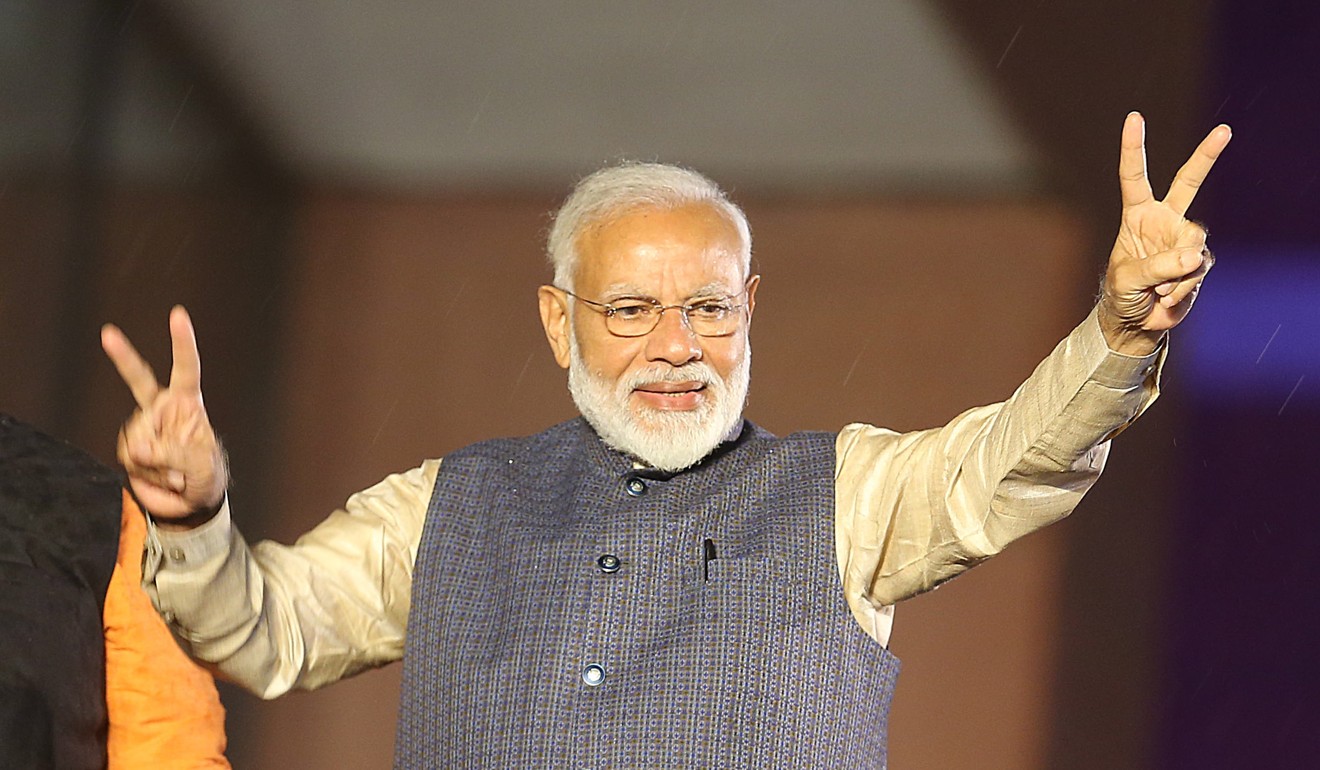
Newly re-elected Indian Prime Minister Narendra Modi could meet the Chinese president for talks in Bishkek next month. Photo: EPA-EFE

There is growing speculation that Xi will meet newly re-elected Indian Prime Minister Narendra Modi on the sidelines of that summit.

Independent analyst and author Namrata Goswami said India would be seeking a commitment to a WTO-led and rules-based multilateral trading system during the SCO talks.

“This is interesting and significant given the current US tendencies under President Donald Trump focused on ‘America first’ and the US-China trade war,” Goswami said.

Counterterrorism will again be a top priority at the SCO summit, amid concerns among member states about the rising number of Islamic State fighters returning from Syria and Iraq. Chinese scholars estimated last year that around 30,000 jihadists who had fought in Syria had gone back to their home countries, including China.

Alexander Bortnikov, chief of the main Russian intelligence agency FSB, said earlier that 5,000 fighters from a group affiliated with Isis had gathered in areas bordering former Soviet states in Central Asia, saying most of them had fought alongside Isis in Syria.

War-torn Afghanistan, which shares a border with four SCO member states – China, Pakistan, Tajikistan and Uzbekistan – is also likely to be high on the agenda at the Bishkek summit.

“With the Trump administration drafting plans to withdraw troops from Afghanistan, the SCO will assess the security situation there and decide whether to provide training for Afghan troops,” Li said.

Eva Seiwert, a doctoral candidate at the Free University of Berlin, expected the security bloc would also discuss Iran after the US withdrew from the 2015 nuclear deal and ordered new sanctions against the country.

Iran, which has observer status with the SCO, was blocked from becoming a full member in 2008 because it was subject to UN sanctions at the time. But its membership application could again be up for discussion.

Iran presses China and Russia to save nuclear deal

“The Trump administration’s unilateral withdrawal from the Iran nuclear deal in 2018 made it easy for China and Russia to present themselves as the proponents of peaceful settlement of conflicts,” Seiwert said. “Discussing the possibility of admitting Iran as a full member state would help the SCO members demonstrate their support of multilateral and peaceful cooperation.

“This would be a strong signal to the US and enhance the SCO’s standing in the international community,” she said.

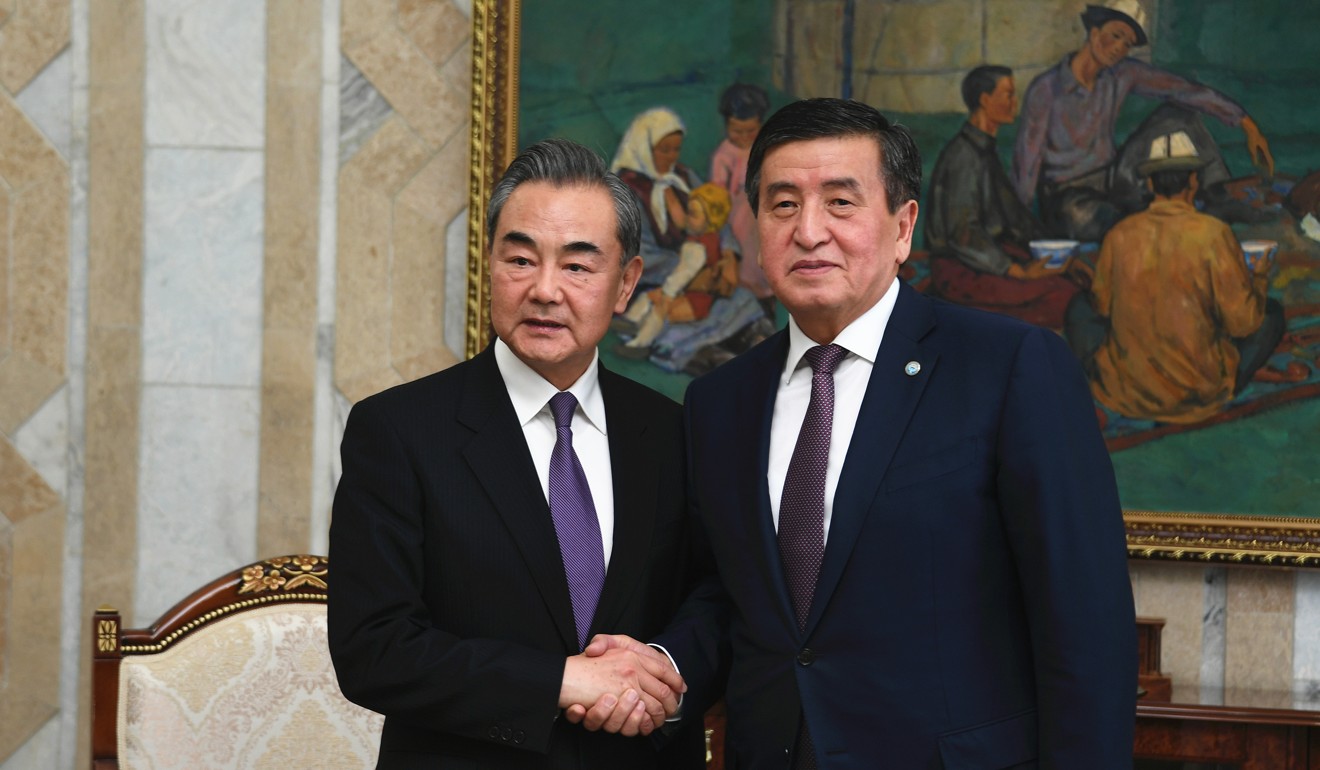
Kyrgyz President Sooronbay Jeenbekov (right) meets Chinese Foreign Minister Wang Yi in Bishkek on Tuesday last week. Photo: Xinhua

As well as security, Xi’s visit to Central Asia is also likely to focus on economic ties. Meeting Kyrgyz President Sooronbay Jeenbekov in Bishkek last week, Chinese Foreign Minister Wang Yi said Beijing would continue to “provide support and help national development and construction in Kyrgyzstan”.

Li said China may increase investment in the Central Asian region, especially in greenfield projects.

“China will continue to buy agriculture products from Central Asia, such as cherries from Uzbekistan, and build hydropower projects to meet local energy demand,” Li said. “Investment in solar and wind energy projects is also expected to increase too.”

Source: SCMP

29/05/2019

Short of war, US can’t help but lose to China’s rise in Asia, says think tank Lowy Institute

  • Lowy Institute’s 2019 Asia Power Index puts Washington behind both Beijing and Tokyo for diplomatic influence
  • Trump’s assault on trade has done little to stop Washington’s decline in regional influence, compared to Beijing, say experts
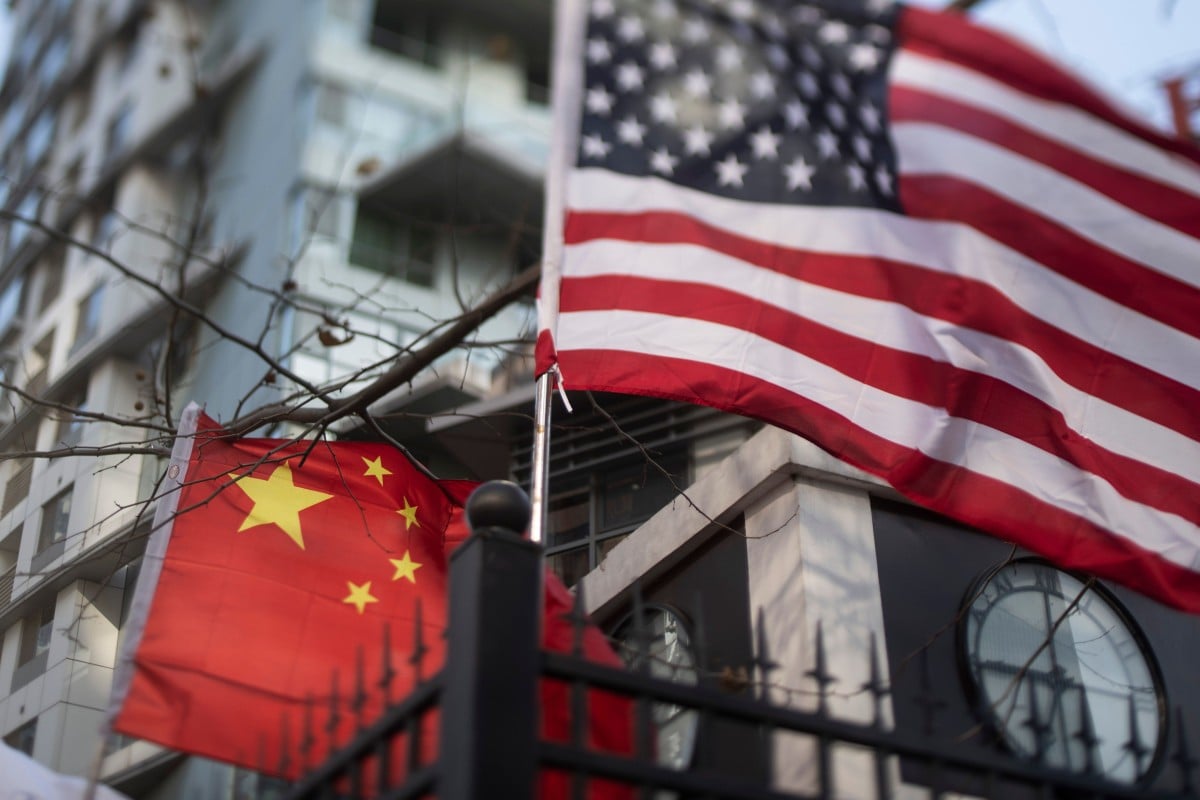
Chinese and US flags at an international school in Beijing. Photo: AFP
The 
United States

may be a dominant military force in Asia for now but short of going to war, it will be unable to stop its economic and diplomatic clout from declining relative to China’s power.

That’s the view of Australian think tank the Lowy Institute, which on Tuesday evening released its 2019 index on the distribution of power in Asia.

However, the institute also said China faced its own obstacles in the region, and that its ambitions would be constrained by a lack of trust from its neighbours.

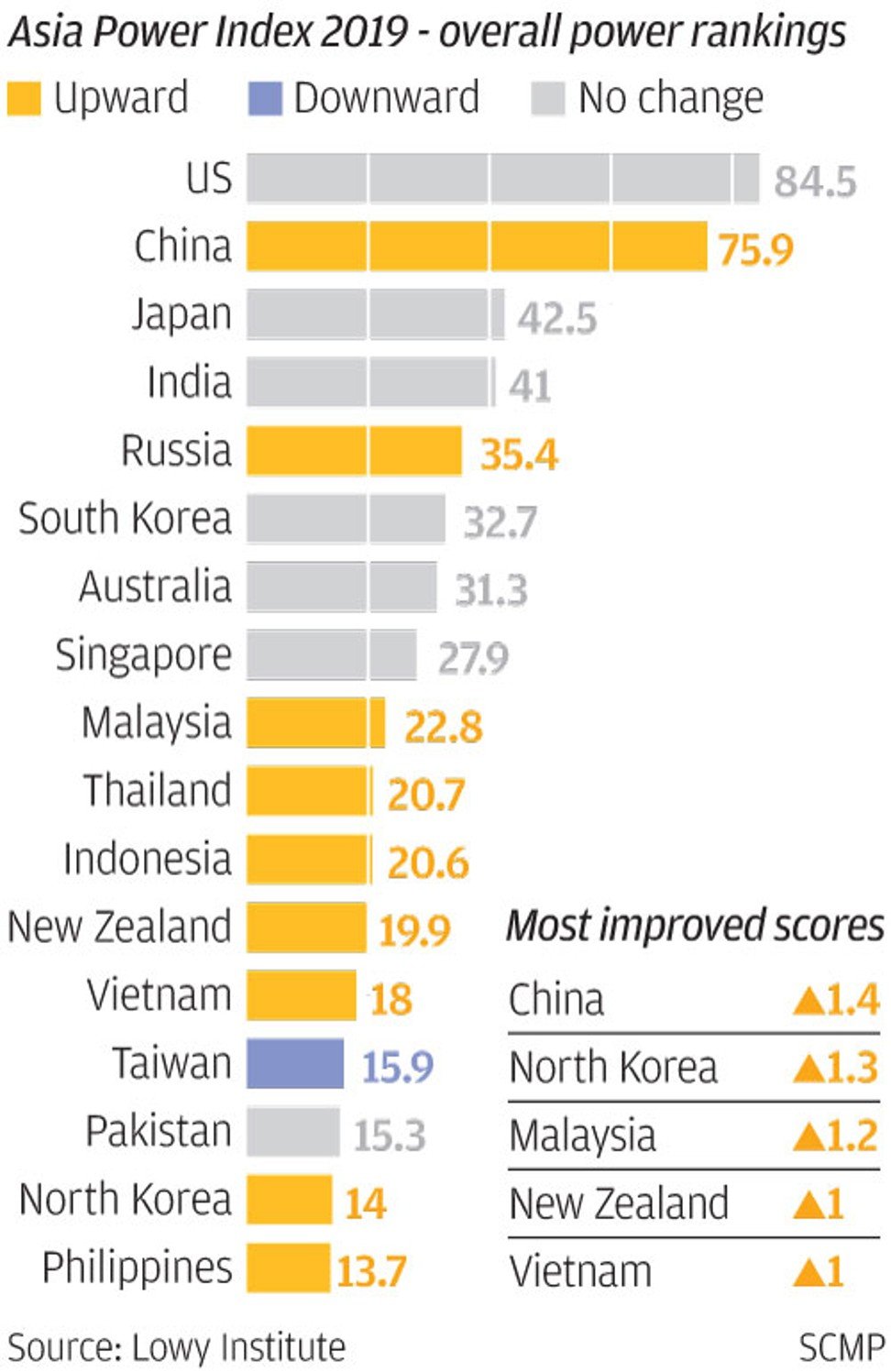
The index scored China 75.9 out of 100, just behind the US, on 84.5. The gap was less than America’s 10 point lead last year, when the index was released for the first time.
“Current US foreign policy may be accelerating this trend,” said the institute, which contended that “under most scenarios, short of war, the United States is unlikely to halt the narrowing power differential between itself and China”.
The Lowy Institute’s Asia Power Index. Click to enlarge.
Since July, US President

Donald Trump

has slapped tariffs on Chinese imports to reduce his country’s

trade deficit with China

. He most recently hiked a 10 per cent levy on US$200 billion worth of Chinese goods to 25 per cent and has also threatened to impose tariffs on other trading partners such as the European Union and Japan.

Herve Lemahieu, the director of the Lowy Institute’s Asian Power and Diplomacy programme, said: “The Trump administration’s focus on trade wars and balancing trade flows one country at a time has done little to reverse the relative decline of the United States, and carries significant collateral risk for third countries, including key allies of the United States.”

The index rates a nation’s power – which it defines as the ability to direct or influence choices of both state and non-state actors – using eight criteria. These include a country’s defence networks, economic relationships, future resources and military capability.

It ranked Washington behind both Beijing and Tokyo in terms of diplomatic influence in Asia, due in part to “contradictions” between its recent economic agenda and its traditional role of offering consensus-based leadership.

The spoils of trade war: Asia’s winners and losers in US-China clash

Toshihiro Nakayama, a fellow at the Wilson Centre in Washington, said the US had become its own enemy in terms of influence.

“I don’t see the US being overwhelmed by China in terms of sheer power,” said Nakayama. “It’s whether America is willing to maintain its internationalist outlook.”

But John Lee, a senior fellow at the Hudson Institute, said the Trump administration’s willingness to challenge the status quo on issues like trade could ultimately boost US standing in Asia.

“The current administration is disruptive but has earned respect for taking on difficult challenges which are of high regional concern but were largely ignored by the Obama administration – 

North Korea’s

illegal weapons and China’s predatory economic policies to name two,” said Lee.

“One’s diplomatic standing is not just about being ‘liked’ or ‘uncontroversial’ but being seen as a constructive presence.”
CHINA’S RISE
China’s move up the index overall – from 74.5 last year to 75.9 this year – was partly due to it overtaking the US on the criteria of “economic resources”, which encompasses GDP size, international leverage and technology.
China’s economy grew by more than the size of Australia’s GDP in 2018, the report noted, arguing that its growing base of upper-middle class consumers would blunt the impact of US efforts to restrict Chinese tech firms in Western markets.
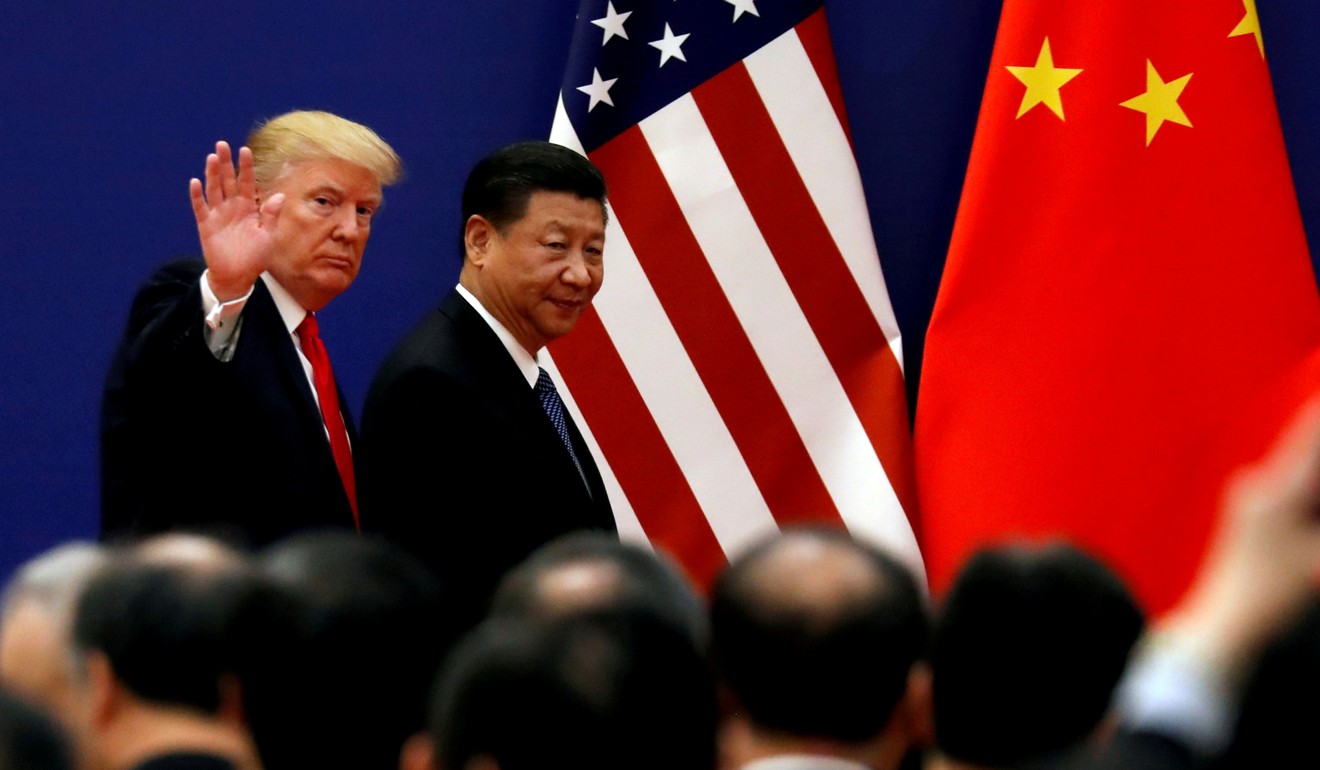
US President Donald Trump with Chinese counterpart Xi Jinping. Photo: Reuters

“In midstream products such as smartphones and with regard to developing country markets, Chinese tech companies can still be competitive and profitable due to their economies of scale and price competitiveness,” said Jingdong Yuan, an associate professor at the China Studies Centre at the University of Sydney.

“However, to become a true superpower in the tech sector and dominate the global market remains a steep climb for China, and the Trump administration is making it all the more difficult.”

The future competitiveness of Beijing’s military, currently a distant second to Washington’s, will depend on long-term political will, according to the report, which noted that China already spends over 50 per cent more on defence than the 10 

Asean

economies,

India

and

Japan

combined.

TRUST ISSUE
However, 
distrust of China

stands in the way of its primacy in Asia, according to the index, which noted Beijing’s unresolved territorial and historical disputes with 11 neighbouring countries and “growing degrees of opposition” to its signature

Belt and Road Initiative

.

Beijing is locked in disputes in the

South China Sea

with a raft of countries including Vietnam, the Philippines and Brunei, and has been forced to renegotiate infrastructure projects in

Malaysia

and Myanmar due to concerns over feasibility and cost.

If Trump kills off Huawei, do Asia’s 5G dreams die?
Xin Qiang, a professor at the Centre for American Studies at Fudan University in Shanghai, said Beijing still needed to persuade its neighbours it could be a “constructive, instead of a detrimental, force for the region”.
“There are still many challenges for [China to increase its] power and influence in the Asia-Pacific,” Xin said.
Wu Xinbo, also at Fudan University’s Centre for American Studies, said Beijing was having mixed success in terms of winning regional friends and allies.
“For China, the key challenge is how to manage the maritime disputes with its neighbours,” said Wu. “I don’t think there is growing opposition to the Belt and Road Initiative from the region, actually more and more countries are jumping aboard. It is the US that is intensifying its opposition to the project as Washington worries it may promote China’s geopolitical influence.”
Yuan said the rivalry between the

US and China

would persist and shape the global order into the distant future.

“They can still and do wish to cooperate where both find it mutually beneficial, but I think the more important task for now and for some time to come, is to manage their disputes in ways that do not escalate to a dangerous level,” Yuan said. “These differences probably cannot be resolved given their divergent interests, perspectives, etc, but they can and should be managed, simply because their issues are not confined to the bilateral [relationship] but have enormous regional and global implications.”
Elsewhere in Asia, the report spotlighted Japan, ranked third in the index, as the leader of the liberal order in Asia, and fourth-placed India as an “underachiever relative to both its size and potential”.
China’s wrong, the US can kill off Huawei. But here’s why it won’t
Lee said the index supported a growing perception that Tokyo had emerged as a “political and strategic leader among democracies in Asia” under

Shinzo Abe

.

“This is important because Prime Minister Abe wants Japan to emerge as a constructive strategic player in the Indo-Pacific and high diplomatic standing is important to that end,” Lee said.

Russia

, South Korea, Australia,

Singapore

, Malaysia and Thailand rounded out the top-10 most powerful countries, in that order. Among the pack, Russia, Malaysia and Thailand stood out as nations that improved their standing from the previous year.

Taiwan

, ranked 14th, was the only place to record an overall decline in score, reflecting its waning diplomatic influence

after losing three of its few remaining diplomatic allies

during the past year.

Source: SCMP
Law of Unintended Consequences

continuously updated blog about China & India

ChiaHou's Book Reviews

continuously updated blog about China & India

What's wrong with the world; and its economy

continuously updated blog about China & India