Archive for ‘Prison’

25/03/2020

Coronavirus: India enters ‘total lockdown’ after spike in cases

People panicked after the prime minister said everyone should “forget about” leaving their homes for any reason

India’s Prime Minister Narendra Modi has imposed a nationwide lockdown in an attempt to slow the spread of the coronavirus.

The restrictions came into force at midnight local time (18:30 GMT) and will be enforced for 21 days.

“There will be a total ban on venturing out of your homes,” Mr Modi said in a televised address.

He appealed for people not to panic – but crowds quickly mobbed stores in the capital, Delhi, and other cities.

Correspondents say it is not clear how – or even if – people will now be allowed out to buy food and other essentials.

The new measures follow a sharp increase in cases in recent days. There have been 519 confirmed cases across India and 10 reported deaths.

India – which has a population of 1.3bn – joins a growing list of countries that have imposed similar measures.

Nearly 400,000 people have tested positive for the virus worldwide, and around 17,000 have died.

Banner image reading 'more about coronavirus'
Banner

“The entire country will be in lockdown, total lockdown,” Mr Modi said on Tuesday.

He added: “To save India, to save its every citizen, you, your family… every street, every neighbourhood is being put under lockdown.”

Mr Modi warned that if India does not “handle these 21 days well, then our country… will go backwards by 21 years”.

“This is a curfew,” he said. “We will have to pay the economic cost of this but [it] is the responsibility of everyone.”
Media caption We explain why staying in is a matter of life and death

Mr Modi later warned that panic-buying would only spread the disease. He said the government would ensure supplies.

But in Delhi and the financial capital, Mumbai, people fearing shortages quickly thronged shops and pharmacies.

“I have never witnessed such a chaos in my life,” the owner of one store in the Shakarpur district of Delhi said, quoted by the Press Trust of India.

“All our stocks, including rice, flour, bread, biscuits, edible oils, have been sold out.”

Police in the busy city of Ghaziabad, in Uttar Pradesh state, patrolled the streets with megaphones to tell residents to stay indoors.
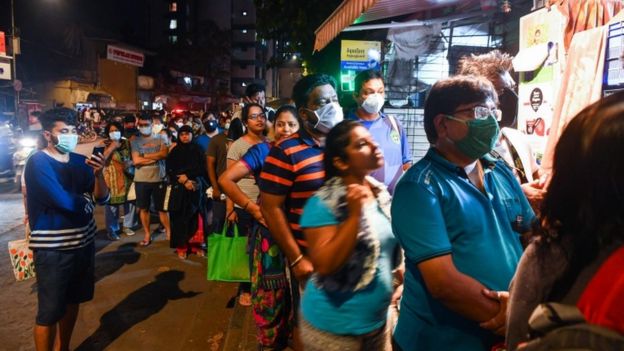
People line up outside a store in Mumbai on March 24, 2020.Image copyright AFP
Image caption People in Mumbai rushed to stock up on essentials following Mr Modi’s address

Under the new measures, all non-essential businesses will be closed but hospitals and other medical facilities will continue to function as normal. Schools and universities will remain shut and almost all public gatherings will be banned.

Anyone flouting the new rules faces up to two years in prison and heavy fines.

In his address, Prime Minister Modi also:

  • Stressed that the 21-day lockdown was “very necessary to break the chain of coronavirus”
  • Emphasised the seriousness of the situation and said that even developed countries had faced problems in combating it
  • Said that “social distancing was the only way to stop” the virus spreading
  • Announced that nearly $2bn (£1.8bn) would be made available to boost the country’s health infrastructure
  • Called on people not to “spread rumours” and to follow instructions

His announcement came after several Indian states introduced measures of their own, such as travel restrictions and the closure of non-essential services.

India has already issued a ban on international arrivals and grounded domestic flights. The country’s rail network has also suspended most passenger services.


Presentational grey line
Analysis box by Rajini Vaidyanathan, South Asia correspondent

Many parts of India, including cities such as Delhi and Mumbai, are already under tight restrictions. But this move extends those provisions to every corner of the country.

An earlier one-day curfew, which was seen as a trial, was flouted by many.

Mr Modi called on Indians to clap and cheer the emergency services from their balconies on Sunday. But many misunderstood the call and congregated in the streets as they danced and chanted.

“It’s impossible to fathom the cost that India may have to pay if such irresponsible behaviour continues,” Mr Modi warned at the time. “Social distancing is the only option to combat coronavirus.”

The implications of a total lockdown in India are huge, not just economically, but socially.

This is a nation where community is everything. Going to worship at a temple, mosque or church is an essential part of daily life for so many.

This is a seismic cultural shift but – like the rest of the world facing similar restrictions – a necessary one.Presentational grey line

What’s the latest from around Asia?

  • Neighbouring Pakistan has almost twice as many confirmed cases – 878 as of Monday evening. Sweeping restrictions are in place although the government has stopped short of imposing a nationwide lockdown. However, several provinces have announced them independently. The army is being brought in to help enforce the restrictions
  • Bangladesh, which has reported 33 cases and three deaths, is also deploying its armed forces to help maintain social distancing and boost Covid-19 preventive measures. The soldiers will also monitor thousands of quarantined expatriate returnees. Across South Asia, there are concerns that the actual number of cases could be much higher than is being reported.
  • Indonesia, which has 49 confirmed Covid-19 deaths – the highest in South East Asia – has converted an athlete’s village built for the 2018 Asian Games into a makeshift hospital for coronavirus patients. A state of emergency was declared in Jakarta on Monday
  • In Thailand, a month-long state of emergency which will include curfews and checkpoints will begin on Thursday. The government has been criticised for failing to take strong action so far. Four people have died and nearly 900 tested positive
  • The most populous country that was without a case until now – Myanmar – has announced two cases

And what about the rest of the world?

  • Elsewhere, governments are continuing to work to stem the spread of the virus which has now affected more than 190 countries worldwide
  • More than 2.6 billion people are in lockdown now India has introduced its new measures, according to a tally by the AFP news agency
Media caption Reality Check tackles misleading health advice being shared online
  • Europe remains at the epicentre of the pandemic. On Tuesday, the death toll jumped by 514 in a single day in Spain and other European countries also reported sharp increases
  • Italy is the worst affected country in the world in terms of deaths. The virus has killed almost 7,000 people there over the past month
  • The UK, meanwhile, is spending its first day under tight new restrictions. Prime Minister Boris Johnson announced unprecedented measures on Monday and ordered the immediate closure of shops selling non-essential goods
  • And in the US, New York’s governor has said the federal government is not sending enough equipment to combat the crisis. The state has been hit especially hard by the virus
  • The World Health Organization (WHO) has warned that the US has the potential to become the new epicentre of the pandemic
  • In other developments, Japanese Prime Minister Shinzo Abe said the International Olympic Committee has agreed that the 2020 Tokyo Olympics should be postponed by a year
  • Source: The BBC
11/02/2020

The school play that sent a mother to prison

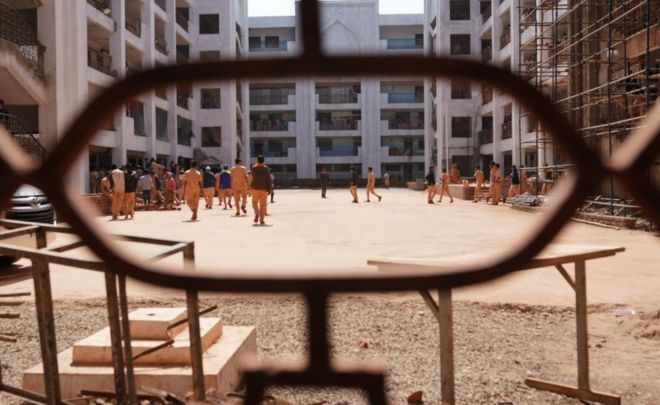
Shaheen School in Bidar
Image caption A play staged at Shaheen School has led to the arrest of a parent and a teacher

An Indian school play involving nine to 12-year-olds became the subject of national attention after it landed a young mother and a teacher in jail. BBC Telugu’s Deepthi Bathini reports.

“I’m not sure how I ended up here,” says 26-year-old Nazbunnisa, a single mother who did not give her last name and who works as a domestic help.

She was arrested on 30 January, along with Farida Begum, a teacher at her daughter’s school. The charge against them: sedition, which the women, both Muslim, deny.

They spoke to the BBC in a prison official’s office at Bidar district jail in the southern state of Karnataka. Both were on the verge of tears – they said they are trying to be “strong”, but their lives have suddenly turned “upside down”.

Their bail hearing is scheduled for Tuesday. Their lawyer says the charge of sedition is being misused.

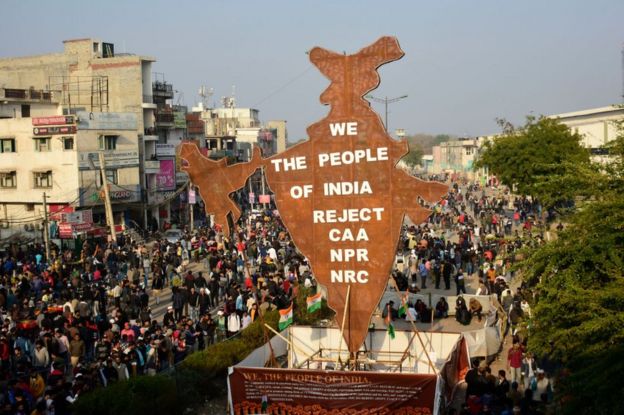
Indian people protest against the controversial Citizenship Amendment Act (CAA), the National Register of Citizens (NRC) and the National Population Register (NRP) in Shaheen bagh area of New Delhi, India on 02 February 2020.Image copyright GETTY IMAGES
Image caption The citizenship law has sparked huge protests

It stems from a colonial-era law that was used to quash dissent, but is still deployed liberally despite the Supreme Court’s attempt to limit it by making incitement to violence a necessary condition.

The two women are accused of spreading “false information” and of “spreading fear among [the] Muslim community” and of using children to insult India’s Prime Minister, Narendra Modi.

Their ordeal began with a play put on by the students and staff at Shaheen School in Bidar, where Ms Nazbunnisa’s daughter studies and Farida Begum, 52, teaches.

The play was about a controversial new citizenship law, which has polarised India since it was passed in December by the governing Hindu nationalist Bharatiya Janata Party (BJP).

The Citizenship Amendment Act (CAA), offers amnesty to non-Muslim immigrants from Pakistan, Bangladesh and Afghanistan. It sparked fear among India’s 200 million-plus Muslims as it came in the wake of the government’s plans to introduce a National Register of Citizens (or NRC) based on those who can prove their ancestors were Indian citizens.

Authorities are yet to clarify what documents would be needed to prove citizenship, but taken together, the measures have spurred massive protests – critics say the government is marginalising Muslims while offering a path to citizenship for people of other religious communities who fail to make it on to the NRC.

The governing BJP denies these charges, and insists India’s Muslims have nothing to worry about.

So, given the contentious subject, after one of the parents streamed the school play live on Facebook, the recording quickly went viral. Local resident Neelesh Rakshal was among those who watched it.

Mr Rakshal, who describes himself as a social activist, says he became furious over a scene where a man approaches an elderly woman and tells her that Narendra Modi wants Muslims to produce documents proving their Indian citizenship and that of their ancestors, and if they fail to do so, they will be asked to leave the country.

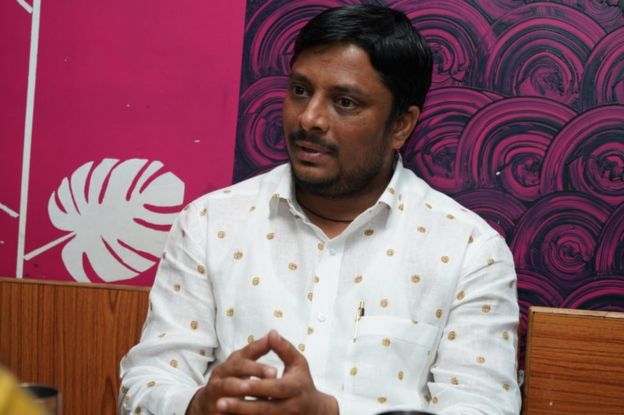
Neelesh Rakshal
Image caption Mr Rakshal says the play “spreads hatred”

The woman responds that she has been in India for generations and would have to dig up the graves of her ancestors to look for documents. She then says a “boy who was selling tea”, a reference to Mr Modi who has said he used to sell tea as a teenager, is now demanding that she show him her documents.

“I will ask him for his documents and if he doesn’t show them to me, I will hit him with slippers,” she adds.

Mr Rakshal says he immediately registered a police complaint against the school for “using children in a school play to abuse the prime minister and also for spreading hatred”.

The complaint named the school management and the parent who streamed the play. While several members of the school management and the president of the school have also been charged with sedition, police told the court they are still looking for them.

“We do not know for what reason sedition charges have been invoked against the school. It is beyond the imagination of any reasonable person. We will fight it in court,” the school’s CEO, Thouseef Madikeri, says.

A Muslim child in IndiaImage copyright GETTY IMAGES
Image caption School officials allege that they are being targeted because most of the students are Muslim

Police also questioned students – videos and screen grabs of CCTV footage showing them speaking to students were shared widely on social media, prompting criticism.

Mr Madikeri alleges that on one occasion, police in uniform questioned students, with no child welfare officials present – an accusation denied by police superintendent DL Nagesh.

“The students were questioned five times. It’s mental harassment to students and this may have an impact on them in [the] long run,” Mr Madikeri says.

The Karnataka State Commission for Protection of Child Rights has asked police to explain why they questioned students so many times. Police say it was because not all the students were available at the same time.

Mr Madikeri told the BBC it was the questioning of students that led to the arrest of Farida Begum and Ms Nazbunnisa.

One parent whose child was questioned says she is now scared of going to school.

“My daughter told me police repeatedly asked her to identify the teachers and others who might have taught them the [play’s] dialogues,” he said.

“I do not understand what was wrong in the play. Children have been seeing what has been happening around the country. They picked up the dialogues from social media.”

Mirza Baig
Image caption Farida Begum’s husband is worried about what will happen

Ms Nazbunnisa is also perplexed as to why she was arrested.

“My daughter was rehearsing for the play at home,” she says. “But I did not know what it was about, or what this controversy about CAA or NRC is about. I did not even go to see her play.”

Ms Nazbunnisa has met her daughter only once since she was jailed: “It was just for a few minutes, and even then only through a window. I held back my tears. I did not want to scare her further.”

The girl is staying with a friends of the family – they told the BBC she is having nightmares and often wakes up crying for her mother.

“She has been pleading that her mother not be punished for her mistake. She is sorry for what has happened,” one of them says.

Farida Begum, who suffers from high blood pressure, says she is “scared of what the future holds”. Her husband, Mirza Baig, says he fears that his wife being in jail will affect his daughter’s marriage prospects.

“Whatever is happening is not right,” he says.

Source: The BBC

03/12/2019

China selects outstanding grass-roots police officers

BEIJING, Dec. 2 (Xinhua) — China has selected 30 outstanding grass-roots police officers, plus five awardees of special respect and 35 for nomination awards.

The list was selected in a campaign jointly launched by the Publicity Department of the Communist Party of China Central Committee and the Ministry of Public Security in August this year.

The campaign was aimed at encouraging police across the country to work hard to maintain political security and social stability and to improve public understanding of the police work, according to a joint statement by the two departments.

The five awardees of special respect include a group of police officers in east China’s Zhejiang Province who risked their own lives in evacuating vehicles and personnel trapped in a tunnel after fire broke out.

They also include police officers who died on duty – one of them was guiding vehicles on an icy road in Fujian Province, southeast China, but was hit by an out-of-control heavy truck while trying to save passengers nearby.

The 30 outstanding police officers include criminal police, police with special duties, anti-drug police, police who remove explosives, plainclothes police, among others, who have worked diligently for years under dangerous circumstances.

They also include officers who have worked seemingly ordinary jobs but have demonstrated extraordinary perseverance or devotion in serving the public. Officers who have worked in difficult situations for a long time, such as the gobi desert and prisons with criminals living with HIV/AIDS, have also been selected.

Also on the list are some officers who actively seek innovations to incorporate the Internet, satellite and other new technologies into police work.

In addition, several female officers who have worked at a prison or as a forensic expert have received the award.

Source: Xinhua

30/07/2019

China jails award-winning cyber-dissident Huang Qi

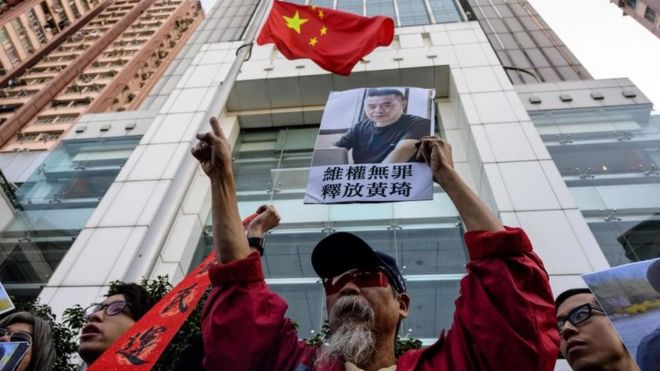
Huang Qi placardImage copyright GETTY IMAGES
Image caption Pro-democracy campaigners in Hong Kong have previously demanded Huang Qi’s release

A Chinese court has sentenced a civil rights activist widely referred to as the country’s “first cyber-dissident” to 12 years in jail.

Huang Qi is the founder of 64 Tianwang, a news website blocked in mainland China that covers alleged human rights abuses and protests.

An official statement said he had been found guilty of intentionally leaking state secrets to foreigners.

Huang has been detained since being arrested nearly three years ago.

He has already served previous prison sentences related to his journalism.

The statement, from Mianyang Intermediate People’s Court, added Mr Huang would be deprived of his political rights for four years and had also been fined 20,000 yuan ($2,900; £2,360).

Huang has kidney and heart disease and high blood pressure. And supporters have voiced concern about the consequences of the 56-year-old remaining imprisoned.

“This decision is equivalent to a death sentence, considering Huang Qi’s health has already deteriorated from a decade spent in harsh confinement,” said Christophe Deloire, the secretary-general of Reporters Without Borders.

The press-freedom campaign group has previously awarded Huang its Cyberfreedom Prize. It has now called on President Xi Jinping to “show mercy” and issue a pardon.

Amnesty International has called the sentence “harsh and unjust”.

“The authorities are using his case to scare other human rights defenders who do similar work exposing abuses, especially those using online platforms,” said the group’s China researcher Patrick Poon.

Repeated arrests

Huang created his website in 1998 to help people search for friends and family who had disappeared. But over time it began covering allegations of corruption, police brutality and other abuses.

In 2003, he became the first person to be put on trial for internet crimes in China, after he allowed articles, written by others, about the brutal crackdown of 1989’s Tiananmen Square pro-democracy protests to be published on the site.

That led to a five-year jail sentence.

He was subsequently sentenced to a further three years in prison, in 2009, after giving advice to the families of children who had died in an earthquake in Sichuan the previous year.

The relatives had wanted to sue the local authorities over claims that school buildings had been shoddily built – a claim the central government denied.

Huang was detained again, in 2014, after 64 Tianwang covered the case of a woman who had tried to set herself on fire in Tiananmen Square to coincide with the start of that year’s National People’s Congress.

Then he was arrested in November 2016 and accused of “inciting subversion of state power”, since when he has been incarcerated.

Since then, several human rights organisations, including Freedom House and the China Human Rights Lawyers Concern Group, have called for his release and raised concerns about reported threats to his 85-year-old mother, who had been campaigning on his behalf.

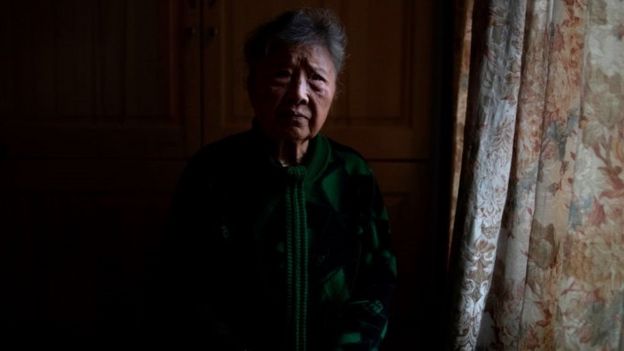
Pu WenqingImage copyright GETTY IMAGES
Image caption Huang’s mother, Pu Wenqing, had travelled to Beijing to plead her son’s case

And in December 2018, a group of the United Nations’ leading human rights experts also pressed for Huang to be set free and be paid compensation.

According to Reporters Without Borders, China currently holds more than 114 journalists in prison.

Source: The BBC

30/11/2016

India prisons: Why security needs to be improved – BBC News

Two major jailbreaks in a month have shone a spotlight on security in India’s overcrowded and under-staffed prisons. BBC Hindi’s Vineet Khare reports.

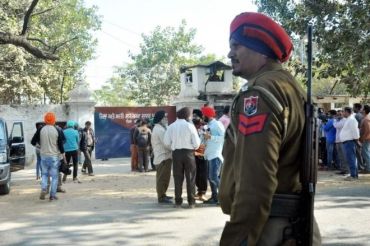
On Sunday, five armed men in the northern state of Punjab attacked the high-security Nabha prison and freed six inmates. One of the escapees, a Sikh separatist leader, was recaptured on Monday.

It was a brazen attack. Assailants dressed in police uniforms arrived “on the pretext of depositing a prisoner” but began firing indiscriminately as soon as the prison gate was opened. They escaped with the inmates in a convoy of vehicles.

“This is what happens when there is diversion of jail staff to non-jail work and infrastructure is creaking,” said retired police officer Prakash Singh.

Prison break: Four unusual ways Indians have escaped jail

A bad seven days for Indian justice

More than 180 prisoners have escaped in more than 40 jailbreaks over the past two years, latest government figures say

Last year, two inmates escaped from the high-profile Tihar jail in the capital Delhi by digging a tunnel under a wall.

Last month, eight prisoners escaped from a high-security jail in the city of Bhopal in central Madhya Pradesh state. The inmates, members of an outlawed Islamist group, were killed outside Bhopal after they resisted arrest, police said.

Eight prisoners escaped from this prison in Bhopal last month

The men used bed sheets to scale the walls of the prison before escaping the high-security Bhopal Central Prison, police said.

The police version was questioned when unverified videos of the killing of the men surfaced from the outlawed Students Islamic Movement of India. The matter is being investigated.

India’s prisons are notoriously overcrowded and under-resourced.

Some 1,400 prisons house nearly 420,000 inmates against a capacity of 366,7810, according to India’s National Crime Records Bureau.

More than a third of positions for prison guards and officers are lying vacant. Nearly half of the staff positions in Tihar are vacant.

Inmates ‘do everything’

It is estimated that more than two-thirds of the prisoners in Indian jails are on trial, contributing significantly to overcrowding.The Bhopal jailbreak, described as an act of coldblooded murder by the inmates’ lawyer, served again to highlight what was wrong with India’s prisons.

The prison houses more than 3,000 inmates against a capacity of 1,400.

Madhya Pradesh also has a history of jailbreaks:In 2011, nine prisoners spiked the tea of six guards of the state’s Dabra prison and ran away

In 2013, five captives broke through the washroom window of the dilapidated Khandwa prison and escaped

Retired jail officials say no one is paying attention to a system that is crying out loud for support.

“Our jails are collapsing,” retired jail official GK Agarwal told me in Bhopal, showing me a number of handwritten official correspondences to officials, in which he had pleaded for reforms.

Two years ago, in a missive to top officials, Mr Agarwal had predicted a “big accident” at Bhopal jail owing to its “structure, vulnerable points, imprudent security and staff’s deplorable situation”.

But Mr Agarwal said nothing had moved.

Lawyer Dr Siddhartha Gupta, who spent two days in the jail on a minor charge of “disturbing peace outside the court” told me: “The presence of guards inside is next to nothing.”

It’s the inmates who do everything. From cooking to office jobs to counting inmates, everything is done by them.

“Under pressure to act, Madhya Pradesh’s new head of prisons, Sanjay Choudhary, is promising “speedy modernisation”.

“We are enhancing security, increasing manpower and creating a high-security zone,” he said.

Source: India prisons: Why security needs to be improved – BBC News

Law of Unintended Consequences

continuously updated blog about China & India

ChiaHou's Book Reviews

continuously updated blog about China & India

What's wrong with the world; and its economy

continuously updated blog about China & India