

Once again, some signs that China is ‘softening’ on contovertial cases. Question is: is it a general policy or only for this year, the year of leadership change?
01/08/2012
Let us hope that the various calls for reform are genuine and sincere and not an attempt to ‘out’ pro-democrats in the manner of Chairman Mao’s “Let a hundred flowers bloom” call in the 50s that led to the anti-rightist movement and major purges that followed.
See also:
18/07/2012
* As China Talks of Change, Fear Rises on Risks
NY Times: “A heavyweight crowd gathered last October for a banquet in Beijing’s tallest skyscraper. The son of Mao Zedong’s immediate successor was there, as was the daughter of the country’s No. 2 military official for nearly three decades, along with the half sister of China’s president-in-waiting, and many more.
“All you had to do,” said one attendee, Zhang Lifan, “was look at the number of luxury cars and the low numbers on the plates.”
Most surprising, though, was the reason for the meeting. A small coterie of children of China’s founding elites who favor deeper political and economic change had come to debate the need for a new direction under the next generation of Communist Party leaders, who are set to take power in a once-a-decade changeover set to begin this year. Many had met the previous August, and would meet again in February.
The private gatherings are a telling indicator of how even some in the elite are worried about the course the Communist Party is charting for China’s future. And to advocates of political change, they offer hope that influential party members support the idea that tomorrow’s China should give citizens more power to choose their leaders and seek redress for grievances, two longtime complaints about the current system.
But the problem is that even as the tiny band of political reformers is attracting more influential adherents, it is splintered into factions that cannot agree on what “reform” would be, much less how to achieve it. The fundamental shifts that are crucial to their demands — a legal system beyond Communist Party control as well as elections with real rules and real choices among candidates — are seen even among the most radical as distant dreams, at best part of a second phase of reform.
In addition, the political winds are not blowing in their favor. The spectacular fall this spring of Bo Xilai, the Politburo member who openly espoused a populist philosophy at odds with elite leaders, offered an object lesson in the dangers of challenging the status quo. And official silence surrounding his case underscores high-level fears that any public cracks in the leadership’s facade of unity could lead its power to crumble.
As a result, few people here expect the party to willingly refashion itself anytime soon. And even those within the elite prepared to discuss deeper changes, including the second-generation “princelings,” as they are known, have a stake in protecting their own privileges.
“Compare now to 1989; in ’89, the reformers had the upper hand,” said Mr. Zhang, a historian formerly associated with the government’s Chinese Academy of Social Sciences, referring to the pro-democracy student protests that enjoyed the support of a number of important party leaders but were crushed in Tiananmen Square. “Twenty years later, the reformers have grown weaker. Now there are so many vested interests that they’ll be taken out if they touch anyone else’s interests.”
To Mr. Zhang and others, this is the conundrum of China’s rise: the autocracy that back-flipped on Marxist ideology to forge the world’s second-largest economy seems incapable of embracing political changes that actually could prolong its own survival.
Much as many Americans bemoan a gridlocked government split by a yawning partisan gap, Chinese advocates for change lament an all-powerful Communist Party they say is gridlocked by intersecting self-interests. None of the dominant players — a wealthy and commanding elite; rich and influential state industries; a vast, entrenched bureaucracy — stand to gain by ceding power to the broader public.
Many who identify with the reform camp see change as inevitable anyway, but only, they say, because social upheaval will force it. In that view, discontent with growing inequality, corruption, pollution and other societal ills will inevitably lead to a more democratic society — or a sharp turn toward totalitarianism.
An overriding worry is that unless change is carefully planned and executed, China risks another Cultural Revolution-style upheaval that could set it back decades.”
via As China Talks of Change, Fear Rises on Risks – NYTimes.com.
See also: https://chindia-alert.org/prognosis/chinese-challenges/
11/07/2012
* Socialist market economy turning point for China
Xinhua: “Good education, housing, medical care and insurance are within the reach of more Chinese since the adoption of a market economy, according to a Tuesday commentary in the People’s Daily, the flagship newspaper of the Communist Party of China (CPC).
The formation and improvement of China’s socialist market economy has reshaped the lives of 1.3 billion people and exerted an influence on the future of the whole world, wrote Ren Zhongping.
In the past 20 years, the most populous nation has become the world’s second-largest economy and has stood among middle-income countries in terms of its per capita gross domestic product, Ren said.
China turned itself from a seller’s market to a buyer’s market and became the world’s biggest exporter and a member of the World Trade Organization, Ren said.
At the beginning, China’s transformation faced many obstacles, including domestic prejudice and doubts of foreign countries, Ren said.
However, the “China miracle” surprised everyone, Ren wrote.
“It is said that everything happened in the past 20 years could not be planned in any plan,” Ren said.
Focusing on developing productivity, adhering to the common development of public-owned and private economies and integrating market allocation with the government regulation helped make China successful, Ren said.
However, the problems that have emerged after development are no smaller than those that existed before China’s prosperity, Ren said.
It’s imperative to enhance the quality of economic development, eliminate factors that hamper economic growth mode and smash the administrative monopoly so as to further free development of the private economy, Ren said.
The author called for a sound insurance system that can relieve social anxiety and narrow the income gap, as well as stark government reforms.
Unswerving reform is the only way to realize the goal of “establishing a sound social market economic system by 2020,” Ren said.
Changing China’s economic growth mode, promoting transformation of government functions and boosting equality in public services will allow China to shoulder a sea of challenges both now and in the future, Ren wrote.”
via Socialist market economy turning point for China: People’s Daily – Xinhua | English.news.cn.
A fair summary of the past 20 years and a good prognostication of the next twenty.
Related articles
- https://chindia-alert.org/prognosis/
- China’s Party approved version of history part 3 – “Socialism is the only way to save China” (seeingredinchina.com)
- China pledges more support for small, micro-sized firms – Xinhua | English.news.cn (chindia-alert.org)
- China’s economic success sets an example to the rest of the world | John Ross (guardian.co.uk)
Related articles
31/05/2012
* New punishments for police abusing prisoners
China Daily: “Chinese police will face punishment ranging from demotion to dismissal if they are found to have abused inmates or connived in the maltreatment of prisoners, according to a provision published by the Ministry of Supervision on Wednesday.
Police will be fired if prisoners die as a result of their beating, corporal punishment or maltreatment, as well as their manipulation or connivance in similar misconduct, reads the provision. Dismissal also applies in cases of police found to have harbored criminal activities committed by inmates, or to have helped prisoners escape.
The provision, which will take effect on July 1, serves as a discipline guidance for police in prisons and labor camps, meaning police will face criminal charges simultaneously if their misconduct breaks the law.
In China, those who commit misdemeanors are normally placed in reeducation-through-labor centers instead of prisons. China promulgated a six-article ban governing the conduct of prison and labor camp police in 2006. It prohibits police from abusing prisoners, collecting money and belongings from prisoners families, gambling and drinking in working hours.”
via New punishments for police abusing prisoners |Society |chinadaily.com.cn.
Another sign of the Chinese government trying to establish the rule of law; part of the reform urged by Premier Wen.
Related post:
08/05/2012
* China issues policies to raise wellbeing of working women
Xinhua: “A new regulation, made public Monday, provides employed Chinese women with better welfare policies, including extended maternity leave and higher workplace protection.

A pregnant woman (Photo credit: Wikipedia)
According to the regulation adopted by the State Council in April, maternity leave has been extended from 90 days to 98 days, which is in line with the 14-week minimum standard set by the International Labour Organization. The regulation more clearly specifies leave granted to women who have miscarriages. According to it, a female employee will get 15 days of leave if their miscarriage occurs within the first four months of pregnancy and 42 days of leave if it happens later. Under the regulation, female employees should be paid either by the maternity insurance programs they have joined or by employers during their maternity leave.
The regulation also expands the categories of jobs that pregnant women and breastfeeding mothers are banned from working for, while removing restrictions on what jobs married women at the childbearing age should take.It also imposes clear penalties on the offenders, ranging from 1,000 to 300,000 yuan 159 to 47,619 U.S. dollars. And it stipulates that those employers who seriously violate the rules should be suspended from operation.
According to the government, China is estimated to currently have 102 million women in full-time employment.”
via China issues policies to raise wellbeing of working women – Xinhua | English.news.cn.
Related articles
02/04/2012
* China to deepen reforms to drive growth: vice premier
Xinhua: “Chinese Vice Premier Li Keqiang said Monday that China will deepen reforms and opening-up to remove obstacles on its course to transfer growth mode and drive economic and social development.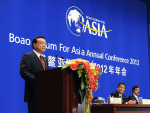
Li made the remarks when delivering a keynote speech at the opening ceremony of the Boao Forum for Asia Annual Conference 2012, which runs from Sunday to Tuesday in Boao, a scenic town in south China’s island province of Hainan. “Faced with the profound changes in international and domestic landscapes, we must let reforms and opening-up continue to lead the way in removing the institutional obstacles that hamper the shift of the growth model,” Li said. Noting that the country has entered a critical stage of reform, Li said China will deepen reform of the fiscal sector, taxation, finance, pricing, income distribution and enterprises.
The country will endeavor to make breakthroughs in key areas and key links, and bring into better play the markets role in resource allocation and advance institutional, technological and management innovation so as to increase the internal driving force and dynamism of development, Li said. Li said the country will adopt an even more proactive opening-up strategy and attach equal importance to export and import so as to boost balanced development of foreign trade and raise the level of an open economy. “China is dedicated to creating an open, transparent, fair, competitive and predictable marketplace and legal environment,” Li said, adding that more efforts will be made to step up intellectual rights protection to promote development of all enterprises in China during its course to transform growth mode.
More than 2,000 government, business and academic leaders from around the globe attended the meeting, which this year adopts the theme “Asia in the Changing World: Moving toward Sound and Sustainable Development.””
via China to deepen reforms to drive growth: vice premier – Xinhua | English.news.cn.
This declaration of reform by the Premier-to-be reaffirms the current Premier’s call for reform posted earlier. So this means the new leadership is fully behind the outgoing leadership.
30/03/2012
* Senior leader underlines infrastructure building in Xinjiang

Maps of Xinjiang Uygur Autonomous Region of China Español: Región autónoma de Xinjiang (Photo credit: Wikipedia)
Xinhua: “Senior Chinese leader Zhou Yongkang on Thursday demanded infrastructure be improved in the western Xinjiang Uygur autonomous region through projects supported by central government.
Zhou, a member of the Standing Committee of the Political Bureau of the Communist Party of China CPC Central Committee, urged authorities to give more support to the construction of major projects in the region, including irrigation systems, reservoirs, railways, electricity and natural gas schemes. Antiquated public facilities had created a major bottleneck constraining the regions development, Zhou said at a meeting attended by representatives from the National Development and Reform Commission, the central bank, and ministries of finance, railways, and water resources. These departments and a group of large state-owned enterprises and commercial banks have been tasked to assist the projects.

Zhou called for more financial support and administrative coordination to push forward these projects, which he said will help enhance the regions capability of self-initiated development, ensure sound economic and social development, and create more jobs. The projects should benefit Xinjiang by improving people’s livelihoods, promoting ethnic solidarity and maintaining social stability, according to Zhou. He also demanded efforts to avoid illegal land use, prevent excessive exploitation of resources and protect the environment in Xinjiang.”
via Senior leader underlines infrastructure building in Xinjiang – Xinhua | English.news.cn.
Related articles
- China Boosts Police Presence in Restless Xinjiang (abcnews.go.com)
- At least 20 people were killed in China’s Xinjiang (chindia-alert.org)
- https://chindia-alert.org/china-2011-roundup/
30/03/2012
* China driving US exports
China Daily: “The United States exported more than $100 billion in goods and services to China in 2011 and 30 states now count the country as one of their top three export markets.That’s according to a report released by the Washington-based US-China Business Council on Wednesday.
Between 2000 and 2011, US exports to China rose by 542 percent – going from $16.2 billion in 2000 to a record $103.9 billion in 2011 – while its exports to the rest of the world only increased by 80 percent. After the recent recession, the US exports to China regained momentum faster than the country’s exports to any other place in the world, the council said.”The annual report said China is the third most common destination for US exports, just behind Canada and Mexico, which border the US and have a free-trade agreement with it.
“Exports to China are vital to America’s economic health and create good jobs for American workers,” said Erin Ennis, vice-president of the US-China Business Council, which represents about 240 American companies doing business in China. Wang Haifeng, director of international economics at the Institute for International Economic Research, a think tank under the National Development and Reform Commission, said the export figures reveal a great opportunity. “The fact that a record was set in US exports to China, which shows the great potential of US exports, not only reduces the trade imbalance between the top two economies but also alleviates unemployment in the US and speeds up the US economic recovery,” he said.
Related articles: China’s Surprising U.S. Buying Spree – Businessweek (businessweek.com)via China driving US exports|Economy|chinadaily.com.cn.
There are some Cassandra’s who are concerned that in the foreseeable future, military conflict between America and China is inevitable. My personal view is that as more and more bilateral trade between America and China builds up, the chance of war between them becomes less and less probable. The two countries are so interdependent that war between them would be tantamount to ‘civil war’. You might say that has happened in most countries sometime in their past. You will be right. So I’m not saying peace is inevitable or forever, only that war is not inevitable and less likely.

 CHINDIA ALERT: You'll be living in their world, very soon