Chindia Alert: You’ll be Living in their World Very Soon
aims to alert you to the threats and opportunities that China and India present. China and India require serious attention; case of ‘hidden dragon and crouching tiger’.
Without this attention, governments, businesses and, indeed, individuals may find themselves at a great disadvantage sooner rather than later.
The POSTs (front webpages) are mainly 'cuttings' from reliable sources, updated continuously.
The PAGEs (see Tabs, above) attempt to make the information more meaningful by putting some structure to the information we have researched and assembled since 2006.
Image copyright PRESS INFORMATION BUREAUImage caption The area has become a hotspot in part because of a road India has built
The armies of the world’s two most populous nations are locked in a tense face-off high in the Himalayas, which has the potential to escalate as they seek to further their strategic goals.
Officials quoted by the Indian media say thousands of Chinese troops have forced their way into the Galwan valley in Ladakh, in the disputed Kashmir region.
Indian leaders and military strategists have clearly been left stunned.
The reports say that in early May, Chinese forces put up tents, dug trenches and moved heavy equipment several kilometres inside what had been regarded by India as its territory. The move came after India built a road several hundred kilometres long connecting to a high-altitude forward air base which it reactivated in 2008.
The message from China appears clear to observers in Delhi – this is not a routine incursion.
“The situation is serious. The Chinese have come into territory which they themselves accepted as part of India. It has completely changed the status quo,” says Ajai Shukla, an Indian military expert who served as a colonel in the army.
China takes a different view, saying it’s India which has changed facts on the ground.
Reports in the Indian media said soldiers from the two sides clashed on at least two occasions in Ladakh. Stand-offs are reported in at least three locations: the Galwan valley; Hot Springs; and Pangong lake to the south.
India and China share a border more than 3,440km (2,100 miles) long and have overlapping territorial claims. Their border patrols often bump into each other, resulting in occasional scuffles but both sides insist no bullet has been fired in four decades.
Their armies – two of the world’s largest – come face to face at many points. The poorly demarcated Line of Actual Control (LAC) separates the two sides. Rivers, lakes and snowcaps mean the line separating soldiers can shift and they often come close to confrontation.
The current military tension is not limited to Ladakh. Soldiers from the two sides are also eyeball-to-eyeball in Naku La, on the border between China and the north-eastern Indian state of Sikkim. Earlier this month they reportedly came to blows.
And there’s a row over a new map put out by Nepal, too, which accuses India of encroaching on its territory by building a road connecting with China.
Why are tensions rising now?
There are several reasons – but competing strategic goals lie at the root, and both sides blame each other.
“The traditionally peaceful Galwan River has now become a hotspot because it is where the LAC is closest to the new road India has built along the Shyok River to Daulet Beg Oldi (DBO) – the most remote and vulnerable area along the LAC in Ladakh,” Mr Shukla says.
India’s decision to ramp up infrastructure seems to have infuriated Beijing.
Image copyright AFPImage caption There have been protests in Nepal against Indi’s new road link
“According to the Chinese military, India is the one which has forced its way into the Galwan valley. So, India is changing the status quo along the LAC – that has angered the Chinese,” says Dr Long Xingchun, president of the Chengdu Institute of World Affairs (CIWA), a think tank.
Michael Kugelman, deputy director of the Asia programme at the Wilson Center, another think tank, says this face-off is not routine. He adds China’s “massive deployment of soldiers is a show of strength”.
The road could boost Delhi’s capability to move men and material rapidly in case of a conflict.
Differences have been growing in the past year over other areas of policy too.
The new federally-administered Ladakh included Aksai Chin, an area India claims but China controls.
Senior leaders of India’s Hindu-nationalist BJP government have also been talking about recapturing Pakistan-administered Kashmir. A strategic road, the Karakoram highway, passes through this area that connects China with its long-term ally Pakistan. Beijing has invested about $60bn (£48bn) in Pakistan’s infrastructure – the so-called China Pakistan Economic corridor (CPEC) – as part of its Belt and Road Initiative and the highway is key to transporting goods to and from the southern Pakistani port of Gwadar. The port gives China a foothold in the Arabian Sea.
In addition, China was unhappy when India initially banned all exports of medical and protective equipment to shore up its stocks soon after the coronavirus pandemic started earlier this year.
How dangerous could this get?
“We routinely see both armies crossing the LAC – it’s fairly common and such incidents are resolved at the local military level. But this time, the build-up is the largest we have ever seen,” says former Indian diplomat P Stobdan, an expert in Ladakh and India-China affairs.
“The stand-off is happening at some strategic areas that are important for India. If Pangong lake is taken, Ladakh can’t be defended. If the Chinese military is allowed to settle in the strategic valley of Shyok, then the Nubra valley and even Siachen can be reached.”
In what seems to be an intelligence failure, India seems to have been caught off guard again. According to Indian media accounts, the country’s soldiers were outnumbered and surrounded when China swiftly diverted men and machines from a military exercise to the border region.
This triggered alarm in Delhi – and India has limited room for manoeuvre. It can either seek to persuade Beijing to withdraw its troops through dialogue or try to remove them by force. Neither is an easy option.
“China is the world’s second-largest military power. Technologically it’s superior to India. Infrastructure on the other side is very advanced. Financially, China can divert its resources to achieve its military goals, whereas the Indian economy has been struggling in recent years, and the coronavirus crisis has worsened the situation,” says Ajai Shukla.
What next?
History holds difficult lessons for India. It suffered a humiliating defeat during the 1962 border conflict with China. India says China occupies 38,000km of its territory. Several rounds of talks in the last three decades have failed to resolve the boundary issues.
China already controls the Aksai Chin area further east of Ladakh and this region, claimed by India, is strategically important for Beijing as it connect its Xinjiang province with western Tibet.
Image copyright GETTY IMAGESImage caption India and China have a long history of border disputes
In 2017 India and China were engaged in a similar stand-off lasting more than two months in Doklam plateau, a tri-junction between India, China and Bhutan.
This time, too, talks are seen as the only way forward – both countries have so much to lose in a military conflict.
“China has no intention to escalate tensions and I think India also doesn’t want a conflict. But the situation depends on both sides. The Indian government should not be guided by the nationalistic media comments,” says Dr Long Xingchun of the CIWA in Chengdu. “Both countries have the ability to solve the dispute through high-level talks.”
Chinese media have given hardly any coverage to the border issue, which is being interpreted as a possible signal that a route to talks will be sought.
Pratyush Rao, associate director for South Asia at Control Risks consultancy, says both sides have “a clear interest in prioritising their economic recovery” and avoiding military escalation.
“It is important to recognise that both sides have a creditable record of maintaining relative peace and stability along their disputed border.”
Members of a road construction team depart from the advance camp at an altitude of 6,500 meters of Mount Qomolangma in southwest China’s Tibet Autonomous Region, May 10, 2020. A road construction team will work on a route to the peak of Mount Qomolangma on May 12 if weather conditions permit. China initiated a new round of measurement on the height of Mount Qomolangma, the world’s highest peak, on April 30. The measurement team consists of members from the Ministry of Natural Resources and the national mountaineering team. (Xinhua/Sun Fei)
MOUNT QOMOLANGMA BASE CAMP, May 10 (Xinhua) — A road construction team will work on a route to the peak of Mount Qomolangma on May 12 if weather conditions permit.
In order to complete missions of building a route to the peak and transporting materials to camps below 8,300 meters above sea level, members of road construction and transportation teams departed for a camp at an altitude of 7,028 meters from the advance camp at an altitude of 6,500 meters at 7:00 a.m. Sunday.
The members eliminated potential safety hazards along the route and arrived at the camp at 2:00 p.m.
On May 12, a total of 12 guides will depart from the camp at an altitude of 7,028 meters to transport materials to another camp.
China initiated a new round of measurement on the height of Mount Qomolangma, the world’s highest peak, on April 30. The measurement team consists of members from the Ministry of Natural Resources and the national mountaineering team.
Since the founding of the People’s Republic of China in 1949, Chinese surveyors have conducted six rounds of scaled measurement and scientific research on Mount Qomolangma and released the height of the peak twice in 1975 and 2005, which was 8,848.13 meters and 8,844.43 meters respectively.
Six animals inoculated with vaccine candidate then exposed to virus did not catch Covid-19 after 28 days
Up to 60 million doses could be produced by Serum Institute of India this year
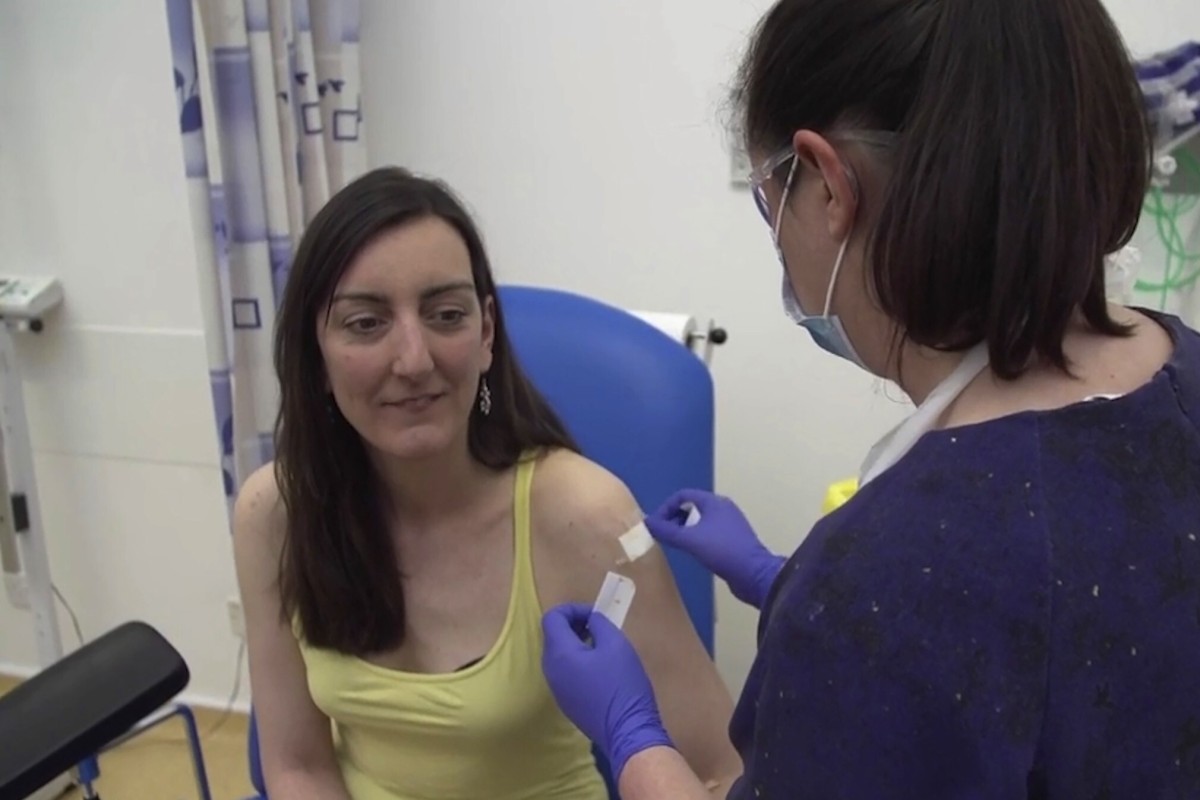
Microbiologist Elisa Granato gets an injection on Thursday as part of the first human trials in Britain for a potential coronavirus vaccine. Photo: University of Oxford via AP
A leading candidate for a Covid-19 vaccine has shown promising results in animal trials, and is expected to see mass production in India within months.
The Serum Institute of India, the world’s largest maker of vaccines by volume, said on Tuesday that it plans this year to produce up to 60 million doses of a potential vaccine developed by the University of Oxford, which is under clinical trial in Britain.
While the vaccine candidate, called “ChAdOx1 nCoV-19”, is yet to be proven to work against Covid-19, Serum decided to start manufacturing it as it had shown success in animal trials and had progressed to tests on humans, Serum Chief Executive Adar Poonawalla said.
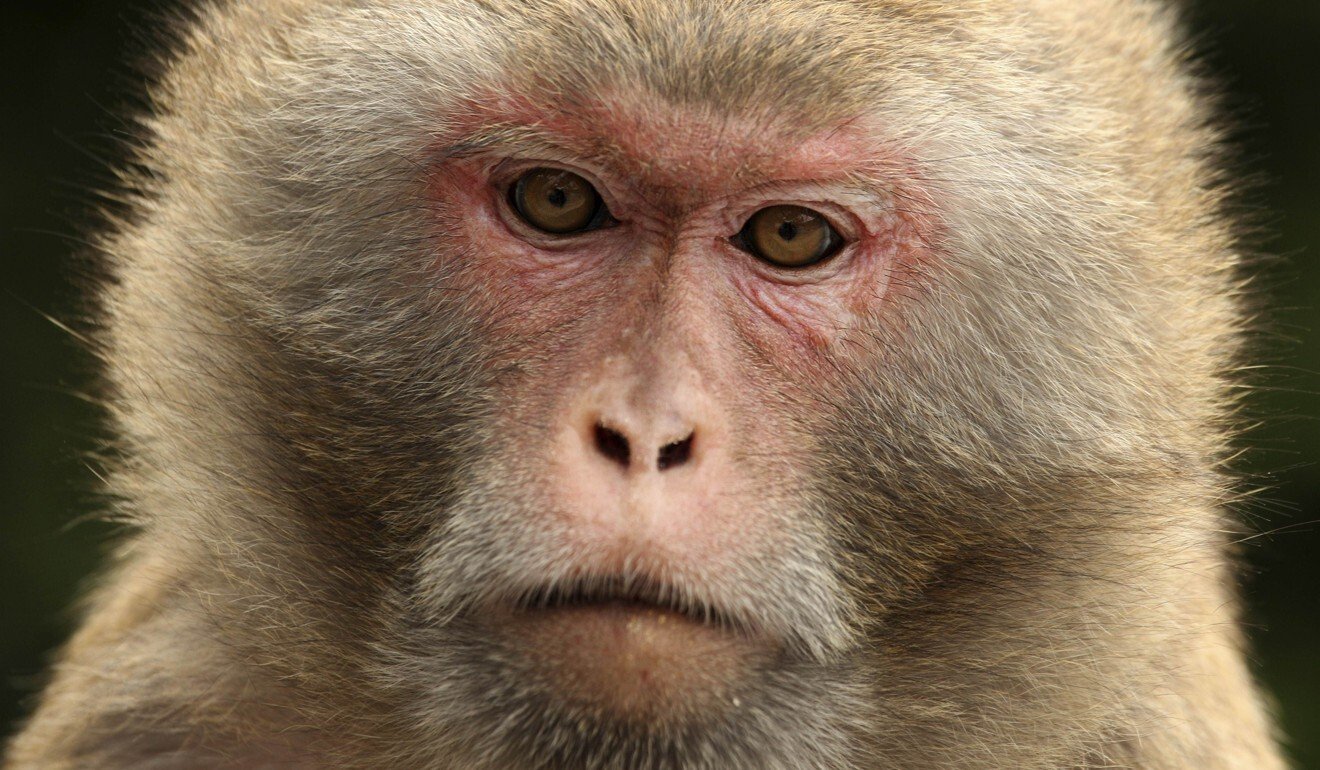
Six rhesus macaque monkeys were inoculated with the vaccine candidate at the National Institutes of Health’s Rocky Mountain Laboratory in Montana last month, according to The New York Times.
Covid-19 vaccine trial starts in Oxford, but remdesivir treatment reportedly flops in China tests
The subjects were exposed afterwards to large quantities of the novel coronavirus, but all six remained healthy after more than 28 days, the newspaper reported, citing researcher Vincent Munster, who conducted the test.
More than 3 million people have been reported to be infected globally and over 210,000 have died from Covid-19, the respiratory disease caused by the coronavirus.
“They are a bunch of very qualified, great scientists [at Oxford] … That’s why we said we will go with this and that’s why we are confident,” Poonawalla told Reuters in a phone interview.
“Being a private limited company, not accountable to public investors or bankers, I can take a little risk and sideline some of the other commercial products and projects that I had planned in my existing facility,” Poonawalla said.
Bill Gates hopes his virus vaccine ‘manufacturing within a year’
27 Apr 2020
As many as 100 potential Covid-19 candidate vaccines are now under development by biotech and research teams around the world, and at least five of these are in preliminary testing in people in what are known as phase one clinical trials.
Poonawalla said he hoped trials of the Oxford vaccine, due to finish in about September, would be successful. Oxford scientists said last week the main focus of initial tests was to ascertain not only whether the vaccine worked but that it induced good immune responses and no unacceptable side effects.
Serum, owned by the Indian billionaire Cyrus Poonawalla, plans to make the vaccine at its two manufacturing plants in the western city of Pune, aiming to produce up to 400 million doses next year if all goes well, Poonawalla said.
“A majority of the vaccine, at least initially, would have to go to our countrymen before it goes abroad,” he said, adding that Serum would leave it to the Indian government to decide which countries would get how much of the vaccine and when.
Rhesus macaque monkeys are often used in animal testing because of their similarity to humans. Photo: AFP
Serum envisages a price of 1,000 rupees (US$14.70) per vaccine, but governments would give it to people without charge, he said.
He said Prime Minister Narendra Modi’s office was “very closely” involved in the vaccine production and the company is hoping the government will help foot the cost of making it.
Over roughly the next five months, Serum will spend some 300 million to 400 million rupees (US$4.4 million to US$5.9 million) on making around 3-5 million doses per month, he said. “[The government] are very happy to share some risk and fund something with us, but we haven’t really pencilled anything down yet,” Poonawalla said.
Coronavirus: clinical trial begins on third vaccine candidate in China
22 Apr 2020
Serum has also partnered with the US biotech firm Codagenix and Austria’s Themis on two other Covid-19 vaccine candidates and plans to announce a fourth alliance in a couple of weeks, he said.
Serum’s board last week also agreed to invest roughly 6 billion rupees (US$8.8 billion) on making a new manufacturing unit to solely produce coronavirus vaccines, Poonawalla said.
Company making front-runner appeals for people to take part in trial stage, which nine potential Chinese vaccines are set to enter in April
US trialling vaccine that copies virus’ genetic code, amid international search for a drug to help limit the outbreak’s human and economic impact
CanSino is recruiting healthy volunteers for a clinical trial of its vaccine candidate. Photo: Weibo
The race to develop a Covid-19 vaccine is on, with the United States already starting a clinical trial and China close behind.
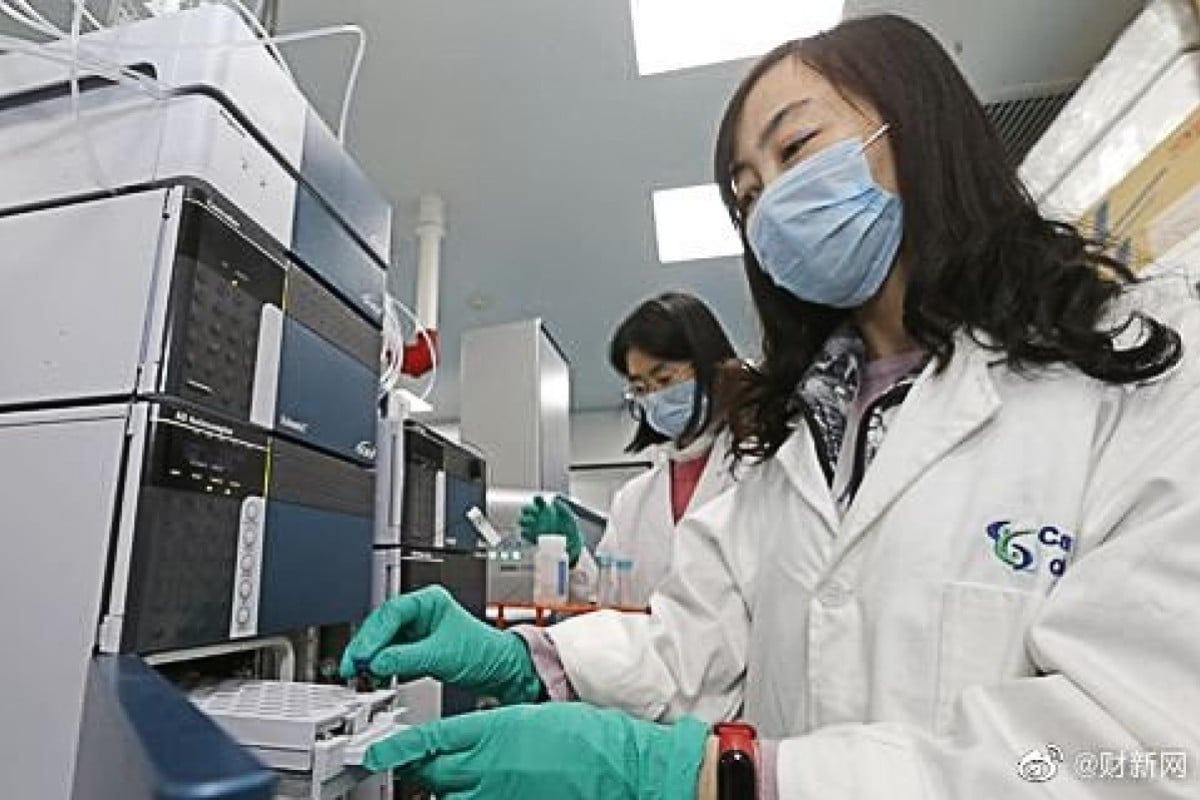
On Tuesday, vaccine producer CanSino Biologics, in Tianjin in China’s northeast, said it was looking for volunteers to take part in a six-month clinical trial of a treatment it had developed jointly with the Academy of Military Medical Sciences.
“The vaccine does not contain infectious substances, is highly safe and stable, and requires only one inoculation,” the Hubei Centre for Disease Control and Prevention (CDC) said in its request for volunteers.
Its announcement came a day after the first participant began a phase I trial for an experimental vaccine funded by the US National Institutes of Health and developed by biotech startup Moderna.
Chinese scientists identify two major types of the new coronavirus in preliminary study
It uses messenger ribonucleic acid (mRNA) technology that copies the genetic code of the virus instead of the actual virus. To date, no mRNA vaccine has been approved for humans.
China’s own mRNA vaccine candidate, jointly developed by the Chinese Centre for Disease Control and Prevention, Tongji University and Stermina in Shanghai, is undergoing animal trials and is expected to enter the clinical phrase in mid-April.
Developed by the CanSino and the Academy of Military Medical Sciences, the vaccine is the front-runner of nine that China is developing. All are in the process of completing preclinical trial studies and will enter clinical trials in April, with some expected to advance faster than others, according to Wang Junzhi, a biological products quality control expert and academician with the Chinese Academy of Sciences.
US Covid-19 testing accelerates as companies step in where government failed
18 Mar 2020
“China’s research and development of a vaccine for the coronavirus is, generally speaking, among the most advanced in the world,” Wang said at a press briefing in Beijing on Tuesday. “[We] will not be slower than other countries.”
Coronavirus: Scientists dismiss claim that humans engineered the deadly contagion
Hopes have been pinned on developing a vaccine, especially for vulnerable groups such as the elderly, in the face of an epidemic with no known cure that has brought the world to a partial standstill.
Scientists around the world are conducting experiments, and the US is reported to have tried to buy a Germany vaccine developer so that it would supply to the US only – with the German government reportedly offering its own financial incentives for the biopharmaceutical company concerned, CureVac, to stay in the country.
“A vaccine is the most effective medical means for epidemic prevention and control as it can effectively stop the spread of the virus,” Lei Chaozi, director of science and technology at China’s Ministry of Education, said.
“Vaccines also play an important part in … stabilising the economy and enabling the country to return to normal as work and production resume.”
Why did a ‘cured’ coronavirus patient die in China? His widow wants answers
7 Mar 2020
President Xi Jinping called for faster development of coronavirus vaccines and treatment drugs when he inspected the Academy of Military Medical Sciences two weeks ago.
About 1,000 Chinese scientists have been working on the push for vaccines, with nine vaccines developed through five different approaches, including an inactivated vaccine, a viral vector-based vaccine and a gene vaccine.
Wang said that the vaccines needed to satisfy strictly the relevant regulations and technical standards – as well as World Health Organisation requirements – before starting clinical trials.
The potential vaccine developed by CanSino and military researchers, led by virologist Chen Wei, is genetically engineered. “Spikes” on the surface of the coronavirus bind to human cells and enable the virus to invade the human cells, causing the sometimes fatal infection known as Covid-19. In theory, vaccines can rehearse such an attack and trigger the human body to be primed to respond to a real infection.
CanSino has submitted the pre-investigational new drug review application for the Ad5-nCoV vaccine to Chinese regulatory authorities, and is in the process of submitting the related technical documents.
According to the Hubei CDC, volunteers for the trial must be 18 to 60 years old with no history of coronavirus infection.
BEIJING (Reuters) – China has given the go-ahead for researchers to begin human safety tests of an experimental coronavirus vaccine in the race to develop a shot against the COVID-19 epidemic that has killed more than 7,000 people worldwide.
Researchers at China’s Academy of Military Medical Sciences, – affiliated to the Chinese People’s Liberation Army (PLA) -received approval to launch early-stage clinical trials of the potential vaccine starting this week, the ruling Communist Party’s People’s Daily reported on Tuesday.
Scientists in the United States said on Monday that clinical trials had begun for a vaccine developed by its National Institute of Allergy and Infectious Diseases and the U.S. biotech firm Moderna.
Details in the Chinese clinical trial registration database show that a “Phase 1” test that will examine whether experimental shot is safe in humans aims to recruit 108 healthy people to take part between March 16 and December 31.
The trial will be conducted by China’s Academy of Military Medical Sciences and the Hong Kong-listed biotech firm CanSino Biologics, the database showed.
Experts at the World Health Organization say they do not expect any fully tested and approved vaccine to reach the market until the middle of next year.
The measures China has taken to stop the spread of the coronavirus are starting to have an impact, Mi Feng, a spokesman at the National Health Commission, said on Sunday.
In other developments:
The number of people who have tested positive on the Diamond Princess cruise ship, which is being held in quarantine in Japan, has risen to 355. The US and Canada are sending planes to evacuate their citizens
A Chinese tourist has died in France – the first fatality outside Asia
An 83-year-old American woman has tested positive after disembarking another cruise ship that was turned away by a number of countries before being allowed to dock in Cambodia
In the UK, all but one of nine people being treated have been discharged from hospital
On Saturday, World Health Organization (WHO) head Tedros Adhanom Ghebreyesus praised Beijing’s response to the outbreak.
“China has bought the world time. We don’t know how much time,” he said. “We’re encouraged that outside China, we have not yet seen widespread community transmission.”
How is China coping?
Tens of millions of Chinese still face heavy restrictions on their day-to-day life as part of the government’s efforts to halt the spread of the disease, which causes a disease named Covid-19.
Much of the response has focused on the hard-hit province of Hubei and its capital Wuhan, where the outbreak began. The city is all but sealed off from the rest of the country.
Foreign Minister Wang Yi said that along with a drop in infections within Hubei there had also been a rapid increase in the number of people who had recovered.
China’s central bank will also disinfect and store used banknotes before recirculating them in a bid to stop the virus spreading.
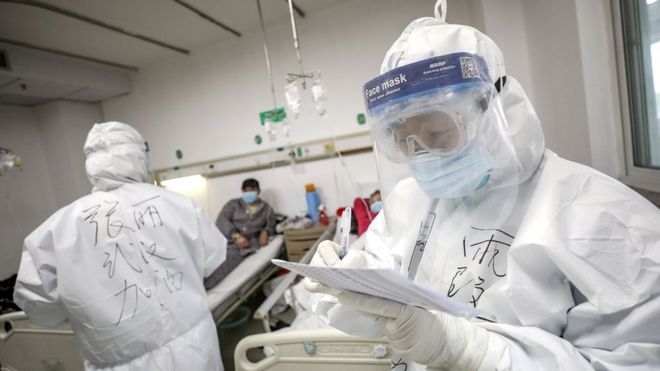
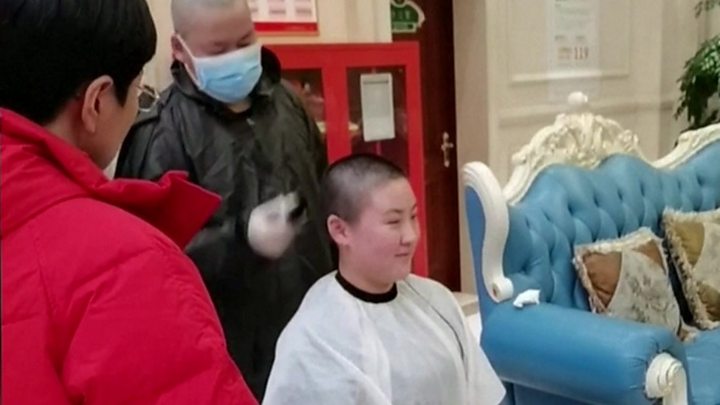
Media caption Medics in Wuhan resort to shaving their heads in a bid to prevent cross-infection of the coronavirus
In another development Chinese state media published a speech from earlier this month in which Chinese President Xi Jinping said he said he had given instructions on 7 January on containing the outbreak.
At the time, local officials in the city of Wuhan were downplaying the severity of the epidemic.
This would suggest senior leaders were aware of the potential dangers of the virus before the information was made public.
With the government facing criticism for its handling of the outbreak, analysts suggest the disclosure is an attempt to show the party leadership acted decisively from the start.


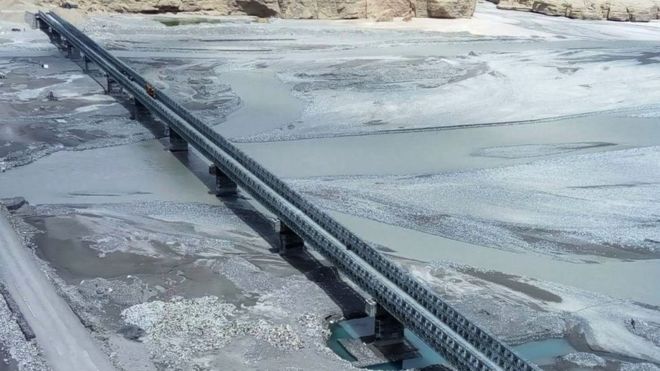 Image copyright PRESS INFORMATION BUREAU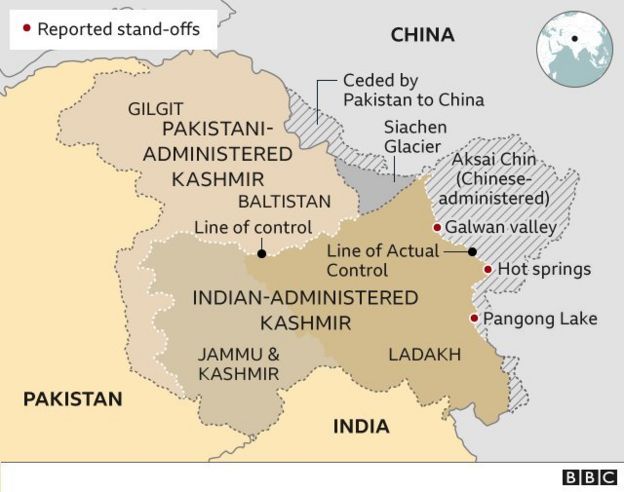
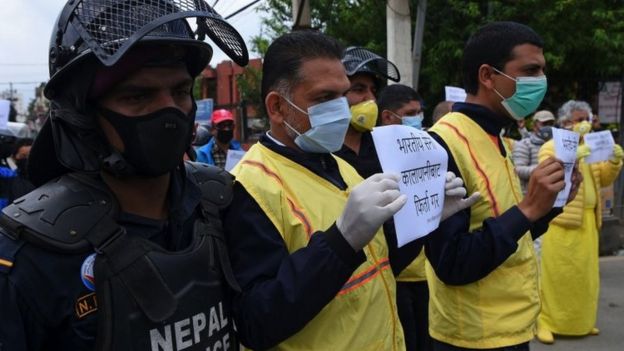 Image copyright AFP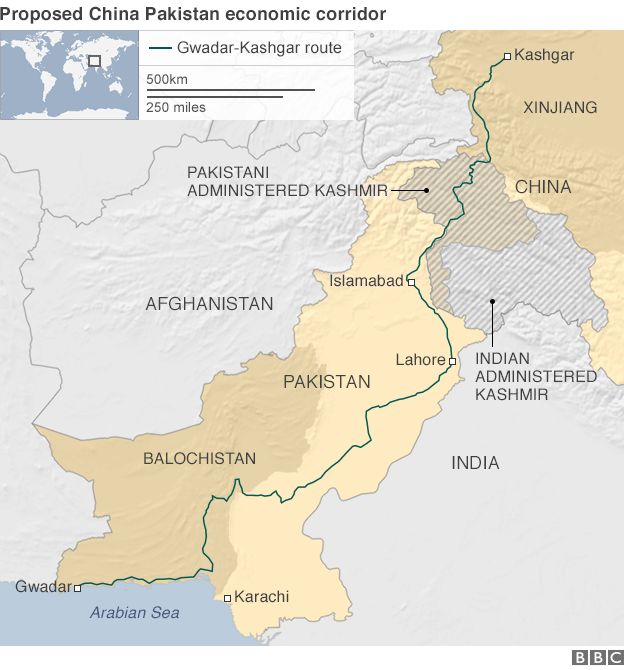
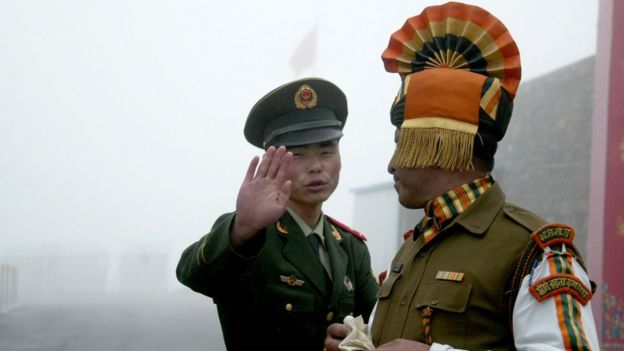 Image copyright GETTY IMAGES


 CHINDIA ALERT: You'll be living in their world, very soon