Chindia Alert: You’ll be Living in their World Very Soon
aims to alert you to the threats and opportunities that China and India present. China and India require serious attention; case of ‘hidden dragon and crouching tiger’.
Without this attention, governments, businesses and, indeed, individuals may find themselves at a great disadvantage sooner rather than later.
The POSTs (front webpages) are mainly 'cuttings' from reliable sources, updated continuously.
The PAGEs (see Tabs, above) attempt to make the information more meaningful by putting some structure to the information we have researched and assembled since 2006.
Image copyright GETTY IMAGESImage caption Testing everyone in 10 days would be a huge challenge
China is drawing up ambitious plans to test the entire population of Wuhan, the city where the Covid-19 pandemic began.
The announcement came after the emergence of six new coronavirus cases in the city – the first ones since early April.
The authorities had originally promised to test all 11 million people in 10 days.
But it now appears they might be aiming for a less ambitious timetable.
How long will the testing take?
In late April, the Hubei provincial government reported 63,000 people were being tested in Wuhan every day.
And by 10 May, that figure had dropped to just under 40,000.
There are more than 60 testing centres across the city, according to the official Hubei Daily newspaper.
These have a maximum capacity of 100,000 tests a day at most, making it hard to see how a target of testing the entire population in just 10 days could be met.
So the authorities have indicated the tests will not all start and finish within the same 10-day period.
“Some districts [in the city] will start from 12 May, others from 17 May, for example,” the Wuhan Centre for Disease Control said.
“Each district finishes its tests within 10 days from the date it started.”
The authorities say they have now tested more than three million people in the city.
Wuhan University pathogen biology department deputy director Yang Zhanqiu told the Global Times newspaper he believed up to five million Wuhan residents may have already been tested.
The population of the city – originally 11 million – has also fluctuated over time.
The authorities said up to five million people had left the city for the lunar New Year holiday before it was locked down on 23 January.
The lockdown then lasted until 8 April, but it is unclear how many of these residents have now returned.
Should everyone be tested?
Wuhan University’s Yang Zhanqiu said there was no need to test everyone living in neighbourhoods with no reported cases.
Image copyright GETTY IMAGESImage caption There are worries about asymptomatic coronavirus cases
The authorities have said they will begin with people considered most at risk – for example in the older, more densely populated areas, as well as those in key jobs such as healthcare.
Also, people who have been tested in the previous seven days will not need to be tested again.
But Chinese Center for Disease Control and Prevention chief epidemiologist Wu Zunyou told state TV: “The virus could take longer to manifest itself in patients with weak immunity and these people are also prone to ‘on’ and ‘off’ symptoms.”
Yang Zhanqiu adds: “You’ll never know if people were infected after testing negative.”
And US-based Council for Foreign Affairs senior fellow for global health Yanzhong Huang said: “There would still be the possibility of isolated outbreaks in the future, which even large-scale testing will not address.”
‘I felt excited and proud of myself,’ says restaurant owner and former volunteer ambulance driver Xiang Yafei
‘I didn’t feel afraid at all. In my mind, it’s already a successful vaccine,’ he says
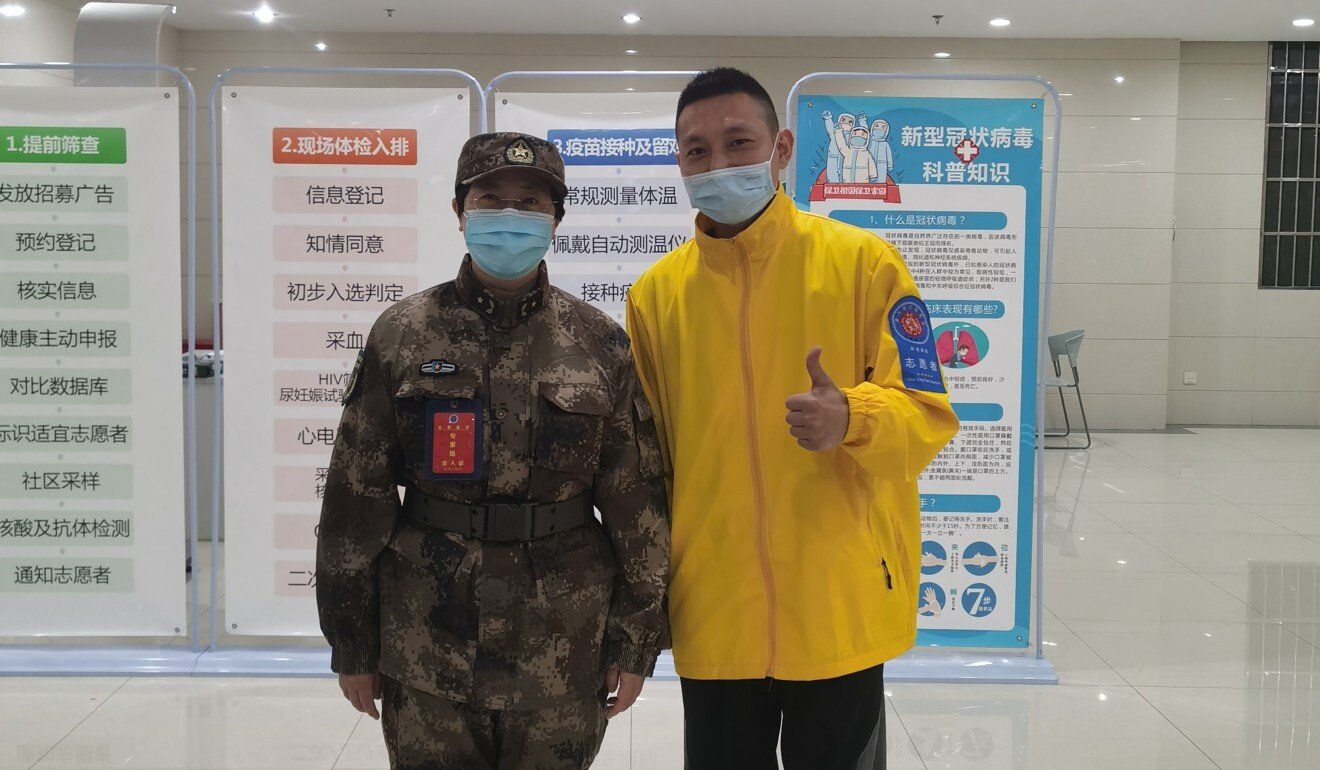
Wuhan restaurant owner Xiang Yafei says he wasn’t afraid to be a coronavirus vaccine guinea pig. Photo: Handout
With more than 1.5 million confirmed cases around the world and over 88,000 deaths, the race to develop a vaccine for the coronavirus is hotting up.
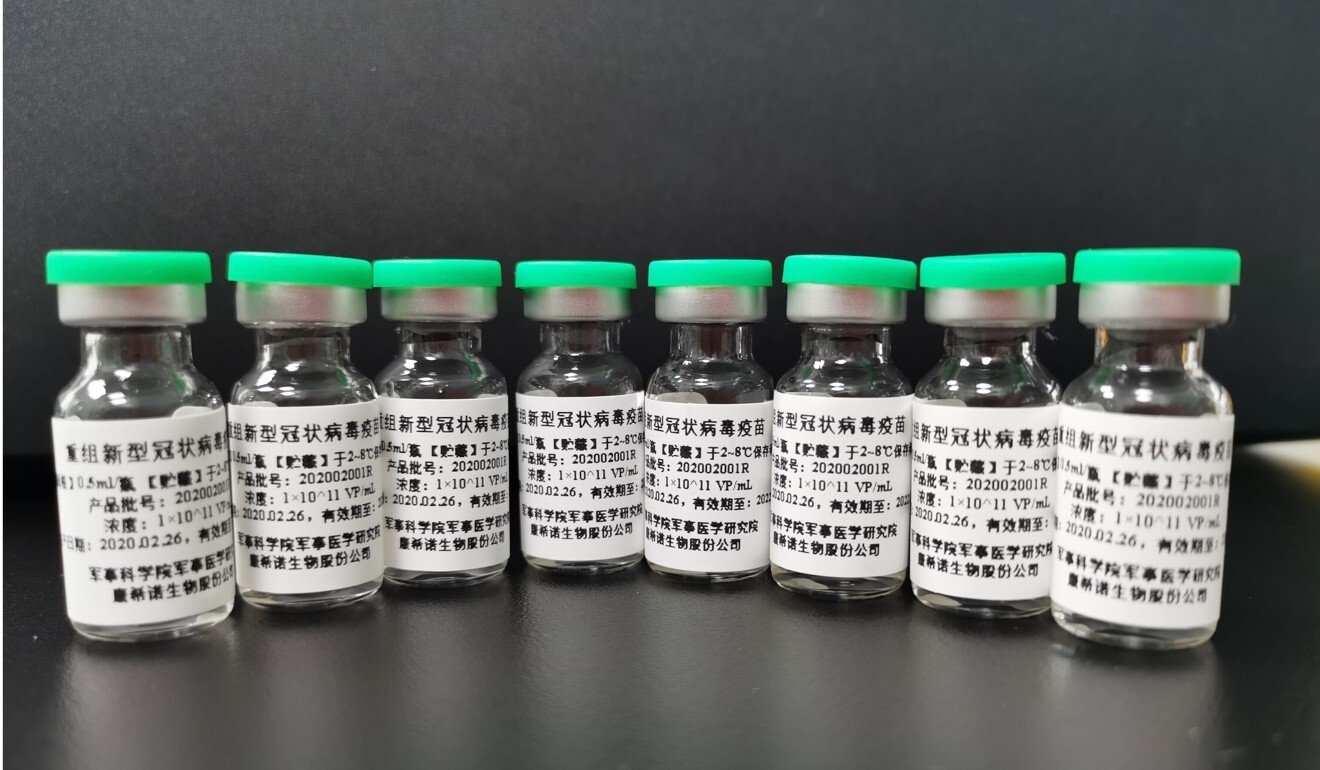
According to the World Health Organisation, about 35 companies and academic institutions are currently working on candidate products. Among the front-runners are China’s CanSino Biologics and Moderna Therapeutics in the United States, both of which have begun phase one clinical trials.
In China, those tests, which started on March 19, involve 108 volunteers from Wuhan, the city in which the virus that causes Covid-19 was first detected.
Among them is 30-year-old restaurant owner Xiang Yafei, who spoke to the South China Morning Post about his experiences so far.
Why did you apply to be a vaccine trial volunteer?
I had been doing various voluntary jobs since the end of January when Wuhan was put under lockdown. In the middle of March, one of my friends who knew about the vaccine study asked if I would be interested in joining.
At first I was afraid because there was uncertainty [about the vaccine]. I asked around and some of my friends said there was some risk to being a candidate as I’d be injected with some kinds of virus, but I felt better after I did some research about it online.
Before joining the clinical trials, Xiang worked as a volunteer ambulance driver. Photo: Handout
Also, because the vaccine was developed by the Academy of Military Medical Sciences [a research unit of the People’s Liberation Army] and CanSino, I thought its safety should be guaranteed, as I have confidence in the PLA because several of my relatives are former soldiers. So I agreed to join the trial but didn’t tell my parents because I didn’t want to worry them.
I went to the research team’s office on March 16 and filed my application – that was before they officially announced they were recruiting volunteers on the internet. While I was at the office, I was lucky to meet Major General Chen Wei, the team leader, who explained about the development of the vaccine and assured me that it wouldn’t damage my body. That boosted my confidence.
China ‘leads world in coronavirus research’, followed by US
8 Apr 2020
When did you receive your injection and how did you feel at that time?
I was given mine on the morning of March 19 and immediately put into quarantine for 14 days at a PLA facility. My number in the volunteer group is 006, meaning I was the sixth person to get the vaccine. Before the injection, I underwent a strict physical check-up. I later learned that more than 5,200 people had applied to be volunteers.
Receiving the vaccine was no different to any other injection I’d had before in my life. I didn’t feel any pain and it only lasted about 10 seconds.
But in my heart, I felt excited and proud of myself. I understand that the vaccine will be an important part in battling this coronavirus and testing it is part of the preparations before it can be put on the market.
Xiang (right) said team leader Chen Wei (left) told him about the development of the vaccine and assured him he would come to no harm. Photo: Handout
As volunteers, our job is to work together with the scientists. After all, academician Chen [the major general is also a member of the Chinese Academy of Engineering] and six members of her team have also been injected with the vaccine, and she was the first person to receive it.
They didn’t show any bad symptoms, so at that moment, I didn’t feel afraid at all. In my mind, it’s already a successful vaccine.
And how has your health been since receiving the vaccine?
I had a fever, 37.6 degrees, for the first two days. It was like catching a normal cold, with symptoms of fatigue and drowsiness. But from the third day, my condition improved and I was basically in good health.
The 108 volunteers are divided into three streams, with each receiving either a low, medium or high dose of the drug. I was in the low group so only got one dose. Volunteers in the medium group also got one and the high group were given two shots. As far as I know, everyone was fine after receiving their injections.
When will your trial result be available?
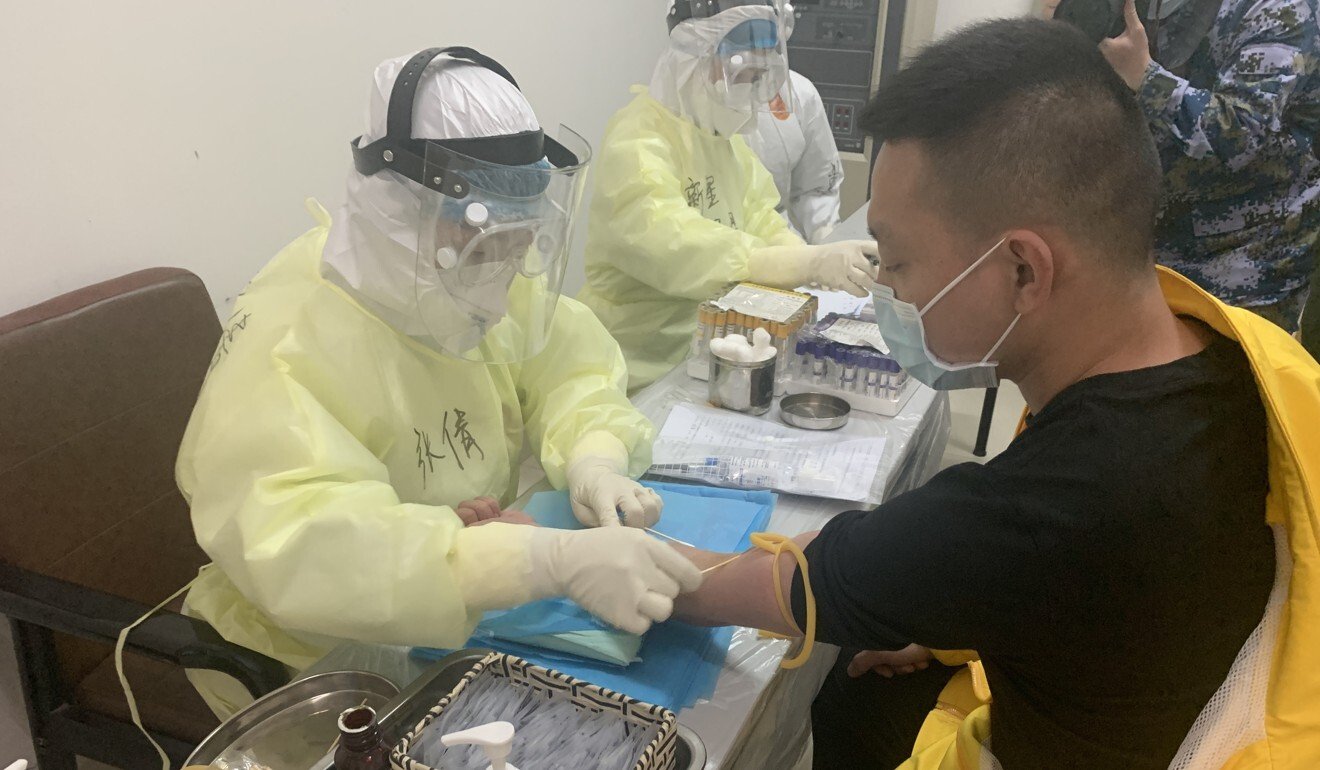
After my quarantine period ended on April 2, I was given a CAT scan and the researchers took a sample of my blood for testing. They said it would be two weeks before they could tell if there were coronavirus antibodies in my bloodstream.
I am not sure if they will tell me the result, but over the next five months I have to do four more blood tests to see if I have antibodies and how long they might remain in my blood.
What did you do to keep yourself entertained during the quarantine period?
It was just rest for me. Before then I’d been a volunteer ambulance driver in Wuhan, working every day taking coronavirus patients to hospital. I’d been really busy for more than a month, so the 14-day quarantine period gave me a chance to relax and catch up on some sleep.
I really enjoyed my time there thanks to the meals I was given, which were nutritious and varied.
The volunteers had to stay in their rooms and we were not allowed to visit each other. We were also told to check our temperature every day and to report any symptoms. I read books and exercised in my room. Some of the volunteers practised calligraphy, some played football with their toilet paper rolls, some jogged, some composed songs, and some made videos about their life in quarantine and uploaded the clips to social media. We did everything just in our own rooms.
Chinese firm CanSino Biologics is one of the front-runners in the race to develop a vaccine for the coronavirus. Photo: Handout
So what was it like working as an ambulance driver?
It was a race against time trying to get people to hospital as quickly as I could. But I felt a real sense of purpose.
At first, I didn’t want to do such work. I was scared because all the patients had been confirmed or were suspected of being infected, and they were contagious.
I was told that no one wanted to be an ambulance driver, but I had a licence to drive a minivan so I decided to do it. I think we young people should make a contribution to society, especially during this difficult time and in our home city and home province, so I applied.
Also, [each day at work] I took a gourd with me. It is called hulu in Mandarin and has auspicious implications in Chinese, as hu sounds similar to fu, which means good luck.
How was your restaurant business affected by the epidemic?
I lost about half a million yuan (US$70,000) because of it. I decided to shut my restaurant down on January 21, two days before the official lockdown, because there had been rumours it was coming and I wanted my workers to be able to leave Wuhan and return to their hometowns.
Right now I’m making preparations to reopen my restaurant, which means a lot of cleaning and disinfecting, and thinking about serving all my customers again.
So how did you feel when the lockdown was lifted on Wednesday?
The situation in Wuhan is getting better. We are proud of what we did for this city. We hope the coronavirus cases can drop to zero soon and our lives can get back to normal.
Zhuhai police, at the end of the world’s longest sea bridge, use body armour and tear gas in preparation for Macau’s 20th anniversary celebration
Hong Kong is just an hour’s drive away from Macau using the bridge
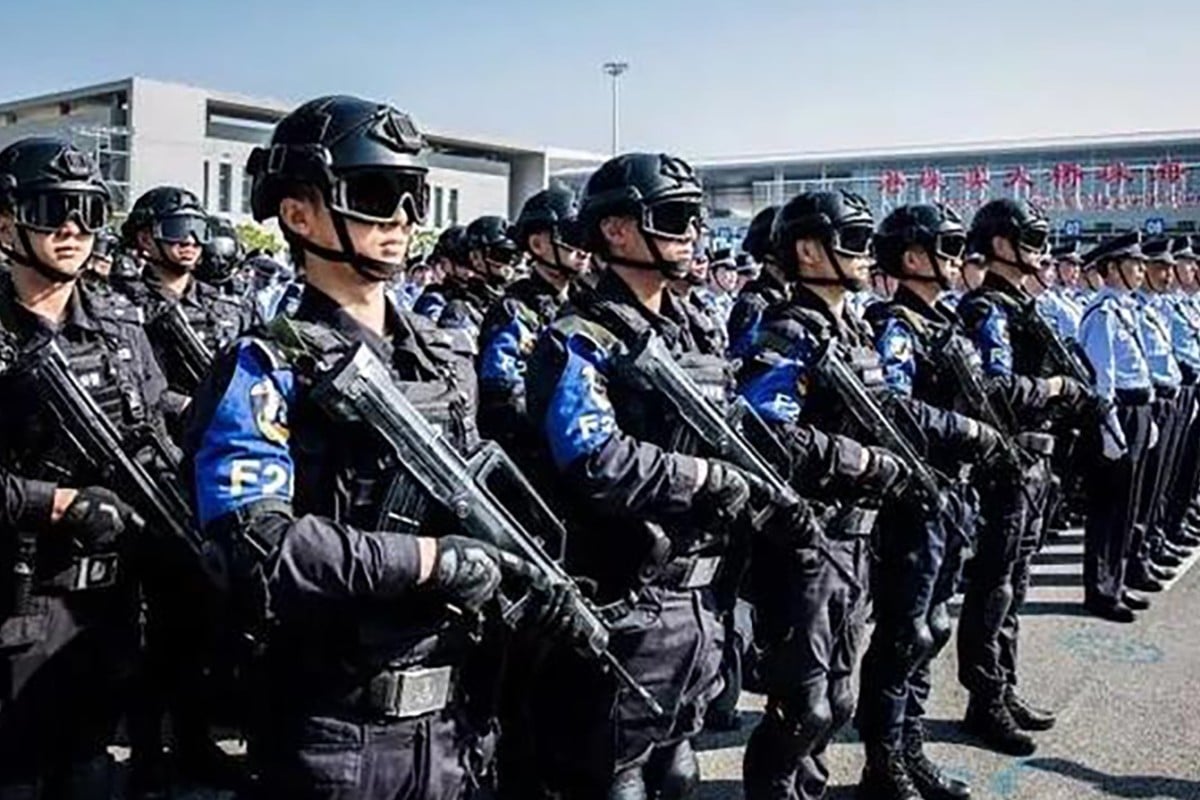
More than 1,000 police officers took part in the anti-terror drill in Zhuhai. Photo: Toutiao
Armed police in the southern Chinese city of Zhuhai held a massive anti-terror drill at its end of the Hong Kong-Zhuhai-Macau Bridge on Friday morning as part of its preparations for the 20th anniversary of the handover of Macau, when President Xi Jinping is expected to visit the city.
More than 1,000 police officers and 80 vehicles were involved in the exercise, amid
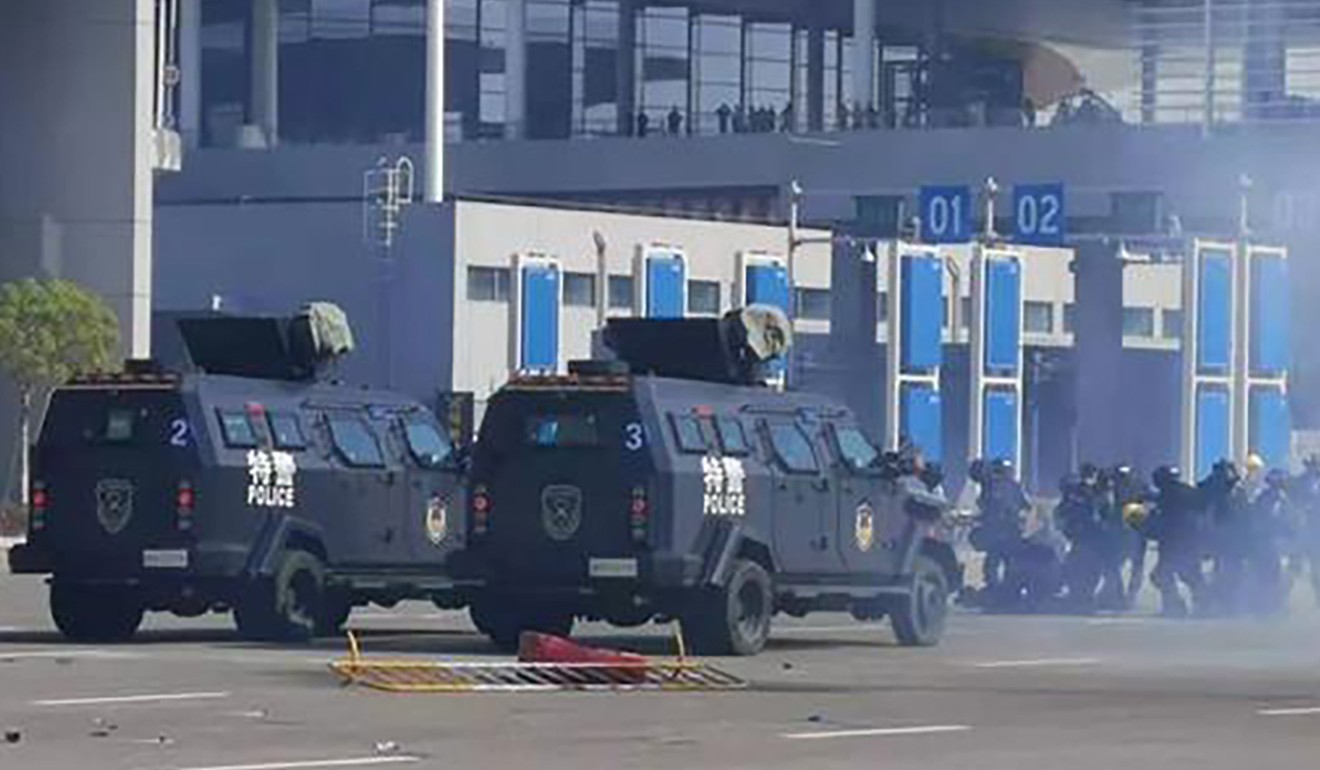
Photos circulated online showed officers in body armour, helmets and shields firing tear gas as they confronted a group of people carrying sticks and wearing black shirts and yellow helmets – attire associated with the protesters in Hong Kong, 60km (37 miles) away from Macau.
The drill was held three weeks before the 20th anniversary of Macau’s return to Chinese administration under the “one country, two systems” policy on December 20.
Police trucks and riot officers during Friday’s exercise at the Zhuhai end of the Hong Kong-Zhuhai-Macau Bridge. Photo: Toutiao
Security is expected to be tightened when Xi visits the city, in response to the violent clashes in Hong Kong over the past six months, which Beijing has repeatedly blamed on radical protesters.
The former Portuguese colony is connected to Hong Kong and its neighbouring city of Zhuhai, Guangdong province, by the world’s longest sea crossing bridge. It takes about an hour to drive from Hong Kong to Macau via the bridge.
Guo Yonghang, Zhuhai party chief, urged the local police to stay loyal to the party. “[Police] should be loyal and fulfil duty and mission to create a peaceful and stable political and social environment for the construction of the Guangdong-Hong Kong-Macau Greater Bay Area and the celebration of the 20th anniversary of Macau’s reunification to the motherland,” he said.
Macau was returned to China two years after Hong Kong and celebrations of its success under one country, two systems could be overshadowed by its neighbour’s anti-government protests which stemmed from opposition to proposed extradition legislation and have escalated into violence on the streets and in university campuses.
In August, two months after more than 2 million people in Hong Kong took to the streets to protest the now-suspended extradition bill, police in Shenzhen held at least three drills featuring anti-riot exercises involving tear gas, armoured vehicles and water cannon.
October 1 event is intended to be a showcase for military’s progress under Xi Jinping, with J-20 stealth fighters set to take pride of place
Domestically developed weapons are main focus of event despite long-standing problems in building aircraft engines
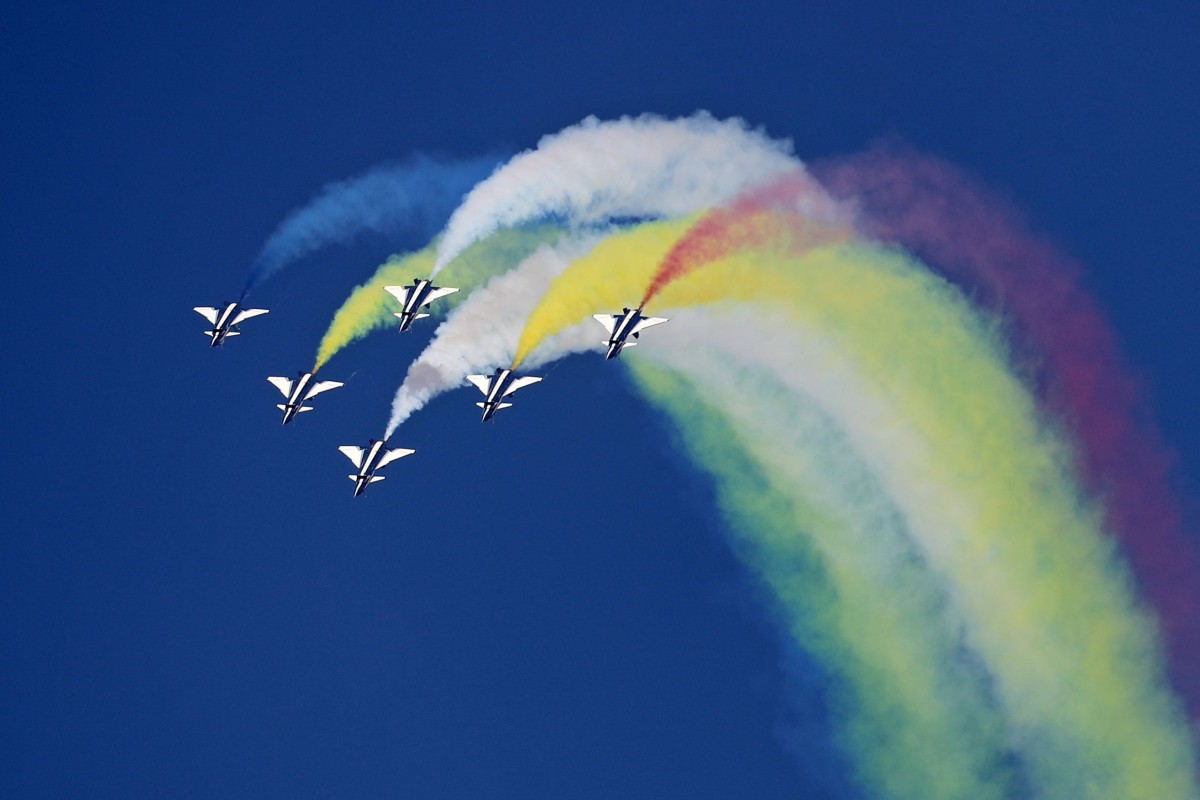
Chinese J-10 jets perform at the Dubai air show in 2017. Photo: AFP
China has stepped up intensive rehearsals for the upcoming National Day parade, which military insiders say is designed to showcase the achievements of Chinese President Xi Jinping’s modernisation drive.
The parade on October 1 will mark the 70th anniversary of the founding of the People’s Republic and will focus on weapons developed since Xi came to power in late 2012, despite long-standing problems in aircraft engine development.
Video clips circulating on mainland social media in recent days have shown at least seven types of aircraft – including the KJ-2000 airborne early warning and control aircraft and J-10 and J-11B fighter jets – taking part in rehearsals over the countryside around Beijing.
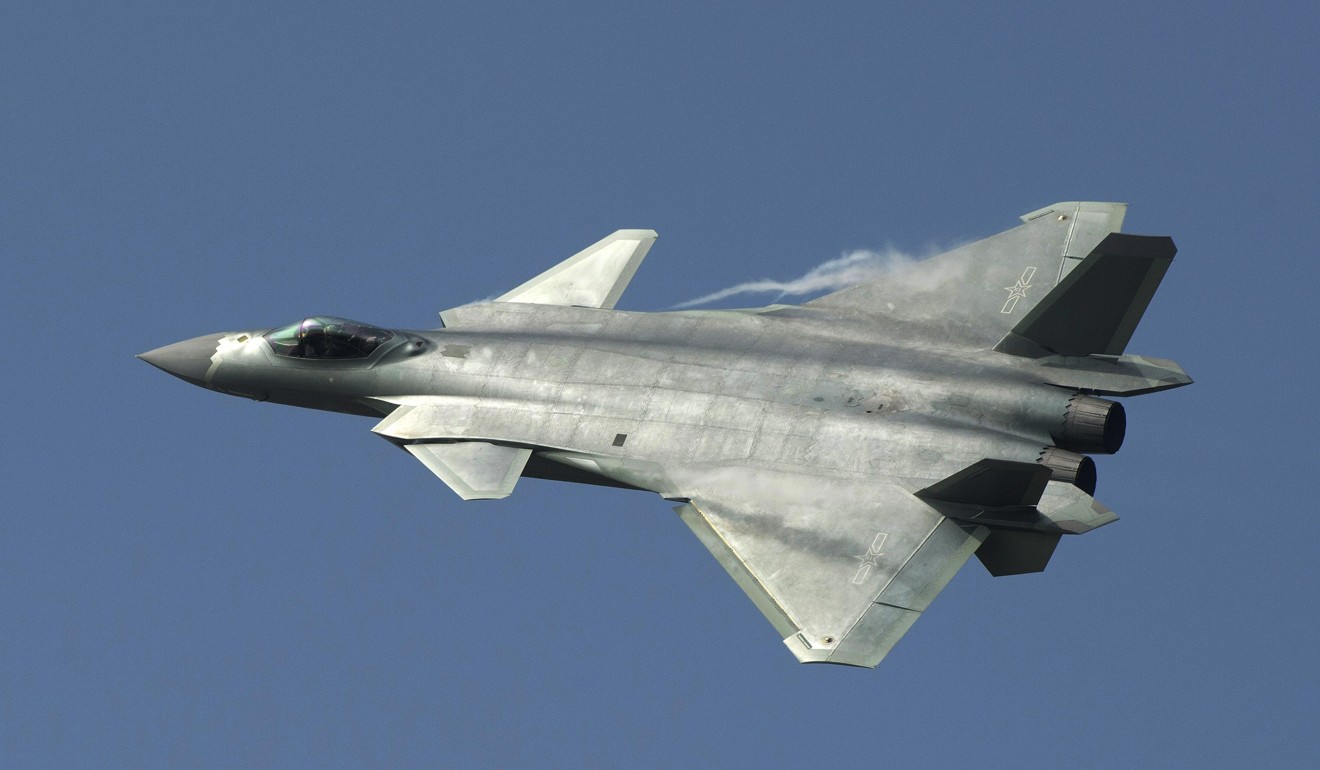
A military insider said the country’s first stealth fighter jet, the J-20, had been rehearsing over the western suburbs of the capital since April.
“There will be up to seven J-20 displayed in the military parade, which is the largest formation since its formal deployment to the Chinese air force in 2017,” the military insider said.
“The J-20 has entered mass production. So far at least 70 J-20s have been made, even though all of them are still equipped with Russian AL-31 engines.”
Earlier this month, the People’s Liberation Army Air Force released a video of a flight of seven J-20s, the largest formation seen so far, suggesting that the fifth-generation warplane has gone into mass production as an arms race with the United States mounts in the region.
The second-largest J-20 formation was shown in an air force video for PLA Day on August 1, when five of the jets were shown.
China has been forced to deploy the J-20 ahead of its schedule since the US has increased the deployment of its fifth-generation stealth fighter jets like the F-22 and F-35s in the Asia-Pacific region.
The US and its allies, including Japan and South Korea, will have more than 200 F-35s by 2025, which means China also needs a similar number of stealth fighters.
To meet demand, China has been working on the development of a purpose-built thrust engine for its stealth fighter since the early 2000s, but has yet to achieve international quality control standards due to problems that include single-crystal turbine blade technology.
China’s air force spreads its wings in 70th anniversary video
Hong Kong-based military commentator Song Zhongping said aircraft engine development had been a long-standing shortcoming but it would not affect the practical fighting capacity of the J-20, which currently uses Russian engines.
“The J-20 hasn’t used the domestic engines so far because it wants a better one, and it still has time,” Song said.
“Other [Chinese-developed] warplanes like the J-10, J-11 and multipurpose attack helicopters are all modified and advanced types, indicating comprehensive achievements amid China’s military modernisation over the past years.”
A Chinese J-20 stealth fighter has entered mass production. Photo: EPA-EFE
Besides the domestically developed aircraft, Beijing is going to display its strategic nuclear missiles, such as the DF-41 intercontinental ballistic missile and the JL-2 submarine-launched ballistic missile, as centrepieces of its National Day military parade, according to a Beijing-based military source.
Xi, who also chairs the powerful Central Military Commission, inspected the country’s biggest military parade at the Zhurihe Combined Tactics Training Base in Inner Mongolia in 2017 to celebrate the 90th anniversary of the PLA, but the source said the weapons displayed in Zhurihe had been developed under the leadership of Xi’s predecessor, Hu Jintao.
“Xi needs to highlight his personal achievements in his era, that’s why this year’s parade has political aims more than military significance,” the source said.
The source also highlighted the significance of the People’s Republic marking its 70th anniversary because the Soviet Union did not survive for that length of time.
“Xi is attempting to tell the outside world that Chinese communist regime has been consolidated under his leadership.”


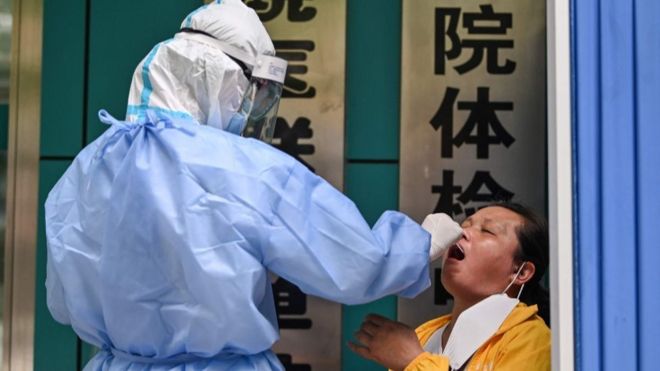 Image copyright GETTY IMAGES
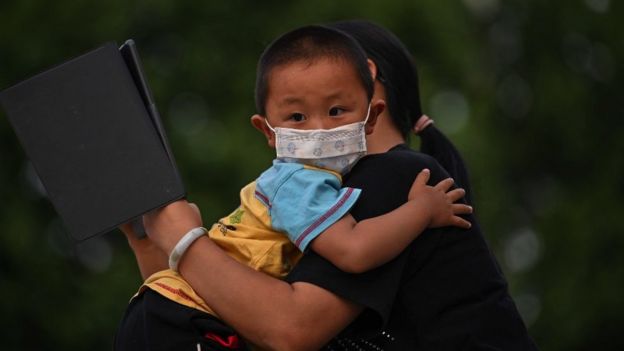 Image copyright GETTY IMAGES



 CHINDIA ALERT: You'll be living in their world, very soon