Chindia Alert: You’ll be Living in their World Very Soon
aims to alert you to the threats and opportunities that China and India present. China and India require serious attention; case of ‘hidden dragon and crouching tiger’.
Without this attention, governments, businesses and, indeed, individuals may find themselves at a great disadvantage sooner rather than later.
The POSTs (front webpages) are mainly 'cuttings' from reliable sources, updated continuously.
The PAGEs (see Tabs, above) attempt to make the information more meaningful by putting some structure to the information we have researched and assembled since 2006.
Image copyright GETTY IMAGESImage caption An empty stretch of the road and Delhi Police barricades to screen commuters during lockdown, at Delhi Gate on April 16, 2020 in New Delhi, India.
India has eased some restrictions imposed as part of a nationwide lockdown to curb the spread of the coronavirus.
Most of the new measures are targeted at easing pressure on farming, which employs more than half the nation’s workforce.
Allowing farms to operate again has been seen as essential to avoid food shortages.
But some other measures announced last week, will not be implemented.
This includes the delivery of non-essential items such as mobile phones, computers, and refrigerators by e-commerce firms – the government reversed its decision on that on Sunday.
And none of the restrictions will be lifted in areas that are still considered “hotspots” for the virus – this includes all major Indian cities.
Domestic and international flights and inter-state travel will also remain suspended.
So what restrictions are being eased?
Most of the new measures target agricultural businesses – farming, fisheries and plantations. This will allow crops to be harvested and daily-wagers and others working in these sectors to continue earning.
To restore the supply chain in these industries, cargo trucks will also be allowed to operate across state borders to transport produce from villages to the cities.
Essential public works programmes – such as building roads and water lines in rural areas – will also reopen, but under strict instructions to follow social distancing norms. These are a huge source of employment for hundreds of thousands of daily-wage earners, and farmers looking to supplement their income.
Banks, ATMs, hospitals, clinics, pharmacies and government offices will remain open. And the self-employed – such as plumbers, electricians and carpenters – will also be allowed to work.
Some public and even private workplaces have been permitted to open in areas that are not considered hotspots.
But all businesses and services that reopen are expected to follow social distancing norms.
Who decides what to reopen?
State governments will decide where restrictions can be eased. And several state chief ministers, including Delhi’s Arvind Kejriwal, have said that none of the restrictions will be lifted in their regions.
Mr Kejriwal said the situation in the national capital was still serious and the decision would be reviewed after one week.
India’s most populous state, Uttar Pradesh, will also see all restrictions in place, as will the southern states of Andhra Pradesh, Telangana and Karnataka.
The southern state of Kerala, which has been widely acknowledged for its success in dealing with the virus, has announced a significant easing of the lockdown in areas that it has demarcated as “green” zones.
This includes allowing private vehicular movement and dine-in services at restaurants, with social distancing norms in place. However, it’s implementing what is known as an “odd-even” scheme – private cars with even and odd number plates will be allowed only on alternate days, to limit the number of people on the road.
Image copyright GETTY IMAGESImage caption More than a billion people have been staying at home during the lockdown
Will India extend its rigorous 21-day lockdown to slow the spread of coronavirus beyond its end date next week? By all accounts, yes.
On 24 March, India shut its $2.9 trillion economy, closing its businesses and issuing strict stay-at-home orders to more than a billion people. Air, road and rail transport systems were suspended.
Now, more than two months after the first case of Covid-19 was detected in the country, more than 5,000 people have tested positive and some 150 people have died. As testing has ramped up, the true picture is emerging. The virus is beginning to spread through dense communities and new clusters of infection are being reported every day. Lifting the lockdown could easily risk triggering a fresh wave of infections.
A harsh lockdown is certain to slow down the disease. Virologists I spoke to believe India is still at an early stage of the infection. The country still doesn’t have enough data on the transmissibility of the virus or even how many people could have been infected and recovered to develop adequate herd immunity. (It is slowly beginning finger prick blood tests to look at the presence of protective antibodies.)
More than 250 of India’s 700-odd districts have reported the infection. Reports say at least seven states have a third of all infections, and want the lockdown extended. Six states have reported clusters of rapidly growing infections – from the capital Delhi in the north to Maharashtra in the west and Tamil Nadu in the south.
Economic fallout
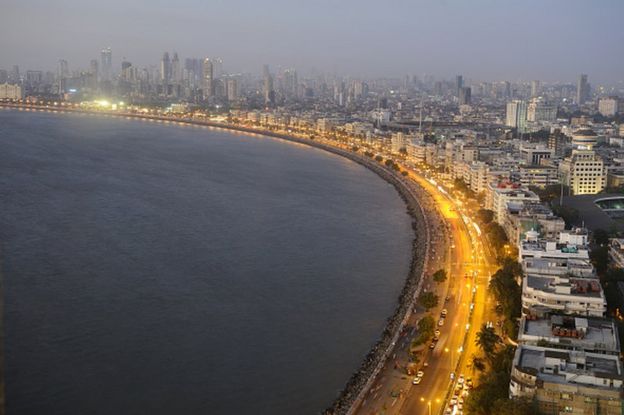
Not surprisingly, the lockdown is already hurting the economy. Many of the early hotspots are economic growth engines and contribute heavily in revenues to the exchequer. Mumbai, India’s financial capital and Maharashtra’s main city, accounts for more than a third of overall tax collection. The densely populated city has reported more than 500 cases and 45 deaths, and numbers are steadily rising. Authorities say the infection is now spreading through the community. Mumbai has made wearing face masks mandatory.
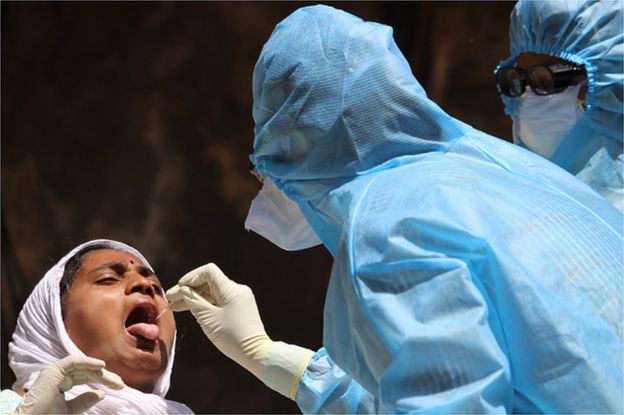
Image copyright GETTY IMAGESImage caption India has ramped up testing during the lockdown
Many of these hotspot clusters are also thriving manufacturing bases. The spread of infection means that they will be under lockdown for a longer period of time.
The services industry, which generates almost half of India’s GDP, is also likely to remain shut for some more time. Construction, which employs a bulk of migrant workers, will remain similarly suspended. The unemployment rate may have already climbed to more than 20% after the lockdown, according to a report by the Center for Monitoring Indian Economy.
For the moment, economists say, the government will have to prioritise farming over everything else to ensure the livelihoods of millions and secure the country’s future food supplies.
Half of India’s labour force work on farms. The lockdown happened at a time when a bumper winter crop had to be harvested and sold, and the rain-fed summer crop had to be sowed. The immediate challenge is to harvest and market the first crop, and secure the second.
Moving trucks to pick up produce and take them to markets, with adequate social distancing and hand washing will be something the government will have to move on quickly.
“The immediate challenge is to ensure that rural India is not hit,” says Rathin Ray, an economist. “Realistically, a complete lockdown cannot be continuously maintained beyond early May. We don’t have a choice but to reopen gradually after that.”
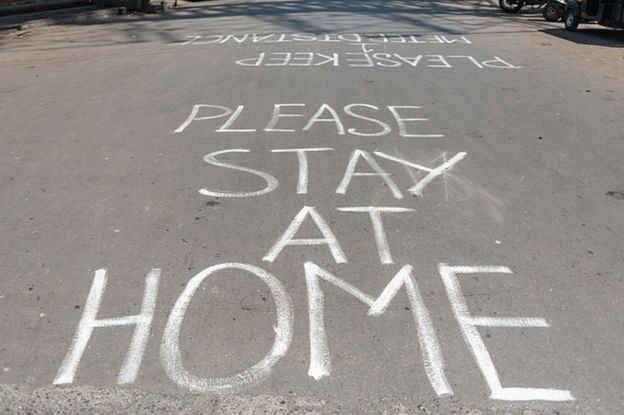
Image copyright GETTY IMAGESImage caption India has been under a lockdown from 24 March
There is little doubt about that. For his part, SK Sarin, who heads a government advisory panel on combating the disease, says the lockdown can be only eased in a “graded manner in areas that are not hotspots” and that the hotspots remained cordoned off.
Like other affected countries, India will have to prepare itself for what Gabriel Leung, an infectious disease epidemiologist and dean of medicine at the University of Hong Kong, describes as several rounds of “suppress and lift” cycles.
During these periods “restrictions are applied and relaxed, applied again and relaxed again, in ways that can keep the pandemic under control but at an acceptable economic and social cost.”
Also, Dr Leung observes, “how best to do that will vary by country, depending on its means, tolerance for disruption and its people’s collective will. In all cases, however, the challenge essentially is a three-way tug of war between combating the disease, protecting the economy and keeping society at an even keel”.
It is now clear that shutdowns need to continue until transmission has slowed down markedly, and testing and health infrastructure has been scaled up to manage the outbreak.
Experts from the southern state of Kerala, a striking outlier that is containing the infection thanks to a transparent government and a robust public health system, say it isn’t time to lift the lockdown yet and have recommended a three-phase relaxation.
For most countries, easing the lockdown is a tricky policy choice. It sparks fears of triggering a fresh wave of infection and presents the inevitable trade-off between lives and livelihoods. French Prime Minister Edouard Phillipe, says relaxing the lockdown in his country is going to be “fearsomely complex”. In a crisis like this, according to his Dutch counterpart Mark Rutte, leaders have to “make 100% of the decisions with 50% of the knowledge, and bear the consequences.”
Image copyright GETTY IMAGESImage caption India’s financial capital, Mumbai, is emerging as a hotspot
It is going to be tougher for India with its vast size, densely packed population and enfeebled public health system. Also, no country in the world possibly has so much inter-state migration of casual workers, who are the backbone of the services and construction industries.
How will India manage to return these workers to their work places – factories, farms, building sites, shops – without a substantial easing of public transport at a time when crowded trains and buses can be a vector of transmission and easily neutralise the gains of the lockdown? Even allowing restricted mobility – allowing social distancing, temperature checks and passenger hygiene – would put considerable pressure on the public transport system.
The policy choices are fiendishly tough, and the answers are far from easy. India bungled the lockdown by not anticipating the exodus of millions of migrant workers from cities. The weeks ahead will tell whether the fleeing men, women and children carried the infection to their villages. The country simply cannot afford to make similar mistakes again while trying to relax the lockdown. Nitin Pai of The Takshashila Institution, a think tank, believes states should be left to decide on easing restrictions, and decisions “should be based on threat [of infection], which should be determined by extensive testing”.
This week Prime Minister Narendra Modi said that the “situation in the country is akin to a social emergency”. His government now needs make sure that the looming threat to the nation’s health and economic progress is tackled skilfully.
China’s pig herd has begun to build again after African swine fever devastated hog populations across the country 18 months ago
Scientists are racing to create disease-resistant pigs, but analysts say that will be undermined by basic hygiene problems in China’s pork industry
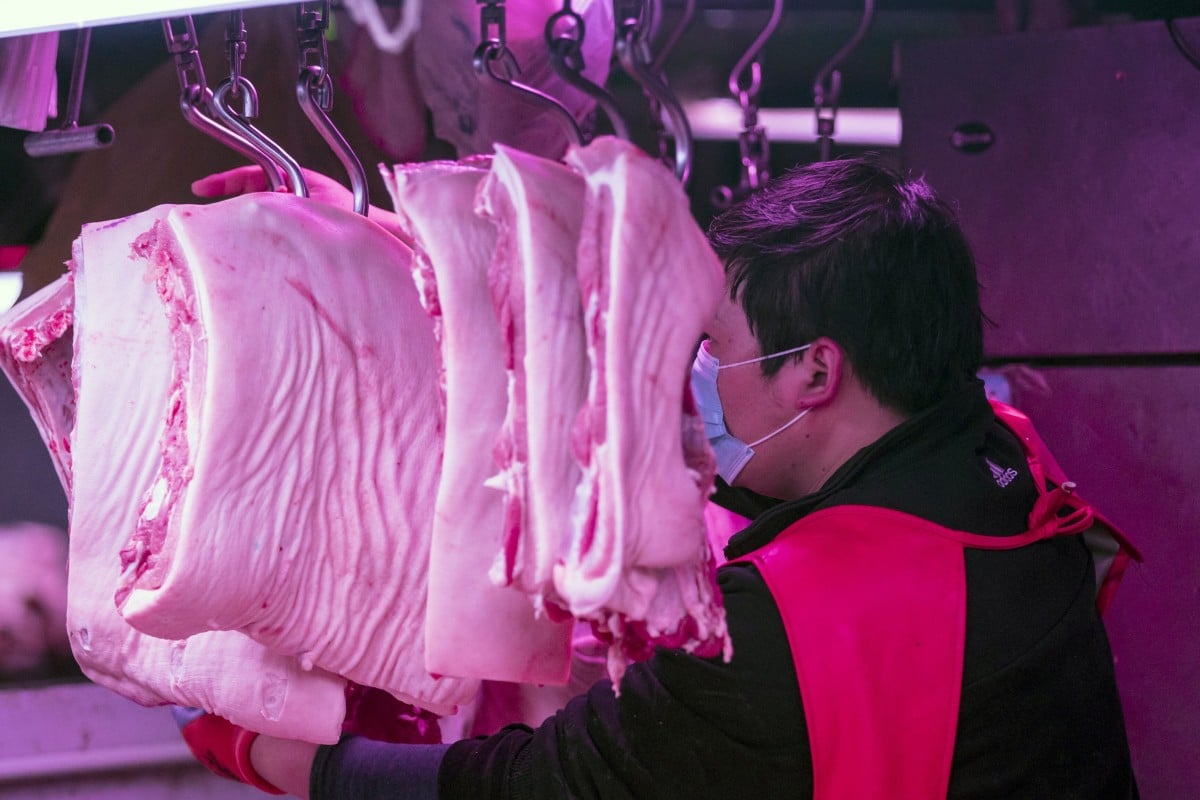
China’s pork industry has been severely dented by African swine fever disease in the past 18 months. Photo: Bloomberg
China should focus less on developing disease-resistant “super pigs” to protect its hog herd from infection and do more to improve basic biosecurity, analysts say, as several companies claim to be close to a breakthrough treatment for African swine fever.
China’s hog herd has begun to steadily rebuild after swine fever spread across the country a year and a half ago, killing or forcing the culling of 60 per cent of the pig population, according to authorities.
But poor biosecurity – including the transport of pigs in filthy trucks and a lack of disinfection at farms – still threaten the industry, observers said.
There is no commercially available vaccine for the disease – which is not harmful to humans – but a number of researchers claim they are close.
Swine fever could kill 25% of the world’s pigs, scientists say
China’s Harbin Veterinary Research Institute, the country’s top research body on animal diseases, said last month it had developed a vaccine for African swine fever (ASF) that laboratory testing showed was safe and effective. However, it did not give a timetable on when it would be available for commercial use.
Meanwhile,Shandong Landsee Genetics, a company in China’s eastern Shandong province, was reported this week to have successfully bred ASF-resistant pigs. The pigs, called Lansibai-2, are from the large white breed, one of the most common raised in China.
When approached for comment, a spokeswoman for the company said the research was confidential and she was not authorised to speak to media.
Despite the apparent progress, analysts are generally sceptical that a silver bullet to prevent the disease will be developed on a large scale any time soon.
“Because this disease has been found in many countries, I don’t think there has been major progress [when it comes to eliminating the disease],” said Chenjun Pan, senior analyst for animal protein at Rabobank. “There have been some vaccines, but the effectiveness of the vaccines is not that satisfactory. So far there haven’t been any solutions from a medical perspective.”
There have been some vaccines, but the effectiveness of the vaccines is not that satisfactory – Chenjun Pan
China’s swine fever problem was complicated by an unwillingness from local governments to diagnose and report ASF cases, said E.W. Johnson, of Enable AgTech Consulting in Beijing. It was also complicated by basic hygiene problems, he added.
“Pigs with ASF are sold to slaughter every day, and dirty trucks are going everywhere, spreading the disease as much as they did when the ASF outbreak began,” Johnson said.
“There is no doubt that people are very excited and extremely zealous about these super-pigs. [But] China seems intent on living with ASF rather than getting rid of it.”
“The most important problem now is how to control the ASF epidemic, and this is not the way to do it,” said Feng Yonghui, chief analyst at pork industry website Soozhu.com. “The whole global industry recognises that the greatest preventive measure is improving biosecurity.”
he whole global industry recognises that the greatest preventive measure is improving biosecurity – E.W. Johnson
Improved hygiene can lower the risk of disease in production, said Feng, including sickness caused by bacteria and viruses, like transmissible gastroenteritis, a coronavirus found in pigs.
“It’s a system – you can’t just do one step in the process,” he said. “The whole industry has to study it, and we still need time to improve.”
Basic controls – like keeping pig transport trucks clean, or disinfecting protective equipment used by workers on pig farms – is simple but comes at a price, and some smaller pig farms are struggling to keep up.
China’s outbreak of African swine fever pushes pork off the Lunar New Year menu
“What we’re worried about are the people on the lower rungs of the ladder who aren’t able to keep up with better practises,” Feng said. “If we are to get pig stocks back up to where they were before the outbreak within three years, this is the key issue that stands in the way.”
China’s pork industry is at a turning point in production unlike at any other time in history, he said.
“In the past, when it came to upgrading production, or when the industry went into loss, all producers big and small began again at the same starting line,” he said. “That’s because there was no threat of disease. Now, those with money get to run first.”
Pork prices in China, the world’s top consumer and producer of pork, have surged since AFS began cutting back supply, driving margins up for both domestic and imported pork.
The world’s biggest pork processor, Hong Kong-listed WH Group, reported a 32 per cent jump in profits last year as record high pork prices in China boosted the value of the company’s exports from the United States and lifted margins on its China sales.
China’s deadly African swine fever epidemic is spreading across Asia
China’s total pork production in 2019 was 42.55 million tons, a decrease of 21.3 per cent from 2018, data from the National Bureau of Statistics showed. In 2018, the total pork output was 54.037 million tons, down 0.9 per cent from 2017.
While researchers race to find a cure for swine fever, new cases keep cropping up across the country. On Wednesday, the Ministry of Agriculture and Rural Affairs said local authorities in Sichuan had detected infections in piglets transported from outside the province.
Another outbreak was recorded in Inner Mongolia, where local authorities detected the disease in a herd of 200 piglets on a farm in Ordos city, which killed 92 of the animals, according to the agriculture industry.
Authorities are also monitoring cases of ASF in piglets smuggled into the country and would launch a 60-day investigation into illegal transport of hogs this month.
Image caption The pack of cards cost £1.50 from Tesco
A factory in China has denied it used forced labour after a six-year-old girl found a message from workers inside a Tesco charity Christmas card.
The card supplier, Zhejiang Yunguang Printing, told China’s Global Times it had “never done such a thing”.
Tesco halted production at the factory on Sunday over the message, allegedly written by prisoners claiming they were “forced to work against our will”.
The Chinese foreign ministry said the allegation was “a farce”.
Speaking to the nationalist newspaper Global Times on Monday, a spokesman for the card supplier said: “We only became aware of this when some foreign media contacted us. We have never done such a thing.
The message – first reported by the Sunday Times – was found by Florence Widdicombe, who was writing cards to her school friends. She found that one of them – featuring a kitten with a Santa hat – had already been written in.
In block capitals, it said: “We are foreign prisoners in Shanghai Qingpu prison China. Forced to work against our will. Please help us and notify human rights organisation.”
The message in the card asked whoever found the message to contact Peter Humphrey, a British journalist who was himself imprisoned there four years ago.
Chinese foreign ministry spokesman Geng Shuang told reporters on Monday the allegation was “a farce” created by Mr Humphrey.
“Shanghai’s Qingpu prison has no such foreign prisoners undergoing forced labour,” Mr Shuang said.
Zhejiang Yunguang Printing’s factory manager, Shu Yunjia, told the BBC it had not outsourced any of its work to the Qingpu prison.
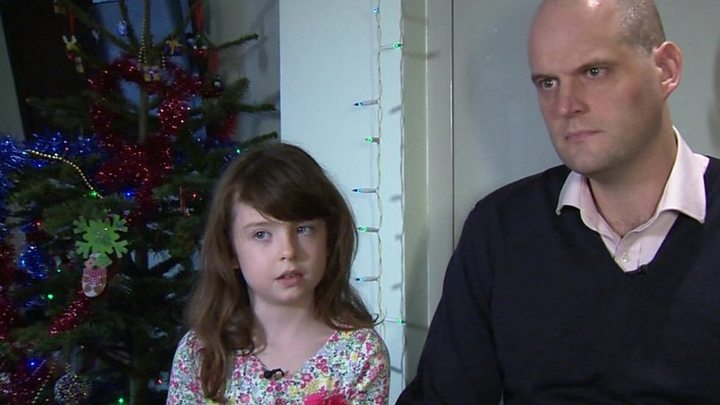
Media caption Florence Widdicombe was writing the cards last Sunday when she discovered the message
Florence, from Tooting in south London, said she was writing her “sixth or eighth card” when she saw “somebody had already written in it”.
“It made me feel shocked,” she said, adding that when it was explained to her what the message meant she felt “sad”.
Tesco added that it would de-list Zhejiang Yunguang if it was found to have used prison labour.
A Tesco spokeswoman said: “We were shocked by these allegations and immediately halted production at the factory where these cards are produced and launched an investigation.”
The supermarket said it has a “comprehensive auditing system” to ensure suppliers are not exploiting forced labour.
The factory in question was checked only last month and no evidence of it breaking the ban on prison labour was found, it said.
Sales of charity Christmas cards at the company’s supermarkets raise £300,000 a year for the British Heart Foundation, Cancer Research UK and Diabetes UK.
Tesco has not received any other complaints from customers about messages inside Christmas cards.
‘Very bleak life’
The message in the card urged the recipient to contact Peter Humphrey, who was formerly imprisoned at Qingpu on what he described as “bogus charges that were never heard in court”.
After the Widdicombe family sent him a message via Linkedin, Mr Humphrey said he then contacted ex-prisoners who confirmed inmates had been forced to work.
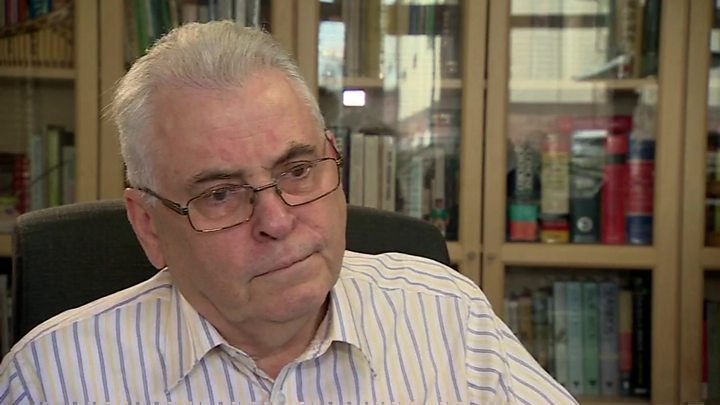
Media caption Peter Humphrey: “I think I know who it was but I will never disclose the name”
Mr Humphrey told the BBC that the cell block of foreign prisoners has about 250 people in it, who are living a “very bleak daily life” with 12 prisoners per cell.
He added that when he was in there, manufacturing labour work was voluntary – to earn money to buy soap or toothpaste – but that work has now become compulsory.
Mr Humphrey told the BBC: “I spent two years in captivity in Shanghai between 2013 and 2015 and my final nine months of captivity was in this very prison in this very cell block where this message has come from.
“So this was written by some of my cellmates from that period who are still there serving sentences.
“I’m pretty sure this was written as a collective message. Obviously one single hand produced this capital letters’ handwriting and I think I know who it was, but I will never disclose that name.”
It is not the first time that prisoners in China have reportedly smuggled out messages in products they have been forced to make for Western markets.
In 2012, Julie Keith from Portland, Oregon, discovered an account of torture and persecution by a prisoner who said he was forced to manufacture the Halloween decorations she had purchased.
And in 2014, Karen Wisinska from Co Fermanagh in Northern Ireland, found a note on a pair of Primark trousers reading: “Our job inside the prison is to produce fashion clothes for export. We work 15 hours per day and the food we eat wouldn’t even be given to dogs or pigs.”
Under the UN’s guidance for human rights and prisons, prisoners “should not be subordinated merely to making a profit either for the prison authorities or for a private contractor”.
BEIJING (Reuters) – German chemical giant BASF (BASFn.DE) has begun construction of its $10-billion (£7.8 billion) integrated petrochemicals project in China’s southern province of Guangdong, the company said in a statement on Saturday.
The project based in the city of Zhanjiang will be China’s first wholly foreign-owned chemicals complex, for which a framework agreement was signed in January.
It will primarily produce engineering plastics and thermoplastic polyurethane (TPU), and some petrochemical products widely used in automotive, electronics and new energy vehicles industries.
The project’s first phase is expected to be launched in 2022, with production capacity of 60,000 tonnes per year (tpy), taking BASF’s total capacity of engineering plastics and TPU to 290,000 tpy in the Asia-Pacific region.
The entire project is planned to be completed by 2030, the company said, making it the third-largest BASF site worldwide, following Ludwigshafen in Germany and Antwerp in Belgium.
BASF plans to employ a comprehensive smart manufacturing concept at the project, deploying automated packaging, high-tech control systems and automated guided vehicles, it added.
“(The project) will form a solid foundation for a world-class industrial cluster in Zhanjiang and establish stronger business connections between South China and other Asian countries,” Stephan Kothrade, a BASF regional official in China, said in the statement.
The project is “a signal showing China’s efforts of further opening-up are taking effect,” Chinese Premier Li Keqiang said, according to a central government website.
China would treat enterprises with all types of ownership structures, as well as domestic and foreign firms, equally and without discrimination, he added.


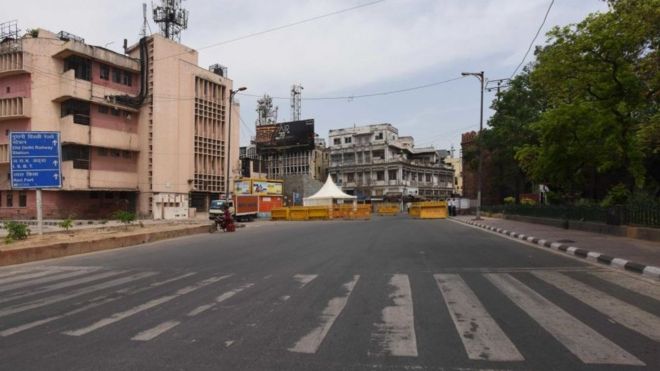 Image copyright GETTY IMAGES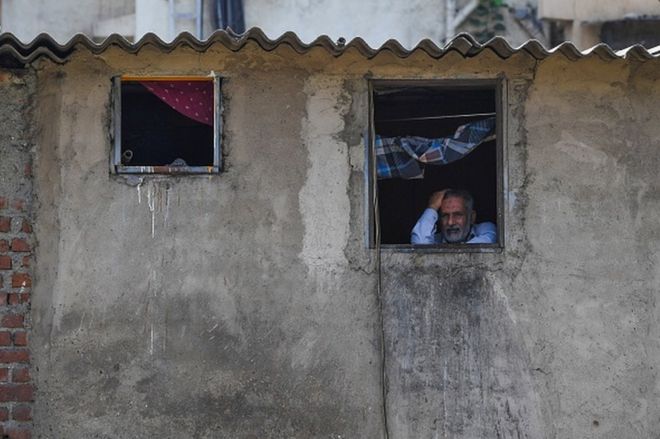


 CHINDIA ALERT: You'll be living in their world, very soon