Chindia Alert: You’ll be Living in their World Very Soon
aims to alert you to the threats and opportunities that China and India present. China and India require serious attention; case of ‘hidden dragon and crouching tiger’.
Without this attention, governments, businesses and, indeed, individuals may find themselves at a great disadvantage sooner rather than later.
The POSTs (front webpages) are mainly 'cuttings' from reliable sources, updated continuously.
The PAGEs (see Tabs, above) attempt to make the information more meaningful by putting some structure to the information we have researched and assembled since 2006.
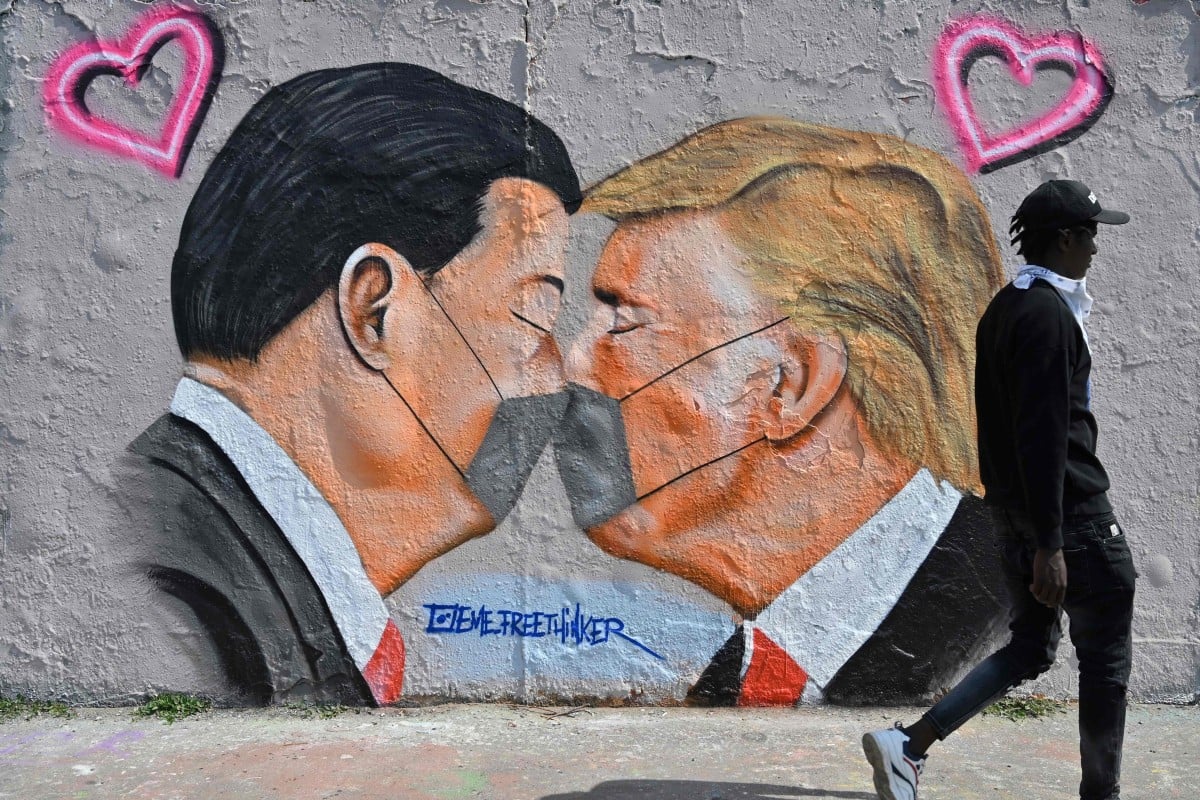
Chinese groups calling for more ‘fighting spirit’ are getting the upper hand on those who favour calm and cooperation, government adviser says
From Hong Kong to Covid-19, trade to the South China Sea, Beijing and Washington are clashing on a growing number of fronts and in an increasingly aggressive way
Efforts to promote dialogue and cooperation between the US and China are failing, observers say. Photo: AFP
Moderates who favour dialogue and cooperation as a way to resolve China’s disputes with the United States are losing ground to hardline groups bent on taking the fight to Washington, according to political insiders and observers.
“There are two camps in China,” said a former state official who now serves as a government adviser and asked not to be named.
“One is stressing the combat spirit, the other is trying to relieve tensions. And the former has the upper hand.”
Relations between China and the US are under intense pressure. After Beijing moved to introduce a national security law for Hong Kong, US President Donald Trump said on Friday that Washington would begin eliminating the special policy exemptions it grants the city, as it no longer considers it autonomous from mainland China.
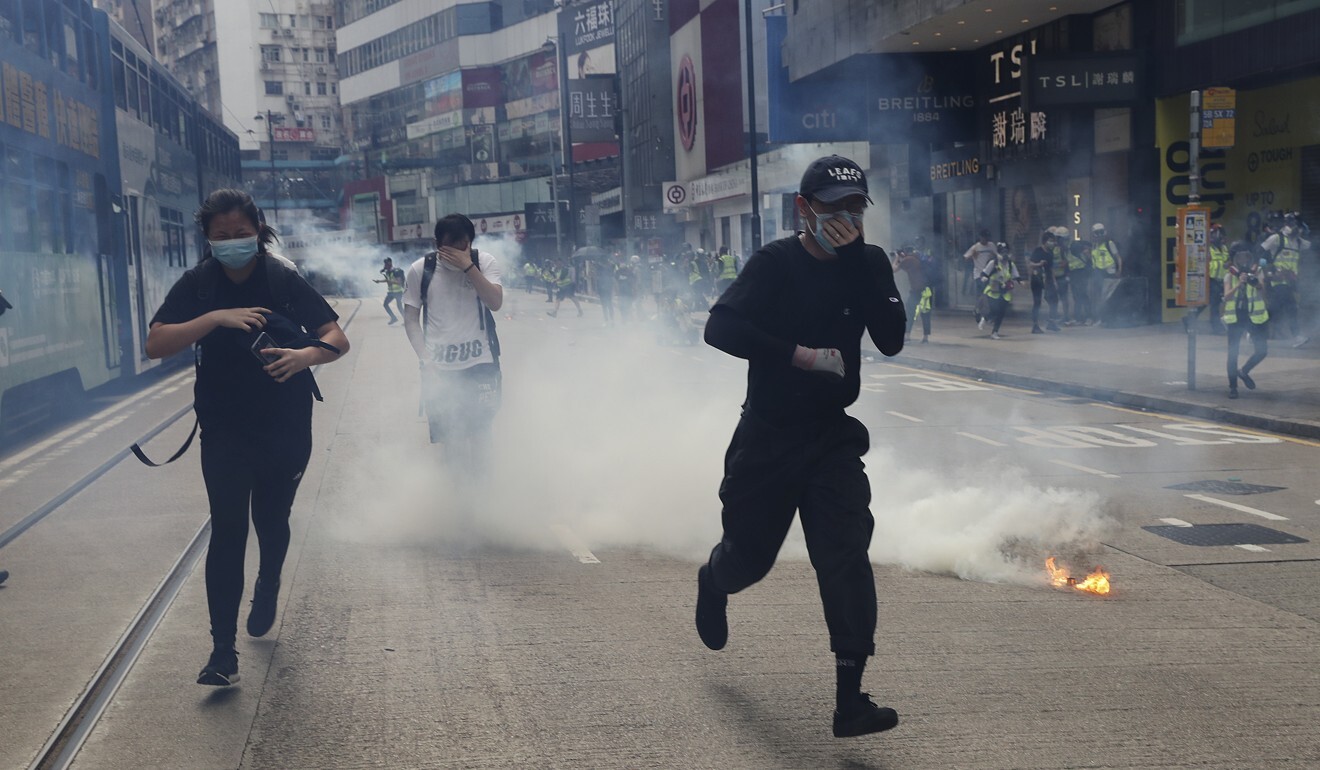
Beijing’s decision to enact a national security law for Hong Kong was met with anger from the US and other Western countries. Photo: Sam Tsang
The two nations have also clashed over trade, Xinjiang, Taiwan and the South China Sea, with the US passing several acts denouncing Beijing and sanctioning Chinese officials.
China has also experienced turbulence in its relations with other countries, including Australia and members of the European Union, mostly related to the Covid-19 pandemic
and Beijing’s efforts to position itself as a leader in the fight against the disease with its policy of “mask diplomacy”.
After Canberra appealed for an independent investigation to be carried out to determine the origins of the coronavirus, Beijing responded by imposing tariffs on imports of Australian barley, showing it is prepared to do more than just trade insults and accusations with its adversaries.
Pang Zhongying, a professor of international relations at Ocean University of China in Qingdao, said there was a worrying trend in China’s relations with other nations.
“We need political and diplomatic means to resolve the challenges we are facing, but … diplomatic methods have become undiplomatic,” he said.
“There are some who believe that problems can be solved through tough gestures, but this will never work. Without diplomacy, problems become confrontations.”
said during his annual press conference on the sidelines of the National People’s Congress last weekend that China and the United States must work together to prevent a new Cold War.
His words were echoed by Chinese Premier Li Keqiang, who said during a press conference after the closure of the legislative session on Thursday that the many challenges facing the China-US relations could only be resolved through cooperation.
However, the government adviser said there was often quite a chasm between what China’s leaders said and what happened in reality.
“Even though we say we do not want a Cold War, what is happening at the working level seems to be different.” he said. “The implementation of policies is not properly coordinated and often chaotic.”
Tensions between China and the US have been in a poor state since the start of a trade war almost two years ago. After multiple rounds of negotiations, the sides in January signed a phase one deal, but the positivity that created was short-lived.
In February, Beijing expelled three reporters from The Wall Street Journal over an article it deemed racist, while Washington has ramped up its military activity in the South China Sea and Taiwan Strait, and threatened to revoke the visas of Chinese students studying science and technology in the US over concerns they might be engaged in espionage.
Beijing has also used its state media and army of “Wolf Warrior” diplomats to promote its narrative, though many Chinese scholars and foreign policy advisers have said the latter’s nationalistic fervour has done more harm than good and appealed to Beijing to adopt a more conciliatory tone.
However, Hu Xijin, editor-in-chief of Chinese tabloid Global Times, said China had no option but to stare down the US, which regarded the world’s most populous nation as its main rival.
“Being contained by the US is too high a price for China to pay,” he said. “I think the best thing people can do is forget the old days of China-US ties”.
Jin Canrong, a professor of international relations at Renmin University in Beijing, wrote in a recent newspaper article that Beijing’s actions – notably enacting a national security law for Hong Kong – showed it was uncompromising and ready to stand its ground against the US.
Wu Xinbo, dean of international studies at Fudan University in Shanghai, agreed, saying relations between the two countries were likely to worsen in the run-up to the US presidential election in November and that Beijing should be prepared for a fight.
But Adam Ni, director of China Policy Centre, a think tank in Canberra, said the issue was not that the moderate camp had been sidelined, but rather Beijing’s perception of the US had changed.
“Beijing has woken up to the idea that America’s tough policy on China will continue and it is expecting an escalation of the tensions,” he said.
“The centre of gravity in terms of Beijing’s perception of the US has shifted, in the same way the US perception of China has shifted towards a more negative image”.
Beijing was simply responding in kind to the hardline, assertive manner of the US, he said.
There has been strong demand for air freight services since April, when Chinese factories got back to work
Cargo flights have become critical in moving protective health equipment across the globe
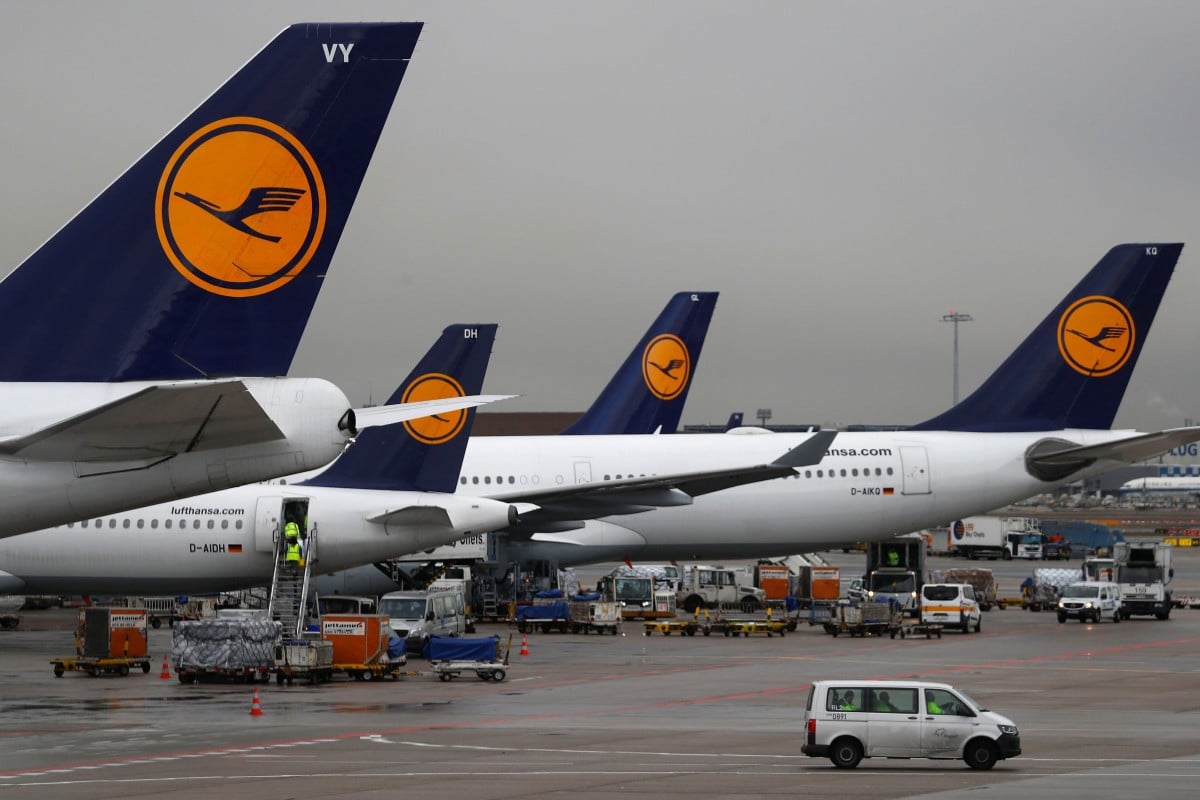
Planes of German air carrier Lufthansa at the country’s largest airport in Frankfurt. Photo: Reuters
German freight carrier Lufthansa Cargo is expanding in China, surpassing 100 weekly flights for the first time, and adding new flights to Shenzhen.
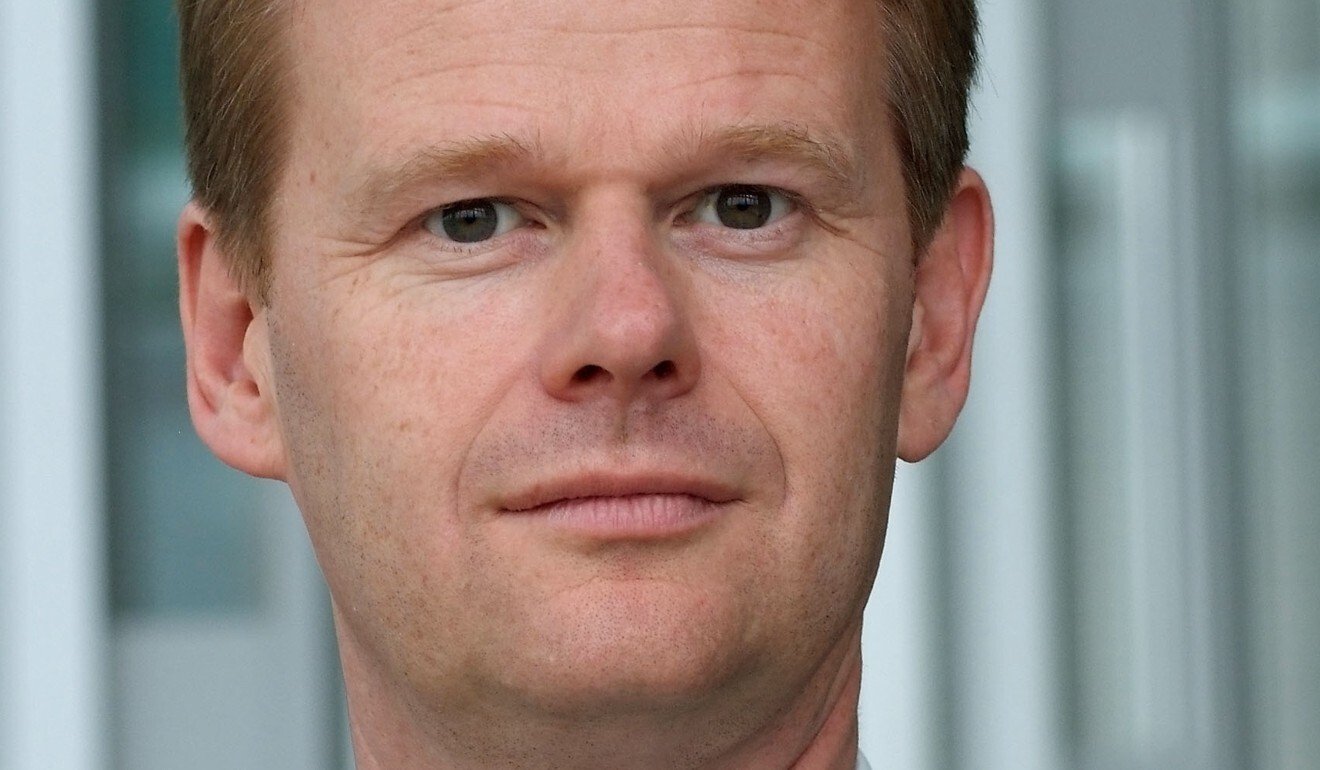
Peter Gerber, CEO of Europe’s largest cargo airline, said there had been heavy demand for its services, though this might cool by the peak of summer.
“At the moment, cargo demand is very, very strong,” he told the Post. “It started to get strong in April, when Chinese industries got back to work, and after that we have seen a constant, heavy demand, a real peak.”
Cathay Pacific and Cathay Dragon report combined HK$4.5 billion loss for start of 2020
15 May 2020
Global air freight capacity has been squeezed as two-thirds of the world’s aircraft have been grounded by the Covid-19 pandemic.
The collapse of air travel has practically put a stop to passenger flights, which typically carry half of all air cargo.
Since the pandemic, cargo flights have been critical in moving protective health equipment across the globe. From sending masks and other supplies to China in February, the German carrier is now taking urgent supplies from the mainland back to Europe.
Peter Gerber says Lufthansa Cargo has a high responsibility in maintaining supply chains, for both global health and world trade. Photo: Handout
“We have a high responsibility in maintaining supply chains in these unprecedented times for both global health and world trade,” Gerber said.
With the addition of Shenzhen, Lufthansa Cargo will fly to five destinations in China. It serves more than 300 destinations in 100 countries.
The cargo carrier is part of the Lufthansa Group and coordinates all the freight that goes into the passenger planes of its sibling brands, including Lufthansa, Swiss and Austrian.
Coronavirus: South Africa asks Hong Kong to remove its citizens from government quarantine list
16 May 2020
By next week, Lufthansa Cargo will be running more freight flights to China than the 72 passenger flights the group flew weekly before the pandemic to Beijing, Shanghai, Shenyang, Nanjing and Qingdao.
Lufthansa Cargo has a fleet of seven Boeing 777 Freighters (777Fs), with two new 777Fs arriving this year as part of its strategy to operate a fleet with a single aircraft type.
It also has six McDonnell Douglas-11Fs that Gerber said would still be retired as planned at the end of 2020, despite the extra demand for cargo capacity.
Its additional flights to China will make use of “preighters” – passenger aircraft flying cargo only. Gerber felt the trend of using empty passenger planes as “preighters” had peaked, pointing out that they cost the same to operate as freighters but carry only a fraction of the cargo.
Although he did not rule out future expansion, he said: “Demand will gradually come down in the next two or three months because a lot of equipment would have been shipped by then and some shipments will go on rail or ocean shipping.”
Coronavirus: Cathay Pacific could get cash injection from shareholder Qatar Airways
13 May 2020
He said some uncertainty remained over continued demand for airfreighted cargo, given the battered state of the world economy. Airlines would have to consider longer-term demand before deciding to invest more in cargo aircraft. “It depends how it looks beyond the next year,” he said.
Gerber said no decision had been taken yet on whether to convert some of the group’s orders for Boeing’s newest widebody 777X passenger aircraft into cargo planes.
He added that future plane orders would be balanced against the wider needs and spending decisions at Lufthansa Group, which is currently negotiating a government pandemic bailout package in the region of €9 billion (US$9.7 billion).
Warship joined by at least five escort vessels and analysts say the drills were ‘very significant’ to show the strike group wasn’t hit by coronavirus
Latest exercises also seen as putting pressure on Taiwan’s pro-independence forces, with strike group sailing through the strait
The Liaoning is seen as having a big role in the Chinese military’s plan to unify Taiwan by force. Photo: AFP
China’s first aircraft carrier, the Liaoning, returned to its home port of Qingdao on Thursday after nearly a month of training on the high seas, the People’s Liberation Army said.
According to military analysts, the warship was joined by at least five escort vessels, and the drills showed its crew had not been affected by the coronavirus pandemic and that it remained combat-ready.
The annual cross-region drills included intensive and complicated air and sea operations, the official PLA Daily said in a post on social media on Friday.
“The drills have further improved the real combat training level of the Liaoning carrier strike group, putting its systematic combat capability to the test,” the statement on WeChat said, without giving other details.
It was the longest training session by China’s navy since the PLA resumed all large-scale drills in March, after they were suspended because of disruptions to transport and military resources across the country as the deadly new virus rapidly spread.
Beijing-based naval expert Li Jie said it was important for the carrier to get back to training activities.
“The recent training by the Liaoning carrier strike group is very significant because it’s evidence that none of the 2,000 sailors and commanders on the ship have been hit by Covid-19, and neither have any of the other soldiers and personnel on the other warships and support units,” Li said.
The coronavirus situation has eased in China, where the first cases were reported late last year, but it continues to spread across the globe and has infected more than 3.2 million people worldwide and killed over 233,000.
Sailors on warships like USS Theodore Roosevelt vulnerable as coronavirus spreads
29 Mar 2020
The virus has also hit crew members on at least 40 US Navy warships, and Li said that left China with the only operational aircraft carrier in the region.
“Since the four American aircraft carriers in the Indo-Pacific region have all been struck by the pandemic, China is the only country that can operate an aircraft carrier in the area,” he said.
US warship captain seeks to isolate crew members as coronavirus spreads
Taiwan’s defence ministry reported earlier that the Liaoning flotilla had sailed through the Taiwan Strait twice last month as it headed towards the western Pacific, prompting the self-ruled island to scramble aircraft and send warships to monitor its movements.
Japan’s Ministry of Defence said the Liaoning was escorted by two destroyers, two frigates and a supply ship, and they had passed through the Bashi Channel, a waterway to the south of Taiwan, and headed towards waters east of Taiwan.
As tensions continue to simmer between Taipei and Beijing, the PLA has stepped up activities around the island, which the mainland sees as part of its territory awaiting reunification.
Hong Kong-based military commentator Song Zhongping said the latest naval drills were also aimed at heaping more pressure on Taiwan’s pro-independence forces as well as foreign countries seeking to intervene in cross-strait issues.
Coronavirus: US ‘supports Taiwan joining WHO events’ in ministerial phone call
28 Apr 2020
“Taiwan’s pro-independence forces have become more active and are attempting to take advantage amid the pandemic,” said Song, a military commentator with Phoenix Television.
“The Liaoning would play a major role in the PLA’s plan to unify Taiwan by force, so it’s necessary for the aircraft carrier strike group to get back to operations, step up training and send a warning to Taipei,” he added.
Lu Li-Shih, a former instructor at the naval academy in Taiwan, noted that the PLA Navy had regularly held drills in the waters east of Taiwan in recent years to avoid surveillance by US satellites.
QINGDAO, April 27 (Xinhua) — New cargo train services have been launched between east China’s Shandong Province and countries of Shanghai Cooperation Organization (SCO).
A train carrying 45 containers departed Monday from the intermodal transportation center of the demonstration zone for China-SCO local economic and trade cooperation in the city of Qingdao, according to the demonstration zone.
The train, loaded with excavators and land levelers worth a total of 20 million yuan (2.8 million U.S. dollars), is expected to arrive at Almaty, Kazakhstan, in eight days.
With the intermodal transportation center in Qingdao as the cargo distribution center, the monthly train services will deliver cargo to more than 30 cities of SCO countries, including Tashkent, Minsk and Ulan Bator.
Cooperation on ‘soft’ issues like public health can provide an ‘opportunity for improvement’ in the nations’ broader relationship, international affairs expert says
Foreign ministers agree to do all they can to ensure Chinese President Xi Jinping’s planned visits to east Asian neighbours go ahead later this year
South Korea on Thursday reported 505 new coronavirus cases, its largest increase yet. Photo: AP
has created a fresh challenge to Beijing’s delicate relationship with its northeast Asian neighbours, but experts say the unprecedented public health crisis could draw them closer, at least for now.
China’s Foreign Minister Wang Yi held separate conversations with his South Korean and Japanese counterparts on Wednesday as Beijing scrambles to deal with the growing risk of imported infections from the two countries.
In a sign of the “strong momentum at the leadership level on both sides”, Wang and Japanese Minister for Foreign Affairs Toshimitsu Motegi agreed to ensure Chinese President Xi Jinping’s state visit to Japan later this year goes ahead as planned, despite mounting fears the virus outbreak will become a pandemic.
China’s foreign ministry said on Thursday that Yang Jiechi, Wang’s predecessor and Xi’s top aide on foreign affairs, would visit Japan on Friday. His trip is expected to pave the way for Xi’s high stakes visit in the spring, observers said.
But Benoit Hardy-Chartrand, an international affairs expert at Temple University in Tokyo, said that if the outbreak did not subside in the next few weeks, Japanese Prime Minister Shinzo Abe’s government would come under intense pressure to delay the visit.
“Despite reassuring official pronouncements, no one would be surprised if the visit was postponed to a later date,” he said. “With an already declining approval rate, the Abe administration would be hard-pressed to go ahead with the summit.”
During her phone call with Wang, South Korean Foreign Minister Kang Kyung-wha urged China to refrain from carrying out what she described as “excessive” restrictions and forcible quarantine measures against visitors from her country, the Yonhap news agency reported.
White House announces coronavirus ‘coordinator’ to lead response under Pence
on Thursday reported 505 new coronavirus cases – its largest increase yet and the first time any country has confirmed more daily cases than China. The outbreak has now spread to more than 30 countries and killed more than 2,800 people.
US-CHINA TRADE WAR
In the cities of Qingdao and Weihai in east China’s Shandong province – both of which are home to large South Korean and Japanese communities – local authorities have begun to quarantine arrivals from the two countries, while similar measures targeting South Koreans in particular have been introduced in Shenyang and Nanjing.
This is the first time China, where the coronavirus originated and which earlier criticised other nations for overreacting to the outbreak, has introduced country-specific measures in the name of disease control.
The move sparked fierce criticism in South Korea, with more than 750,000 people signing an online petition calling for a ban on Chinese visitors.
The foreign ministry in Seoul said that about 40 nations and regions had imposed some sort of restrictions on South Korean visitors.
Both South Korea and Japan – which were among the first to offer support and aid to China when the epidemic took hold – have imposed only partial restrictions on Chinese travellers, mostly those from Hubei, the province at the centre of the contagion.
Wang again thanked South Korea for its support and defended China’s control measures, saying they were necessary to reduce the cross-border movement of people and restrict the spread of the disease, China’s foreign ministry said.
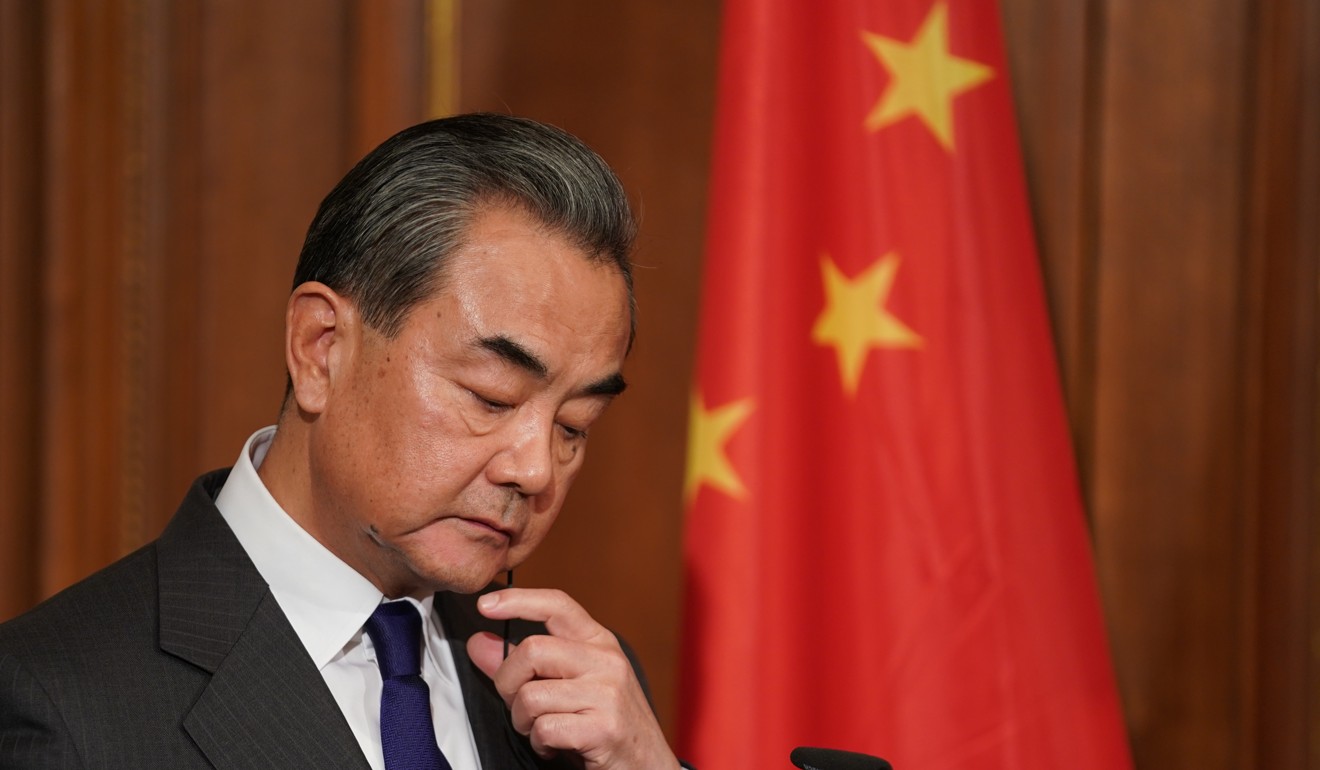
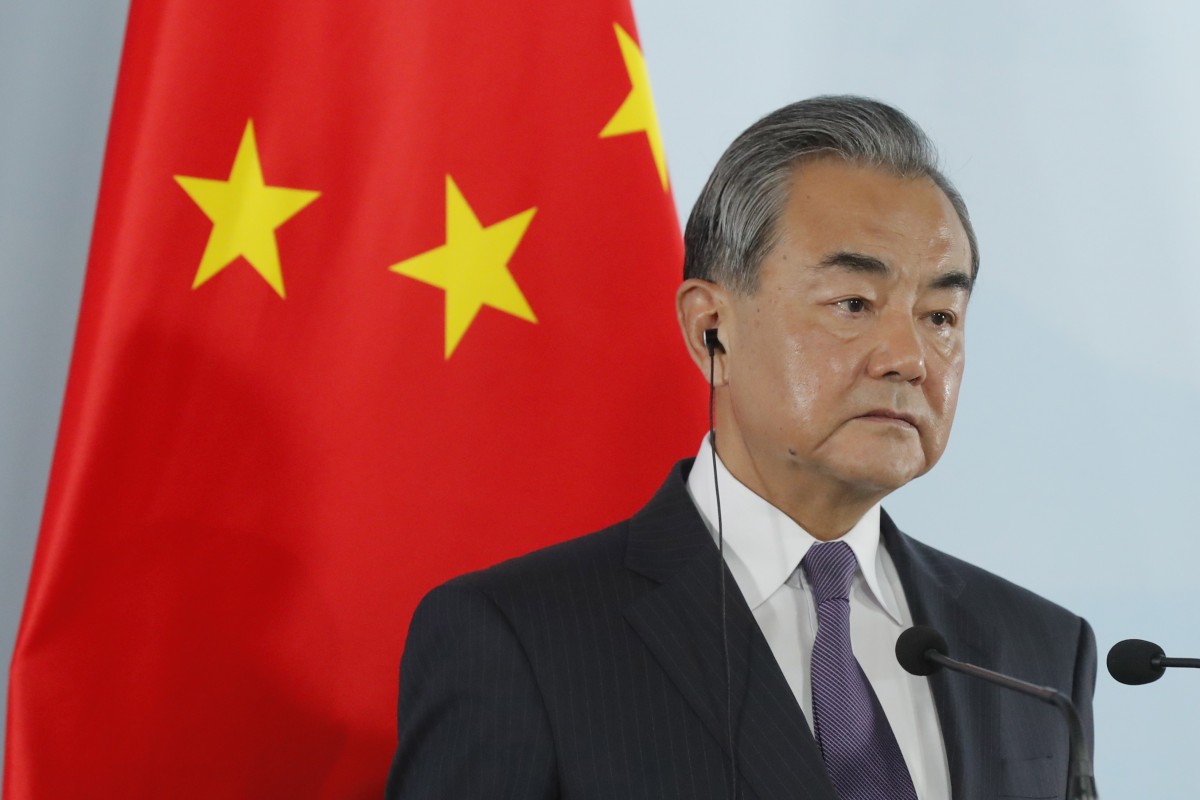
China’s Foreign Minister Wang Yi. Photo: EPA-EFE
Yonhap said both Wang and Kang also agreed that Xi’s proposed trip to South Korea in the first half of the year would proceed as planned.
Chinese experts said the coronavirus had deepened distrust and antagonism towards China in both countries, with many South Koreans and Japanese blaming China for the spread of the disease.
Li Wen, an expert from the China Institute of International Studies, said the coronavirus crisis had seen the rise of the “China threat” in South Korea, with its government under enormous pressure to get tough on its giant neighbour.
According to Yonhap, Kang urged South Korean diplomats in China earlier this month to help minimise any negative impact the epidemic might have had on relations between the two countries.
Hardy-Chartrand said relations between China and South Korea remained tense because of Seoul’s deployment of the American-madeTHAAD missile defence system, which in turn led to Beijing introducing unofficial sanctions that caused resentment among South Koreans.
Hongkongers stuck in Japan with airlines reluctant to fly them home
28 Feb 2020
But the latest spat over the control measures was unlikely to be a major obstacle to regional relations, he said.
“Overall, cooperation on so-called soft issues like public health, as we are witnessing at the moment, can provide an opportunity for further improvement in the broader relationship, at least in the short term,” he said.
China-Japan relations might also benefit from closer cooperation on disease control given uncertainty in the region over the US-China trade war, the North Korean denuclearisation impasse, the United States’ commitment to its allies, and the coronavirus outbreak, he said.
“I am less sanguine about the mid- to long-term prospects for Sino-Japanese relations, given that the sources of the tensions that we saw from 2010 to 2017, namely the East China Sea territorial dispute and other historical issues, remain wholly unresolved,” he said.
According to a Pew study in December, 85 per cent of Japanese have an unfavourable view of China, the highest among 34 countries surveyed, while 63 per cent of South Koreans see China negatively.
Sinkhole suddenly opened up near subway station in city of Xiamen but no one is killed or injured
Taxi driver whose vehicle was swallowed up says he and his passenger were able to pull themselves free unaided
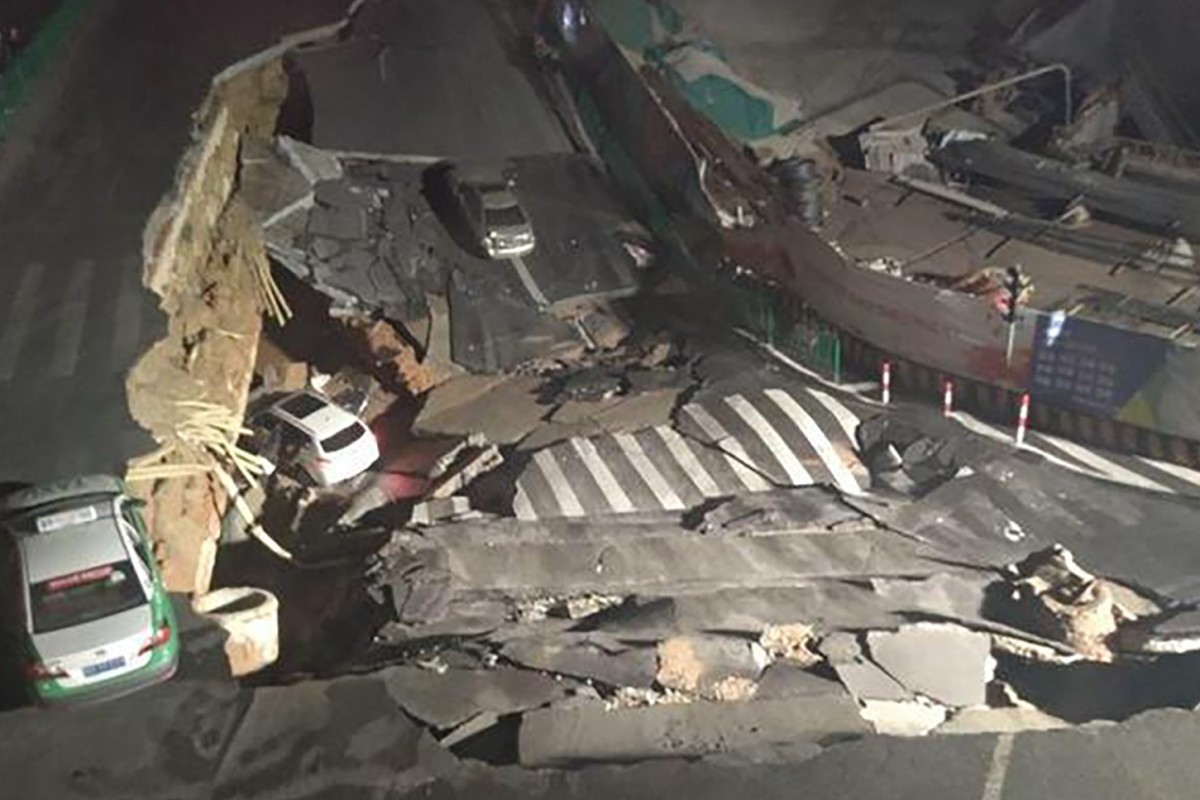
The hole opened up at a site in Xiamen. Photo: Weibo
Two cars have been swallowed by a hole that opened up in the ground near a subway station in southeast China.
It is the latest of a string of ground collapses involving subway projects in mainland cities this year.
The 500 square metre hole opened up just before 10pm on Thursday near Lucuo station in Xiamen, a city in Fujian province.
The city’s subway operator said no one had died or been injured in the accident and the people in the two cars had been able to get out on their own.
The accident also caused water pipes to burst, flooding the station.
No injuries were reported after the incident. Photo: Weibo
The road and station were temporarily closed after the accident, but normal services resumed on Friday morning.
One of the cars swallowed was a taxi, and the driver told Beijing News he had been driving along the road when he suddenly found the vehicle falling into the hole.
The man, surnamed Chang, dragged his passenger free and they were able to climb out of the pit unaided. He said the car had not been seriously damaged.
Three people are still missing after a similar accident in the southern city of Guangzhou earlier this month that swallowed a truck and electric bike.
Five workers were also killed in the eastern port city of Qingdao in May in an accident at a subway construction site.
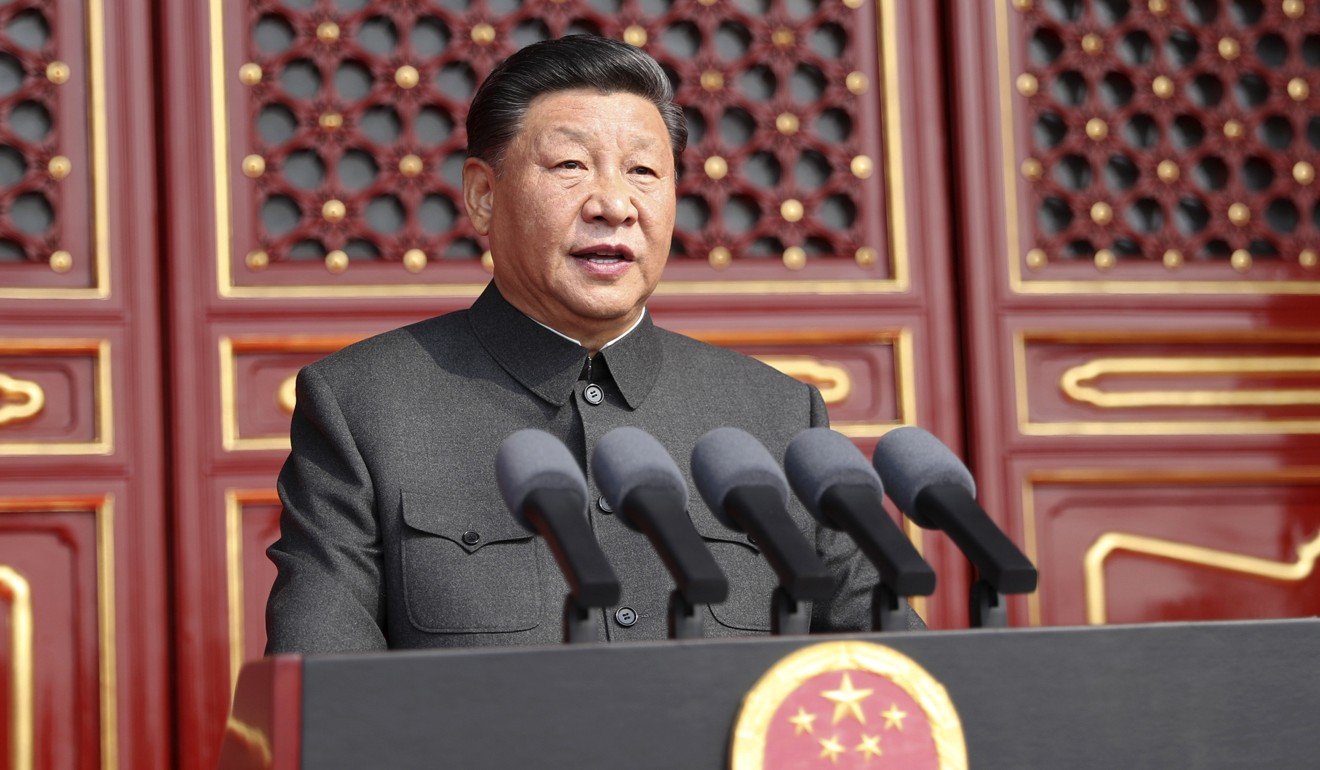
on Saturday reiterated his promise to keep opening up the nation’s markets to companies and investors from around the world.
“The door of China’s opening up will only open wider and wider, the business environment will only get better and better, and the opportunities for global multinational companies will only be more and more,” he said in a congratulatory letter read out by Vice-Premier Han Zheng at the inaugural Qingdao Multinationals Summit in the east China city.
The two-day event, which ends on Sunday, was organised by China’s commerce ministry and the provincial government of Shandong with the aim, according to its website, of giving multinational companies “the opportunity to articulate their business values and vision” and “promote cooperation with host countries”.
In his letter, Xi praised multinational companies for the role they had played in China’s opening up and reform over the past four decades, describing them as “important participants, witnesses and beneficiaries”.
China was willing to continue opening up to benefit not only itself but the world as a whole, he said.
“Only when the world is good, China is good. Only when China is good, can the world get better.”
Despite its upbeat tone, Xi’s message comes as Beijing is facing intense scrutiny from the international business community over its state-led economic model – one of the main bones of contention in its trade war with the US – and its attempts to prevent foreign firms from speaking out on issues it deems too sensitive, from Hong Kong to human rights.
Foreign firms have also long complained about the barriers they face when trying to access China’s markets and the privileged treatment it gives to state-owned enterprises. Even though Beijing has promised to reform its state sector, foreign businesses have complained of slow progress, and just last month the European Union Chamber of Commerce urged the EU to take more defensive measures against China’s “resurgent” state economy.
Xi promised “more and more” opportunities for global firms. Photo: AP
Sheman Lee, executive director of Forbes Global Media Holding and CEO of Forbes China, said at the Qingdao summit that foreign firms were facing a difficult trading environment in the world’s second-largest economy.
“Multinationals have seen their growth in China slow in recent years because of the growing challenge from local firms, a gradually saturating market and rising operation costs,” he said.
Craig Allen, president of the US-China Business Council, said that many multinational companies were reluctant to release their best products in China out of fear of losing their intellectual property.
China still not doing enough to woo foreign investment
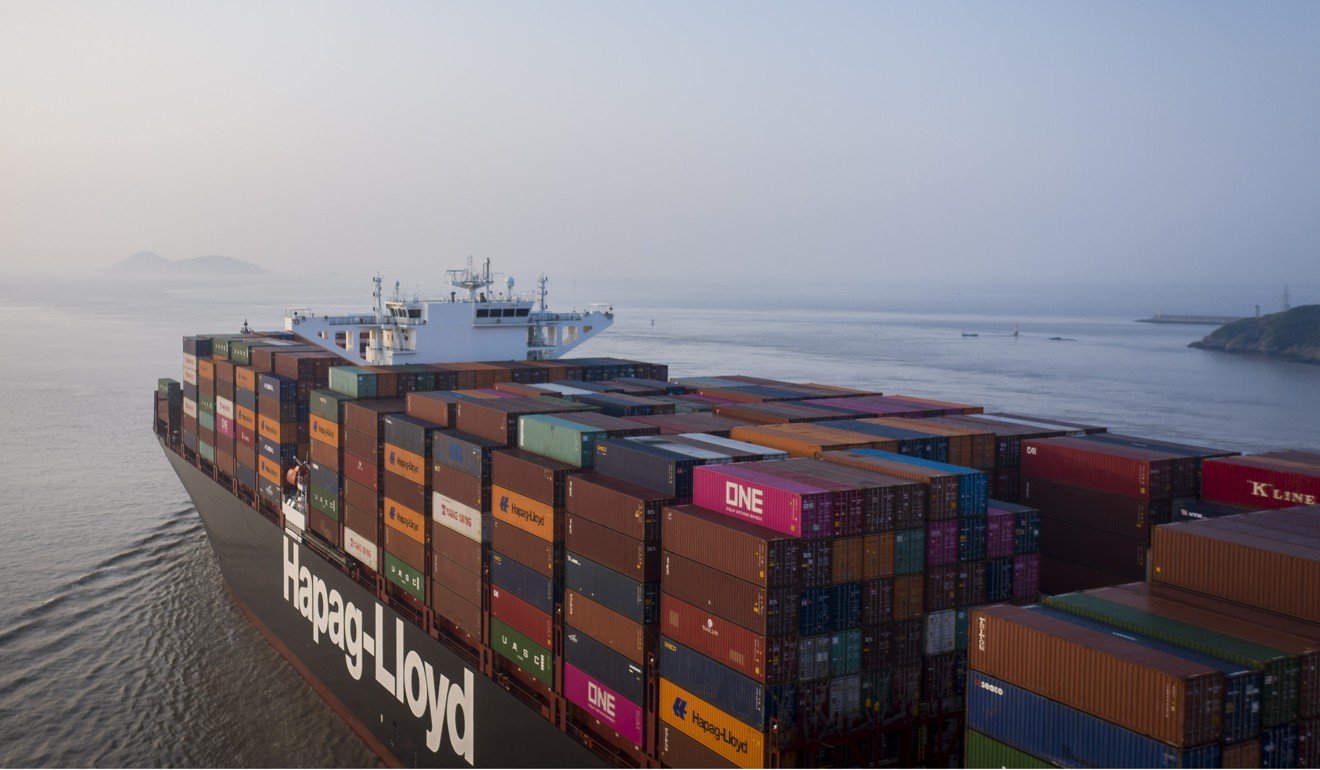
In his letter, Xi said that over the next 15 years, the value of China’s annual imports of goods would rise beyond US$30 trillion, while the value of imported services would surpass US$10 trillion a year, creating major opportunities for multinational companies.
China would also reduce tariffs, remove non-tariff barriers and speed up procedures for customs clearance, he said.
Commerce Minister Zhong Shan said at the opening ceremony that China would also continue to improve market access and intellectual property protection.
The country supported economic globalisation and would safeguard the multilateral trade system, he said, adding that it was willing to work with the governments of other countries and multinational corporations to promote economic globalisation.
Xi Jinping says the value of China’s annual goods imports will rise beyond US$30 trillion over the next 15 years. Photo: Bloomberg
The promise to continue to open up China’s markets came after the State Council
– the nation’s cabinet – made exactly the same pledge at its weekly meeting on Wednesday.
After the latest round of trade war negotiations in Washington, Beijing said it had achieved “substantive progress” on intellectual property protection, trade cooperation and technology transfers, all of which have been major bones of contention for the United States.
Despite its pledge to welcome multinational companies into its market, China is in the process of creating a list of “unreliable foreign entities” it considers damaging to the interests of Chinese companies. The roster, which is expected to include FedEx, is seen as a response to a similar list produced earlier by the United States.
Xi’s gesture would also appear to have come too late for South Korean multinational
, which announced on October 4 it had ended the production of smartphones at its factory in Huizhou, Guangdong province – its last in China – with the loss of thousands of jobs.
He is expected to join a trilateral dialogue with his counterparts from Pakistan and Afghanistan, and observers say he may try to mediate in Kashmir dispute
Trip also includes a stop in Nepal that could pave way for a visit by Xi Jinping
Chinese Foreign Minister Wang Yi may try to act as a negotiator in the Kashmir dispute. Photo: EPA-EFE
Chinese Foreign Minister Wang Yi began a four-day trip to Pakistan and Nepal on Saturday, amid escalating tensions between Islamabad and New Delhi over
Wang was expected to join a trilateral dialogue with the foreign ministers of Pakistan and Afghanistan in Islamabad, foreign ministry spokesman Geng Shuang said on Friday. He will also travel to Nepal.
Beijing has criticised India’s decision last month to strip the Jammu and Kashmir autonomous state of its special status and break it into two federally controlled territories, calling it “unacceptable”.
China also formally backed Pakistan’s request for the United Nations Security Council to hold “closed consultations” on the revocation of the state’s autonomy.
Meanwhile, observers say the Chinese foreign minister could attempt to act as a negotiator in the complex border dispute.
“Wang might try to play a role to mediate between the two sides to resolve the crisis,” said Wang Dehua, head of the Institute for South and Central Asia Studies at the Shanghai Municipal Centre for International Studies. “This has been China’s long-held position on the issue.”
Pang Zhongying, an international relations researcher at Ocean University of China in Qingdao, agreed.
“[Indian Prime Minister] Narendra Modi has visited China a couple of times and it is likely [Chinese President] Xi Jinping will visit India soon,” he said. “If Xi is to visit India later this year, China may try to contain its differing views with India on Kashmir.”
Modi has proposed an informal summit with Xi later this year that may be held in the religious hub of Varanasi, Modi’s parliamentary constituency. New Delhi said in May that Indian officials were working with the Chinese side to finalise the details, but Beijing has yet to confirm Xi’s visit.
India dismisses Beijing’s concerns over Kashmir because ‘it won’t have any impact on China’
Wang Yi was also due to visit India later this month for border talks, but the trip had to be postponed at the request of New Delhi because of scheduling problems, Hindustan Times reported, citing China’s foreign ministry.
The row over Kashmir has escalated in the past month. Pakistani Prime Minister Imran Khan said on Friday that Islamabad would make the fullest possible response to New Delhi’s actions in disputed Kashmir and that the global community would be responsible for any “catastrophic” aftermath.
Since Modi withdrew special rights for Indian-administered Kashmir on August 5, India has flooded the Kashmir valley with troops, restricted the movements of residents and cut off communication.
Both India and Pakistan claim the whole of Kashmir, which was partitioned between the two following the end of British rule in 1948, and they have subsequently fought wars over the territory.
China has its own territorial dispute with India over the part of Kashmir it controls. In early August, Chinese foreign ministry spokeswoman Hua Chunying
and said it was not binding. Beijing later appeared to soften its rhetoric, with Hua calling for a solution through dialogue and negotiation, without criticising either side.
The Chinese foreign minister will also visit Nepal, where he is expected to meet his counterpart, the president and prime minister. The trip could pave the way for an expected visit by Xi to Nepal.
It follows Beijing’s decision earlier this month to turn down an application for two US Navy ships to visit Hong Kong
The countries have traded barbs about the handling of anti-government protests in the city
The US has had port visits denied by Chinese authorities twice this month. Photo: Alamy
A US Navy warship was denied a port visit to the eastern Chinese city of Qingdao on Sunday, the US Indo-Pacific Command said on Wednesday.
The request denial comes at a time of heightened tensions between China and the United States, with the countries engaged in a prolonged trade dispute and a war of words over anti-government protests in Hong Kong.
“The PRC [People’s Republic of China] denied the US Navy’s request to visit the Qingdao Port,” Commander Reann Mommsen, public affairs officer for the US Seventh Fleet, said in a statement on Wednesday.
Mommsen declined to name the warship denied entry or when the request was refused, referring questions about the reasons to Beijing.
The blocked visit was first reported by Reuters, which cited an anonymous US defence official as saying that China had denied the request for the destroyer before the intended visit on Sunday.
It is the second time in a month that China has prevented US Navy vessels making a port call.
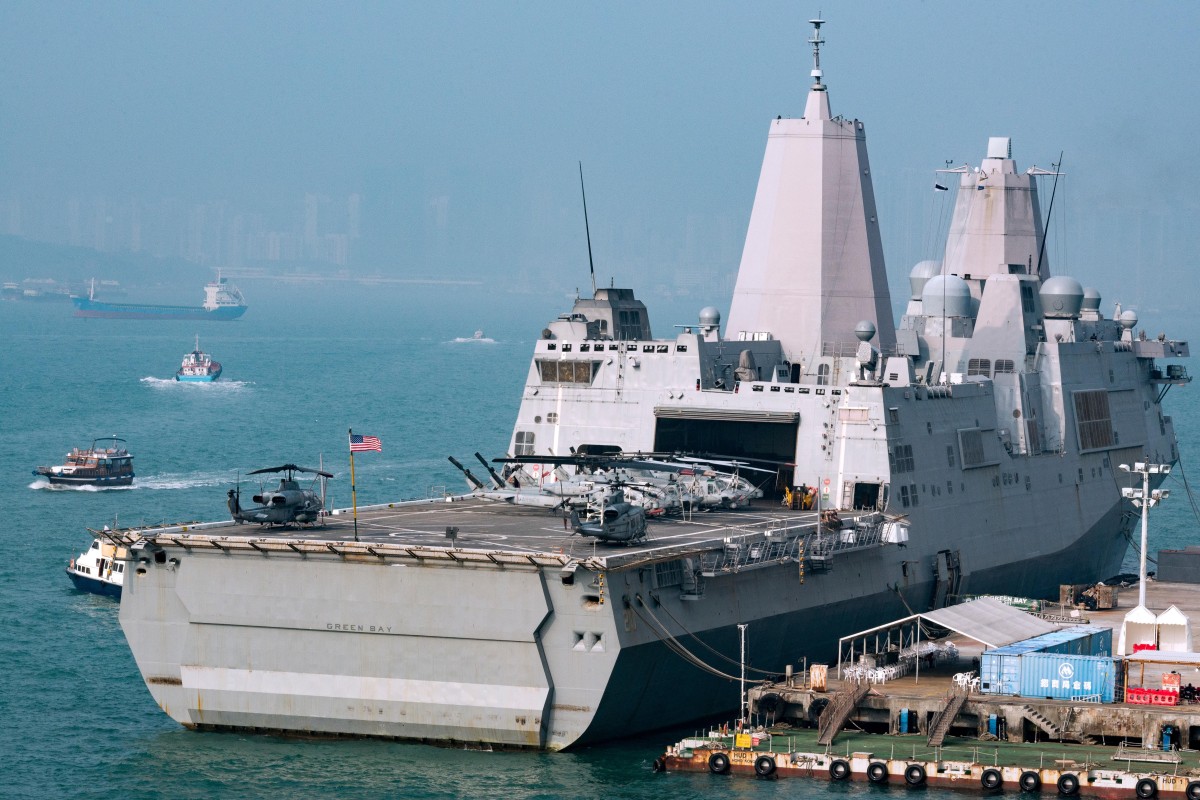
On August 13, the United States Pacific Fleet said China had denied requests for two US Navy ships to visit Hong Kong.
The USS Green Bay, an amphibious dock landing ship, had been due to make a port call in Hong Kong on August 17, and the guided missile cruiser USS Lake Erie was scheduled to visit next month, according to Nate Christensen, deputy spokesman for the Pacific Fleet.
A source close to the Chinese navy confirmed the Qingdao rejection, saying it was “normal practice” based on the current China-US relationship.
“Hasn’t the [US’] application to visit Hong Kong just been rejected?” the source asked.
Hong Kong has seen 12 weeks of anti-government protests, triggered by a now-shelved
that would have allowed criminal suspects to be transferred to mainland China.
Beijing has increasingly suggested
the protests are being funded by the West, a claim the US has called “ludicrous”
.
Zhou Chenming, a Beijing-based military expert, said the refusal was a natural result of the worsening bilateral ties between China and the US.
“Many bilateral exchanges are bound to deteriorate when countries’ ties worsen, such as during the China-US trade war. And now coupled with the Hong Kong unrest, many exchanges [between China and the US] have been downgraded,” Zhou said.
Liu Weidong, from the Chinese Academy of Social Sciences, echoed Zhou’s view and said a visit from the US warship would be meaningless at present.
“Now the US is very provocative … so China doesn’t want to welcome its warship,” Liu said.
Doubt has been cast on whether trade talks between the two countries are set to resume, with Beijing’s foreign ministry contradicting US President Donald Trump’s claim that China had sought a return to the negotiating table.
The countries had been due to speak on Tuesday, according to a previous statement from China’s Ministry of Commerce after their last telephone call on August 13. But there has been no announcement so far from either side on whether such a conversation took place.
Last week, China said it would levy retaliatory tariffs of 5 to 10 per cent on US$75 billion worth of US goods. The Trump administration responded by announcing a tariff increase from 25 to 30 per cent on US$250 billion of Chinese goods, and from 10 to 15 per cent on US$300 billion worth of Chinese products.
The US also designated Beijing as a currency manipulator, raising fears of an economic cold war between the two countries.
Chinese government advisers say Beijing has not reached direct intervention point but that could change if the violence continues
Military action would trigger international backlash, observers say, as US expresses concern over reported paramilitary movements and ‘erosion of Hong Kong’s autonomy’
Footage of trucks from the paramilitary People’s Armed Police in Shenzhen has circulated online. Photo: Handout
The unrest in Hong Kong does not yet warrant direct intervention by Beijing despite hardening public sentiment and calls for tougher action in mainland China, according to Chinese government advisers.
Shi Yinhong, an international relations expert at Renmin University and an adviser to the State Council – China’s cabinet – said China would risk damaging its ties with the United States and other major foreign powers, upsetting its own development and losing Hong Kong’s special status if it took the matter directly into its hands.
“I don’t think we need to use troops. Hong Kong police will gradually escalate their action and they haven’t exhausted their means,” Shi said, expressing a view shared by other mainland government advisers and academics.
But he warned that if the violence and chaos continued, it “won’t be too far away from reaching that point”.
A US State Department spokeswoman said the United States was “deeply concerned” about reports of paramilitary movements along the Hong Kong border and reiterated a US call for all sides to refrain from violence.
She said it was important for the Hong Kong government to respect “freedoms of speech and peaceful assembly” and for Beijing to adhere to its commitments to allow a high degree of autonomy for Hong Kong.
She said the protests reflected “broad and legitimate concerns about the erosion of Hong Kong’s autonomy”.
“The continued erosion of Hong Kong’s autonomy puts at risk its long-established special status in international affairs,” she said.
brought the city’s air traffic to a halt and triggered a huge backlash on the mainland
, where the public feel they have been wrongly targeted by the increasingly violent protesters. Many demanded the central government take action to end the chaos.
The tension deepened after US President Donald Trump, citing intelligence sources,
to the border with Hong Kong. Trump described the situation in the city as “tricky” and called on all sides to remain “calm and safe”.
Footage of trucks from the paramilitary People’s Armed Police rolling into Shenzhen began circulating online on Saturday.
Beijing ‘unlikely to intervene’ in Hong Kong as pressure mounts on police
But Shi and others said direct intervention would be too costly to China and would only be used when all other methods had been exhausted.
“As the trade war with the US goes on, Hong Kong’s importance to our financial system is getting bigger,” Shi said. “If Beijing intervenes with too much assertiveness, the US might revoke the preferential status of Hong Kong.”
He was referring to the US’ 1992 Hong Kong Policy Act which gives the city a special status. In June, American lawmakers introduced a bipartisan bill requiring the US government to examine Hong Kong’s autonomy annually to decide whether to extend the arrangement.
Losing that status could cripple the operations of many businesses based in Hong Kong, said Shen Dingli, a Shanghai-based international affairs expert.
A satellite image appears to show a close-up of Chinese military vehicles at Shenzhen Bay Sports Centre in Shenzhen. Photo: Maxar Technologies
Wang Yong, another specialist on international political economy with Peking University, agreed.
“There would be a lot of opposition from interest groups in the US. Hong Kong is the bridgehead for many multinational corporations and investors from Wall Street to get into the Chinese market,” said Wang, who also teaches at an academy affiliated with China’s Ministry of Foreign Affairs.
“Hong Kong and the Chinese government will need to handle this with extra care, so as not to give any ammunition to hawks in the United States.
“If Hong Kong is not handled properly, it could add tensions to the bilateral ties and ruin any prospect of a trade deal.”
China rejects requests for US warships to visit Hong Kong amid protests Pang Zhongying, an international relations specialist at Ocean University of China in Qingdao, said direct intervention could also damage China’s ties with other countries.
“The whole world is watching. Beijing has exercised restraint for two months and still hasn’t taken any clear action because this is not an easy choice,” said Pang, who is also a member of the Beijing-based Pangoal Institution, a think tank that advises several ministerial offices.
While some observers said Beijing was under political pressure to end the protests in Hong Kong before October 1 – the 70th anniversary of the founding of the People’s Republic, Shi said the central government would not lose patience so easily.
“National Day [on October 1] is an important time, but the Chinese government is not naive to believe there has to be peace under all heaven then,” he said.
“It’s only a bit more than a month from now, we can almost say for sure the trade war will still be on by then and a major turning point in Hong Kong is not likely to happen. But the celebration must go on.”










 CHINDIA ALERT: You'll be living in their world, very soon
China’s Liaoning aircraft carrier returns home from a month of training
China’s first aircraft carrier, the Liaoning, returned to its home port of Qingdao on Thursday after nearly a month of training on the high seas, the People’s Liberation Army said.
According to military analysts, the warship was joined by at least five escort vessels, and the drills showed its crew had not been affected by the coronavirus pandemic and that it remained combat-ready.
The annual cross-region drills included intensive and complicated air and sea operations, the official PLA Daily said in a post on social media on Friday.
“The drills have further improved the real combat training level of the Liaoning carrier strike group, putting its systematic combat capability to the test,” the statement on WeChat said, without giving other details.
Beijing-based naval expert Li Jie said it was important for the carrier to get back to training activities.
“The recent training by the Liaoning carrier strike group is very significant because it’s evidence that none of the 2,000 sailors and commanders on the ship have been hit by Covid-19, and neither have any of the other soldiers and personnel on the other warships and support units,” Li said.
The coronavirus situation has eased in China, where the first cases were reported late last year, but it continues to spread across the globe and has infected more than 3.2 million people worldwide and killed over 233,000.
Sailors on warships like USS Theodore Roosevelt vulnerable as coronavirus spreads
The virus has also hit crew members on at least 40 US Navy warships, and Li said that left China with the only operational aircraft carrier in the region.
“Since the four American aircraft carriers in the Indo-Pacific region have all been struck by the pandemic, China is the only country that can operate an aircraft carrier in the area,” he said.
Japan’s Ministry of Defence said the Liaoning was escorted by two destroyers, two frigates and a supply ship, and they had passed through the Bashi Channel, a waterway to the south of Taiwan, and headed towards waters east of Taiwan.
As tensions continue to simmer between Taipei and Beijing, the PLA has stepped up activities around the island, which the mainland sees as part of its territory awaiting reunification.
Hong Kong-based military commentator Song Zhongping said the latest naval drills were also aimed at heaping more pressure on Taiwan’s pro-independence forces as well as foreign countries seeking to intervene in cross-strait issues.
Coronavirus: US ‘supports Taiwan joining WHO events’ in ministerial phone call
“Taiwan’s pro-independence forces have become more active and are attempting to take advantage amid the pandemic,” said Song, a military commentator with Phoenix Television.
“The Liaoning would play a major role in the PLA’s plan to unify Taiwan by force, so it’s necessary for the aircraft carrier strike group to get back to operations, step up training and send a warning to Taipei,” he added.
Lu Li-Shih, a former instructor at the naval academy in Taiwan, noted that the PLA Navy had regularly held drills in the waters east of Taiwan in recent years to avoid surveillance by US satellites.
Source: SCMP
Posted in air and sea operations, Aircraft, Aircraft carrier, annual, Beijing, by force, China’s, combat-ready, complicated, coronavirus, Coronavirus pandemic, cross-region drills, destroyers, escort vessels, Friday, frigates, from, high seas, home port, intensive, Japan’s Ministry of Defence, Liaoning, military commentator, military’s plan, month, naval academy, People’s Liberation Army, pla navy, pro-independence forces, Qingdao, returns home, sailing through, sailors, scramble, self-ruled island, social media, strait, strike group, supply ship, Surveillance, Taipei, Taiwan, Taiwan Strait, Taiwan’s, Taiwan’s defence ministry, to unify, training, Uncategorized, US Navy, US satellites, USS Theodore Roosevelt, vulnerable, warship, warships, WeChat, western Pacific, WHO | Leave a Comment »