Archive for ‘race’

30/04/2020

Exclusive: Trump says China wants him to lose his bid for re-election

WASHINGTON (Reuters) – President Donald Trump said on Wednesday he believes China’s handling of the coronavirus is proof that Beijing “will do anything they can” to make him lose his re-election bid in November.

In an interview with Reuters in the Oval Office, Trump talked tough on China and said he was looking at different options in terms of consequences for Beijing over the virus. “I can do a lot,” he said.

Trump has been heaping blame on China for a global pandemic that has killed at least 60,000 people in the United States according to a Reuters tally, and thrown the U.S. economy into a deep recession, putting in jeopardy his hopes for another four-year term.

The Republican president, often accused of not acting early enough to prepare the United States for the spread of the virus, said he believed China should have been more active in letting the world know about the coronavirus much sooner.

Asked whether he was considering the use of tariffs or even debt write-offs for China, Trump would not offer specifics. “There are many things I can do,” he said. “We’re looking for what happened.”

“China will do anything they can to have me lose this race,” said Trump. He said he believes Beijing wants his Democratic opponent, Joe Biden, to win the race to ease the pressure Trump has placed on China over trade and other issues.

“They’re constantly using public relations to try to make it like they’re innocent parties,” he said of Chinese officials.

He said the trade deal that he concluded with Chinese President Xi Jinping aimed at reducing chronic U.S. trade deficits with China had been “upset very badly” by the economic fallout from the virus.

A senior Trump administration official, speaking on condition of anonymity, said on Wednesday that an informal “truce” in the war of words that Trump and Xi essentially agreed to in a phone call in late March now appeared to be over.

The two leaders had promised that their governments would do everything possible to cooperate to contain the coronavirus. In recent days, Washington and Beijing have traded increasingly bitter recriminations over the origin of the virus and the response to it.

However, Trump and his top aides, while stepping up their anti-China rhetoric, have stopped short of directly criticizing Xi, who the U.S. president has repeatedly called his “friend.”

Trump also said South Korea has agreed to pay the United States more money for a defense cooperation agreement but would not be drawn out on how much.

“We can make a deal. They want to make a deal,” Trump said. “They’ve agreed to pay a lot of money. They’re paying a lot more money than they did when I got here” in January 2017.

The United States stations roughly 28,500 troops in South Korea, a legacy of the 1950-53 Korean War that ended in an armistice, rather than a peace treaty.

Trump is leading a triage effort to try to keep the U.S. economy afloat through stimulus payments to individuals and companies while nudging state governors to carefully reopen their states as new infections decline.

Trump sounded wistful about the strong economy that he had enjoyed compared with now, when millions of people have lost their jobs and GDP is faltering.

“We were rocking before this happened. We had the greatest economy in history,” he said.

He said he is happy with the way many governors are operating under the strain of the virus but said some need to improve. He would not name names.

Trump’s handling of the virus has come under scrutiny. Forty-three percent of Americans approved of Trump’s handling of the coronavirus, according to the Reuters/Ipsos poll from April 27-28.

But there was some good coronavirus news, as Gilead Sciences Inc said its experimental antiviral drug remdesivir was showing progress in treating virus victims.

Trump has also seeking an accelerated timetable on development of a vaccine.

“I think things are moving along very nicely,” he said.

At the end of the half-hour interview, Trump offered lighthearted remarks about a newly released Navy video purportedly showing an unidentified flying object.

“I just wonder if it’s real,” he said. “That’s a hell of a video.”

Source: Reuters
12/04/2020

African ambassadors in China complain to government over ‘discrimination’

JOHANNESBURG (Reuters) – African ambassadors in China have written to the country’s foreign minister over what they call discrimination against Africans as the country seeks to prevent a resurgence of the coronavirus.

Several African countries have separately also demanded that China address their concerns that Africans, in particular in the southern city of Guangzhou, are being mistreated and harassed.

Having brought under control the original outbreak centred on the city of Wuhan, China is now concerned about imported cases and is stepping up scrutiny of foreigners coming into the country and tightening border controls. It has denied any discrimination.

In recent days Africans in Guangzhou have reported being ejected from their apartments by their landlords, being tested for coronavirus several times without being given results and being shunned and discriminated against in public. Such complaints have been made in local media, and on social media.

The ambassadors’ note said such “stigmatisation and discrimination” created the false impression that the virus was being spread by Africans.

“The Group of African Ambassadors in Beijing immediately demands the cessation of forceful testing, quarantine and other inhuman treatments meted out to Africans,” it said.

The note was sent to China’s top diplomat, Wang Yi, copying the chair of the African Union, South African President Cyril Ramaphosa and all African foreign ministers.

The Chinese foreign ministry’s International Press Centre did not immediately respond to a request for comment on the note, sent outside of business hours.

The Chinese embassy in South Africa also did not respond.

Foreign affairs official Liu Baochun told a news conference on Sunday that Guangzhou is enforcing anti-virus measures on anyone who enters the city from across the national border, regardless of nationality, race or gender.

The Chinese embassy in Zimbabwe on Saturday dismissed the accusation that Africans were being deliberately targeted.

“It is harmful to sensationalize isolated incidents,” it said in a tweeted statement. “China treats all individuals in the country, Chinese and foreign alike, as equals.”

DISAPPOINTMENT

The ambassadors’ note highlighted a number of reported incidents, including that Africans were being ejected from hotels in the middle of the night, the seizure of passports, and threats of visa revocation, arrest or deportation.

On Saturday, Ghana’s foreign minister of affairs Shirley Ayorkor Botchwey said she had summoned the Chinese ambassador to express her disappointment and demand action.

Kenya’s foreign ministry has also “officially expressed concern”, adding the government is working with Chinese authorities to address the matter.

On Friday, Nigerian legislator Akinola Alabi tweeted a video of a meeting between the leader of Nigeria’s lower house of parliament, Femi Gbajabiamila, and Chinese Ambassador Zhou Pingjian. In it, Gbajabiamila demanded an explanation from the diplomat after showing Zhou a video of a Nigerian complaining about mistreatment in China.

The ambassador said in response to the questions from the house leader that he took the complaints “very seriously” and promised to convey them to the authorities back home.

Source: Reuters

01/04/2020

Coronavirus: India’s race to build a low-cost ventilator to save Covid-19 patients

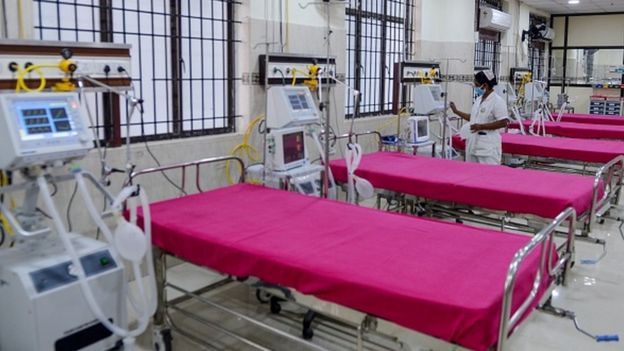
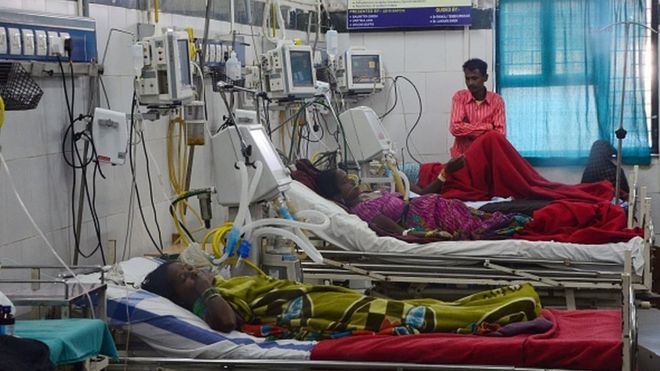
Patients on ventilators in an Indian hospitalImage copyright GETTY IMAGES
Image caption India has an estimated 48,000 ventilators and most of them are already in use

In an 8,000 sq ft (743 sq m) facility in the western Indian city of Pune, a bunch of young engineers are racing against time to develop a low-cost ventilator that could save thousands of lives if the coronavirus pandemic overwhelms the country’s hospitals.

These engineers – from some of India’s top engineering schools – belong to a barely two-year-old start-up which makes water-less robots that clean solar plants.

Last year, Nocca Robotics had a modest turnover of 2.7 million rupees ($36,000; £29,000). The average age of the mechanical, electronic and aerospace engineers who work for the firm is 26.

India, by most estimates, only has 48,000 ventilators. Nobody quite knows how many of these breathing assistance machines are working. But it is a fair assumption that all those available are being used in intensive care units on existing patients with other diseases.

About one in six people with Covid-19 gets seriously ill, which can include breathing difficulties. The country faces seeing its hospitals hobbled as others around the world have been, with doctors forced to choose who they try to save.

At least two Indian companies make ventilators at present, mostly from imported components. They cost around 150,000 ($1,987; £1,612) rupees each. One of them, AgVa Healthcare, plans to make 20,000 in a month’s time. India has also ordered 10,000 from China, but that will meet just a fraction of the potential demand.

The invasive ventilator being developed by the engineers at Nocca Robotics will cost 50,000 rupees ($662). Within five days of beginning work, a group of seven engineers at the start-up have three prototypes of a portable machine ready.

They are being tested on artificial lungs, a prosthetic device that provides oxygen and removes carbon dioxide from the blood. By 7 April, they plan to be ready with machines that can be tested on patients after approvals.

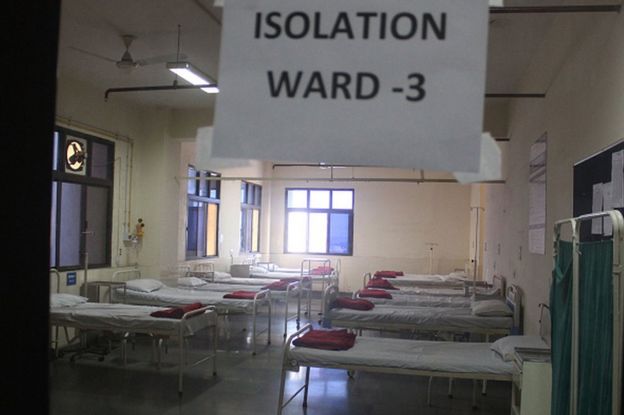
India hospitalImage copyright GETTY IMAGES
Image caption India is beefing up isolation beds in hospitals

“It is most certainly doable,” said Dr Deepak Padmanabhan, a cardiologist at Bangalore’s Jayadeva Institute of Cardiovascular Sciences and Research, and a key advisor on this project. “The simulations on artificial lungs have been done and seem to work well.”

Inspiring story

The race to develop this inexpensive, home-grown invasive breathing machine is an inspiring story of swift coordination and speedy action involving public and private institutions, something not common in India.

“The pandemic has brought us all together in ways I could never imagine,” says Amitabha Bandyopadhyay, a professor of biological sciences and bioengineering at Indian Institute of Technology (IIT), Kanpur, and a key mover of the project.

The young engineers mined open source medical supplies groups on the internet to find information on how to make the ventilators. After securing permissions, it took them exactly eight hours to produce the first prototype. Of particular use, say doctors, were some designs by engineers at MIT. With imports stalled, the engineers picked up pressure sensors – a key component of the machine that helps supply oxygen to lungs at a pressure that doesn’t cause injury – from those used in drones and available in the market.

India hospitalImage copyright AFP
Image caption India needs thousands of ventilators to cope with a possible rush of patients

Local authorities helped open firms that stock components – each machine needs 150 to 200 parts – and made sure that a bunch of engineers who had returned home to Nanded after the lockdown were still able to travel 400km (248 miles) back to Pune to work on the machine.

Some leading Indian industrialists, including a major medical device-making company, have offered their factories to manufacture the machines. The plan is to make 30,000 ventilators, at around 150-200 a day, by the middle of May.

Social media influencers joined the effort. Rahul Raj, a lithium battery-maker and an IIT alumnus, crowd-sourced a group called Caring Indians to “pool resources and experience” to cope with the pandemic. Within 24 hours, 1,000 people had signed up. “We tweeted to the local lawmaker and local police in Pune to help the developers, and made contacts with people who would be interested in the project,” Mr Raj said.

‘No-frills machine’

Expat Indian doctors and entrepreneurs who went to the same school – IIT is India’s leading engineering school and alumni include Google chief Sundar Pichai – held Zoom meetings with the young developers, advising them and asking questions about the machine’s development. The head of a US-based company gave them a 90-minute lecture on how to manage production. A former chief of an info-tech company told them how to source the components.

Lastly, a bunch of doctors vetted every development and asked hard questions. In the end, more than a dozen top professionals – pulmonologists, cardiologists, scientists, innovators, venture capitalists – have guided the young team.

Doctors say the goal is to develop a “no-frills” breathing machine tailored to Indian conditions.

Ventilators depend on pressurised oxygen supply from hospital plants. But in a country where piped oxygen is not available in many small towns and villages, developers are seeing whether they can also make the machine run on oxygen cylinders. “In a way we are trying to de-modernise the machine to what it was barely 20 years ago,” says Dr Padmanabhan.

“We are not experienced. But we are very good at making products easily. The robots that we make are much more complex to make. But this is a life-saving machine and carries risk, so we have to be very, very careful that we develop a perfect product which clears all approvals,” said Nikhil Kurele, the 26-year-old co-founder and chief executive officer of Nocca Robotics.

In just a week’s time, India will learn whether they pulled off the feat.

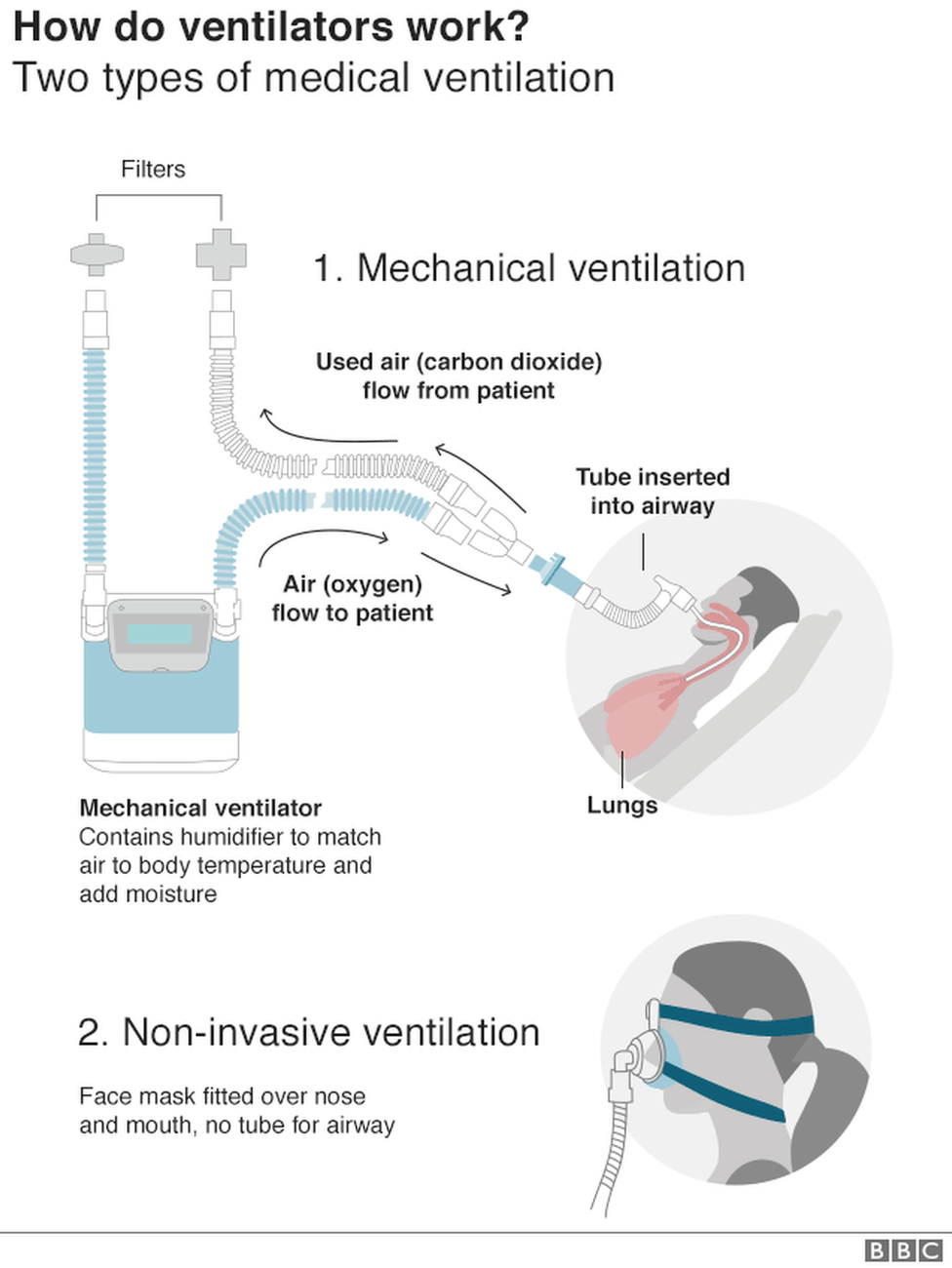
Graphic showing two common types of medical ventilation
Presentational white space

Source: The BBC

18/03/2020

China developing 9 potential vaccines in global race for coronavirus cure

  • Company making front-runner appeals for people to take part in trial stage, which nine potential Chinese vaccines are set to enter in April
  • US trialling vaccine that copies virus’ genetic code, amid international search for a drug to help limit the outbreak’s human and economic impact
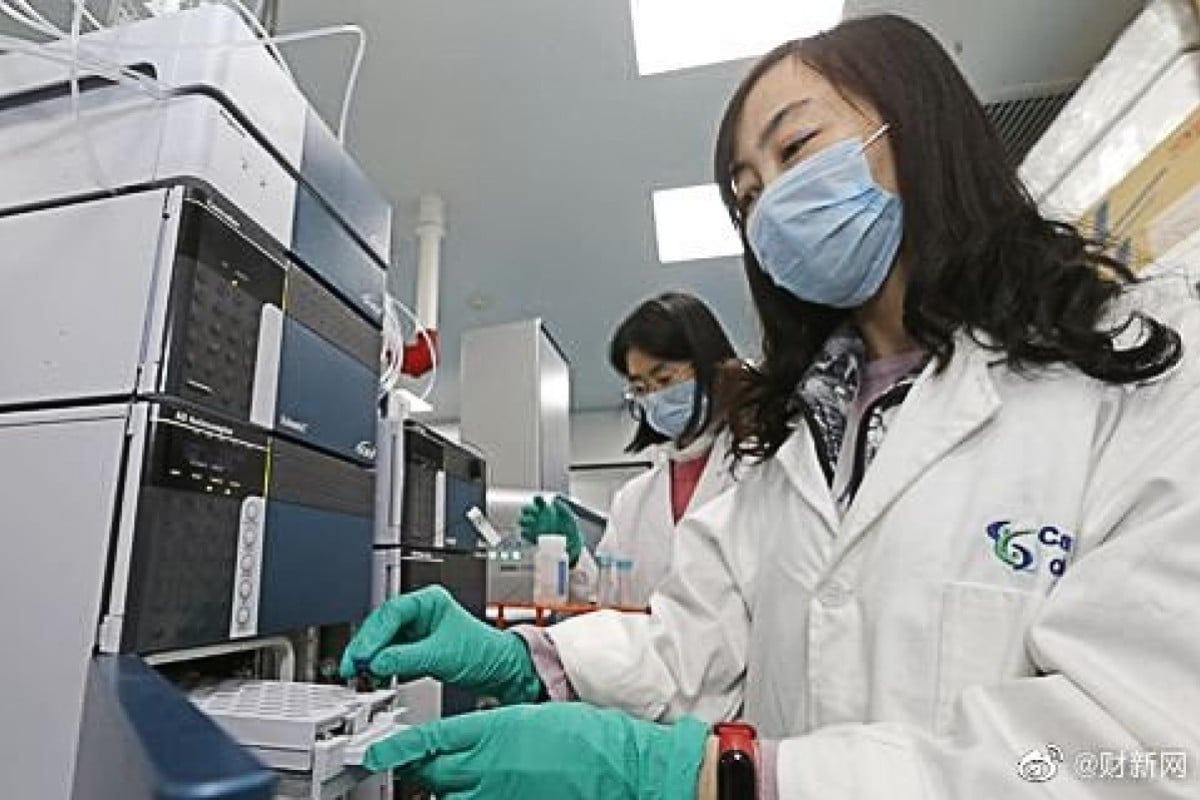
CanSino is recruiting healthy volunteers for a clinical trial of its vaccine candidate. Photo: Weibo
The race to develop a Covid-19 vaccine is on, with the United States already starting a clinical trial and China close behind.
On Tuesday, vaccine producer CanSino Biologics, in Tianjin in China’s northeast, said it was looking for volunteers to take part in a six-month clinical trial of a treatment it had developed jointly with the Academy of Military Medical Sciences.
“The vaccine does not contain infectious substances, is highly safe and stable, and requires only one inoculation,” the Hubei Centre for Disease Control and Prevention (CDC) said in its request for volunteers.
Its announcement came a day after the first participant began a phase I trial for an experimental vaccine funded by the US National Institutes of Health and developed by biotech startup Moderna.
Chinese scientists identify two major types of the new coronavirus in preliminary study

It uses messenger ribonucleic acid (mRNA) technology that copies the genetic code of the virus instead of the actual virus. To date, no mRNA vaccine has been approved for humans.

China’s own mRNA vaccine candidate, jointly developed by the Chinese Centre for Disease Control and Prevention, Tongji University and Stermina in Shanghai, is undergoing animal trials and is expected to enter the clinical phrase in mid-April.

Developed by the CanSino and the Academy of Military Medical Sciences, the vaccine is the front-runner of nine that China is developing. All are in the process of completing preclinical trial studies and will enter clinical trials in April, with some expected to advance faster than others, according to Wang Junzhi, a biological products quality control expert and academician with the Chinese Academy of Sciences.

US Covid-19 testing accelerates as companies step in where government failed

18 Mar 2020

“China’s research and development of a vaccine for the coronavirus is, generally speaking, among the most advanced in the world,” Wang said at a press briefing in Beijing on Tuesday. “[We] will not be slower than other countries.”

Coronavirus: Scientists dismiss claim that humans engineered the deadly contagion

Hopes have been pinned on developing a vaccine, especially for vulnerable groups such as the elderly, in the face of an epidemic with no known cure that has brought the world to a partial standstill.

Scientists around the world are conducting experiments, and the US is reported to have tried to buy a Germany vaccine developer so that it would supply to the US only – with the German government reportedly offering its own financial incentives for the biopharmaceutical company concerned, CureVac, to stay in the country.

“A vaccine is the most effective medical means for epidemic prevention and control as it can effectively stop the spread of the virus,” Lei Chaozi, director of science and technology at China’s Ministry of Education, said.

“Vaccines also play an important part in … stabilising the economy and enabling the country to return to normal as work and production resume.”

Why did a ‘cured’ coronavirus patient die in China? His widow wants answers

7 Mar 2020

President Xi Jinping called for faster development of coronavirus vaccines and treatment drugs when he inspected the Academy of Military Medical Sciences two weeks ago.

About 1,000 Chinese scientists have been working on the push for vaccines, with nine vaccines developed through five different approaches, including an inactivated vaccine, a viral vector-based vaccine and a gene vaccine.

Wang said that the vaccines needed to satisfy strictly the relevant regulations and technical standards – as well as World Health Organisation requirements – before starting clinical trials.

The potential vaccine developed by CanSino and military researchers, led by virologist Chen Wei, is genetically engineered. “Spikes” on the surface of the coronavirus bind to human cells and enable the virus to invade the human cells, causing the sometimes fatal infection known as Covid-19. In theory, vaccines can rehearse such an attack and trigger the human body to be primed to respond to a real infection.

CanSino has submitted the pre-investigational new drug review application for the Ad5-nCoV vaccine to Chinese regulatory authorities, and is in the process of submitting the related technical documents.

According to the Hubei CDC, volunteers for the trial must be 18 to 60 years old with no history of coronavirus infection.

Source: SCMP

Law of Unintended Consequences

continuously updated blog about China & India

ChiaHou's Book Reviews

continuously updated blog about China & India

What's wrong with the world; and its economy

continuously updated blog about China & India