Chindia Alert: You’ll be Living in their World Very Soon
aims to alert you to the threats and opportunities that China and India present. China and India require serious attention; case of ‘hidden dragon and crouching tiger’.
Without this attention, governments, businesses and, indeed, individuals may find themselves at a great disadvantage sooner rather than later.
The POSTs (front webpages) are mainly 'cuttings' from reliable sources, updated continuously.
The PAGEs (see Tabs, above) attempt to make the information more meaningful by putting some structure to the information we have researched and assembled since 2006.
PM Modi said that he told him ‘let us fight against poverty and illiteracy’ and Khan gave his word saying he is a Pathan’s son, ‘but went back on it’.
SNS Web | New Delhi | February 25, 2019 10:53 am
Pakistan Prime Minister Imran Khan on Sunday asked his Indian counterpart Narendra Modi to “give peace a chance” and assured him that he “stands by” his words and will “immediately act” if New Delhi provides Islamabad with “actionable intelligence” on the Pulwama attack.
Khan’s remarks came a day after PM Modi in a rally in Rajasthan, recalled his conversation with the Pakistan PM during a congratulatory call after he became the country’s premier.
PM Modi had told him “let us fight against poverty and illiteracy” and Khan gave his word saying he is a Pathan’s son “but went back on it”.
“There is consensus in the entire world against terrorism. We are moving ahead with strength to punish the perpetrators of terrorism…The scores will be settled this time, settled for good…This is a changed India, this pain will not be tolerated…We know how to crush terrorism,” PM Modi further said.
A statement released by the Pakistan Prime Minister’s Office said, “PM Imran Khan stand by his words that if India gives us actionable intelligence, we will immediately act.”
PM Modi should “give peace a chance”, Khan said in the statement.
In his first statement issued since the February 14 attack, Pakistani Prime Minister Imran Khan had on Tuesday accused India of blaming his country “without evidence” and warned of retaliation against any military action by India.
However, he assured India that he would act against the perpetrators of the deadly Pulwama terror attack, carried out by Pakistan-based Jaish-e-Mohammad (JeM) terror group and said that the issue between the two countries can be solved through dialogue.
India had called Khan’s offer to investigate the attack if provided proof as a “lame excuse”.
The already sour relations between India and Pakistan have worsened over the past few weeks as New Delhi accused Islamabad of the Pulwama attack.
India has accused Islamabad’s spy agency ISI of being involved in the attack and has maintained that the terror group JeM is a “child of the Pakistan Army”.
Following the attack, India immediately withdrew the ‘Most Favoured Nation’ status granted to Pakistan and initiated steps to isolate the neighbouring country from the international community.
Earlier, India had also announced its decision to stop the flow of its share of water from the Beas, Ravi and Sutlej to Pakistan.
Prime Minister Narendra Modi had in many of his public speeches after the attack, said that the security forces have been given full freedom to decide the future course of action regarding the terrorist attack in Pulwama.
India’s neighbours, including Sri Lanka, Maldives, Nepal, Bangladesh, Afghanistan and Bhutan—and other countries like Saudi Arabia, UAE, Iran, Russia, Germany, Canada, UK, Australia and Canada came out in strong support of New Delhi following the terror attack.
Over 44 CRPF personnel were killed and many injured on February 14 in one of the deadliest terror strikes in Jammu-Kashmir when a Jaish-e-Mohammad (JeM) suicide bomber blew up an explosive-laden vehicle near their bus in Pulwama district.
The bus was part of a convoy of 78 vehicles carrying around 2500 CRPF personnel from Jammu to Srinagar.
Image copyrightGETTY IMAGES (ALLISON JOYCE)Image captionCow vigilantes in Ramgarh in 2015
A Muslim dairy farmer was stopped late one night last July as he led two cows down a track in rural Rajasthan, south of the Indian capital, Delhi. Within hours he was dead, but who killed him, asks the BBC’s James Clayton – the “cow vigilantes” he met on the road, or the police?
It’s 4am and Dr Hassan Khan, the duty doctor at Ramgarh hospital, is notified of something unusual.
The police have brought in a dead man, a man they claim not to know.
“What were the police like when they brought him in? Were they calm?” I ask him.
“Not calm,” he says. “They were anxious.”
“Are they usually anxious?” I ask.
“Not usually,” he says, laughing nervously.
The dead man is later identified by his father as local farmer Rakbar Khan.
This was not a random murder. The story illustrates some of the social tensions bubbling away under the surface in India, and particularly in the north of the country.
And his case raises questions for the authorities – including the governing Hindu nationalist BJP party.
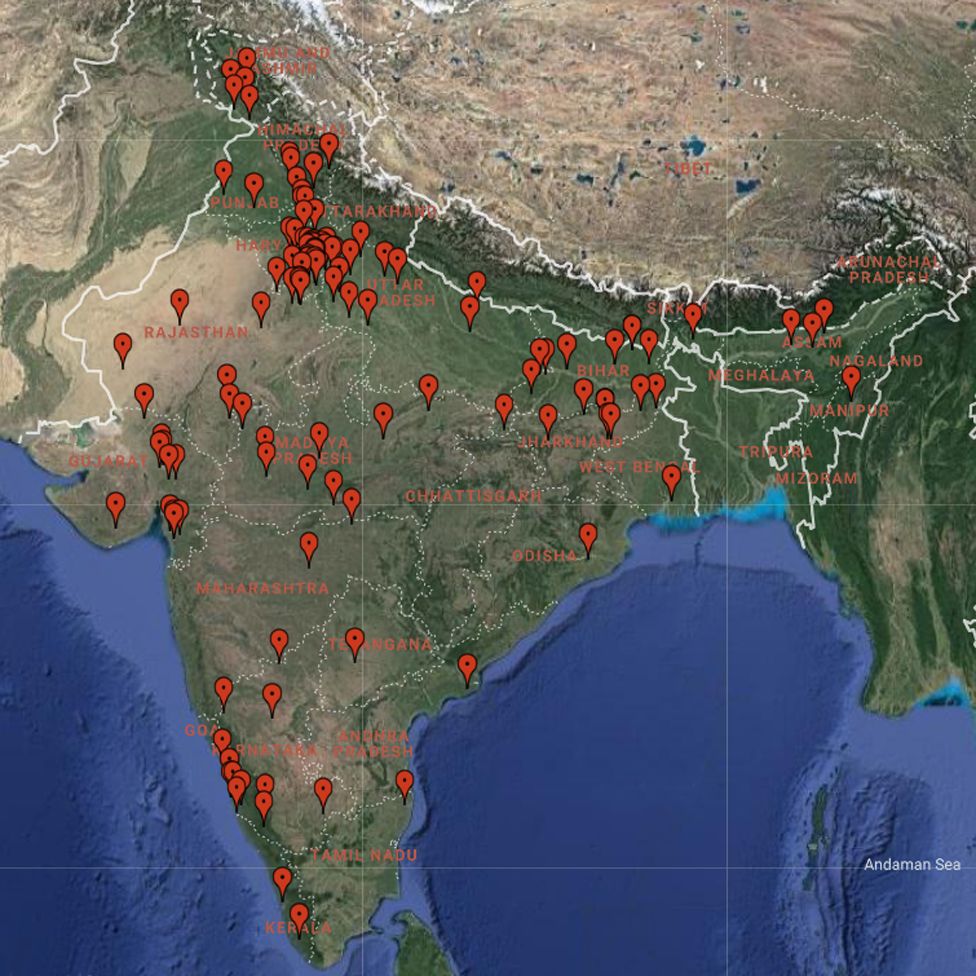
Cow-related violence – 2012-2019
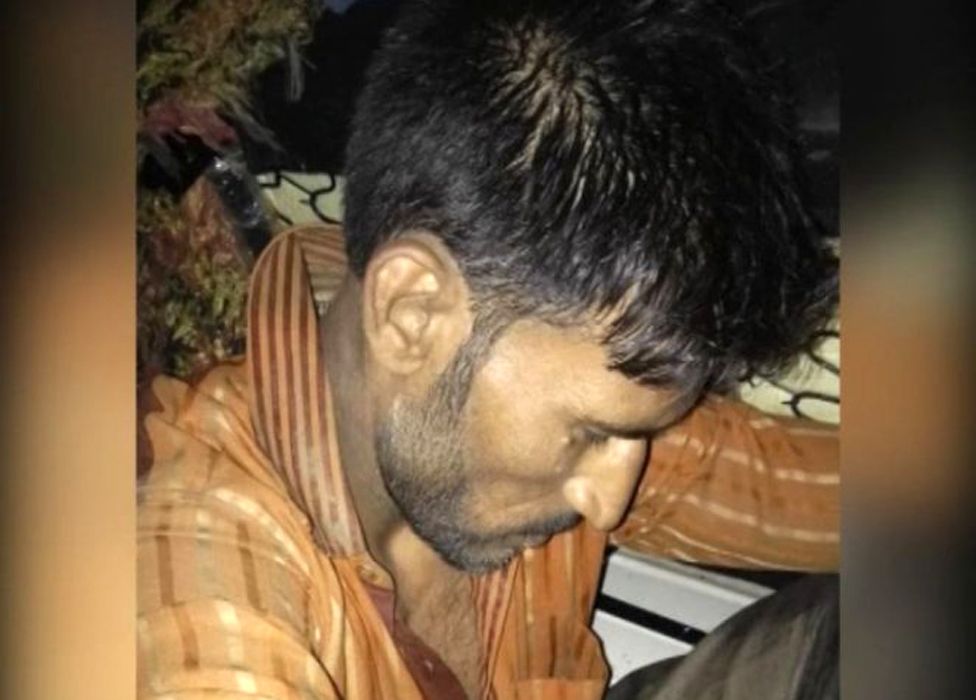
Image copyrightINDIASPENDRakbar Khan was a family man. He had seven children.
He kept cows and he also happened to be a Muslim. That can be a dangerous mix in India.
“We have always reared cows, and we are dependent on their milk for our livelihood,” says Rakbar’s father, Suleiman.
“No-one used to say anything when you transported a cow.”
That has changed. Several men have been killed in recent years while transporting cows in the mainly Muslim region of Mewat, not far from Delhi, where Rakbar lived.
“People are afraid. If we go to get a cow they will kill us. They surround our vehicle. So everyone is too scared to get these animals,” says Suleiman.
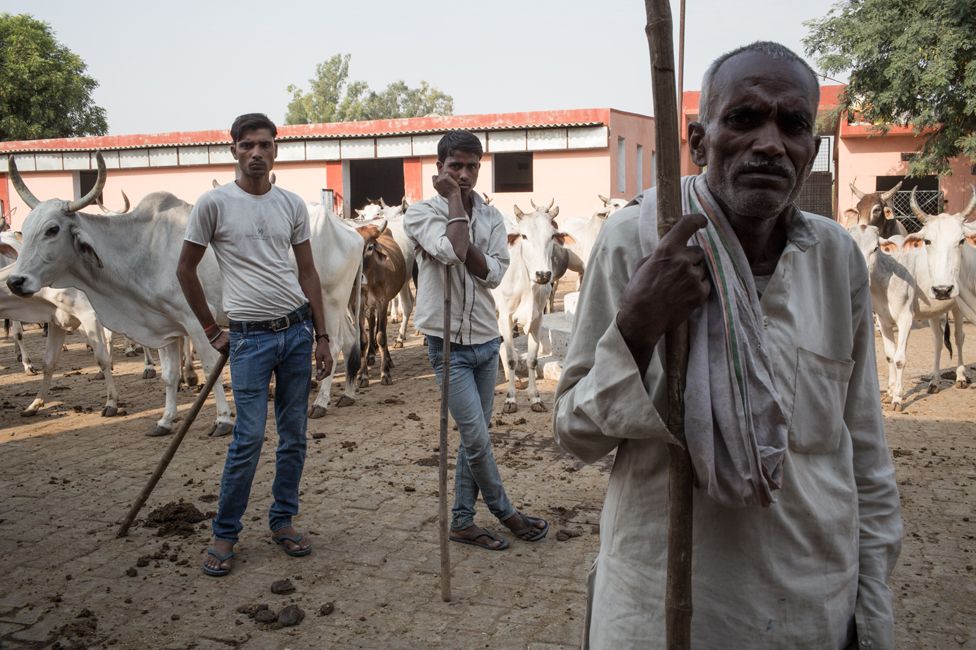
Everyone I speak to in the village where the Khans live is afraid of gau rakshaks – cow protection gangs.
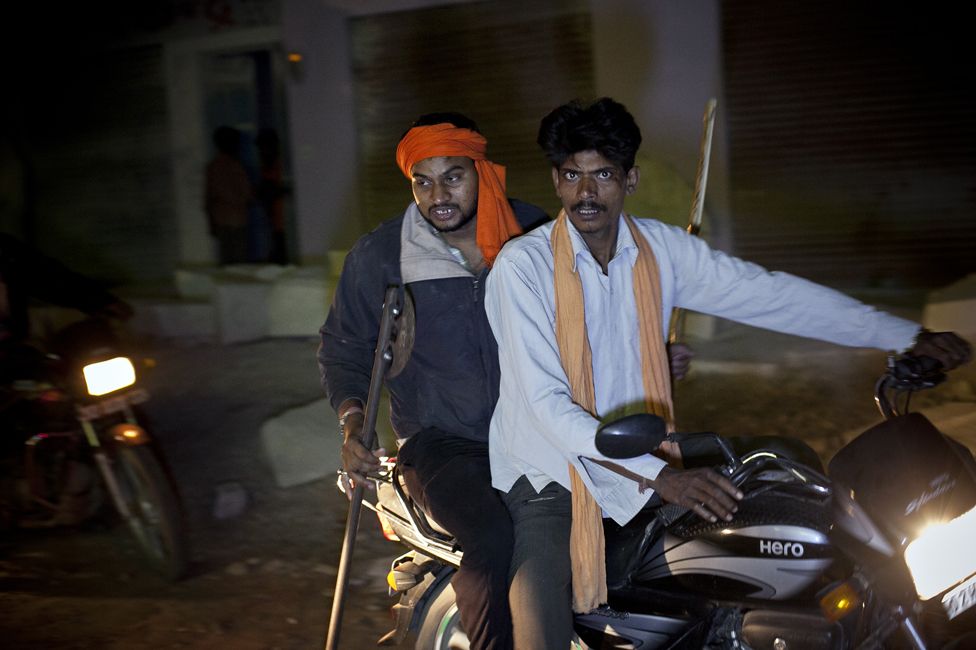
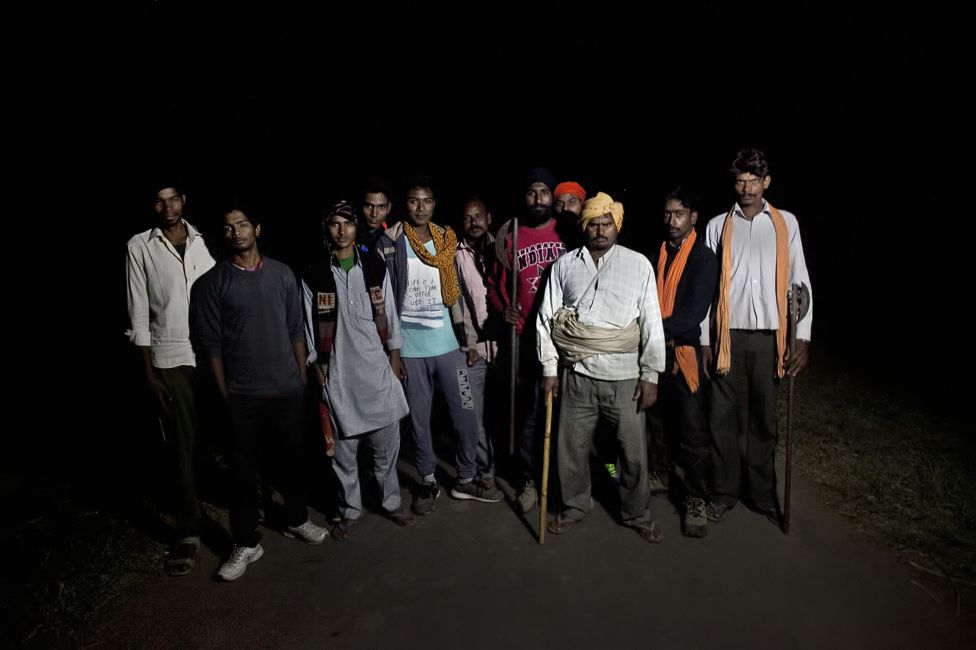
Image copyrightGETTY IMAGES (ALLISON JOYCE)Image captionNawal Kishore Sharma’s cow protection group in 2015The gangs often consist of young, hardline Hindus, who believe passionately in defending India’s holy animal.
They believe that laws to protect cows, such as a ban on slaughtering the animals, are not being fully enforced – and they hunt for “cow smugglers”, who they believe are taking cows to be killed for meat.
Often armed, they have been responsible for dozens of attacks on farmers in India over the last five years, according to data analysis organisation IndiaSpend, which monitors reports of hate crimes in the media.
On 21 July 2018, Rakbar Khan met the local gau rakshak.
There are some things we know for certain about what happened that night.
Rakbar was walking down a small road with two cows. It was late and it was raining heavily.
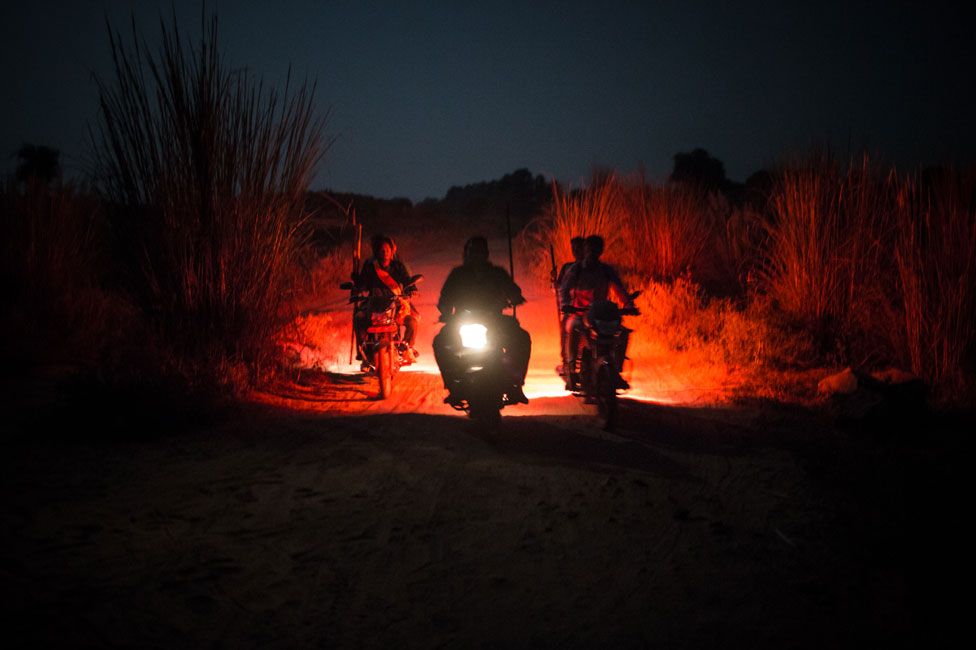
Then, out of the dark, came the lights of motorbikes. We know this, because Rakbar was with a friend, who survived.
Image copyrightGETTY IMAGES (ENRICO FABIAN)At this point the details become a little sketchier. There are three versions of the story.
The gang managed to catch Rakbar, but his friend, Aslam, slipped away. He lay on the ground, in the mud and prayed he wouldn’t be found.
“There was so much fear inside me, my heart was hurting,” he says.
“From there I heard the screams. They were beating him. There wasn’t a single part of his body that wasn’t broken. He was beaten very badly.”
The documentary India’s Cow Vigilantes can be seen on Our World on BBC World Newsand on the BBC News Channel (click for transmission times)
Aslam says that Rakbar was killed then and there.
But there is evidence that suggests otherwise.
Much of what happened next focuses around the leader of the local cow vigilante group, Nawal Kishore Sharma.
Aslam claims he heard the gang address him by name that night, but when I speak to Sharma, he denies he was there at all.
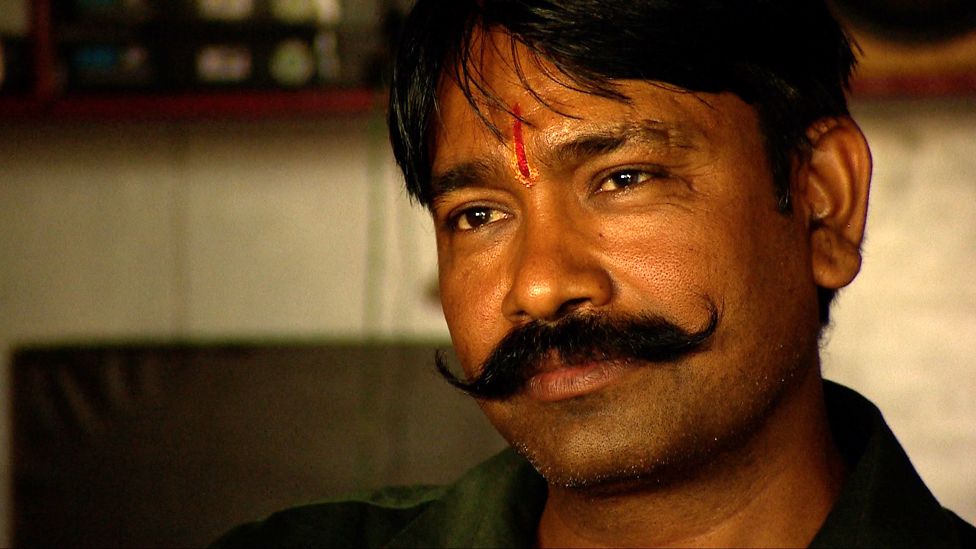
Image captionNawal Kishore Sharma
“It was about 00:30 in the morning and I was sleeping in my house… Some of my group phoned me to say they’d caught some cow smugglers,” he says.
According to Nawal Kishore Sharma, he then drove with the police to the spot. “He was alive and he was fine,” he says.
But that’s not what the police say.
In their “first incident report” they say that Rakbar was indeed alive when they found him.
“Nawal Kishore Sharma informed the police at about 00:41 that some men were smuggling two cows on foot,” the report says.
“Then the police met Nawal Kishore outside the police station and they all went to the location.
“There was a man who was injured and covered in mud.
“He told the police his name, his father’s name, his age (28) and the village he was from.
“And as he finished these sentences, he almost immediately passed out. Then he was put in the police vehicle and they left for Ramgarh.
“Then the police reached Ramgarh with Rakbar where the available doctor declared him dead.”
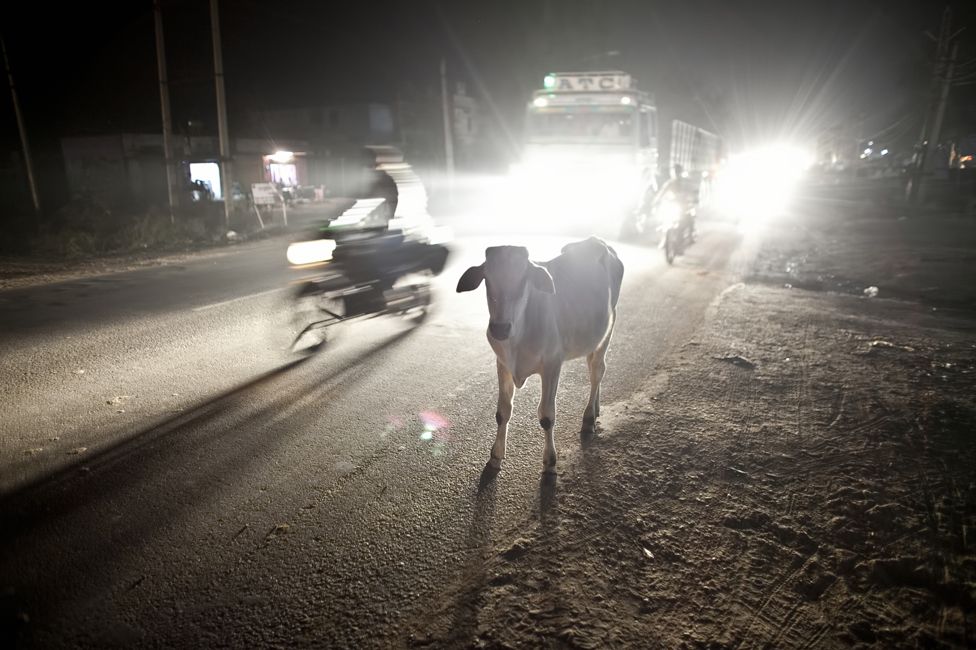
Image copyrightGETTY IMAGES (ALLISON JOYCE)Image captionRamgarh at nightBut this version of events is highly dubious.
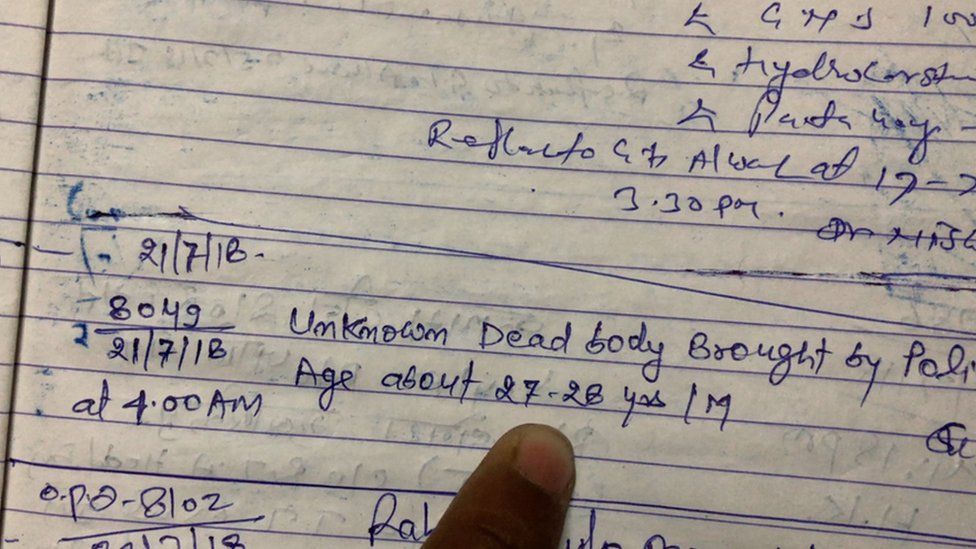
I go to the hospital in Ramgarh, where Rakbar was taken. Hospital staff are busily going through bound books of hospital records – looking for Rakbar’s admission entry.
And then, there it is. “Unknown dead body” brought in at 04:00 on 21 July 2018.
It’s not a long entry, but it contradicts the police’s story, and raises some serious questions.
For a start, Rakbar was found about 12 minutes’ drive away from the hospital. Why did it take more than three hours for them to take him there?
And if the police say Rakbar gave them his name, why did they tell the hospital they didn’t know who he was?
Nawal Kishore Sharma claims to know why. He paints a very different picture of what happened to Rakbar.
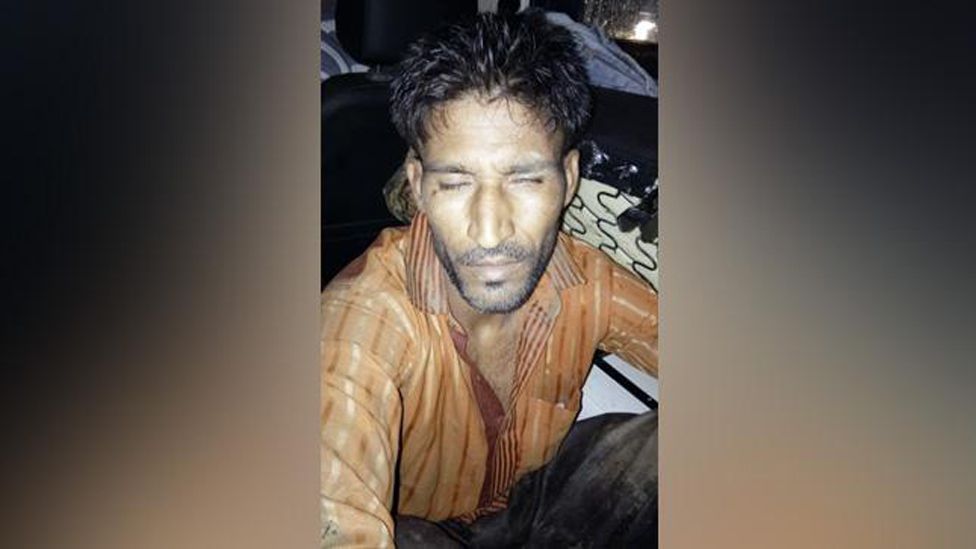
He tells me that after picking up Rakbar, they changed his clothes.
He then claims to have taken two photos of Rakbar – who at this point was with the police.
Sharma says that he went to the police station with the police. He claims that’s when the beating really began.
“The police injured him badly. They even beat him with their shoes,” he says.
“They kicked him powerfully on the left side of his body four times. Then they beat him with sticks. They beat him here (pointing at his ribs) and even on his neck.”
At about 03:00 Nawal Kishore Sharma says he went with some police officers to take the two cows to a local cow shelter. When he returned, he says, the police told him that Rakbar had died.
Rakbar’s death certificate shows that his leg and hand had been broken. He’d been badly beaten and had broken his ribs, which had punctured his lungs.
According to his death certificate he died of “shock… as a result of injuries sustained over body”.
I ask the duty doctor at the hospital whether he remembers what Rakbar’s body was like when the police brought it in.
“It was cold,” he says.
I ask him how long it would take for a body to become cold after death.
“A couple of hours,” he replies.
“I don’t want to talk about Rakbar’s case,” says Rejendra Singh, chief of police of Alwar district, which includes Ramgarh.
Since Rakbar’s murder several police officers have been suspended. I want to know why.
He looks uneasily at me.
“There were lapses on the police side,” he says.
I ask him what those lapses were.
“They had not followed the regular police procedure, which they were supposed to do,” he says. “It was one big lapse.”
Three men from Nawal Kishore Sharma’s vigilante group have been charged with Rakbar’s murder. Sharma himself remains under investigation.
The vigilante group and the police blame each other for Rakbar’s death, but neither denies working together that night.
The way Sharma describes it, the police cannot be everywhere, so the vigilantes help them out. But it’s the police that “take all the action” he says.
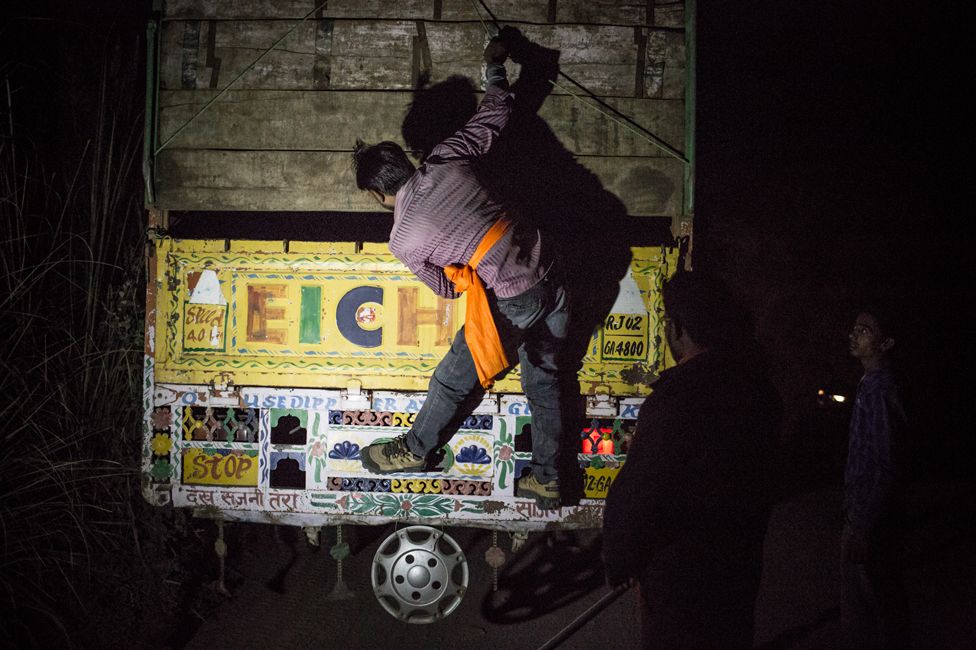
Image copyrightGETTY IMAGES (ENRICO FABIAN)Image captionNawal Kishore Sharma inspects a lorry transporting cows (October 2015)Much police activity in Rajasthan is focused on stopping cow slaughter.
Across the state there are dozens of formal cow checkpoints, where police stop vehicles looking for smugglers who are taking cows to be killed.
I visited one of the checkpoints. Sure enough police were patiently stopping vehicles and looking for cows.
The night before officers had had a gun battle with a group of men after a truck failed to stop.
These checkpoints have become common in some parts of India. Sometimes they are run by the police, sometimes by the vigilantes, and sometimes by both.
This gets to the heart of Rakbar’s case.
Human rights groups argue that his murder – and others like his – show that in some areas the police have got too close to the gangs.
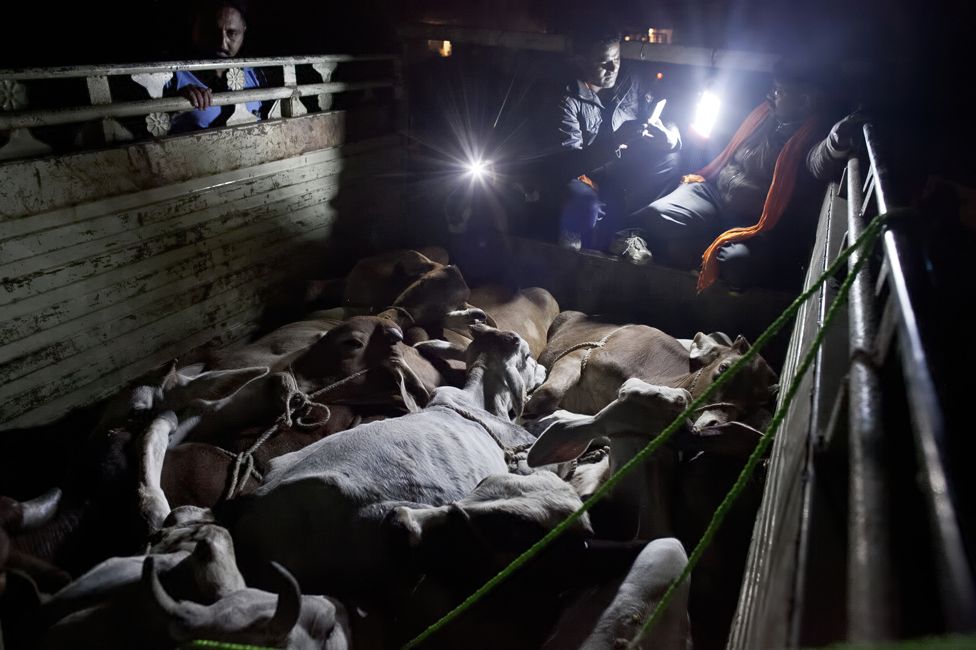
Image copyrightGETTY IMAGES (ALLISON JOYCE)Image captionThe vigilantes find what they are looking for (November 2015)“Unfortunately what we’re finding too often is that the police are complicit,” says Meenakshi Ganguly of Human Rights Watch, which published a 104-page report on cow-related violence in India this week.
In some areas, police have been reluctant to arrest the perpetrators of violence – and much faster to prosecute people accused of either consuming or trading in beef, he says.
Human Rights Watch has looked into 12 cases where it claims police have been complicit in the death of a suspected cow smuggler or have covered it up. Rakbar’s is one of them.
But this case doesn’t just illustrate police failings. Some would argue that it also illustrates how parts of the governing BJP party have inflamed the problem.
Gyandev Ahuja is a larger-than-life character. As the local member of parliament in Ramgarh at the time when Rakbar was killed he’s an important local figure.
He has also made a series of controversial statements about “cow smugglers”.
After a man was badly beaten in December 2017 Ahuja told local media: “To be straightforward, I will say that if anyone is indulging in cow smuggling, then this is how you will die.”
After Rakbar’s death he said that cow smuggling was worse than terrorism.
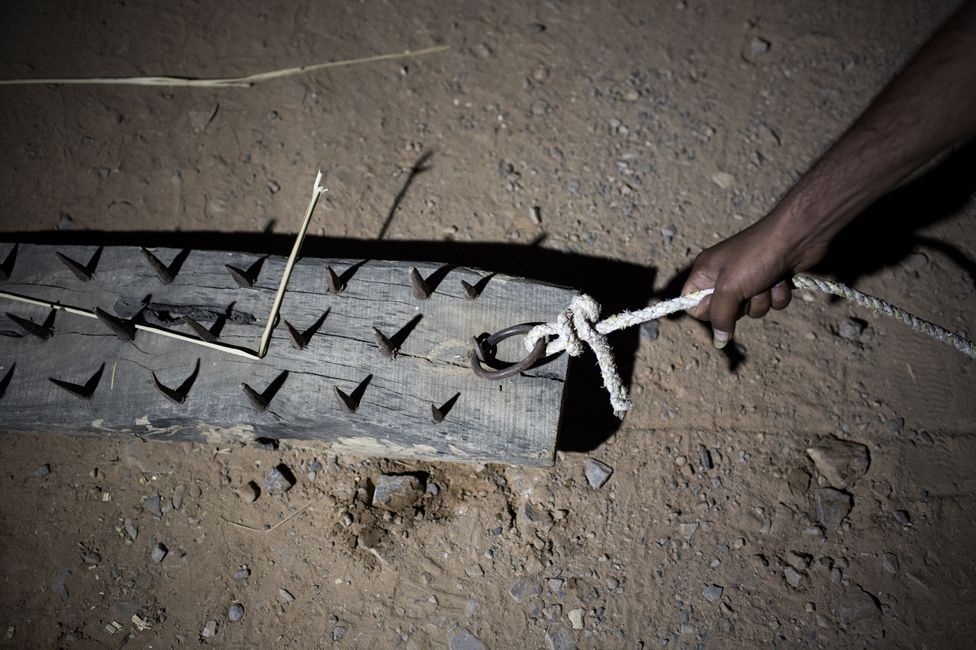
Image copyrightGETTY IMAGES (ENRICO FABIAN)Image captionNails used by the vigilantes to force lorries to stopGyandev Ahuja is just one of several BJP politicians who have made statements that are supportive of the accused in so-called “cow lynchings”.
One of Prime Minister Narendra Modi’s ministers was even photographed garlanding the accused murderers in a cow vigilante case. He has since apologised.
Meenakshi Ganguly of Human Rights Watch says it is “terrifying” that elected officials have defended attackers.
“It is really, at this point of time, something that is a great concern, because it is changing a belief into a political narrative, and a violent one,” he says.
The worry is that supportive messages from some of the governing party’s politicians have emboldened the vigilantes.
No official figures are kept on cow violence, but the data collected by IndiaSpend suggests that it started ramping up in 2015, the year after Narendra Modi was elected.
IndiaSpend says that since then there have been 250 injuries and 46 deaths related to cow violence. This is likely to be an underestimate because farmers who have been beaten may be afraid to go to the police – and when a body is found it may not be clear what spurred the attack. The vast majority of the victims are Muslims.
Image copyrightGETTY IMAGES (ENRICO FABIAN)Image captionA cow shelter in RamgarhA BJP spokesman, Nalin Kohli, emphatically rejects any connection between his party and cow violence.
“To say the BJP is responsible is perverse, inaccurate and absolutely false,” he tells me.
“Many people have an interest in building a statement that the BJP is behind it. We won’t tolerate it.”
I ask him about Gyandev Ahuja’s inflammatory statements.
“Firstly that is not the party’s point of view and we have very clearly and unequivocally always said an individual’s point of view is theirs, the point of view of the party is articulated by the party.
“Has the BJP promoted him or protected him? No.”
But a month after this interview, Ahuja was made vice-president of the party in Rajasthan.
Shortly afterwards, Prime Minister Narendra Modi visited Rajasthan – publicly slapping Ahuja on the back and waving together at crowds of BJP supporters.
In Mewat I speak to Rakbar’s wife, Asmina.
“Show me how you raise seven children without a husband. How will I be able to raise them?” she says, wiping away tears.
“My youngest daughter says that my father went to God. If you ask her, ‘How did he go to God?’ she says, ‘My father was bringing a cow and people killed him.’
“The life of an animal is so important but that of a human is not.”
The trial of the three men accused of his murder has yet to take place, but perhaps we will never know what really happened to Rakbar.
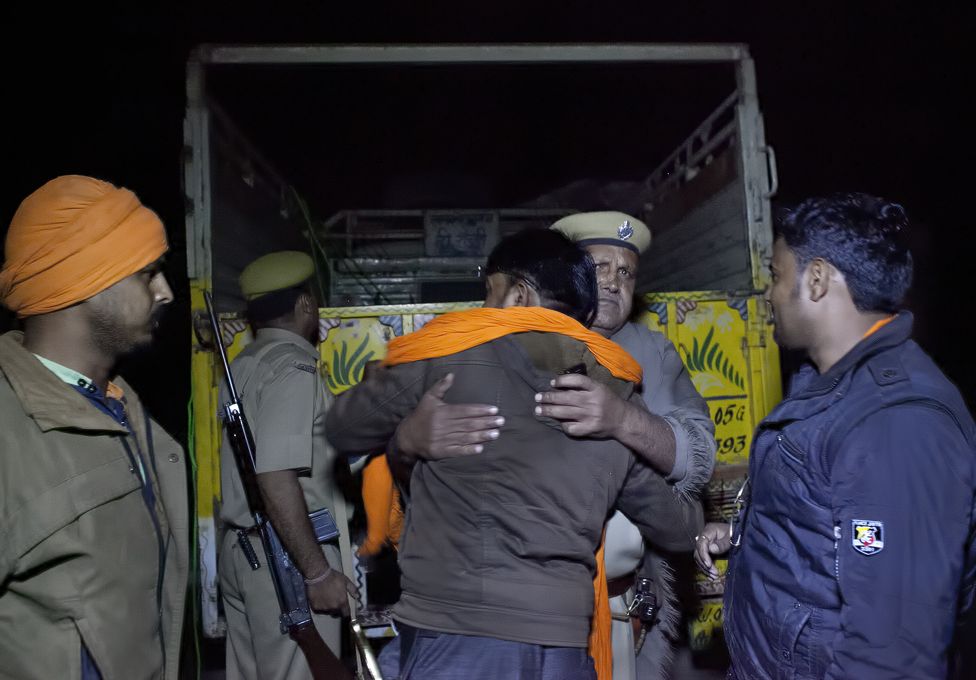
In November 2015, photographer Allison Joyce spent a night following Nawal Kishore Sharma’s vigilantes in the countryside near Ramgarh. One of her photographs shows a police officer embracing Sharma after a shootout between the vigilantes and a suspected cow smuggler.
Though the police now accuse the cow vigilantes of killing Rakbar Khan, and the vigilantes accuse the police, the photograph illustrates just how closely they worked together.
Image copyrightGETTY IMAGES (ALLISON JOYCE)In the Indian media there have been claims that the police took the two cows that Rakbar had been transporting to a cow shelter, as Rakbar lay dead or dying in a police vehicle.
There are also claims that the police stopped and drank tea instead of taking Rakbar to hospital.
Whatever they did, they did not take Rakbar to hospital immediately.
At a public rally in Rajasthan, PM Modi said attacks on Kashmiri youths after Pulwama terror attack help the enemies of the country.
INDIAUpdated: Feb 23, 2019 19:11 IST
HT Correspondent
Hindustan Times, Tonk, Rajasthan
Prime Minister Narendra Modi addresses a public meeting, in Tonk in Rajasthan on Saturday. (PTI)
Prime Minister Narendra Modi on Saturday denounced reported attacks on Kashmiri youths in some parts of the country following Pulwama terror attack killing at least 40 soldiers on February 14. PM Modi said Kashmiri youths should not be targeted anywhere in the country.
Speaking at a public rally in Rajasthan’s Tonk, PM Modi said, “Our fight is against terror, the enemies of humanity… Our fight is for Kashmir not against Kashmir, not against Kashmiris.”
“What happened to Kashmiri youths in the last few days…It does not matter whether the incident was small or big, such things should not happen. Kashmiri youths are victims of terror. Every child of Kashmir is with India in our fight against terror,” said PM Modi.
Former Jammu and Kashmir Chief Minister and National Conference leader Omar Abdullah welcomed the statement of PM Modi. “Thank you @narendramodi Sahib. Aaj aap ne hamaray dil ki baat keh di (you said what I have in my heart),” wrote Abdullah on Twitter soon after the prime minister made the comment at his rally.
PM Modi referred to his congratulatory phone call to Pakistan Prime Minister Imran Khan, when he assumed office after the general elections in Pakistan last year. PM Modi said, “As per protocol, I telephoned Pakistan’s new prime minister. I told him we have fought for long. Let India and Pakistan together fight poverty and illiteracy.”
“Pakistan’s prime minister told me, ‘I am the son of a Pathan. I do what I say.’ It is time to test his words,” PM Modi said at his rally in Rajasthan.
The prime minister said incidents like these “give power to Bharat ke tukde honge gang” and their supporters. “It is the responsibility of every Indian to protect every laal (child) of Kashmir,” he said.
The prime minister served another warning to Kashmiri separatist leaders, many of whom were stripped of their security cover early this week. The Union home ministry had ordered to review the security provided by the government to the separatist leaders in the wake of Pulwama attack.
PM Modi said, “Action has been taken against separatists and more action will be taken against such people…We can’t keep silent, we know how to crush terror.”
‘Trust Modi Sarkar’
Asserting that the government has moved swiftly to “avenge” Pulwama terror attack, PM Modi said all the major institutions of the world have condemned “the terror attack that was engineered at Pulwama”.
“I am proud that our security forces sent the perpetrators (of Pulwama attack) within 100 hours to where they belong,” he said referring to encounter in Pulwama a day after the terror attack on Jammu-Srinagar highway, where a CRPF convoy carrying more than 2,500 jawans was targeted by a suicide bomber.
“Trust the brave soldiers of the country and trust the Modi government…This time, everyone will be taken to justice and complete justice will be served,” said PM Modi adding, “Your pradhan sevak is busy finishing terror…If I am destined to put locks to the factory of terror, so be it.”
He also talked about the steps, the government has taken to put pressure on Pakistan following Pulwama attack. He said, “Pakistan is being accounted for everything that they have done. There is anxiety in Pakistan due to the steps we have taken after the terror attack.”
A day after Pulwama terror attack, the government decided at a meeting of the Cabinet Committee on Security (CCS) to withdraw the most favoured nation (MFN) status granted to Pakistan in 1996. The government also hiked tariff on goods to be imported from Pakistan by 200 per cent.
The external affairs ministry reached out to more than a dozen countries to corner Pakistan, which denied its hand behind the terror attack in Jammu and Kashmir despite Jaish-e-Mohammed, a terror group based out of that country, claimed responsibility for the attack on CRPF jawans.
On Thursday, the United Nations Security Council (UNSC) passed a resolution condemning Pulwama terror attack. The UNSC named Jaish-e-Mohammed in its statement. The UNSC resolution was unanimously approved by all members including China, which has been shielding Jaish-e-Mohammed chief Masood Azhar from being declared as global terrorist by the top UN body.
In the latter half of his public speech, PM Modi sounded poll bugle throwing what appeared as an election slogan, “Modi hai to mumkin hai” (it is possible if Modi is there). He said, “People have faith in the current government because of the work done in last four years. Modi hai to mumkin hai.”
He listed out achievements of his government and talked about schemes such health insurance, One-Rank-One-Pension and electrification among others repeating the same slogan at the end. He also accused the Congress of misleading the people of Rajasthan in last year’s assembly election by making farm loan waiver promise.
The Congress has two prominent frontrunners for the leadership role, Ashok Gehlot and Sachin Pilot, in Rajasthan, where it has returned to power after five years
Rajasthan’s newly-elected Congress legislators on Wednesday asked party president Rahul Gandhi to decide the state’s chief minister. The Congress has two prominent front-runners for the leadership role, Ashok Gehlot and Sachin Pilot.
“A resolution has been passed by the members in legislature party meeting. The final decision on the chief minister’s name will be taken by party president Rahul Gandhi,” a Congress leader said, reported PTI news agency.
Ex-chief minister Gehlot proposed the resolution, Pilot seconded it.
Watch: Rajasthan poll results: Ashok Gehlot or Sachin Pilot? Now race for CM’s post
AICC General Secretary Avinash Pande and party’s observer KC Venugopal also sought individual opinion of party MLAs in the meeting, the news agency said.
According to PTI, a Congress delegation will meet Governor Kalyan Singh at 7 pm to stake claim for forming the government in Rajasthan.
“The governor has given an appointment to a Congress delegation at 7 pm today,” Raj Bhawan sources said. The delegation will be led by the chief ministerial candidate to be decided by Gandhi on the basis of feedback from the MLAs.
The Congress won 99 seats out in the 200-member assembly where polling on one seat was deferred due to the death of a candidate, up from 21 in the 2013 elections. Ally Rashtriya Lok Dal (RLD) won one seat to take the total to 100 seats — the required number to form a government.
While the BJP declined drastically from 163 to 73, Mayawati’s BSP, which was contesting separately, won six seats and has offered support to the Congress. The remaining 20 seats were won by independents.






 CHINDIA ALERT: You'll be living in their world, very soon