Chindia Alert: You’ll be Living in their World Very Soon
aims to alert you to the threats and opportunities that China and India present. China and India require serious attention; case of ‘hidden dragon and crouching tiger’.
Without this attention, governments, businesses and, indeed, individuals may find themselves at a great disadvantage sooner rather than later.
The POSTs (front webpages) are mainly 'cuttings' from reliable sources, updated continuously.
The PAGEs (see Tabs, above) attempt to make the information more meaningful by putting some structure to the information we have researched and assembled since 2006.
WUHAN, China (Reuters) – China reported a drop in new coronavirus infections for a fourth day as drastic curbs on international travellers reined in the number of imported cases, while policymakers turned their efforts to healing the world’s second-largest economy.
The city of Wuhan, at the centre of the outbreak, reported no new cases for a sixth day, as businesses reopened and residents set about reclaiming a more normal life after a lockdown for almost two months.
Smartly turned out staff waited in masks and gloves to greet customers at entrances to the newly-reopened Wuhan International Plaza, home to boutiques of luxury brands such as Cartier and Louis Vuitton.
“The Wuhan International Plaza is very representative (of the city),” said Zhang Yu, 29. “So its reopening really makes me feel this city is coming back to life.”
Sunday’s figure of 31 new cases, including one locally transmitted infection, was down from 45 the previous day, the National Health Commission said.
As infections fall, policymakers are scrambling to revitalise an economy nearly paralysed by months-long curbs to control the spread of the flu-like disease.
On Monday, the central bank unexpectedly cut the interest rate on reverse repurchase agreements by 20 basis points, the largest in nearly five years.
The government is pushing businesses and factories to reopen, as it rolls out fiscal and monetary stimulus to spur recovery from what is feared to be an outright economic contraction in the quarter to March.
China’s exports and imports could worsen as the pandemic spreads, depressing demand both at home and abroad, Xin Guobin, the vice minister of industry and information technology, said on Monday.
The country has extended loans of 200 billion yuan (22.75 billion pounds) to 5,000 businesses, from 300 billion allocated to help companies as they resume work, Xin said.
Authorities in Ningbo said they would encourage national banks to offer preferential credit of up to 100 billion yuan to the eastern port city’s larger export firms. The city government will subsidize such loans, it said in a notice.
VIRUS CONCERNS
While new infections have fallen sharply from February’s peak, authorities worry about a second wave triggered by returning Chinese, many of them students.
China cut international flights massively from Sunday for an indefinite period, after it began denying entry to almost all foreigners a day earlier.
Average daily arrivals at airports this week are expected to be about 4,000, down from 25,000 last week, an official of the Civil Aviation Administration of China told a news conference in Beijing on Monday.
The return to work has also prompted concern about potential domestic infections, especially over carriers who exhibit no, or very mild, symptoms of the highly contagious virus.
Northwestern Gansu province reported a new case of a traveller from the central province of Hubei, who drove back with a virus-free health code, national health authorities said.
Hubei authorities say 4.6 million people in the province returned to work by Saturday, with 2.8 million of them heading for other parts of China.
Most of the departing migrant workers went to the southern provinces of Guangdong and Fujian, the eastern provinces of Zhejiang and Jiangsu, and northeast China.
In Hubei’s capital of Wuhan, more retail complexes and shopping streets reopened.
Electric carmaker Tesla Inc has also reopened a showroom in Wuhan, a company executive said on Weibo.
Shoppers queued 1-1/2 metres (5 ft) apart for temperature checks at Wuhan International Plaza, while flashing “green” mobile telephone codes attesting to a clean bill of health.
To be cleared to resume work, Wuhan residents have been asked to take nucleic acid tests twice.
“Being able to be healthy and leave the house, and meet other colleagues who are also healthy is a very happy thing,” said Wang Xueman, a cosmetics sales representative.
Throughout the world, overworked health care professionals are being infected with Covid-19, yet the Lion City has kept numbers low
Preparation, planning, patient ratios and protective equipment have all played a part. Still, even the best gear cannot guard against discrimination
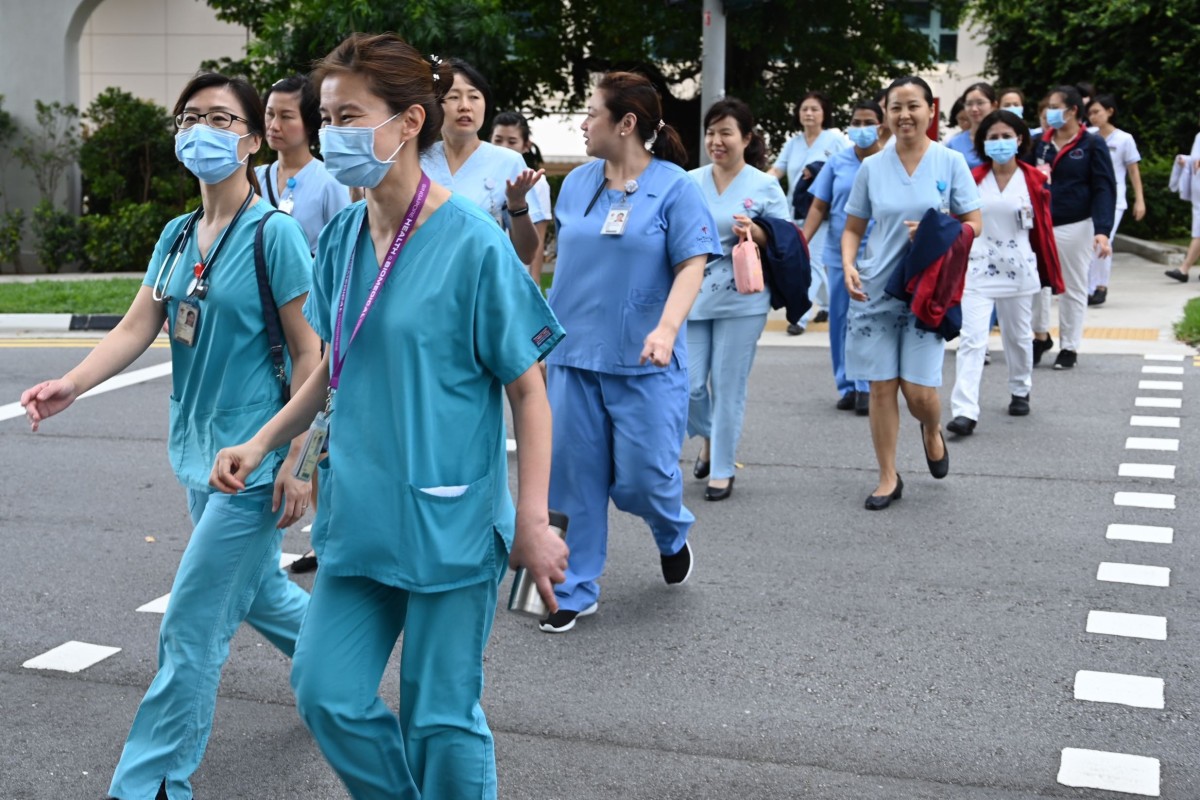
Medical staff walk to the National Centre for Infectious Diseases building at Tan Tock Seng Hospital in Singapore. Photo: AFP
Uncooperative patients, long hours and a lack of protective equipment are hampering health care workers across the world as they take the fight to the coronavirus, leading many to fall sick themselves.
In Malaysia, a pregnant woman who did not disclose that her father was infected tested positive after giving birth, leading to the shutdown of the entire hospital for cleaning. In the Philippines, nine doctors have died, two of whom had dealt with a patient who lied about her travel history.
In Spain, where more than 5,400 health care workers have been infected, accounting for about 14 per cent of the country’s patients, there are no longer enough workers to care for patients.
In Italy, which has more than 69,000 patients, the virus killed a doctor who had no choice but to work without gloves.
In the United States, which has surpassed China to become the world’s most infected nation with more than 83,000 people testing positive for Covid-19, hospitals are being overrun with patients.
Health care staff in the country say patients are packed into emergency wards and intensive care units (ICUs), further raising the risk of infections. They also report shortages of ventilators, face masks, gowns and shields.
The US Centres for Disease Control and Prevention on March 7 released interim guidelines saying health care workers exposed to the coronavirus could be asked to return to work as long as they wore face masks and were not showing symptoms, if their employers had no other manpower available.
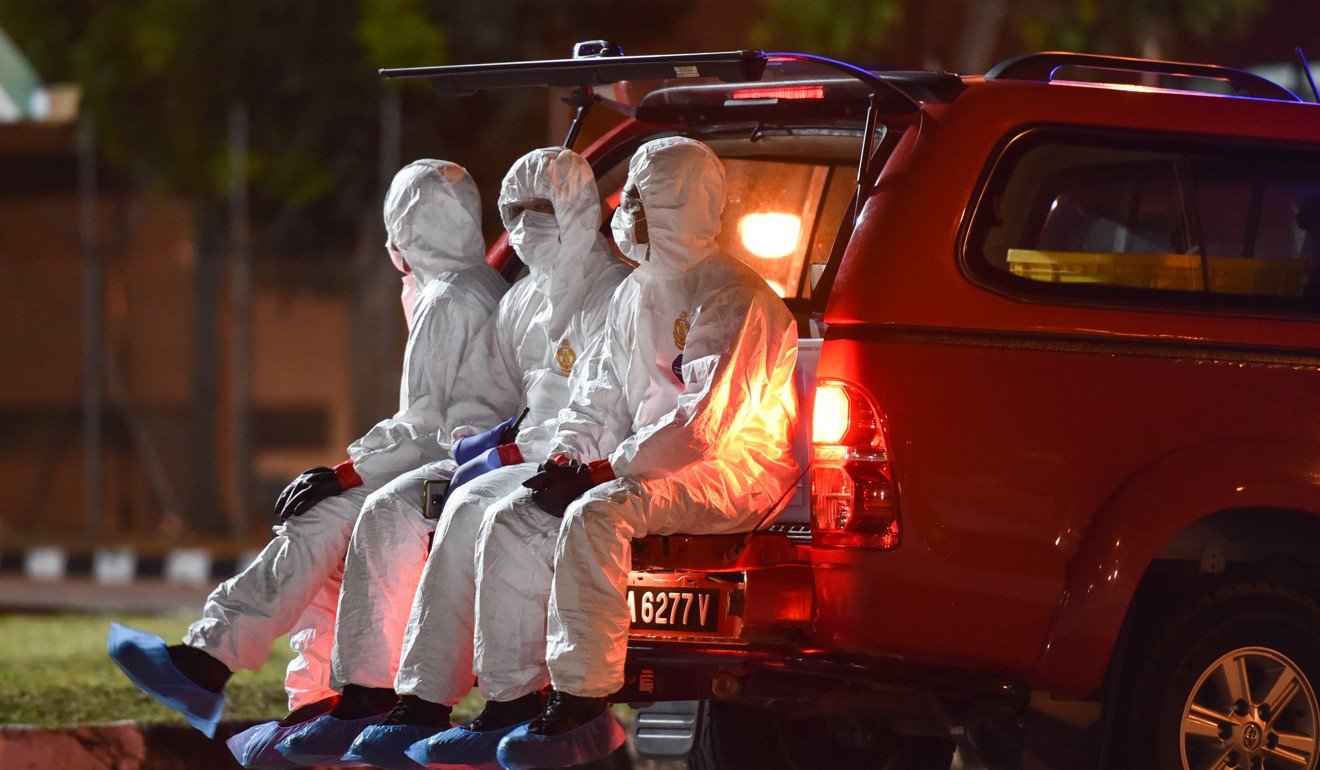
Malaysian health workers at Kuala Lumpur International Airport. Photo: AFP
A REASON FOR OPTIMISM
However, amid all the gloom, Singapore’s experienceis being held up as a reason for optimism. The city state has reported more than 630 cases of infection, all of which are being treated in hospital, yet only a handful of its health care professionals have been infected. What’s more, even these cases, according to Vernon Lee, director of communicable diseases at the Ministry of Health, are thought to have been infected outside the health care setting.
Experts suggest this has been more than just luck, pointing to a case in which 41 health workers were exposed to the coronavirus in a Singapore hospital yet evaded infection.
The workers had all come within two metres of a middle-aged man with Covid-19 who was being intubated, a procedure which involves a tube being inserted into the patient’s trachea. The procedure is seen as being particularly hazardous for health workers as it is “aerosol generating” – patients are likely to cough.
The workers had not known at the time that the man had the virus and all were quarantined after he tested positive. However, on their release two weeks later, none of them had the virus.
Coronavirus: as Malaysia braces for third wave, doctors make their own face masks
27 Mar 2020
The case has come to widespread attention partly because the workers were wearing a mix of standard surgical masks and the N95 mask, which doctors see as the gold standard as it filters out 95 per cent of airborne particles.
The conclusion, published in The Annals of Internal Medicine this month, was this: “That none of the health care workers in this situation acquired infection suggests that surgical masks, hand hygiene, and other standard procedures protected them from being infected.”
Surgeon and writer Atul Gawande mentioned the case in an article for The New Yorker on how health care workers could continue seeing patients without becoming patients. He said there were things to learn from Asia and that some of the lessons came out of the “standard public health playbook”. In other words, there is much to be said for social distancing, basic hand hygiene and cleaning regimens.
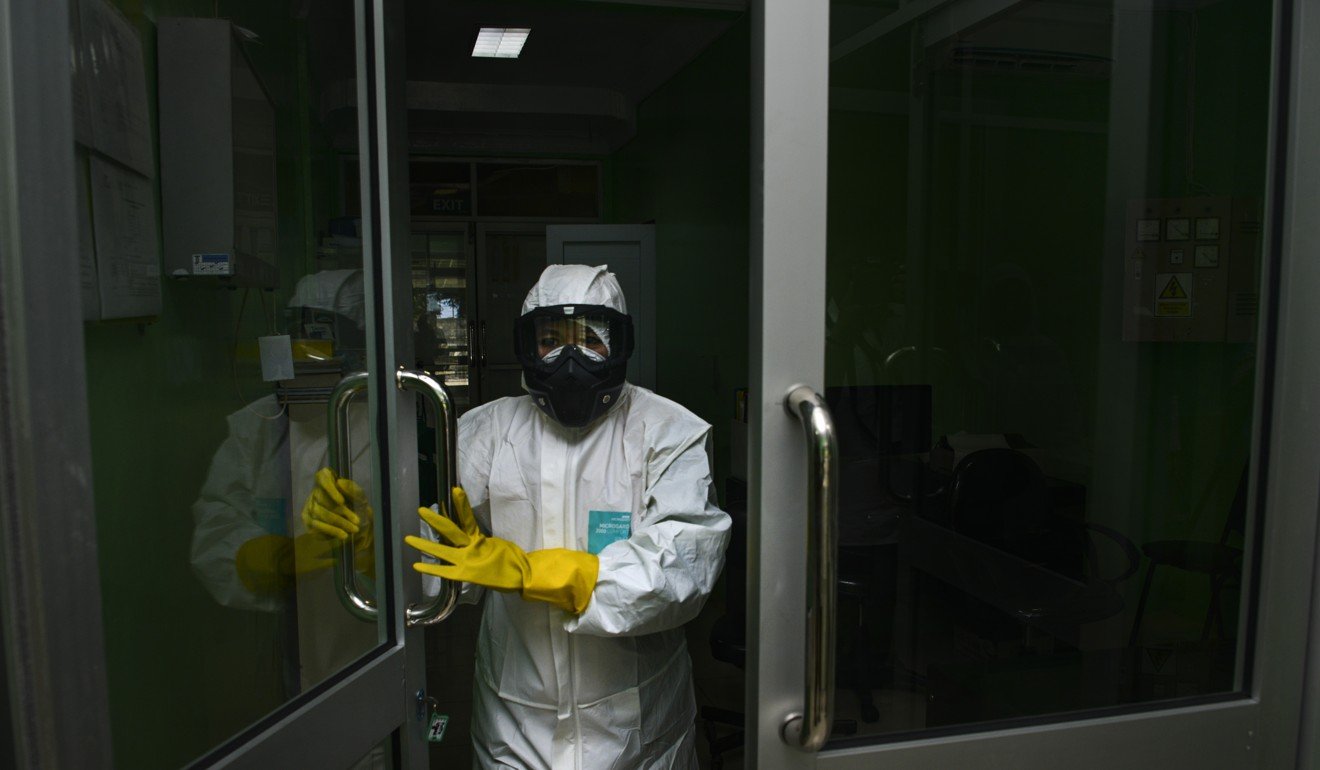
A health worker in protective gear walks into a quarantine room at a hospital in Banda Aceh, Indonesia. Photo: AFP
COMING TOGETHER
With critical supplies running short in many countries, experts say it is increasingly vital that countries share both knowledge and resources.
To this end, China has been donating personal protective equipment to places including the Philippines, Pakistan and Europe. China’s richest man Jack Ma is donating 1.8 million masks, 210,000 Covid-19 test kits and 36,000 pieces of protective clothing to 10 countries in Asia.
At the same time, doctors are encouraging the Western world to learn from Asia.
Infectious diseases expert Leong Hoe Nam said that being “bitten by Sars” (severe acute respiratory syndrome) in 2003 had prepared Asia for Covid-19, while Western countries were not similarly prepared and hence lacked sufficient protective equipment.
He pointed to how about 2,000 health care workers had fallen sick in China early in the outbreak because workers did not initially have protective gear. The trend reversed as equipment became available.
“Once the defences were up, there were very few health care workers who fell sick at work. Rather, they fell sick from contact with sick individuals outside the workplace,” he said.
Malaysia is a case in point. While it has reported 80 health care workers falling ill, most are thought to be community infections.
Coronavirus: Doctor explains the proper way to wash your hands and put on a face mask
In a webinar organised by Caixin Global on Thursday night, Peng Zhiyong, an intensive care specialist at Zhongnan Hospital of Wuhan University, shared how they managed a shortage of personal protective equipment early on in the outbreak by rationing workers to two sets of gear per shift.
Meanwhile, in the Philippines, doctors from Manila’s Chinese General Hospital held a video conference call with doctors in Zhejiang to learn from China’s experience of treating Covid-19 patients.
Crowdsourcing platforms have also been created to share advice. The Brigham and Women’s Hospital in Boston has released guidelines for treating critically ill patients and its website includes information from Chinese doctors.
Why Singapore’s coronavirus response worked – and what we can all learn
27 Mar 2020
The Jack Ma Foundation has also launched an online platform for doctors and nurses around the world to share knowledge on fighting the virus. “One world, one fight,” it said in a tweet.
Associate Professor Jeremy Lim from the global health programme at the Saw Swee Hock School of Public Health said it was crucial for countries to work together.
“Viruses don’t respect borders. Countries have to share information and help each other as we are only as strong as the weakest link. Any country can become a reservoir of disease and the world may then be forced to endure a ping-pong of outbreaks over and over again.”
And the advice of Lee, at Singapore’s Ministry of Health? “Practise good hygiene and wash hands regularly.”
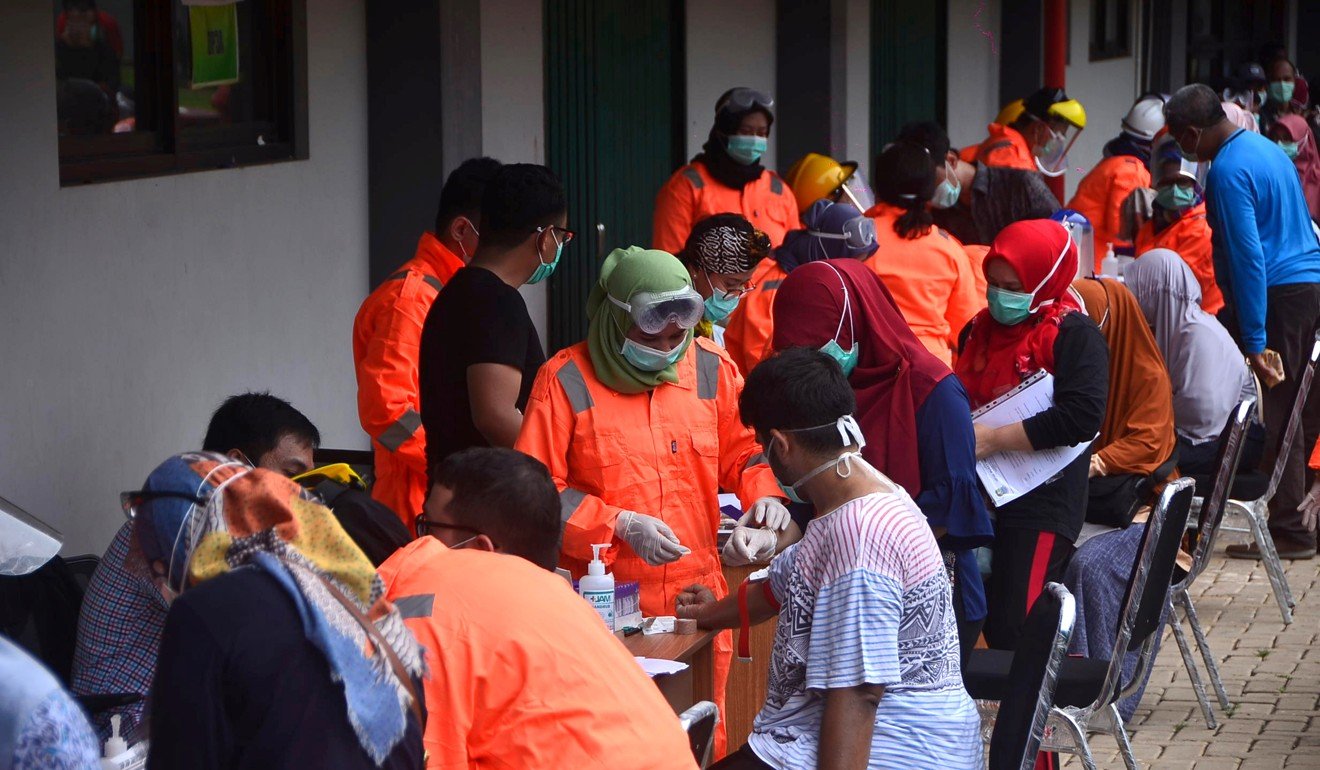
Indonesian medical staff administer mass testing for Covid-19 in Bekasi, West Java. Photo: AFP
SINGAPORE, A CASE STUDY
Amid this sharing of advice, it is often Singapore that is held up as an example to replicate. Despite the country grappling with a rising load of Covid-19 patients, most of whom have recently returned to the city state from abroad, its health care system has continued to run smoothly. Doctors say this is because it has been preparing for a pandemic ever since Sars caught it by surprise. During the Sars outbreak, health care workers accounted for 41 per cent of Singapore’s 238 infections.
Consequently its hospitals swung into contingency planning mode early on in the coronavirus outbreak, telling staff to defer leave and travel plans after its first cases emerged.
Meanwhile, its hospitals swiftly split their workforces into teams to ensure there were enough workers if the outbreak worsened, and to ensure workers got enough rest.
Singapore has 13,766 doctors, or 2.4 doctors for every 1,000 people. That compares to 2.59 in the US, 1.78 in China and 4.2 in Germany. Places like Myanmar and Thailand have fewer than one doctor for every 1,000 people.
Coronavirus: Covid-19 could live on in Indonesia long after world recovers
22 Mar 2020
“The objective is that you can run essential services with the greatest amount of security. Make sure functional units have redundancy built in, and are separate from each other. It depends on what you feel is sufficient to carry on services if one team is affected, factoring in rest periods and some system of rotation,” said Chia Shi-Lu, an orthopaedic surgeon.
The key is to ensure a good doctor-to-patient ratio and ensure there are enough specialists for the critical work, such as doctors and nurses who can provide intensive care, and know how to operate mechanical ventilators or machines to pump and oxygenate a patient’s blood outside the body.
At the emergency department where paediatrics emergency specialist Jade Kua treats Covid-19 cases in addition to regular emergencies, doctors are split into four teams of 21. Each team takes alternate 12-hour shifts and does not interact with other teams.
“We are in modular teams so the teams move together. So you and I would both do morning, off, night, off, morning off. Together. And then the other teams would do the same and we don’t intermingle,” said Kua.
US now has world’s most coronavirus cases, surpassing China
Chia, who works at the Singapore General Hospital, said doctors had been split up according to their functions.
“We try not to meet at all with the other teams as much as possible. We’ll just say hi from across the corridor. Meals are the same. All our cafeterias and everything have got social distancing spaced in already,” said Chia, who is also a member of parliament and chairs a shadow committee on health.
Chia said the health care system could also tap on doctors in the private sector.
Not every country has a plan like this. Last year’s Global Health Security Index by the Economist Intelligence Unit found that 70 per cent of 195 countries scored poorly when it came to having a national plan for dealing with epidemics or pandemics. Almost three in 10 had failed to identify which areas were insufficiently staffed. In India, with a population of 1.3 billion, only about 20,000 doctors are trained in key areas such as critical care, emergency medicine and pulmonology.
Singapore, Hong Kong, Taiwan: the real coronavirus world leaders
19 Mar 2020
In contrast, Singapore published its first Influenza Pandemic Preparedness and Response Plan in June 2005 and has since honed it to a tee. Hospitals regularly war-game scenarios such as pandemics or terrorist attacks and the simulations are sometimes observed by the Ministry of Health, which grades the performance and recommends areas for improvement.
The plan also covers the need to stockpile equipment to avoid the sort of shortages many countries are now facing, another lesson inspired by Sars when masks, gloves and gowns were in short supply.
In a pandemic preparation paper published in 2008, Singapore public health specialist Jeffery Cutter wrote that Singapore’s stockpile was sufficient to cover at least 5 to 6 months’ use by all front-line health care workers.
During the Covid-19 outbreak, it has also told citizens to not wear masks so it can conserve supply for medical staff.
Having enough protective gear has reassured Singapore’s health care workers such as Kua, a mother of six who blogged about her experience fighting Covid-19. Kua said: “I’m safe and my family is safe.”
India’s poor hit hard by 21-day nationwide lockdown amid the coronavirus pandemic
SOMETHING YOU CAN’T GUARD AGAINST
Despite the many positives to emerge from the Lion City, its health care workers are struggling with another problem: discrimination.
While in France, Italy and Britain, residents cheer health care workers from their windows, in Singapore health care workers are seen by some people as disease carriers.
“I try not to wear my uniform home because you never know what kind of incidents you may encounter,” said one Singapore nurse. “The public is scared and wearing our uniforms actually causes quite a bit of inconvenience. One of my staff tried to book a private-hire car to the hospital for an emergency and she was rejected by five drivers.”
There is a similar stigma in India, where the All India Institute of Medical Sciences has appealed to the government for help after health workers were forced out of their homes by panicked landlords and housing societies.
“Many doctors are stranded on the roads with all their luggage, nowhere to go, across the country,” the institute said in a letter.
Lim, from the Saw Swee Hock School of Public Health, said the worst human impulses and “every man for himself” attitudes could emerge in crises and “that is exactly why governments have to step in”.
Discrimination could affect both the performance and motivation of health care workers, Lim warned.
Meanwhile, when health care workers are infected, it creates a “triple whammy” threat.
“It means one fewer professional in an already-strained system, another patient to care for and, potentially, a team of colleagues who need to be quarantined,” said Lim.
“We must do everything possible to keep our health care workforce safe and free from Covid-19.” ■
Anyone caught breaking Singapore’s social distancing rules could be jailed from Friday, as the city state ramped up its coronavirus defence and announced the introduction of distance learning for schools.
Under updates to its powerful infectious diseases law, anyone who intentionally sits less than 1 metre away from another person in a public place or on a fixed seat demarcated as not to be occupied, or who stands in a queue less than a metre away from another, will be guilty of an offence.
Offenders can be fined up to S$10,000 (US$6,990), jailed for up to six months, or both. The rules, in place until April 30, can be applied to individuals and businesses.
The news was followed later by an announcement from the education ministry that starting from April, schools will start conducting one day of home-based learning for students per week.
Singapore’s new social distancing laws send needed signal, experts say
27 Mar 2020
“The recent spike in imported cases signals a new phase in our nation’s fight against Covid-19. To support further safe distancing, schools will progressively transit to a blended learning model, starting with one day of home-based learning a week,” the ministry said in a statement.
It added schools will remain open for students whose parents are not able to secure alternative childcare arrangements.
Hundreds of thousands of students in Singapore returned to class on Monday after a week of school holidays, despite growing calls for schools to be closed.
Singapore is one of the few jurisdictions in the region that has yet to suspend schools, unlike Hong Kong, Thailand, Indonesia, and Malaysia.
Education Minister Ong Ye Kung had earlier cited scientific evidence, saying that the pneumonia-like Covid-19 illness does not affect the young as much as adults.
Authorities in the city state, however, have said that suspending schools and closing workplaces are among the next steps to be taken should the situation worsen. Singapore has confirmed 683 cases so far, of which 172 have recovered and two died.
Global condom shortage looms amid virus lockdowns
A global shortage of condoms is looming, the world’s biggest producer said, after a coronavirus lockdown forced it to shut down production.
Malaysia’s Karex makes one in every five condoms globally. It has not produced a single condom from its three Malaysian factories in the past 10 days because of the lockdown imposed by the government to halt the spread of the virus.
That’s already a shortfall of 100 million condoms, normally marketed internationally by brands such as Durex, supplied to state health care systems such as Britain’s NHS or distributed by aid programmes such as the UN Population Fund.
“We are going to see a global shortage of condoms everywhere, which is going to be scary,” Karex Chief Executive Goh Miah Kiat said this week.
“My concern is that for a lot of humanitarian programmes deep down in Africa, the shortage will not just be two weeks or a month. That shortage can run into months.”
The other major condom-producing countries are China, where the coronavirus led to widespread factory shutdowns, and India and Thailand, which are seeing infections spiking only now.
Goh said Karex was in the process of appealing to the government for an exemption to operate under specific conditions. Malaysia is approving other essential goods producers to operate with half of their workforce.
“The good thing is that the demand for condoms is still very strong because like it or not, it’s still an essential to have,” Goh said. “Given that at this point in time people are probably not planning to have children. It’s not the time, with so much uncertainty.”
China to ban most foreign arrivals
China has banned most foreigners from entering the country in an effort to block the spread of the coronavirus through imported cases.
With several exceptions, including transit visas and foreigners arriving via Hong Kong and Macau with short-term entry permits, entry visas issued to foreigners will be suspended as an “interim measure”, according to a statement late on Thursday by the country’s foreign ministry.
“In view of the rapid spread of the new coronavirus epidemic worldwide, China has decided to temporarily suspend entry of foreigners with currently valid visas and residence permits in China,” the ministry said.
“This is an interim measure that China has to take in order to respond to the current epidemic situation, with reference to the practice of many countries,” it added. “The Chinese side will adjust the above measures according to the epidemic situation through separate announcements.”
Pakistan aid workers lack basic kit
Pakistan’s biggest charity, famous for its emergency services for the poor, is kitting staff out in raincoats and rubber boots in the battle against the coronavirus as it can’t get hold of proper personal protective equipment, the organisation says.
Pakistan has reported the highest number of coronavirus infections in South Asia, with 1,179 cases and nine deaths, but health experts say there is a lack of public awareness about the virus and the cash-strapped government is ill-prepared to tackle it.
The Edhi Foundation has for decades stepped in to help when government services fail communities and it runs the country’s largest ambulance service.
Now it has had to train dozens of staff on how to handle suspected coronavirus patients. But providing them with proper protection is a problem given a nationwide shortage of the equipment.
“We’ve compromised on certain things and use alternatives,” Facial Edhi, head of the Edhi Foundation, said at his office in Karachi, Pakistan’s biggest city, on Thursday.
“Full aprons are in short supply in the market.”
He said he was confident the raincoats would work just as well.
South Korea pleads with residents to stay indoors
Authorities in South Korea pleaded with residents on Friday to stay indoors and avoid large gatherings as new coronavirus cases hovered close to 100 per day.
South Korea reported 91 new infections on Friday, taking the national tally to 9,332, the Korea Centres for Disease Control and Prevention said. The country has reported similar daily numbers for the past two weeks, down from a high of over 900 in late February.
The government has sought to convince a restless public that several more weeks of social distancing and self-isolation may be needed to allow health authorities to tamp down the smaller but still steady stream of new cases.
“As the weather is getting nicer, I know many of you may have plans to go outside,” said Yoon Tae-ho, director general for public health policy at the health ministry. “But social distancing cannot be successful when it’s only an individual, it needs to be the whole community.”
Coronavirus: California officials alarmed by rate of infection
27 Mar 2020
Italy reports 662 new deaths, with uptick in new cases
Italy is reporting an uptick in new novel coronavirus infections, after four consecutive days in which new cases had decreased.
The country now has 62,013 active cases, a daily increase of 4,492, the Italian Civil Protection Agency said in its bulletin.
On Wednesday the daily variation was 3,491, on Tuesday 3,612, on Monday 3,780, on Sunday 3,957, and on Saturday a record 4,821.
There are also 662 new fatalities, bringing the total death toll to 8,165, while overall infections, including deaths and recoveries, have risen to 80,539, a daily increase of 8.3 per cent.
Recoveries are up by around 11 per cent to 10,361, while the number of intensive care patients – a closely watched figure given the shortage of hospital beds – has risen by 3.5 per cent, to 3,612.
Russia closes all restaurants nationwide
Russia is temporarily closing restaurants nationwide for a nine-day period starting on Saturday to prevent the spread of the coronavirus.
Restaurants will still be able to provide delivery services during that time, according to the decree by Prime Minister Mikhail Mishustin, published on his website on Friday.
Russia has reported more than 800 cases of coronavirus, predominantly in Moscow, which has seen at least two virus-related deaths. Mayor Sergei Sobyanin has warned that the actual number of cases is probably “significantly more”.
The country has already prohibited regular international flights, and imposed strict quarantine measures for anyone entering the country and anyone who could have been exposed to someone infected with the virus – though has not yet opted to impose lockdown measures like those seen elsewhere.
Coronavirus containment measures spark prison protests across Italy as nation goes into lockdown
First casualty in Kenya
Kenya has recorded its first coronavirus death as a rapid rise in confirmed cases puts Africa’s fragile health systems to the test.
Kenyan Health Cabinet Secretary Mutahi Kagwe said a 66-year-old Kenyan man died on Thursday afternoon despite treatment in an intensive care unit.
Kagwe said the man, who arrived into the country on March 13 from South Africa via Swaziland, was a diabetic. Also on Thursday, three women aged between 30 and 61 tested positive for Covid-19, the disease caused by the coronavirus, taking the country’s total to 31.
Kenya is the second country in East Africa and the 15th on the continent to confirm a coronavirus-related death. Algeria has the highest death toll in Africa with 25 fatalities, while Egypt has reported 24 and Morocco 11.
About a week ago, the continent of 54 countries had reported fewer than 300 cases. But by Friday Africa had 3,221 confirmed cases and 87 deaths. WHO regional director for Africa Matshidiso Moeti said on Thursday that the situation in Africa was “evolving very quickly in terms of geographic spread and the increasing number of cases”.
Australian military to enforce quarantine
The Australian military will help enforce the quarantine of travellers returning to the country, with the prime minister unveiling strict new measures and door-to-door checks on Friday to rein in the spread of Covid-19.
With some two-thirds of Australia’s 3,000 Covid-19 cases still linked to overseas travel, Scott Morrison said 14-day home quarantines would now be actively policed with the help of the military.
Thousands of citizens and residents are still arriving in Australia every day and there have been instances of return travellers repeatedly breaking a promise to stay at home.
Morrison said all returnees arriving after midnight Saturday would now be kept in hotels in the city of arrival for the duration of their quarantine.
Those already on Australian soil and under orders to self-quarantine for two weeks will face active checks, he said.
Quarantine measures will be getting “a lot tougher and a lot stricter,” Morrison said, adding the Australian Defence Force would “assist in the compliance with these arrangements.”
Afghanistan to release 10,000 prisoners
Afghanistan will release at least 10,000 prisoners over the age of 55 in an attempt to prevent the spread of the coronavirus, officials said on Thursday.
“The president has issued a decree that several thousand prisoners will be released soon due to coronavirus,” an official in President Ashraf Ghani’s office said.
Those released will not include members of Islamist militant groups the Taliban or Islamic State, and the process will be completed within 10 days, said two government officials.
Afghanistan has reported 91 cases of coronavirus and three deaths. The country’s western Herat province has recorded at least 54 of the 75 total cases reported in the last week.
International aid groups in recent weeks have raised concerns about the possibility of the coronavirus spreading in prisons across Afghanistan.
People enjoy sunset on a plank road at the East Lake in Wuhan, capital of central China’s Hubei Province, March 18, 2020. (Xinhua/Shen Bohan)
Arduous efforts have been made since Wuhan was locked down and the efforts have paid off, with the outbreak of the COVID-19 gradually brought under control in this once hardest-hit Chinese city. With sacrifices and persistence, a bright dawn is finally around the corner.
WUHAN, March 24 (Xinhua) — Xia Yongli starts a workday at dawn by having his temperature taken, disinfecting his bus and going through safety checks before hitting the road at 7:00 a.m. sharp.
Over the past eight weeks, the bus driver in the central Chinese city of Wuhan had not driven his familiar route, which is 14 km long and usually takes 40 minutes. Instead, he has been shuttling medics and delivering supplies to shops and supermarkets.
The city, with a population of over 10 million, pressed a “pause” button on Jan. 23 to contain the spread of the rampaging coronavirus behind the COVID-19 epidemic, with all public transport and outbound channels shut down and all residents staying indoors.
The streets of Wuhan are no longer bustling. Shopping blocks, pedestrian streets and other popular places where local people would stroll around are largely left to still figure sculptures.
Arduous efforts have been made since Wuhan was locked down and the efforts have paid off, with the outbreak of the COVID-19 gradually brought under control. Once hardest-hit, Wuhan only had one newly confirmed COVID-19 case reported for six consecutive days between March 18 and 23.
Wuhan had reported a total of 50,006 confirmed cases by March 23, and 43,214 patients had been cured and discharged from hospitals.
With sacrifices and persistence, a bright dawn is finally around the corner. People will be allowed to leave the city and the province from April 8, local authorities said Tuesday.
A staff member conducts disinfection at a subway station in Wuhan, central China’s Hubei Province, March 23, 2020. (Xinhua/Shen Bohan)
To reduce the risk of imported cases, all personnel coming to Wuhan from overseas have to be brought under closed-loop management, with timely quarantine and epidemiological surveys conducted, said Ying Yong, secretary of Hubei Provincial Committee of the Communist Party of China.
“Wuhan had pressed the pause button and is currently in urgent need of restoring its urban functions with safe and ordered operations,” Ying said.
More than 110 bus routes citywide have conducted no-load test runs. Disinfection has been carried out at local metro and railway stations. Checkpoints for epidemic control, 27 on cross-river bridges and nearly 80 others in main urban areas, have been removed.
Infrared thermometers have been installed at subway entrances, with posters of QR codes for real-name registration inside the stations and carriages.
Staff members conduct disinfection on a subway train in Wuhan, central China’s Hubei Province, March 23, 2020. (Xinhua/Xiao Yijiu)
“The traffic on the road is coming back,” said Hu Lijun, general manager of the Wuhan Zhengyuan Gaoli Optical Co., Ltd., a photoelectric encoder manufacturer, whose production capacity has been restored by 80 percent.
Traffic flow at highway exits is also increasing by about 10 percent per day due to a growing number of people returned as Wuhan speeds up resumption of work and production.
There were health staff, community workers and police in each lane at toll-gate checkpoints, scanning health codes and taking body temperatures of the returning workers, disinfecting their vehicles and making registrations.
“Drivers had to queue up at the highway exits in the past to spend five minutes filling a registration form,” said Dong Hongxiang, a police officer, noting that registration time has been cut short now by using PDA scanners.
On March 21, a special train arrived in Wuhan with 1,013 passengers on board, all of whom were employees of Dongfeng Honda, a local joint venture. They were picked up at the train station and sent directly to the factory or their residences.
Workers are busy on the production lines at the workshop of Dongfeng Passenger Vehicle Company in Wuhan, central China’s Hubei Province, March 24, 2020. (Xinhua/Xiao Yijiu)
Wuhan-based enterprises that are important to the national and global industry chains and those closely related to people’s livelihood are allowed to continue operation or resume work, said Cao Guangjing, deputy governor of Hubei.
Hubei serves as one of China’s major auto producers and phosphate fertilizers. Cao said that relevant companies play significant role in the production chains. Their resumption of operation counts.
Preferential measures have been taken to support restart of engine in the city. The State Grid Wuhan electric power company has rolled out new policies to cut or exempt electricity bills for local enterprises, an estimated reduction of 389 million yuan (about 55 million U.S. dollars) by the end of June.
People have also started to venture out, although they cannot go as far or wherever they want.
Wang Tan, a Wuhan resident, stepped out of his home for the first time in two months to get some medicine for his father-in-law at a nearby pharmacy Monday morning.
With a health code on WeChat, Wang said he could visit convenience stores, green groceries and drug stores close to his home and have some free time outdoors inside his residential community, which has been clear of COVID-19 cases for 14 days in a row.
The Guoxinyuan community in Jiang’an District has been epidemic-free for 26 consecutive days. There were kids skipping ropes and the gray-haired doing exercises in open public areas. People observed social distancing while reclaiming a long-lost conversation.
“The public space in our community is quite small, thus no more than 80 people are allowed to have outdoor activities at one time,” said Wei Jilai, who heads the neighborhood committee.
A woman purchases daily necessities at a convenience store in Wuhan, central China’s Hubei Province, March 19, 2020. (Xinhua/Shen Bohan)
As the epidemic recedes, more than 21,000 medical staff from across the country who had fought on the frontline in Wuhan and other places in Hubei are returning home. Before departure, some visited East Lake, one of the well-known tourist attractions in Wuhan, having group photos before cherry trees in blossom to mark the unforgettable days in the city.
Some are leaving, while others stand their ground. Ma Xin, vice president of the Huashan Hospital affiliated to Fudan University in Shanghai, stayed at Wuhan’s Tongji Hospital with his team, treating severe and critically ill patients.
“Most of them have underlying diseases and have to be treated for their complications,” Ma said, stressing that vigilance is still needed at present, especially against imported cases and relapse.
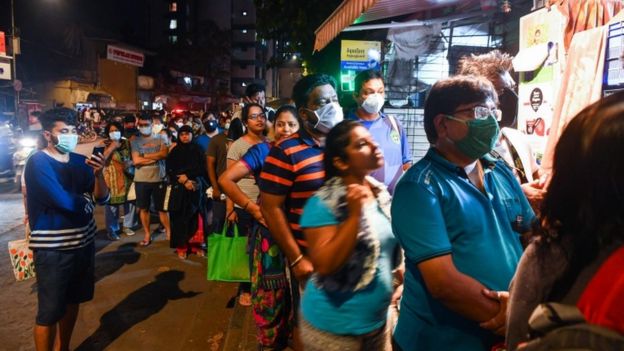
But in Delhi and the financial capital, Mumbai, people fearing shortages quickly thronged shops and pharmacies.
“I have never witnessed such a chaos in my life,” the owner of one store in the Shakarpur district of Delhi said, quoted by the Press Trust of India.
“All our stocks, including rice, flour, bread, biscuits, edible oils, have been sold out.”
Police in the busy city of Ghaziabad, in Uttar Pradesh state, patrolled the streets with megaphones to tell residents to stay indoors.
Image copyright AFPImage caption People in Mumbai rushed to stock up on essentials following Mr Modi’s address
Under the new measures, all non-essential businesses will be closed but hospitals and other medical facilities will continue to function as normal. Schools and universities will remain shut and almost all public gatherings will be banned.
Anyone flouting the new rules faces up to two years in prison and heavy fines.
In his address, Prime Minister Modi also:
Stressed that the 21-day lockdown was “very necessary to break the chain of coronavirus”
Emphasised the seriousness of the situation and said that even developed countries had faced problems in combating it
Said that “social distancing was the only way to stop” the virus spreading
Announced that nearly $2bn (£1.8bn) would be made available to boost the country’s health infrastructure
Called on people not to “spread rumours” and to follow instructions
His announcement came after several Indian states introduced measures of their own, such as travel restrictions and the closure of non-essential services.
India has already issued a ban on international arrivals and grounded domestic flights. The country’s rail network has also suspended most passenger services.
Many parts of India, including cities such as Delhi and Mumbai, are already under tight restrictions. But this move extends those provisions to every corner of the country.
An earlier one-day curfew, which was seen as a trial, was flouted by many.
Mr Modi called on Indians to clap and cheer the emergency services from their balconies on Sunday. But many misunderstood the call and congregated in the streets as they danced and chanted.
“It’s impossible to fathom the cost that India may have to pay if such irresponsible behaviour continues,” Mr Modi warned at the time. “Social distancing is the only option to combat coronavirus.”
The implications of a total lockdown in India are huge, not just economically, but socially.
This is a nation where community is everything. Going to worship at a temple, mosque or church is an essential part of daily life for so many.
This is a seismic cultural shift but – like the rest of the world facing similar restrictions – a necessary one.
What’s the latest from around Asia?
Neighbouring Pakistan has almost twice as many confirmed cases – 878 as of Monday evening. Sweeping restrictions are in place although the government has stopped short of imposing a nationwide lockdown. However, several provinces have announced them independently. The army is being brought in to help enforce the restrictions
Bangladesh, which has reported 33 cases and three deaths, is also deploying its armed forces to help maintain social distancing and boost Covid-19 preventive measures. The soldiers will also monitor thousands of quarantined expatriate returnees. Across South Asia, there are concerns that the actual number of cases could be much higher than is being reported.
Indonesia, which has 49 confirmed Covid-19 deaths – the highest in South East Asia – has converted an athlete’s village built for the 2018 Asian Games into a makeshift hospital for coronavirus patients. A state of emergency was declared in Jakarta on Monday
In Thailand, a month-long state of emergency which will include curfews and checkpoints will begin on Thursday. The government has been criticised for failing to take strong action so far. Four people have died and nearly 900 tested positive
The most populous country that was without a case until now – Myanmar – has announced two cases
And what about the rest of the world?
Elsewhere, governments are continuing to work to stem the spread of the virus which has now affected more than 190 countries worldwide
More than 2.6 billion people are in lockdown now India has introduced its new measures, according to a tally by the AFP news agency
Media caption Reality Check tackles misleading health advice being shared online
Europe remains at the epicentre of the pandemic. On Tuesday, the death toll jumped by 514 in a single day in Spain and other European countries also reported sharp increases
Italy is the worst affected country in the world in terms of deaths. The virus has killed almost 7,000 people there over the past month
The World Health Organization (WHO) has warned that the US has the potential to become the new epicentre of the pandemic
In other developments, Japanese Prime Minister Shinzo Abe said the International Olympic Committee has agreed that the 2020 Tokyo Olympics should be postponed by a year
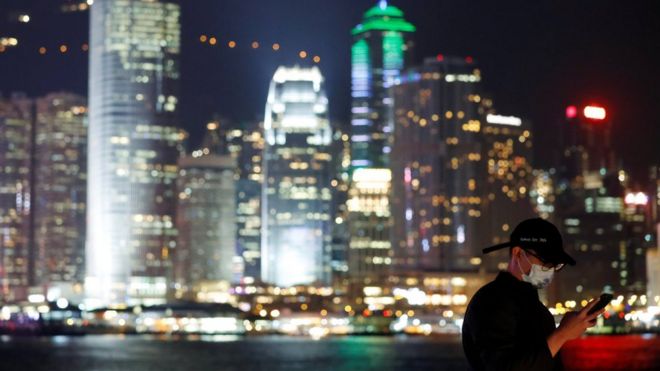
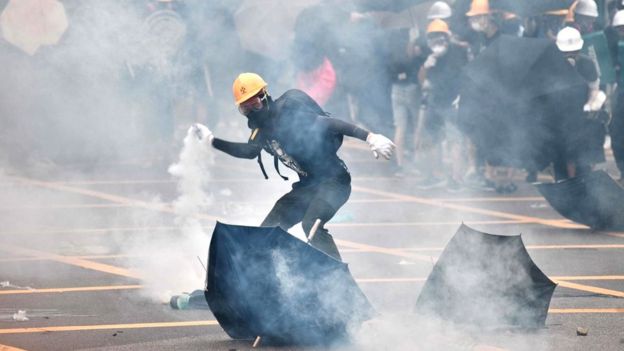
Image copyright REUTERSImage caption Virus fears are only the latest in a string of troubles for Hong Kong
Hong Kong will hand out cash to adult permanent residents, to help boost spending and ease financial burden.
As part of the annual budget, $10,000 Hong Kong dollars ($1,280; £985) was announced for about seven million people over the age of 18.
The territory’s economy has been battered by months of violent political unrest, and more recently suffered from the impact of the coronavirus.
The city has had 81 confirmed cases of the virus and two deaths.
“Hong Kong’s economy is facing enormous challenges this year,” Financial Secretary Paul Chan said on Wednesday.
“After careful consideration, I have decided to disburse HK$10,000 to Hong Kong permanent residents aged 18 or above, with a view to encouraging and boosting local consumption on the one hand, and relieving people’s financial burden on the other,” Mr Chan said.
Image copyright AFPImage caption Hong Kong has seen months of violent protests against the government
Hong Kong had previously announced a relief fund for sectors that have suffered because of the outbreak, including cash handouts for businesses like restaurants and travel operations.
In the last weeks, the threat of the coronavirus spilling over from the mainland has slowed down much of public life and dealt a serious blow to the tourism sector.
The financial hub is also reeling from the ongoing US-China trade war, slowing down trade between the world’s two largest economies.
Elderly resident says he can’t recall this happening in his city before, not even during the Cultural Revolution
Outbreak is expected to deal a heavy blow to businesses, especially smaller eateries, with some already forced to close
Like many elderly Chinese in Guangzhou, He Zhijian was shocked when he heard there was a ban on eating in restaurants, as authorities try to curb the spread of the coronavirus.
The 73-year-old has spent his entire life in the southern city, where gathering for dim sum is an important weekly family ritual.
“My wife and I … are used to having dim sum, tea and Cantonese dishes at the local restaurants every week. From memory, this [type of ban] has never happened in Guangzhou before – not even during the Cultural Revolution,” He said, referring to the decade of social and political upheaval from 1966, when food was in short supply.
The ban took effect at 9pm on Wednesday and is part of measures to contain the outbreak of the virus, which causes a disease officially known as Covid-19, and is believed to have started in Wuhan in December. The pneumonia-like illness has so far
Residents can still get takeaway meals in Guangzhou, but they have been encouraged to order online and have them delivered. Photo: He Huifeng
Guangzhou is home to more than 15 million people and a busy trading port, and has been known as China’s most open city since the 1600s. For locals, going to restaurants for yum cha, or “drinking tea”, and dining on dim sum is an important part of the city’s history and culture – a tradition that has been carried through many generations.
“Even in the ‘three years of natural disasters’ [from 1959 to 1961, when China was in the grip of a famine] I remember there were still restaurants open,” He said. “I was really shocked [by the ban]. I guess the epidemic situation must be severe, otherwise Guangzhou definitely wouldn’t introduce this measure.”
China’s Hubei province reports huge spike in coronavirus cases, rising 10-fold from previous day
Many people in Guangzhou and across the country went back to work on Monday after an extended Lunar New Year break – another measure to try to stop the virus from spreading – with the government keen for businesses to return to normal operations.
The ban on dining in applies to restaurants, but employees can continue to have meals at their company canteens. And while residents can still get takeaways from restaurants, they have been encouraged to do this online, and have their meals delivered, rather than collecting their orders.
Group gatherings have also been banned in the city, and according to Nanfang Daily, some 126 banquets that would have involved more than 90,000 people have been cancelled by authorities already. The authorities did not say how long the measures would be in place.
Guangzhou is not the only city in Guangdong province to bring in a ban on dining in restaurants – Futian district in Shenzhen, Xiangzhou in Zhuhai, Foshan and Zhongshan have all taken the same step.
Beijingers gradually return to work as China’s fight against deadly coronavirus continues
In Guangzhou, while residents try to adapt, businesses are expecting to take a hit. One of the city’s top hotels said the virus outbreak could have a severe impact on the industry.
“Now we will focus on promoting takeaways for local customers. They can order our meals through apps providing online takeaway ordering services,” said Fion Liang, director of sales and marketing at The Garden Hotel. “As for guests staying in the hotel we will deliver meals to their rooms.”
To work or not to work: the difficult coronavirus question facing China
13 Feb 2020
She said the outbreak did not have a big impact on the hotel’s business in January, because the situation only became severe at the end of the month.
“The impact was definitely much bigger in February. If the epidemic continues to be severe throughout February, the occupancy rate of our rooms will be in the single digits this month,” Liang said. “[Most] hotels in Guangzhou are in the same situation.”
The outbreak is expected to deal a heavy blow to restaurants in the city, especially smaller eateries, and some have already been forced to close. June Zhao, the owner of dumpling restaurant Xi Xi, decided to shut down on Wednesday – the day the eat-in ban was announced.
Prospects had been good for the restaurant – it also sold books and alcohol in the evenings, and its trendy decor drew a young crowd.
“We had just started making money last winter and we were looking forward to earning more over the Lunar New Year holiday. But then the coronavirus came, our turnover fell to several hundred yuan a day, and we lost hope,” she said. “The new ban makes this situation worse – takeaway is not a good choice for dumplings, especially in winter. The losses will continue if we stay open.”
Coronavirus: major cities given power to seize private property
13 Feb 2020
The ban has also interrupted daily routines. Freelance cameraman Cony Yu, 28, usually spends some of his working day at cafes, but that is no longer possible. “[Now] I don’t have a comfortable place to sit aside from my home – even the parks have all been closed,” Yu said.
China disinfects entire cities to fight coronavirus outbreak, some twice a day
In the southern tech hub of Shenzhen, dining in has also been banned in central Futian district. Zhu Hao, a financial analyst based in the district, has been working from home for a week and ordering takeaway food every day. But he has to collect it from the gate at his residential compound, where security staff check the temperature of anyone entering or leaving.
He is losing patience with the restrictions. “I want to eat out. I want beef hotpot, coconut chicken, Korean barbecue and seafood,” he said.
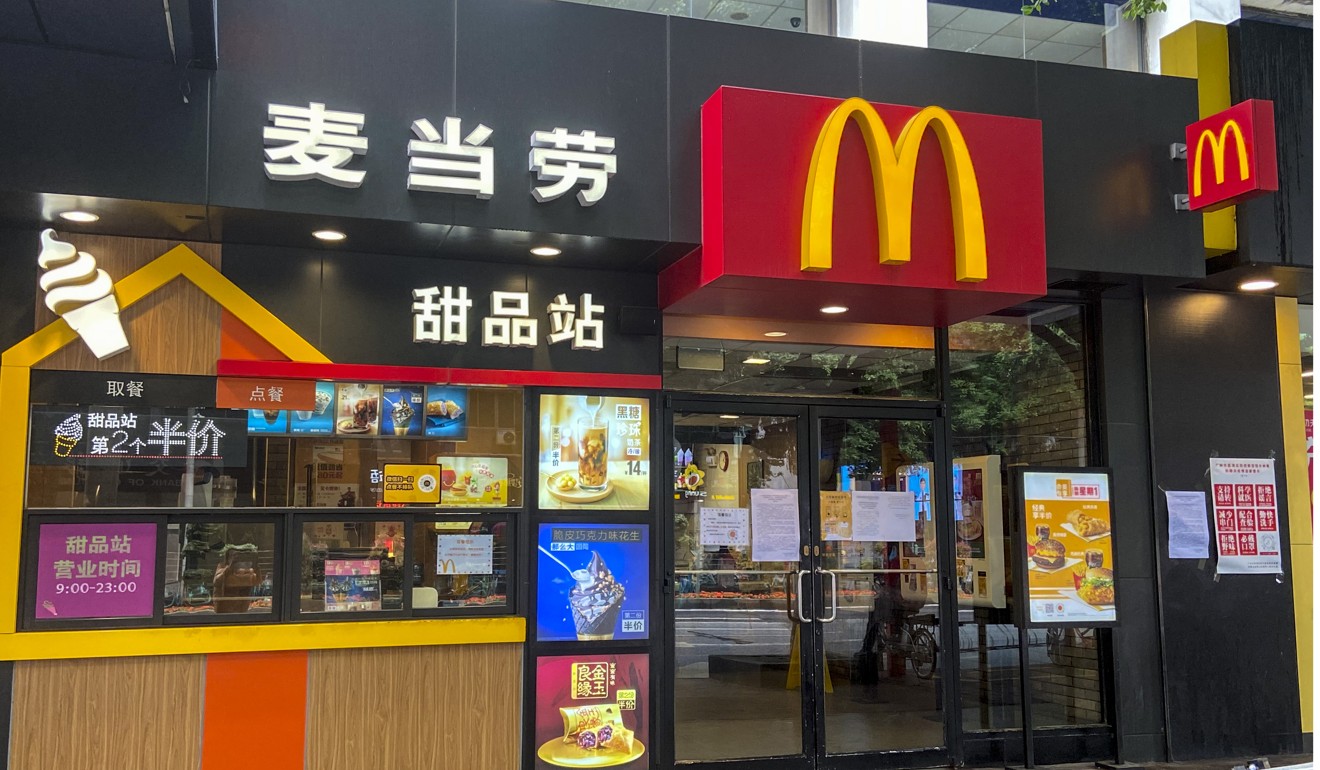
In other Shenzhen districts, many restaurants and shopping centres have been temporarily closed or can only provide takeaway meals – including fast food chains such as McDonald’s and Starbucks.
Other places have strict rules for customers. At a bread shop, customers must register their ID and phone numbers and have their temperatures checked before they can enter. And for now, all hotpot restaurants have been closed.
Image copyright JOSHY MALIYEKKALImage caption Drinking water reeking of alcohol started flowing out of the apartment taps
Residents of an apartment building in southern India were left in shock after a mix of beer, brandy and rum started gushing out of their taps.
The smelly, brown liquid began flowing from kitchen taps in the block of flats, in Kerala, on Monday morning.
Bemused residents then contacted the authorities for help, and discovered their water well had been contaminated by officials – albeit accidentally.
It emerged 6,000 litres of confiscated alcohol had been buried nearby.
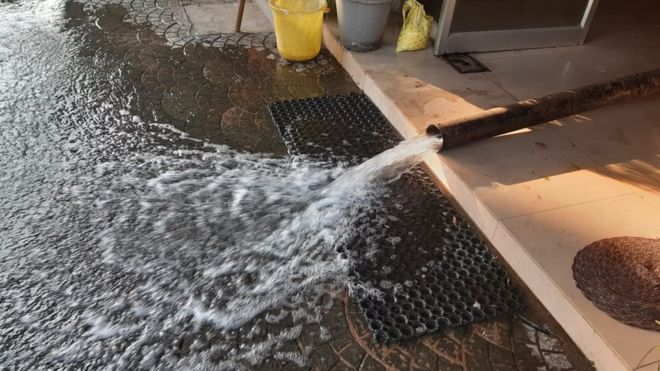
The alcohol, which officials had placed in a pit after it was seized on court orders, had seeped through the soil and into a well – the same well which supplied the residents of the 18 flats in Thrissur district with drinking water.
“We were so shocked,” Joshy Malyiekkal, owner of the apartment complex, told BBC Hindi’s Imran Qureshi.
Luckily, the strong smell put people off consuming the water. However, the discovery meant there was not only no drinking water for the families, but they were also unable to wash.
“The children couldn’t go to school and even their parents couldn’t go to work,” Mr Malyiekkal said.
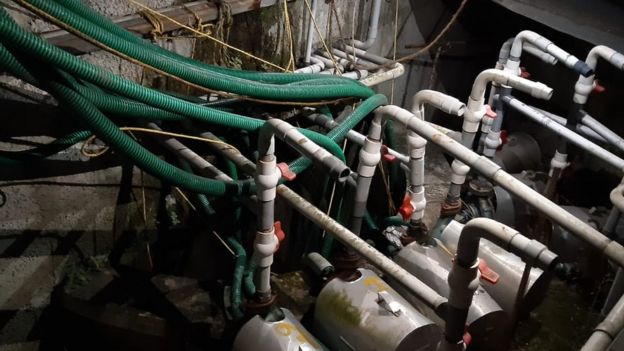
Image copyright JOSHY MALIYEKKALImage caption The contaminated water from the well being pumped out
After residents complained, officials acted to rectify the mistake.
But the process of pumping the well clean is likely to take a month, according to residents, leaving them reliant on deliveries from authorities.
“They’ve been supplying about 5,000 litres of water daily but it is not enough to cover all the families in our building,” Mr Malyiekkal said, pointing out the well was their main source of water.
Officials from the department did not respond to questions from the BBC.
The state of Kerala has the highest consumption of alcohol in the country.
New system to enable businesses and government agencies to verify mainland-issued travel permits
The new system is expected to expand access to the public transport system on the mainland. Photo: Roy Issa
Hong Kong and Macau residents and “overseas Chinese” may soon be able to have full access to public services on the mainland using their China-issued travel documents, state news agency Xinhua reported.
Xinhua reported on Wednesday that the National Immigration Administration was putting a platform in place to enable government agencies and businesses to verify mainland-issued travel permits for Hong Kong and Macau residents.
“As soon as the platform becomes operational, these overseas travellers can, from October, have access to 35 public services, ranging from transport, to finance, education, communications, medical care and accommodation,” the report said.
According to the report, “overseas travellers” cover Hong Kong and Macau residents and ethnic Chinese living overseas.
But it did not say why the new measures did not apply to people from Taiwan.
The administration did not respond to requests for comment on Thursday.
Will Hong Kong anti-government protests ruin city’s role in Beijing’s Greater Bay Area plan? Depends on whom you ask
The new measure appears to be part of a long-term strategy by Beijing to foster closer ties between the mainland and Hong Kong and Macau.
In the last few years, the central government has launched a host of incentives for Hong Kong and Macau residents and businesses, including opportunities in the Greater Bay Area development plan in southern China.
Ivan Zhai, executive director of the Hong Kong Chamber of Commerce in China-Guangdong, welcomed the new measure.
“If such an arrangement can be fully implemented, Hong Kong businesspeople who operate on the mainland will be thrilled,” Zhai said.
The Hong Kong business community has long lobbied for relaxation over areas such as train ticketing and hotel registration.
Zhai said that although Hong Kong and Macau residents could now book high-speed train tickets with their mainland-issued travel permits, there were few ticket machines that could automatically read the permits, complicating the process.
“There are also hotels on the mainland that can only entertain guests with Chinese identity cards and currently Hong Kong travellers can only go to hotels that are authorised to accept the mainland-issued travel permits,” he said.
China’s regulator relaxes currency conversion rules throughout Shenzhen, sharpening city’s edge in Greater Bay Area
According to the report, there will be stiff penalties for departments or businesses misusing information collected through the platform.
Zhai said Hong Kong businesspeople who travelled to the mainland often were more likely to be concerned about convenience than the risk of invasion of privacy.
“If you are a frequent traveller in China, you would have expected that the relevant departments of the Chinese government already have information about you anyway,” he said.
Hangzhou subway operator says water seeped into underground construction site
Zhejiang’s capital was scene of subway collapse that claimed 21 workers’ lives in 2008
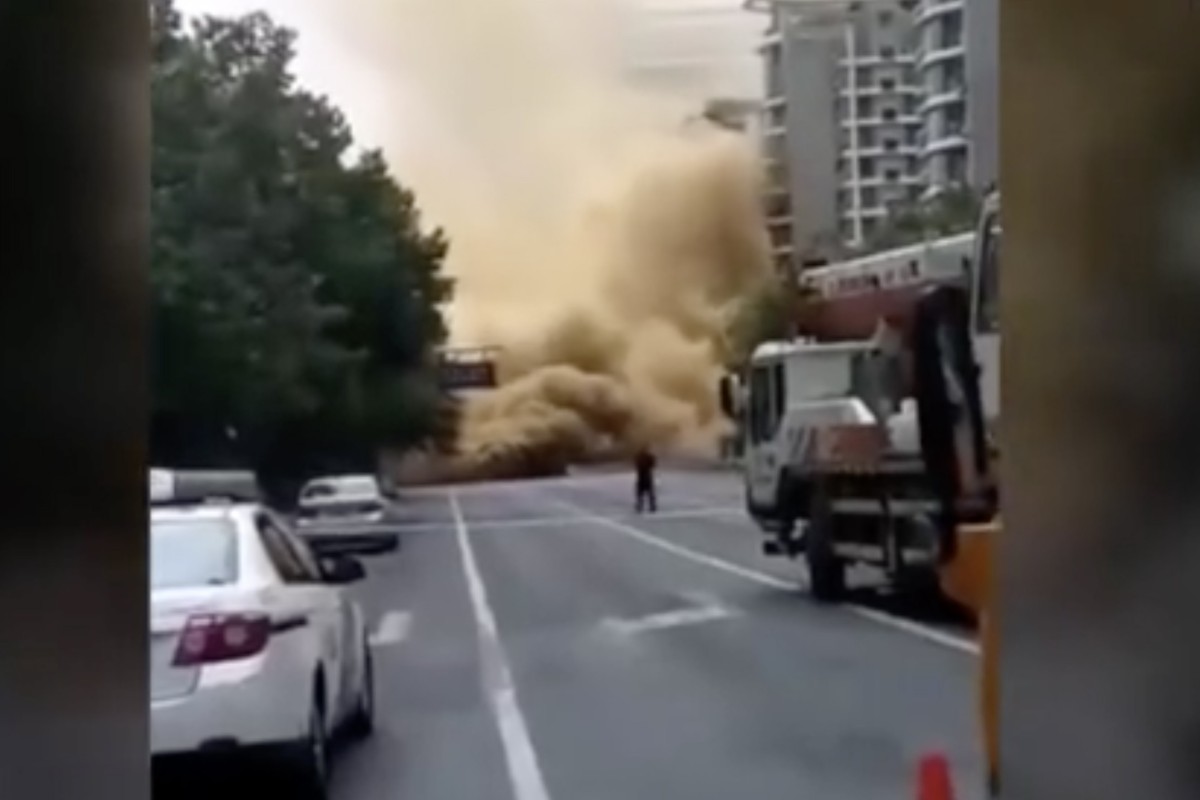
A yellow cloud engulfs buildings after a subway tunnel in Hangzhou, Zhejiang province, collapses. Photo: Pear Video
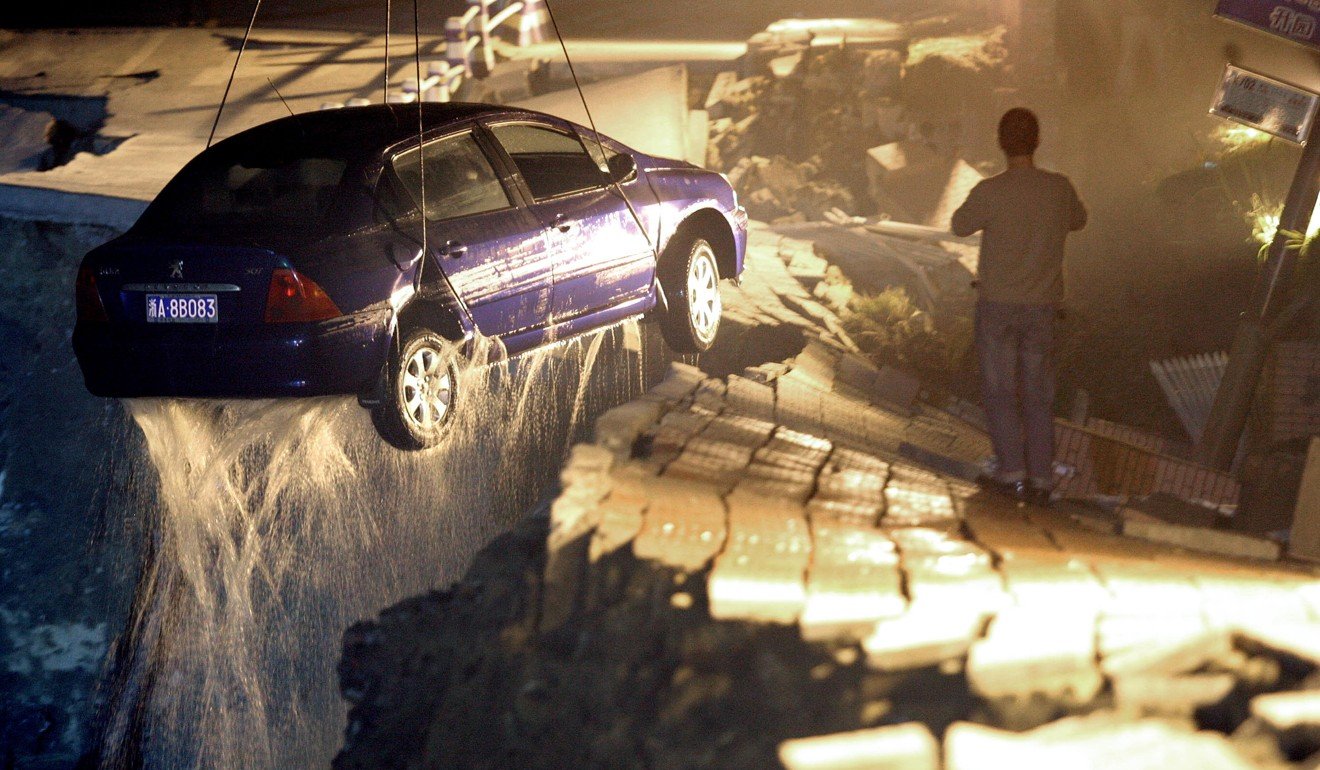
Homes in a major city in eastern China were evacuated on Wednesday after water seepage at a subway construction site caused a main road to cave in and cut a gas main.
Authorities in Hangzhou, Zhejiang province, said dozens of residents feared for their homes as buildings cracked and swayed from the cave-in.
Videos posted to the Weibo microblogging network showed yellow smoke engulfing the neighbourhood as the road fell below street level. Authorities said Hangzhou’s gas supplier managed to close off the mains.
Hangzhou Metro Group, the city’s subway operator and the company overseeing the network’s expansion from four lines to nine for the 2022 Asian Games, said on Weibo that water seeped into a tunnel that connected two stations in the centre of the city, leading to the collapse.
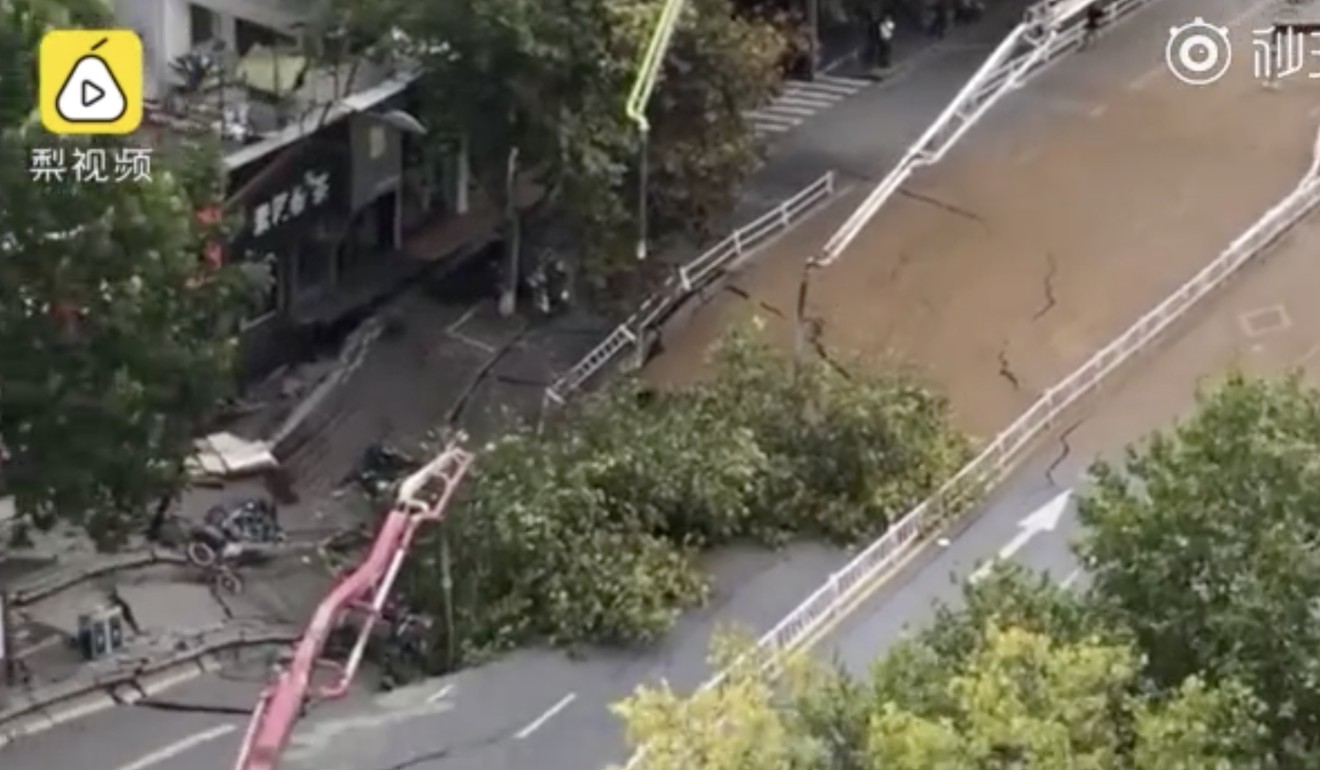
The collapse took down a four-lane road in central Hangzhou. Photo: Pear Video
That caused a hole under the carriageway and took the pavement down with it. Hangzhou Metro said homes around the site were cleared and authorities were monitoring for further danger.
It was not known how many residents were affected, but no casualties were reported.
Most residents were put up in a nearby school until accommodation could be arranged, the City Express newspaper reported, adding that several truckloads of cement were poured into the hole.
Eight Chinese killed as road collapses near subway construction project
The road collapse in central Hangzhou was the latest in a series of subway construction accidents there – some of them deadly – in the past decade as China races to expand its urban rail networks.
In November 2008, 21 workers were killed and 24 were injured when a tunnel Hangzhou’s Line 1 collapsed beneath an eight-lane road and river water rushed in. A court sent eight people to jail for terms of between three and 5½ years for negligence at the site.
Two years later at the same place, a truck driver died and another was injured as a pit collapsed.
In 2016, four construction workers were killed when mud flooded a pit at a station on Line 4.
In 2008, an eight-lane riverside road in Hangzhou fell in on workers building a subway tunnel, killing 21. Photo: AFP
A cave-in similar to Wednesday’s collapse overturned a truck at a construction site near Hangzhou railway station this month, but no one was injured, Hangzhou Metro said.
According to the China Association of Metros, by the end of last year, more than 5,700km (3,540 miles) of urban railway had been built in 35 mainland cities, of which more than a third – 2,100km – was completed since 2015.















 CHINDIA ALERT: You'll be living in their world, very soon