Chindia Alert: You’ll be Living in their World Very Soon
aims to alert you to the threats and opportunities that China and India present. China and India require serious attention; case of ‘hidden dragon and crouching tiger’.
Without this attention, governments, businesses and, indeed, individuals may find themselves at a great disadvantage sooner rather than later.
The POSTs (front webpages) are mainly 'cuttings' from reliable sources, updated continuously.
The PAGEs (see Tabs, above) attempt to make the information more meaningful by putting some structure to the information we have researched and assembled since 2006.
Between January 20 and April 4, PM2.5 levels across the country fell by more than 18 per cent, according to the environment ministry
But observers say that as soon as the nation’s factories and roads get back to normal, so too will the air pollution levels
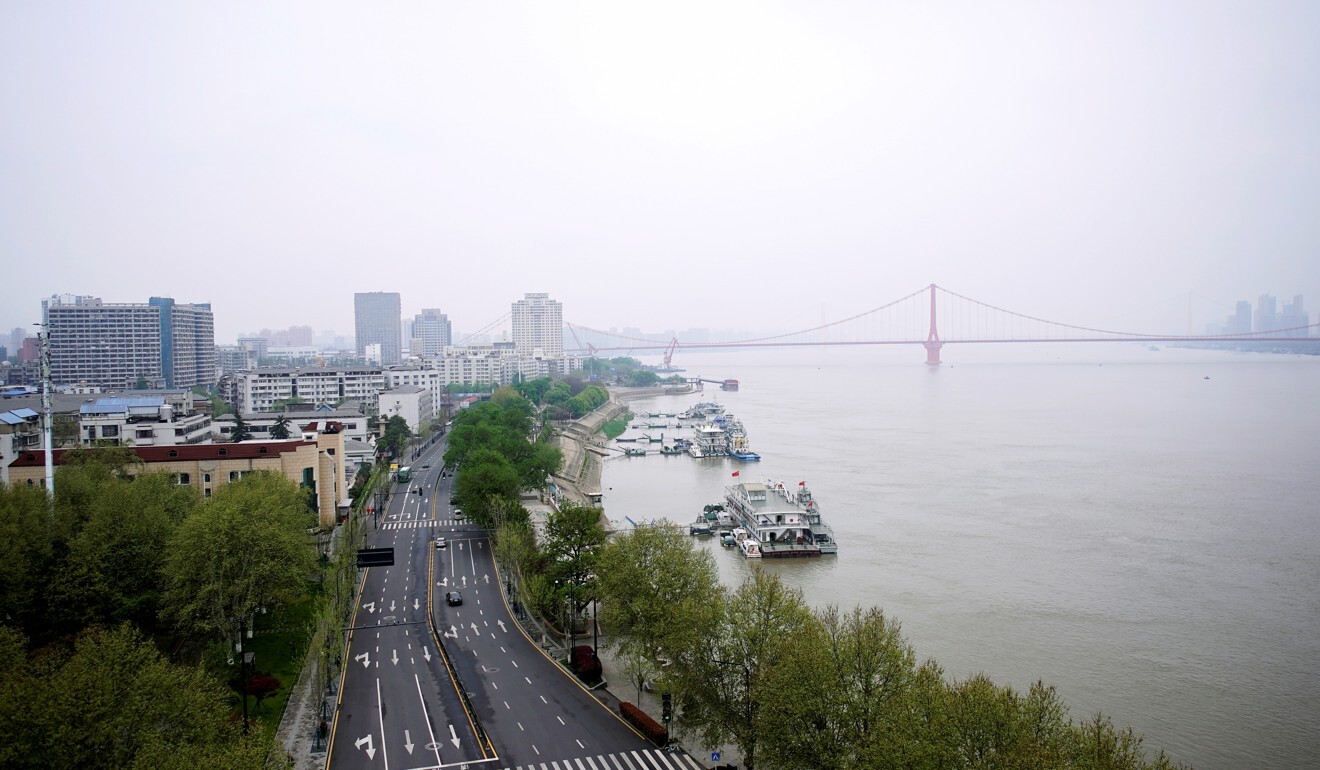
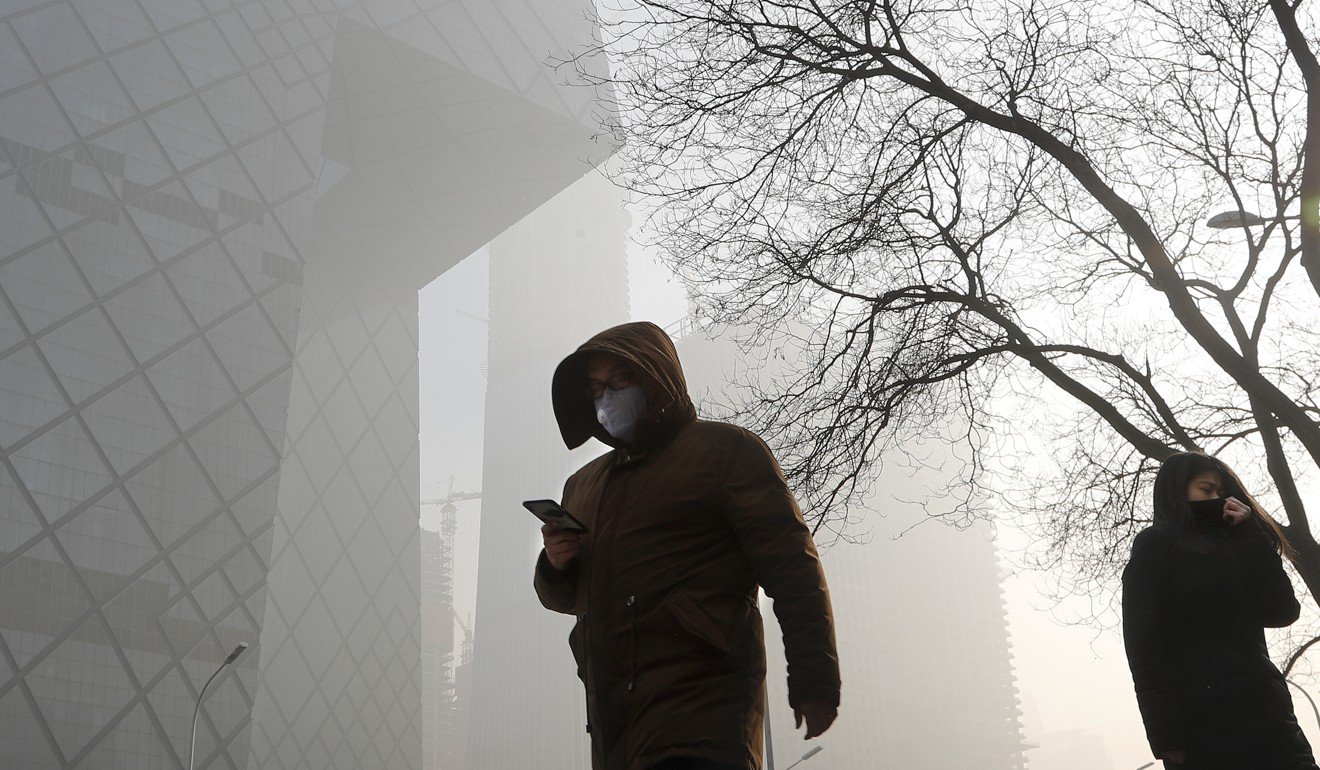
Blue skies were an unexpected upside of locking down cities and halting industrial production across China. Photo: AFP
China’s air quality has improved dramatically in recent weeks as a result of the widespread city lockdowns and strict travel restrictions introduced to contain the
. But experts say the blue skies could rapidly disappear as factories and roads reopen under a government stimulus plan to breathe new life into a stalled economy.
According to the Ministry of Ecology and Environment, between January 20 and April 4 the average concentration of PM2.5 – the tiny particles that pose the biggest risk to health – fell by 18.4 per cent from the same period of last year.
Meanwhile, the average number of days with good air quality – determined as when the air pollution index falls below 100 – rose by 7.5 per cent, it said.
Satellite images released by Nasa and the European Space Agency showed a dramatic drop in nitrogen dioxide emissions in major Chinese cities in the first two months of 2020, compared with a year earlier.
According to Nasa, the changes in Wuhan – the central China city at the epicentre of the initial coronavirus outbreak – were particularly striking, while nitrogen dioxide levels across the whole of eastern and central China were 10 to 30 per cent lower than normal.
The region is home to hundreds of factories, supplying everything from steel and car parts to microchips. Wuhan, which has a population of 11 million, was placed under lockdown on January 23, but those restrictions were lifted on Wednesday
.
Air pollution is likely to return to China’s cities once the lockdowns are lifted. Photo: Reuters
Nitrogen dioxide is produced by cars, power plants and other industrial facilities and is thought to exacerbate respiratory illnesses such as asthma.
The space agency said the decline in air pollution levels coincided with the restrictions imposed on transport and business activities.
That was consistent with official data from China’s National Development and Reform Commission, which recorded a 25 per cent fall in road freight volume and a 14 per cent decline in the consumption of oil products between January and February.
Guangzhou cases prompt shutdown in ‘Little Africa’ trading hub
8 Apr 2020
Liu Qian, a senior climate campaigner for Greenpeace based in Beijing, said the restrictions on industry and travel were the primary reasons for the improvement in air quality.
According to official data, in February, the concentrations of PM2.5, nitrogen dioxide and sulphur dioxide – a toxic gas that comes mostly from industrial burning of coal and other fossil fuels – all fell, by 27 per cent, 28 per cent and 23 per cent, respectively.
“The causes of air pollution are complicated, but the suspension of industrial activity and a drop in public transport use will have helped to reduce levels,” Liu said.
As the epicentre of the Covid-19 pandemic has shifted to the United States and
, human and industrial activity in China is gradually picking back up, and so is air pollution.
Lauri Myllyvirta, lead analyst with the Centre for Research on Energy and Clean Air in Helsinki, said that levels of nitrogen dioxide pollution, measured both by Nasa satellites and official stations in China, started inching back up in the middle of March and had returned to normal levels by the end of the month.
That coincided with the centre’s findings – published on Carbon Brief, a British website on climate change – that coal consumption at power plants and oil refineries across China returned to their normal levels in the fourth week of March.
How the Wuhan experience could help coronavirus battle in US and Europe
10 Apr 2020
Ma Jun, director of the Institute of Public & Environmental Affairs, a Beijing-based charity, said a stimulus plan to kick-start the economy would have a significant impact on air pollution.
“Once industrial production is fully resumed, so are the emission levels,” he said. “Unless another outbreak happens and triggers another lockdown, which would be terrible, the improvement achieved under the pandemic is unstable and won’t last long.”
After the 2008 financial crisis, Beijing launched a 4 trillion yuan (US$567.6 billion) stimulus package that included massive infrastructure investment, but also did huge damage to the environment. In the years that followed, air pollution rose to record highs and sparked a public backlash.
Even before the Covid-19 outbreak, China’s economy was slowing – it grew by 6.1 per cent in 2019, its slowest for 29 years – and concerns are now growing that policymakers will go all out to revive it.
“Local governments have been under huge pressure since last year, and there are fears that environmental regulations will be sidelined [in the push to boost economic output],” Ma said.
But Beijing had the opportunity to get it right this time by investing more in green infrastructure projects rather than high-carbon projects, he said.
“A balance between economic development and environmental protection is key to achieving a green recovery, and that is what China needs.”
The patients were all returning Chinese citizens who had flown from Moscow to Vladivostok, a Russian city around 100 miles south.
All the new patients were taken to hospital, with two in a serious condition.
In addition, another 86 people in Suifenhe – who came via the same route – were classed as “asymptomatic” but positive for the virus, which China counts separately.
What has Suifenhe done?
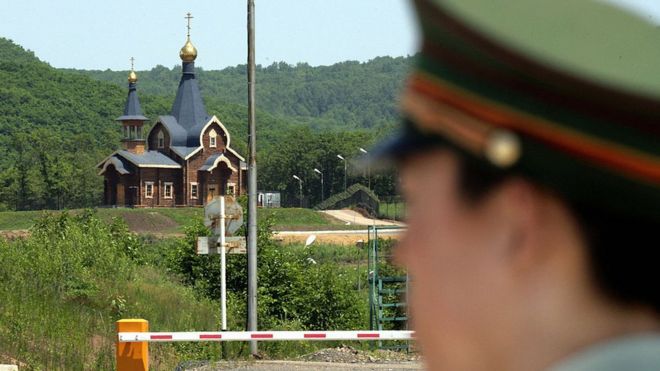
The border was closed to people on Tuesday, the local government said, although cargo can continue. Russia closed its border with China in February.
People in the city have been told to stay at home, although the lockdown isn’t as severe as Hubei province experienced. One person per house can shop for essentials every three days.
At the same time, the new hospital – in an existing building – is due to open this weekend, intended for patients with mild symptoms.
“Of course I’m very scared,” one woman who runs a bakery shop told the BBC.
“We don’t leave the house now. Many people already left the city. But we can’t do that, because we have a shop need to take care of.”
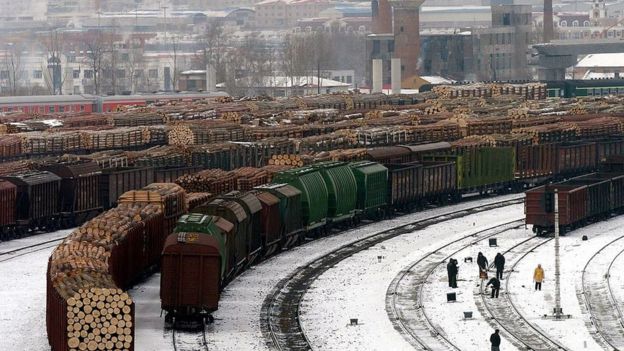
Image copyright SOVFOTOImage caption This picture from 2005 showed the extent of Russian timber exports passing through Suifenhe railway station
Meanwhile, a member of staff at a restaurant in the city said it was normally their high season, with around 1,000 customers a day.
Instead, they were told to close earlier this week, with “no idea” when they can open again.
But the staff member was not critical of the government. He said the lockdown made him feel “secure” – and that he was “very confident” the government would look after the situation.
What is the situation in the rest of China?
China’s recorded rate of Covid-19 infections has slowed dramatically in recent weeks.
On Wednesday, people were allowed to leave Wuhan – where the outbreak emerged – for the first time in 11 weeks if they were deemed virus-free.
There were 221 inbound and outbound flights, with more than 7,000 people leaving and 4,500 arriving. More than half a million used public transport, state media reported.
But although people from Wuhan can leave, they still face restrictions in other cities. In Beijing, for example, they will be tested upon arrival, according to local media.
Even if they pass, they will then be quarantined for 14 days – and tested again – before being released.
BEIJING/WUHAN, China (Reuters) – China on Saturday mourned the thousands of “martyrs” who have died in the new coronavirus outbreak, flying the national flag at half mast throughout the country and suspending all forms of entertainment.
The Chinese national flag flies at half-mast at Tiananmen Square in Beijing, as China holds a national mourning for those who died of the coronavirus disease (COVID-19), on the Qingming tomb sweeping festival, April 4, 2020. REUTERS/Carlos Garcia Rawlins
The day of mourning coincided with the start of the annual Qingming tomb-sweeping festival, when millions of Chinese families pay respects to their ancestors.
At 10 a.m. (0200 GMT) Beijing time, the country observed three minutes of silence to mourn those who died, including frontline medical workers and doctors. Cars, trains and ships sounded their horns and air raid sirens wailed.
In Zhongnanhai, the seat of political power in Beijing, President Xi Jinping and other Chinese leaders paid silent tribute in front of the national flag, with white flowers pinned to their chest as a mark of mourning, state media reported.
More than 3,300 people in mainland China have died in the epidemic, which first surfaced in the central province of Hubei late last year, according to statistics published by the National Health Commission.
In Wuhan, the capital of Hubei province and the epicentre of the outbreak, all traffic lights in urban areas turned red at 10 a.m. and all road traffic ceased for three minutes.
Some 2,567 people have died in Wuhan, a megacity of 11 million people located in the middle reaches of the Yangtze river. The Wuhan deaths account for more than 75% of the country’s fatalities.
Among those who died was Li Wenliang, a young doctor who tried to raise the alarm about the disease. Li was honoured by the Hubei government earlier this week, after initially being reprimanded by police in Wuhan for “spreading rumours”.
Gui Yihong, 27, who was among thousands of Wuhan locals who volunteered to deliver food supplies to hospitals during the city’s months-long lockdown, recalled the fear, frustration and pain at Wuhan Central Hospital, where Li worked.
“If you weren’t at the frontlines you wouldn’t be able to experience this,” said Gui, as he laid some flowers next to Wuhan’s 1954 flood memorial by the Yangtze.
“I had to (come) and bear witness. For the last 80 days we had fought between life and death, and finally gained victory. It was not easy at all to come by.”
While the worst was behind Wuhan, the virus has spread to all corners of the globe since January, sickening more than a million people, killing more than 55,000 and paralysing the world economy.
Wuhan banned all tomb-sweeping activities in its cemeteries until at least April 30, curtailing one of the most important dates in the traditional Chinese lunar new year calendar which usually sees millions of families travel to tend to their ancestral graves, offer flowers and burn incense.
They have also told residents, most stuck at home due to lockdown restrictions, to use online streaming services to watch cemetery staff carry out those tasks live.
ASYMPTOMATIC CASES
Online, celebrities including “X-Men: Days of Future Past” star Fan Bingbing swapped their glamorous social media profile pictures for sombre photos in grey or black, garnering millions of “likes” from fans.
Chinese gaming and social media giant Tencent (0700.HK) suspended all online games on Saturday.
As of Friday, the total number of confirmed cases across the country stood at 81,639, including 19 new infections, the National Health Commission said.
Eighteen of the new cases involved travellers arriving from abroad. The remaining one new infection was a local case in Wuhan, a patient who was previously asymptomatic.
Asymptomatic people exhibit few signs of infection such as fevers or coughs, and are not included in the tally of confirmed cases by Chinese authorities until they do.
However, they are still infectious, and the government has warned of possible local transmissions if such asymptomatic cases are not properly monitored.
China reported 64 new asymptomatic cases as of Friday, including 26 travellers arriving in the country from overseas. That takes the total number of asymptomatic people currently under medical observation to 1,030, including 729 in Hubei.
BEIJING (Reuters) – China’s Hubei province where the coronavirus pandemic originated will lift travel restrictions on people leaving the region as the epidemic there eases, but other regions will tighten controls as new cases double due to imported infections.
The Hubei Health Commission announced it would lift curbs on outgoing travellers starting March 25, provided they had a health clearance code.
The provincial capital Wuhan, where the virus first appeared and which has been in total lockdown since since Jan. 23, will see its travel restrictions lifted on April 8.
RELATED COVERAGE
China health commission says virus transmission risks remain
China’s Hubei province to remove travel bans starting March 25
However, the risk from overseas infections appears to be on the rise, prompting tougher screening and quarantine measures in major cities such as the capital Beijing.
China had 78 new cases on Monday, the National Health Commission said, a two-fold increase from Sunday. Of the new cases, 74 were imported infections, up from 39 imported cases a day earlier.
The Chinese capital Beijing was the hardest-hit, with a record 31 new imported cases, followed by southern Guangdong province with 14 and the financial hub of Shanghai with nine. The total number of imported cases stood at 427 as of Monday.
Only four new cases were local transmissions. One was in Wuhan which had not reported a new infection in five days.
Wuhan residents will soon be allowed to leave with a health tracking code, a QR code, which will have an individual’s health status linked to it.
In other parts of the country, authorities have continued to impose tougher screening and quarantine and have diverted international flights from Beijing to other Chinese cities, but that has not stemmed the influx of Chinese nationals, many of whom are students returning home from virus-hit countries.
Beijing’s city government tightened quarantine rules for individuals arriving from overseas, saying on Tuesday that everyone entering the city will be subject to centralised quarantine and health checks.
The southern city of Shenzhen said on Tuesday it will test all arrivals and the Chinese territory of Macau will ban visitors from the mainland, Hong Kong and Taiwan.
The number of local infections from overseas arrivals – the first of which was reported in the southern travel hub of Guangzhou on Saturday – remains very small.
On Monday, Beijing saw its first case of a local person being infected by an international traveller arriving in China. Shanghai reported a similar case, bringing the total number of such infections to three so far.
CONCERNS ABOUT NEW WAVE OF INFECTIONS
The rise in imported cases and the lifting of restrictions in some cities to allow people to return to work and kickstart the battered Chinese economy has raised concerns of a second wave of infections.
A private survey on Tuesday suggested that a 10-11% contraction in first-quarter gross domestic product in the world’s second largest economy “is not unreasonable”.
The epidemic has hammered all sectors of the economy – from manufacturing to tourism. To persuade businesses to reopen, policymakers have promised loans, aids and subsidies.
In the impoverished province of Gansu, government officials are each required to spend at least 200 yuan (24.31 pounds) a week to spur the recovery of the local catering industry.
The official China Daily warned in an editorial on Tuesday that maintaining stringent restrictions on people’s movements would “now do more harm than good”.
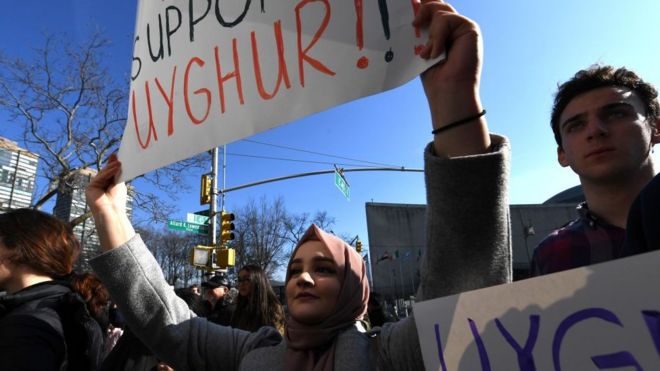
Image copyright GETTY IMAGESImage caption Protests calling for Uighur freedom have been happening all year
The US has said it will impose visa restrictions on Chinese officials accused of involvement in repression of Muslim populations.
It follows the decision on Monday to blacklist 28 Chinese organisations linked by the US to allegations of abuse in the Xinjiang region.
US Secretary of State Mike Pompeo said the Chinese government had instituted “a highly repressive campaign”.
China has dismissed the allegations as groundless.
In a statement, Mr Pompeo accused the Chinese government of a string of abuses against Uighurs, ethnic Kazakhs, Kyrgyz Muslims and other minority Muslim groups.
These included “mass detentions in internment camps; pervasive, high-tech surveillance; draconian controls on expressions of cultural and religious identities; and coercion of individuals to return from abroad to an often perilous fate in China”.
China has rebuffed the US moves.
“There is no such thing as these so-called ‘human rights issues’ as claimed by the United States,” foreign ministry spokesman Geng Shuang said on Monday.
“These accusations are nothing more than an excuse for the United States to deliberately interfere in China’s internal affairs.”
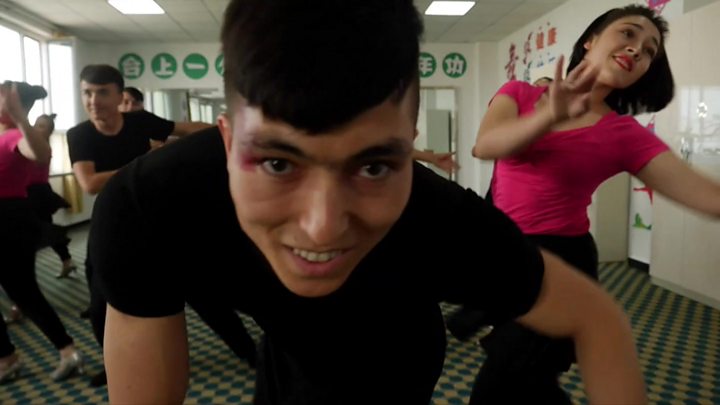
Media caption The BBC visits the camps where China’s Muslims have their “thoughts transformed”
Visa restrictions are to be imposed on Chinese government and Communist Party officials, as well as their family members.
“The United States calls on the People’s Republic of China to immediately end its campaign of repression in Xinjiang, release all those arbitrarily detained, and cease efforts to coerce members of Chinese Muslim minority groups residing abroad to return to China to face an uncertain fate,” the US statement said.
The US and China are currently embroiled in a trade war, and have sent delegations to Washington for a meeting about the tensions later this week.
China has been carrying out a massive security operation in Xinjiang, in its far west, in recent years.
Human rights groups and the UN say China has rounded up and detained more than a million Uighurs and other ethnic minorities in vast detention camps, where they are forced to renounce Islam, speak only in Mandarin Chinese and learn obedience to the communist government.
But China says they are attending “vocational training centres” which are giving them jobs and helping them integrate into Chinese society, in the name of preventing terrorism.
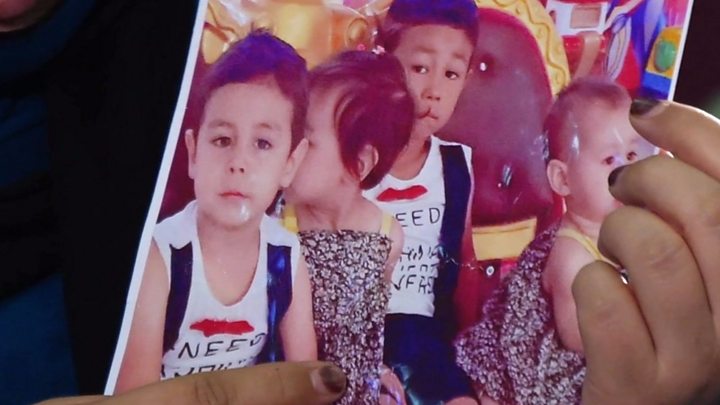
Media caption The BBC’s John Sudworth meets Uighur parents in Turkey who say their children are missing in China
There have been increasingly vocal denunciations from the US and other countries about China’s actions in Xinjiang.
Foreign lifestyle experiences are becoming more popular as citizens seek to escape pollution, food and medicine safety worries and authoritarian government controls
Citizens encountering more barriers to their dreams of travelling abroad, with severe limits on moving money overseas and restrictions on visiting foreign countries
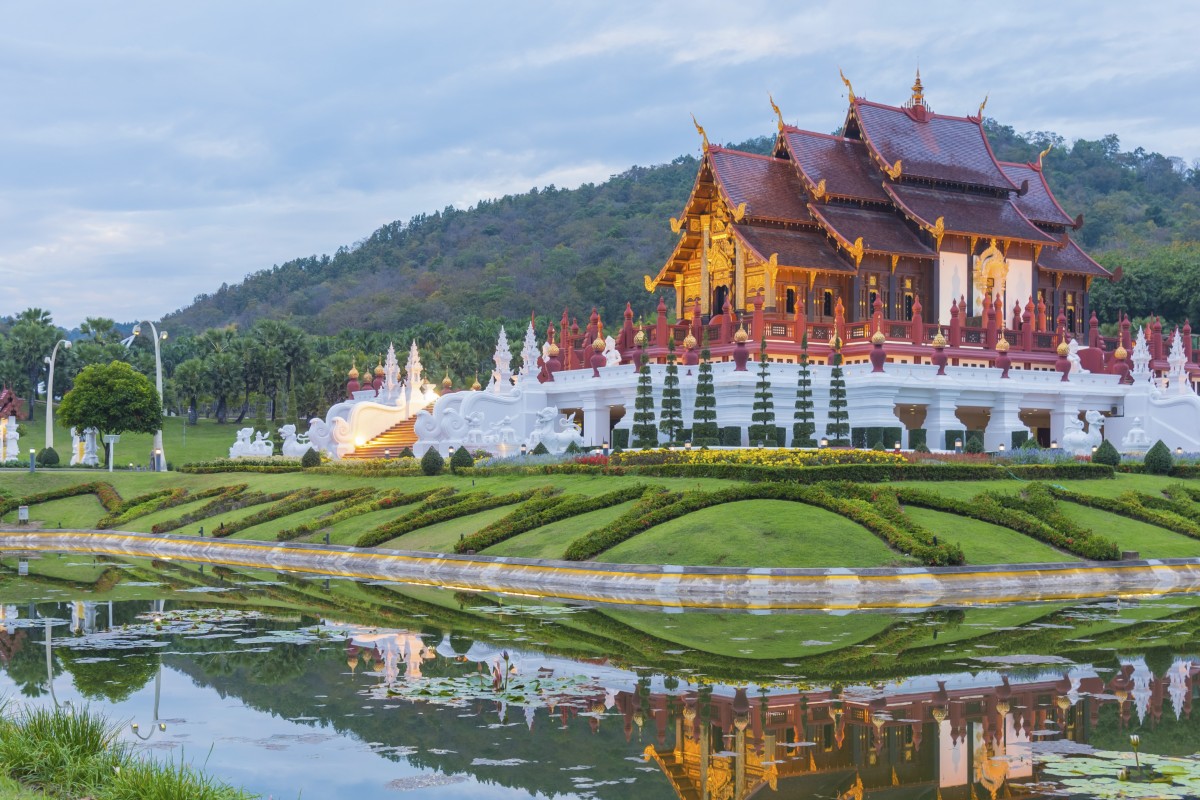
Thailand, including the likes of Chiang Mai, the United States, Australia, Canada, New Zealand are popular destinations for Chinese families. Photo: Shutteratock
Xu Zhangle and her husband and their two children are a typical middle-class couple from Shenzhen, and along with 60 other Chinese families, they are going on an extended holiday to Thailand in July, where they hope to enjoy an immigrant-like life experience.
The family have paid a travel agent around 50,000 yuan (US$7,473) for the stay in Chiang Mai in the mountainous north of the country, including transport, a three-week summer camp for their daughters at a local international school, rent for a serviced apartment and daily expenses.
Zhangle loves Chiang Mai’s relaxed lifestyle and easy atmosphere and wants to live as a local for a month or even longer, instead of having to rush through a short-term holiday.
“It would not be just [tourist] travelling but rather a life away from the mainland.” she said.
Recently, upper middle-class citizens have increased their efforts to safeguard their wealth and achieve more freedom by spending more time abroad.
They have invested considerable amounts of money in overseas properties and applied for long-stay visas, although many of their attempts have ended in failure.
Chinese citizens are encountering more barriers to their dreams of travelling abroad, with severe limits on moving money overseas and restrictions on visiting foreign countries.
Still, growing anxieties about air pollution, food and medicine safety and an increasingly authoritarian political climate are pushing middle class families to look for new ways to circumvent the obstacles so they can live outside China.
Among the options, there is growing demand for sojourns abroad of a month or more, to enjoy a foreign lifestyle for a brief period to make up for the fact that their emigration dreams may have stalled.
“I think this is becoming a trend. Chinese middle-class families are facing increasing difficulties to emigrate and own homes overseas. On the other hand, they still yearn for more freedom, for a better quality of life than what is found in first-tier cities in China.
They are eager to seek alternatives to give themselves and their children a global lifestyle,” said Cai Mingdong, founder of Zhejiang Newway, an online tour and education operator in Ningbo, south of Shanghai.
“First, the availability of multiple-entry tourist visas and the sharp drop in air ticket prices have made it convenient and practical to stay abroad for from a few weeks to up to three months each year.”
Blacklist labels millions of Chinese citizens and businesses untrustworthy
Now, many well-to-do Chinese middle class families can get a tourist visa for five or even 10 years that allows them to stay in a number of countries — including the United States, Australia, Canada, New Zealand and other Asian countries — for up to six months at a time.
“In 2011, a round-trip air ticket from Shanghai to New Zealand cost 14,000 yuan (US$2,000), but now is about 4,000 (US$598),” added Cai.
This opens up the possibility for many middle-class families who are not eligible to emigrate, to live abroad for short periods of time.
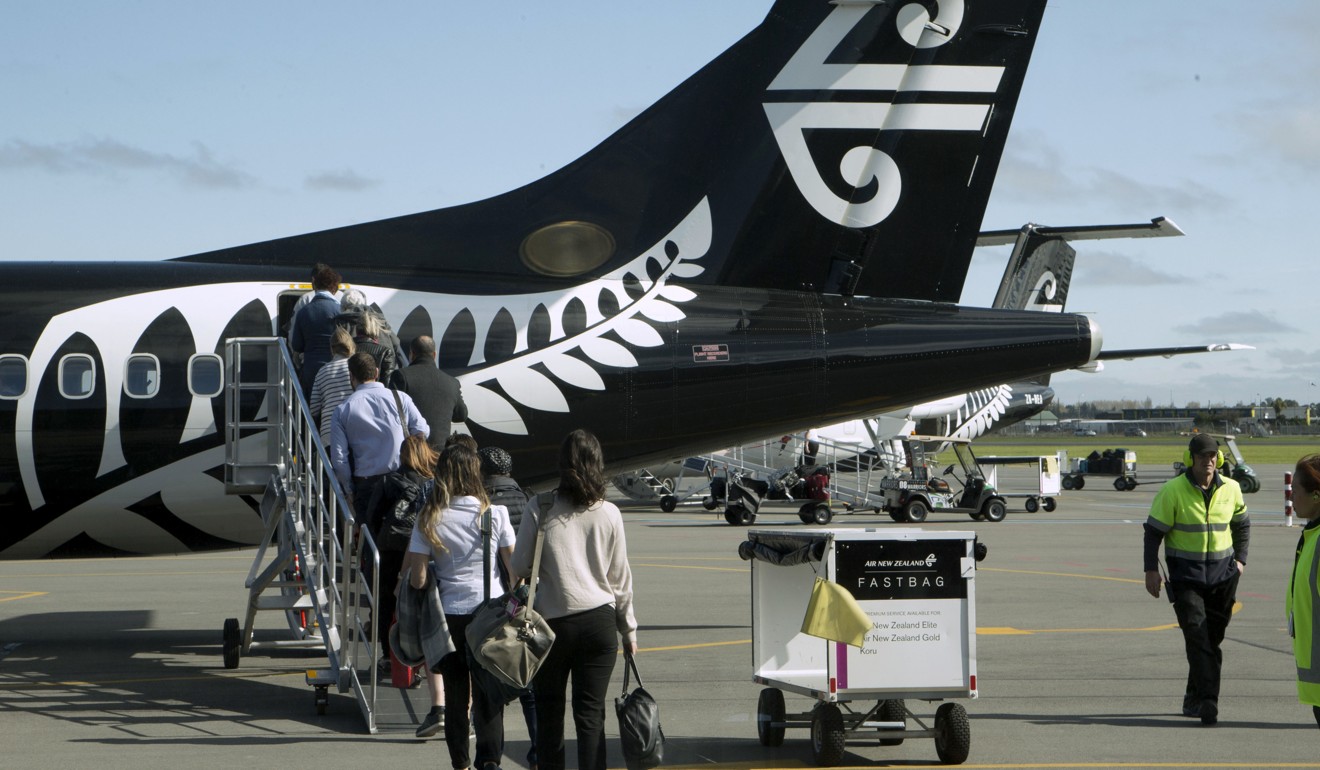
Many wealthy Chinese middle class families can get a tourist visa for five or even 10 years that allows them to stay in several countries including the United States, Australia, Canada, New Zealand and other Asian countries, for up to six months at a time. Photo: AP
Chinese tourists made more than 140 million trips outside the country in 2018, a 13.5 per cent increase from the previous year, spending an estimated US$120 billion, according to the China Tourism Academy, an official research institute under the Ministry of Culture and Tourism.
“In [the Thai cities of] Bangkok and Chiang Mai, there are more and more Chinese who stay there to experience the local lifestyle, which is different from theirs in China. The life there is very different from that in China,” said Owen Zhu, who now lives in the Bangkok condo he bought last year.
“The freedom, culture and community are diversified. The quality of air, food and services are much higher than in first-tier cities in China, but the prices are more affordable.
“In Bangkok, in many international apartment complexes where foreigners live, the monthly rent for a one-bedroom [apartment] is about 2,000 (US$298) to 3,000 yuan.”
China’s richest regions are also home to the most blacklisted firms
A one-bedroom apartment in Shenzhen in southern China is twice as expensive, with rents continuing to rise rapidly.
There are global goods, and it is easy to socialise with different people from around the world,” Zhu added
“Many Chinese people around me, really, come to Thailand to live for a while and go back to China, but then come back again after a few months.”
Both Cai and Zhu said they discovered the new phenomenon among China’s middle class and decided it was a business opportunity.
Growing anxieties about air pollution, food and medicine safety and an increasingly authoritarian political climate are pushing middle class families to look for new ways to circumvent the obstacles so they can live outside China. Photo: AP
Zhu is in the process of registering a company in Bangkok and plans to build an online platform to service the needs of Chinese citizens living abroad who do not own property or have immigration status, especially members of the LGBT community.
Cai said dozens of Chinese families in the Yangtze River Delta had paid him to send their children to schools in New Zealand or Europe for around three or four weeks in the middle of the school year, while the parents rent villas in the area, with New Zealand and Toronto in Canada among the most popular destinations.
Last year, Zheng Feng, a single mother and freelance writer from Beijing, rented a small villa in Australia for a month for them, a friend and their children to escape Beijing’s pollution and experience life overseas.
“To be honest, I don’t have enough money to invest in a property or a green card in Australia. But it’s very affordable for me and my son to pay about 30,000 yuan (US$4,484) to live abroad for one or two months.” Zheng said.
China says 2018 growth was worth more than Australia’s whole GDP
Zheng will join the Xu family in Chiang Mai later this year and she is also planning a similar trip to England next year.
Zheng’s friend, Alice Yu, invested in an American EB-5 investor visa a few years ago, and plans to make one or two month-long trips abroad each year until her family is finally able to move to the United States.
Demand for the EB-5 investor visa in China seems to be waning given heightened uncertainty about the future of the programme and US immigration law in general under US President Donald Trump.
Approval for the visa can now take up to 10 years, resulting in a huge backlog that has further dampened interest and led to a significant dip in investment inflows into the US from foreign individuals.
A one-bedroom apartment in Bangkok can cost around bout 2,000 (US$298) to 3,000 yuan a month. Photo: AFP
“Maybe it will soon become standard for a real Chinese middle-class family to have the time and money to enjoy a long stay at a countryside villa overseas,” said Yu.
“Regardless of whether we can get a long-term visa for the United States, I want my children grow up in a global lifestyle and with more freedom than just growing up on the mainland. So do all wealthy and middle class Chinese families, I think.”
Karen Gao’s son started studying at an international school in Chiang Mai in June, at the cost of about 70,000 yuan (US$10,462) a year, after she quit her job as a public relations manager in Shenzhen and moved to Thailand on a tourist visa.
For better or worse? China’s complicated employment explained
“A few months each year for good air, good food and no censorship and internet control, but cheaper living costs compared to Beijing, it sounds like a really good deal to go,” said Gao, who has now been offered a guardian visa to accompany her son, who has already been given a student visa.
“In Shenzhen, I wasn’t able to get him into school because I had no [local] residence permit.
“It would be the best choice for us because we feel so uncertain and worried about investing and living in the mainland.”
Last year, Gao, like thousands of other private investors mostly middle class people living in first-tier cities, suffered significant losses when their investments in hotels and inns in Dali, Yunnan province, were demolished amid the local government’s campaign to curb pollution and improve the environment around Lake Erhai.
“We were robbed by the officials without proper compensation,” Gao said.





 CHINDIA ALERT: You'll be living in their world, very soon