Chindia Alert: You’ll be Living in their World Very Soon
aims to alert you to the threats and opportunities that China and India present. China and India require serious attention; case of ‘hidden dragon and crouching tiger’.
Without this attention, governments, businesses and, indeed, individuals may find themselves at a great disadvantage sooner rather than later.
The POSTs (front webpages) are mainly 'cuttings' from reliable sources, updated continuously.
The PAGEs (see Tabs, above) attempt to make the information more meaningful by putting some structure to the information we have researched and assembled since 2006.
Image copyright AFPImage caption Embankments have been washed away in Bangladesh
Millions of people across Bangladesh and eastern India are taking stock of the devastation left by Cyclone Amphan.
A massive clean-up operation has begun after the storm left 84 dead and flattened homes, uprooted trees and left cities without power.
India’s Prime Minister Narendra Modi has arrived in West Bengal state to conduct an aerial survey.
Authorities in both countries had evacuated millions of people before the storm struck.
Covid-19 and social-distancing measures made mass evacuations more difficult, with shelters unable to be used to full capacity.
Officials also said people were afraid and reluctant to move to shelters for fear of contracting the virus.
The cyclone arrived with winds gusting up to 185km/h (115mph) and waves as high as 15ft.
Image copyright REUTERSImage caption Roads have been blocked by falling trees in BangladeshImage copyright AFPImage caption Many people have been injured in wall collapses in Bengal
It is the first super cyclone to form in the Bay of Bengal since 1999. Though its winds had weakened by the time it struck, it was still classified as a very severe cyclone.
Three districts in India’s West Bengal – South and North 24 Parganas and East Midnapore – were very badly hit.
In Bangladesh, there are reports of tens of thousands of homes damaged or destroyed and many villages submerged by storm surges in low-lying coastal areas like Khulna and Satkhira.
The affected areas include the Sunderbans, mangroves spread over an area of more than 10,000 square kilometres that spans both India and Bangladesh – the swampy islands are home to more than four million of the world’s poorest people.
Image copyright MUKTIImage caption Many homes, built of brick and mud, have been washed away
Those in the Sunderbans say it is too early to estimate casualties in the area, which is now cut-off from the mainland by the storm.
“There are houses which have collapsed and people could be trapped in them but we don’t know yet,” Debabrat Halder, who runs an NGO in one of the villages, told the BBC.
He recalls cyclone Bulbul in November 2019, which was followed by a huge incidence of fever, diarrhoea and flu, and is afraid that that the same may happen again.
And worse, he adds, is that the flooding from contaminated sea water, has likely destroyed the soil.
“Nothing will grow in this soil,” he says, adding that it will likely take years to convert it into fertile land again.
Image copyright MUKTIImage caption The Sunderbans delta is frequently hit by severe stormsImage copyright MUKTIImage caption Crops have all been destroyed by the flooding
Kolkata, the capital of West Bengal, and one of India’s biggest cities has been devastated. Its roads are flooded and the city was without power for more than 14 hours.
The state’s chief minister, Mamata Banerjee, said the devastation in Kolkata was “a bigger disaster than Covid-19”.
But assessment of the damage is being hampered by blocked roads and flooding in all these areas.
Carrier targets return of daily services to major Asian cities and more frequent long-haul services
Airline to monitor global situation and adjustments may be made ‘as necessary’
A Cathay Pacific employee stands near the check-in desks at a virtually deserted Hong Kong International Airport. Photo: Sam Tsang
Cathay Pacific Airways has signalled its intent to start reversing its near-total grounding of aircraft because of the coronavirus pandemic, and plans to start increasing its number of passenger flights in the last week of June.
The airline said it hoped to add more long-haul destinations, make flights more frequent, and reinstate some major Asian cities to its daily schedule for the first time in several months, “subject to government travel restrictions”.
Cathay scaled its operations back to a skeleton schedule of 3 per cent of services in early April, and that was extended until June 20. The newly announced increases would take that up to 5 per cent.
Tracking the massive impact of the Covid-19 pandemic on the world’s airline industry in early 2020 Singapore Airlines, another of Asia’s major carriers, said last week it would maintain a 96 per cent reduction in flights until the end of June.
Cathay, which has 236 aircraft, currently operates long-haul flights to London Heathrow, Los Angeles, Vancouver and Sydney twice a week, but will increase that to five times a week.
On top of that, Amsterdam, Frankfurt, San Francisco and Melbourne are among the long-haul destinations set to return three times a week.
With regional routes currently operating three times a week, including Tokyo Narita, Taipei, Beijing and Singapore, Asian routes will increase to a daily service. Osaka and Seoul would also return to the network, too.
“We will continue to monitor the developing situation and further adjustments may be made as necessary,” the airline said.
Coronavirus: ban on non-residents leaves Hong Kong airport virtually deserted
Earlier this month, Cathay’s budget unit HK Express extended its total grounding until June 18, having been on hiatus since March 23.
Meanwhile, Boeing has added to warnings of a very slow recovery in air travel, with Dave Calhoun, its CEO, saying demand may not return to 2019 levels for two to three years.
Cathay Pacific’s daily passenger volume has collapsed from regular previous peaks of 100,000 to less than 1,000 in April. Over the past two months, the company has been running more than 250 extra pairs of cargo-only passenger flights to maintain air freight capacity, much of which is accounted for by passenger services.
In a bid to cut costs, most of the Cathay Pacific Group’s 34,200 staff have taken three weeks of unpaid leave. Also, 433 cabin crew in the US and Canada were told they would be laid off, while about 200 pilots in the UK, Australia have been furloughed.
The International Air Transport Association, which revised down pandemic-related revenue losses for the global sector to US$314 billion (HK$2.4 trillion) two weeks ago, said last week the Hong Kong aviation market would take a US$7.5 billion hit this year, a 27 per cent increase on the previous estimate. That equates to a 59 per cent decline in air travel demand, or a loss of almost 31 million passengers, in 2020.
BOCOM International, a financial services company, forecast in a report on Monday that the city’s aviation sector would lose HK$65.2 billion in revenue in 2020, yet Cathay Pacific could emerge as a winner if it survived largely unscathed, given the weakness of rivals at home and in the region plus its dominant position in Hong Kong.
“Hong Kong aviation is at the most critical juncture in its history. Though calamitous, Covid-19 is set to reshape Hong Kong’s aviation industry for the years, possibly decades, to come,” said transportation analyst Luya You.
“Covid-19’s sweeping blows now offer a blank slate for remaining players to regain lost leadership or gain new markets. If [Cathay Pacific] can survive intact from Covid, the carrier could enjoy winner-takes-all growth trajectory in the years following [2020].”
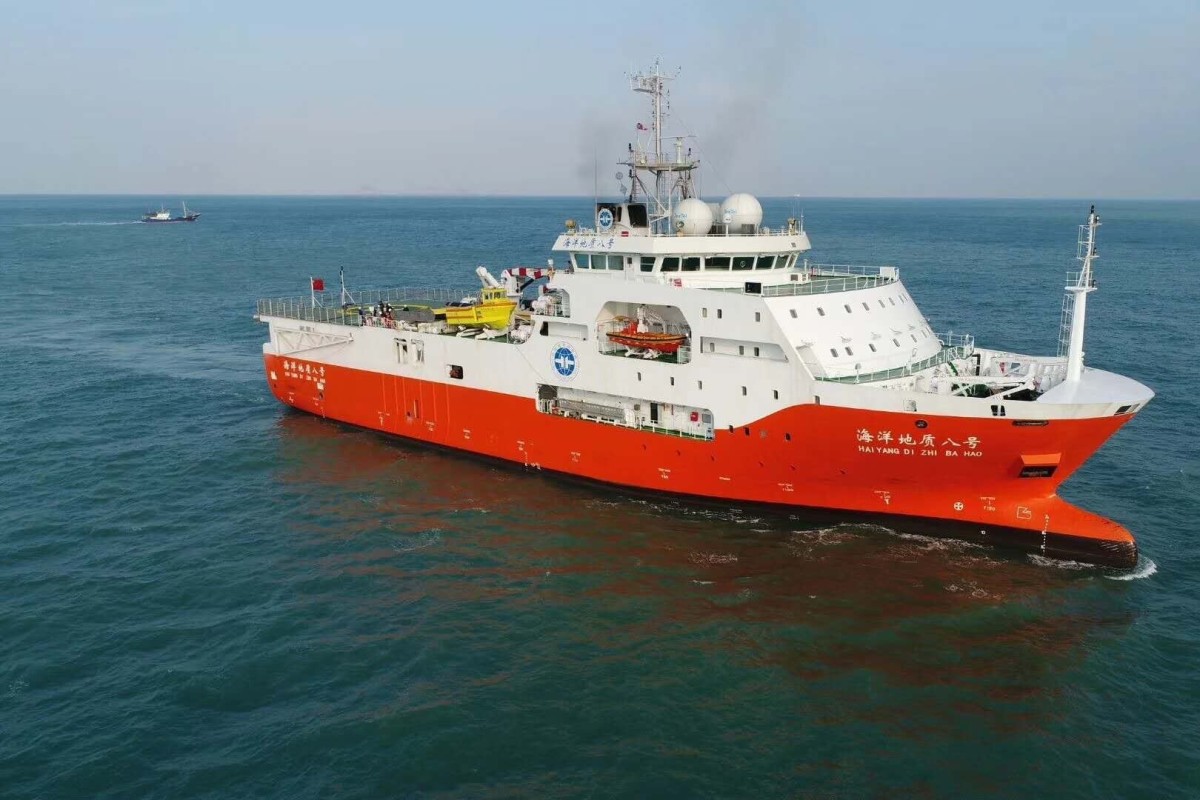
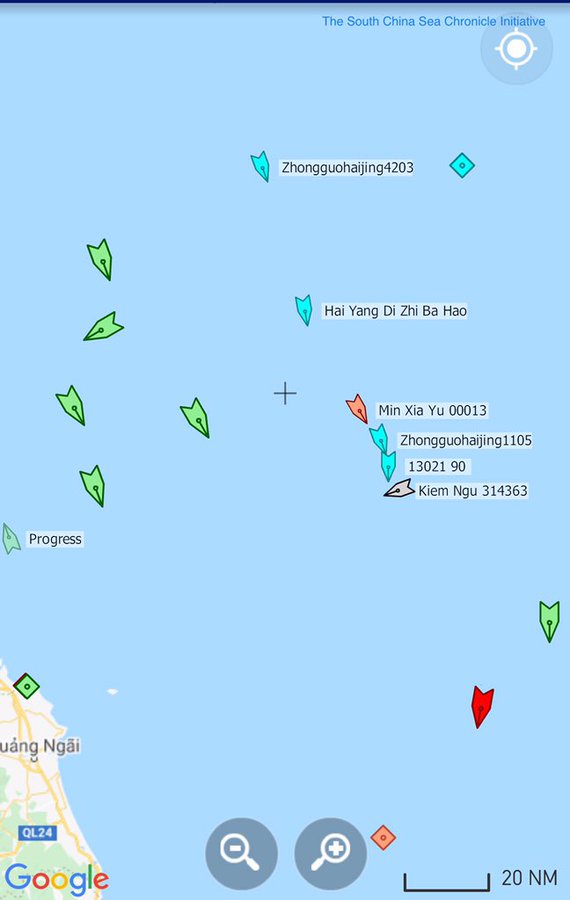
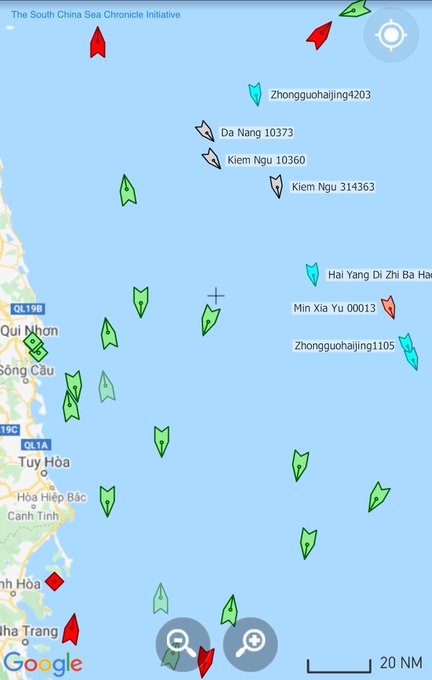
Vietnamese vessels last year spent months shadowing the Chinese Haiyang Dizhi 8 survey vessel in resource-rich waters that are a potential global flashpoint as the
China and Vietnam ‘likely to clash again’ as they build maritime militias
12 Apr 2020
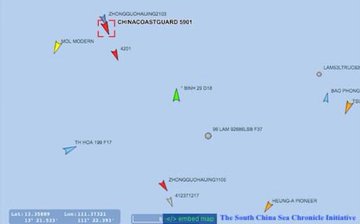
On Tuesday, the ship, which is used for offshore seismic surveys, appeared again 158km off Vietnam’s coast, within its exclusive economic zone (EEZ), flanked by at least one Chinese coastguard vessel, according to data from Marine Traffic, a website that tracks shipping.
At least three Vietnamese vessels were moving with the Chinese ship, according to data issued by the Marine Traffic site.
South China Sea News@SCS_news
·
Haiyang Dizhi 8 is heading toward #SouthChinaSea with several escort ships.
South China Sea News@SCS_news
About 50 nm ahead of Haiyang Dizhi 8 is a group of at least 3 #China Coast Guard ships, including the largest 5901. #SouthChinaSea
The presence of the Haiyang Dizhi 8 in Vietnam’s EEZ comes towards the scheduled end of a 15-day nationwide lockdown in Vietnam aimed at curbing the spread of the coronavirus.
“We call on the PRC to remain focused on supporting international efforts to combat the global pandemic, and to stop exploiting the distraction or vulnerability of other states to expand its unlawful claims in the South China Sea,” the US State Department said in a statement, referring to China.
Vietnam pulls DreamWorks’ ‘Abominable’ over South China Sea map
, which also has disputed claims in the South China Sea, has raised its concerns too.
On Saturday, the Global Times, published by the official People’s Daily newspaper of China’s ruling Communist Party, said Vietnam had used the fishing boat incident to distract from its “ineptitude” in handling the coronavirus.
Vietnam’s Ministry of Foreign Affairs did not immediately respond to a request for comment.
Helped by a mass quarantine and aggressive contact-tracing, Vietnam has recorded 265 cases of the novel coronavirus and no deaths. Nearly 122,000 coronavirus tests have been carried out in Vietnam.
China and Vietnam have for years been at loggerheads over the potentially energy-rich waters, called the East Sea by Vietnam.
China’s U-shaped “nine-dash line” on its maps marks a vast expanse of the waters that it claims, including large parts of Vietnam’s continental shelf where it has awarded oil concessions.
and Brunei claim some of the waters that China claims to the south.
During the stand-off last year, at least one Chinese coastguard vessel spent weeks in waters close to an oil rig in a Vietnamese oil block, operated by Russia’s Rosneft, while the Haihyang Dizhi 8 conducted suspected oil exploration surveys in large expanses of Vietnam’s EEZ.
“The deployment of the vessel is Beijing’s move to once again baselessly assert its sovereignty in the South China Sea,” said Ha Hoang Hop, at the Singapore-based ISEAS-Yusof Ishak Institute.
“China is using the coronavirus distraction to increase its assertiveness in the South China Sea, at a time when the US and Europe are struggling to cope with the new coronavirus.”
Min Yuting (C), a member of the national emergency medical rescue team from Shaanxi Province, weeps at the Shaanxi Provincial People’s Hospital in Xi’an, northwest China’s Shaanxi Province, April 1, 2020. As one of the 43 members of the national emergency medical rescue team from Shaanxi Province, Min and her colleagues finished a 14-day quarantine on Wednesday after their return from virus-hit Hubei. The team, dispatched by Shaanxi Provincial People’s Hospital, has worked in two temporary hospitals together with colleagues from Wuhan City and Henan Province, managed 988 beds and treated 1,235 patients since their arrival in Wuhan on Feb. 4. (Xinhua/Li Yibo)
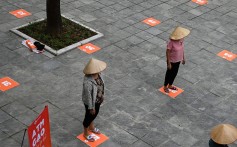
People returning from Hubei arrive at the Beijing West Railway Station in Beijing, capital of China, March 25, 2020. The first batch of over 800 people stranded in virus-hit Hubei Province has arrived in Beijing Wednesday afternoon after Hubei lifted outbound travel restrictions in all areas except the capital city Wuhan starting from Wednesday. (Xinhua/Zhang Chenlin)
BEIJING, March 25 (Xinhua) — The first batch of over 800 people stranded in virus-hit Hubei Province has arrived in Beijing Wednesday afternoon after Hubei lifted outbound travel restrictions in all areas except the capital city Wuhan starting from Wednesday.
The transport of the people was carried out in a well-organized and spot-to-spot way, said Chen Bei, deputy secretary-general of the Beijing municipal government, at a press conference Wednesday.
There are still more than 20,000 teachers and students from Beijing schools and universities stranded in Hubei, according to Chen.
Chen said those who have a fixed residence in Beijing can apply to return to their homes while those who do not still need to wait for further arrangements after the announcement of school and university reopening.
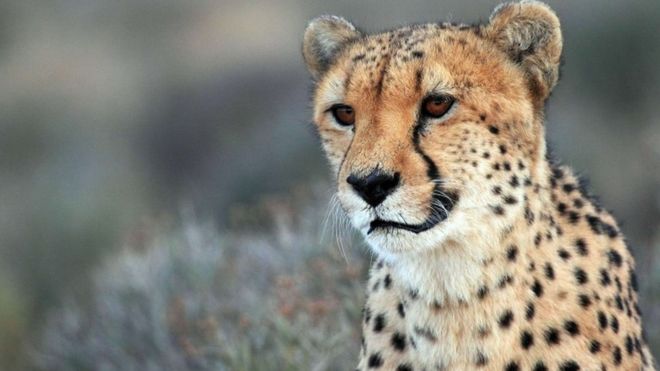
Image copyright AFPImage caption The majority of the 7,100 cheetahs left in the world are in Africa
India’s top court has said cheetahs can be reintroduced in the country, 70 years after they were wiped out.
Responding to a plea by the government, the Supreme Court said African cheetahs could be introduced to the wild in a “carefully chosen location”.
Cheetahs are an endangered species, according to the Convention on International Trade in Endangered Species (Cites).
Only 7,100 cheetahs are left in the wild, almost all of them in Africa.
The Asiatic cheetah, which once roamed parts of India, is now only found in Iran, where there are thought to be about 50 left.
India’s Supreme Court said the animal would have to be introduced on an experimental basis to find out if it could adapt to Indian conditions.
Studies show that at least 200 cheetahs were killed in India, largely by sheep and goat herders, during the colonial period. It is the only large mammal to become extinct after the country gained independence in 1947.
India’s former environment minister Jairam Ramesh welcomed the decision to reintroduce the animal.
Delighted that Supreme Court has just given OK to reintroducing cheetah from Namibia. This was something I had initiated 10 years ago. Cheetah which derives from the Sanskrit ‘chitra’ (speckled) is the only mammal hunted to extinction in modern India.
For more than a decade, wildlife officials, cheetah experts and conservationists from all over the world have discussed the reintroduction of the spotted big cat to India and have agreed that there is a strong case for it.
But leading conservationists have harboured doubts about the plan. They fear that in its haste to bring back the cheetah, India will end up housing the animals in semi-captive conditions in huge, secured open air zoos rather than allowing them to live free.
They add that without restoring habitat and prey base, and given the high chances of a man-animal conflict, viable cheetah populations cannot be established.
They have also pointed to India’s chequered record of reintroducing animals to the wild.
Lions were reintroduced in the Chandraprabha sanctuary in northern Uttar Pradesh state in the 1950s, but were then poached out of existence.
You may also be interested in…
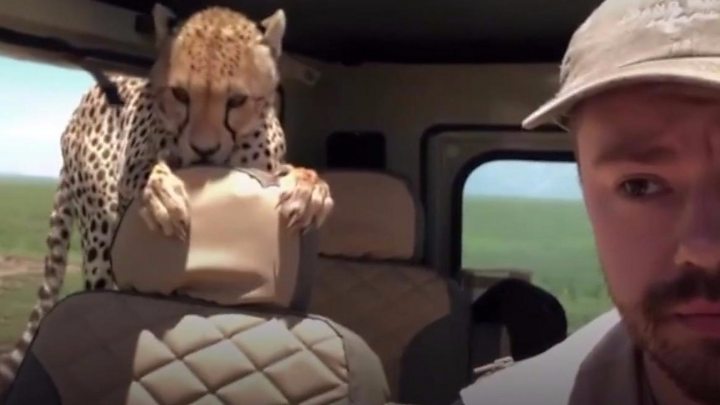
Media caption Curious cheetah joins safari group in Tanzania
However, conservationists who have led the initiative insist that these fears are unfounded. They say a decision will only be taken after shortlisted sites are fully examined for habitat, prey and potential for man-animal conflict.
The first cheetah in the world to be bred in captivity was in India during the rule of Mughal emperor Jahangir. His father, Akbar, recorded that there were 10,000 cheetahs during his time.
Much later, research showed that were at least 230 cheetahs in India between 1799 and 1968 – and the cat was reportedly sighted for the last time in the country in 1967-68.
This is the third instalment in a four-part series examining the brewing US-China tech war over the development and deployment of artificial intelligence tech
The US is home to five of the world’s top 10 universities in the AI field, which includes computer vision and machine learning, while China has three
For those Chinese with long-term plans to stay in the US, a major obstacle lies in getting work visas, especially in the current trade war environment. Illustration: Perry Tse
After working in the United States for more than a decade, Zheng Yefeng felt he had hit a glass ceiling. He also saw that the gap in artificial intelligence between China and the US was narrowing.
Last year Zheng, who worked as a researcher at Siemens Healthcare in New Jersey, made a decision that addressed both problems. He accepted an offer to head up the medical research and development team at Tencent’s YouTu artificial intelligence lab in Shenzhen, known as China’s Silicon Valley.
“There was almost no room for promotion if I stayed in the US,” he said, expressing a common dilemma faced by experienced Chinese tech workers in America.
With the US-China trade war leading to tighter scrutiny of Chinese nationals working in the US tech industry, people like Zheng are moving back to China to work in the burgeoning AI sector, especially after Beijing designated AI a national priority. The technology’s varied applications have attracted billions of dollars of venture capital investment, created highly valued start-ups like SenseTime and ByteDance, and sparked a talent war among companies.
That has created an odd symbiotic relationship between the two countries vying for AI supremacy. The US, with its superior higher education system, is the training ground for Chinese AI scientists like Zheng, who obtained a PhD from the University of Maryland after earning bachelor’s and master’s degrees at China’s premier Tsinghua University.
“Many professors in China have great academic ability, but in terms of the number [of top professors], the US is ahead,” said Luo Guojie, who himself accepted an offer from Peking University to become an assistant professor after studying computer science in the US.
Among international students majoring in computer science and maths in US universities, Chinese nationals were the third largest group behind Indians and Nepalese in the 2018-2019 academic year, representing 19.9 per cent, according to the Institute of International Education.
[To build] the best universities is not easy. The university is a free speech space, whereas in China, this is not the case Gunther Marten, a senior official with the European Union delegation to China
The South China Morning Post spoke with several Chinese AI engineers who decided to stay and work in the US after their studies. They only agreed to give their surnames because of the sensitivity of the issues being discussed.
A 25-year-old Beijinger surnamed Lin graduated from one of China’s best engineering schools in the capital before heading to a US university for a master’s degree in computer science in 2017. Like some of his peers, he found the teaching methods in China to be outdated.
“It’s hard to imagine that a final exam of a coding course still asked you to hand write code, instead of running and testing it on a computer,” said Lin, who now works as a software engineer for Google in Silicon Valley.
“Although we still had to take writing tests [in the US], we had many practical opportunities in the lab and could do our own projects,” he added.
A Facebook software engineer surnamed Zhuang had a similar experience at his university in Shanghai.
“Many engineering students [in China] still get old-school textbooks and insufficient laboratory training,” he said. “Engineering practices for AI have been through a fast iteration over the past few decades, which means many Chinese students are not exposed to the most updated knowledge in the field, at least not in the classroom.”
Zhuang also noted out that many classes in China are taught in Chinese, meaning engineering graduates are not fluent in English, the preferred language of the global AI research community.
The US is home to five of the world’s top 10 universities in the AI field, which includes computer vision and machine learning, while China has three. Carnegie Mellon University (CMU) in Pennsylvania ranks No 1 while China’s Tsinghua University is No 2, according to CSrankings, which bases the list on papers published since 2009.
US tech chief: China is threatening US’ lead in global AI race
With its top institutions and an open culture that encourages freedom of speech, including unfettered internet access, the US has become a magnet for the brightest AI students the world over.
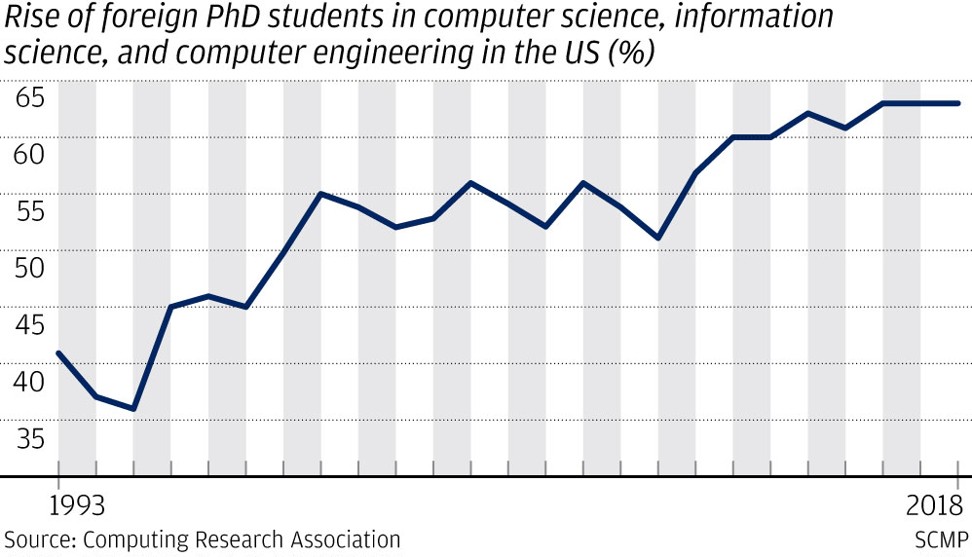
In 2018, 62.8 per cent of PhD degrees and 65.4 per cent of master’s degrees in computer science, information science and computer engineering programmes in the US were granted to “non-resident aliens”, according to a survey by the Computing Research Association.
“[To build] the best universities is not easy,” Gunther Marten, a senior official with the European Union delegation to China, said on the sidelines of the World Internet Conference in Wuzhen in October. “The university is a free speech space, whereas in China, this is not the case.”
When these US-educated AI scientists finish studying, most take advantage of a rule allowing them to stay in the country for three years to gain work experience.
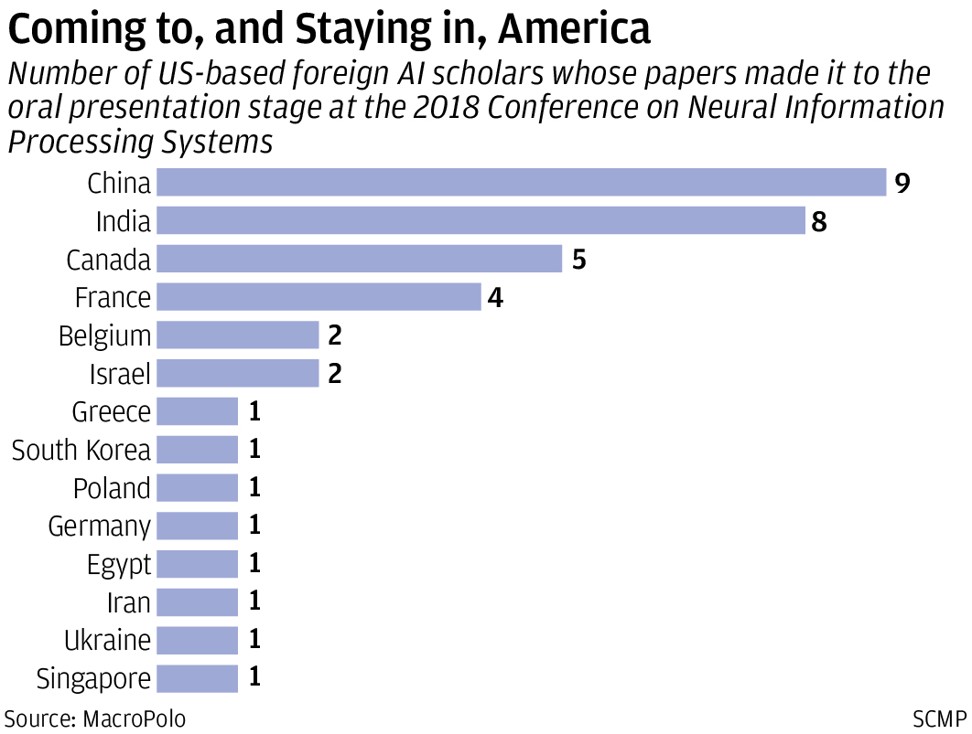
Of the foreign nationals taking part in last year’s Conference on Neural Information Processing Systems (NIPS), a major machine learning event for AI professionals, 87 per cent of those whose papers made it to the oral presentation stage went to work for American universities or research institutes after earning their PhD, according to MacroPolo, a think tank under the Paulson Institute.
“China has many great universities and companies, especially in certain subfields of AI such as computer vision, but many people remain hesitant to move to China due to the political environment, quality of life concerns and workplace issues,” said Remco Zwetsloot, a research fellow at Georgetown University’s Center for Security and Emerging Technology (CSET).
China’s PhD students miserable, yet hopeful: survey
Some of the US-trained Chinese AI engineers told the Post they were scared off by China’s “996” working culture: 9am to 9pm, six days a week. Tech firms in China typically expect their employees to work long hours to prove their dedication.
Lin, the Beijinger who now works for Google, used to be an intern at one of China’s largest internet giants. “I worked from the time I woke up until going to bed,” he said, “At Google, I’ve been confused because many people here only work till 5pm but Google is still a global leader.” Lin said he would be happy to return to China if the 996 work culture eases.
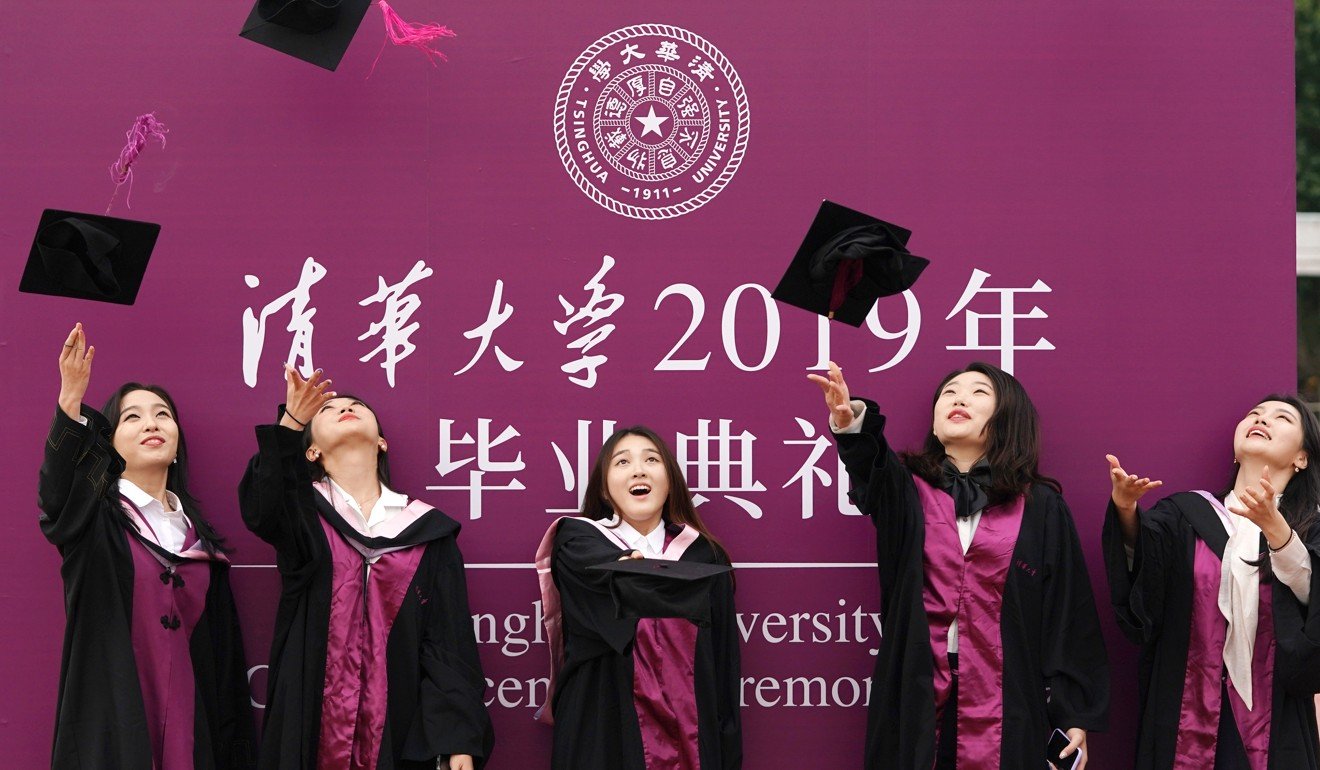
Graduates throw their caps in the air as they pose for a group photo during the 2019 commencement ceremony of Tsinghua University in Beijing. Tsinghua ranks as China’s top university for AI. Photo: Xinhua
Chen, a female postgraduate student at Carnegie Mellon, who recently accepted a job offer from Google, once interned at Beijing-based AI unicorn SenseTime, where she worked from 10am to between 8pm and 10pm most days.
A SenseTime spokesperson said the company has adopted flexible working hours for its employees.
Besides a better work-life balance, Chinese graduates look for jobs in Silicon Valley because of the higher pay.
“If you include pre-tax income, many of us get offers that pay more than 1 million yuan (US$142,000) a year but in China the salaries offered to the best batch of fresh undergraduates are about 200,000 to 300,000 yuan (US$28,000 to US$43,000),” Chen said.
Still, for those Chinese with long-term plans to stay in the US, a major obstacle lies in getting work visas, especially in the current trade war environment. Most AI-related workers are on H-1B visas that allow US companies to employ non-US nationals with expertise in specialised fields such as IT, finance and engineering.
However, the number of non-immigrant H-1B visas granted has started to fall since 2016, when it peaked at 180,000, according to the US Department of State, and US tech companies have complained that a policy shift by the Trump administration has made the approval process longer and more complicated.
In 2017, President Donald Trump requested an overhaul of the H-1B visa programme, saying he did not want it to enable US tech companies to hire cheaper foreign workers at the expense of American jobs. He also wants to give priority to highly skilled people and restrict those wanting to move to the US because of family connections.
Science graduates from overseas countries can stay in the US with their student visas for up to three years while competing for the hard to get work visas, which are granted based on undisclosed mechanisms. Overseas students already working in the US can apply for so-called green cards, which offer permanent residency.
After working for a major US tech company for almost three years on a student visa, one Chinese software engineer, who spoke to the Post on condition of anonymity, said she was relocated to the US firm’s Beijing office last year after failing to obtain a H-1B work visa.
“While there might be individual cases, it seems like the current tensions have not – at least as of a few months ago – led to noticeable changes in the overall number of Chinese students staying in the US after graduating,” said CSET’s Zwetsloot.
Some Chinese AI scientists use Twitter to announce their decision to stay. Chen Tianqi, who just obtained a PhD at the University of Washington in Seattle, and Jun-Yan Zhu, a CMU and UC Berkeley alumnus currently working at Adobe, each tweeted that they would join Carnegie Mellon as assistant professors next year.
To achieve the goal of turning China into “the world’s primary AI innovation centre” by 2030, according to a 2017 blueprint issued the State Council, the central government has stepped up efforts to attract US-educated talent.
The Thousand Talents Plan has seen more than 6,000 overseas Chinese students and academics return since its was established in 2008, but because of escalating tensions with the US, Beijing has played down the initiative.
Longer term, Beijing’s willingness to invest significant sums into the AI sector could see more Chinese return for the better employment opportunities. Between 2013 and the first quarter of 2018, China attracted 60 per cent of global investment in AI, according to a Tsinghua University report.
China’s spending on AI may be far lower than people think
Chinese authorities are investing heavily in the sector, with the city of Shanghai setting up a 10 billion yuan (US$142 million) AI fund in August and Beijing city government announcing in April it would provide a 340 million yuan (US$48 million) grant to the Beijing Academy of Artificial Intelligence.
“More and more senior people like me have come back, and some start their own businesses,” said Zheng, the Siemens Healthcare researcher who joined Tencent. “It’s easier for Chinese to seek venture capital in China than in other countries.”
But there is some indication that her popularity has been waning in recent months, which correspondents say has left her rattled.
It could be that this latest statement is an attempt to regain some of the ground she lost to Prime Minister Narendra Modi’s ruling Bharatiya Janata Party (BJP) in the recently concluded general election.
Her party won only 22 of West Bengal’s 42 seats – a big drop from the 32 she won in 2014 – in an election marred by violence which saw a number of political activists in the state killed.
NEW DELHI (Reuters) – India’s ruling Bharatiya Janata Party (BJP) is preparing to meet coalition partners to discuss a new government, two BJP sources said on Monday, after exit polls predicted a better-than-expected result for it in a general election.
The talks would most likely be held on Tuesday afternoon, the two sources in the BJP said. They declined to be identified as they are not authorised to speak about the meeting.
Nalin Kohli, a spokesman for the BJP, declined to comment.
India’s seven-phase general election, billed as the world’s biggest democratic exercise, began on April 11 and ended on Sunday. Votes will be counted on Thursday and results are likely the same day.
Prime Minister Narendra Modi’s BJP-led National Democratic Alliance is projected to win anything between 339-365 seats in the 545-member lower house of parliament with the Congress-led opposition alliance getting only 77 to 108, an exit poll from India Today Axis showed on Sunday.
A party needs 272 seats to command a majority.
Indian stock markets and the rupee were sharply higher on expectation the business-friendly Modi would stay on at the helm.
The benchmark NSE share index was up 2.8%, its best single day since March 2016.
“I expect another 2-3% rally in the market in the next three to four days based on the cue,” said Samrat Dasgupta, a fund manager at Esquire Capital Investment Advisors.
Congress spokesman Sanjay Jha cast doubt on the exit polls, saying on Twitter he believed they were wrong.
“If the exit poll figures are true then my dog is a nuclear scientist,” Jha said, adding he expected the next prime minister would come from outside the BJP alliance.
Modi and his BJP faced criticism in the run-up to the election over unemployment, in particular for failing to provide opportunities to young people coming onto the job market, and for weak farm prices.
But Modi rallied his Hindu nationalist base and made national security a central theme of the campaign after a surge in tension with Pakistan in February following a suicide bomb attack in Indian-controlled Kashmir by Pakistan based militants.
Modi ordered air strikes on a suspected militant camp in Pakistan, which led to a surge in tension between the nuclear-armed neighbours.
But many Indians applauded Modi’s tough stand and he was able to attack the opposition for being soft on security.
Ram Madhav, a senior leader in the BJP, told Reuters partner ANI the results would be even better for the party than the exit polls were suggesting, particularly in West Bengal state.
West Bengal has the third largest number of members of parliament and has been hotly contested between the BJP and the Trinamool Congress, one of the most powerful parties in the coalition trying to unseat Modi.
“Bengal will surprise all the pollsters, we are hoping to do extremely well there,” Madhav said. “Everyone has seen the tremendous support for PM Modi and the BJP in Bengal.”
Performers attend the Macao International Parade, which is held to celebrate the 19th anniversary of Macao’s return to the motherland, in Macao, south China, Dec. 16, 2018. (Xinhua/Cheong Kam Ka)
MACAO, Dec. 16 (Xinhua) — The government of China’s Macao Special Administrative Region (SAR) held an international parade Sunday afternoon to mark the 19th anniversary of Macao’s return to the motherland.
The parade attracted more than 70 groups from the Chinese mainland, the Macao SAR and the Hong Kong SAR, as well as those from foreign countries including Japan, Brazil, Spain, Italy, Portugal, France, Mozambique, Malaysia, among others.
The parade featured performances such as folk dances, acrobatics, stilt walking, Chinese martial arts and puppet shows.
The parade started from the renowned Ruins of St. Paul’s and ended at Sai Van Lake Square, where the groups took to the stage one by one.
The parade, one of the major cultural events in Macao since 2011, was organized by Macao’s Cultural Affairs Bureau and the Macao Government Tourism Office.


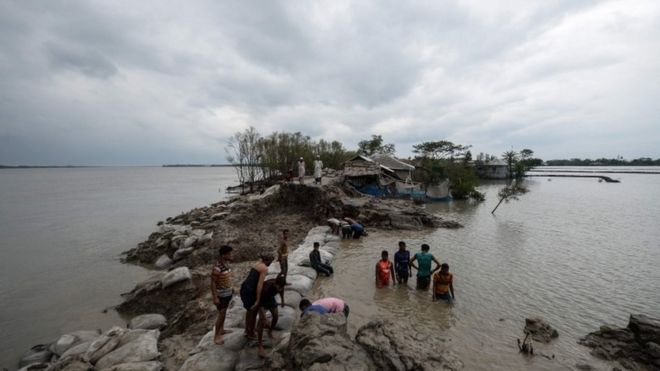 Image copyright AFP
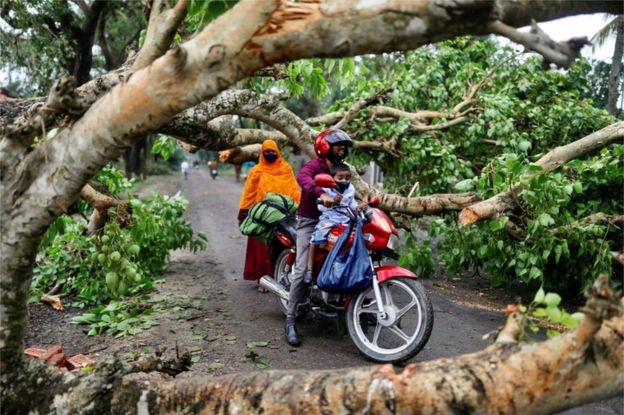 Image copyright REUTERS
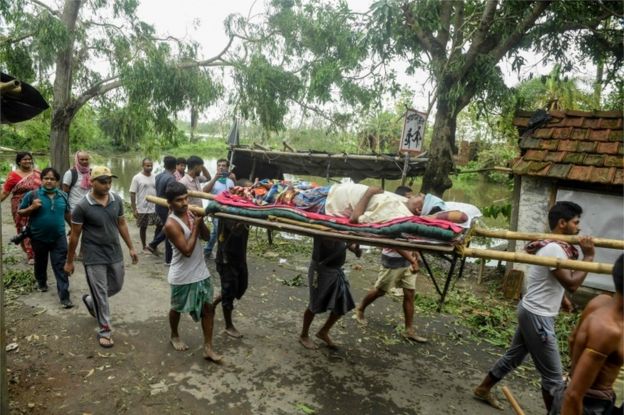 Image copyright AFP
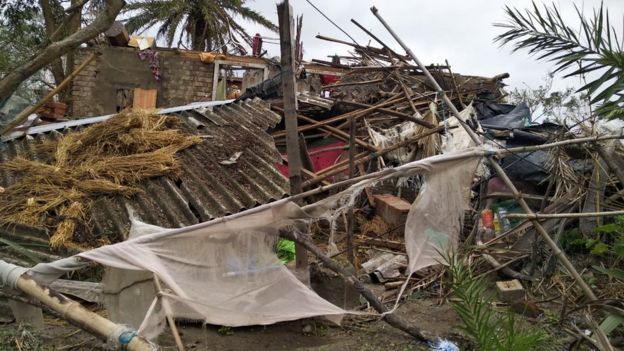 Image copyright MUKTI
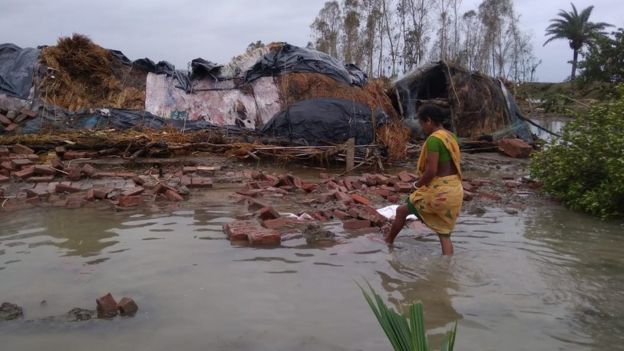 Image copyright MUKTI
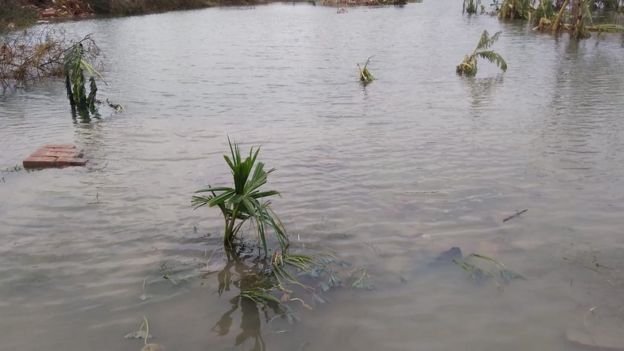 Image copyright MUKTI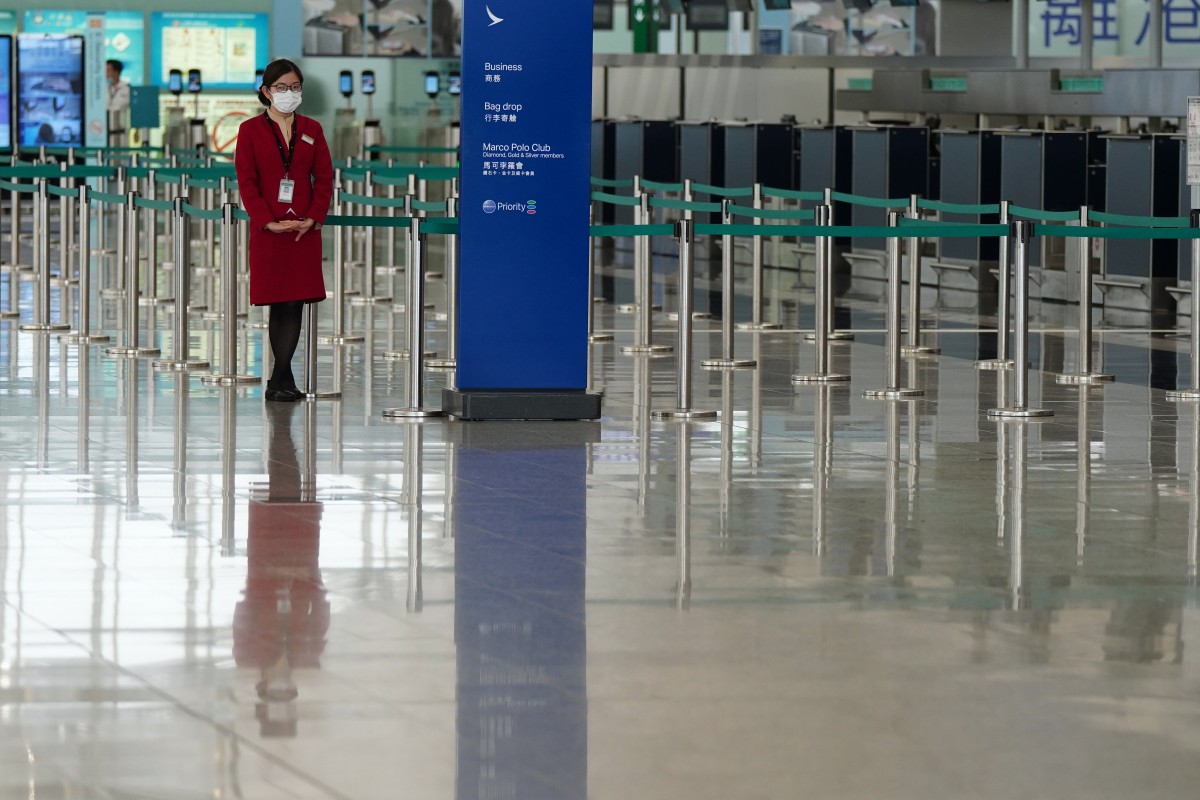


 Min Yuting (C), a member of the national emergency medical rescue team from Shaanxi Province, weeps at the Shaanxi Provincial People’s Hospital in Xi’an, northwest China’s Shaanxi Province, April 1, 2020. As one of the 43 members of the national emergency medical rescue team from Shaanxi Province, Min and her colleagues finished a 14-day quarantine on Wednesday after their return from virus-hit Hubei. The team, dispatched by Shaanxi Provincial People’s Hospital, has worked in two temporary hospitals together with colleagues from Wuhan City and Henan Province, managed 988 beds and treated 1,235 patients since their arrival in Wuhan on Feb. 4. (Xinhua/Li Yibo)







 CHINDIA ALERT: You'll be living in their world, very soon