Chindia Alert: You’ll be Living in their World Very Soon
aims to alert you to the threats and opportunities that China and India present. China and India require serious attention; case of ‘hidden dragon and crouching tiger’.
Without this attention, governments, businesses and, indeed, individuals may find themselves at a great disadvantage sooner rather than later.
The POSTs (front webpages) are mainly 'cuttings' from reliable sources, updated continuously.
The PAGEs (see Tabs, above) attempt to make the information more meaningful by putting some structure to the information we have researched and assembled since 2006.
BEIJING/SHANGHAI (Reuters) – China’s biggest listed banks posted higher profits in the first quarter despite the wider impact of the coronavirus pandemic on the economy, though margins shrank.
The world’s largest commercial lender Industrial and Commercial Bank of China Ltd (ICBC) (601398.SS)(1398.HK) on Tuesday reported a 3.04% rise in first quarter net profit compared to a year earlier, while Bank of Communications Co Ltd (BoCom) (601328.SS)(3328.HK) reported a 1.8% rise.
Meanwhile at Agricultural Bank of China Ltd (AgBank) (1288.HK)(601288.SS) and China Construction Bank Ltd (CCB) (601939.SS)(0939.HK), first quarter net profit rose 4.79% and 5% respectively from the same period last year.
Following suit, Bank of China Ltd (BOC) (601988.SS) (3988.HK) posted on Wednesday a 3.17% rise in first-quarter net profit.
The growth came despite China’s economy posting the first quarterly contraction since at least 1992 due to the coronavirus pandemic. The government restricted people from travelling and going back to work to contain the spread of the virus, reducing revenue for companies and income for residents.
China’s largest banks are historically more resilient than their smaller kin, as they lend more to state-backed enterprises and have larger capital reserves.
However, despite this firmer base, net interest margins shrank at four of the five lenders, as loan prime rate reform and looser monetary policy weighed, said analysts.
AgBank did not report its net interest margin, the difference between what banks pay on deposits and earn on loans.
SOURED DEBT
ICBC, AgBank and CCB bucked the trend of the wider banking sector by posting steady non-performing loan (NPL) ratios.
The banking sector’s NPL ratio climbed in the first quarter to 2.04%, the banking and insurance regulator said, the highest level since the global financial crisis.
The rise came despite Chinese regulators moving to give banks leeway, allowing them to postpone some loan repayments until the end of June, as credit card and mortgage defaults surged.
About one-third of Chinese bank loans are to sectors including transport and retail that are significantly stressed by the pandemic, according to S&P Global.
“You can see generally from banks’ results that some lenders have reported falling asset quality, the NPL ratios have risen quite a lot,” said Richard Cao, an analyst at Guotai Junan International on Monday.
The largest banks are best placed to absorb such losses with a better ability to get financing and withstand a substantial volume of bad loans, S&P said in a research note in April.
BEIJING (Reuters) – China reported on Saturday a rise in new coronavirus cases, as authorities try to head off a second wave of infections, particularly from imported and asymptomatic cases, as curbs on cities and travel are lifted.
The National Health Commission said 46 new cases were reported on Friday, including 42 involving travellers from abroad, up from 42 cases a day earlier.
In its statement the commission added that 34 new asymptomatic cases were reported, down from 47 the previous day.
Mainland China’s tally of infections now stands at 81,953. The death toll rose by three to 3,339.
Tough curbs imposed since January helped rein in infections sharply from the height of the pandemic in February. But policymakers fear a second wave triggered by arrivals from overseas or asymptomatic patients.
Northeastern Heilongjiang recently reported a spike in new cases because of Chinese nationals entering the province from Russia, which has seen a surge of cases.
Provincial health officials said it had 22 new imported cases on Friday, all Chinese nationals coming from Russia, and one new local case, in its capital of Harbin.
Inner Mongolia had a daily tally of 27 new imported cases by Saturday morning, all from Russia, the region’s health authority said.
The central province of Hubei, where the virus emerged late last year, reported no new cases for a seventh successive day.
A rise in virus infections has prompted authorities in Guangzhou to step up scrutiny of foreigners, ordering bars and restaurants not to serve clients who appear to be of African origin, the U.S. consulate in the southern city said.
Anyone with “African contacts” faces mandatory virus tests followed by quarantine, regardless of recent travel history or previous isolation, it said in a statement.
It advised African-Americans or those who feel they might be suspected of contact with nationals of African origin to avoid the city.
Since the epidemic broke out in the provincial capital of Wuhan, it has spread around the world, infecting 1.6 million people and killing more than 100,000.
Although the rules seem dramatic, many foreign airlines had already stopped flying to China – and a number of cities already had restrictions for arrivals.
BEIJING (Reuters) – China on Sunday reported 46 new cases of coronavirus, the fourth straight day with an increase, with all but one of those imported from overseas, and further stepped up measures to intercept cases from abroad as the outbreak worsens globally.
While China says it has drastically reduced the number of domestically transmitted cases – the one reported on Sunday was the first in four days – it is seeing a steady rise in imported cases, mostly from Chinese people returning from overseas.
In a sign of how seriously China is taking the threat of imported cases, all international flights due to arrive in Beijing starting Monday will first land at another airport, where passengers will undergo virus screening, government agencies said on Sunday, in an expansion of existing measures.
International flights that were scheduled to arrive in the capital will land instead at one of 12 airports. Passengers who clear screening will then be permitted to reboard the plane, which will then fly to Beijing, the regulator said.
Separately, Shanghai and Guangzhou both announced that all arriving international passengers will undergo an RNA test to screen for coronavirus, expanding a program that previously only applied to those coming from heavily-hit countries.
RELATED COVERAGE
Emirates airline adds Beijing and Seattle to flight suspensions
Among the new cases from abroad reported on Sunday, a record 14 were in the financial hub of Shanghai and 13 were in Beijing, a decline from 21 the previous day.
The new locally transmitted case was in the southern metropolis of Guangzhou and was also the first known case where the infection of a local person was linked to the arrival of someone from overseas, according to Guangdong province.
Hu Xijin, the editor-in-chief of the Global Times newspaper, called for all cities in China to implement 14-day quarantines for people arriving from abroad.
He also called for quarantine policies to apply to people from Hong Kong and Macau as well, he said on his Weibo account on Sunday.
“I am worried that there are similar cases to the Guangzhou one existing in other parts of the country. There were reports previously that people coming back from abroad returned to their homes in Shanghai without any obstacles,” Hu said.
“It matters to the overall situation of China’s next prevention and control efforts if we can plug the leaks.”
The Global Times is a tabloid published by the Ruling Communist Party’s People’s Daily.
The latest figures from China’s National Health Commission bring total reported coronavirus cases in the country to 81,054, with 3,261 deaths, including six on Saturday. On Saturday, China reported 41 new coronavirus cases for the previous day, all of them imported.
Of all 97 imported cases as of end-Saturday, 92 of them are Chinese nationals and 51 are Chinese students returning from studying abroad, said Gao Xiaojun, spokesman for the Beijing Municipal Health Commission during a press conference on Sunday.
The Beijing health commission announced separately on its website it had two more imported cases on Sunday, bringing the city’s total number of imported cases to 99 as of Sunday noon.
BACK TO A KIND OF NORMAL
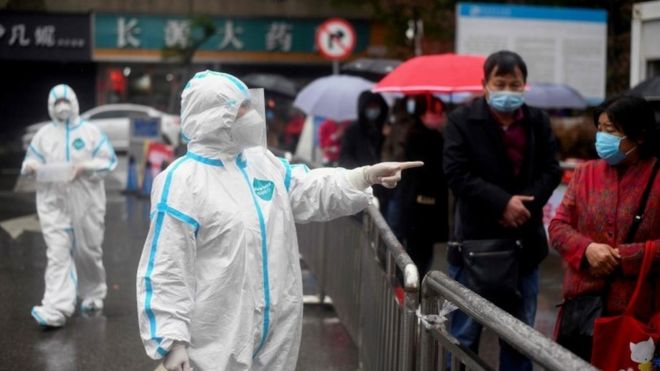
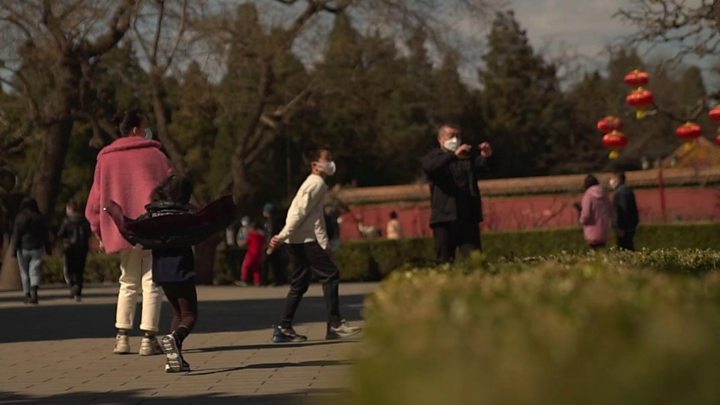
China is trying to revive an economy that is widely expected to contract deeply in the current quarter, with life slowly returning to normal in cities such as Beijing and Shanghai, albeit with everyone wearing masks in public.
Still, numerous shops and restaurants remain shut – many have gone out of business – and factories and other workplaces are still not operating at full capacity.
On Sunday, a central bank official called for stepped-up global policy coordination to manage the economic impact of the pandemic. He said China’s recent policy measures were gaining traction, and it has capacity for further action.
Chen Yulu, a deputy governor at the People’s Bank of China (PBOC), also said he expects significant improvement in the Chinese economy in the second quarter.
And while the virus will continue putting upward pressure on near-term consumer prices, there is no basis for long-term inflation or deflation, he told a news briefing.
Globally, roughly 275,000 people have been infected with the virus, and more than 11,000 have died, according to a Reuters tally, with the number of deaths in Italy recently surpassing those in China.
“Now I think the epidemic has been controlled. But this definitely doesn’t mean that it’s over,” said a 25-year-old woman surnamed He who works in the internet sector and was visiting the vast Summer Palace complex in Beijing on Saturday.
“I’m willing to come out today but of course I am still afraid,” she told Reuters.
The central province of Hubei, where the outbreak first emerged late last year in its capital Wuhan, reported its fourth straight day of no new cases.
China has used draconian measures to contain the spread of the virus, including locking down Hubei province.
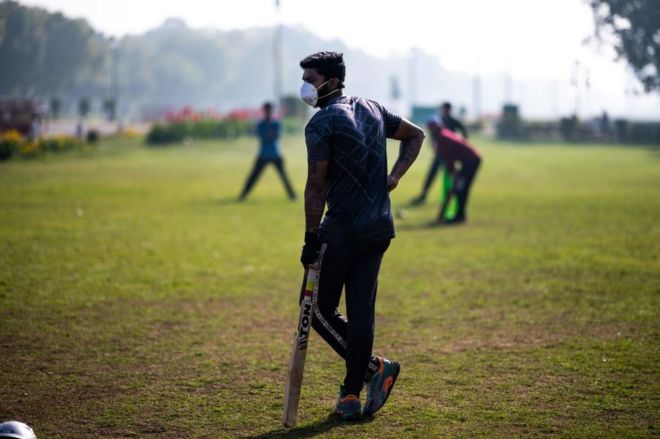
Image copyright GETTY IMAGESImage caption Small groups of young people can be seen playing sports as schools, colleges and even gyms are shut.
Life in India has changed dramatically as the world’s second-most populous country grapples with the coronavirus outbreak.
Otherwise crowded and chaotic cities have quietened down as people stay home, traffic slows and even weddings shrink in size and scale.
India has confirmed 151 active cases and three deaths – but public health experts fear that the low count is the result of limited testing and under-reporting. The country has only conducted about 12,000 tests so far, partly because of a shortage of testing kits.
So it’s still unclear if and to what extent community transmission exists in India – community transmission means a patient had no known contact with another confirmed case or travelled from a country badly affected by the pandemic.
However, India’s central government, several state governments and city administrations have already responded with drastic measures.
Image copyright GETTY IMAGES
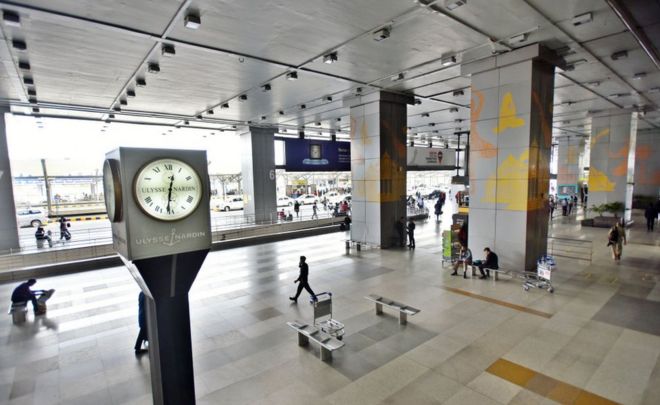
The Indira Gandhi international airport in the national capital Delhi, is the country’s busiest airport but it appears deserted nowadays.
India has barred entry to everyone, including citizens, flying from certain countries, including the UK and most European nations. It has also cancelled most entry visas to people (excluding citizens) flying in from other countries.
This has led to numerous flight cancellations.
Airlines are also struggling as fewer people are flying even within India, wary that new regulations could see them stranded away from their homes. Two of India’s top airlines are reportedly considering grounding planes amid plummeting demand for flights.
Image copyright GETTY IMAGES
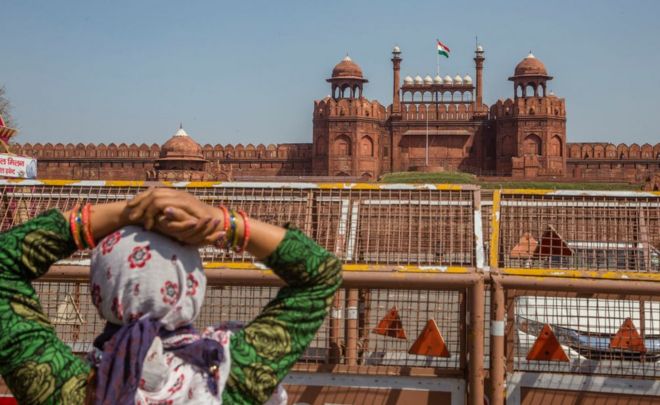
Popular Indian monuments – such as the 16th Century Red Fort in Delhi – have been shut to visitors to prevent large gatherings.
Taj Mahal, the country’s most iconic monument, closed its doors on Tuesday, along with more than 140 other monuments and museums.
With fewer people visiting and closures of public places likely to go up, tourism is expected to take a huge hit across India – the Taj alone draws as many as 70,000 people a day.
Image copyright GETTY IMAGES
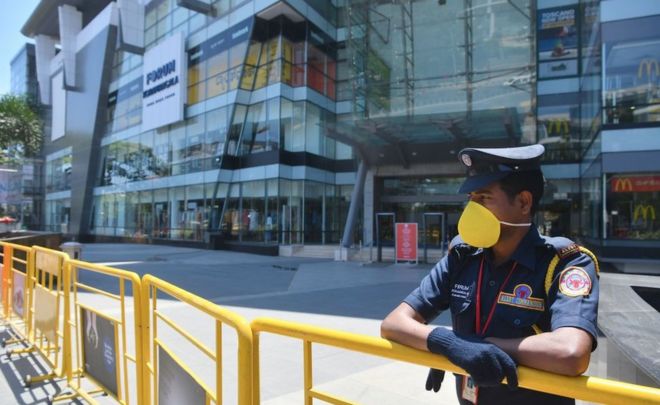
Bangalore, an IT hub in southern India, is among the major cities that has shut down its malls – such as the one above – and schools, colleges, cinema halls and other public places have been closed since late last week. Other major cities such as Delhi, the financial hub Mumbai and Hyderabad in the south, have done the same.
City officials have also imposed restrictions on large gatherings such as weddings, cricket matches or any public ticketed events.
Image copyright GETTY IMAGES
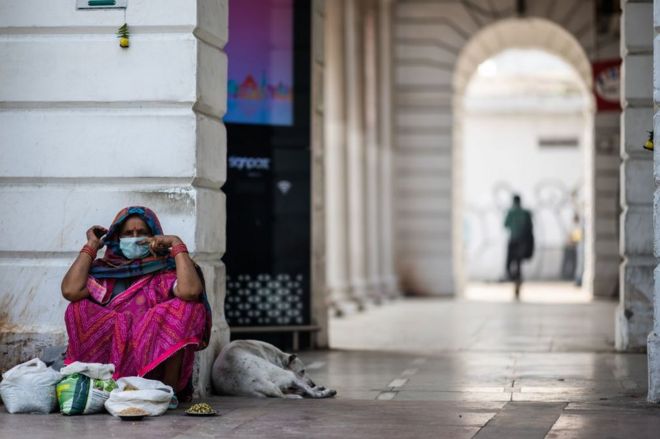
Some of Delhi’s busiest spots, such as Connaught Place, are mostly empty.
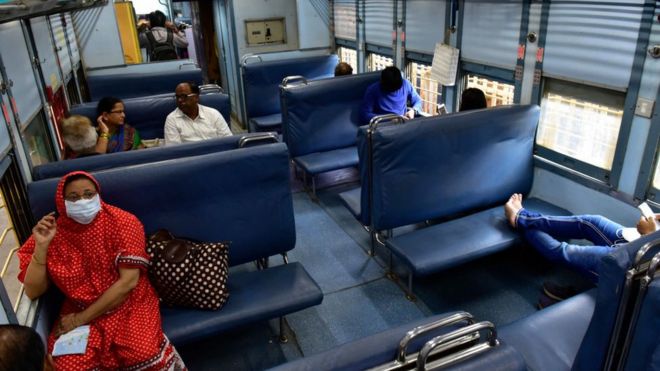
There has also been a significant drop in the number of people using trains, which remain the most popular form of transport in India.
Image copyright GETTY IMAGES
The service from Mumbai to Pune city – which takes about three to four hours – has seen about a 30% fall in passenger traffic, according to some estimates.
The western state of Maharashtra, where both cities are located, has reported the highest number of cases in India so far. The central railways has already cancelled 23 long distance trains going to and from Mumbai – officials say the reason is both the virus and the lower number of passengers.
Overall, more than 150 trains have been cancelled across India. This number could increase in coming days.
Image copyright GETTY IMAGES
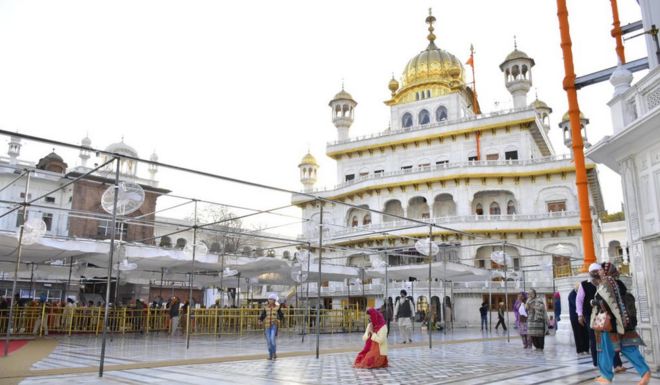
Many holy sites, including the Golden Temple – one of the holiest shrines in Sikhism – remain open, although the footfall is much lower. It’s quite unusual to see such few people in what is one of India’s busiest shrines.
Tirumala Tirupati, the richest Hindu temple, has cancelled many of its daily rituals and is restricting the number of pilgrims for the first time.
Some major Hindu temples, such as the Siddhivinayak temple in the heart of Mumbai, and the Vaishno Devi cave shrine, have closed.
Image copyright GETTY IMAGES
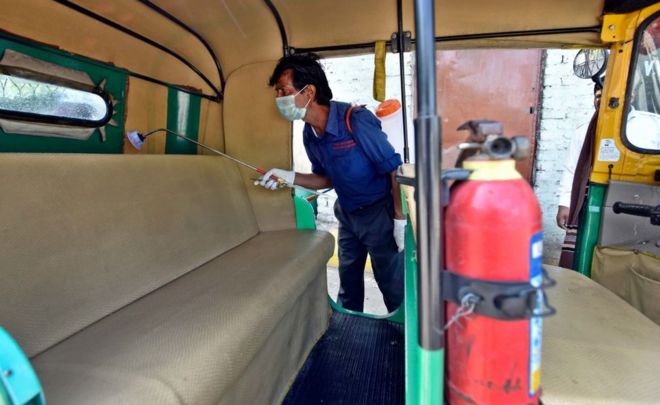
City officials in Delhi have begun sanitising auto rickshaws and taxis to contain the spread of the virus.
Public transport poses a major challenge to containing the outbreak. But it continues to be used regularly across India, even as governments encourage people to stay home as much as possible.
But not all offices have work from home options, and this is especially a challenge for the millions who work in India’s informal sector – these include domestic help, street vendors and daily wage workers.
Image copyright GETTY IMAGES
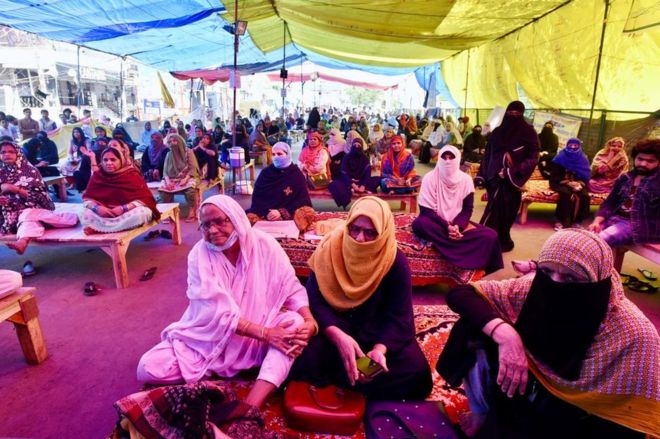
Surprisingly, sit-in protests against India’s controversial new citizenship law continue in some cities, including Delhi and Bangalore.
The most prominent of these, pictured above, is happening in Delhi’s Shaheen Bagh neighbourhood. Thousands of protesters, mostly Muslim women, have been demonstrating against the law, which critics say is anti-Muslim, since December.
But Delhi has shut down schools, colleges, gyms, night clubs, spas and swimming pools – and Chief Minister Arvind Kejriwal has said all social, political and religious gatherings with more than 50 people would be stopped.
Image copyright GETTY IMAGES
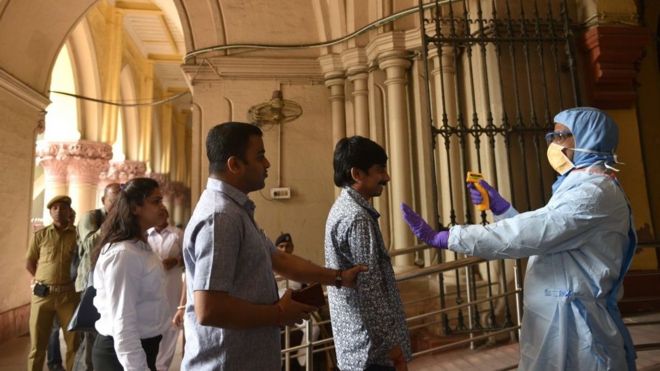
Temperature checks have become a common feature across cities – here, people are being screened before they enter the high court in the eastern city of Kolkata (formerly Calcutta).
This practice has been adopted at airports, corporate offices and several other places that remain open despite the restrictions.
Image copyright GETTY IMAGES
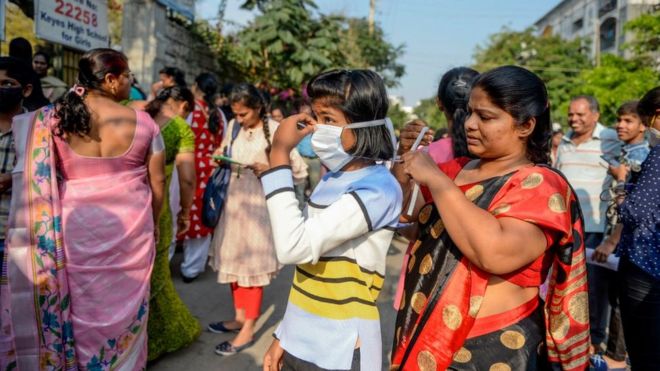
In the southern city of Hyderabad, students appeared for their school-leaving exams, but they came armed with masks.
Delhi, however, has postponed all school examinations.
Experts say India could impose more sweeping lockdowns as the toll climbs further.
BEIJING/SEOUL (Reuters) – Italy, South Korea and Iran reported sharp rises in coronavirus infections on Monday, triggering concern from the World Health Organization (WHO), but China relaxed some curbs on movement, including in Beijing, as the rate of new infections there eased.
The virus has put Chinese cities into lockdown, disrupted air traffic to the workshop of the world and blocked global supply chains for everything from cars and car parts to smartphones.
The surge of cases outside mainland China triggered steep falls in global share markets and Wall Street stock futures as investors fled to safe havens. Gold soared to a seven-year high, oil tumbled nearly 4% and the Korean won KRW= fell to its lowest level since August.[MKTS/GLOB]
But U.S. Treasury Secretary Steven Mnuchin cautioned against jumping to conclusions about the impact on the global economy or supply chains, saying it was simply too soon to know.
RELATED COVERAGE
Ireland cautions against travel to coronavirus-hit areas of Italy
France blocks passengers on board bus from Italy after one falls ill
The World Health Organization (WHO) said it no longer had a process for declaring a pandemic, but that the coronavirus outbreak remained an international emergency.
“We are specially concerned about the rapid increase in cases in … Iran, Italy and the Republic of Korea,” WHO head Tedros Adhanom Ghebreyesus told a news conference in Sweden via video link from Geneva.
South Korea reported 231 new cases, taking its total to 833. Many are in its fourth-largest city, Daegu, which became more isolated with Asiana Airlines (020560.KS) and Korean Air (003490.KS) suspending flights there until next month.
Iran, which announced its first two cases last Wednesday, said it had confirmed 43 cases and eight deaths. Most of the infections were in the Shi’ite Muslim holy city of Qom.
Elsewhere in the Middle East, Bahrain and Iraq reported their first cases and Kuwait reported three cases involving people who had been in Iran.
Saudi Arabia, Kuwait, Iraq, Turkey, Pakistan and Afghanistan imposed restrictions on travel and immigration from Iran. Afghanistan also reported its first case, officials said.
The WHO has been saying for weeks that it dreads the disease reaching countries with weak health systems.
Europe’s biggest outbreak is in Italy, with some 150 infections – compared with just three before Friday – and a fifth death.
‘SEVERE AND COMPLEX’
Scientists around the world are scrambling to analyze the virus, but a vaccine is probably more than a year away.
“Worryingly, it seems that the virus can pass from person to person without symptoms, making it extremely difficult to track, regardless of what health authorities do,” said Simon Clarke, an expert in cellular microbiology at the University of Reading in Britain.
China postponed the annual meeting of its parliament in Beijing.
But there was a measure of relief for the world’s second-largest economy as more than 20 province-level jurisdictions, including Beijing and Shanghai, reported zero new infections, the best showing since the outbreak began.
President Xi Jinping urged businesses to get back to work, though he said the epidemic was still “severe and complex, and prevention and control work is in the most difficult and critical stage”.
Excluding the central Hubei province, center of the outbreak, mainland China reported 11 new cases, the lowest since the national health authority started publishing nationwide daily figures on Jan. 20.
The coronavirus has infected nearly 77,000 people and killed more than 2,500 in China, most in Hubei.
Overall, China reported 409 new cases on the mainland, down from 648 a day earlier, taking the total number of infections to 77,150 cases as of Feb. 23. The death toll rose by 150 to 2,592.
Outside mainland China, the outbreak has spread to about 29 countries and territories, with a death toll of about two dozen, according to a Reuters tally.
Xi said on Sunday the outbreak would have a relatively big, but short-term, impact on the economy and the government would step up policy adjustments to help cushion the blow.
Mnuchin, speaking to Reuters in the Saudi city of Riyadh, said he did not expect the coronavirus to have a material impact on the Phase 1 U.S.-China trade deal.
“Obviously that could change as the situation develops,” he added.
In northern Italy, authorities sealed off the worst-affected towns and banned public gatherings across a wide area, halting the carnival in Venice, where there were two cases.
Austria briefly suspended train services over the Alps from Italy after two travelers coming from Italy showed symptoms of fever.
Both tested negative for the new coronavirus but Austrian Interior Minister Karl Nehammer said a task force would meet on Monday to discuss whether to introduce border controls.
Japan had 773 cases as of late Sunday, mostly on a cruise ship quarantined near Tokyo. A third passenger, a Japanese man in his 80s, died on Sunday.
In South Korea, authorities reported a seventh death and dozens more cases on Monday. Of the new cases, 115 were linked to a church in the city of Daegu.
Drone footage showed what appeared to be hundreds of people queuing in a neat line outside a Daegu supermarket under the winter sunshine to buy face masks. ( tmsnrt.rs/37WP6lA )
It has been described as being one of the first major studies of its kind into public opinion on the subject in mainland China.
Some 80% of respondents said they were concerned that facial recognition system operators had lax security measures.
Separate research suggests that they have good reason to be concerned.
China was ranked the worst of 50 surveyed countries in a study looking at how extensively and invasively biometric ID and surveillance systems are being deployed. The work was carried out by the cybersecurity firm Comparitech.
It said China had no “specific law to protect citizens’ biometrics” and highlighted a “lack of safeguards for employees in the workplace”.
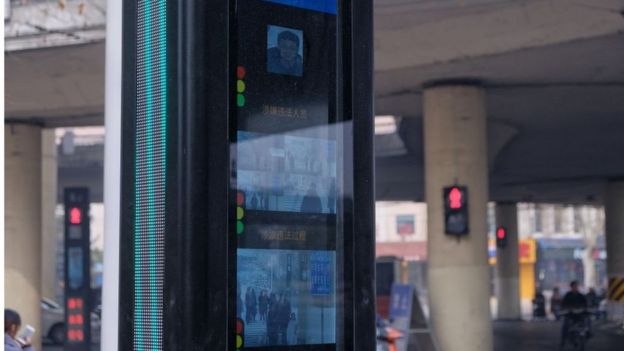
Image copyright GETTY IMAGESImage caption Some cities are deploying facial recognition systems at road crossings to identify and deter jaywalkers
Surveillance concerns
Nandu’s survey was carried out via the internet between October and November.
In its sample, 57% of respondents voiced concern about their movements being tracked.
In addition, 84% of people said they wanted to be able to review the data that facial recognition systems had collected on them and to be able to request that it should be deleted.
The majority said they wanted an option to be able to use ID cards, driving licenses and/or passports as an alternative. But the survey also suggested that between 60 to 70% of Chinese residents believed facial recognition made public places safer.
Hard to avoid
China has more facial recognition cameras than any other country and they are often hard to avoid.
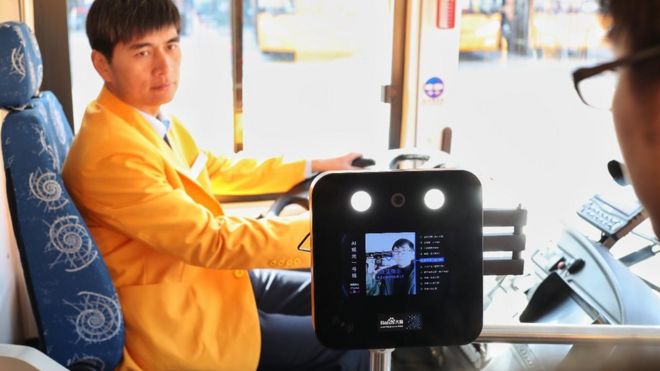
Earlier this week, local reports said that Zhengzhou, the capital of the northeastern Henan province, had become the first Chinese city to roll the tech out across all its subway train stations.
Commuters can use the technology to automatically authorise payments instead of scanning a QR code on their phones. For now, it is a voluntary option, said the China Daily.
Earlier this month, university professor Guo Bing announced he was suing Hangzhou Safari Park for enforcing facial recognition.
Prof Guo, a season ticket holder at the park, had used his fingerprint to enter for years, but was no longer able to do so.
The case was covered in the government-owned media, indicating that the Chinese Communist Party is willing for the private use of the technology to be discussed and debated by the public.
Media captionWATCH: BBC’s John Sudworth put a Chinese facial recognition system to the test in December 2007
But the state continues to make some uses of the tech mandatory.
At the start of the month, a new regulation came into force that requires mobile phone subscribers to have their faces scanned when they sign a new contract with a provider.
The authorities say the move is designed to prevent the resale of Sim cards to help combat fraud.
BEIJING, Sept. 18 (Xinhua) — China’s state-owned enterprises (SOEs) have navigated torrential waters over the past 70 years, from breaking the ground for the country’s industrial system to becoming the model of enterprises worldwide, and are now pledging more contributions to the world economy.
LAYING THE FOUNDATION
At a time when China’s manufacturing industry was still in its infancy, it was the SOEs that supplied the bedrock of the country’s industrial development.
The seamless steel pipe that debuted in China 66 years ago, the green-clad truck bearing the brand name “Jiefang” as well as the silver-white fighter jet that first rolled off production lines in 1956 attested to the SOEs’ early triumphs.
Seven decades have proved long enough for China’s SOEs to emulate their foreign counterparts and lead global innovation.
As a long-time pillar of the Chinese economy, the steel industry delivered a total output of 928 million tonnes in 2018, almost 5,900 times that of 1949, accounting for more than half of the world’s annual steel production.
Today, SOEs remain active in the advent and growth of China’s most acclaimed industrial fronts, including high-speed railway, supercomputers and navigation satellite systems, to name a few.
UNLEASHING VITALITY
Alongside their dazzling achievements, the SOEs’ quest to maintain vitality is equally memorable.
China’s SOEs have undergone a series of reforms in terms of shareholding, payroll and human resource management since 1978, in an effort to better fit into the big picture of China’s economy, which at the time was morphing into a socialist market economy marked by diverse corporate ownerships.
These reforms focused on granting the SOEs more leeway in making corporate decisions.
In 2003, the founding of the State-owned Assets Supervision and Administration Commission (SASAC) of the State Council further improved the management system for China’s SOEs and better prepared them for market competition.
Ongoing tasks of SOE reform include mixed-ownership reforms, employee shareholding and differentiated salary systems, with the underlying logic of delegating power unchanged.
GOING TOP-TIER
Years of continuous reforms have honed Chinese SOEs’ competitive edge, equipping them with the technologies and managerial skills needed to become global top-tier enterprises.
From 1978 to 2018, the business revenue and profit of China’s SOEs expanded at an annual rate of 11.9 percent and 10.3 percent, respectively.
The combined total assets of China’s SOEs in 2018 reached 247.1 times those in 1978, while shareholders’ equity amounted to 130 times.
The number of Chinese enterprises in the Fortune 500 list has risen for the 14th consecutive year, surpassing the U.S. in 2019 with 129 companies, among which 48 are centrally administered SOEs.
Seventy years on, the path of glory continues for China’s SOEs.
may be a dominant military force in Asia for now but short of going to war, it will be unable to stop its economic and diplomatic clout from declining relative to China’s power.
That’s the view of Australian think tank the Lowy Institute, which on Tuesday evening released its 2019 index on the distribution of power in Asia.
However, the institute also said China faced its own obstacles in the region, and that its ambitions would be constrained by a lack of trust from its neighbours.
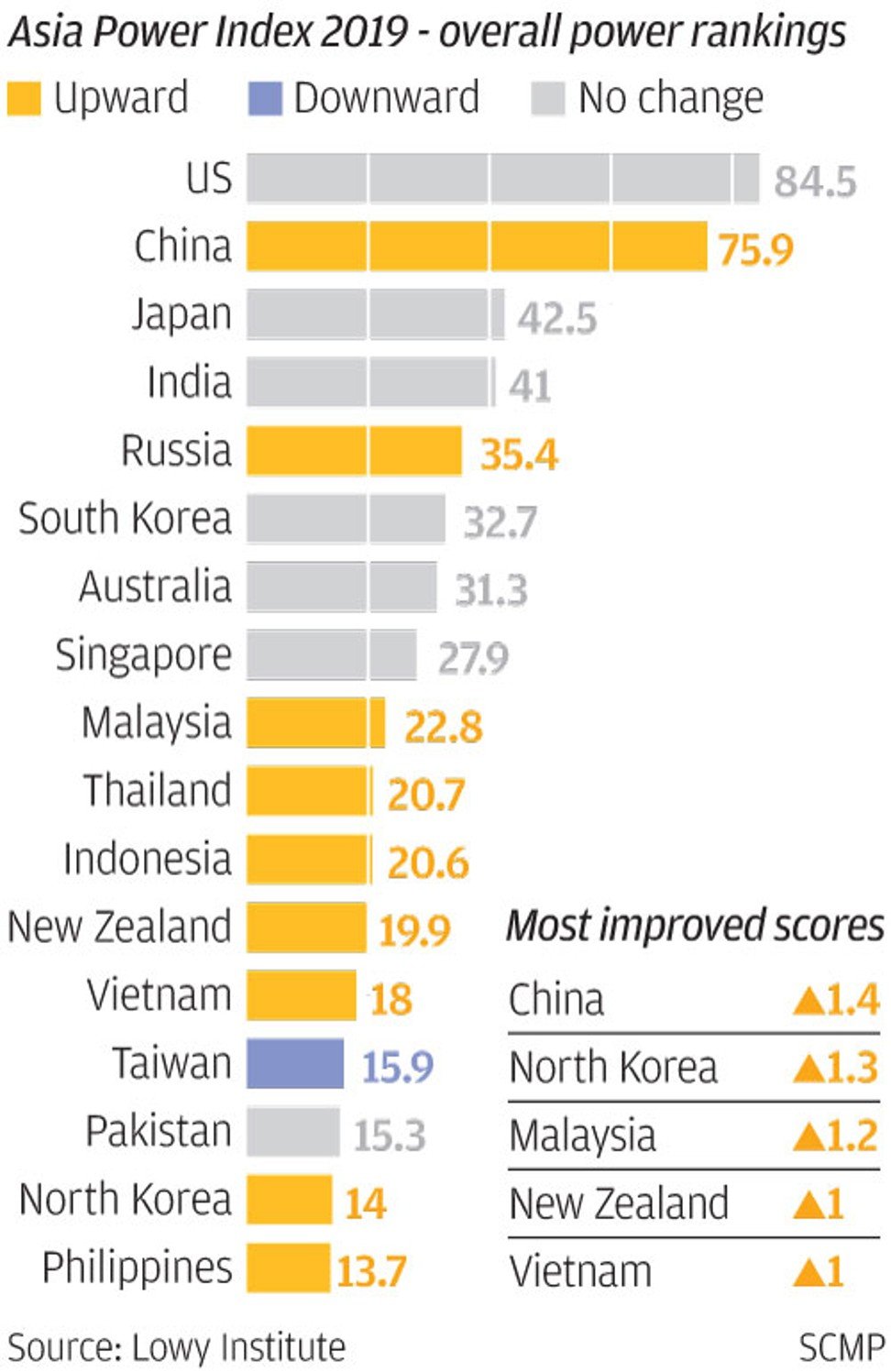
The index scored China 75.9 out of 100, just behind the US, on 84.5. The gap was less than America’s 10 point lead last year, when the index was released for the first time.
“Current US foreign policy may be accelerating this trend,” said the institute, which contended that “under most scenarios, short of war, the United States is unlikely to halt the narrowing power differential between itself and China”.
The Lowy Institute’s Asia Power Index. Click to enlarge.
. He most recently hiked a 10 per cent levy on US$200 billion worth of Chinese goods to 25 per cent and has also threatened to impose tariffs on other trading partners such as the European Union and Japan.
Herve Lemahieu, the director of the Lowy Institute’s Asian Power and Diplomacy programme, said: “The Trump administration’s focus on trade wars and balancing trade flows one country at a time has done little to reverse the relative decline of the United States, and carries significant collateral risk for third countries, including key allies of the United States.”
The index rates a nation’s power – which it defines as the ability to direct or influence choices of both state and non-state actors – using eight criteria. These include a country’s defence networks, economic relationships, future resources and military capability.
It ranked Washington behind both Beijing and Tokyo in terms of diplomatic influence in Asia, due in part to “contradictions” between its recent economic agenda and its traditional role of offering consensus-based leadership.
The spoils of trade war: Asia’s winners and losers in US-China clash
Toshihiro Nakayama, a fellow at the Wilson Centre in Washington, said the US had become its own enemy in terms of influence.
“I don’t see the US being overwhelmed by China in terms of sheer power,” said Nakayama. “It’s whether America is willing to maintain its internationalist outlook.”
But John Lee, a senior fellow at the Hudson Institute, said the Trump administration’s willingness to challenge the status quo on issues like trade could ultimately boost US standing in Asia.
“The current administration is disruptive but has earned respect for taking on difficult challenges which are of high regional concern but were largely ignored by the Obama administration –
illegal weapons and China’s predatory economic policies to name two,” said Lee.
“One’s diplomatic standing is not just about being ‘liked’ or ‘uncontroversial’ but being seen as a constructive presence.”
CHINA’S RISE
China’s move up the index overall – from 74.5 last year to 75.9 this year – was partly due to it overtaking the US on the criteria of “economic resources”, which encompasses GDP size, international leverage and technology.
China’s economy grew by more than the size of Australia’s GDP in 2018, the report noted, arguing that its growing base of upper-middle class consumers would blunt the impact of US efforts to restrict Chinese tech firms in Western markets.
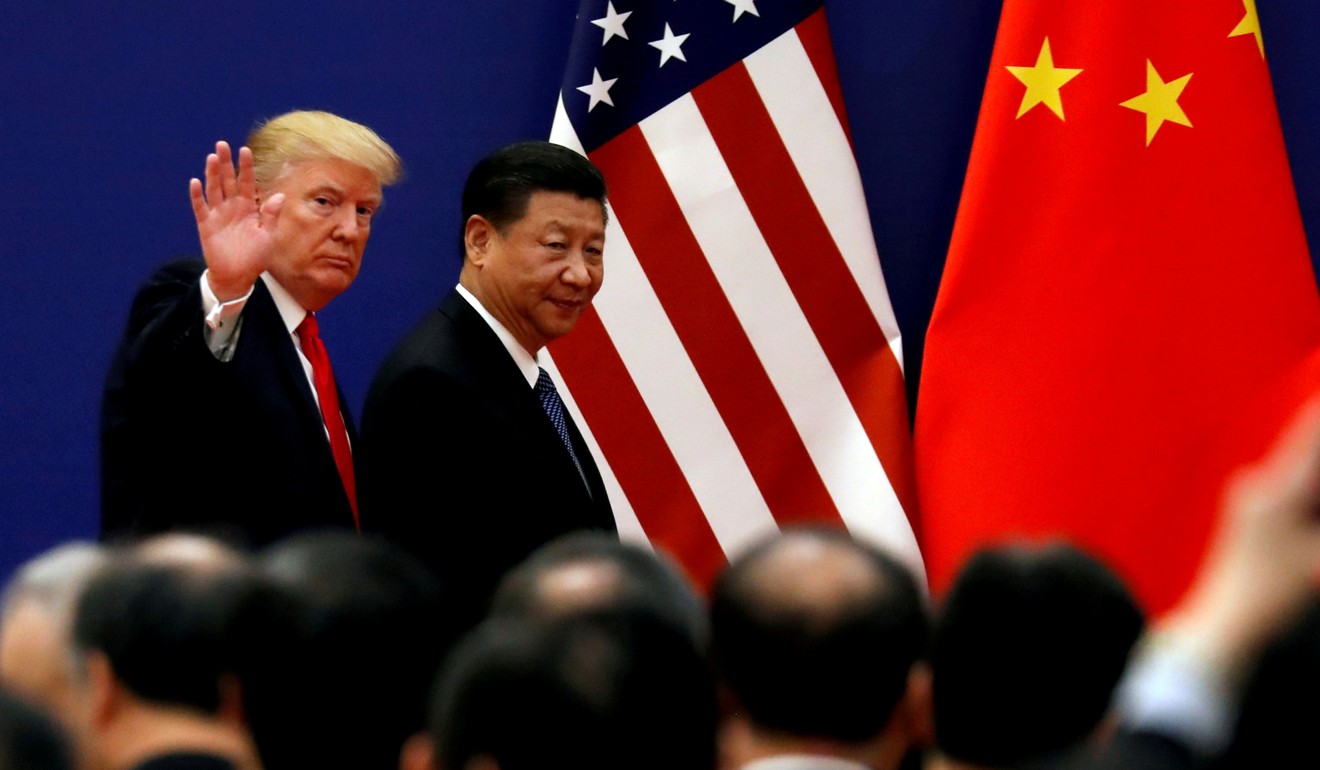
US President Donald Trump with Chinese counterpart Xi Jinping. Photo: Reuters
“In midstream products such as smartphones and with regard to developing country markets, Chinese tech companies can still be competitive and profitable due to their economies of scale and price competitiveness,” said Jingdong Yuan, an associate professor at the China Studies Centre at the University of Sydney.
“However, to become a true superpower in the tech sector and dominate the global market remains a steep climb for China, and the Trump administration is making it all the more difficult.”
The future competitiveness of Beijing’s military, currently a distant second to Washington’s, will depend on long-term political will, according to the report, which noted that China already spends over 50 per cent more on defence than the 10
stands in the way of its primacy in Asia, according to the index, which noted Beijing’s unresolved territorial and historical disputes with 11 neighbouring countries and “growing degrees of opposition” to its signature
and Myanmar due to concerns over feasibility and cost.
If Trump kills off Huawei, do Asia’s 5G dreams die?
Xin Qiang, a professor at the Centre for American Studies at Fudan University in Shanghai, said Beijing still needed to persuade its neighbours it could be a “constructive, instead of a detrimental, force for the region”.
“There are still many challenges for [China to increase its] power and influence in the Asia-Pacific,” Xin said.
Wu Xinbo, also at Fudan University’s Centre for American Studies, said Beijing was having mixed success in terms of winning regional friends and allies.
“For China, the key challenge is how to manage the maritime disputes with its neighbours,” said Wu. “I don’t think there is growing opposition to the Belt and Road Initiative from the region, actually more and more countries are jumping aboard. It is the US that is intensifying its opposition to the project as Washington worries it may promote China’s geopolitical influence.”
would persist and shape the global order into the distant future.
“They can still and do wish to cooperate where both find it mutually beneficial, but I think the more important task for now and for some time to come, is to manage their disputes in ways that do not escalate to a dangerous level,” Yuan said. “These differences probably cannot be resolved given their divergent interests, perspectives, etc, but they can and should be managed, simply because their issues are not confined to the bilateral [relationship] but have enormous regional and global implications.”
Elsewhere in Asia, the report spotlighted Japan, ranked third in the index, as the leader of the liberal order in Asia, and fourth-placed India as an “underachiever relative to both its size and potential”.
China’s wrong, the US can kill off Huawei. But here’s why it won’t
Lee said the index supported a growing perception that Tokyo had emerged as a “political and strategic leader among democracies in Asia” under
“This is important because Prime Minister Abe wants Japan to emerge as a constructive strategic player in the Indo-Pacific and high diplomatic standing is important to that end,” Lee said.
, Malaysia and Thailand rounded out the top-10 most powerful countries, in that order. Among the pack, Russia, Malaysia and Thailand stood out as nations that improved their standing from the previous year.




 CHINDIA ALERT: You'll be living in their world, very soon