Chindia Alert: You’ll be Living in their World Very Soon
aims to alert you to the threats and opportunities that China and India present. China and India require serious attention; case of ‘hidden dragon and crouching tiger’.
Without this attention, governments, businesses and, indeed, individuals may find themselves at a great disadvantage sooner rather than later.
The POSTs (front webpages) are mainly 'cuttings' from reliable sources, updated continuously.
The PAGEs (see Tabs, above) attempt to make the information more meaningful by putting some structure to the information we have researched and assembled since 2006.
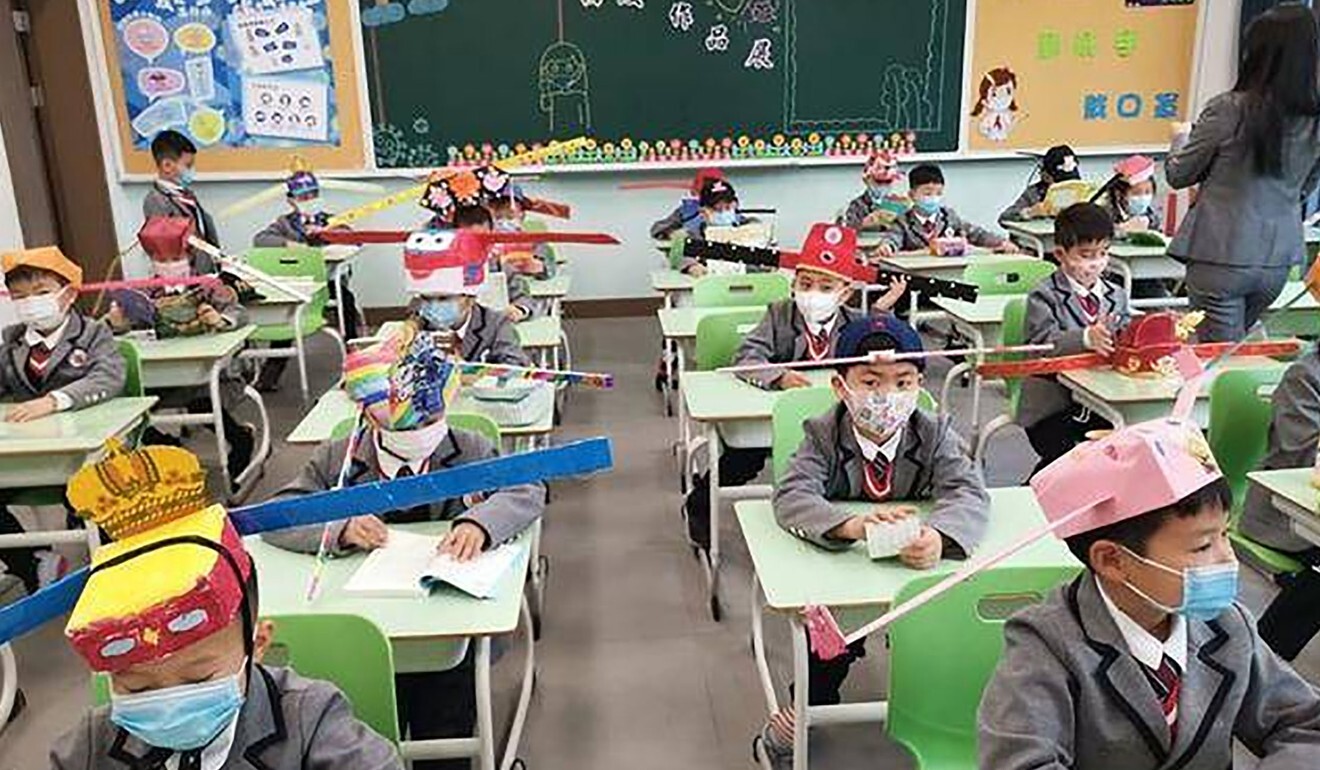
Pupils given headwear modelled on a style worn by officials a thousand years ago to reinforce the message that they must stay a metre away from each other
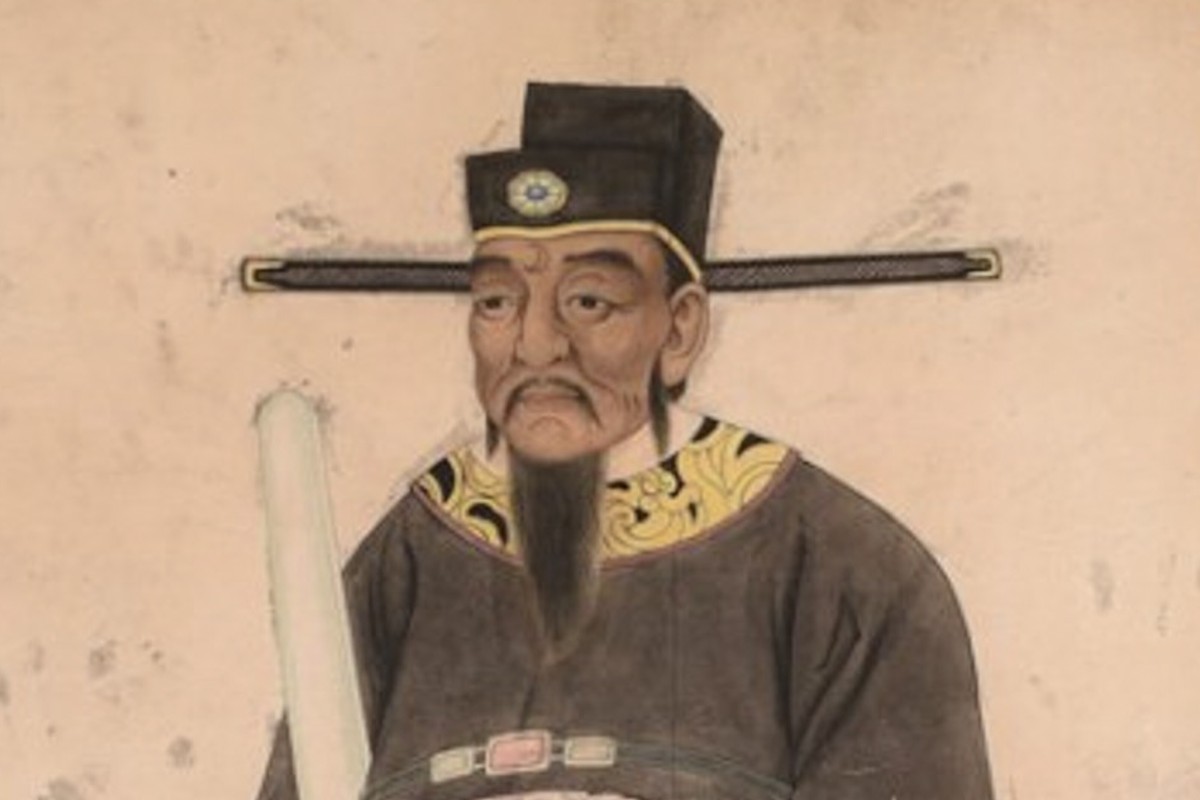
One legend says the hats were given long extensions to stop courtiers whispering among themselves when meeting the emperor
Hats with long extensions were worn by officials during the Song dynasty. Photo: Handout
An ancient Chinese hat has joined face masks and hand sanitisers as one of the weapons in the fight against Covid-19.
A primary school in Hangzhou in the east of the country took inspiration from the headgear worn by officials in the Song dynasty, which ruled China between 960 and 1279, to reinforce lessons on social distancing.
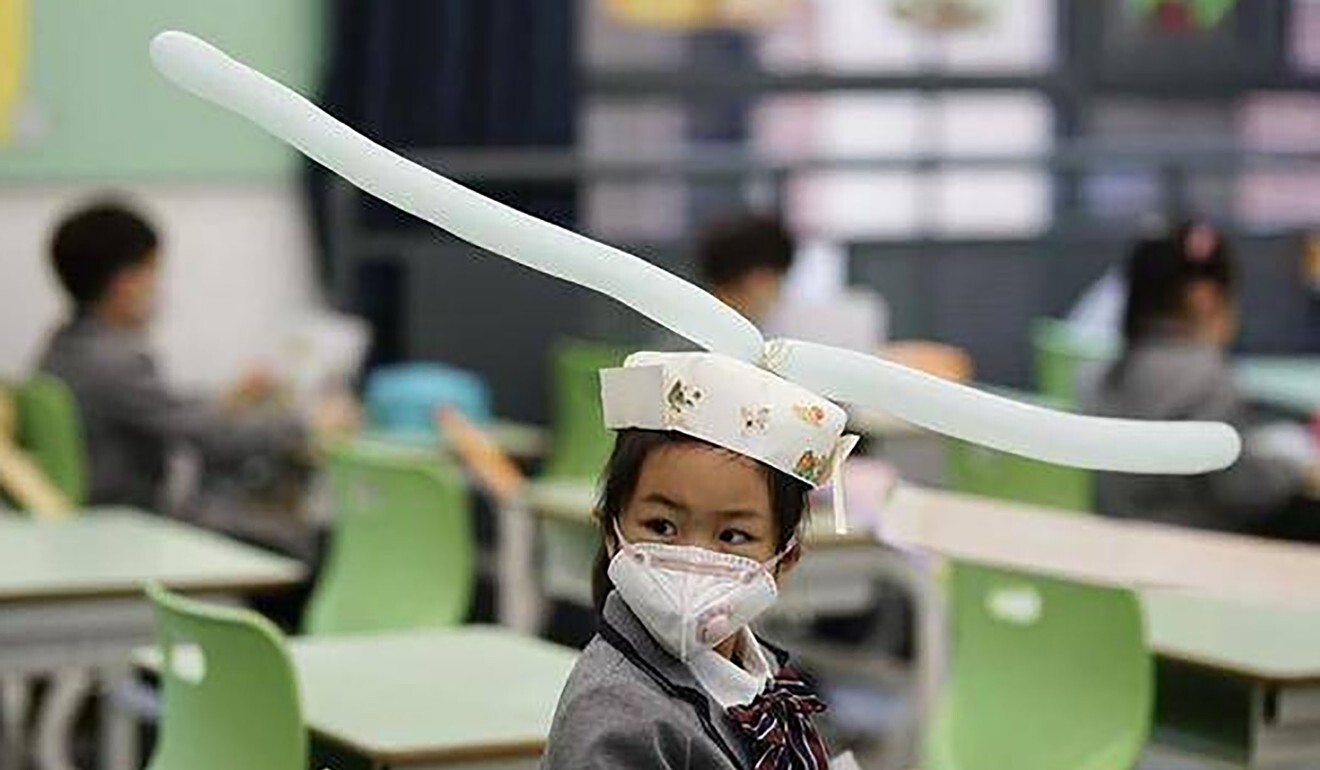
Pupils at the school wore their own handmade versions of the hats, which have long extensions, or wings, to keep them at least a metre (3ft) apart when they returned to school on Monday, state news agency Xinhua reported.
One legend says that the first Song emperor ordered his ministers to wear hats with two long wings on the sides so that they could not chitchat in court assemblies without being overheard, according to Tsui Lik-hang, a historian at City University of Hong Kong.
Pupils at a school in Hangzhou made their own versions of the hats. Photo: Weibo
However, he warned that this story came from a much later source, adding: “The Song emperors, in fact, were also depicted to have worn this kind of headwear with wing-like flaps.”
The World Health Organisation recommends that people stay at least a metre apart to curb the spread of the coronavirus that causes Covid-19.
Coronavirus droplets may travel further than personal distancing guidelines, study finds
16 Apr 2020
“If you are too close, you can breathe in the droplets, including the Covid-19 virus if the person coughing has the disease,” the global health body advises.
An early childhood education specialist said the hats were a good way to explain the concept of social distancing to young children, who find it difficult to understand abstract concepts.
The pupil’s head gear is designed to drive home the social distancing message. Photo: Weibo
“As children can see and feel these hats, and when the ‘wings’ hit one another, they may be more able to understand the expectations and remember to keep their physical distance,” said Ian Lam Chun-bun, associate head of the department of early childhood
Using pictures of footprints to indicate the right distance to keep when queuing, standing, and even talking to schoolmates was also helpful, said Lam, who recommended visual aids and aids that stimulate other senses, such as hearing and touch.
“We can use sharp colours or special textures, like tactile paving,” he added.
NEW DELHI (Reuters) – India’s ruling party was projected to lose a key state election on Tuesday, the vote count showed, in its first electoral test since deadly anti-government protests erupted nearly two months ago.
The Hindu-nationalist Bharatiya Janata Party (BJP) led by Prime Minister Narendra Modi won a bigger majority in a general election in May, but it has lost a string of state elections since then.
The protests, in which at least 25 people have been killed, erupted across the country in mid-December, after the BJP passed a new citizenship law critics say violates India’s secular constitution and discriminates against minority Muslims.
In counting for state polls held in India’s capital New Delhi, data from India’s Election Commission showed the liberal Aam Aadmi Party, led by the city’s chief minister, Arvind Kejriwal, leading 57 out of 70 seats.
The BJP ran a campaign accusing protesters of supporting India’s arch-rival Pakistan and was projected to win 13 seats, up from three in 2015 but far below its own expectations. The party’s local chief Manoj Tiwari had predicted it would win a majority.
AAP activists in distinctive white boat-shaped caps danced outside party headquarters in New Delhi as the result became clear, TV channels showed.
Neelanjan Sircar, an assistant professor at Ashoka University near New Delhi, said that local issues, including delivery of basic services like education and health, appeared to sway voters towards the AAP, even as the BJP ran a polarising campaign on the back of Modi’s image.
“Modi is a larger than life character at the national level, which obviously gives the BJP a huge advantage in national politics,” Sircar said.
“But it doesn’t translate to state level politics, where the BJP often doesn’t have a charismatic face.”
Bespectacled former bureaucrat Kejriwal, 51, formed AAP in 2012 amid an anti-corruption movement that swept India.
The party won a stunning victory in 2015 state elections in the capital, wiping out the BJP and Congress, the party that has ruled India for half its post-independence history.
The Congress – the main opposition at national level – was projected to win no seats in Delhi on Tuesday, data showed, reflecting the deep decline in its fortunes.
MUMBAI (Reuters) – India’s richest state is set to be ruled by parties opposed to Prime Minister Narendra Modi’s nationalist Bharatiya Janata Party, jeopardising a Japanese-backed bullet-train project opposed by farmers.
The BJP’s inability to pull together voters in the westerly state of Maharashtra, of which Mumbai is capital, has meant that three parties, including a former BJP ally, will form the government. That is a major setback for Modi after his landslide victory in general elections this year.
It could also hinder the bullet train project, a $17 billion investment largely financed by a long-term, low-cost loan from Japan. The BJP was in power in both Maharashtra and Gujarat states when work began on project in 2017.
“We have always opposed the bullet train,” said Manisha Kayande, a spokesperson for the Shiv Sena, a former BJP ally whose leader is now set to head Maharashtra. “Our state is giving a major chunk of money for the project, when most of the track is in another state. This will definitely be re-framed,” .
The train will run from Mumbai to Ahmedabad, the main city in Gujarat state, a distance of 508 kilometres (315 miles). But it has run into obstacles acquiring land amid opposition from fruit farmers.
Any delay of the project is likely to undermine investor confidence, at a time when growth has slowed to its weakest pace in years.
Critics say India does not need the high-speed train and investment should go instead to improve the existing network.
“We are not against development or infrastructure projects, but at the same time farmers’ interests can’t be ignored. We will rethink about projects that farmers are opposing,” said a senior leader of Nationalist Congress Party, which is a part of the coalition government.
National High Speed Rail Corporation (NHSRCL), the government agency overseeing the project, had no immediate comment.
The authorities have acquired 548 hectares land out of the total requirement 1,380 hectares and the project was targeted to be operational by 2023 , the government told parliament in July.
Protests against land acquisitions are common in India, where tens of millions of farmers till small holdings. A planned $44 billion refinery to be run by a consortium including Saudi Aramco, the world’s biggest oil producer, is also struggling to secure land in Maharashtra.
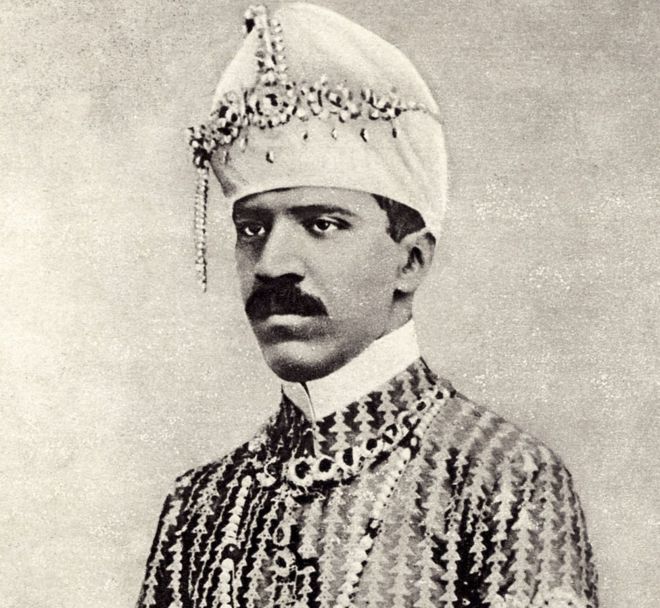
Image copyright GETTY IMAGESImage caption Mir Osman Ali Khan was once the world’s richest man
A London court has ruled that £35m ($42m) held in a UK bank account must go to the descendants of an Indian royal, and not to Pakistan.
The dispute began in 1948 when the last Nizam (king) of Hyderabad deposited £1m in the UK account, held by the then Pakistan high commissioner. With interest, the sum has grown to £35m.
The judge ruled there was no evidence to back Pakistan’s claims to the money.
The origins of the dispute go back to the 1947 partitioning of British India.
Hyderabad, which was a princely state, was annexed by India in 1948 in a military operation – the cash transfer had been made shortly before that.
The Nizam, Mir Osman Ali Khan, had not been able to decide whether his state should be in Pakistan or India.
His descendants alleged that he had asked for the money to be returned weeks after the annexation by India took place, but then Pakistan refused to give it back.
The court case had been fought by his family together with the Indian state.
National Westminster Bank, in which the money had been deposited, refused to release the funds to either party until the case was resolved by the courts.
The interest on the original deposit saw the money grow to £35m by 2019.
Pakistan argued it had been given the money in order to procure arms but the court determined it had the right to rule in the case, given that the money had been deposited in a British bank account.
“The court today made it clear that it did not think the money was handed to Pakistan outright. There is overwhelming evidence that Pakistan only held the money as a trustee and it actually belonged to the Nizam,” Paul Hewitt, the lawyer for one of the grandsons, told the BBC’s Gaggan Sabherwal.
Mr Hewitt said the case, which had begun when his client was a child, was finally being resolved when he was in his 80s.
“We welcome the judgment of Justice Marcus Smith,” Najaf Ali Khan, one of the Nizam’s grandsons, told BBC Telugu.
“The High Court has rightly rejected Pakistan’s claim. The family has long awaited this judgement.”
India’s foreign ministry also welcomed the verdict in a press statement.
Pakistan could seek to appeal, but otherwise the money will be given to the Nizam’s grandsons and the state of India.





 CHINDIA ALERT: You'll be living in their world, very soon