Archive for ‘shandong province’

27/03/2020

Chinese enterprises donate more medical supplies to Serbia

JINAN, March 27 (Xinhua) — A shipment of medical supplies donated by Chinese companies in Shandong Province was delivered via a chartered flight on Friday morning from Jinan, the provincial capital, to Serbia to help with local coronavirus fight.

The supplies include 60,000 masks, 100 protective suites, 1,000 goggles and 2,000 boxes of medicine, donated by the Shandong High-speed Group and the First Company of China Eighth Engineering Division Ltd.

A batch of medical supplies donated by Chinese companies earlier, including the HBIS Group Co., Ltd., arrived in Serbia on Thursday with the help of the United Nations Development Programme and the European Union.

As of 3:00 p.m. Thursday local time, Serbia had reported 457 cases of COVID-19 and seven deaths.

Source: Xinhua

27/03/2020

Across China: Chinese universities adopt online dissertation defense to ensure on-time graduation

CHANGSHA, March 26 (Xinhua) — Du Xu, a postgraduate from Central South University of Forestry and Technology (CSUFT), turned on his laptop and prepared for his dissertation pre-defense online.

While at home in eastern China’s Shandong Province, Du presented his dissertation to five professors for the first time through the remote video connection.

“Half a month ago, the university informed us to prepare an online pre-defense, find out the tutors’ opinions on the first draft and then revise it,” the 26-year-old said. Although he had experience with an opening thesis defense and other face-to-face forms, he was not familiar with the process of online defense, which made him feel nervous.

According to the CSUFT, all the postgraduate dissertations must be pre-defended before being submitted for examination to ensure the quality. The graduate school of the university adjusted the arrangement amid the epidemic. Online defense started on Feb. 10 to ensure that the graduate students could graduate on time.

“Since our defense is open and anyone can click the link to join, there were 55 students online when I spoke,” Du said. The open online defense can help us check missing key points and learn from each other. Some students also recorded the defense process to follow up on the comments of the tutor to further modify their dissertation, according to Du.

The university said the pre-defense would be submitted via the Internet, and the degree management office has set up an online platform for it.

Feng Jiajin, a graduate of the Hunan Railway Professional Technology College (HRPTC), who works as an intern at the Nanchang Railway Bureau in eastern China’s Jiangxi Province, also needs to demonstrate his graduation project through an online defense.

On March 18, Feng launched a video conference for his final project defense in the office via software on his mobile phone during his lunch break. More than 10 teachers from his college attended the meeting.

In front of the camera, Feng talked about his graduation project “Ultrasonic Ranging and Reversing System” and displayed the slides on the screen with explanations.

When displaying his final product, he showed the results of the graduation project in different situations.

“Vocational schools focus on students’ practical ability. Before the formal defense, the instructor first reviewed the students’ graduation projects and the statements. Only when the work is qualified are the students are allowed to participate in the defense and display,” said Xiong Yi with HRPTC.

According to the college, members of the dissertation defense committee ask questions about the relevant theoretical knowledge and the design methods, which the students should answer one by one. Finally, the members of the defense committee discuss the defense process and results. The results will be announced after a secret ballot. The entire process of the dissertation defense will be recorded, screenshot and saved as the defense record.

“The outbreak of coronavirus won’t affect the students’ graduation and seeking employment. Before the start of the new semester, the university will use online defense to ensure their graduation on time,” said Zhang Ying, vice president of HRPTC, adding that in March, the school will have more than 600 graduates participate in online defense.

Source: Xinhua

19/03/2020

China Focus: China hands out vouchers to spur virus-hit consumption

NANJING, March 19 (Xinhua) — Chinese cities are encouraging residents to dine out and shop with measures such as handing out e-vouchers to boost consumption sectors hit hard by the novel coronavirus outbreak.

Like many living in the eastern city of Nanjing, Wang Linlin was waked up by her alarm clock at midnight and with a few clicks on her cellphone, she was ready to meet her luck of the draw: getting a meal voucher worth 100 yuan (about 14.2 U.S. dollars).

“I’ve always been thinking about hanging out and having hotpot with my friends after the epidemic, so getting a voucher would be great,” Wang said.

Nanjing has been giving out vouchers worth 318 million yuan to its residents since Sunday. People are invited to participate in lotteries for e-vouchers which can be used in restaurants, gymnasiums, bookshops as well as tourist spots, helping the service sector bounce back.

The voucher bonus has been well received as more than 1.6 million local citizens have registered for the lotteries as of Monday, according to the Nanjing Big Data Administration Bureau.

Besides Nanjing, many other regions have also been taking similar actions.

Macao gives out vouchers totaling 2.2 billion patacas (about 275 million U.S. dollars) to its residents. The city of Ningbo in east China’s Zhejiang Province is issuing consumption vouchers worth 100 million yuan while the city of Jinan, east China’s Shandong Province, is handing out vouchers worth 20 million yuan to stimulate spending on tourism and culture.

Due to the coronavirus outbreak, Chinese customers have shied away from restaurants and shopping malls. China’s retail sales of consumer goods, a major indicator of consumption growth, declined 20.5 percent year on year in the first two months of this year, according to the National Bureau of Statistics.

“People are more willing to dine out with the vouchers, which can boost confidence in the catering sector and finally get the economy back on track,” said Shen Jiahua, chairman of a chain restaurant company in Nanjing.

After the coronavirus outbreak ends, people are eager to spend generously. According to a survey conducted by the Jiangsu consumers council, nearly 90 percent of the respondents expressed suppressed consumption desire.

Restaurants, shopping malls, movie theaters, gymnasiums and tourist spots are the top five destinations for consumers to unleash their spending spree after normal life resumes, the survey showed.

Local officials across China have been taking the lead in recent days in patronizing restaurants and shopping malls, hoping to use their appearances in public to persuade more residents to go outside.

In provinces such as Jiangsu, Anhui, and Jiangxi, government notices have urged officials to dine out and go shopping to help related businesses through the epidemic period.

“Government officials are using their actions to convey confidence and support work resumption and consumer spending,” commented a Chinese netizen.

Source: Xinhua

05/03/2020

Special Report – Before coronavirus, China bungled swine epidemic with secrecy

(Reuters) – When the deadly virus was first discovered in China, authorities told the people in the know to keep quiet or else. Fearing reprisal from Beijing, local officials failed to order tests to confirm outbreaks and didn’t properly warn the public as the pathogen spread death around the country.

All this happened long before China’s coronavirus outbreak, which has claimed more than 3,000 lives worldwide in less than three months. For the past 19 months, secrecy has hobbled the nation’s response to African swine fever, an epidemic that has killed millions of pigs. A Reuters examination has found that swine fever’s swift spread was made possible by China’s systemic under-reporting of outbreaks. And even today, bureaucratic secrecy and perverse policy incentives continue undermining Chinese efforts to defeat one of the worst livestock epidemics in modern history.

Beijing’s secretive early handling of the coronavirus epidemic has troubling similarities to its missteps in containing African swine fever, but with the far higher stakes of a human infection. After the coronavirus was found in December 2019 in Wuhan, the capital of Hubei province, local and national officials were slow to sound the alarm and take actions disease experts say are needed to contain deadly outbreaks. Beijing continues to gag negative news and online postings about the disease, along with criticism of the government’s response.

With swine fever, Beijing set a tone of furtiveness across government and industry by denying or downplaying the severity of a disease that the meat industry estimates has shrunk China’s 440-million-hog herd by more than half. The epidemic has taken a quarter of the world’s hogs off the market, hurt livelihoods, caused meat prices to spike globally and pushed food inflation to an eight-year high. (For a graphic on soaring China pork prices, click here)

Cover-ups across China – coupled with underfinancing of relief for devastated pig farmers and weak enforcement of restrictions on pork transport and slaughter – have enabled the spread of the livestock virus to the point where it now threatens pig farmers worldwide, according to veterinarians, industry analysts and hog producers. Since the China outbreak, African swine fever has broken out in 10 countries in Asia.

The vacuum of credible information has made it impossible for farmers, industry and government to tell how and why the disease spread so quickly, making preventive measures difficult, said Wayne Johnson, a Beijing-based veterinarian who runs Enable Ag-Tech Consulting.

“To get it under control, you have to know where it is,” Johnson said.

China’s Ministry of Agriculture and Rural Affairs said in a statement to Reuters that it has repeatedly communicated to all regions the importance of timely and accurate reporting of African swine fever outbreaks and had zero tolerance for hiding and delaying the reporting of cases.

Interviews with farmers, industry analysts and major suppliers to China’s pork sector indicate otherwise. More than a dozen Chinese farmers told Reuters they reported disease outbreaks to local authorities that never made it into Beijing’s official statistics. Those infections are going unreported to central authorities in part because counties lack the cash to follow a separate requirement from Beijing to compensate farmers for pigs killed to control the disease.

Local officials have also avoided reporting outbreaks out of fear of the political consequences. And they have routinely refused to test pigs for the virus when mass deaths are reported, according to interviews with farmers and executives at corporate producers.

A farmer surnamed Zhao, who raises a herd in Henan province, said local officials told him as much when they resisted recording the outbreak he reported on his farm, which wiped out his herd.

“‘We haven’t had a single case of African swine fever. If I report it, we have a case,’” Zhao recalled an official telling him. The local officials could not be reached for comment and a fax seeking comment went unanswered.

When the coronavirus hit, Chinese authorities reacted with a push to reassure the public that all was well. The first reported death from the virus, also known as SARS-CoV-2, came on Jan. 9 – a 61-year-old man in Wuhan. In the following days, Chinese authorities said that the virus was under control and not widely transmissible.

The assurances came despite a lack of reliable data and testing capacity in Wuhan. Testing kits for the disease were not distributed to some of Wuhan’s hospitals until about Jan. 20, an official at the Hubei Provincial Centre for Disease Control and Prevention (Hubei CDC) told Reuters. Before then, samples had to be sent to a laboratory in Beijing for testing, a process that took three to five days to get results, according to Wuhan health authorities.

During that gap, city hospitals reduced the number of people under medical observation from 739 to 82, according to data from Wuhan health authorities compiled by Reuters, and no new cases were reported inside China.

China’s top leadership has dramatically ramped up the public-health response since its early missteps. Beijing built new hospitals in days to treat the sick and launched an unprecedented blockade of the disease epicentre on Jan. 23, first quarantining Wuhan’s 11 million residents at home, then suspending transport in all major cities of Hubei province, home to about 60 million people.

Still, the initial attempts to tightly control information left many people unaware of the risks and unable to take precautions that might have prevented infection – and the suppressing of news and commentary continues today. Wuhan authorities reprimanded eight people they accused of spreading “illegal and false” information about the disease. One of them, 34-year-old doctor Li Wenliang, later died from coronavirus, triggering an angry backlash on social media.

Some critical posts were allowed during a brief and unusual period of online openness in late January. But Beijing’s censors – the Cyberspace Administration of China (CAC) – have since cracked down on posts about Li and other information that authorities deem negative, according to CAC censorship orders sent to online news outlets and seen by Reuters. One CAC notice ordered online outlets to guard against “harmful information.” Another ordered them not to “push any negative story.”

The CAC did not respond to a request for comment sent by fax.

UNREPORTED OUTBREAKS

Beijing had years to prepare for African swine fever. Veterinarians have frequently warned Chinese authorities of the risks since the disease started spreading through the Caucasus region in 2007.

Pigs infected by the virus initially suffer high fever, loss of appetite and diarrhoea. Then their skin turns red as internal haemorrhaging starts and their organs swell, leading to death in as little as a week.

With no vaccine or cure available for the disease, experts recommend that infected pigs and others housed in the same barn are culled, with the carcasses either burned or buried to prevent further infection. Farms, equipment and vehicles that could be contaminated need to be thoroughly cleaned and disinfected.

The first case in China was discovered on Aug. 1, 2018, on a farm near Shenyang, in the northeastern province of Liaoning. Just two weeks later, the virus was found more than 1,000 kilometres to the south in pigs bought by the country’s top pork processor, WH Group(0288.HK), from another northeastern province, Heilongjiang. It took Beijing another two weeks to block pig exports from the whole region, and that and other transport restrictions were poorly enforced, said Johnson and other industry experts. WH Group declined to comment.

One factor behind the epidemic: Chinese consumers prefer fresh pork – straight from the slaughterhouse, rather than chilled. This means hundreds of thousands of live pigs are moved long distances every day to supply processors in major cities. That mass movement spread the disease relentlessly.

Over the first four months of the outbreak, Beijing reported swine-fever cases almost daily as the virus spread from the northeast down through central China, west into Sichuan, and to the huge province of Guangdong by year-end. Veterinarians believe the virus spread quickly because it can survive for weeks on dirty farm equipment or livestock trucks.

And yet gaps in counting and tracking the pig disease have been routine across China. Reuters found a striking absence of reported outbreaks in some of the nation’s most productive pork regions.

For instance, almost none of the reported outbreaks have come from the major hog-raising provinces of Hebei, Shandong and Henan. The three contiguous northern provinces were the source of some 20% of the 700 million pigs China slaughtered in 2017. Many came from backyard farms, which make up a large part of China’s industry and have proven fertile breeding grounds for the disease. Yet each of the three provinces has reported just a single case of African swine fever, despite widespread anecdotal reports of outbreaks there that industry sources believe killed millions of pigs.

Neither Shandong nor Henan authorities responded to requests for comment. Hebei’s department of agriculture said it had “strictly reported and verified the epidemic” and that the disease situation was currently “stable.”

Six Henan farmers told Reuters they reported outbreaks during late 2018 and the first half of 2019. In some cases, local authorities helped deal with dead pigs, they said, but never tested for the virus.

That’s what happened when Wang Shuxi, a farmer in Henan’s Gushi County, lost more than 400 pigs in March 2019. Wang said he had no doubt that his pigs had African swine fever, even though authorities never tested them – and he couldn’t test them himself, because Beijing did not permit the commercial sale of disease test kits at the time.

His pigs showed telltale symptoms of the disease.

“The whole body went red,” he said. He injected the animals with an anti-fever medication to no avail. “At the start, they didn’t eat, and even after injections, it kept returning,” he said. “If you can’t cure it, you know it’s swine fever.”

Provincial and county governments had strong incentives to avoid verifying and reporting outbreaks because of Beijing’s rules on compensating farmers, said Huang Yanzhong, specialist in health governance with the Council on Foreign Relations in New York.

Under an African swine fever contingency plan drawn up in 2015, Beijing ordered the culling of all pigs on farms where the disease is found and on every farm within a three-kilometre radius. The central government raised compensation from 800 yuan ($115) to 1,200 yuan for every pig culled in 2018. Beijing typically promised to provide between 40% and 80% of the money, depending on the province. Localities would fund the rest.

In April 2019, the national agriculture ministry said the central government had allocated 630 million yuan to cull 1.01 million pigs to contain the disease. But that money either wasn’t sufficient or regularly did not get paid out, farmers told Reuters. None of about a dozen farmers who told Reuters they tried to report outbreaks said they had received the promised 1,200 yuan for each pig.

Many got nothing. Wang, the Gushi County farmer, said that almost a year after his pigs died, he has received no recompense. Gushi County officials could not be reached for comment.

Many farmers, eager to salvage value from their herds, have resorted to sending their pigs to slaughter at the first sign of illness – thereby thrusting the virus into the human food supply. The swine fever virus does not threaten people. But its presence in meat – where it can survive for weeks – creates a cycle of infection because many backyard farmers feed pigs with restaurant scraps that include pork.

Garbage feeding caused 23 outbreaks in 2018, Huang Baoxu, deputy director of the China Animal Health and Epidemiology Center, told reporters at a briefing in November that year. His remarks were a rare instance where the central government revealed findings about the spread of the hog virus. The centre declined to comment for this story.

Farmers visiting slaughterhouses dealing in sick pigs also likely picked up the virus on their trucks or equipment, spreading it back to their farms, Johnson said.

In the southern province of Guangxi, the disease raged through the spring of 2019 and early summer, several farmers told Reuters last year. Bobai County was hit hard.

A Bobai farmer surnamed Huang said she lost almost 500 pigs during April and May. She said she tried to report the diseased pigs to the local government but was ignored. The official she spoke to by phone never came to her farm. He told Huang that her pigs could not be saved – but that they didn’t have African swine fever. His advice, she said: “hurry and sell the pigs while they could be sold.”

Huang said she sold more than 30 pigs that she believed had the virus. They looked healthy when she sold them, she said. Others sold obviously sick pigs at very low prices. “Traders took all the pigs, including the sick ones – as long as they could walk to the trucks,” she said.

Huang buried her dead pigs daily for weeks on a relative’s land. Others simply dumped their dead pigs on the roadside or in the mountains, she said. The government provided no help.

Eventually, in late May, Bobai County reported one pig dead from the disease, official statistics show.

Authorities in Guangxi did not respond to a request for comment, and officials in Bobai county’s agriculture bureau could not be reached.

Beijing’s agriculture ministry said in a statement that it had issued an August 2019 order requiring punishments in situations where localities failed to report outbreaks. The ministry said it meted out unspecified discipline to more than 600 local personnel for what it called failures to manage the disease that were uncovered in its investigations of problem areas.

The practice of processing infected hogs has persisted despite new rules from Beijing in July that required slaughterhouses to test all batches of pigs for the virus. The agriculture ministry said in January that 5% of the more than 2,000 samples taken from slaughterhouses in November tested positive for the disease.

An Australian study in September found 48% of meat products confiscated from Asian travellers arriving at its ports and airports contained the virus.

“It showed there’s an awful lot of unrevealed infection not being reported to the authorities,” said Trevor Drew, director of the Australian Animal Health Laboratory.

One such information gap is at the top of the industry – China’s large corporate pig producers. They have also been hit hard by the disease, despite taking more extensive measures than backyard farms to disinfect trucks and require workers to change clothes and shower before and after shifts.

None of China’s top publicly traded producers have publicly announced any swine fever outbreak, but executives of major hog producers acknowledged in interviews with Reuters that their herds were hit by the disease.

Thai conglomerate C.P. Pokphand(0043.HK), one of China’s leading pig producers, has had swine-fever outbreaks on farms in Liaoning, Shandong, Henan and Jiangsu provinces, Bai Shanlin, chief executive of China operations, told Reuters in a rare admission by a listed firm. Executives at three other listed companies, also among China’s top pig producers, acknowledged outbreaks at several farms but declined to be identified.

None of the outbreaks that these large companies have confirmed to Reuters were reported by Beijing, according to a Reuters review of the agriculture ministry’s data on outbreaks.

By August 2019, a year after the first case was found in China, pork prices had passed a record set back in 2016. And they were still climbing rapidly. With a crucial national celebration approaching in October – the 70th anniversary of the founding of the People’s Republic – China’s top leaders took note. Pork is a staple of Chinese cuisine, and rising meat production has been among the many signature achievements in the Communist Party’s decades-long drive to bring prosperity to China.

In a video conference that month with officials from all 34 provinces and regions, Vice Premier Hu Chunhua issued a warning: Sufficient pork was vital to people’s lives and the country’s stability. He called for the urgent recovery of the herd as a key “political task.”

A raft of new production policies and incentives emerged from Beijing. And as the provinces rallied to replenish the nation’s herd, reports of African swine fever grew even more rare. Disease outbreaks reported by the agriculture ministry have tailed off since August. In January, Agriculture Minister Han Changfu said the situation has stabilized.

The government’s statistics are rife with contradictions, however. The ministry has reported 163 outbreaks of African swine fever since August 2018 and said 1.19 million pigs have been culled, a fraction of 1% of China’s total herd. Separate ministry data tracking the herd monthly show that, by September 2019, the herd had shrunk by 41% from the prior year. (For a graphic on the decline in China’s pig herd, click tmsnrt.rs/38lkOcx )

These official estimates of the decline are far too low, three major industry suppliers told Reuters.

“It’s at least 60%,” said Johan de Schepper, managing director of Dutch feed ingredients firm Agrifirm International. His assessment, based on sales to about 100 large pig producers, echoed those of others in the industry.

The virus is still killing pigs nationwide and the herd may still be shrinking, say farmers and industry suppliers. “Half of the herd was gone before this winter, and I think half of the rest will be gone by the end of the season,” said Johnson, the veterinarian, citing conversations with clients from across China.

The problem: Some areas were hit with a second wave of the disease.

Henan province is among them, farmers told Reuters. Last year, about 60% of Henan’s herd was wiped out, mainly in the densely farmed areas in the south and west of the province, analysts at Guotai Junan Securities wrote in an internal memo seen by Reuters. Recently, the memo noted, the virus has moved through east Henan, taking out another 20%.

The vicious disease ruined Zhao, the farmer in central China’s Henan province. The virus struck in October, causing high fever, internal bleeding, vomiting and diarrhoea in his pigs. Just two survived. The other 196 died in a week.

When Zhao tried to report the outbreak to the county veterinary authority, he said, officials strongly encouraged him to keep quiet. A local official reminded him of the national mandate to cull all pigs within three kilometres of an infected farm. That could spell disaster for his neighbours if Zhao spoke up.

“If it’s found to be African swine fever, people nearby will have to stop raising pigs,” Zhao recalled a local official telling him. Zhao decided against filing a report to protect his neighbours, he told Reuters on a recent visit to his farm.

Further up the political hierarchy, the deputy governor of Henan province was quoted by the provincial agriculture bureau as saying in December that Henan had been free of the disease for 14 months, after a single reported case in September 2018. The provincial government did not respond to requests for comment.

The disinformation game continues. Zhao says that when county officials came by his farm in January, they recorded that he still had 180 pigs. In fact, he said, he had just the two hogs that survived the October outbreak.

“The country is being kept in the dark,” he said.

Source: Reuters

29/02/2020

Could the coronavirus help to improve China’s ties with South Korea, Japan?

  • Cooperation on ‘soft’ issues like public health can provide an ‘opportunity for improvement’ in the nations’ broader relationship, international affairs expert says
  • Foreign ministers agree to do all they can to ensure Chinese President Xi Jinping’s planned visits to east Asian neighbours go ahead later this year
South Korea on Thursday reported 505 new coronavirus cases, its largest increase yet. Photo: AP
The rapid spread of the coronavirus outside China, especially in South Korea and

Japan, 

has created a fresh challenge to Beijing’s delicate relationship with its northeast Asian neighbours, but experts say the unprecedented public health crisis could draw them closer, at least for now.

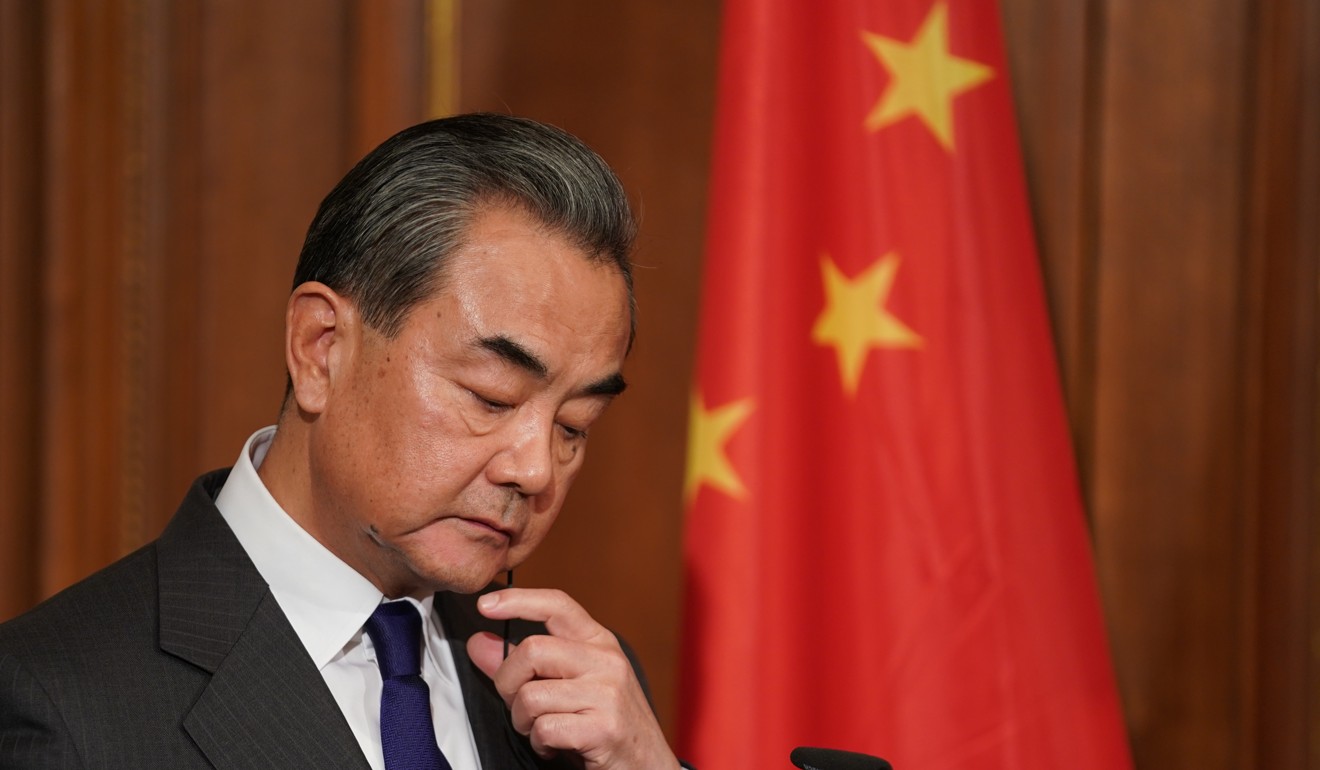
China’s Foreign Minister Wang Yi held separate conversations with his South Korean and Japanese counterparts on Wednesday as Beijing scrambles to deal with the growing risk of imported infections from the two countries.
In a sign of the “strong momentum at the leadership level on both sides”, Wang and Japanese Minister for Foreign Affairs Toshimitsu Motegi agreed to ensure Chinese President Xi Jinping’s state visit to Japan later this year goes ahead as planned, despite mounting fears the virus outbreak will become a pandemic.
China’s foreign ministry said on Thursday that Yang Jiechi, Wang’s predecessor and Xi’s top aide on foreign affairs, would visit Japan on Friday. His trip is expected to pave the way for Xi’s high stakes visit in the spring, observers said.

But Benoit Hardy-Chartrand, an international affairs expert at Temple University in Tokyo, said that if the outbreak did not subside in the next few weeks, Japanese Prime Minister Shinzo Abe’s government would come under intense pressure to delay the visit.

“Despite reassuring official pronouncements, no one would be surprised if the visit was postponed to a later date,” he said. “With an already declining approval rate, the Abe administration would be hard-pressed to go ahead with the summit.”

During her phone call with Wang, South Korean Foreign Minister Kang Kyung-wha urged China to refrain from carrying out what she described as “excessive” restrictions and forcible quarantine measures against visitors from her country, the Yonhap news agency reported.

White House announces coronavirus ‘coordinator’ to lead response under Pence

28 Feb 2020
South Korea

on Thursday reported 505 new coronavirus cases – its largest increase yet and the first time any country has confirmed more daily cases than China. The outbreak has now spread to more than 30 countries and killed more than 2,800 people.

US-CHINA TRADE WAR
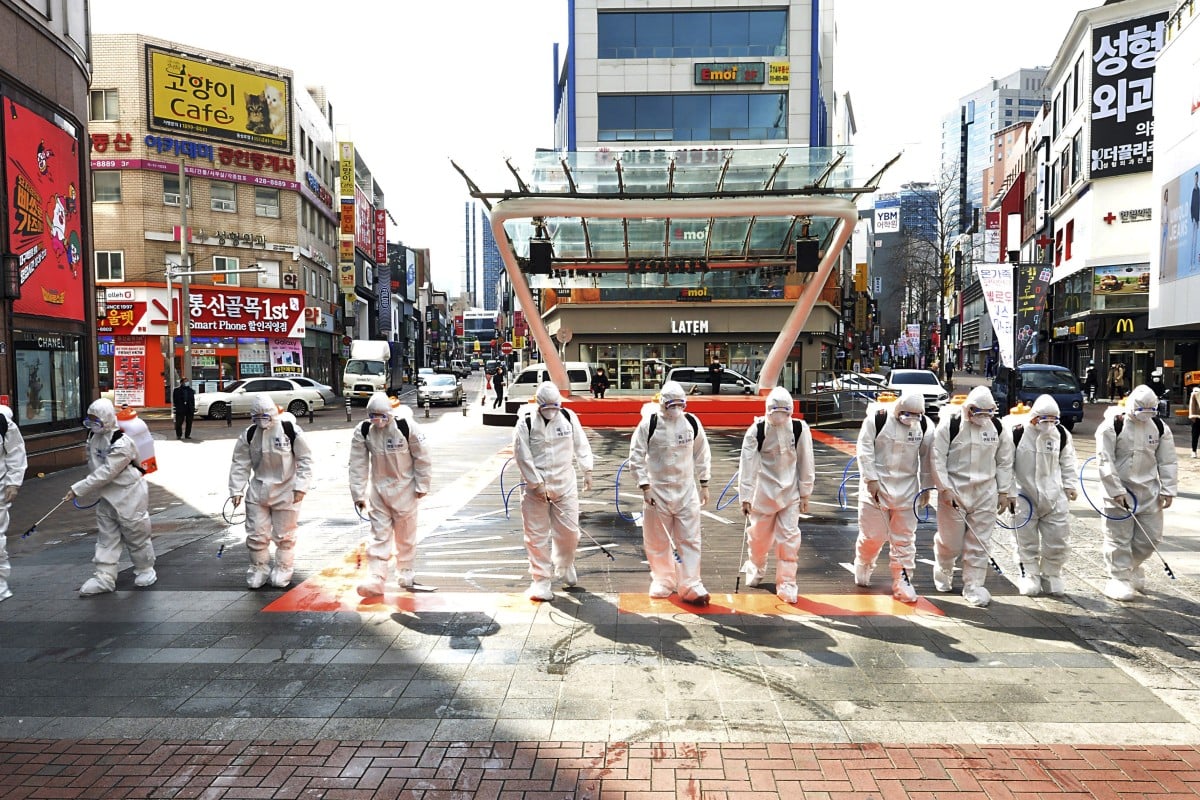
In the cities of Qingdao and Weihai in east China’s Shandong province – both of which are home to large South Korean and Japanese communities – local authorities have begun to quarantine arrivals from the two countries, while similar measures targeting South Koreans in particular have been introduced in Shenyang and Nanjing.

This is the first time China, where the coronavirus originated and which earlier criticised other nations for overreacting to the outbreak, has introduced country-specific measures in the name of disease control.

The move sparked fierce criticism in South Korea, with more than 750,000 people signing an online petition calling for a ban on Chinese visitors.

The foreign ministry in Seoul said that about 40 nations and regions had imposed some sort of restrictions on South Korean visitors.

Both South Korea and Japan – which were among the first to offer support and aid to China when the epidemic took hold – have imposed only partial restrictions on Chinese travellers, mostly those from Hubei, the province at the centre of the contagion.

Wang again thanked South Korea for its support and defended China’s control measures, saying they were necessary to reduce the cross-border movement of people and restrict the spread of the disease, China’s foreign ministry said.

China’s Foreign Minister Wang Yi. Photo: EPA-EFE
Yonhap said both Wang and Kang also agreed that Xi’s proposed trip to South Korea in the first half of the year would proceed as planned.
Chinese experts said the coronavirus had deepened distrust and antagonism towards China in both countries, with many South Koreans and Japanese blaming China for the spread of the disease.
Li Wen, an expert from the China Institute of International Studies, said the coronavirus crisis had seen the rise of the “China threat” in South Korea, with its government under enormous pressure to get tough on its giant neighbour.

According to Yonhap, Kang urged South Korean diplomats in China earlier this month to help minimise any negative impact the epidemic might have had on relations between the two countries.

Hardy-Chartrand said relations between China and South Korea remained tense because of Seoul’s deployment of the American-made THAAD missile defence system, which in turn led to Beijing introducing unofficial sanctions that caused resentment among South Koreans.

Hongkongers stuck in Japan with airlines reluctant to fly them home

28 Feb 2020

But the latest spat over the control measures was unlikely to be a major obstacle to regional relations, he said.

“Overall, cooperation on so-called soft issues like public health, as we are witnessing at the moment, can provide an opportunity for further improvement in the broader relationship, at least in the short term,” he said.

China-Japan relations might also benefit from closer cooperation on disease control given uncertainty in the region over the US-China trade war, the North Korean denuclearisation impasse, the United States’ commitment to its allies, and the coronavirus outbreak, he said.

“I am less sanguine about the mid- to long-term prospects for Sino-Japanese relations, given that the sources of the tensions that we saw from 2010 to 2017, namely the East China Sea territorial dispute and other historical issues, remain wholly unresolved,” he said.

According to a Pew study in December, 85 per cent of Japanese have an unfavourable view of China, the highest among 34 countries surveyed, while 63 per cent of South Koreans see China negatively.

Source: SCMP

22/02/2020

Coronavirus: ‘Narrowing window’ to contain outbreak, WHO says

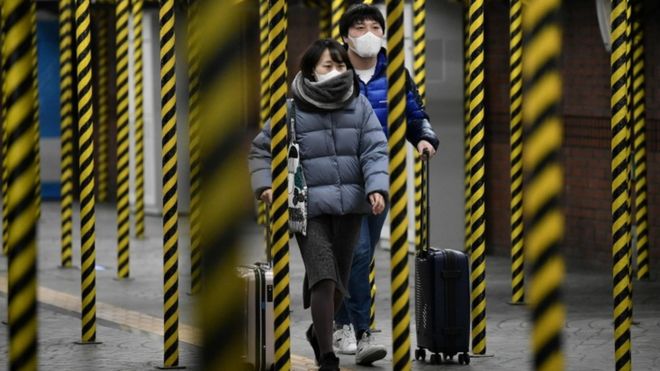
Passengers wearing face masks walk between columns at a subway station being renovated in SeoulImage copyright GETTY IMAGES
Image caption Cases of coronavirus have risen sharply in South Korea, where the outbreak is worsening

The head of the World Health Organization (WHO) has expressed concern at the number of coronavirus cases with no clear link to China or other confirmed cases.

Dr Tedros Adhanom Ghebreyesus said the window of opportunity to contain the virus was “narrowing”.

Chinese health authorities reported a decrease in deaths and new cases of the coronavirus on Saturday.

But cases are on the rise in South Korea, Italy, Iran and other countries.

Outside China, more than 1,200 cases of the virus have been confirmed in 26 countries and there have been eight deaths, the WHO says.

They include two deaths in South Korea, which has the biggest cluster of confirmed cases apart from China and a cruise ship quarantined in Japan.

On Saturday, South Korea reported 142 new confirmed cases of the coronavirus, bringing the national tally to 346.

An evacuation flight carrying 32 British and other European passengers has taken off from Japan and is due to land in England later on Saturday.

On Friday, doctors in Italy said a 78-year-old man became the first person in the country to die from the new coronavirus, Ansa news agency reported.

Earlier Italy had announced 16 more cases and its health minister said schools and offices would be closed and sports events cancelled in the affected regions.

China has reported 76,288 cases including 2,345 deaths. The new virus, which originated last year in Hubei province in China, causes a respiratory disease called Covid-19.

What did the WHO chief say?

Dr Tedros said the number of coronavirus cases outside China was “relatively small” but the pattern of infection was worrying.

“We are concerned about the number of cases with no clear epidemiological link, such as travel history to or contact with a confirmed case,” he said.

The new deaths and infections in Iran were “very concerning”, he said.

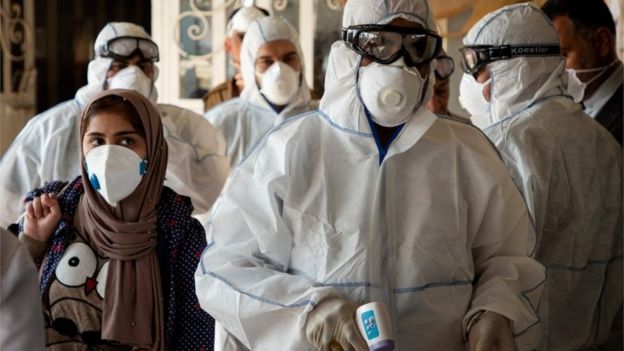
Iraqi medics check people returning from IranImage copyright AFP
Image caption Iraq has been checking people at its border with Iran

But he insisted that the measures China and other countries had put in place meant there was still a “fighting chance” of stopping further spread and called on countries to put more resources into preparing for possible outbreaks.

What is the latest in South Korea?

Prime Minister Chung Sye-kyun declared a public health emergency as the total number of cases surpassed 300 on Saturday.

The southern cities of Daegu and Cheongdo have been declared “special care zones”. The streets of Daegu are now largely abandoned.

The nation’s capital, Seoul, banned demonstrations in central areas.

Two cases were also reported in Busan, South Korea’s second-largest city, and one on the Island of Jeju on Saturday – the first in both places.

Media caption People in Daegu have voiced concern over the spread of the virus

All military bases are in lockdown after three soldiers tested positive.

About 9,000 members of a religious group were told to self-quarantine, after the sect was identified as a coronavirus hotbed.

The authorities suspect the current outbreak in South Korea originated in Cheongdo, pointing out that a large number of sect followers attended the funeral of the founder’s brother from 31 January to 2 February.

Presentational white space

The sect – known as Shincheonji – which has been accused of being a cult, said it had now shut down its Daegu branch and that services in other regions would be held online or individually at home.

As of Friday, more than 400 members of the church were showing symptoms of the disease, though tests were still ongoing, the city mayor said.

Can we answer your question on the coronavirus?

Here’s what others have been asking
Once you’ve had coronavirus, will you be immune?
Could the coronavirus become a pandemic?
Is the coronavirus worse than flu or Sars?
Presentational grey line

Hand sanitizers and warning signs

By Hyung Eun Kim, BBC Korean Service, Seoul

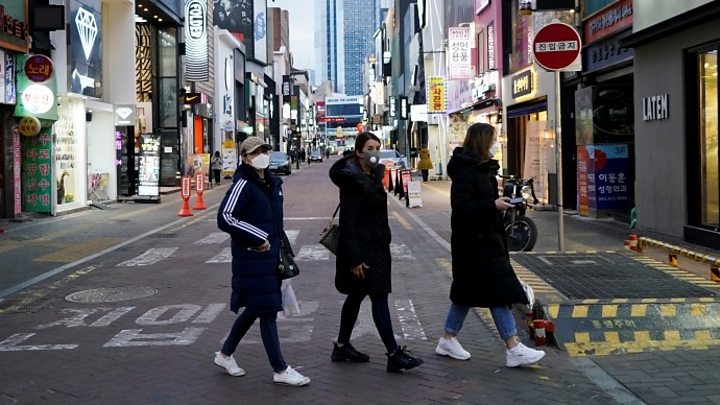
Many people in South Korea are wearing masks on a daily basis.

Hand sanitizers have been placed at public transport stops and building entrances.

Warning government signs are everywhere. They say: “Three ways to prevent further infection: wear a mask at all times; wash your hands properly with soap for more than 30 seconds; and cover yourself when coughing.”

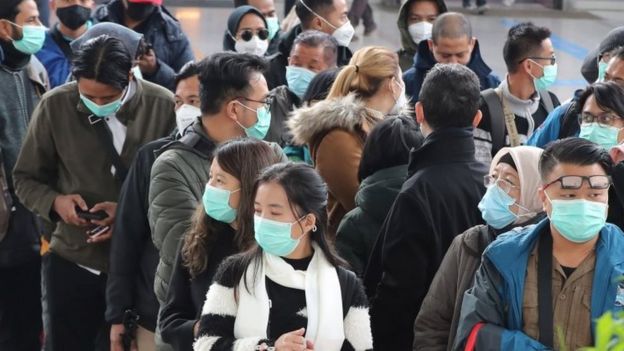
People wear masks in Seoul, South Korea. Photo: 21 February 2020Image copyright EPA
Image caption New norm: Mask-wearing crowd in Seoul

Koreans have also developed several apps and websites that tell you how much risk you face where you are. They show where the infected people are within a 10km radius.

“I can’t miss work, what I can do is minimise contact with others and stay at home during the weekend,” Seung-hye Lim, a Seoul resident, told the BBC.

“I do wonder if we reacted too laxly initially or if it really is because of the specific service practices of the Shincheonji sect.”

So-young Sung, a mother of two in Seoul, told the BBC: “It feels like my daily life is collapsing.”

She said she was struggling to find pharmacies that had masks.

She added that checking coronavirus-related alarms from her children’s schools and kindergartens was now a daily routine for her.

Presentational grey line

What about the Iran cases?

In Iran the outbreak is centred on the holy city of Qom, south of the capital Tehran, which is a popular destination for Shia Muslims in the region.

Iran reported two more deaths in Qom on Friday, adding to the two deaths it reported on Thursday. A total of 18 cases have been confirmed in the country.

Lebanon has reported its first confirmed case – a 45-year-old woman who was detected as she arrived in Beirut from Qom. The UAE, Israel and Egypt have also reported cases.

people outside Beirut hospital where the virus patient is being treatedImage copyright EPA
Image caption Lebanon has confirmed its first case – a woman returning from the Iranian city of Qom

Meanwhile Canadian officials said one of the nine cases there was a woman who had recently returned from Iran.

WHO officials said both Iran and Lebanon had the basic capacity to detect the virus and the WHO was contacting them to offer further assistance.

But Dr Tedros said the organisation was concerned about the virus’s possible spread in countries with weaker health systems.

What about China and elsewhere?

The virus has now hit the country’s prison system, with more than 500 inmates confirmed infected.

They include 230 patients in a women’s prison in Wuhan. More cases have been found in a prison in the eastern province of Shandong and the south-eastern province of Zhejiang.

Some 36 people at a hospital in Beijing have also tested positive.

Senior officials have been sacked for mishandling management of the outbreak.

Passengers of the Diamond Princess cruise ship who have tested negative continue to disembark the ship in Yokohama after more than 14 days quarantined on board.

However, 18 American evacuees from the ship tested positive after arriving in the US, officials said. More than 300 other US nationals have arrived back in the US after disembarking.

Media caption Coronavirus: Quarantined passengers released from Japan ship

More than 150 Australian passengers have been evacuated from the ship and have already arrived in Darwin, where they will begin two more weeks of quarantine.

Australian officials said on Friday that six people had reported feeling unwell on arrival in Darwin and were immediately tested. Two of those people tested positive despite having received negative tests before leaving Japan.

The first batch of people from Hong Kong have also flown back to the city, where they will similarly be quarantined.

Source: The BBC

21/02/2020

Coronavirus: China’s car sales collapse, as officials warn of sharp trade decline to come

  • China Passenger Car Association said sales fell to just 4,909 units in the first 16 days of February, from 59,930 in the first quarter of 2019
  • The growth rate for China’s imports and exports is expected to decline sharply in the January-February period
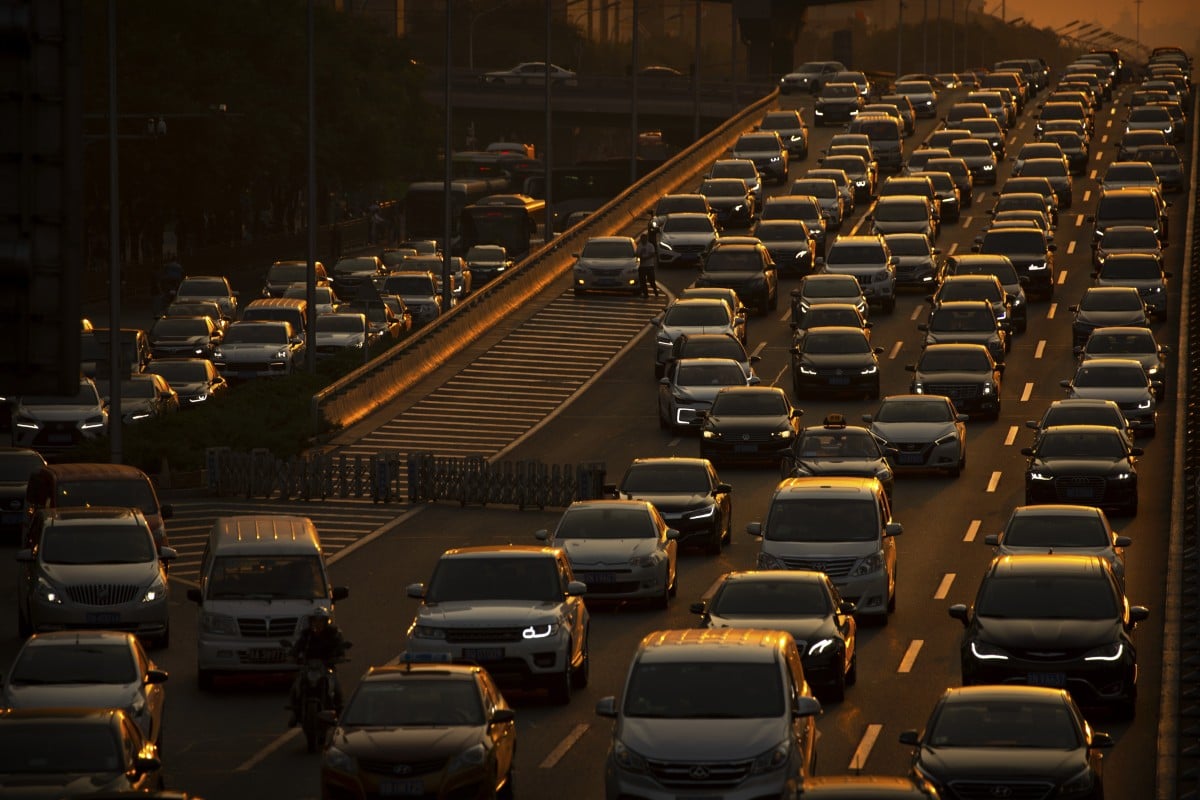
Commuters make their way along an expressway during rush hour in Beijing. Photo: AP

A 92 per cent drop in car sales in China in the first half of February provided the first real indicator of the economic impact of the coronavirus epidemic, with officials also warning of a sharp decline in Chinese exports and imports for the first two months of the year.

The China Passenger Car Association (CPCA) on Friday said that sales dropped to just 4,909 units in the first 16 days of the month, down from 59,930 vehicles in the same period a year earlier.

“Very few dealerships opened in the first weeks of February and they have had very little customer traffic,” said the CPCA.

China’s car market is likely to see sales slide more than 10 per cent in the first half of the year due to the outbreak, and around 5 per cent for the whole year, provided the virus is effectively contained before April, the country’s top industry body, the China Association of Automobile Manufacturers (CAAM), said last week.

Chinatowns around the world feel effects of coronavirus fears
The sector was already under pressure from the cooling economy, with car sales falling 3 per cent in 2018 in the first sales contraction since the 1990s, and 8.2 per cent in 2019, CAAM said.
“We must firmly believe that China’s auto market still has great development space and potential, and the automobile consumption demand is still strong,” Wang Bin, vice-director of the commerce market operation department at the commerce ministry, said on Thursday.
To stabilise the market, in which more than 25 million vehicles were sold last year, China’s commerce ministry said it will introduce more measures to boost consumption.
Li Xingqian, head of foreign trade at the Ministry of Commerce, said the growth rate for China’s exports and imports would decline sharply in the January-February period due to a collapse in logistics and the delayed start of work following the extended Lunar New Year holiday, which was aimed at controlling the coronavirus outbreak.
“The impact of the epidemic on the first quarter is here objectively, should not be underestimated, but [growth] is still within the tolerable range,” he said on Friday. “As the prevention and control [measures] achieve new staged results, foreign trade will inevitably resume its growth. China’s foreign trade development is expected to remain within a reasonable range throughout the year.”
China cancelled the release of its January trade data, with the General Customs Administration of China saying it will combine January and February’s data in an effort to remove seasonal volatility from the Lunar New Year period. Statistics will be released in early March.
Trade is traditionally volatile over the first two months of the year in China. Shipments are heavily affected by the Lunar New Year break, with this volatility to be exacerbated by the coronavirus outbreak, which causes the disease officially known as Covid-19.

Zong Changqing, head of the commerce ministry’s foreign investment department, also conceded the virus could hit inward investment over the entire first quarter of 2020. Zong claimed the impact would only be temporary, and that China remained an attractive environment for foreign investment.

Foreign direct investment (FDI) in China in 2019 rose 5.8 per cent from a year earlier to 941.5 billion yuan (US$134 billion), according to the commerce ministry. FDI in China also saw a steady year-on-year increase of 4 per cent last month, compared with a growth of 4.8 per cent registered in January 2019.

The impacts of the outbreak on foreign investment have begun to show, and are expected to become greater in February and March. Zong Changqing

“The impacts of the outbreak on foreign investment have begun to show, and are expected to become greater in February and March,” Zong said.

He confirmed that the ministry asked local authorities in Shandong province to push all 32 South Korean-owned car parts companies to restart production by the end of last week to keep the global supply chain stable.

He also said that over 80 per cent of key foreign-owned enterprises in Shanghai, Shandong and Hunan province had reopened, with most regions expected to restore production by the end of February, provided the spread of the virus is contained.

However, a survey by the American Chamber of Commerce in Shanghai, released earlier this week, found that in the vast majority of cases, factories that have reopened are running at a fraction of their production capacity.

Source: SCMP

29/12/2019

Discover China: Green shoots of prosperity as asparagus takes root in rural China

YINCHUAN, Dec. 28 (Xinhua) — In the remote Xiamaguan Township of northwest China’s Ningxia Hui Autonomous Region, swathes of green asparagus sway in the endless loess field.

Farmer Dong Yi started growing asparagus in 2017 when local officials encouraged villagers to cultivate the green plant to get out of poverty.

“We had never seen asparagus before, and everybody doubted if the plant could survive the harsh environment here,” said Dong, 56. “But I decided to try it anyway, because I was struggling to make money.”

Xiamaguan Township is located deep in the mountains, and the dry weather there leaves it in dire need of water. The township is among Ningxia’s poorest, where many people are still struggling to make ends meet.

Despite years of prosperity in the coastal regions, pockets of residents still lag behind in China’s underdeveloped rural areas, which poses a challenge for the country’s battle to wipe out absolute poverty by 2020.

In 2012, China had 98.99 million rural people living under the national poverty line of 2,300 yuan (329 U.S. dollars) in annual income. By the end of 2018, the number had dropped by 82.4 million, with 16.6 million still left in poverty. Ningxia is home to one of the largest poor populations in China.

However, the asparagus has brought fortunes to Xiamaguan Township, with more than 100 families having been lifted out of poverty since the industry took root there, according to the latest government figures. Currently, more than 130 hectares of asparagus thrive in the fields.

In the past, asparagus was something unheard of among impoverished farmers such as Dong Yi in Xiamaguan. Dong’s family has about three hectares of land. For generations, the family depended on grain plantation to make a living, though they barely made enough money to live a decent life.

A few years ago, a series of irrigation projects pumped water from the Yellow River into the dry, sandy lands in Ningxia. The Yellow River is China’s second-longest river. With more water, local residents decided to grow more crops, said local Party official Dong Zhanping.

“The farmers tried a variety of plants at first, including traditional Chinese herbs, and corn, but the yields were less than satisfactory,” the official said.

In 2017, township officials decided to introduce asparagus to the area after multiple field surveys. They invited a company that had success growing asparagus in a nearby county.

“We persuaded farmers to lease their land to us and we managed the land collectively,” Dong Zhanping said, adding that they gave 3,000 yuan to the farmers for each hectare of land they leased. Experts then cultivated asparagus seedlings in greenhouses, before planting them in the fields, depending on dripping irrigation technology.

“Different from the bamboo in southern China, asparagus can adapt to a very dry environment, which is why the land in Xiamaguan is perfect for its cultivation,” said company manager He Jiang. “Besides, the air here is fresh, and the soil is very clean, so the asparagus grown here is very good quality.”

In 2017, Dong Yi, the local farmer, went to learn about asparagus cultivation with the company’s technical staff in east China’s Shandong Province. He learned about weeding and fertilizing there, and returned home to train other villagers. By commanding new techniques and with hard work, farmers like Dong saw the potential of the industry after reaping a good harvest.

“This year we will have another bumper harvest,” he said. “Currently, more than 200 villagers are toiling in the fields.”

The success of Xiamaguan Township has permeated to other villages, according to local officials. In the past, many farmers left home for big cities for decent-paying jobs, but now they stay in their hometown and attend to the asparagus.

Dong Yi said the asparagus is in high demand, with orders from buyers in the provinces of Shandong and Guangdong. Many of the buyers purchased the crop online.

“When the harvest season comes in January, we will rake in more than 150,000 yuan per hectare,” he said.

The asparagus industry has also brought environmental benefits, including less sandy areas and more moist air, in addition to the economic boost.

“We hope to bring more farmers into the industry,” said Party official Dong Zhanping. “The plant has truly changed lives here.”

Source: Xinhua

18/12/2019

Xi Focus: Xi attends commissioning of first Chinese-built aircraft carrier

CHINA-HAINAN-XI JINPING-FIRST CHINESE-BUILT AIRCRAFT CARRIER-COMMISSIONING (CN)

Chinese President Xi Jinping, also general secretary of the Communist Party of China Central Committee and chairman of the Central Military Commission (CMC), presents the People’s Liberation Army (PLA) flag and the naming certificate to the captain and political commissar of aircraft carrier Shandong, respectively, during the commissioning ceremony of China’s first domestically built aircraft carrier at a naval port in Sanya, south China’s Hainan Province, Dec. 17, 2019. Xi attended the commissioning ceremony of China’s first domestically built aircraft carrier, the Shandong, here Tuesday afternoon. The new aircraft carrier, named after Shandong Province in east China, was delivered to the PLA Navy and placed in active service Tuesday at the naval port. (Xinhua/Li Gang)

SANYA, Dec. 17 (Xinhua) — President Xi Jinping, also general secretary of the Communist Party of China Central Committee and chairman of the Central Military Commission (CMC), attended the commissioning ceremony of China’s first domestically built aircraft carrier, the Shandong, here Tuesday afternoon.

The new aircraft carrier, named after Shandong Province in east China, was delivered to the People’s Liberation Army (PLA) Navy and placed in active service Tuesday at a naval port in Sanya, south China’s Hainan Province.

The ceremony started at around 4 p.m.

Xi presented a PLA flag and the naming certificate to the captain and political commissar of the Shandong, respectively, and posed for a group photo with them.

After the ceremony, Xi boarded the Shandong and reviewed the guards of honor. He also inspected the onboard equipment and asked about the work and life of carrier-based aircraft pilots.

On the bridge of the Shandong, Xi greeted the officers and soldiers and signed his name in the log.

Xi also met with representatives of the aircraft carrier unit and the manufacturer at the dock.

Commending China’s achievements in aircraft carrier construction, Xi encouraged them to continue their efforts to make new contributions in the service of the Party and the people.

Approved by the CMC, the Shandong was given the hull number 17.

Source: Xinhua

18/12/2019

Chinese mines: At least 14 dead in latest disaster

An explosion at a coal mine in south-west China has killed at least 14 people – the latest in a string of deadly mining accidents.

The local authorities said two people were still trapped underground at the mine in Guizhou province.

At least 37 people have died in five separate mining accidents in China since October.

The accidents are often due to poorly-enforced safety regulations.

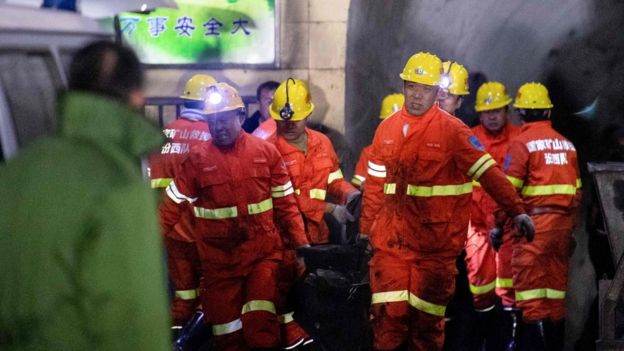
The explosion at the Guanglong mine in Guizhou province happened in the early hours of Tuesday. Seven workers were lifted to safety.

On Saturday, flooding in a coal mine in south-west China’s Sichuan province killed five and trapped 13 miners underground.

Some 347 miners were working in the Shanmushu mine when the flood happened.

Rescuers carry a victim at the site of a coal mine explosion in Pingyao, early on November 19, 2019Image copyright AFP
Image caption A mine explosion in Pingyao, in China’s northern Shanxi province killed 15 people in November

On 25 November, one person died in an accident at a different mine in Guizhou province.

Before that, a blast in northern China’s Shanxi province killed 15 workers on 18 November.

At the time, officials said the accident was caused by “broken laws and regulations”.

In October, two people were killed in a blast in a mine in Shandong province in eastern China.

The poor safety record and high accident rate in China’s mining sector led to the government in November ordering a “crackdown” on safety issues, said the AFP news agency.

But – despite the string of deadly accidents – mine safety is generally improving.

Last year, 333 people died in Chinese mines – a decrease of 13% on the year before. Meanwhile, the “death per million tons of coal mined” fell to below 0.1 for the first time.

China mined three billion tonnes of coal over the first 10 months this year, according to official data cited by Reuters – up 4.5% from the same period in 2018.

Source: The BBC

Law of Unintended Consequences

continuously updated blog about China & India

ChiaHou's Book Reviews

continuously updated blog about China & India

What's wrong with the world; and its economy

continuously updated blog about China & India