13/06/2019
- Firm is expected to go public in Hong Kong on Friday, with Zhang’s 68 per cent stake giving her a US$7.9 billion fortune
- She and husband Sun Piaoyang will join world’s richest pharmaceutical families, rivalling the Sacklers and Bertarellis
A technician loads containers on a rack at a Cyagen Biosciences facility in Jiangsu province, China, in March. Photo: Bloomberg
Zhong Huijuan quit her job teaching chemistry to teenagers and got into the drug business.
The career switch has paid off handsomely.
Her Hansoh Pharmaceutical Group, China’s largest maker of psychotropic drugs, is poised to go public on Friday in Hong Kong with a market value of US$10.4 billion. Zhong holds a 68 per cent stake, giving her a US$7.9 billion fortune, according to the Bloomberg Billionaires Index.
Zhong, 58, is not even the richest person in the family. Her husband Sun Piaoyang, 60, is worth US$9.2 billion, thanks to the success of his Jiangsu Hengrui Medicine, a maker of anti-tumour drugs whose stock has returned about 16,300 per cent since it went public in Shanghai almost two decades ago.
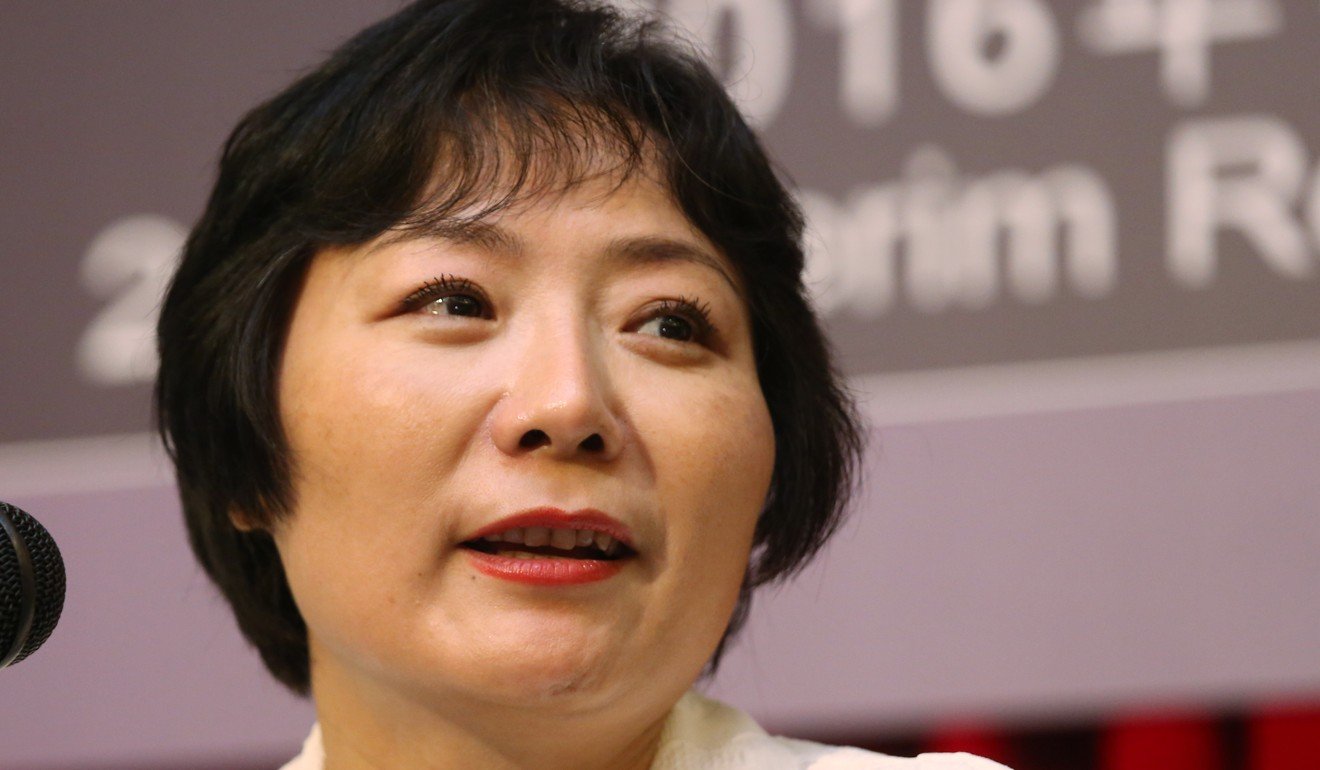
Longfor Group Holdings Chairwoman Wu Yajun attends the company’s interim results announcement at the JW Marriott Hotel in Hong Kong in August 2016. Photo: May Tse
They are poised to be among the world’s richest pharmaceutical families, with a combined fortune that rivals the Sacklers, who made a fortune selling opioids, and the Bertarellis of Switzerland.
Health-care spending in China has surged to 5.9 trillion yuan (US$853 billion) last year from 3.5 trillion yuan in 2014, and is projected to top 9.4 trillion yuan in 2023, Hansoh said in a prospectus for the offering.
Cen Junda, a long-time investor of the Lianyungang, Jiangsu-based company, is also a billionaire with a stake valued at about US$1.7 billion.
Iris Luo, a spokeswoman for Hansoh, declined to comment on their fortunes.
Who is Yang Huiyan, China’s richest woman?
The IPO will make Zhong China’s third-richest woman, after two real estate moguls: Country Garden Holdings co-chairman Yang Huiyan, and Longfor Group Holdings
Chairwoman Wu Yajun, who are worth US$21.4 billion and US$9.9 billion, respectively.
Zhong graduated with an undergraduate degree in chemistry from Jiangsu Normal University in July 1982 and taught chemistry at Yan’an middle school in Lianyungang in the early 1990s, according to the website of All-China Women’s Foundation. She founded Hansoh in 1995.
The company, which researches and produces drugs for six major therapeutic areas, reported 1.9 billion yuan in profit in 2018, an 18 per cent increase from a year earlier, the prospectus shows. The drug maker gets almost half of its revenue from cancer treatments.
Country Garden Holdings co-chairman Yang Huiyan, who is worth US$21.4 billion, is China’s richest woman. Photo: Handout
“We believe its R&D will focus on making generics as soon as possible to take the first-mover advantage, a strategy many leading pharma companies applied in the past,” said Zhang Jialin, a Hong Kong-based analyst at ICBC International Research.
Hansoh’s cornerstone investors include Singapore’s sovereign wealth fund, GIC, and Hillhouse Capital, Asia’s biggest private equity buyer, helping to draw more market interest in Friday’s IPO. Hengrui’s earlier success also may help bolster investor confidence in Hansoh.
“The synergies between Hengrui and Hansoh, particularly in R&D and distribution, will bring the latter advantages over industry competitors,” said Mia He, a Bloomberg Intelligence analyst.
Source: SCMP
Posted in All-China Women’s Foundation, Bertarellis, Bloomberg Intelligence analyst, China’s richest woman, Country Garden Holdings, Ex-chemistry teacher, Hansoh, Hansoh Pharmaceutical Group, Hong Kong, Jiangsu Hengrui Medicine, Jiangsu Normal University, Jiangsu-based company, JW Marriott Hotel, Lianyungang, Longfor Group Holdings, Sacklers, Shanghai, third-richest woman, Uncategorized, Yang Huiyan, Zhong Huijuan |
Leave a Comment »
13/06/2019
- Han costumes are enjoying a renaissance across China, buoyed by a call to nationalism backed by President Xi Jinping
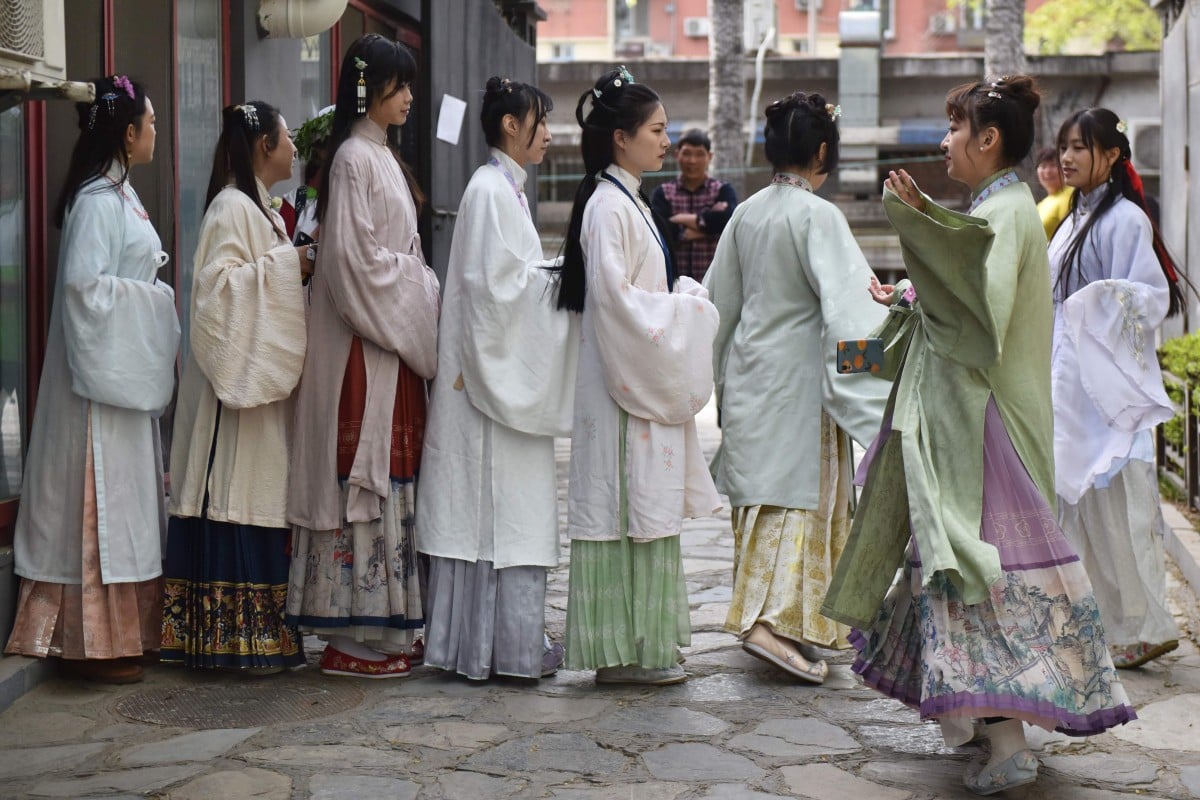
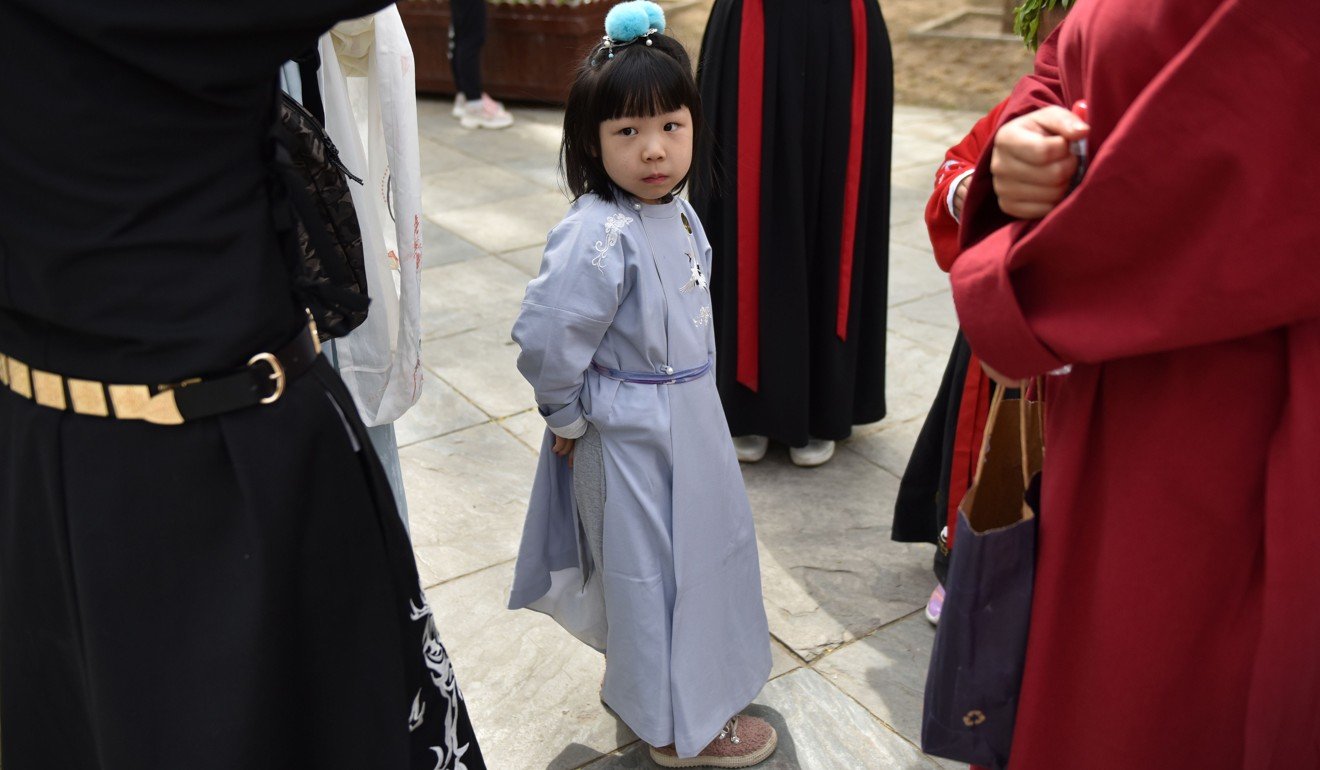
Women wear Han-style clothing in Beijing as part of April’s Traditional Chinese Costume Day celebration. Photo: AFP
Dressed in a flowing robe adorned with beaded floral embroidery from a bygone era, stylist Xiao Hang looks like she emerged from a time machine as she strides across the bustling Beijing metro, attracting curious glances and questions.
While China embraced Western fashion as its economy boomed in recent decades, now a growing number of young people like Xiao look to the past for their sartorial choices and have adopted hanfu, or Han clothing.
The costumes of the Han ethnic majority are enjoying a renaissance in part because the government is promoting traditional culture in an effort to boost patriotism and national identity.
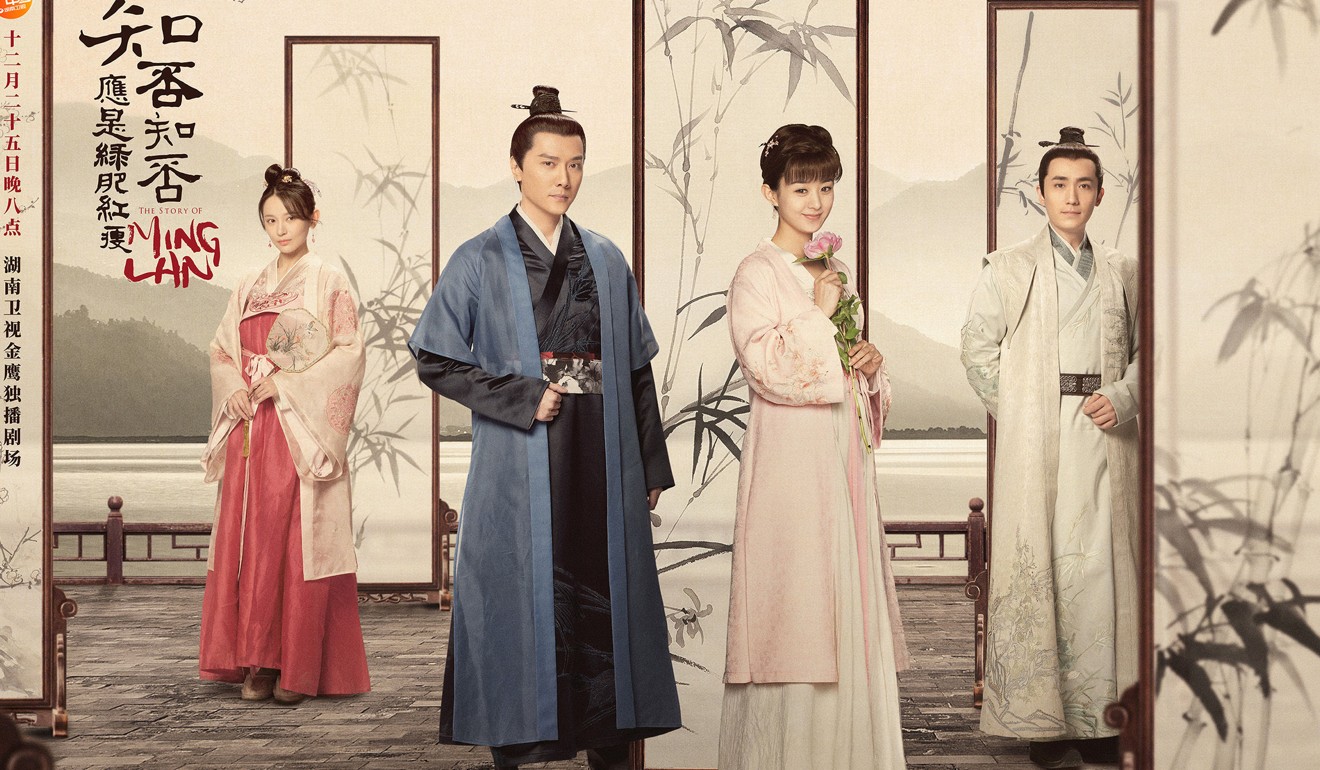
Like the film, television and comic book productions that have inspired cosplay fans in the West, period dramas on Chinese TV have contributed to the surge in interest in traditional clothing. The Story of Minglan, a series set during the Song dynasty, attracted more than 400 million viewers over three days when it was first shown this year.
The success of television drama The Story Of Minglan this year reflects China’s interest in its Han heritage. Photo: Baidu
While each Han-dominated dynasty had its own style, hanfu outfits were generally characterised by loose, flowing robes with sleeves that reached the knees.
“When we were little, we would drape sheets and duvets around ourselves to pretend we were wearing beautiful clothes,” Xiao said.
Once a worker at a state-owned machine manufacturing company, Xiao now runs her own hanfu business, where she dresses customers for photo shoots and plans hanfu-style weddings.
The Hanfu fashion revival: ancient Chinese dress finds a new following
In modern China, the hanfu community includes history enthusiasts and anime fans, students and young professionals.
Yang Jiaming, a high school pupil in Beijing, wears his outfit under his school uniform.
“Two-thirds of my wardrobe are hanfu,” he said, decked out in a Tang-style beige gown and black boots, adding that his classmates and teachers were supportive of his fashion choices.
A government-supported revival in Chinese culture has energised the hanfu community. Since he entered office in 2012, President Xi Jinping has supported the promotion of a Han-centric vision of Chinese heritage.
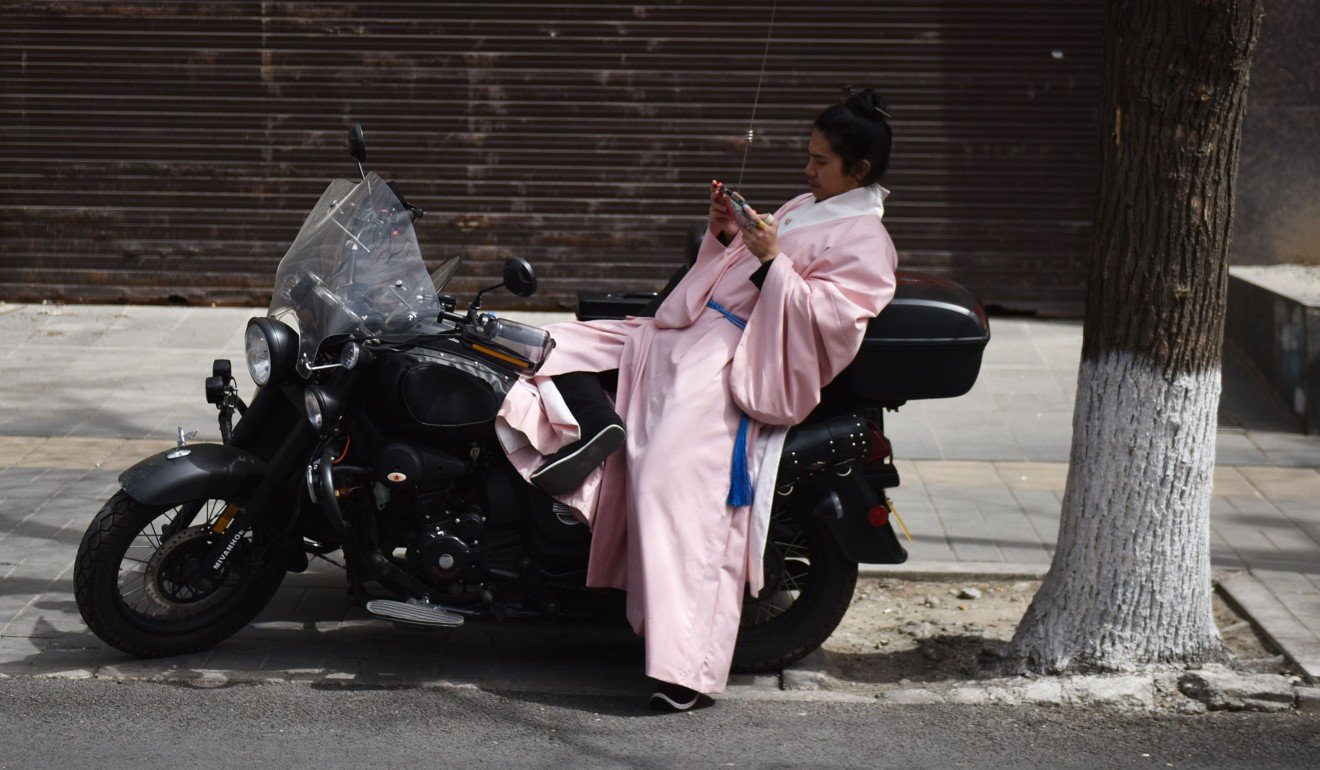
Fans of traditional Chinese clothing dare to mix old and new, and hanfu is not the preserve of women. Photo: AFP
In April, the Communist Youth League of China launched a two-day conference celebrating traditional Chinese garb, which included hanfu and took in Traditional Chinese Costume Day.
A live broadcast of the event drew about 20 million viewers, alongside an outpouring of emotions.
“Chinese people have abandoned their own culture and chosen Western culture. The red marriage gown has now become a wedding dress,” wrote a user of Bilibili, a video-streaming platform popular among young anime, comic and gaming fans in China.
Clothes were the “foundation of culture”, said Jiang Xue, who is part of Beijing-based hanfu club Mowutianxia, which has received funding from the Communist Youth League.
“If we as a people and as a country do not even understand our traditional clothing or do not wear them, how can we talk about other essential parts of our culture?” she said.
Forget K-pop and US missiles, Korea is back in fashion with China thanks to live-stream shopping
The style has not yet gained mainstream acceptance in China.
In March, two students in Shijiazhuang Medical College, in northern Hebei province, were reportedly threatened with expulsion for wearing the outfits to class.
Others said they were put off by the reaction they got while wearing hanfu in public.
“I used to be very embarrassed to wear [hanfu] out,” screenwriter Cheng Xia said.
The 37-year-old said she overcame her reservations after going out dressed in a full outfit last year.
Meanwhile, the movement to revive Han ethnic clothing has prompted questions about nationalism and Han-ethnocentrism – a sensitive issue in China, where the government is wary of conflict between ethnic groups.
High school pupils and young children are drawn to China’s hanfu trend. Photo: AFP
For instance, within the hanfu community there is long-running opposition towards the qipao, the high-collared, figure-hugging garment that was once a staple of women’s wardrobes.
Known as cheongsam in Cantonese, the qipao – meaning “Qi robe” – began as a long, loose dress worn by the Manchu, or Qi people, who ruled China from the 17th century until the early 1900s.
Its popularity took off in 1920s Shanghai, when it was refashioned into a fitted must-have, favoured by actresses and intellectuals as a symbol of femininity and refinement.
“Some people … think that the cheongsam was inspired by the Qing dynasty, which is not enough to represent China. There are nationalist undertones in this issue,” Chinese culture scholar Gong Pengcheng said.
Master of a dying art: traditional dressmaker recalls golden era of cheongsam in Hong Kong
“It is a good trend to explore traditional culture and clothing culture … There are many things we can talk about, and we need not shrink to nationalist confrontation.”
Yang, the high school pupil, was more upbeat. He said: “At the very least, we can wear our own traditional clothes, just like the ethnic minorities.”
Source: SCMP
Posted in Beijing, cheongsam, Chinese clothing, Communist Party, Communist Youth League, Communist Youth League of China, Han clothing, Han costumes, Han ethnic clothing, Han ethnic majority, hanfu, Hebei province, Korea, Manchu, Mowutianxia, nationalism, President Xi Jinping, Qing Dynasty, qipao, renaissance, revival, Shanghai, Shijiazhuang Medical College, Song Dynasty, supports, Tang-style beige gown, The Story of Minglan, traditional, Traditional Chinese Costume Day, traditional Chinese garb, Uncategorized, Western culture |
Leave a Comment »
11/06/2019
BEIJING, June 10 (Xinhua) — China’s border check agencies saw about 6.13 million inbound and outbound trips made during the three-day Dragon Boat Festival holiday, up 6.3 percent year on year, the National Immigration Administration (NIA) said Monday.
During the holiday that ended Sunday, Chinese mainland residents made more than 3.2 million entries and exits, up 11.3 percent from the previous year, NIA data showed. Entries and exits made by residents from Hong Kong, Macao and Taiwan stood on a par with the same period last year at about 2.1 million.
Entries and exits made by foreign citizens increased by 5.3 percent to 812,000, according to the NIA.
Compared with major airports in places such as Beijing, Shanghai and Guangzhou, some small and medium-sized airports reported an obvious rise in their trans-border passenger volumes during the holiday this year, said the NIA, citing that of an airport in the port city of Tianjin surging 28.6 percent.
Source: Xinhua
Posted in Beijing, dragon boat festival, entries, exits, Guangzhou, Holiday, Hong Kong, Macao, Shanghai, Taiwan, Tianjin, Uncategorized |
Leave a Comment »
31/05/2019
- Deliveries will start in the next six to 10 months, carmaker says
- Tesla will take on Chinese carmakers such as Geely and SAIC, and electric car start-ups including Nio and Xpeng Motors
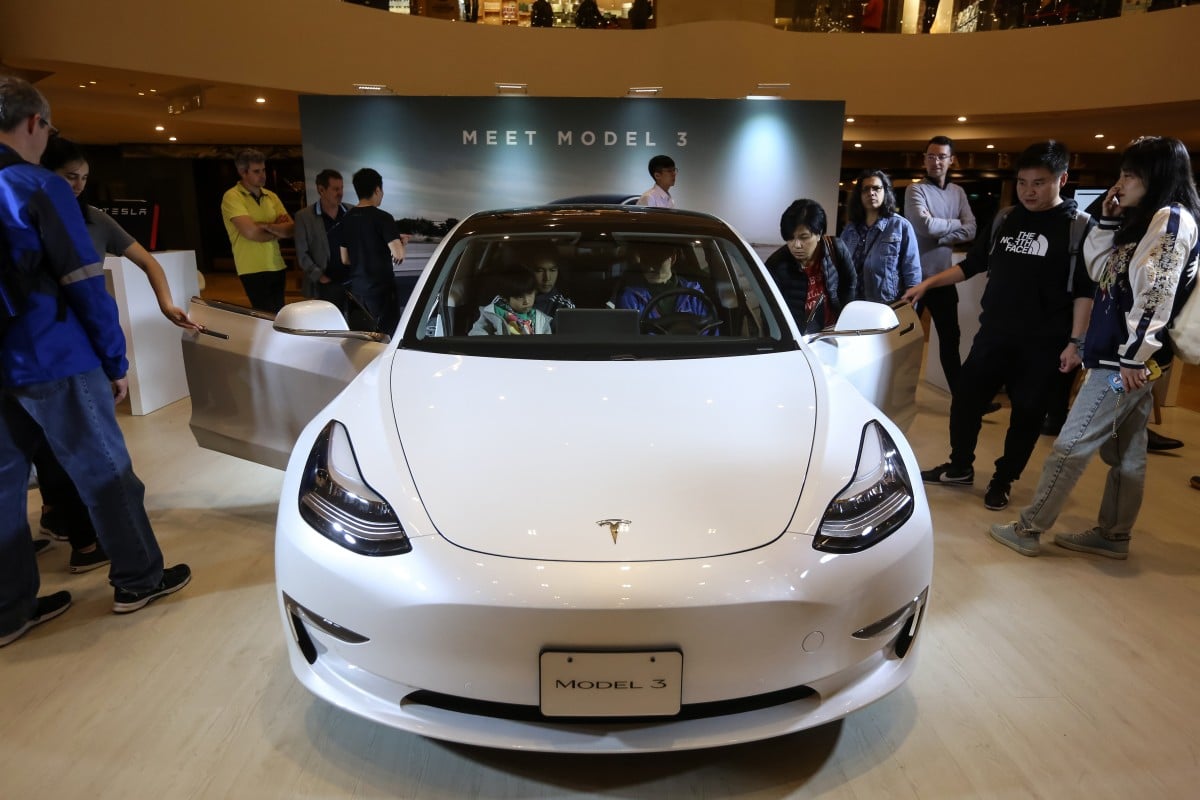
Tesla said on Friday that its Model 3 electric car, which will be assembled in China, will be ready for deliveries in six to 10 months. Photo: AFP
Customers can pre-order the Model 3 assembled in China after Tesla announced on Friday that it would be priced 13 per cent lower than the US imports, taking the electric carmaker a step closer in tapping the world’s largest EV market.
The standard range plus Model 3 car that Tesla plans to assemble at the Gigafactory 3 in Lingang, Shanghai, will be priced at 328,000 yuan (US$47,529), 49,000 yuan cheaper than the same model currently imported from the US.
Tesla’s US-built cars are now subject to a 25 per cent import duty in China. The bestselling US electric carmaker plans to start deliveries in the next six to 10 months.
“Today we announced that Model 3 Standard Range Plus vehicles built at Gigafactory Shanghai will begin at 328,000 yuan for our customers in China,” Tesla said in a statement.
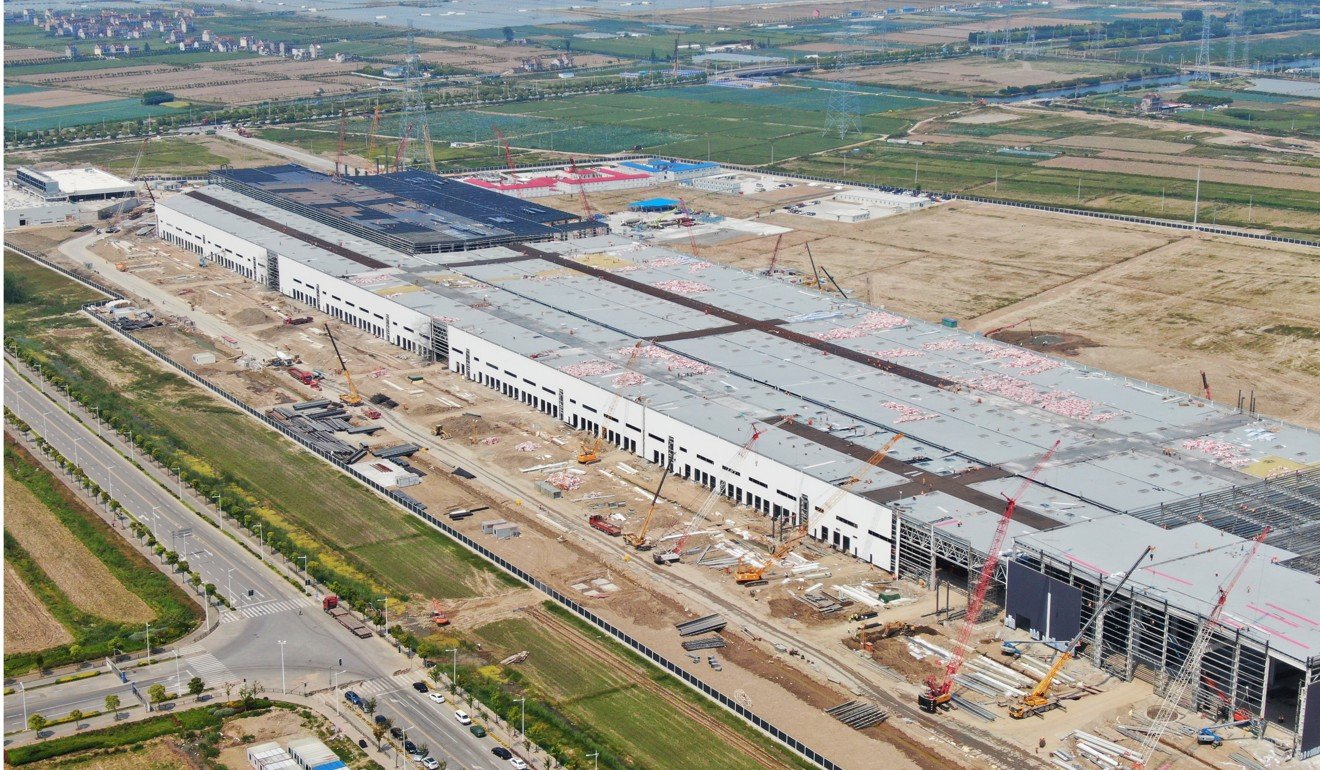
Aerial view of the Tesla Shanghai Gigafactory under construction in Lingang, Shanghai, on May 10, 2019. Photo: Imaginechina
The model has a range of 460km and a top speed of 225km/h.
Industry observers said that the price of the locally made car aimed at the mass market is on the higher side, adding that a 300,000 yuan price tag could attract thousands of Chinese buyers.
“If a Chinese customer can buy a Tesla car for less than 300,000 yuan, many of them will make a decision on the spur of the moment since it is viewed as the best EV in the world,” said Tian Maowei, a sales manager at Shanghai-based Yiyou Auto Service.
Tesla rushes Model 3s to China before trade war truce expires
US President Donald Trump has signed an executive order barring US companies from using telecoms equipment made by companies that pose a threat to national security, a move aimed at shutting out Huawei Technologies.
US technology companies including Google and Microsoft have severed business ties with Huawei to comply with the US trade ban.
Tesla’s Gigafactory 3 is expected to make around 3,000 Model 3 vehicles a week in the initial phase. Photo: AP
In January, Tesla started construction on a US$5 billion wholly-owned plant in Shanghai, the city’s single largest foreign direct investment just three months after it secured a land parcel to make electric cars locally.
The factory will produce Model 3 and Model Y electric vehicles that are seen as affordable to drivers in China.
Podcast: Here’s how the US-China tech war is affecting small electronics companies
Gigafactory 3 is expected to make around 3,000 Model 3 vehicles a week in the initial phase, ramping up to 500,000 per year when it becomes fully operational, Tesla said.
Tesla will take on Chinese carmakers such as Geely and SAIC and electric car start-ups including Nio and Xpeng Motors in China where sales of new-energy vehicles including battery-powered and plug-ins are expected to jump 27 per cent this year to 1.6 million units, according to the China Association of Automobile Manufacturers.
In March Beijing announced a cut in cash subsidies offered to NEV buyers by up to 60 per cent, believing it was time to remove the crutches and cull an industry that had spawned hundreds of small manufacturers.
It is unclear whether Tesla vehicles will receive subsidies from the Chinese government.
Source: SCMP
Posted in cheaper, China Association of Automobile Manufacturers, chinese government, Electric car, Geely, Google, huawei technologies, Made in China, Microsoft, Nio, SAIC, Shanghai, subsidies, telecoms equipment, Tesla, Tesla Shanghai Gigafactory, Uncategorized, US imports, US President Donald Trump, Xpeng Motors, Yiyou Auto Service |
Leave a Comment »
29/05/2019
- China’s housing market showing signs of bubble similar to that seen in Japan in 1980s, says Asian Development Bank Institute dean and CEO Naoyuki Yoshino
- China’s loose policy following 2008 global financial crisis laid foundations for current housing bubble, with US-China trade war adding to concerns
The average price of a home in Beijing has soared from around 380 yuan (US$55) per square feet in the early 2000s to the current level of well above 5,610 yuan (US$813) per square foot, according to property data provider creprice.cn. Photo: Bloomberg
China must exercise extreme caution in handling its housing sector because it is showing signs similar to those witnessed during Japan’s bubble period of the 1980s that contributed to the collapse of Japanese asset prices and its subsequent “lost decades” of weak economic growth and deflation, a Japanese financial system expert warned.
The parallels between China’s current landscape and Japan’s three decades ago are readily apparent, stemming from a loose monetary policy that laid the foundation for the expansion of a housing bubble, said Naoyuki Yoshino, dean and CEO of the Asian Development Bank Institute.
China flooded its economy with credit in response to the 2008 global financial crisis, fuelling rapid growth in mortgages, real estate borrowings and investments over the past decade.
In the same vein, the Japanese government’s relaxed monetary policy in the 1980s triggered an economic bubble that eventually burst and sank the economy into a recession that
with the Bank of Japan continuing to still keep interest rates at or below zero per cent to this day in an attempt to spur inflation.
The Japanese government’s relaxed monetary policy in the 1980s triggered an economic bubble that eventually burst and sank the economy into a recession that lasted almost 25 years. Photo: Bloomberg
Japan’s experience could serve as a lesson on how to avoid a housing market collapse that would be especially detrimental to China’s financial sector and real economy, according to Yoshino.
“I’m very much concerned that if land prices keep on rising and if the population starts to shrink along with aggregate demand, then China will experience a similar situation to that of Japan,” Yoshino said.
There are already several strong signs of a housing bubble in China, according to Yoshino, firstly the astronomical surge in property prices in recent years.
I’m very much concerned that if land prices keep on rising and if the population starts to shrink along with aggregate demand, then China will experience a similar situation to that of Japan Naoyuki Yoshino
Home ownership is one of the few ways for Chinese families to generate wealth because of limited investment opportunities. The average price of a home in Beijing has soared from around 4,000 yuan (US$578) per square metre, or 380 yuan (US$55) per square feet, in the early 2000s to the current level of well above 60,000 yuan (US$8,677) per square metre, or 5,610 yuan (US$813) per square foot, according to property data provider creprice.cn.
The increase has also lifted the housing price to income ratio sharply from 5.6 in 1996 to 7.6 in 2013, well above the Japanese rate of 3.0 at its peak in 1988. The price to income ratio is the basic affordability measure for housing.
According to the Global Times, a reasonable home price should be three to six times the median household income. That means a family with an average income can buy a house with three to six years’ annual income. The house price to income ratio in China is above 50 in the first-tier cities and 30 to 40 in the third- and fourth-tier cities, the newspaper said in October. There are four levels of cities in China, defined by a number of factors including gross domestic product (GDP) and population, with Beijing, Shanghai and Shenzhen considered tier-one cities.
Another worrying sign, according to Yoshino, is that China’s financial sector has lent more heavily to the real estate sector than did Japanese banks during their bubble period.
Thirdly, the ratio of Chinese housing loans to the nation’s GDP has consistently been higher than Japan’s by about three times more.
Ever since US President Donald Trump started imposing tariffs on Chinese imports in July, worries have been mounting that China’s property bubble and its record debt level would make the economy vulnerable to the impact of rising trade tensions, leading to a sharper-than-expected economic slowdown.
Despite a government crackdown on debt and risky lending over the last several years, housing prices and bank lending to the sector have continued to rise, pushing homes beyond what the vast majority of people can afford, as well as putting many property developers deeply into debt.
The Chinese Academy of Social Sciences, a top government think tank, said in a report last week that the growth in housing prices in China’s bigger cities, caused by a relatively short supply of new homes, is likely to push up costs across the country.
“The government should closely monitor these cities to avoid overheating,” said Wang Yeqiang, a researcher at the Chinese Academy of Social Sciences who co-authored the report.
Property developers have begun a debt-fuelled land-buying spree just as urban housing demand is entering a long-running structural decline, said Julian Evans-Pritchard, senior China economist at Capital Economics. The potential supply of property that could be built on developers’ land reserves jumped last year to a record high, meaning the risk of a glut of new housing is real, Evans-Pritchard added, if developers were to convert all their land reserves into housing tracts.
“Since real estate drives around a fifth of GDP, a sharp downturn in this sector would be contagious, resulting in a jump in defaults across a wide swathe of the economy that could quickly erode bank capital buffers,” he warned.
China’s corporate debt stood at 155 per cent of GDP in the second quarter of 2018, much higher than other major economies, according to data from the Organisation for Economic Cooperation and Development. In comparison, Japan’s corporate debt level is 100 per cent of GDP and is 74 per cent in the US. China’s corporate debt includes issuances by its
vehicles which by extension is mostly credit with an implicit guarantee from the central government.
Since real estate drives around a fifth of GDP, a sharp downturn in this sector would be contagious, resulting in a jump in defaults across a wide swathe of the economy that could quickly erode bank capital buffersJulian Evans-Pritchard
China’s imbalance between housing supply and demand may worsen because it faces a similar economic transition that is already well underway in Japan – a
and
that led to Japan’s long-term deflation problem, said Yoshino, who is also the chief adviser to the Japan Financial Services Agency’s Financial Research Centre.
Even if rising housing demand due to urbanisation were to push China’s housing prices higher over the near term, the country faces risks from an oversupply of housing in the longer term due to its increasingly unbalanced demographic structure, he said.
The government has proposed that China’s retirement ages of 45 to 50 years for females and 55 to 60 years for males introduced in the 1980s be gradually increased to 65 years for both by 2045 due to a rapidly ageing population.
The rising population of retirees will consume fewer goods and services compared to younger families with children, and in turn, could dampen business investment given lower expected rates of return.
At the same time, more retirees means a bigger burden on the younger generation of taxpayers, which would reduce their wealth and change patterns of consumption. This is especially worrying on the back of China’s high debt level and pension funding gap, similar to the situation in Japan, Yoshino said.
In Japan, benefits from government pension schemes account for an increasing share of the country’s accumulated debt as spending on social protection programmes now represents more than a third of the government’s total budget.
China’s national pension fund is forecast to peak at 6.99 trillion yuan (US$1 trillion) in 2027 before it gradually runs out by 2035, according to the Chinese Academy of Social Sciences. Photo: AFP
The strain is also evident in China with the
forecast to peak at 6.99 trillion yuan (US$1 trillion) in 2027 before it gradually runs out by 2035, according to the Chinese Academy of Social Sciences, forcing the government to start to transfer assets from state-owned companies to fill the funding gap.
Against the broader economic slowdown, compounded by the trade war with the US, policymakers are also expected to carve out a highly expansionary fiscal budget for this year, with the broad deficit surging to 6.6 per cent of China’s GDP, up from 4.7 per cent last year, according to Larry Hu, head of China economics at Macquarie Capital.
Alicia Garcia Herrero, Asia-Pacific chief economist at Natixis, noted that the US criticisms of China’s unfair trade practises and currency manipulation were reminiscent of the US-Japan disputes in the 1980s and 1990s.
Because Japan was politically and economically dependent on the US at that time, it inevitably implemented economic policies to reduce its current account surplus. Subsequently, Japan suffered from the bursting of its asset price bubble, which led to deflation and the lost decades.
However, Herrero said that the modern China is less dependent on the US and so is in a better position to resist pressure to adjust its economic policies to create demand for American products.
Wang Yang, one of the seven members of China’s elite Politburo Standing Committee, said the US-China trade war could slash one percentage point off Beijing’s economic growth this year. Last year, growth expanded at its slowest pace since 1990, while corporate bond defaults hit a record high and banks’ non-performing loan ratio hit a 10-year high.
Source: SCMP
Posted in Ageing population, Asian Development Bank Institute, ‘lost decades’, Bank of Japan, Beijing, Central government, China alert, China’s housing market, Chinese Academy of Social Sciences, Chinese imports, demographic structure, Financial Research Centre, financial sector, Financial Services Agency, Global Times, government think tank, gross domestic product (GDP), Home, housing loans, implicit guarantee, Japanese banks, Japanese housing bubble, national pension fund, Organisation for Economic Cooperation and Development (OECD), Population, real economy, real estate sector, Shanghai, Shenzhen, showing signs, similar to, Supply and demand, tariffs, Uncategorized, urbanisation, US President Donald Trump |
Leave a Comment »
24/05/2019
- Streaming platform Huahua earned US$2.3 million in profit in five months, according to media report
- Final two suspects arrested in Philippines, police say
Chinese police with the last two principal suspects in the Philippines on April 26. Photo: Weibo
Chinese police have arrested 20 people from a cross-border group accused of operating illegal live streaming platforms to broadcast pornographic content, according to mainland online news outlet The Paper.
After an investigation lasting over a year, police in Macheng in central China’s Hubei province said they arrested the last two main suspects, a man surnamed Hong and a woman surnamed Li, in the Philippines on April 26.
Their
platform, which was initially called Huahua, had more than 900,000 registered users, earning the group 16 million yuan (US$2.3 million) in profit in five months from November 2017, according to the report.
The Chinese government announced in February 2018 it was
against pornographic and illegal publications to foster a healthy online environment.The next month, Macheng police received a tip-off that people were distributing QR codes to download Huahua in chat groups on the popular Chinese messaging app QQ.
On the Huahua platform, live streamers gave erotic performances, with the most popular streamers drawing more than 2,000 viewers at a time and users able to make requests by paying up to almost 2,000 yuan (US$290).
The group had a structure and rules designed to avoid the police’s attention, the report said. Members did not know each other’s identities and each had only one point of contact.
Some recruited streamers, others promoted the app on social platforms to attract traffic, and members in Mongolia laundered money with foreign bank accounts, while the app’s appearance and servers were changed several times, the report said.
After 18 people were arrested by April 2018 across the country, including in Shanghai and Guangdong, the No 1 suspect, the Mongolia-based Hong, fled to South Korea then to the Philippines, where he met Li and they built a similar app, according to the report.
The report said Hong had owned a company in Shanghai focusing on developing video games before turning to pornographic live streaming to make money quickly when the gaming business struggled.
Source: SCMP
Posted in Arrest, chinese police, Guangdong, Huahua, hubei province, Macheng, million users, Mongolia, Mongolia-based, Philippines, pornographic live-streaming app, Shanghai, South Korea |
Leave a Comment »
23/05/2019
NANJING, May 22 (Xinhua) — The digital economy of east China’s Yangtze Delta region including the provinces of Zhejiang and Jiangsu, and Shanghai Municipality exceeded one trillion yuan (145 billion U.S. dollars) respectively, according to a Tuesday summit in Jiangsu.
Statistics show that Jiangsu, Zhejiang and Shanghai saw their digital economy reach 3 trillion yuan, 2 trillion yuan and one trillion yuan respectively in 2018, reporting record growth in the Yangtze Delta region.
“The digital economy is leading today’s scientific and technological revolution and industrial change,” said Yan Li, vice chairman of Jiangsu provincial political consultative conference. “The Yangtze Delta region should cooperate in building a pilot zone of China’s digital economic development,” said Yan.
The region should enhance cooperation in developing infrastructure and cultivating software talents, said Zhou Hanmin, head of Shanghai Institute of Socialism. “Talents are the pillar for the digital economy and the region’s educational sectors should work together to exploit their strength.”
China’s digital economy reached 31.3 trillion yuan (about 4.6 trillion U.S. dollars) in 2018, accounting for 34.8 percent of the country’s total GDP.
Source: Xinhua
Posted in digital economy, educational sectors, jiangsu province, municipality, provinces, Shanghai, Shanghai Institute of Socialism, strength, Uncategorized, vice chairman of Jiangsu provincial political consultative conference, Yan Li, Yangtze Delta, zhejiang province, Zhou Hanmin |
Leave a Comment »
19/05/2019
- Experts win reprieve for two out of three heritage houses but fear their success is only temporary
- Authorities plan public cultural facilities for the site
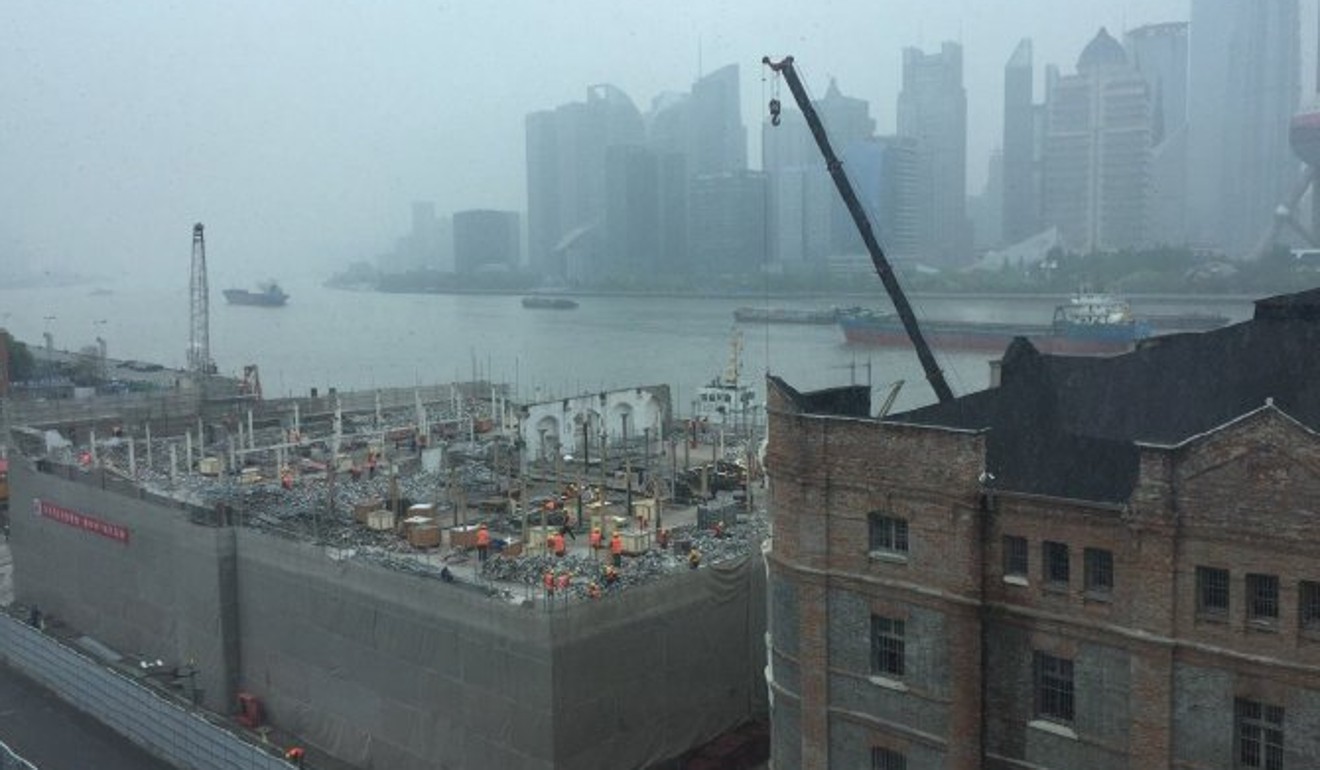
The historic buildings on Shanghai’s Bund in the 1930s. One of the three structures has already been demolished but authorities have temporarily suspended plans to knock down the other two. Photo: Handout
Two historic buildings on Shanghai’s famous Bund have temporarily escaped demolition after a group of experts appealed to the government to conserve the heritage sites, but the intervention was too late to save a third.
About 15 architecture, history and culture experts based in Shanghai banded together to write an article on social media app WeChat last month, calling on the city’s government to “protect the city’s memories” by preserving three houses on Huangpu Road.
A few days after the article was published one of the buildings was demolished as part of a plan to build public cultural facilities on the site. But authorities suspended work on the other two and are considering removing only the interior structure while preserving the external walls, according to the group.
The houses, which date back to 1902, witnessed the city’s boom in the first half of the 20th century when it became one of the world’s most important, and famous, ports, the experts said.
The demolition project on The Bund, Shanghai has been suspended, but not before one of the three historic buildings was demolished. Photo: Urban China magazine
All three of the properties originally belonged to Japanese shipping company Nippon Yusen Kaisha Group and were later used as storage facilities for Japan’s military forces during the second world war, according to Yu Hai, a sociologist from Shanghai’s Fudan University.
“These buildings, along with the nearby Yangzijiang port on the Huangpu River, represented Shanghai’s wharf culture and port culture,” Yu said. “They are historically significant as they witnessed Shanghai grow prosperous through shipping and trade industries about a century ago.”
Although the two remaining buildings are safe for now, the experts argue their interiors are also worth preserving.
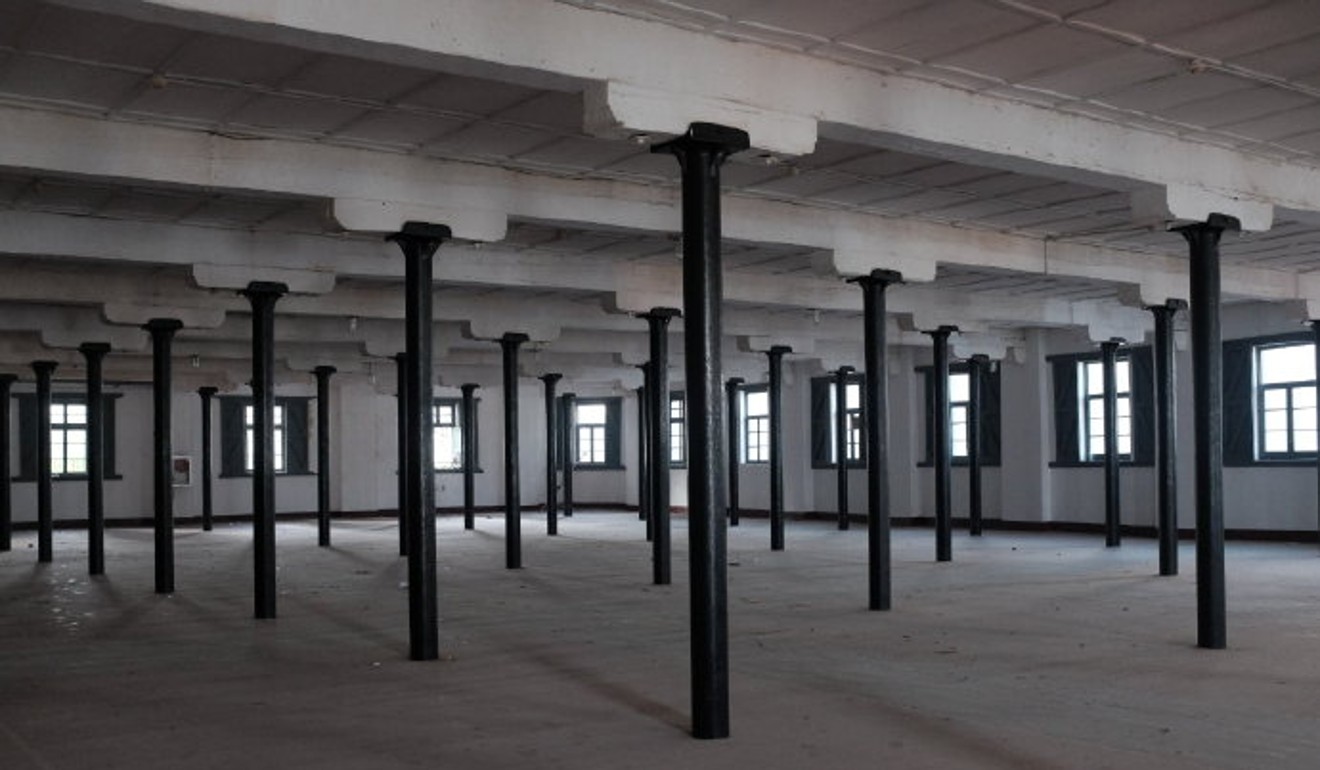
Liu Gang, an architecture professor at Shanghai’s Tongji University, said the properties featured big wooden beams supported by black iron pillars, which were prominent architectural features of industrial buildings dating back to the 19th century.
“We guess it was hard to move these giant beams with vehicles at the beginning of the 20th century. Quite possibly they were transported on the river. We guess that the wood was chopped down and processed in places across the Pacific [from North America] and shipped to Shanghai.”
In the WeChat article, Liu called for the protection of the interior structure of the buildings. “Without solid research, we cannot simply take them down to be replaced by new ones.”
Yu agreed, saying: “The building with a new inside structure would be a fake and this plan will destroy historical heritage.”
Experts say the interiors of the historic buildings are also worth preserving. Photo: Urban China magazine
Huangpu Road, where these houses sit, is rich with history. It features the Garden Bridge of Shanghai – the city’s first steel bridge, built in 1907 – and was once home to the consulates of the United States, Russia, Japan, Germany, Denmark and the Austro-Hungarian empire.
Other notable landmarks on the road include the Astor House Hotel, built in 1846, where Charlie Chaplin, Albert Einstein and George Bernard Shaw stayed in the 1920s and 1930s. The hotel is still there.
“History happened here,” Yu said. “But it’s a pity that most of the old buildings in this area no longer exist.”
Despite their success in winning a stay of execution for the two buildings, the experts are cautious in their expectations.
“The demolition work was suspended, but that does not mean they have accepted our proposals. We are not optimistic,” Yu said.
About two weeks ago as part of their effort to save the buildings, Yu and three other scholars approached officials from Shanghai’s Planning and Natural Resources Bureau, the government body behind the demolition project.
“Officials emphasised the difficulties of keeping the completeness of the old buildings and we just pointed out the damage to their historical values,” Yu said.
The Shanghai bureau did not immediately reply to a request for comment.
Shanghai nightclub king opens new art space – in disused oil tanks
Appeals by the public to conserve historical buildings have generally not been successful. Shenyuli, a typical Shanghai residential community built in the 1930s, was included in the city’s protected list of historical buildings in 2004.
The listing was not enough to prevent its demolition eight years later to make way for a public green land space.
Three years ago, the Shanghai government announced it was suspending the planned demolition of a former sex slavery station used by Japanese soldiers during the second world war, following media reports and a public outcry.
However, the building was later demolished, according to Su Zhiliang, history professor from Shanghai Normal University and a researcher on sex slavery, who predicts a similar outcome for this latest conservation effort.
“I think the government is just using the same tactic to postpone their plan. After the public’s attention is over, they will continue demolishing,” Su said.
Source: SCMP
Posted in Albert Einstein, architecture professor, Astor House Hotel, Austro-Hungarian empire, big wooden beams, black iron pillars, Bund, century, Charlie Chaplin, consulates, demolition, Denmark, Fudan University, Garden Bridge, George Bernard Shaw, Germany, heritage houses, historic building, history professor, Huangpu Road, Japan, Japan’s military forces, Japanese shipping company, Liu Gang, Nippon Yusen Kaisha Group, North America, Pacific, Planning and Natural Resources Bureau, postpone, predicts, public cultural facilities, researcher, residential community, Russia, saved, second world war, sex slavery, Shanghai, Shanghai Normal University, Shenyuli, shipping, sociologist, storage facilities, Su Zhiliang, Tongji University, trade industries, Uncategorized, United States, WeChat, Yangzijiang port, Yu Hai |
Leave a Comment »
19/05/2019
BEIJING (Reuters) – China’s housing regulator has urged four more cities to prevent their residential property markets from overheating in the latest sign that authorities are not about to relax their grip on the real estate business in order to spur the economy.
The cities of Suzhou, Foshan, Dalian and Nanning have been told by the Ministry of Housing and Urban-Rural Development to stabilize land and housing prices as well as market expectations, the official Xinhua news agency reported late on Saturday.
Six other cities were warned by the ministry last month to monitor the growth of home prices in their markets, after some cities, including, Foshan quietly started to relax some curbs since December to spur demand.
China’s home property market is a key plank of the economy, influencing tens of related sectors such as construction and financial services.
The sector has held up well despite a slowdown in growth in the world’s second-biggest economy, with policymakers walking a fine line between preserving stability and hurting market sentiment.
Renewed tensions between China and the United States over trade have also added pressure on Chinese policymakers to keep the domestic economy on a stable footing, while continuing to fend off risks such as housing bubbles.
Average new home prices in China’s 70 major cities rose 0.6% in April, unchanged from the pace of growth in March, according to a monthly official survey.
Most of the 70 cities surveyed by the National Bureau of Statistics still reported monthly price gains for new homes. The number increased to 67 in April from 65 in March, signaling a slight strengthening in the market.
The housing ministry reiterated that “houses are for living in, not for speculation”, according to the Xinhua news agency on Saturday.
Even before the ministry’s latest warning, the prosperous city of Suzhou, just northwest of Shanghai, had already rolled out new property curbs.
On May 11, Suzhou said it would restrict buyers of new homes in some districts from selling their property within three years.
Source: Reuters
Posted in China alert, Chinese cities, Dalian, Foshan, home price growth, housing ministry, Ministry of Housing and Urban-Rural Development (MOHURD), Nanning, National Bureau of Statistics (NBS), Shanghai, Suzhou, Uncategorized, United States, warned, Xinhua News Agency |
Leave a Comment »
18/05/2019
SHANGHAI, May 17 (Xinhua) — The enrollment of supporting activities for the second China International Import Expo (CIIE) was launched Friday, the CIIE bureau said.
Activities related to policy interpretations, matchmaking sessions and new products displays as well as research report releases will make up at least 80 percent of the supporting activities.
The second CIIE, to be held in November in Shanghai, will also set up a special area for the debut of new products, technologies and services, according to the bureau.
More than 250 Fortune 500 companies and industry leaders have signed up for the event so far.
A total of 172 countries, regions and international organizations and more than 3,600 enterprises participated in the first CIIE, held Nov. 5 to 10 in Shanghai, with more than 370 supporting activities organized.
Source: Xinhua
Posted in China alert, China International Import Expo (CIIE), Shanghai, Uncategorized |
Leave a Comment »





 CHINDIA ALERT: You'll be living in their world, very soon