17/10/2019
- Soldiers from 140 countries are expected to take part in 10-day sporting event in Wuhan, Hubei province
- It coincides with the Xiangshan Forum, where Beijing may seek to reinforce its position on issues like the South China Sea and US arms sales to Taiwan
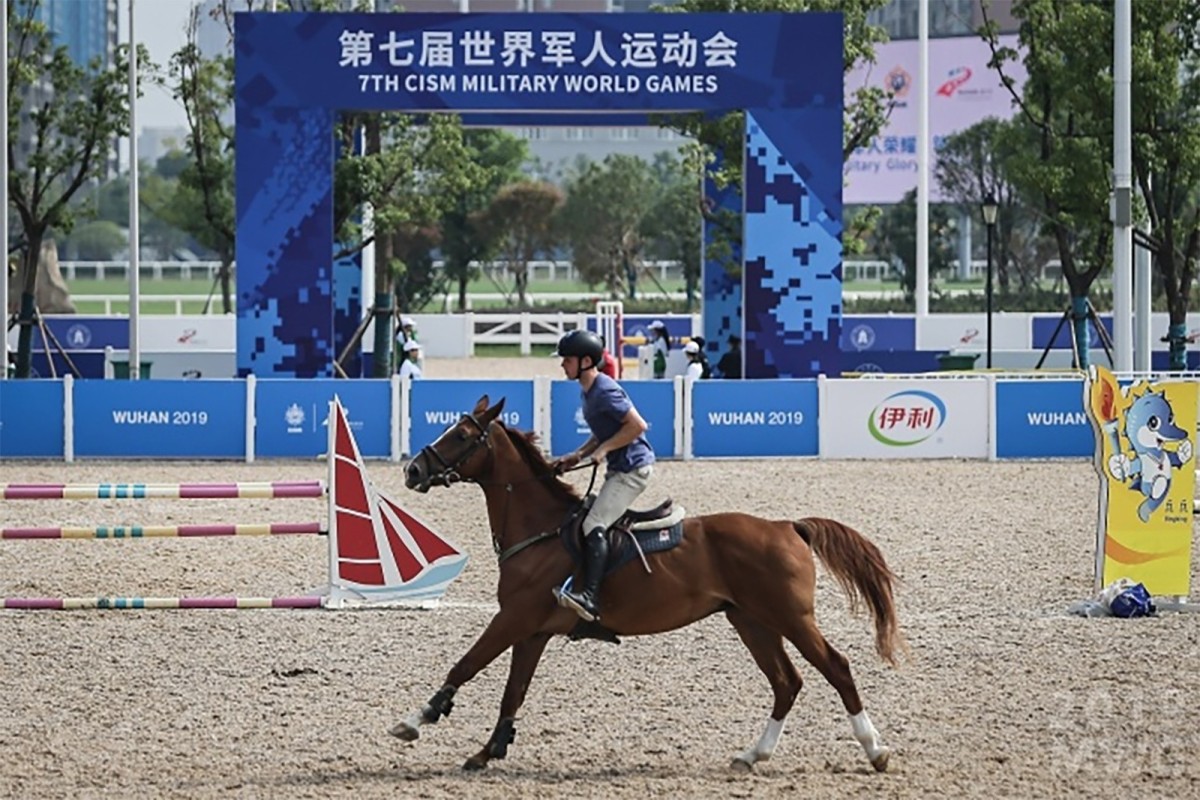
More than 100 horses have arrived in Wuhan for the equestrian and modern pentathlon events of the Military World Games, which begin on Friday. Photo: Handout
President Xi Jinping is expected to open the Military World Games in central China on Friday, setting the stage for a
People’s Liberation Army charm offensive as it seeks to strengthen ties with foreign forces and exert its influence.
China is hosting the 10-day sporting event in Wuhan, Hubei province, and soldiers from 140 countries are expected to take part. It will coincide with the three-day Xiangshan Forum – China’s equivalent of the Shangri-La Dialogue in Singapore – to be held on the outskirts of Beijing from Sunday.
It comes after China staged a lavish military parade in Beijing to celebrate the 70th anniversary of the People’s Republic on October 1, showcasing some of the PLA’s most advanced weapon systems and strategic weaponry.
A Chinese military insider on Tuesday said Xi was expected to kick off the games in Wuhan – a symbolic move by the president as he seeks to boost the PLA’s international profile.
China has built a new athletes’ village in Wuhan that can accommodate 10,000 people. Photo: Handout
“[China sees] the Military World Games as a platform to promote international military diplomacy and an opportunity for the PLA to build its international image through sporting events,” the insider said.
It will be the first time China hosts the Military World Games, which is the second-biggest multi-sport event after the Olympics and is also held every four years.
To host the mega event, China has built a new athletes’ village in Wuhan that can accommodate the 10,000 military athletes who will compete. This year’s games will have the largest number of events ever, with badminton, table tennis, tennis and men’s gymnastics included for the first time.
The US Armed Forces will send about 300 athletes to Wuhan, according to state-run Xinhua. One of them is Mark Juliano, an archer and taekwondo player, who told the news agency: “You developed world-class venues and I can’t wait to experience the games.”
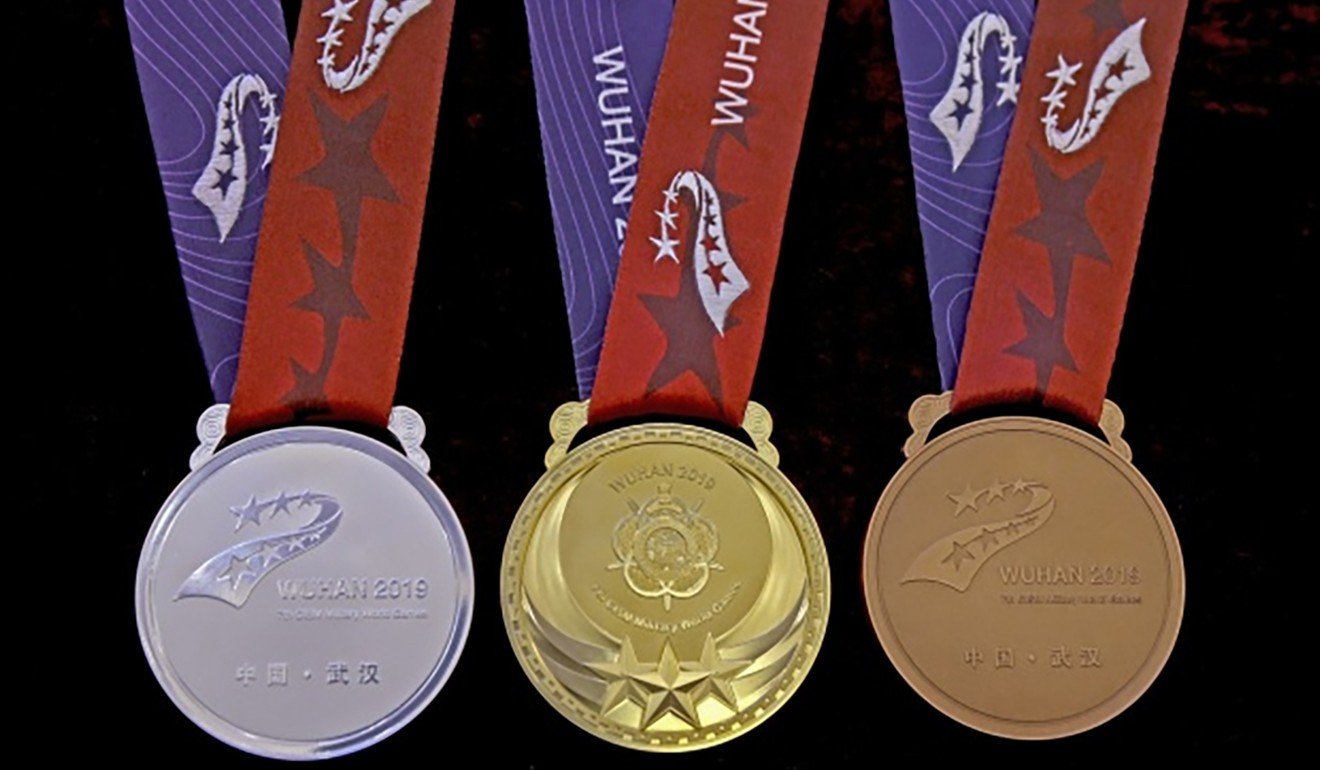
The Chinese president has high hopes for the PLA athletes at this year’s Military World Games, according to an insider. Photo: Handout
The military insider said Xi had high hopes that the PLA would win gold in some of the events.
“The Russians are known to be very good at some sports but the PLA has yet to earn a reputation in any particular sport,” the insider said. “Xi hopes that the home ground advantage will give the PLA the edge this time.”
Another Beijing-based military source said the top brass had put great emphasis on the success of three events this year – the National Day parade, Military World Games and the Xiangshan Dialogue.
The source said it would be the biggest Xiangshan Forum since China began holding the event more than a decade ago, and dozens of senior foreign defence officials and military leaders invited to the games in Wuhan would also take part in the forum.
How robots are revolutionising China’s firework factories
Set up in 2006, China uses the forum to play host to foreign military experts and leaders and discuss security and defence issues in the Asia-Pacific region. It is widely seen as an effort by Beijing to compete with the Asia Security Forum in Singapore, also known as the Shangri-La Dialogue after the hotel where it is staged.
The theme of this year’s Xiangshan Forum is “Maintaining international order and promoting peace in the Asia-Pacific”. Military observers said Beijing was likely to use it as an opportunity to reinforce its position on issues like the South China Sea and US arms sales to Taiwan.
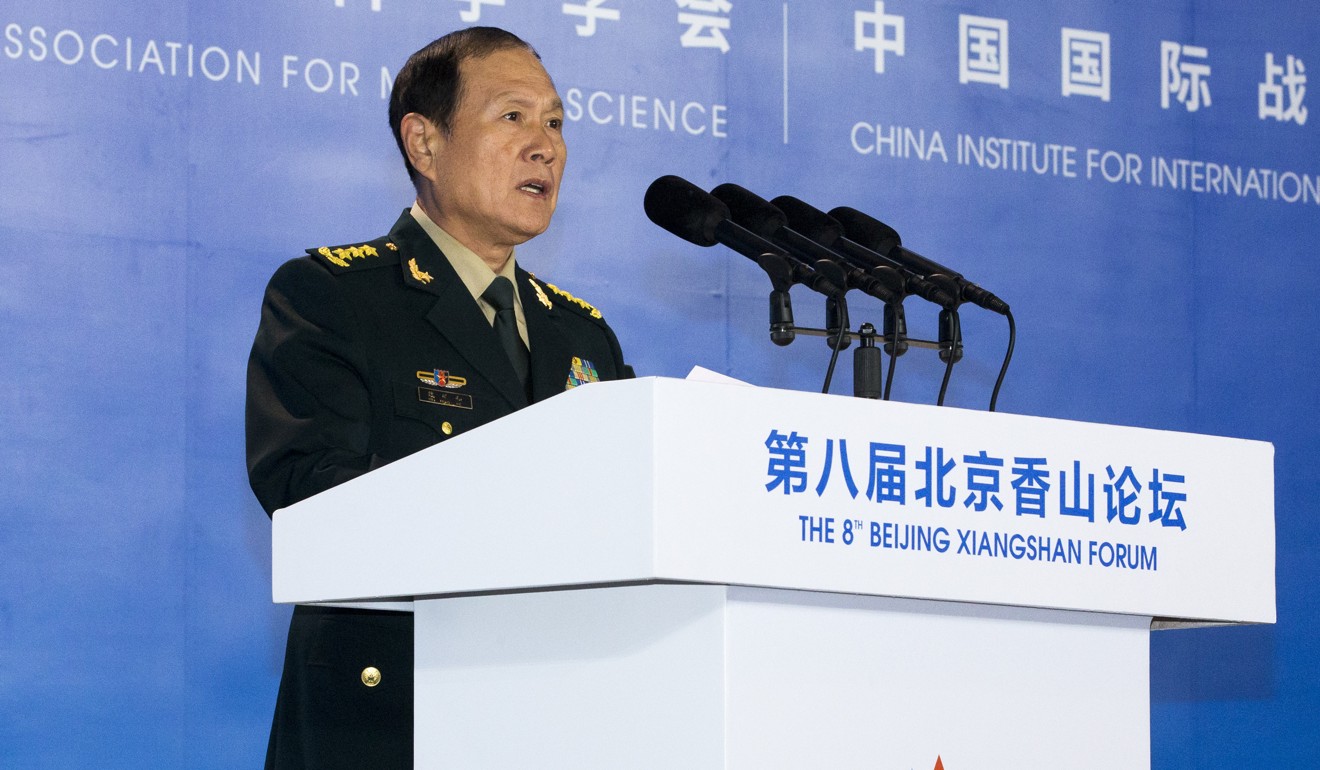
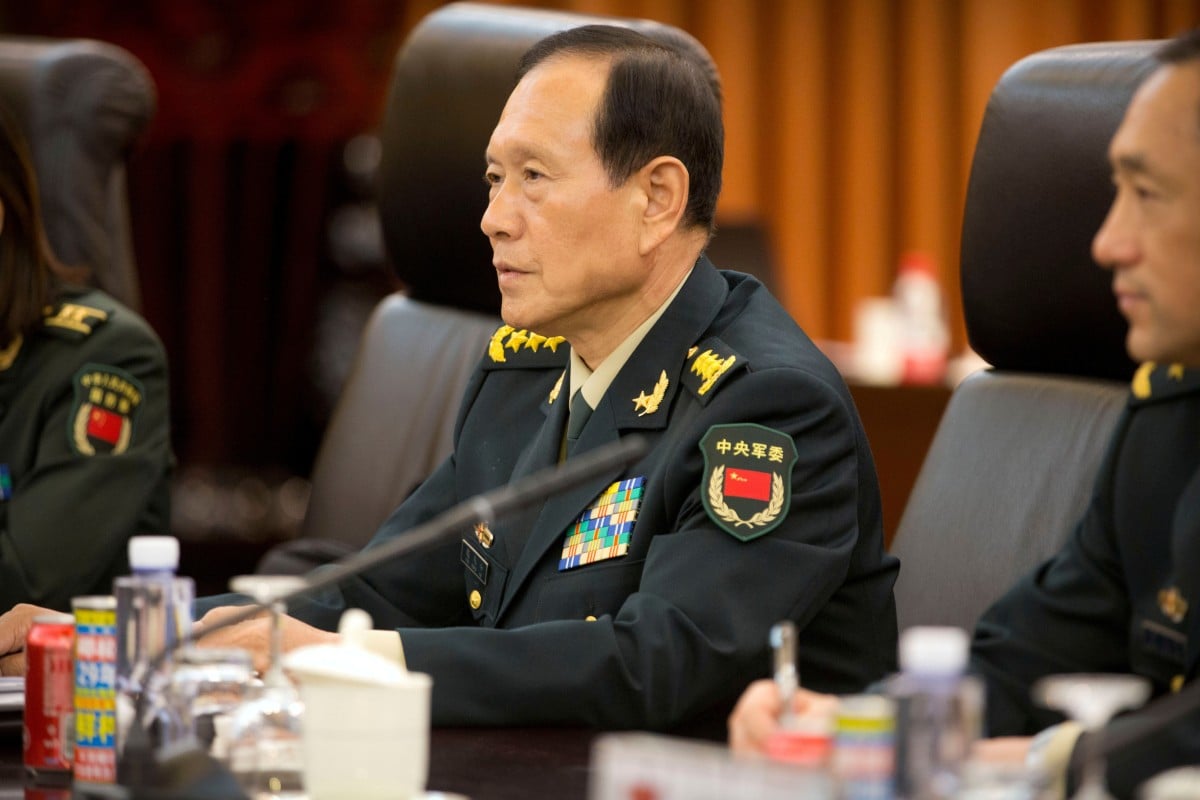
Defence Minister Wei Fenghe criticised the US for damaging ties with China at last year’s Xiangshan Forum. Photo: Xinhua
Yao Yunzhu, a retired PLA major general and a delegate at the forum, said this year’s event would give the PLA an opportunity to explain its strategy to foreign militaries, including the US.
“The relationship between the PLA and its American counterpart has been stable over the past year despite tensions between Beijing and Washington over issues such as trade,” Yao said.
“But that military relationship has been stable thanks to the efforts of the two militaries to keep their communication open, as well as improving their crisis management mechanism,” she added.
Another forum delegate, Zhu Feng, dean of the international relations school at Nanjing University, said smaller countries in the region would use the forum to raise their concerns over the impact of tensions between China and the US on the region’s long-term stability.
Source: SCMP
Posted in 70th anniversary of the founding of the People's Republic of China (PRC), advanced weapon systems, archer, Asia Security Forum, badminton, Beijing, celebrate, charm offensive, China alert, equestrian events, gymnastics, hubei province, Military World Games, Nanjing University, Olympics, open, PLA, President Xi Jinping, Shangri-La Dialogue, Singapore, South China Sea, strategic weaponry., table tennis, taekwondo player, Taiwan, tennis, Uncategorized, US Armed Forces, US arms sales, Wuhan, Xiangshan forum |
Leave a Comment »
12/06/2019
- Many of those involved feel profound ‘guilt and shame’ over the lives lost in Beijing 30 years ago, according to two former PLA officers
- Move to tone down language used to describe movement – as ‘political turmoil’ rather than a ‘counter-revolutionary rebellion’ – came from army
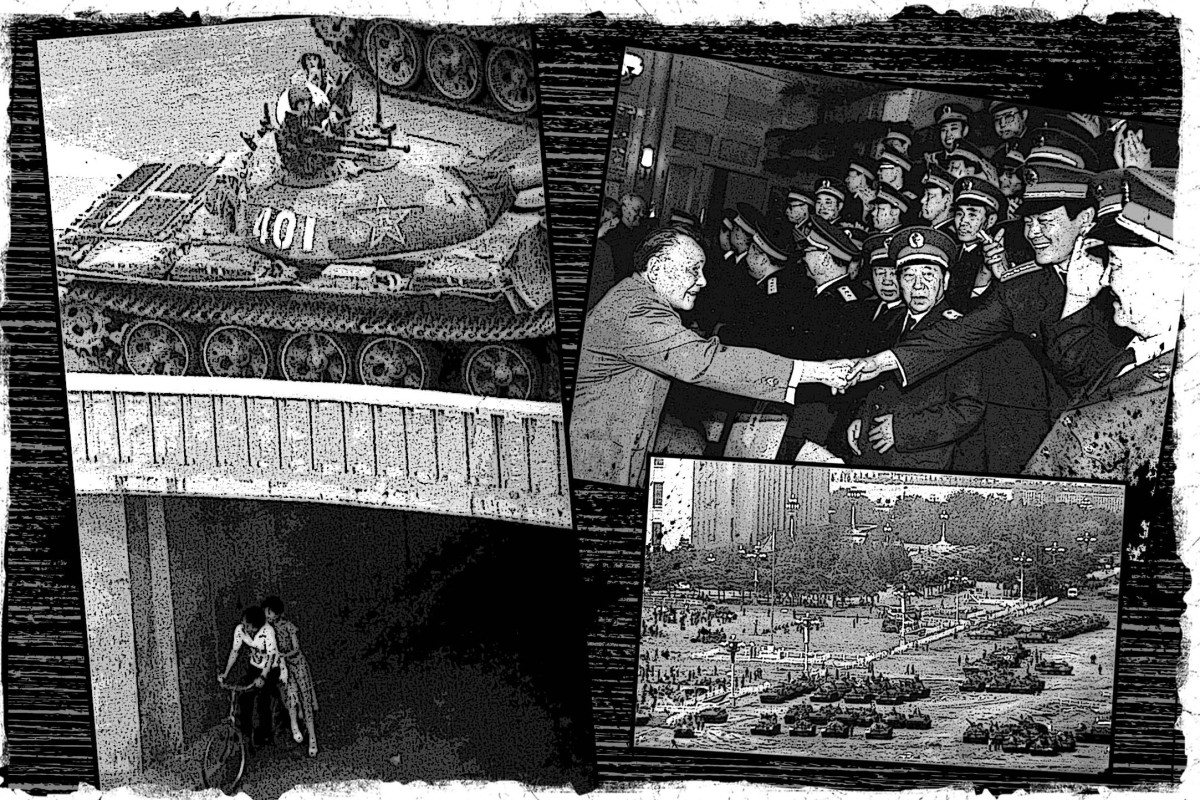
The brutal military crackdown on peaceful protesters in Beijing 30 years ago might have saved the Communist Party’s rule, but it has since become a cross to bear for the People’s Liberation Army.
Today, the world’s largest fighting force is still haunted by the
tragedy in 1989, despite efforts to rebuild its image. After the bloodshed, it was the military that suggested the pro-democracy student movement be referred to not as a “counter-revolutionary rebellion” but as a time of “political turmoil”, two former PLA officers told the South China Morning Post.
They said the move to tone down the language around the crackdown reflected the anxiety and shame felt by many rank-and-file officers over a fateful decision that has tainted the military’s reputation and legacy.
Up to that point, the PLA had been widely respected by the Chinese public. Even during the turbulent decade of the Cultural Revolution from 1966, the military was largely uninvolved. Rather, it was instrumental in bringing an end to the chaos and setting China on the path of reform and opening up.
The crackdown in 1989 was unprecedented for the PLA and dealt a crippling blow to its reputation and morale – and the question over the legitimacy of the decision to send in the tanks and open fire on the protesters remains.
“[I believe] the Tiananmen crackdown will be revisited one day – it’s just a matter of time. The ultimate responsibility will fall to those military leaders who directly implemented the decision,” a retired researcher with the PLA’s Academy of Military Science, who requested anonymity, told the Post.
PLA soldiers with automatic weapons eat ice creams as protesters plead with them to leave Tiananmen Square on June 3, 1989. Photo: Reuters
Throughout history and across cultures, following orders has been a fundamental principle of military service. But the absence of a written order on the mission from the commander in chief – late paramount leader Deng Xiaoping – puts its legality in doubt.
It is estimated that hundreds, or perhaps more than 1,000, civilians were killed during the crackdown that began on the night of June 3 and continued until the morning.
“No matter whether it is one or 10,000 people killed, it’s still wrong to shoot at unarmed civilians,” said a retired PLA officer who served in the army’s political department and also declined to be named. “But [the troops] had to do this dirty job because the party’s rule was in danger.”
According to the former military researcher, many commanders involved in the crackdown questioned the decision to use force to quell the protests, particularly since they had only been given a verbal order from above and never saw a written instruction from Deng, who was chairman of the Central Military Commission (CMC).
This was further complicated by the fact that Zhao Ziyang, the party’s general secretary at the time, openly opposed a military crackdown. Without the support and approval of the party’s chief, the operation violated the long-held principle of “the party commanding the gun”.
Even then CMC vice-chairman Yang Shangkun and Xu Qinxian, commander of the 38th Army Corps that had been sent to Beijing, had qualms about carrying out the verbal order, according to the former researcher.
It is not known how many troops were sent in to crush the protests, but the number could be as high as 200,000, according to a book by US-based scholar Wu Renhua.
Soldiers patrol Changan Avenue in Beijing on June 4, 1989. Photo: Jeff Widener/AP
The retired PLA political officer said the instruction to commanders was to “clear out Tiananmen Square by June 4 – and whoever stands in our way is an enemy of the state”.
“Most officers and soldiers were only trained to use heavy weapons like machine guns and tanks. They didn’t even know there were things like rubber bullets, tear gas or other kinds of non-lethal weapons for crowd control,” said the former officer.
“To meet the deadline to clean up the square, some commanders asked their troops to shoot into the air to scare away the crowds – that was the only thing they could think of doing,” he said.
But although they started off firing into the air, ricocheting bullets hit many protesters as they fled and in the chaos and bloodshed, inexperienced troops panicked and started firing into the crowd, according to the former officer.
The army’s clean image was destroyed overnight, and in the minds of many, renmin zidibing – the army of our sons – became the feared and reviled tool of a killing regime.
It also left a psychological scar on the military, which is reflected in the effort to tone down the narrative around the crackdown.
The former researcher said the push to use “political turmoil” instead of the more provocative “counter-revolutionary rebellion” to describe the movement first appeared in a military academy reference book, the Chinese Military Encyclopaedia, in 1997. He said it was proposed by military advisers who believed it could help soften attitudes towards the crackdown.
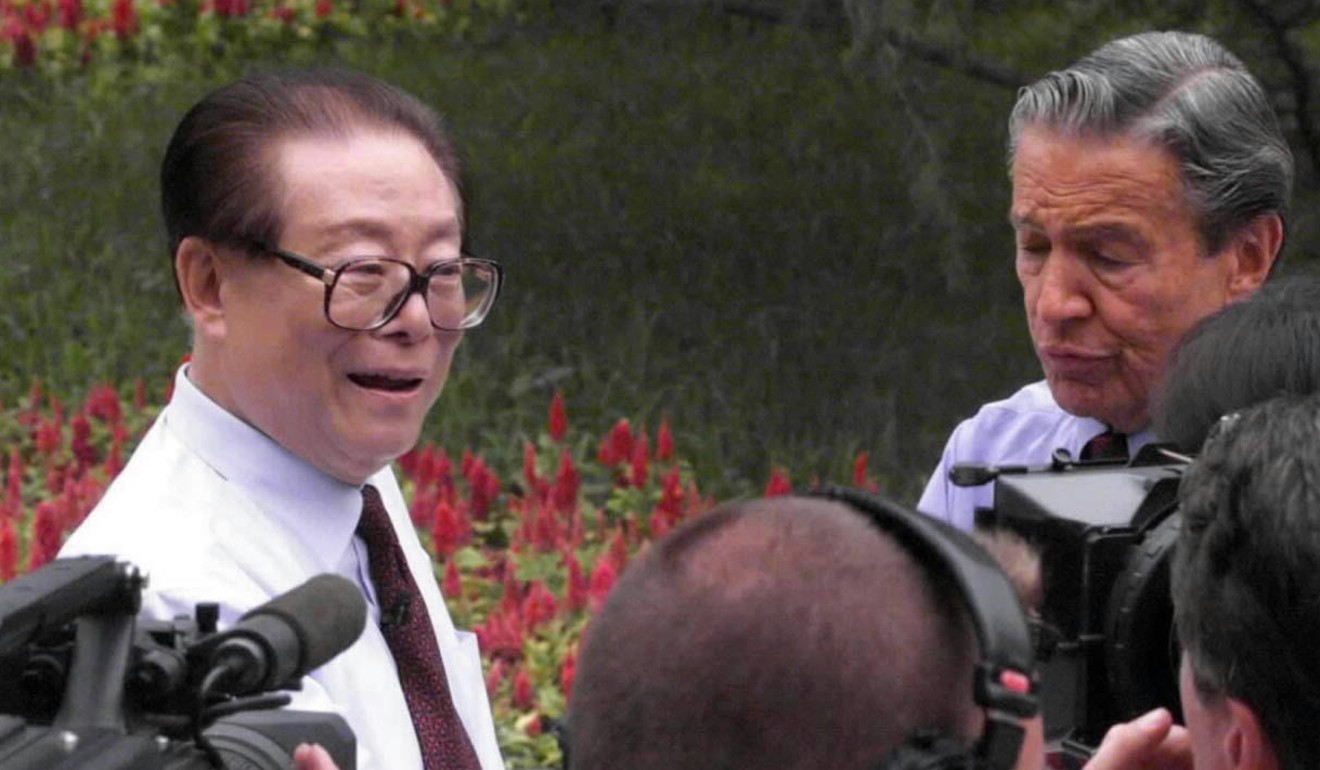
Then president Jiang Zemin with American journalist Mike Wallace during an interview in 2000. Photo: Xinhua
Former president Jiang Zemin spoke of the “political turmoil” in 1989 during an interview with American journalist Mike Wallace in 2000, and the wording has since been widely used by state media.
Meanwhile, the suppression of the protesters also prompted calls for a separation of the army and the party, so the PLA would be a “national” force rather than a political one.
But after
, the idea was squashed by the top leadership in 2007, on the eve of the PLA’s 80th anniversary. It was labelled as a plot by hostile Western forces to topple communist rule in China and is now a taboo subject.
“But despite banning discussion of military nationalisation, the calls from within the PLA to rehabilitate the military and for a review of what happened with the student movement have never stopped,” the former PLA political officer said.
“Many senior military officers believe the students weren’t attempting to overthrow communist rule – they were just asking for a better political system. That’s why calling it a counter-revolutionary rebellion is wrong.”
Curious Beijing residents gather to look at the military hardware in Tiananmen Square on June 7, 1989. Photo: AP
On Sunday, days ahead of the 30th anniversary, Defence Minister General Wei Fenghe
, telling a regional defence forum that putting an end to the “political turbulence” had been the “correct policy”.
“Throughout the 30 years, China under the Communist Party has undergone many changes – do you think the government was wrong with the handling of June Fourth?
There was a conclusion to that incident. The government was decisive in stopping the turbulence,” Wei said at the Shangri-La Dialogue in Singapore.
But according to the former PLA researcher, military top brass involved in the crackdown still felt profound “guilt and shame” over the lives lost.
“None of those people in the PLA would feel a sense of honour for participating in the crackdown,” he said. “Instead they harbour a deep feeling of shame.”
Source: SCMP
Posted in Academy of Military Sciences, army, Beijing, Central Military Commission (CMC), China’s military psyche, Chinese Military Encyclopaedia, Communist Party, counter-revolutionary rebellion, deep scar, Deng Xiaoping, paramount leader, People’s Liberation Army, PLA officers, political turmoil, president jiang zemin, Shangri-La Dialogue, Singapore, south china morning post, Tiananmen crackdown, Uncategorized |
Leave a Comment »
12/06/2019
- Observers will be watching to see if General Wei Fenghe holds talks with his American counterpart
- Forum comes as Beijing and Washington are at odds over issues ranging from security to trade
General Wei Fenghe will be the first Chinese defence minister to attend the Shangri-La Dialogue in eight years. Photo: Reuters
China is sending its defence minister to a leading Asian security forum next week, the first time in eight years that a high-ranking Chinese general will represent the country at the conference.
General Wei Fenghe, a State Councillor and China’s defence minister, will speak at the three-day Shangri-La Dialogue in Singapore, a gathering that comes as Beijing and Washington are at odds over issues ranging from security to trade.
“In a highly anticipated speech, General Wei Fenghe will speak on China’s role in the Indo-Pacific at a pivotal time for the region,” the International Institute for Strategic Studies, an organiser of the conference, said on Monday night.
Chinese military sources said that Wei would lead a “relatively big” delegation to the gathering, which starts on May 31 and is co-organised by the Singaporean government.
South China Sea stand-offs ‘a contest of wills’
The last time Beijing sent a high-ranking officer to the event was in 2011 when General Liang Guanglie, then the defence minister, attended.
Acting US secretary of defence Patrick Shanahan will also attend the conference and deliver a speech.
The spoils of trade war: Asia’s winners and losers in US-China clash
Beijing-based military specialist Zhou Chenming said observers would be watching to see whether the two senior defence officials held talks.
“The whole world will keep a close eye on any possible encounters between the Chinese and the Americans … At least now China has shown its sincerity in sending Wei to attend the conference, who is of equal standing as Shanahan, if the latter is willing to hold talks with him in good faith,” Zhou said.
But he said a meeting between Wei and Shanahan would be difficult because of the current distance between Beijing and Washington on major issues.
How Trump’s tweets bested China in the trade war publicity battle
“It’s not realistic to expect they will make a breakthrough because both sides will just sound their own bugles. The … mistrust between China and the US is actually growing every day,” Zhou said.
Just on Sunday, the USS Preble, an Arleigh Burke-class guided missile destroyer, sailed within 12 nautical miles of the Scarborough Shoal, an area in the South China Sea claimed by both China and the Philippines.
The
by strongly urging “the US to stop such provocative actions” and saying it would “take all necessary measures” to protect its “national sovereignty”.
Military analysts said the size of the Chinese delegation at the conference would underscore the importance of the People’s Liberation Army (PLA) attached to the event this year.
One military insider said the delegation would also include Lieutenant General He Lei, former vice-president of the Academy of Military Science, who headed China’s delegation in 2017 and 2018; and Senior Colonel Zhou Bo, director of the defence ministry’s Centre for Security Cooperation. In addition, the PLA would send a number of Chinese academics to speak at various sessions of the forum.
China tries to go one on one with Malaysia to settle South China Sea disputes
Singaporean Prime Minister Lee Hsien Loong will deliver a keynote speech on the opening day of the annual dialogue.
Japan and South Korea are also sending their defence ministers, according to a report by The Korean Times on Tuesday. The report also said South Korean Defence Minister Jeong Kyeong-doo was keen to hold one-on-one meetings with his Chinese and Japanese counterparts on the sidelines of the conference.
Source: SCMP
Posted in Academy of Military Sciences, Beijing, China alert, defence minister, defence ministry’s Centre for Security Cooperation, General Wei Fenghe, guided missile destroyer, Japan, Jeong Kyeong-doo, Lee Hsien Loong, Lieutenant General He Lei, Malaysia, Patrick Shanahan, People's Liberation Army (PLA), Philippines, Scarborough Shoal, Security Conference, Shangri-La Dialogue, Singapore, Singaporean Prime Minister, South China Sea, South Korea, South Korean Defence Minister, State Councillor, tensions, The Korean Times, Uncategorized, US, US secretary of defence, USS Preble, Washington |
Leave a Comment »
10/06/2019
- Beijing has to reconcile the competing needs to appear tough to the Chinese public and conciliatory to an international audience
- China feels US has long had the advantage in shaping global opinion but it now needs to make itself heard
China must appear tough for an increasingly nationalistic audience at home and be conciliatory to an international audience wary of China’s assertive foreign and defence policy. Photo: Xinhua
In just the last week, a Chinese official posed a question that would resonate among his fellow cadres: as China rises, why are we not making more friends and why are our voices not heard?
The question has gained weight as the trade war with the United States has deepened, and Chinese officials have scrambled to win the battle of public opinion at home and abroad.
It also came to the fore at the annual Shangri-La Dialogue security forum in Singapore on the weekend, when Chinese officials were faced with balancing the need to appear tough for an increasingly nationalistic audience at home and being conciliatory to an international audience wary of China’s assertive foreign and defence policy.
Senior Colonel Zhao Xiaozhuo, a senior fellow at the People’s Liberation Army’s Academy of Military Sciences and a public diplomacy veteran for the military, said the expectations clashed in Singapore.
“Currently there are two parallel worlds in the public opinion landscape, one domestic and another international, and the two of them are basically split and in two extremes,” Zhao said.
“[The Shangri-La Dialogue] is a place where the two worlds clash. As the Chinese delegation [at the forum] we need to show our position, but it is becoming more difficult to balance [the expectations of the two sides].
“If you are tough, the domestic audience will be satisfied, but it won’t bode well with the international audience. But if we appear to be soft, we will be the target of overwhelming criticism at home.”
China asks state media to pick battles carefully with long US trade war looming, sources say
Zhao said this was an unprecedented challenge for Chinese cadres, who must also satisfy the expectations of the leadership.
“Our task was about diplomacy and making friends. But [with the tough position] you may not be able to make friends, and might even exacerbate the tension,” he said.
The pressure was immense when Chinese Defence Minister General Wei Fenghe took to the stage on Sunday in a rare appearance at the forum. Concerned about how Wei’s performance would be received at home, Beijing ordered Chinese media to minimise their coverage of acting US defence secretary Patrick Shanahan’s address in case it made China appear weak, according to a source familiar with the arrangements for Chinese media.
In his speech, Wei struck a defiant tone, vowing that the PLA would “fight at all costs” for “reunification” with Taiwan and that China was ready to fight the US to the end on the trade front.
Chinese Defence Minister Wei Fenghe makes a rare appearance at the Shangri-La Dialogue in Singapore. Photo: Reuters
Major General Jin Yinan, from the PLA’s National Defence University, a member of the Chinese delegation to the Singapore summit, said Wei’s speech defied expectations that China would show restraint with the US, and demonstrated China’s confidence on the world stage.
The public response at home was immediate and positive. Tens of thousands of Chinese internet users flooded social media platforms such as the Twitter-like Weibo service to express their approval for Wei’s hard line.
“This is the attitude that the Chinese military should show to the world,” one commenter said.
“I am proud of my country for being so strong and powerful,” another said.
Over the past year, Beijing’s propaganda apparatus has tightly controlled the domestic media narrative on the trade war, barring independent reporting on the tensions. But since the breakdown of trade talks in early May, the authorities have gone one step further by escalating nationalistic rhetoric in newspapers and on television.
How Donald Trump’s tweets outgunned China’s heavy media weapons in the trade war publicity battle
China has also tried to make its case to the world with an official statement. On the same day that Wei addressed the gathering in Singapore, the State Council, China’s cabinet, put China’s side of the dispute in a white paper, saying the US should bear responsibility for the breakdown of the trade talks.
A Chinese delegate at the forum said Beijing felt Washington had long had the advantage in shaping global opinion and there was an urgent need for China to make itself heard.
“We should get more used to voicing our position through Western platforms. The US has been criticising us on many issues. But why should the Americans dominate all the platforms and have the final say over everything?” the delegate said.
Before Wei’s appearance at the dialogue, China had not sent such a high-ranking official for eight years. It had long sought to play down the importance of the forum, seeing it as a platform wielded by the US and its Western allies to attack China.
In 2002, China set up the Beijing Xiangshan Forum to rival the Singapore gathering and amplify its voice on security issues.
But Chinese officials are well aware that Xiangshan does not have the same impact and profile as the Shangri-La Dialogue, according to Collin Koh, a research fellow at the S. Rajaratnam School of International Studies at Nanyang Technological University in Singapore.
“[At the same time, the long absence of high-level Chinese representation to the Shangri-La Dialogue also] raises the question of whether it might be sustainable in the long run for [the dialogue] if they continue to not have such ministerial representation [from China],” Koh said.
Zhao, who is also the director of the Xiangshan forum’s secretariat office, agreed that China lagged the US in promoting the image of the military and in winning public opinion.
“China has not fought a war in 30 years. We have only built some islands in the South China Sea and yet have received so much criticism from the international media. The US has engaged in many wars but they are seldom criticised. This reflects that China is in a disadvantaged position in international discourse,” he said.
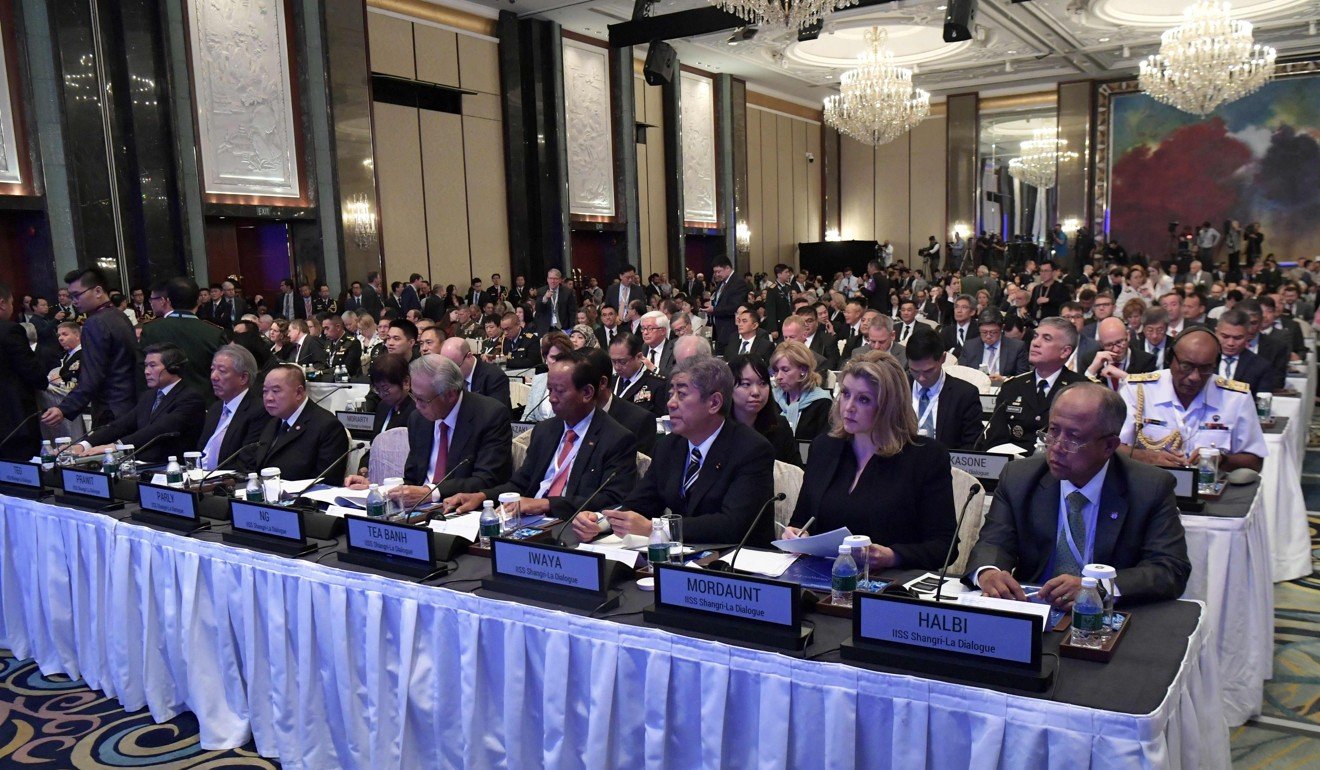
Expectations collided at the Shangri-La Dialogue in Singapore this month. Photo: AFP
In a rare conciliatory gesture – and just days before the 30th anniversary of the crackdown on pro-democracy protesters in Tiananmen Square – Wei took questions from a room of international delegates on a range of sensitive issues, including the crackdown and China’s mass internment camps in Xinjiang. While he largely toed the official line in his reply, his presence at the forum and willingness to address the questions raised hopes that China would become a more responsible partner in global affairs despite its continuing disputes with the US.
Andrea Thompson, US undersecretary of state for arms control and international security, said Wei’s attendance at the Singapore gathering was a “positive sign” and she hoped that China would be more open and transparent in addressing issues such as arms control and cybersecurity.
“I appreciate that he is here. I think it’s important to have a dialogue … There will be areas where we will agree, and some areas where we disagree, but you still have to have dialogue,” Thompson said.
Source: SCMP
Posted in Academy of Military Sciences, Andrea Thompson, Beijing, Beijing Xiangshan Forum, China alert, Chinese Defence Minister, General Wei Fenghe, make itself heard, National Defence University, Patrick Shanahan, People’s Liberation Army, S. Rajaratnam School of International Studies, Shangri-La Dialogue, Singapore, Singapore’s Nanyang Technological University, struggles, Uncategorized, US defence secretary, US undersecretary of state for arms control and international security, Washington, win friends, Xiangshan forum, Yinan |
Leave a Comment »
10/06/2019
- With a defence budget second only to the US, China is amassing a navy that can circle the globe and developing state-of-the-art autonomous drones
- The build-up is motivating surrounding countries to bolster their own armed forces, even if some big-ticket military equipment is of dubious necessity
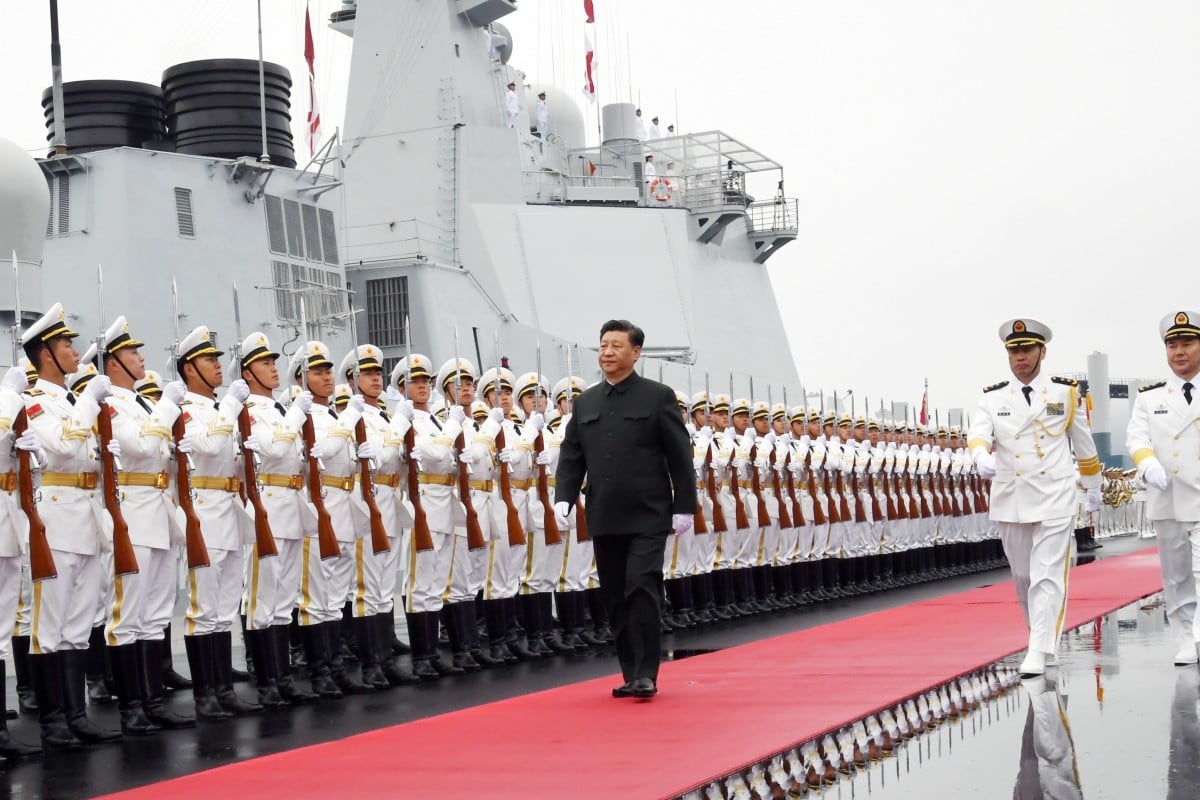
Chinese President Xi Jinping reviews an honour guards before a naval parade in Qingdao. Photo: Xinhua
The Asia-Pacific region is one of the fastest-growing markets for arms dealers, with economic growth, territorial disputes and long-sought military modernisation propelling a 52 per cent increase in defence spending over the last decade to US$392 billion in 2018, according to the Stockholm International Peace Research Institute.
The region accounts for more than one-fifth of the global defence budget and is expected to grow. That was underscored last week by news of
’s bid to strike a
to purchase US tanks and missiles.
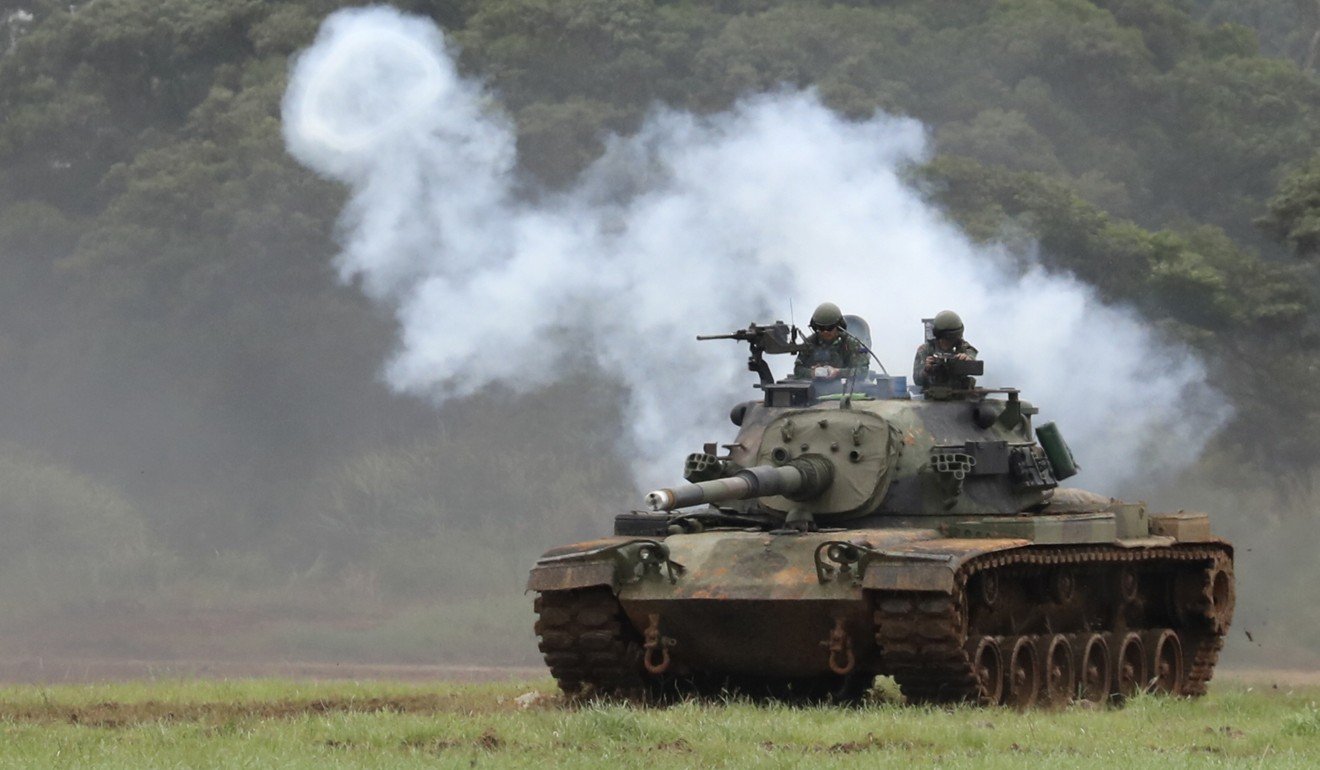
Taiwanese Soldiers on a CM11 battle tank, jointly developed with US arms manufacturer General Dynamics. Photo: EPA
The biggest driver in arms purchases, however, is
– responsible for 64 per cent of military
spending in the region. With a defence budget that is second only to the
, China is amassing a navy that can circle the globe and developing state-of-the-art autonomous drones. The build-up is motivating surrounding countries to bolster their armed forces too – good news for purveyors of submarines, unmanned vehicles and warplanes.
It is no coincidence that the recent
in
, a security conference attended by
chiefs, was sponsored by military contractors including Raytheon,
and
.
Opinion: How the Shangri-La Dialogue turned into a diplomatic coup for China
Kelvin Wong, a Singapore-based analyst for Jane’s, a trade publication that has been covering the defence industry for 121 years, has developed a niche in infiltrating China’s opaque defence industry by attending obscure trade shows that are rarely advertised outside the country.
He said the US is eager to train allies in Asia and sell them arms, while also stepping up its “freedom of navigation” naval operations in contested waters in the
and Taiwan Strait. It has lifted a ban on working with
’s special forces over atrocities committed in
. And it is considering restarting arms sales to the
.
In his speech at the Shangri-La Dialogue, acting US Defence Secretary Patrick Shanahan touted American advancements in technology “critical to deterring and defeating the threats of the future” and said any partner could choose to win access to that technology by joining the US defence network.
Wong said the message was clear: “Buy American.”
Analysts say Chinese soldiers have less training, motivation and lower morale than their Western counterparts. Photo: Reuters
The analyst said there is a growing admission among the Chinese leadership that the
has an Achilles’ heel: its own personnel.
He said one executive at a Chinese defence firm told him: “The individual Chinese soldier, in terms of morale, training, education and motivation, (cannot match) Western counterparts. So the only way to level up is through the use of unmanned platforms and
To that end, China has developed one of the world’s most sophisticated drone programmes, complete with custom-built weapon systems. By comparison, Wong said,
US drones rely on weapons originally developed for helicopters.
Wong got to see one of the Chinese drones in action two years ago after cultivating a relationship with its builder, the state-owned China Aerospace Science & Technology Corporation. He viewed a demonstration of a 28-foot-long CH-4 drone launching missiles at a target with uncanny ease and precision.
“Everyone knew they had this,” Wong said. “But how effective it was, nobody knew. I could personally vouch they got it down pat.”
China unveils its answer to US Reaper drone – how does it compare?
That is what Bernard Loo Fook Weng, a military expert at Singapore’s S. Rajaratnam School of International Studies, told the author Robert Kaplan for his 2014 book, Asia’s Cauldron, about simmering tensions in the South China Sea.
He was describing the competition for big-ticket military equipment of dubious necessity.
is littered with examples of such purchases.
owns an aircraft carrier without any aircraft. Indonesia dedicated about one-sixth of its military budget to the purchase of 11
Su-35 fighter jets. And
splurged on two
submarines it could not figure out how to submerge.
“It’s keeping up with the Joneses,” Wong said. “There’s an element of prestige to having these systems.”
Submarines remain one of the more debatable purchases, Wong said. The vessels aren’t ideal for the South China Sea, with its narrow shipping lanes hemmed in by shallow waters and coral reefs. Yet they provide smaller countries with a powerful deterrence by enabling sneak attacks on large ships.
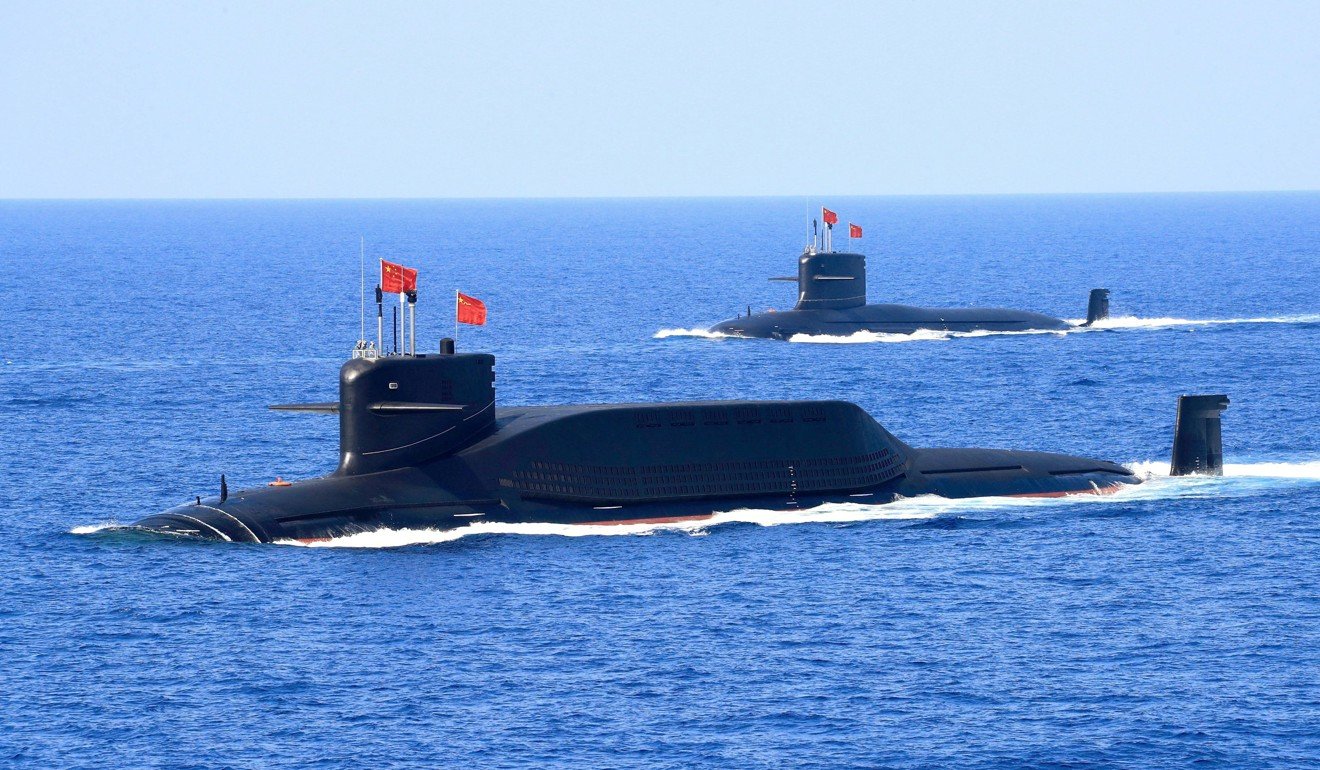
Nuclear-powered PLA Navy ballistic missile submarines in the South China Sea. Photo: Reuters
Asia and
are home to 245 submarines, or 45 per cent of the global fleet, according to the US-based naval market intelligence firm AMI International.
The Philippines remains one of the last coastal nations in the region without a sub – though it is in talks with Russian builders to acquire some.
Singapore recently received the first of four advanced
Type 218 submarines with propulsion systems that negate the need to surface more frequently. If the crew did not need to eat, the submarine could stay under water for prolonged periods. Wong said the craft were specially built for Asian crews.
“The older subs were designed for larger Europeans so the ergonomics were totally off,” he said.
Singapore, China deepen defence ties, plan larger military exercises
Tiny Singapore plays a crucial role securing the vital sea lanes linking the Strait of Malacca with the South China Sea. According to the
the country dedicates 3.3 per cent of its gross domestic product to defence, a rate higher than that of the United States.
State-of-the-art equipment defines the Singapore Armed Forces. Automation is now at the centre of the country’s military strategy, as available manpower is shrinking because of a rapidly ageing population.
Wong said Singapore is investing in autonomous systems and can operate frigates with 100 crew members – 50 fewer than they were originally designed for.
“We always have to punch above our weight,” he said.
Source: SCMP
Posted in artificial intelligence (AI), Asia, Asia-Pacific region, Australia, autonomous drones, BAE Systems, China Aerospace Science & Technology Corporation, East Timor, French, frigates, German, Indonesia, Lockheed Martin, Malaysia, military spending, naval parade, navy, People’s Liberation Army, President Xi Jinping, Qingdao, Raytheon Co, ripple effect, Russian, Shangri-La Dialogue, Singapore, Singapore Armed Forces, South China Sea, Southeast Asia, Stockholm International Peace Research Institute, Strait of Malacca, submarines, Taiwan Strait, Thailand, the Philippines, Uncategorized, unmanned vehicles, US Reaper drone, warplanes, World Bank |
Leave a Comment »
03/06/2019
SINGAPORE, June 2 (Xinhua) — Chinese State Councilor and Defense Minister Wei Fenghe said here on Sunday that China’s construction on its South China Sea islands and reefs is its legitimate right and is purely defensive in nature.
“The current situation in the South China Sea is improving towards greater stability. It is attributed to the common efforts of the countries in the region,” Wei said. “However, there are always people trying to rake in profits by stirring up troubles in the region.”
He said over 100,000 ships sail through the South China Sea each year, and “none has been threatened.”
However, in recent years, some countries outside the region come to the South China Sea to flex muscles, in the name of freedom of navigation. “The large-scale force projection and offensive operations in the region are the most serious destabilizing and uncertain factors in the South China Sea,” he said.
If there is chaos in the South China Sea, the regional countries are the ones who will bear the brunt, and China and the Association of Southeast Asian Nations (ASEAN) countries have made progress in negotiating the Code of Conduct in the South China Sea, he added.
Wei noted that China’s construction on its South China Sea islands and reefs is legitimate and defensive in nature. “It is the legitimate right of a sovereign state to carry out construction on its own territory. China built limited defense facilities on the islands and reefs for self-defense,” he said.
“Where there are threats, there are defenses. In the face of heavily armed warships and military aircraft, how can we stay impervious and not build some defense facilities?” he asked.
He also refuted the saying of “militarization” of China’s defensive construction on its South China Sea islands and reefs at the Q&A session. “Anyone who has some military sense would know it’s not militarization,” he said.
Wei is here to attend the 18th Shangri-La Dialogue from Friday to Sunday, and he gave a keynote speech on Sunday morning at a plenary session entitled “China and International Security Cooperation.”
Source: Xinhua
Posted in Association of Southeast Asian Nations (ASEAN), Chaos, Chinese State Councilor, Code of Conduct (COC), defense minister, freedom of navigation, International Security Cooperation, militarization, Shangri-La Dialogue, South China Sea Islands, Uncategorized, Wei Fenghe |
Leave a Comment »
29/05/2019
- The Asian security forum in Singapore had been seen as an ideal venue for a breakthrough in the growing diplomatic spat – but Tokyo has got cold feet
- That will ease the pressure on Beijing in the South China Sea, analysts say
Hopes are fading for a breakthrough in Japan-South Korea relations at the Shangri-La Dialogue in Singapore. Photo: Kyodo
Hopes that
and
could use the Shangri-La Dialogue in
to address their growing diplomatic spat are receding.
The three-day Asian security forum, which begins on Friday, had been seen as an ideal neutral venue for the two countries’ defence ministers to hold formal talks on issues including Tokyo’s claim that in January a
onto a Japanese reconnaissance aircraft.
The issue is one of the biggest deviling the bilateral relationship, alongside Japan’s perception that Seoul has backtracked on a promise to draw a line under Japan’s use of
– euphemistically known as “comfort women” – in military-run brothels during World War Two.
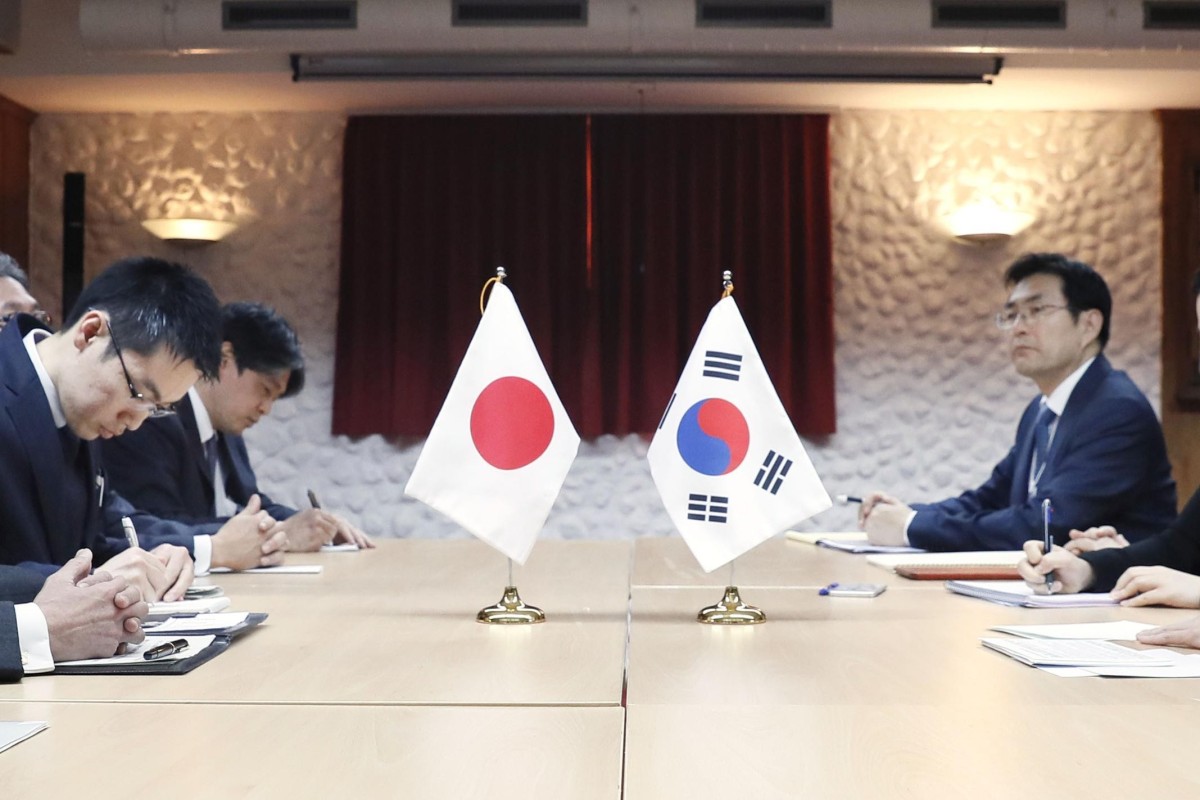
However, Tokyo appears to have concluded that formal talks on the sidelines of the Shangri-La Dialogue would be premature. The Yomiuri newspaper has reported that a formal meeting will no longer take place and that Takeshi Iwaya and Jeong Kyeong-doo, his South Korean opposite number, will now be restricted to a brief, stand-up exchange of their positions.
Despite the report, South Korean officials were guarded when asked whether the meeting had been shelved. “A detailed plan [on the bilateral talks] has yet to be fixed. Consultations are still underway between authorities of the two countries,” said the South Korean defence ministry spokesperson Choi Hyun-soo on Tuesday.
Analysts suggested Japan had run out of patience with South Korea and that the biggest winner in the stand off between two US allies would be China.
Japanese Defence Minister Takeshi Iwaya. Photo: Kyodo
“My sense is that Japan sees South Korea as not engaging in negotiations on a number of issues and not adhering in good faith to agreements that it has already signed,” said Stephen Nagy, a senior associate professor of international relations at Tokyo’s International Christian University.
Tokyo has been incensed that the administration of
has gone back on a 2015 agreement that was meant to draw a final line under the “comfort women” issue. Its anger deepened when Seoul said it would not intervene in a South Korean Supreme Court ruling, which ordered Japanese companies to pay up to 120 million won (US$100,000) to each of a dozen
of the Korean peninsula from 1910-1945.
Like its stance on “comfort women”, Japan believed a line had been drawn under the issue, this time in a 1965 pact that normalised relations between the two countries. Seoul argues that the 1965 treaty, which it signed after receiving US$800 million in grants and soft loans from Tokyo as compensation, does not cover individual victims of colonial-era atrocities.
As rift between Japan, South Korea deepens, how hard can Seoul afford to push?
“Japan is not ready to get into any more agreements because it fears that Seoul will not follow through or that they will become politicised in the future,” Nagy said.
“Tokyo wants binding, long-lasting agreements rather than having to renegotiate something each time a new Korean government comes in,” he said.
“The biggest winner in this stand-off between the US’ two most important allies in the region is, of course, China,” he added. “They must be delighted to see this playing out because it means the US is not able to exert nearly as much pressure in areas such as the
A long-standing strategic aim in US foreign policy circles has been to form a trilateral alliance with South Korea and Japan to present a united front against common security concerns, including China’s growing influence. However, the seeming inability of the two countries to get along has long thwarted this ambition.
“If Japan, South Korea and the US could find a way to cooperate, imagine the influence they could exert over the South China Sea or over
,” Nagy said. “If Japan and Korea could find a way to put their differences aside and with their security capacity, it would be a powerful deterrent to Beijing and Pyongyang.”
South Korean protesters demonstrate against Japan’s use of sex slaves – euphemistically termed ‘comfort women’ in World War II. Photo: AFP
Toshimitsu Shigemura, a professor of international relations at Tokyo’s Waseda University, agreed that the schism between Seoul and Tokyo would be of serious concern to Washington, but he believed that US pressure had already been brought to bear on the two neighbours.
“By avoiding talks in Singapore, Japan is doing its best to avoid public problems between the two sides and I believe that talks are already taking place between the two governments on these issues,” he said.
US wants Japan and South Korea to tag team China. But history is in the way
“The US will have told Tokyo and Seoul that it does not want to see more disagreements and that it is very important that they cooperate and calm things down a bit,” he said.
“I am sure that Washington knows exactly what happened when the Korean warship locked onto the Japanese aircraft in January, but they’re not publicly taking sides and instead they’re telling both governments to put the dispute behind them and to move on,” he added.
Other analysts were more pessimistic.
“The dynamics in domestic politics in both countries are currently overwhelming any diplomatic motives to improve bilateral ties,” said Bong Young-sik, a researcher at the Asan Institute for Policy Studies in Seoul.
Japanese Prime Minister Shinzo Abe. Photo: AFP
“For President Moon Jae-in, Japan-bashing is a useful political card to appeal to his supporters while for
, giving the impression that South Korea is going too far in pressing Japan is also beneficial for his own political gains.”
Professor Ha Jong-moon at Hansin University said there were “no solutions in sight” to resolve the differences over forced labour and wartime sex slavery, but said there would be a chance to “smooth ruffled feathers” at the G20 summit in Osaka, which takes place at the end of June.
The last time the defence ministers of the two countries met was in October last year, when they held talks on the sidelines of the Asean Defence Ministers’ Meeting in Singapore.
Source: SCMP
Posted in Asian security forum, associate professor of international relations, ‘win for China’, “comfort women”, Beijing, China alert, cold feet, fire control radar, hopes fade, Japan-South Korea talks, Japan’s colonial rul, Japan’s colonial rule, Japanese, Jeong Kyeong-doo, Korean sex slaves, military-run brothels, President Moon Jae-in, professor of international relations, Pyongyang, reconnaissance aircraft, Seoul, Shangri-La Dialogue, Singapore, South China Sea, South Korea, South Korean Supreme Court, South Korean warship, Stephen Nagy, Takeshi Iwaya, Tokyo, Tokyo’s International Christian University., Tokyo’s Waseda University, Toshimitsu Shigemura, Uncategorized, US allies, World War Two, Yomiuri |
Leave a Comment »









 CHINDIA ALERT: You'll be living in their world, very soon