29/04/2020
BEIJING (Reuters) – China announced on Wednesday that its parliament will open a key annual session on May 22, signalling that Beijing sees the country returning to normal after being reduced to a near-standstill for months by the COVID-19 epidemic.
During the gathering of the National People’s Congress in the capital, delegates will ratify major legislation, and the government will unveil economic targets, set defence spending projections and make personnel changes. The ruling Communist Party also typically announces signature policy initiatives.
The session was initially scheduled to start on March 5 but was postponed due to COVID-19, which has infected nearly 83,000 people and killed more than 4,600 on the mainland after emerging late last year in the central city of Wuhan.
As the epidemic has subsided, economic and social life gradually returned to normal, making it possible for the congress to convene, the official Xinhua news agency quoted the standing committee of the NPC, the legislature’s top decision-making body, as saying.
The committee also appointed Huang Runqiu as the new minister for ecology and environment, a post vacated when predecessor Li Ganjie became deputy Communist Party chief for Shandong province earlier this month, Xinhua reported.
Tang Yijun was also named as the new justice minister to replace Fu Zhenghua, who has reached the retirement age of 65 for ministers.
The Chinese People’s Political Consultative Conference (CPPCC), an advisory body to parliament, has proposed starting its annual session a day before the parliamentary session opens.
Analysts expect China to roll out additional fiscal stimulus in order to cushion the blow from COVID-19, which has developed in to a worldwide pandemic that some fear will trigger a severe global recession.
China’s economy contracted for the first time on record during the January-March period, when the government imposed severe travel and transport restriction to curb the spread of the epidemic.
Parliament is also expected to discuss the anti-government protests in Hong Kong, amid growing speculation that Beijing take steps to strengthen its grip on the city.
It is unclear how long parliament and its advisory body will meet for this time, and people familiar with the matter have told Reuters that this year’s annual sessions could be the shortest in decades due to COVID-19 concerns. Usually more than 5,000 delegates descend on Beijing from all over China for at least 10 days.
Beijing city plans to ease quarantine rules as early as Thursday, two sources familiar with the situation told Reuters, ahead of the key political meetings.
People arriving in the capital from other parts of China will no long have to be quarantined for two weeks unless they come from high-risk areas such as Heilongjiang in the north and some parts of Guangdong in the southeast, the sources said.
Source: Reuters
Posted in 22, 65, additional, advisory body, amid, analysts, announced, announces, annual, annual session, anti-government protests, appointed, arliamentary session, became, before, Beijing, blow, body, capital, central city, changes, China, China’s economy, Chinese People’s Political Consultative Conference (CPPCC), City, Communist Party, communist party chief, Congress, contracted, convene, Country, COVID-19, COVID-19 epidemic, curb, day, decision-making, defence spending, delegates, deputy, developed, due, during, earlier, Economic, economic targets, emerging, epidemic, expect, first time, fiscal stimulus, gathering, global recession, Government, gradually, grip, growing, Guangdong, Heilongjiang, Hong Kong, imposed, infected, initially, initiatives, January, justice minister, key session, killed, late last year, legislation, legislature’s, mainland, Major, make, making, March, May, minister for ecology and environment, ministers, months, more than, named, National People’s Congress, near-standstill, nearly, new, normal, on record, opens, order, parliament, parliamentary session, People, Period, personnel, policy, possible, Post, postponed, predecessor, projections, proposed, quarantine, quoted, ratify, reached, reduced, replace, reported, restriction, retirement age, returned, returning, roll out, ruling, saying, scheduled, session, set, severe, shandong province, signalling, signature, social life, speculation, spread, start, starting, strengthen, subsides, take steps, the standing committee of the NPC, this month, Thursday, to cushion, to open, top, Transport, travel, trigger, typically, Uncategorized, unclear, unveil, vacated, Wednesday, when, worldwide pandemic, Wuhan, Xinhua, Xinhua News Agency |
Leave a Comment »
02/04/2020
- 36-hour exercise simulates countering enemy planes during wartime, report says
- People’s Liberation Army placing increasing emphasis on airborne early-warning and control aircraft, observers say
The Eastern Theatre Command’s latest exercise follows joint air and naval drills near Taiwan in February. Photo: Handout
The Chinese military command responsible for patrols around
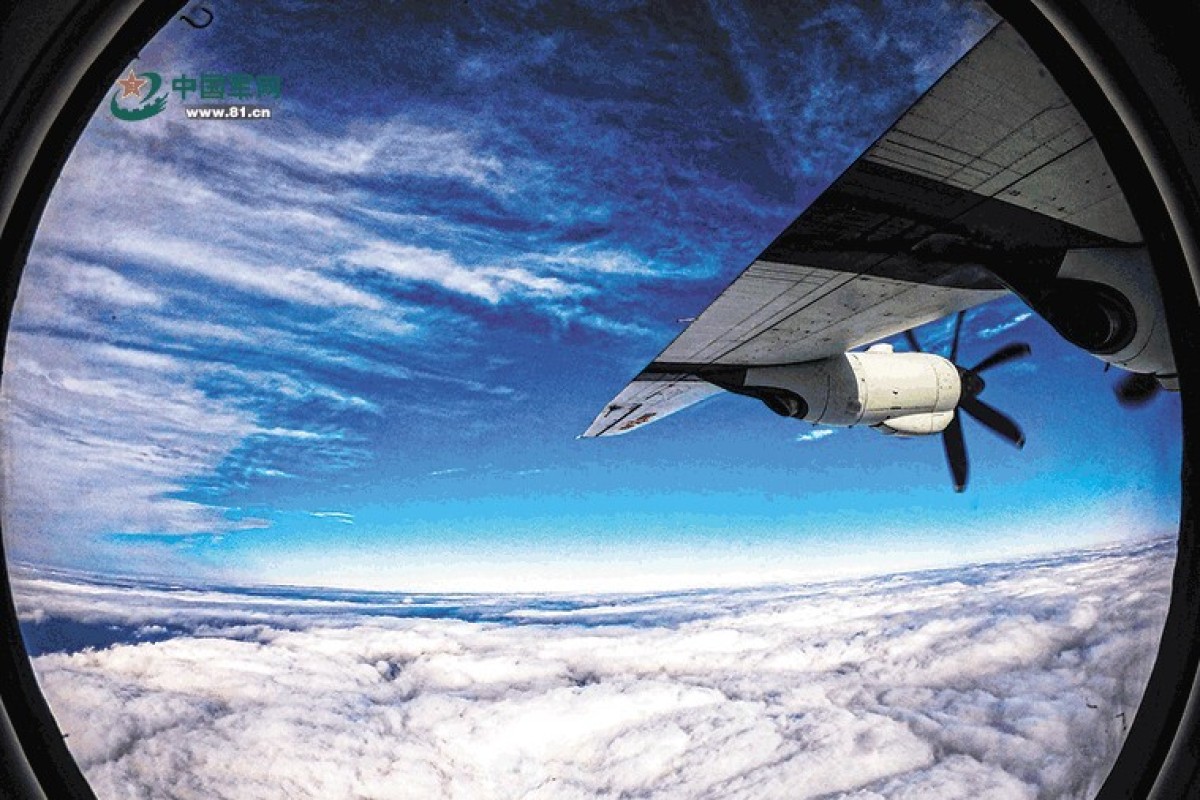
Taiwan stepped up its drills by staging a long-endurance early-warning exercise in March, the official
PLA Daily reported on Wednesday.
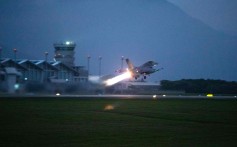
A warplane conducted tactical acrobatics, which were not specified, immediately after taking off, the report said. The move had not been common during previous drills, and was intended to simulate quickly countering enemy planes during wartime, the report quoted the plane’s captain Liu Yin as saying.
The plane performed reconnaissance, early-warning and surveillance work, tested airborne strikes, and an unspecified number of fighter jets in two groups staged a confrontation in a combat scenario.
The drill lasted for about 36 hours, the report said.
Taiwan shows off its military power after presidential election
Zi Kun, an officer from the division’s training unit, said the drill was a test for both pilots and equipment because it involved planning and coordination to meet actual combat requirements.
The exercise came after the Eastern Theatre Command in early February launched joint drills featuring naval and air forces near Taiwan and a combat-readiness drill in which its warplanes encircled the self-ruled island.
It also came after the United States sent EP-3E Aries electronic warfare and reconnaissance aircraft to fly near Kaohsiung, in southern Taiwan, and Hong Kong in late March.
Beijing may step up drills in South China Sea amid US military tensions
Beijing views the self-governed Taiwan as a renegade province that must be united with mainland China by force if necessary.
Experts said the drill was designed to enhance China’s intelligence-gathering capabilities to better monitor activities at sea and in the air.
Taiwan’s re-elected president Tsai Ing-wen meets US and Japanese envoys to call for closer ties
“The People’s Liberation Army’s Air Force used to rely only on ground-based early-warning radar. Only in the past two decades, it started to acquire airborne early-warning and control aircraft, which could allow the air force to extend their radar coverage beyond the limits of ground-based radars,” said Collin Koh, a research fellow from the S Rajaratnam School of International Studies at Singapore’s Nanyang Technological University.
“The problem with ground-based radars is they are often limited by line of sight and Earth curvature, whereas the airborne early-warning assets can help to address these radar gaps and also have a better ability to pick up low-flying targets and those obscured by terrain,” Koh said.
Taiwan military stages exercise to fight off mock invasion
Zhou Chenming, a Beijing-based military expert, said that China did not have enough early-warning planes to support its expanding military ambitions and needed to maximise its capabilities through various exercises to act as a credible deterrent.
The command’s ongoing drills in recent months would be intended to send signals to the outside world on two fronts, according to Koh.
“The Eastern Theatre Command’s primary area of responsibility would cover Taiwan. And by extension, it also means targeting US forces concentrated not just in the nearby bases in Japan but also further afield beyond the First Island Chain, especially Guam,” he said.
Source: SCMP
Posted in aimed at, airborne early-warning and control aircraft, airborne strikes, Beijing, Chinese air force’s drill, combat requirements, combat scenario, CONFRONTATION, deterrent, early-warning and surveillance work, Eastern Theatre Command’s latest exercise, EP-3E Aries electronic warfare and reconnaissance aircraft, fighter jets, First Island Chain, ground-based early-warning radar, Guam, intelligence-gathering capabilities, Japan, joint air and naval drills, Kaohsiung, Mainland China, military power, naval and air forces, People’s Liberation Army, People’s Liberation Army’s Air Force, pilots and equipment, President Tsai Ing-wen, reconnaissance, renegade province, signalling, Singapore’s Nanyang Technological University, South China Sea, tactical acrobatics, Taiwan, Uncategorized, united, United States, US and Japanese envoys, warplane |
Leave a Comment »




 CHINDIA ALERT: You'll be living in their world, very soon