Chindia Alert: You’ll be Living in their World Very Soon
aims to alert you to the threats and opportunities that China and India present. China and India require serious attention; case of ‘hidden dragon and crouching tiger’.
Without this attention, governments, businesses and, indeed, individuals may find themselves at a great disadvantage sooner rather than later.
The POSTs (front webpages) are mainly 'cuttings' from reliable sources, updated continuously.
The PAGEs (see Tabs, above) attempt to make the information more meaningful by putting some structure to the information we have researched and assembled since 2006.
SYDNEY (Reuters) – The Australian government said on Friday it would meet a week ahead of schedule to decide whether to ease social distancing restrictions, as the numbers of new coronavirus infections dwindle and pressure mounts for business and schools to reopen.
Australia has reported about 6,700 cases of the new coronavirus and 93 deaths, well below the levels reported in the United States and Europe. Growth in new infections has slowed to less 0.5% a day, compared to 25% a month ago.
Prime Minister Scott Morrison said it was imperative to lift social distancing restrictions as early as possible as 1.5 million people were now on unemployment benefits and the government forecast the unemployment rate to top 10% within months.
“We need to restart our economy, we need to restart our society. We can’t keep Australia under the doona,” Morrison said, using an Australian word for quilt.
Morrison’s government has pledged spending of more than 10% of GDP to boost the economy but the central bank still warns the country is heading for its worst contraction since the 1930s.
With less than 20 new coronavirus cases discovered each day, Morrison said state and territory lawmakers would meet on May 8 – a week earlier than expected – to determine whether to lift restrictions.
“Australians deserve an early mark for the work that they have done,” Morrison told reporters in Canberra.
Australia attributes its success in slowing the spread of COVID-19 to social distancing restrictions imposed in April, including the forced closures of pubs, restaurants and limiting the size of indoor and outdoor gatherings.
Morrison said 3.5 million people had downloaded an app on their smartphones designed to help medics trace people potentially exposed to the virus, though the government is hoping for about 40% of the country’s 25.7 million population to sign up to ensure it is effective.
Cabinet will also decide next week how to restart sport across the country, the prime minister said.
The government says any resumption of sport should not compromise the public health, and recommends a staggered start beginning with small groups that play non-contact contact sport outdoors.
The recommendations suggests Australia’s National Rugby League (NRL) competition may not get permission to restart its competition as soon as many in the sports-mad country would like.
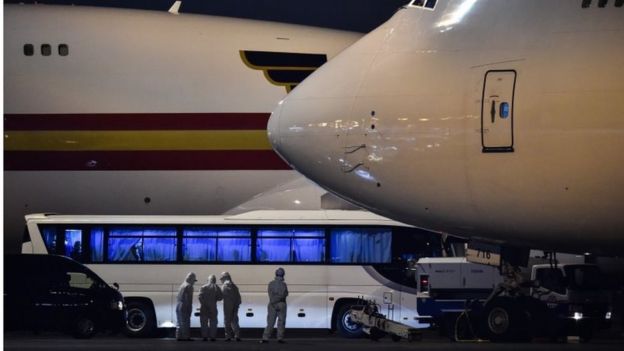
Media caption Americans are taken from the docked ship to Haneda airport in Tokyo
Two planes carrying hundreds of US citizens from a coronavirus-hit cruise ship have left Japan, officials say.
One plane has landed at a US Air Force air base in California, and its passengers will be isolated at military facilities for 14 days.
There were some 400 Americans on board the Diamond Princess. The ship with some 3,700 passengers and crew has been in quarantine since 3 February.
Meanwhile, China reported a total of 2,048 new cases on Monday.
Of those new cases, 1,933 were from Hubei province, the epicentre of the outbreak.
More than 70,500 people across China have been infected by the virus. In Hubei alone, the official number of cases stands at 58,182, with 1,692 deaths. Most new cases and deaths have been reported in Wuhan, Hubei’s largest city.
In other developments:
In Japan, a public gathering to celebrate the birthday of new Emperor Naruhito later this week has been cancelled, due to concerns over the spread of the virus while organisers of the Tokyo marathon due to take place on 1 March are considering whether to cancel the amateur part of the race, reports say
In China, the National People’s Congress standing committee said it would meet next week to discuss a delay of this year’s Congress – the Communist Party’s most important annual gathering – because of the outbreak
At the weekend, an American woman tested positive for the virus in Malaysia after leaving a cruise liner docked off the coast of Cambodia
A Russian court has ordered a woman who escaped from a quarantine facility to go back and stay there until she is confirmed to be disease-free, Fontanka news agency reports. Alla Ilyina has until Wednesday to return
What’s happening on the Diamond Princess?
The cruise ship was put in quarantine in Japan’s port of Yokohama after a man who disembarked in Hong Kong was found to have the virus.
On Monday, Japanese officials said there were 99 new cases of infections on board the ship, bringing the total to 454 confirmed cases. It is the largest cluster of cases outside China.
A Russian woman who was on board and tested positive is thought to be the first Russian national to contract the virus after the two previous cases found in Russia were Chinese nationals, Reuters news agency reports.
She will be taken to a hospital for treatment, the Russian embassy in Japan said.
At least 40 US citizens who were on board are infected and will be treated in Japan, Dr Anthony Fauci, Director of the National Institute of Allergy and Infectious Diseases told US broadcaster CBS.
Image copyright AFPImage caption Those bound for the US left from Tokyo’s Haneda Airport
The two aircraft chartered by the US government left Tokyo’s Haneda Airport in the early hours of Monday. The second flight was due to land at another base in Texas.
More than 300 passengers are being repatriated voluntarily, the US state department said. Fourteen of them were reported during transit to have tested positive for the virus and were being kept separate from the other passengers, it said.
we would like to just finish the quarantine on the ship as planned, decompress in a non-quarantine environment in Japan for a few days, then fly back to the U.S. pursuant to our own arrangements. What’s wrong with that?
The smartphones were distributed so people could use an app, created by Japan’s health ministry, which links users with doctors, pharmacists and mental health counsellors. Phones registered outside of Japan are unable to access the app.
Other evacuation flights have been arranged to repatriate residents of Israel, Hong Kong and Canada. On Monday, Australia announced that it would evacuate 200 of its citizens too.
What is happening in China?
According to official figures for 16 February, 100 people died from the virus in Hubei, down from 139 on Saturday.
The Chinese authorities are tightening curbs on movement to combat the outbreak. People in Hubei province, which has 60 million people, have been ordered to stay at home, though they will be allowed to leave in an emergency.
In addition, a single person from each household will be allowed to leave the building or compound they live in every three days to buy food and essential items.
On housing estates, one entrance will be kept open. It will be guarded to ensure that only residents can enter or leave.
All businesses will stay closed, except chemists, hotels, food shops and medical services.
“The effects of epidemic prevention and control in various parts of the country can already be seen.”
The proportion of infected patients considered to be in a “serious condition” has dropped nationwide from more than 15% to just over 7%, according to China’s State Council.
Taiwan has reported a death from the illness – a taxi driver, 61, who had not travelled abroad recently but had diabetes and hepatitis B, Health Minister Chen Shih-chung said.
The minister said many of his passengers had come from China.
Outside China, there have been more than 500 cases in nearly 30 countries. Four others have died outside mainland China – in France, Hong Kong, the Philippines and Japan.
Meanwhile, a plane carrying 175 evacuated Nepalis, mostly students, has arrived in Kathmandu from Wuhan.
BEIJING/SINGAPORE (Reuters) – China reported on Wednesday its smallest number of coronavirus cases since January, lending weight to a prediction by its top medical adviser for the outbreak to end by April, but a global infectious diseases expert warned of the spread elsewhere.
Financial markets took heart from the outlook of the Chinese official, epidemiologist Zhong Nanshan, who said on Tuesday the number of new cases was falling in some provinces, and forecast the epidemic would peak this month, even as the death toll in China rose to more than 1,100 people.
World stocks, which had seen rounds of sell-offs over the virus, surged to record highs on hopes of a peak in cases. The Dow industrials, S&P 500 and Nasdaq all hit new highs, and Asian shares nudged higher on Wednesday.
But the World Health Organization (WHO) has warned that the epidemic poses a global threat akin to terrorism and one expert coordinating its response said while the outbreak may be peaking at its epicentre in China, it was likely to spread elsewhere in the world, where it had just begun.
RELATED COVERAGE
Chess, squabbles aboard cruise ship cast away by coronavirus fears
Singapore’s DBS evacuates 300 staff after employee contracts coronavirus
See more stories
“It has spread to other places where it’s the beginning of the outbreak,” the official, Dale Fisher, head of the Global Outbreak Alert and Response Network coordinated by the WHO, said in an interview in Singapore.
“In Singapore, we are at the beginning of the outbreak.”
Singapore has reported 47 cases and worry about the spread is growing. Its biggest bank, DBS (DBSM.SI), evacuated 300 staff from its head office on Wednesday after a confirmed coronavirus case in the building.
Hundreds of cases have been reported in dozens of other countries and territories around the world, but only two people have died outside mainland China – one in Hong Kong and another in the Philippines.
WHO chief Tedros Adhanom Ghebreyesus said on Tuesday the world had to “wake up and consider this enemy virus as public enemy number one” and the first vaccine was 18 months away.
In China, total infections have hit 44,653, health officials said, including 2,015 new confirmed cases on Tuesday. That was the lowest daily rise in new cases since Jan. 30.
The number of deaths on the mainland rose by 97 to 1,113 by the end of Tuesday.
But doubts have been aired on social media about how reliable the figures are, after the government last week amended guidelines on the classification of cases.
‘STAY HOPEFUL’
The biggest cluster of cases outside China is aboard the Diamond Princess cruise ship quarantined off Japan’s port of Yokohama, with about 3,700 people on board. Japanese officials on Wednesday said 39 more people had tested positive for the virus, taking the total to 175.
One of the new cases was a quarantine officer.
Thailand said it was barring passengers from another cruise ship, MS Westerdam, from disembarking, the latest country to turn it away amid fears of the coronavirus, despite no confirmed infections on board.
“We try to stay hopeful,” American passenger Angela Jones told Reuters in a video recording. “But each day, that becomes a little bit more difficult, when country after country rejects us.”
Echoing the comparison with the fight against terrorism, China’s state news agency Xinhua said late on Tuesday the epidemic was a “battle that has no gunpowder smoke but must be won”.
The epidemic was a big test of China’s governance and capabilities and some officials were still “dropping the ball” in places where it was most severe, it said, adding: “This is a wake-up call.”
The government of Hubei, the central province at the outbreak’s epicentre, dismissed the provincial health commission’s Communist Party boss, state media said on Tuesday, amid mounting public anger over the crisis.
China’s censors had allowed criticism of local officials but have begun cracking down on reporting of the outbreak, issuing reprimands to tech firms that gave free rein to online speech, Chinese journalists said.
The pathogen has been named COVID-19 – CO for corona, VI for virus, D for disease and 19 for the year it emerged. It is suspected to have come from a market that illegally traded wildlife in Hubei’s capital of Wuhan in December.
The city of 11 million people remains under virtual lockdown as part of China’s unprecedented measures to seal infected regions and limit transmission routes.
Travel restrictions that have paralysed the world’s second-biggest economy have left Wuhan and other Chinese cities resembling ghost towns.
Even if the epidemic ends soon, it has taken a toll of China’s economy, with companies laying off workers and needing loans running into billions of dollars to stay afloat. Supply chains for makers of items from cars to smartphones have broken down.
ANZ Bank said China’s first-quarter growth would probably slow to 3.2% to 4.0%, down from a projection of 5.0%.
The likely slowdown in China could shave 0.1 to 0.2 percentage points off both euro zone and British growth this year, credit rating agency S&P Global estimated.
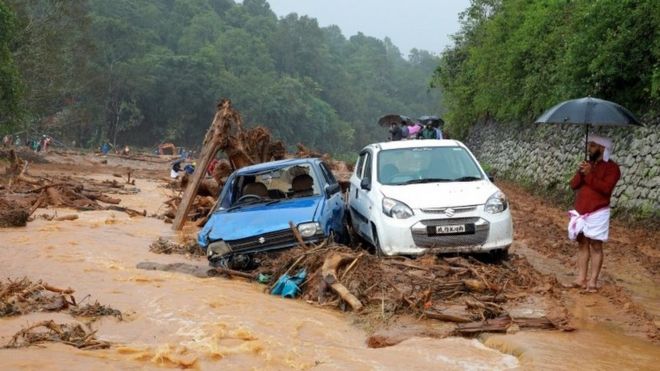
Image copyright REUTERSImage caption Landslides are common in India after heavy rains
Landslides are common in rural and mountainous areas of India, especially after heavy rain. Scientists now say they have developed a low-cost technology for detecting them, using a motion sensor commonly found in smartphones.
The device is currently being trialled in more than 20 locations in the Himalayan state of Himachal Pradesh, where landslides kill dozens of people every year.
Scientists say they are hopeful that it will help drastically reduce the deaths and damage caused by these natural disasters.
An accelerometer is a type of motion sensor which measures changes in velocity. In smartphones, this is what allows people to use compass and maps applications and even flip their screens horizontally or vertically.
But now scientists from the Indian Institute of Technology (IIT) in Himachal Pradesh’s Mandi district have found that with some modifications, it can be used as a low-cost early warning system for landslides.
They told BBC Click’s Shubham Kishore that it will cost an estimated 20,000 rupees (£218; $282) to manufacture – a fraction of the cost of existing technologies.
Authorities say the frequency of landslides in Himachal Pradesh is due to its mountainous terrain and the instability of the Himalayas, which is a relatively young mountain range.
However, excessive rain, rampant deforestation, and unauthorised construction has exacerbated the problem.
Image copyright IIT MANDIImage caption One of the devices being fitted
The Environmental Information (ENVIS) centre for the Ministry of Environment and Forest said in a report that casualties from landslides were also growing because “the increase of road connectivity and number of vehicles plying on these roads in the state, means the number of road accidents and loss of precious human lives is increasing day by day”.
This is because landslides frequently wash away roads and destroy homes – many of which are built with materials like clay mud or unburned bricks.
Early warning
Dr Varun Dutt, a computer engineer, with his colleague, Dr KV Uday, a civil engineer, are leading efforts to develop the technology. These researchers say they are using the motion sensor to measure soil movements.
“When we embed it in the soil, the accelerometer will move when the soil moves. Essentially soil moves if some force acts on it.
“What the sensor does is allow us to record the extent of that movement. It throws up a range of data that then allows us to track small displacements in soil which causes landslides,” Dr Dutt told the BBC’s Ayeshea Perera.
He explained that a series of small soil movements could help provide an early warning to a larger disaster in the making. Due to the early warnings from small movements, detecting a landslide is easier than trying to detect an earthquake, which is more instantaneous with a very small warning corridor.
The device measures all these movements, and when it detects a significant displacement of earth which could result in a landslide, it emits loud noises and sends text messages to officials so that they can evacuate and stop vehicular movement to and around the area.
Image copyright AFPImage caption The new device helps to detect landslides
The device has already seen some success.
In Kutropi, in the state’s Mandi district, the device was able to successfully alert officials about an impending landslide. Police were able to turn away vehicles from a road that was later completely washed away.
Dr Uday told the BBC that they have managed to alert officials after using the device that a hill in the state’s Deode region needed to be monitored carefully as the soil movements indicated that the hill was at risk of sliding.
Dr Dutt says that state officials – who often have to deal with the tragic consequences of landslides – are excited about the technology.
“We were invited to present it at a workshop by the state government in partnership with the National Disaster Management Authority (NDMA) earlier this year.
“We showcased the technology and we got a lot of requests to commercialise it. So now we are in the process of marketing it and setting it up,” he said.
At present, the device has managed to demonstrate enough of a lead time to allow officials to warn residents and motorists shortly before a potential landslide.
But Dr Dutt and Dr Uday want the technology to be more predictive than reactive.
So the team has begun using Artificial Intelligence (AI) and machine learning on the sets of data thrown up by the device, and are hoping that it can develop algorithms that will enable them to predict landslides 24 hours or even a week in advance.
These algorithms are currently being refined, and scientists are hoping to test them more accurately in the field by the 2020 monsoon.
“We are excited but we want it to be accurate. There should be fewer false alarms.
“The good part is that policymakers understand that this is experimental work and it will improve as more data gets collected. If it all goes to plan, it will be very useful,” Dr Dutt said.
Team from Dalian Institute of Chemical Physics says its goal is to ‘develop an all-season battery that is low cost but high safety for consumer products’
Researchers make breakthrough by using hard carbon and lithium vanadium phosphate
Chinese researchers say they have made a breakthrough in the development of small lithium batteries that can withstand low temperatures. Photo: Xinhua
Chinese researchers say they have found a way to produce a tiny, lightweight lithium battery for use in mobile phones and electric cars that can hold up to 80 per cent of its charge in temperatures as low as minus 40 degrees Celsius.
The breakthrough came by using a combination of a new material called hard carbon along with lithium vanadium phosphate, the team from the Dalian Institute of Chemical Physics said in a paper published in this month’s edition of the scientific journal Nano Energy.
“Our goal is to develop an all-season battery that is low-cost but high-safety for consumer products,” said Song Zihan, its lead author.
It was an unprecedented approach, but “we proved it works”, he said.
The idea of a battery that can withstand extreme cold is not new. Photo: Shutterstock
The idea of a battery that can withstand extreme cold is not new, and they are already in use in space and in the Arctic and Antarctic.
But they tend to be very bulky because of the heating system and large amount of insulation they need to function properly at sub-zero temperatures.
Such measures are neither physically nor economically viable for applications like smartphones, cameras, laptops or electric cars. The trick, Song said, was replacing the soft graphite in normal lithium batteries with hard carbon.
Graphite is a good conductor and often used for the anode at the bottom of a battery, where electrons are generated. But the performance of graphite drops as the mercury slides.
How military tech sparked a robot revolution in firework factories
Song said that hard carbon was a new material that had attracted a lot of research interest in recent years, and compared with graphite, it had a much higher tolerance for the cold.
That was because of its highly irregular and “almost messy” structure, comprising layers of carbon atoms that are interconnected with each other, he said.
However, hard carbon also caused a rapid depletion of the lithium ions that served as an agent carrying the electric flow in battery, he said.
The researchers want to make battery suitable for use in consumer products. Photo: EPA-EFE
In the past, researchers have tried adding lithium powders or flakes to improve battery life, but the approach has proven costly and dangerous, mostly because pure lithium is highly reactive.
So Song and his colleagues used a composite material called lithium vanadium phosphate as the positive cathode on top of the battery.
The composite was capable of providing enough extra lithium ions for the hard carbon’s need without increasing the risk of fire or explosion, and it was cheap, he said.
“The pairing of hard carbon and lithium vanadium phosphate worked a charm,” Song said.
But the technology is still a long way from being commercially viable.
The battery Song’s team made is far too small for any real-life applications, and enlarging it would require some “innovative engineering solutions”, he said.
Another scientist involved in the project said the team was working with battery manufacturers to see if the technology could be commercialised.
Chinese President Xi Jinping and US President Donald Trump set to meet on the sidelines of the Apec summit in Chile next month, a source says
The two state leaders are expected to sign an interim trade deal ‘if everything goes smoothly’
Chinese President Xi Jinping and US President Donald Trump have met twice already over the course of the 16-month trade war. Photo: AP
Chinese President Xi Jinping and US President Donald Trump are tentatively expected to meet on November 17 with the aim of signing an interim trade deal, a source briefed on the arrangements told the South China Morning Post.
The two leaders are expected to come face-to-face immediately after the Asia-Pacific Economic Cooperation (Apec) summit in Santiago, Chile, with a trade truce signed “if everything goes smoothly”, said the person, who declined to be identified.
Trade envoys from Beijing and Washington are still finalising the text for the two leaders to sign, but both sides have expressed optimism that Trump’s so-called phase one trade deal can be completed in time for the meeting.
Trump said on Monday that negotiations on the interim deal were running “ahead of schedule”.
“We are looking probably to be ahead of schedule to sign a very big portion of the China deal, and we’ll call it phase one but it’s a very big portion,” Trump said. “That would take care of the farmers. It would take care of some of the other things. It will also take care of a lot of the banking needs.
“So we’re about, I would say, a little bit ahead of schedule, maybe a lot ahead of schedule,” the president said, adding the deal would “probably” be signed.
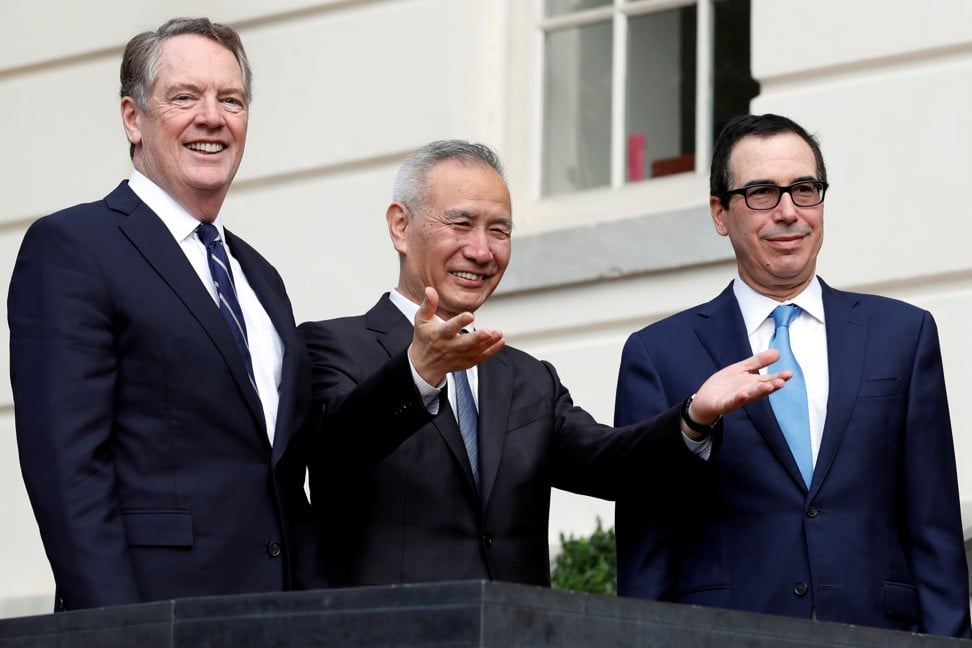
Top trade negotiators for the two countries – US Treasury Secretary Steven Mnuchin, US trade representative Robert Lighthizer and Chinese Vice-Premier Liu He – spoke by telephone last Friday. The Office of the US Trade Representative released a statement after the call saying that the two sides “made headway on specific issues” and “are close to finalising some sections of the agreement”.
China’s official Xinhua News Agency said on Saturday negotiators have “agreed to properly resolve core concerns of each other” and had “basically completed technical discussions about parts of the text”. In particular, China would lift the current ban on US poultry imports and recognise the American public health certification system for meat product imports, Xinhua said.
The top trade envoys are expected to hold another conference call in the near future.
China’s Vice-Premier Liu He between US trade representative Robert Lighthizer (left) and US Treasury Secretary Steve Mnuchin during trade negotiations in Washington this month. Photo: Reuters
Taoran Notes, an account on Chinese social media platform WeChat run by the official Economic Daily newspaper, wrote over the weekend that Beijing and Washington had moved a step closer to agreement on a “temporary deal”.
“According to past experiences and practises, the negotiation will enter the stage of translation and legal review after the technical completion of the text,” the account said.
Geng Shuang, a Chinese foreign ministry spokesman, said that technical negotiations about part of the deal were finished but deputy-level talks were ongoing. “China hopes both sides can find a trade solution based upon mutual respect and benefits,” Geng said at a regular press conference on Tuesday.
If it goes ahead as planned, the summit between Trump and Xi in Chile next month would be the third time the two leaders have sat down to talk about ending the nearly 16-month-long trade war.
Last December, the two leaders met on the sidelines of the G20 Leaders’ Summit in the Argentinian capital Buenos Aires and agreed to a three-month tariff truce to allow time for the countries’ trade envoys to work out a comprehensive deal. But the talks collapsed in early May with the US blaming China for reneging on promises it made in negotiations, while China blamed the US for attempting to infringe on its economic sovereignty.
The pair met again in late June in the Japanese city of Osaka, where they agreed to restart trade negotiations.
A minor ceasefire was reached in October when Beijing promised to buy US$40 billion to US$50 billion worth of American agricultural products in exchange for Washington postponing indefinitely a tariff increase on US$250 billion of Chinese goods to 30 per cent from 25 per cent on October 15.
Analysts expect fresh 15 per cent duties on about US$160 billion of Chinese imports – including popular products like smartphones and consumer electronics – that are due to go into effect mid-December will also be postponed if a deal is signed, though this has not been officially confirmed.
The interim deal is also expected to contain a provision on intellectual property protection, a key US demand. China has taken steps to improve IP protection, including setting up a system to punish and compensate instances of infringement, and improve settlement disputes. But how well these measures will be implemented remains in question.
China and the US would also agree to avoid allowing currency devaluations to gain trade advantages, codifying a commitment both countries made as part of a G20 agreement several years ago. A currency agreement – similar to provisions in the yet-to-be-ratified US-Mexico-Canada Agreement – could pave the way for the US to remove its designation of China as a “currency manipulator”.
The deal may include a new dispute resolution mechanism to ensure both sides live up to commitments. The system, which will give both sides equal standing, would replace a contentious US-proposed enforcement mechanism that was a key reason for trade talks breaking down in May after China felt the demands too intrusive and one-sided. It is unclear how effective the proposal would be, but the US has insisted since talks began that a similar mechanism be implemented to ensure China did not backslide on promises as it had in the past.
In addition to large purchases of farm products, the interim agreement may contain commitments by China to buy US-built aircraft and energy products, particularly liquefied natural gas.
China will also agree to lift foreign ownership limits on Chinese financial firms under the deal, changes which are already underway.
However, the interim deal will not address broader US complaints about China’s economic model, particularly allegations that foreign firms are treated unfairly and heavy government subsidies favour some domestic industries. Nor will it contain any break for telecommunications equipment maker Huawei and other Chinese tech companies that were blacklisted by the US on national security concerns.
NAIROBI, Oct.25 (Xinhua) — China is seeking to promote cooperation with Kenya in the development of the technology arena and digital economy.
Guo Ce, economic and commercial counselor of the Chinese embassy in Kenya, said on Thursday that China which is Kenya’s largest trading partner is also seeking cooperation with Kenya in terms of capacity building by outcome-sharing in the technological arena for mutual benefit.
“For instance, China has such wonderful information technology (IT) companies as TECNO and Huawei in Kenya, providing local users with easy access to the Internet and thus increasing the welfare of its people,” Guo said during the symposium on China-Kenya cooperation and development of digital economy on Thursday.
By the end of 2018, the number of Chinese netizens has reached 829 million, and the number of mobile Internet users has reached 871 million, with the e-commerce transaction volume amounting to 4.4 trillion US dollars.
In Kenya, the value of the ICT sector, driven by growth in the digital economy, expanded by 12.9% in 2018. And as of December 2018, the total number of active data/Internet subscriptions in Kenya stood at 45.7 million of which 47.9 percent were on broadband. The number of Internet users in Kenya accounts for 83.0% of its population.
Zhao Hui, secretary general of China Federation of Internet Societies (CFIS), said during the symposium that China has always attached great importance to the extensive and friendly cooperation in cyberspace with Kenya and other African countries.
Zhao said that Kenya, as the largest economy in east Africa, has achieved remarkable results in the development of the digital economy.
“It is undoubted that there will be great opportunities for China and Kenya to carry out in-depth cooperation in the digital economy,” she added.
CFIS expects to build up a communicating platform for companies from China and Kenya to promote the continuous improvement of China-Kenya digital industrialization through the symposium, Zhao said.
Peng Lihui, secretary general of China Electronics Chamber of Commerce (CECC), invited Kenyan organizations to join the Global Digital Economy Alliance (D50), which was initiated by CECC and 50 national industrial organizations and leading enterprises.
In the symposium, Jacqueline Sigu, manager of county programme and small and medium enterprises development at Kenya National Chamber of Commerce and Industry , said that the Kenyan government has already developed a blueprint for the digital economy, which will accelerate Kenya’s ambition to automate government and private sector business operations, while noting that the high cost of infrastructure remains a big challenge.
She said that China is an ideal partner for Kenya in the ICT sector because it is a world leader in digital innovations. “Kenya’s business community could borrow lessons from China that can adapt to meet local conditions,” she said.
She revealed that Kenya will leverage on close ties with China to solidify its status as eastern Africa’s regional ICT hub.
Liz Kisyanga, digital marketing manager of StarTimes Kenya, said that Chinese firms can play a big role in the provision of affordable internet and smart-phones in Kenya.
“More players in the digital economy space will result in more innovation and the ultimate beneficiary will be the Kenyan consumer,” Kisyanga said Kenya can partner with Chinese firms to rollout Internet services in the rural and remote areas that are typical underserved by technological service providers.
Chinese geologists think they have formula that could help to increase control of market in the elements hi-tech industries depend upon
Simple combination of clay mined for porcelain production, granite bedrock and acid rain could point to lucrative sources of rare earths
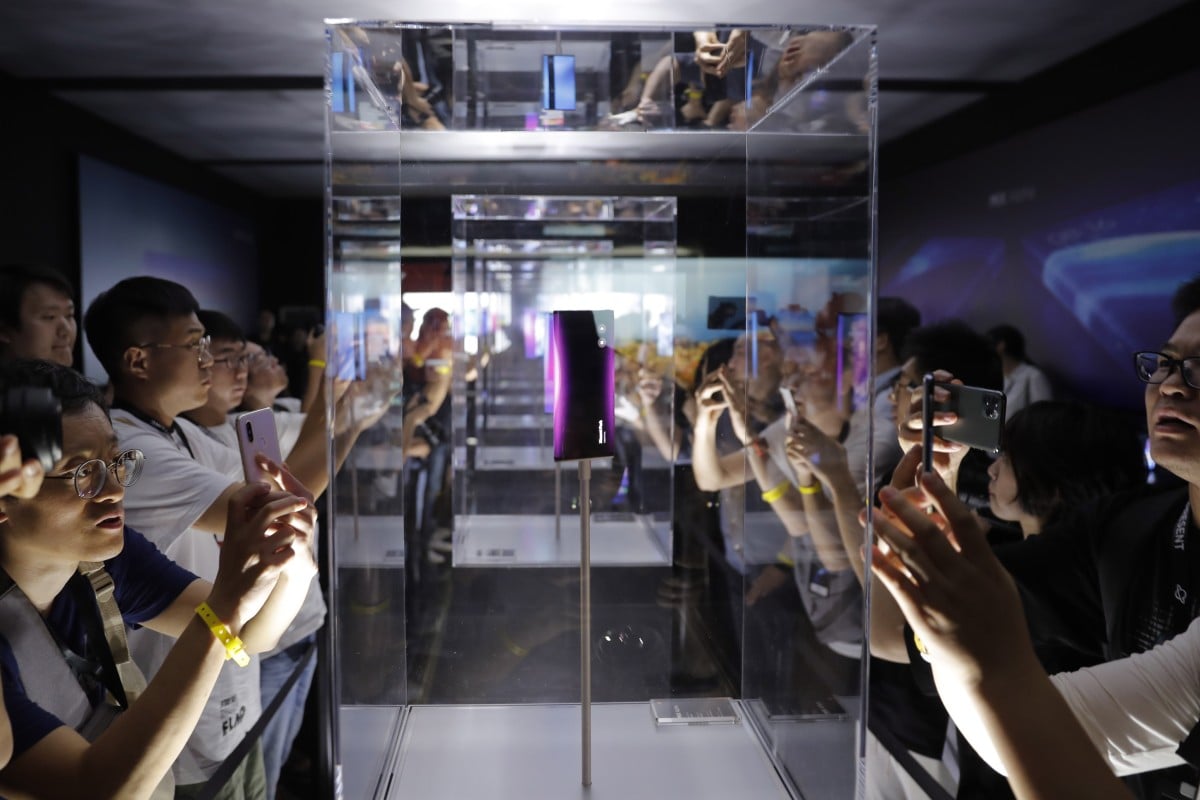
China has 80 per cent of the reserves of rare earth elements the world needs to keep talking on its smartphones, and geologists in Guangzhou think they know why. Photo: EPA
Geologists in southern China say they have isolated a series of critical factors that could make it easier to find rare earth elements used in hi-tech consumer goods such as smartphones.
China has more than 80 per cent of the world’s reserves of heavy rare earths such as terbium, dysprosium and holmium concentrated in a few provinces to the south of the country.
The reason for the concentration is one of the biggest puzzles in geology, but researchers at the Guangzhou Institute of Geochemistry in Guangdong province say the answer may be found in a combination of clay deposits, acid rain and granite that is distinctive to southern China.
Professor He Hongping and his colleagues came to the conclusion by testing the interaction between rare earths and different types of clay. Through their research they found that kaolinite – or china clay – was the best at absorbing rare earths from water.
The clay, named after Gaoling village near Jingdezhen, a centuries-old ceramic production centre in east China’s Jiangxi province, is a raw material for porcelain production.
While kaolinite is found in many countries, those places do not have rare earth deposits – probably because of the lack of acid rain, He said.
“You need the right environment.”
He said that rocks that contained tiny amounts of rare earth elements weathered faster in an acid environment, but the acidity could not be too high or the rare earth might run off before it could be captured by the clay.
Why Beijing cut tax rate on rare earths amid trade war
Rainwater with the right natural acidity often occurred in areas around 20 degrees latitude, such as southern China, he said.
The last step was to locate the source rock. Granite formed in volcanic eruptions between 100 million and 200 million years ago is considered to be the main source of rare earths.
He said that part of the Pacific tectonic plate containing rare elements might have been forced under the Eurasian Plate and was pushed to the surface as magma that formed rocks.
Other countries could learn from the Chinese experience, said He, whose team submitted their findings to the research journalChemical Geology.
Recent discoveries in Vietnam, Australia and North Carolina in the United States conformed to the Guangzhou team’s theory, but there was still more research to do, he said.
“Rare earth deposits are quite unlike minerals such as copper. Sometimes they occur in this mountain but not in another nearby with almost the same geological features. Sometimes they occur in one half of the mountain but not in the other.”
With China and the US engaged in a trade war, and Beijing cutting taxes on mining companies looking for these elements, the pressure was on to unlock the secrets of China’s abundant rare earth deposits, he said.
Does China’s dominance in rare earths hold leverage in trade war?
Dr Huang Fan, associate researcher with the China Geological Survey, said the Guangzhou discovery would help geologists to find more rare earths.
Most rare earth mines were located along the borders between provinces such as Guangdong and Jiangxi, but recently there were discoveries on a plateau in Yunnan province, where few geologists believed rare earths could be found, he said.
“There are many more rare earth deposits out there waiting for us.”
International rules on seabed mining set for approval in 2020, with China most likely to lead the race, UN body says
Governments, research institutions and commercial entities have already signed contracts for the exploration phase to extract minerals from the seabed, with China holding the most. Photo: Shutterstock
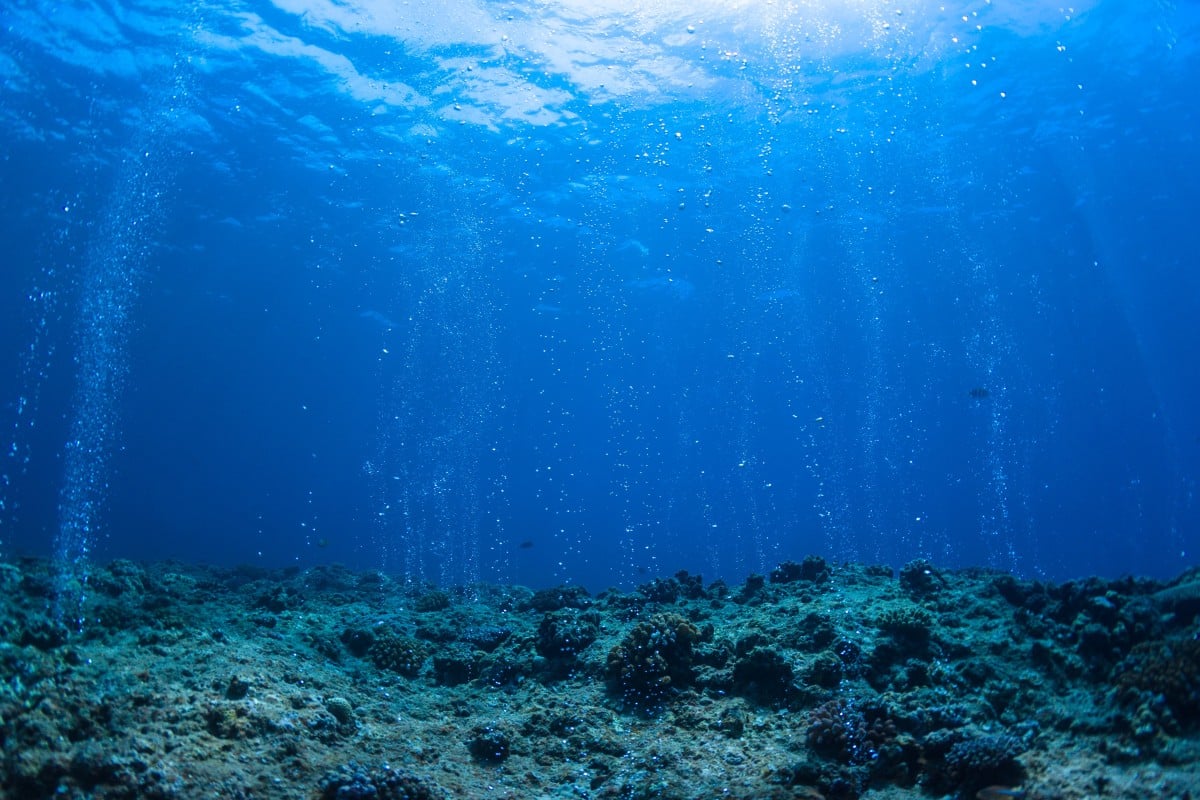
China is in pole position for the global race to start deep sea mining operations to extract valuable minerals used in smartphones and electric car batteries from the seabed.
The head of the International Seabed Authority (ISA) said China was likely to become the first country in the world to start mining seabed minerals if the international rules for exploitation were approved next year.
The ISA has already signed 30 contracts with governments, research institutions and commercial entities for exploration phase, with China holding the most, five contracts.
The body, which was established to manage the seabed resources by the United Nations Convention on the Law of the Sea (UNCLOS), is aiming to adopt seabed mineral exploitation rules by July 2020.
As China leads the hunt for deep-sea minerals, environmental concerns surface
“I do believe that China could easily be among the first (to start exploitation),” said Michael Lodge, ISA general secretary, who visited China last week.
“The demand for minerals is enormous and increasing, there is no doubt about the market.”
There is also interest from European countries including Belgium, Britain, Germany and Poland, as well as from the Middle East.
The quest to exploit seabed minerals – such as polymetallic nodules containing nickel, copper, cobalt and manganese – is driven by demand for smartphones and electric car batteries, and the need to diversify supply.
However, no one has yet shown that deep sea mining can be cost effective and some non-governmental organisations have questioned whether it would be possible to reach a deal on exploitation rules next year.
“I think, it’s pretty good. I think the current draft is largely complete,” Lodge said, when asked about prospects of adopting the rules by next July.
One of the issues yet to be agreed is proportionate financial payments to the Jamaica-based ISA for subsea mineral exploitation outside national waters.
“We are looking at ad valorem royalty that would be based on the value of the ore at a point of extraction … The middle range is 4 per cent to 6 per cent ad valorem royalty, potentially increasing over time,” Lodge said.
New iPhone models to use recycled rare earths, Apple says
If the rules are approved, it could take about two to three years to obtain permits to start deep sea mining under the current draft, Lodge said.
Canadian Nautilus Minerals had tried to mine underwater mounds for copper and gold in the national waters off Papua New Guinea, but ran out of money and had to file for creditor protection earlier this year.
This has not deterred others, such as Global Sea Mineral Resources (GSR), a unit of Belgian group DEME, and Canada’s DeepGreen, to continue technology tests and research.
In July, Greenpeace called for an immediate moratorium on deep sea mining to learn more about its potential impact on deep sea ecosystems, but the ISA has rejected such a proposal.
on Saturday reiterated his promise to keep opening up the nation’s markets to companies and investors from around the world.
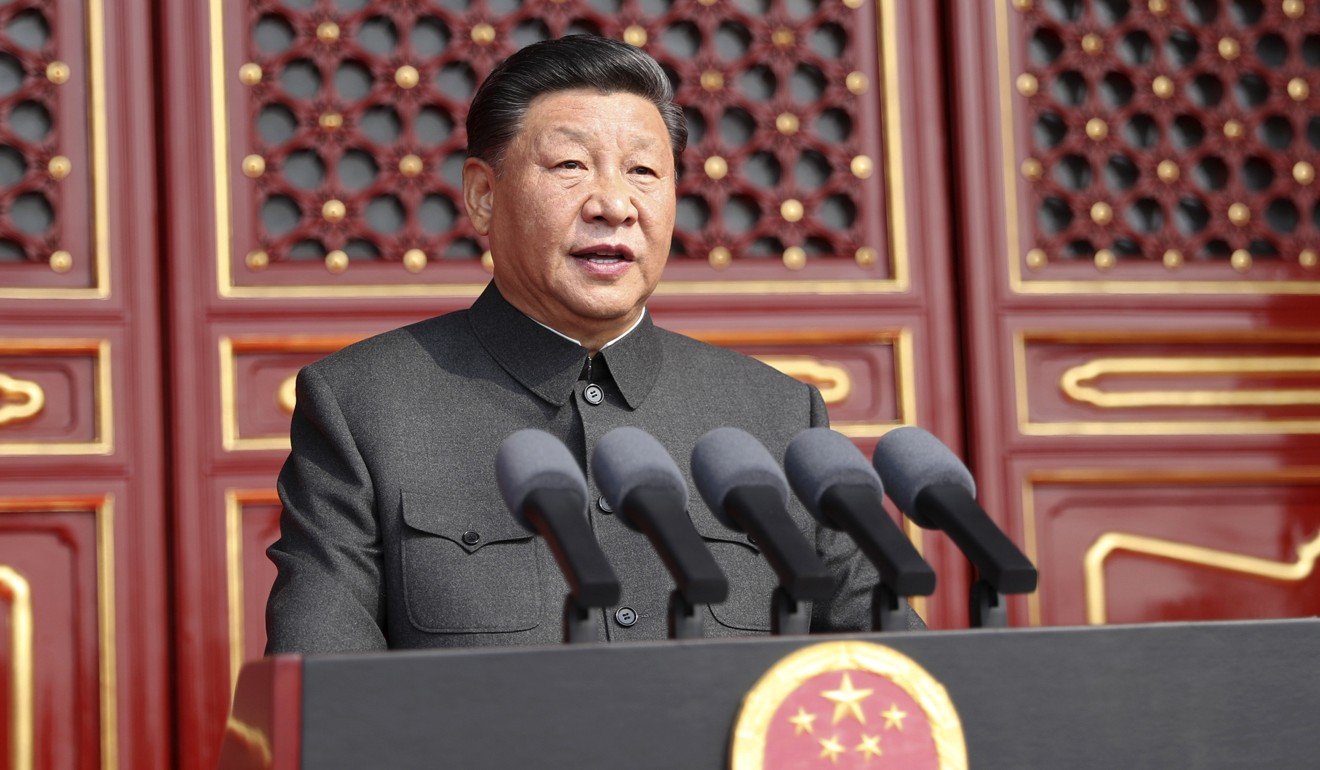
“The door of China’s opening up will only open wider and wider, the business environment will only get better and better, and the opportunities for global multinational companies will only be more and more,” he said in a congratulatory letter read out by Vice-Premier Han Zheng at the inaugural Qingdao Multinationals Summit in the east China city.
The two-day event, which ends on Sunday, was organised by China’s commerce ministry and the provincial government of Shandong with the aim, according to its website, of giving multinational companies “the opportunity to articulate their business values and vision” and “promote cooperation with host countries”.
In his letter, Xi praised multinational companies for the role they had played in China’s opening up and reform over the past four decades, describing them as “important participants, witnesses and beneficiaries”.
China was willing to continue opening up to benefit not only itself but the world as a whole, he said.
“Only when the world is good, China is good. Only when China is good, can the world get better.”
Despite its upbeat tone, Xi’s message comes as Beijing is facing intense scrutiny from the international business community over its state-led economic model – one of the main bones of contention in its trade war with the US – and its attempts to prevent foreign firms from speaking out on issues it deems too sensitive, from Hong Kong to human rights.
Foreign firms have also long complained about the barriers they face when trying to access China’s markets and the privileged treatment it gives to state-owned enterprises. Even though Beijing has promised to reform its state sector, foreign businesses have complained of slow progress, and just last month the European Union Chamber of Commerce urged the EU to take more defensive measures against China’s “resurgent” state economy.
Xi promised “more and more” opportunities for global firms. Photo: AP
Sheman Lee, executive director of Forbes Global Media Holding and CEO of Forbes China, said at the Qingdao summit that foreign firms were facing a difficult trading environment in the world’s second-largest economy.
“Multinationals have seen their growth in China slow in recent years because of the growing challenge from local firms, a gradually saturating market and rising operation costs,” he said.
Craig Allen, president of the US-China Business Council, said that many multinational companies were reluctant to release their best products in China out of fear of losing their intellectual property.
China still not doing enough to woo foreign investment
In his letter, Xi said that over the next 15 years, the value of China’s annual imports of goods would rise beyond US$30 trillion, while the value of imported services would surpass US$10 trillion a year, creating major opportunities for multinational companies.
China would also reduce tariffs, remove non-tariff barriers and speed up procedures for customs clearance, he said.
Commerce Minister Zhong Shan said at the opening ceremony that China would also continue to improve market access and intellectual property protection.
The country supported economic globalisation and would safeguard the multilateral trade system, he said, adding that it was willing to work with the governments of other countries and multinational corporations to promote economic globalisation.
Xi Jinping says the value of China’s annual goods imports will rise beyond US$30 trillion over the next 15 years. Photo: Bloomberg
The promise to continue to open up China’s markets came after the State Council
– the nation’s cabinet – made exactly the same pledge at its weekly meeting on Wednesday.
After the latest round of trade war negotiations in Washington, Beijing said it had achieved “substantive progress” on intellectual property protection, trade cooperation and technology transfers, all of which have been major bones of contention for the United States.
Despite its pledge to welcome multinational companies into its market, China is in the process of creating a list of “unreliable foreign entities” it considers damaging to the interests of Chinese companies. The roster, which is expected to include FedEx, is seen as a response to a similar list produced earlier by the United States.
Xi’s gesture would also appear to have come too late for South Korean multinational
, which announced on October 4 it had ended the production of smartphones at its factory in Huizhou, Guangdong province – its last in China – with the loss of thousands of jobs.










 CHINDIA ALERT: You'll be living in their world, very soon